Biology 2
Variation
What isvariation and what are its causes?
LO:
All
Most
Some
• Be able to define the term ‘variation’.
• Be able to describe the difference between
environmental and inherited variation.
• Be able to describe how variations
in species occur.
24/04/2025
Key words
Variation, genes, environment, interspecific,
intraspecific.
2.
BLP objective
Imagining
Using yourimagination to
put yourself in new
experiences or explore
possibilities. What if?
Reasoning
Using logic and rational
skills to work things out
methodically – constructing
good arguments.
Literacy objective
• Can you use standard
English to share your
opinion with the class?
• Can you write your answers
using standard English,
scientific keywords and
taking care of spellings and
punctuation?
24/04/2025
3.
Starter Activity
• Whatdo you think the word “characteristic”
means?
• Have a look at the person next to you.
–Can you identify some of their
characteristics?
–Are they the same as yours or different?
4.
Characteristics
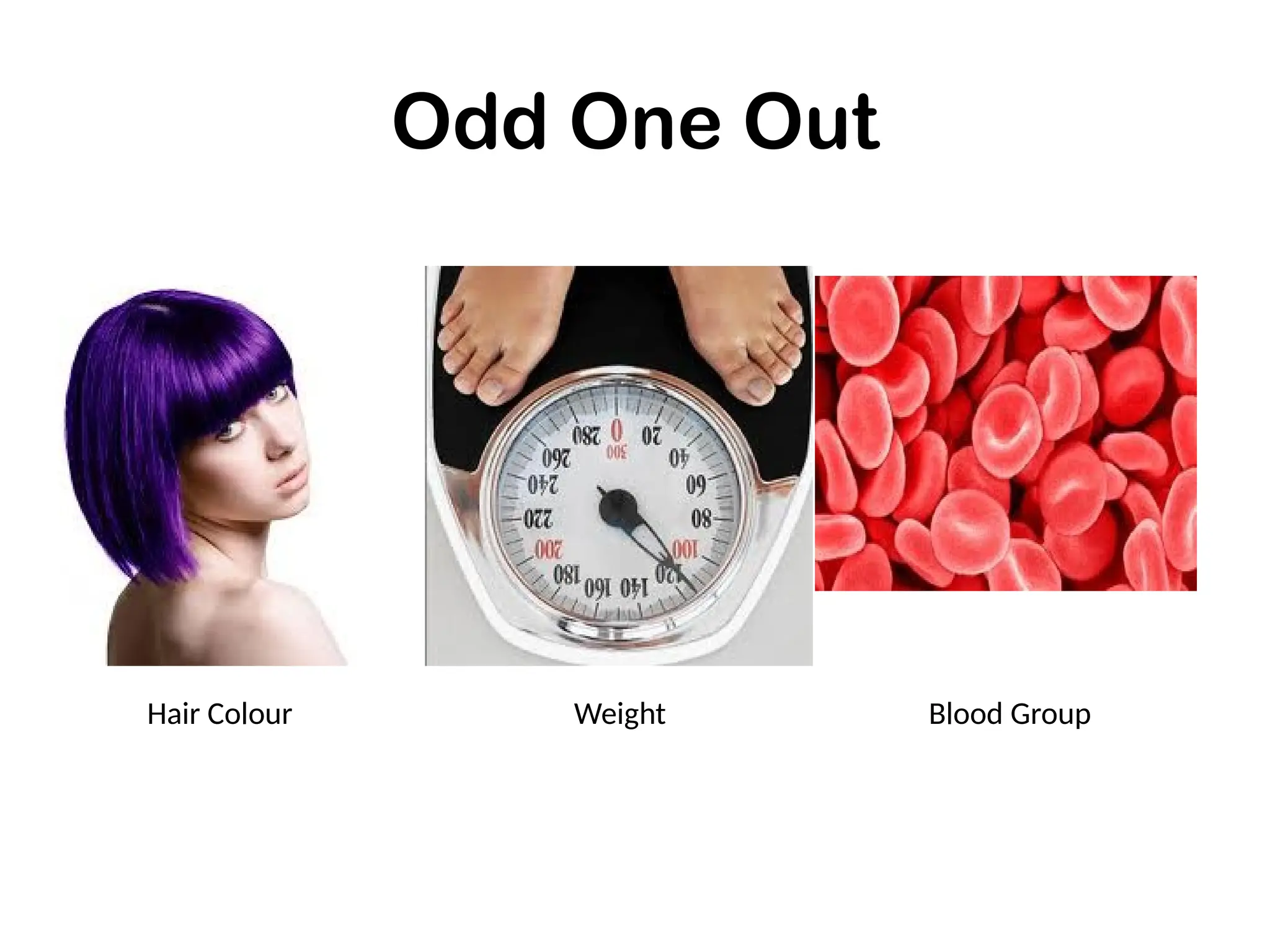
• A characteristicis a feature of an organism. It can be
something we can see (like hair colour) or something
we can’t see (like blood group).
• All humans have different combinations of
characteristics, meaning we all look different.
• This difference in our characteristics is called
variation.
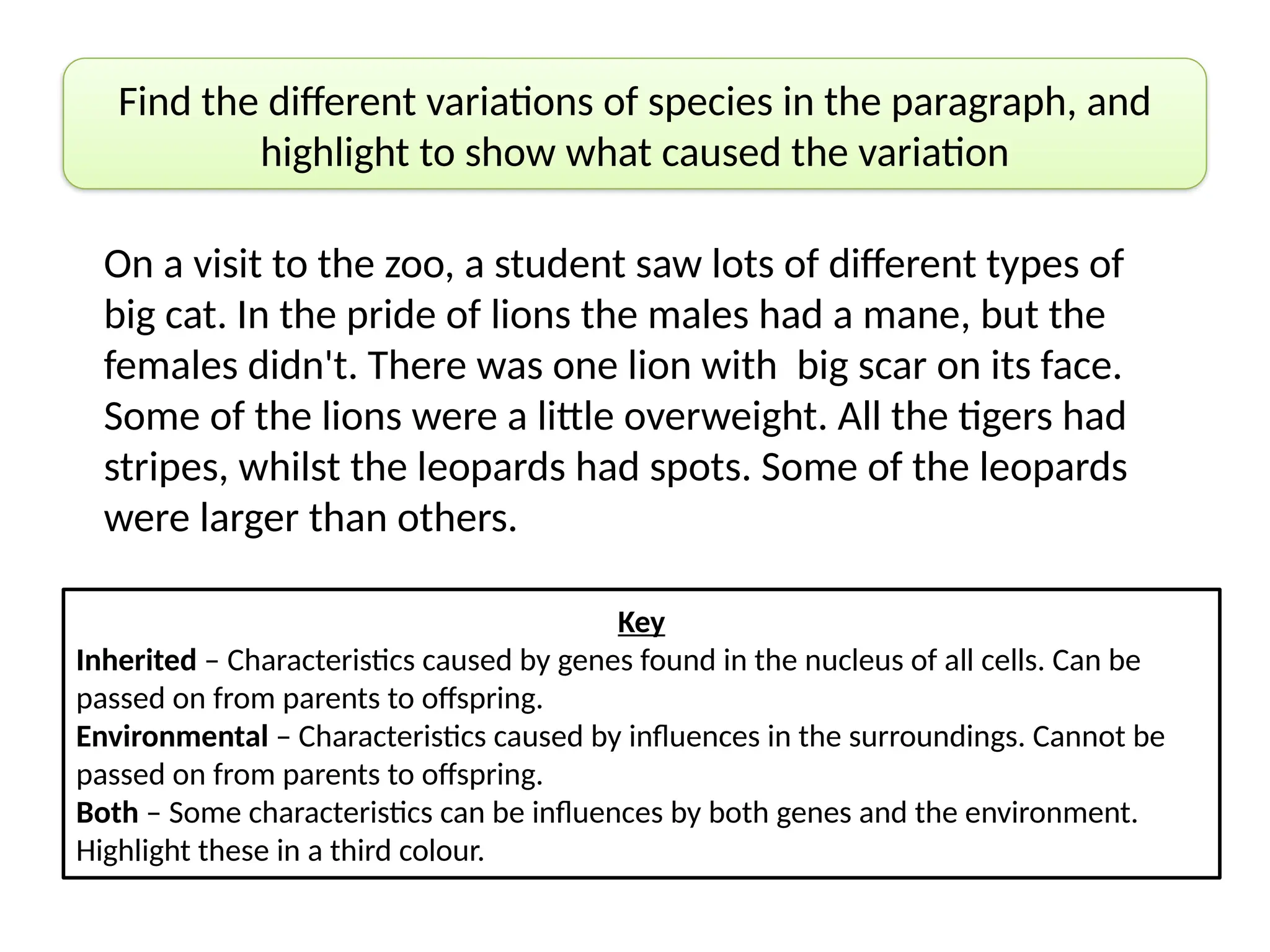
Find the differentvariations of species in the paragraph, and
highlight to show what caused the variation
On a visit to the zoo, a student saw lots of different types of
big cat. In the pride of lions the males had a mane, but the
females didn't. There was one lion with big scar on its face.
Some of the lions were a little overweight. All the tigers had
stripes, whilst the leopards had spots. Some of the leopards
were larger than others.
Key
Inherited – Characteristics caused by genes found in the nucleus of all cells. Can be
passed on from parents to offspring.
Environmental – Characteristics caused by influences in the surroundings. Cannot be
passed on from parents to offspring.
Both – Some characteristics can be influences by both genes and the environment.
Highlight these in a third colour.
12.
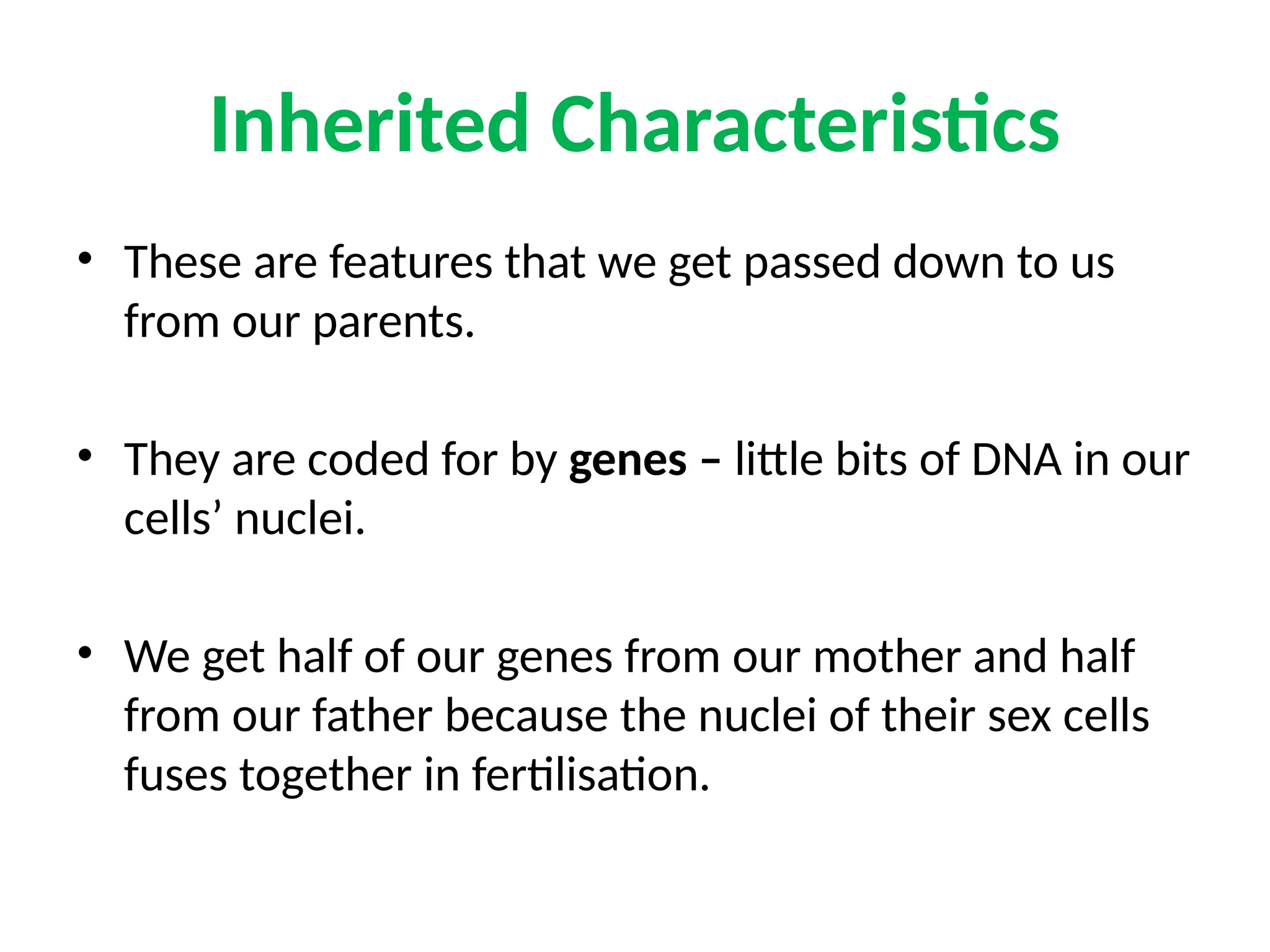
Inherited Characteristics
• Theseare features that we get passed down to us
from our parents.
• They are coded for by genes – little bits of DNA in our
cells’ nuclei.
• We get half of our genes from our mother and half
from our father because the nuclei of their sex cells
fuses together in fertilisation.
Environmental Characteristics
• Someof our features are determined by how we live
and the choices we make, for example what we eat
and where we live.
• These are environmental characteristics
• Some characteristics can be both, for example height
and weight.
15.
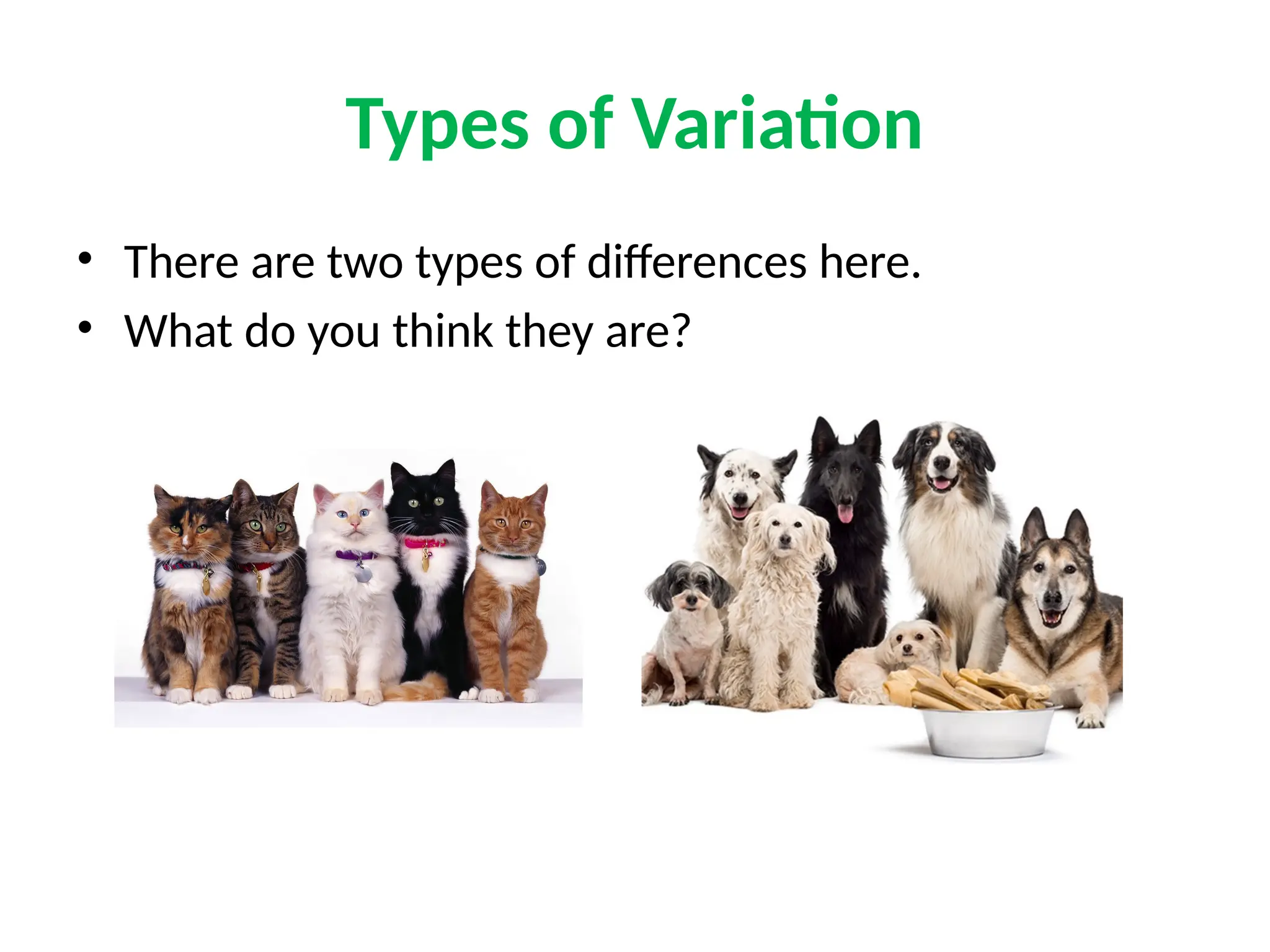
Types of Variation
•There are two types of differences here.
• What do you think they are?
16.
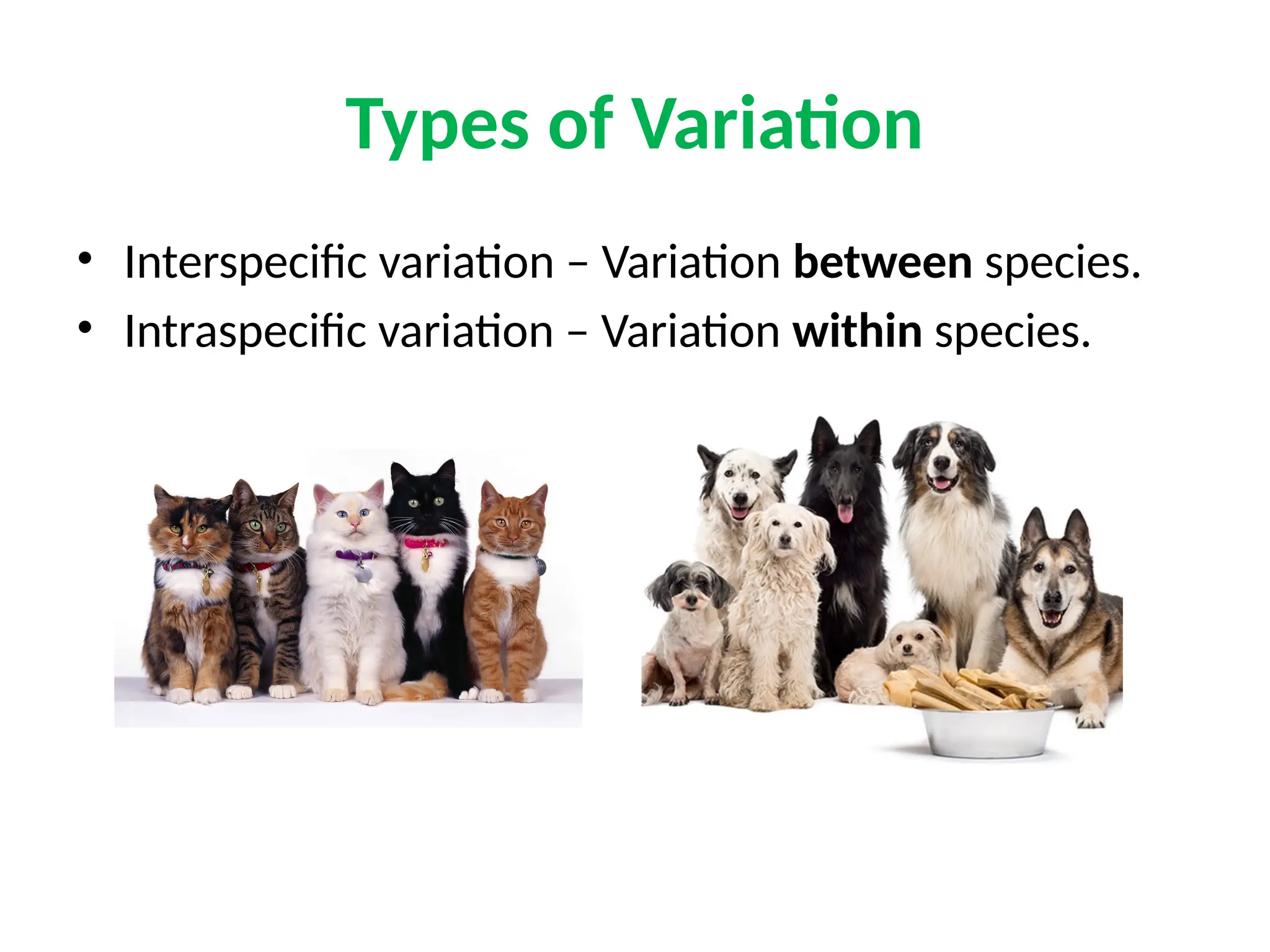
Types of Variation
•Interspecific variation – Variation between species.
• Intraspecific variation – Variation within species.
17.
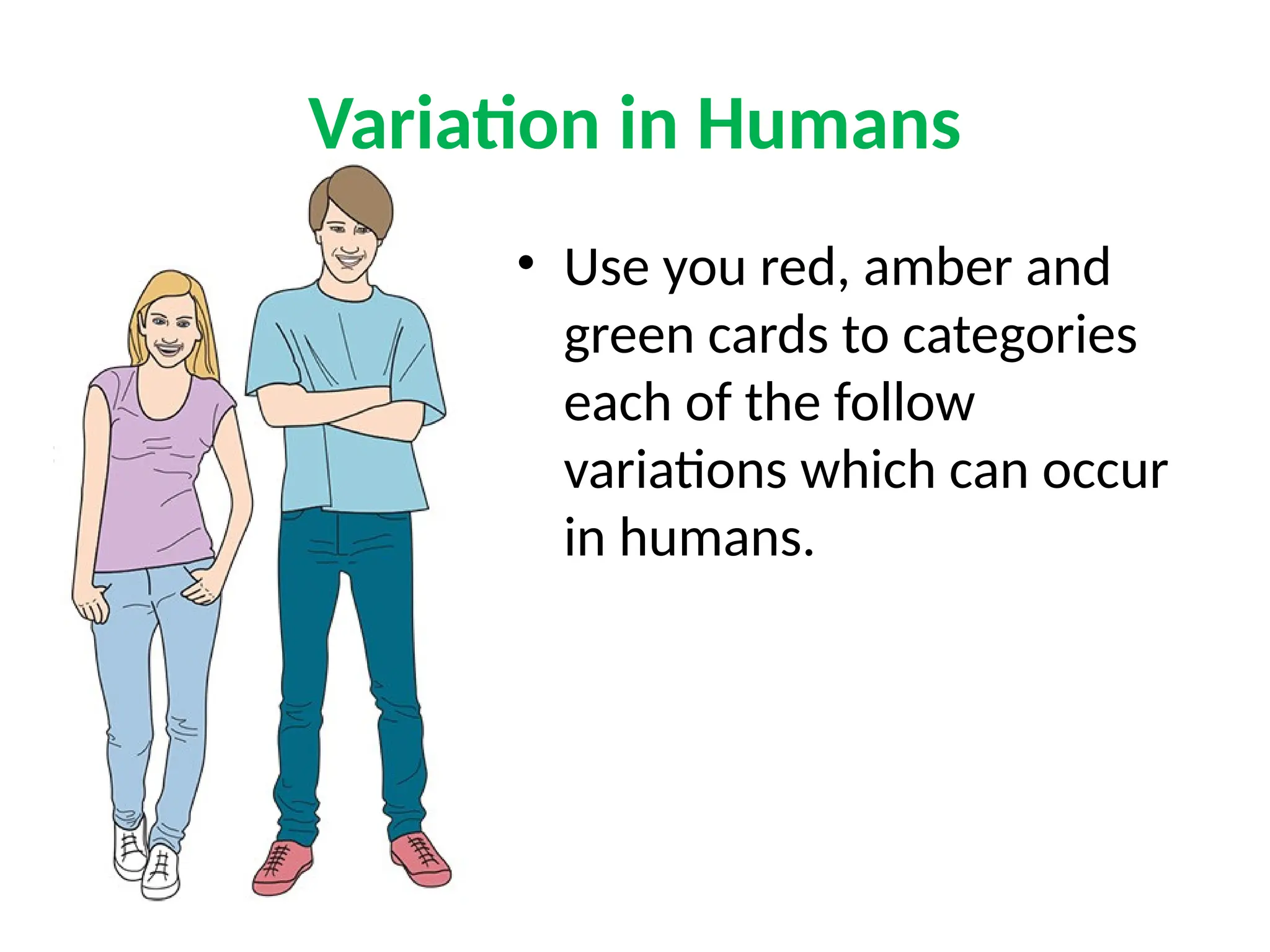
Variation in Humans
•Use you red, amber and
green cards to categories
each of the follow
variations which can occur
in humans.
Key Points
This lessonI have learnt:
• Inherited variations are
characteristics inherited from
parents
• Environmental variations are
variations caused by the
surroundings
• Many variations are affected by both
inherited and environmental factors.
Editor's Notes
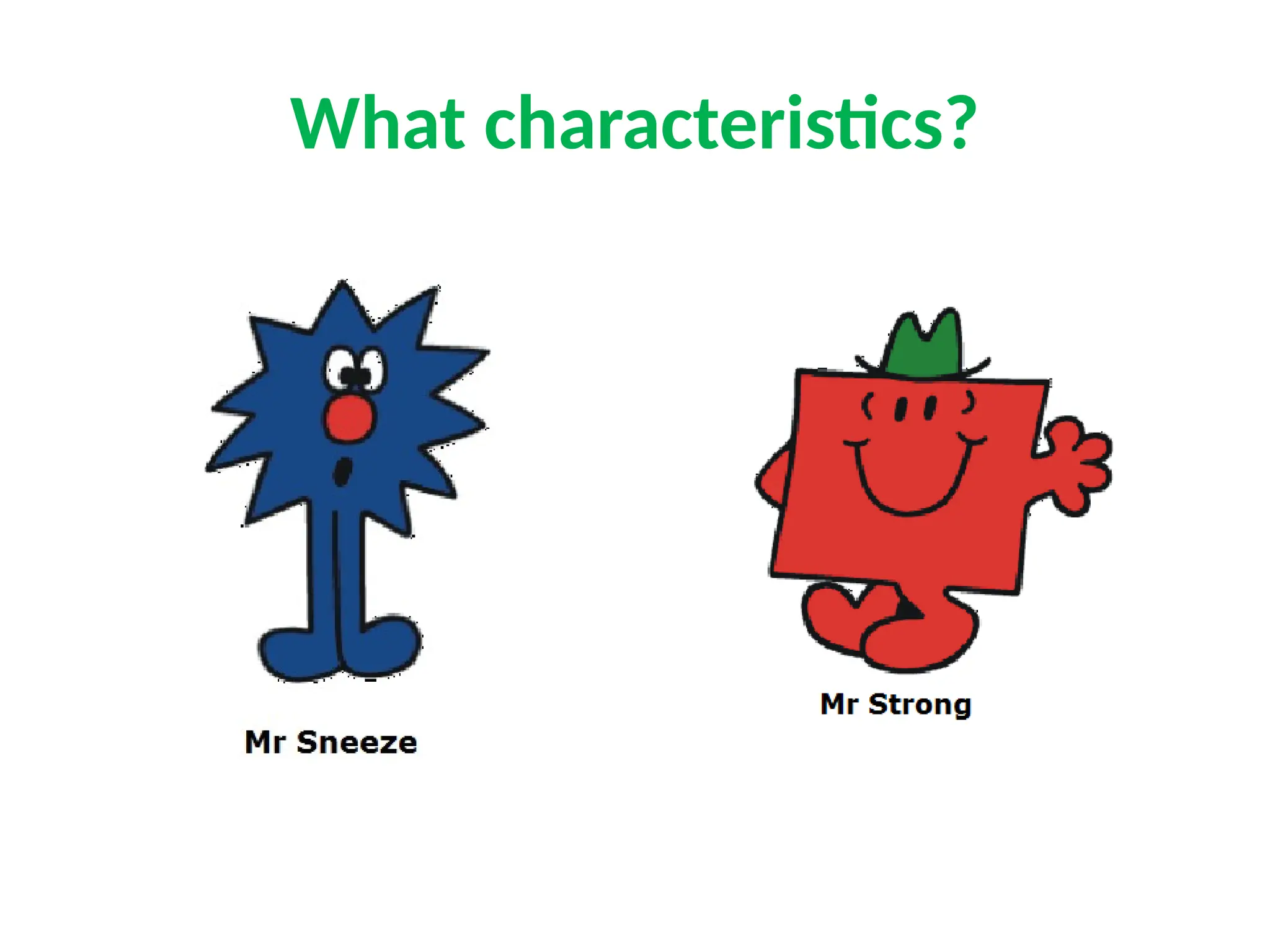
#5 Students shown two pictures of Mr Men and asked to identify their characteristics. i.e. Mr Sneeze has blue skin, long legs, red nose etc. Assess understanding of the term characteristic.
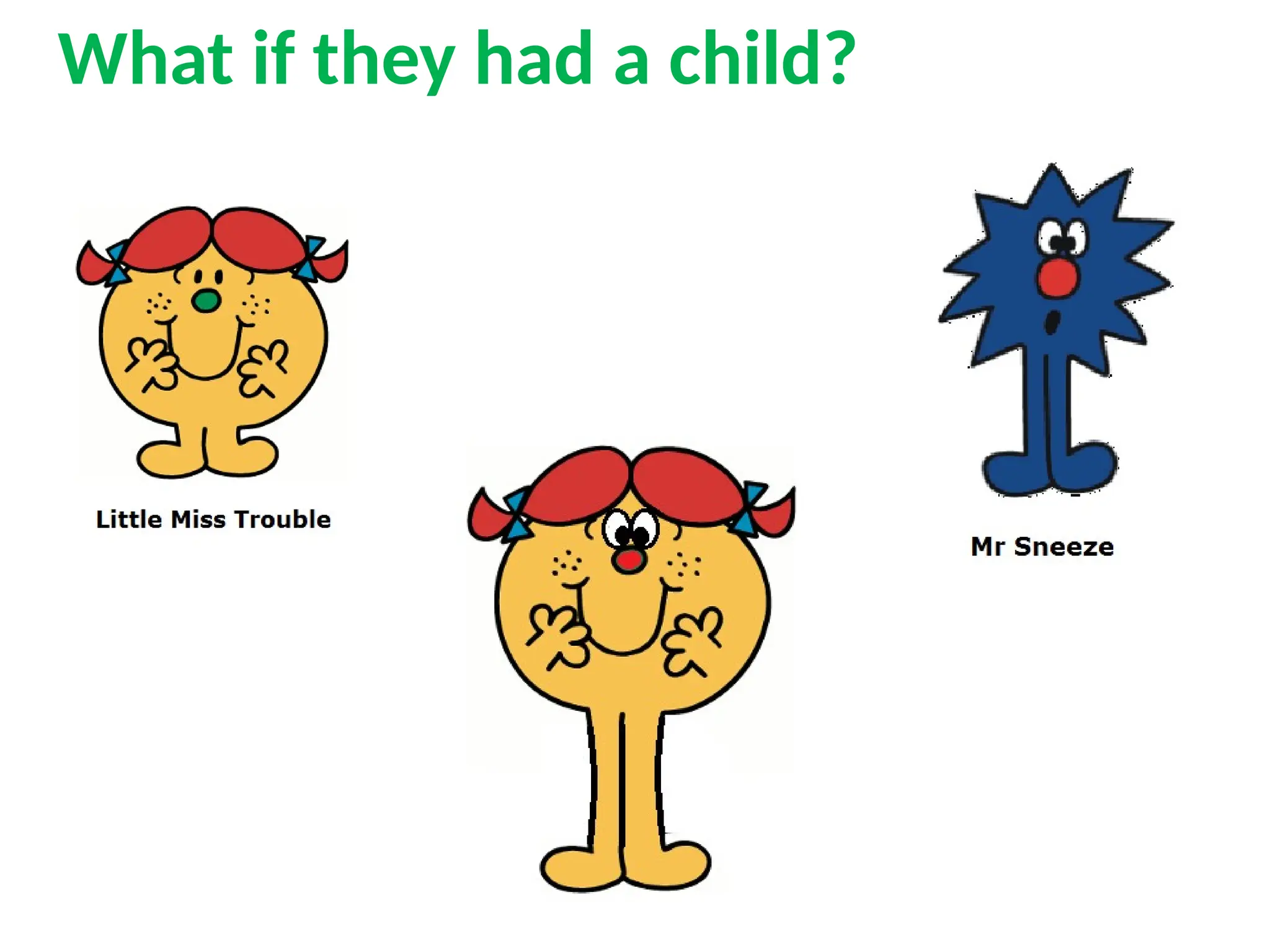
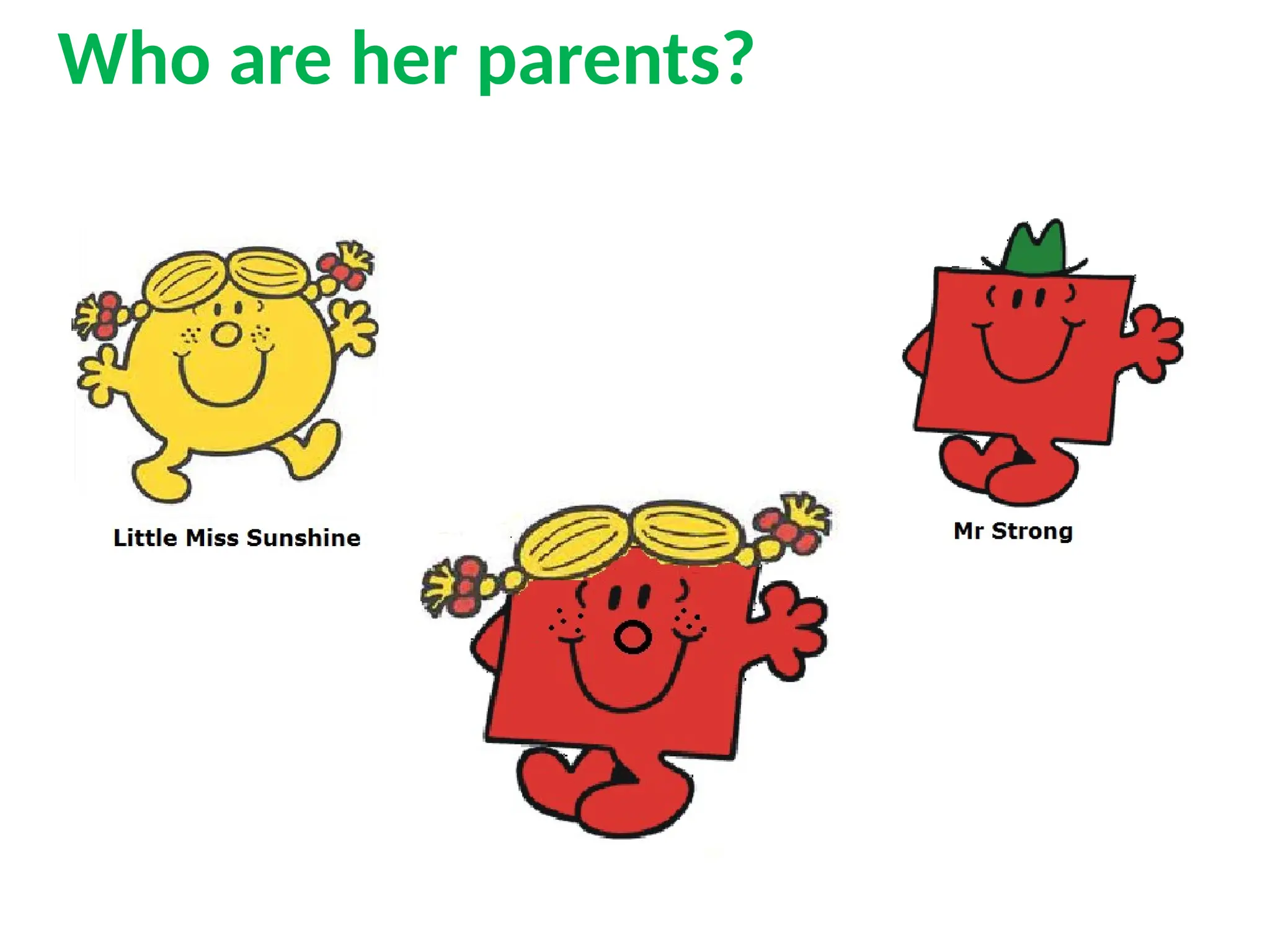
#6 Students shown potential parents and asked to hold up their “child”. Ask students how they know that is their child – expect them to say “they have the same hair as their mother” etc. Highlight that these are inherited characteristics.
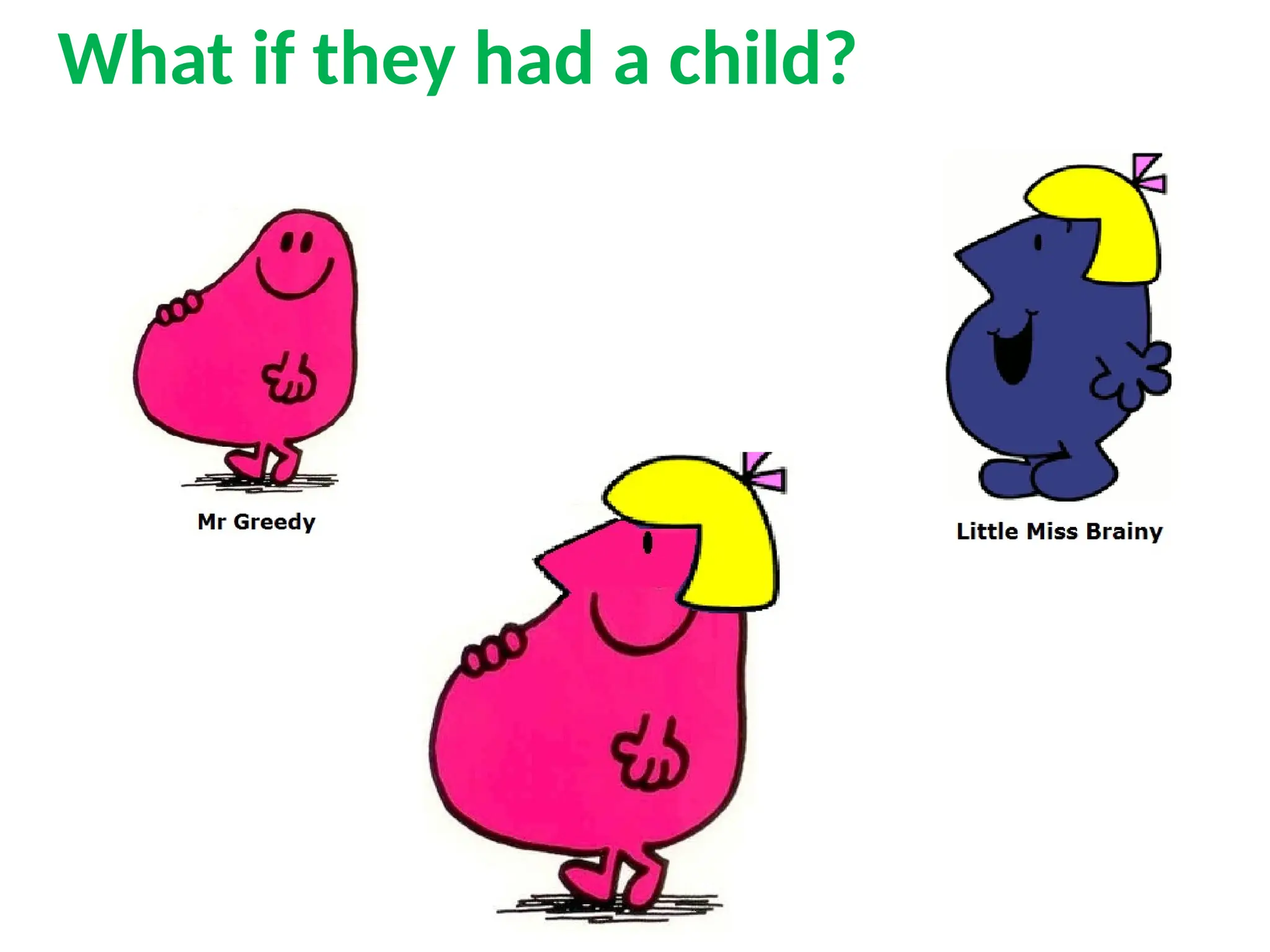
#7 Students shown another set of potential parents and asked to hold up their “child”. This time, ask which characteristics they have inherited from each parent. Encourage students to use appropriate terms.
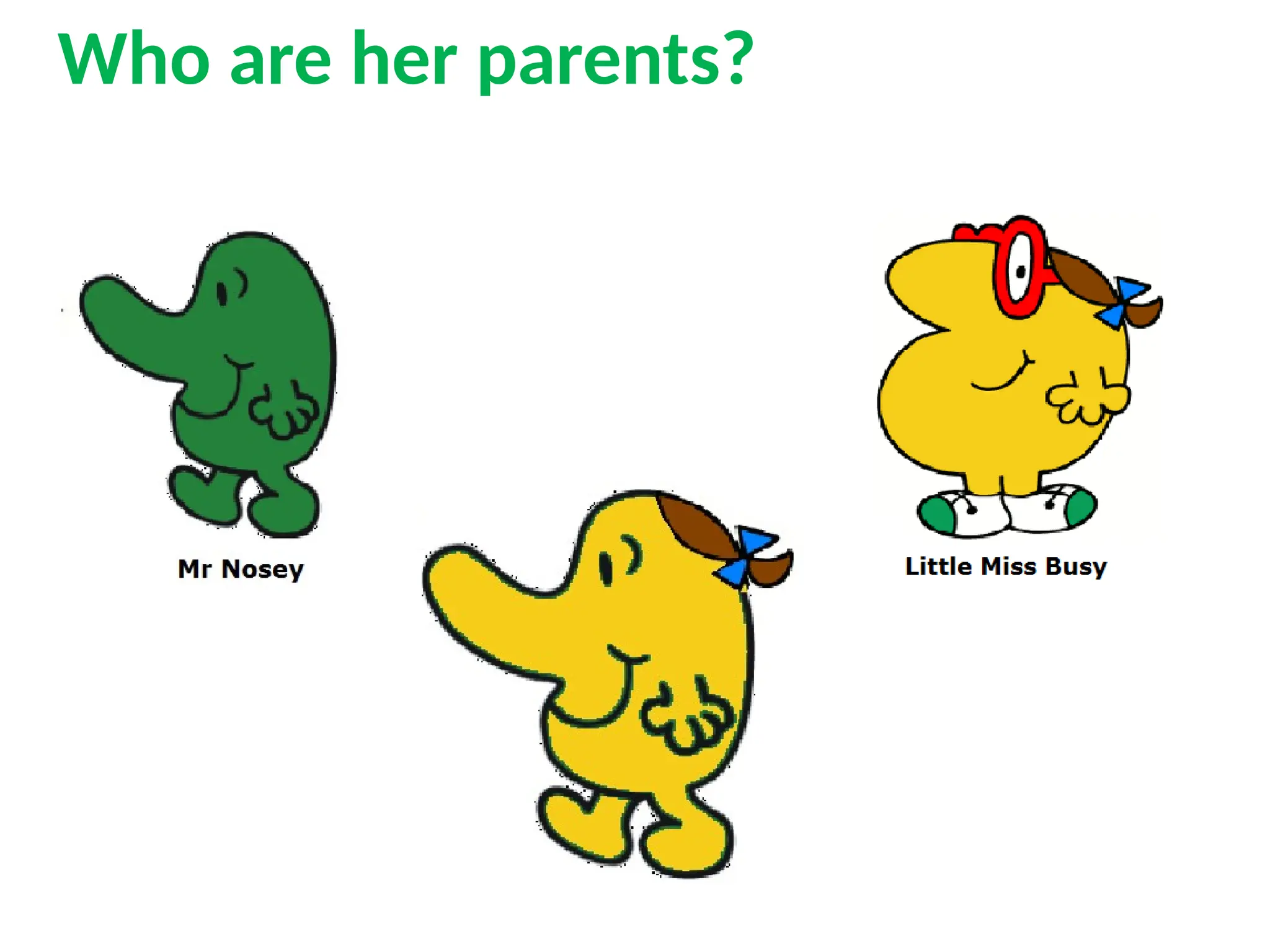
#8 Students shown a child and asked who their parents are – hold up in pairs. Again discuss how they came to this conclusion.
#9 Students shown a child and asked who their parents are – hold up in pairs. Again discuss how they came to this conclusion.
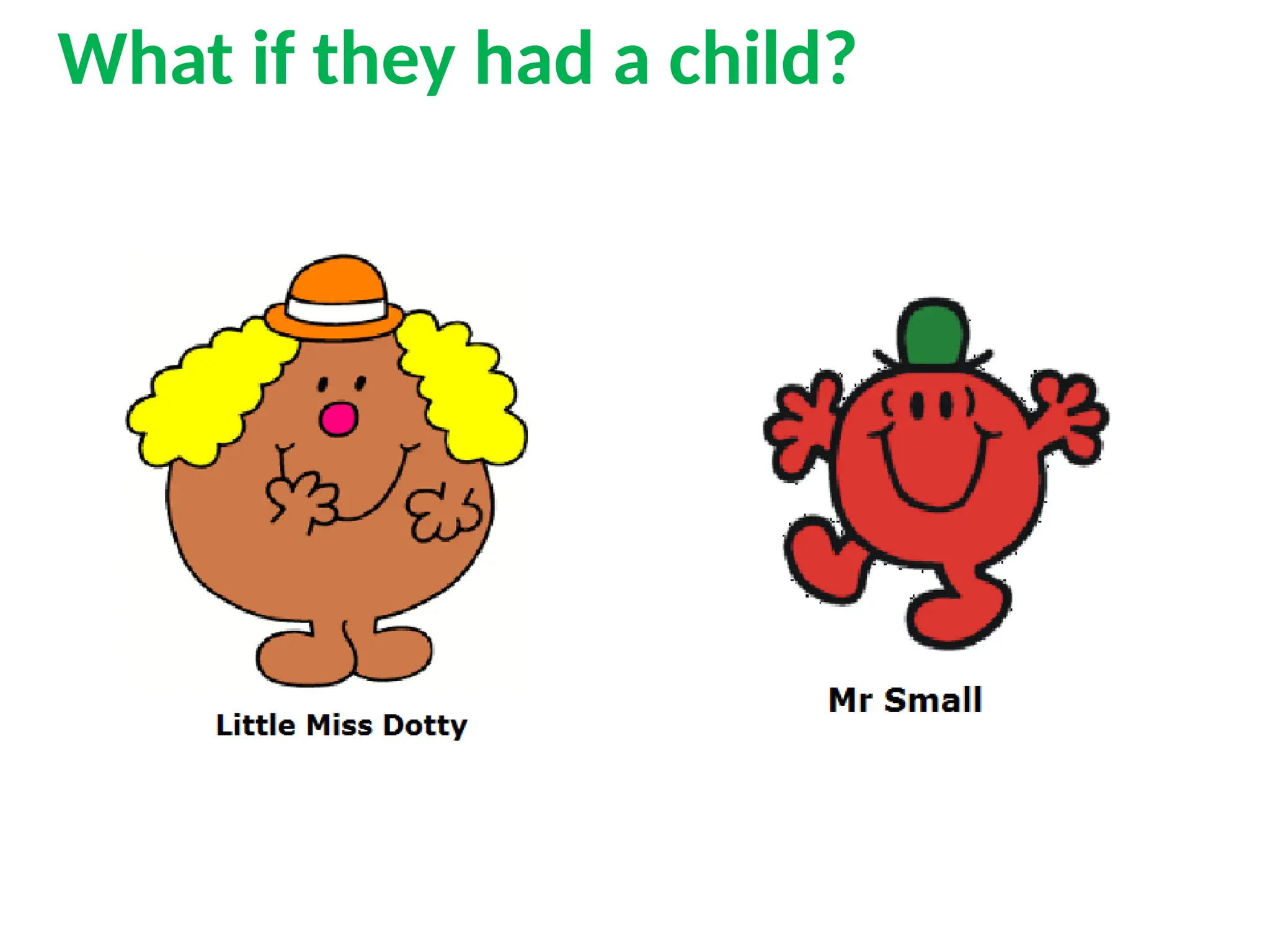
#10 Students shown the parents for whom there is not a child in their set of cards. Ask them to discuss in pairs what they think their child would look like. Take answers as a class – highlight that they come up with many different combinations, all of which are possible. This highlights why we look different from our siblings – we inherit different combinations of characteristics (link back to variation).
N.B. With higher ability class this could lead on to a discussion about dominant and recessive characteristics.
#18 Having a scar where a tattoo has been removed
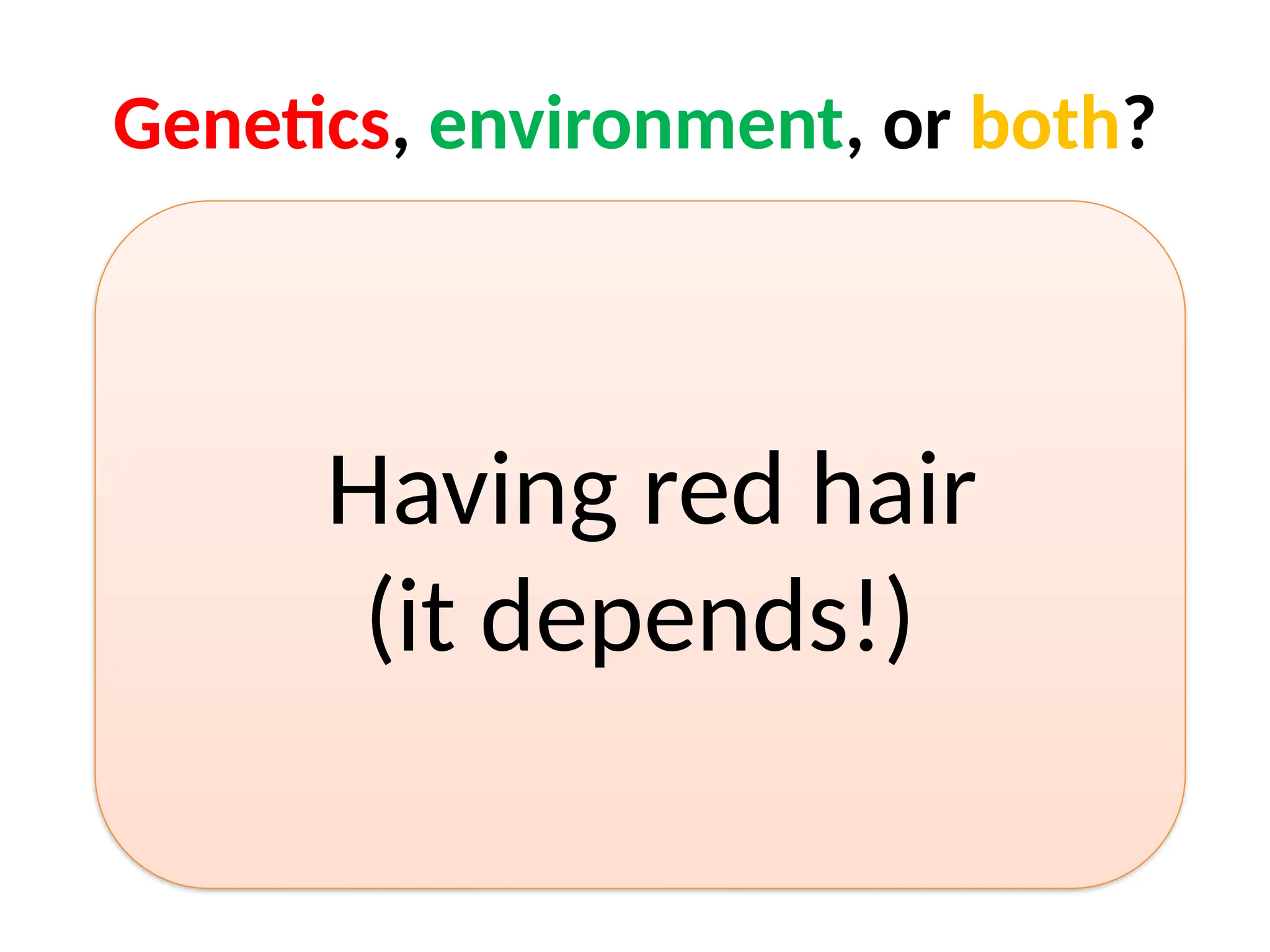
Having red hair
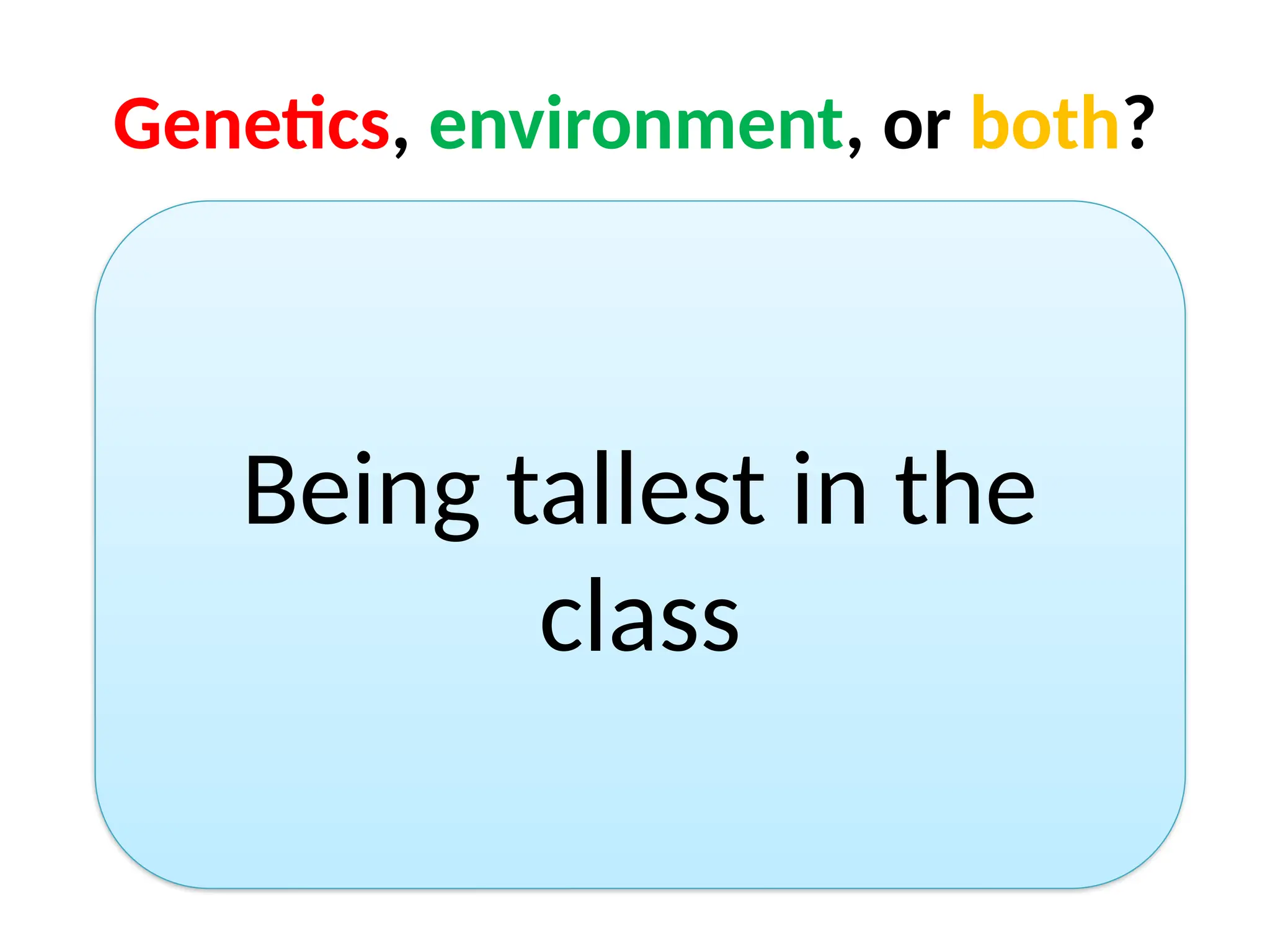
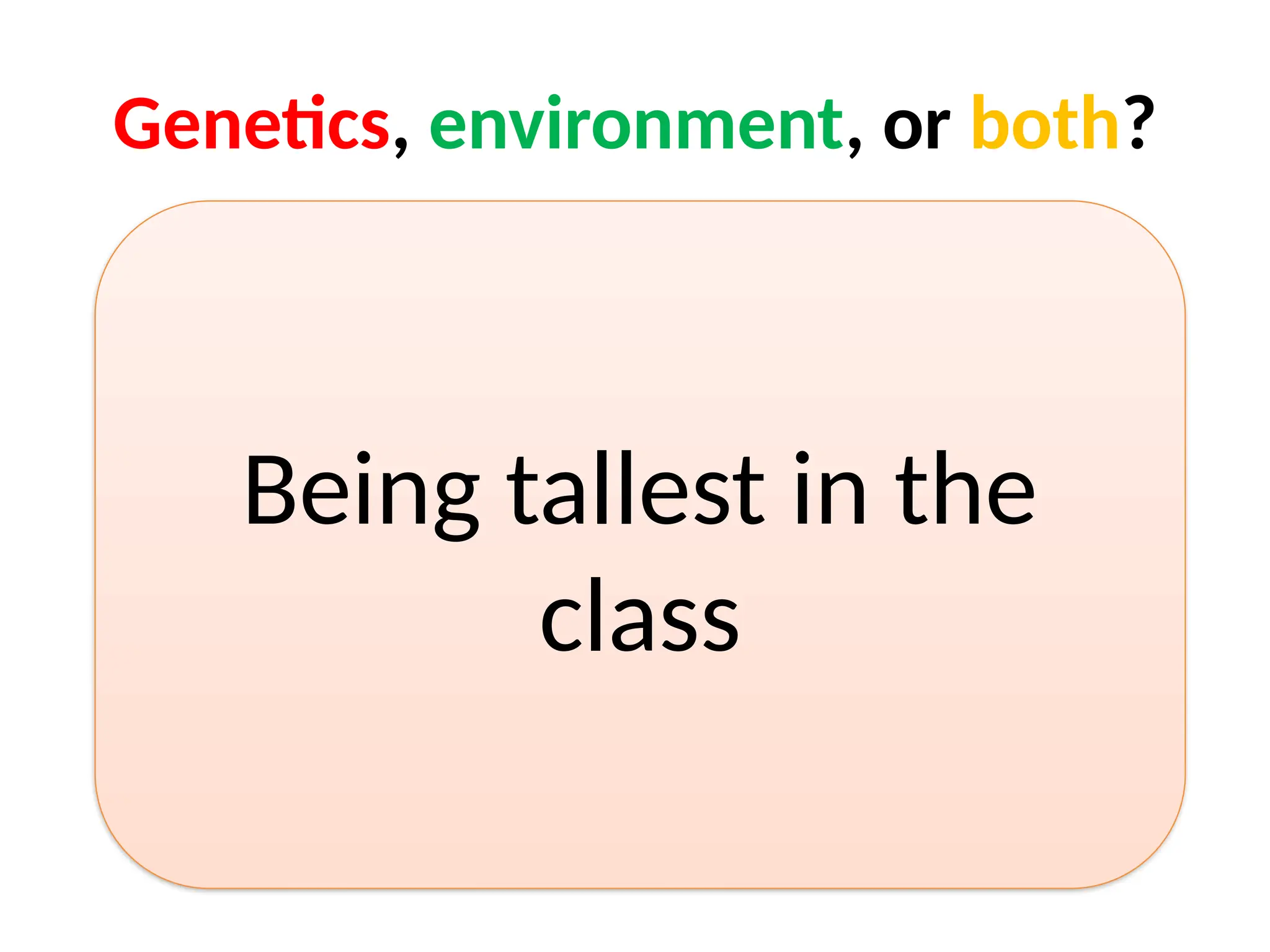
Being tallest in the class
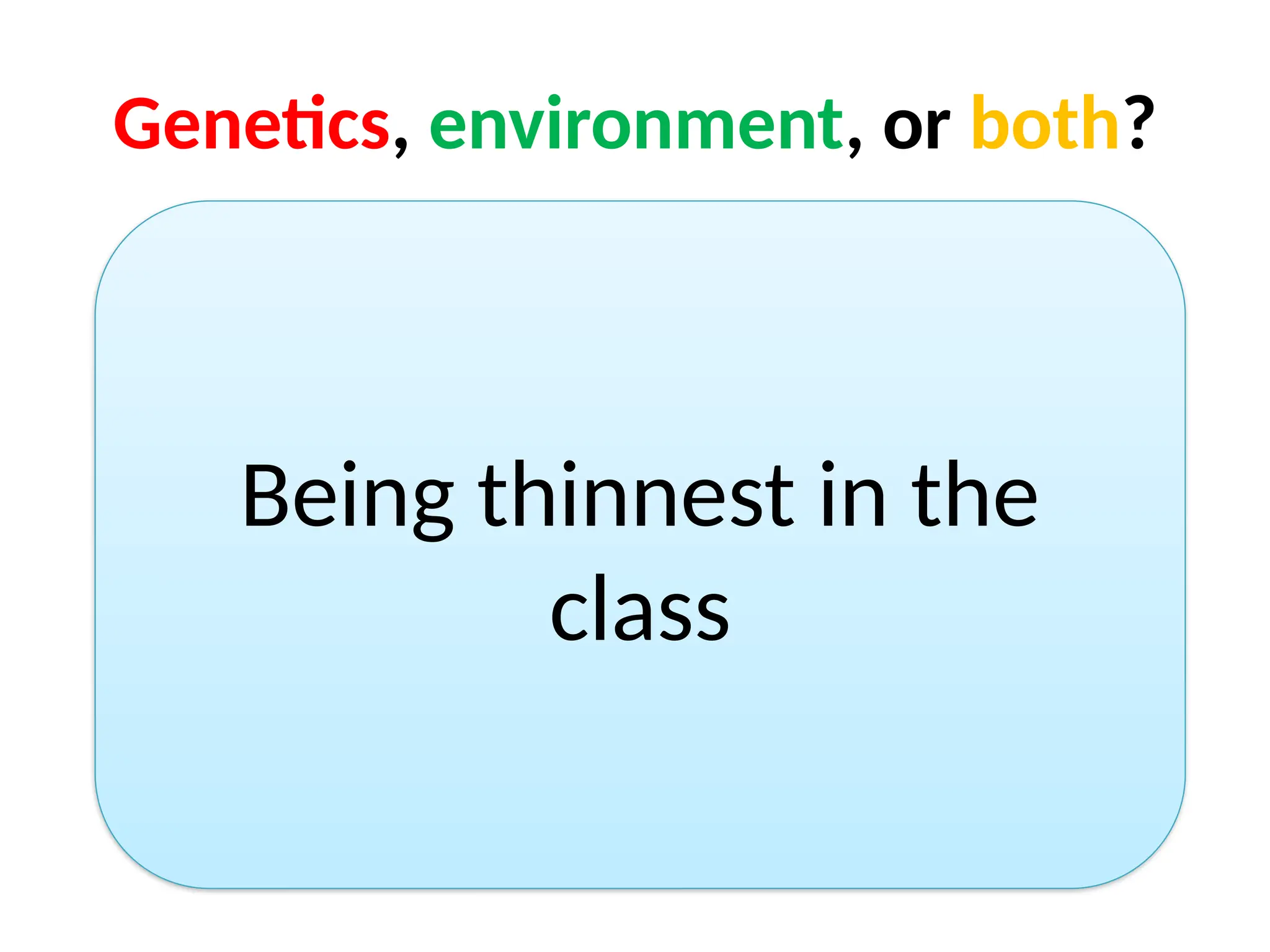
Being thinnest in the class
Suffering from cystic fibrosis
Suffering from scurvy
Having lung cancer
#19 Having a scar where a tattoo has been removed
Having red hair
Being tallest in the class
Being thinnest in the class
Suffering from cystic fibrosis
Suffering from scurvy
Having lung cancer
#20 Having a scar where a tattoo has been removed
Having red hair
Being tallest in the class
Being thinnest in the class
Suffering from cystic fibrosis
Suffering from scurvy
Having lung cancer
#21 Having a scar where a tattoo has been removed
Having red hair
Being tallest in the class
Being thinnest in the class
Suffering from cystic fibrosis
Suffering from scurvy
Having lung cancer
#22 Having a scar where a tattoo has been removed
Having red hair
Being thinnest in the class
Suffering from cystic fibrosis
Suffering from scurvy
Having lung cancer
#23 Having a scar where a tattoo has been removed
Having red hair
Being thinnest in the class
Suffering from cystic fibrosis
Suffering from scurvy
Having lung cancer
#24
Suffering from cystic fibrosis
Suffering from scurvy
Having lung cancer
#25
Suffering from cystic fibrosis
Suffering from scurvy
Having lung cancer


![6[1].1 form 5](https://cdn.slidesharecdn.com/ss_thumbnails/61-1-variationinorganisms-120603005250-phpapp01-thumbnail.jpg?width=640&height=640&fit=bounds)


