FACTS ABOUT 
GENERIC DRUGS 
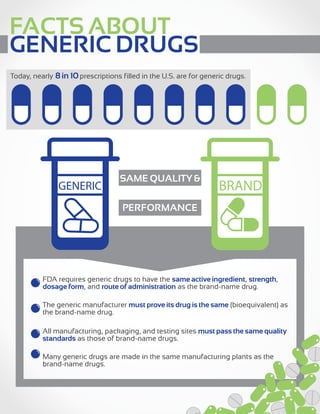
Today, nearly 8 in 10 prescriptions filled in the U.S. are for generic drugs. 
GENERIC 
SAME QUALITY & 
PERFORMANCE 
BRAND 
FDA requires generic drugs to have the same active ingredient, strength, 
dosage form, and route of administration as the brand-name drug. 
The generic manufacturer must prove its drug is the same (bioequivalent) as 
the brand-name drug. 
All manufacturing, packaging, and testing sites must pass the same quality 
standards as those of brand-name drugs. 
Many generic drugs are made in the same manufacturing plants as the 
brand-name drugs.
ALL FDA-APPROVED GENERIC DRUGS 
MUST BE EQUIVALENT TO THE BRAND-NAME DRUG. 
Any generic drug modeled after a single, brand 
name drug must perform approximately the same 
in the body as the brand name drug. There will 
always be a slight, but not medically important, 
level of natural variability just as there is for one 
batch of brand name drug compared to the next 
batch of brand name product. 
This amount of difference would be expected and 
acceptable, whether for one batch of brand name 
drug tested against another batch of the same 
brand, or for a generic tested against a brand 
name drug. 
$$$ $ 
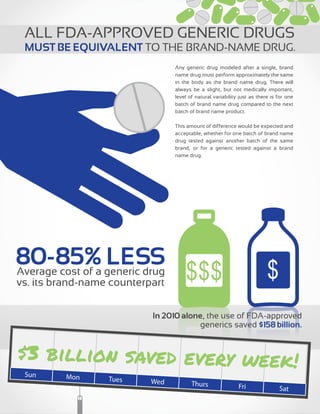
In 2010 alone, the use of FDA-approved 
generics saved $158 billion. 
$$$ $ 
80-85% LESS 
Average cost of a generic drug 
vs. its brand-name counterpart 
$3 billion saved every week! 
Sun Mon Tues Wed Thurs Fri Sat
THE LOWER PRICE 
DOESN’T MEAN INFERIOR. 
Generic manufacturers are able to sell their products for lower 
prices because they are not required to repeat the costly 
clinical trials of new drugs and generally do not pay for costly 
advertising, marketing, and promotion In addition, multiple 
generic companies apply to FDA to approve a generic for the 
same brand name drugs. Multiple generic companies are 
often approved to market a single product. Competition in the 
market place, often results in lower prices. 
$ $$$ 
FDA MONITORS ADVERSE EVENTS 
REPORTS FOR GENERIC DRUGS. 
The monitoring of adverse events for all drug products, 
including generic drugs, is one aspect of the overall FDA 
effort to evaluate the safety of drugs after approval. Many 
times, reports of adverse events describe a known 
reaction to the active drug ingredient. 
Reports are monitored and investigated, when appropriate. 
Investigations may lead to changes in how a product is used 
or manufactured. 
FDA IS ACTIVELY ENGAGED IN 
MAKING GENERIC DRUGS SAFER. 
FDA is aware that there are reports that some people may experience an undesired 
effect when switching from a brand name drug to a generic formulation or from 
one generic drug to another generic drug. FDA wants to understand what may 
cause problems with certain formulations if, in fact, they are linked to specific 
generic products. 
FDA is encouraging the generic industry to investigate whether, and under what 
circumstances, such problems occur. The Agency does not have the resources to 
perform independent clinical studies and lacks the regulatory authority to require 
industry to conduct such studies. FDA will continue to investigate these reports to 
ensure that it has all the facts about these treatment failures and will make 
recommendations to healthcare professionals and the public if the need arises. 
1Davit et al. Comparing generic and innovator drugs: 
a review of 12 years of bioequivalence data from the United States Food and Drug Administration. 
Ann Pharmacother. 2009;43(10):1583-97.

Generic Medication vs Brand name

  • 1.
    FACTS ABOUT GENERICDRUGS Today, nearly 8 in 10 prescriptions filled in the U.S. are for generic drugs. GENERIC SAME QUALITY & PERFORMANCE BRAND FDA requires generic drugs to have the same active ingredient, strength, dosage form, and route of administration as the brand-name drug. The generic manufacturer must prove its drug is the same (bioequivalent) as the brand-name drug. All manufacturing, packaging, and testing sites must pass the same quality standards as those of brand-name drugs. Many generic drugs are made in the same manufacturing plants as the brand-name drugs.
  • 2.
    ALL FDA-APPROVED GENERICDRUGS MUST BE EQUIVALENT TO THE BRAND-NAME DRUG. Any generic drug modeled after a single, brand name drug must perform approximately the same in the body as the brand name drug. There will always be a slight, but not medically important, level of natural variability just as there is for one batch of brand name drug compared to the next batch of brand name product. This amount of difference would be expected and acceptable, whether for one batch of brand name drug tested against another batch of the same brand, or for a generic tested against a brand name drug. $$$ $ In 2010 alone, the use of FDA-approved generics saved $158 billion. $$$ $ 80-85% LESS Average cost of a generic drug vs. its brand-name counterpart $3 billion saved every week! Sun Mon Tues Wed Thurs Fri Sat
  • 3.
    THE LOWER PRICE DOESN’T MEAN INFERIOR. Generic manufacturers are able to sell their products for lower prices because they are not required to repeat the costly clinical trials of new drugs and generally do not pay for costly advertising, marketing, and promotion In addition, multiple generic companies apply to FDA to approve a generic for the same brand name drugs. Multiple generic companies are often approved to market a single product. Competition in the market place, often results in lower prices. $ $$$ FDA MONITORS ADVERSE EVENTS REPORTS FOR GENERIC DRUGS. The monitoring of adverse events for all drug products, including generic drugs, is one aspect of the overall FDA effort to evaluate the safety of drugs after approval. Many times, reports of adverse events describe a known reaction to the active drug ingredient. Reports are monitored and investigated, when appropriate. Investigations may lead to changes in how a product is used or manufactured. FDA IS ACTIVELY ENGAGED IN MAKING GENERIC DRUGS SAFER. FDA is aware that there are reports that some people may experience an undesired effect when switching from a brand name drug to a generic formulation or from one generic drug to another generic drug. FDA wants to understand what may cause problems with certain formulations if, in fact, they are linked to specific generic products. FDA is encouraging the generic industry to investigate whether, and under what circumstances, such problems occur. The Agency does not have the resources to perform independent clinical studies and lacks the regulatory authority to require industry to conduct such studies. FDA will continue to investigate these reports to ensure that it has all the facts about these treatment failures and will make recommendations to healthcare professionals and the public if the need arises. 1Davit et al. Comparing generic and innovator drugs: a review of 12 years of bioequivalence data from the United States Food and Drug Administration. Ann Pharmacother. 2009;43(10):1583-97.