Service Solution Architect

           What is it?
       What is the work?
     What is the deliverable?
      What does it take?
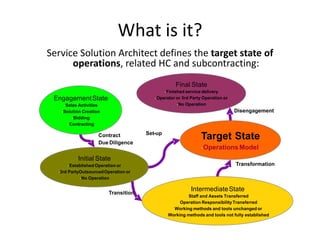
What is it?
Service Solution Architect defines the target state of
      operations, related HC and subcontracting:
                                                   Final State
                                             -Finished service delivery
 Engagement State                        -Operator or 3rd Party Operation or
    -Sales Activities                              -No Operation
   -Solution Creation                                                          Disengagement
        -Bidding
      -Contracting

                                      Set-up
                    Contract
                    Due Diligence
                                                               Target State
                                                               -Operations Model
           Initial State
       -Established Operation or                                               Transformation
  -3rd PartyOutsourced Operation or
            -No Operation

                                                          Intermediate State
                         Transition
                                                        -Staff and Assets Transferred
                                                    -Operation Responsibility Transferred
                                                 -Working methods and tools unchanged or
                                               -Working methods and tools not fully established
Start                                                     Start

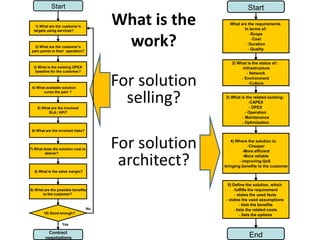
   1) What are the customer’s
  targets using services?
                                         What is the        What are the requirements
                                                                   In terms of:
                                                                      -Scope


   2) What are the customer’s
 pain points in their operation?
                                          work?                        -Cost
                                                                    - Duration
                                                                     - Quality


                                                             2) What is the status of::
  3) What is the existing OPEX                                    -Infrastructure
   baseline for the customer?
                                                                     - Network


 4) What available solution
                                         For solution             - Environment
                                                                      -Culture


                                           selling?
       cures the pain ?
                                                          3) What is the related existing:
                                                                       -CAPEX
    5) What are the involved                                           - OPEX
          SLA / KPI?                                                 - Operation
                                                                   - Maintenance
                                                                  - Optimisation

 6) What are the involved risks?


7) What does the solution cost to
         deliver?
                                         For solution        4) Where the solution is:
                                                                      -Cheaper
                                                                    -More efficient


  8) What is the sales margin?
                                          architect?                -More reliable
                                                                  - improving QoS
                                                        - bringing benefits to the customer


                                                           5) Define the solution, which
9) What are the possible benefits                             -fulfills the requirement
       to the customer?                                        - states the used facts
                                                          - states the used assumptions
                                                                   - lists the benefits
                                    No                         - lists the related costs
        10) Good enough?                                           - lists the options

                   Yes

          Contract
         negotiations                                                 End
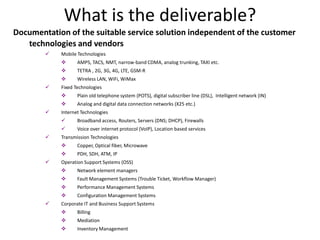
What is the deliverable?
Documentation of the suitable service solution independent of the customer
   technologies and vendors
           Mobile Technologies
                  AMPS, TACS, NMT, narrow-band CDMA, analog trunking, TAXI etc.
                  TETRA , 2G, 3G, 4G, LTE, GSM-R
                  Wireless LAN, WiFi, WiMax
           Fixed Technologies
                  Plain old telephone system (POTS), digital subscriber line (DSL), Intelligent network (IN)
                  Analog and digital data connection networks (X25 etc.)
           Internet Technologies
                  Broadband access, Routers, Servers (DNS; DHCP), Firewalls
                  Voice over internet protocol (VoIP), Location based services
           Transmission Technologies
                  Copper, Optical fiber, Microwave
                  PDH, SDH, ATM, IP
           Operation Support Systems (OSS)
                  Network element managers
                  Fault Management Systems (Trouble Ticket, Workflow Manager)
                  Performance Management Systems
                  Configuration Management Systems
           Corporate IT and Business Support Systems
                  Billing
                  Mediation
                  Inventory Management
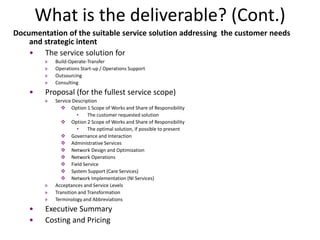
What is the deliverable? (Cont.)
Documentation of the suitable service solution addressing the customer needs
    and strategic intent
    • The service solution for
         »   Build-Operate-Transfer
         »   Operations Start-up / Operations Support
         »   Outsourcing
         »   Consulting
    •    Proposal (for the fullest service scope)
         »   Service Description
                 Option 1 Scope of Works and Share of Responsibility
                       •    The customer requested solution
                 Option 2 Scope of Works and Share of Responsibility
                       •    The optimal solution, if possible to present
                 Governance and Interaction
                 Administrative Services
                 Network Design and Optimization
                 Network Operations
                 Field Service
                 System Support (Care Services)
                 Network Implementation (NI Services)
         »   Acceptances and Service Levels
         »   Transition and Transformation
         »   Terminology and Abbreviations
    •    Executive Summary
    •    Costing and Pricing
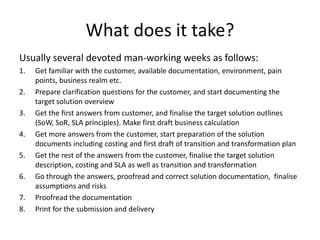
What does it take?
Usually several devoted man-working weeks as follows:
1.   Get familiar with the customer, available documentation, environment, pain
     points, business realm etc.
2.   Prepare clarification questions for the customer, and start documenting the
     target solution overview
3.   Get the first answers from customer, and finalise the target solution outlines
     (SoW, SoR, SLA principles). Make first draft business calculation
4.   Get more answers from the customer, start preparation of the solution
     documents including costing and first draft of transition and transformation plan
5.   Get the rest of the answers from the customer, finalise the target solution
     description, costing and SLA as well as transition and transformation
6.   Go through the answers, proofread and correct solution documentation, finalise
     assumptions and risks
7.   Proofread the documentation
8.   Print for the submission and delivery
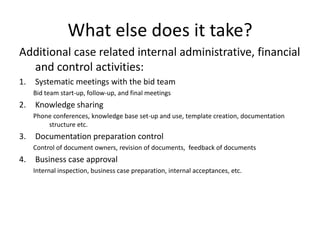
What else does it take?
Additional case related internal administrative, financial
  and control activities:
1.   Systematic meetings with the bid team
     Bid team start-up, follow-up, and final meetings
2.   Knowledge sharing
     Phone conferences, knowledge base set-up and use, template creation, documentation
         structure etc.
3.   Documentation preparation control
     Control of document owners, revision of documents, feedback of documents
4.   Business case approval
     Internal inspection, business case preparation, internal acceptances, etc.

Generic work description

  • 1.
    Service Solution Architect What is it? What is the work? What is the deliverable? What does it take?
  • 2.
    What is it? ServiceSolution Architect defines the target state of operations, related HC and subcontracting: Final State -Finished service delivery Engagement State -Operator or 3rd Party Operation or -Sales Activities -No Operation -Solution Creation Disengagement -Bidding -Contracting Set-up Contract Due Diligence Target State -Operations Model Initial State -Established Operation or Transformation -3rd PartyOutsourced Operation or -No Operation Intermediate State Transition -Staff and Assets Transferred -Operation Responsibility Transferred -Working methods and tools unchanged or -Working methods and tools not fully established
  • 3.
    Start Start 1) What are the customer’s targets using services? What is the What are the requirements In terms of: -Scope 2) What are the customer’s pain points in their operation? work? -Cost - Duration - Quality 2) What is the status of:: 3) What is the existing OPEX -Infrastructure baseline for the customer? - Network 4) What available solution For solution - Environment -Culture selling? cures the pain ? 3) What is the related existing: -CAPEX 5) What are the involved - OPEX SLA / KPI? - Operation - Maintenance - Optimisation 6) What are the involved risks? 7) What does the solution cost to deliver? For solution 4) Where the solution is: -Cheaper -More efficient 8) What is the sales margin? architect? -More reliable - improving QoS - bringing benefits to the customer 5) Define the solution, which 9) What are the possible benefits -fulfills the requirement to the customer? - states the used facts - states the used assumptions - lists the benefits No - lists the related costs 10) Good enough? - lists the options Yes Contract negotiations End
  • 4.
    What is thedeliverable? Documentation of the suitable service solution independent of the customer technologies and vendors  Mobile Technologies  AMPS, TACS, NMT, narrow-band CDMA, analog trunking, TAXI etc.  TETRA , 2G, 3G, 4G, LTE, GSM-R  Wireless LAN, WiFi, WiMax  Fixed Technologies  Plain old telephone system (POTS), digital subscriber line (DSL), Intelligent network (IN)  Analog and digital data connection networks (X25 etc.)  Internet Technologies  Broadband access, Routers, Servers (DNS; DHCP), Firewalls  Voice over internet protocol (VoIP), Location based services  Transmission Technologies  Copper, Optical fiber, Microwave  PDH, SDH, ATM, IP  Operation Support Systems (OSS)  Network element managers  Fault Management Systems (Trouble Ticket, Workflow Manager)  Performance Management Systems  Configuration Management Systems  Corporate IT and Business Support Systems  Billing  Mediation  Inventory Management
  • 5.
    What is thedeliverable? (Cont.) Documentation of the suitable service solution addressing the customer needs and strategic intent • The service solution for » Build-Operate-Transfer » Operations Start-up / Operations Support » Outsourcing » Consulting • Proposal (for the fullest service scope) » Service Description  Option 1 Scope of Works and Share of Responsibility • The customer requested solution  Option 2 Scope of Works and Share of Responsibility • The optimal solution, if possible to present  Governance and Interaction  Administrative Services  Network Design and Optimization  Network Operations  Field Service  System Support (Care Services)  Network Implementation (NI Services) » Acceptances and Service Levels » Transition and Transformation » Terminology and Abbreviations • Executive Summary • Costing and Pricing
  • 6.
    What does ittake? Usually several devoted man-working weeks as follows: 1. Get familiar with the customer, available documentation, environment, pain points, business realm etc. 2. Prepare clarification questions for the customer, and start documenting the target solution overview 3. Get the first answers from customer, and finalise the target solution outlines (SoW, SoR, SLA principles). Make first draft business calculation 4. Get more answers from the customer, start preparation of the solution documents including costing and first draft of transition and transformation plan 5. Get the rest of the answers from the customer, finalise the target solution description, costing and SLA as well as transition and transformation 6. Go through the answers, proofread and correct solution documentation, finalise assumptions and risks 7. Proofread the documentation 8. Print for the submission and delivery
  • 7.
    What else doesit take? Additional case related internal administrative, financial and control activities: 1. Systematic meetings with the bid team Bid team start-up, follow-up, and final meetings 2. Knowledge sharing Phone conferences, knowledge base set-up and use, template creation, documentation structure etc. 3. Documentation preparation control Control of document owners, revision of documents, feedback of documents 4. Business case approval Internal inspection, business case preparation, internal acceptances, etc.