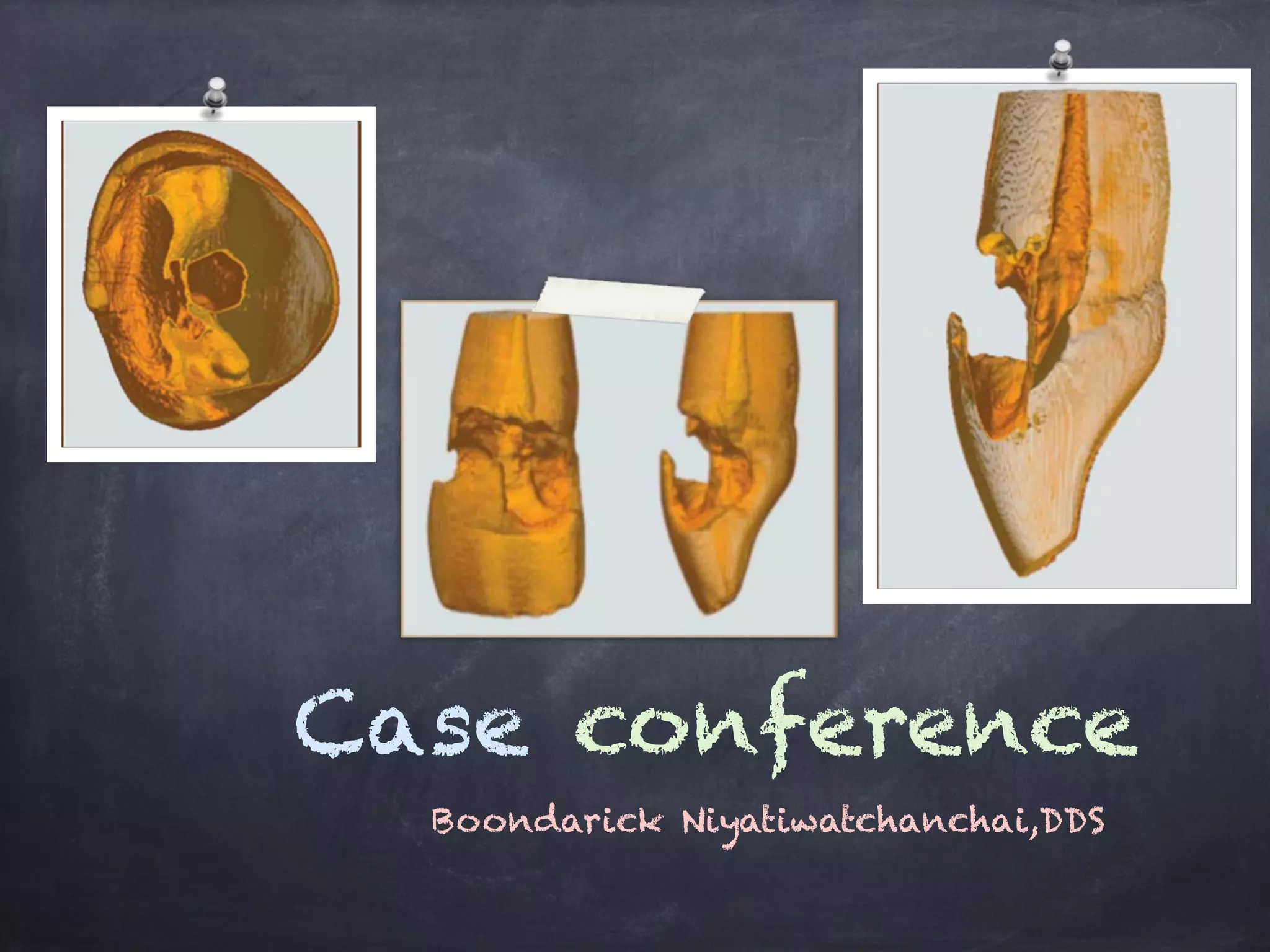
Case conference 
Boondarick Niyatiwatchanchai,DDS
Patient History 
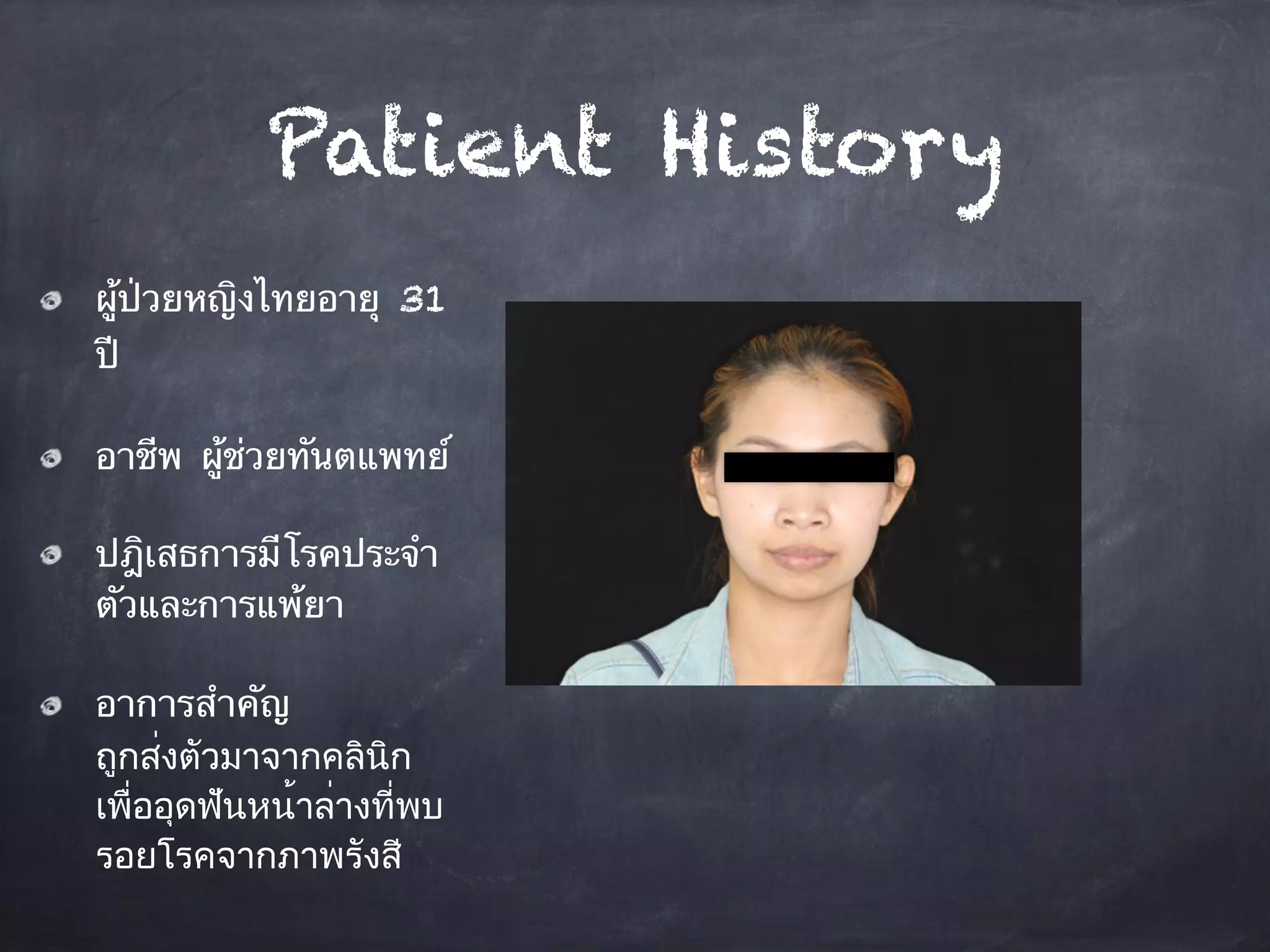
ผู้ป่วยหญิงไทยอายุ 31 
ปี 
อาชีพ ผู้ช่วยทันตแพทย์ 
ปฎิเสธการมีโรคประจำ 
ตัวและการแพ้ยา 
อาการสำคัญ 
ถูกส่งตัวมาจากคลินิก 
เพื่ออุดฟันหน้าล่างที่พบ 
รอยโรคจากภาพรังสี
Dental history and 
present illness 
ผู้ป่วยรู้สึกว่าฟันหน้ามีลักษณะสั้นลงในช่วงเวลา 1 ปี 
ที่ผ่านมา และพบฟันผุบริเวณคอฟันของฟันหน้าล่าง 
จากฟิล์ม x-ray จึงได้รับคำแนะนำให้มารักษาที่ 
คณะทันตแพทยศาสตร์ จุฬาลงกรณ์มหาวิทยาลัย
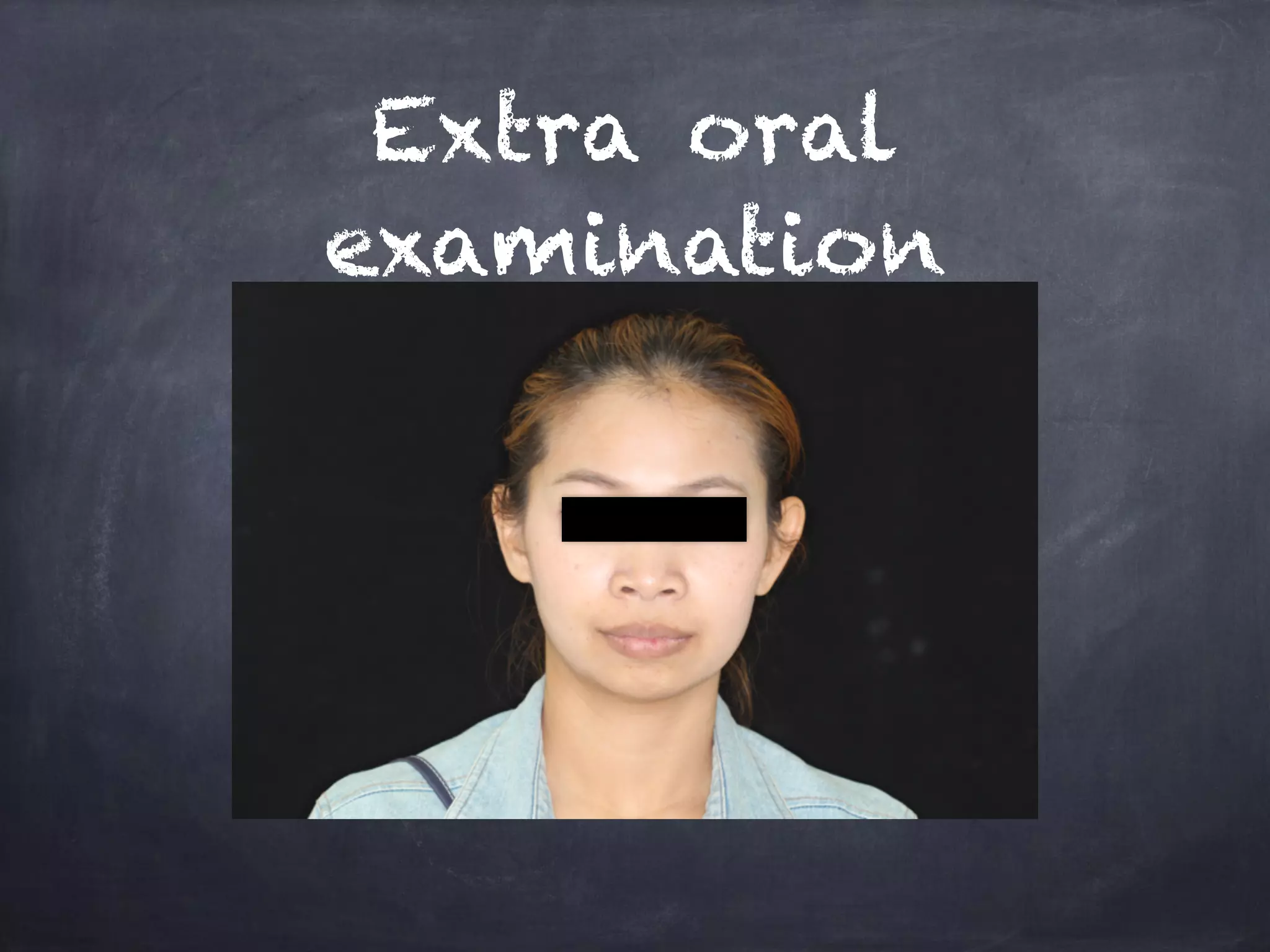
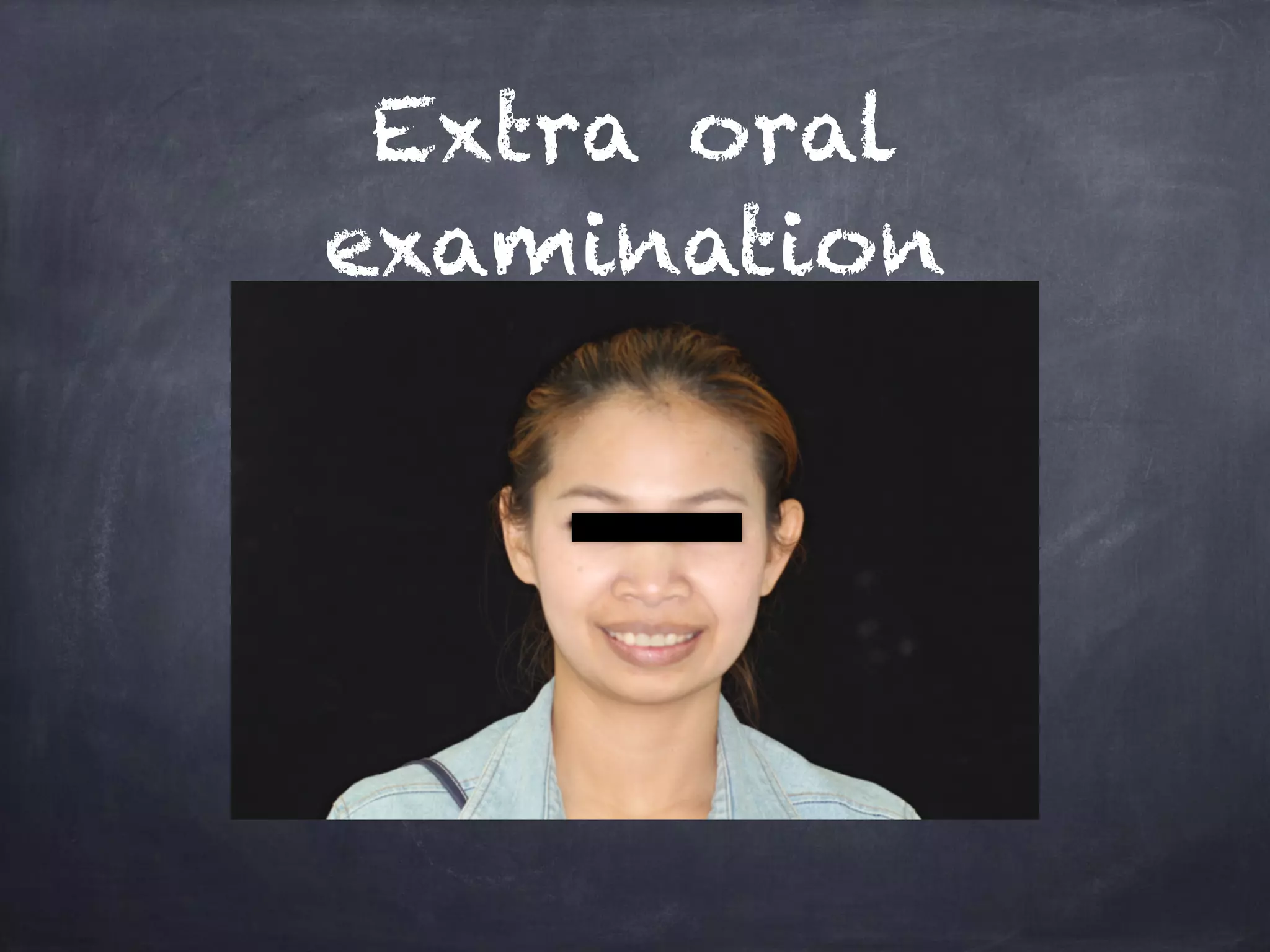
Extra oral 
examination
Extra oral 
examination
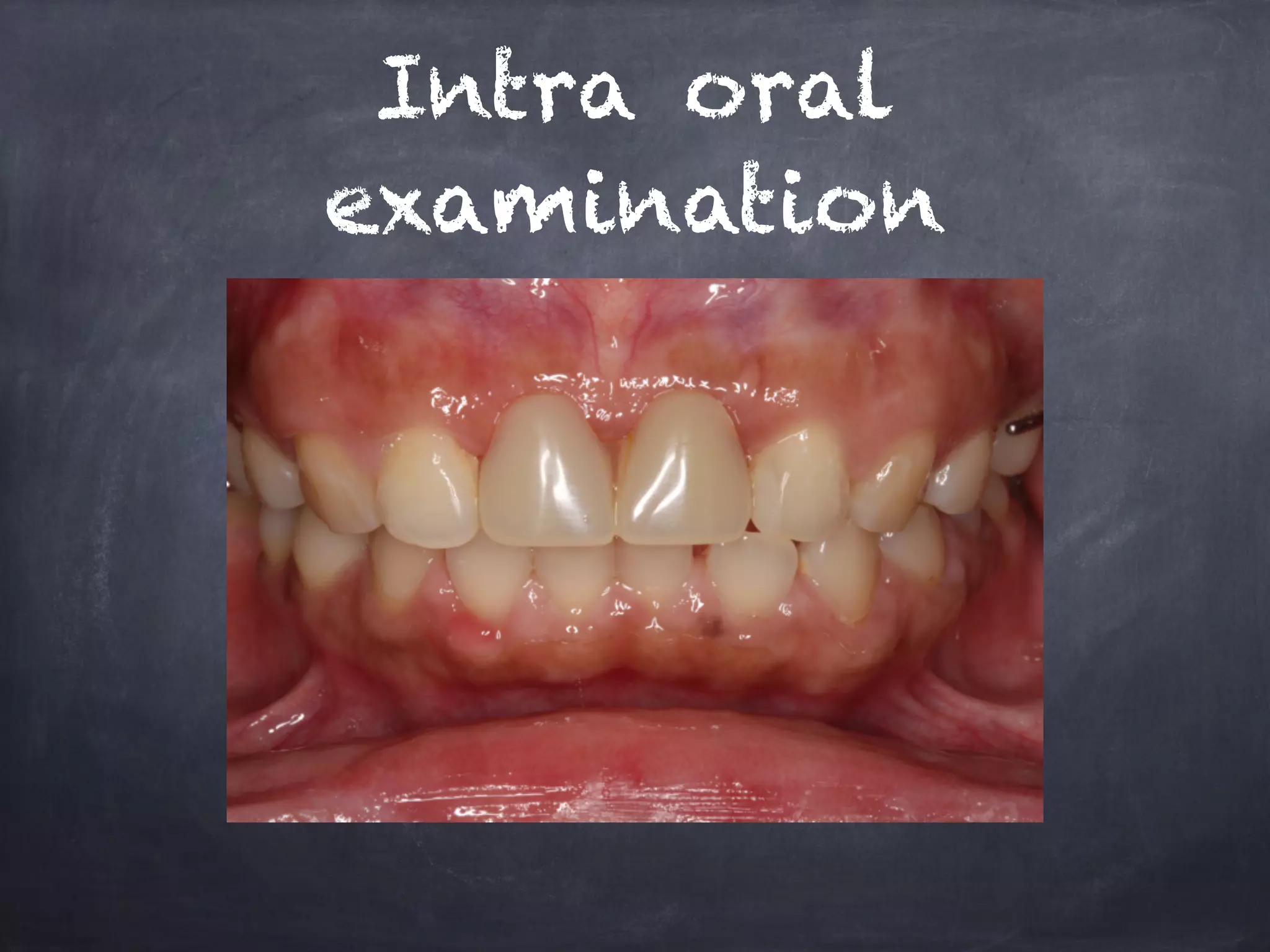
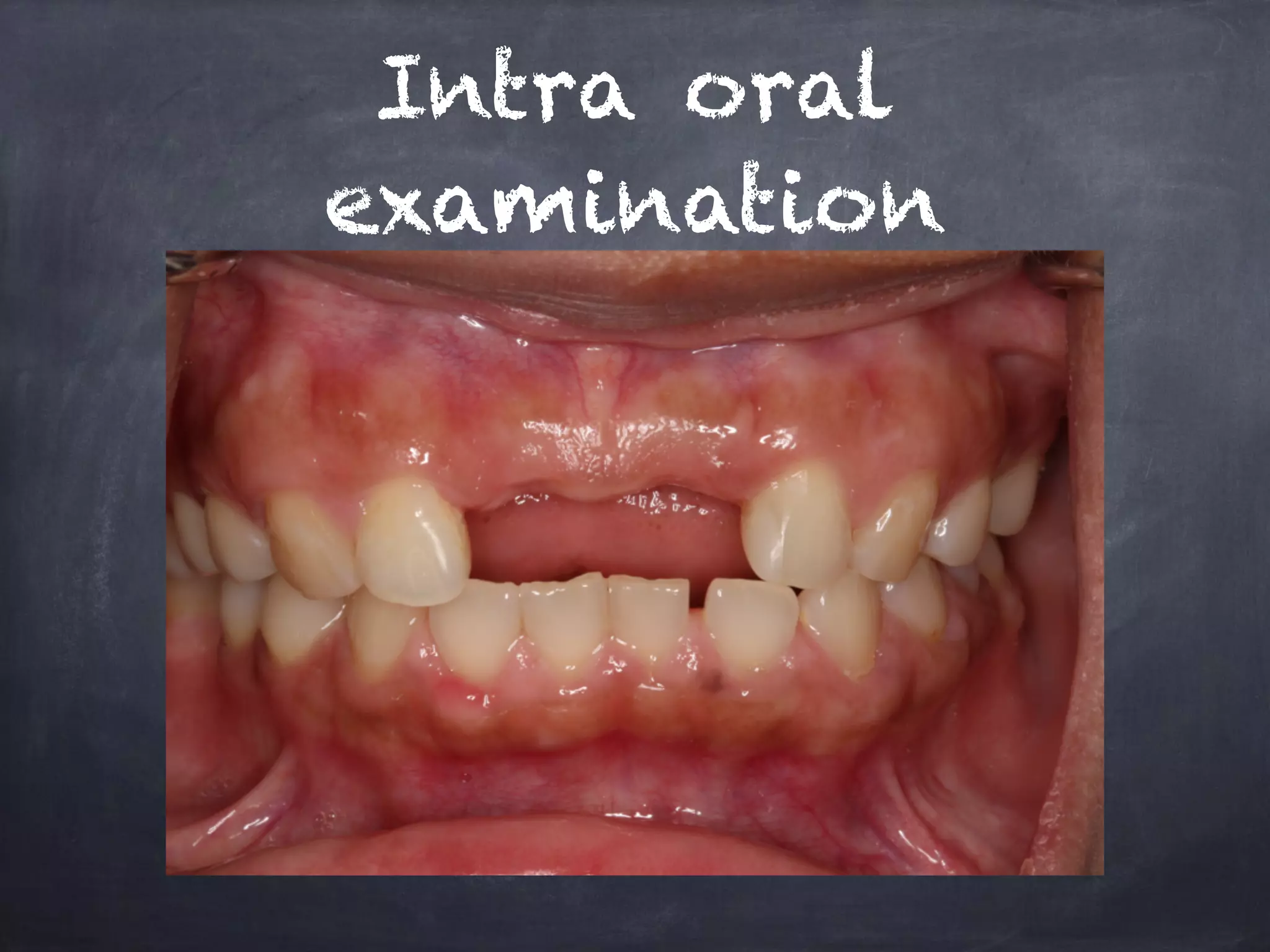
Intra oral 
examination
Intra oral 
examination
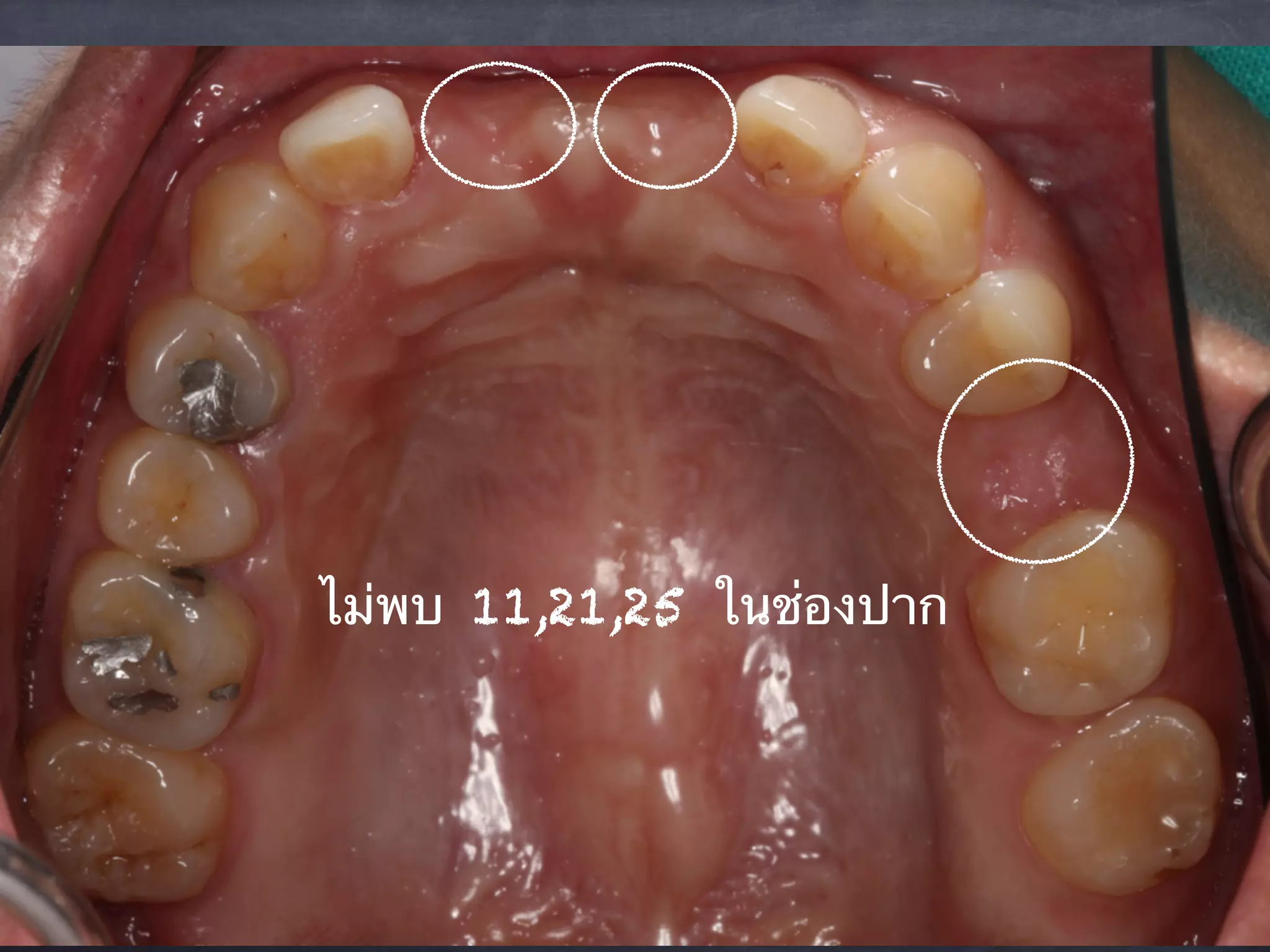
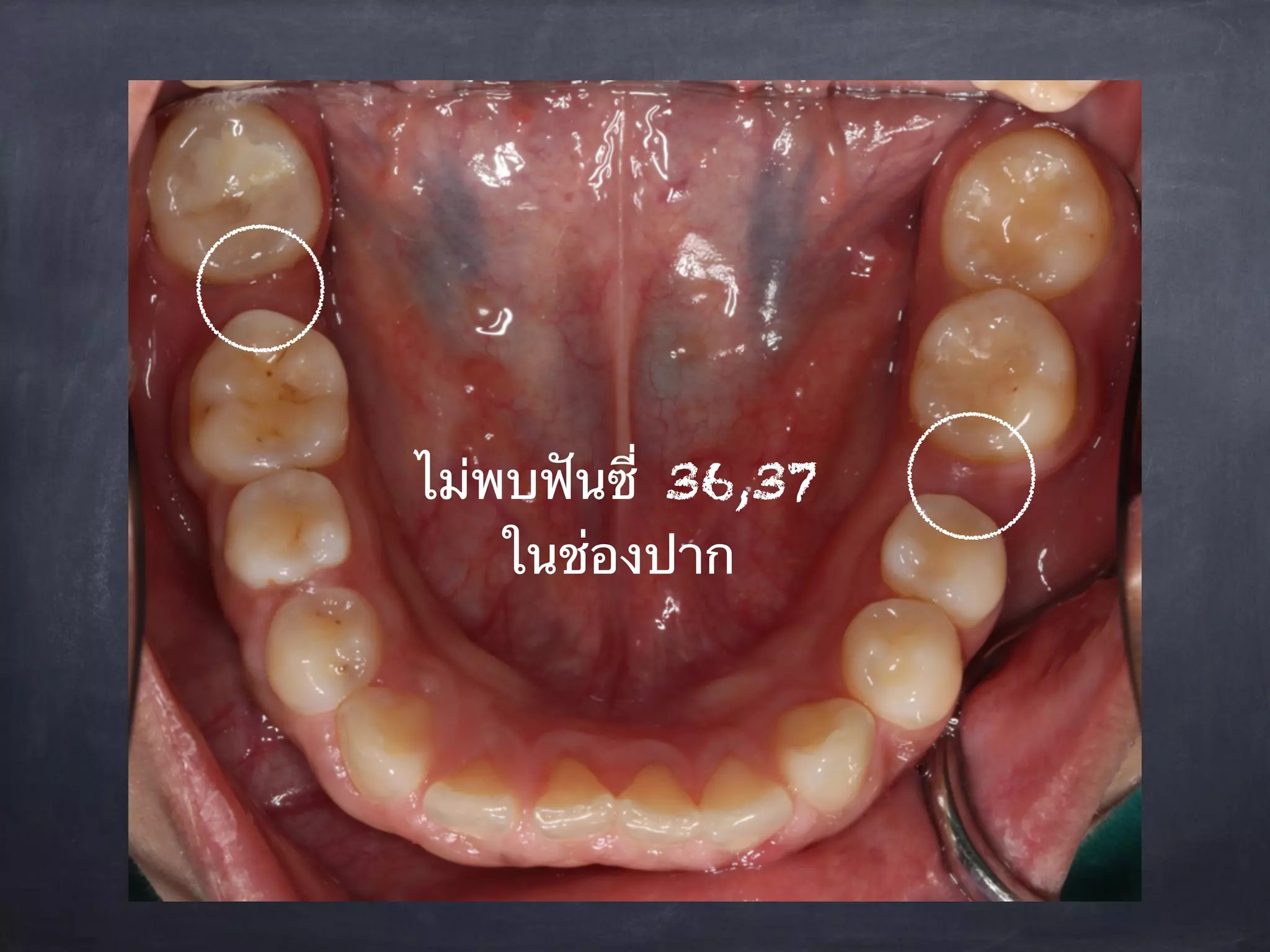
ไม่พบ 11,21,25 ในช่องปาก
ไม่พบฟันซี่ 36,37 
ในช่องปาก
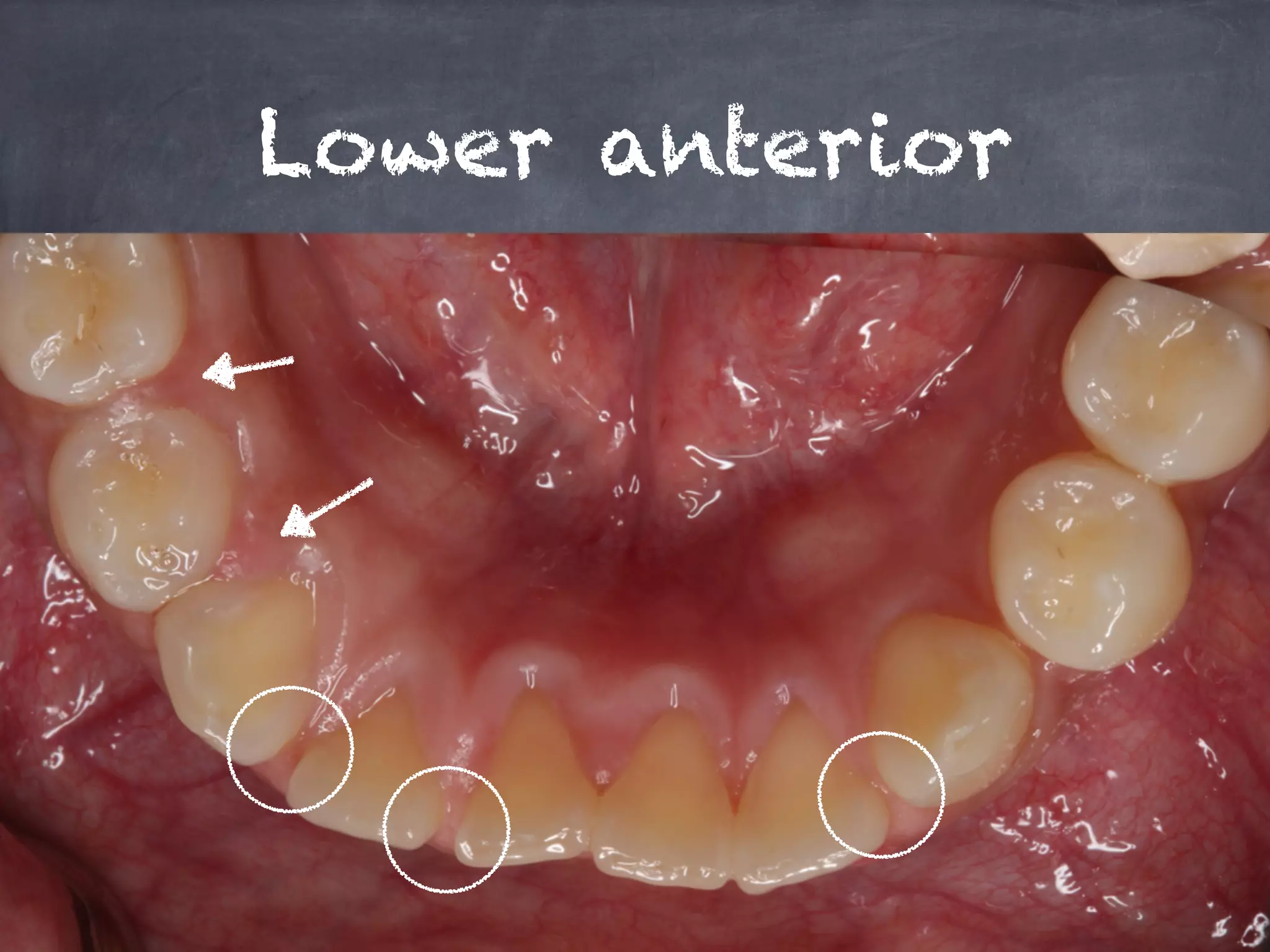
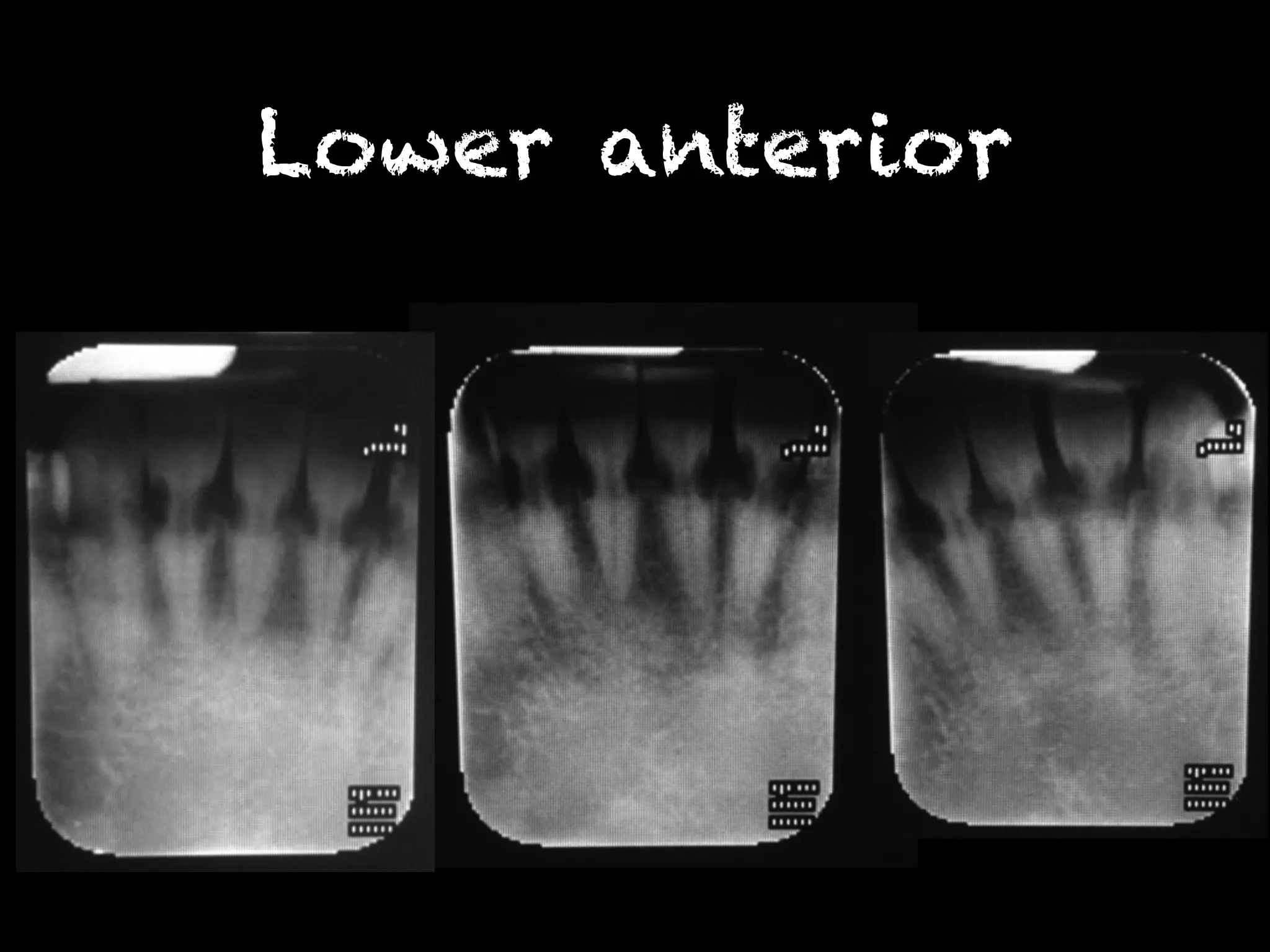
Lower anterior
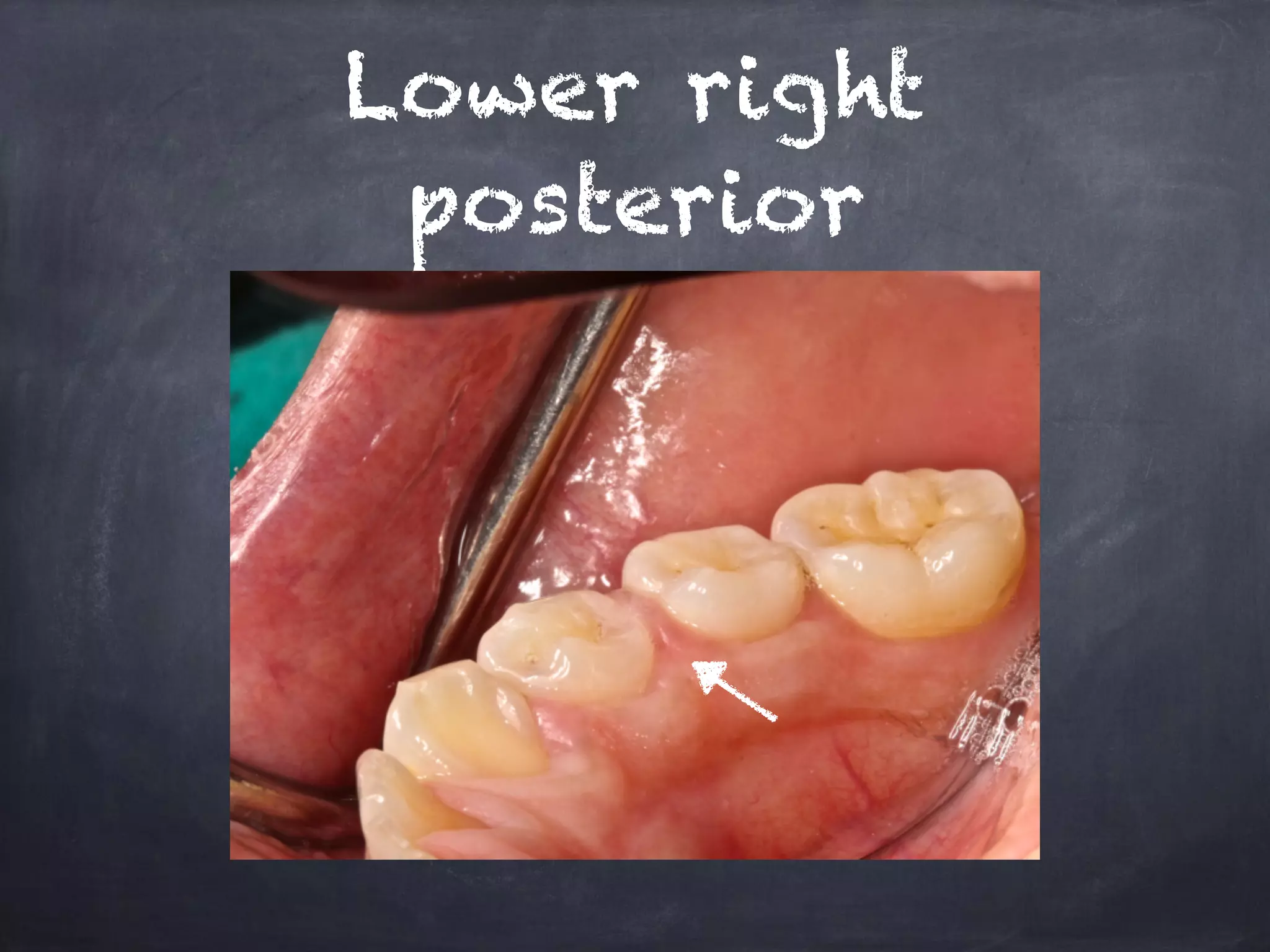
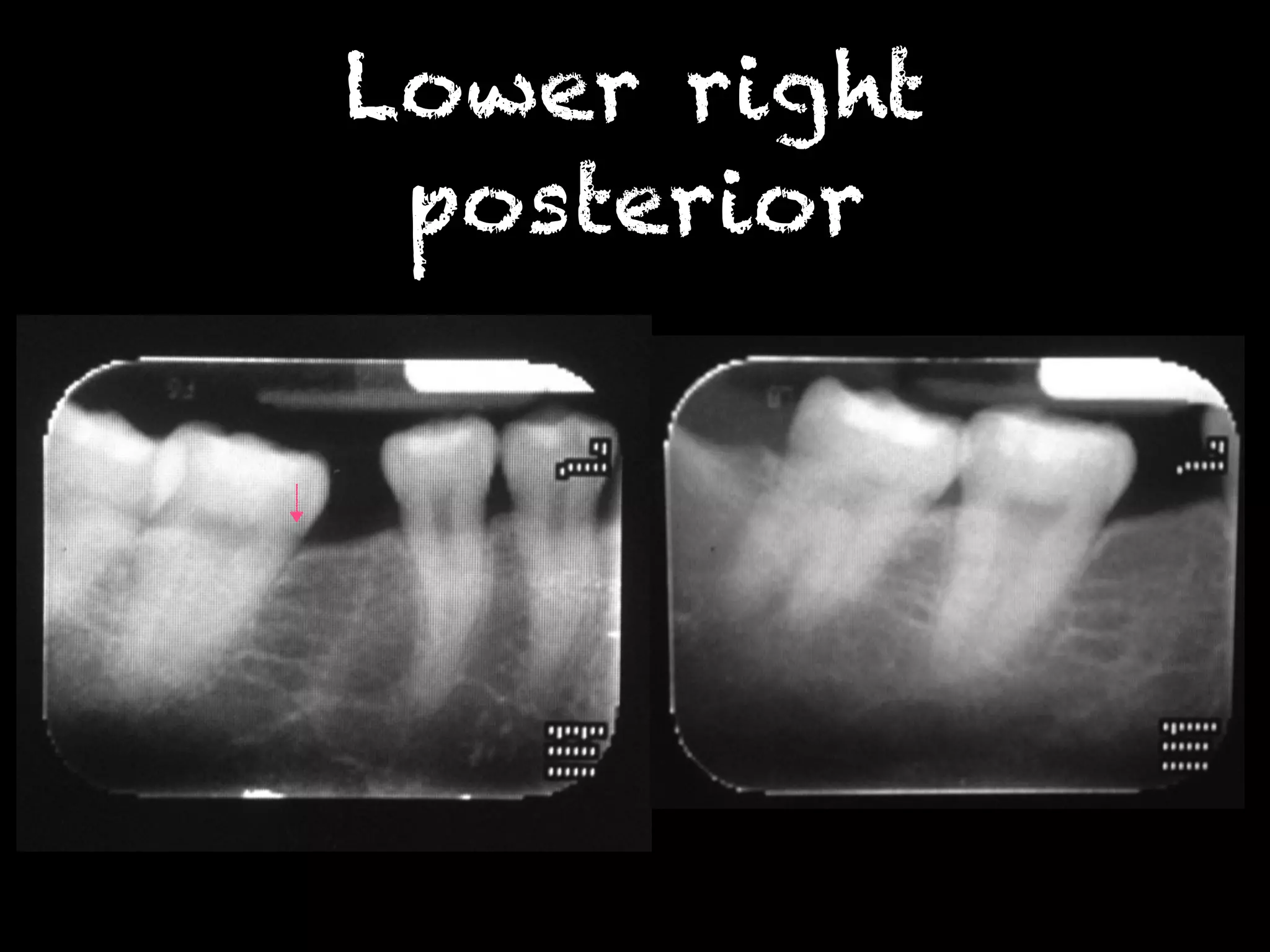
Lower right 
posterior
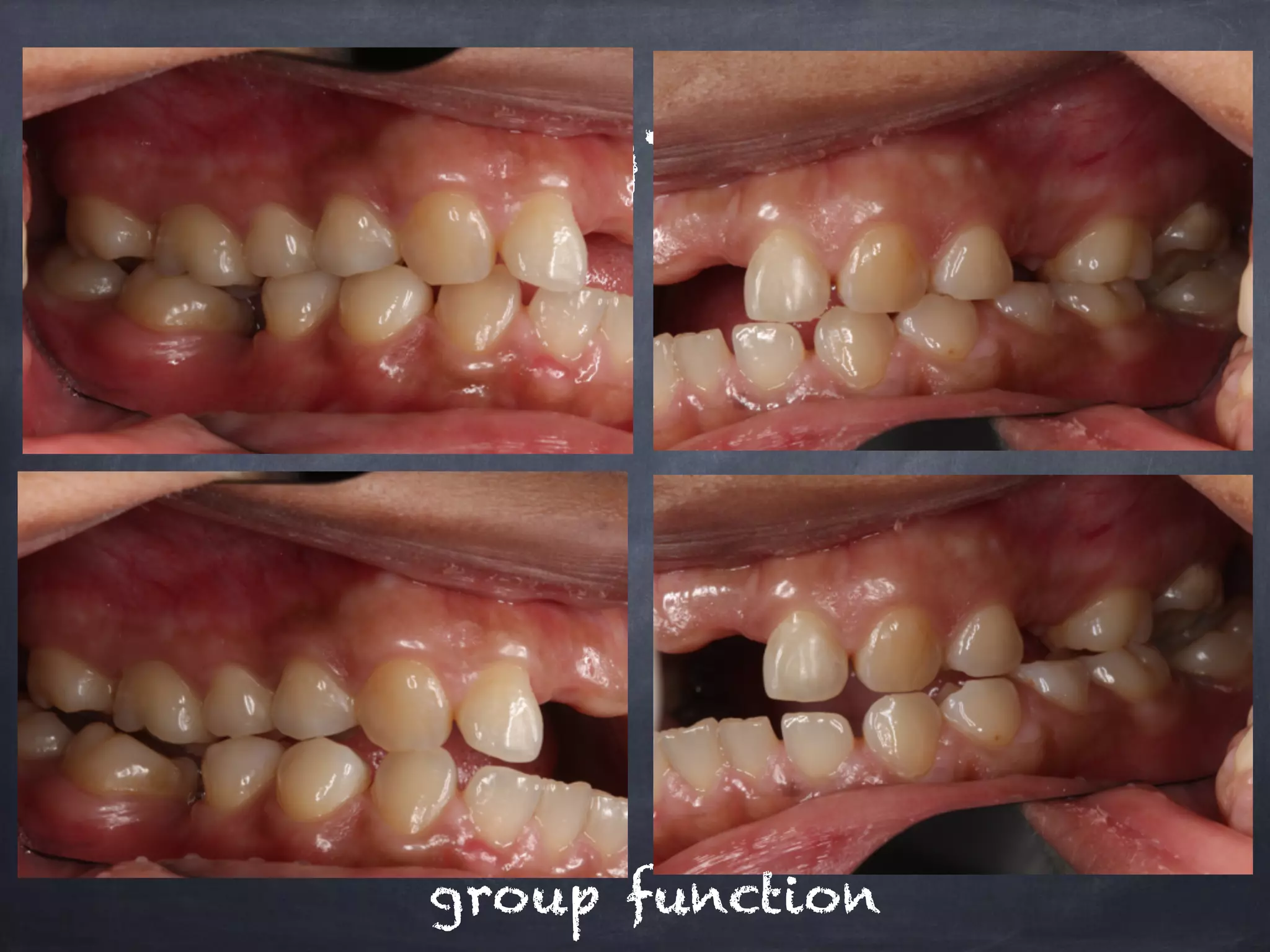
gr 
group function
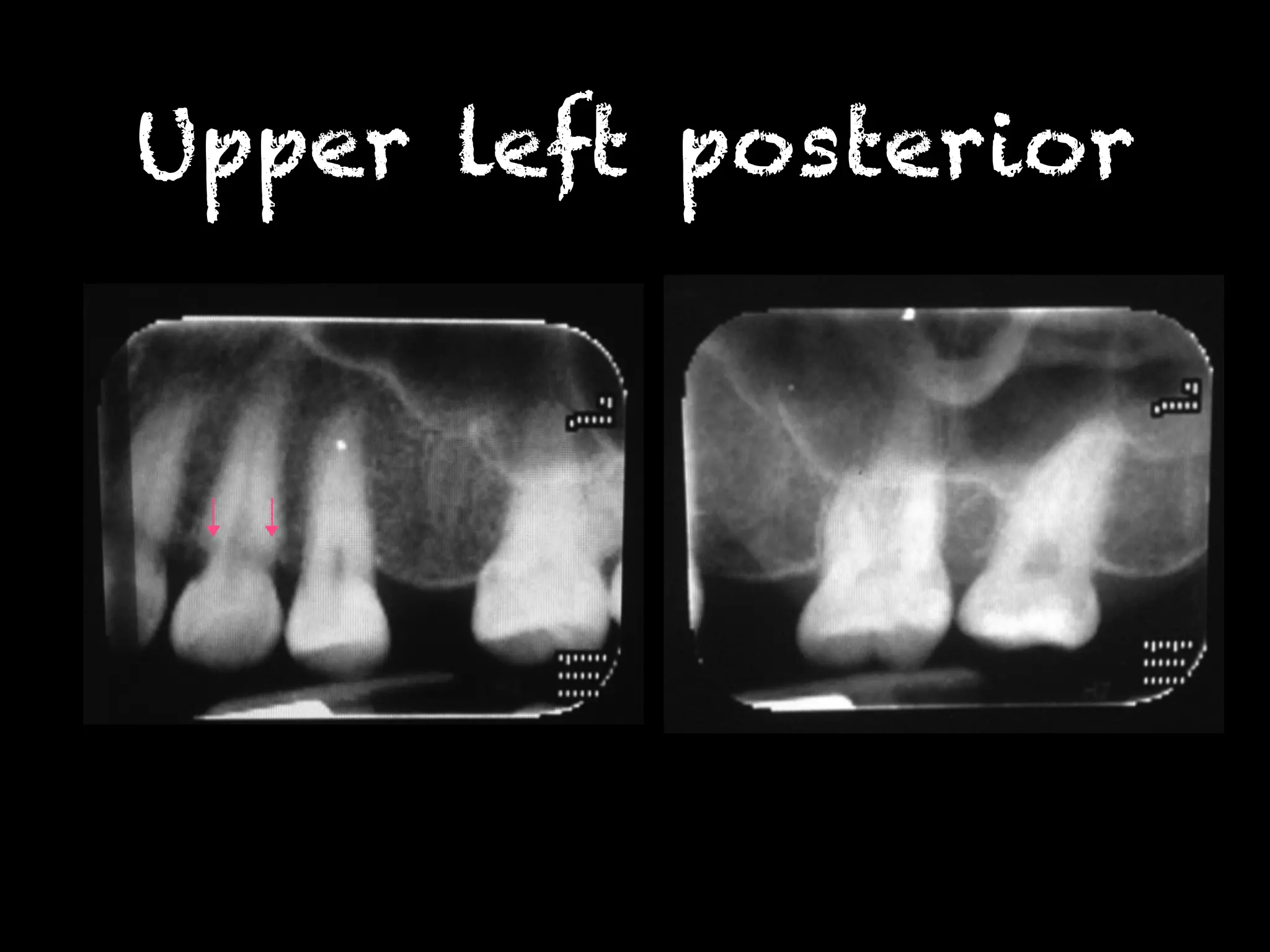
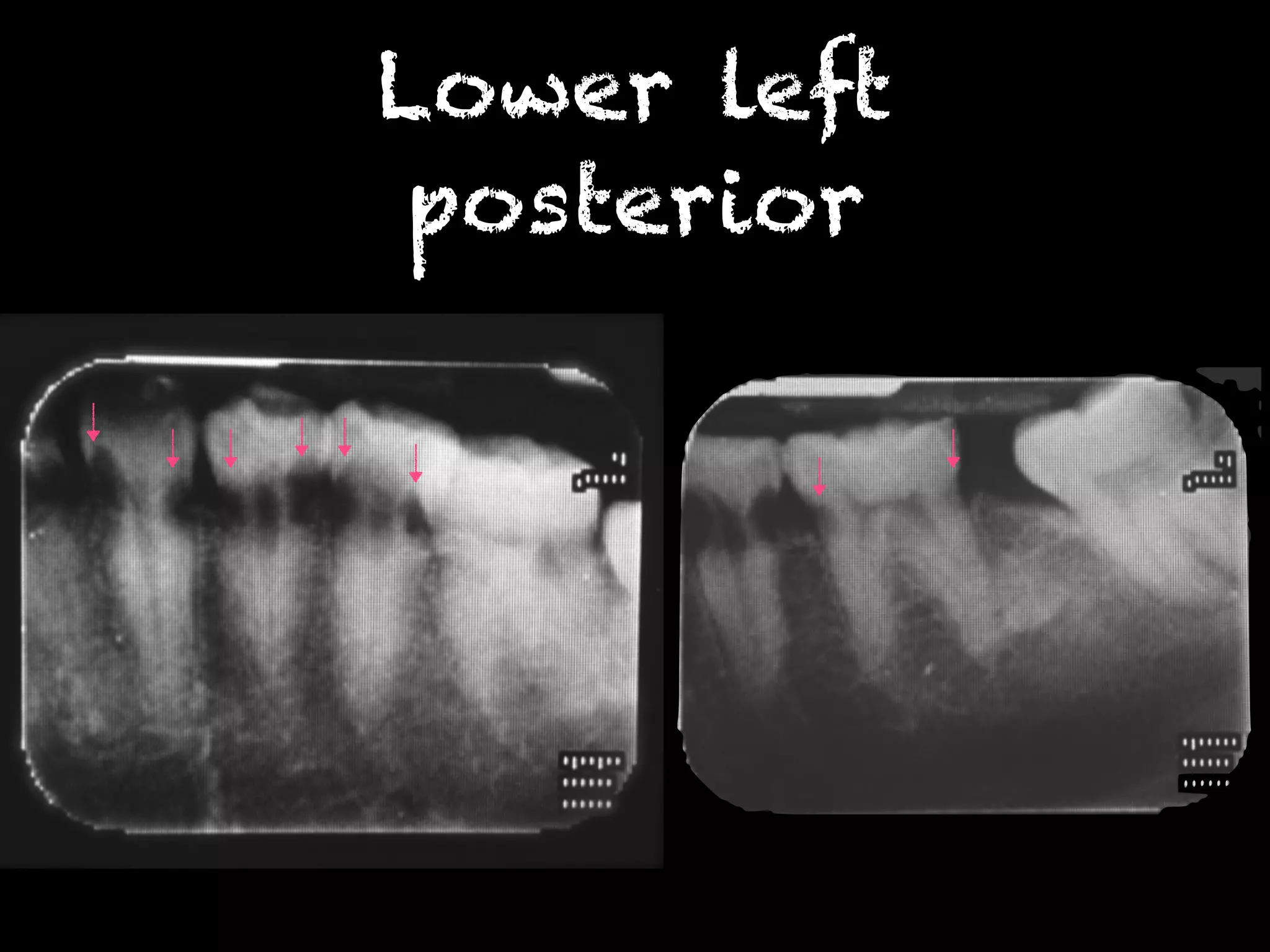
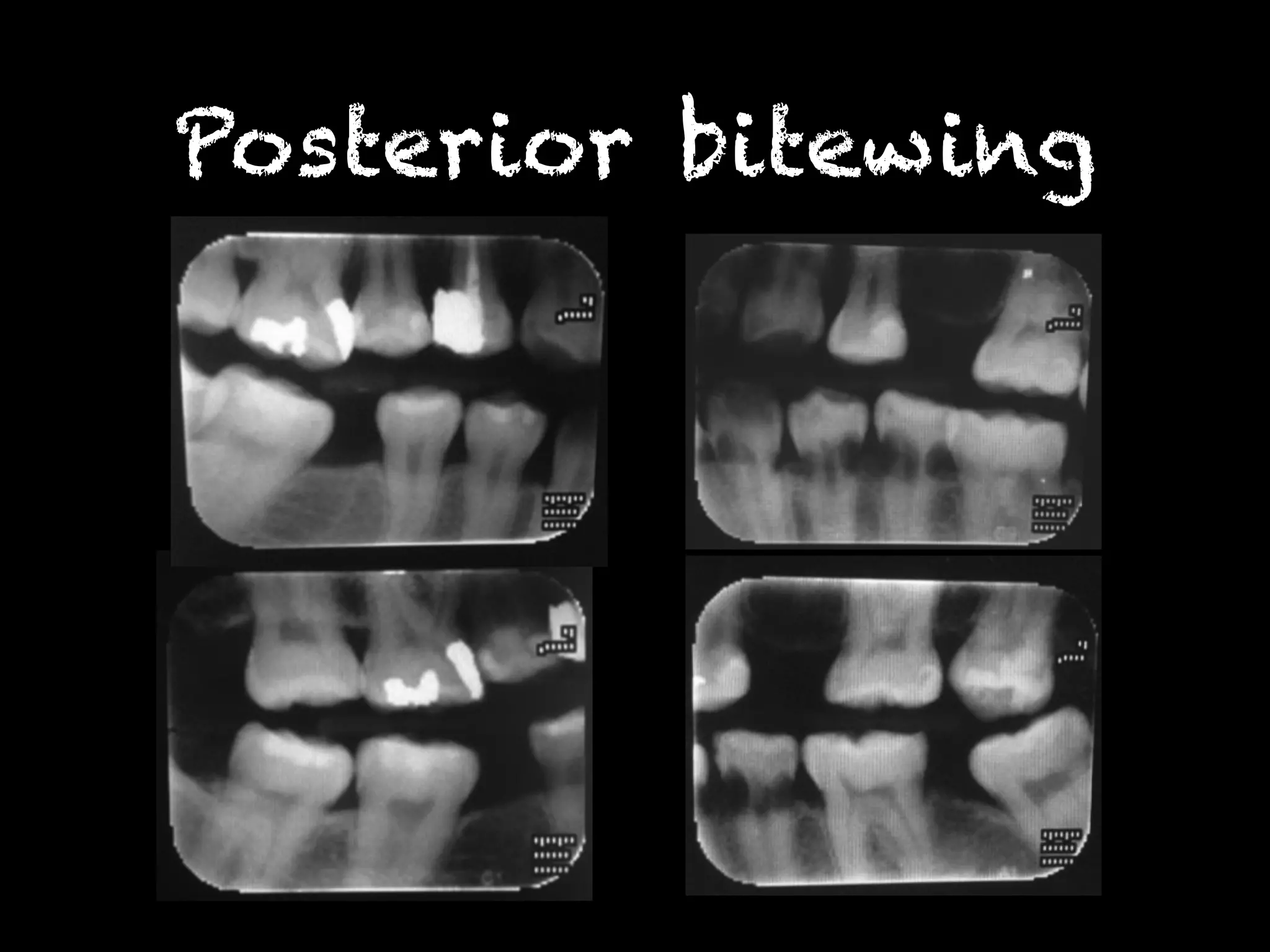
Radiographic 
examination
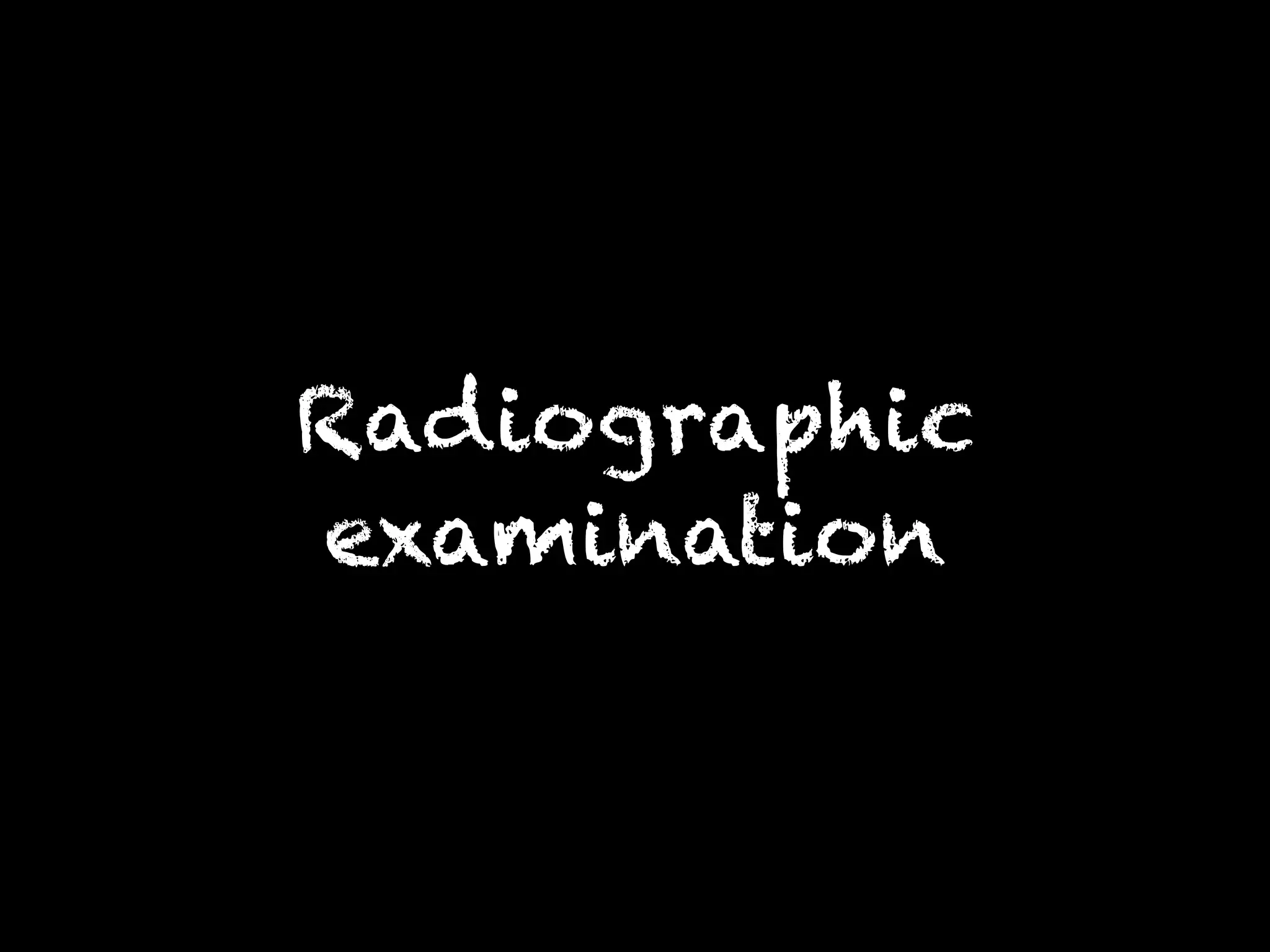
Upper anterior
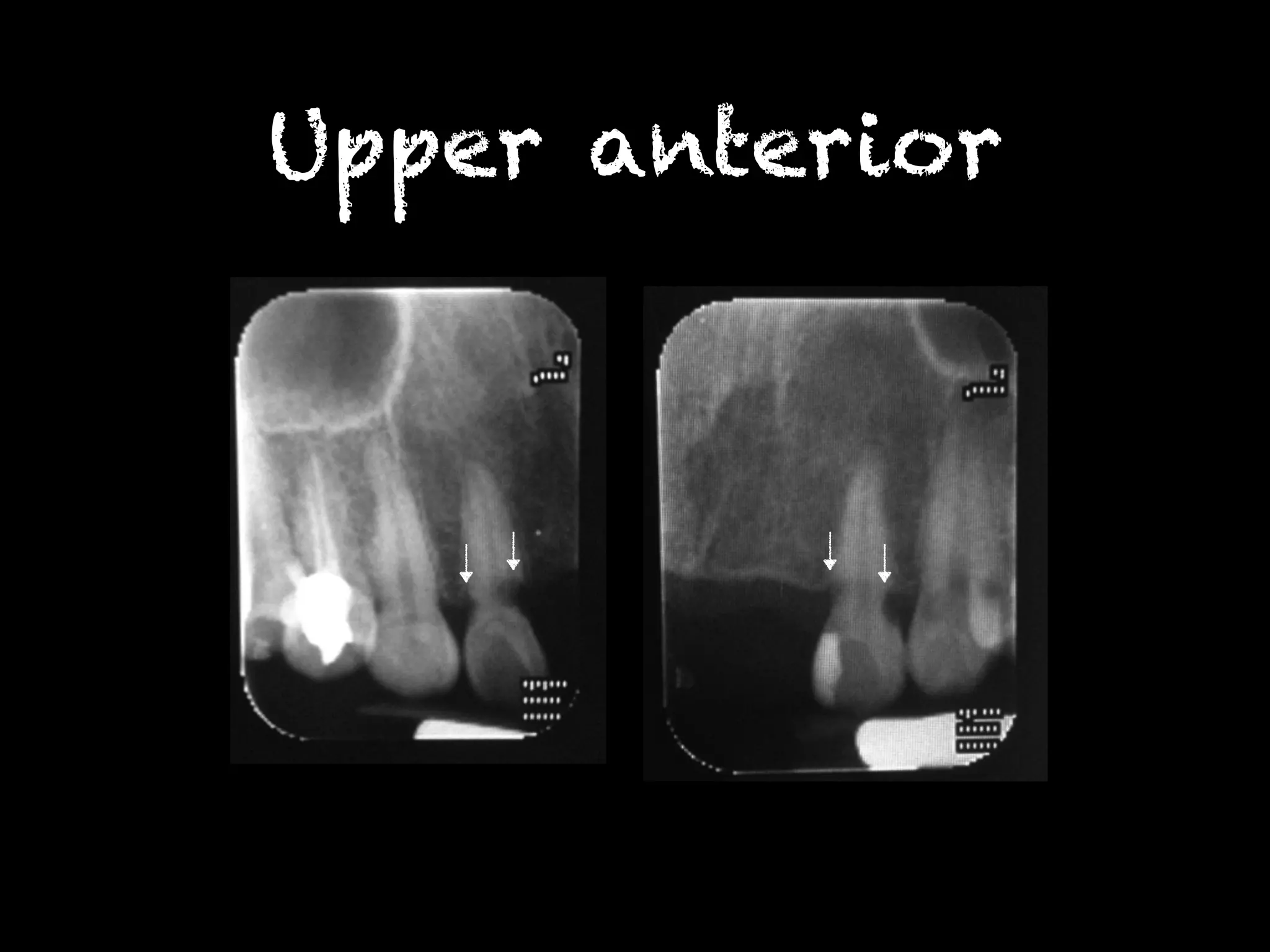
Upper right 
posterior
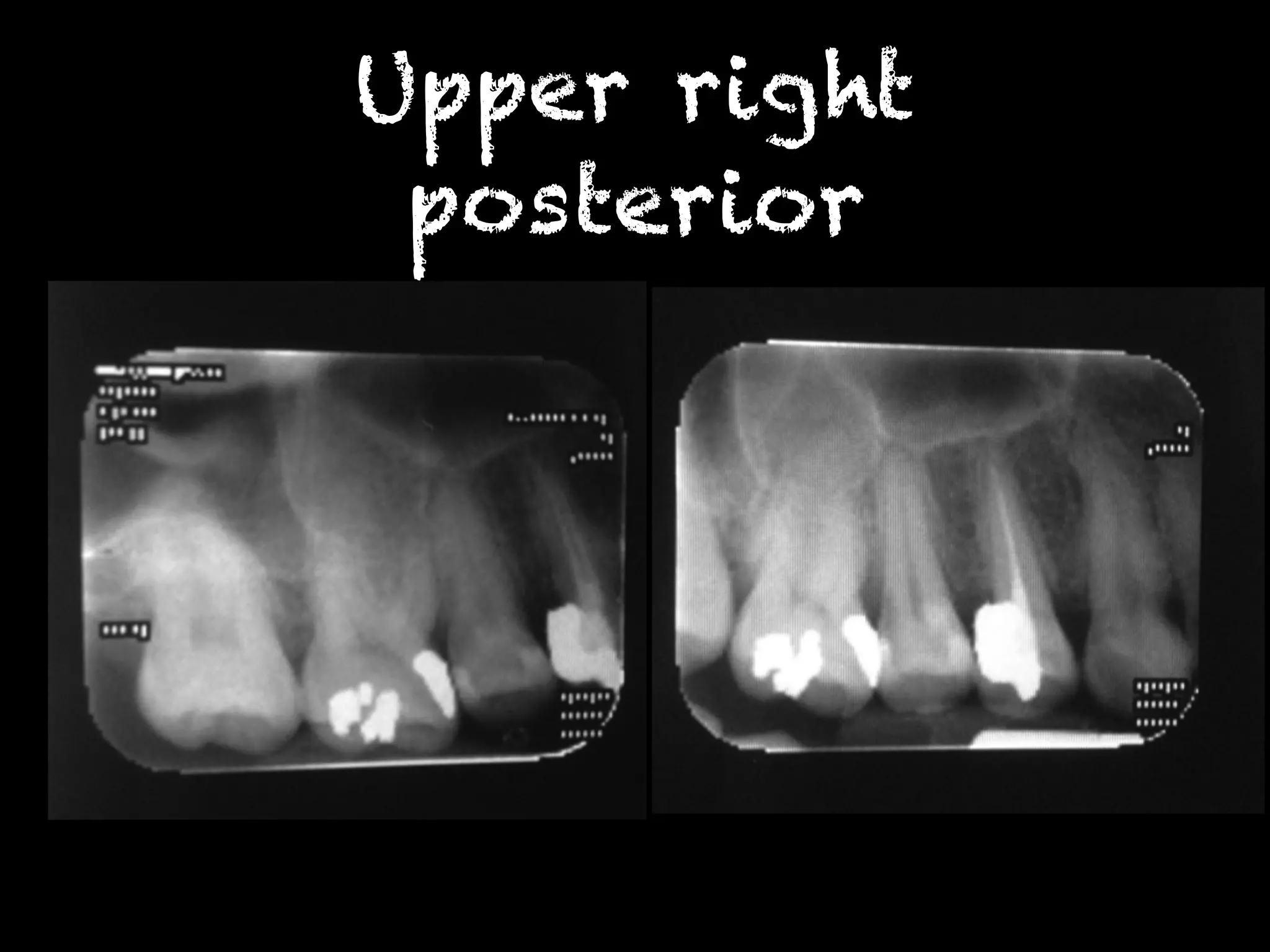
Upper left posterior
Lower anterior
Lower right 
posterior
Lower left 
posterior
Posterior bitewing
Radiographic 
finding 
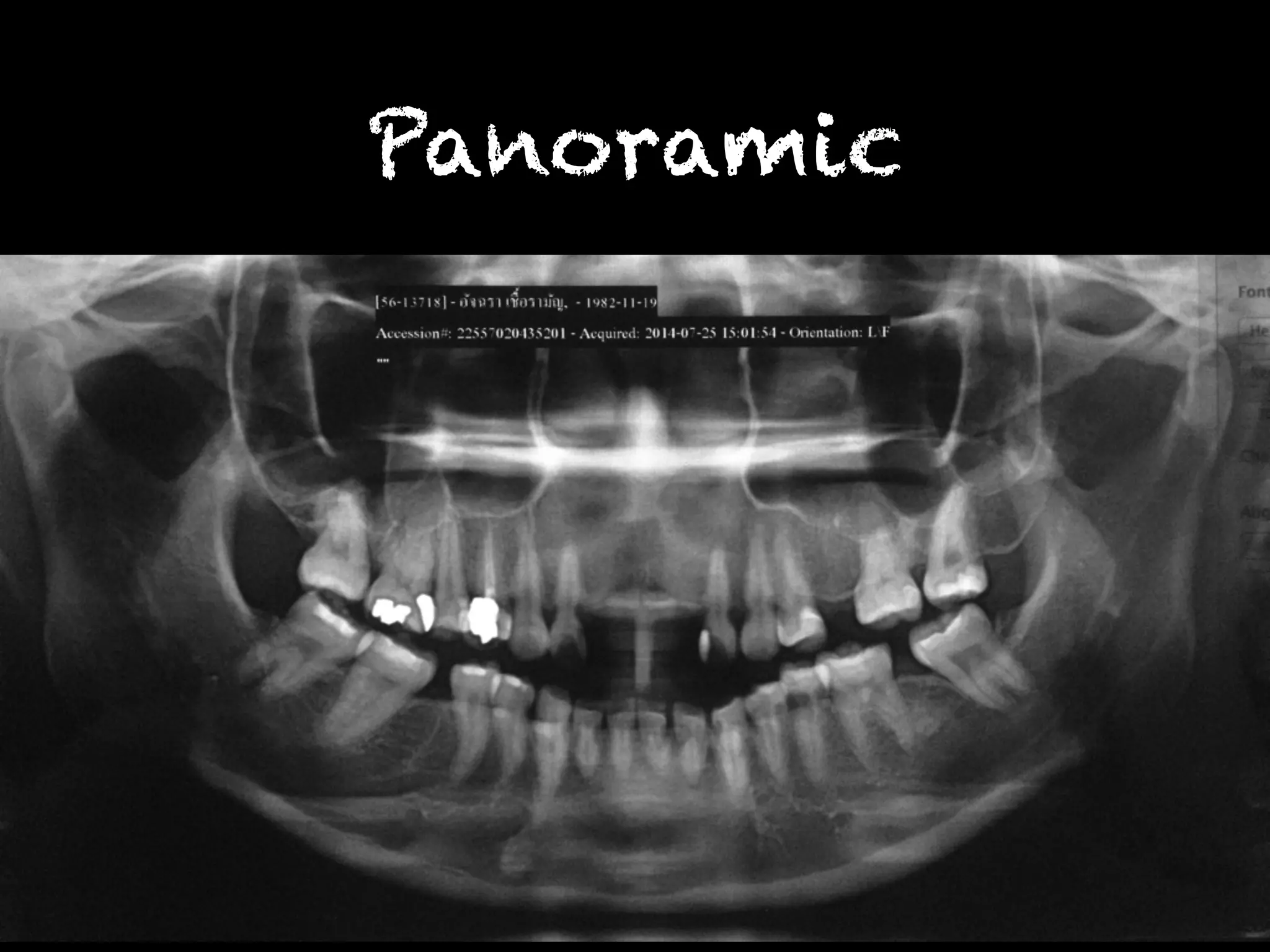
พบรอยโรคโปร่งรังสีที่บริเวณคอฟัน ฟันซี่ 
12MD,13M,22MD,23M,31MD,32MD,33MD, 
41MD,42MD,43MD,34MD,35MD,36MD, 
48M
Panoramic
Differential 
diagnosis 
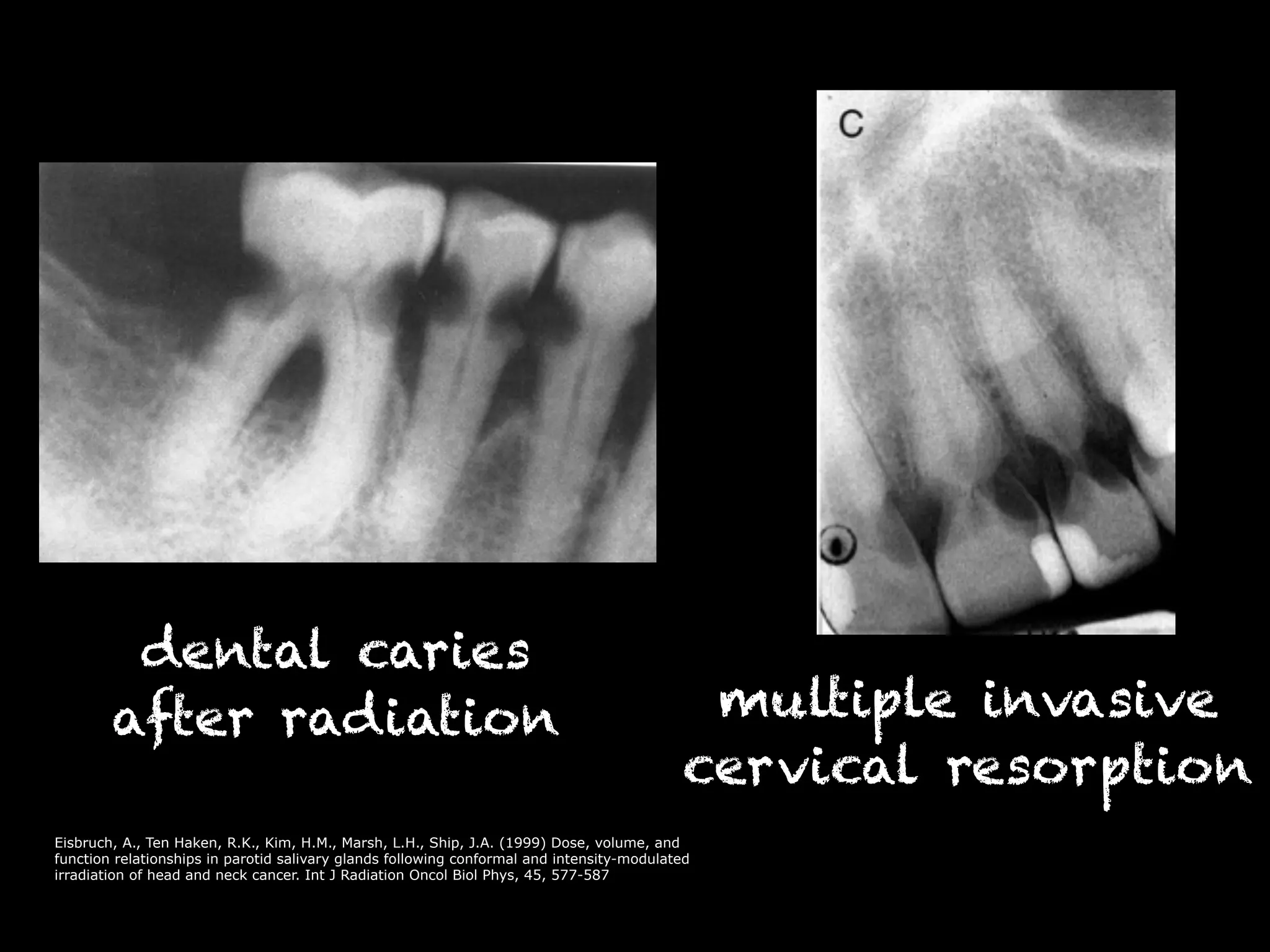
dental caries 
root resorption
dental caries 
after radiation multiple invasive 
cervical resorption 
Eisbruch, A., Ten Haken, R.K., Kim, H.M., Marsh, L.H., Ship, J.A. (1999) Dose, volume, and 
function relationships in parotid salivary glands following conformal and intensity-modulated 
irradiation of head and neck cancer. Int J Radiation Oncol Biol Phys, 45, 577-587
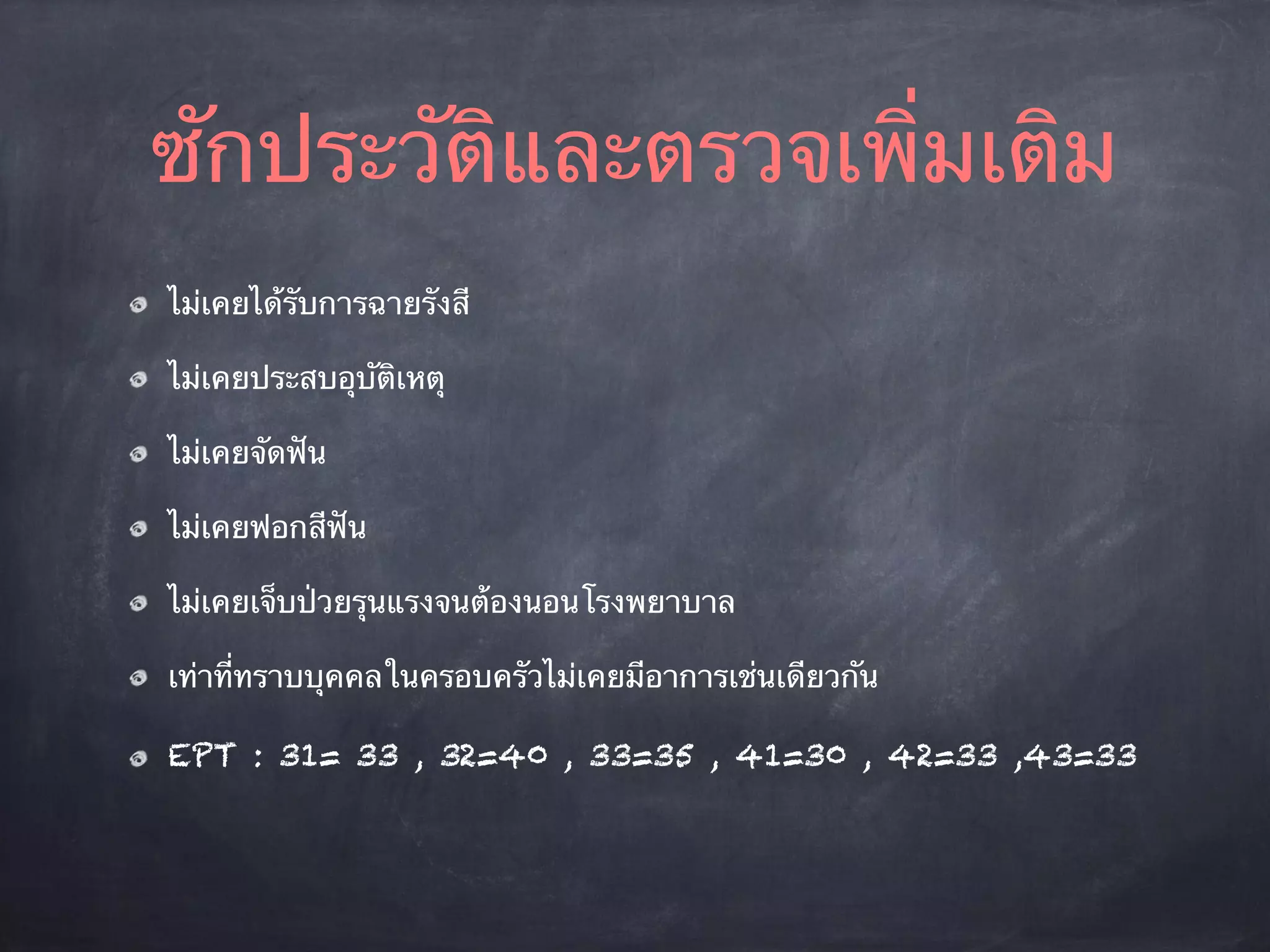
ซักประวัติและตรวจเพิ่มเติม 
ไม่เคยได้รับการฉายรังสี 
ไม่เคยประสบอุบัติเหตุ 
ไม่เคยจัดฟัน 
ไม่เคยฟอกสีฟัน 
ไม่เคยเจ็บป่วยรุนแรงจนต้องนอนโรงพยาบาล 
เท่าที่ทราบบุคคลในครอบครัวไม่เคยมีอาการเช่นเดียวกัน 
EPT : 31= 33 , 32=40 , 33=35 , 41=30 , 42=33 ,43=33
Radiologist 
consultation 
ลักษณะรอยโรคไม่เหมือนกับโรคฟันผุ แต่มีลักษณะ 
คล้ายกับการ resorption เนื่องมาจากการเห็น 
ขอบเขตที่ชัด และตำแหน่งของการเกิดโรค 
impression for multiple cervical 
resorption
Review 
tooth resorption
tooth resorption 
- the loss of hard dental tissue (i.e. cementum and dentin) 
as a result of odontoclastic action. 
- classified by its location in relation to the root surface 
- may be physiological and pathological 
- External resorption can be divided into three broad 
groups: 
(a) trauma-induced tooth resorption 
(b) infection-induced tooth resorption 
(c) hyperplastic invasive tooth resorption 
Heithersay,2007
hyperplastic invasive 
tooth resorption 
! 
insidious in nature and generally present complex therapeutic 
challenges 
resorbing tissue invades the hard tissues of the tooth in a 
destructive, and apparently uncontrolled fashion, 
akin to the nature of some fibro-osseous lesions such as fibrous 
dysplasia. 
An important distinguishing factor for this third group of 
resorptions is that, unlike the first two types of resorption, simple 
elimination of the cause of the lesion is ineffective in arresting 
their progress 
Heithersay,2007
hyperplastic invasive 
tooth resorption 
Total removal or inactivation of the 
resorptive tissue is essential 
The reason for recurrence or concurrence is 
probably due to the invasive nature of the 
resorptive tissue whereby small infiltrative 
channels are created within the dentine and 
these may interconnect with the 
periodontal ligament 
Heithersay,2007
Heithersay,2007
hyperplastic invasive 
tooth resorption 
pulpal origin or periodontal origin 
may be subdivided into 
internal replacement (invasive) resorption 
invasive coronal resorption 
invasive cervical resorption 
invasive radicular resorption. 
Heithersay,2007
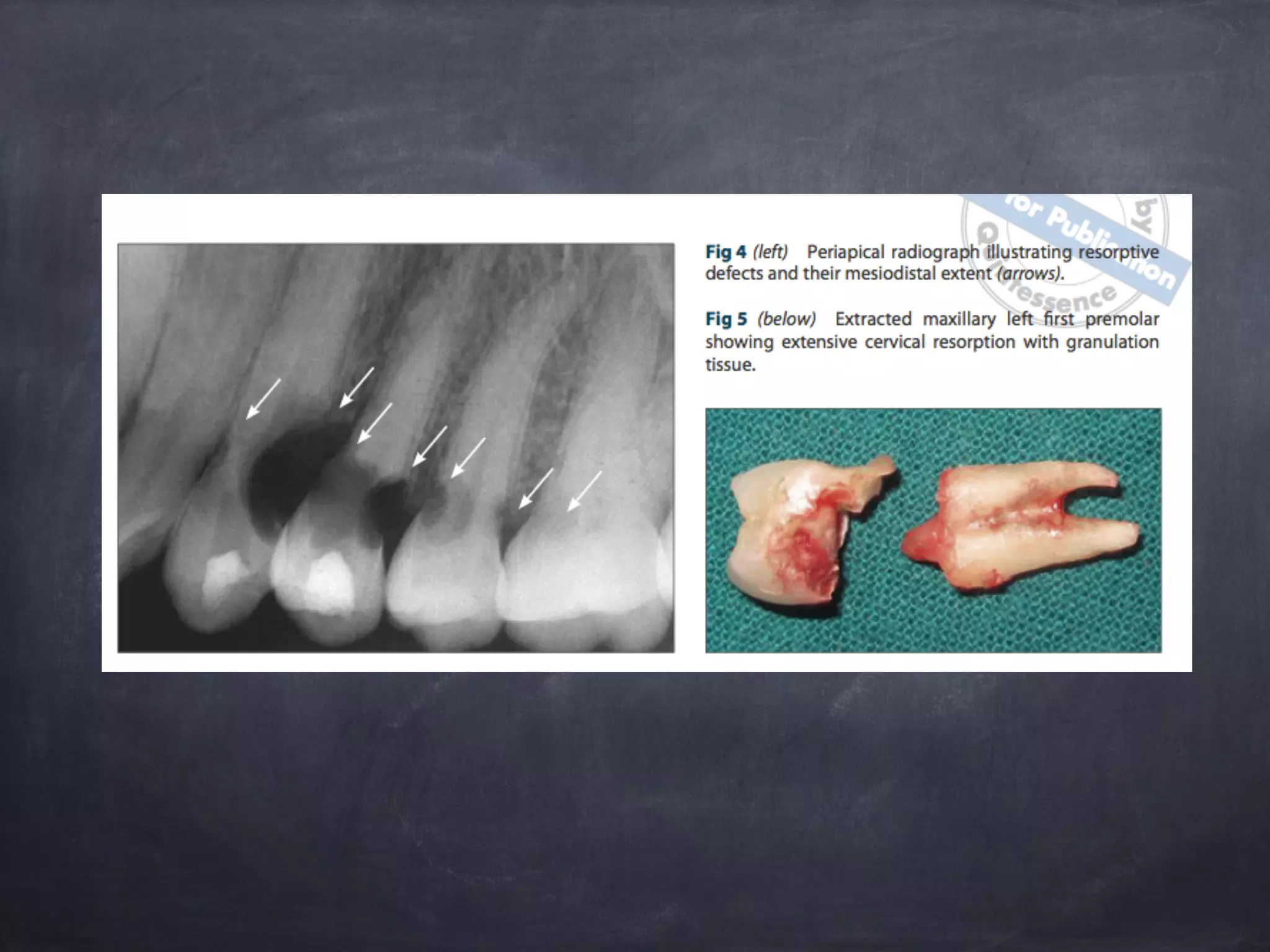
Cervical external 
resorption 
Invasive cervical resorption is not a 
common occurrence, is insidious and often 
an aggressive form of external tooth 
resorption, and can occur in any tooth in 
the permanent dentition. 
Heithersay,2007
In the absence of treatment, invasive 
cervical resorption leads to progressive and 
usually destructive replacement of tooth 
structure. 
pinkish colour in the tooth crown 
may be no obvious outward sign 
its detection may be by routine radiographs. 
usually painless unless there is superimposed 
secondary infection when pulpal or 
periodontal symptoms may arise. 
Heithersay,2007
results in the loss of cementum and dentine 
by an odontoclastic type of action. 
begins just apical of the epithelial 
attachment of the gingiva at the cervical area 
of the tooth but can be found anywhere on 
the root. 
ICR is still not clearly understood. 
Heithersay,2007
Diagnosis 
! 
usually found at cervical region 
pink spot in the cervical region 
hard and mineralised on probing 
EPT usually positive 
usually no symptoms 
outline of root canal should be visible and intact 
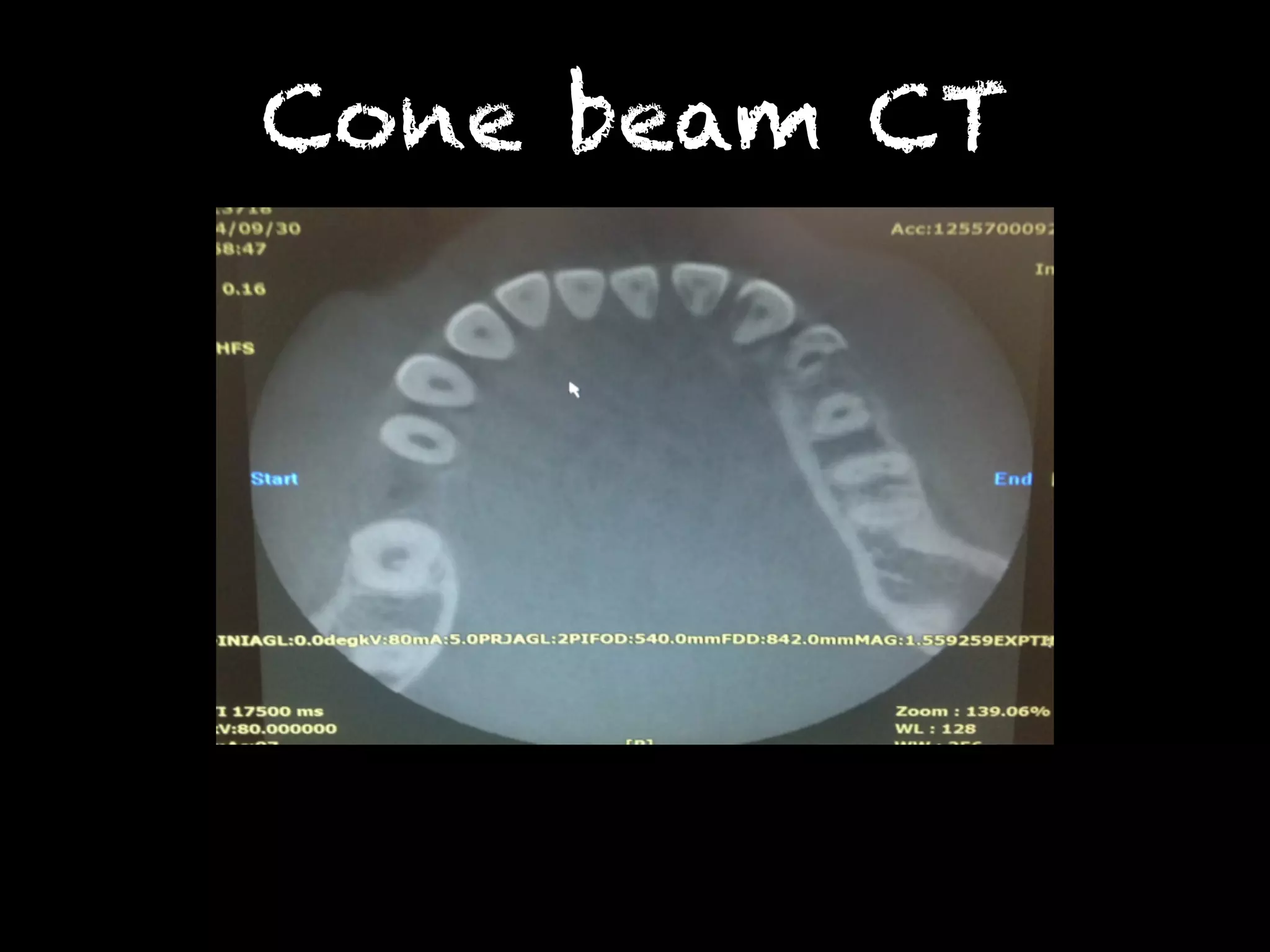
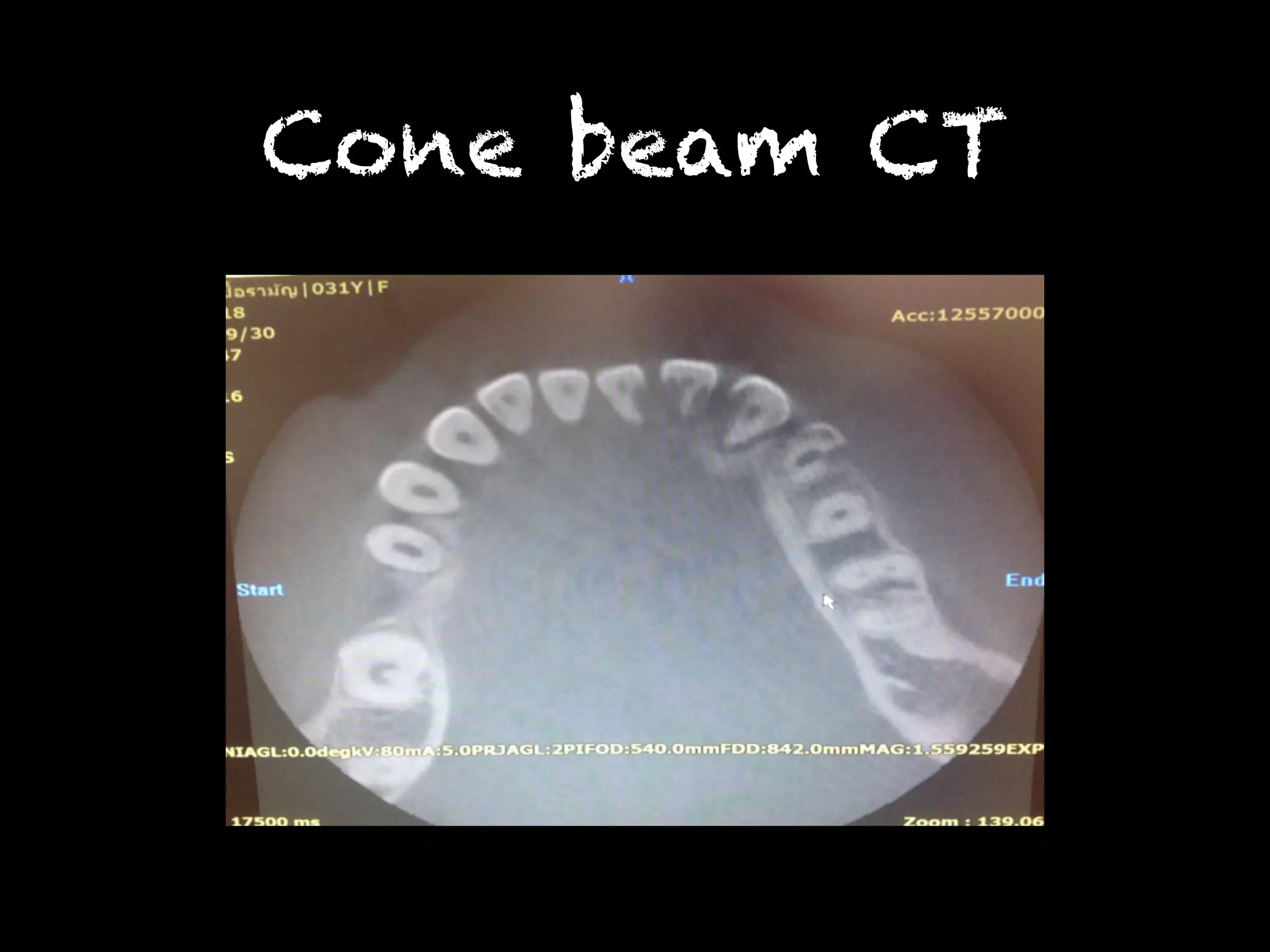
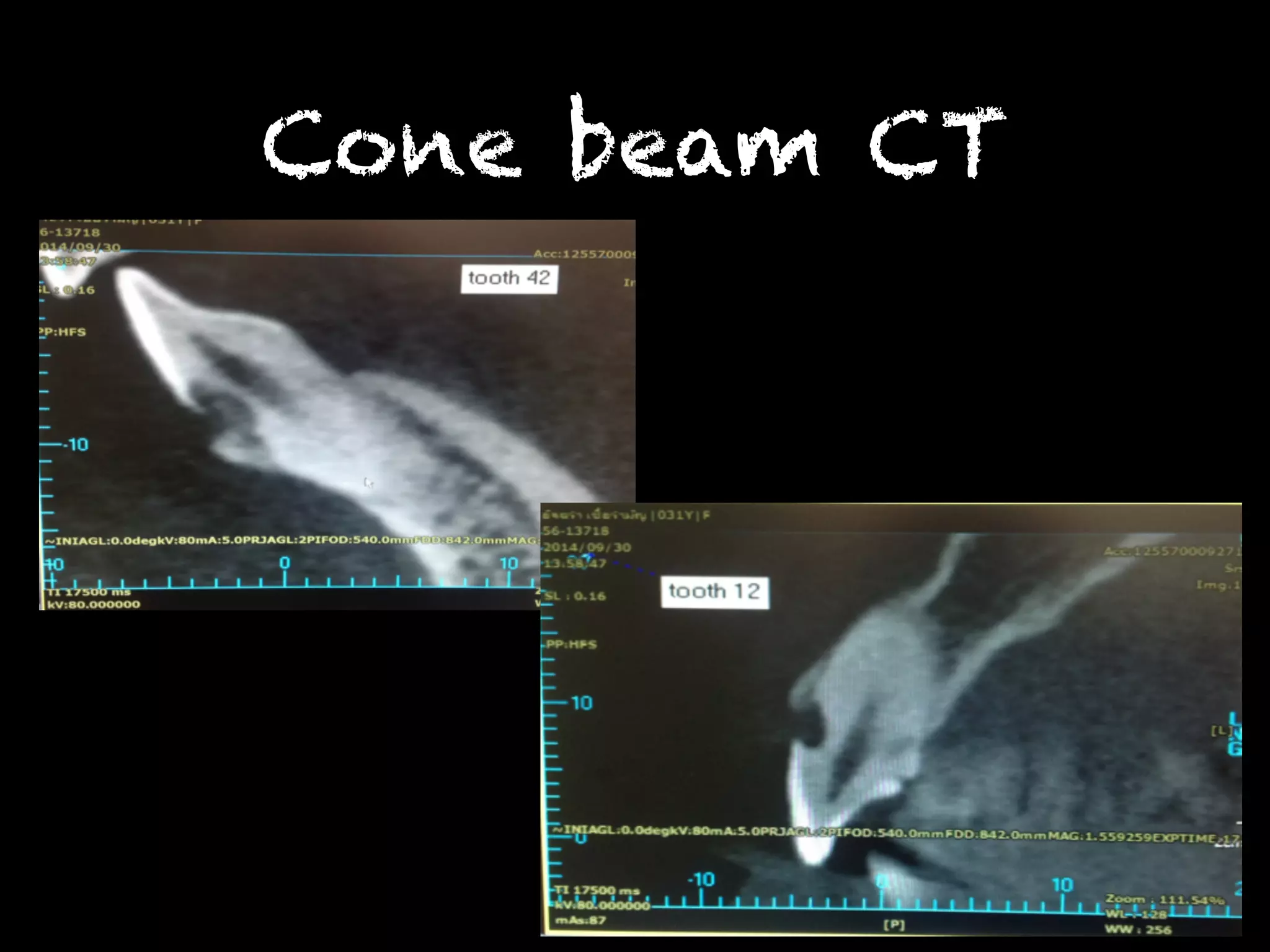
cone beam CT is useful to assess the lesion 
Heithersay,2007
Etiology and 
pathogenesis 
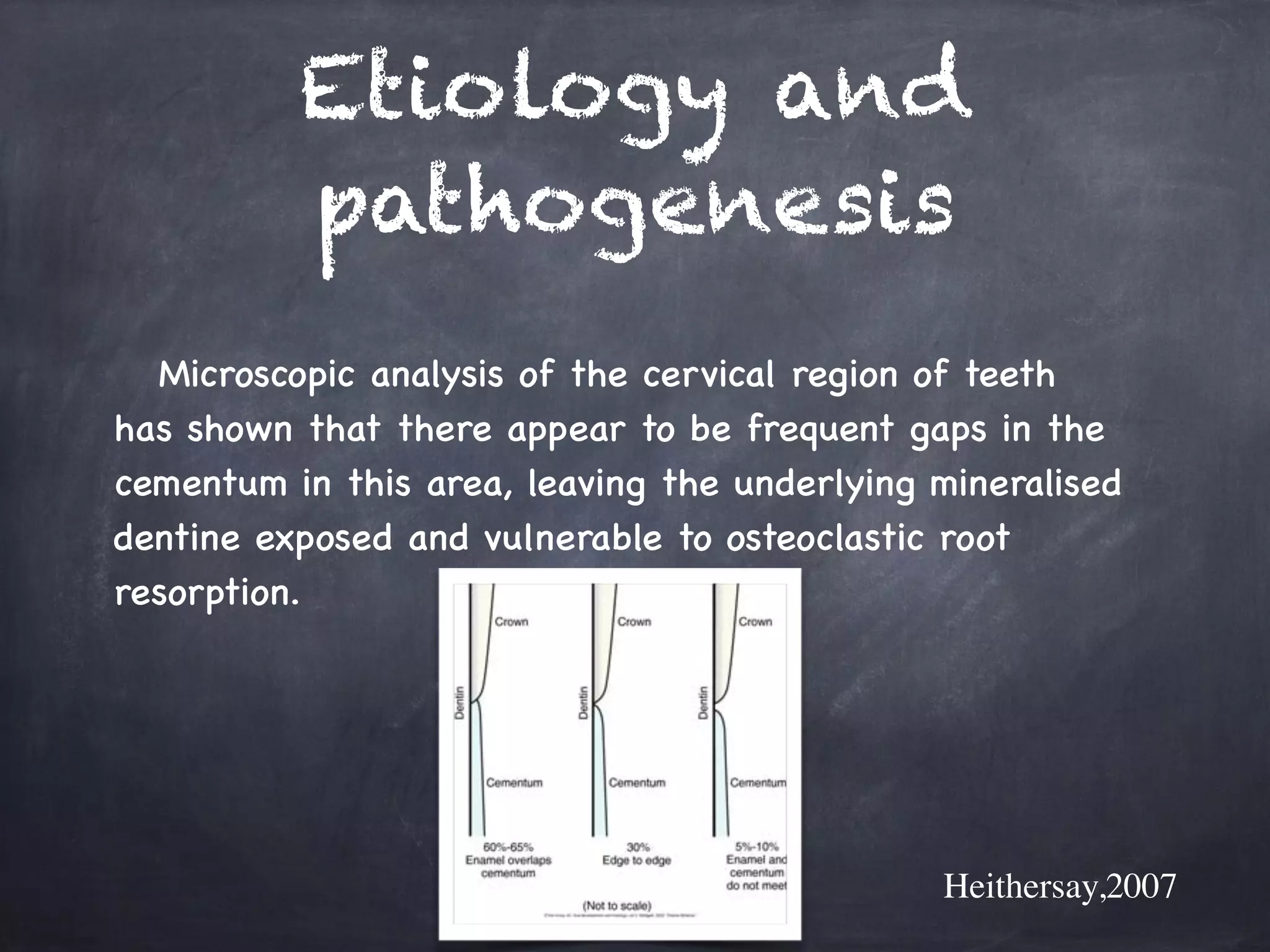
Microscopic analysis of the cervical region of teeth 
has shown that there appear to be frequent gaps in the 
cementum in this area, leaving the underlying mineralised 
dentine exposed and vulnerable to osteoclastic root 
resorption. 
Heithersay,2007
Etiology and 
pathogenesis 
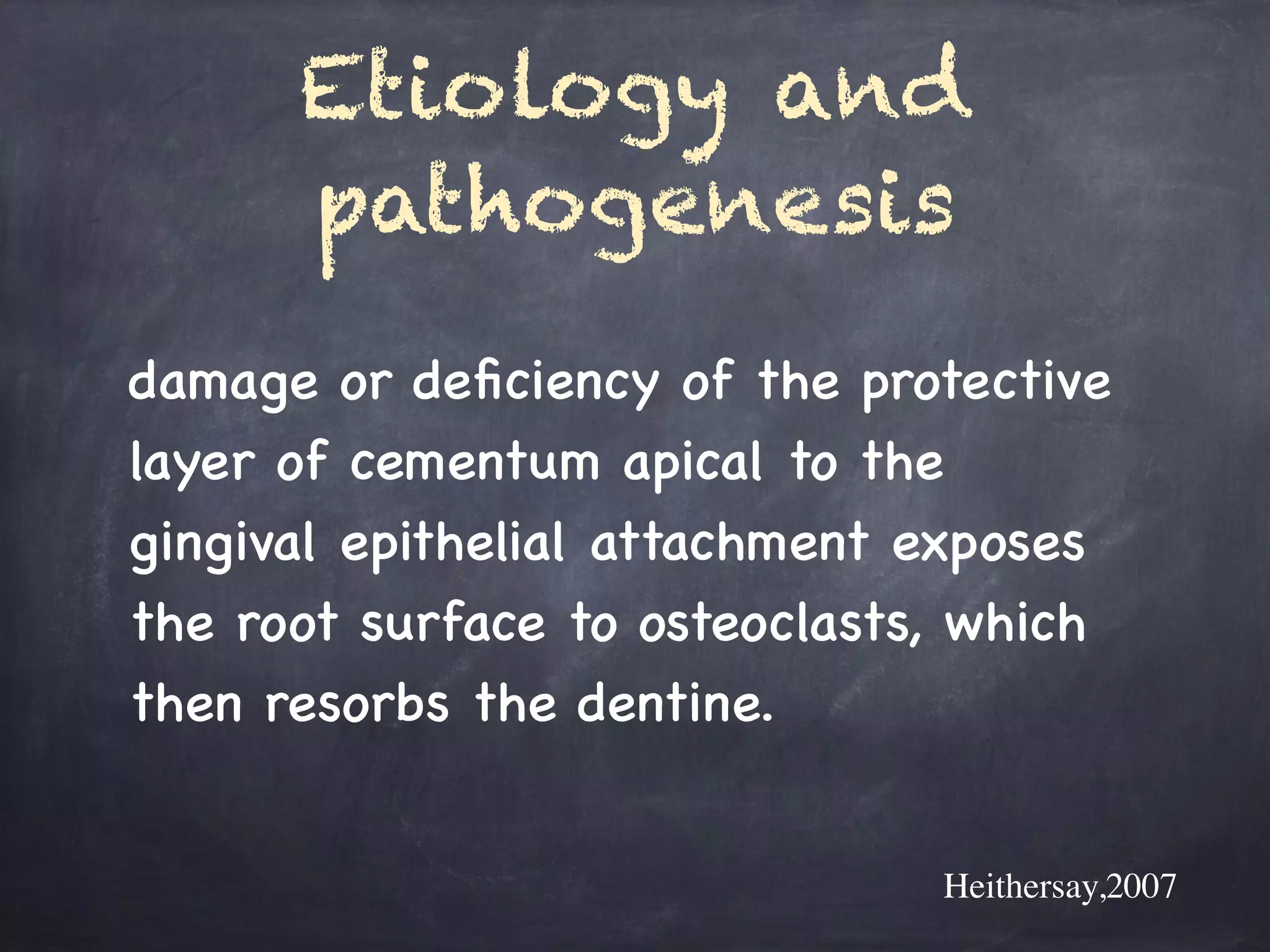
damage or deficiency of the protective 
layer of cementum apical to the 
gingival epithelial attachment exposes 
the root surface to osteoclasts, which 
then resorbs the dentine. 
Heithersay,2007
Histopathology 
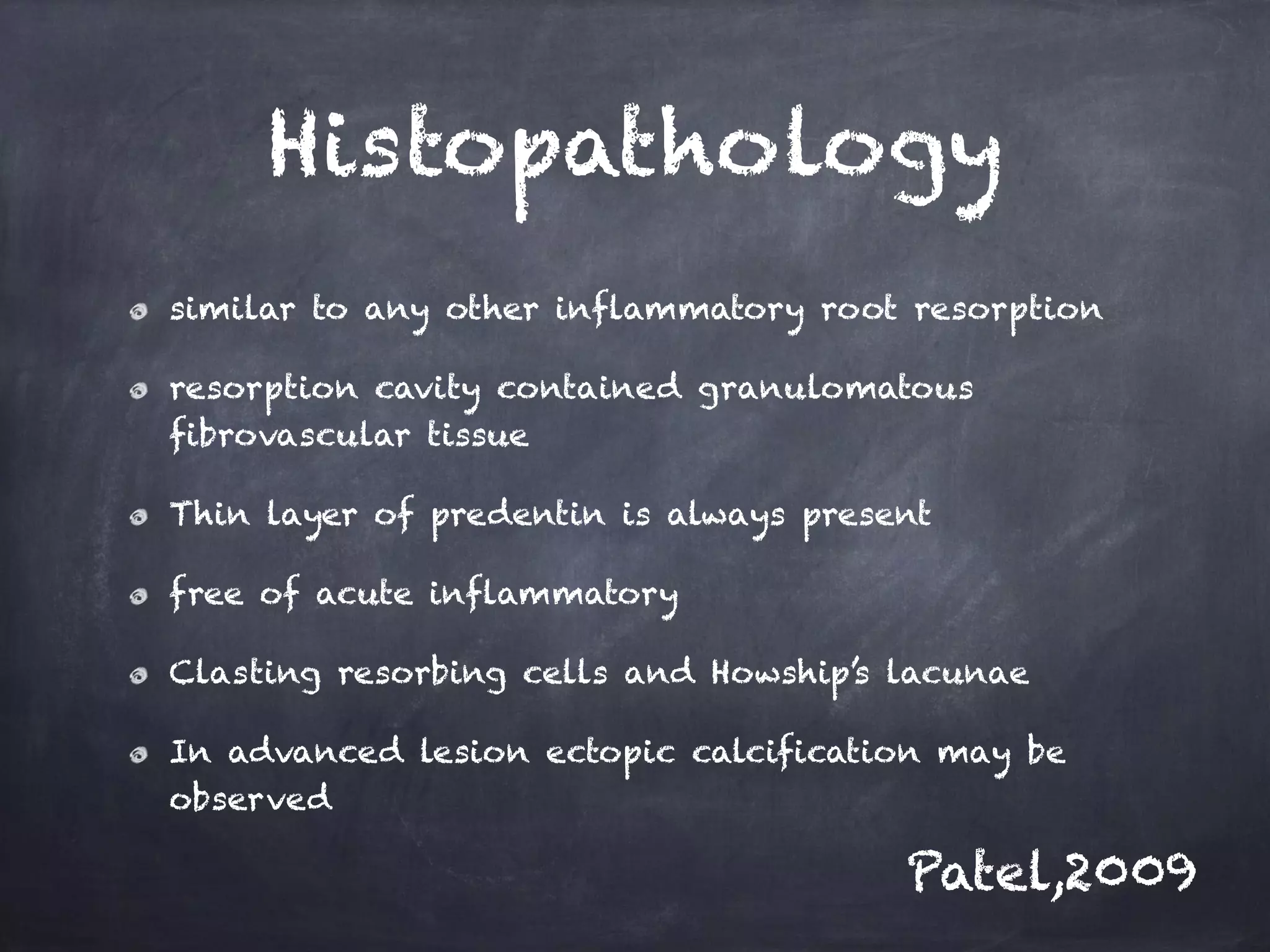
similar to any other inflammatory root resorption 
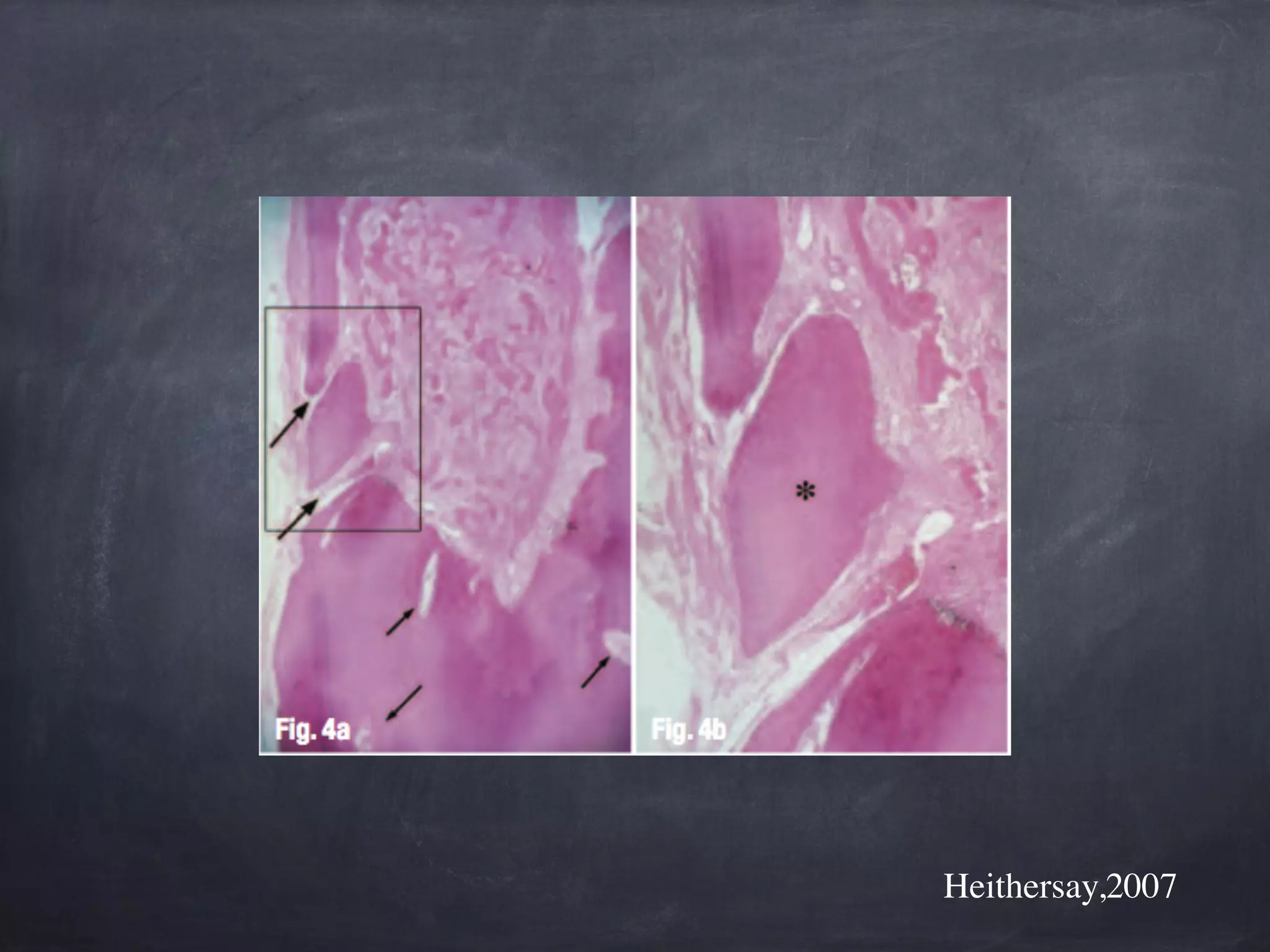
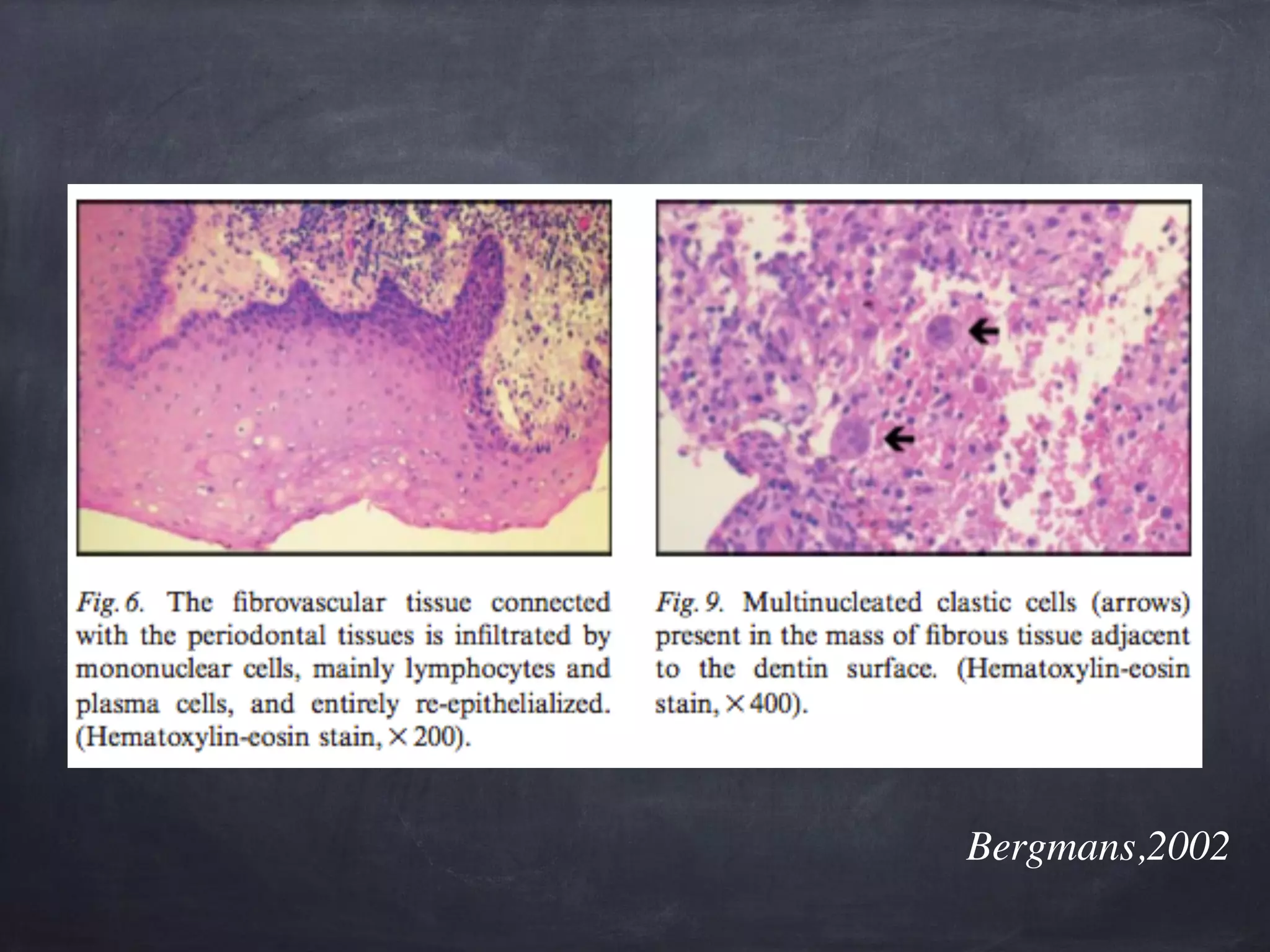
resorption cavity contained granulomatous 
fibrovascular tissue 
Thin layer of predentin is always present 
free of acute inflammatory 
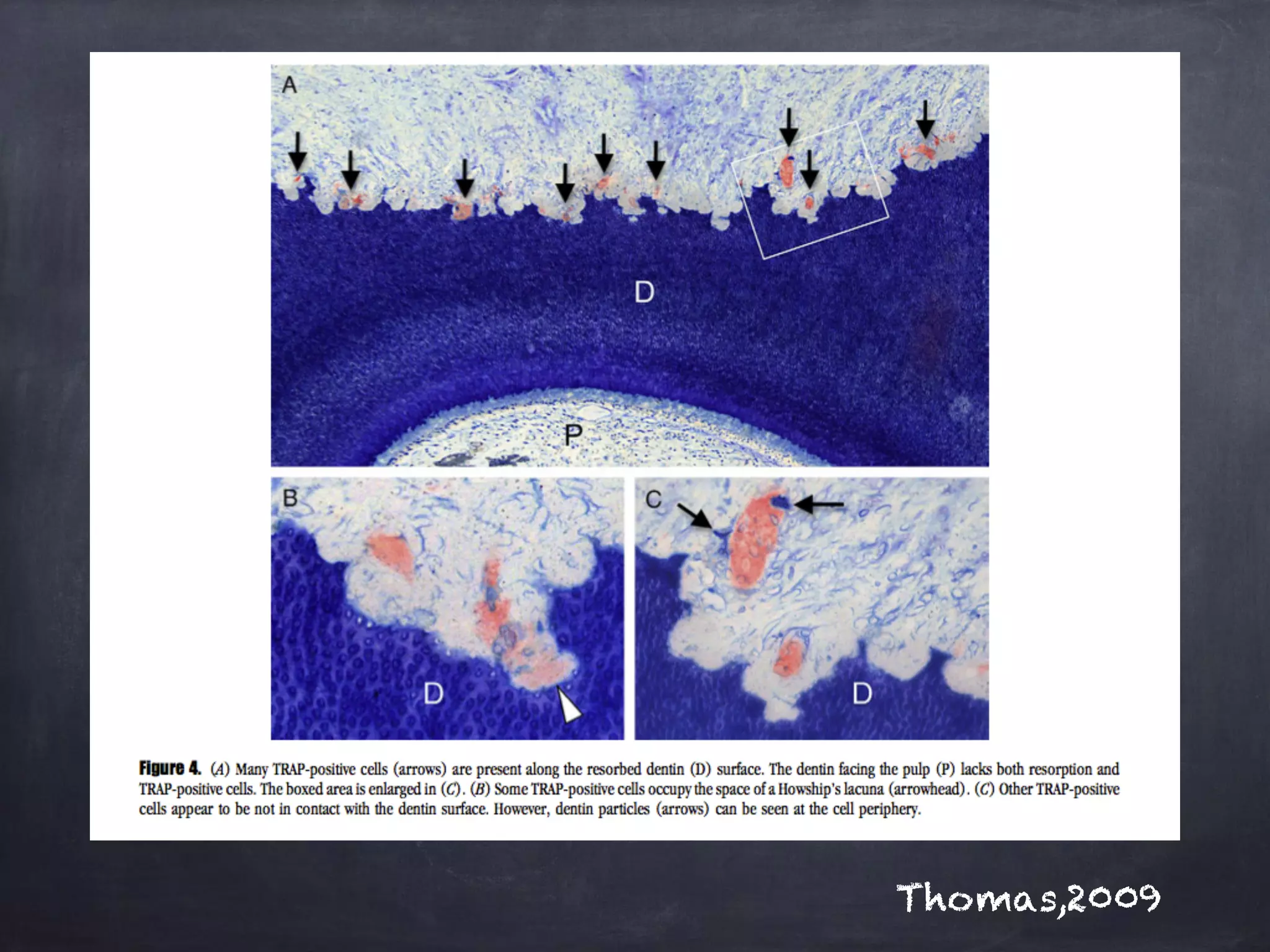
Clasting resorbing cells and Howship’s lacunae 
In advanced lesion ectopic calcification may be 
observed 
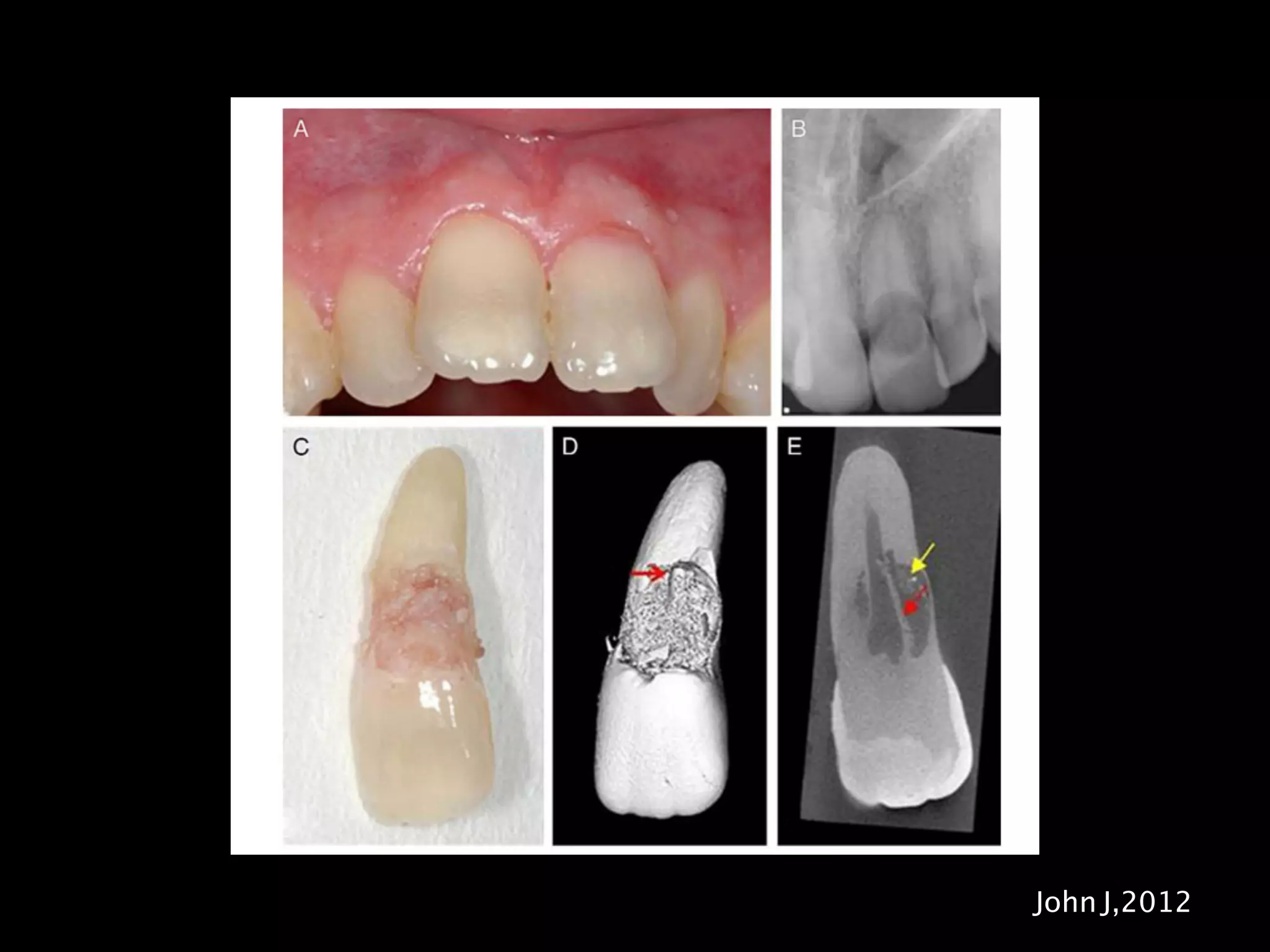
Patel,2009
Thomas,2009
Bergmans,2002
John J,2012
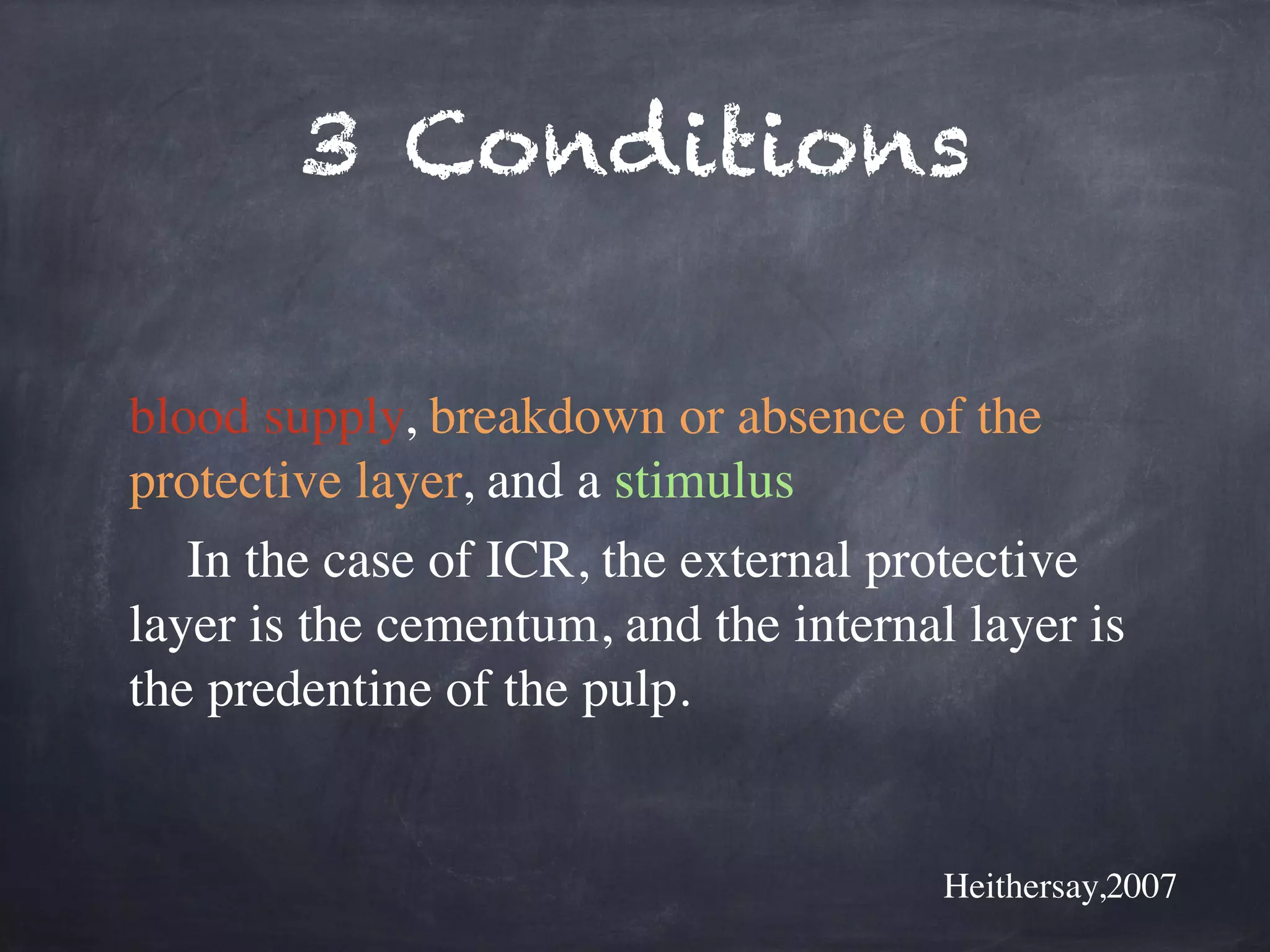
3 Conditions 
blood supply, breakdown or absence of the 
protective layer, and a stimulus 
In the case of ICR, the external protective 
layer is the cementum, and the internal layer is 
the predentine of the pulp. 
Heithersay,2007
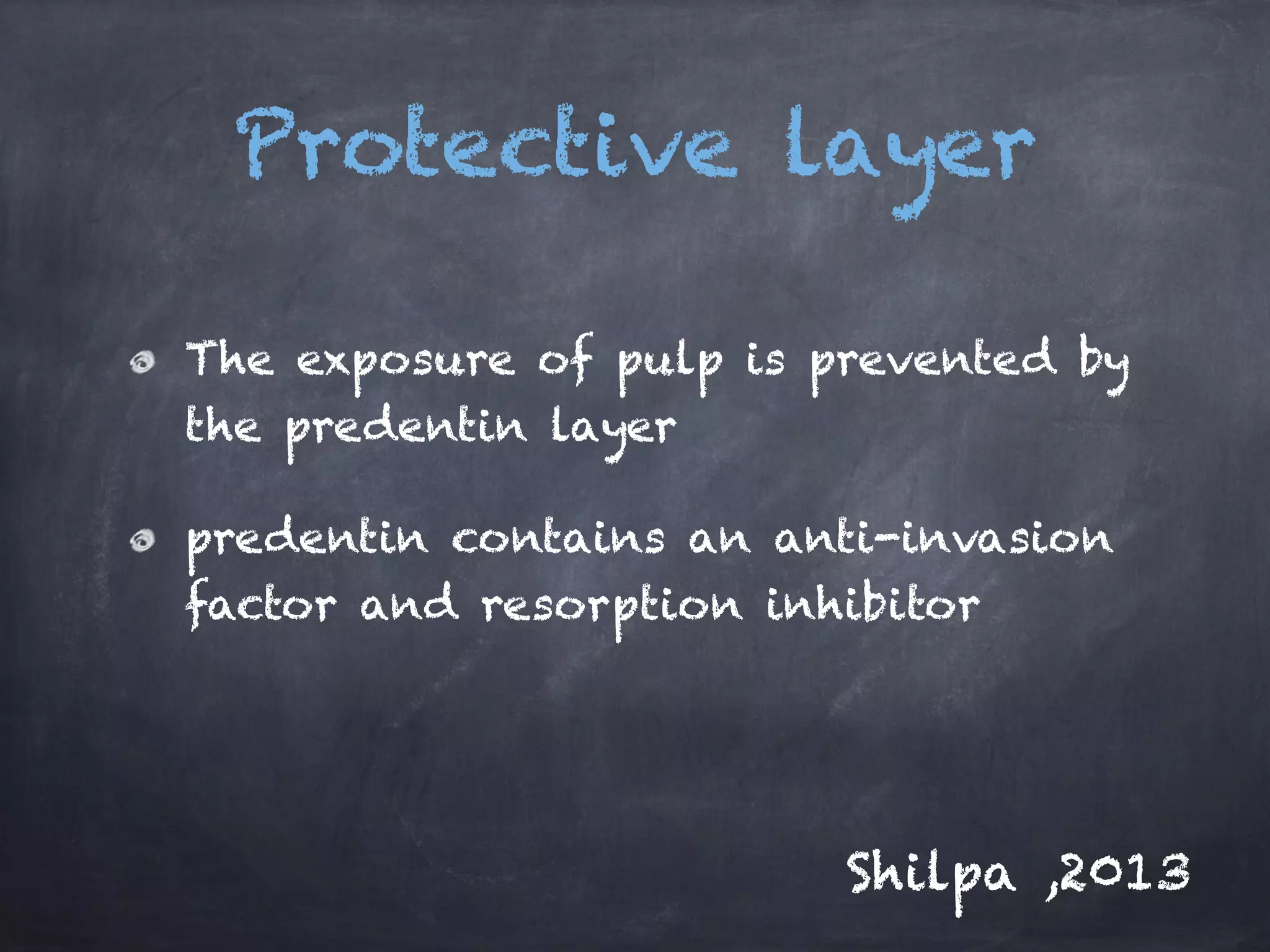
Protective layer 
The exposure of pulp is prevented by 
the predentin layer 
predentin contains an anti-invasion 
factor and resorption inhibitor 
Shilpa ,2013
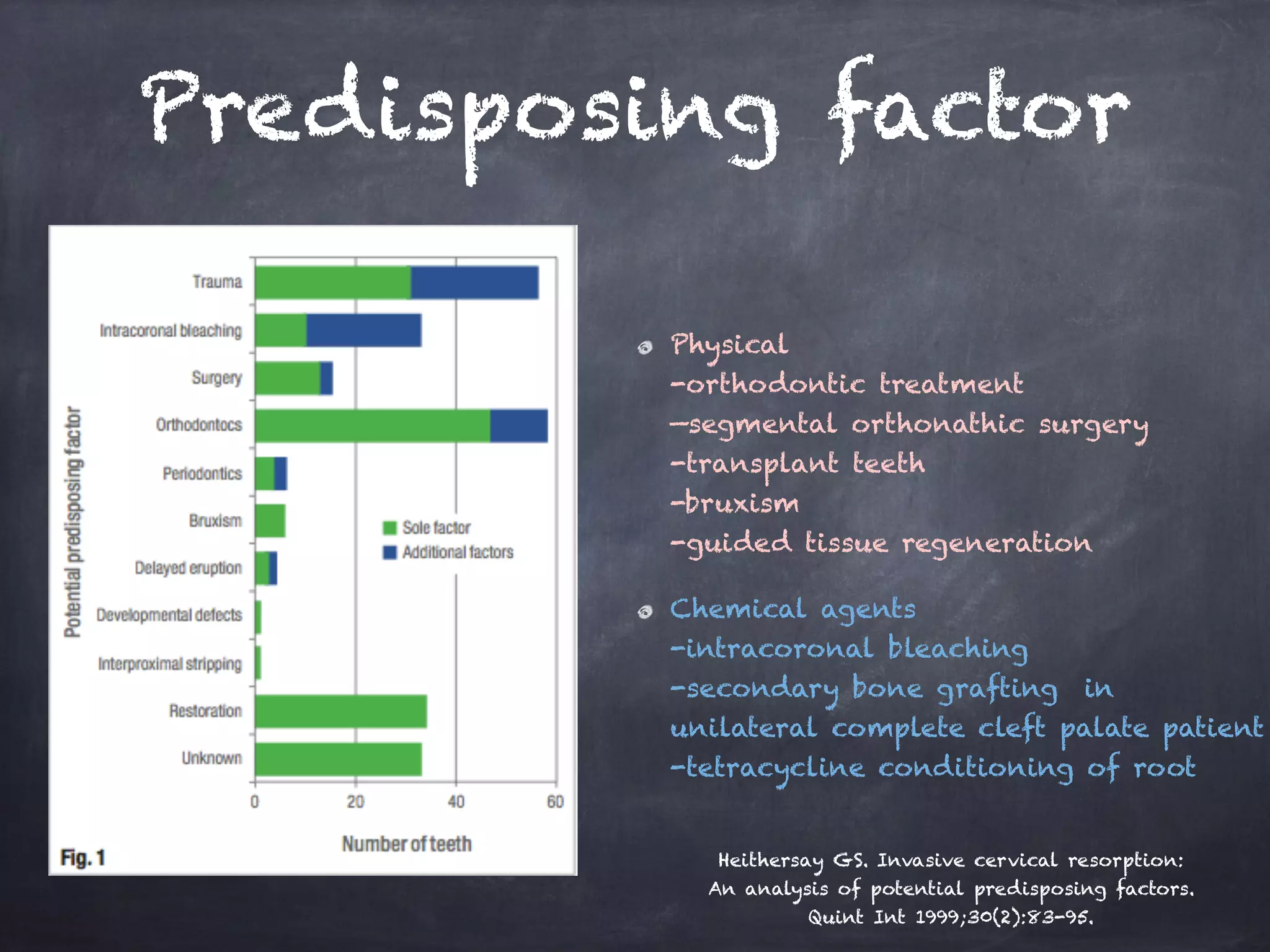
Predisposing factor 
Physical 
-orthodontic treatment 
—segmental orthonathic surgery 
-transplant teeth 
-bruxism 
-guided tissue regeneration 
Chemical agents 
-intracoronal bleaching 
-secondary bone grafting in 
unilateral complete cleft palate patient 
-tetracycline conditioning of root 
Heithersay GS. Invasive cervical resorption: 
An analysis of potential predisposing factors. 
Quint Int 1999;30(2):83-95.
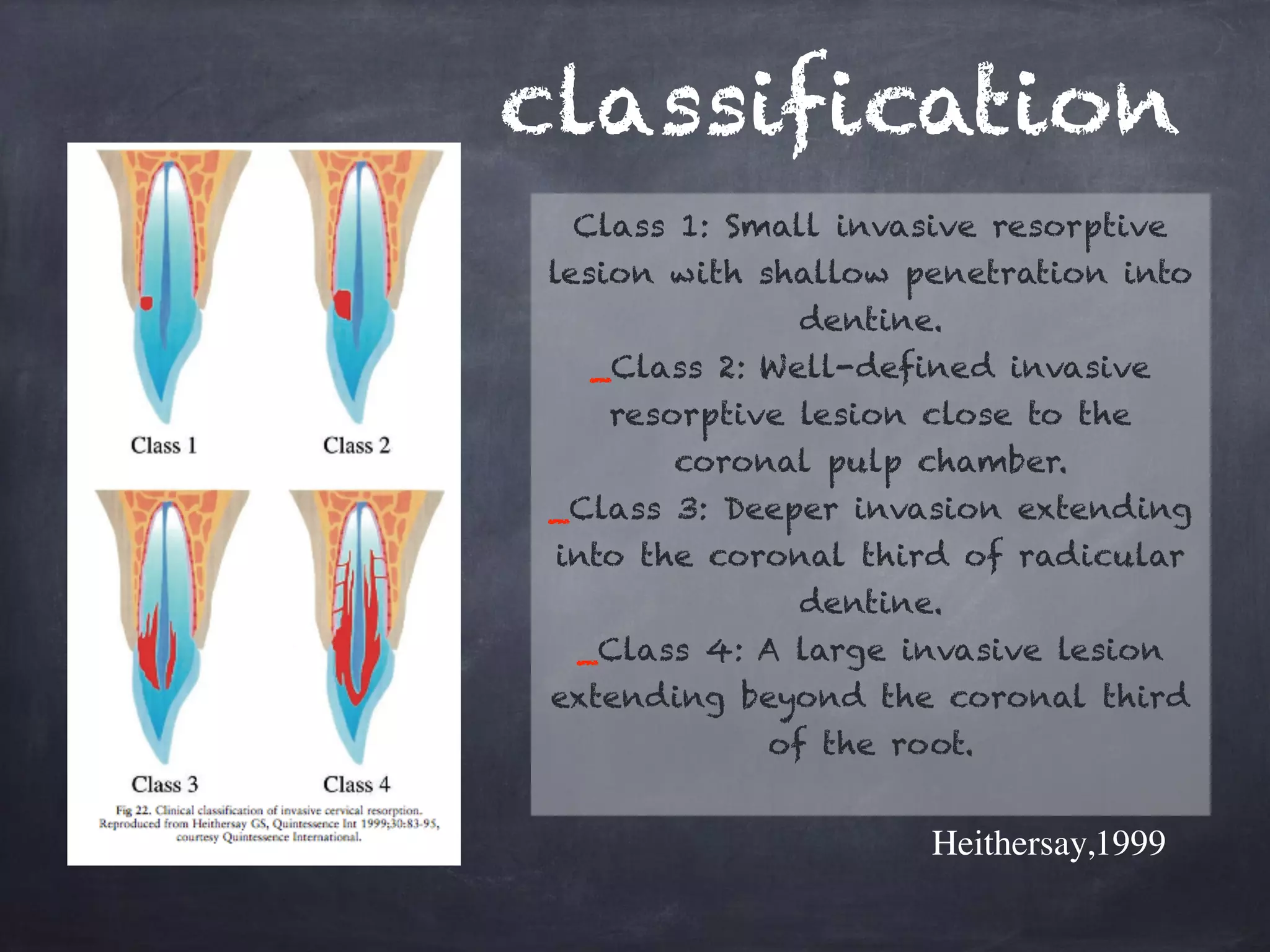
classification 
Class 1: Small invasive resorptive 
lesion with shallow penetration into 
dentine. 
_Class 2: Well-defined invasive 
resorptive lesion close to the 
coronal pulp chamber. 
_Class 3: Deeper invasion extending 
into the coronal third of radicular 
dentine. 
_Class 4: A large invasive lesion 
extending beyond the coronal third 
of the root. 
Heithersay,1999
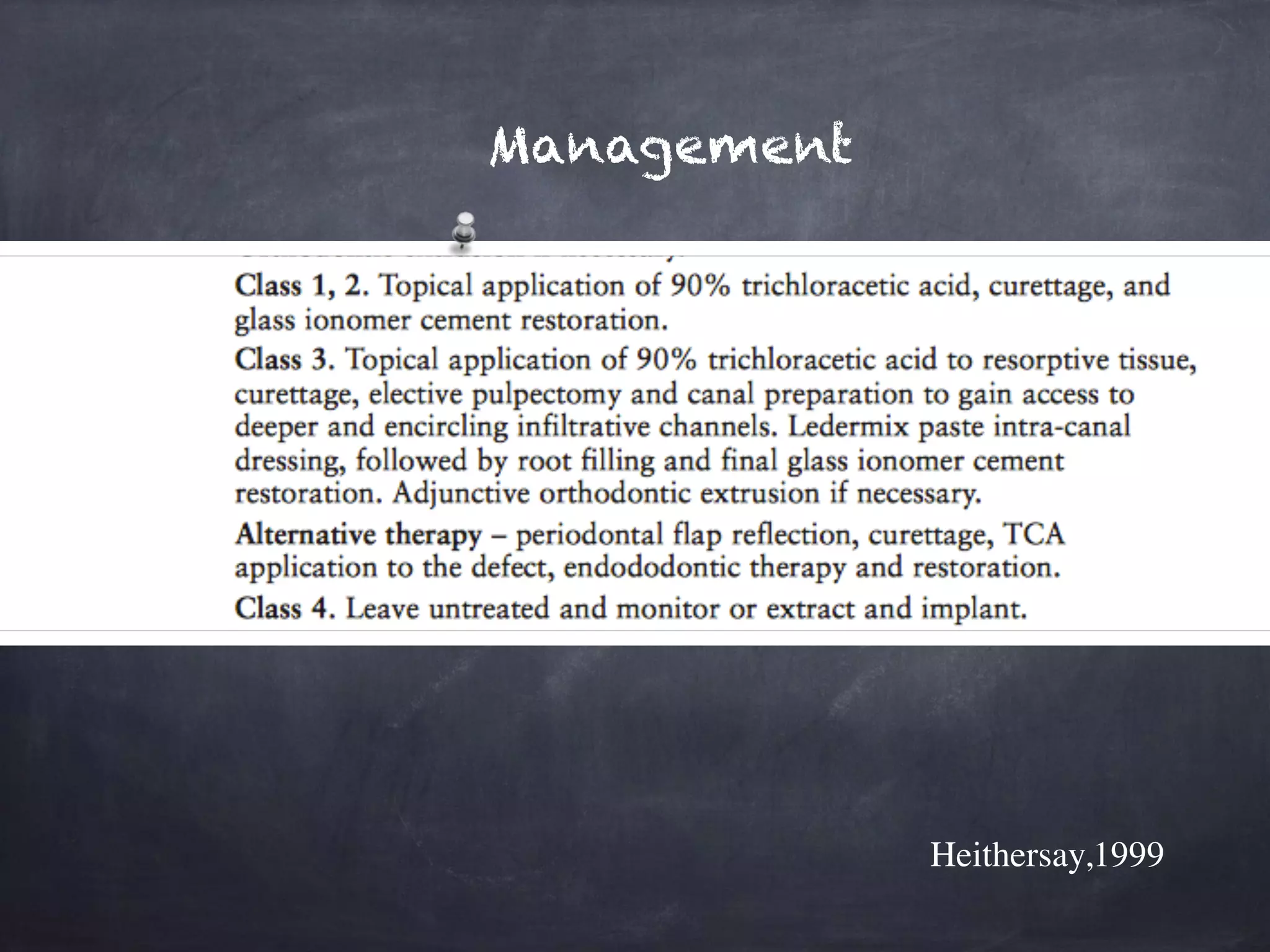
Heithersay,1999 
Management
Traditional method 
of treatment 
! 
Curetting the active tissue from the 
resorption cavity and restoring the defect 
with a suitable restorative material. 
Heithersay GS. Treatment of invasive cervical resorption: an analysis of results using topical application of trichloracetic acid, 
curettage, and restoration. Quintessence Int 1999:30;96-110.
Alternative 
treatment method 
the topical application of 90% 
aqueous trichloracetic acid, 
curettage and restoration, has been 
outlined and clinically assessed 
Heithersay GS. Treatment of invasive cervical resorption: an analysis of results using topical application of trichloracetic acid, 
curettage, and restoration. Quintessence Int 1999:30;96-110.
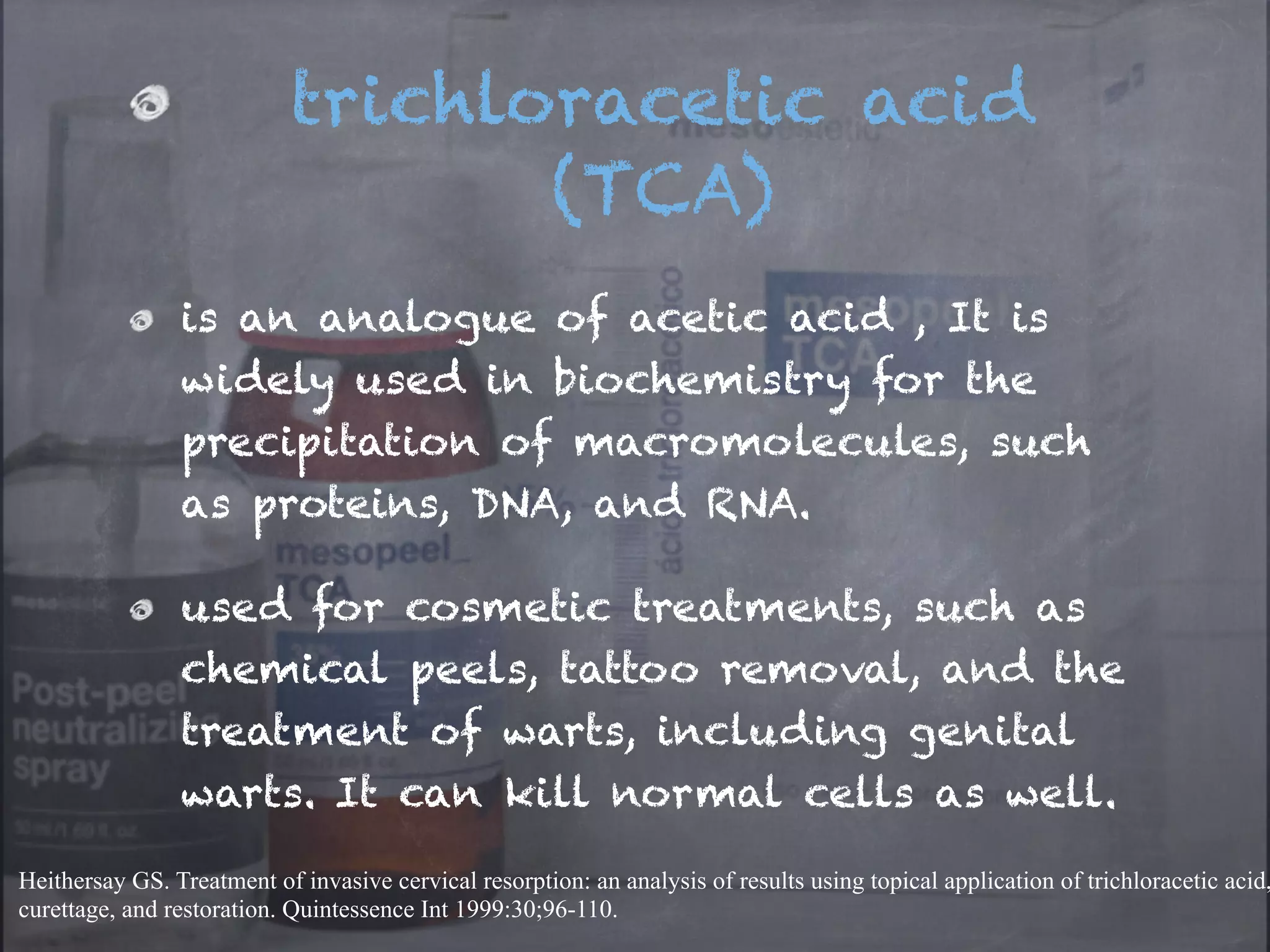
trichloracetic acid 
(TCA) 
is an analogue of acetic acid , It is 
widely used in biochemistry for the 
precipitation of macromolecules, such 
as proteins, DNA, and RNA. 
used for cosmetic treatments, such as 
chemical peels, tattoo removal, and the 
treatment of warts, including genital 
warts. It can kill normal cells as well. 
Heithersay GS. Treatment of invasive cervical resorption: an analysis of results using topical application of trichloracetic acid, 
curettage, and restoration. Quintessence Int 1999:30;96-110.
One advantage of this approach 
is haemorrhage control 
As the effect of trichloroacetic 
acid is to cause coagulation 
necrosis, the resorptive tissue is 
rendered avascular. 
Heithersay GS. Treatment of invasive cervical resorption: an analysis of results using topical application of trichloracetic acid, 
curettage, and restoration. Quintessence Int 1999:30;96-110.
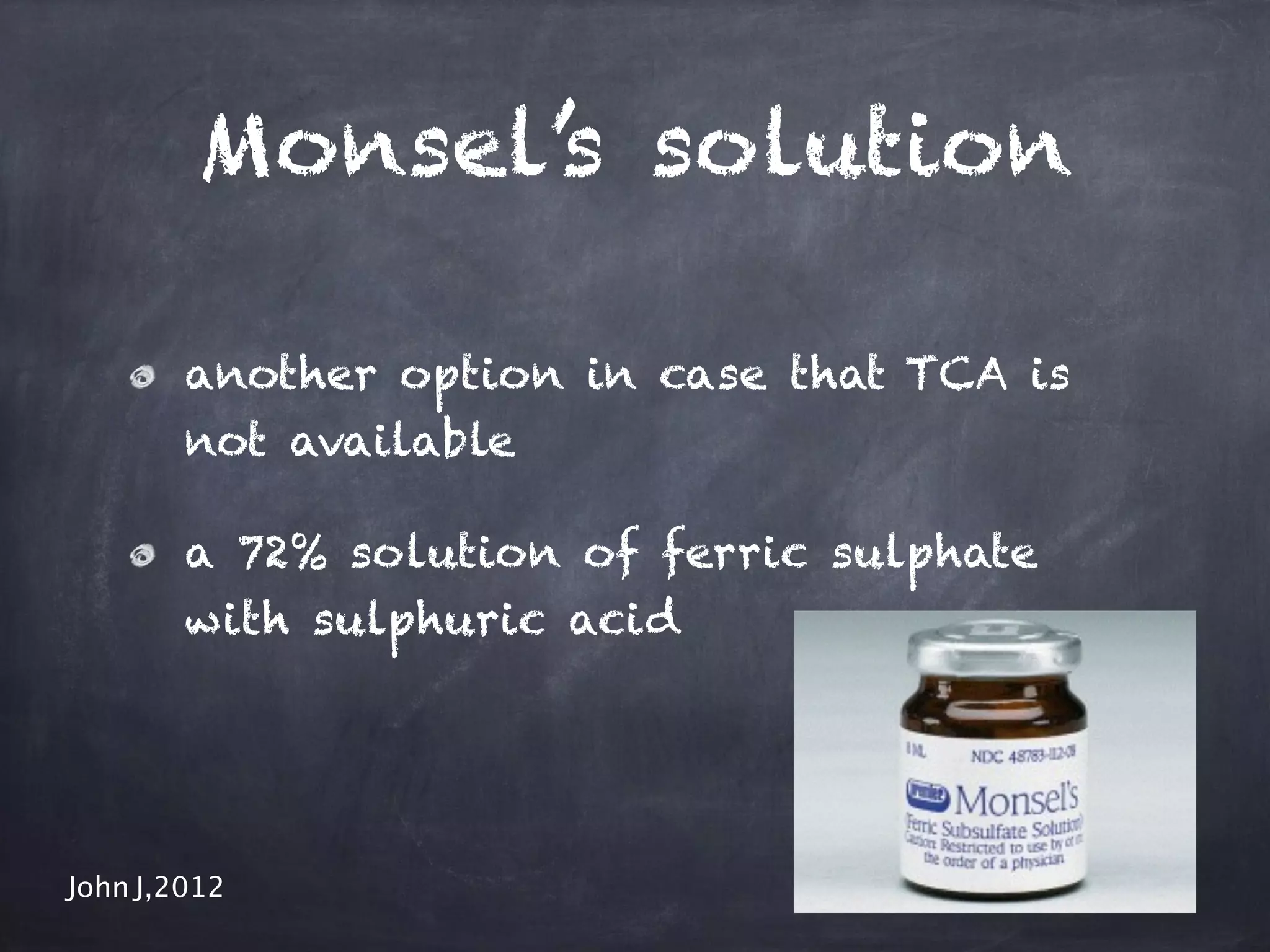
Monsel’s solution 
another option in case that TCA is 
not available 
a 72% solution of ferric sulphate 
with sulphuric acid 
John J,2012
Consideration 
in bonding 
Dentin that has been treated with TCA is 
severely demineralized and is not suitable 
for bonding with either dentin-bonding 
agents or glass ionomer materials. It must be 
‘‘refreshed’’ with a bur before bonding 
procedures 
Schwartz,2010
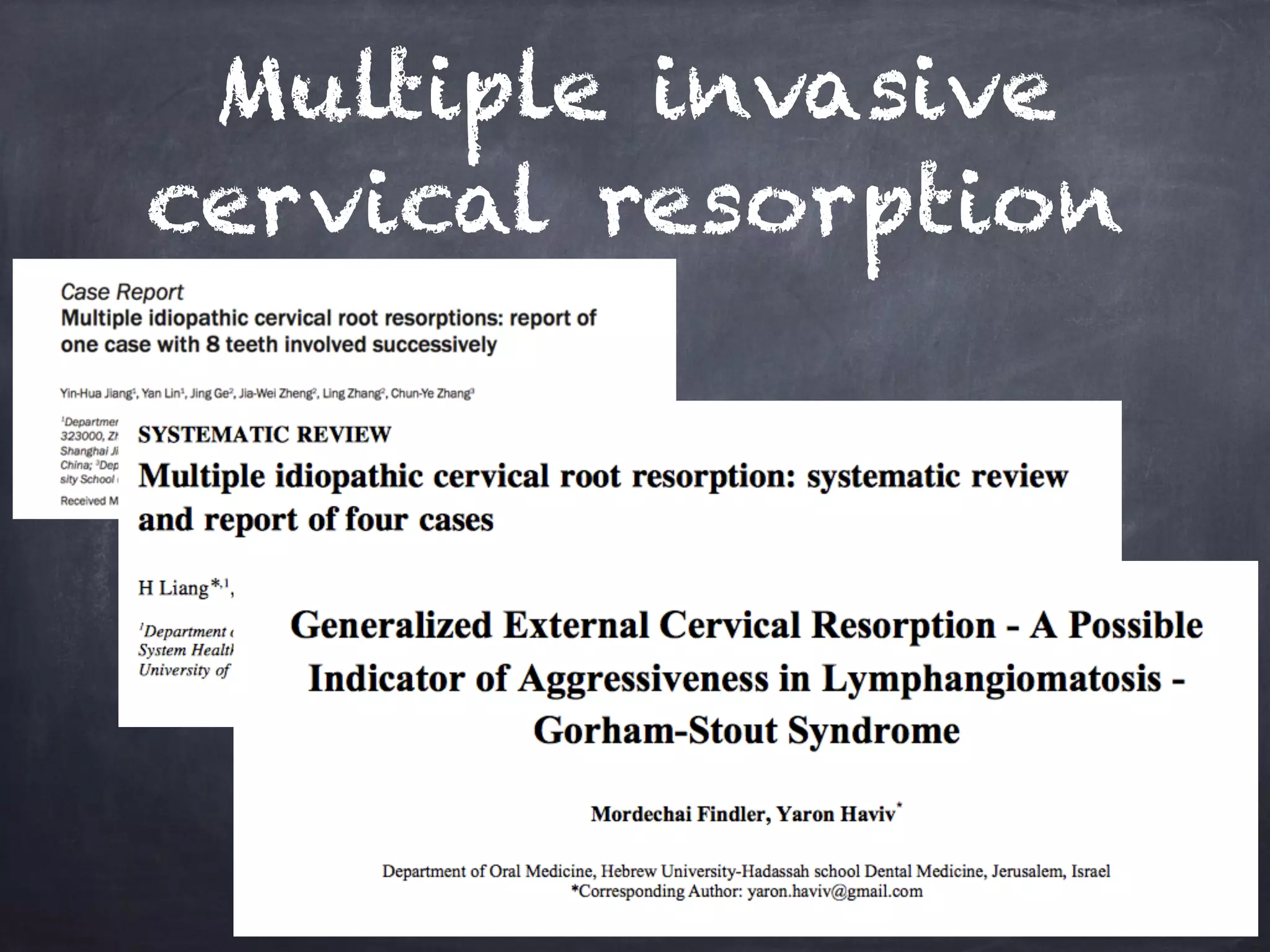
Multiple invasive 
cervical resorption 
First reported by Mueller and Rony 
in 1930 
since then numerous other cases 
have been documented where none 
of the common initiating factors 
appears to have been involved 
Liang,
Multiple invasive 
cervical resorption
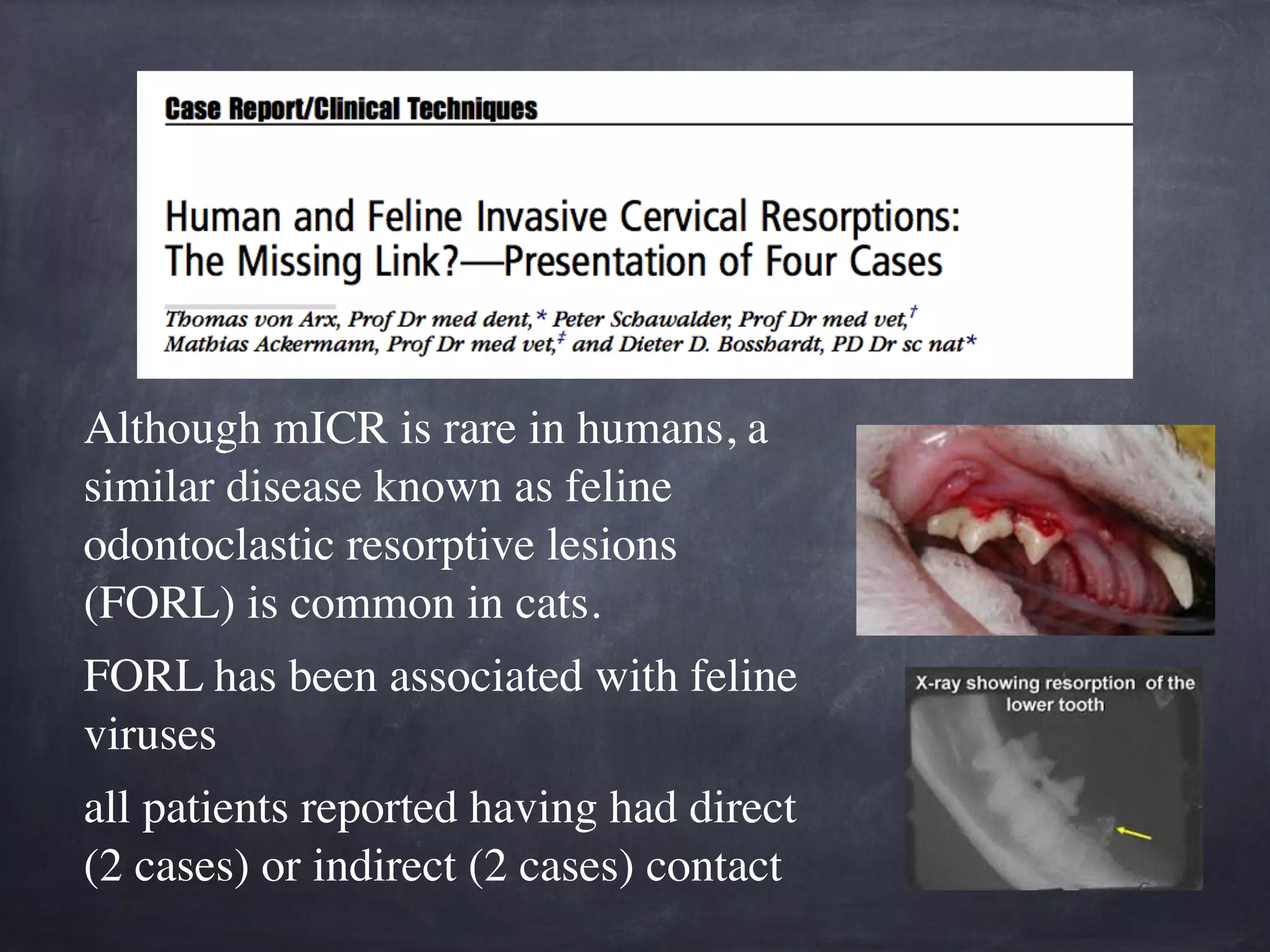
Although mICR is rare in humans, a 
similar disease known as feline 
odontoclastic resorptive lesions 
(FORL) is common in cats. 
FORL has been associated with feline 
viruses 
all patients reported having had direct 
(2 cases) or indirect (2 cases) contact
blood samples were taken from all patients 
for neutralization testing of feline herpes virus 
type 1 (FeHV-1). 
Indeed, the sera obtained were able to 
neutralize (2 cases) or partly inhibit (2 cases) 
replication of FeHV-1, indicating transmission 
of feline viruses to humans. 
Thomas , 2012
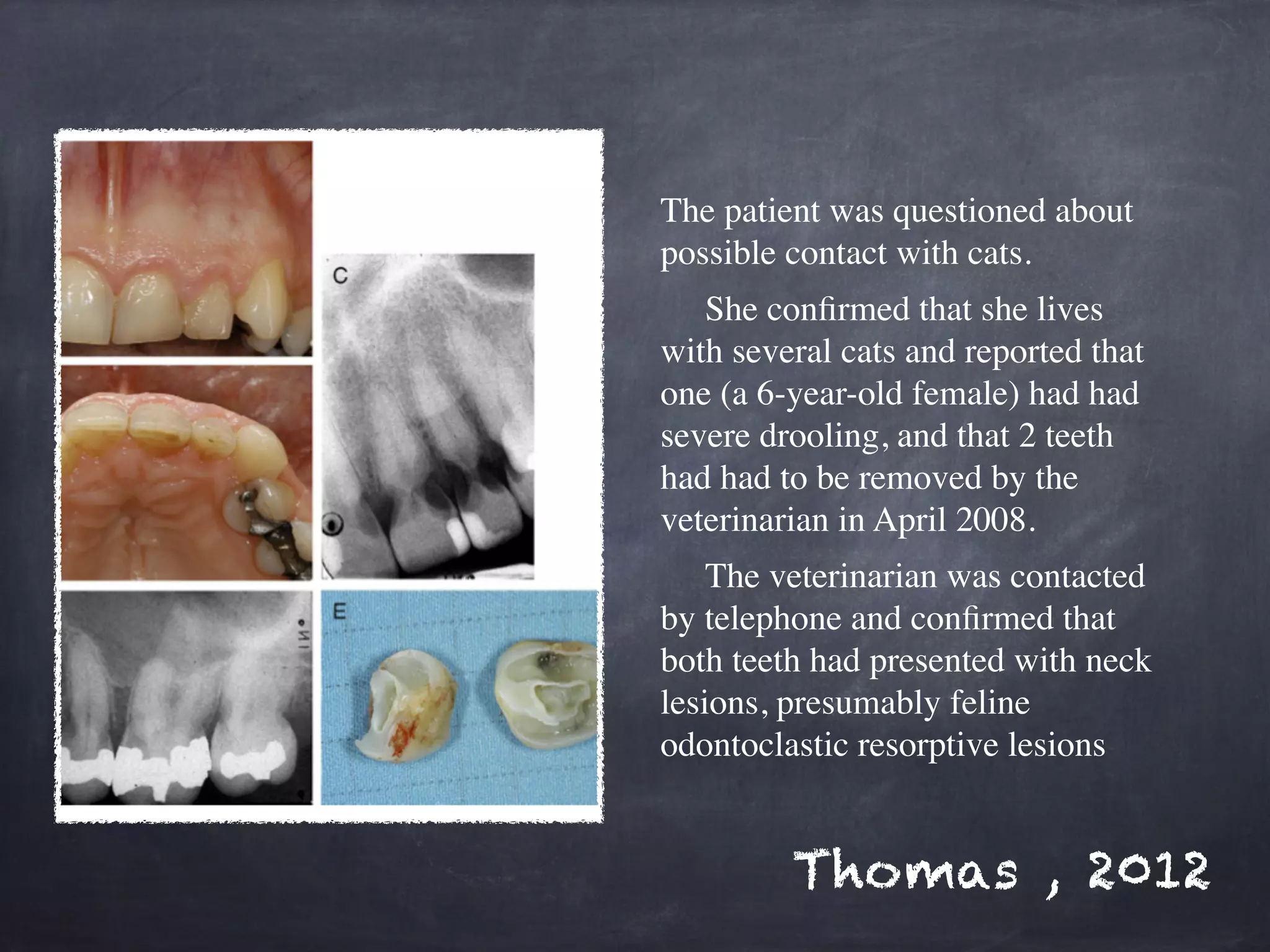
The patient was questioned about 
possible contact with cats. 
She confirmed that she lives 
with several cats and reported that 
one (a 6-year-old female) had had 
severe drooling, and that 2 teeth 
had had to be removed by the 
veterinarian in April 2008. 
The veterinarian was contacted 
by telephone and confirmed that 
both teeth had presented with neck 
lesions, presumably feline 
odontoclastic resorptive lesions 
Thomas , 2012
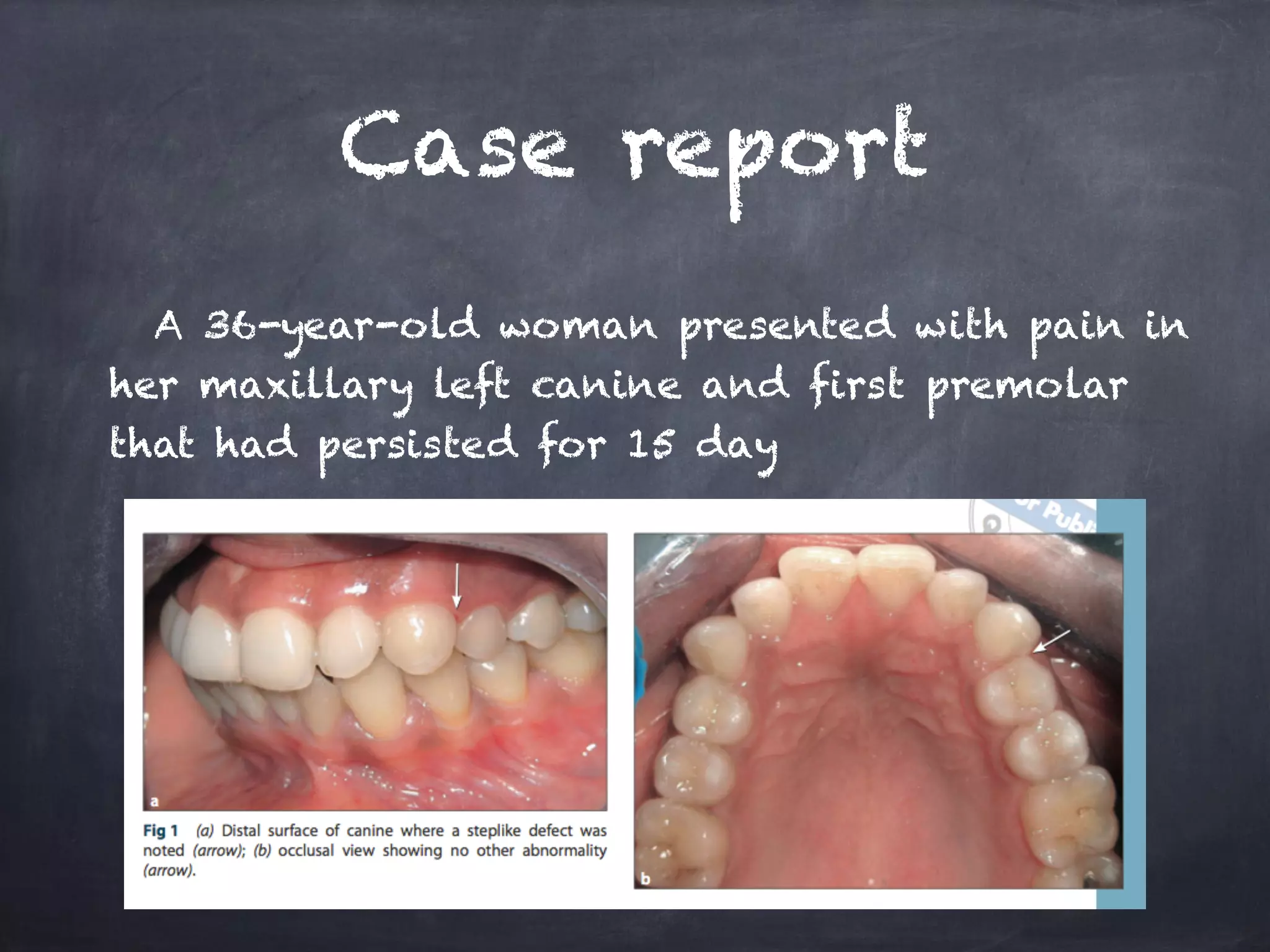
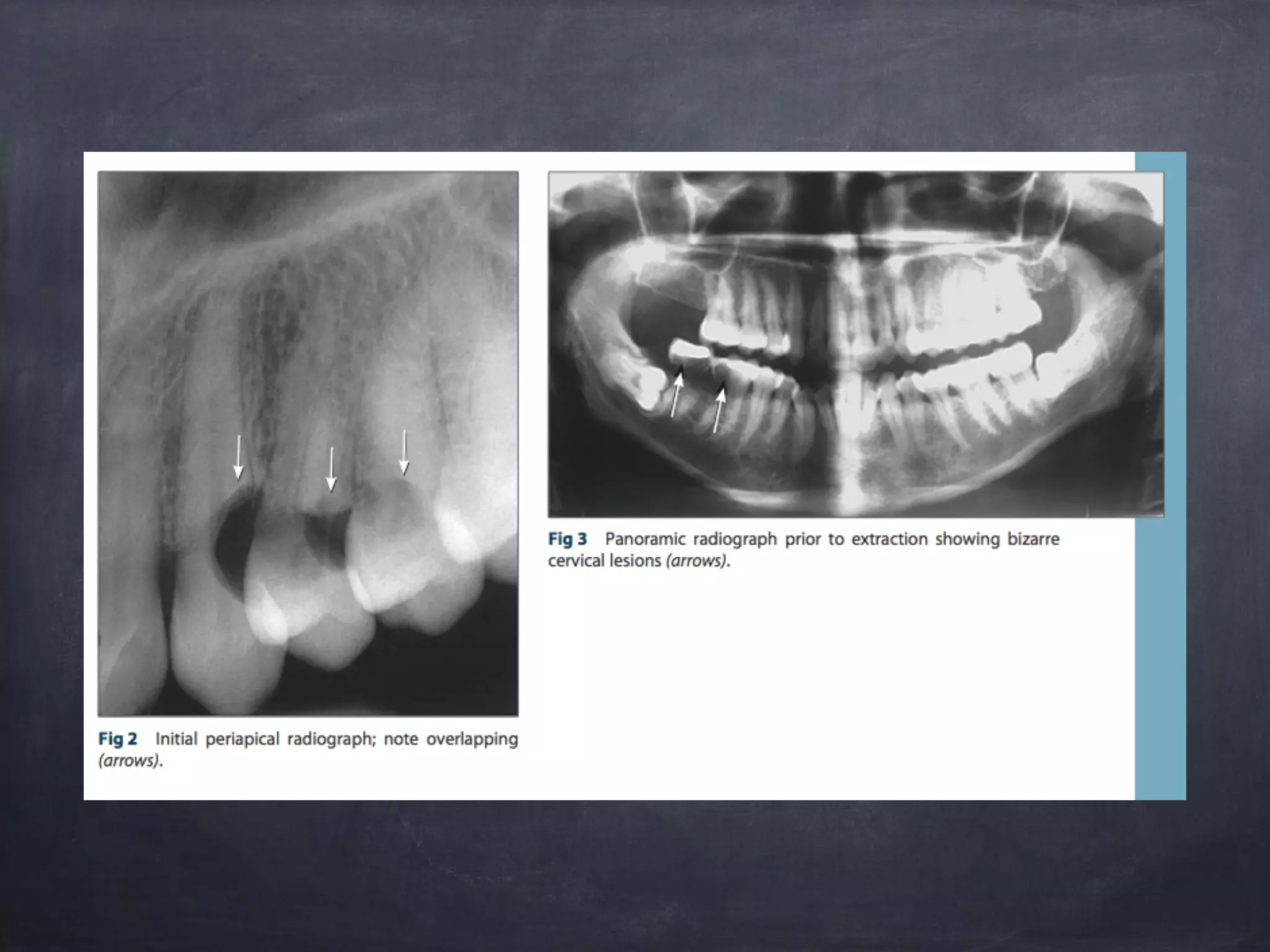
Case report 
A 36-year-old woman presented with pain in 
her maxillary left canine and first premolar 
that had persisted for 15 day 
! 
!!
Patient history 
The patient’s history failed to reveal any incidence of 
trauma, orthodontic treatment,bleaching,periodontal 
treatment or other relevant information. 
! 
There was no family history of any similar condition, 
and she had no pets or any contact with cats. 
!
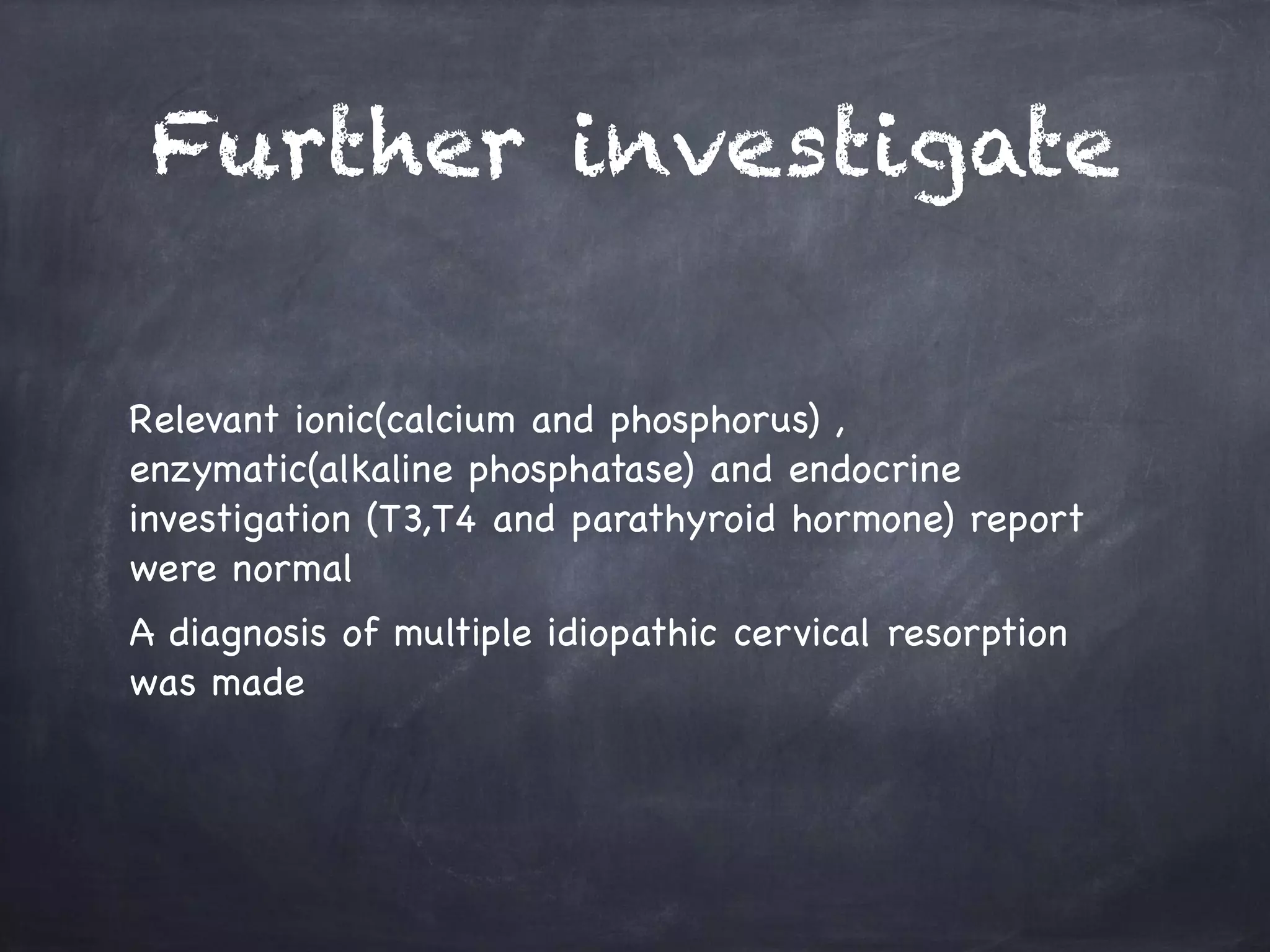
Further investigate 
Relevant ionic(calcium and phosphorus) , 
enzymatic(alkaline phosphatase) and endocrine 
investigation (T3,T4 and parathyroid hormone) report 
were normal 
A diagnosis of multiple idiopathic cervical resorption 
was made
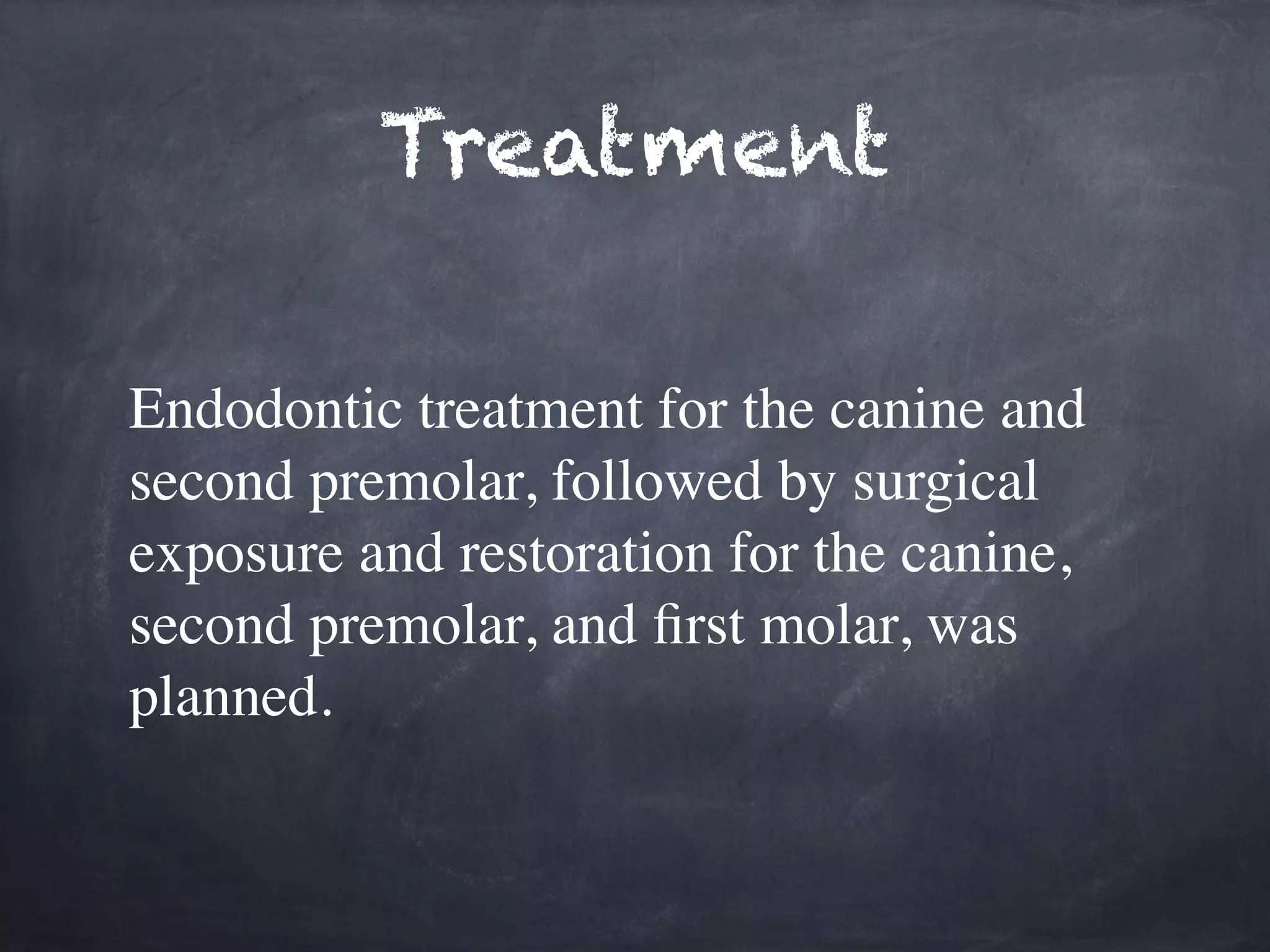
Treatment 
Endodontic treatment for the canine and 
second premolar, followed by surgical 
exposure and restoration for the canine, 
second premolar, and first molar, was 
planned.
treatment plan 
consult oral medicine for further investigation 
and rule out the systemic disease 
consult periodontist for periodontal surgery 
consult endodontist for TCA application and 
root canal therapy if need 
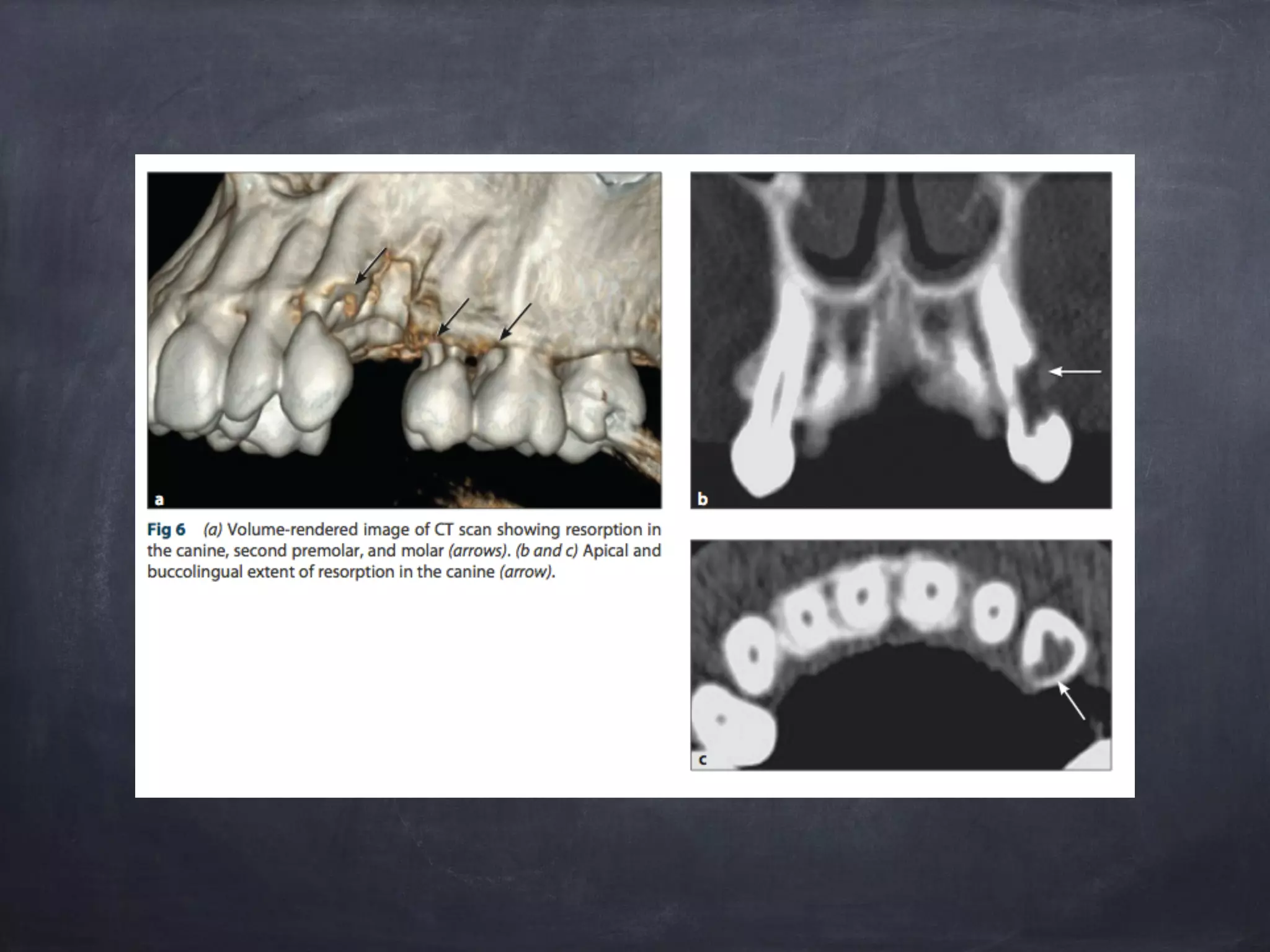
consult radiology for cone beam CT 
consult occlusion to assessment the occlusion 
abnormally
Cone beam CT
Cone beam CT
Cone beam CT
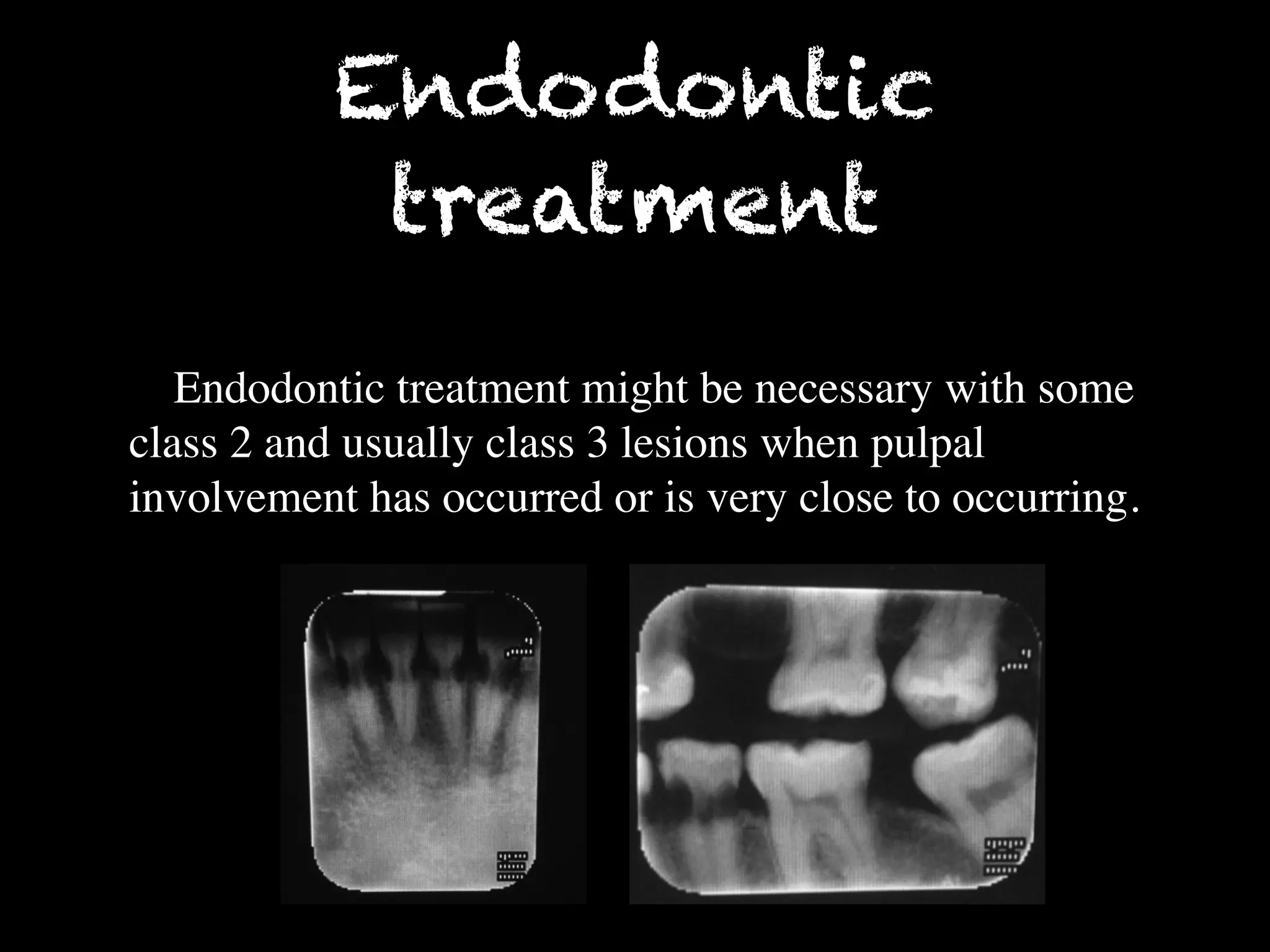
Endodontic 
treatment 
Endodontic treatment might be necessary with some 
class 2 and usually class 3 lesions when pulpal 
involvement has occurred or is very close to occurring.
The use of RMGI 
The use of adhesive restorative materials has 
been proved a biocompatible alternative for 
restoration of deep lesion or cervical abrasion 
prior to surgical root coverage. 
The response of periodontal tissue to adhesive 
restorative materials has been studied by a 
number of investigators
Konradsson and Van Dijken,analyzed interleukin-1 
levels in the gingival crevicular fluid adjacent to 
subgingival restorations of resin modified glass 
ionomer cement and concluded that the restorations 
did not alter gingival health nor did they significantly 
affect interleukin-1 levels or induce gingival 
inflammation 
! 
Martins et al, analyzed the histological response of 
periodontal tissues to subgingival class V resin-modified 
glass ionomer cement restorations and 
observed biocompatibility of tested restorative 
materials.
treatment plan 
Periodontal surgery , TCA , 
curettage , restoration with 
RMGI wih/without endodontic 
treatment 
do nothing
Prognosis 
smaller lesions offer the most 
favorable long-term outcome. 
Heithersay has reported a 100% 
success rate in the treatment of class 
I and II ECR lesions The success 
rate in class 3 lesions was 77.8% and 
only 12.5% of teeth in class 4 cases. 
Heithersay,1999
Discussion
Thank you

Generealized cervical resorption case present

  • 1.
    Case conference BoondarickNiyatiwatchanchai,DDS
  • 2.
    Patient History ผู้ป่วยหญิงไทยอายุ31 ปี อาชีพ ผู้ช่วยทันตแพทย์ ปฎิเสธการมีโรคประจำ ตัวและการแพ้ยา อาการสำคัญ ถูกส่งตัวมาจากคลินิก เพื่ออุดฟันหน้าล่างที่พบ รอยโรคจากภาพรังสี
  • 3.
    Dental history and present illness ผู้ป่วยรู้สึกว่าฟันหน้ามีลักษณะสั้นลงในช่วงเวลา 1 ปี ที่ผ่านมา และพบฟันผุบริเวณคอฟันของฟันหน้าล่าง จากฟิล์ม x-ray จึงได้รับคำแนะนำให้มารักษาที่ คณะทันตแพทยศาสตร์ จุฬาลงกรณ์มหาวิทยาลัย
  • 4.
  • 5.
  • 6.
  • 7.
  • 8.
  • 9.
  • 10.
  • 11.
  • 12.
  • 13.
  • 14.
  • 15.
  • 16.
  • 17.
  • 18.
  • 19.
  • 20.
  • 21.
    Radiographic finding พบรอยโรคโปร่งรังสีที่บริเวณคอฟันฟันซี่ 12MD,13M,22MD,23M,31MD,32MD,33MD, 41MD,42MD,43MD,34MD,35MD,36MD, 48M
  • 22.
  • 23.
    Differential diagnosis dentalcaries root resorption
  • 24.
    dental caries afterradiation multiple invasive cervical resorption Eisbruch, A., Ten Haken, R.K., Kim, H.M., Marsh, L.H., Ship, J.A. (1999) Dose, volume, and function relationships in parotid salivary glands following conformal and intensity-modulated irradiation of head and neck cancer. Int J Radiation Oncol Biol Phys, 45, 577-587
  • 25.
    ซักประวัติและตรวจเพิ่มเติม ไม่เคยได้รับการฉายรังสี ไม่เคยประสบอุบัติเหตุ ไม่เคยจัดฟัน ไม่เคยฟอกสีฟัน ไม่เคยเจ็บป่วยรุนแรงจนต้องนอนโรงพยาบาล เท่าที่ทราบบุคคลในครอบครัวไม่เคยมีอาการเช่นเดียวกัน EPT : 31= 33 , 32=40 , 33=35 , 41=30 , 42=33 ,43=33
  • 26.
    Radiologist consultation ลักษณะรอยโรคไม่เหมือนกับโรคฟันผุแต่มีลักษณะ คล้ายกับการ resorption เนื่องมาจากการเห็น ขอบเขตที่ชัด และตำแหน่งของการเกิดโรค impression for multiple cervical resorption
  • 27.
  • 28.
    tooth resorption -the loss of hard dental tissue (i.e. cementum and dentin) as a result of odontoclastic action. - classified by its location in relation to the root surface - may be physiological and pathological - External resorption can be divided into three broad groups: (a) trauma-induced tooth resorption (b) infection-induced tooth resorption (c) hyperplastic invasive tooth resorption Heithersay,2007
  • 29.
    hyperplastic invasive toothresorption ! insidious in nature and generally present complex therapeutic challenges resorbing tissue invades the hard tissues of the tooth in a destructive, and apparently uncontrolled fashion, akin to the nature of some fibro-osseous lesions such as fibrous dysplasia. An important distinguishing factor for this third group of resorptions is that, unlike the first two types of resorption, simple elimination of the cause of the lesion is ineffective in arresting their progress Heithersay,2007
  • 30.
    hyperplastic invasive toothresorption Total removal or inactivation of the resorptive tissue is essential The reason for recurrence or concurrence is probably due to the invasive nature of the resorptive tissue whereby small infiltrative channels are created within the dentine and these may interconnect with the periodontal ligament Heithersay,2007
  • 31.
  • 32.
    hyperplastic invasive toothresorption pulpal origin or periodontal origin may be subdivided into internal replacement (invasive) resorption invasive coronal resorption invasive cervical resorption invasive radicular resorption. Heithersay,2007
  • 33.
    Cervical external resorption Invasive cervical resorption is not a common occurrence, is insidious and often an aggressive form of external tooth resorption, and can occur in any tooth in the permanent dentition. Heithersay,2007
  • 34.
    In the absenceof treatment, invasive cervical resorption leads to progressive and usually destructive replacement of tooth structure. pinkish colour in the tooth crown may be no obvious outward sign its detection may be by routine radiographs. usually painless unless there is superimposed secondary infection when pulpal or periodontal symptoms may arise. Heithersay,2007
  • 35.
    results in theloss of cementum and dentine by an odontoclastic type of action. begins just apical of the epithelial attachment of the gingiva at the cervical area of the tooth but can be found anywhere on the root. ICR is still not clearly understood. Heithersay,2007
  • 36.
    Diagnosis ! usuallyfound at cervical region pink spot in the cervical region hard and mineralised on probing EPT usually positive usually no symptoms outline of root canal should be visible and intact cone beam CT is useful to assess the lesion Heithersay,2007
  • 37.
    Etiology and pathogenesis Microscopic analysis of the cervical region of teeth has shown that there appear to be frequent gaps in the cementum in this area, leaving the underlying mineralised dentine exposed and vulnerable to osteoclastic root resorption. Heithersay,2007
  • 38.
    Etiology and pathogenesis damage or deficiency of the protective layer of cementum apical to the gingival epithelial attachment exposes the root surface to osteoclasts, which then resorbs the dentine. Heithersay,2007
  • 39.
    Histopathology similar toany other inflammatory root resorption resorption cavity contained granulomatous fibrovascular tissue Thin layer of predentin is always present free of acute inflammatory Clasting resorbing cells and Howship’s lacunae In advanced lesion ectopic calcification may be observed Patel,2009
  • 40.
  • 41.
  • 42.
  • 43.
    3 Conditions bloodsupply, breakdown or absence of the protective layer, and a stimulus In the case of ICR, the external protective layer is the cementum, and the internal layer is the predentine of the pulp. Heithersay,2007
  • 44.
    Protective layer Theexposure of pulp is prevented by the predentin layer predentin contains an anti-invasion factor and resorption inhibitor Shilpa ,2013
  • 45.
    Predisposing factor Physical -orthodontic treatment —segmental orthonathic surgery -transplant teeth -bruxism -guided tissue regeneration Chemical agents -intracoronal bleaching -secondary bone grafting in unilateral complete cleft palate patient -tetracycline conditioning of root Heithersay GS. Invasive cervical resorption: An analysis of potential predisposing factors. Quint Int 1999;30(2):83-95.
  • 46.
    classification Class 1:Small invasive resorptive lesion with shallow penetration into dentine. _Class 2: Well-defined invasive resorptive lesion close to the coronal pulp chamber. _Class 3: Deeper invasion extending into the coronal third of radicular dentine. _Class 4: A large invasive lesion extending beyond the coronal third of the root. Heithersay,1999
  • 47.
  • 48.
    Traditional method oftreatment ! Curetting the active tissue from the resorption cavity and restoring the defect with a suitable restorative material. Heithersay GS. Treatment of invasive cervical resorption: an analysis of results using topical application of trichloracetic acid, curettage, and restoration. Quintessence Int 1999:30;96-110.
  • 49.
    Alternative treatment method the topical application of 90% aqueous trichloracetic acid, curettage and restoration, has been outlined and clinically assessed Heithersay GS. Treatment of invasive cervical resorption: an analysis of results using topical application of trichloracetic acid, curettage, and restoration. Quintessence Int 1999:30;96-110.
  • 50.
    trichloracetic acid (TCA) is an analogue of acetic acid , It is widely used in biochemistry for the precipitation of macromolecules, such as proteins, DNA, and RNA. used for cosmetic treatments, such as chemical peels, tattoo removal, and the treatment of warts, including genital warts. It can kill normal cells as well. Heithersay GS. Treatment of invasive cervical resorption: an analysis of results using topical application of trichloracetic acid, curettage, and restoration. Quintessence Int 1999:30;96-110.
  • 51.
    One advantage ofthis approach is haemorrhage control As the effect of trichloroacetic acid is to cause coagulation necrosis, the resorptive tissue is rendered avascular. Heithersay GS. Treatment of invasive cervical resorption: an analysis of results using topical application of trichloracetic acid, curettage, and restoration. Quintessence Int 1999:30;96-110.
  • 52.
    Monsel’s solution anotheroption in case that TCA is not available a 72% solution of ferric sulphate with sulphuric acid John J,2012
  • 53.
    Consideration in bonding Dentin that has been treated with TCA is severely demineralized and is not suitable for bonding with either dentin-bonding agents or glass ionomer materials. It must be ‘‘refreshed’’ with a bur before bonding procedures Schwartz,2010
  • 54.
    Multiple invasive cervicalresorption First reported by Mueller and Rony in 1930 since then numerous other cases have been documented where none of the common initiating factors appears to have been involved Liang,
  • 55.
  • 56.
    Although mICR israre in humans, a similar disease known as feline odontoclastic resorptive lesions (FORL) is common in cats. FORL has been associated with feline viruses all patients reported having had direct (2 cases) or indirect (2 cases) contact
  • 57.
    blood samples weretaken from all patients for neutralization testing of feline herpes virus type 1 (FeHV-1). Indeed, the sera obtained were able to neutralize (2 cases) or partly inhibit (2 cases) replication of FeHV-1, indicating transmission of feline viruses to humans. Thomas , 2012
  • 58.
    The patient wasquestioned about possible contact with cats. She confirmed that she lives with several cats and reported that one (a 6-year-old female) had had severe drooling, and that 2 teeth had had to be removed by the veterinarian in April 2008. The veterinarian was contacted by telephone and confirmed that both teeth had presented with neck lesions, presumably feline odontoclastic resorptive lesions Thomas , 2012
  • 59.
    Case report A36-year-old woman presented with pain in her maxillary left canine and first premolar that had persisted for 15 day ! !!
  • 61.
    Patient history Thepatient’s history failed to reveal any incidence of trauma, orthodontic treatment,bleaching,periodontal treatment or other relevant information. ! There was no family history of any similar condition, and she had no pets or any contact with cats. !
  • 64.
    Further investigate Relevantionic(calcium and phosphorus) , enzymatic(alkaline phosphatase) and endocrine investigation (T3,T4 and parathyroid hormone) report were normal A diagnosis of multiple idiopathic cervical resorption was made
  • 65.
    Treatment Endodontic treatmentfor the canine and second premolar, followed by surgical exposure and restoration for the canine, second premolar, and first molar, was planned.
  • 66.
    treatment plan consultoral medicine for further investigation and rule out the systemic disease consult periodontist for periodontal surgery consult endodontist for TCA application and root canal therapy if need consult radiology for cone beam CT consult occlusion to assessment the occlusion abnormally
  • 67.
  • 68.
  • 69.
  • 70.
    Endodontic treatment Endodontictreatment might be necessary with some class 2 and usually class 3 lesions when pulpal involvement has occurred or is very close to occurring.
  • 71.
    The use ofRMGI The use of adhesive restorative materials has been proved a biocompatible alternative for restoration of deep lesion or cervical abrasion prior to surgical root coverage. The response of periodontal tissue to adhesive restorative materials has been studied by a number of investigators
  • 72.
    Konradsson and VanDijken,analyzed interleukin-1 levels in the gingival crevicular fluid adjacent to subgingival restorations of resin modified glass ionomer cement and concluded that the restorations did not alter gingival health nor did they significantly affect interleukin-1 levels or induce gingival inflammation ! Martins et al, analyzed the histological response of periodontal tissues to subgingival class V resin-modified glass ionomer cement restorations and observed biocompatibility of tested restorative materials.
  • 73.
    treatment plan Periodontalsurgery , TCA , curettage , restoration with RMGI wih/without endodontic treatment do nothing
  • 74.
    Prognosis smaller lesionsoffer the most favorable long-term outcome. Heithersay has reported a 100% success rate in the treatment of class I and II ECR lesions The success rate in class 3 lesions was 77.8% and only 12.5% of teeth in class 4 cases. Heithersay,1999
  • 75.
  • 76.