GENERATIONS
OF COMPUTER
BY P.MAHALAKSHMI
B.SC B.ED COMPUTER SCIENCE
COMPUTER
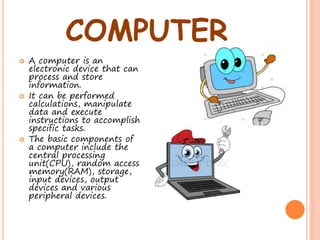
 A computer is an
electronic device that can
process and store
information.
 It can be performed
calculations, manipulate
data and execute
instructions to accomplish
specific tasks.
 The basic components of
a computer include the
central processing
unit(CPU), random access
memory(RAM), storage,
input devices, output
devices and various
peripheral devices.
GENERATIONS OF COMPUTER
 This long period is often
conveniently divided
into the subsequent
phases called
generations of
computer.
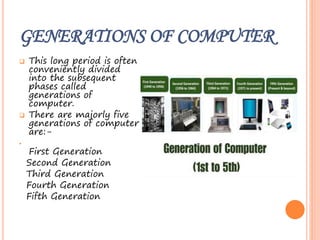
 There are majorly five
generations of computer
are:-
•
First Generation
Second Generation
Third Generation
Fourth Generation
Fifth Generation
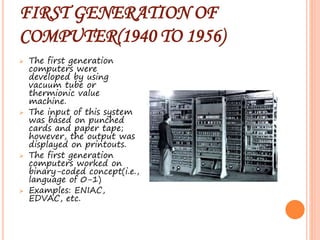
FIRST GENERATION OF
COMPUTER(1940 TO 1956)
 The first generation
computers were
developed by using
vacuum tube or
thermionic value
machine.
 The input of this system
was based on punched
cards and paper tape;
however, the output was
displayed on printouts.
 The first generation
computers worked on
binary-coded concept(i.e.,
language of 0-1)
 Examples: ENIAC,
EDVAC, etc.
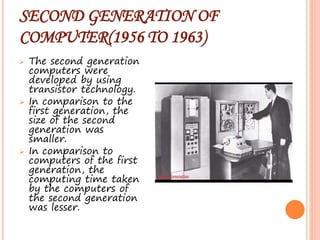
SECOND GENERATION OF
COMPUTER(1956 TO 1963)
 The second generation
computers were
developed by using
transistor technology.
 In comparison to the
first generation, the
size of the second
generation was
smaller.
 In comparison to
computers of the first
generation, the
computing time taken
by the computers of
the second generation
was lesser.
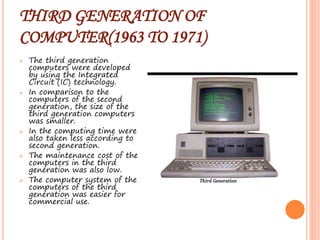
THIRD GENERATION OF
COMPUTER(1963 TO 1971)
 The third generation
computers were developed
by using the Integrated
Circuit (IC) technology.
 In comparison to the
computers of the second
generation, the size of the
third generation computers
was smaller.
 In the computing time were
also taken less according to
second generation.
 The maintenance cost of the
computers in the third
generation was also low.
 The computer system of the
computers of the third
generation was easier for
commercial use.
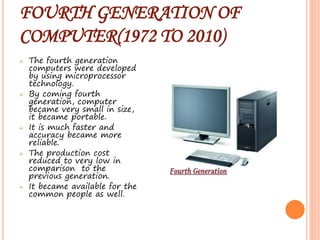
FOURTH GENERATION OF
COMPUTER(1972 TO 2010)
 The fourth generation
computers were developed
by using microprocessor
technology.
 By coming fourth
generation, computer
became very small in size,
it became portable.
 It is much faster and
accuracy became more
reliable.
 The production cost
reduced to very low in
comparison to the
previous generation.
 It became available for the
common people as well.
FIFTH GENERATION OF
COMPUTER(2010 TO TILL DATE)
 By the time, the computer
generation was being
categorized on the basis of
hardware only, but the fifth
generation technology also
included software.
 The computers of this
generation had high capability
and large memory capacity.
 Working with computers of
this generation was fast and
multiple tasks could be
performed simultaneously.
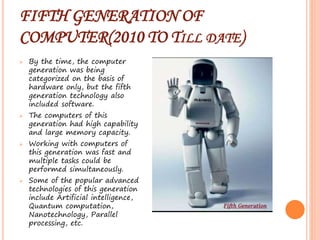
 Some of the popular advanced
technologies of this generation
include Artificial intelligence,
Quantum computation,
Nanotechnology, Parallel
processing, etc.
THANK
YOU

GENERATIONS OF COMPUTER.pptx

  • 1.
  • 2.
    COMPUTER  A computeris an electronic device that can process and store information.  It can be performed calculations, manipulate data and execute instructions to accomplish specific tasks.  The basic components of a computer include the central processing unit(CPU), random access memory(RAM), storage, input devices, output devices and various peripheral devices.
  • 3.
    GENERATIONS OF COMPUTER This long period is often conveniently divided into the subsequent phases called generations of computer.  There are majorly five generations of computer are:- • First Generation Second Generation Third Generation Fourth Generation Fifth Generation
  • 4.
    FIRST GENERATION OF COMPUTER(1940TO 1956)  The first generation computers were developed by using vacuum tube or thermionic value machine.  The input of this system was based on punched cards and paper tape; however, the output was displayed on printouts.  The first generation computers worked on binary-coded concept(i.e., language of 0-1)  Examples: ENIAC, EDVAC, etc.
  • 5.
    SECOND GENERATION OF COMPUTER(1956TO 1963)  The second generation computers were developed by using transistor technology.  In comparison to the first generation, the size of the second generation was smaller.  In comparison to computers of the first generation, the computing time taken by the computers of the second generation was lesser.
  • 6.
    THIRD GENERATION OF COMPUTER(1963TO 1971)  The third generation computers were developed by using the Integrated Circuit (IC) technology.  In comparison to the computers of the second generation, the size of the third generation computers was smaller.  In the computing time were also taken less according to second generation.  The maintenance cost of the computers in the third generation was also low.  The computer system of the computers of the third generation was easier for commercial use.
  • 7.
    FOURTH GENERATION OF COMPUTER(1972TO 2010)  The fourth generation computers were developed by using microprocessor technology.  By coming fourth generation, computer became very small in size, it became portable.  It is much faster and accuracy became more reliable.  The production cost reduced to very low in comparison to the previous generation.  It became available for the common people as well.
  • 8.
    FIFTH GENERATION OF COMPUTER(2010TO TILL DATE)  By the time, the computer generation was being categorized on the basis of hardware only, but the fifth generation technology also included software.  The computers of this generation had high capability and large memory capacity.  Working with computers of this generation was fast and multiple tasks could be performed simultaneously.  Some of the popular advanced technologies of this generation include Artificial intelligence, Quantum computation, Nanotechnology, Parallel processing, etc.
  • 9.