GENERAL
INFORMATION
 ABOUT
 POLAND
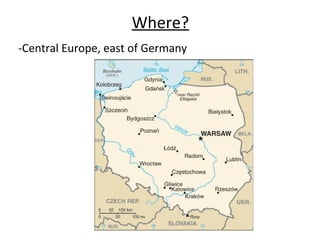
Where?
-Central Europe, east of Germany
•   Capital and largest city: Warsaw
•   Official language: Polish
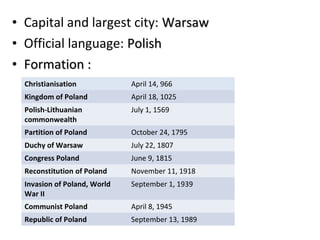
•   Formation :
    Christianisation            April 14, 966
    Kingdom of Poland           April 18, 1025
    Polish-Lithuanian           July 1, 1569
    commonwealth
    Partition of Poland         October 24, 1795
    Duchy of Warsaw             July 22, 1807
    Congress Poland             June 9, 1815
    Reconstitution of Poland    November 11, 1918
    Invasion of Poland, World   September 1, 1939
    War II
    Communist Poland            April 8, 1945
    Republic of Poland          September 13, 1989
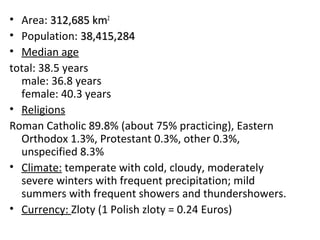
• Area: 312,685 km2
• Population: 38,415,284
• Median age
total: 38.5 years
  male: 36.8 years
  female: 40.3 years
• Religions
Roman Catholic 89.8% (about 75% practicing), Eastern
  Orthodox 1.3%, Protestant 0.3%, other 0.3%,
  unspecified 8.3%
• Climate: temperate with cold, cloudy, moderately
  severe winters with frequent precipitation; mild
  summers with frequent showers and thundershowers.
• Currency: Zloty (1 Polish zloty = 0.24 Euros)
• Poland has a great, long standing tradition of
  tolerance towards minorities, as well as absence of
  discrimination on the grounds of religion, nationality
  or race.
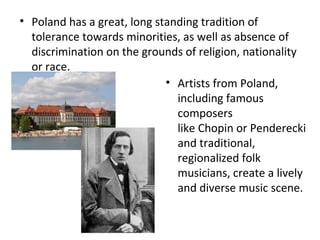
                             • Artists from Poland,
                               including famous
                               composers
                               like Chopin or Penderecki
                               and traditional,
                               regionalized folk
                               musicians, create a lively
                               and diverse music scene.
Architecture 
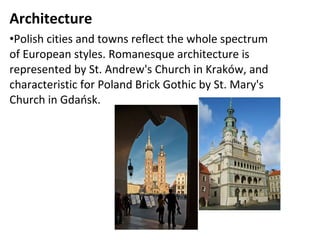
•Polish cities and towns reflect the whole spectrum
of European styles. Romanesque architecture is
represented by St. Andrew's Church in Kraków, and
characteristic for Poland Brick Gothic by St. Mary's
Church in Gdańsk.
Cuisine
• Polish cuisine has influenced the cuisines
  of its surrounding countries. For
  centuries the Polish foods have been the
  arena of competing with France and Italy,
  due to influx of merchants from Genoa,
  Florence and other world cities. It is rich
  in meat, especially pork, chicken and
  beef, winter vegetables (cabbage in the
  dish bigos) and spices.
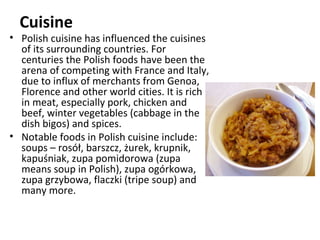
• Notable foods in Polish cuisine include:
  soups – rosół, barszcz, żurek, krupnik,
  kapuśniak, zupa pomidorowa (zupa
  means soup in Polish), zupa ogórkowa,
  zupa grzybowa, flaczki (tripe soup) and
  many more.
Sports
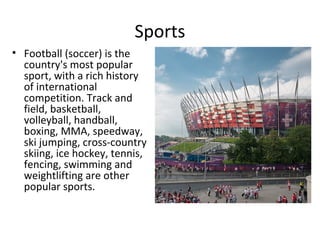
• Football (soccer) is the
  country's most popular
  sport, with a rich history
  of international
  competition. Track and
  field, basketball,
  volleyball, handball,
  boxing, MMA, speedway,
  ski jumping, cross-country
  skiing, ice hockey, tennis,
  fencing, swimming and
  weightlifting are other
  popular sports.
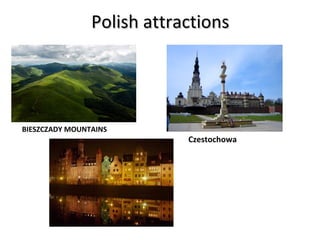
Polish attractions


BIESZCZADY MOUNTAINS
                            Czestochowa
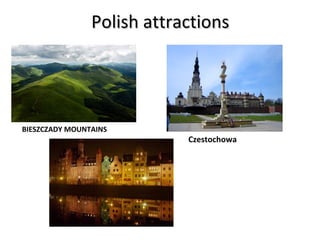
Polish attractions


BIESZCZADY MOUNTAINS
                            Czestochowa

General info about Poland

  • 1.
  • 2.
  • 3.
    Capital and largest city: Warsaw • Official language: Polish • Formation : Christianisation April 14, 966 Kingdom of Poland April 18, 1025 Polish-Lithuanian July 1, 1569 commonwealth Partition of Poland October 24, 1795 Duchy of Warsaw July 22, 1807 Congress Poland June 9, 1815 Reconstitution of Poland November 11, 1918 Invasion of Poland, World September 1, 1939 War II Communist Poland April 8, 1945 Republic of Poland September 13, 1989
  • 4.
    • Area: 312,685km2 • Population: 38,415,284 • Median age total: 38.5 years male: 36.8 years female: 40.3 years • Religions Roman Catholic 89.8% (about 75% practicing), Eastern Orthodox 1.3%, Protestant 0.3%, other 0.3%, unspecified 8.3% • Climate: temperate with cold, cloudy, moderately severe winters with frequent precipitation; mild summers with frequent showers and thundershowers. • Currency: Zloty (1 Polish zloty = 0.24 Euros)
  • 5.
    • Poland hasa great, long standing tradition of tolerance towards minorities, as well as absence of discrimination on the grounds of religion, nationality or race. • Artists from Poland, including famous composers like Chopin or Penderecki and traditional, regionalized folk musicians, create a lively and diverse music scene.
  • 6.
    Architecture  •Polish cities andtowns reflect the whole spectrum of European styles. Romanesque architecture is represented by St. Andrew's Church in Kraków, and characteristic for Poland Brick Gothic by St. Mary's Church in Gdańsk.
  • 7.
    Cuisine • Polish cuisinehas influenced the cuisines of its surrounding countries. For centuries the Polish foods have been the arena of competing with France and Italy, due to influx of merchants from Genoa, Florence and other world cities. It is rich in meat, especially pork, chicken and beef, winter vegetables (cabbage in the dish bigos) and spices. • Notable foods in Polish cuisine include: soups – rosół, barszcz, żurek, krupnik, kapuśniak, zupa pomidorowa (zupa means soup in Polish), zupa ogórkowa, zupa grzybowa, flaczki (tripe soup) and many more.
  • 8.
    Sports • Football (soccer)is the country's most popular sport, with a rich history of international competition. Track and field, basketball, volleyball, handball, boxing, MMA, speedway, ski jumping, cross-country skiing, ice hockey, tennis, fencing, swimming and weightlifting are other popular sports.
  • 9.
  • 10.