General Electric Medical 
Systems, 2002
Healthcare systems across the globe 
• US- Funding comes from government (45%), 
private insurance (33%), out of pocket (17%) and 
the rest from private. 
• Japan has universal health coverage, with around 
27% population above 65+ 
• France has universal health insurance, with 75% 
being government sponsored. 
• India has hardly any health insurance with 75% 
out of pocket expenses 
• 50% urban Chinese has health insurance, with 
hospitals being government run and underpriced 
• Trends in Healthcare
The industry 
• Market share-50%, Siemens, Philips & Toshiba- 
30% (2002) 
• Siemens- $4bn, with 50% of its sales from USA,20% 
Germany (leader). Profit margin is 10%. Equipment 
-3% & Services- 15% 
• Philips- $5bn, with 50% of its sales from USA,30% 
Europe, 15% Asia. Profit margin is 3%. Equipment 
-3% & Services- 10% 
• Toshiba- $2.3bn, second largest player in Asia and 
strong in CT and ultrasound, 5% margin.
General Electric Medical Systems 
(GEMS) 
• $8bn dollar division within GE, with operating margin 
at 18% and growing at around 16% annually, mkt share 
is 50% 
• Leadership (Exhibit 3 & 4) 
• Immelt bought an initiative called GPC. 
• Manufacturing was handled by COE. 
• 7to 9 % of sales was spent on R&D 
• Sales and marketing were local operation 
• 60% of revenue came from equipment sales, and 40% 
from services. 
• Used equipment market was at $1bn with 15% growth 
with GEMS share of around 30%. 
• China imbroglio!!!!
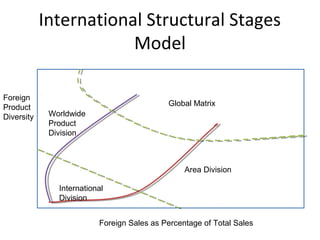
International Structural Stages 
Model 
Foreign Sales as Percentage of Total Sales 
Foreign 
Product 
Diversity 
Global Matrix 
Worldwide 
Product 
Division 
Area Division 
International 
Division
International Product Life Cycle 
Raymond Vernon
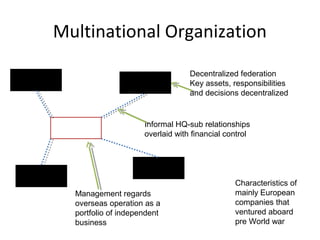
Multinational Organization 
Decentralized federation 
Key assets, responsibilities 
and decisions decentralized 
Informal HQ-sub relationships 
overlaid with financial control 
Management regards 
overseas operation as a 
portfolio of independent 
business 
Characteristics of 
mainly European 
companies that 
ventured aboard 
pre World war
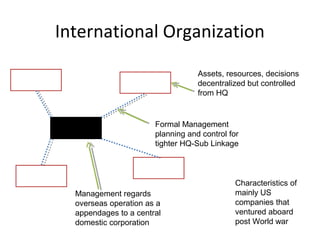
International Organization 
Assets, resources, decisions 
decentralized but controlled 
from HQ 
Formal Management 
planning and control for 
tighter HQ-Sub Linkage 
Management regards 
overseas operation as a 
appendages to a central 
domestic corporation 
Characteristics of 
mainly US 
companies that 
ventured aboard 
post World war
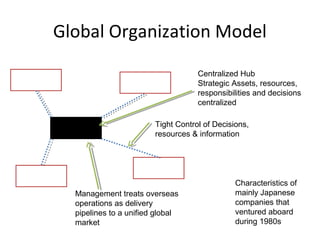
Global Organization Model 
Centralized Hub 
Strategic Assets, resources, 
responsibilities and decisions 
centralized 
Tight Control of Decisions, 
resources & information 
Management treats overseas 
operations as delivery 
pipelines to a unified global 
market 
Characteristics of 
mainly Japanese 
companies that 
ventured aboard 
during 1980s
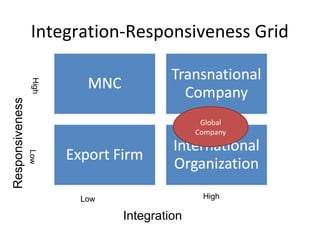
Integration-Responsiveness Grid 
Low High 
Integration 
Low High 
Responsiveness 
Global 
Company
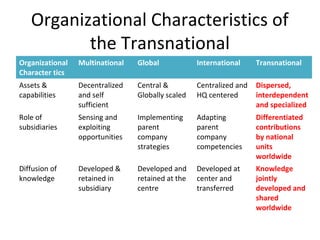
Organizational Characteristics of 
the Transnational 
Organizational 
Character tics 
Multinational Global International Transnational 
Assets & 
capabilities 
Decentralized 
and self 
sufficient 
Central & 
Globally scaled 
Centralized and 
HQ centered 
Dispersed, 
interdependent 
and specialized 
Role of 
subsidiaries 
Sensing and 
exploiting 
opportunities 
Implementing 
parent 
company 
strategies 
Adapting 
parent 
company 
competencies 
Differentiated 
contributions 
by national 
units 
worldwide 
Diffusion of 
knowledge 
Developed & 
retained in 
subsidiary 
Developed and 
retained at the 
centre 
Developed at 
center and 
transferred 
Knowledge 
jointly 
developed and 
shared 
worldwide
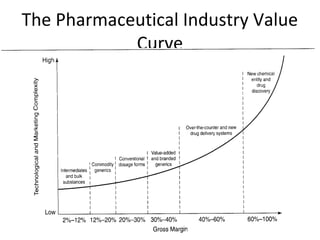
The Pharmaceutical Industry Value 
Curve
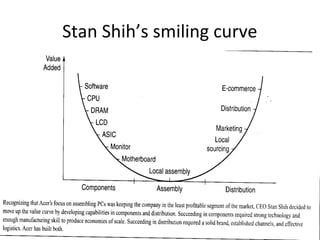
Stan Shih’s smiling curve
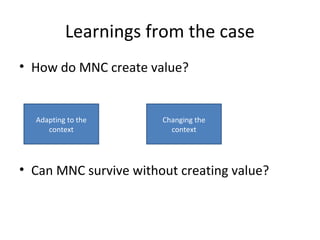
Learnings from the case 
• How do MNC create value? 
Adapting to the 
context 
Changing the 
context 
• Can MNC survive without creating value?

General electric medical systems, 2002

  • 1.
  • 2.
    Healthcare systems acrossthe globe • US- Funding comes from government (45%), private insurance (33%), out of pocket (17%) and the rest from private. • Japan has universal health coverage, with around 27% population above 65+ • France has universal health insurance, with 75% being government sponsored. • India has hardly any health insurance with 75% out of pocket expenses • 50% urban Chinese has health insurance, with hospitals being government run and underpriced • Trends in Healthcare
  • 3.
    The industry •Market share-50%, Siemens, Philips & Toshiba- 30% (2002) • Siemens- $4bn, with 50% of its sales from USA,20% Germany (leader). Profit margin is 10%. Equipment -3% & Services- 15% • Philips- $5bn, with 50% of its sales from USA,30% Europe, 15% Asia. Profit margin is 3%. Equipment -3% & Services- 10% • Toshiba- $2.3bn, second largest player in Asia and strong in CT and ultrasound, 5% margin.
  • 4.
    General Electric MedicalSystems (GEMS) • $8bn dollar division within GE, with operating margin at 18% and growing at around 16% annually, mkt share is 50% • Leadership (Exhibit 3 & 4) • Immelt bought an initiative called GPC. • Manufacturing was handled by COE. • 7to 9 % of sales was spent on R&D • Sales and marketing were local operation • 60% of revenue came from equipment sales, and 40% from services. • Used equipment market was at $1bn with 15% growth with GEMS share of around 30%. • China imbroglio!!!!
  • 5.
    International Structural Stages Model Foreign Sales as Percentage of Total Sales Foreign Product Diversity Global Matrix Worldwide Product Division Area Division International Division
  • 6.
    International Product LifeCycle Raymond Vernon
  • 7.
    Multinational Organization Decentralizedfederation Key assets, responsibilities and decisions decentralized Informal HQ-sub relationships overlaid with financial control Management regards overseas operation as a portfolio of independent business Characteristics of mainly European companies that ventured aboard pre World war
  • 8.
    International Organization Assets,resources, decisions decentralized but controlled from HQ Formal Management planning and control for tighter HQ-Sub Linkage Management regards overseas operation as a appendages to a central domestic corporation Characteristics of mainly US companies that ventured aboard post World war
  • 9.
    Global Organization Model Centralized Hub Strategic Assets, resources, responsibilities and decisions centralized Tight Control of Decisions, resources & information Management treats overseas operations as delivery pipelines to a unified global market Characteristics of mainly Japanese companies that ventured aboard during 1980s
  • 10.
    Integration-Responsiveness Grid LowHigh Integration Low High Responsiveness Global Company
  • 11.
    Organizational Characteristics of the Transnational Organizational Character tics Multinational Global International Transnational Assets & capabilities Decentralized and self sufficient Central & Globally scaled Centralized and HQ centered Dispersed, interdependent and specialized Role of subsidiaries Sensing and exploiting opportunities Implementing parent company strategies Adapting parent company competencies Differentiated contributions by national units worldwide Diffusion of knowledge Developed & retained in subsidiary Developed and retained at the centre Developed at center and transferred Knowledge jointly developed and shared worldwide
  • 12.
  • 13.
  • 14.
    Learnings from thecase • How do MNC create value? Adapting to the context Changing the context • Can MNC survive without creating value?