CASE STUDY ANALYSIS : The Treadway
Tire Company
Tanya
BACKGROUND OF THE CASE STUDY
CONTEXT
To identify the root causes of the
problem, which is the turnover
and other one is creating job
dissatisfaction among all
employees.
COMPANY
The Treadway Tire Co. is a supplier of tires
to major car companies like Ford, GM,
Chrysler.
They have almost 9,000 employees in North
America.
Treadway Tire Company only has one current
operating manufacturing plant in North
America Located in Lima, Ohio.
There was a second plant in Greenville, SC
which closed in 2006 due to financial
reasons
PROBLEM
High turnover rate and high
employee dissatisfaction is bad
for the company.
Out of a total of 50 foreman, 23
had turnover in 2007 Turnover
rate was higher at the Lima
plant than any other plant in the
division Rising cost of raw
materials Price of oil went from
$25/barrel in 2003 to $92 in
2007 Raw materials represent
55% of the cost to produce a
tire Damien
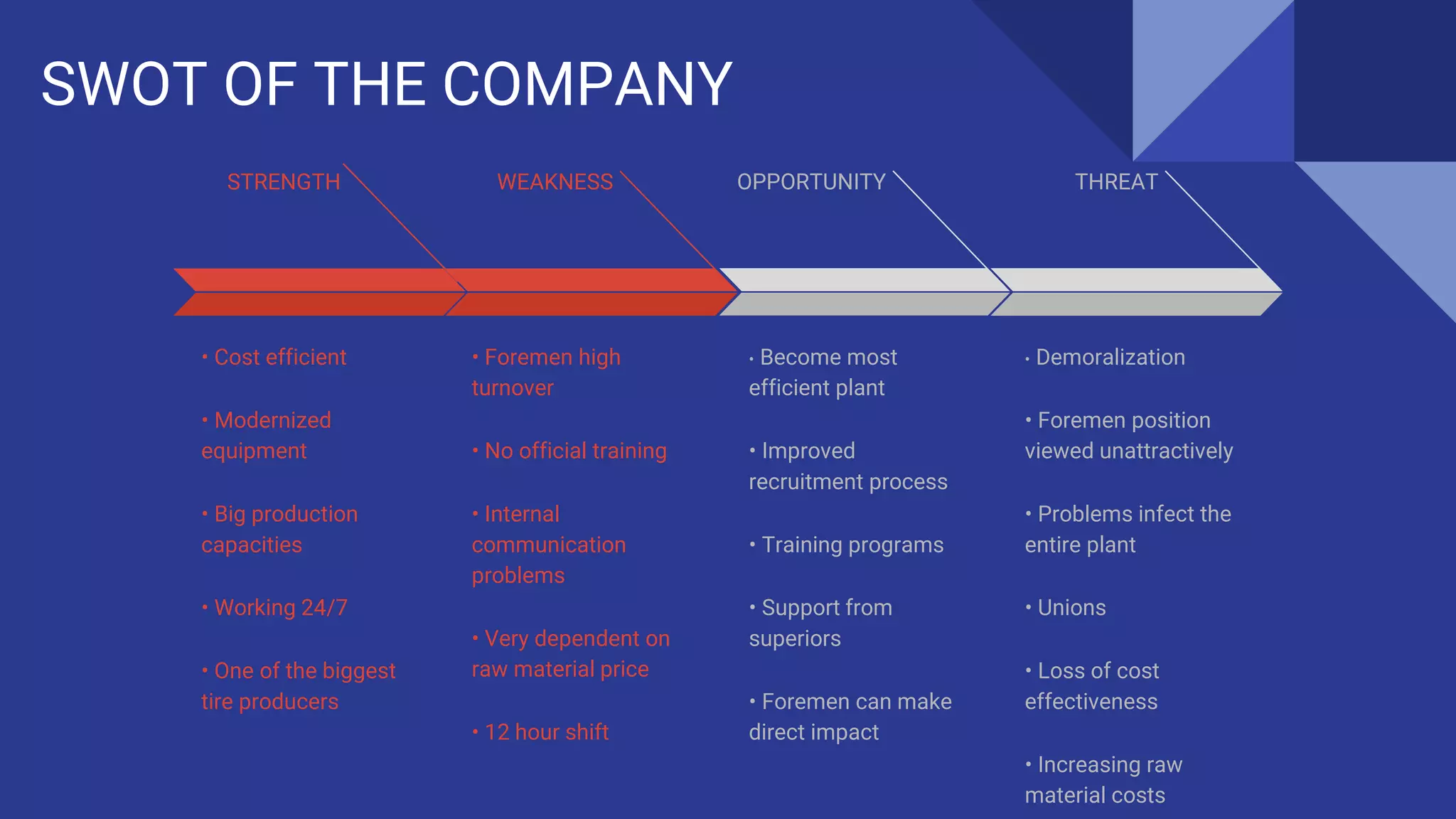
SWOT OF THE COMPANY
STRENGTH
• Cost efficient
• Modernized
equipment
• Big production
capacities
• Working 24/7
• One of the biggest
tire producers
WEAKNESS
• Foremen high
turnover
• No official training
• Internal
communication
problems
• Very dependent on
raw material price
• 12 hour shift
OPPORTUNITY
• Become most
efficient plant
• Improved
recruitment process
• Training programs
• Support from
superiors
• Foremen can make
direct impact
THREAT
• Demoralization
• Foremen position
viewed unattractively
• Problems infect the
entire plant
• Unions
• Loss of cost
effectiveness
• Increasing raw
material costs
Problems
Lack of
communication
Not enough power to
get done what is
needed
No room for
advancemen
Lack of training
No room for
advancement
Not enough power to get done
what is needed
Solution
(a) MBO-Management by Objectives
(b) Recruitment process
(c) Introduction of formal training/mentoring programs
(d) Reduce shift hours for hourly workers
(e) Conflict resolution methods
(f) Performance Goals for line foreman
(g) Use of the correct motivational methods
(h) Introduce proper communication channels
(i) Improve interpersonal relations
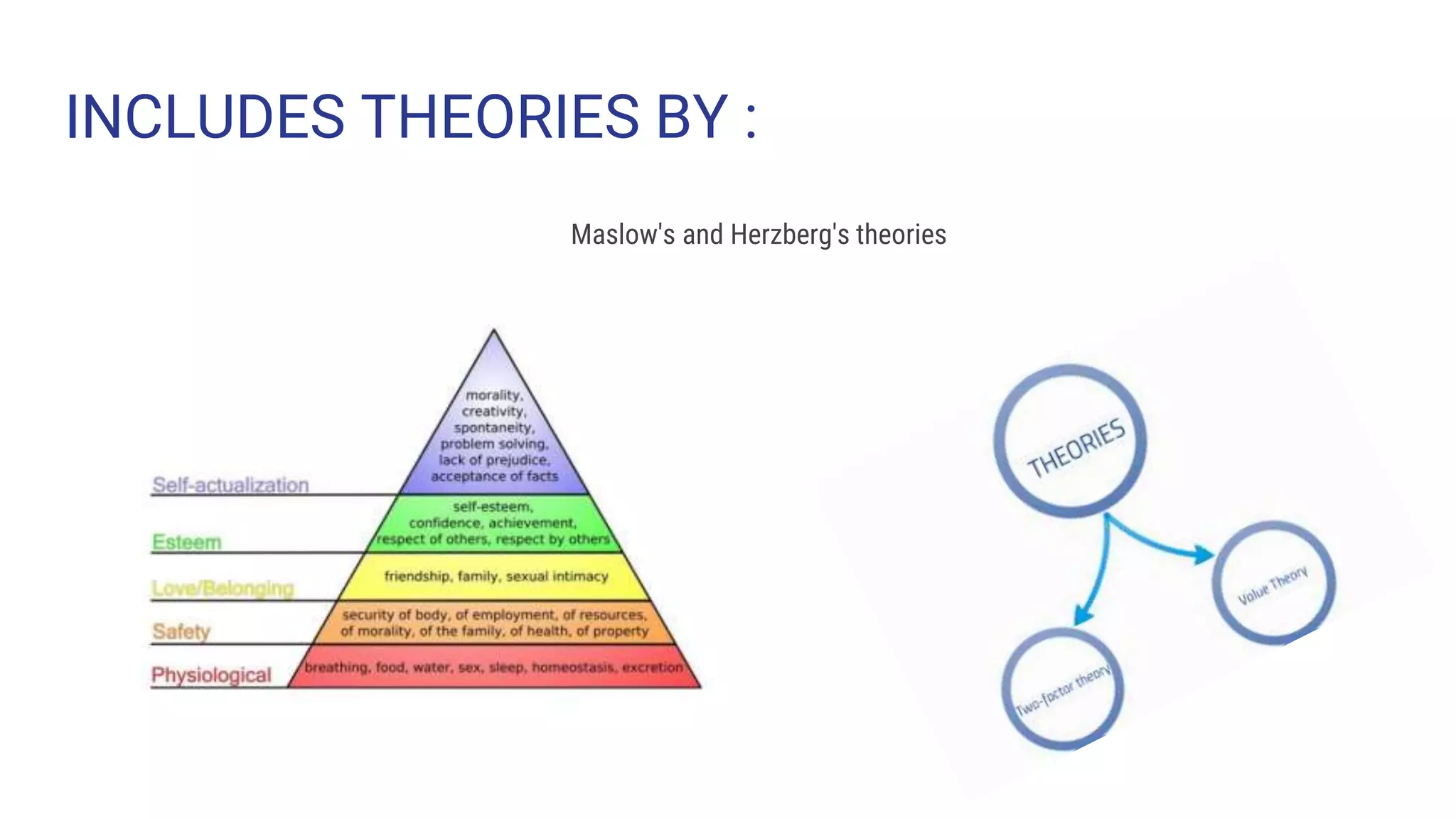
INCLUDES THEORIES BY :
Maslow's and Herzberg's theories
CONCLUSION
In a nutshell to solve this situation,leadership needs to
take an initiative in changing the motivational structure
of the organization.As highly motivated employees who
can see the goals of the organization and share the
same vision of the company can be productive.
There should be Employee Recognition programs to
boost the morale of the employees and foster healthy
competition which would lead to improved productivity.
Continuous surveys should be conducted to identify the
morale level of employees and identify possible gaps in
the company policies
Establish a learning environment- encourage employees
to take up initiatives, set up procedures for knowledge
transfer and documentation and shift emphasis from
production goals to identifying root causes of problems
and trying to solve them.
Job rotation and job sharing practices should also be
followed. This will help break the monotony of jobs for
the hourly workers. And it would also decrease the job
dissatisfaction.

CASE STUDY : The Treadway Tire Company

  • 1.
    CASE STUDY ANALYSIS: The Treadway Tire Company Tanya
  • 2.
    BACKGROUND OF THECASE STUDY CONTEXT To identify the root causes of the problem, which is the turnover and other one is creating job dissatisfaction among all employees. COMPANY The Treadway Tire Co. is a supplier of tires to major car companies like Ford, GM, Chrysler. They have almost 9,000 employees in North America. Treadway Tire Company only has one current operating manufacturing plant in North America Located in Lima, Ohio. There was a second plant in Greenville, SC which closed in 2006 due to financial reasons PROBLEM High turnover rate and high employee dissatisfaction is bad for the company. Out of a total of 50 foreman, 23 had turnover in 2007 Turnover rate was higher at the Lima plant than any other plant in the division Rising cost of raw materials Price of oil went from $25/barrel in 2003 to $92 in 2007 Raw materials represent 55% of the cost to produce a tire Damien
  • 3.
    SWOT OF THECOMPANY STRENGTH • Cost efficient • Modernized equipment • Big production capacities • Working 24/7 • One of the biggest tire producers WEAKNESS • Foremen high turnover • No official training • Internal communication problems • Very dependent on raw material price • 12 hour shift OPPORTUNITY • Become most efficient plant • Improved recruitment process • Training programs • Support from superiors • Foremen can make direct impact THREAT • Demoralization • Foremen position viewed unattractively • Problems infect the entire plant • Unions • Loss of cost effectiveness • Increasing raw material costs
  • 4.
    Problems Lack of communication Not enoughpower to get done what is needed No room for advancemen Lack of training No room for advancement Not enough power to get done what is needed
  • 5.
    Solution (a) MBO-Management byObjectives (b) Recruitment process (c) Introduction of formal training/mentoring programs (d) Reduce shift hours for hourly workers (e) Conflict resolution methods (f) Performance Goals for line foreman (g) Use of the correct motivational methods (h) Introduce proper communication channels (i) Improve interpersonal relations
  • 6.
    INCLUDES THEORIES BY: Maslow's and Herzberg's theories
  • 7.
    CONCLUSION In a nutshellto solve this situation,leadership needs to take an initiative in changing the motivational structure of the organization.As highly motivated employees who can see the goals of the organization and share the same vision of the company can be productive. There should be Employee Recognition programs to boost the morale of the employees and foster healthy competition which would lead to improved productivity. Continuous surveys should be conducted to identify the morale level of employees and identify possible gaps in the company policies Establish a learning environment- encourage employees to take up initiatives, set up procedures for knowledge transfer and documentation and shift emphasis from production goals to identifying root causes of problems and trying to solve them. Job rotation and job sharing practices should also be followed. This will help break the monotony of jobs for the hourly workers. And it would also decrease the job dissatisfaction.