


SEXUAL ORIENTATION
By: Rolex Wheeler Baitin
DEFINITION OF SEXUAL ORIENTATION

 A person's emotional, romantic, and sexual

 attraction to individuals of a particular gender
 (male or female).
SEXUAL ORIENTATION
 Involves a person's feelings and sense of identity


 It may or may not present in the person's
 appearance or behavior

 People may have attractions to people of the
 same or opposite sex, but may choose not to act
 on these feelings
SEXUAL ORIENTATION’S CATEGORIES
 Divided into three main categories


1.   HETEROSEXUAL ORIENTATION

2.   HOMOSEXUAL ORIENTATION

3.   BISEXUAL ORIENTATION
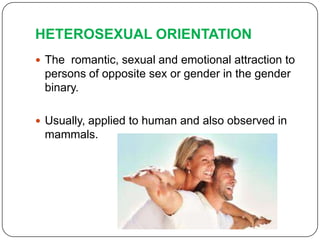
HETEROSEXUAL ORIENTATION
 The romantic, sexual and emotional attraction to
 persons of opposite sex or gender in the gender
 binary.

 Usually, applied to human and also observed in
 mammals.
HOMOSEXUAL ORIENTATION
 Having emotional, romantic, or sexual attractions
 to members of one’s own sex.

 GAY- male attracted to another male


 LESBIAN- female attracted to another female
BISEXUAL ORIENTATION


 Having emotional, romantic, or sexual attractions
 to both men and women
WHAT CAUSES A PERSON TO HAVE
PARTICULAR SEXUAL ORIENTATION?

 No consensus among scientists about the exact
 reasons that an individual develops a
 heterosexual, bisexual or homosexual orientation.


 Nature and nurture both play complex roles as
 most people experience little or no sense of
 choice about their sexual orientation.
HOMOSEXUAL RELATIONSHIPS

 Are often more flexible with regard to gender
 roles


 Mostly, face same challenges as heterosexual
 couples in creating satisfying relationships
   Additional challenge of social acceptance, antigay
   discrimination and prejudice
 Lesbians more likely to be monogamous than
 gay men and value emotional intimacy more

 Lesbian sexual interactions tend to have more
 characteristics associated with greater sexual
 enjoyment than heterosexual women’s sexual
 interactions
ISSUES REGARDING SEXUAL
ORIENTATION

 Homophobia


 Discrimination towards homosexual people


 Homosexual families
HOMOPHOBIA
 Homophobia    encompasses a range of negative
 attitudes   and feelings toward homosexuality or
 people who are identified or perceived as being
 lesbian, gay, bisexual or transgender (LGBT)


 Homophobia is observable in critical and hostile

 behavior such as discrimination and violence on the
 basis of sexual orientation that are non heterosexual.
DISCIMINATION TOWARDS HOMOSEXUAL
                   PEOPLE
 Been treated as mentally ill and subjected to
    conversion therapies, including electroshock
    treatment
   Been targeted by discriminatory laws, including
    criminal prohibition of same-sex practices
   Not been permitted (until recently) to participate
    openly in the Armed Forces
   Faced discrimination in employment and housing; and
   Been the victims of hate-motivated crimes, anti-gay
    and anti-lesbian violence, and verbal harassment
HOMOSEXUAL FAMILIES

 Children   from   previous   heterosexual   marriage,
 artificial insemination and through surrogate mothers.
 Adoption


 ( Research done specifically on children raised by
  homosexual parents shows that there are no
  differences that suggest any disadvantage
  between them and children raised by
  heterosexual parents )
Views Toward Homosexuality
 Different people have different prospective toward
 homosexuality

 Several countries allow same sex marriage


 ( Netherlands, US, Belgium , Spain, Canada,
 South Africa , Norway, Portugal, Sweden )
REFERENCES
 http://www.apa.org/helpcenter/sexual-
    orientation.aspx
   http://www.plannedparenthood.org/health-
    topics/sexual-orientation-gender-4329.htm
   http://www.care2.com/causes/which-countries-
    have-legalized-gay-marriage.html
   http://www.nydailynews.com/news/national/fight-
    legalize-gay-marriage-rhode-island-article-
    1.1240328
   http://en.wikipedia.org/wiki/Sexual_orientation

Sexual orientation (social studies)

  • 1.
  • 2.
    DEFINITION OF SEXUALORIENTATION  A person's emotional, romantic, and sexual attraction to individuals of a particular gender (male or female).
  • 3.
    SEXUAL ORIENTATION  Involvesa person's feelings and sense of identity  It may or may not present in the person's appearance or behavior  People may have attractions to people of the same or opposite sex, but may choose not to act on these feelings
  • 4.
    SEXUAL ORIENTATION’S CATEGORIES Divided into three main categories 1. HETEROSEXUAL ORIENTATION 2. HOMOSEXUAL ORIENTATION 3. BISEXUAL ORIENTATION
  • 5.
    HETEROSEXUAL ORIENTATION  Theromantic, sexual and emotional attraction to persons of opposite sex or gender in the gender binary.  Usually, applied to human and also observed in mammals.
  • 6.
    HOMOSEXUAL ORIENTATION  Havingemotional, romantic, or sexual attractions to members of one’s own sex.  GAY- male attracted to another male  LESBIAN- female attracted to another female
  • 8.
    BISEXUAL ORIENTATION  Havingemotional, romantic, or sexual attractions to both men and women
  • 9.
    WHAT CAUSES APERSON TO HAVE PARTICULAR SEXUAL ORIENTATION?  No consensus among scientists about the exact reasons that an individual develops a heterosexual, bisexual or homosexual orientation.  Nature and nurture both play complex roles as most people experience little or no sense of choice about their sexual orientation.
  • 10.
    HOMOSEXUAL RELATIONSHIPS  Areoften more flexible with regard to gender roles  Mostly, face same challenges as heterosexual couples in creating satisfying relationships  Additional challenge of social acceptance, antigay discrimination and prejudice
  • 11.
     Lesbians morelikely to be monogamous than gay men and value emotional intimacy more  Lesbian sexual interactions tend to have more characteristics associated with greater sexual enjoyment than heterosexual women’s sexual interactions
  • 12.
    ISSUES REGARDING SEXUAL ORIENTATION Homophobia  Discrimination towards homosexual people  Homosexual families
  • 13.
    HOMOPHOBIA  Homophobia encompasses a range of negative attitudes and feelings toward homosexuality or people who are identified or perceived as being lesbian, gay, bisexual or transgender (LGBT)  Homophobia is observable in critical and hostile behavior such as discrimination and violence on the basis of sexual orientation that are non heterosexual.
  • 14.
    DISCIMINATION TOWARDS HOMOSEXUAL PEOPLE  Been treated as mentally ill and subjected to conversion therapies, including electroshock treatment  Been targeted by discriminatory laws, including criminal prohibition of same-sex practices  Not been permitted (until recently) to participate openly in the Armed Forces  Faced discrimination in employment and housing; and  Been the victims of hate-motivated crimes, anti-gay and anti-lesbian violence, and verbal harassment
  • 15.
    HOMOSEXUAL FAMILIES  Children from previous heterosexual marriage, artificial insemination and through surrogate mothers.  Adoption ( Research done specifically on children raised by homosexual parents shows that there are no differences that suggest any disadvantage between them and children raised by heterosexual parents )
  • 17.
    Views Toward Homosexuality Different people have different prospective toward homosexuality  Several countries allow same sex marriage ( Netherlands, US, Belgium , Spain, Canada, South Africa , Norway, Portugal, Sweden )
  • 18.
    REFERENCES  http://www.apa.org/helpcenter/sexual- orientation.aspx  http://www.plannedparenthood.org/health- topics/sexual-orientation-gender-4329.htm  http://www.care2.com/causes/which-countries- have-legalized-gay-marriage.html  http://www.nydailynews.com/news/national/fight- legalize-gay-marriage-rhode-island-article- 1.1240328  http://en.wikipedia.org/wiki/Sexual_orientation