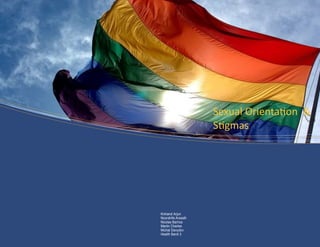
Sexual Orientation & Stigmas 
Kirkland Arjun 
Noorshifa Arssath 
Nicolas Barrios 
Martin Charles 
Michal Davydov 
Health Band 3
Helpful Websites http://www.sexualityandu.ca/sexual-health/sexual-orientation-and-coming-out 
http://kidshealth.org/parent/emotions/feelings/sexual_orientation.html 
http://www.yoursexualorientation.info/Obstacles_LGB_Acceptance.php 
WHAT IS SEXUAL ORIENTATION? 
Sexual orientation refers to the gender that a per- son is sexually and/or physically attracted to, whether it be the same gender or the opposite. There are many different sexual orientations such as : 
Heterosexuality– when a person in exclu- sively attracted to the opposite gender 
Homosexuality– when a person is exclusive- ly attracted to the same gender 
Bisexuality– when a person is attracted to both males and females 
Pansexuality- a person who experiences sexual, romantic, physical, and/or spiritual attrac- tion for members of all gender identities/ expressions 
Asexuality– when a person doesn’t feel at- tracted to anyone 
The coming out process is a very difficult thing for non-heterosexuals. Coming out is when a person tells others about their sexuality. This is difficult because they often fear not being accepted and being seen as different. 
WHAT IS GENDER IDENTITY? 
A person’s gender identity is how they internal- ly perceive their gender, and how they la- bel themselves. Gender should not be con- fused with sex. They are two different things. Gender is a social construct whereas sex is a biological disposition. 
A transgender person is a person who iden- tifies as the gender opposite their biological sex. They feel that they were born in the wrong body. A cisgender person is a person who identifies as their biological sex. 
People also identify other ways: 
Non-binary: blanket term for a per- son who neither identifies as male or fe- male 
Intersex: a person who has both mas- culine and feminine characteristics (i.e. male genitalia and female breasts) 
Third gender: a person who identifies as a gender other than male or female 
Gender fluidity: when a person’s gender identity fluctuates between multiple genders 
Agender: a person who doesn’t iden- tify with any gender 
STIGMAS IN SOCIETY 
Non-heterosexual/non-cisgender individuals are often type-casted as being “unnatural”. They have to endure several other stigmas that society places on them. Certain religions tell them that they aren’t acting according to the will of God and tell them that the expression of their sex- uality/gender identity is immor- al. A leading cause of society’s lack of acceptance for homopho- bia (the fear of non- heterosexuals)

10256439 (1)

  • 1.
    Sexual Orientation &Stigmas Kirkland Arjun Noorshifa Arssath Nicolas Barrios Martin Charles Michal Davydov Health Band 3
  • 2.
    Helpful Websites http://www.sexualityandu.ca/sexual-health/sexual-orientation-and-coming-out http://kidshealth.org/parent/emotions/feelings/sexual_orientation.html http://www.yoursexualorientation.info/Obstacles_LGB_Acceptance.php WHAT IS SEXUAL ORIENTATION? Sexual orientation refers to the gender that a per- son is sexually and/or physically attracted to, whether it be the same gender or the opposite. There are many different sexual orientations such as : Heterosexuality– when a person in exclu- sively attracted to the opposite gender Homosexuality– when a person is exclusive- ly attracted to the same gender Bisexuality– when a person is attracted to both males and females Pansexuality- a person who experiences sexual, romantic, physical, and/or spiritual attrac- tion for members of all gender identities/ expressions Asexuality– when a person doesn’t feel at- tracted to anyone The coming out process is a very difficult thing for non-heterosexuals. Coming out is when a person tells others about their sexuality. This is difficult because they often fear not being accepted and being seen as different. WHAT IS GENDER IDENTITY? A person’s gender identity is how they internal- ly perceive their gender, and how they la- bel themselves. Gender should not be con- fused with sex. They are two different things. Gender is a social construct whereas sex is a biological disposition. A transgender person is a person who iden- tifies as the gender opposite their biological sex. They feel that they were born in the wrong body. A cisgender person is a person who identifies as their biological sex. People also identify other ways: Non-binary: blanket term for a per- son who neither identifies as male or fe- male Intersex: a person who has both mas- culine and feminine characteristics (i.e. male genitalia and female breasts) Third gender: a person who identifies as a gender other than male or female Gender fluidity: when a person’s gender identity fluctuates between multiple genders Agender: a person who doesn’t iden- tify with any gender STIGMAS IN SOCIETY Non-heterosexual/non-cisgender individuals are often type-casted as being “unnatural”. They have to endure several other stigmas that society places on them. Certain religions tell them that they aren’t acting according to the will of God and tell them that the expression of their sex- uality/gender identity is immor- al. A leading cause of society’s lack of acceptance for homopho- bia (the fear of non- heterosexuals)