Radiographer’s Weld Interpretation Reference 
Reference Radiographs 
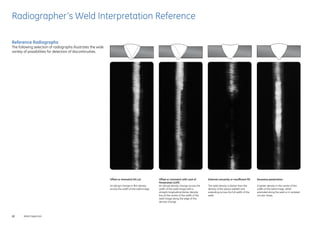
The following selection of radiographs illustrates the wide 
variety of possibilities for detection of discontinuities. 
22 Weld Inspection 
Offset or mismatch (Hi-Lo). 
An abrupt change in film density 
across the width of the weld image. 
Offset or mismatch with Lack of 
Penetration (LOP). 
An abrupt density change across the 
width of the weld image with a 
straight longitudinal darker density 
line at the centre of the width of the 
weld image along the edge of the 
density change. 
External concavity or insufficient fill. 
The weld density is darker than the 
density of the pieces welded and 
extending across the full width of the 
weld. 
Excessive penetration. 
A lighter density in the centre of the 
width of the weld image, either 
extended along the weld or in isolated 
circular drops.
Weld Inspection 23 
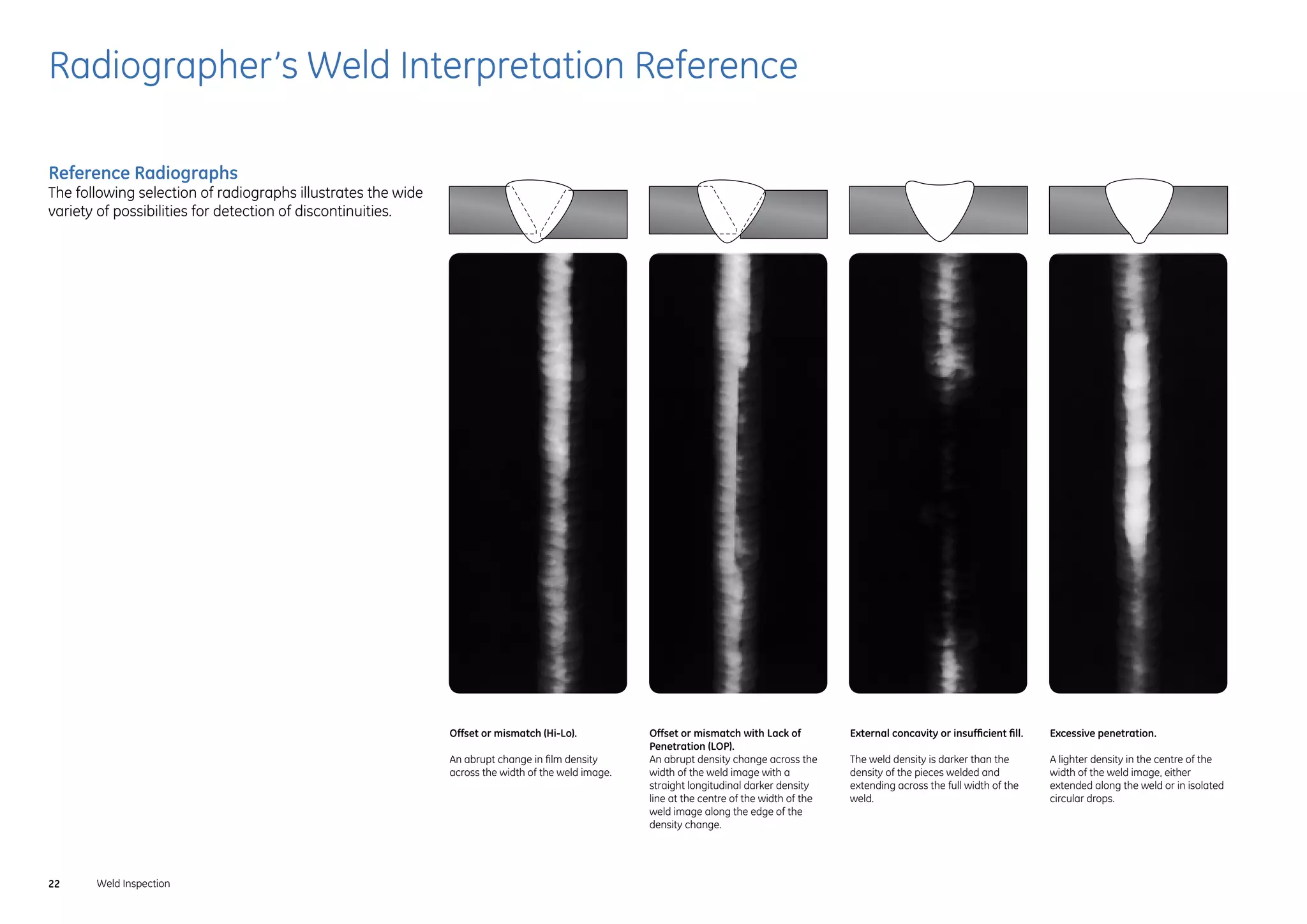
External undercut. 
An irregular darker density along the 
edge of the weld image. The density 
will always be darker than the density 
of the pieces being welded. 
Incomplete - or Lack of Penetration 
(LoP). 
A darker density band, with very 
straight parallel edges, in the center of 
the width of the weld image. 
Internal (root) undercut. 
An irregular darker density near the 
centre of the width of the weld image 
and along the edge of the root pass 
image. 
Interpass slag inclusions. 
Irregularly-shaped darker density spot, 
usually slightly elongated and 
randomly spaced. 
Internal concavity (suck back). 
An elongated irregular darker density 
with fuzzy edges, in the vcentre of the 
width of the weld image. 
Burn through. 
Localized darker density with fuzzy 
edges in the centre of the width of the 
weld image. It may be wider than the 
width of the root pass image.
Radiographer’s Weld Interpretation Reference 
24 Weld Inspection 
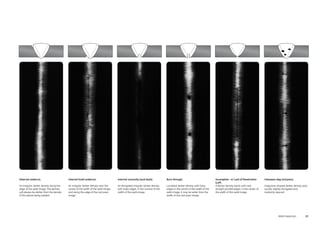
Interpass cold lap. 
Small spots of darker densities, some 
with slightly elongated tails in the 
welding direction. 
Elongated slag lines (wagon tracks). 
Elongated parallel or single darker 
density lines, irregular in width and 
slightly winding lengthwise. 
Scattered porosity. 
Rounded spots of darker densities 
random in size and location. 
Lack of side wall fusion (LOF). 
Elongated parallel, or single, darker 
density lines sometimes with darker 
density spots dispersed along the 
LOF-lines which are very straight in the 
lengthwise direction and not winding 
like elongated slag lines. 
Cluster porosity. 
Rounded or slightly elongated darker 
density spots in clusters with the 
clusters randomly spaced. 
Root pass aligned porosity. 
Rounded and elongated darker density 
spots that may be connected, in a 
straight line in the centre of the width 
of the weld image.
Weld Inspection 25 
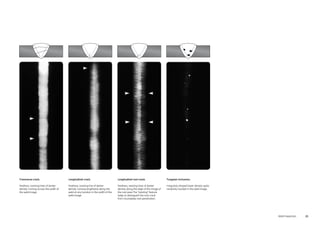
Transverse crack. 
Feathery, twisting lines of darker 
density running across the width of 
the weld image. 
Longitudinal crack. 
Feathery, twisting line of darker 
density running lengthwise along the 
weld at any location in the width of the 
weld image. 
Longitudinal root crack. 
Feathery, twisting lines of darker 
density along the edge of the image of 
the root pass The “twisting” feature 
helps to distinguish the root crack 
from incomplete root penetration. 
Tungsten inclusions. 
Irregularly shaped lower density spots 
randomly located in the weld image.

Geit 10017 en-weldinspection rt interpretation-22-25

  • 1.
    Radiographer’s Weld InterpretationReference Reference Radiographs The following selection of radiographs illustrates the wide variety of possibilities for detection of discontinuities. 22 Weld Inspection Offset or mismatch (Hi-Lo). An abrupt change in film density across the width of the weld image. Offset or mismatch with Lack of Penetration (LOP). An abrupt density change across the width of the weld image with a straight longitudinal darker density line at the centre of the width of the weld image along the edge of the density change. External concavity or insufficient fill. The weld density is darker than the density of the pieces welded and extending across the full width of the weld. Excessive penetration. A lighter density in the centre of the width of the weld image, either extended along the weld or in isolated circular drops.
  • 2.
    Weld Inspection 23 External undercut. An irregular darker density along the edge of the weld image. The density will always be darker than the density of the pieces being welded. Incomplete - or Lack of Penetration (LoP). A darker density band, with very straight parallel edges, in the center of the width of the weld image. Internal (root) undercut. An irregular darker density near the centre of the width of the weld image and along the edge of the root pass image. Interpass slag inclusions. Irregularly-shaped darker density spot, usually slightly elongated and randomly spaced. Internal concavity (suck back). An elongated irregular darker density with fuzzy edges, in the vcentre of the width of the weld image. Burn through. Localized darker density with fuzzy edges in the centre of the width of the weld image. It may be wider than the width of the root pass image.
  • 3.
    Radiographer’s Weld InterpretationReference 24 Weld Inspection Interpass cold lap. Small spots of darker densities, some with slightly elongated tails in the welding direction. Elongated slag lines (wagon tracks). Elongated parallel or single darker density lines, irregular in width and slightly winding lengthwise. Scattered porosity. Rounded spots of darker densities random in size and location. Lack of side wall fusion (LOF). Elongated parallel, or single, darker density lines sometimes with darker density spots dispersed along the LOF-lines which are very straight in the lengthwise direction and not winding like elongated slag lines. Cluster porosity. Rounded or slightly elongated darker density spots in clusters with the clusters randomly spaced. Root pass aligned porosity. Rounded and elongated darker density spots that may be connected, in a straight line in the centre of the width of the weld image.
  • 4.
    Weld Inspection 25 Transverse crack. Feathery, twisting lines of darker density running across the width of the weld image. Longitudinal crack. Feathery, twisting line of darker density running lengthwise along the weld at any location in the width of the weld image. Longitudinal root crack. Feathery, twisting lines of darker density along the edge of the image of the root pass The “twisting” feature helps to distinguish the root crack from incomplete root penetration. Tungsten inclusions. Irregularly shaped lower density spots randomly located in the weld image.