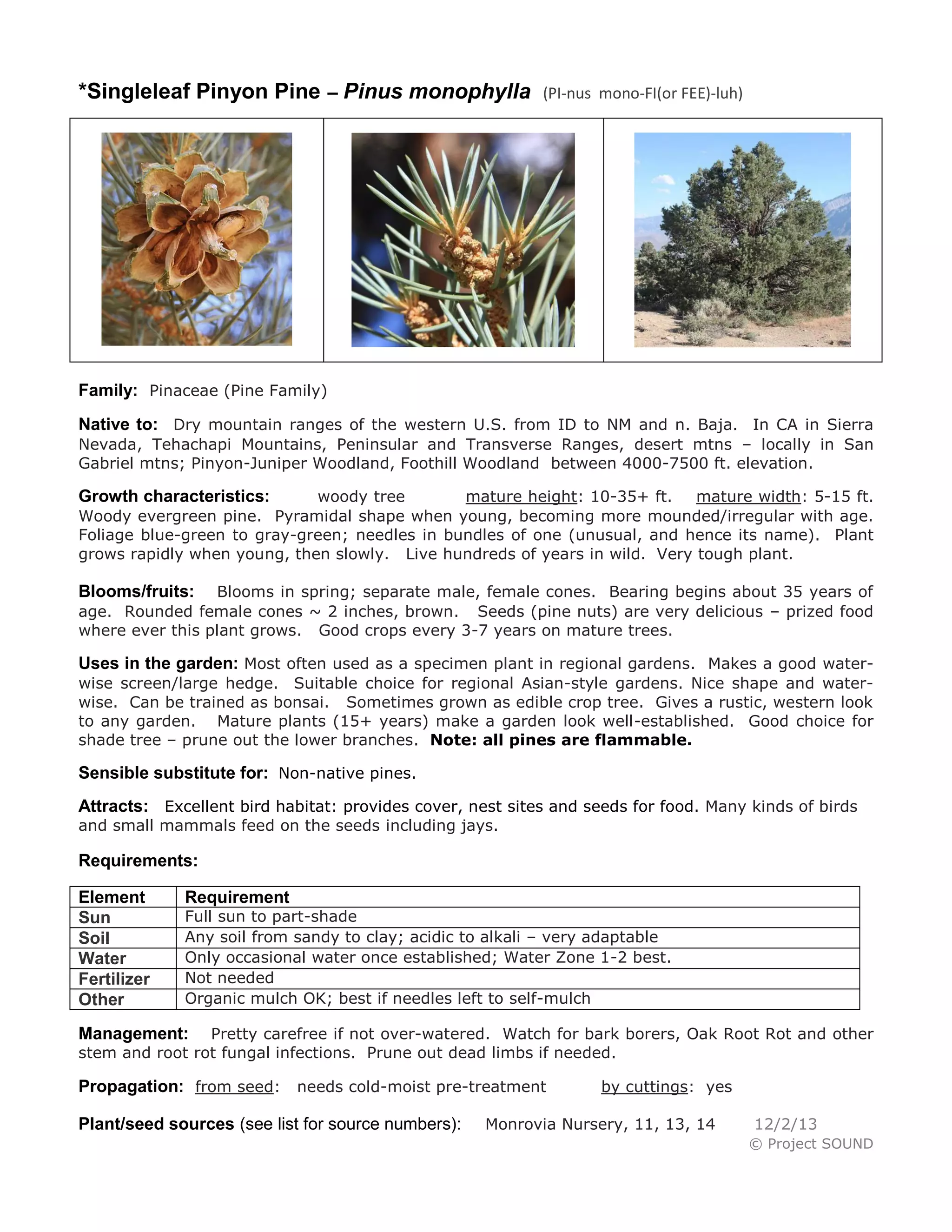
*Singleleaf Pinyon Pine – Pinus monophylla

(PI-nus mono-FI(or FEE)-luh)

Family: Pinaceae (Pine Family)
Native to: Dry mountain ranges of the western U.S. from ID to NM and n. Baja. In CA in Sierra
Nevada, Tehachapi Mountains, Peninsular and Transverse Ranges, desert mtns – locally in San
Gabriel mtns; Pinyon-Juniper Woodland, Foothill Woodland between 4000-7500 ft. elevation.
woody tree
mature height: 10-35+ ft.
mature width: 5-15 ft.
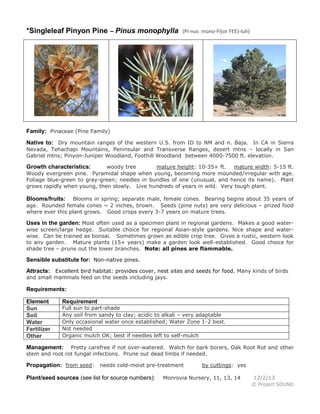
Woody evergreen pine. Pyramidal shape when young, becoming more mounded/irregular with age.
Foliage blue-green to gray-green; needles in bundles of one (unusual, and hence its name). Plant
grows rapidly when young, then slowly. Live hundreds of years in wild. Very tough plant.

Growth characteristics:

Blooms in spring; separate male, female cones. Bearing begins about 35 years of
age. Rounded female cones ~ 2 inches, brown. Seeds (pine nuts) are very delicious – prized food
where ever this plant grows. Good crops every 3-7 years on mature trees.

Blooms/fruits:

Uses in the garden: Most often used as a specimen plant in regional gardens. Makes a good waterwise screen/large hedge. Suitable choice for regional Asian-style gardens. Nice shape and waterwise. Can be trained as bonsai. Sometimes grown as edible crop tree. Gives a rustic, western look
to any garden. Mature plants (15+ years) make a garden look well-established. Good choice for
shade tree – prune out the lower branches. Note: all pines are flammable.

Sensible substitute for: Non-native pines.
Attracts: Excellent bird habitat: provides cover, nest sites and seeds for food. Many kinds of birds
and small mammals feed on the seeds including jays.

Requirements:
Element
Sun
Soil
Water
Fertilizer
Other

Requirement

Full sun to part-shade
Any soil from sandy to clay; acidic to alkali – very adaptable
Only occasional water once established; Water Zone 1-2 best.
Not needed
Organic mulch OK; best if needles left to self-mulch

Pretty carefree if not over-watered. Watch for bark borers, Oak Root Rot and other
stem and root rot fungal infections. Prune out dead limbs if needed.

Management:

Propagation: from seed: needs cold-moist pre-treatment
Plant/seed sources (see list for source numbers):

by cuttings: yes

Monrovia Nursery, 11, 13, 14

12/2/13
© Project SOUND

Gardening sheet pinus monophylla

  • 1.
    *Singleleaf Pinyon Pine– Pinus monophylla (PI-nus mono-FI(or FEE)-luh) Family: Pinaceae (Pine Family) Native to: Dry mountain ranges of the western U.S. from ID to NM and n. Baja. In CA in Sierra Nevada, Tehachapi Mountains, Peninsular and Transverse Ranges, desert mtns – locally in San Gabriel mtns; Pinyon-Juniper Woodland, Foothill Woodland between 4000-7500 ft. elevation. woody tree mature height: 10-35+ ft. mature width: 5-15 ft. Woody evergreen pine. Pyramidal shape when young, becoming more mounded/irregular with age. Foliage blue-green to gray-green; needles in bundles of one (unusual, and hence its name). Plant grows rapidly when young, then slowly. Live hundreds of years in wild. Very tough plant. Growth characteristics: Blooms in spring; separate male, female cones. Bearing begins about 35 years of age. Rounded female cones ~ 2 inches, brown. Seeds (pine nuts) are very delicious – prized food where ever this plant grows. Good crops every 3-7 years on mature trees. Blooms/fruits: Uses in the garden: Most often used as a specimen plant in regional gardens. Makes a good waterwise screen/large hedge. Suitable choice for regional Asian-style gardens. Nice shape and waterwise. Can be trained as bonsai. Sometimes grown as edible crop tree. Gives a rustic, western look to any garden. Mature plants (15+ years) make a garden look well-established. Good choice for shade tree – prune out the lower branches. Note: all pines are flammable. Sensible substitute for: Non-native pines. Attracts: Excellent bird habitat: provides cover, nest sites and seeds for food. Many kinds of birds and small mammals feed on the seeds including jays. Requirements: Element Sun Soil Water Fertilizer Other Requirement Full sun to part-shade Any soil from sandy to clay; acidic to alkali – very adaptable Only occasional water once established; Water Zone 1-2 best. Not needed Organic mulch OK; best if needles left to self-mulch Pretty carefree if not over-watered. Watch for bark borers, Oak Root Rot and other stem and root rot fungal infections. Prune out dead limbs if needed. Management: Propagation: from seed: needs cold-moist pre-treatment Plant/seed sources (see list for source numbers): by cuttings: yes Monrovia Nursery, 11, 13, 14 12/2/13 © Project SOUND