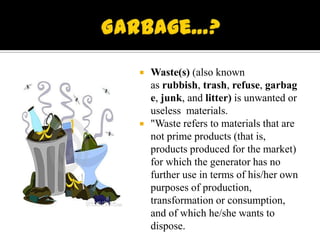
   Waste(s) (also known
    as rubbish, trash, refuse, garbag
    e, junk, and litter) is unwanted or
    useless materials.
   "Waste refers to materials that are
    not prime products (that is,
    products produced for the market)
    for which the generator has no
    further use in terms of his/her own
    purposes of production,
    transformation or consumption,
    and of which he/she wants to
    dispose.
   Waste management is
    the collection, transport, processing or disposal,
    managing and monitoring of waste materials.
   The term usually relates to materials produced by
    human activity, and the process is generally
    undertaken to reduce their effect on health, the
    environment or aesthetics.
   Waste management practices can differ
    for developed and developing nations,
    for urban and rural areas, and
    for residential and industrial producers.
   Landfill
   Incineration
   Recycling
   Sustainability
   Biological reprocessing
   Energy recovery
   Resource recovery
   Avoidance and reduction methods
 Disposing of waste in a landfill involves burying
  the waste, and this remains a common practice in
  most countries.
 Landfills were often established in abandoned or
  unused quarries, mining voids or borrow pits.
 A properly designed and well-managed landfill
  can be a hygienic and relatively inexpensive
  method of disposing of waste materials.
 This gas can create odor problems, kill surface
  vegetation, and is a greenhouse gas.
   Incineration is a disposal method in which solid organic
    wastes are subjected to combustion so as to convert them
    into residue.
   This method is useful for disposal of residue of both solid
    waste management and solid residue from waste water
    management and gaseous products.
   Incineration and other high temperature waste treatment
    systems are sometimes described as "thermal treatment".
   Incinerators convert waste materials
    into heat, gas, steam and ash.
   Incineration is carried out both on a small scale by
    individuals and on a large scale by industry.
   Recycling is a resource recovery practice that refers to the
    collection and reuse of waste materials such as empty
    beverage containers.
    The materials from which the items are made can be
    reprocessed into new products be reprocessed into new
    products.
   The most common consumer products recycled
    include aluminum such as beverage cans, copper such as
    wire, steel food and aerosol cans, old steel furnishings or
    equipment, polyethylene and PET bottles, glass bottles and
    jars, paperboard cartons, newspapers, magazines and light
    paper, and corrugated fiberboard boxes.
  Companies are encouraged to improve their
  environmental efficiencies each year by eliminating
  waste through resource recovery practices, which are
  sustainability-related activities.
 One way to do this is by shifting away from waste
  management to resource recovery practices
  like recycling materials such as glass, food scraps,
  paper and cardboard, plastic bottles and metal.
 Recoverable materials that are organic in nature, such
  as plant material, food scraps, and paper products,
  can be recovered through composting and digestion
  processes to decompose the organic matter.
 The resulting organic material is then recycled
  as mulch or compost for agricultural or landscaping
  purposes.
   The energy content of waste products can be harnessed
    directly by using them as a direct combustion fuel, or
    indirectly by processing them into another type of fuel.
   Thermal treatment ranges from using waste as a fuel source
    for cooking or heating and the use of the gas fuel (see above),
    to fuel for boilers to generate steam and electricity in
    a turbine.
    Pyrolysis and gasification are two related forms of thermal
    treatment where waste materials are heated to high
    temperatures with limited oxygen availability.
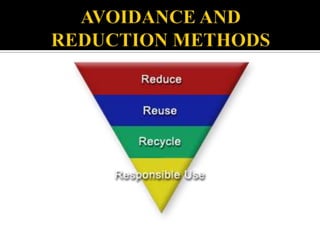
   An important method of waste management is the prevention
    of waste material being created, also known as waste
    reduction.
    Methods of avoidance include reuse of second-hand products,
    repairing broken items instead of buying new, designing
    products to be refillable or reusable (such as cotton instead of
    plastic shopping bags), encouraging consumers to avoid using
    disposable products (such as disposable cutlery), removing
    any food/ liquid remains from cans, packaging, and designing
    products that use less material to achieve the same purpose
    (for example, light weighting of beverage cans).
   The best way to decrease the amount of
    rubbish we produce is not to produce it I the
    first place.

   The best way to do that is:
   Use both sides of the paper.
   Use refillable items for juice bottles, lunchboxes, etc
   Reuse plastic bags
   It’s about something again and again and
    again and…….

   Some ways are:
 Give away or resell the old toys, clothings, books,
  magazines.
 Make useful articles, presents, toys, ornaments from
  discarded plastics or metal containers.
 Use ‘junk’ materials to create some awesome art.
   Recycling is when materials from waste products
    are reused to make new and sometimes different
    products.
   The following items can be recycled:
   Plastic items
   Aluminum and steel cans
   Papers
   Car batteries
   Car parts
   Glass bottles
   Clothing
   Used motor oils
   Telephone books
Imagine if you
Had to ‘keep’ your own rubbish
            Imagine it
  Piling up in your backyard.
         Imagine how it
           Would look
         Imagine how it
          Would smell!
well, now is the right time to
       be smart and……
Garbage Dumping

Garbage Dumping

  • 2.
    Waste(s) (also known as rubbish, trash, refuse, garbag e, junk, and litter) is unwanted or useless materials.  "Waste refers to materials that are not prime products (that is, products produced for the market) for which the generator has no further use in terms of his/her own purposes of production, transformation or consumption, and of which he/she wants to dispose.
  • 3.
    Waste management is the collection, transport, processing or disposal, managing and monitoring of waste materials.  The term usually relates to materials produced by human activity, and the process is generally undertaken to reduce their effect on health, the environment or aesthetics.  Waste management practices can differ for developed and developing nations, for urban and rural areas, and for residential and industrial producers.
  • 5.
    Landfill  Incineration  Recycling  Sustainability  Biological reprocessing  Energy recovery  Resource recovery  Avoidance and reduction methods
  • 6.
     Disposing ofwaste in a landfill involves burying the waste, and this remains a common practice in most countries.  Landfills were often established in abandoned or unused quarries, mining voids or borrow pits.  A properly designed and well-managed landfill can be a hygienic and relatively inexpensive method of disposing of waste materials.  This gas can create odor problems, kill surface vegetation, and is a greenhouse gas.
  • 8.
    Incineration is a disposal method in which solid organic wastes are subjected to combustion so as to convert them into residue.  This method is useful for disposal of residue of both solid waste management and solid residue from waste water management and gaseous products.  Incineration and other high temperature waste treatment systems are sometimes described as "thermal treatment".  Incinerators convert waste materials into heat, gas, steam and ash.  Incineration is carried out both on a small scale by individuals and on a large scale by industry.
  • 10.
    Recycling is a resource recovery practice that refers to the collection and reuse of waste materials such as empty beverage containers.  The materials from which the items are made can be reprocessed into new products be reprocessed into new products.  The most common consumer products recycled include aluminum such as beverage cans, copper such as wire, steel food and aerosol cans, old steel furnishings or equipment, polyethylene and PET bottles, glass bottles and jars, paperboard cartons, newspapers, magazines and light paper, and corrugated fiberboard boxes.
  • 12.
     Companiesare encouraged to improve their environmental efficiencies each year by eliminating waste through resource recovery practices, which are sustainability-related activities.  One way to do this is by shifting away from waste management to resource recovery practices like recycling materials such as glass, food scraps, paper and cardboard, plastic bottles and metal.
  • 14.
     Recoverable materialsthat are organic in nature, such as plant material, food scraps, and paper products, can be recovered through composting and digestion processes to decompose the organic matter.  The resulting organic material is then recycled as mulch or compost for agricultural or landscaping purposes.
  • 16.
    The energy content of waste products can be harnessed directly by using them as a direct combustion fuel, or indirectly by processing them into another type of fuel.  Thermal treatment ranges from using waste as a fuel source for cooking or heating and the use of the gas fuel (see above), to fuel for boilers to generate steam and electricity in a turbine.  Pyrolysis and gasification are two related forms of thermal treatment where waste materials are heated to high temperatures with limited oxygen availability.
  • 18.
    An important method of waste management is the prevention of waste material being created, also known as waste reduction.  Methods of avoidance include reuse of second-hand products, repairing broken items instead of buying new, designing products to be refillable or reusable (such as cotton instead of plastic shopping bags), encouraging consumers to avoid using disposable products (such as disposable cutlery), removing any food/ liquid remains from cans, packaging, and designing products that use less material to achieve the same purpose (for example, light weighting of beverage cans).
  • 22.
    The best way to decrease the amount of rubbish we produce is not to produce it I the first place.  The best way to do that is:  Use both sides of the paper.  Use refillable items for juice bottles, lunchboxes, etc  Reuse plastic bags
  • 23.
    It’s about something again and again and again and…….  Some ways are:  Give away or resell the old toys, clothings, books, magazines.  Make useful articles, presents, toys, ornaments from discarded plastics or metal containers.  Use ‘junk’ materials to create some awesome art.
  • 24.
    Recycling is when materials from waste products are reused to make new and sometimes different products.  The following items can be recycled:  Plastic items  Aluminum and steel cans  Papers  Car batteries  Car parts  Glass bottles  Clothing  Used motor oils  Telephone books
  • 26.
    Imagine if you Hadto ‘keep’ your own rubbish Imagine it Piling up in your backyard. Imagine how it Would look Imagine how it Would smell!
  • 28.
    well, now isthe right time to be smart and……