Game Sense
Do you remember doing PE 
at school? 
To develop one of the twelve fundamental movement skills (FMS), such as 
catching, kicking, hopping and skipping your teacher made you do drills. 
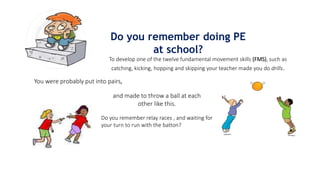
You were probably put into pairs, 
and made to throw a ball at each 
other like this. 
Do you remember relay races , and waiting for 
your turn to run with the batton?
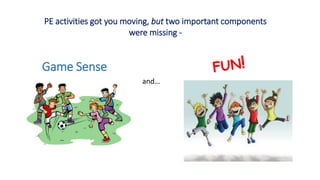
PE activities got you moving, but two important components 
were missing - 
Game Sense 
and…
But what is Game Sense, 
and why was it developed? 
Game Sense is a teaching approach that enables the 
development of skills within a game environment 
“Player-centered experiences are activities which are player driven, 
enable player empowerment in the decision-making process, foster 
player ownership of the learning, are inclusive, promote player 
creativity and experimentation, and are matched to the players' 
This new way of teaching was developed by David Brunker and Rob Thorpe in 1982 who realized that 
Using space and equipment appropriate to the learner’s stage of 
good technique did not necessarily equate to good games players. 
development is also a consideration for teachers using Game Sense as a 
rather than focusing on developing isolated 
teaching method. 
It was also observed that students lacked motivation when asked to do repetitive 
movements leading to the creation of Game Sense which is a learner centered 
techniques needs and abilities” (Light, (Davies, 2013). 
2010). 
approach to teaching sport and PE (Light,2013).
The Game Sense Focus 
• Maximum Participation 
This helps with maintaining your child’s interest as there 
is no waiting for their turn. Games are developed with 
your child’s participation in mind. 
• Problem Solving and 
Decision- making 
Student feedback is encouraged and 
games tailored to suit the child’s level of 
development and autonomy. 
A game’s rules can be modified and student 
initiative encouraged. 
• Stimulating players to 
reach their potential 
• Fosters integrity and 
fair play 
The game environment requires students 
to play by the rules and encourages 
positive social interaction.
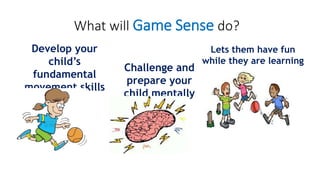
What will Game Sense do? 
Develop your 
child’s 
fundamental 
movement skills 
(FMS) 
Challenge and 
prepare your 
child mentally 
Lets them have fun 
while they are learning
I will be using the Game Sense pedagogy to achieve outcomes that are in line 
with the NSW Board of Studies Personal Development, Health and Physical 
Outcomes for Year 1 
Using Game Sense will help your child foster 
positive relationships with others. They will learn to 
listen and respond to others in a positive and 
encouraging way. 
Education K-6 Syllabus (2007). 
Problem Solving is a pivotal part of participating in a 
game environment. I will encourage your child to 
suggest solutions to problems. 
Purple
Please view the lesson plan for Bean Bags and Bunnies created by Larkins (2008) as an 
example of the type of game that will be played in class. 
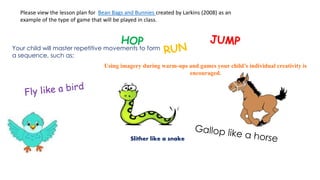
Your child will master repetitive movements to form 
a sequence, such as; 
Using imagery during warm-ups and games your child’s individual creativity is 
encouraged. 
Slither like a snake
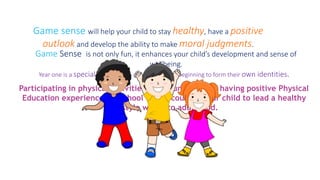
Game sense will help your child to stay healthy, have a positive 
outlook and develop the ability to make moral judgments. 
Game Sense is not only fun, it enhances your child’s development and sense of 
wellbeing. 
Year one is a special time for your child as they are beginning to form their own identities. 
Participating in physical activities at a young age and having positive Physical 
Education experiences at school will encourage your child to lead a healthy 
lifestyle well into adulthood.
References 
Davies, Nigel. (2010). Player-Centered Coaching: Enhancing Player Game Sense. Strategies: A Journal for 
Physical and Sport Educators 24(2), 24-28. 
Larkins, P. (2008). Lesson Plan: Beanbugs and Bunnies. Schoolsnet. Retrieved from 
http://www.schoolsnet.com/pls/hot_school/sn_primary.page_pls_resource_detail?x=16180339&p_re 
s_id=1051 
Light, R. (2013). Game Sense : Pedagogy for Performance, Participation and Enjoyment. New York, NY: 
Routledge. 
Personal Development, Health and Physical Education K-6. (2007). Sydney, NSW: Board of Studies.

Games Sense

  • 1.
  • 2.
    Do you rememberdoing PE at school? To develop one of the twelve fundamental movement skills (FMS), such as catching, kicking, hopping and skipping your teacher made you do drills. You were probably put into pairs, and made to throw a ball at each other like this. Do you remember relay races , and waiting for your turn to run with the batton?
  • 3.
    PE activities gotyou moving, but two important components were missing - Game Sense and…
  • 4.
    But what isGame Sense, and why was it developed? Game Sense is a teaching approach that enables the development of skills within a game environment “Player-centered experiences are activities which are player driven, enable player empowerment in the decision-making process, foster player ownership of the learning, are inclusive, promote player creativity and experimentation, and are matched to the players' This new way of teaching was developed by David Brunker and Rob Thorpe in 1982 who realized that Using space and equipment appropriate to the learner’s stage of good technique did not necessarily equate to good games players. development is also a consideration for teachers using Game Sense as a rather than focusing on developing isolated teaching method. It was also observed that students lacked motivation when asked to do repetitive movements leading to the creation of Game Sense which is a learner centered techniques needs and abilities” (Light, (Davies, 2013). 2010). approach to teaching sport and PE (Light,2013).
  • 5.
    The Game SenseFocus • Maximum Participation This helps with maintaining your child’s interest as there is no waiting for their turn. Games are developed with your child’s participation in mind. • Problem Solving and Decision- making Student feedback is encouraged and games tailored to suit the child’s level of development and autonomy. A game’s rules can be modified and student initiative encouraged. • Stimulating players to reach their potential • Fosters integrity and fair play The game environment requires students to play by the rules and encourages positive social interaction.
  • 6.
    What will GameSense do? Develop your child’s fundamental movement skills (FMS) Challenge and prepare your child mentally Lets them have fun while they are learning
  • 7.
    I will beusing the Game Sense pedagogy to achieve outcomes that are in line with the NSW Board of Studies Personal Development, Health and Physical Outcomes for Year 1 Using Game Sense will help your child foster positive relationships with others. They will learn to listen and respond to others in a positive and encouraging way. Education K-6 Syllabus (2007). Problem Solving is a pivotal part of participating in a game environment. I will encourage your child to suggest solutions to problems. Purple
  • 8.
    Please view thelesson plan for Bean Bags and Bunnies created by Larkins (2008) as an example of the type of game that will be played in class. Your child will master repetitive movements to form a sequence, such as; Using imagery during warm-ups and games your child’s individual creativity is encouraged. Slither like a snake
  • 9.
    Game sense willhelp your child to stay healthy, have a positive outlook and develop the ability to make moral judgments. Game Sense is not only fun, it enhances your child’s development and sense of wellbeing. Year one is a special time for your child as they are beginning to form their own identities. Participating in physical activities at a young age and having positive Physical Education experiences at school will encourage your child to lead a healthy lifestyle well into adulthood.
  • 10.
    References Davies, Nigel.(2010). Player-Centered Coaching: Enhancing Player Game Sense. Strategies: A Journal for Physical and Sport Educators 24(2), 24-28. Larkins, P. (2008). Lesson Plan: Beanbugs and Bunnies. Schoolsnet. Retrieved from http://www.schoolsnet.com/pls/hot_school/sn_primary.page_pls_resource_detail?x=16180339&p_re s_id=1051 Light, R. (2013). Game Sense : Pedagogy for Performance, Participation and Enjoyment. New York, NY: Routledge. Personal Development, Health and Physical Education K-6. (2007). Sydney, NSW: Board of Studies.