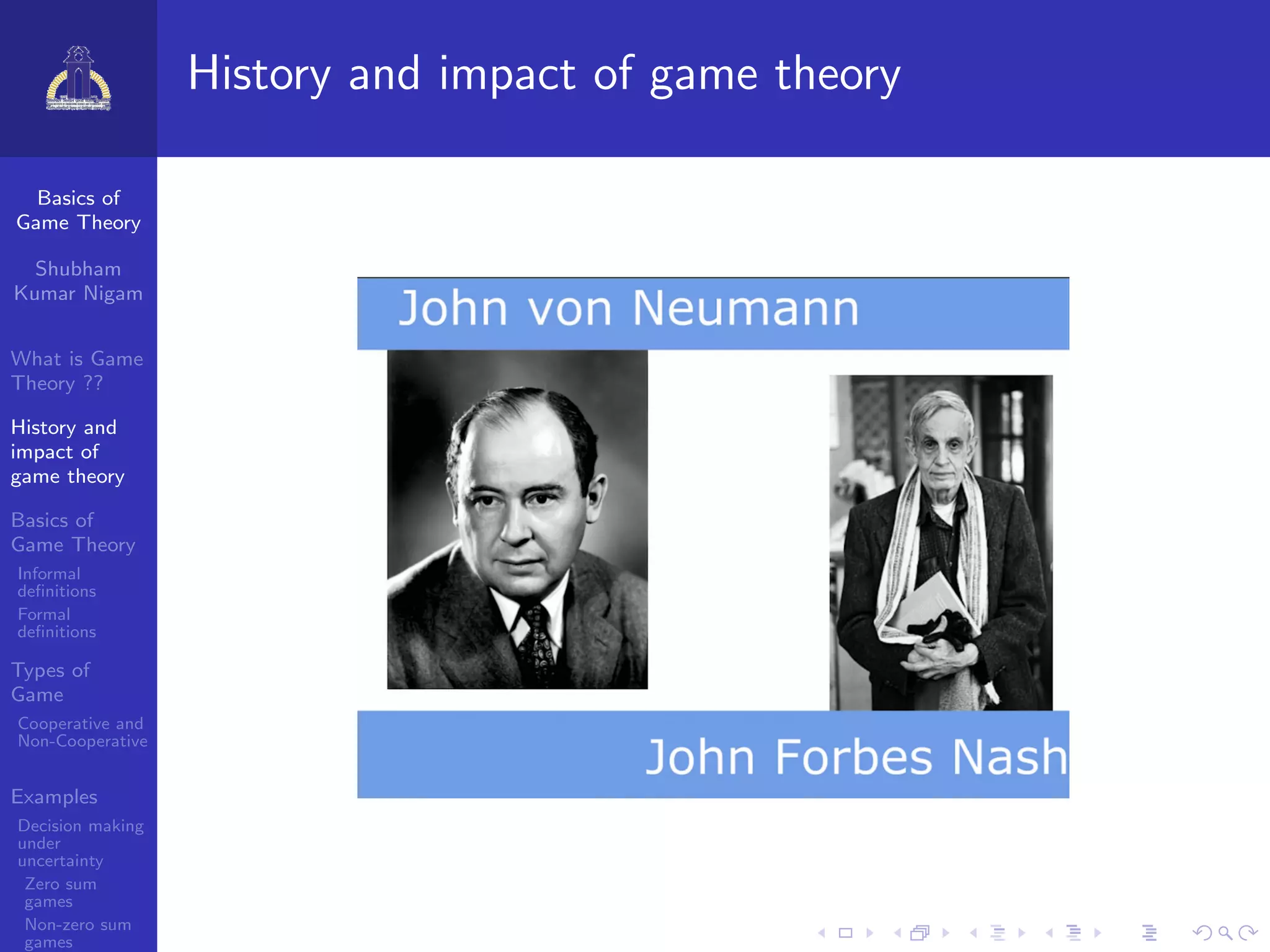
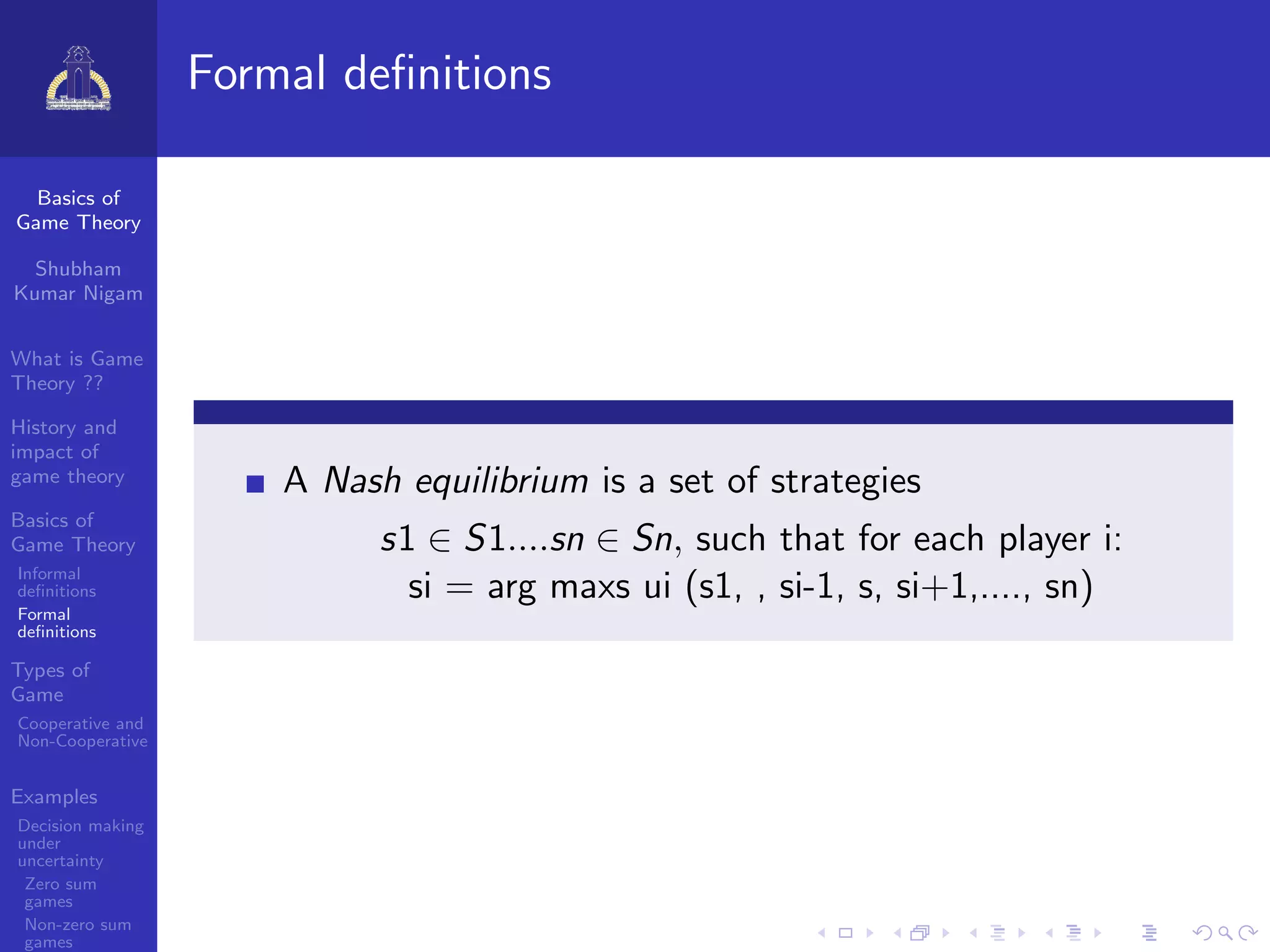
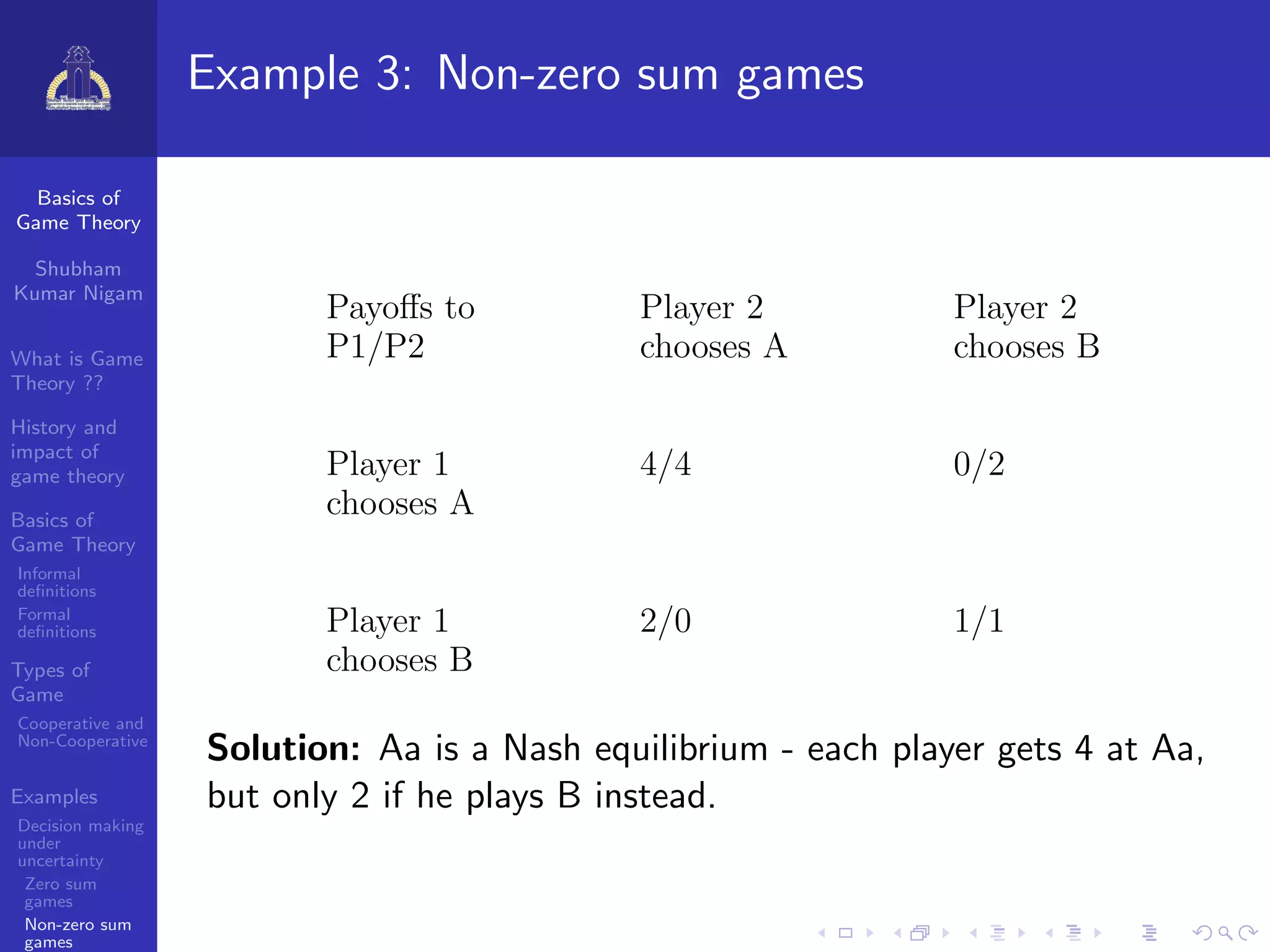
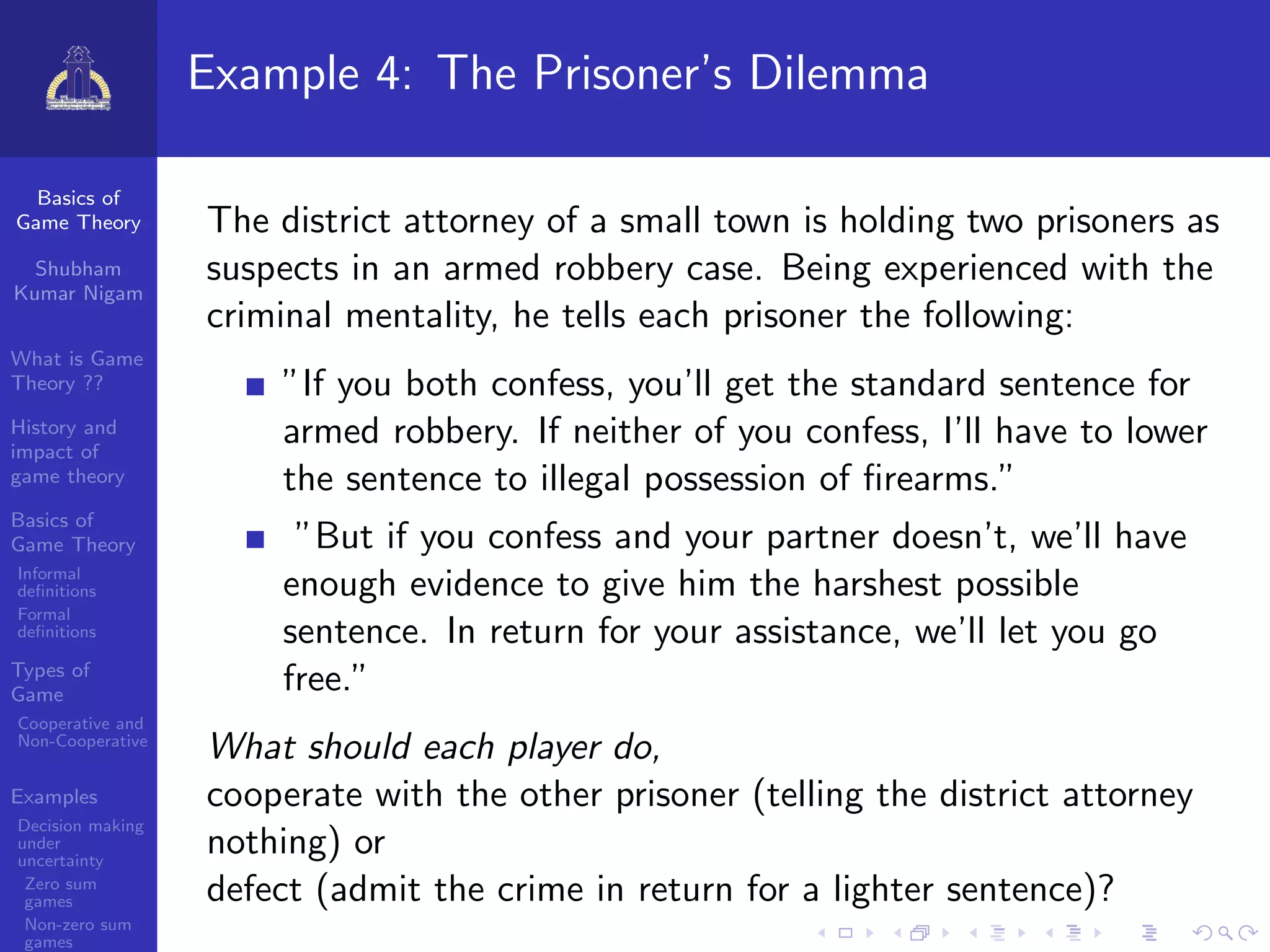
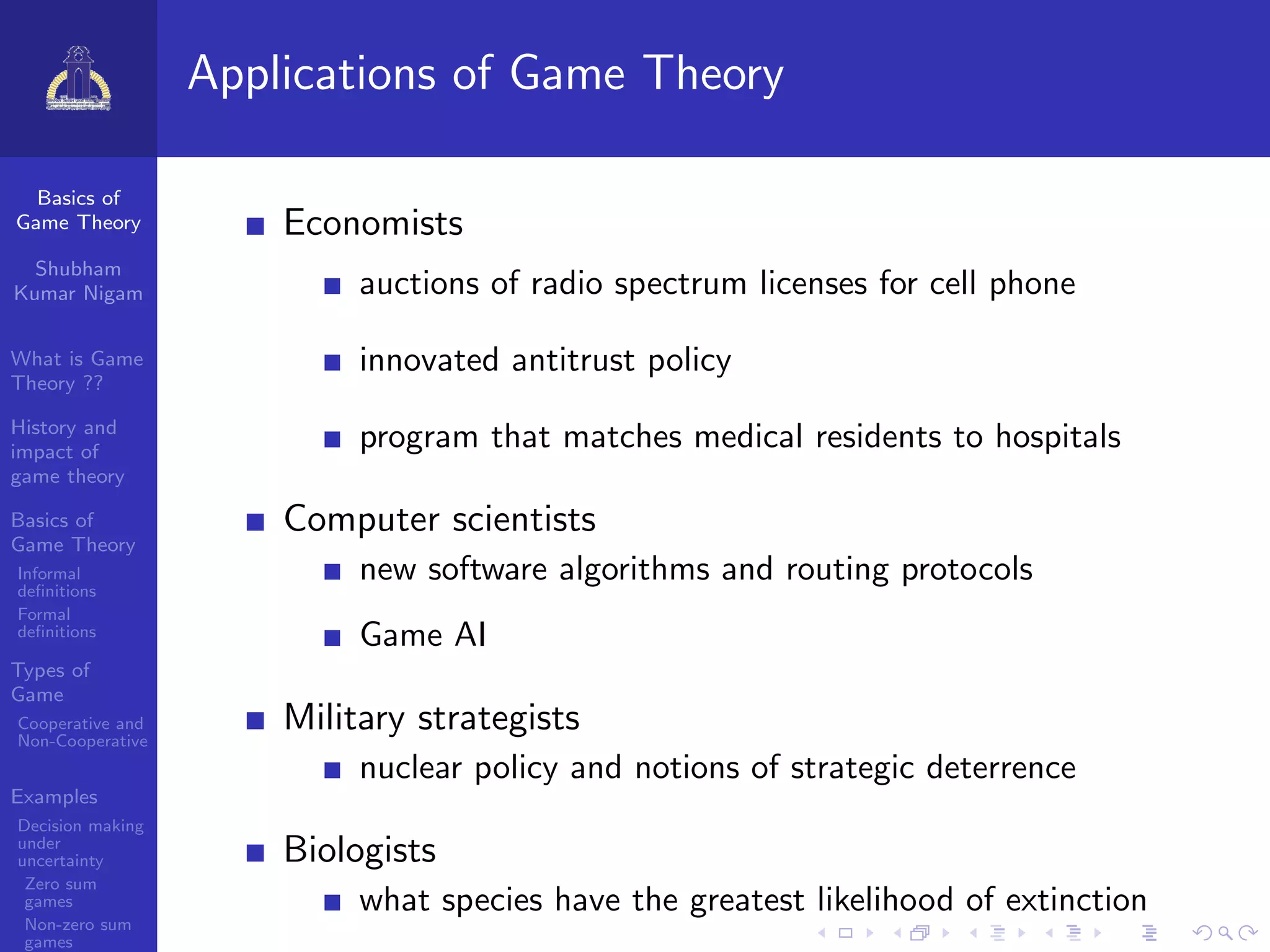
Game theory is the study of strategic decision making between interdependent actors. The document outlines the basics of game theory, including its history, key concepts, types of games, examples, and applications. It provides informal definitions of players, strategies, payoffs, information, and rationality. Formal definitions include the game structure and Nash equilibrium. Common games are cooperative vs non-cooperative, and zero-sum vs non-zero-sum. Examples illustrated include decision making under uncertainty, the prisoner's dilemma, and applications in economics, computer science, and biology.