Presented By:
AND
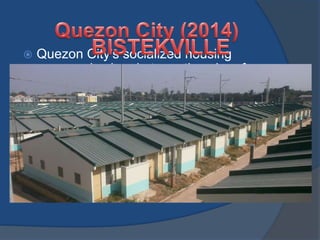
 Quezon City's socialized housing
program is aimed at creating slum-free
communities in the city by building well-
organized Bistekville housing projects
with multi-purpose facilities for public
services such as health and day-care
centers. With this development, the
upgrading of the living conditions of the
poor and removal of urban blight are
simultaneously achieved.
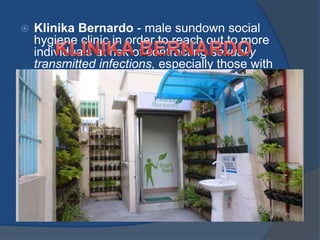
 Klinika Bernardo - male sundown social
hygiene clinic in order to reach out to more
individuals at risk of contracting sexually
transmitted infections, especially those with
exposure to male-to-male sexual
behaviors.
 Quezon City is the only local government in
the National Capital Region to win this
year's Galing Pook award, which was
conferred by Interior and Local
Government Secretary Mar Roxas and
Executive Secretary Paquito Ochoa Jr. on
Tuesday morning at the EDSA Shangri-la
Manila.
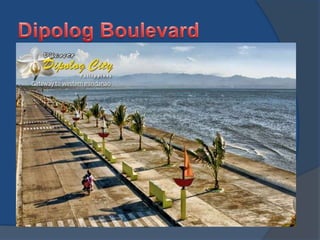
 In 1999, “Construction of Sea Wall and Foreshore Development,”
or “Dipolog Boulevard” - the rehabilitation of the coastal zones
along Barangay Central and Brgy. Miputak.
 The squatter communities initially resisted, but eventually
cooperated.
 They were also given livelihood opportunities, compensation, and
rehabilitation assistance.
 They were to be responsible for the construction of their houses
so that they could feel a sense of ownership and belonging.
 Some 600 families gained decent housing, and an
elementary school was opened to serve the resettled
children.
 By 2013, the shoreline had become a nesting area for
sea turtles, and 185 hatchlings were recently released
to the sea.
 Dipolog Boulevard has become a favorite place for
wholesome outdoor recreation, with its clean, safe and
secure ambiance.
 There are 15 commercial establishments, as well as 40
spots for marginalized families vending popular food
and beverages in designated areas.
 Carmona boasts of being one of the cleanest
towns in the province of Cavite even it served
as the dumpsite of Metro Manila.
 The sight of 80 to 100 truckloads of garbage
being dumped into their town every week .
 Diseases and other health hazards soon
became another issue the community had to
deal with.
 Ex-President Joseph Estrada ordered the
landfill to be closed. But their satisfaction was
short-lived as the landfill was promptly
reopened following complaints on Metro
Manila’s garbage crisis.
 Carmona’s BIKBAP campaign focused on waste
segregation from the source to lessen the cost;
 to support regular collection of garbage;
 composting of biodegradable waste;
 recovery and selling of recyclable material;
 and even to explore livelihood opportunities on waste
recycling.
 In fact, garbage collectors get to earn an additional
P500 per week, selling recyclable material.
 Women are trained to recycle fine crafts and sell
them for profit.
 Composts made out of segregated and processed
garbage are sold to farmers and horticulturists.
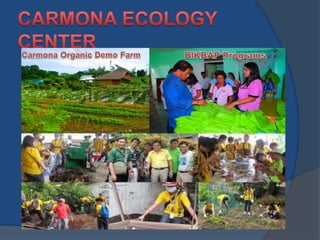
 The local government has set aside P5
million for the program, a portion of which
was used to establish the Carmona
Ecology Center.
 The Center has now become a showcase
of “good practice” in solid waste
management in the country. Additionally, an
Organic Demo Farm helps visitors visualize
the benefits of the program.
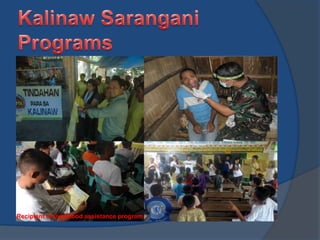
 Kalinaw Sarangani
 enjoins different ethno-linguistic groups to take part
in peace-building;
 development planning;
 decision-making;
 governance;
 and the formation of 50 peace and development
communities(PDC).
 The program involves:
 culture sensitivity practices;
 livelihood assistance;
 skills development;
 Infrastructure;
 and other social services.
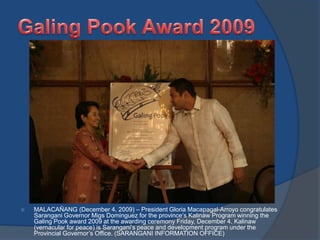
 MALACAŇANG (December 4, 2009) – President Gloria Macapagal-Arroyo congratulates
Sarangani Governor Migs Dominguez for the province’s Kalinaw Program winning the
Galing Pook award 2009 at the awarding ceremony Friday, December 4. Kalinaw
(vernacular for peace) is Sarangani’s peace and development program under the
Provincial Governor’s Office. (SARANGANI INFORMATION OFFICE)
 The program has three main components:
 Peace through Alliance Building and Community
Empowerment (PEACE) - institutionalizes and promotes
culture of peace among the 50 PDCs.
 Madaris for Peace (MaP) - embeds Islamic values
education in the curriculum of 46 Madrasah or Islamic
schools of the province. This would help mold the
students into enlightened, responsible, and peace loving
citizens and leaders.
 Special Project with Partners(SPP) - this Special
Project provides community enterprise development
assistance, Barangay Infrastructure Projects, Basic
Services as well as capability building on mediation,
counseling and peaceful approaches in conflict resolution.
Recipient of livelihood assistance program

Galing Pook Awardees

  • 2.
  • 3.
     Quezon City'ssocialized housing program is aimed at creating slum-free communities in the city by building well- organized Bistekville housing projects with multi-purpose facilities for public services such as health and day-care centers. With this development, the upgrading of the living conditions of the poor and removal of urban blight are simultaneously achieved.
  • 4.
     Klinika Bernardo- male sundown social hygiene clinic in order to reach out to more individuals at risk of contracting sexually transmitted infections, especially those with exposure to male-to-male sexual behaviors.  Quezon City is the only local government in the National Capital Region to win this year's Galing Pook award, which was conferred by Interior and Local Government Secretary Mar Roxas and Executive Secretary Paquito Ochoa Jr. on Tuesday morning at the EDSA Shangri-la Manila.
  • 5.
     In 1999,“Construction of Sea Wall and Foreshore Development,” or “Dipolog Boulevard” - the rehabilitation of the coastal zones along Barangay Central and Brgy. Miputak.  The squatter communities initially resisted, but eventually cooperated.  They were also given livelihood opportunities, compensation, and rehabilitation assistance.  They were to be responsible for the construction of their houses so that they could feel a sense of ownership and belonging.
  • 6.
     Some 600families gained decent housing, and an elementary school was opened to serve the resettled children.  By 2013, the shoreline had become a nesting area for sea turtles, and 185 hatchlings were recently released to the sea.  Dipolog Boulevard has become a favorite place for wholesome outdoor recreation, with its clean, safe and secure ambiance.  There are 15 commercial establishments, as well as 40 spots for marginalized families vending popular food and beverages in designated areas.
  • 8.
     Carmona boastsof being one of the cleanest towns in the province of Cavite even it served as the dumpsite of Metro Manila.  The sight of 80 to 100 truckloads of garbage being dumped into their town every week .  Diseases and other health hazards soon became another issue the community had to deal with.  Ex-President Joseph Estrada ordered the landfill to be closed. But their satisfaction was short-lived as the landfill was promptly reopened following complaints on Metro Manila’s garbage crisis.
  • 9.
     Carmona’s BIKBAPcampaign focused on waste segregation from the source to lessen the cost;  to support regular collection of garbage;  composting of biodegradable waste;  recovery and selling of recyclable material;  and even to explore livelihood opportunities on waste recycling.  In fact, garbage collectors get to earn an additional P500 per week, selling recyclable material.  Women are trained to recycle fine crafts and sell them for profit.  Composts made out of segregated and processed garbage are sold to farmers and horticulturists.
  • 10.
     The localgovernment has set aside P5 million for the program, a portion of which was used to establish the Carmona Ecology Center.  The Center has now become a showcase of “good practice” in solid waste management in the country. Additionally, an Organic Demo Farm helps visitors visualize the benefits of the program.
  • 12.
     Kalinaw Sarangani enjoins different ethno-linguistic groups to take part in peace-building;  development planning;  decision-making;  governance;  and the formation of 50 peace and development communities(PDC).  The program involves:  culture sensitivity practices;  livelihood assistance;  skills development;  Infrastructure;  and other social services.
  • 13.
     MALACAŇANG (December4, 2009) – President Gloria Macapagal-Arroyo congratulates Sarangani Governor Migs Dominguez for the province’s Kalinaw Program winning the Galing Pook award 2009 at the awarding ceremony Friday, December 4. Kalinaw (vernacular for peace) is Sarangani’s peace and development program under the Provincial Governor’s Office. (SARANGANI INFORMATION OFFICE)
  • 14.
     The programhas three main components:  Peace through Alliance Building and Community Empowerment (PEACE) - institutionalizes and promotes culture of peace among the 50 PDCs.  Madaris for Peace (MaP) - embeds Islamic values education in the curriculum of 46 Madrasah or Islamic schools of the province. This would help mold the students into enlightened, responsible, and peace loving citizens and leaders.  Special Project with Partners(SPP) - this Special Project provides community enterprise development assistance, Barangay Infrastructure Projects, Basic Services as well as capability building on mediation, counseling and peaceful approaches in conflict resolution.
  • 15.
    Recipient of livelihoodassistance program