Gait cycle
Gait cycle
 Stance phase
- period when the reference limb is in contact with the ground
-constitutes 60% of gait cycle
 Swing phase
-period when the limb is off the ground.
- constitutes 40% of gait cycle
Phases of gait cycle:
as per Rancho los amigos
 Stance phase
initial contact
loading response
mid stance
terminal stance
pre-swing
 Swing phase
initial swing
mid swing
terminal swing
Stance phase
 Initial contact
beginning of stance when heel or some other portion of foot
contacts ground.
component of double limb stance.
 Loading response
body weight rapidly loads onto lead limb from trailing limb.
hip remains stable, knee flexes to absorb shock and forefoot lowers the
ground.
ends when opposite limb lifts from ground for swing.
 Mid stance
• starts when the contralateral foot lifts from the ground for swing.
• trunk progresses from behind to in front of ankle single stable limb.
• first half of single limb support.
 Terminal stance
• trunk continues forward progression relative to foot.
• heel rises from the ground.
• second half of single limb support.
• ends with contralateral initial contact.
 Pre swing
body weight rapidly unloads from reference limb.
reference limb prepares for swing
starts with contralateral initial contact and ends at ipsilateral limb toe off.
Swing phase
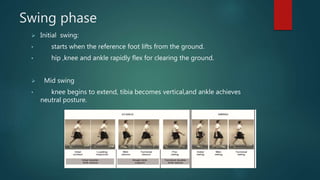
 Initial swing:
• starts when the reference foot lifts from the ground.
• hip ,knee and ankle rapidly flex for clearing the ground.
 Mid swing
• knee begins to extend, tibia becomes vertical,and ankle achieves
neutral posture.
 Terminal swing
knee achieves maximal extension, ankle remains neutral
ends when heel contacts the ground.
 Gait cycle video:
https://youtu.be/1u6d1CX7o9c
Determinants of gait
 There is the coordinated movement of the trunk, upper limb, head to
render the good gait pattern.
 The components are:
1. Lateral pelvic tilt.
2. Knee flexion.
3 . Knee, ankle, foot interaction.
4. Pelvic forward and backward rotation.
5. Physiological valgus of knee
Lateral pelvic tilt
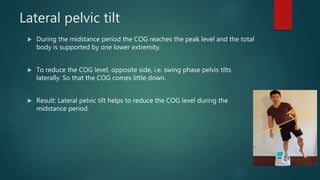
 During the midstance period the COG reaches the peak level and the total
body is supported by one lower extremity.
 To reduce the COG level, opposite side, i.e. swing phase pelvis tilts
laterally. So that the COG comes little down.
 Result: Lateral pelvic tilt helps to reduce the COG level during the
midstance period.
Knee flexion
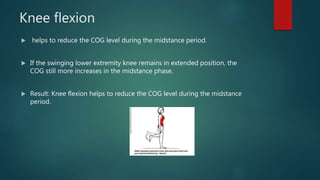
 helps to reduce the COG level during the midstance period.
 If the swinging lower extremity knee remains in extended position, the
COG still more increases in the midstance phase.
 Result: Knee flexion helps to reduce the COG level during the midstance
period.
Knee ankle foot interaction
 The knee, ankle-foot interaction prevent the abrupt hike of the upward
displacement of the COG when the foot passes from the heel strike to foot
flat.
 Normally, after the heel strike huge upward displacement of COG occurs.
 To reduce that, there is some interaction between the knee, ankle, foot
takes place (Knee flexion, ankle plantar flexion, foot pronation) and also
the same interaction takes place during the midstance to heel off.
 After the midstance there is sudden dropping of COG. To maintain the
sudden drop of COG there is some changes happening in the knee, ankle
and foot (ankle plantar flexion, knee extension, foot supination).
Forward and backward rotation of
pelvis
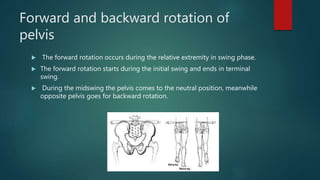
 The forward rotation occurs during the relative extremity in swing phase.
 The forward rotation starts during the initial swing and ends in terminal
swing.
 During the midswing the pelvis comes to the neutral position, meanwhile
opposite pelvis goes for backward rotation.
 After the midstance there will be sudden dropping of the COG level.
 The forward and backward rotations help to prevent further reduction of
the COG level.
 During deceleration the lower extremity lengthens and the same time the
stance phase lower extremity (midstance) also relatively lengthened
 The same time lengthening of both the lower extremities prevent the
further reduction of the COG.
 The lengthening of the legs is possible due to the forward and backward
rotation of the pelvis.
 Result: Forward and backward rotations help to minimize the hyper-
reduction of the COG.
Physiological valgus
 Generally, during walking forward placing leg will have mild-knee valgus is
called as physiological valgus, but the vertical alignment of the limb
(Vertical alignment of the tibia and fibula) provides more BOS than the
normally placed limb.
 To overcome from the reduced BOS by the physiological valgus, i.e.
normally placed limb, the lateral shifting of the body occurs to shift the
COG from one lower extremity to another.
Important questions:
 Gait deviations
 Phases of swing phases of gait cycle
 Kinetics and kinematics of the gait
 Stance phase of gait cycle
 Determinants of gait
 Energy expenditure during gait
 Spatial and temporal variables of gait

Gait cycle

  • 1.
  • 2.
    Gait cycle  Stancephase - period when the reference limb is in contact with the ground -constitutes 60% of gait cycle  Swing phase -period when the limb is off the ground. - constitutes 40% of gait cycle
  • 3.
    Phases of gaitcycle: as per Rancho los amigos  Stance phase initial contact loading response mid stance terminal stance pre-swing  Swing phase initial swing mid swing terminal swing
  • 5.
    Stance phase  Initialcontact beginning of stance when heel or some other portion of foot contacts ground. component of double limb stance.  Loading response body weight rapidly loads onto lead limb from trailing limb. hip remains stable, knee flexes to absorb shock and forefoot lowers the ground. ends when opposite limb lifts from ground for swing.
  • 6.
     Mid stance •starts when the contralateral foot lifts from the ground for swing. • trunk progresses from behind to in front of ankle single stable limb. • first half of single limb support.
  • 7.
     Terminal stance •trunk continues forward progression relative to foot. • heel rises from the ground. • second half of single limb support. • ends with contralateral initial contact.
  • 8.
     Pre swing bodyweight rapidly unloads from reference limb. reference limb prepares for swing starts with contralateral initial contact and ends at ipsilateral limb toe off.
  • 9.
    Swing phase  Initialswing: • starts when the reference foot lifts from the ground. • hip ,knee and ankle rapidly flex for clearing the ground.  Mid swing • knee begins to extend, tibia becomes vertical,and ankle achieves neutral posture.
  • 10.
     Terminal swing kneeachieves maximal extension, ankle remains neutral ends when heel contacts the ground.
  • 11.
     Gait cyclevideo: https://youtu.be/1u6d1CX7o9c
  • 12.
    Determinants of gait There is the coordinated movement of the trunk, upper limb, head to render the good gait pattern.  The components are: 1. Lateral pelvic tilt. 2. Knee flexion. 3 . Knee, ankle, foot interaction. 4. Pelvic forward and backward rotation. 5. Physiological valgus of knee
  • 13.
    Lateral pelvic tilt During the midstance period the COG reaches the peak level and the total body is supported by one lower extremity.  To reduce the COG level, opposite side, i.e. swing phase pelvis tilts laterally. So that the COG comes little down.  Result: Lateral pelvic tilt helps to reduce the COG level during the midstance period.
  • 14.
    Knee flexion  helpsto reduce the COG level during the midstance period.  If the swinging lower extremity knee remains in extended position, the COG still more increases in the midstance phase.  Result: Knee flexion helps to reduce the COG level during the midstance period.
  • 15.
    Knee ankle footinteraction  The knee, ankle-foot interaction prevent the abrupt hike of the upward displacement of the COG when the foot passes from the heel strike to foot flat.  Normally, after the heel strike huge upward displacement of COG occurs.  To reduce that, there is some interaction between the knee, ankle, foot takes place (Knee flexion, ankle plantar flexion, foot pronation) and also the same interaction takes place during the midstance to heel off.  After the midstance there is sudden dropping of COG. To maintain the sudden drop of COG there is some changes happening in the knee, ankle and foot (ankle plantar flexion, knee extension, foot supination).
  • 16.
    Forward and backwardrotation of pelvis  The forward rotation occurs during the relative extremity in swing phase.  The forward rotation starts during the initial swing and ends in terminal swing.  During the midswing the pelvis comes to the neutral position, meanwhile opposite pelvis goes for backward rotation.
  • 17.
     After themidstance there will be sudden dropping of the COG level.  The forward and backward rotations help to prevent further reduction of the COG level.  During deceleration the lower extremity lengthens and the same time the stance phase lower extremity (midstance) also relatively lengthened  The same time lengthening of both the lower extremities prevent the further reduction of the COG.
  • 18.
     The lengtheningof the legs is possible due to the forward and backward rotation of the pelvis.  Result: Forward and backward rotations help to minimize the hyper- reduction of the COG.
  • 19.
    Physiological valgus  Generally,during walking forward placing leg will have mild-knee valgus is called as physiological valgus, but the vertical alignment of the limb (Vertical alignment of the tibia and fibula) provides more BOS than the normally placed limb.  To overcome from the reduced BOS by the physiological valgus, i.e. normally placed limb, the lateral shifting of the body occurs to shift the COG from one lower extremity to another.
  • 20.
    Important questions:  Gaitdeviations  Phases of swing phases of gait cycle  Kinetics and kinematics of the gait  Stance phase of gait cycle  Determinants of gait  Energy expenditure during gait  Spatial and temporal variables of gait