Common Wire Splices and
Joints
Tools and Equipment
• PLIERS - it is used to bend and crimp wires, hold hot
parts during soldering and help you set delicate
components into place.
• CUTTERS - it removes insulation from wires and cut
them to different lengths.
• SCREWDRIVERS - are essential for fastening circuit
boards to project boxes and disassembling equipment
for repairs.
•SOLDERING GUN/IRON – Used to build
permanent, reliable circuits, you need to solder
connections between wires and components.
•MULTI –TESTER - an electronic tester which
measures voltage, current, resistance and other
aspects of electricity and circuits.
•EXTENSION CORD - is a span of flexible electrical
power cable with a plug on one end and multiple
sockets on the other end.
What Is Soldering?
•Soldering is the process of joining two or
more electronic parts together by melting
solder around the connection.
•Solder is a metal alloy and when it cools it
creates a strong electrical bond between
the parts.
Soldering Tools
• Soldering Iron - is a hand tool that plugs into a
standard 120v AC outlet and heats up in order to melt
solder around electrical connections.
• Soldering Station - These stations can also create a
safer workspace as some include advanced
temperature sensors, alert settings and even
password protection for safety.
•Soldering Iron Tips
Conical Tip – is used in precision electronics
soldering because of the fine tip. Because of its
pointed end, it’s able to deliver heat to smaller
areas without affecting its surroundings.
Chisel Tip – this tip is well-suited to soldering wires
or other larger components because of its broad
flat tip.
•Brass or Conventional Sponge - will help to keep
the soldering iron tip clean by removing the
oxidation that forms.
•Soldering Iron Stand - helps prevent the hot
iron tip from coming in contact with flammable
materials or causing accidental injury to your
hand.
•Solder - a metal alloy material that is melted to
create a permanent bond between electrical
parts.
SPLICING - electrical connection or joining of two
or more wires that conduct electricity in a
building.
Types of Splicing :
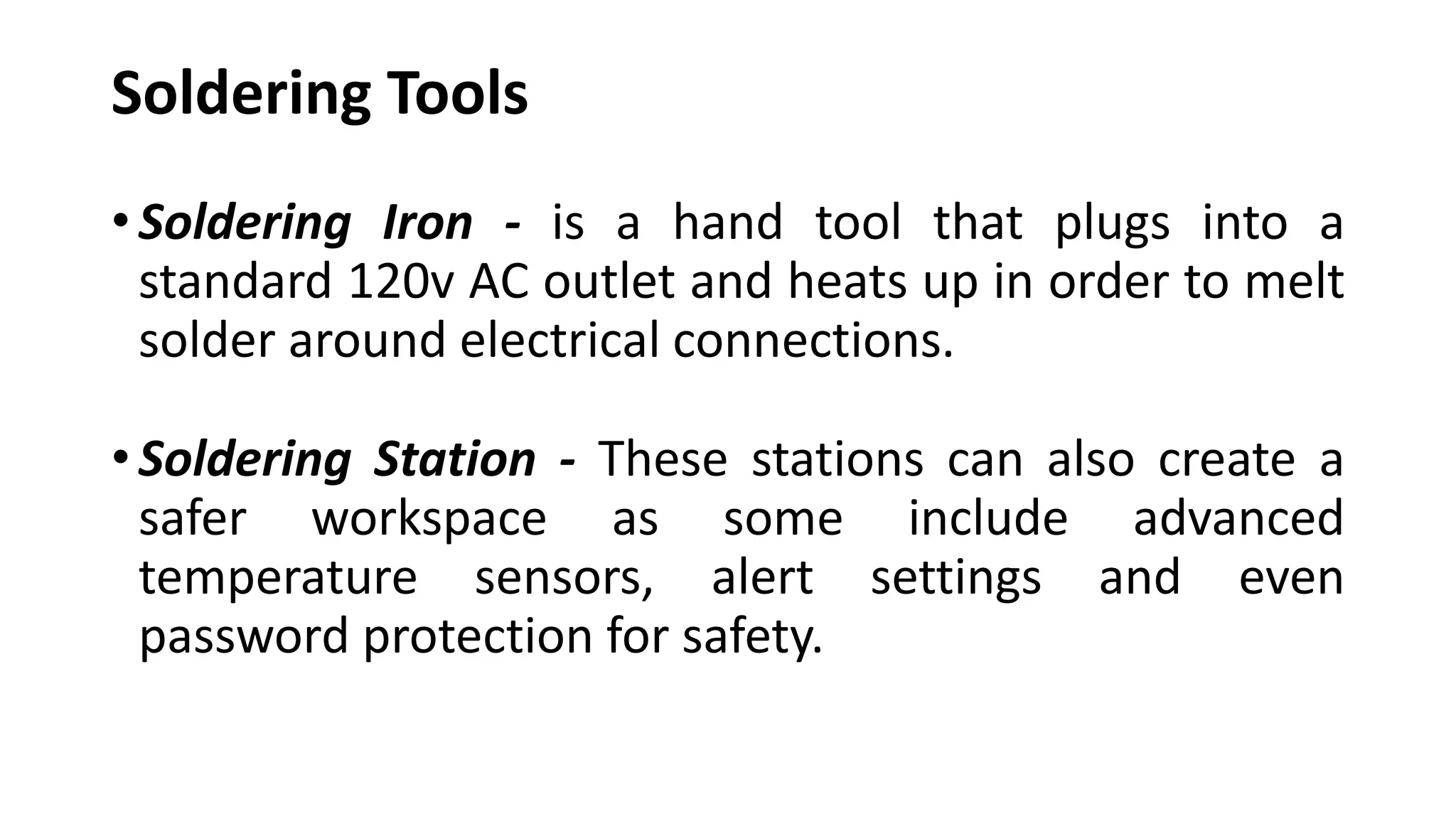
1.Western Union Short-tie
Splice - This is the most widely
used splice or joint in interior
wiring installation to extend the
length of wire from one point to
another.
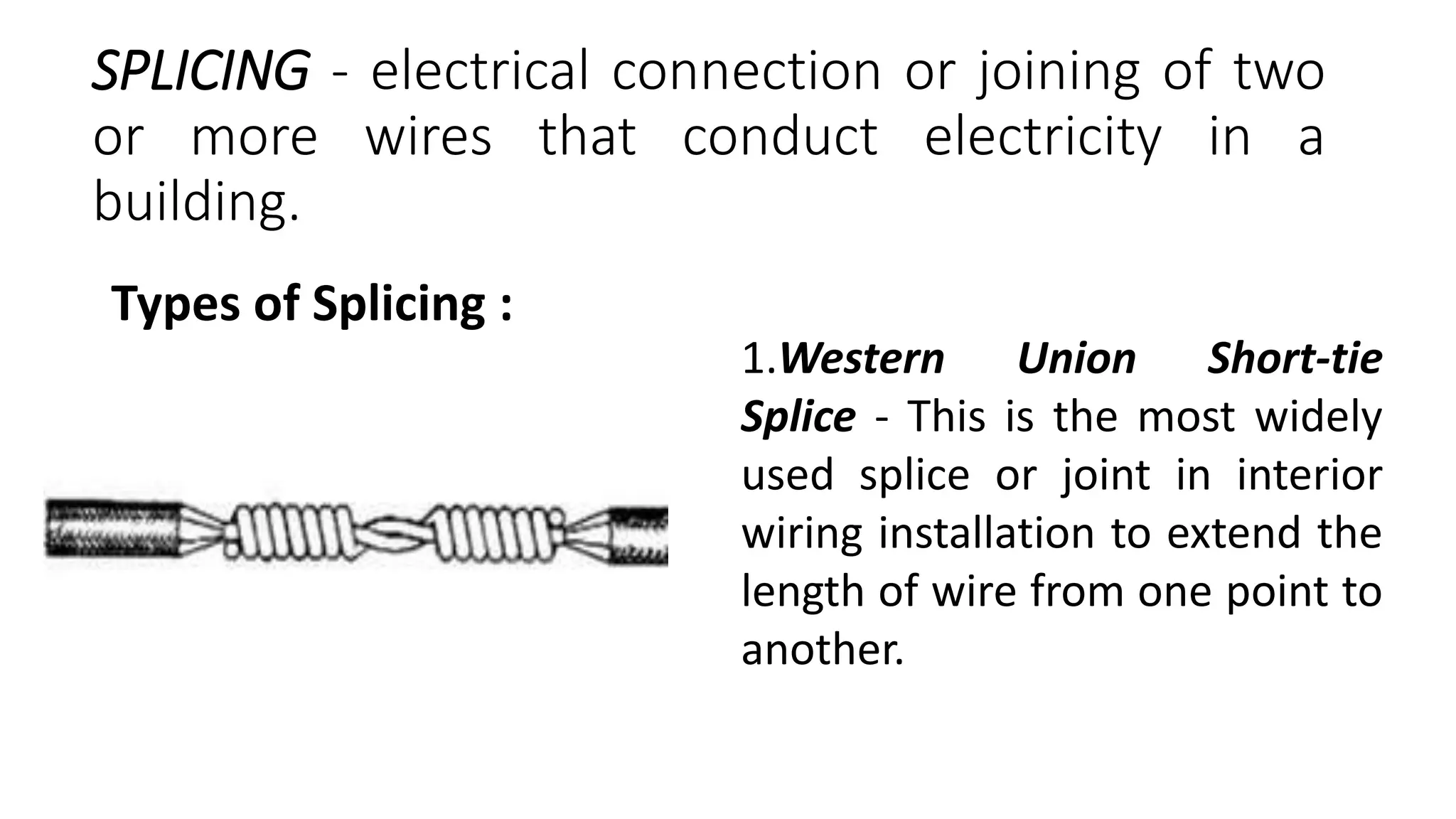
2. Western Union Long-tie
Splice - This is used extensively
for outside wiring to extend the
length of wire from one end to
another.
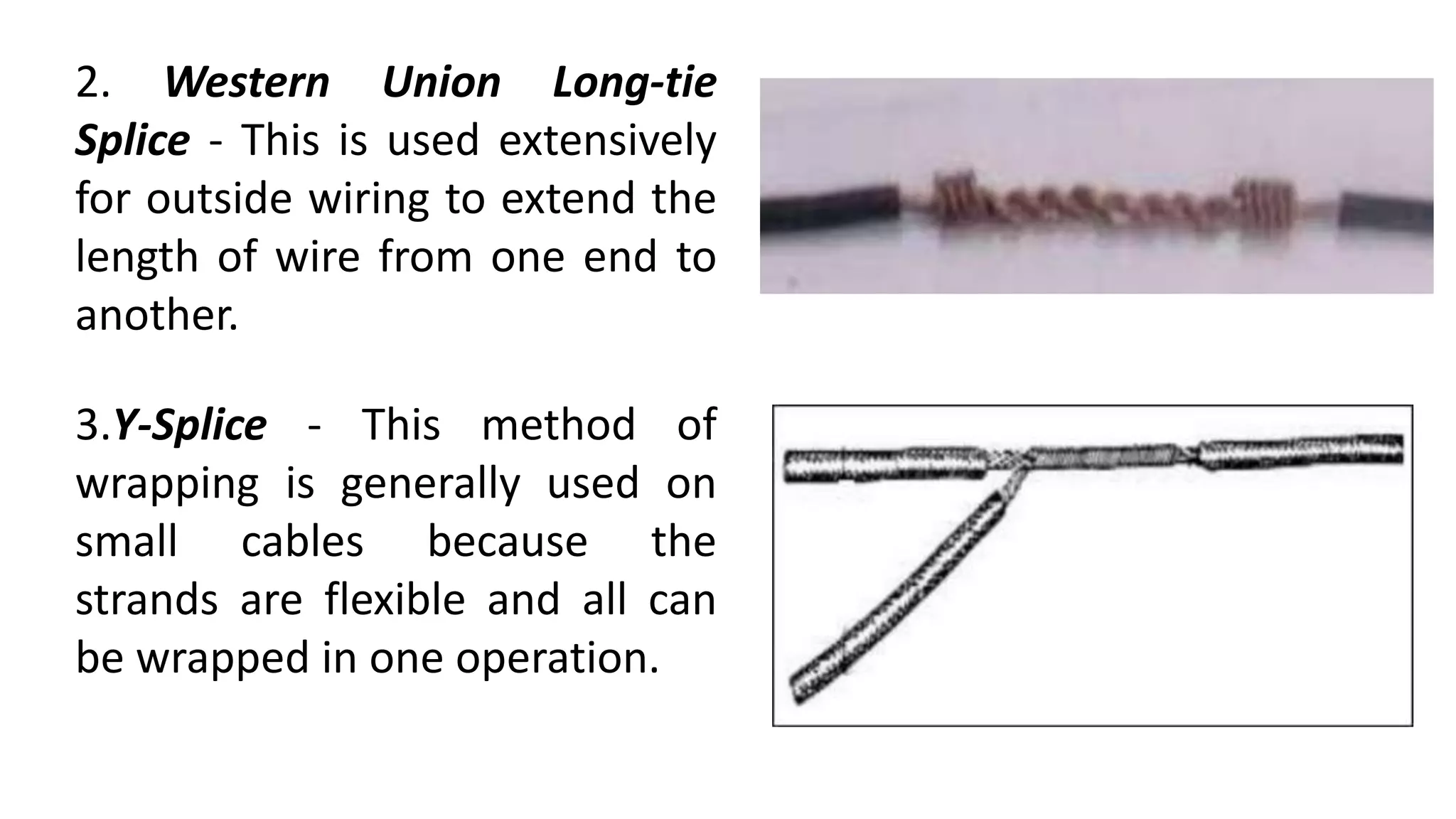
3.Y-Splice - This method of
wrapping is generally used on
small cables because the
strands are flexible and all can
be wrapped in one operation.
JOINTING - Joining electrical power cables can be
as simple as twisting the wires and taping them or
more detailed using a variety of inline adapters
and connectors.
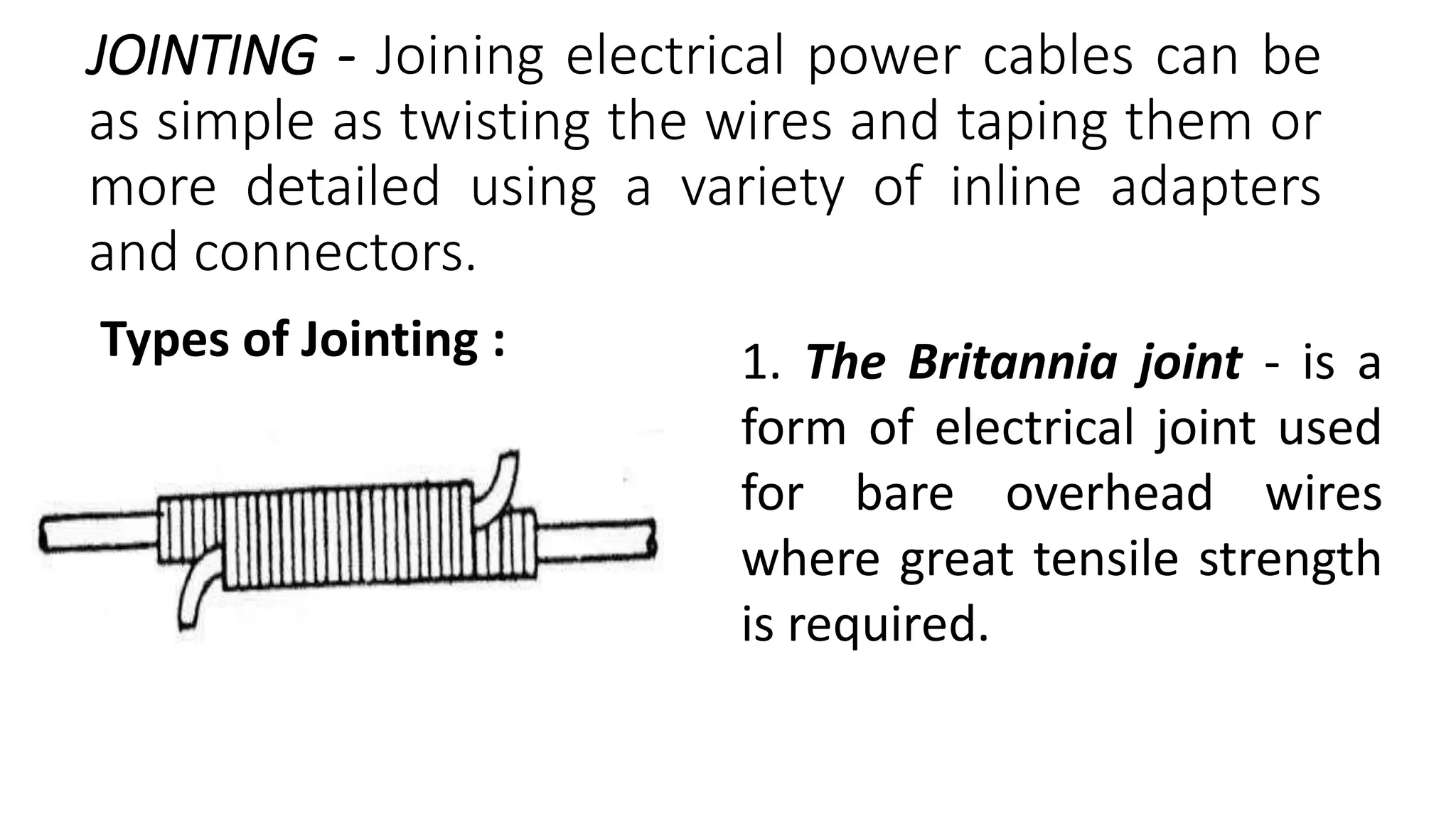
Types of Jointing : 1. The Britannia joint - is a
form of electrical joint used
for bare overhead wires
where great tensile strength
is required.
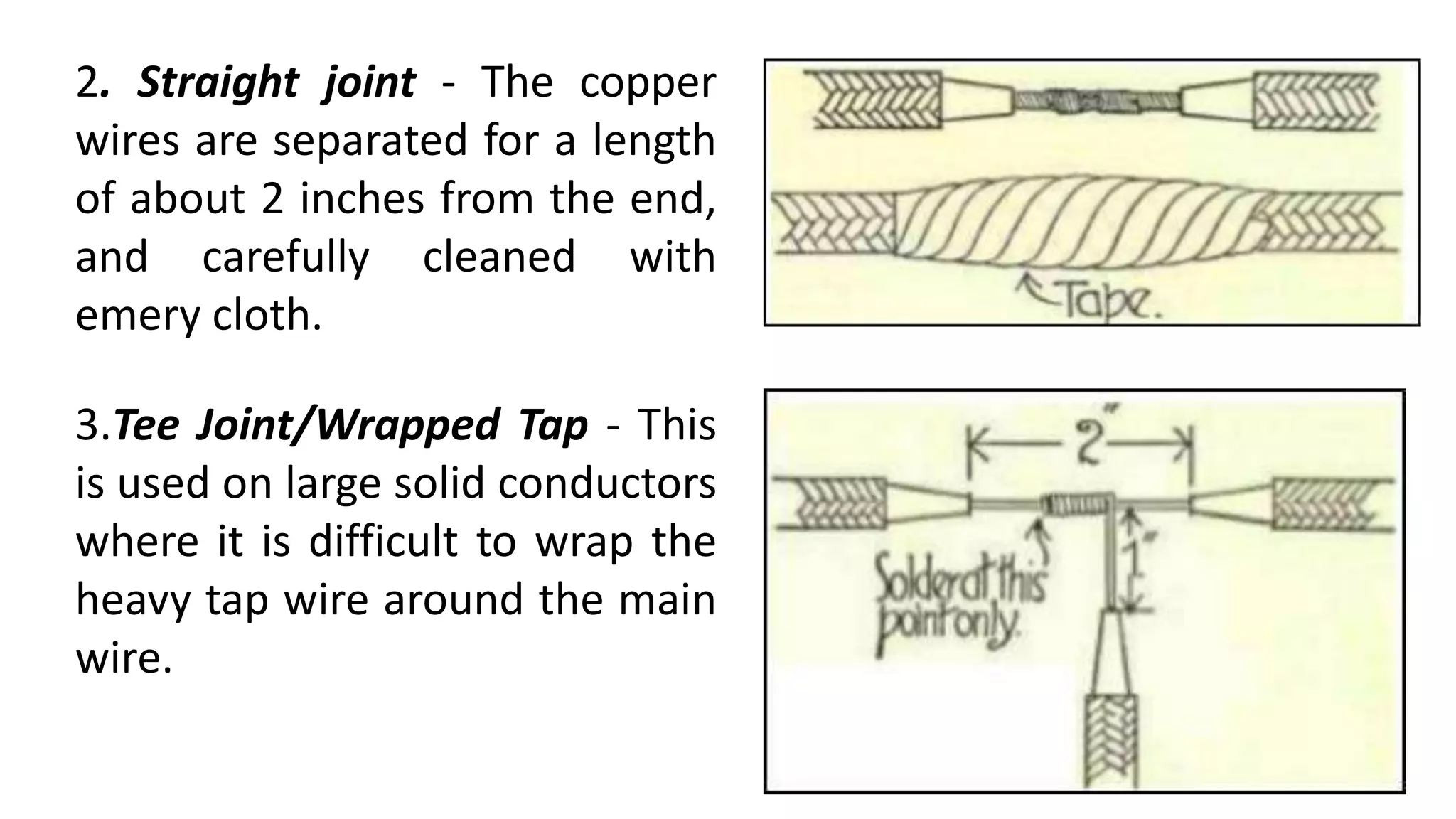
2. Straight joint - The copper
wires are separated for a length
of about 2 inches from the end,
and carefully cleaned with
emery cloth.
3.Tee Joint/Wrapped Tap - This
is used on large solid conductors
where it is difficult to wrap the
heavy tap wire around the main
wire.
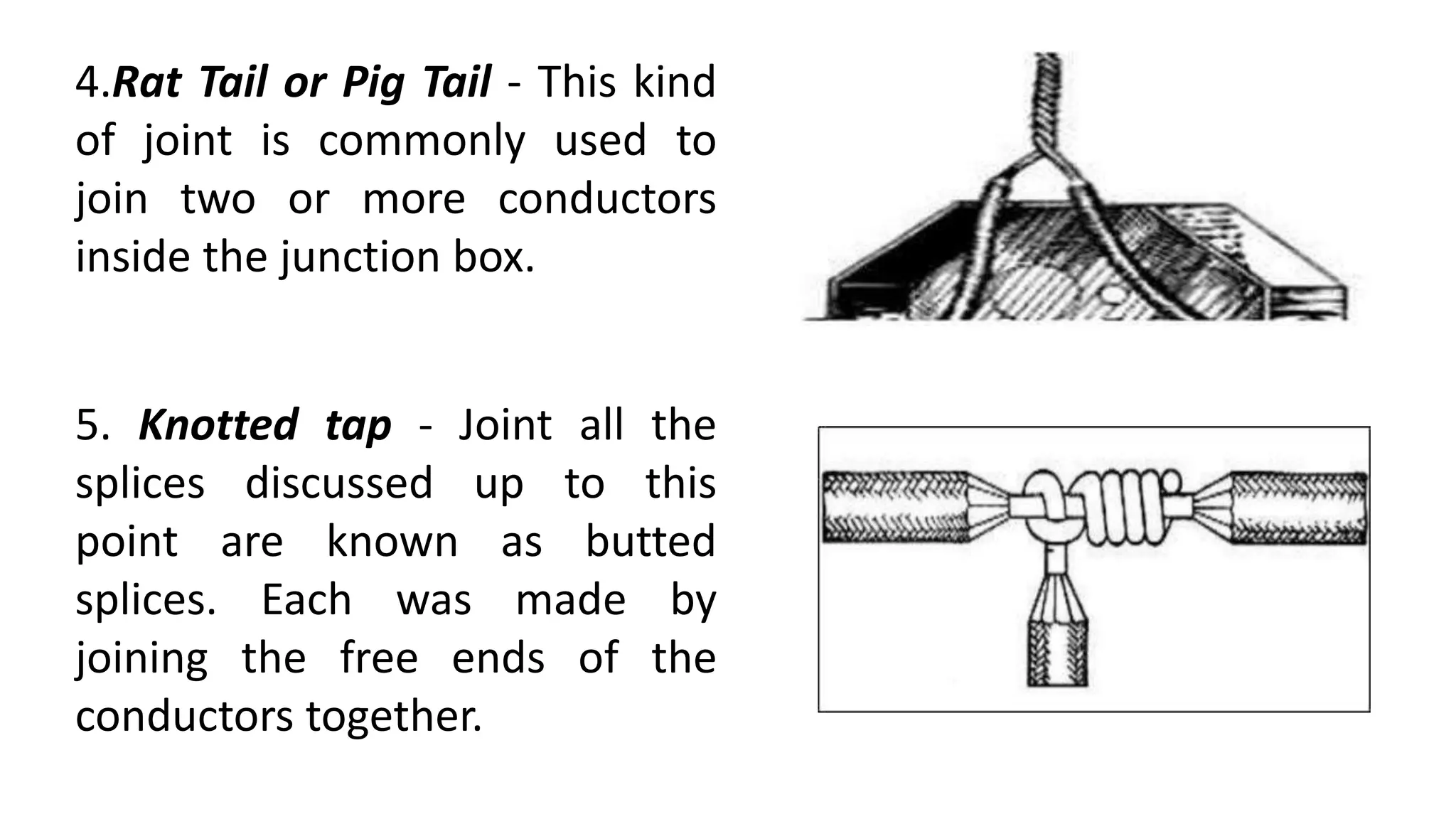
4.Rat Tail or Pig Tail - This kind
of joint is commonly used to
join two or more conductors
inside the junction box.
5. Knotted tap - Joint all the
splices discussed up to this
point are known as butted
splices. Each was made by
joining the free ends of the
conductors together.
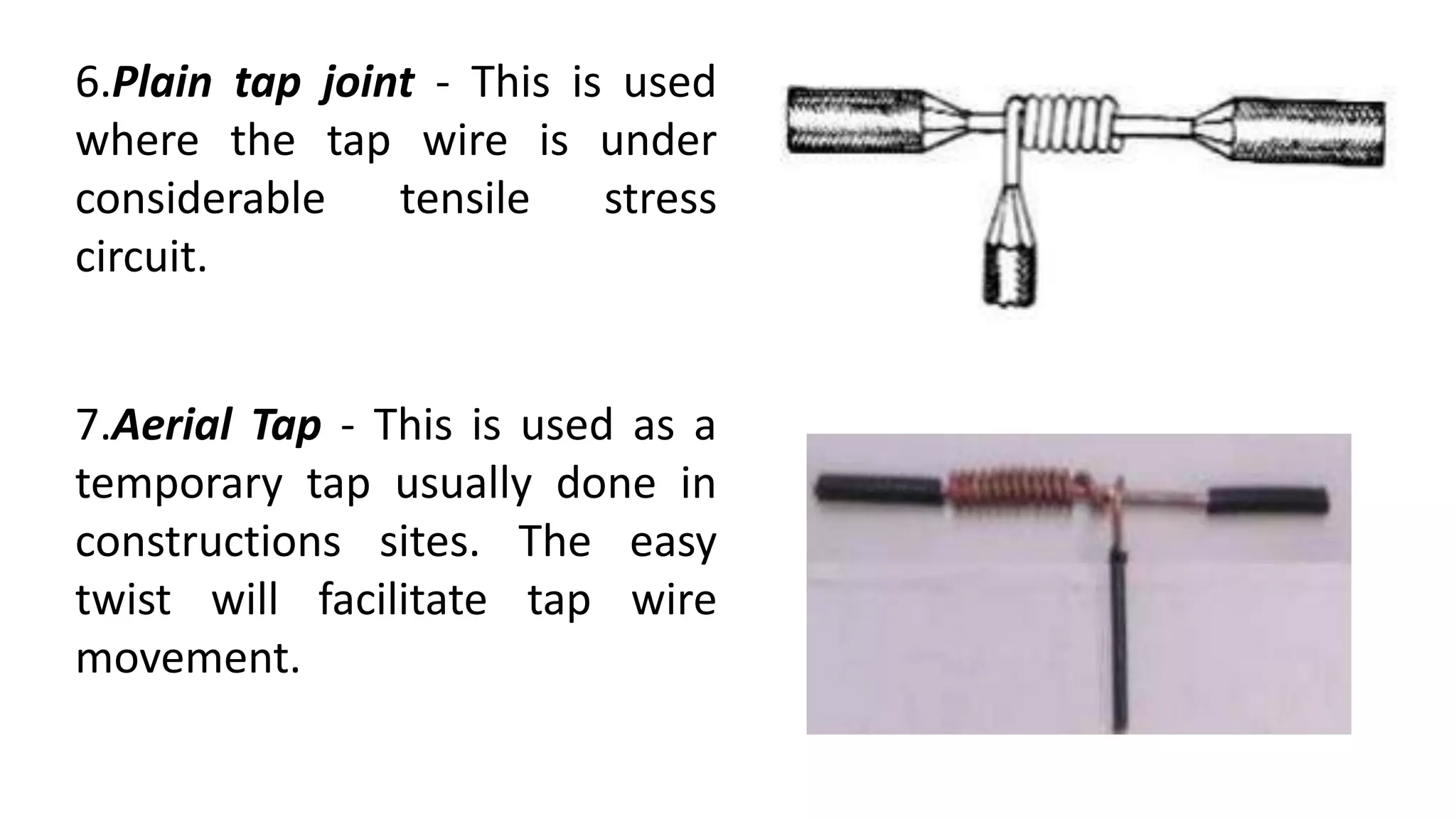
6.Plain tap joint - This is used
where the tap wire is under
considerable tensile stress
circuit.
7.Aerial Tap - This is used as a
temporary tap usually done in
constructions sites. The easy
twist will facilitate tap wire
movement.
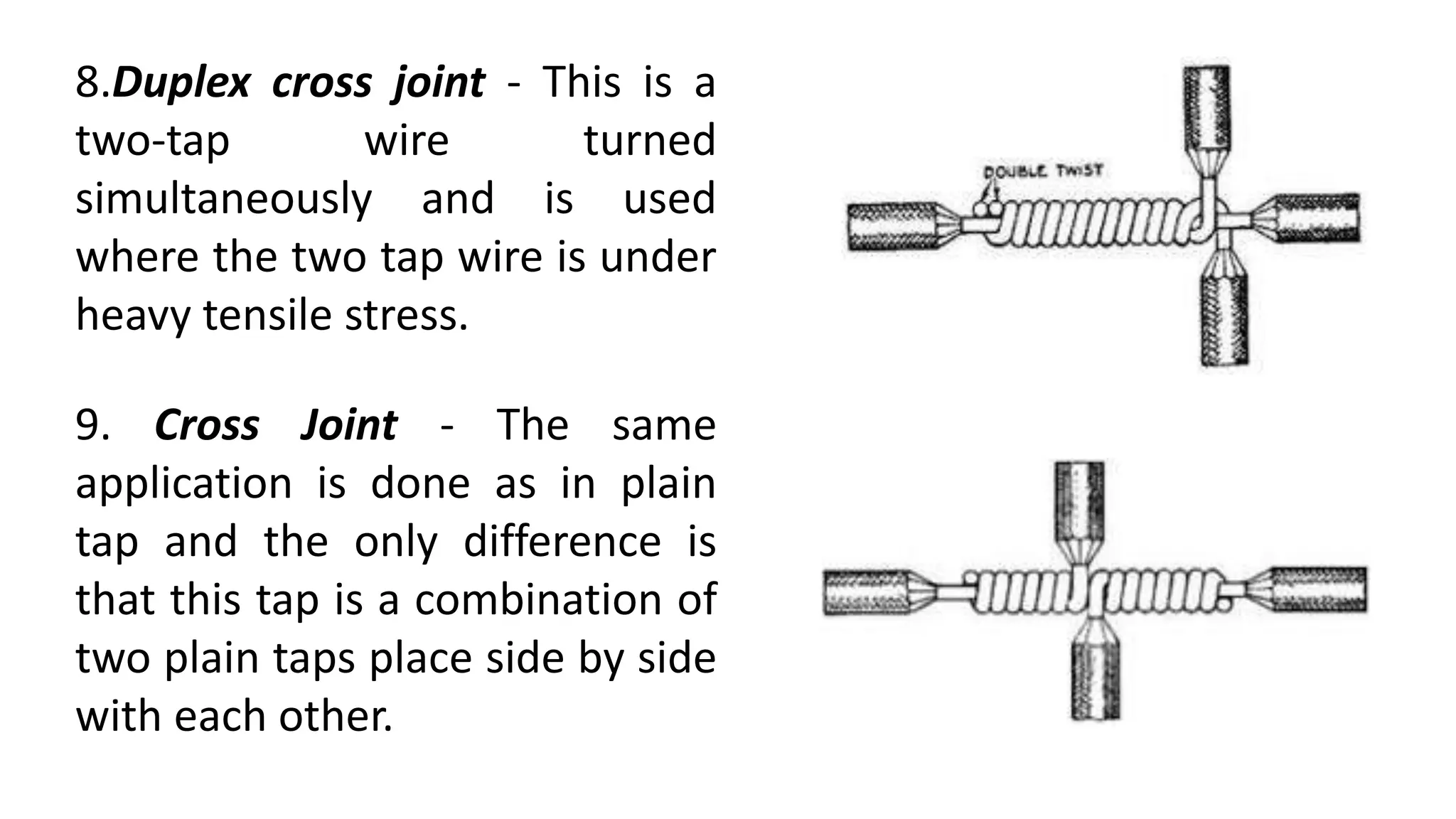
8.Duplex cross joint - This is a
two-tap wire turned
simultaneously and is used
where the two tap wire is under
heavy tensile stress.
9. Cross Joint - The same
application is done as in plain
tap and the only difference is
that this tap is a combination of
two plain taps place side by side
with each other.
10.Wrapped Tap or Tee Joint-
This is used on large solid
conductors where it is difficult to
wrap the heavy tap wire around
the main wire.

G9 Common Wire Splices and Joints.pptx

  • 1.
  • 2.
    Tools and Equipment •PLIERS - it is used to bend and crimp wires, hold hot parts during soldering and help you set delicate components into place. • CUTTERS - it removes insulation from wires and cut them to different lengths. • SCREWDRIVERS - are essential for fastening circuit boards to project boxes and disassembling equipment for repairs.
  • 3.
    •SOLDERING GUN/IRON –Used to build permanent, reliable circuits, you need to solder connections between wires and components. •MULTI –TESTER - an electronic tester which measures voltage, current, resistance and other aspects of electricity and circuits. •EXTENSION CORD - is a span of flexible electrical power cable with a plug on one end and multiple sockets on the other end.
  • 4.
    What Is Soldering? •Solderingis the process of joining two or more electronic parts together by melting solder around the connection. •Solder is a metal alloy and when it cools it creates a strong electrical bond between the parts.
  • 5.
    Soldering Tools • SolderingIron - is a hand tool that plugs into a standard 120v AC outlet and heats up in order to melt solder around electrical connections. • Soldering Station - These stations can also create a safer workspace as some include advanced temperature sensors, alert settings and even password protection for safety.
  • 6.
    •Soldering Iron Tips ConicalTip – is used in precision electronics soldering because of the fine tip. Because of its pointed end, it’s able to deliver heat to smaller areas without affecting its surroundings. Chisel Tip – this tip is well-suited to soldering wires or other larger components because of its broad flat tip.
  • 7.
    •Brass or ConventionalSponge - will help to keep the soldering iron tip clean by removing the oxidation that forms. •Soldering Iron Stand - helps prevent the hot iron tip from coming in contact with flammable materials or causing accidental injury to your hand. •Solder - a metal alloy material that is melted to create a permanent bond between electrical parts.
  • 8.
    SPLICING - electricalconnection or joining of two or more wires that conduct electricity in a building. Types of Splicing : 1.Western Union Short-tie Splice - This is the most widely used splice or joint in interior wiring installation to extend the length of wire from one point to another.
  • 9.
    2. Western UnionLong-tie Splice - This is used extensively for outside wiring to extend the length of wire from one end to another. 3.Y-Splice - This method of wrapping is generally used on small cables because the strands are flexible and all can be wrapped in one operation.
  • 10.
    JOINTING - Joiningelectrical power cables can be as simple as twisting the wires and taping them or more detailed using a variety of inline adapters and connectors. Types of Jointing : 1. The Britannia joint - is a form of electrical joint used for bare overhead wires where great tensile strength is required.
  • 11.
    2. Straight joint- The copper wires are separated for a length of about 2 inches from the end, and carefully cleaned with emery cloth. 3.Tee Joint/Wrapped Tap - This is used on large solid conductors where it is difficult to wrap the heavy tap wire around the main wire.
  • 12.
    4.Rat Tail orPig Tail - This kind of joint is commonly used to join two or more conductors inside the junction box. 5. Knotted tap - Joint all the splices discussed up to this point are known as butted splices. Each was made by joining the free ends of the conductors together.
  • 13.
    6.Plain tap joint- This is used where the tap wire is under considerable tensile stress circuit. 7.Aerial Tap - This is used as a temporary tap usually done in constructions sites. The easy twist will facilitate tap wire movement.
  • 14.
    8.Duplex cross joint- This is a two-tap wire turned simultaneously and is used where the two tap wire is under heavy tensile stress. 9. Cross Joint - The same application is done as in plain tap and the only difference is that this tap is a combination of two plain taps place side by side with each other.
  • 15.
    10.Wrapped Tap orTee Joint- This is used on large solid conductors where it is difficult to wrap the heavy tap wire around the main wire.