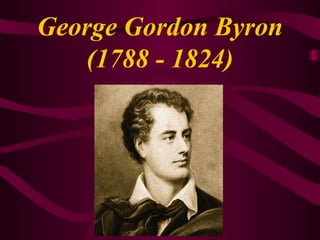
George Gordon Byron
(1788 - 1824)
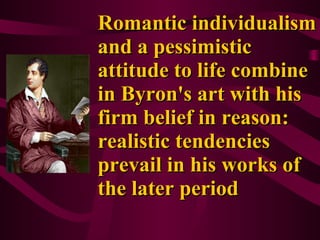
Romantic individualismRomantic individualism
and a pessimisticand a pessimistic
attitude to life combineattitude to life combine
in Byron's art with hisin Byron's art with his
firm belief in reason:firm belief in reason:
realistic tendenciesrealistic tendencies
prevail in his works ofprevail in his works of
the later periodthe later period
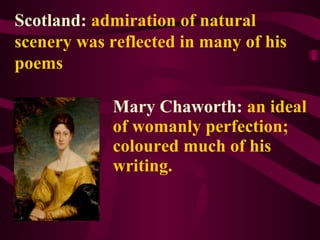
Scotland: admiration of natural
scenery was reflected in many of his
poems
Mary Chaworth: an ideal
of womanly perfection;
coloured much of his
writing.
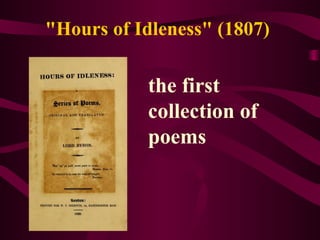
"Hours of Idleness" (1807)
the first
collection of
poems
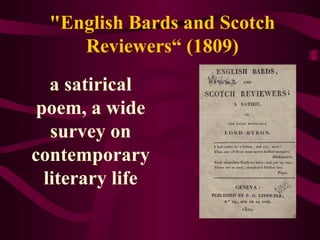
"English Bards and Scotch
Reviewers“ (1809)
a satirical
poem, a wide
survey on
contemporary
literary life
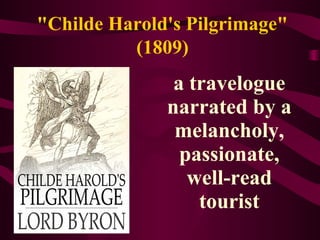
"Childe Harold's Pilgrimage"
(1809)
a travelogue
narrated by a
melancholy,
passionate,
well-read
tourist
1813 – 1816: "Oriental Tales" (the
heroes rebel against society. These
romantic poems were admired by his
contemporaries and called a new
mode of thought and feeling called
"Byronism");
1816: "The Prisoner of Chillon";
1817: "Manfred" (the dramatic
poem) and many lyrics;
1817 – 1823: the Italian period
(was influenced by revolutionary
ideas);
1818: "Beppo" (a humorous
poem);
1819 – 1824: "Don Juan" (the
longest satirical poem in English)
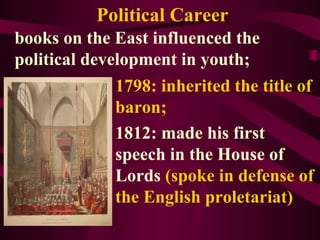
Political Career
books on the East influenced the
political development in youth;
1798: inherited the title of
baron;
1812: made his first
speech in the House of
Lords (spoke in defense of
the English proletariat)
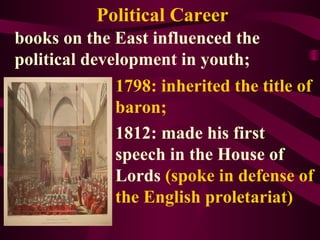
Political Career
books on the East influenced the
political development in youth;
1798: inherited the title of
baron;
1812: made his first
speech in the House of
Lords (spoke in defense of
the English proletariat)

G. G. Byron

  • 1.
  • 2.
    Romantic individualismRomantic individualism anda pessimisticand a pessimistic attitude to life combineattitude to life combine in Byron's art with hisin Byron's art with his firm belief in reason:firm belief in reason: realistic tendenciesrealistic tendencies prevail in his works ofprevail in his works of the later periodthe later period
  • 3.
    Scotland: admiration ofnatural scenery was reflected in many of his poems Mary Chaworth: an ideal of womanly perfection; coloured much of his writing.
  • 4.
    "Hours of Idleness"(1807) the first collection of poems
  • 5.
    "English Bards andScotch Reviewers“ (1809) a satirical poem, a wide survey on contemporary literary life
  • 6.
    "Childe Harold's Pilgrimage" (1809) atravelogue narrated by a melancholy, passionate, well-read tourist
  • 7.
    1813 – 1816:"Oriental Tales" (the heroes rebel against society. These romantic poems were admired by his contemporaries and called a new mode of thought and feeling called "Byronism"); 1816: "The Prisoner of Chillon"; 1817: "Manfred" (the dramatic poem) and many lyrics;
  • 8.
    1817 – 1823:the Italian period (was influenced by revolutionary ideas); 1818: "Beppo" (a humorous poem); 1819 – 1824: "Don Juan" (the longest satirical poem in English)
  • 9.
    Political Career books onthe East influenced the political development in youth; 1798: inherited the title of baron; 1812: made his first speech in the House of Lords (spoke in defense of the English proletariat)
  • 10.
    Political Career books onthe East influenced the political development in youth; 1798: inherited the title of baron; 1812: made his first speech in the House of Lords (spoke in defense of the English proletariat)