Futures and Options of Derivatives
Prepared by
Chand basha mcb
Emerald’s School of Business
Option:- Option is a contract, that
gives the owner right to buy or sell
but not obligation, It is a short dated
contract for a period of maximum
three months.
Futures & Option Definitions
Future:-Futurecontractisanagreementbetweentwopartiestobuy
orsellaspecifiedquantityofanassetata specifiedpriceand ata
specifiedtimeandplace.Futurescontractsarenormallytradedonan
exchangewhichsetsthecertainstandardizednormsfortradinginthe
futurescontracts.
In1848,futurecontracts arecameintoexistencewiththe
establishmentofChicagoBoardoftrade.
Types of options
• Real Option: This contract made on factors of production, this
underlying assets are commodities. Ex:Land,Labour,Capital,etc.
• Traded Option: This option is a standardized contract. Here
underlying assets are clearing corporations
• Vanilla & Exotic option: Vanilla option is using in European
and American countries, this underlying assets are equities and
bonds
Exotic option is using in Asian countries and this is not
standardized option and typical option. This underlying assets
are indices.
Types of option models
• European model: Contract excise only after maturity period
• American model: Contract may excise on or before maturity date
• Bermuda model: Contract can excise before due date but have to code
some dates to excise the contract.
Note: Indians are following European option model
Types of option participants
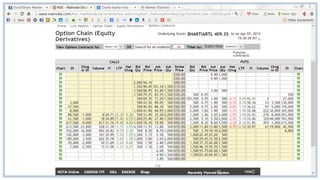
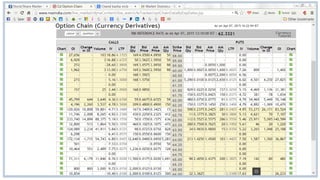
• Call Option: This option gives the holder, Right to buy but not obligation.
• Put Option: This option gives the holder, Right to sell but not obligation.
Note: Here price and quantity is pre-determined.
 In the money: which is already achieved coded price that is called In the money.
 Out of the money: which is yet to achieve coded price that is out of the money.
Note: The way of increasing trend in call option, and the way of decreasing
trend in put option
Derivatives
• Derivatives are purely speculative and highly leveraged instruments
• Financial derivatives are simply the latest risk associated with
derivatives,
• banking regulators should than their use by any institution covered by
federal deposit insurance,
• Only large multinational corporation and large banks havbeb a
purpose for using derivatives
• Financial derivatives are simply the latest risk-management
• Derivatives take money out of productive processes and never put
anything back
Futures&options Derivatives.MCB

Futures&options Derivatives.MCB

  • 1.
    Futures and Optionsof Derivatives Prepared by Chand basha mcb Emerald’s School of Business
  • 2.
    Option:- Option isa contract, that gives the owner right to buy or sell but not obligation, It is a short dated contract for a period of maximum three months. Futures & Option Definitions Future:-Futurecontractisanagreementbetweentwopartiestobuy orsellaspecifiedquantityofanassetata specifiedpriceand ata specifiedtimeandplace.Futurescontractsarenormallytradedonan exchangewhichsetsthecertainstandardizednormsfortradinginthe futurescontracts. In1848,futurecontracts arecameintoexistencewiththe establishmentofChicagoBoardoftrade.
  • 3.
    Types of options •Real Option: This contract made on factors of production, this underlying assets are commodities. Ex:Land,Labour,Capital,etc. • Traded Option: This option is a standardized contract. Here underlying assets are clearing corporations • Vanilla & Exotic option: Vanilla option is using in European and American countries, this underlying assets are equities and bonds Exotic option is using in Asian countries and this is not standardized option and typical option. This underlying assets are indices.
  • 4.
    Types of optionmodels • European model: Contract excise only after maturity period • American model: Contract may excise on or before maturity date • Bermuda model: Contract can excise before due date but have to code some dates to excise the contract. Note: Indians are following European option model
  • 5.
    Types of optionparticipants • Call Option: This option gives the holder, Right to buy but not obligation. • Put Option: This option gives the holder, Right to sell but not obligation. Note: Here price and quantity is pre-determined.  In the money: which is already achieved coded price that is called In the money.  Out of the money: which is yet to achieve coded price that is out of the money. Note: The way of increasing trend in call option, and the way of decreasing trend in put option
  • 6.
    Derivatives • Derivatives arepurely speculative and highly leveraged instruments • Financial derivatives are simply the latest risk associated with derivatives, • banking regulators should than their use by any institution covered by federal deposit insurance, • Only large multinational corporation and large banks havbeb a purpose for using derivatives • Financial derivatives are simply the latest risk-management • Derivatives take money out of productive processes and never put anything back