DERIVATIVES

          PRESENTED BY
       JEETENDRA SINGH
            ROLL NO (56)
Topics
   Derivatives                                      Put call parity
   Futures                                          Bsopm greeks
   Forwards                                         Volatility strategies
   Mark to mark                                     Income strategies
   Basis and convergence                            Pricing futures
   Individuals in the future industry- hedgers
    speculators arbitrageurs
   Swaps
   Options
   Intrinsic value and Time value
   Margin
   Index options
   Implied volatility
   Black scholes option pricing model
What are Derivatives???
   Derivatives is one whose performance is based
    on the behavior of the price of an underlying
    asset.
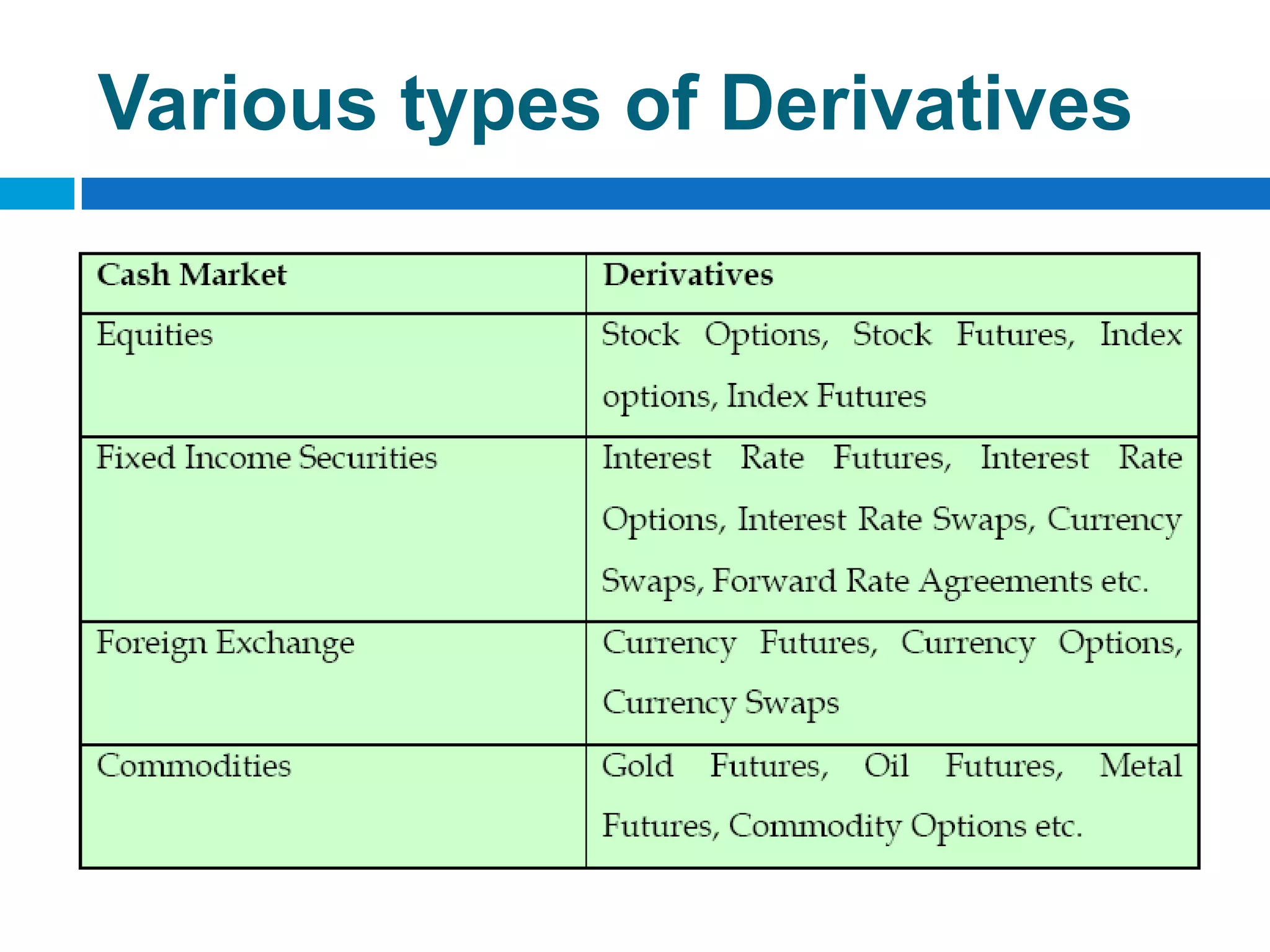
   The underlying asset can be equity, fixed
    income instruments, interest rates, foreign
    exchange or commodities.
Major events in derivative market

   The first exchange for trading in derivatives
    appeared to be in London.
   The first “FUTURES "contracts are generally
    traced to the yodoyo rice market in Osaka
    ,japan around 1650.
   The first commodity futures exchange was set
    up in 1875,in Mumbai.
Various types of Derivatives
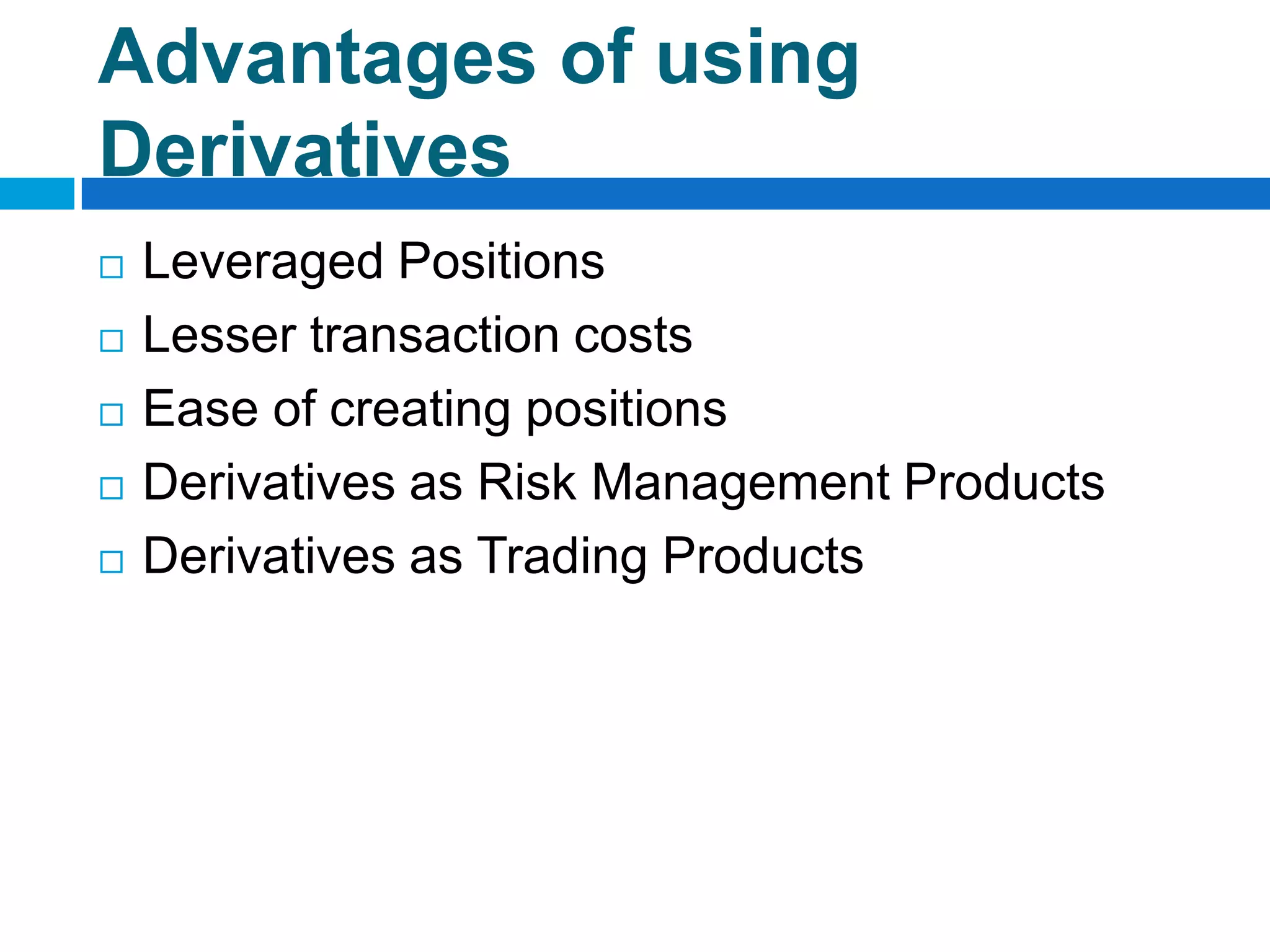
Advantages of using
Derivatives
   Leveraged Positions
   Lesser transaction costs
   Ease of creating positions
   Derivatives as Risk Management Products
   Derivatives as Trading Products
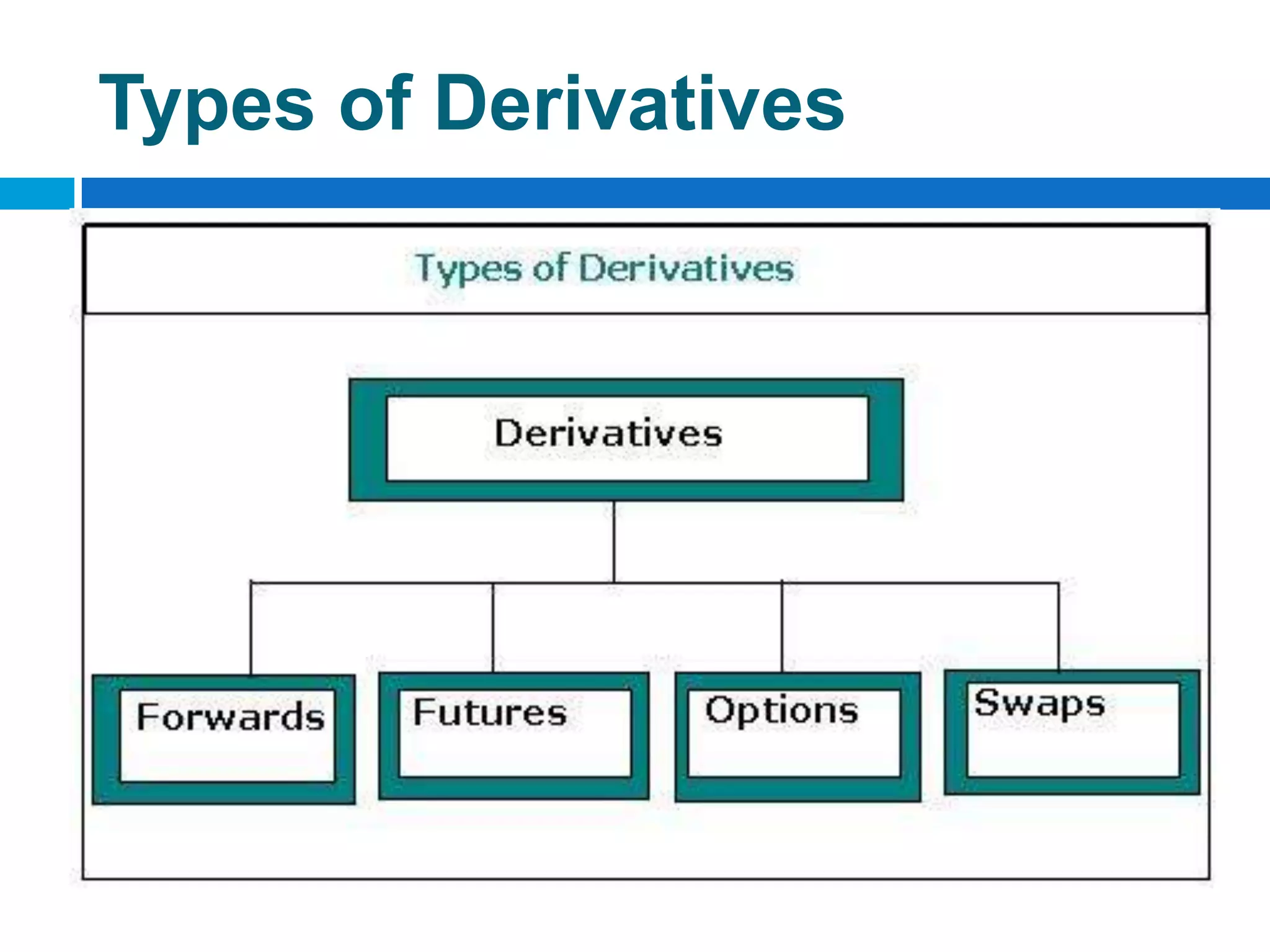
Types of Derivatives
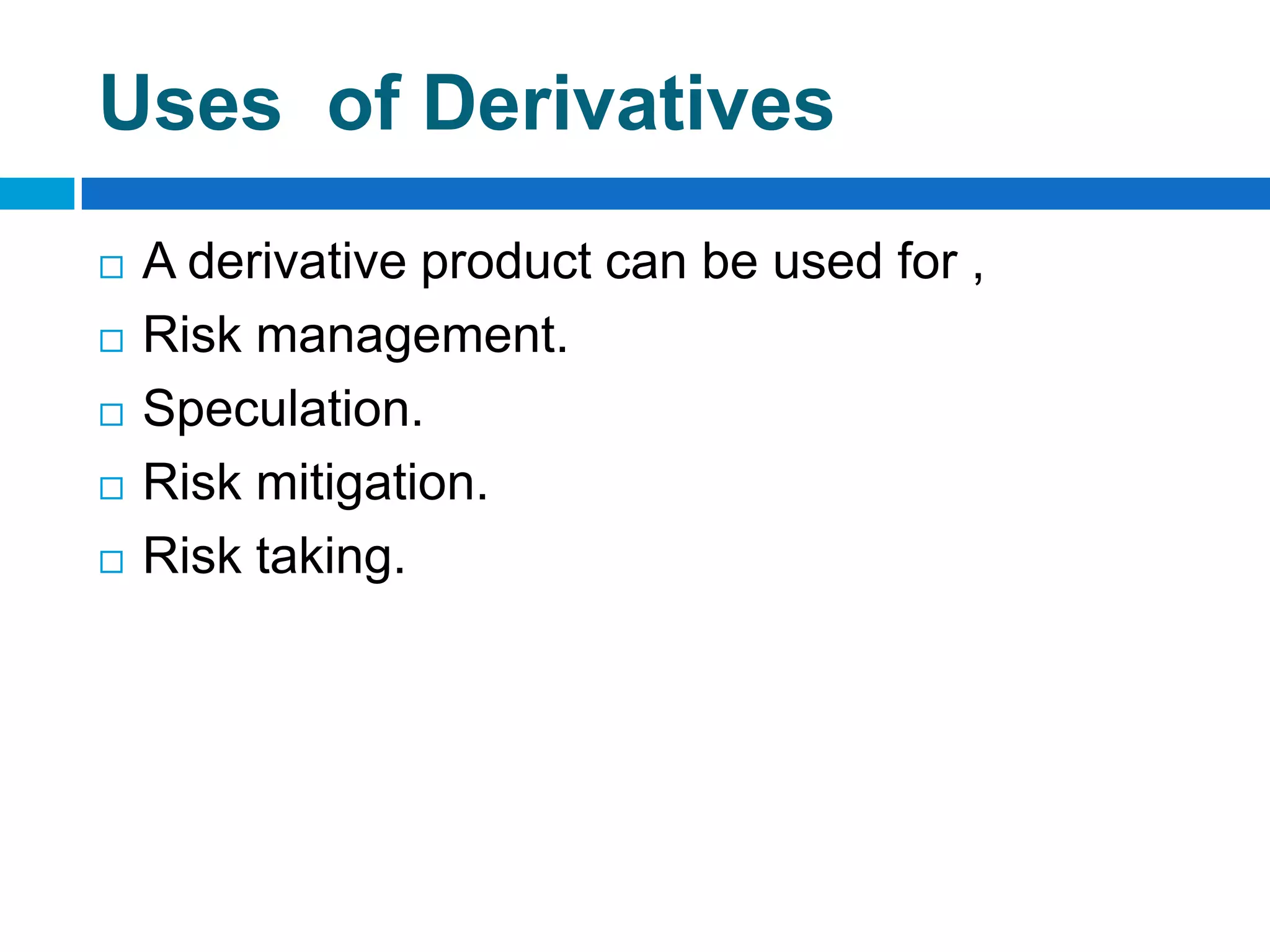
Uses of Derivatives
   A derivative product can be used for ,
   Risk management.
   Speculation.
   Risk mitigation.
   Risk taking.
Users of Derivatives
   Hedgers.
   Traders.
   Private clients.
   Arbitrageurs.
American and European
options
   The owner of an American option can excise it
    on or before the expiration date.

   The owner of a European style can excise it
    only on the expiration date.
Forwards
   The terms of the contract are agreed upon
    today ,and delivery and payment take place in
    the future, at what is called either the delivery
    date, the settlement or maturity date.
   Example-on a 19/02/2011 Jeetendra Ltd.
    enters into a forward contract with sushi Ltd for
    buying USD 1 crore at Rs.45 per USD on
    5/03/2011.
Futures
   A futures contract is a
    standardized contract between two parties to buy
    or sell a specified asset of standardized quantity
    and quality for a price agreed today
    price or strike with delivery and payment
    occurring at a specified future date, the delivery
    date.
   Three series of future contract are always
    available and have one-month, two month, and
    three month expiry cycles.
   Example-on a 3rd August 2011,jeetendra enters
    into a August 2011 Future contract for buying
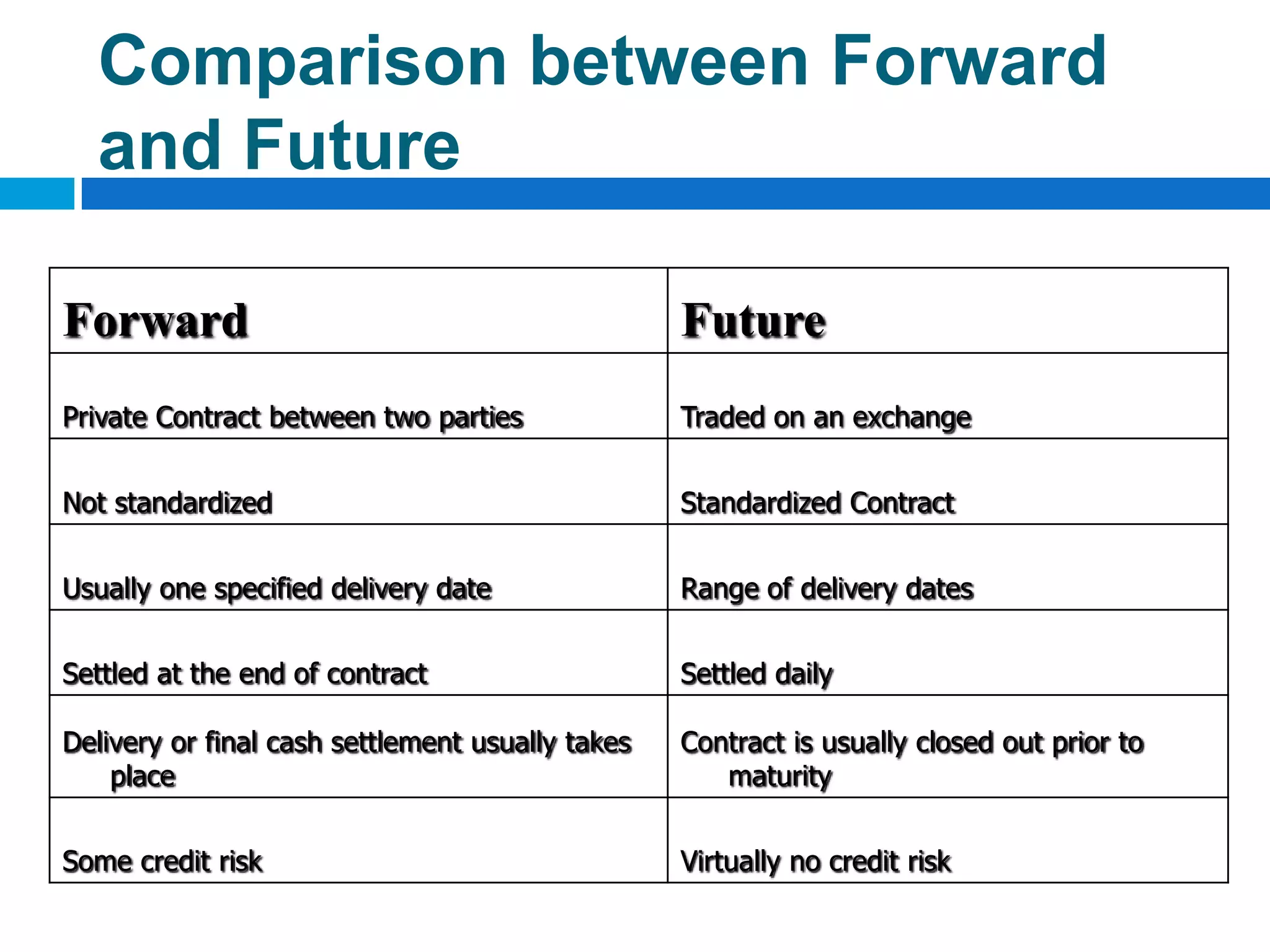
Comparison between Forward
  and Future

Forward                                           Future
Private Contract between two parties              Traded on an exchange


Not standardized                                  Standardized Contract


Usually one specified delivery date               Range of delivery dates


Settled at the end of contract                    Settled daily

Delivery or final cash settlement usually takes   Contract is usually closed out prior to
    place                                            maturity


Some credit risk                                  Virtually no credit risk
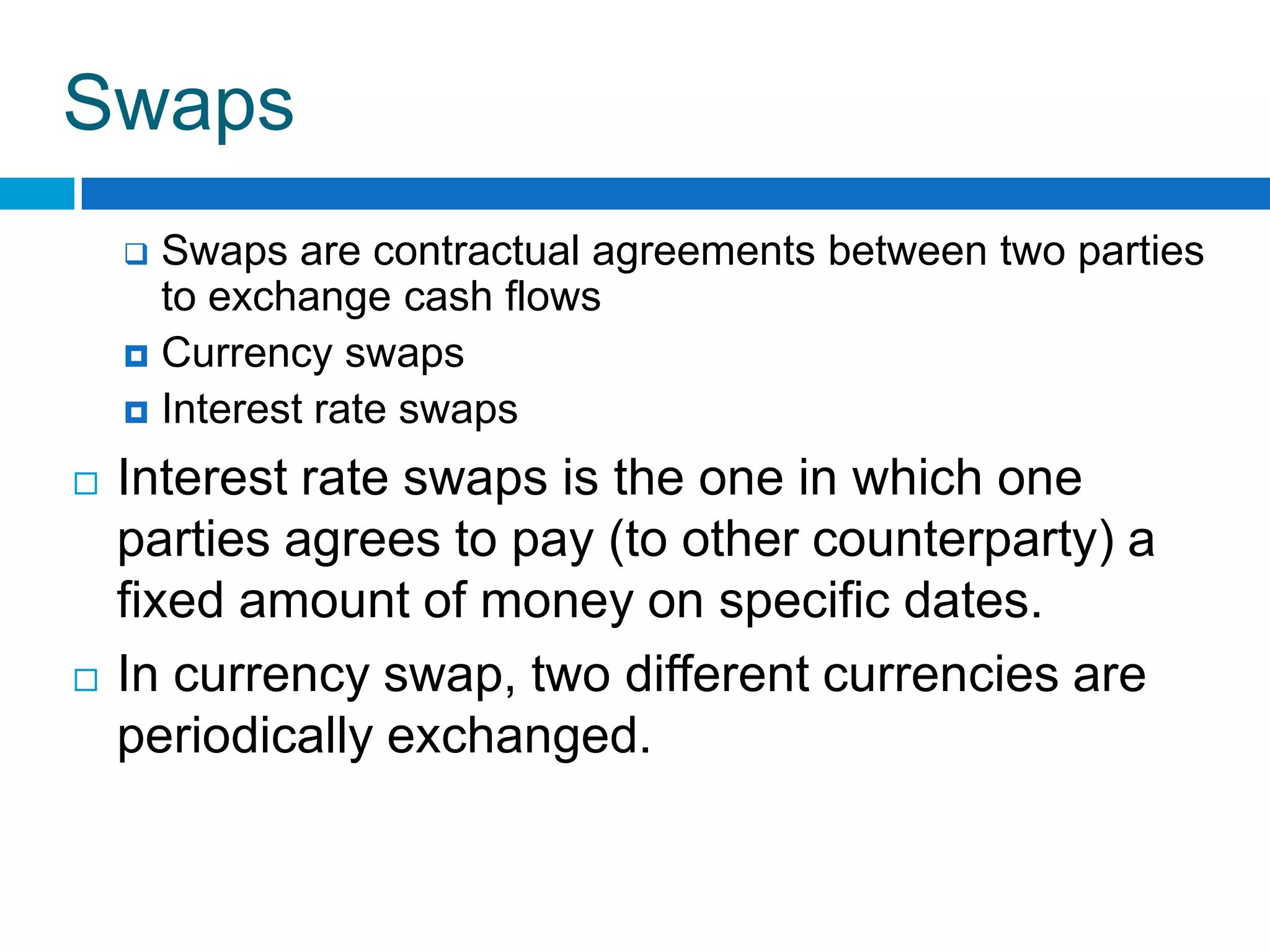
Swaps
     Swaps are contractual agreements between two parties
      to exchange cash flows
     Currency swaps
     Interest rate swaps

   Interest rate swaps is the one in which one
    parties agrees to pay (to other counterparty) a
    fixed amount of money on specific dates.
   In currency swap, two different currencies are
    periodically exchanged.
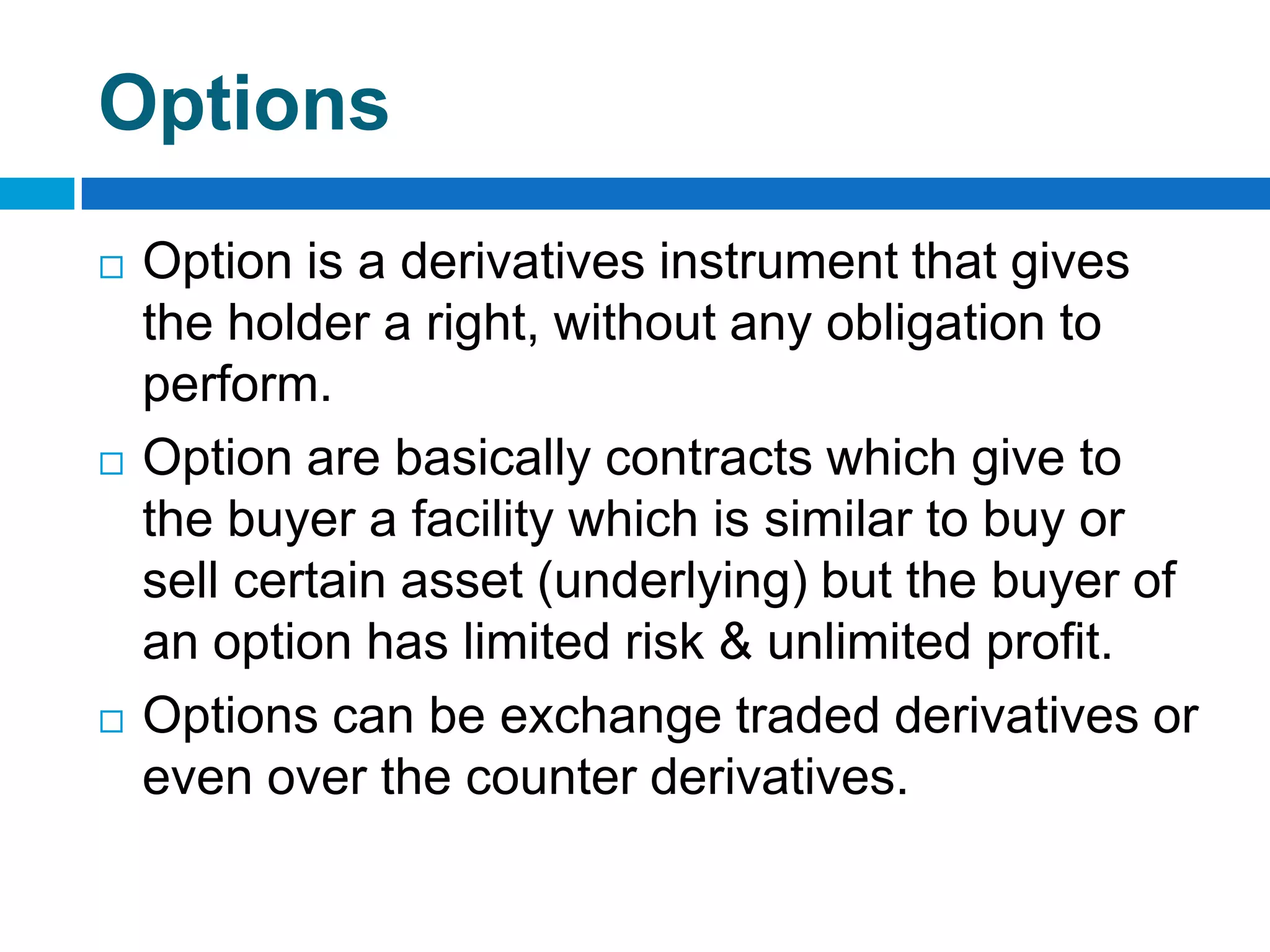
Options
   Option is a derivatives instrument that gives
    the holder a right, without any obligation to
    perform.
   Option are basically contracts which give to
    the buyer a facility which is similar to buy or
    sell certain asset (underlying) but the buyer of
    an option has limited risk & unlimited profit.
   Options can be exchange traded derivatives or
    even over the counter derivatives.
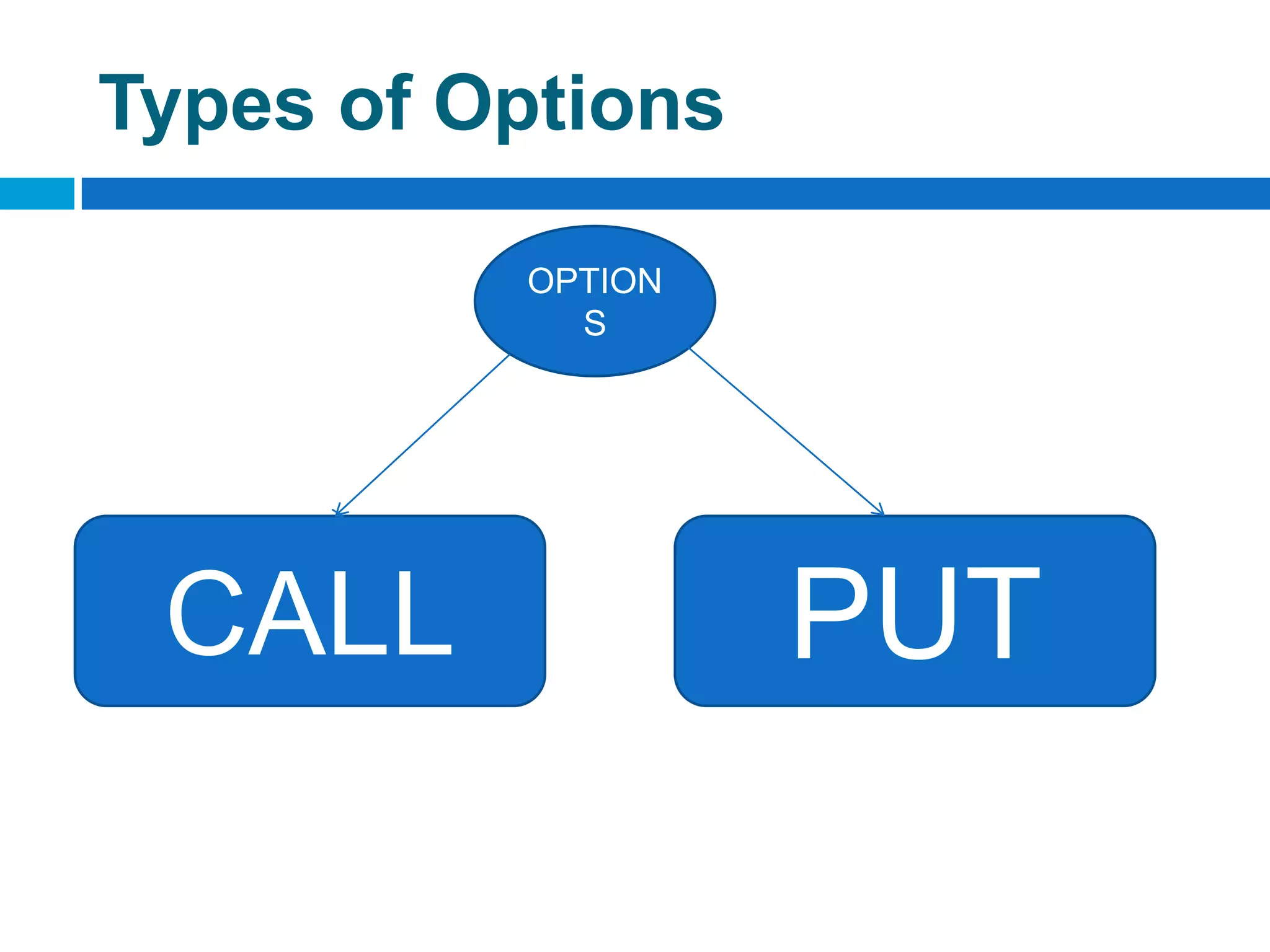
Types of Options

          OPTION
            S


 CALL              PUT
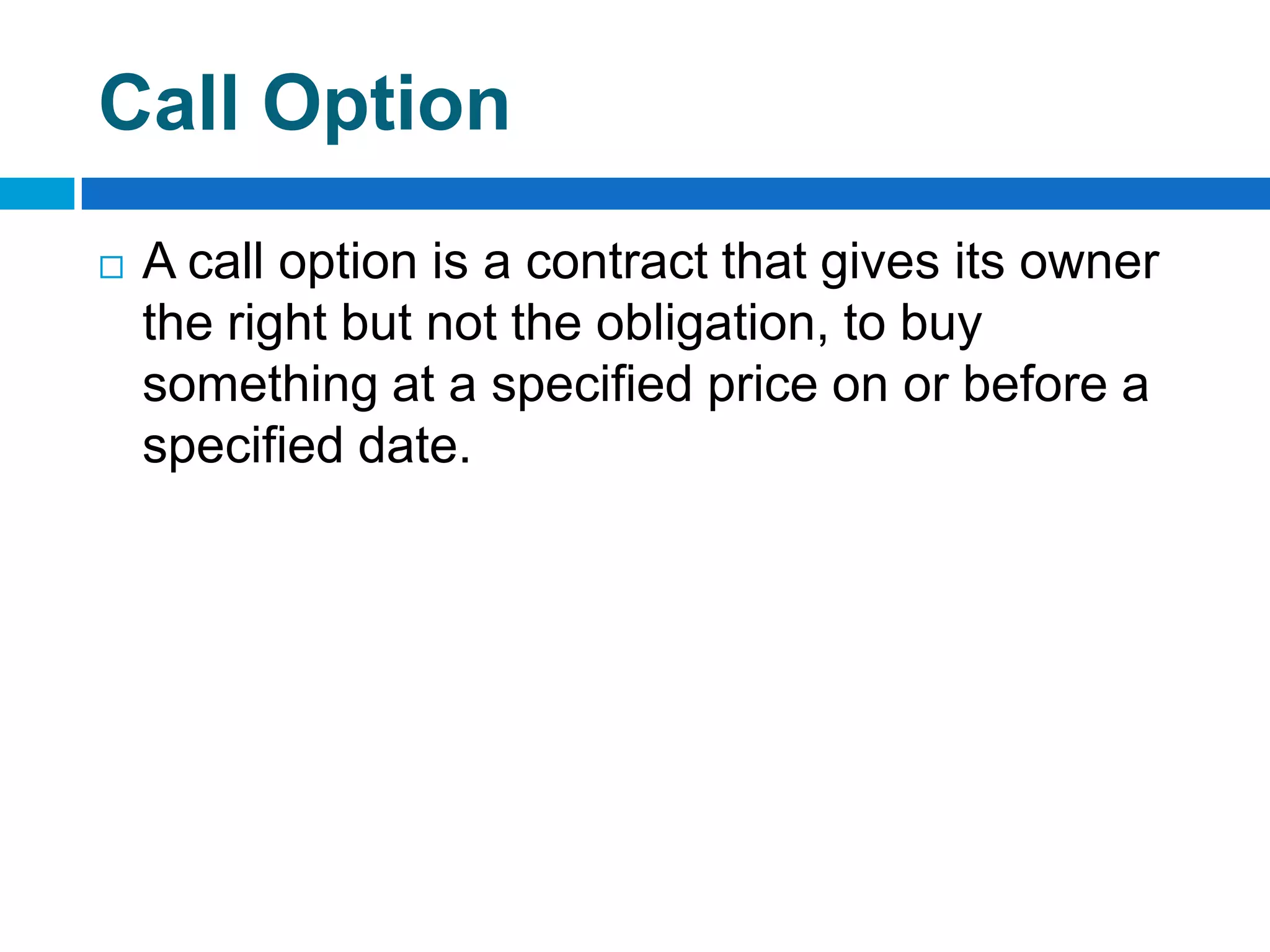
Call Option
   A call option is a contract that gives its owner
    the right but not the obligation, to buy
    something at a specified price on or before a
    specified date.
Put Option
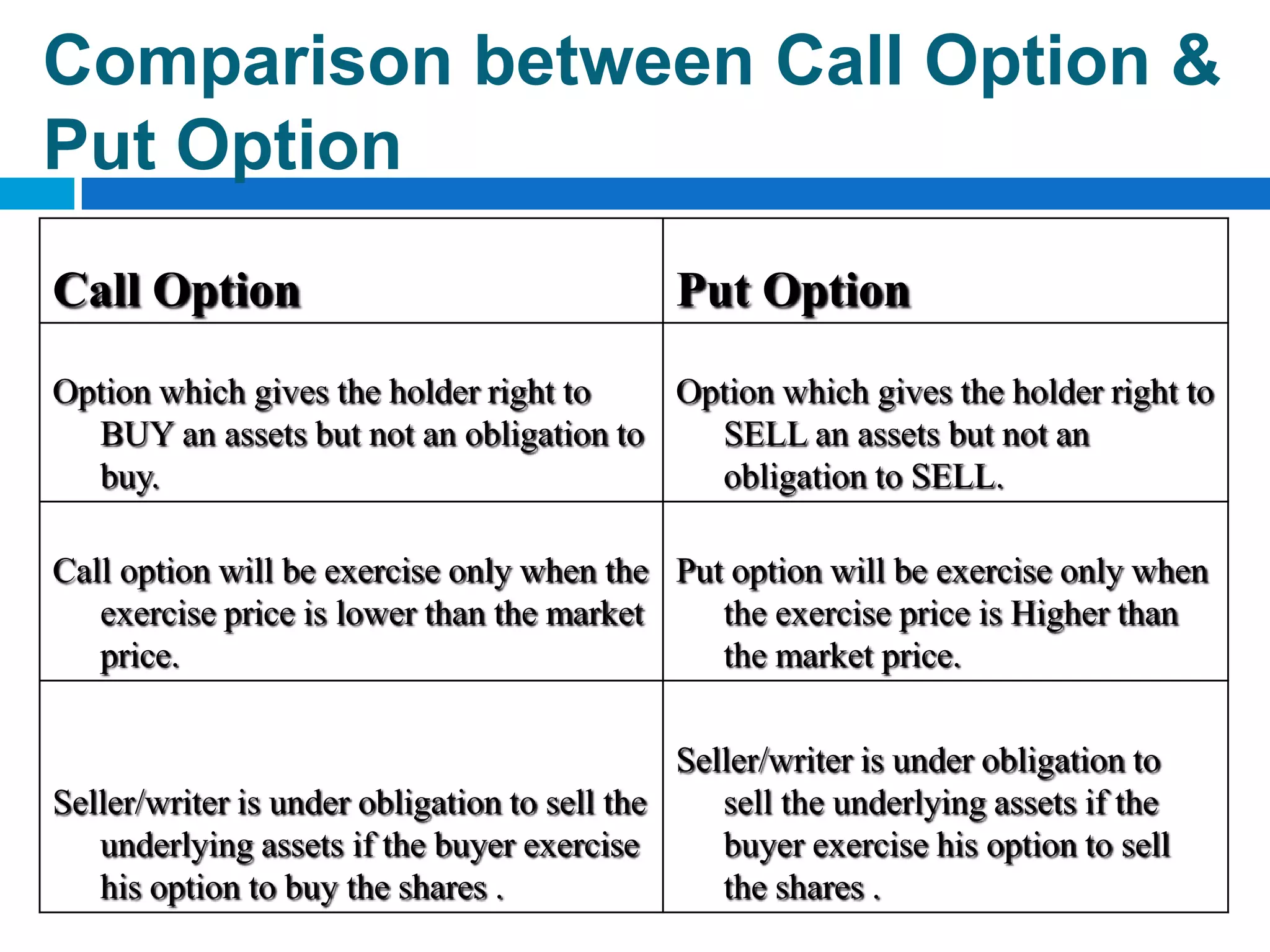
Comparison between Call Option &
Put Option
Call Option                                  Put Option
Option which gives the holder right to   Option which gives the holder right to
  BUY an assets but not an obligation to   SELL an assets but not an
  buy.                                     obligation to SELL.

Call option will be exercise only when the Put option will be exercise only when
   exercise price is lower than the market    the exercise price is Higher than
   price.                                     the market price.

                                              Seller/writer is under obligation to
Seller/writer is under obligation to sell the    sell the underlying assets if the
   underlying assets if the buyer exercise       buyer exercise his option to sell
   his option to buy the shares .                the shares .
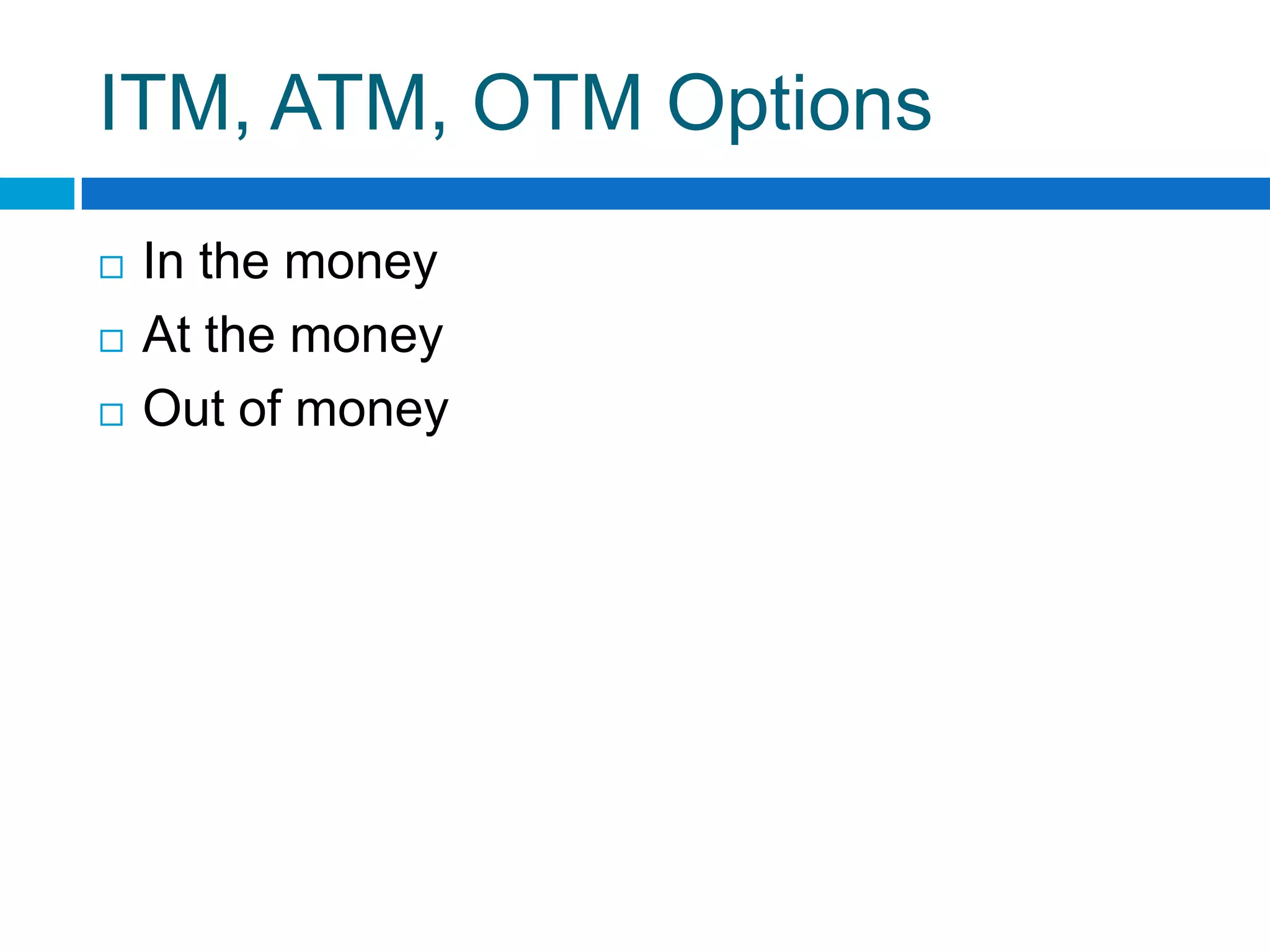
ITM, ATM, OTM Options
   In the money
   At the money
   Out of money
Intrinsic and Time value of the
option

   Intrinsic value is equal to the amount by which
    option is in the money.
   Time value is the difference between market
    price of the option and intrinsic value.
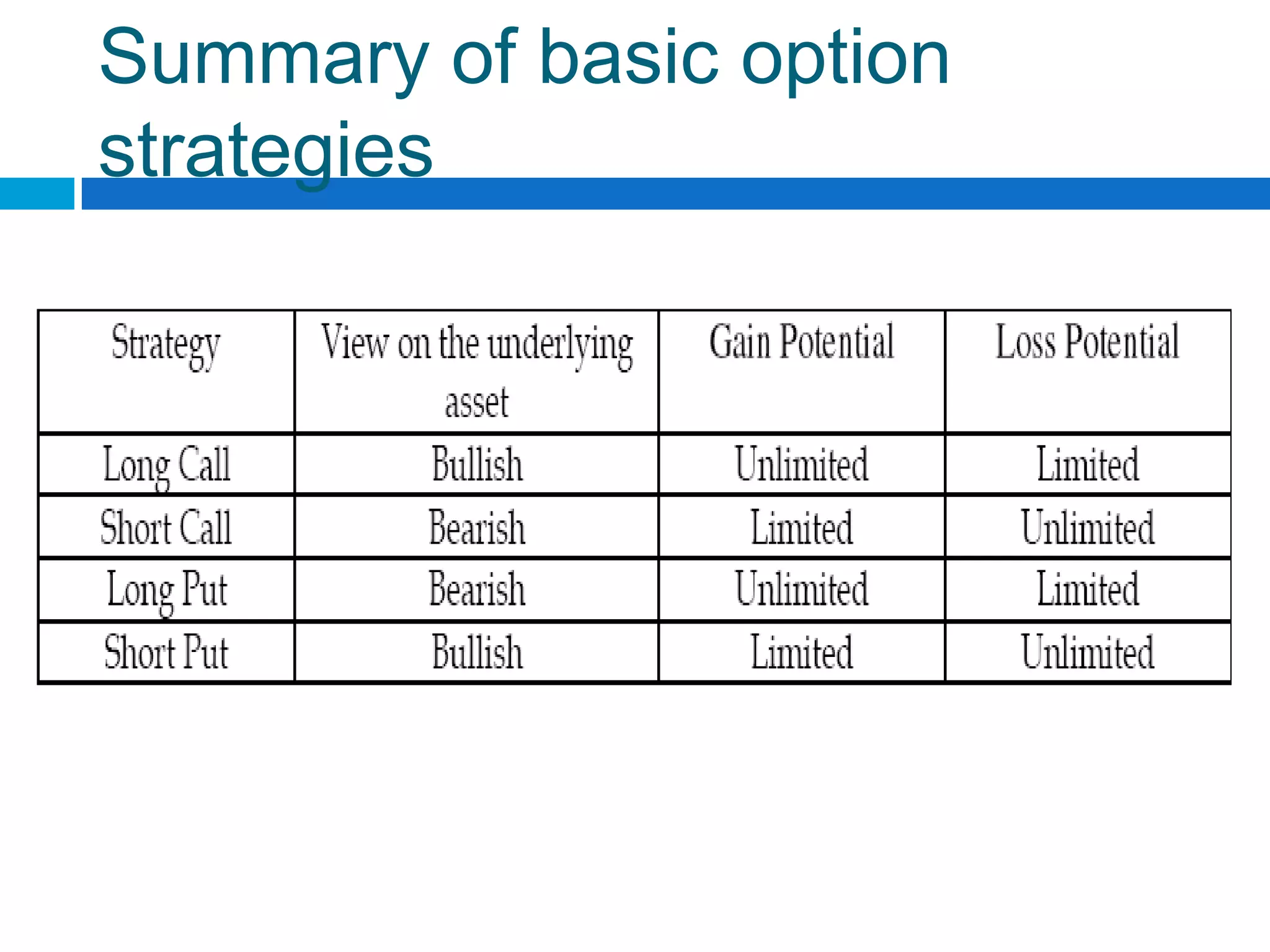
Summary of basic option
strategies
Derivatives

Derivatives

  • 1.
    DERIVATIVES PRESENTED BY JEETENDRA SINGH ROLL NO (56)
  • 2.
    Topics  Derivatives  Put call parity  Futures  Bsopm greeks  Forwards  Volatility strategies  Mark to mark  Income strategies  Basis and convergence  Pricing futures  Individuals in the future industry- hedgers speculators arbitrageurs  Swaps  Options  Intrinsic value and Time value  Margin  Index options  Implied volatility  Black scholes option pricing model
  • 3.
    What are Derivatives???  Derivatives is one whose performance is based on the behavior of the price of an underlying asset.  The underlying asset can be equity, fixed income instruments, interest rates, foreign exchange or commodities.
  • 4.
    Major events inderivative market  The first exchange for trading in derivatives appeared to be in London.  The first “FUTURES "contracts are generally traced to the yodoyo rice market in Osaka ,japan around 1650.  The first commodity futures exchange was set up in 1875,in Mumbai.
  • 5.
    Various types ofDerivatives
  • 6.
    Advantages of using Derivatives  Leveraged Positions  Lesser transaction costs  Ease of creating positions  Derivatives as Risk Management Products  Derivatives as Trading Products
  • 7.
  • 8.
    Uses of Derivatives  A derivative product can be used for ,  Risk management.  Speculation.  Risk mitigation.  Risk taking.
  • 9.
    Users of Derivatives  Hedgers.  Traders.  Private clients.  Arbitrageurs.
  • 10.
    American and European options  The owner of an American option can excise it on or before the expiration date.  The owner of a European style can excise it only on the expiration date.
  • 11.
    Forwards  The terms of the contract are agreed upon today ,and delivery and payment take place in the future, at what is called either the delivery date, the settlement or maturity date.  Example-on a 19/02/2011 Jeetendra Ltd. enters into a forward contract with sushi Ltd for buying USD 1 crore at Rs.45 per USD on 5/03/2011.
  • 12.
    Futures  A futures contract is a standardized contract between two parties to buy or sell a specified asset of standardized quantity and quality for a price agreed today price or strike with delivery and payment occurring at a specified future date, the delivery date.  Three series of future contract are always available and have one-month, two month, and three month expiry cycles.  Example-on a 3rd August 2011,jeetendra enters into a August 2011 Future contract for buying
  • 13.
    Comparison between Forward and Future Forward Future Private Contract between two parties Traded on an exchange Not standardized Standardized Contract Usually one specified delivery date Range of delivery dates Settled at the end of contract Settled daily Delivery or final cash settlement usually takes Contract is usually closed out prior to place maturity Some credit risk Virtually no credit risk
  • 14.
    Swaps  Swaps are contractual agreements between two parties to exchange cash flows  Currency swaps  Interest rate swaps  Interest rate swaps is the one in which one parties agrees to pay (to other counterparty) a fixed amount of money on specific dates.  In currency swap, two different currencies are periodically exchanged.
  • 15.
    Options  Option is a derivatives instrument that gives the holder a right, without any obligation to perform.  Option are basically contracts which give to the buyer a facility which is similar to buy or sell certain asset (underlying) but the buyer of an option has limited risk & unlimited profit.  Options can be exchange traded derivatives or even over the counter derivatives.
  • 16.
    Types of Options OPTION S CALL PUT
  • 17.
    Call Option  A call option is a contract that gives its owner the right but not the obligation, to buy something at a specified price on or before a specified date.
  • 18.
  • 19.
    Comparison between CallOption & Put Option Call Option Put Option Option which gives the holder right to Option which gives the holder right to BUY an assets but not an obligation to SELL an assets but not an buy. obligation to SELL. Call option will be exercise only when the Put option will be exercise only when exercise price is lower than the market the exercise price is Higher than price. the market price. Seller/writer is under obligation to Seller/writer is under obligation to sell the sell the underlying assets if the underlying assets if the buyer exercise buyer exercise his option to sell his option to buy the shares . the shares .
  • 20.
    ITM, ATM, OTMOptions  In the money  At the money  Out of money
  • 21.
    Intrinsic and Timevalue of the option  Intrinsic value is equal to the amount by which option is in the money.  Time value is the difference between market price of the option and intrinsic value.
  • 22.
    Summary of basicoption strategies