Next Generation Sakai: A Communi
ty Dialog on a Vision for the Future
Sessions Overview
The Future of the LMS: Creativity, Personalization and
Unbundling – Josh Baron
The Future of the LMS: Technical Innovations – Dr.
Chuck
Community Dialog: Feedback, New Ideas and a Road
Forward
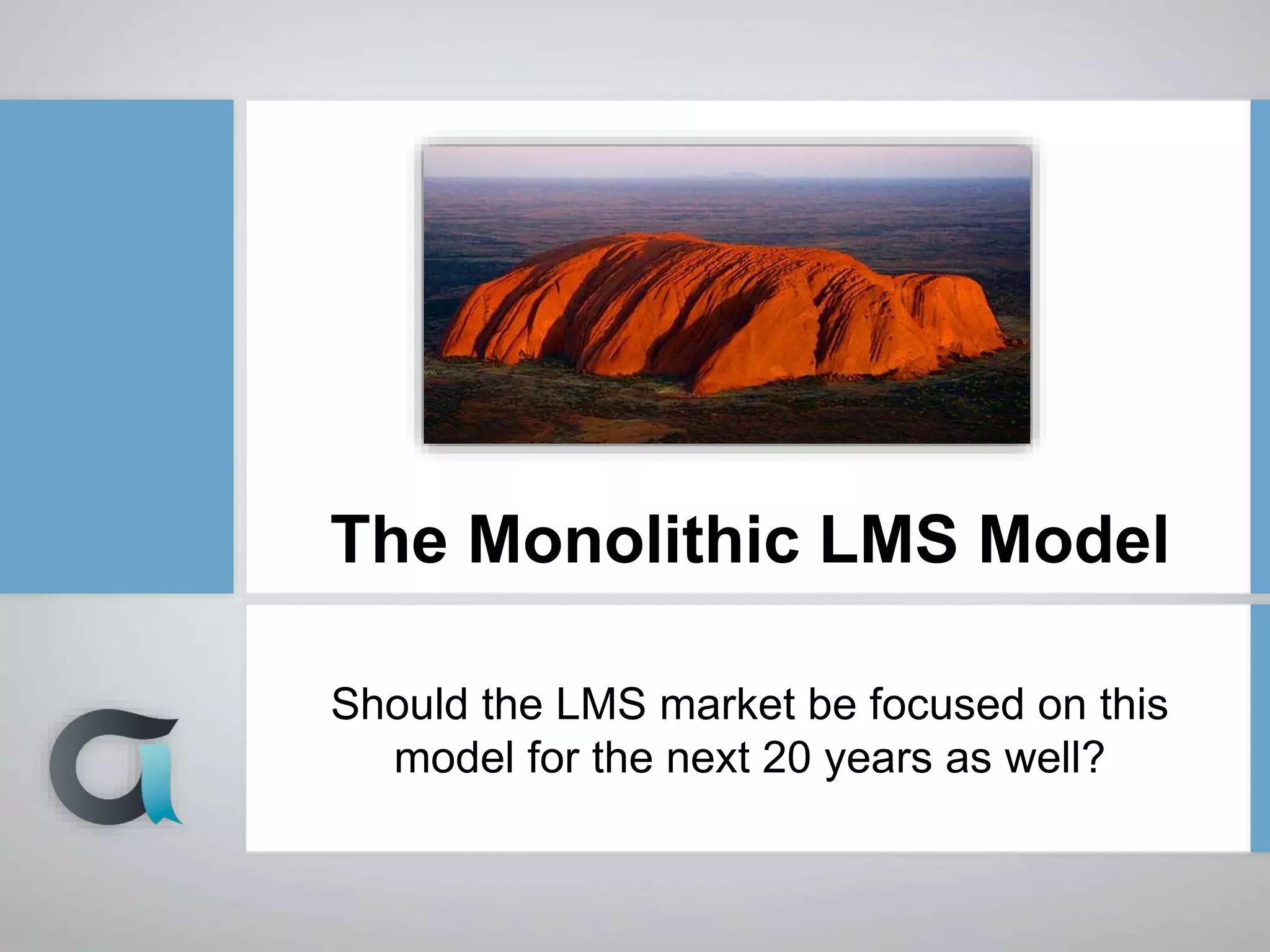
The Monolithic LMS Model
Should the LMS market be focused on this
model for the next 20 years as well?
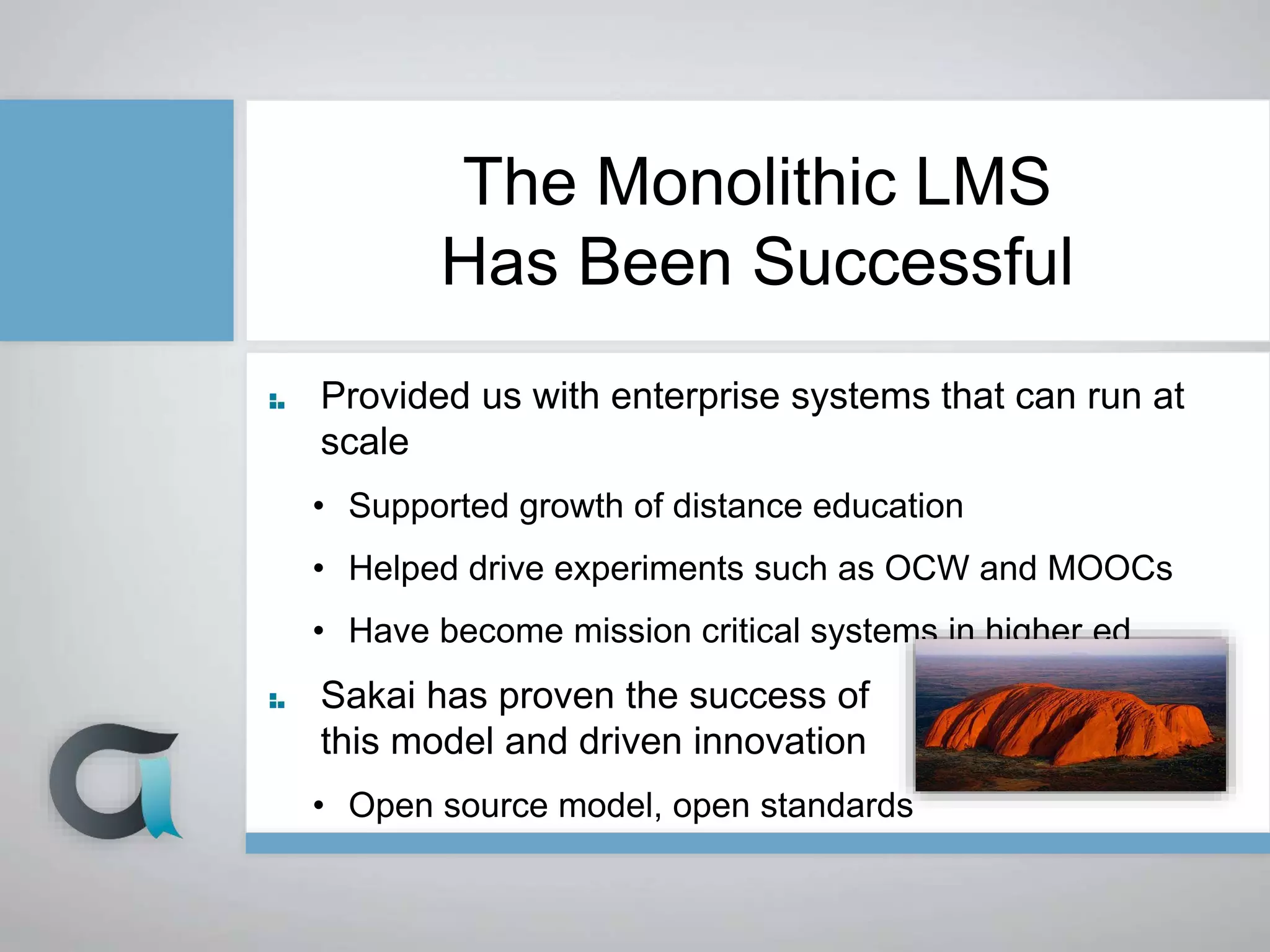
The Monolithic LMS
Has Been Successful
Provided us with enterprise systems that can run at
scale
• Supported growth of distance education
• Helped drive experiments such as OCW and MOOCs
• Have become mission critical systems in higher ed
Sakai has proven the success of
this model and driven innovation
• Open source model, open standards
Monolithic ≠ Creativity
Drives us towards generalization and standardization
• A “one size fits all” is easier to build, deploy and support
• Good for efficiency, not so good for creativity
Innovative teaching and learning requires creativity
• Think about your most innovative learning experience…
Standardized teaching and learning is just not fun!
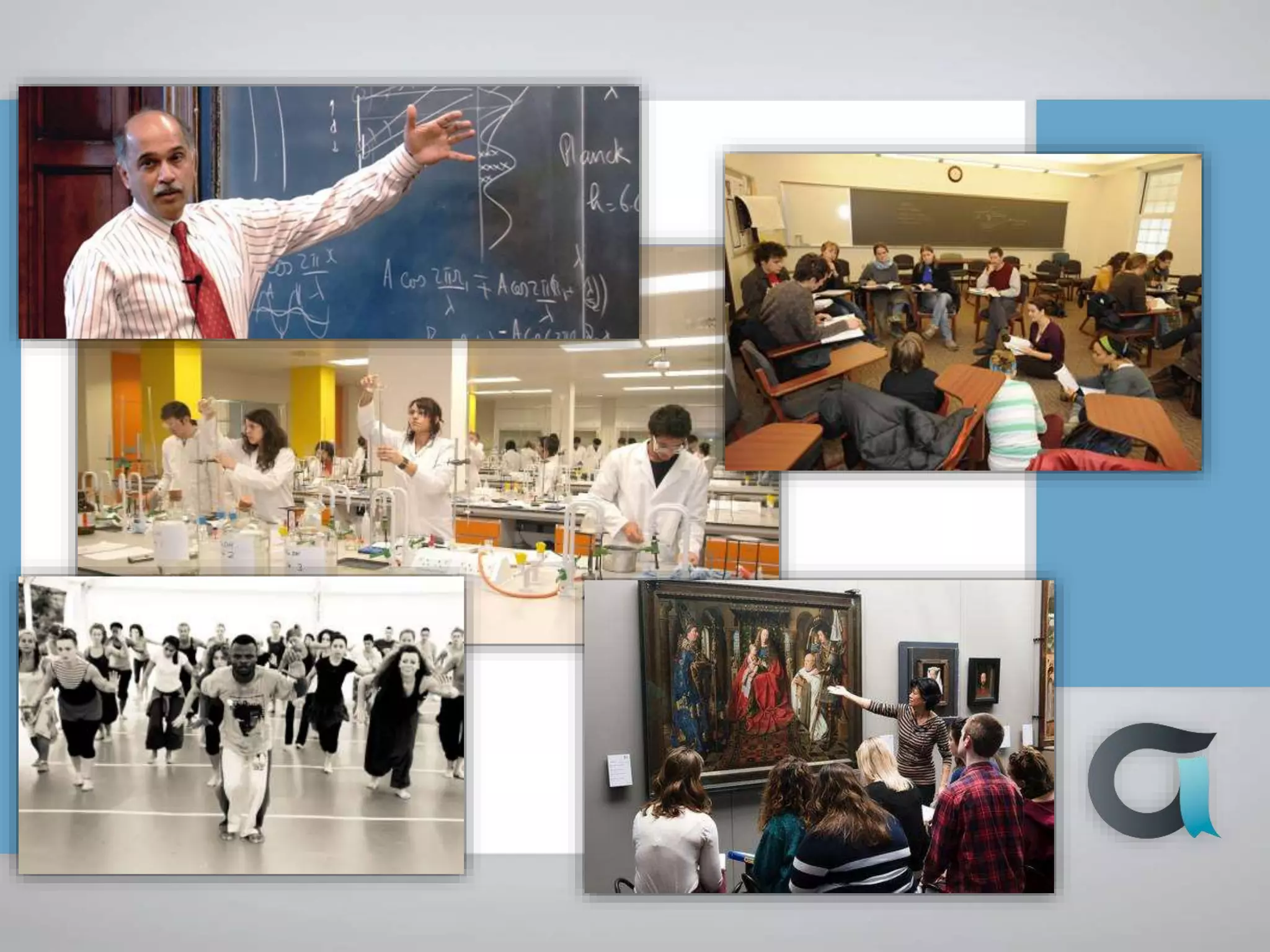
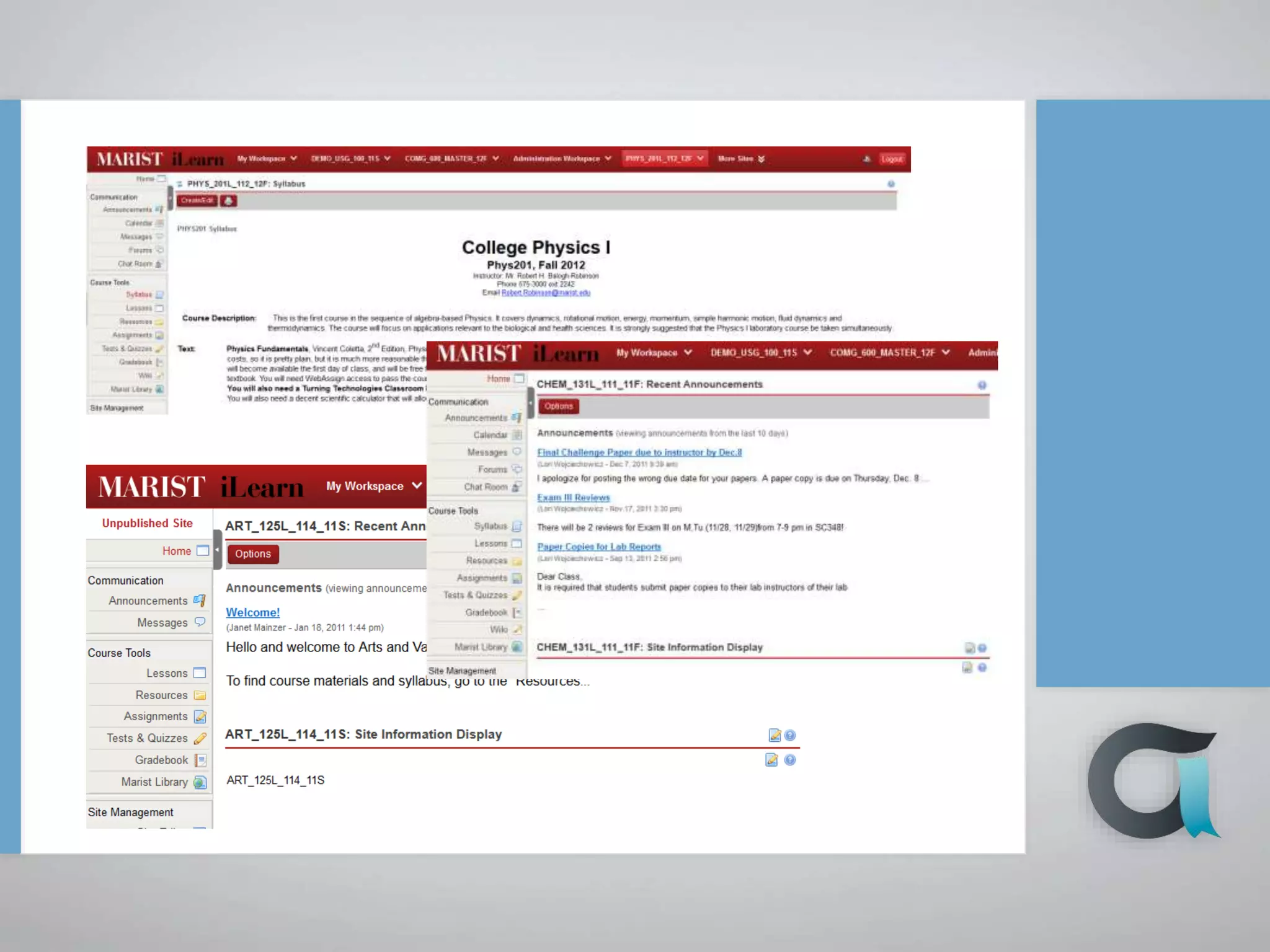
Let’s see a quick example…
How could we allow for greater
creativity when using the LMS?
Give users the FREEDOM to CREATE their own LMS
Facilitate “Tinkerability*” – Allow ANY users to build,
deploy, modify and share their own learning apps
• Learning app = learning object (content) + functionality
Think of the Google Maps API model
• Today there are over 1,000,000 apps that use it
Users are moving in this direction, we need to catch
up
* http://web.media.mit.edu/~mres/papers/designing-for-tinkerability.pdf
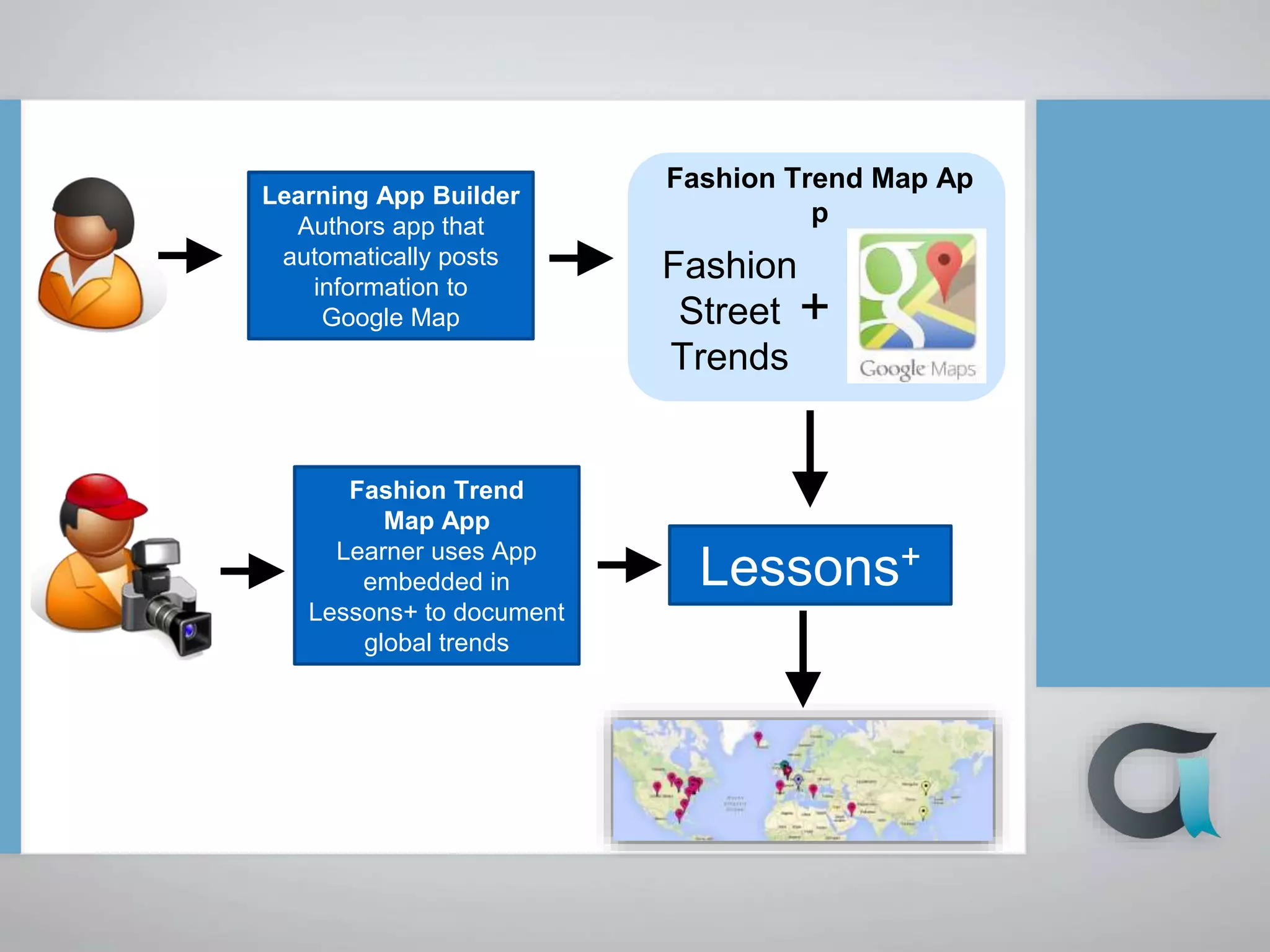
Learning App Builder
Authors app that
automatically posts
information to
Google Map
Lessons+
Fashion Trend
Map App
Learner uses App
embedded in
Lessons+ to document
global trends
Fashion
Street
Trends
+
Fashion Trend Map Ap
p
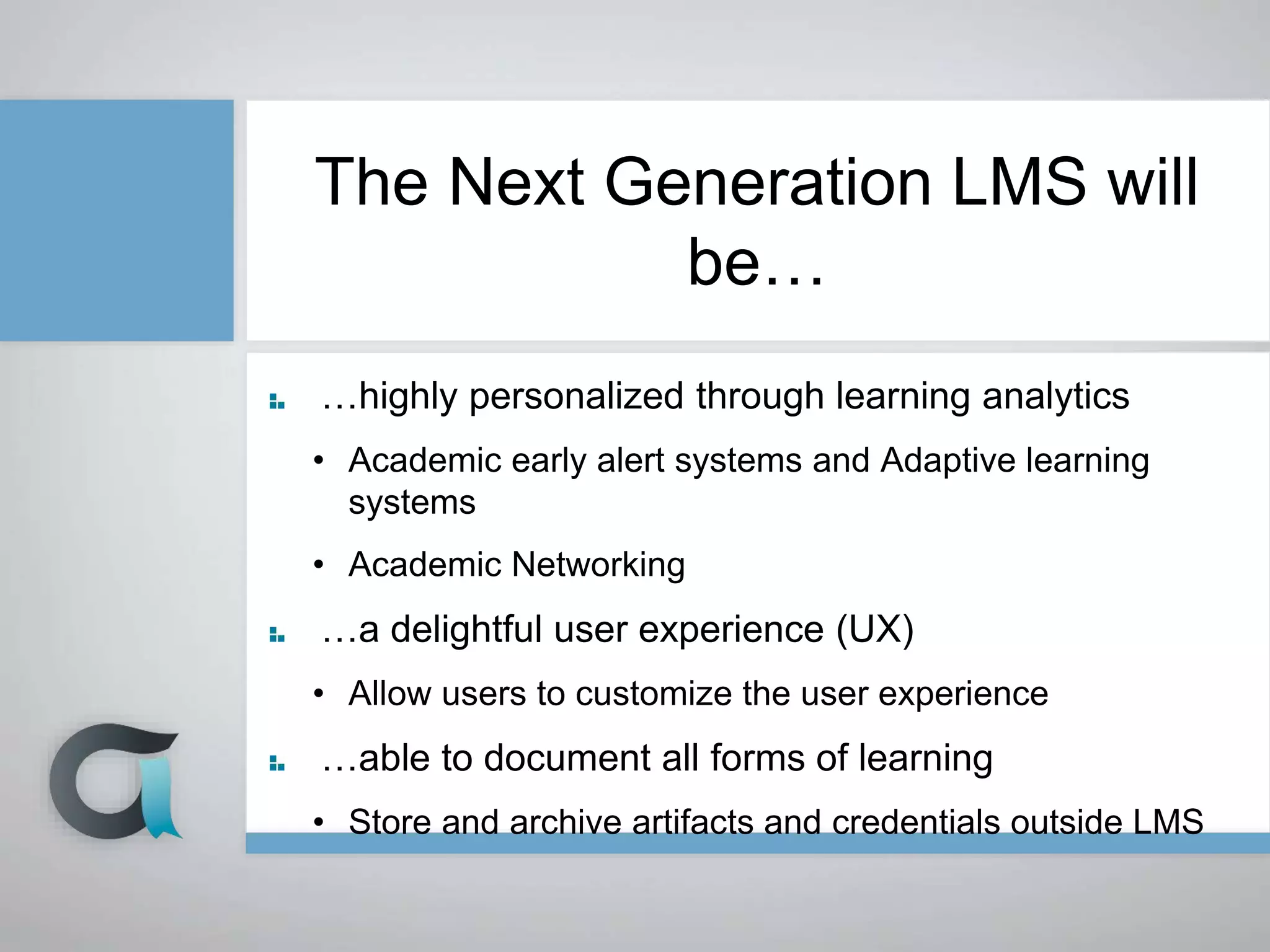
The Next Generation LMS will
be…
…highly personalized through learning analytics
• Academic early alert systems and Adaptive learning
systems
• Academic Networking
…a delightful user experience (UX)
• Allow users to customize the user experience
…able to document all forms of learning
• Store and archive artifacts and credentials outside LMS
Final Thought…Why Now?
Would have this approach been possible
or even worked in 2004?
How might a Next
Generation LMS be Organized?
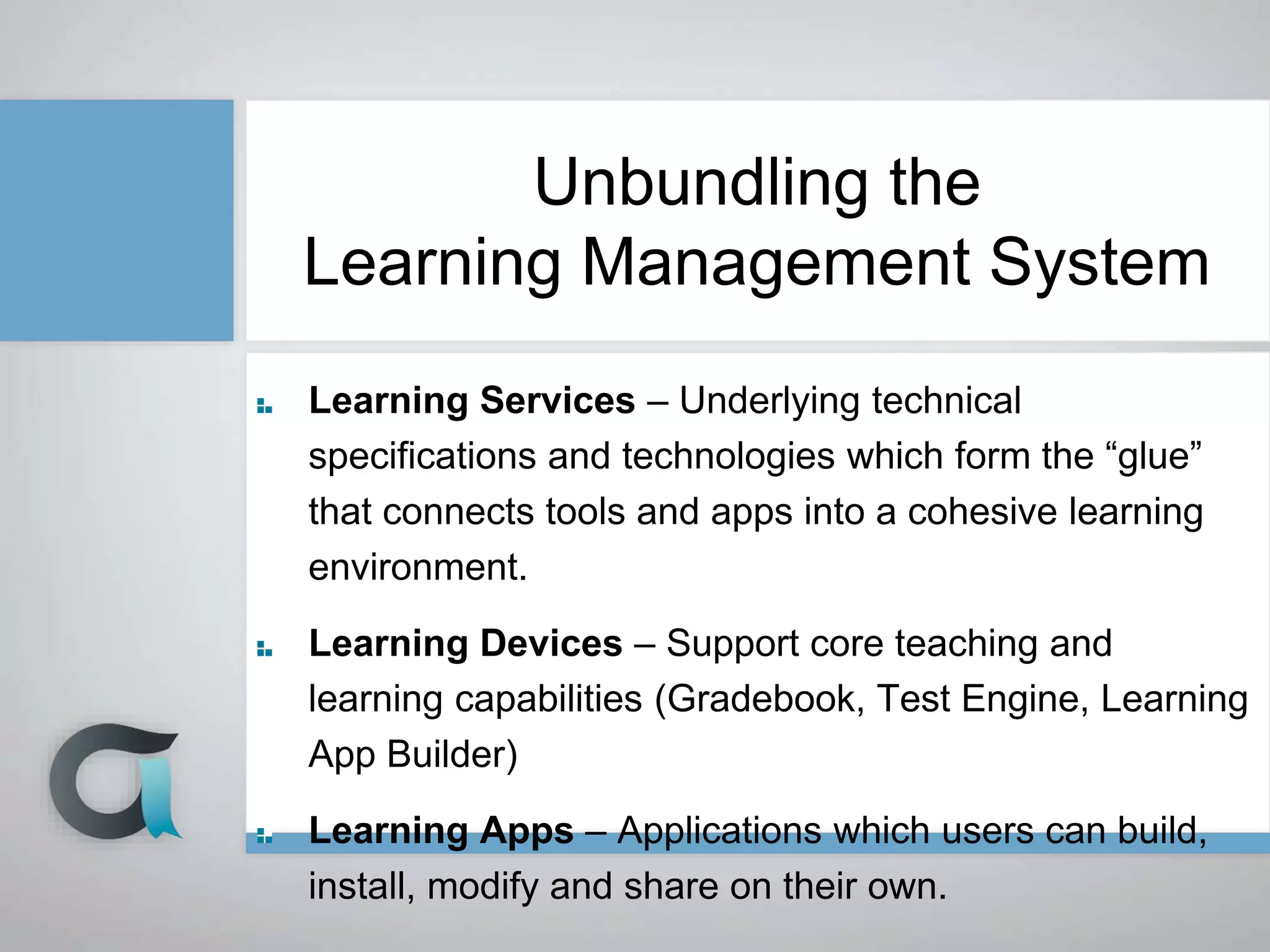
Unbundling the
Learning Management System
Learning Services – Underlying technical
specifications and technologies which form the “glue”
that connects tools and apps into a cohesive learning
environment.
Learning Devices – Support core teaching and
learning capabilities (Gradebook, Test Engine, Learning
App Builder)
Learning Apps – Applications which users can build,
install, modify and share on their own.
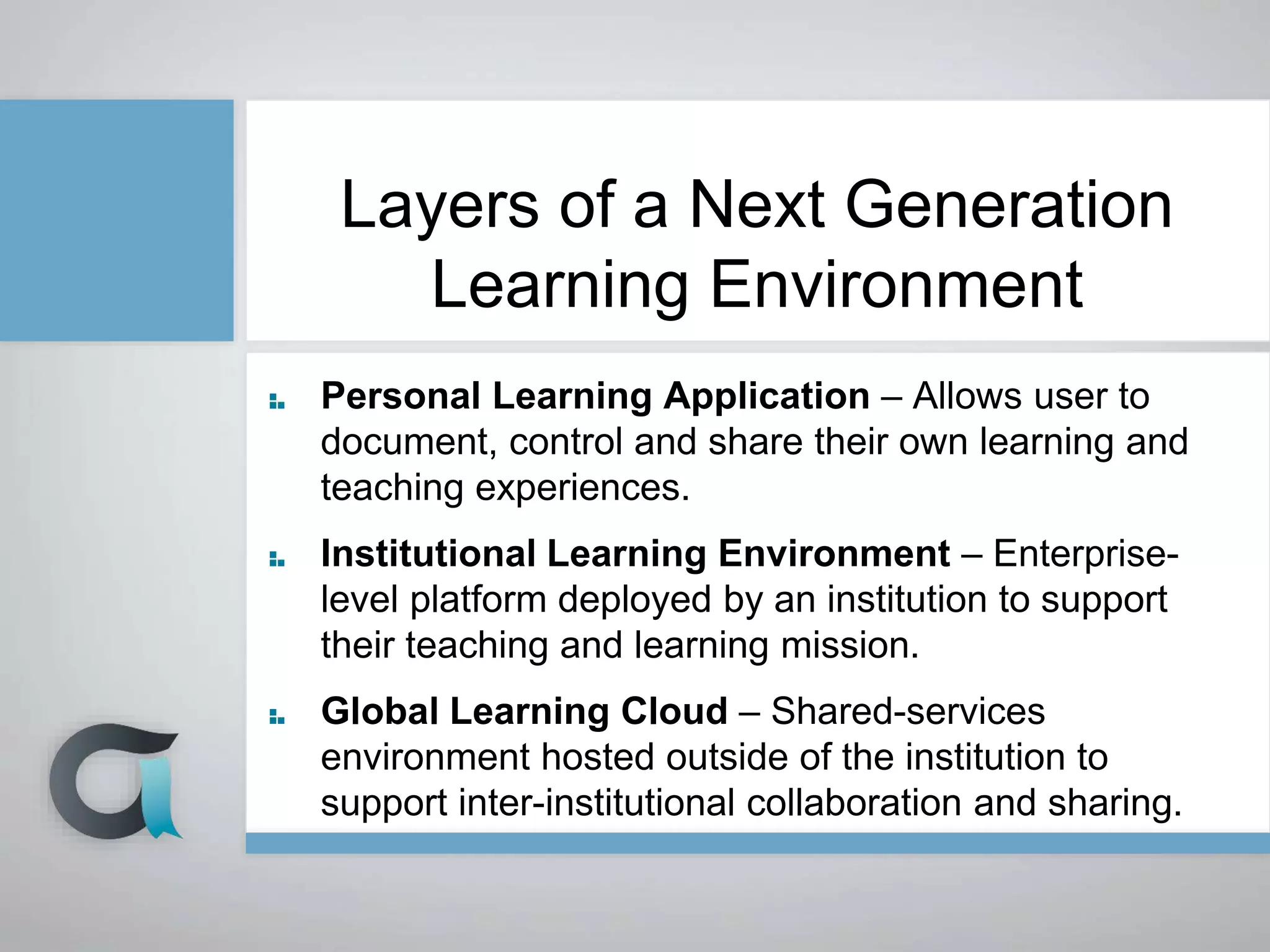
Layers of a Next Generation
Learning Environment
Personal Learning Application – Allows user to
document, control and share their own learning and
teaching experiences.
Institutional Learning Environment – Enterprise-
level platform deployed by an institution to support
their teaching and learning mission.
Global Learning Cloud – Shared-services
environment hosted outside of the institution to
support inter-institutional collaboration and sharing.

Future of the Learning Management System and Sakai

  • 1.
    Next Generation Sakai:A Communi ty Dialog on a Vision for the Future
  • 2.
    Sessions Overview The Futureof the LMS: Creativity, Personalization and Unbundling – Josh Baron The Future of the LMS: Technical Innovations – Dr. Chuck Community Dialog: Feedback, New Ideas and a Road Forward
  • 3.
    The Monolithic LMSModel Should the LMS market be focused on this model for the next 20 years as well?
  • 4.
    The Monolithic LMS HasBeen Successful Provided us with enterprise systems that can run at scale • Supported growth of distance education • Helped drive experiments such as OCW and MOOCs • Have become mission critical systems in higher ed Sakai has proven the success of this model and driven innovation • Open source model, open standards
  • 5.
    Monolithic ≠ Creativity Drivesus towards generalization and standardization • A “one size fits all” is easier to build, deploy and support • Good for efficiency, not so good for creativity Innovative teaching and learning requires creativity • Think about your most innovative learning experience… Standardized teaching and learning is just not fun! Let’s see a quick example…
  • 8.
    How could weallow for greater creativity when using the LMS? Give users the FREEDOM to CREATE their own LMS Facilitate “Tinkerability*” – Allow ANY users to build, deploy, modify and share their own learning apps • Learning app = learning object (content) + functionality Think of the Google Maps API model • Today there are over 1,000,000 apps that use it Users are moving in this direction, we need to catch up * http://web.media.mit.edu/~mres/papers/designing-for-tinkerability.pdf
  • 9.
    Learning App Builder Authorsapp that automatically posts information to Google Map Lessons+ Fashion Trend Map App Learner uses App embedded in Lessons+ to document global trends Fashion Street Trends + Fashion Trend Map Ap p
  • 10.
    The Next GenerationLMS will be… …highly personalized through learning analytics • Academic early alert systems and Adaptive learning systems • Academic Networking …a delightful user experience (UX) • Allow users to customize the user experience …able to document all forms of learning • Store and archive artifacts and credentials outside LMS
  • 11.
    Final Thought…Why Now? Wouldhave this approach been possible or even worked in 2004?
  • 12.
    How might aNext Generation LMS be Organized?
  • 13.
    Unbundling the Learning ManagementSystem Learning Services – Underlying technical specifications and technologies which form the “glue” that connects tools and apps into a cohesive learning environment. Learning Devices – Support core teaching and learning capabilities (Gradebook, Test Engine, Learning App Builder) Learning Apps – Applications which users can build, install, modify and share on their own.
  • 15.
    Layers of aNext Generation Learning Environment Personal Learning Application – Allows user to document, control and share their own learning and teaching experiences. Institutional Learning Environment – Enterprise- level platform deployed by an institution to support their teaching and learning mission. Global Learning Cloud – Shared-services environment hosted outside of the institution to support inter-institutional collaboration and sharing.

Editor's Notes

  • #4 For the last 15 – 20 years the LMS market has been primarily focused on the Monolithic LMS model…that being the idea that we should build all of the tools and capabilities instructors and learners will ever need into one large enterprise system. Myself and I think many others are now starting to wonder if this is the right model for the next 10 – 20 years?
  • #5 It has provided us with enterprise systems that we can run at scale very reliably, safely and securely…
  • #6 But there has also been a downside as it has driven us towards generalization and standardization of the tools and capabilities that our teachers and learners have access to…which again, is not necessarily a bad thing as this “one size fits all” model is much easier to…
  • #12 …we need to seize the moment and build it for them!