New savings opportunities as a result of
disruptive changes across many indirect
spend categories have Chief Purchasing
Officers refocusing on indirect spend.
Bill Kohnen Purchasing Fundamentals
2014
Future of Indirect Purchasing
Summary
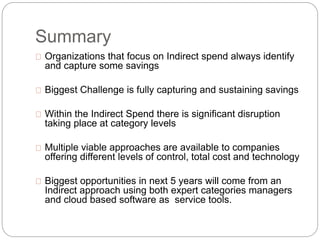
Organizations that focus on Indirect spend always identify
and capture some savings
Biggest Challenge is fully capturing and sustaining savings
Within the Indirect Spend there is significant disruption
taking place at category levels
Multiple viable approaches are available to companies
offering different levels of control, total cost and technology
Biggest opportunities in next 5 years will come from an
Indirect approach using both expert categories managers
and cloud based software as service tools.
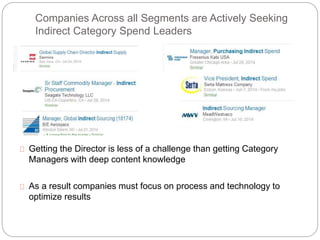
Companies Across all Segments are Actively Seeking
Indirect Category Spend Leaders
Getting the Director is less of a challenge than getting Category
Managers with deep content knowledge
As a result companies must focus on process and technology to
optimize results
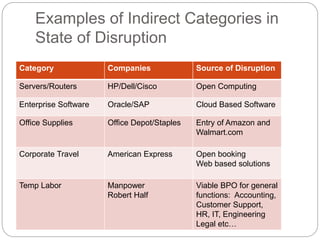
Examples of Indirect Categories in
State of Disruption
Category Companies Source of Disruption
Servers/Routers HP/Dell/Cisco Open Computing
Enterprise Software Oracle/SAP Cloud Based Software
Office Supplies Office Depot/Staples Entry of Amazon and
Walmart.com
Corporate Travel American Express Open booking
Web based solutions
Temp Labor Manpower
Robert Half
Viable BPO for general
functions: Accounting,
Customer Support,
HR, IT, Engineering
Legal etc…
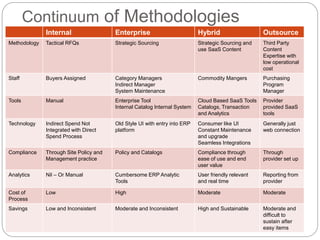
Continuum of Methodologies
Internal Enterprise Hybrid Outsource
Methodology Tactical RFQs Strategic Sourcing Strategic Sourcing and
use SaaS Content
Third Party
Content
Expertise with
low operational
cost
Staff Buyers Assigned Category Managers
Indirect Manager
System Maintenance
Commodity Mangers Purchasing
Program
Manager
Tools Manual Enterprise Tool
Internal Catalog Internal System
Cloud Based SaaS Tools
Catalogs, Transaction
and Analytics
Provider
provided SaaS
tools
Technology Indirect Spend Not
Integrated with Direct
Spend Process
Old Style UI with entry into ERP
platform
Consumer like UI
Constant Maintenance
and upgrade
Seamless Integrations
Generally just
web connection
Compliance Through Site Policy and
Management practice
Policy and Catalogs Compliance through
ease of use and end
user value
Through
provider set up
Analytics Nil – Or Manual Cumbersome ERP Analytic
Tools
User friendly relevant
and real time
Reporting from
provider
Cost of
Process
Low High Moderate Moderate
Savings Low and Inconsistent Moderate and Inconsistent High and Sustainable Moderate and
difficult to
sustain after
easy items
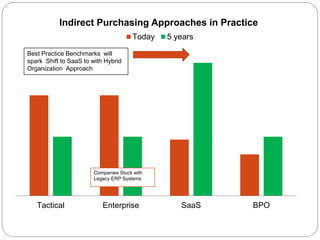
Tactical Enterprise SaaS BPO
Indirect Purchasing Approaches in Practice
Today 5 years
Best Practice Benchmarks will
spark Shift to SaaS to with Hybrid
Organization Approach
Companies Stuck with
Legacy ERP Systems
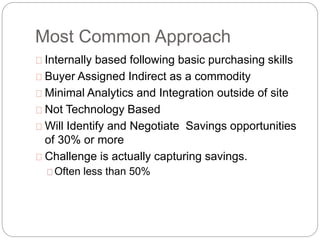
Most Common Approach
Internally based following basic purchasing skills
Buyer Assigned Indirect as a commodity
Minimal Analytics and Integration outside of site
Not Technology Based
Will Identify and Negotiate Savings opportunities
of 30% or more
Challenge is actually capturing savings.
Often less than 50%
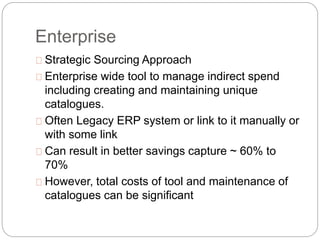
Enterprise
Strategic Sourcing Approach
Enterprise wide tool to manage indirect spend
including creating and maintaining unique
catalogues.
Often Legacy ERP system or link to it manually or
with some link
Can result in better savings capture ~ 60% to
70%
However, total costs of tool and maintenance of
catalogues can be significant
Hybrid Approach
Hybrid Approach Combing Internal Strategic
Sourcing with Content Included with a Cloud
Based Software as a Service Indirect spend
solution
Can optimize leverage where you have it
For other items take advantage of SaaS platform
leverage
Lower total cost with SaaS for solution and
Catalog Management
Optimized analytics for Indirect
Compliance and spend capture driven by
consumer like user interface
Outsourcing
Complete Outsourcing of Indirect Spend
Typically infrastructure and process cost saving of
20% - less than other categories like AP,
Customer Service
Category Item cost savings of 20%
Jury still out on comparison of negotiated savings
capture rates
Still requires management and integration of tools
for users
Summary
History shows that any level of focus on Indirect
Purchasing can identify significant savings
The real challenge is to capture savings on a
sustained basis
Getting a few top people to drive results like in many
areas probably produces the best results however,
that is becoming increasingly difficult and is not
sustainable
CPOs will be forced to also consider process and
technology options to optimize and sustain indirect
savings to meet their goals.

Future of Indirect Purchasing - Shifting to New Process and Technology

  • 1.
    New savings opportunitiesas a result of disruptive changes across many indirect spend categories have Chief Purchasing Officers refocusing on indirect spend. Bill Kohnen Purchasing Fundamentals 2014 Future of Indirect Purchasing
  • 2.
    Summary Organizations that focuson Indirect spend always identify and capture some savings Biggest Challenge is fully capturing and sustaining savings Within the Indirect Spend there is significant disruption taking place at category levels Multiple viable approaches are available to companies offering different levels of control, total cost and technology Biggest opportunities in next 5 years will come from an Indirect approach using both expert categories managers and cloud based software as service tools.
  • 3.
    Companies Across allSegments are Actively Seeking Indirect Category Spend Leaders Getting the Director is less of a challenge than getting Category Managers with deep content knowledge As a result companies must focus on process and technology to optimize results
  • 4.
    Examples of IndirectCategories in State of Disruption Category Companies Source of Disruption Servers/Routers HP/Dell/Cisco Open Computing Enterprise Software Oracle/SAP Cloud Based Software Office Supplies Office Depot/Staples Entry of Amazon and Walmart.com Corporate Travel American Express Open booking Web based solutions Temp Labor Manpower Robert Half Viable BPO for general functions: Accounting, Customer Support, HR, IT, Engineering Legal etc…
  • 5.
    Continuum of Methodologies InternalEnterprise Hybrid Outsource Methodology Tactical RFQs Strategic Sourcing Strategic Sourcing and use SaaS Content Third Party Content Expertise with low operational cost Staff Buyers Assigned Category Managers Indirect Manager System Maintenance Commodity Mangers Purchasing Program Manager Tools Manual Enterprise Tool Internal Catalog Internal System Cloud Based SaaS Tools Catalogs, Transaction and Analytics Provider provided SaaS tools Technology Indirect Spend Not Integrated with Direct Spend Process Old Style UI with entry into ERP platform Consumer like UI Constant Maintenance and upgrade Seamless Integrations Generally just web connection Compliance Through Site Policy and Management practice Policy and Catalogs Compliance through ease of use and end user value Through provider set up Analytics Nil – Or Manual Cumbersome ERP Analytic Tools User friendly relevant and real time Reporting from provider Cost of Process Low High Moderate Moderate Savings Low and Inconsistent Moderate and Inconsistent High and Sustainable Moderate and difficult to sustain after easy items
  • 6.
    Tactical Enterprise SaaSBPO Indirect Purchasing Approaches in Practice Today 5 years Best Practice Benchmarks will spark Shift to SaaS to with Hybrid Organization Approach Companies Stuck with Legacy ERP Systems
  • 7.
    Most Common Approach Internallybased following basic purchasing skills Buyer Assigned Indirect as a commodity Minimal Analytics and Integration outside of site Not Technology Based Will Identify and Negotiate Savings opportunities of 30% or more Challenge is actually capturing savings. Often less than 50%
  • 8.
    Enterprise Strategic Sourcing Approach Enterprisewide tool to manage indirect spend including creating and maintaining unique catalogues. Often Legacy ERP system or link to it manually or with some link Can result in better savings capture ~ 60% to 70% However, total costs of tool and maintenance of catalogues can be significant
  • 9.
    Hybrid Approach Hybrid ApproachCombing Internal Strategic Sourcing with Content Included with a Cloud Based Software as a Service Indirect spend solution Can optimize leverage where you have it For other items take advantage of SaaS platform leverage Lower total cost with SaaS for solution and Catalog Management Optimized analytics for Indirect Compliance and spend capture driven by consumer like user interface
  • 10.
    Outsourcing Complete Outsourcing ofIndirect Spend Typically infrastructure and process cost saving of 20% - less than other categories like AP, Customer Service Category Item cost savings of 20% Jury still out on comparison of negotiated savings capture rates Still requires management and integration of tools for users
  • 11.
    Summary History shows thatany level of focus on Indirect Purchasing can identify significant savings The real challenge is to capture savings on a sustained basis Getting a few top people to drive results like in many areas probably produces the best results however, that is becoming increasingly difficult and is not sustainable CPOs will be forced to also consider process and technology options to optimize and sustain indirect savings to meet their goals.