Further Techniques
Chloe Smith
Multiple Exposures
Multiple exposure is a technique where
two different images are combined to
make one single image. This technique
has become more popular recently due to
programmes like Photoshop making it
easier to achieve these images. You can
create different effects using multiple
exposure, including ghostly and mirrored
images. Some cameras provide their own
multiple exposure function and allows
you to create this technique manually,
without editing. However, some say it is
more effective to combine two images
using photo editing software, for example
Photoshop, because you are able to
combine images that were taken years
apart and such software offers more
control than doing it in-camera. By
changing the opacity of the two layers
and by using various other tools if
needed, you can create the exact effect
that you want.
Light Writing
Light writing, or light graffiti, is basically
long exposure photography which allows
you to create effects and objects using
lights. Depending on the type of
camera, you can take anywhere from 15
second exposures to a whole hour. The
less exposure time you have will
obviously limit what you can do but you
can still create interesting effects. A
tripod is quite important to prevent
camera shake during long exposures. If
the camera moves during the exposure, it
will show in the final image, so you don’t
necessarily have to use a tripod. Just
making sure that it is on a sturdy and flat
surface will be enough. You can use many
different light sources to create light
effects, including traffic
batons, LED, roadside flares, bicycle
lights, spotlights, and camera flash units.
Keeping your camera on an ISO of 100 (or
lower) will reduce the amount of noise in
the final image. Typically, the aperture is
set to a high number (18 or above). This
is important because less light is allowed
in, and this helps when doing extra long
exposures or when you are in areas with
high ambient light.

Further techniques

  • 1.
  • 2.
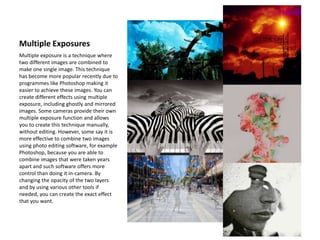
    Multiple Exposures Multiple exposureis a technique where two different images are combined to make one single image. This technique has become more popular recently due to programmes like Photoshop making it easier to achieve these images. You can create different effects using multiple exposure, including ghostly and mirrored images. Some cameras provide their own multiple exposure function and allows you to create this technique manually, without editing. However, some say it is more effective to combine two images using photo editing software, for example Photoshop, because you are able to combine images that were taken years apart and such software offers more control than doing it in-camera. By changing the opacity of the two layers and by using various other tools if needed, you can create the exact effect that you want.
  • 3.
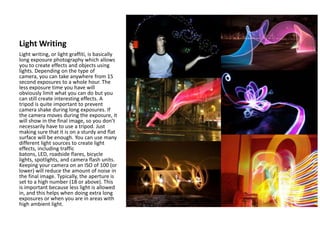
    Light Writing Light writing,or light graffiti, is basically long exposure photography which allows you to create effects and objects using lights. Depending on the type of camera, you can take anywhere from 15 second exposures to a whole hour. The less exposure time you have will obviously limit what you can do but you can still create interesting effects. A tripod is quite important to prevent camera shake during long exposures. If the camera moves during the exposure, it will show in the final image, so you don’t necessarily have to use a tripod. Just making sure that it is on a sturdy and flat surface will be enough. You can use many different light sources to create light effects, including traffic batons, LED, roadside flares, bicycle lights, spotlights, and camera flash units. Keeping your camera on an ISO of 100 (or lower) will reduce the amount of noise in the final image. Typically, the aperture is set to a high number (18 or above). This is important because less light is allowed in, and this helps when doing extra long exposures or when you are in areas with high ambient light.