Fundamentals of VIRTUAL REALITY: It's Application in
Textile Industry
Name- Sourav Patra
Department-Textile Technology
Semester-6th
Roll No-11001420026
Paper Name-Internet Of Things
Paper Code- (OE TT 601 C)
Introduction
The fashion industry is growing revenue in a very dynamic way. In 2020, the
return of this market was approximately 1.46 trillion U.S. dollars. According to the
Consumer Market Outlook, this value will increase to roughly 2.25 trillion U.S.
dollars by 2025. To keep the revenue steady, retailers are introducing different
types of modern technologies, tools and means like the Internet of things, facial
recognition, autonomous delivery robots and store assistants, cashier-less stores,
voice commerce and AI which replaced the traditional shopping experience.
Converse Shoes, Zara, Ralph Lauren, Louis Vuitton, H&M, Burberry, Chanel,
GUCCI, etc. are illustrating a new technology which is called AR and VR that will
sell our dreams not only clothes, shoes and accessories. It’s virtual (V) and
augmented (A) reality (R) in the fashion industry, It presences like we will have a
scientific twist when it comes to clothing and makeup soon. The innovators of the
technology have dreamed that is going to spark the interest even in ardent
shopping haters, while fashion fans will be assumed more joy and pleasure from
such an experience.
Virtual Reality (VR)
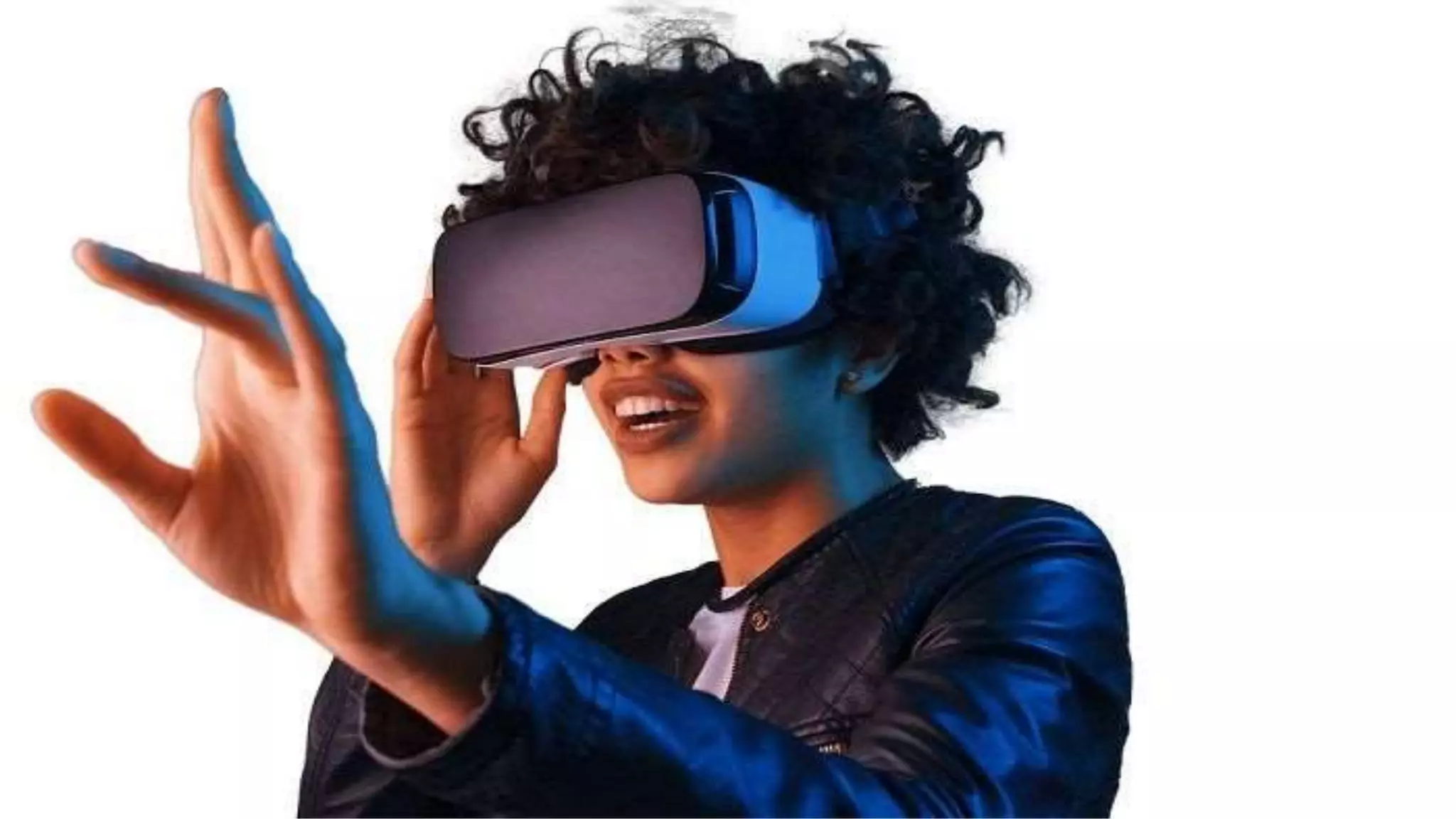
 Virtual reality (VR) is a simulated experience that can be similar to or
completely different from the real world. A person using virtual reality
equipment can look around the artificial world, move around in it, and
interact with virtual features or items. VR is a computer-generated
environment with scenes and objects that appear to be real, making
the user feel they are immersed in their surroundings. This
environment is perceived through a device known as a Virtual Reality
headset or helmet.
Virtual reality uses in fashion industry
Virtual reality gives you a ‘WOW’ factor feeling in shopping instead of traditional
boring practice to drag yourself to a mall, find a place to park, spend hours
searching for the item you need, wait in line in the dressing-room, visit several
shops to find alternative garments and compare their prices and characteristics,
etc. The retailer and the manufacturers are using Augmented and virtual reality in
a different way in the fashion industry like in-store navigation, interactive
display screens, virtual try-on, virtual fitting rooms, virtual tailors, virtual
makeover, spreading awareness, keeping customers engaged, conversion of a
visitor into customer, enhancing loyalty so on.
Interactive display screens
 Interactive display become most popular in the pandemic situation as social
distancing becoming a new norm, customers will not prefer to try products,
especially garments in real-time. VR play a game-changer role in fashion stores.
In this way, the customers can visualize themselves in front of a mirror/screen
and decide what fits on them without physically using the product like trial
rooms. And there’s no doubt that this unique approach makes people notice the
store. It is found that top retail brands like Ralph and Lauren, H&M, Zara,
Burberry, and others are using these types of screens for clothing to improve
customer engagement and satisfaction.
 In this present era, the virtual-try-on has gained importance in the last few years
in the fashion industry. It simulates digitally the behavior of textiles onto the
human body. In this manner, they allow a virtual application of cloth items onto
digital human body models. This application is particularly designed to
determine how precisely and accurately the cloth item will behave on the digital
body.
 When they start using virtual reality, product fitting is one of the major
challenges that are experienced by most brands. Augmented reality try on
clothes seems to be working well. That’s why, to reduce customer dissatisfaction
and boost business operations, stores have started to implement virtual fitting
room (VRF) technology. VRF technology lets customers try garments, shoes, etc.,
on a 3D avatar without wearing the product.
Virtual try-on & Virtual fitting rooms
Virtual tailors
 With this one can get perfectly fitted outfits with the precision of AR technology.
A virtual tailor utilizes different machine learning technologies to provide highly
accurate and precise body measurements for customers. One popular apparel
company using this is Fit Freedom. Fit Freedom is a special kind of body
measurement application that simplifies the online apparel shopping
experience. The application takes the user’s measurements, converts the
measurement data across many product lines, and creates custom-fitting
garments. Thus, due to this application, it is possible to get body measurements
quickly and easily by creating a 3D fit model that recommends the shopper’s size
across the platform’s available retailers.
Virtual make over & Spreading awareness
 Virtual makeover solutions allow doing the virtual styling of the persons in the
area of the face, by changing or adding various aspects such as virtual make-up,
haircuts, or accessories. By this application the appeal of the human face is
changed virtually by adding digitally to a digitized 3D human face, haircuts, or
glasses and one can get an idea of proper attire.
 As we all know that due to this pandemic situation everything has been
switched to online mode, so here AR can help in spreading awareness by
attracting the attention of the online users and bringing them closer to visiting
the store and their products. The AR products can improve customer
experience by attracting them to try out in-store products. Similarly, AR-
powered kiosks can prove advantageous and can bring products to life with the
help of 3D technology.
Conclusions
VR and AR can be used to make simulations where training can be safe and free
of consequences. Employers can create an exact simulation of their operations
with the equipment they use. New employees can then gain expertise through
the simulation and experiment to their heart’s content.
Reference
• https://www.researchgate.net/publication/317160020_Application_o
f_Virtual_Reality_Technology_in_Garment_Industry
• https://www.nanowerk.com/spotlight/spotid=56766.php
• https://www.slideshare.net/christophrunde/virtual-techniques-in-
textile-applications-vdcwhitepaper
• https://textilevaluechain.in/news-insights/webtalk-augmented-
reality-in-the-textile-industry/
THANK YOU

Fundamentals of Virtual Reality: application in Textile industry

  • 1.
    Fundamentals of VIRTUALREALITY: It's Application in Textile Industry Name- Sourav Patra Department-Textile Technology Semester-6th Roll No-11001420026 Paper Name-Internet Of Things Paper Code- (OE TT 601 C)
  • 2.
    Introduction The fashion industryis growing revenue in a very dynamic way. In 2020, the return of this market was approximately 1.46 trillion U.S. dollars. According to the Consumer Market Outlook, this value will increase to roughly 2.25 trillion U.S. dollars by 2025. To keep the revenue steady, retailers are introducing different types of modern technologies, tools and means like the Internet of things, facial recognition, autonomous delivery robots and store assistants, cashier-less stores, voice commerce and AI which replaced the traditional shopping experience. Converse Shoes, Zara, Ralph Lauren, Louis Vuitton, H&M, Burberry, Chanel, GUCCI, etc. are illustrating a new technology which is called AR and VR that will sell our dreams not only clothes, shoes and accessories. It’s virtual (V) and augmented (A) reality (R) in the fashion industry, It presences like we will have a scientific twist when it comes to clothing and makeup soon. The innovators of the technology have dreamed that is going to spark the interest even in ardent shopping haters, while fashion fans will be assumed more joy and pleasure from such an experience.
  • 4.
    Virtual Reality (VR) Virtual reality (VR) is a simulated experience that can be similar to or completely different from the real world. A person using virtual reality equipment can look around the artificial world, move around in it, and interact with virtual features or items. VR is a computer-generated environment with scenes and objects that appear to be real, making the user feel they are immersed in their surroundings. This environment is perceived through a device known as a Virtual Reality headset or helmet.
  • 5.
    Virtual reality usesin fashion industry Virtual reality gives you a ‘WOW’ factor feeling in shopping instead of traditional boring practice to drag yourself to a mall, find a place to park, spend hours searching for the item you need, wait in line in the dressing-room, visit several shops to find alternative garments and compare their prices and characteristics, etc. The retailer and the manufacturers are using Augmented and virtual reality in a different way in the fashion industry like in-store navigation, interactive display screens, virtual try-on, virtual fitting rooms, virtual tailors, virtual makeover, spreading awareness, keeping customers engaged, conversion of a visitor into customer, enhancing loyalty so on.
  • 6.
    Interactive display screens Interactive display become most popular in the pandemic situation as social distancing becoming a new norm, customers will not prefer to try products, especially garments in real-time. VR play a game-changer role in fashion stores. In this way, the customers can visualize themselves in front of a mirror/screen and decide what fits on them without physically using the product like trial rooms. And there’s no doubt that this unique approach makes people notice the store. It is found that top retail brands like Ralph and Lauren, H&M, Zara, Burberry, and others are using these types of screens for clothing to improve customer engagement and satisfaction.
  • 7.
     In thispresent era, the virtual-try-on has gained importance in the last few years in the fashion industry. It simulates digitally the behavior of textiles onto the human body. In this manner, they allow a virtual application of cloth items onto digital human body models. This application is particularly designed to determine how precisely and accurately the cloth item will behave on the digital body.  When they start using virtual reality, product fitting is one of the major challenges that are experienced by most brands. Augmented reality try on clothes seems to be working well. That’s why, to reduce customer dissatisfaction and boost business operations, stores have started to implement virtual fitting room (VRF) technology. VRF technology lets customers try garments, shoes, etc., on a 3D avatar without wearing the product. Virtual try-on & Virtual fitting rooms
  • 8.
    Virtual tailors  Withthis one can get perfectly fitted outfits with the precision of AR technology. A virtual tailor utilizes different machine learning technologies to provide highly accurate and precise body measurements for customers. One popular apparel company using this is Fit Freedom. Fit Freedom is a special kind of body measurement application that simplifies the online apparel shopping experience. The application takes the user’s measurements, converts the measurement data across many product lines, and creates custom-fitting garments. Thus, due to this application, it is possible to get body measurements quickly and easily by creating a 3D fit model that recommends the shopper’s size across the platform’s available retailers.
  • 9.
    Virtual make over& Spreading awareness  Virtual makeover solutions allow doing the virtual styling of the persons in the area of the face, by changing or adding various aspects such as virtual make-up, haircuts, or accessories. By this application the appeal of the human face is changed virtually by adding digitally to a digitized 3D human face, haircuts, or glasses and one can get an idea of proper attire.  As we all know that due to this pandemic situation everything has been switched to online mode, so here AR can help in spreading awareness by attracting the attention of the online users and bringing them closer to visiting the store and their products. The AR products can improve customer experience by attracting them to try out in-store products. Similarly, AR- powered kiosks can prove advantageous and can bring products to life with the help of 3D technology.
  • 10.
    Conclusions VR and ARcan be used to make simulations where training can be safe and free of consequences. Employers can create an exact simulation of their operations with the equipment they use. New employees can then gain expertise through the simulation and experiment to their heart’s content.
  • 11.
    Reference • https://www.researchgate.net/publication/317160020_Application_o f_Virtual_Reality_Technology_in_Garment_Industry • https://www.nanowerk.com/spotlight/spotid=56766.php •https://www.slideshare.net/christophrunde/virtual-techniques-in- textile-applications-vdcwhitepaper • https://textilevaluechain.in/news-insights/webtalk-augmented- reality-in-the-textile-industry/
  • 12.