Downloaded 454 times











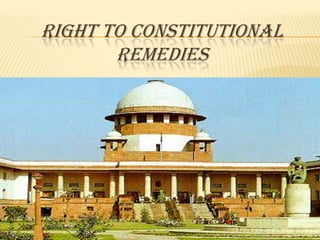
![RIGHT TO CONSTITUTIONAL
REMEDIES [ARTICLE 32 TO 35]
Right to constitutional remedies empowers the
citizens to move a court of law in case of any denial
of the fundamental rights. For instance, in case of
imprisonment, the citizen can ask the court to see if it
is according to the provisions of the law of the
country. If the court finds that it is not, the person will
have to be freed. This procedure of asking the courts
to preserve or safeguard the citizens' fundamental
rights can be done in various ways. The courts can
issue various kinds of writs. These writs are habeas
corpus, mandamus, prohibition, quo warranto and
certiorari. When a national or state emergency is
declared, this right is suspended by the central
government.](https://image.slidesharecdn.com/anuragfinal2013-14-140117013808-phpapp01/85/fundamental-rights-16-320.jpg)



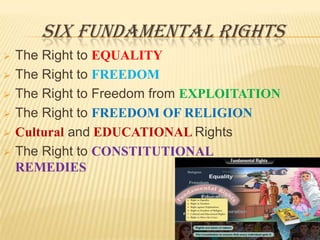
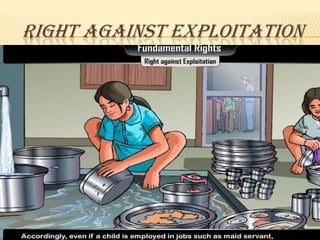
The document discusses the six fundamental rights provided to all Indian citizens under the constitution: 1) Right to equality, 2) Right to freedom, 3) Right against exploitation, 4) Right to freedom of religion, 5) Cultural and educational rights, and 6) Right to constitutional remedies. It defines fundamental rights as basic human rights guaranteed to all citizens regardless of personal attributes. Each right is then further explained, with specifics around equality before the law, freedom of speech, abolition of untouchability, religious freedom, and preservation of minority languages and cultures. Citizens can approach courts to preserve these fundamental rights through writ petitions if they are denied.


