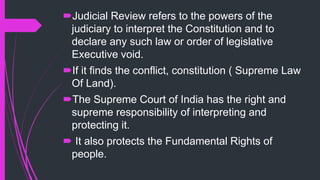
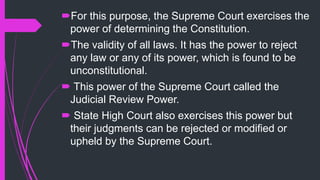
Judicial review in India refers to the judiciary's power to interpret the constitution and declare laws void if they conflict with it, primarily exercised by the Supreme Court. While both the Supreme Court and state high courts can conduct judicial reviews, the final authority lies with the Supreme Court, which assesses the constitutional validity of laws and regulations. Critics argue that judicial review can be undemocratic and lead to administrative challenges, while proponents view it as essential for protecting individual rights and maintaining the rule of law.





![EMERGENCY PROVISION (PART -18) [Brief Notes]](https://cdn.slidesharecdn.com/ss_thumbnails/emergencyprovisions-200808113410-thumbnail.jpg?width=640&height=640&fit=bounds)


