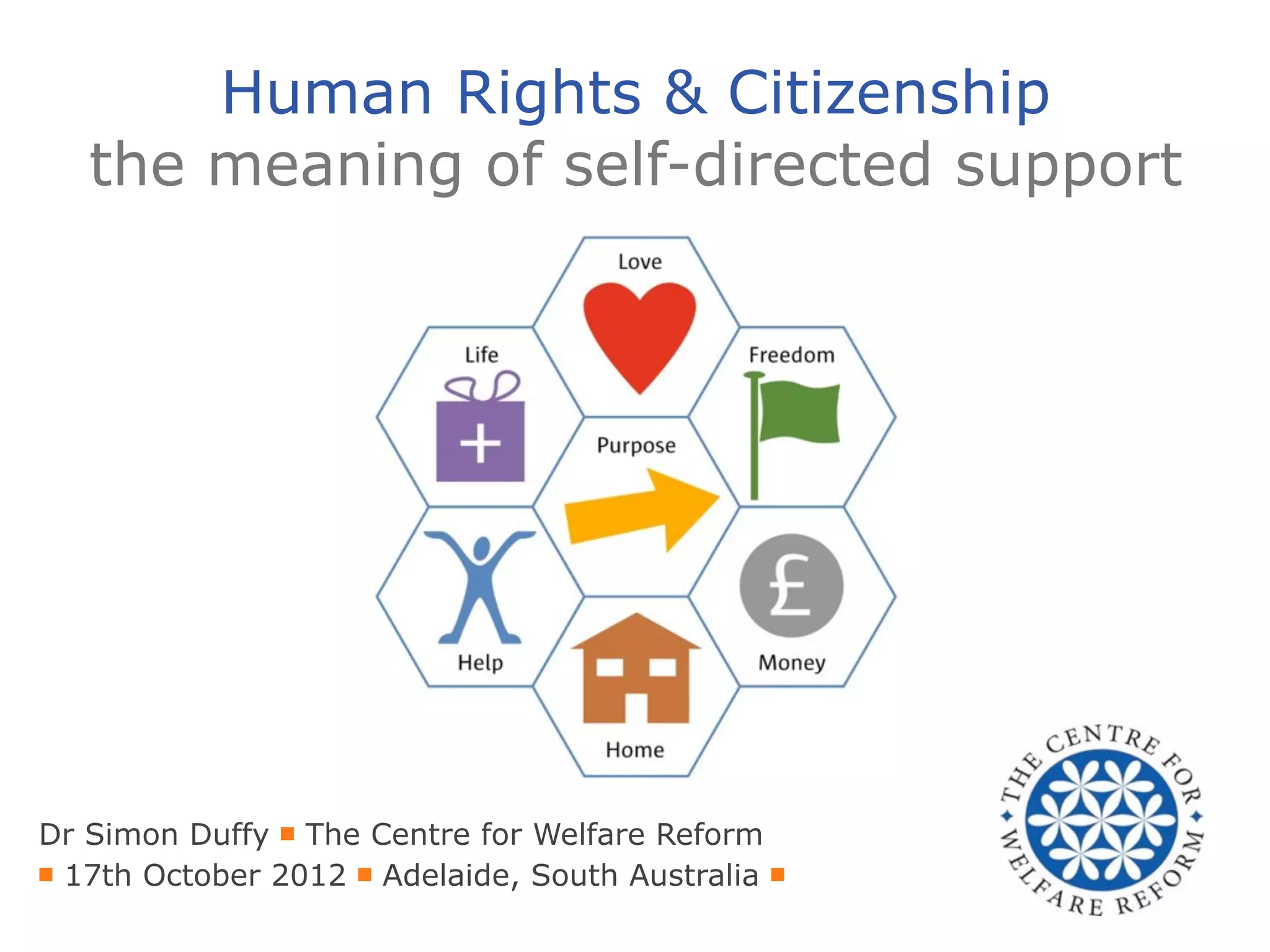
Human Rights & Citizenship
   the meaning of self-directed support


Dr Simon Duffy ■ The Centre for Welfare Reform
■ 17th October 2012 ■ Adelaide, South Australia ■
The fight for real entitlements

Victories and defeats in
England
Simon Duffy - personal experiences

1. London (1990-94) - IF plus brokerage

2. Glasgow (1996-99) - ISFs and successful and
radical programme of deinstitutionalisation

3. North Lanarkshire (1999-2002) - Self-directed
support for families, reforming social work role

4. In Control (2003-2009) - SDS used to reform
all of social care, rapid uptake, many lessons

5. The Centre for Welfare Reform (from 2009) -
support for innovators and sharing the learning
Things to remember

1. Its life, not services

2. Individual funding is just a tool

3. Systems can sneak back control

4. Together we can do it
We still have much still to learn
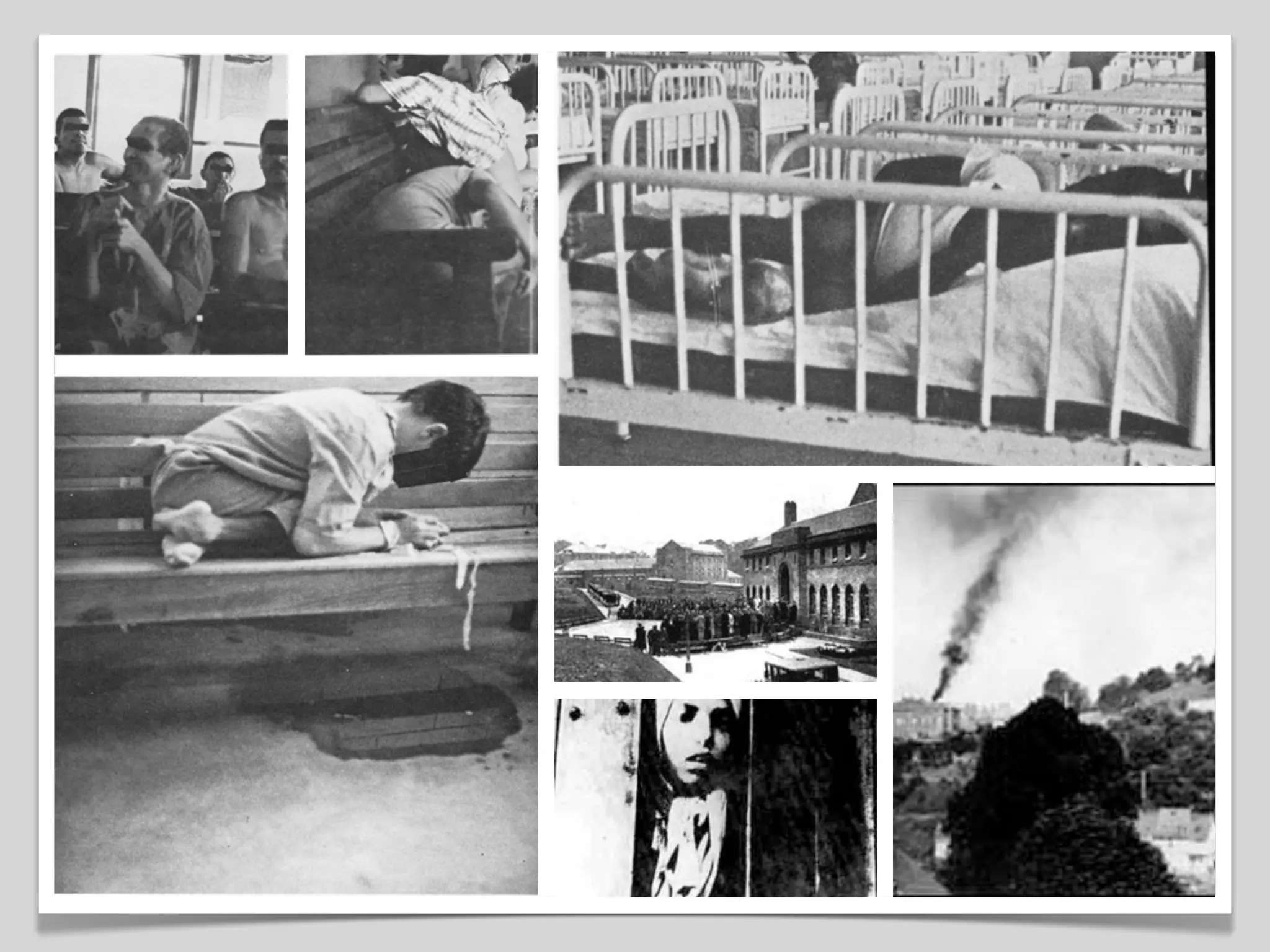
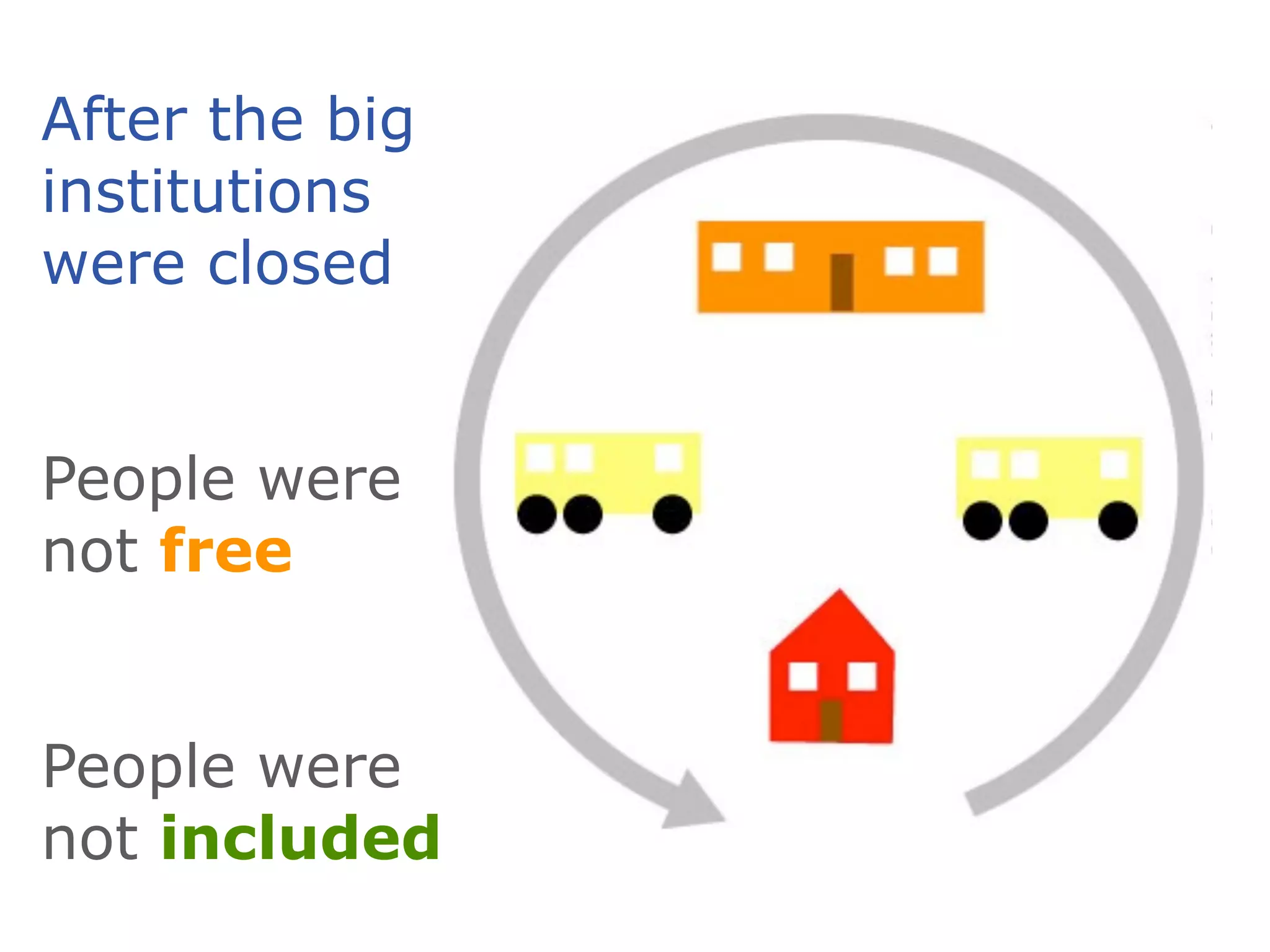
After the big
institutions
were closed


People were
not free


People were
not included
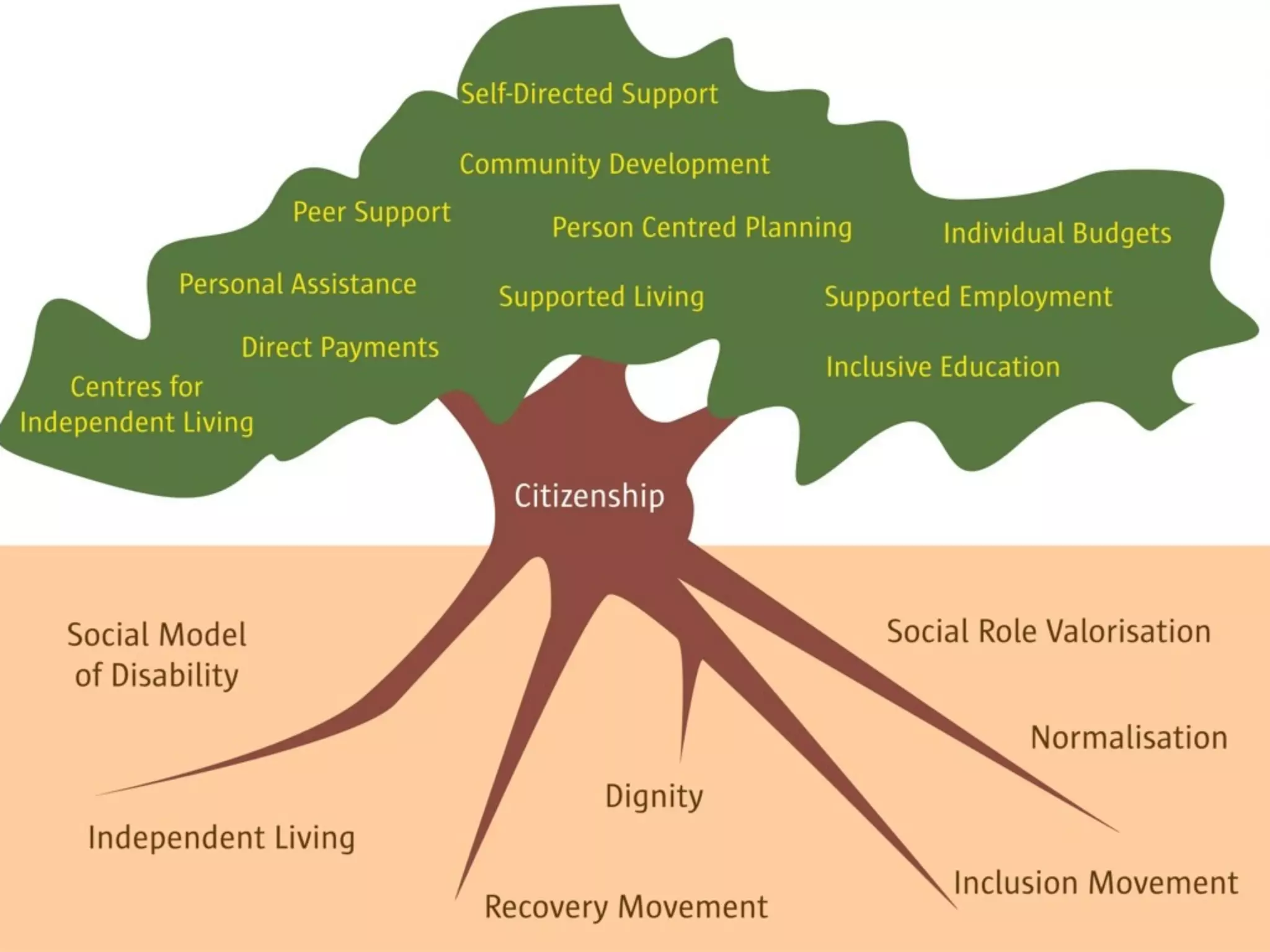
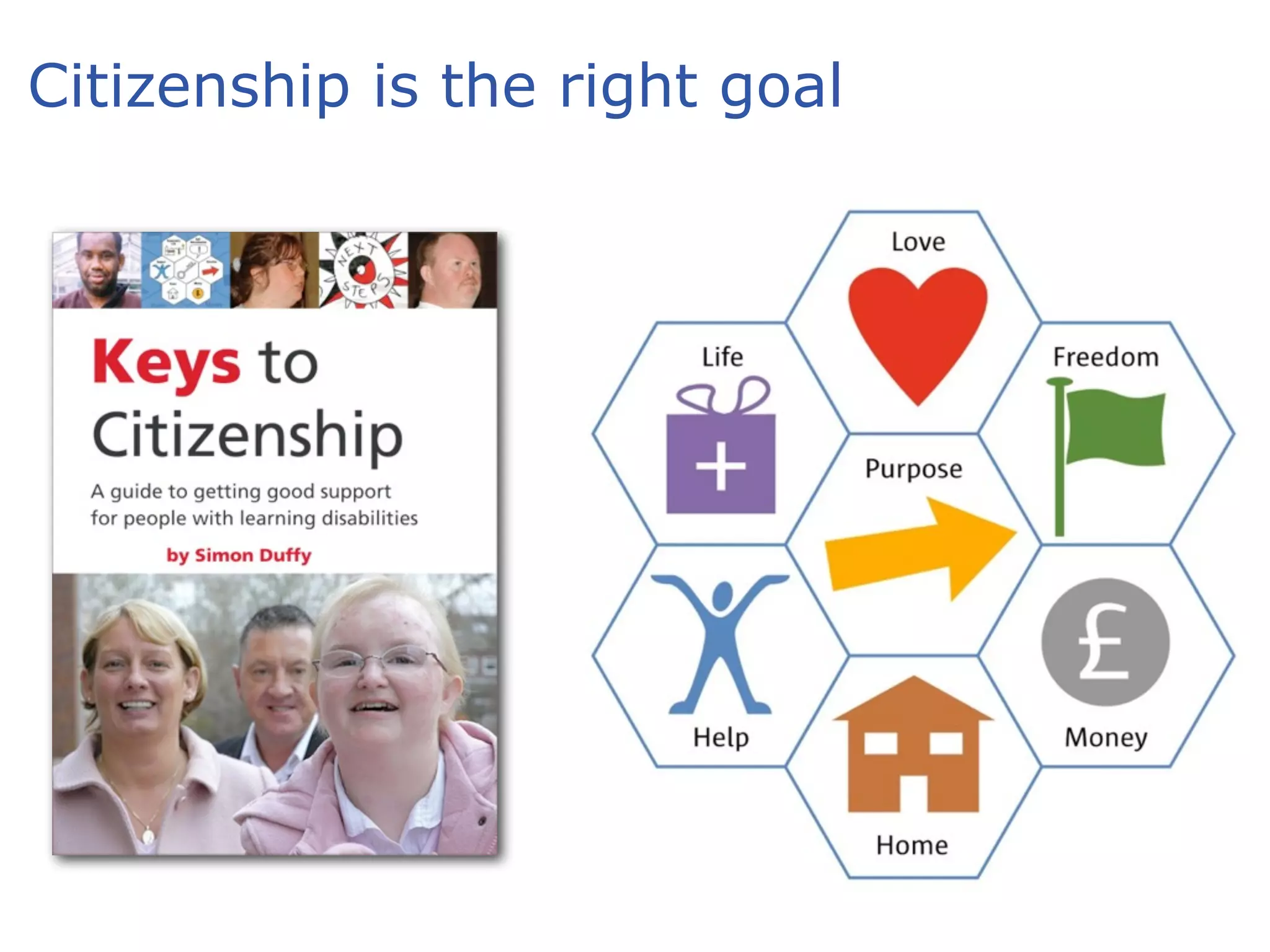
Citizenship is the right goal
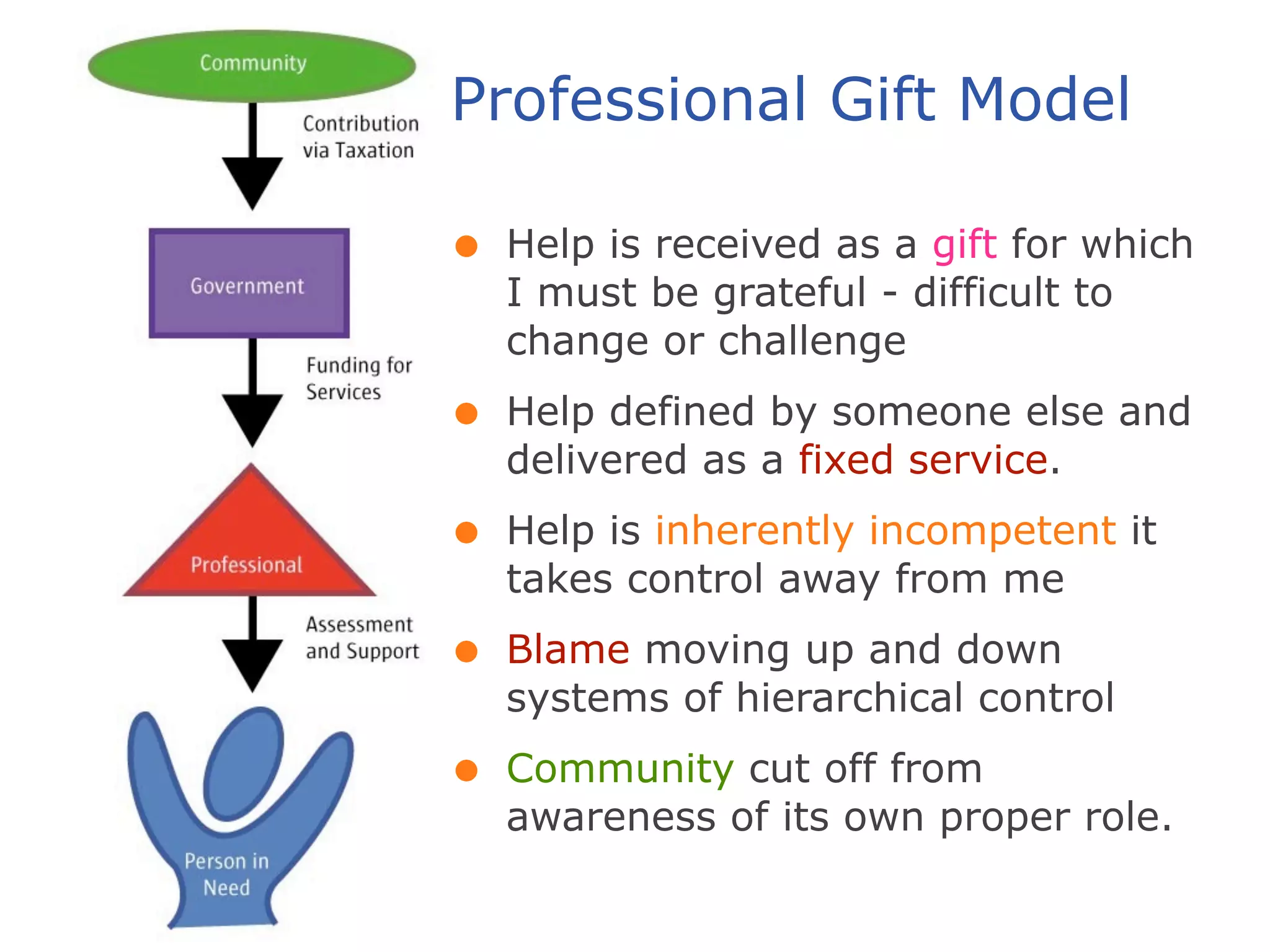
Professional Gift Model

•   Help is received as a gift for which
    I must be grateful - difficult to
    change or challenge
•   Help defined by someone else and
    delivered as a fixed service.
•   Help is inherently incompetent it
    takes control away from me
•   Blame moving up and down
    systems of hierarchical control
•   Community cut off from
    awareness of its own proper role.
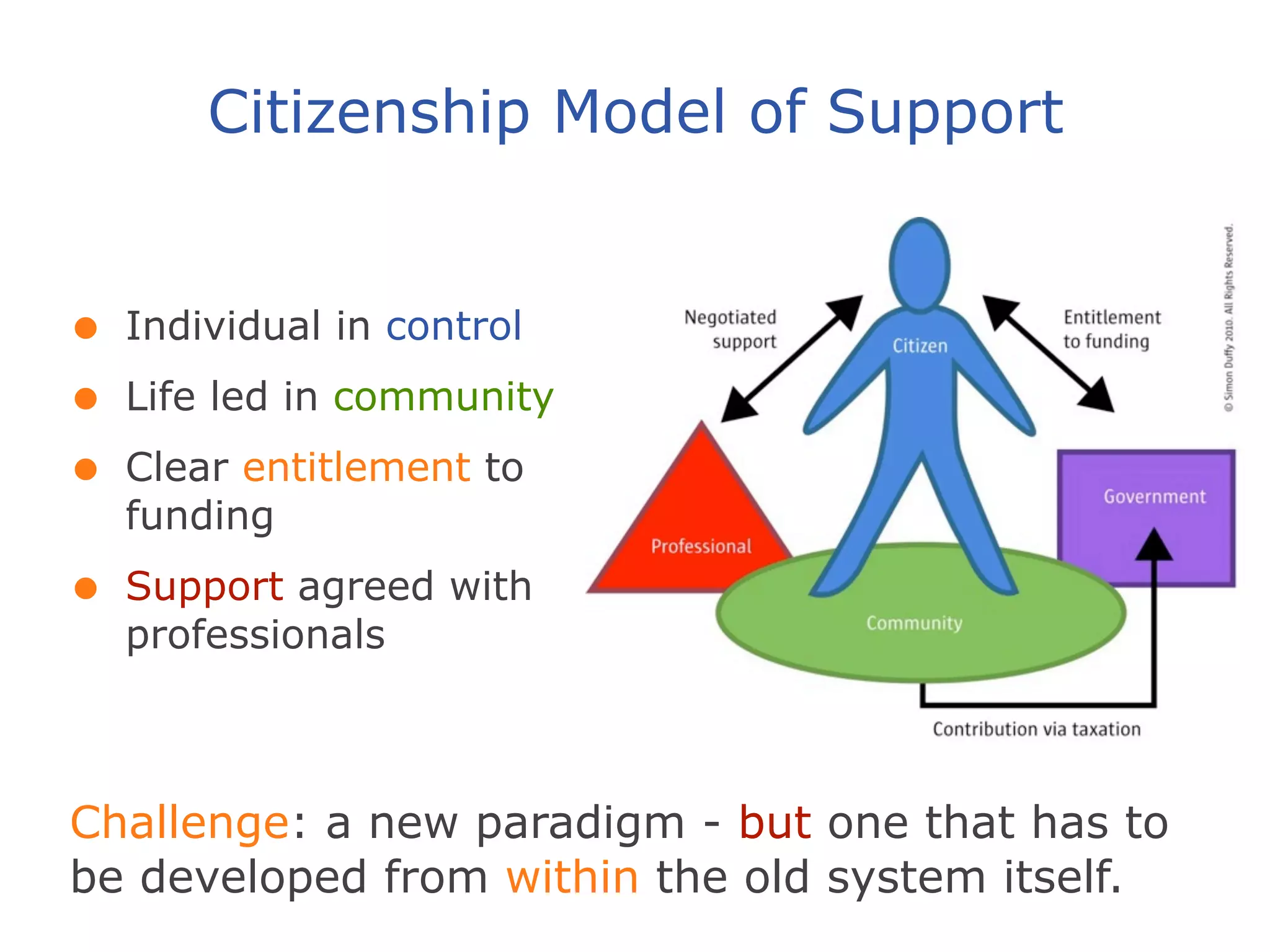
Citizenship Model of Support


•   Individual in control
•   Life led in community
•   Clear entitlement to
    funding
•   Support agreed with
    professionals


Challenge: a new paradigm - but one that has to
be developed from within the old system itself.
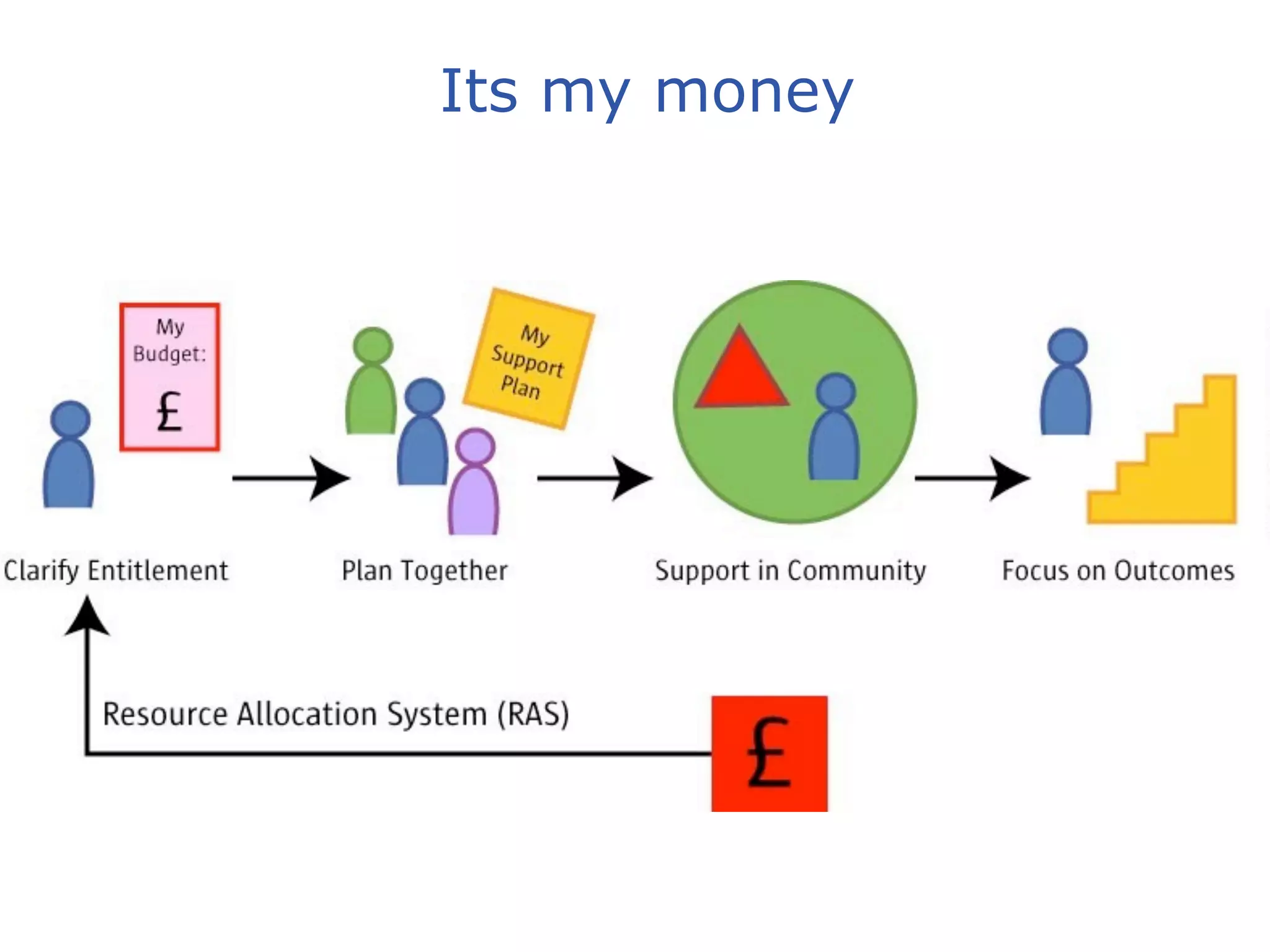
Its my money
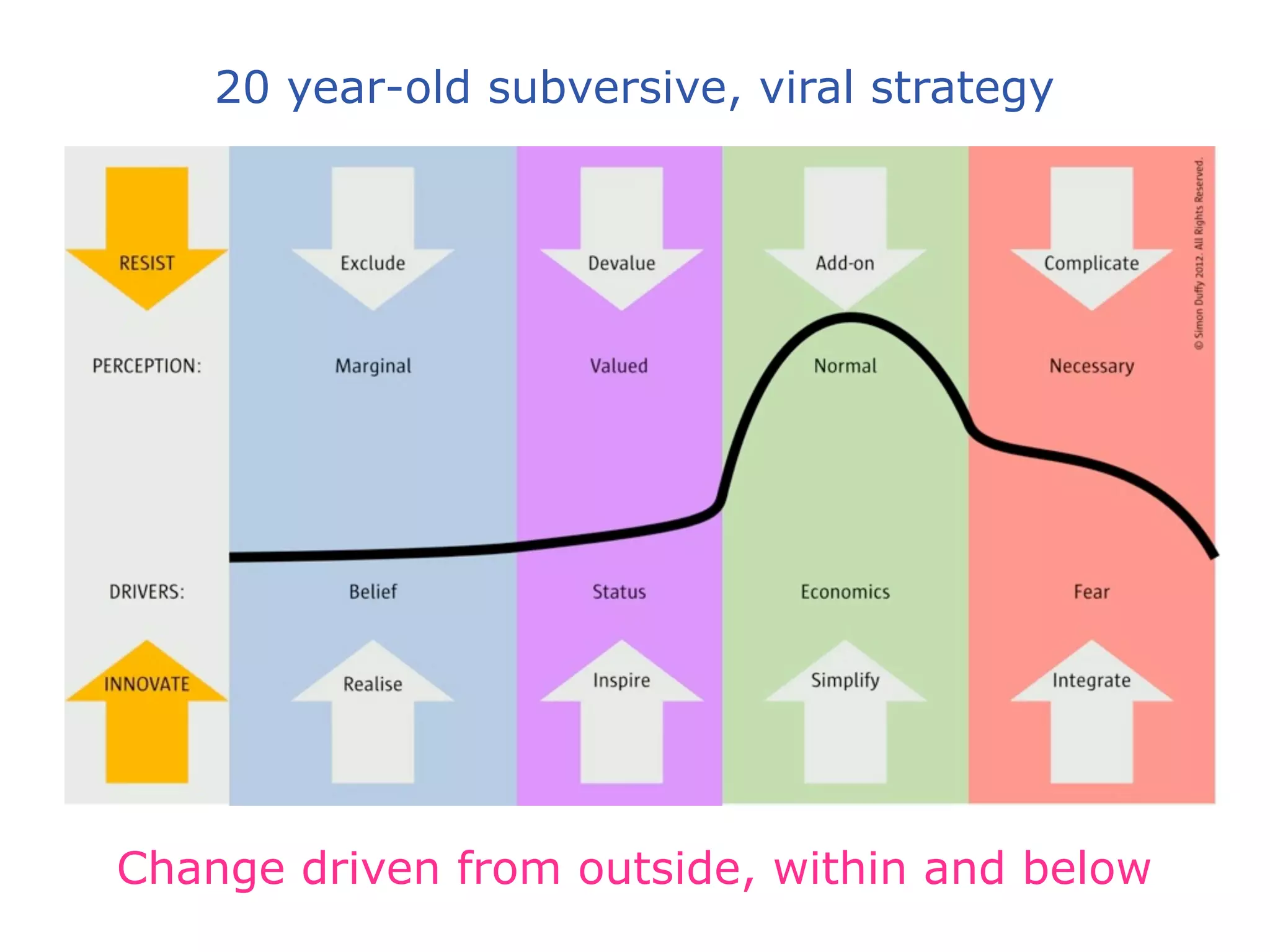
20 year-old subversive, viral strategy


Change driven from outside, within and below
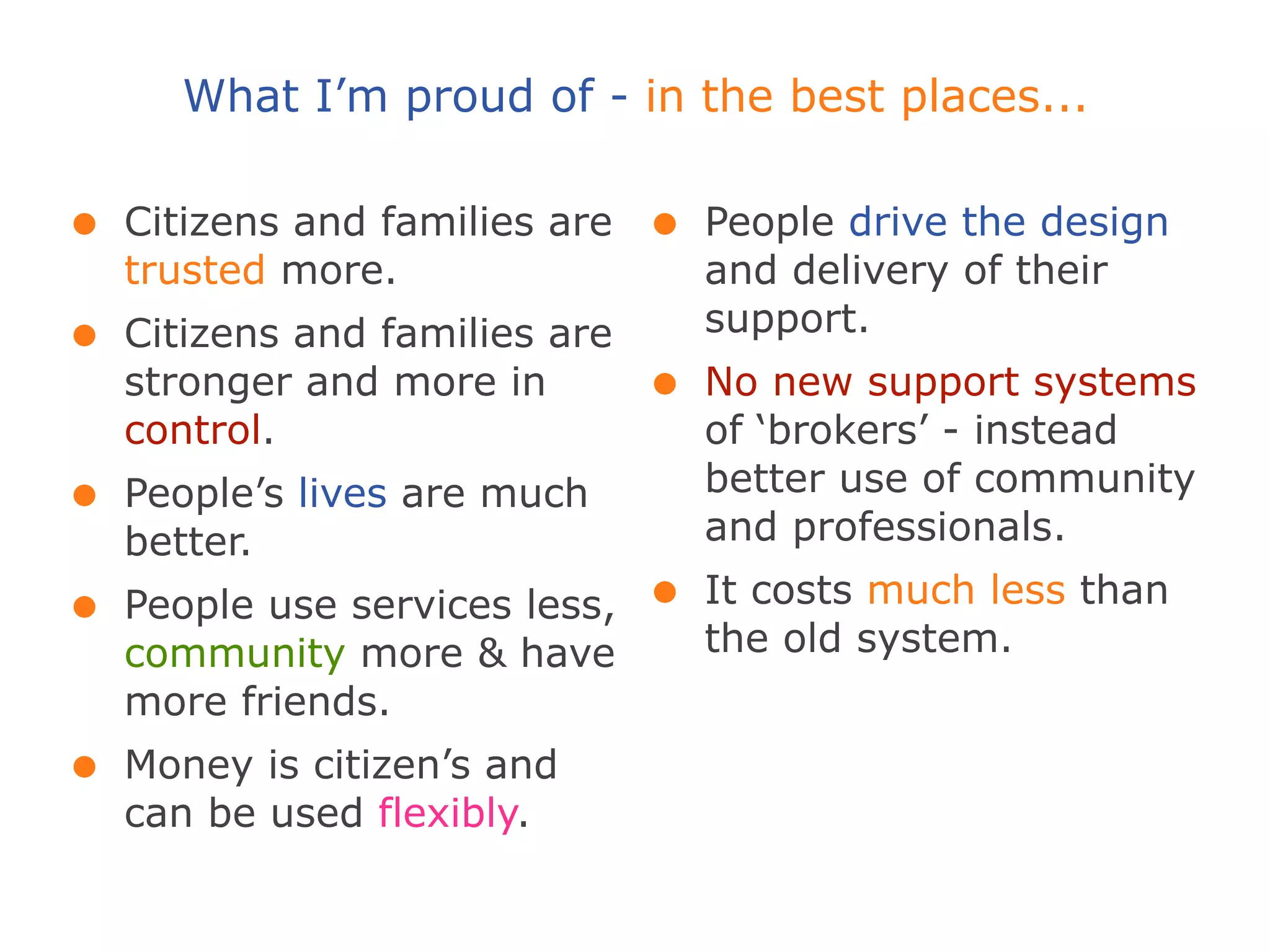
What I’m proud of - in the best places...

•   Citizens and families are   •   People drive the design
    trusted more.                   and delivery of their
                                    support.
•   Citizens and families are
    stronger and more in        •   No new support systems
    control.                        of ‘brokers’ - instead
                                    better use of community
•   People’s lives are much
                                    and professionals.
    better.
•   People use services less,   •   It costs much less than
    community more & have           the old system.
    more friends.
•   Money is citizen’s and
    can be used flexibly.
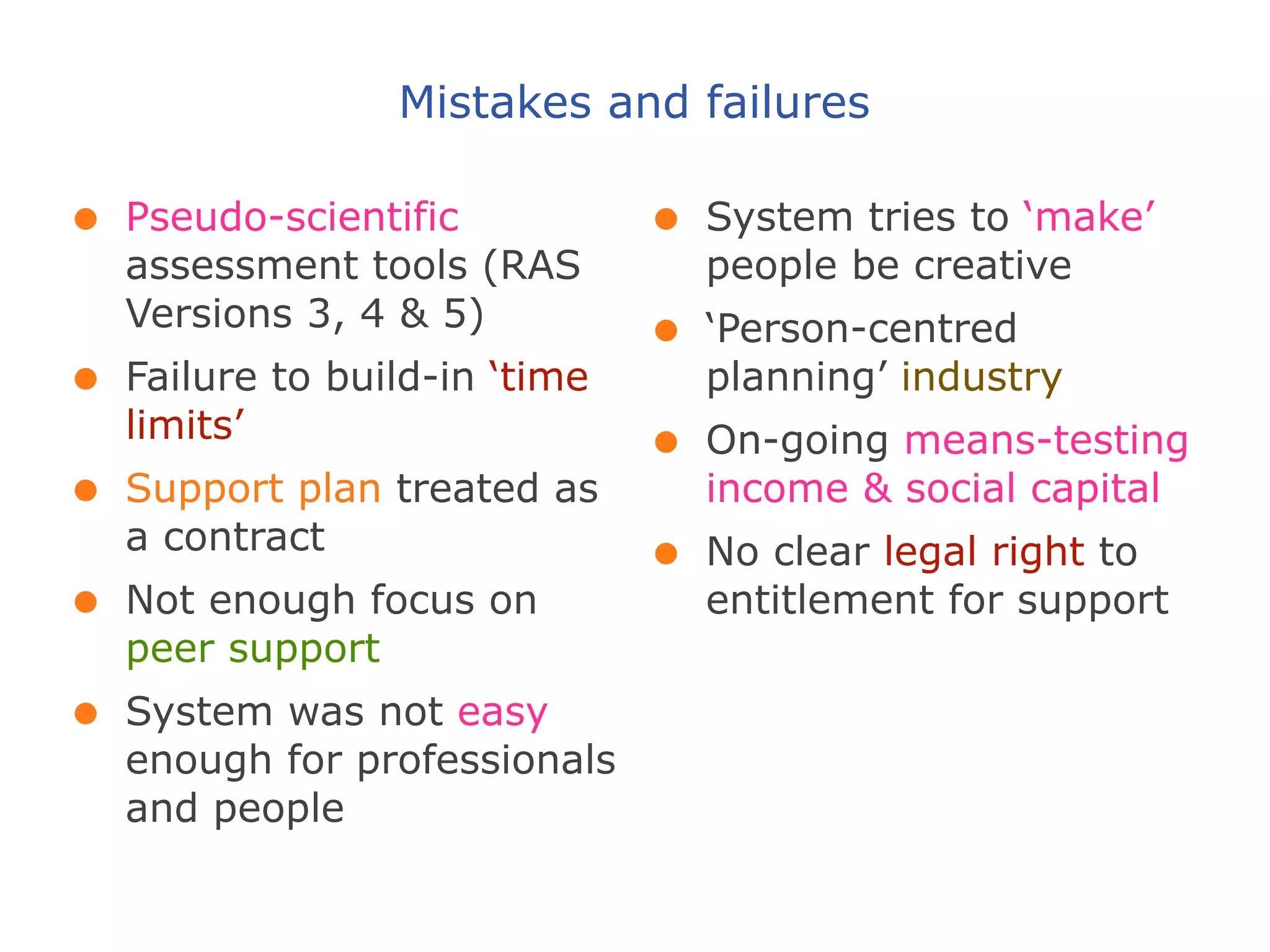
Mistakes and failures

•   Pseudo-scientific           •   System tries to ‘make’
    assessment tools (RAS           people be creative
    Versions 3, 4 & 5)
                                •   ‘Person-centred
•   Failure to build-in ‘time       planning’ industry
    limits’
                                •   On-going means-testing
•   Support plan treated as         income & social capital
    a contract
                                •   No clear legal right to
•   Not enough focus on             entitlement for support
    peer support
•   System was not easy
    enough for professionals
    and people
Things to think about


How can we keep improving our own model of
self-directed support?

What is worth pushing for?

How can we set the best possible standard for the
implementation of NDIS?

How can we partner with people with disabilities
and families take a greater leadership role?
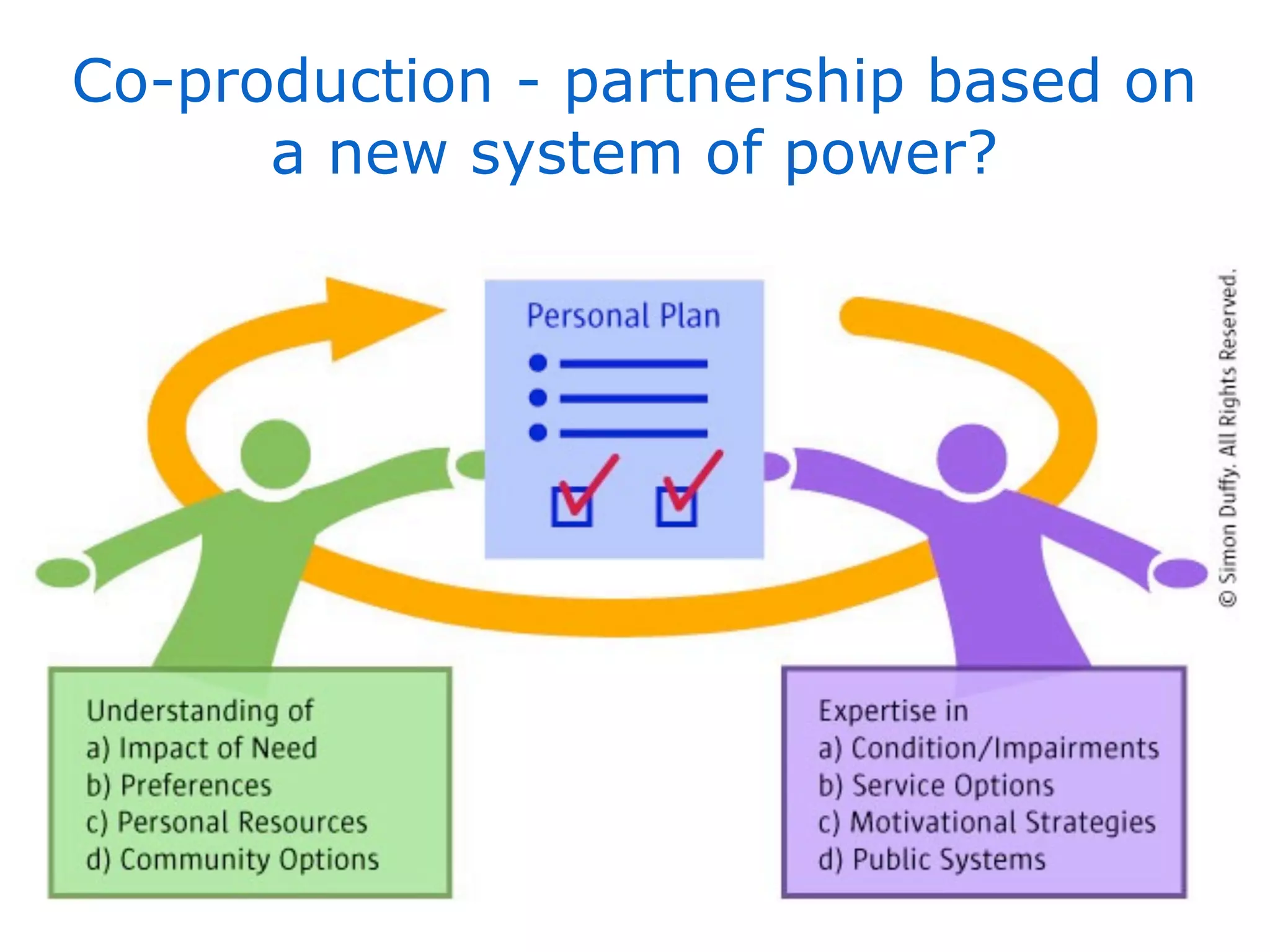
Co-production - partnership based on
      a new system of power?
Schools can lead the way...
Jonathan’s story
For the 3 years before 150 days in hospital -
responding to problems with breathing.
In the 3 years after leaving hospital he has spent
only 2 nights in hospital - for elective dental
treatments.
Personalised learning - on the job - 2 City & Guilds
Qualifications.
Saving NHS, LA & Education
•Over £100,000 in hospital stays
•Over £300,000 in residential care costs
•Over £100,000 of funding contributed by the LSC
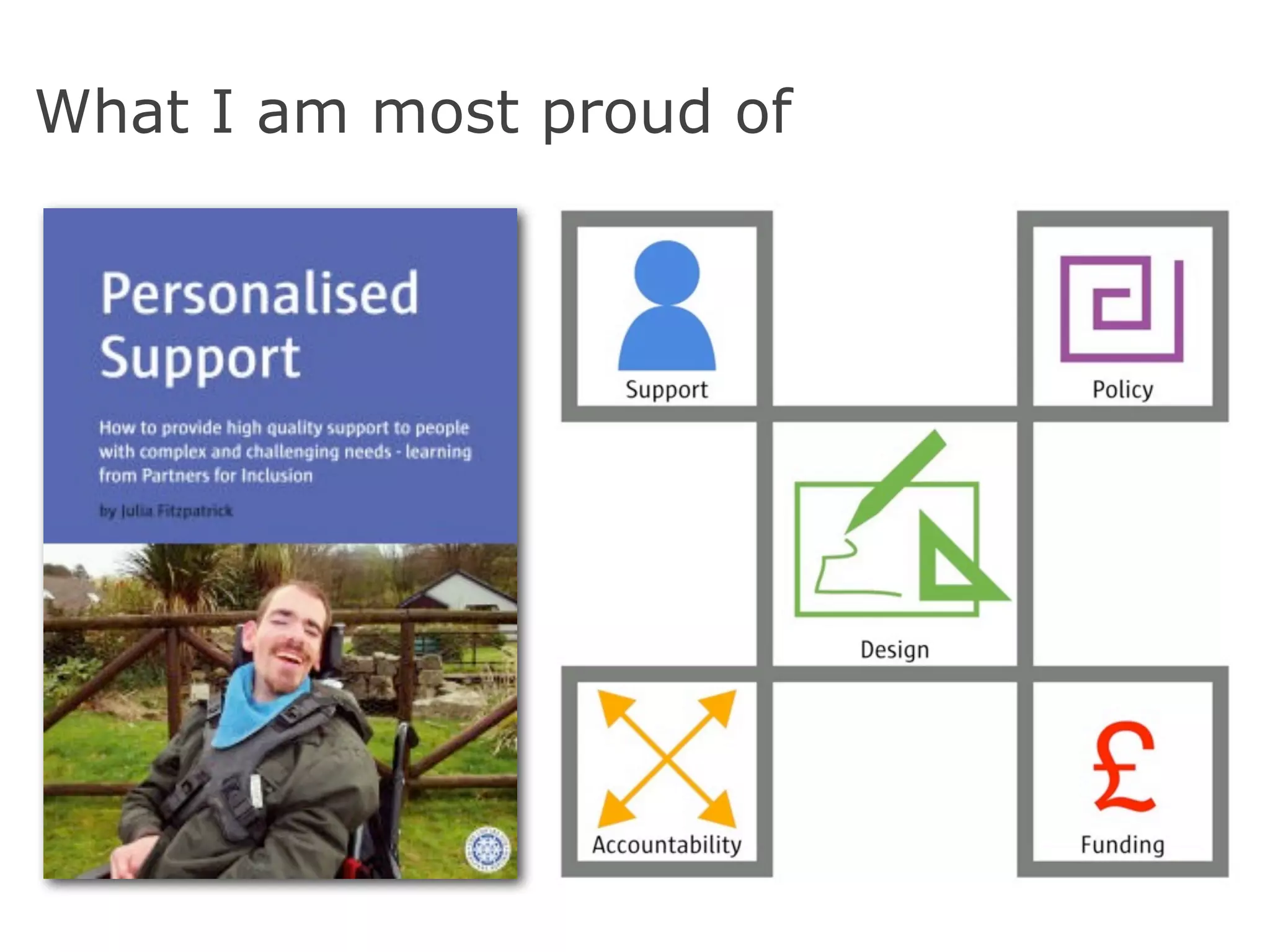
What I am most proud of
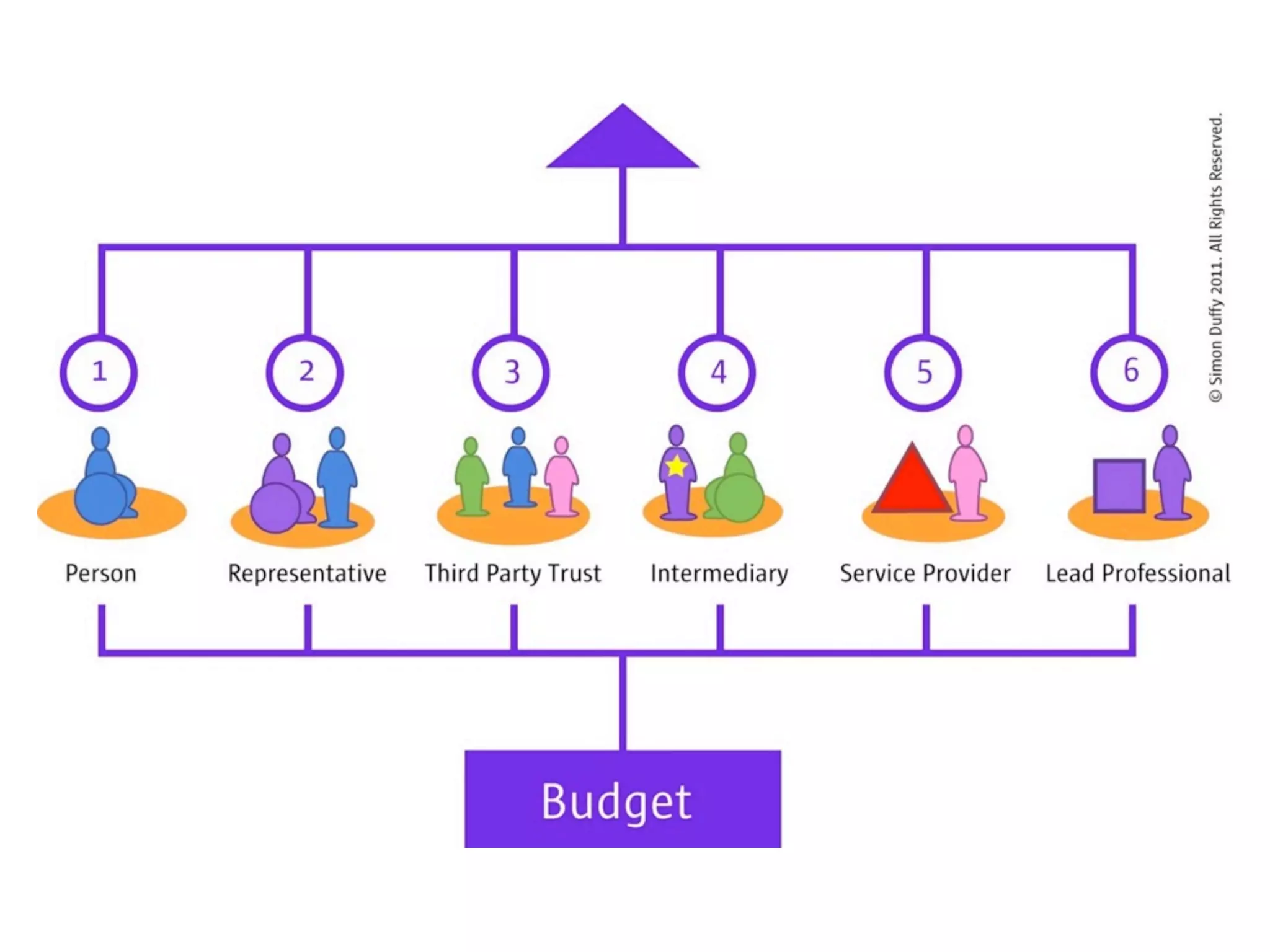
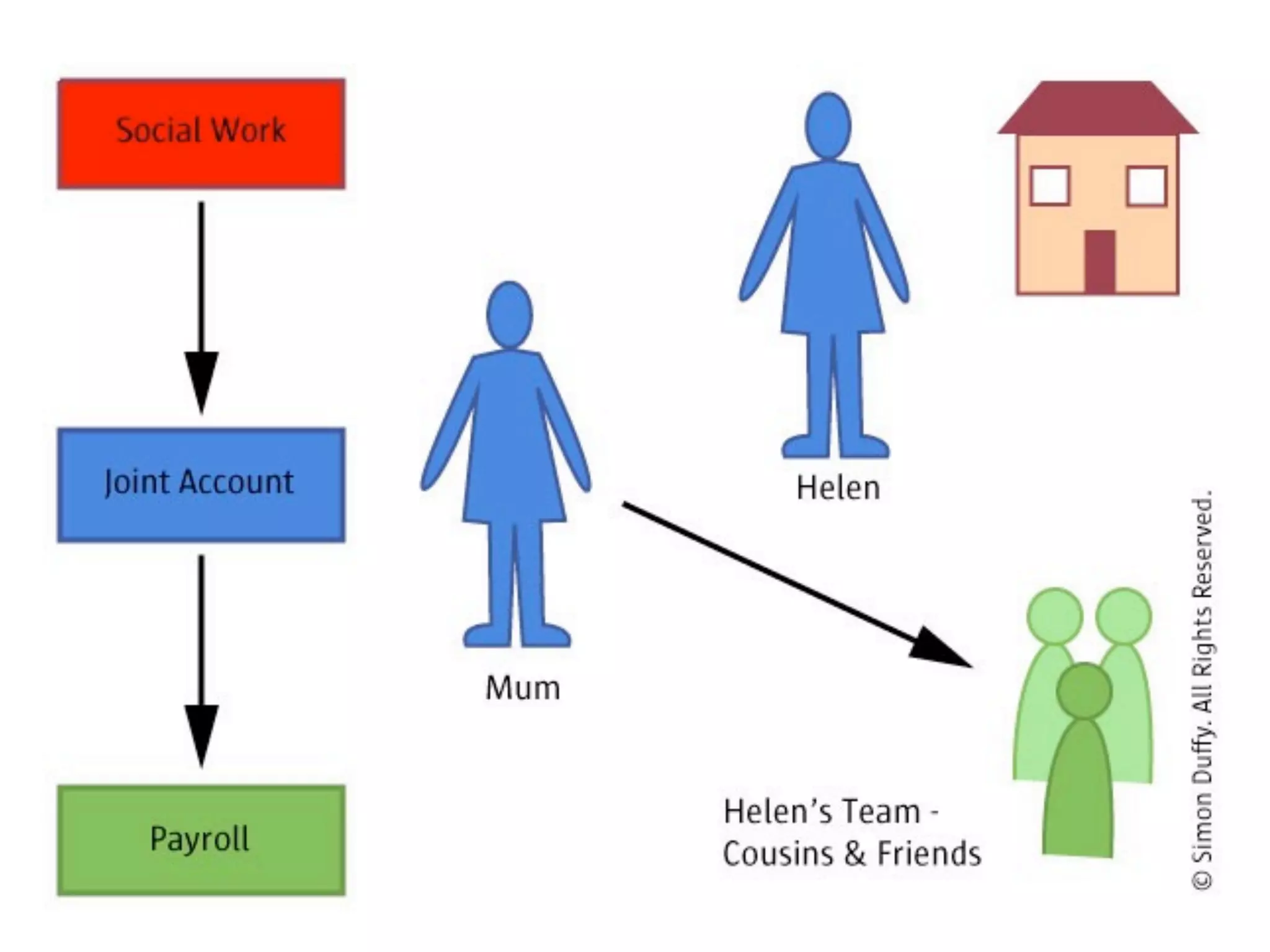
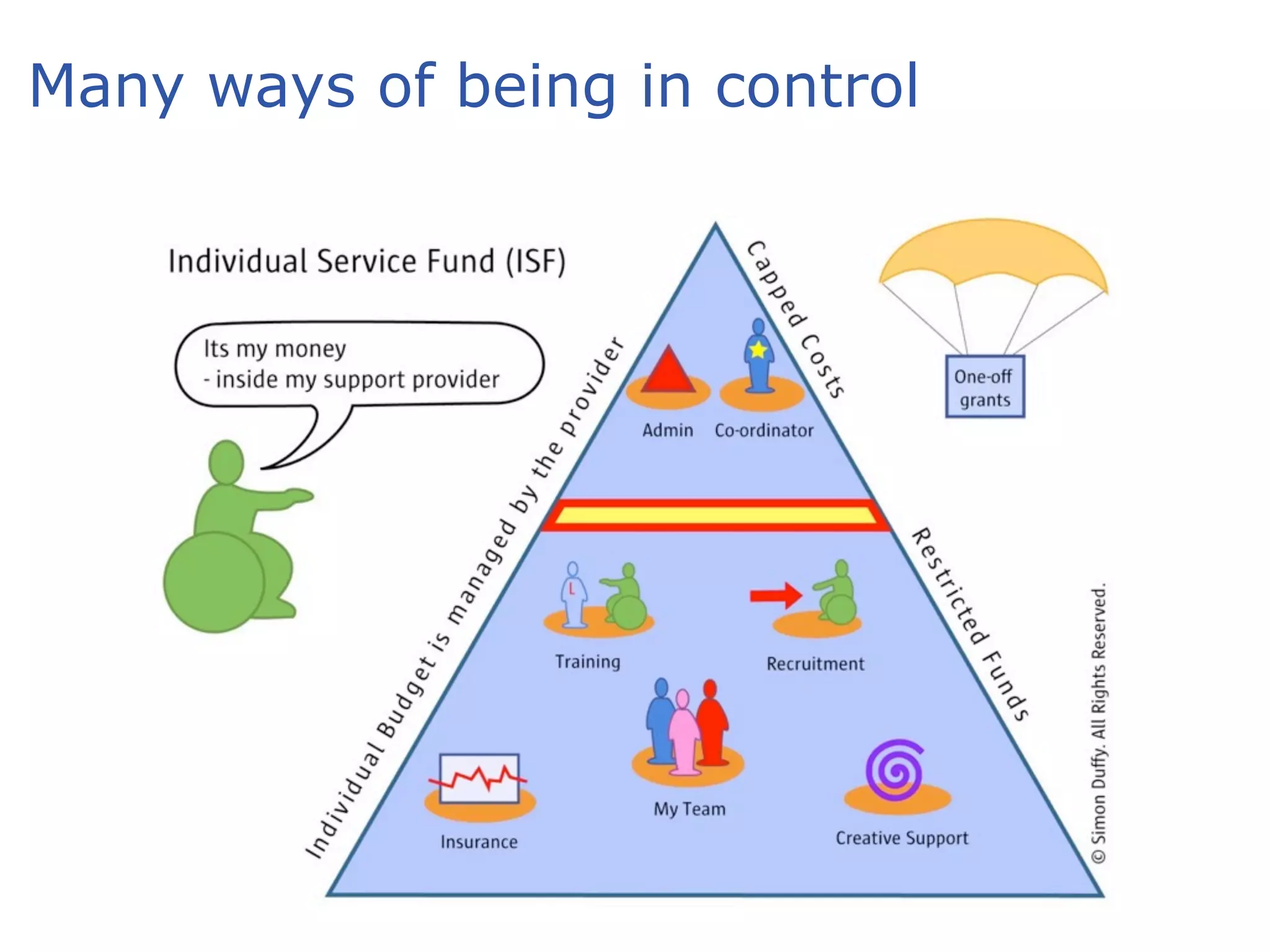
Many ways of being in control
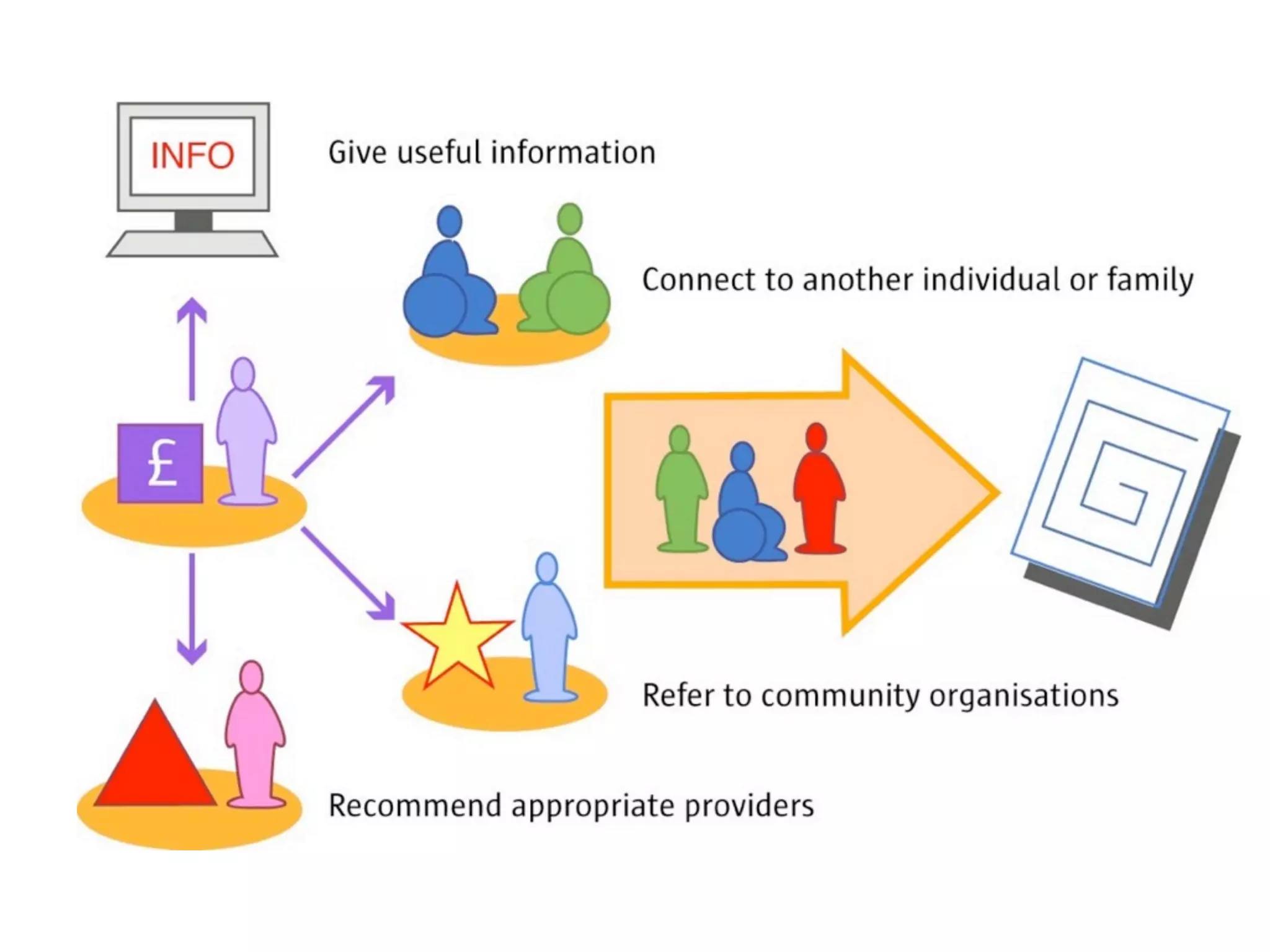
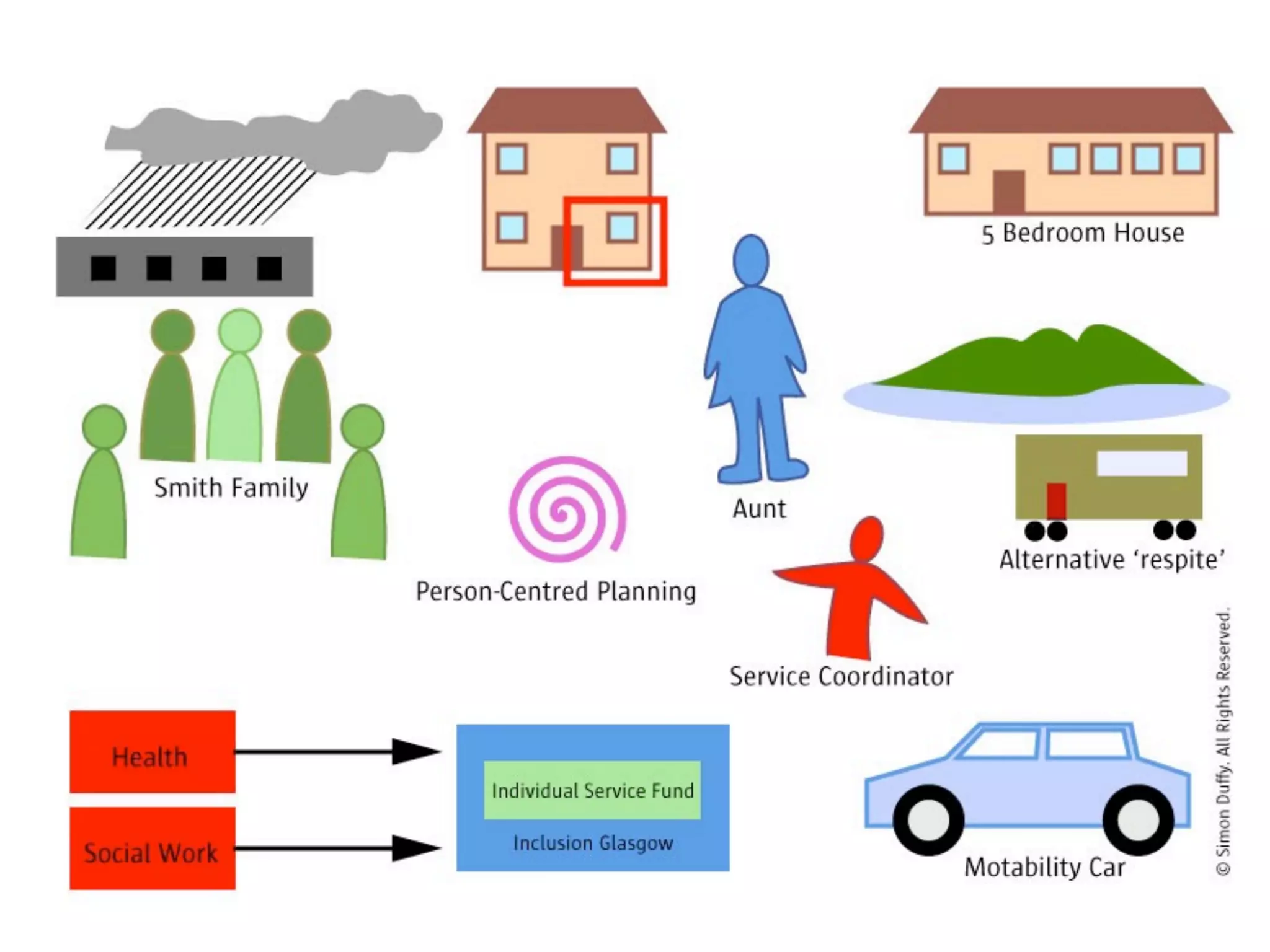
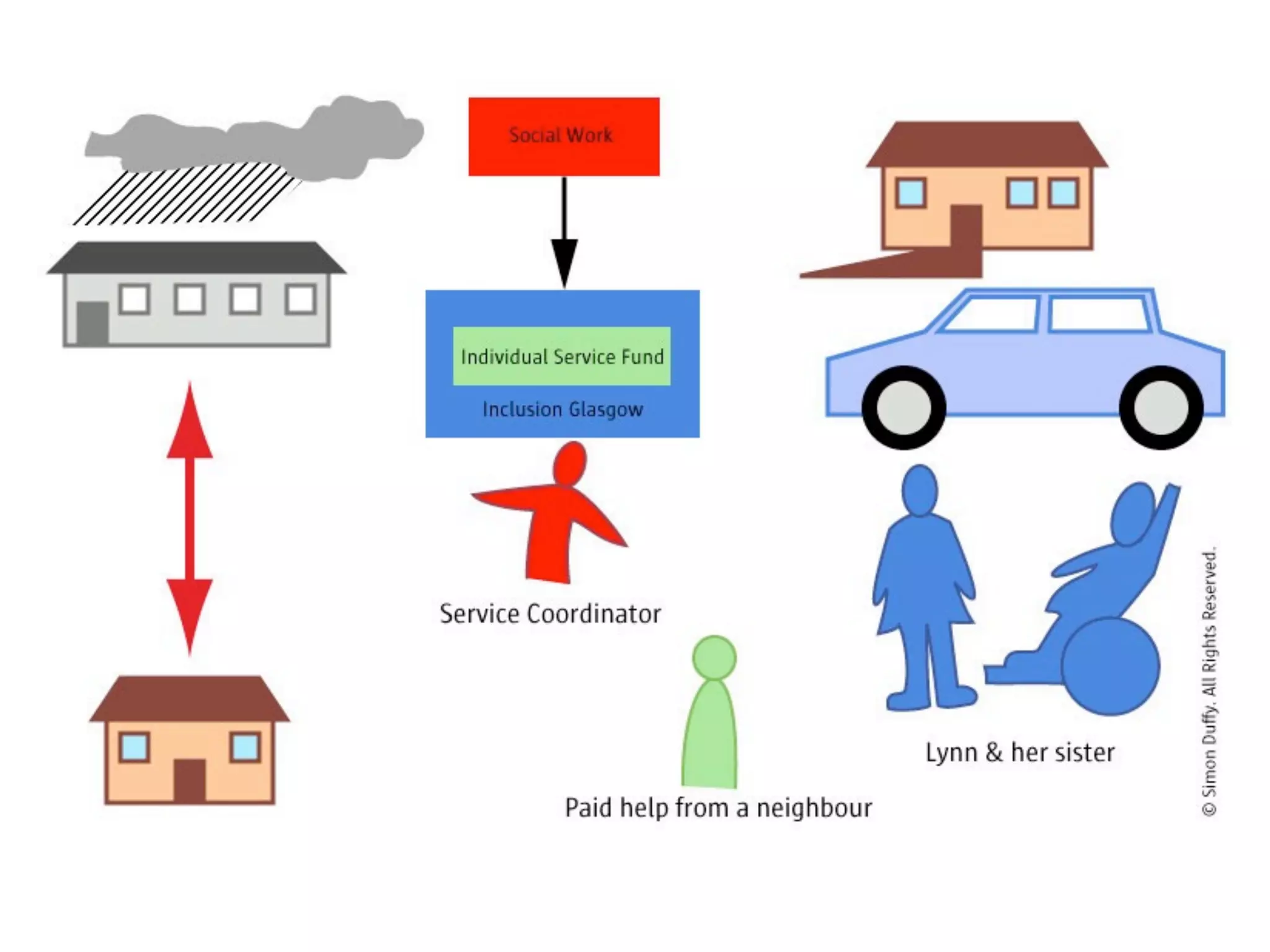
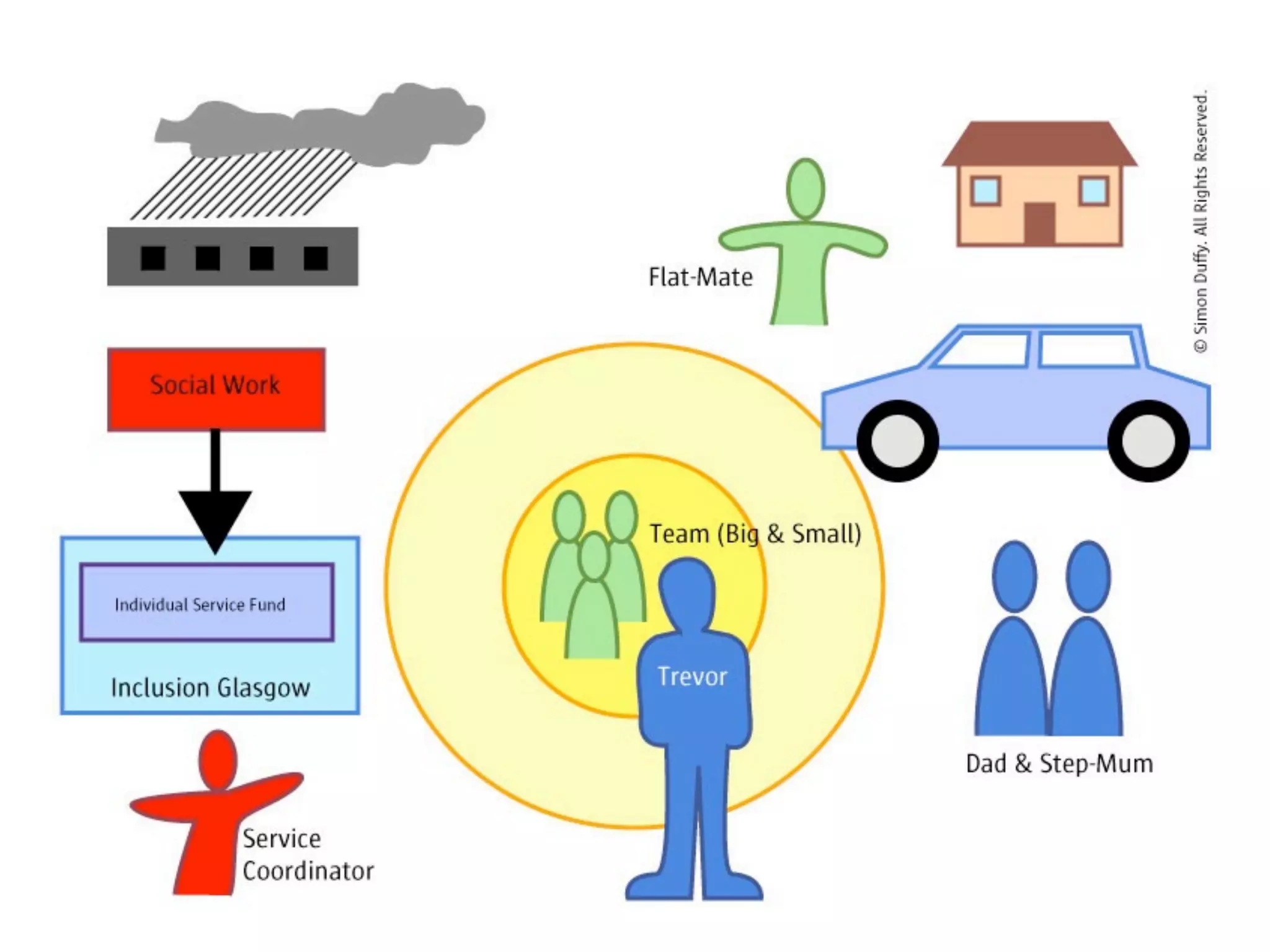
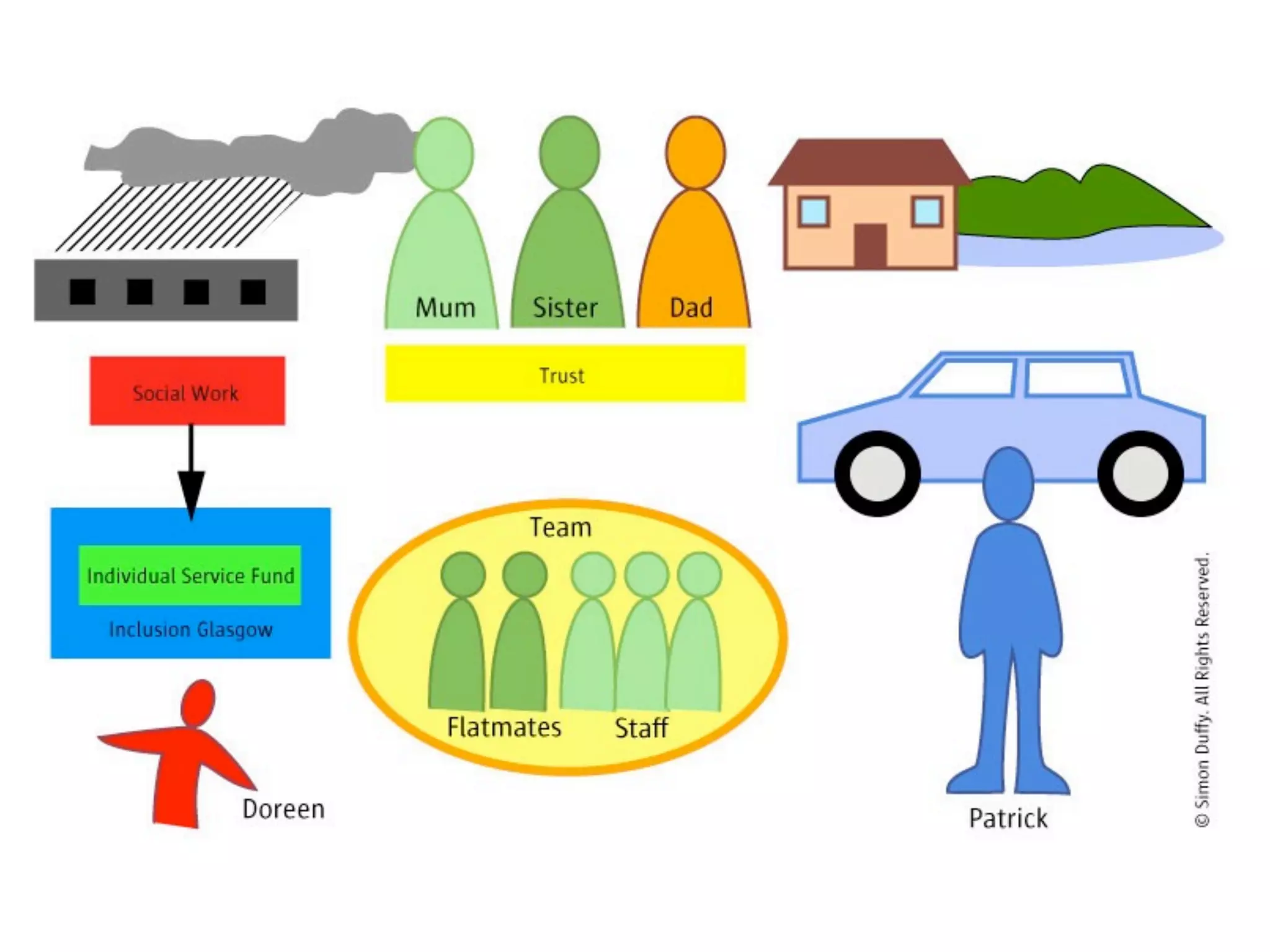
You can use Individual Service Funds to have your
budget managed for you
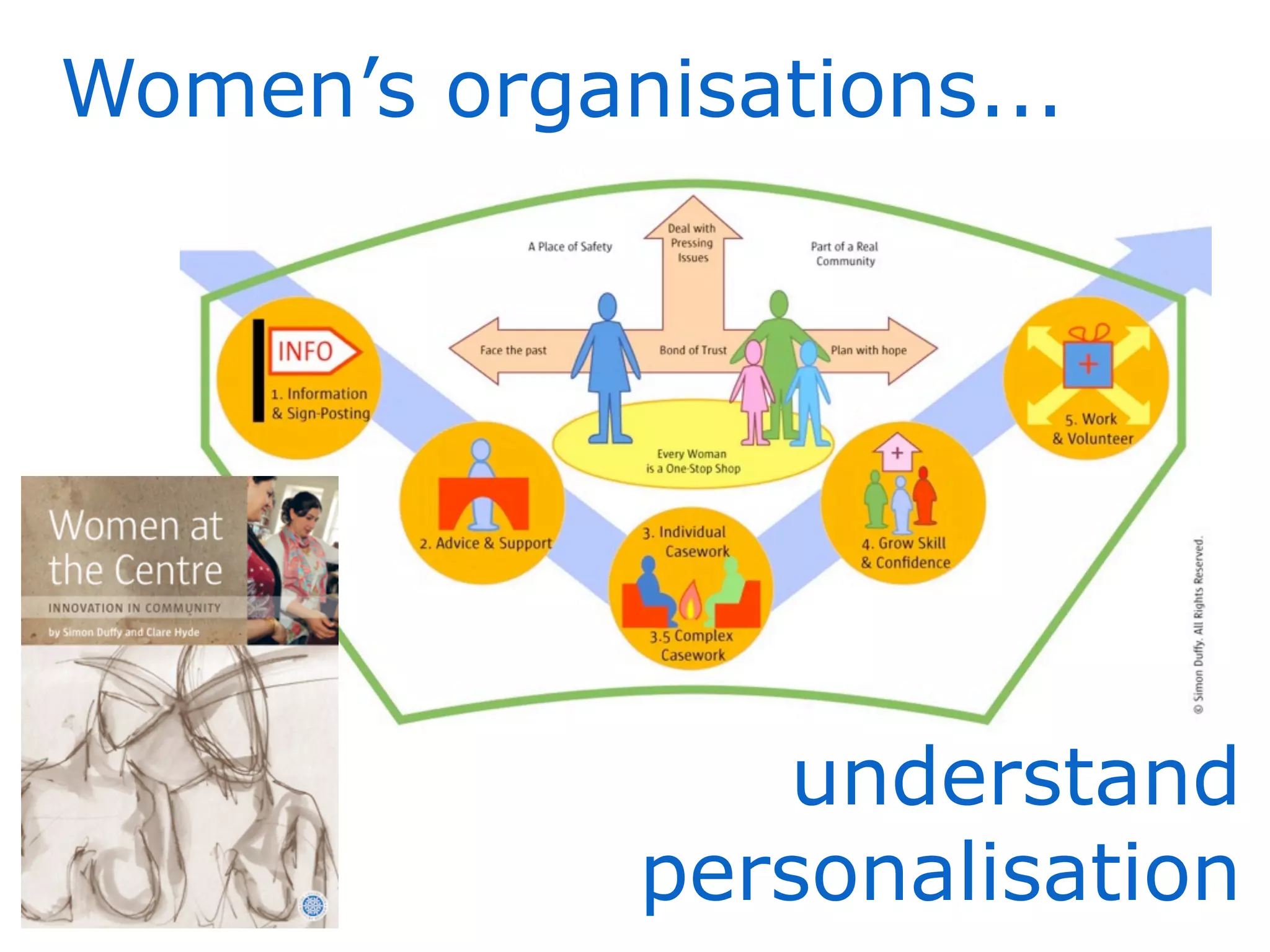
Women’s organisations...


                understand
             personalisation
Local Area
Coordination


Creating solutions
in community
Self-directed support - its my life
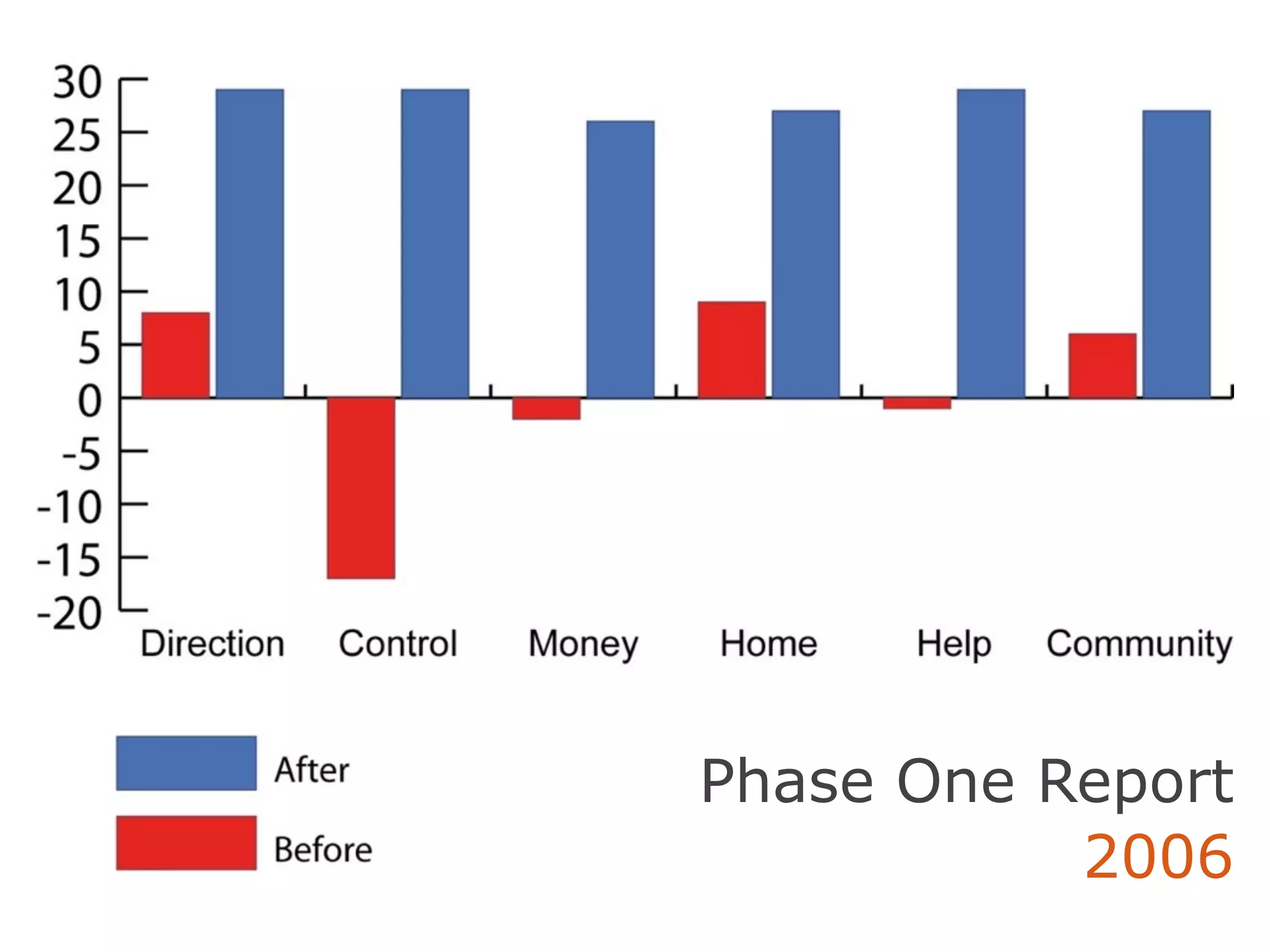
Phase One Report
           2006
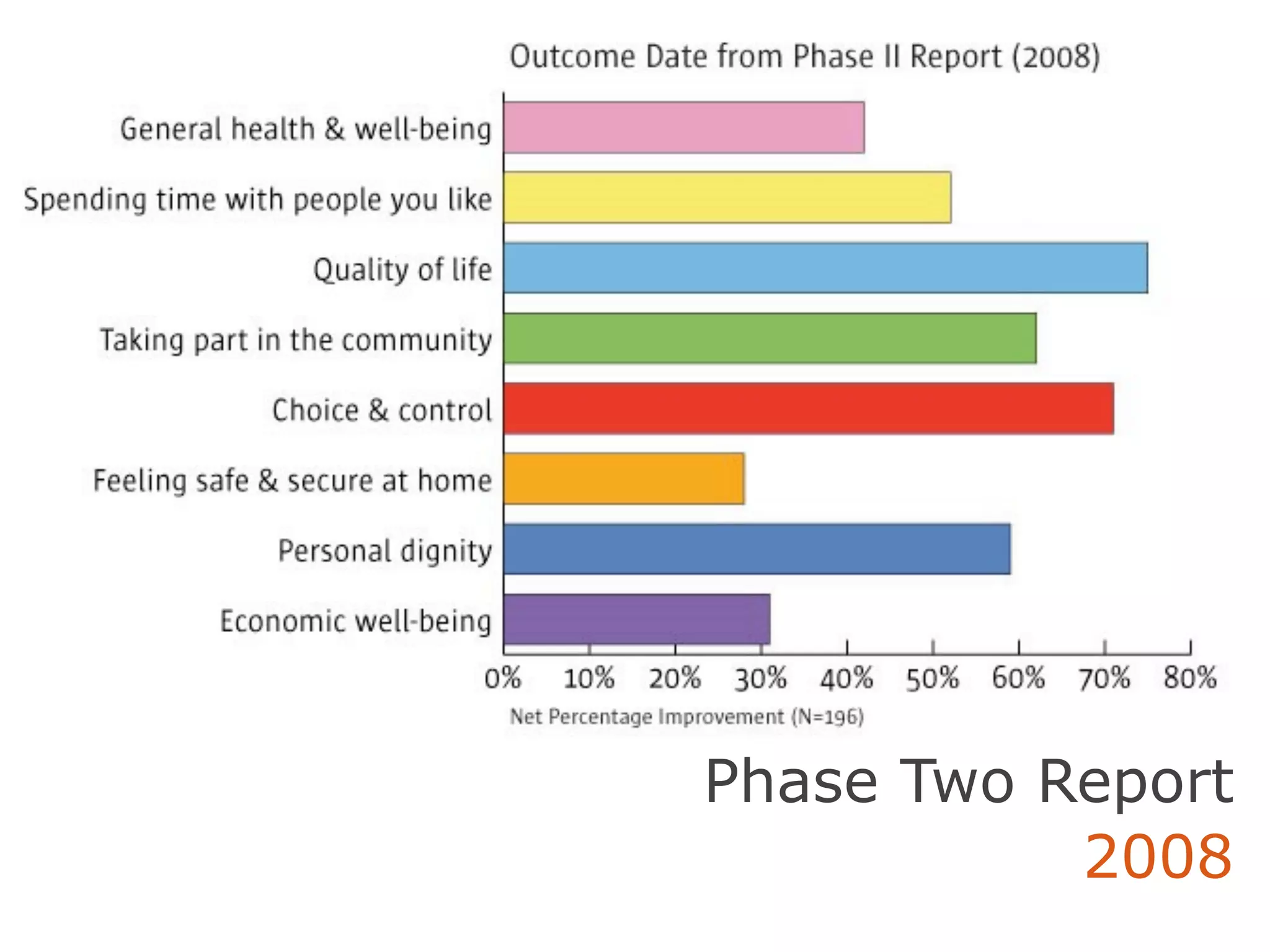
Phase Two Report
           2008
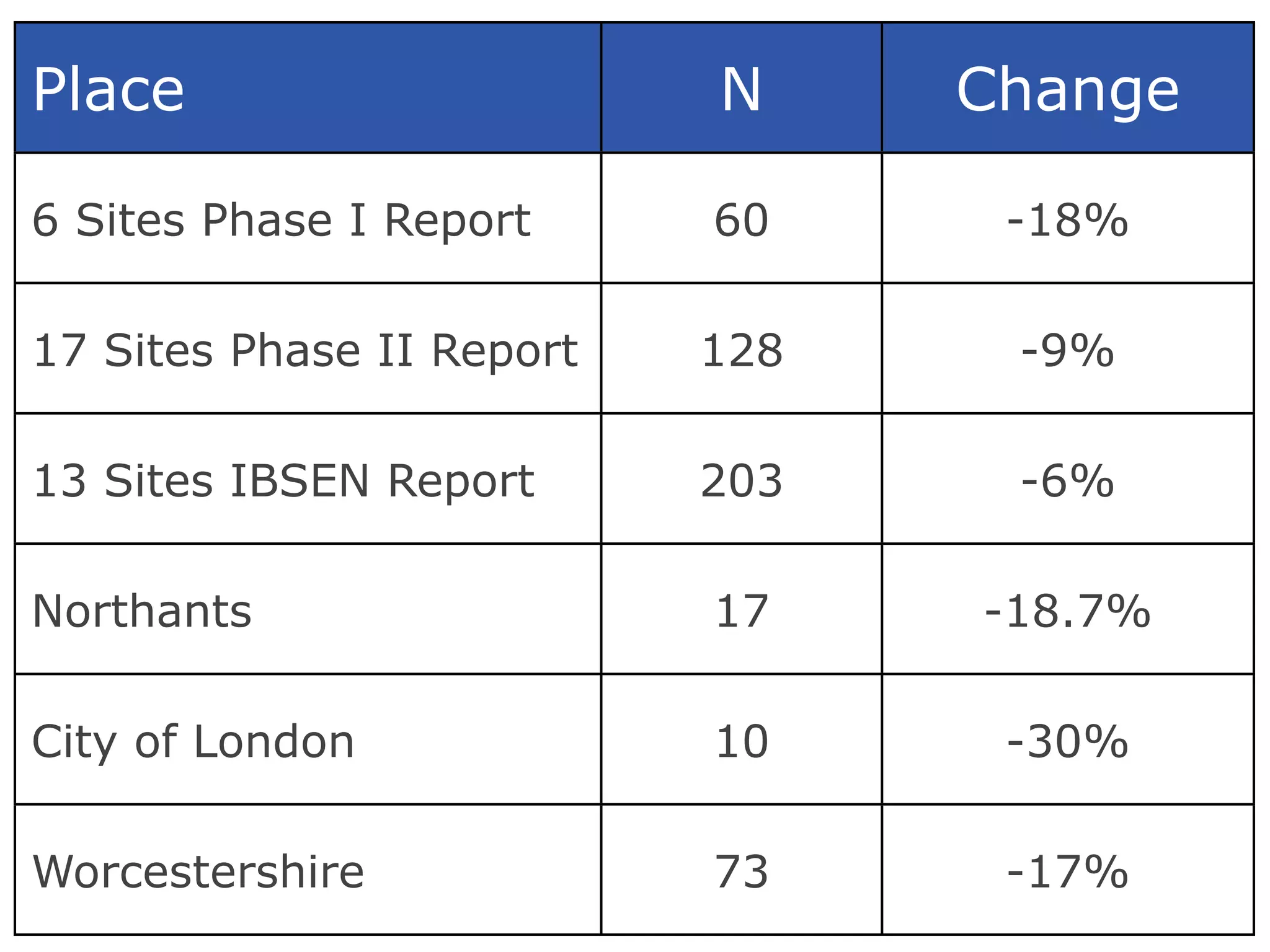
Place                      N     Change

6 Sites Phase I Report     60     -18%

17 Sites Phase II Report   128    -9%

13 Sites IBSEN Report      203    -6%

Northants                  17    -18.7%

City of London             10     -30%

Worcestershire             73     -17%
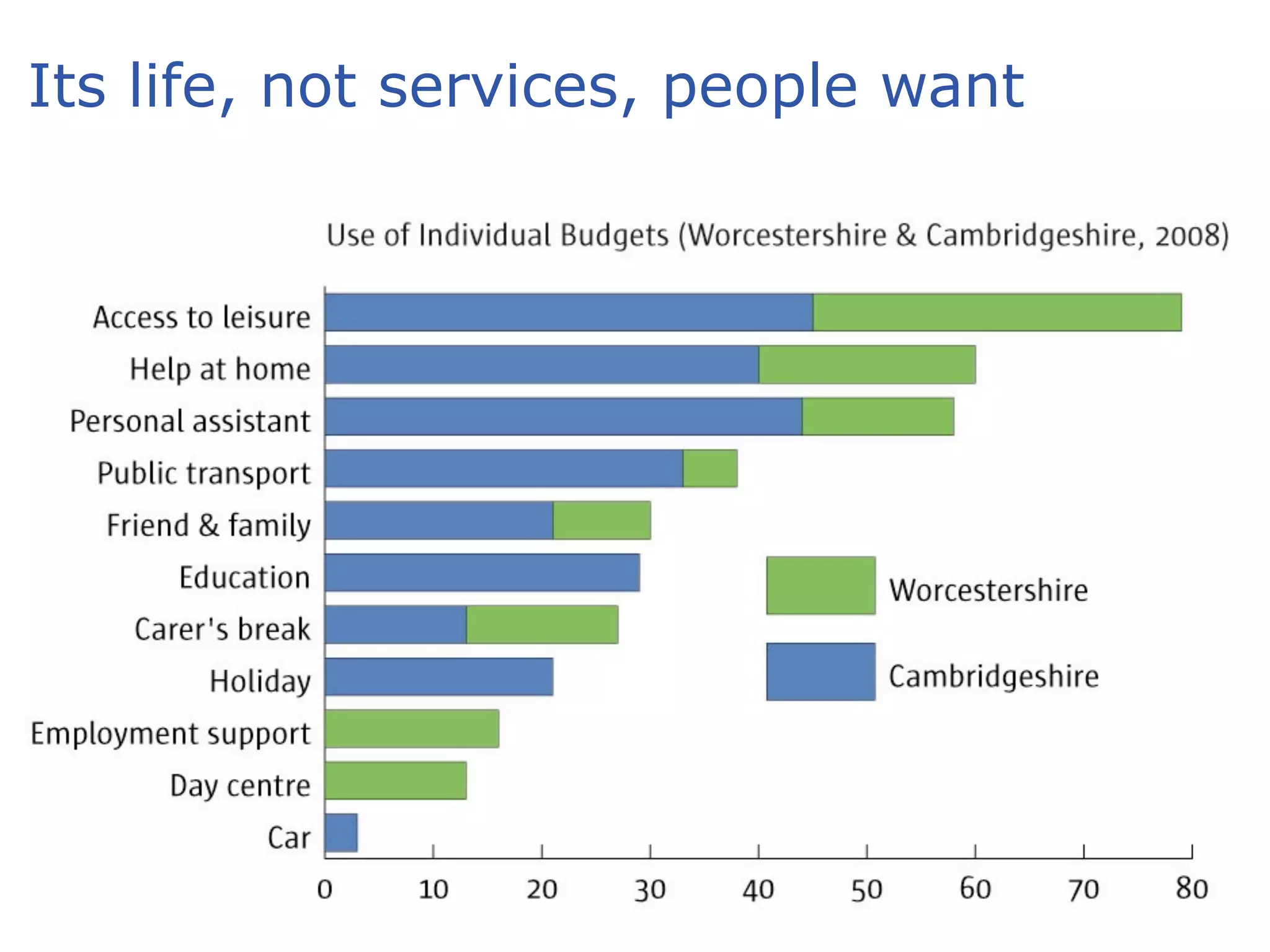
Its life, not services, people want
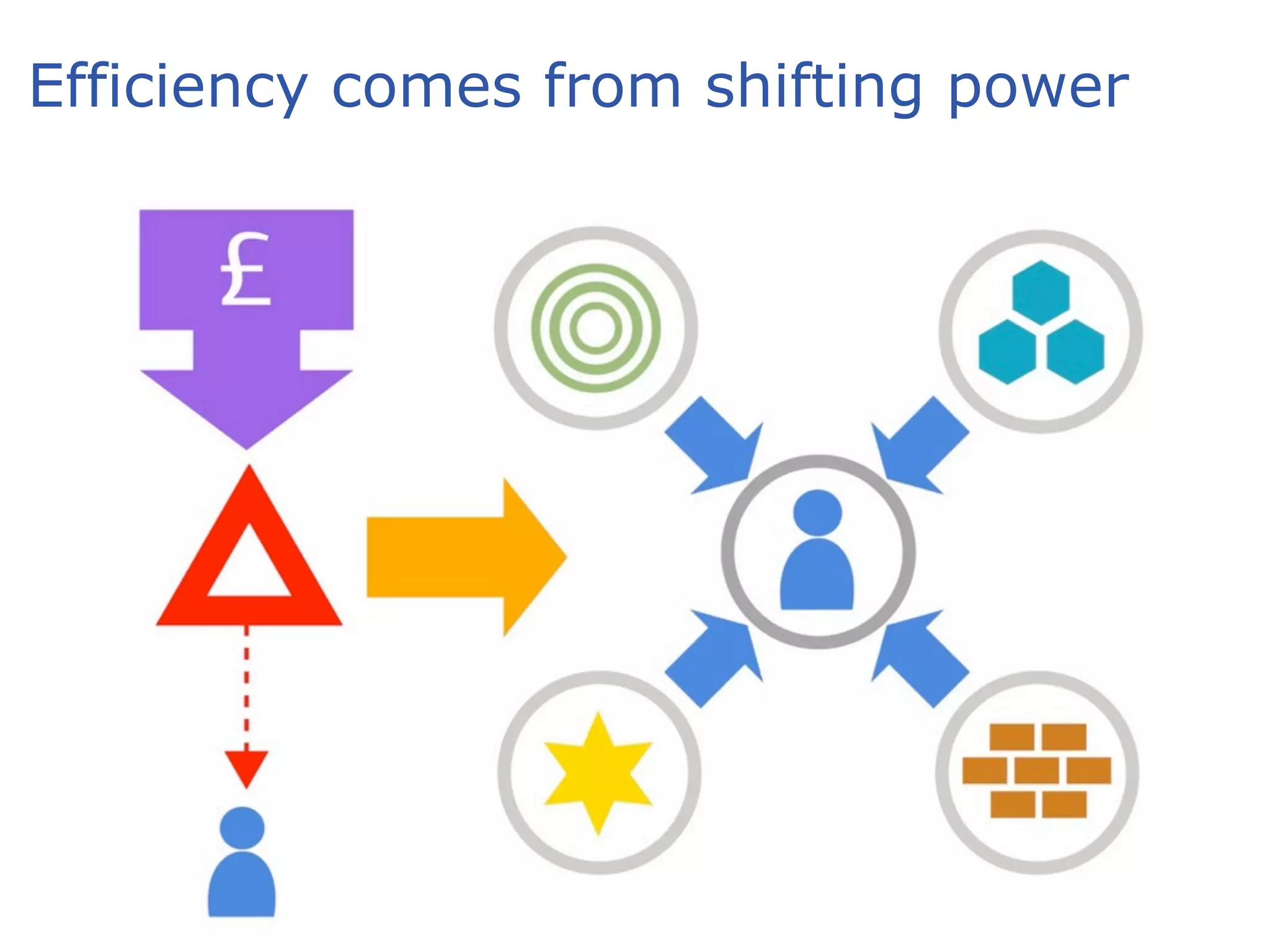
Efficiency comes from shifting power
right to be a citizen - full
1. Independent living
                      access to ordinary life
                         we have the right to
2. Entitlement
                         enough help for citizenship
                         we have the right to be in
3. Self-determination
                         control of our own lives
                         the rules & systems will be
4. Openness
                         clear and fair
                         we are free to use our
5. Flexibility
                         money as we see fit
                         we will share what we are
6. Learning
                         learning
                         we will each make a
7. Contribution
                         contribution
rethinking advocacy
You can’t procure the best stuff
It can’t always be government money
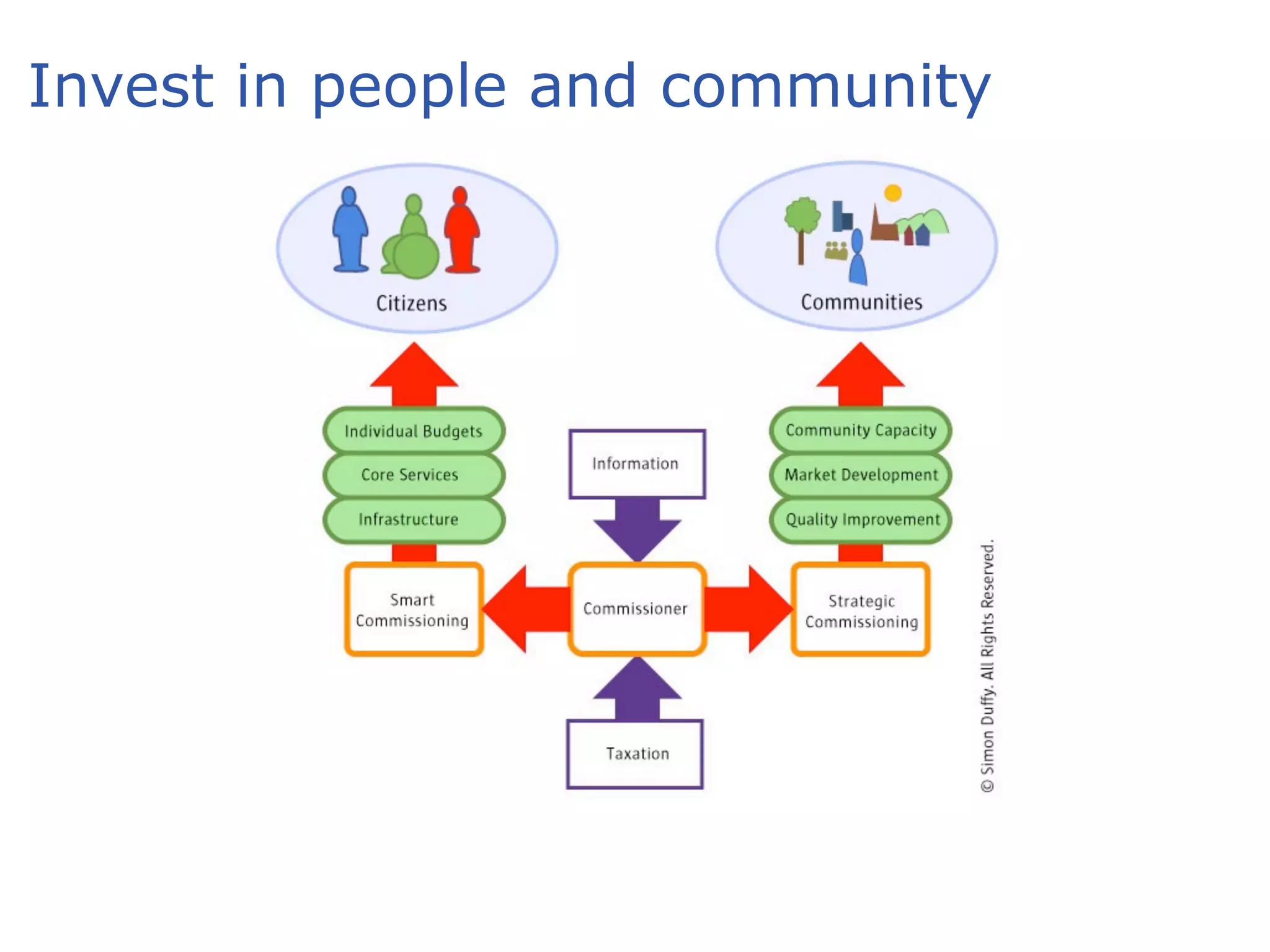
Invest in people and community
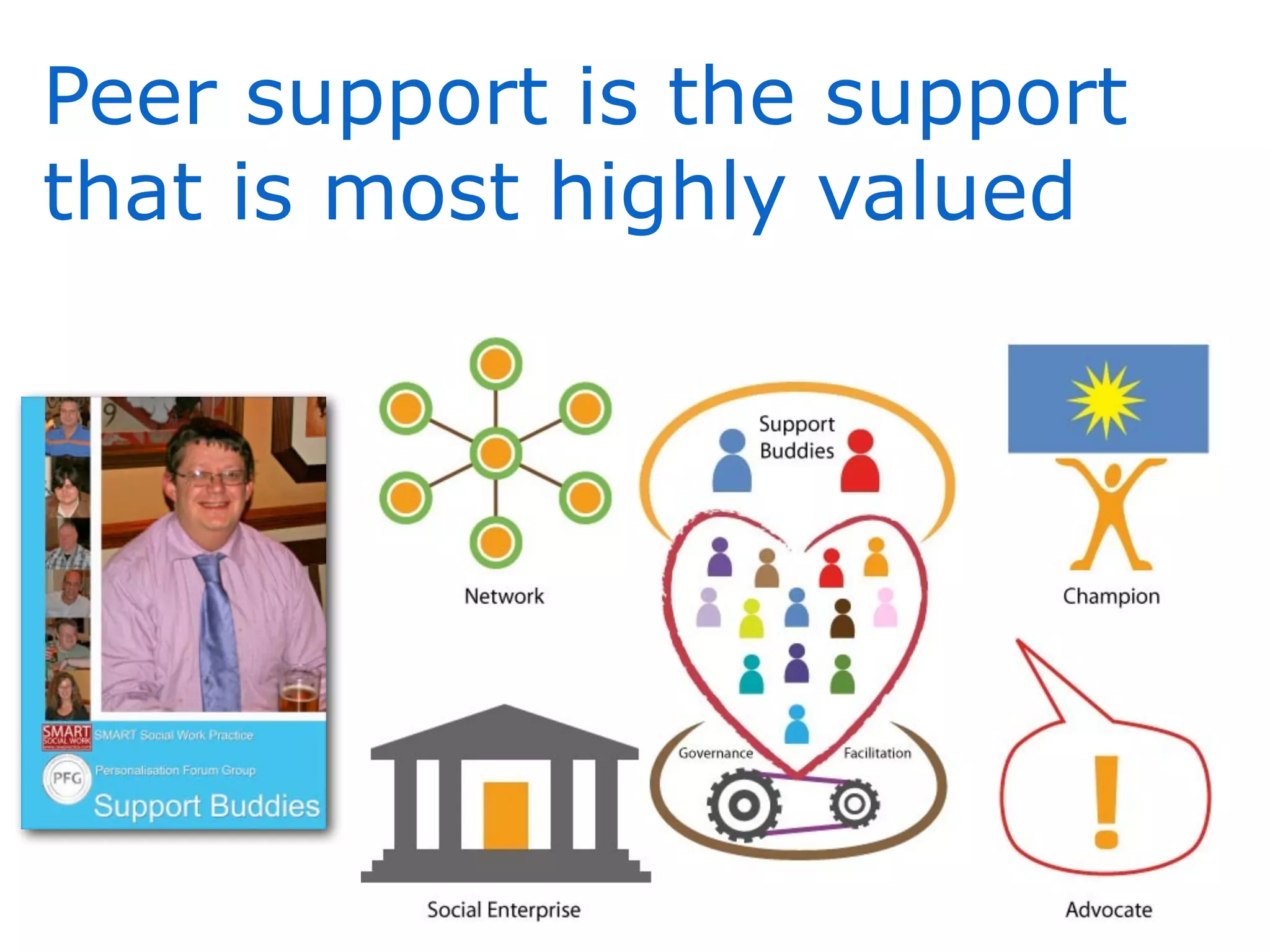
Peer support is the support
that is most highly valued
Real wealth is the means
Good support connects
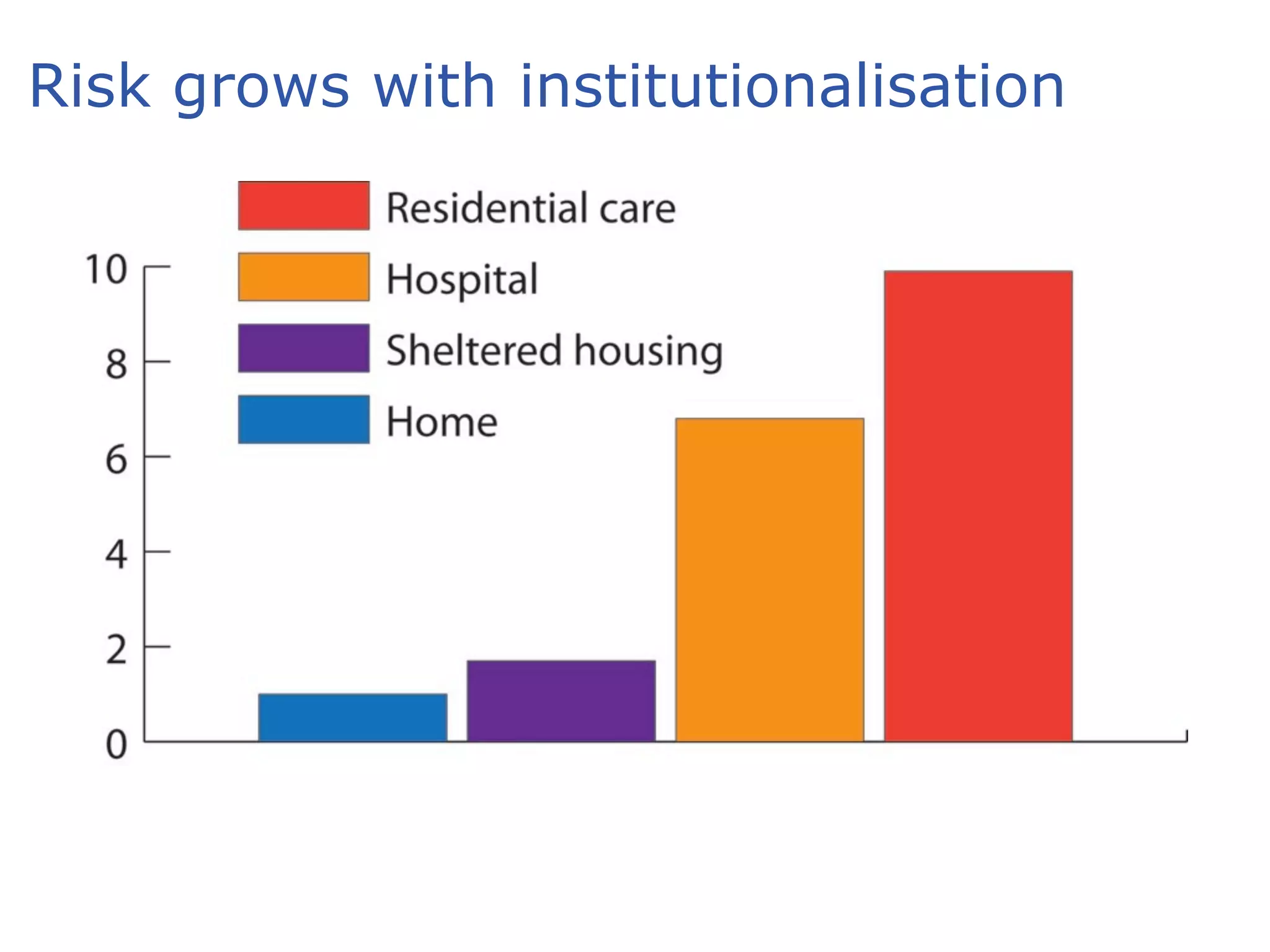
Risk grows with institutionalisation
Eligibility thresholds cause crises
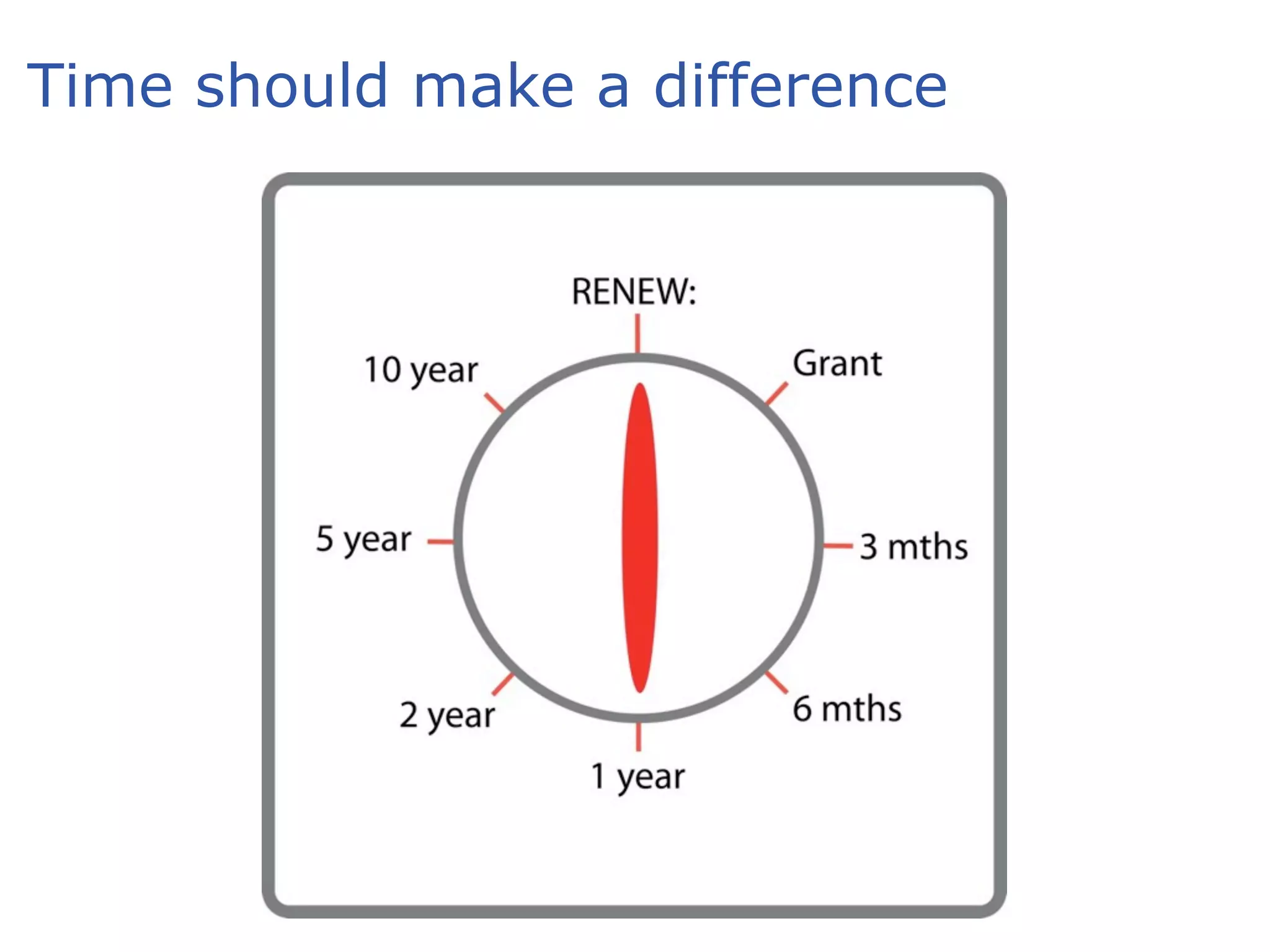
Time should make a difference
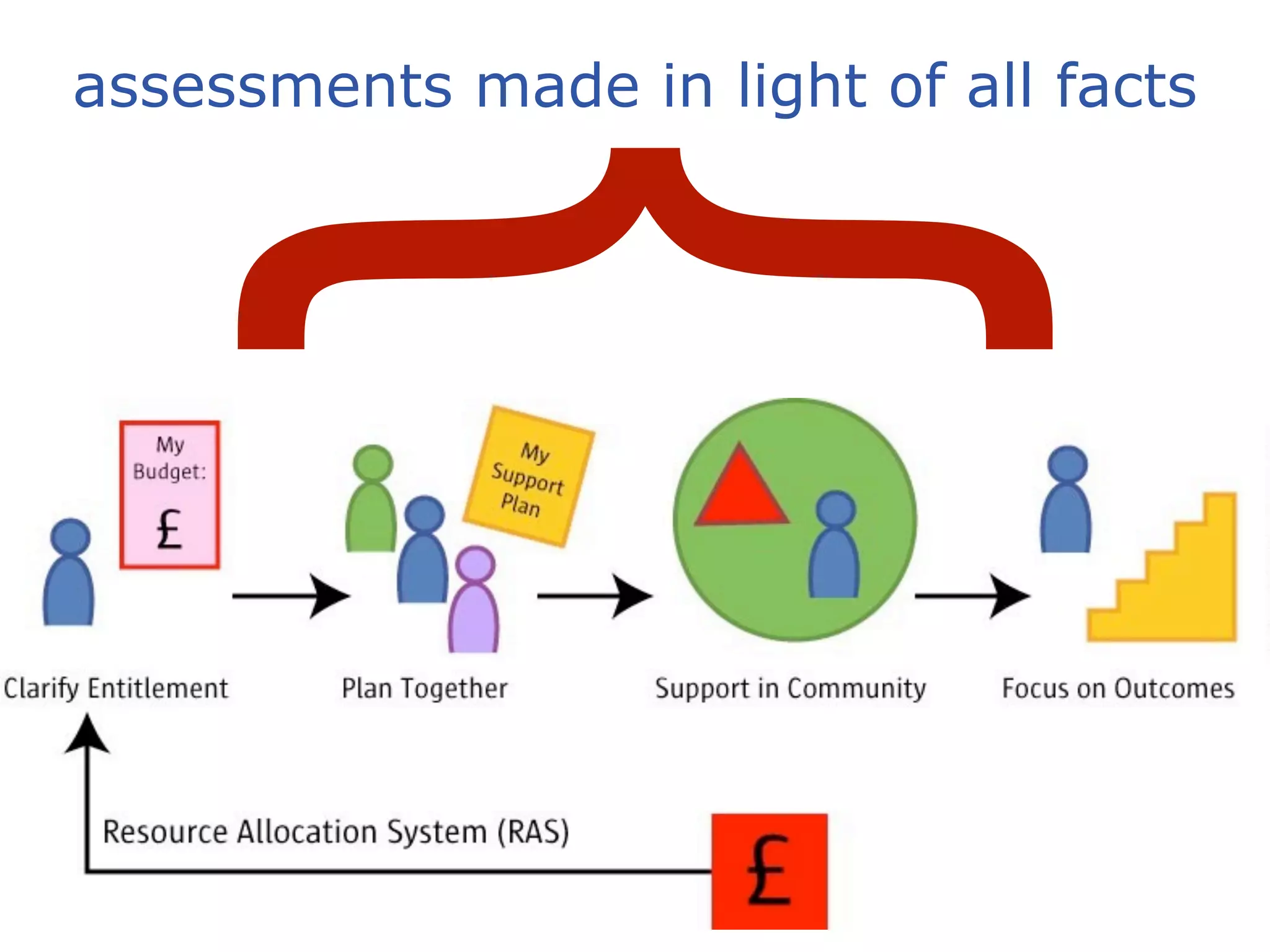
assessments made in light of all facts


     {
Questions people asked re NDIS
What support will there be for young people?
How do Auslan users stay informed?
How will we solve the problem of adversarial
culture?
Who is setting what is reasonable?
What about inclusion of people in the process?
How will funding levels be set?
Will it take too long?
How will we tackle wider cultural problems?
What will happen after Federal election?
What a good NDIS means to us
• People with disabilities designing      • People with disabilities must be in
    and running system                        control of the design of services -
•   Feels light, friendly, happy              don’t limit us to what we’ve seen
•   I can be empowered and                    - let us dream - then come back
    optimistic                                to reality
•   Help me get access arts, culture,     •   Greater focus on relationships
    community and the creative            •   Avoid increase in specialist
    community                                 disability services
•   Supports innovation, creativity -     •   Lets build networks
    it gives us power - if something is   •   don’t reinvent the wheel - lets
    not available we can build what           build on what we’ve got - SMF -
    we need                                   make it easy to connect
•   Lets us be connected to               •   We need to communicate better -
    community and in work                     its more about time to listen to us
•   Empowered to feel included            •   Universal building standards for
•   Gives opportunities to get our            the 21st century
    voice out there                       •   Power, control - people hear -
•   The money suits out lives - not           nobody to speak on my behalf
    just the systems                      •   Don’t let this be another
•   Its about the right kind of               disappointing grand initiative!
    personal relationship -
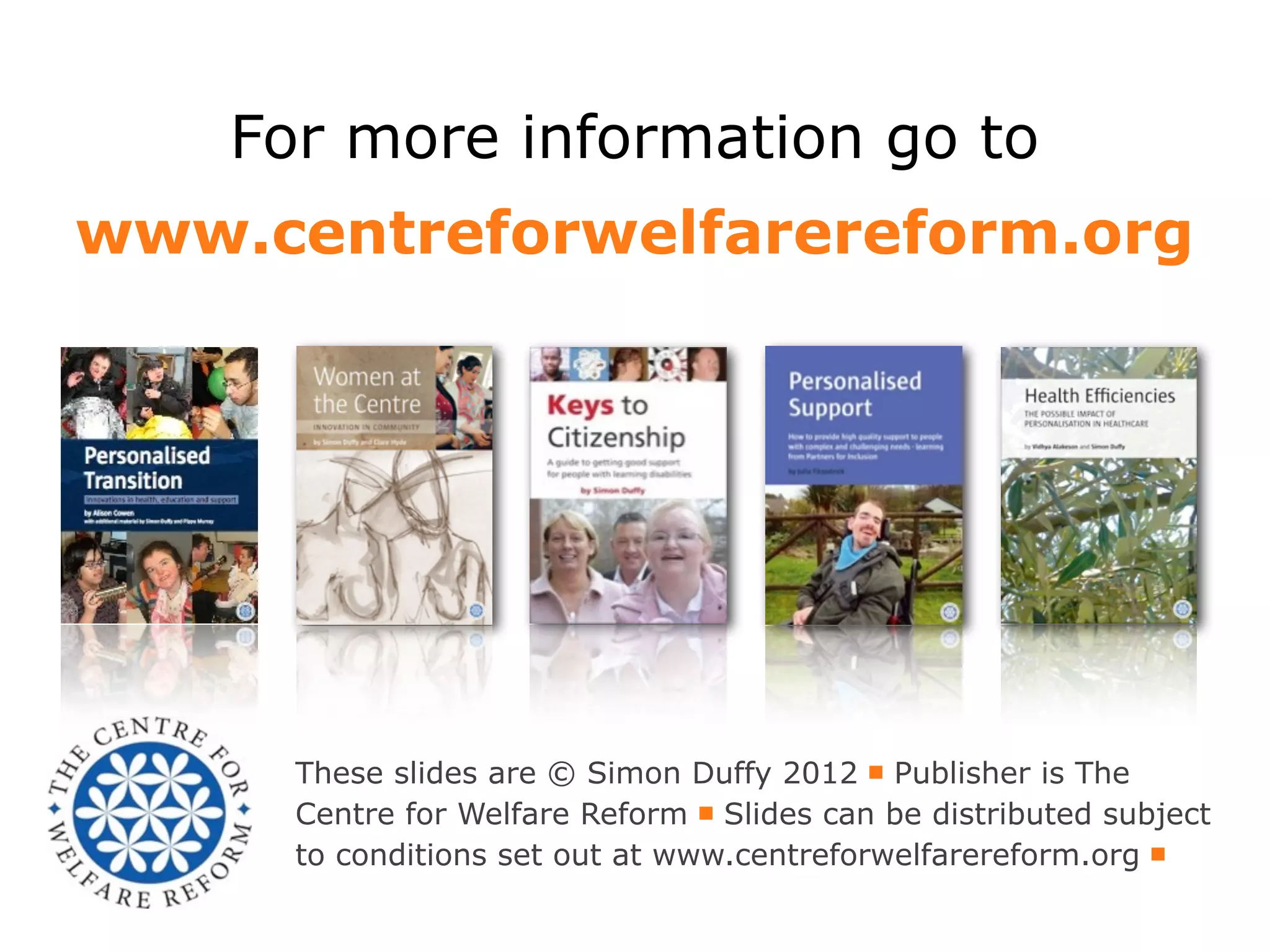
For more information go to
www.centreforwelfarereform.org


      These slides are © Simon Duffy 2012 ■ Publisher is The
      Centre for Welfare Reform ■ Slides can be distributed subject
      to conditions set out at www.centreforwelfarereform.org ■

Full Slide Set for South Australia

  • 1.
    Human Rights &Citizenship the meaning of self-directed support Dr Simon Duffy ■ The Centre for Welfare Reform ■ 17th October 2012 ■ Adelaide, South Australia ■
  • 2.
    The fight forreal entitlements Victories and defeats in England
  • 3.
    Simon Duffy -personal experiences 1. London (1990-94) - IF plus brokerage 2. Glasgow (1996-99) - ISFs and successful and radical programme of deinstitutionalisation 3. North Lanarkshire (1999-2002) - Self-directed support for families, reforming social work role 4. In Control (2003-2009) - SDS used to reform all of social care, rapid uptake, many lessons 5. The Centre for Welfare Reform (from 2009) - support for innovators and sharing the learning
  • 4.
    Things to remember 1.Its life, not services 2. Individual funding is just a tool 3. Systems can sneak back control 4. Together we can do it
  • 6.
    We still havemuch still to learn
  • 7.
    After the big institutions wereclosed People were not free People were not included
  • 9.
  • 10.
    Professional Gift Model • Help is received as a gift for which I must be grateful - difficult to change or challenge • Help defined by someone else and delivered as a fixed service. • Help is inherently incompetent it takes control away from me • Blame moving up and down systems of hierarchical control • Community cut off from awareness of its own proper role.
  • 11.
    Citizenship Model ofSupport • Individual in control • Life led in community • Clear entitlement to funding • Support agreed with professionals Challenge: a new paradigm - but one that has to be developed from within the old system itself.
  • 13.
  • 16.
    20 year-old subversive,viral strategy Change driven from outside, within and below
  • 17.
    What I’m proudof - in the best places... • Citizens and families are • People drive the design trusted more. and delivery of their support. • Citizens and families are stronger and more in • No new support systems control. of ‘brokers’ - instead better use of community • People’s lives are much and professionals. better. • People use services less, • It costs much less than community more & have the old system. more friends. • Money is citizen’s and can be used flexibly.
  • 18.
    Mistakes and failures • Pseudo-scientific • System tries to ‘make’ assessment tools (RAS people be creative Versions 3, 4 & 5) • ‘Person-centred • Failure to build-in ‘time planning’ industry limits’ • On-going means-testing • Support plan treated as income & social capital a contract • No clear legal right to • Not enough focus on entitlement for support peer support • System was not easy enough for professionals and people
  • 19.
    Things to thinkabout How can we keep improving our own model of self-directed support? What is worth pushing for? How can we set the best possible standard for the implementation of NDIS? How can we partner with people with disabilities and families take a greater leadership role?
  • 20.
    Co-production - partnershipbased on a new system of power?
  • 30.
    Schools can leadthe way...
  • 31.
    Jonathan’s story For the3 years before 150 days in hospital - responding to problems with breathing. In the 3 years after leaving hospital he has spent only 2 nights in hospital - for elective dental treatments. Personalised learning - on the job - 2 City & Guilds Qualifications. Saving NHS, LA & Education •Over £100,000 in hospital stays •Over £300,000 in residential care costs •Over £100,000 of funding contributed by the LSC
  • 32.
    What I ammost proud of
  • 33.
    Many ways ofbeing in control
  • 34.
    You can useIndividual Service Funds to have your budget managed for you
  • 35.
    Women’s organisations... understand personalisation
  • 36.
  • 37.
  • 38.
  • 39.
  • 40.
    Place N Change 6 Sites Phase I Report 60 -18% 17 Sites Phase II Report 128 -9% 13 Sites IBSEN Report 203 -6% Northants 17 -18.7% City of London 10 -30% Worcestershire 73 -17%
  • 41.
    Its life, notservices, people want
  • 42.
    Efficiency comes fromshifting power
  • 43.
    right to bea citizen - full 1. Independent living access to ordinary life we have the right to 2. Entitlement enough help for citizenship we have the right to be in 3. Self-determination control of our own lives the rules & systems will be 4. Openness clear and fair we are free to use our 5. Flexibility money as we see fit we will share what we are 6. Learning learning we will each make a 7. Contribution contribution
  • 44.
  • 45.
    You can’t procurethe best stuff
  • 46.
    It can’t alwaysbe government money
  • 47.
    Invest in peopleand community
  • 48.
    Peer support isthe support that is most highly valued
  • 49.
    Real wealth isthe means
  • 50.
  • 51.
    Risk grows withinstitutionalisation
  • 52.
  • 53.
    Time should makea difference
  • 54.
    assessments made inlight of all facts {
  • 55.
    Questions people askedre NDIS What support will there be for young people? How do Auslan users stay informed? How will we solve the problem of adversarial culture? Who is setting what is reasonable? What about inclusion of people in the process? How will funding levels be set? Will it take too long? How will we tackle wider cultural problems? What will happen after Federal election?
  • 56.
    What a goodNDIS means to us • People with disabilities designing • People with disabilities must be in and running system control of the design of services - • Feels light, friendly, happy don’t limit us to what we’ve seen • I can be empowered and - let us dream - then come back optimistic to reality • Help me get access arts, culture, • Greater focus on relationships community and the creative • Avoid increase in specialist community disability services • Supports innovation, creativity - • Lets build networks it gives us power - if something is • don’t reinvent the wheel - lets not available we can build what build on what we’ve got - SMF - we need make it easy to connect • Lets us be connected to • We need to communicate better - community and in work its more about time to listen to us • Empowered to feel included • Universal building standards for • Gives opportunities to get our the 21st century voice out there • Power, control - people hear - • The money suits out lives - not nobody to speak on my behalf just the systems • Don’t let this be another • Its about the right kind of disappointing grand initiative! personal relationship -
  • 57.
    For more informationgo to www.centreforwelfarereform.org These slides are © Simon Duffy 2012 ■ Publisher is The Centre for Welfare Reform ■ Slides can be distributed subject to conditions set out at www.centreforwelfarereform.org ■