ISBN: 978-81-929339-0-0
Organized By:
Civil Engineering Department
S. N. Patel Institute of Technology & Research Centre,
Vidyabharti Campus,
At & Po Umrakh, Ta: Bardoli, Dist.: Surat, Gujarat, India, Pin: 394345
Ph.: +91-2622-224581, 220581 Fax: +91-2622-225458
Web site: www.snpitrc.ac.in
National Conference:
“TRENDS & CHALLENGES OF CIVIL ENGINEERING
IN TODAY’S TRANSFORMING WORLD”
29th March, 2014
CD Contains:
 Key Note Address (PPT)
 Full-Text Papers
BACK COVER OF WRITING PAD
National Conference:
“TRENDS & CHALLENGES OF CIVIL ENGINEERING IN TODAY’S
TRANSFORMING WORLD”
Under the banner of ISTE Chapter
In Association with Gujarat Technological University
Saturday, March 29, 2014
Organized by,
Civil Engineering Department,
S. N. Patel Institute of Technology & Research Centre,
Umrakh
(A Vidyabharti Trust Institution)
DISCLAIMER
AS AN AUTHOR OF PAPER, AUTHOR(S) HAVE ASSURE THE INTEGRITY AND ORIGINALITY OF
RESEARCH/TECHNICAL PAPER AND IF ANY PLAGIARISM FOUND, AUTHOR(S) SHALL BE RESPONSIBLE,
WHERE ORGANIZING COMMITTEE OF CONFERENCE OR HOST INSTITUTE WILL NO WHERE
RESPONSIBLE IN THIS REGARD.
S. N. PATEL INSTITUTE OF TECHNOLOGY & RESEARCH CENTRE, UMRAKH
(A VIDYABHARTI TRUST INSTITUTION)
2014
I
CHAIRMAN’S MESSAGE
It gives me an immense pleasure to welcome you to the National
conference on „TRENDS & CHALLENGES OF CIVIL ENGINEERING
IN TODAYS‟ TRANSFORMING WORLD‟ on 29th
March, 2014, a
national conference to be organized at the S. N. Patel Institute of
Technology and Research Centre.
I am sure that the present Conference will provide an opportunity
for academicians, students, and researchers to meet and share their
contributions to the Civil Engineering profession, guide the future of the
profession and find out the latest industry breakthroughs.
I would like to convey my thanks to all authors for their notable
contributions and also to all persons involved with the National
conference, for their effort put in the splendid accomplishment of the
event.
SHRI JAGDISHCHANDRA. N PATEL
Chairman, Vidyabharti Trust
S. N. PATEL INSTITUTE OF TECHNOLOGY & RESEARCH CENTRE, UMRAKH
(A VIDYABHARTI TRUST INSTITUTION)
2014
II
DIRECTOR’ S MESSAGE
There is growing realization that our expanding population and
yearning for industrial and technological development has brought socio-
economic transformation of our country during the last two decades. Civil
engineering has played crucial role in bringing about a change in the
infrastructure development and industrial growth.
The biggest challenge today before civil engineers is to see how the
best development can take place with the least amount of the negative
impact on the environment creating and bring about sustainable
development options – sustainable not only for the present generation but
also to the emerging future generations.
Civil engineering department is organizing the conference with the
theme „TRENDS & CHALLENGES OF CIVIL ENGINEERING IN
TODAY‟S TRANSFORMING WORLD‟ with respect to shaping the
future trends challenges. I express my best wishes to all the delegates;
distinguish faculties and researchers for attending this conference.
Dr. H. R. PATEL
Director, S.N.P.I.T & R.C, Umrakh
S. N. PATEL INSTITUTE OF TECHNOLOGY & RESEARCH CENTRE, UMRAKH
(A VIDYABHARTI TRUST INSTITUTION)
2014
III
CAMPUS DIRECTOR’S MESSAGE
Our National progress is not warranted by its stock of natural
resources alone. On the other hand, deficiency of natural resources also
does not close the gates of prosperity. The development status of a nation
is determined by its technological wherewithal. We have to leverage our
knowledge to develop growth-inducing technologies. I appeal the
community of scientists and engineers to collaborate and provide the
requisite technology.
The aim of the conference is to bring academics, research workers,
and professional engineers together to deliberate and provide solutions to
the future challenges of civil engineering in particular. I convey my best
wishes to all the authors; distinguish faculties and students for attending
this conference.
Dr. J. A. Shah
Campus Director, Vidyabharti Trust, Umrakh
S. N. PATEL INSTITUTE OF TECHNOLOGY & RESEARCH CENTRE, UMRAKH
(A VIDYABHARTI TRUST INSTITUTION)
2014
IV
COORDINATOR’S MESSAGE
I am delighted to co-ordinate the one day conference on
“TRENDS & CHALLENGES OF CIVIL ENGINEERING IN TODAY'S
TRANSFORMING WORLD”, to be organized and conducted by Civil
Engineering Department on 29th March-2014 at S. N. Patel institute of
Technology & Research Centre , Umrakh which is going to flash on
various streams and their allied challenges of Civil Engineering.
Such conference is an attempt to bring the technocrats of Civil
Engineering on the platform of technical thinking and to prepare the
mindsets ready in the direction of solutions. Conference has attempted to
assemble the innovations from expert group of academicians as well as
researchers.
I heartily appreciate the Organizing Committee, Authors,
Management of S.N. Patel Institute of Technology & Research Centre,
for their kind co-operation during co-ordination of this conference.
Dr. Neerajkumar D. Sharma
Coordinator & Head,
Civil Engineering Department, SNPIT&RC- Umrakh
S. N. PATEL INSTITUTE OF TECHNOLOGY & RESEARCH CENTRE, UMRAKH
(A VIDYABHARTI TRUST INSTITUTION)
2014
V
About Vidyabharti Trust
About Trust
The Vidyabharti Trust was registered as Public Education Trust under the Bombay
Public Trust Act, 1950 in 18/09/1980, registration no. E-1852-Surat with a pious aim
to impart quality education and training to the children from Jr. K.G. onwards to the
terminal of higher education and allied research. The trust also received exemption
under section 80(G) of the income-tax act for accepting donations.
The Vidyabharti Trust campus is in the vicinity of Bardoli, the nucleus of the political
activity during our freedom struggle and ship anchor of the well known Bardoli
Satyagraha of Shri Sardar Vallabhbhai Patel. The campus is situated in an area of 38
acres of land. It catalyses and manifests educational activities in a solitude natural
places like Gurukuls.
At Vidyabharti Trust, we believe that the greeneries can play a vital role in
conducting the required educational activities qualitatively and quantitatively. The
Vidyabharti Trust has fulfilled his many motives pertaining to education in the present
arena. Currently, the Trust has obtained recognizable position in the society.
Vision
The Trust aspires to achieve best institute status with excellence in teaching,
infrastructure and processes for delivering higher professional education. The Trust
aspires to create campus environment conductive to effective learning and quality of
life for all members of academic community. The Trust also wish to provide quality
Technical Education to the young generation to make them an efficient technocrat
with complete and matured human being who can attribute to development of the
nation by knowledge, skills he/she acquired during his/her studies.
Mission
To equip young men and women with knowledge, skills and personal attributes
consistent with the needs of a technologically advanced and globally competitive
economy.
S. N. PATEL INSTITUTE OF TECHNOLOGY & RESEARCH CENTRE, UMRAKH
(A VIDYABHARTI TRUST INSTITUTION)
2014
VI
About SNPIT & RC
The Vidyabharti Trust was registered as Public Education Trust under the Bombay
Public Trust Act, 1950 in 18/09/1980 registration no. E-1852-Surat with a pious aim
to impart quality education and training to the terminal of technical education and
allied research. The trust also received exemption under section 80(G) of the income-
tax act for accepting donations. in vicinity of Bardoli, the nucleus of the political
activity during our freedom struggle and ship anchor of the well-known Bardoli
Satyagraha of Shri Sardar Vallabhbhai Patel.
 S N Patel Institute of Technology & Research Centre (Degree College) is a
premier institution imparting technical education offering various courses:
1) Mechanical Engineering,
2) Civil Engineering,
3) Electrical Engineering,
4) Computer Science & Engineering,
5) Electronics & Communication Engineering
 Post-graduation course :
1) MBA with specialization in HR and Finance,
2) M.E. (Civil - Construction Management),
3) M.E. (EC - Signal Processing & Communication).
 The Institute is approved by the All India Council for Technical Education
(AICTE), New Delhi and affiliated with Gujarat Technological University (GTU),
Gujarat.
Mission:
 To provide high quality, innovative and globally competitive learning experience
in the major engineering disciplines in undergraduate through creative balance of
academic, professional and extra curriculum programs.
 To provide sustainable, resilient and forward looking technical education to meet
ever changing spectrums of demand with human face.
 To provide learning environment that celebrates ethnic and gender diversity,
respects experiences, and encourages problem solving through team work.
S. N. PATEL INSTITUTE OF TECHNOLOGY & RESEARCH CENTRE, UMRAKH
(A VIDYABHARTI TRUST INSTITUTION)
2014
VII
Vision:
 Attain regional and international recognition among peer institutions for excellence
in both teaching and research.
 Maintain state of the art laboratories and infrastructure to support the education
and research for effective learning and research.
 Assemble dynamic body of faculty who exemplify excellence and innovation in
the pursuit and delivery of knowledge and will perpetuate the highest standards of
engineering education for future generations.
 Promote community synergy by providing a quality education for the students of
diverse backgrounds by education and research cooperation with other college
within Gujarat Technical University and maintain our ties to the community by
emphasizing, accommodating and encouraging lifelong learning.
S. N. PATEL INSTITUTE OF TECHNOLOGY & RESEARCH CENTRE, UMRAKH
(A VIDYABHARTI TRUST INSTITUTION)
2014
VIII
About Civil Engineering Department
About Department
The Civil Engineering Department administers a Civil Engineering programme that
will produce Graduates and Post Graduate Engineers with innovative, research based ,
skilled and hardworking qualities and professionalism in nature since the year of 2009
and achieved the admirable grip in the academic field of Civil Engineering. This
branch imparts the wide range of technical education tracks starting from
fundamentals to advanced methodologies of civil engineering field It offers a wide
reach in bright and promising career opportunities and professional advancement.
The department of Civil Engineering ensures that the students have the opportunity to
work with latest technologies and equipments along with innovative thinking and to
get exposed to prevailing civil engineering projects on field as well as in industries.
The department conducts:
 Undergraduate Programmes – B.E (Civil Engineering)
 Postgraduate Programmes – M.E (Civil Engineering) with Specialization in
Construction Management
Department Activities
1. Imparting technical knowledge as per curriculum along with intentive focus on
practical aspects of Civil Engineering
2. Vigorously associated with consultancy work of:
 Civil Material Testing ( ISO Certified)
 Environmental Audit Cell ( ISO Certified)
3. Continuous development of Department Staff with most advanced skills including
Technical & Non-Technical.
4. Promoting the staff members for further study.
5. Promoting and encouraging the students to participate in National and Regional
Technical Competitions
6. Providing exposure of computer science as applications.
S. N. PATEL INSTITUTE OF TECHNOLOGY & RESEARCH CENTRE, UMRAKH
(A VIDYABHARTI TRUST INSTITUTION)
2014
IX
Department Resources
 Fully equipped modern labs (Material testing lab, Applied Mechanics Lab, Fluid
Mechanics Lab, Transportation Engg. Lab, Soil Mechanics)to enable the students
for grasping ,analyzing and experiencing regarding knowledge.
 A well facilitated and furnished computer/departmental research lab to provide the
computational knowledge backbone in addition of civil engineering conventional
fundamentals.
 Full spaced drawing Hall.
 ISO Certified Material Testing Laboratory with all modern equipments
 ISO certified Environmental Engineering Laboratory for carrying out the analysis
of Air, Water and Solid samples.
S. N. PATEL INSTITUTE OF TECHNOLOGY & RESEARCH CENTRE, UMRAKH
(A VIDYABHARTI TRUST INSTITUTION)
2014
X
ORGANIZING COMMITTEE
Chief Patron
Shri J. N. Patel
Managing Trustee, Vidyabharti Trust, Umrakh
Patrons
Er. Kashyap J. Patel
Trustee, Vidyabharti Trust, Umrakh
Dr. H. R. Patel
Director, S.N.P.I.T & R.C, Umrakh
Dr. J. A. Shah
Campus Director, Vidyabharti Trust, Umrakh
Coordinator
Dr. Neerajkumar D. Sharma
Professor & Head of Civil Engineering Department,
S.N.P.I.T & R.C, Umrakh
Co-Coordinator
Prof. Rushabh A. Shah
Assistant Professor, Civil Engineering Dept., S.N.P.I.T & R.C, Umrakh
Prof. Bhavin K. Kashiyani
Assistant Professor, Civil Engineering Dept., S.N.P.I.T & R.C, Umrakh
Prof. Hiren A. Rathod
Assistant Professor, Civil Engineering Dept., S.N.P.I.T & R.C, Umrakh
S. N. PATEL INSTITUTE OF TECHNOLOGY & RESEARCH CENTRE, UMRAKH
(A VIDYABHARTI TRUST INSTITUTION)
2014
XI
ADVISORY COMMITTEE
Dr. J. N. Patel, Professor, Civil Engineering Department, SVNIT, Surat
Dr. C. D. Modhera, Head, Applied Mechanics Department, SVNIT,
Surat
Dr. L. B. Zala, Head, Civil Engineering Department, BVM Engineering
College, V. V. Nagar
Prof. J. J. Bhavsar, Associate Professor, Civil Engineering Department,
BVM Engineering College, V. V. Nagar
Dr. Indarajit N. Patel, EC Member, ISTE
Dr. Jayesh A. Shah, EC Member, ISTE
Prof. K. M. Bhavsar, EC Member, ISTE
Dr. Dhiren Shah, Principal, Vidyabharti Trust College of Pharmacy,
Umrakh
Prof. B. V. Modi, Principal, B. V. Patel Institute of Technology, Umrakh
Dr. A. V. Shah, Head, ASH Department, B. V. Patel Institute of
Technology, Umrakh
Dr. Anand Bhatt, Principal, B.Ed. College, Vidyabharti Trust, Umrakh
S. N. PATEL INSTITUTE OF TECHNOLOGY & RESEARCH CENTRE, UMRAKH
(A VIDYABHARTI TRUST INSTITUTION)
2014
XII
REVIEW COMMITTEE
Dr. J. N. Patel, Professor, Civil Engineering Department, SVNIT, Surat
Dr. C. D. Modhera, Head, Applied Mechanics Department, SVNIT,
Surat
Dr. L. B. Zala, Head, Civil Engineering Department, BVM Engineering
College, V. V. Nagar
Dr. Narendra Shrimali, Associate Professor, Civil Engineering
Department, Faculty of Technology, M.S. University, Vadodara
Prof. J. J. Bhavsar, Associate Professor, Civil Engineering Department,
BVM Engineering College, V. V. Nagar
Prof. Mehali Mehta, Assistant Professor, Civil Engineering Department,
SCET, Surat
Prof. Chetna Vyas, Assistant Professor, Civil Engineering Department,
ADIT, New V. V. Nagar
Prof. Jayeshkumar Pitroda, Assistant Professor, Civil Engineering
Department, BVM Engineering College V. V. Nagar
Prof. Vinay Rana, Head, Civil Engineering Department, B.V.Patel Institute
of Technology, Umrakh
Dr. S. K. Dave, Head, Civil Engineering Department, BBIT, V. V. Nagar
S. N. PATEL INSTITUTE OF TECHNOLOGY & RESEARCH CENTRE, UMRAKH
(A VIDYABHARTI TRUST INSTITUTION)
2014
XIII
STEERING COMMITTEE
Prof. R. J. Motiyani, Head, Electrical Department, SNPIT&RC, Umrakh
Dr. P. S. Jain, Head, Mechanical Department, SNPIT&RC, Umrakh
Dr. Y. C. Rotliwala, Head, Environmental Audit Cell, SNPIT&RC,
Umrakh
Prof. P. J. Shah, Head, ASH Department, SNPIT&RC, Umrakh
Prof. Vinesh Kapadia, Head, Electronics & Communication Department,
SNPIT&RC, Umrakh
Prof. D. J. Jadhav, Head, Computer Science & Engineering Department,
SNPIT&RC, Umrakh
Prof. Axay Gupta, Head, Management Studies, SNPIT&RC, Umrakh
EDITORIAL BOARD
Prof. U. N. Barot, Civil Engineering Department, SNPIT&RC, Umrakh
Prof. V. B. Pathak, Civil Engineering Department, SNPIT&RC, Umrakh
Prof. B. R. Joshi, Civil Engineering Department, SNPIT&RC, Umrakh
Prof. H. B. Chaudhari, Civil Engineering Department, SNPIT&RC, Umrakh
Prof. K. P. Shah, Civil Engineering Department, SNPIT&RC, Umrakh
S. N. PATEL INSTITUTE OF TECHNOLOGY & RESEARCH CENTRE, UMRAKH
(A VIDYABHARTI TRUST INSTITUTION)
2014
XIV
REGISTRATION COMMITTEE
Prof. S. K. Mistry, Civil Engineering Department, SNPIT&RC, Umrakh
Prof. G. N. Rana, Civil Engineering Department, SNPIT&RC, Umrakh
Mr. Jignesh Patel, Computer Science Department, SNPIT&RC, Umrakh
Miss Z. P. Shah, Civil Engineering Department, SNPIT&RC, Umrakh
Miss S. G. Javiya, Civil Engineering Department, SNPIT&RC, Umrakh
Mr. R. S. Khubchandani, Civil Engineering Department, SNPIT&RC,
Umrakh
Mr. J. M. Mistry, Civil Engineering Department, SNPIT&RC, Umrakh
S. N. PATEL INSTITUTE OF TECHNOLOGY & RESEARCH CENTRE, UMRAKH
(A VIDYABHARTI TRUST INSTITUTION)
2014
XV
STUDENT VOLUNTEER
GAUD DIPAK DANGROCHIYA NENCY
SHAH CHIRAG DHYEY SHAH
TIJORE NIMITA GAJERA VISHALKUMAR
GOPANI HARIKRISHNA KANANI MAYANKKUMAR
PATEL HIRAL MADHAV KUSHALKUMAR
KATARIYA BHAVESHKUMAR MISTRI PARESHKUMAR
PATEL ABHIYAN MISTRY KRUNAL
KACHA RAKESH MISTRY NISARG
PATEL AJAYKUMAR MISTRY RAJENKUMAR
VAGHANI MANTHANKUMAR NAIK MIHIRKUMAR
YADAV NEETU PAREKH VARUNKUMAR
PAGHDAR DHIREN PATEL RAVIKUMAR
AGOLA JAYDEEP PATEL VIVEK
BALAR KARM PONKIYA KRUSHIL
ISBN: 978-81-929339-0-0
National Conference on: “Trends and Challenges of Civil Engineering in Today’s Transforming World”
XV
29th March, 2014, Civil Engineering Department, S.N.P.I.T. & R.C., Umrakh
CONTENTS
Group - A
(Theme: Concrete)
Sr
No
Paper ID Title Authors
1 14SNPIT03 MECHANICAL COMPACTION OF CONCRETE: A
GOVERENING FACTOR FOR DURABILITY AND
SERVICEABILITY OF THE CONCRETE
Ranchhod Mata, Prof.
Jayeshkumar Pitroda, Prof.
J. J. Bhavsar
2 14SNPIT04 SELF COMPACTING CONCRETE: QUALITATIVE GROWTH
FOR CONSTRUCTION INDUSTRY
Ronitkumar Patel, Prof.
Jayeshkumar Pitroda, Prof.
J.J. Bhavsar
3 14SNPIT06 READY MIX CONCRETE : ECONOMIC AND QUALITATIVE
GROWTH FOR CONSTRUCTION INDUSTRY
Abhishek Shah, Prof.
Jayeshkumar Pitroda, Prof.
J. J. Bhavsar
4 14SNPIT10 CHEMICAL ADMIXTURES: A MAJOR ROLE IN MODERN
CONCRETE MATERIALS AND TECHNOLOGIES
Darshan S. Shah, Meet P.
Shah, Prof. Jayeshkumar
Pitroda
5 14SNPIT17 EFFECT OF SUGARCANE BAGASSE ASH AS PARTIAL
REPLACEMENT WITH CEMENT IN CONCRETE & MORTAR
Chirag J. Shah, Vyom B.
Pathak, Rushabh A. Shah
6 14SNPIT18 A STUDY ON MECHANICAL PROPERTIES OF CEMENT
MORTAR BY UTILIZING MICRO SILICA
Zalak P. Shah, Rushabh A.
Shah
7 14SNPIT19 COMPARISON OF COMPRESSIVE STRENGTH FOR
CONVENTIONAL AND FLY ASH PERVIOUS CONCRETE
Neetu B. Yadav, Jayesh A.
Shah, Rushabh A. Shah
8 14SNPIT32 SUSTAINABLE CONCRETE BY USING MANUFACTURED
SAND AND MINRAL ADMIXTURE
Bhaveshkumar M. Kataria,
Dr. Jayesh A. Shah, Vyom
B. Pathak
9 14SNPIT52 A REVIEW PAPER: DURABILITY STUDY ON CONCRETE B. G. Patel, L. E. Mansuri
10 14SNPIT53 EXPERIMENTALLY OPTIMIZATION OF AGGREGATE
GRADATION COMBINATIONS FOR SELF COMPACTING
CONCRETE
Bhavin G. Patel, Dr. Atul K
Desai, Dr. Santosh G. Shah
11 14SNPIT58 STUDY ON EFECT OF RICE HUSK ASH ON COMPRESSIVE
STRENGTH OF CONCRETE
Rajesh S. Khubchandani
12 14SNPIT60 STUDIES ON CONCRETE CONTAINING CHINA CLAY
WASTE
Prof. Priyank D Bhimani,
Prof. Chetna M Vyas
13 14SNPIT61 UTILIZATION OF USED FOUNDRY SAND FOR
ECOFRIENDLY LOW COST CONCRETE
Dushyant R.Bhimani,
Bhavik K. Daxini
14 14SNPIT72 BEHIVOURAL ANALYSIS OF CONCRETE PROPERTY BY
USING ADDITIVES
Karm P. Balar
15 14SNPIT73 STUDY ON SMART TRANSPARENT CONCRETE Nency Dangrochiya
16 14SNPIT75 BACTERIAL CONCRETE: NEW ERA FOR CONSTRUCTION
INDUSTRY
Mayank A. Kanani
17 14SNPIT80 A TECHNO-ECONOMICAL STUDY ON GEOPOLYMER
CONCRETE FOR THE SUSTAINABLE DEVELOPMENT
Rajen B. Mistry
18 14SNPIT81 AN EXPERIMENTAL WORK TO STUDY THE EFFECT OF PASTE
VOLUME ON FRESH AND HARDENING PROPERTY OF SCC
Mihir B. Naik
19 14SNPIT85 EVALUATION OF NATURAL AND ARTIFICIAL FIBRE
REINFORCED CONCRETE USING WASTE MATERIALS
Gaud Dipak, Dr. Sharma
Neeraj, Mr. Barot Urvesh
20 14SNPIT88 EFFECT OF FLY ASH (CLASS F AND CLASS C) AS PARTIAL
REPLACEMENT WITH CEMENT IN MORTAR
Rakesh S. Kacha, Vyom B.
Pathak, Rushabh A. Shah
21 14SNPIT90 EVALUATION OF PROPERTIES OF RECYCLED AGGREGATE
CONCRETE.
Abhishek A. Sapre, Mr.
Urvesh N. Barot and Mr.
Keyur P. Shah
ISBN: 978-81-929339-0-0
National Conference on: “Trends and Challenges of Civil Engineering in Today’s Transforming World”
XVI
29th March, 2014, Civil Engineering Department, S.N.P.I.T. & R.C., Umrakh
Group - B
(Theme: Advanced Construction Techniques)
Sr No Paper ID Title Authors
1 14SNPIT02 RIBLOC TECHNOLOGY: NEW ERA OF
ENVIRONMENTAL FRIENDLY AND
POLLUTION FREE TECHNIQUE IN
CONSTRUCTION TECHNOLOGY
Iliyaskapadiya, Prof.
Jayeshkumarpitroda, Prof. J. J.
Bhavsar
2 14SNPIT05 LASER SCREED TECHNOLOGY: AN
OPPORTUNITY TO EASE IN CONSTRUCTION
SECTOR
Hardiklokhandwala, Prof.
Jayeshkumarpitroda, Prof. J. J.
Bhavsar
3 14SNPIT08 A STUDY ON TRENCHLESS TECHNOLOGY:
ELIMINATE THE NEED FOR EXCAVATION
Hemishkumar Patel, Prof.
Jayeshkumarpitroda, Prof. J. J.
Bhavsar
4 14SNPIT09 WELL-POINT SYSTEM AND FREEZING
TECHNIQUES FOR DEWATERING
Jigar Patel, Prof.
Jayeshkumarpitroda, Prof. J. J.
Bhavsar
5 14SNPIT13 A REVIEW ON TRENCHLESS TECHNOLOGY:
STATE OF ART TECHNOLOGY FOR
UNDERGROUND UTILITY SERVICES
Darshbelani , Prof.
Jayeshkumarpitroda, Prof. J. J.
Bhavsar
6 14SNPIT15 INTELLIGENT BUILDING NEW ERA OF
TODAY’S WORLD
Darshbelani, Ashish H. Makwana,
Jayeshkumarpitroda, Chetna M. Vyas
7 14SNPIT16 DEMOLITION OF BUILDINGS: INTEGRATED
NOVEL APPROACH
Hardik Patel, Ashish H. Makwana,
Jayeshkumarpitroda, Chetna M. Vyas
8 14SNPIT23 ANTI-TERMITE TREATMENT: NEED OF
CONSTRUCTION INDUSTRY
Nareshkumarprajapati, Ashish H.
Makwana, Jayeshkumarpitroda,
Chetna M. Vyas
9 14SNPIT24 EXPANSION JOINT TREATMENT: MATERIAL &
TECHNIQUES
Farhana M. Saiyed , Ashish H.
Makwana, Jayeshkumarpitroda,
Chetna M. Vyas
10 14SNPIT35 STUDIO APARTMENTS: AFFORDABLE
RESIDENTIAL ALTERNATE FOR LOW INCOME
GROUP
Lukman E. Mansuri
11 14SNPIT36 COMPARATIVE STUDY OF LINEAR STATIC,
DYNAMIC AND NONLINEAR STATIC
ANALYSIS (PUSHOVER ANALYSIS) ON HIGH
RISE BUILDING USING SOFTWARE E-TABS.
Dhavan D. Mehta
12 14SNPIT31 SUSTAINABLE CONSTRUCTION: GREEN
BUILDING CONCEPT – A CASE STUDY
Mitali P. Makhania, Mazhar Y.
Multani Prof. Mitali J. Shah
13 14SNPIT40 GREEN TECHNOLOGY- AN OVERVIEW Dhartisoni, Sowmiyaiyer,
Devanshigosai
14
14SNPIT71
GREEN BUILDING TECHNOLOGIES AND
ENVIRONMENT
Agola Jaydeep
15
14SNPIT77
AUTOMATION AND ROBOTICS IN
CONSTRUCTION
Mr. Paresh S. Mistri
16
14SNPIT79
ADVANCED TECHNIQUES FOR ERECTION OF
SPATIAL STRUCTURES
Nisarg M. Mistry, Dhyey K. Shah
17
14SNPIT83
APPLICATION OF INFRARED
THERMOGRAPHY IN CIVIL ENGINEERING
Ravi N Patel
ISBN: 978-81-929339-0-0
National Conference on: “Trends and Challenges of Civil Engineering in Today’s Transforming World”
XVII
29th March, 2014, Civil Engineering Department, S.N.P.I.T. & R.C., Umrakh
Group – C
(Theme: Water Resources/GIS/ GPS/Disaster
Management)
Sr No Paper ID Title Authors
1 14SNPIT11 WATER FILLED COFFERDAMS – A NEW ERA
OF PORTABLE AND ENVIRONMENTFRIENDLY
COFFERDAM
Nareshkumar Prajapati, Prof.
Jayeshkumar Pitroda, Prof. J. J.
Bhavsar
2 14SNPIT14 ANALYSIS OF FLOOD USING HEC-RAS: A
CASE STUDY OF SURAT CITY
D J. Mehta, Mrs. S. I. Waikhom
3 14SNPIT22 HYDRAULIC JUMP TYPE (HJT) STILLING
BASIN AS AN ENERGY DISSIPATOR AND
INTRODUCTION TO HYDRODYNAMIC DESIGN
OF SPILLWAY FOR HJT STILLING BASIN
Utkarsh Nigam, Kaoustubh Tiwari,
Dr. S. M. Yadav
4 14SNPIT25 ANALYSIS OF CIRCULAR AND
RECTANGULAR OVERHEAD WATERTANK
Hemishkumar Patel, Prof.
Jayeshkumar Pitroda, Dr. K. B.
Parikh
5 14SNPIT26 ANALYSIS OF INTZE ELEVATED WATER
TANKS
Hemishkumar Patel, Prof.
Jayeshkumar Pitroda, Dr. K. B.
Parikh
6 14SNPIT39 ANALYSIS OF FLOOD USING HEC-RAS Mr.A.R.Patel, Dr.S.M.Yadav,
Mr.R.B.Khasiya,
Mrs.S.I.Waikhom
7 14SNPIT41 FUZZY LOGIC BASED OPERATION OF GATED
SPILLWAY
Utkarsh Nigam, Dr. S. M. Yadav
8 14SNPIT43 COMPARISON OF MONTHLY AND ANNUAL
PROBABILITY DISTRIBUTION FOR SUKHI
RESERVOIR INFLOW
Rahul Solanki, Dr. S. M. Yadav, Prof
B. M. Vadher
9 14SNPIT47 DESALINATION – AS AN EFFECTIVE METHOD
TO GET FRESH WATER FROM SEA
Parth P. Desai, Jigna K. Patel, Prof.
Mehali J. Mehta
10 14SNPIT51 DEVELOPMENT OF STAGE-DISCHARGE
MODELS FOR DEHLI GAUGING STATION OF
KIM RIVER USING ANN AND MLR TECHNIQUE
T.Venkateswarlu, Dr. S.M.Yadav,
Vijendra Kumar, Priyanka Zore, Dr.
P.G.Agnihotri And Dr.V.L.Mankar
11 14SNPIT64 DIFFERENT METHODS FOR RESERVOIR
OPERATING POLICY
Balve Pranita N.,Patel J. N.
12 14SNPIT65 CANAL LINING AND ITS ECONOMICS Ms. K.D. Uchdadiya, Dr. J.N.Patel
13 14SNPIT66 MODERNIZATION OF KAKRAPAR RIGHT
BANK MAIN CANAL
B.J.Batliwala , J.N.Patel, P.D.Porey
14 14SNPIT68 COMPARISON OF DIFFERENT PIPE
MATERIALS IN WATER DISTRIBUTION
NETWORK
Ms. P.N.Sheth, Dr. J.N.Patel
15 14SNPIT92 AN EFFECTIVE DRINKING WATER
DISINFECTION BY USING COPPER POT AT
POINT OF USE
Darshana Patel , Dr. P.K.Shrivastava
16 14SNPIT44 SPATIAL MAPPING OF SHALLOW AQUIFER
USING DRASTIC MODEL
Mr. Bankim R Joshi, Dr. Neeraj D
Sharma, Dr. H. R. Patel
17 14SNPIT70 MONITORING DISPLACEMENT OF BRIDGE
DECK WITH THE USE OF GPS
Nisarg M Mistry, Ritika U Srivastav
18 14SNPIT74 DISASTER MANAGEMENT IN INDIA: YEAR
2013: A CASE STUDY
Dhyey K. Shah, Nisarg M Mistry,
DR. H. R. Patel
ISBN: 978-81-929339-0-0
National Conference on: “Trends and Challenges of Civil Engineering in Today’s Transforming World”
XVIII
29th March, 2014, Civil Engineering Department, S.N.P.I.T. & R.C., Umrakh
Group - D
(Theme: Environment Engineering/ Transportation
Engineering)
Sr No Paper ID Title Authors
1 14SNPIT20 REMOVAL OF COPPER CU+2 FROM
SYNTHETIC WASTEWATER USING
SULPHURIC ACID TREATED SUGARCANE
BAGASSE
Kamal Rana, Mitali Shah
2 14SNPIT27 PRINCIPLE AND CONCEPT OF GREEN
CHEMISTRY & CASE STUDY OF DYEING
INDUSTRY
Mazhar Y. Multani , Prof. Mitali J.
Shah
3 14SNPIT28 CRITERIA FOR NON POTABLE WATER Kamal Rana, Mitali Shah
4 14SNPIT29 A COMPARATIVE STUDY ON SAFE AND
ECONOMICAL SOLID WASTE DISPOSAL
THROUGH VARIOUS DISPOSAL METHODS
Sarika G. Javiya
5 14SNPIT38 VERMICOMPOSTING: A SUSTAINABLE
SOLUTION TO KITCHEN WASTE
KartikGonawala,
KarishmaChorawala, Mehali Mehta,
Sanjay Parekh
6 14SNPIT42 SIMULATION OF ONE-DIMENSIONAL
MODELING OF SEDIMENTATION PROCESSES
ON LOWER SIANG H.P PROJECT, ARUNACHAL
PRADESH, INDIA
KaoustubhTiwari , Dr.S.MYadav ,
Dr P.D Porey , Mrs. Neena Isaac
7 14SNPIT45 RECLAMATION OF WASTEWATER FOR
INDUSTRIAL & DOMESTIC PURPOSES AND
IT’S CASE STUDY
Kiran G. Panchal, Ankita A. Parmar
8 14SNPIT48 DEVELOPMENT ON SALINE LAND BETWEEN
SURAT–NAVSARI REGION IN CONTEXT TO
THE SUSTAINABLE DEVELOPMENT OF
NAVSARI AS A TWIN CITY
Udit M. Patel, Krunal R. Savani,
Sanket K. Solanki&Mrugesh J.
Solanki
9 14SNPIT50 NEED FOR POPULATION PROJECTION
APPROACH: THE SURAT CASE
Naresh Batukbhai Rokad, Bhasker
Vijaykumar Bhatt
10 14SNPIT54 UP FLOW ANAEROBIC SLUDGE BLANKET
TECHNOLOGY FOR THE TREATMENT OF
INDUSTRIAL AND MUNICIPAL WASTEWATER
Bansari M. Ribadiya, Mehali J. Shah
11 14SNPIT59 QUANTITATIVE ANALYSIS OF
ACTINOMYCETES FROM MUNICIPAL SOLID
WASTE TRANSFER STATION
RanaGaurang N
12 14SNPIT69 MATHEMATICAL MODEL TO FIND
SUSTAINABILITY RANKING OF ANY REGION
Palak Shah, Sejal Bhagat
13 14SNPIT87 TREATABILITY STUDY FOR CHEMICALLY
IMPROVED PRIMARY TREATMENT: CASE OF
FINAL EFFLUENT TREATMENT PLANT, BEAIL,
ANKLESHWAR
Sandip Mistry
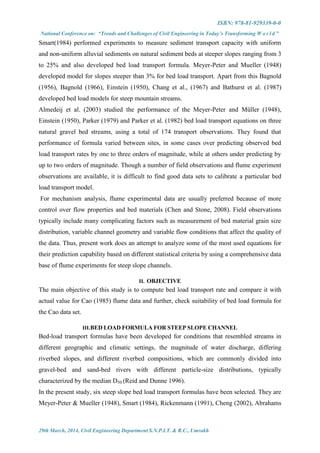
14 14SNPIT33 ANALYSIS OF BED LOAD FOR STEEP SLOPE
CHANNEL
Ms.P.R.Khokhar, Dr.S.M.Yadav,
Mrs.S.I.Waikhom
15 14SNPIT34 URBAN ROAD TRAFFIC NOISE AND ITS
AUDITORY HEALTH IMPACTS OF SURAT CITY
Prof.Amita P Upadhyay, Reshang B
Patel, Keyur M Patel
16 14SNPIT49 CRITICAL REVIEW OF PARKING COMPONENT
IN TOWN PLANNING SCHEME - A CASE
STUDY OF SURAT
Sagar H. Vanparia, Jitesh C.
Sapariya, Hemant N. Chaudhari,
Vishal M. Tank
17 14SNPIT89 COMPUTER AIDED DESIGN OF SEWAGE
TREATEMENT PLANT
Jenish Mistry, Dr. Neeraj Sharma
ISBN: 978-81-929339-0-0
National Conference on: “Trends and Challenges of Civil Engineering in Today’s Transforming World”
XIX
29th March, 2014, Civil Engineering Department, S.N.P.I.T. & R.C., Umrakh
Group - E
(Theme: Construction management/Structural
engineering/Material Management/Advance
Construction Materials)
Sr
No
Paper ID Title Authors
1 14SNPIT55 CRITERIA RANKING FOR SUPPLIER SELECTION
PROCESS THROUGH ANALYTIC HIERARCHY
PROCESS: CASE STUDY OF GUJARAT STATE OF
INDIA
Dr. Rajiv Bhatt, Prof. Vatsal Patel,
Prof. Bhavik Daxini
2 14SNPIT67 RISK IDENTIFICATION IN CONSTRUCTION
PHASE & MANAGEMENT PHASE: A CASE STUDY
OF SURAT DISTRICT
Nimitta A. Tijore, Dr. Neeraj D.
Sharma
3 14SNPIT76 STAKEHOLDER MANAGEMENT AND
COMMUNICATION
Kushal Madhav
4 14SNPIT84 A SEQUENTIAL ANALYSIS OF FACTOR FORCING
TO PROJECT DELAYS USING R.I.I. TECHNIQUE
Manthankumar K. Vaghani, Mr.
Vyom B. Pathak, Mr. Keyur P.Shah
5 14SNPIT86 FEASIBILITY STUDY OF DRY WALL FOR A
SURAT CITY: A VIEW POINT OF CONSULTANTS
Paghdar Dhiren , Dr. Sharma Neeraj
6 14SNPIT91 COMPARISON OF COSTOVERRUNS CAUSES
USING AHP AND RII TECHNIQUE
Hiral H. Patel, Dr. Neeraj D. Sharma,
Rushabh A. Shah
7 14SNPIT46 INFLUENCE OF MASONRY INFILLS ON SEISMIC
RESPONSE OF RC FRAME WITH VARIOUS
MODELING APPROACH
H. S. Majmundar, J. A. Amin
8 14SNPIT57 ASSESSMENT OF STRENGTHENING SCHEMES
OF RC FRAME USING NON-LINEAR STATIC
ANALYSIS
Darpan B. Doshi, J A. Amin, G.M.
Tank
9 14SNPIT01 SLIP FORMING: THE NEW ERA OF FORMWORK
OF UNUSUAL STRUCTURE
Hardiksuthar, Prof.
Jayeshkumarpitroda, Prof. J. J.
Bhavsar
10 14SNPIT07 PLASTIC FORMWORK : NEW ERA FOR
CONSTRUCTION SECTOR
Rajuprajapati, Prof.
Jayeshkumarpitroda, Prof.J.J.Bhavsar
11 14SNPIT12 SCAFFOLDING: SAFETY AND ECONOMICAL
ASPECT FOR SCAFFOLDINGS IN
CONSTRUCTION INDUSTRY
Jaydeep Desai, Prof.
Jayeshkumarpitroda, Prof. J. J.
Bhavsar
12 14SNPIT30 MEMBRANE FILTRATION PROCESS – A CASE
STUDY
Swati A. Parekh, Mazhar Y. Multani,
Prof. Mitali J. Shah
13 14SNPIT56 FLY ASH: 21ST CENTURY GREEN BUILDING
MATERIAL
D.K.Parmar, Dr. S.K.Dave
14 14SNPIT62 AN EXPERIMENTAL STUDY: UTILIZATION OF
FLYASH & POND ASH OF UKAI THERMAL
POWER STATION IN FLYASH BRICK
Ajaykumar R. Patel , Dr. Hasmukh
R. Patel
15 14SNPIT63 A STUDY ON CRITERIA REGARDING SAFETY IN
FORMWORK MANAGEMENT FOR REAL ESTATE
Abhiyan S Patel, Dr. Neeraj D
Sharma , Bhavin K Kashiyani
16 14SNPIT21 APPLICATION OF NANOMATERIAL IN CIVIL
ENGINEERING
Sunil Kakwani, Visheshkakwani
17 14SNPIT37 BAGASSE ASH AS AN EFFECTIVE PARTIAL
REPLACEMENT IN FLY ASH BRICKS
Samruddha Raje, Apurva Kulkarni,
Mamata Rajgor
18 14SNPIT78 A REVIEW ON NATURAL FIBRES: AN EMERGING
MATERIAL FOR SUSTAINABLE CONSTRUCTION
Krunal V Mistry
19 14SNPIT82 A PRELIMINARY STUDY ON IMPORTANCES OF
FLY-ASH BRICKS AND CLAY BRICKS IN
CONSTRUCTION INDUSTRY THROUGH SPSS
SOFTWARE
Varunkumar Parekh
S. N. PATEL INSTITUTE OF TECHNOLOGY & RESEARCH CENTRE, UMRAKH
(A VIDYABHARTI TRUST INSTITUTION)
2014
XX
KEYNOTE ADDRESS
ABSTRACT
This presentation is about types of rocks and their anchoring as
per the various needs of civil engineering, especially ground projects to
satisfy the needs of transportation and surface means of communication
of today’s rapidly growing and transforming world. The presentation is
included with detail of installation and execution function and quality
check. There is an explanation of supporting systems of soft ground,
medium hard tunnelling and hard rock.
There is various kind of rock defined by rock quality designation
known as (rqd). Steel ribs, steel arches, Timber these are various types of
supports. In tunnelling operation cycle there are eight sequential
operations. First are investigation then, drilling, blasting, scaling,
mucking, bolting, shotcreting and controlling. The presentation deals
with all sequential.
Er. H.M. Patel,
Managing Partner, Dhorajia Construction Company, Ahmedabad
(Specialized in Underground Civil Engineering Projects)
ISBN: 978-81-929339-0-0
National Conference on: “Trends and Challenges of Civil Engineering in Today’s Transforming W o r l d ”
29th March, 2014, Civil Engineering Department S.N.P.I.T. & R.C., Umrakh
SLIP FORMING: THE NEW ERA OF FORMWORK OF
UNUSUAL STRUCTURE
Hardik Suthar1
, Prof. Jayeshkumar Pitroda2
, Prof. J. J. Bhavsar3
1
Student of first year M.E (Construction Engineering & Management), B.V.M Engineering College, Vallabh
Vidyanagar-Gujarat-India
2
Assistant Professor and Research Scholar, Civil Engineering Department, B.V.M. Engineering College,
Vallabh Vidyanagar-Gujarat-India
3
Associate Professor, P.G. Coordinator of Construction Engineering & Management, B.V.M Engineering College,
Vallabh Vidyanagar-Gujarat-India
1
hardik.suthar2312@gmail.com
2
jayesh.pitroda@bvmengineering.ac.in
3
jaydev_2004@yahoo.com
Abstract: Slip forming is the best techniques which carried out fast and rapid construction in
an unusual structure like cooling towers, chimneys, silo and also in roadway construction
bridge construction. Slip formwork techniques carried out with more than 16 m height
structure and its very rapid and time saving erection techniques and also economical. Slip
forming considers mainly 7.2 m per day which is fastest erection procedure. They content
various components and after the completion of curtain height concreting by the hydraulic
jack it lifted up and further concreting could be done. Hence these methods are rapid, time
saving; economical and less labor force is required.
Keywords: Cooling Towers, Rapid Construction, Slip Forming
I. INTRODUCTION
Slip forming is an economical, rapid and accurate form of construction that can be used to
build concrete, reinforced concrete, or pre-stressed concrete structures. Although slip forming
is not suitable for all types of structures, it can be used to construct a wide variety of
structures such as silos, chimneys, building cores, bridge piers, and cooling towers. Slip
formwork used for vertical as well as horizontal continues structure. This type of formwork
system is economical and also less labour work required in construction, it is totally depends
upon automation eraction techniques.
ISBN: 978-81-929339-0-0
National Conference on: “Trends and Challenges of Civil Engineering in Today’s Transforming W o r l d ”
29th March, 2014, Civil Engineering Department S.N.P.I.T. & R.C., Umrakh
Figure 1: Slip Formwork
Source: www.structuralsystem.com
II. HISTORY OF SLIP FORMWORK
 The slip forming technique was discovered by America in 1910 for building silos, grain
elevators and cooling towers.
 The first notable use of the slip formwork method in Skylon Tower near Niagara Falls,
Ontario, which was completed in 1965.
 Another unusual structure was constructed for the Sheraton Waikiki Hotel in, Hawaii, in
1969.
 In 1990s in U.K. Slip forming has even been adopted for the paving of roadways, bicycle
paths, and kerb with the introduction of slip form paving equipment. And further Slip
form paving was also implemented in the paving of airport aprons, taxiways, and
runways.
ISBN: 978-81-929339-0-0
National Conference on: “Trends and Challenges of Civil Engineering in Today’s Transforming W o r l d ”
29th March, 2014, Civil Engineering Department S.N.P.I.T. & R.C., Umrakh
Figure 2: History of Slip Formwork
Source: Gomrco slip form system
III. WHAT IS THE SLIP FORMWORK AND METHOD OF USE
Slip forming consists of constructing a wall-shaped form approximately 1.0 to 1.2 meters
high at the base of the structure. This type of formwork has a belt of forms, one for each
surface, 1 to 1.5 meters wide usually about 1.2m (4ft) made of timber or steel. These surface
forms placed on the internal and external surface of a wall, chimney and cooling towers etc.
As the concrete is deposited, the form is slowly and continuously raised by jack screws,
hydraulic jacks or pneumatic jacks.
As the form is raised, it can be adjusted to vary the taper of the structure and the thickness of
the wall as needed. The rate at which the form is raised is between 5 to 30 cm/hour as per
ISBN: 978-81-929339-0-0
National Conference on: “Trends and Challenges of Civil Engineering in Today’s Transforming W o r l d ”
29th March, 2014, Civil Engineering Department S.N.P.I.T. & R.C., Umrakh
requirements. This around the clock operation results in a construction rate between 1.2 to 7.2
m/day, which cannot be attained by any other construction method.
Figure 3: Constructing Wall-Shaped Slip Formwork
IV. APPLICATIONS OF SLIP FORMWORK
Chimney Slip Formwork
ISBN: 978-81-929339-0-0
National Conference on: “Trends and Challenges of Civil Engineering in Today’s Transforming W o r l d ”
29th March, 2014, Civil Engineering Department S.N.P.I.T. & R.C., Umrakh
Silo Slip Formwork
Cooling Tower Slip Formwork
Bridge Construction by Slip Formwork
Road Construction by Slip Formwork
Figure 4: Various Applications of Slip Formwork in Construction
ISBN: 978-81-929339-0-0
National Conference on: “Trends and Challenges of Civil Engineering in Today’s Transforming W o r l d ”
29th March, 2014, Civil Engineering Department S.N.P.I.T. & R.C., Umrakh
Source: - www.master builder.com, www.rexon.com
V. COMPONENTS OF SLIP FORMWORK
 Slip Form
 Ribs
 Yokes
 Working platform or Deck
 Suspended scaffolding
 Lifting jacks
Figure 5: Components of Slip Formwork
Source: www.skilledforming system.com
Advantages
 Provision of a joint less structure.
 A saving of shuttering material both initially as well as lesser wastage.
 Scaffolding is not required.
 Very rapid concreting. It is at least four times faster.
 Better finishing of concrete.
ISBN: 978-81-929339-0-0
National Conference on: “Trends and Challenges of Civil Engineering in Today’s Transforming W o r l d ”
29th March, 2014, Civil Engineering Department S.N.P.I.T. & R.C., Umrakh
 Reduced labour cost.
 Slip form does not require the crane, minimizing crane use.
 No plastering required.
 Accuracy is more than regular formwork.
 Strength is more than regular formwork.
 Save formwork material.
 Economical for structure above certain size.
Disadvantages
 Greater time required for arranging of various components.
 Expert supervision and operations needed for uniform movement of the slip form system.
 Stocking of material on the site is difficult.
 Good coordination and site organization required.
 Large quantities of equipment (e.g. Generators, lighting systems, and hoists) needed.
 Labour force may require familiar with equipment and methods.
 The operation must be continued in any weather
 High initial expense.
 Need 24-hour service facilities (e.g. Canteen, material supply, maintenance team, primary
clinic).
Safety features
 Working platforms, guard rails, ladders and windshields should built into the completed
system.
 Completed formwork assembly is robust and strong enough.
 Strength of concrete must be checked at certain time intervals.
 Site operatives can quickly become familiar with health and safety aspects of their job
site.
 All parts should move in uniform rate, there should be no jam in formwork or jack.
 Lateral support of forms must be provided.
Economical consideration
ISBN: 978-81-929339-0-0
National Conference on: “Trends and Challenges of Civil Engineering in Today’s Transforming W o r l d ”
29th March, 2014, Civil Engineering Department S.N.P.I.T. & R.C., Umrakh
 This type of form works only economical when the height of the structure is a minimum
of 16m high.
 The thickness of the wall should be a minimum 15cm.
 This system is only suitable for a structure like silo, cooling towers, chimneys, tall
building and piers.
VI. CASE STUDY
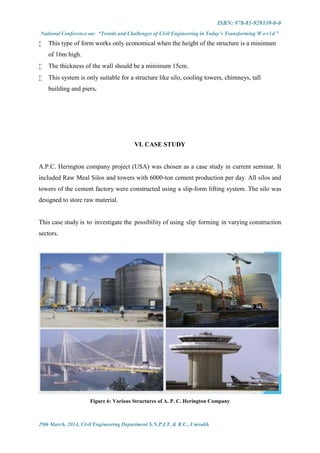
A.P.C. Herington company project (USA) was chosen as a case study in current seminar. It
included Raw Meal Silos and towers with 6000-ton cement production per day. All silos and
towers of the cement factory were constructed using a slip-form lifting system. The silo was
designed to store raw material.
This case study is to investigate the possibility of using slip forming in varying construction
sectors.
Figure 6: Various Structures of A. P. C. Herington Company
ISBN: 978-81-929339-0-0
National Conference on: “Trends and Challenges of Civil Engineering in Today’s Transforming W o r l d ”
29th March, 2014, Civil Engineering Department S.N.P.I.T. & R.C., Umrakh
Source: - www.efcoform.com, A.P.C. Herington
VII. CONCLUSION
 With the invention of slip forming technique and due to speedier completion of work by
the technique, there are substantial savings in cost in terms of wages and interest. This
technique has no comprises against quality control and Homogeneity of structure.
 The cost saving will not appear automatically just because slip forming has been used.
This technique has a lot of scope for improvement. But it can be adapted for tall structure.
 Thus a slip form system involves:-
ACKNOWLEDGMENT
The Authors thankfully acknowledge to Dr. C. L. Patel, Chairman, Charutar Vidya Mandal,
Er.V.M.Patel, Hon.Jt. Secretary, Charutar Vidya Mandal, Mr. Yatinbhai Desai, Jay Maharaj
construction, Dr. F.S.Umrigar, Principal, B.V.M. Engineering College, Dr. L.B.Zala, Head
and Professor, Civil Engineering Department, Dr. A. K. Verma, Head and Professor,
Structural Engineering Department, B.V.M. Engineering College, Vallabh Vidyanagar,
Gujarat, India for their motivations and infrastructural support to carry out this research.
REFERENCES
[1] Anon. 1978. “Key to courthouse puzzle.” Eng. News-Rec., 20021, 26–27.
[2] Betterham R. G. 1980. Slip-form concrete, Longman, New York.
[3] Halpin D. W. and Riggs L. S. 1992. Planning and analysis of construction operations, Wiley, New York
[4] Hanna, A. S. 1998. Concrete formwork systems, Marcel Dekker, New York.
[5] Peurifoy R. L., and Oberlander G. D. 1996. Formwork for concrete structures, 3rd Ed., McGraw-Hill, New
York
[6] Pruitt R., Oberlander G. 2000. Concrete construction, 1st
Ed., McGraw-Hill, April, 32(4):345-349.
[7] www.Slipforminternational.com
[8] www.rexon.com
[9] www.neruformwork.com
[10]www.dokaformwork.com
[11]www.l&tskilledformingsystem.co.in
ISBN: 978-81-929339-0-0
National Conference on: “Trends and Challenges of Civil Engineering in Today’s Transforming W o r l d ”
29th March, 2014, Civil Engineering Department S.N.P.I.T. & R.C., Umrakh
[12]www.masterbuilders.com
[13]www.google.co.in
[14]www.lagram.com
[15]www.Wikipedia.com
ISBN: 978-81-929339-0-0
National Conference on: “Trends and Challenges of Civil Engineering in Today’s Transforming W o r l d ”
29th March, 2014, Civil Engineering Department S.N.P.I.T. & R.C., Umrakh
RIBLOC TECHNOLOGY: NEW ERA OF ENVIRONMENTAL
FRIENDLY AND POLLUTION FREE TECHNIQUE IN
CONSTRUCTION TECHNOLOGY
Iliyas Kapadiya1
, Prof. Jayeshkumar Pitroda2
, Prof. J. J. Bhavsar 3
1
Student of first year M.E (C.E & M), B.V.M Engineering College, Vallabh Vidyanagar
2
Assistant Professor and Research Scholar, Civil Engineering Department, B.V.M. Engineering College,
Vallabh Vidyanagar-Gujarat-India
3
Associate Professor and PG Coordinator (M.E C E & M), Civil Engineering Department, B.V.M. Engineering
College, Vallabh Vidyanagar-Gujarat-India
1
iak_1401@yahoo.com
2
jayesh.pitroda@bvmengineering.ac.in
3
jaydev_2004@yahoo.co.in
Abstract: Most of the Indian sewer lines in urban areas have been built over a period of 50 to
100 years using old generation materials such as brick, asbestos cement and low grade RCC
etc. With the ageing of the material load imposed by the environment, corrosion due to water
and gases these sewers get structurally damaged. Most of the Indian sewers have serious
problems like silt deposit, which is due to the ingress of the excessive solid materials in the
sewerage system. A number of major trunk sewers in India are silted to the extent of 60 to 70
percent thereby reducing their carrying capacity. Many sewers are structurally damaged
causing leakages and polluting the ground water or infiltration of water into the sewer
network. To solve all these problems, it is essential that the sewer pipes are rehabilitated with
minimum surface disturbance and within minimum time. With the greater emphasis on
infrastructure development projects for economic development in India, it is felt that the
Trenchless technology is poised for increased adoption in our growing metropolitan cities.
Cities and communities in India and the world over can no longer afford to disrupt traffic,
delay Production in factories and disturb the public life and Commerce as hitherto. The
roads in Indian cities are not well maintained. There are innumerable potholes. Rib Loc is an
Australian patented spirally wound PVC lining process designed for the gravity sewer
application. The Rib Loc installation process involves the continuous winding of PVC profile
inside the existing sewer line through the manhole chamber without any excavation. This
PVC profile can be additionally reinforced by stainless steel section wherever required.
Keywords: Interlocking Edges, Pipelines, Rib loc Technology, Spirally Wound Lining, “T”
Ribbed Plastic Liner
ISBN: 978-81-929339-0-0
National Conference on: “Trends and Challenges of Civil Engineering in Today’s Transforming W o r l d ”
29th March, 2014, Civil Engineering Department S.N.P.I.T. & R.C., Umrakh
I. INTRODUCTION
Expanda is a trenchless pipe rehabilitation technology, developed in Australia in
1983, as a revolutionary process by which the efficiency, reliability, and integrity of aging
sewers, storm drains, and culverts can be quickly improved with minimal disruption and
expense. To date it has been used to structurally rehabilitate more than three million linear
feet of buried pipe in 30 countries around the world. Expanda provides a “close-fit” structural
liner and is suitable for non-pressure applications. It is commonly used for drainage, sewer,
and road culvert applications from diameters of six in. to 30 in.
Rib Loc extrudes the pipe-grade PVC profiles in a factory environment where the
quality of the process can be closely controlled and monitored. All seals required for the
performance of the profile are also applied in the same environment. This ensures that Rib
Loc is able to produce a product of high quality and consistency. Several different sizes and
configurations of plastic profile are available to provide a structural liner that meets the size
and load carrying requirements of the design.
Installation is fast and easy. Multiple lines can be rehabilitated in a single day in
lengths exceeding 500 ft. The mechanical installation process also allows the existing sewer
to continue to function during the installation process. This eliminates the need for bypass
pumping and the risks associated with sewerage spills during construction. Minimal on-site
equipment, operating at noise levels less than 75 decibels, and the fact that no chemicals, hot
water, or steam are used during the installation enables the Expanda process to be used in
residential neighborhoods with little or no disruption to the people in the project area. The
process uses a single truck set-up that can either be positioned at the manhole access point, or
as far away as 300 ft should the manhole be in an inaccessible location. The spiral-winding
machine, specially designed to fit through standard manhole openings, is lowered within the
access chamber and is used to wind a liner at a constant diameter within the existing host
pipe. This diameter is set to be smaller than the host pipe. After the liner is wound from one
manhole to the next, the end of the liner is held in position and the radial expansion process
commences. Through a patented process, the edges of the profile are then freed to slide
relative to each other as the winding machine continues to wind more profile. It is this
mechanical process that causes the liner to expand. Expansion continues until the liner
contacts the wall of the host pipe. The lock contains a slow setting lubricating sealant that,
until it sets, aids the expansion process by performing the function of a lubricant.
ISBN: 978-81-929339-0-0
National Conference on: “Trends and Challenges of Civil Engineering in Today’s Transforming W o r l d ”
29th March, 2014, Civil Engineering Department S.N.P.I.T. & R.C., Umrakh
This process means that Expanda provides a maximized internal diameter liner, with a
circular cross section and constant wall thickness irrespective of the size and shape of the
deteriorated host pipe. A combination of expanding urethane chemical grout and sulfide
resistant cement is used to create a watertight end seal at each end of the liner pipe. Lateral
connections to the mains can be remotely cut, then, if required, sealed with polyurethane or
other approved types of sealant. The end result is a seamless, watertight, full-bore structural
liner, resistant to chemical attack and with a 50-year service life.
Figure:1 Installation of machine Figure:2 Installation of Rib steel process
Source: Trenchless inline Source: www. kuliczkowski3
ISBN: 978-81-929339-0-0
National Conference on: “Trends and Challenges of Civil Engineering in Today’s Transforming W o r l d ”
29th March, 2014, Civil Engineering Department S.N.P.I.T. & R.C., Umrakh
Figure: 3 Types of RIB LOC Technology
Source: www.googleimages.com
II. TYPES OF RIBLOC TECHNOLOGY:
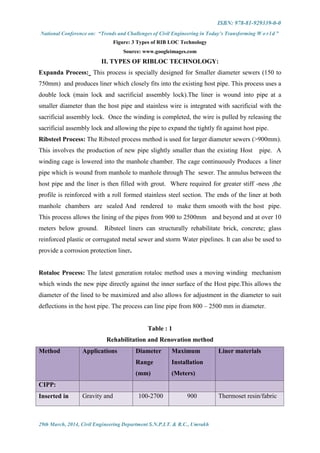
Expanda Process: This process is specially designed for Smaller diameter sewers (150 to
750mm) and produces liner which closely fits into the existing host pipe. This process uses a
double lock (main lock and sacrificial assembly lock).The liner is wound into pipe at a
smaller diameter than the host pipe and stainless wire is integrated with sacrificial with the
sacrificial assembly lock. Once the winding is completed, the wire is pulled by releasing the
sacrificial assembly lock and allowing the pipe to expand the tightly fit against host pipe.
Ribsteel Process: The Ribsteel process method is used for larger diameter sewers (>900mm).
This involves the production of new pipe slightly smaller than the existing Host pipe. A
winding cage is lowered into the manhole chamber. The cage continuously Produces a liner
pipe which is wound from manhole to manhole through The sewer. The annulus between the
host pipe and the liner is then filled with grout. Where required for greater stiff -ness ,the
profile is reinforced with a roll formed stainless steel section. The ends of the liner at both
manhole chambers are sealed And rendered to make them smooth with the host pipe.
This process allows the lining of the pipes from 900 to 2500mm and beyond and at over 10
meters below ground. Ribsteel liners can structurally rehabilitate brick, concrete; glass
reinforced plastic or corrugated metal sewer and storm Water pipelines. It can also be used to
provide a corrosion protection liner.
Rotaloc Process: The latest generation rotaloc method uses a moving winding mechanism
which winds the new pipe directly against the inner surface of the Host pipe.This allows the
diameter of the lined to be maximized and also allows for adjustment in the diameter to suit
deflections in the host pipe. The process can line pipe from 800 – 2500 mm in diameter.
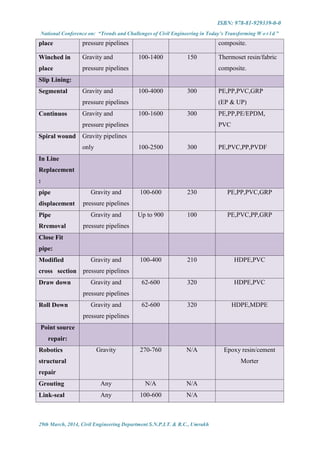
Table : 1
Rehabilitation and Renovation method
Method Applications Diameter
Range
(mm)
Maximum
Installation
(Meters)
Liner materials
CIPP:
Inserted in Gravity and 100-2700 900 Thermoset resin/fabric
ISBN: 978-81-929339-0-0
National Conference on: “Trends and Challenges of Civil Engineering in Today’s Transforming W o r l d ”
29th March, 2014, Civil Engineering Department S.N.P.I.T. & R.C., Umrakh
place pressure pipelines composite.
Winched in
place
Gravity and
pressure pipelines
100-1400 150 Thermoset resin/fabric
composite.
Slip Lining:
Segmental Gravity and
pressure pipelines
100-4000 300 PE,PP,PVC,GRP
(EP & UP)
Continuos Gravity and
pressure pipelines
100-1600 300 PE,PP,PE/EPDM,
PVC
Spiral wound Gravity pipelines
only 100-2500 300 PE,PVC,PP,PVDF
In Line
Replacement
:
pipe
displacement
Gravity and
pressure pipelines
100-600 230 PE,PP,PVC,GRP
Pipe
Rremoval
Gravity and
pressure pipelines
Up to 900 100 PE,PVC,PP,GRP
Close Fit
pipe:
Modified
cross section
Gravity and
pressure pipelines
100-400 210 HDPE,PVC
Draw down Gravity and
pressure pipelines
62-600 320 HDPE,PVC
Roll Down Gravity and
pressure pipelines
62-600 320 HDPE,MDPE
Point source
repair:
Robotics
structural
repair
Gravity 270-760 N/A Epoxy resin/cement
Morter
Grouting Any N/A N/A
Link-seal Any 100-600 N/A
ISBN: 978-81-929339-0-0
National Conference on: “Trends and Challenges of Civil Engineering in Today’s Transforming W o r l d ”
29th March, 2014, Civil Engineering Department S.N.P.I.T. & R.C., Umrakh
Point CIPP Gravity 100-600 15
Spray-on
lining
Gravity and
pressure piplines
76-4500 150
ADVANTAGES
ISBN: 978-81-929339-0-0
National Conference on: “Trends and Challenges of Civil Engineering in Today’s Transforming W o r l d ”
29th March, 2014, Civil Engineering Department S.N.P.I.T. & R.C., Umrakh
III. CASE STUDY:
Ribloc technology is used in many countries. In January 1994 Northridge earthquake severely
damaged the trunk sewer system of Santa Monica, USA. This resulted in one of this largest
sewer rehabilitation project in USA. Number of technologies including CIPP and Rib Loc
were tried. After the tremendous success of Ribloc in numerous projects, the city council of
Santa Monica decided award future projects to Ribloc on the basis of negotiations.
IV. CONCLUSIONS
Within a short span of 5 to 6 years, the awareness of Trenchless Technology in India is quite
significant. With conch progressive adoption of Trenchless technology in India, new
equipment and development of new materials will follow which will revolutionize the
construction industry and benefit the society. However, many planners, designers and
engineers are not yet accustomed to using them. Hence, there is a need for further
technological refinement , better information dissemination, and greater public awareness and
understanding regarding appropriate use of Trenchless technology and its contribution to
environmentally sustainable urban development. It is hoped that seminars on this newer
technology will be encouraged which will promote greater awareness in adoption of this new
technology for the development and management of the underground utilities.
ACKNOWLEDGMENT
The Authors thankfully acknowledge to Dr. C. L. Patel, Chairman, Charutar Vidya Mandal,
Er.V.M.Patel, Hon. Jt. Secretary, Charutar Vidya Mandal, Mr. Yatinbhai Desai, Jay Maharaj
construction, Dr. A. K. Verma, Head & Professor, Structural Engineering Department, Dr. B.
K. Shah, Associate Professor, Structural Engineering Department, B.V.M. Engineering
College, Vallabh Vidyanagar, Gujarat, India for their motivations and infrastructural support
to carry out this research.
REFERENCE
[1] Magazine of Civil engineering & construction review.
[2] Brig. D.K. Gunjal, (retd), consulting Engr, Banglore.
[3] T. Shivaraman, Chief Executive – Technology & D. Arivalagan, G.M –Technology, Shriram PPR
Technology Pvt. Ltd., Chennai.
[4] International seminar on “Underground Utility Infrastructure - Development and Management “ held
at Bangaloreaka, on February 10-11-2003, organized jointly by IndSTT, CIDC, BAI (Karnataka Centre) &
Karnataka state.
ISBN: 978-81-929339-0-0
National Conference on: “Trends and Challenges of Civil Engineering in Today’s Transforming W o r l d ”
29th March, 2014, Civil Engineering Department S.N.P.I.T. & R.C., Umrakh
MECHANICAL COMPACTION OF CONCRETE: A
GOVERENING FACTOR FOR DURABILITY AND
SERVICEABILITY OF THE CONCRETE
Ranchhod Mata1
, Prof. Jayeshkumar Pitroda2
, Prof. J. J. Bhavsar3
1
Student of first year M.E (C.E & M), B.V.M Engineering College, Vallabh Vidyanagar
2
Assistant Professor and Research Scholar, Civil Engineering Department, B.V.M. Engineering College,
Vallabh Vidyanagar-Gujarat-India
3
Associate Professor and PG Coordinator (M.E C E & M), Civil Engineering Department, B.V.M. Engineering
College, Vallabh Vidyanagar-Gujarat-India
1
ranchod111@gmail.com
2
jayesh.pitroda@bvmengineering.ac.in
3
jaydev_2004@yahoo.co.in
Abstract: Compaction is the governing factor for the strength, durability and serviceability of
the concrete. During the placing of the concrete in the form air is likely to trap within the
concrete body, hence the density of the concrete is decreasing; ultimately it affects the
strength, durability and serviceability of the concrete body. Vibration is the best remedy for
getting rid off the trapped air from the concrete. At earlier stages when advanced vibrators
were not found generally hand compaction method were adopted, but nowadays is a trend to
use mechanical compaction method for compaction of the concrete. According to the
condition we can use immersion vibration, surface vibration, or from vibration. We must use
such vibration method with certain precaution to avoid any damages.
Keywords: Compaction, Durability, Strength, Serviceability, Vibration
I. INTRODUCTION
“Compaction is the process which expels entrapped air from freshly placed concrete and
packs the aggregate particles together so as to increase the density of concrete.” The
aggregate particles, although coated with mortar, tend to arch against one another and are
prevented from slumping or consolidating by internal friction. Compaction of concrete is,
therefore, a two-stage process.
In first stage with the vibration, initial consolidation of the concrete can often be achieved
relatively quickly. The concrete liquefies and the surface levels, giving the impression that
the concrete is compacted, then after the second stage, entrapped air is expelled. Entrapped
air takes a little longer to rise to the surface. Compaction must therefore be prolonged until
ISBN: 978-81-929339-0-0
National Conference on: “Trends and Challenges of Civil Engineering in Today’s Transforming W o r l d ”
29th March, 2014, Civil Engineering Department S.N.P.I.T. & R.C., Umrakh
this is accomplished, i.e. until air bubbles no longer appear on the surface. Shown in Figure
1.
Proper compaction also ensures that the formwork is completely filled – i.e. there are no
pockets of honeycombed material – and that the required finish is obtained on vertical
surfaces.
Even air-entrained concrete needs to be compacted to get rid of entrapped air voids. The
difference between air voids and entrained air bubbles should be noted at this stage. The air
bubbles that are entrained are relatively small and spherical in shape, increase the workability
of the mix, reduce bleeding, and increase frost resistance. Entrapped air on the other hand
tends to be irregular in shape and is detrimental to the strength of the mix. It is to remove this
air that the concrete must be properly compacted. There is little danger that compaction will
remove the minute air bubbles that have been deliberately entrained, since they are so stable.
ISBN: 978-81-929339-0-0
National Conference on: “Trends and Challenges of Civil Engineering in Today’s Transforming W o r l d ”
29th March, 2014, Civil Engineering Department S.N.P.I.T. & R.C., Umrakh
II. IMORTANCE OF COMPACTION OF CONCRETE
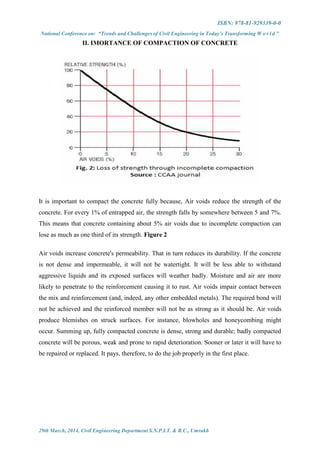
It is important to compact the concrete fully because, Air voids reduce the strength of the
concrete. For every 1% of entrapped air, the strength falls by somewhere between 5 and 7%.
This means that concrete containing about 5% air voids due to incomplete compaction can
lose as much as one third of its strength. Figure 2
Air voids increase concrete's permeability. That in turn reduces its durability. If the concrete
is not dense and impermeable, it will not be watertight. It will be less able to withstand
aggressive liquids and its exposed surfaces will weather badly. Moisture and air are more
likely to penetrate to the reinforcement causing it to rust. Air voids impair contact between
the mix and reinforcement (and, indeed, any other embedded metals). The required bond will
not be achieved and the reinforced member will not be as strong as it should be. Air voids
produce blemishes on struck surfaces. For instance, blowholes and honeycombing might
occur. Summing up, fully compacted concrete is dense, strong and durable; badly compacted
concrete will be porous, weak and prone to rapid deterioration. Sooner or later it will have to
be repaired or replaced. It pays, therefore, to do the job properly in the first place.
ISBN: 978-81-929339-0-0
National Conference on: “Trends and Challenges of Civil Engineering in Today’s Transforming W o r l d ”
29th March, 2014, Civil Engineering Department S.N.P.I.T. & R.C., Umrakh
III. METHODS OF MECHANICAL COMPACTION
Figure 3: Methods of Mechanical Compaction
IMMERSION VIBRATION
Figure 4: Detail Sketch of Needle Vibrator
In immersion vibration a mechanical device termed as needle vibrator is broadly used by
many firms frequently referred to as ‘poker’ or ‘needle’ vibrators, immersion vibrators
consist essentially of a tubular housing which contains a rotating eccentric weight. The out-
ISBN: 978-81-929339-0-0
National Conference on: “Trends and Challenges of Civil Engineering in Today’s Transforming W o r l d ”
29th March, 2014, Civil Engineering Department S.N.P.I.T. & R.C., Umrakh
of-balance rotating weight causes the casing to vibrate. When immersed in concrete, the
concrete itself. Depending on the diameter of the casing or head, and on the frequency and
the amplitude of the vibration, an immersion vibrator may have a radius of action between
100 and 600 mm. The effectiveness of an immersion vibrator is dependent on its frequency
and amplitude, the latter being dependent on the size of the head, the eccentric moment and
the head weight – the larger the head, the larger the amplitude.
As the water cement ratio of concrete decreasing the higher compactive effort required so we
should use the larger diameter head for such kind of work. Immersion vibrators may be
driven by: a flexible shaft connected to a petrol, diesel, or electric motor; or an electric motor
situated within the tubular casing; or compressed air. But most commonly vibrators no the
site are driven by a flexible shaft connected to a petrol, diesel, or electric motor as shown in
Figure 4.
IV.CASH STUDY FOR NEEDLE VIBRATOR:
TABLE 1:
Diameter of
head
(mm)
Recommended
Frequency
(HZ)
Average
Amplitude
(mm)
Radius of
Action
(mm)
Rate of
Concreting
(cmt/hour)
20–40 150–250 0.4–0.8 75–150 1–4
30–65 140–210 0.5–1.0 125–250 2–8
50–90 130–200 0.6–1.3 175–350 6–20
75–150 120–180 0.8–1.5 300–500 11–31
125–175 90–140 1.0–2.0 400–600 19–38
Source: Adapted from Table 5.1 ACI Committee Report: Guide for Consolidation of Concrete 309R-05
ACI Manual of Concrete Practice 2006 Part 2.
Following care should be taken while using the immersion vibrator:
 As a general rule, the radius of action of a given vibrator not only increases with the
workability of the concrete (higher slump), but also with the diameter of the head
ISBN: 978-81-929339-0-0
National Conference on: “Trends and Challenges of Civil Engineering in Today’s Transforming W o r l d ”
29th March, 2014, Civil Engineering Department S.N.P.I.T. & R.C., Umrakh
 Immersion vibrators should be inserted vertically into concrete, as quickly as possible,
and then held stationary until air bubbles cease to rise to the surface, usually in about
15–20 seconds
 The vibrator should then be slowly withdrawn and reinserted vertically in a fresh position
adjacent to the first. These movements should be repeated in a regular pattern until all the
concrete has been compacted
 Random insertions are likely to leave areas of the concrete uncompacted.
 The vibrator should not be used to cause concrete to flow horizontally in the forms, as
this can lead to segregation the vibrator should not be dragged through the concrete as
this leads to inadequate compaction and increases the risk of segregation.
 In deep sections such as walls, footings and large columns, the concrete should be placed
in layers about 300 mm thick
 The vibrator should penetrate about 150 mm into the previous layer of fresh concrete to
meld the two layers together and avoid ‘cold-pour’ lines on the finished surface
 One should try overlap of this vibration circle should limited to allowed overlapping
limits shown in figure. Because it leads to over vibration at the overlapped portion of the
vibrating circle as shown in figure 5
 The vibrator should not be allowed to touch the forms as this can cause ‘burn’ marks
which will be reflected on the finished surface
 Similarly, the vibrator should not be held against the reinforcement as this may cause its
displacement.
 Inclined forms are prone to trapping air. To minimize this tendency, the best technique is
to place the concrete close to, but away from the side of the form and insert the
immersion vibrator close to the leading edge of the concrete, forcing it to properly fill the
corner, Void-formers are also prone to trapping air on their undersides if concrete is
placed from both sides and then compacted. Concrete should be placed at one side and,
maintaining a head, vibrated until it appears at the other side.
ISBN: 978-81-929339-0-0
National Conference on: “Trends and Challenges of Civil Engineering in Today’s Transforming W o r l d ”
29th March, 2014, Civil Engineering Department S.N.P.I.T. & R.C., Umrakh
Figure 5 : Pattern of compaction
Surface vibration:
Surface vibrators are applied to the top surface of concrete and act downwards from there.
They are very useful for compacting slabs, industrial floors, road pavements, and similar flat
surfaces. They also aid in levelling and finishing the surface. There are a number of types of
surface vibrators including vibrating-roller screeds, vibrating-beam screeds. The most
common type is the single or double vibrating-beam screed. or Roller screed. Or Plate
vibrator as Shown below in Figure 6.
Beam screed vibrator Roller screed vibrator Plate vibrator
Fig. 6: Different Surface vibrators
Source : Google Images
Beam Screed vibrator:
A vibrating-beam screed consists of either one or two beams, made from aluminium, steel or
timber, to which is attached a form of vibrating unit to allow the beams to impart adequate
vibration to the concrete. This may be a single unit, mounted centrally, or may consist of a
ISBN: 978-81-929339-0-0
National Conference on: “Trends and Challenges of Civil Engineering in Today’s Transforming W o r l d ”
29th March, 2014, Civil Engineering Department S.N.P.I.T. & R.C., Umrakh
series of eccentric weights on a shaft driven from a motor on one end and supported on a
trussed frame
In general, the centrally-mounted units have a maximum span of about 6 m, but the trussed
units may span up to 20 m. The intensity of vibration, and hence the amount of compaction
achieved, decreases with depth because surface vibrators act from the top down. Therefore,
the slab thickness for which compaction by surface vibrators is effective will vary (from 100
to 200 mm) depending on the size and operation of the unit used. As shown in Figure 7.
Figure 7: Surface Vibrator
With centrally-mounted vibration units, the degree of compaction achieved may vary across
the width of the beam. It is generally desirable, therefore, to supplement vibrating-beam
compaction by using immersion vibrators alongside edge forms. The effectiveness of
vibration, and hence degree of compaction, increases with an increase in the beam weight, the
amplitude and the frequency,As the forward speed of beam increases compaction decreases
and vise versa. Speed of screed should be limited to between 0.5 and 1.0 m/min. for getting
batter output. The lower speed should be used for thicker slabs and where reinforcement is
close to the top face
Roller Screed vibrator:
Roller screed vibrator is same of that beam screed vibrators in mechanism. In this type of
vibrator beam is replaced by long cylindrical roller. Here roller is given vibration through
ISBN: 978-81-929339-0-0
National Conference on: “Trends and Challenges of Civil Engineering in Today’s Transforming W o r l d ”
29th March, 2014, Civil Engineering Department S.N.P.I.T. & R.C., Umrakh
internal rotating imbalanced weight. Vibration is occurred throughout the cross section is
same.
Plate Vibrator:
Plate vibrator is generally used in laboratories. It is generally used for compaction of practical
specification made in lab, It is not preferred on large scale of concreting done on big sites
Vibrating table techniques are usually restricted to recasting operations ,Also reflection of the
pressure waves against the concrete surface will influence the amplitude distribution. Table
vibrators can give less consistent results even with careful operation.
Form Vibration:
Figure 8: Form Vibration
In form vibration an external mechanical vibrating device is used and it is attached with the
form work. Shown in Figure 8. Form vibrators are useful with complicated members or
where the reinforcement is highly congested, This types of vibrator must used with smooth
surface form work so it can allow easy flow of concrete over the surface. They are clamped to
the outside of the formwork and vibrate it thus compacting the concrete in this type of
vibration first vibration is transferred to the form work and then it is transferred to the
concrete. Due to above reason it consumes more power than the ordinary vibrators. The
formwork will need to be specially designed to resist the forces imposed on it.
V.CONCLUSIONS
Today’s rapid growing world Concrete is most essential material for construction. But the
concrete properties like strength, durability, serviceability are the problem. But with complete
compaction of concrete one can improve concrete property like strength, durability,
serviceability with great extent.
ISBN: 978-81-929339-0-0
National Conference on: “Trends and Challenges of Civil Engineering in Today’s Transforming W o r l d ”
29th March, 2014, Civil Engineering Department S.N.P.I.T. & R.C., Umrakh
ACKNOWLEDGMENT
The Authors thankfully acknowledge to Dr. C. L. Patel, Chairman, Charutar Vidya Mandal,
Er.V.M.Patel, Hon. Jt. Secretary, Charutar Vidya Mandal, Mr. Yatinbhai Desai, Jay Maharaj
construction, Dr. F.S.Umrigar, Principal, B.V.M. Engineering College, Dr. L.B.Zala, Head
and Professor, Civil Engineering Department, Dr. A. K. Verma, Head and Professor,
Structural Engineering Department, B.V.M. Engineering College, Vallabh Vidyanagar,
Gujarat, India for their motivations and infrastructural support to carry out this research.
REFERENCE
[1] Concrete Technology by M.S.Shetty
[2] Cement & Concrete Association of New Zealand Bulletin
[3] Cement Concrete & Aggregate Australia Bulletin
[4] www.concrete.net.au
[5] www.wikipedia.org
[6] www.google.co.in
ISBN: 978-81-929339-0-0
National Conference on: “Trends and Challenges of Civil Engineering in Today’s Transforming W o r l d ”
29th March, 2014, Civil Engineering Department S.N.P.I.T. & R.C., Umrakh
SELF COMPACTING CONCRETE: QUALITATIVE GROWTH
FOR CONSTRUCTION INDUSTRY
Ronitkumar Patel1
, Prof. Jayeshkumar Pitroda2
, Prof. J.J. Bhavsar3
1
Student of first year M.E (C.E & M), B.V.M Engineering College, Vallabh Vidyanagar
2
Assistant Professor and Research Scholar, Civil Engineering Department, B.V.M. Engineering College,
Vallabh Vidyanagar-Gujarat-India
3
Associate Professor, PG coordinator (CE & M), Civil Engineering Department, B.V.M Engineering College,
Vallabh Vidyanagar -Gujarat-India
1
ronit_becivil@gmail.com
2
jayesh.pitroda@bvmengineering.ac.in
3
jaydev_2004@yahoo.co.in
Abstract: Self−compacting concrete is one of "the most revolutionary developments" in
concrete investigate and it is also referred to as self-consolidating concrete, is able to flow
and consolidate under its own weight and to fill the most restricted places of the form work
without vibration. It is cohesive enough to fill the spaces of almost any size and shape without
segregation or bleeding. In site there are difficulties to achieve dense concrete because the
labour forces are traditional. To achieve the actual strength and honeycombing effect
difficulty in concrete are by solve SCC. There are several methods for testing its properties in
the fresh state: the most frequently used are slum−flow test, L−box, U-box and V−funnel.
Keywords: Developments, Revolutionary, Self-Compacting Concrete
I. INTRODUCTION
Self-compacting concrete (SCC) is an innovative concrete that does not require vibration for
placing and compaction. It is able to flow under its own weight, completely filling formwork
and achieving full compaction, even in the presence of congested reinforcement. The
hardened concrete is dense, homogeneous and has the same engineering properties and
durability as traditional vibrated concrete.
This concrete was first developed in Japan in late 1980. After the development of SCC in
Japan 1988, whole Europe started working on this unique noise free revolution in the field of
construction industry. The first North American conference on design and use of self-
consolidation concrete was organized in November 2002.
ISBN: 978-81-929339-0-0
National Conference on: “Trends and Challenges of Civil Engineering in Today’s Transforming W o r l d ”
29th March, 2014, Civil Engineering Department S.N.P.I.T. & R.C., Umrakh
II. TYPES OF SSC
There are three types of SCC. These types are following under table:-
Table 1
Types of SSC
Powder type of SCC Viscosity Modifying
Admixture type SCC
Combined type SCC
This is proportioned to give the
required self- compactability by
reducing the water-powder
(material<0.1mm) ratio and
provide adequate segregation
resistance. Super plasticizer and
air entraining admixtures give
the required deformability.
This type is proportioned to
provide self-compaction by the
use of viscosity modifying
admixture to provide
segregation resistance. Super
plasticizers and air entraining
admixtures are used for
obtaining the desired
deformability.
This type is proportioned so as to
obtain self- compactability mainly
by reducing the water powder
ratio, as in the powder type, and a
viscosity modifying admixture is
added to reduce the quality
fluctuations of the fresh concrete
due to the variation of the surface
moisture content of the aggregates
and their gradations during the
production. This facilitates the
production control of the concrete.
Advantages:
 Faster construction
 Safer working environment
 Reduction in site manpower
 Better surface finishes
 Improved durability
 Greater freedom in design
 Thinner concrete sections
 Reduced noise levels, absence of vibration
ISBN: 978-81-929339-0-0
National Conference on: “Trends and Challenges of Civil Engineering in Today’s Transforming W o r l d ”
29th March, 2014, Civil Engineering Department S.N.P.I.T. & R.C., Umrakh
Figure 1: Advantages of SCC
Disadvantages:
 The production of SCC places more stringent requirements on the selection of materials
in comparison with conventional concrete.
 An uncontrolled variation of even 1% moisture content in the fine aggregate will have a
much bigger impact on the theology of SCC at very low W/C (~0.3) ratio.
 The development of a SCC requires a large number of a trial batches. In addition to the
laboratory trial batches, field size trial batches should be used to simulate the typical
production conditions. Once a promising mixture has been established, further laboratory
trial batches are required to quantify the characteristics of the mixture.
 SCC is costlier than conventional concrete initially based on concrete materials cost due
to higher dosage of chemical admixtures.
ISBN: 978-81-929339-0-0
National Conference on: “Trends and Challenges of Civil Engineering in Today’s Transforming W o r l d ”
29th March, 2014, Civil Engineering Department S.N.P.I.T. & R.C., Umrakh
III. PROCESS OF SCC
Figure 2: Process of SCC
ISBN: 978-81-929339-0-0
National Conference on: “Trends and Challenges of Civil Engineering in Today’s Transforming W o r l d ”
29th March, 2014, Civil Engineering Department S.N.P.I.T. & R.C., Umrakh
Applications
Figure 3: Applications of SCC in Construction
IV.TEST METHODS:
Figure 4: Various Tests on SCC
ISBN: 978-81-929339-0-0
National Conference on: “Trends and Challenges of Civil Engineering in Today’s Transforming W o r l d ”
29th March, 2014, Civil Engineering Department S.N.P.I.T. & R.C., Umrakh
 Slump Flow Test:
The basic equipment used is the same as for the conventional Slump test. The test method
differs from the conventional one by the fact that the concrete sample placed into the mold is
not rodded and when the slump cone is removed the sample collapses (Ferraris, 1999).The
diameter of the spread of the sample is measured, i.e. a horizontal distance is determined as
opposed to the vertical distance in the conventional Slump test. The Slump Flow test can give
an indication as to the consistency, filling ability and workability of SCC. The SCC is
assumed of having a good filling ability and consistency if the diameter of the spread reaches
values between650mm to 800mm.
Figure 5: Slump-flow Test on SCC
 L-Box Test :
This test is used to assess the passing ability of SCC to flow through tight openings including
spaces between reinforcing bars and other obstructions without segregation or blocking. L-
box has arrangement and the dimensions as shown in Figure.
Figure 6: L-Box Test on SCC
 V-Funnel Test:
Viscosity of the self-compacting concrete is obtained by using a V-funnel apparatus, which
has certain dimensions, in order for a given amount of concrete to pass through an orifice
ISBN: 978-81-929339-0-0
National Conference on: “Trends and Challenges of Civil Engineering in Today’s Transforming W o r l d ”
29th March, 2014, Civil Engineering Department S.N.P.I.T. & R.C., Umrakh
(Dietz and Ma, 2000). The amount of concrete needed is 12 litters and the maximum
aggregate diameter is 20 mm. The time for the amount of concrete to flow through the orifice
is being measured. If the concrete starts moving through the orifice, it means that the stress is
higher than the yield stress; therefore, this test measures a value that is related to the
viscosity. If the concrete does not move, it shows that the yield stress is larger the weight of
the volume used. The same test using smaller funnels (side of only 5 mm) is used for cement
paste as an empirical test to determine the effect of chemical admixtures on the flow of
cement pastes.
Figure 7: V-Funnel Test on SCC
 U-Type Test:
Of the many testing methods used for evaluating self-compactability, the U-type test
proposed by the Taisei group is the most appropriate, due to the small amount of concrete
used, compared to others (Ferraris, 1999). In this test, the degree of compactability can be
indicated by the height that the concrete reaches after flowing through obstacles. Concrete
with the filling height of over 300 mm can be judged as self-compacting. Some companies
consider the concrete self-compacting if the filling height is more than 85% of the maximum
height possible.
ISBN: 978-81-929339-0-0
National Conference on: “Trends and Challenges of Civil Engineering in Today’s Transforming W o r l d ”
29th March, 2014, Civil Engineering Department S.N.P.I.T. & R.C., Umrakh
Figure 8: U-Type Test on SCC
 Orimet Test:
The test is based on the principle of an orifice rheometer applied to fresh concrete (Bartos,
2000). The test involves recording of time that it takes for a concrete sample to flow out from
a vertical casting pipe through an interchangeable orifice attached at its lower end. The
shorter the Flow-Time, the higher is the filling ability of the fresh mix. The Orimet test also
shows potential as a means of assessment of resistance to segregation on a site.
Recommended value of taking for different test methods of SCC
Table 2
Recommended value of taking for different test methods of SCC
Sr.
No.
Methods Unit Typical range of values
Minimum Maximum
1 Slump flow Test mm 600 800
2 V-funnel sec 6 12
3 L-box (h2/h1) 0.8 1
4 U-box h2-h1 0 30
Working Environment
Table 3
Working environment
Casting type Concrete type Measurements
Horizontal Conventional Noise, vibration, videotaping
(lifts, positions)Horizontal SCC
Vertical Conventional Noise, vibration, videotaping
ISBN: 978-81-929339-0-0
National Conference on: “Trends and Challenges of Civil Engineering in Today’s Transforming W o r l d ”
29th March, 2014, Civil Engineering Department S.N.P.I.T. & R.C., Umrakh
Vertical SCC (lifts, positions)
Load on human body – lifting, body position, etc.
Evaluation of lifts by worker
Figure 9: Load on human body – lifting, body position
Table 4
Casting type v/s Un-healthy lifts
Casting type Un-healthy lifts (1/hour)
Conventional,
Horizontal
30
SCC, Horizontal 30
Conventional, Vertical 116
SCC, Vertical 30
Major improvement!
ISBN: 978-81-929339-0-0
National Conference on: “Trends and Challenges of Civil Engineering in Today’s Transforming W o r l d ”
29th March, 2014, Civil Engineering Department S.N.P.I.T. & R.C., Umrakh
Noise
Table 5
Casting type v/s Noise
Casting type Noise
Background
(dB)
Noise
Pump
(dB)
Noise
Vibration
(dB)
Noise
Peak
(dB)
Conventional, Vertical 70 87 84-91 111
SCC, Vertical 70 87 - 87
Conventional, Precast 71 - 89-98 120
SCC, Precast 71 - - 79
 Ear protection needed
 No ear protection required using SCC at precast plant!
Vibration
Figure 10: Acceleration v/s Exposure
Vertical casting of 115m2
using poker vibrator:
• Acceleration exposure 6m/s2
equaling a maximum exposure time of 140 minutes.
• No problem as the casting time was less than 120 minutes and 2-3 workers carried the
vibration load.
ISBN: 978-81-929339-0-0
National Conference on: “Trends and Challenges of Civil Engineering in Today’s Transforming W o r l d ”
29th March, 2014, Civil Engineering Department S.N.P.I.T. & R.C., Umrakh
Horizontal casting of 100m3
slab using poker vibrator:
• Acceleration exposure 3.4m/s2
equaling a maximum exposure time of roughly 8
hours.
• No problem as the casting time was 7 hours and 46 minutes and 3-4 workers carried
the vibration load.
V. CONCLUSION
 SCC with high workability, proper strength, and adequate durability can be produced
using locally available materials.
 Attention must be paid to formwork, segregation, the air-void system, and shrinkage.
 Self-Compacting Concrete is considered to be the most hopeful building material for
the expected innovative changes on the work site.
 Alternative powders may be introduced without negative effect on concrete properties.
 The reduction in number of un-healthy lifts is the most significant improvement to the
working environment from using SCC- The noise and vibration reduction is also nice.
ACKNOWLEDGMENT
The Authors thankfully acknowledge to Dr. C. L. Patel, Chairman, Charutar Vidya Mandal,
Er.V.M.Patel, Hon. Jt. Secretary, Charutar Vidya Mandal, Mr. Yatinbhai Desai, Jay Maharaj
construction, Dr. A. K. Verma, Head & Professor, Structural Engineering Department, Dr. B.
K. Shah, Associate Professor, Structural Engineering Department, B.V.M. Engineering
College, Vallabh Vidyanagar, Gujarat, India for their motivations and infrastructural support
to carry out this research.
REFERENCES
[1] Byen.wikipedia.org
[2] Hajime O. and Masahiro O. (2003) “Journal of Advanced Technology”
[3] M.S. SHETTY “Concrete Technology”, S. Chand and company ltd.
[4] www.google.com
[5] www.yotube.com
[6] www.wikipedia.com
[7] Seminasprojects.com/s/SCC-ppt
ISBN: 978-81-929339-0-0
National Conference on: “Trends and Challenges of Civil Engineering in Today’s Transforming W o r l d ”
29th March, 2014, Civil Engineering Department S.N.P.I.T. & R.C., Umrakh
LASER SCREED TECHNOLOGY: AN OPPORTUNITY TO
EASE IN CONSRTUCTION SECTOR
Hardik Lokhandwala1
, Prof. Jayeshkumar Pitroda2
, Prof. J. J. Bhavsar3
1
Student of first year M.E (C.E & M), B.V.M Engineering College, Vallabh Vidhyanagar
2
Assistant Professor and Research Scholar, Civil Engineering Department, B.V.M. Engineering
College, Vallabh Vidyanagar-Gujarat-India
3
Associate Professor, P. G. Coordinator of Construction Engineering & Management, Civil Engineering
Department, B.V.M. Engineering College, Vallabh Vidyanagar-Gujarat-India
1
hardik.civil007@gmail.com
2
jayesh.pitroda@bvmengineering.ac.in
3
jaydev_2004@yahoo.co.in
Abstract: Laser screed technology exhibits the opportunity for concrete floor slabs in its
time-sensitive project and hence new standards in the regional construction industry has
established. This is the latest technology for concrete flooring. This technology reduces the
no. of joints as no form work is required in between to support the Surface Vibrators. Form
work is done only on the periphery of the panel to stop the concrete from flowing outside
panel. The Laser Screed technology offers much quicker turnaround than conventional
concrete construction saving over 400 per cent in project execution time. As an estimate, a
1,000 square meter concrete floor slab can be completed in less than 24 hours with Laser
Screed technology, while it would ideally take about three to four days in the conventional
way. This technique also requires a minimum set-up time besides extending superior quality,
safety and accuracy. On the other hand, in manual screeding, there are lots of forward
bending causes awkward torso posture, Repetitive hand/arm activity, High hand forces are
required to pull the rod to smoothen the concrete, Relatively slower than Laser screed
machine. In this study, working of laser screed technology, different types of Laser screed
machines used in construction industries, case study on this technology etc are discussed.
Keywords: Copper Head, Hand Screeding, Laser Screeding,Plough
ISBN: 978-81-929339-0-0
National Conference on: “Trends and Challenges of Civil Engineering in Today’s Transforming W o r l d ”
29th March, 2014, Civil Engineering Department S.N.P.I.T. & R.C., Umrakh
INTRODUCTION
Screeding
To explicate the meaning of Laser screed technology, first there should be acute knowledge
of the word “Screed”. Screed is a flat board, or a aluminium tool, used to
smooth concrete after it has been placed on a surface and also used to assist in levelling the
application of plaster.
Figure: 1 Screeding Figure: 2 Screeding
Source: en.wikipedia.org Source:dictionary.reference.com
INTRODUCTION TO LASER SCREED TECHNOLOGY
The introduction of the Laser Screed machine coincided(happen simultaneously) with
increased demands for flatter and more level industrial/warehouse floors. Laser screed
technology produces slab-on-grade concrete floors that are flatter and stronger than any
comparative floors produced by using conventional methods. They establish grade by laser,
utilizing a 3D profiler system, disperse concrete by auger, and then vibrate and consolidate
the concrete.
Laser Screeds are setting new standards for concrete floors. In addition to being laser, this
technology is precise and mechanically powerful, they are fast. It can accurately screed 240
square feet of concrete in just 60 seconds. That means more floor is placed daily and
production schedules are satisfied or actually shortened.
ISBN: 978-81-929339-0-0
National Conference on: “Trends and Challenges of Civil Engineering in Today’s Transforming W o r l d ”
29th March, 2014, Civil Engineering Department S.N.P.I.T. & R.C., Umrakh
Figure: 3 Pavement work by Laser Screeding Figure: 4 Industrial floor by Laser Screeding
Figure: 3 Laser Screeding
WORKING OF LASER SCREED TECHNOLOGY
The laser screed machine has four wheel drives, four wheel steer and is operated by one
person seated at a point of maximum visibility. It utilizes a 360° rotating platform with a
telescopic boom. The end of the boom is a screed head that is a plough and auger that cuts
the concrete to level and a vibrating beam to compact the material.
The screed head boasts a laser-guided, automatic control system. This system allows the
machine to accurately place and finish concrete to the exact level and finish specified. There
are 2 receivers on the screed head that receive signals from the static laser transmitter which
provides a constant reference to the datum level. This transmitted signal functions to
automatically adjust the hydraulic cylinders that guide the screed head.
The following are the process steps of working f Lasser Screed Technology.
ISBN: 978-81-929339-0-0
National Conference on: “Trends and Challenges of Civil Engineering in Today’s Transforming W o r l d ”
29th March, 2014, Civil Engineering Department S.N.P.I.T. & R.C., Umrakh
Process Step 1 Process Step 2 Process Step 3
The laser transmitter casts the
beam over the entire foyer.
The beam axis the electronic
stream line continuously
monitored by the laser
transmitters on CopperHead
(Laser screed machine)
The CopperHead receives
the Laser beam continuously
and maintain the fixed
distance from where the
beam strikes the transmitter
to the bottom of the plough.
Process Step 4 Process Step 5 Process Step 6
As the CopperHead ploughs
itself to the freshly placed
concrete, it encounters
various subgrade conditions
that cause the chassis to ride
up-down .
The CopperHead compensate
by continuously and
automatically raising or
lowering a plough to
maintain the correct
relationship to the laser. This
regulated flow of concrete is
now at grade. The vibrator
plate is so smooth to
precisely level concrete.
Here it can be seen the
plough moving up-down
continuously or vibrator plate
states on grade. The lower
frame and upper frame are
connected in a manner that
isolates lower frame real
movement from the upper
frame.
ISBN: 978-81-929339-0-0
National Conference on: “Trends and Challenges of Civil Engineering in Today’s Transforming W o r l d ”
29th March, 2014, Civil Engineering Department S.N.P.I.T. & R.C., Umrakh
Process Step 7 Process Step 8 Process Step 9
It is to be noted that wheels
encounters various
subgrade conditions but the
plate has state level.
Machine Allows free
movement when it is
screeding. It is easy for the
operator to control the
machine.
There is a horizontal pin
connection allowing the side
to side of the wheels.
DIFFERENT KINDS OF LASER SCREED MACHINES AVAILABLE IN MARKET
Many types of Laser Screeding machine were developed by several industrial companies in the
mid-1980s based on patented technology to provide a highly accurate, mechanical method of
screeding concrete for slab-on-grade floors.
Different types of Laser Screed products which are enlisted below.
Figure: 12 S-15m LASER SCREED Figure: 13 S-840 LASER SCREED concrete leveling
equipment
ISBN: 978-81-929339-0-0
National Conference on: “Trends and Challenges of Civil Engineering in Today’s Transforming W o r l d ”
29th March, 2014, Civil Engineering Department S.N.P.I.T. & R.C., Umrakh
Figure: 14 SXP®-D LASER SCREED concrete leveling equipment Figure: 15 Mini Screed
Figure: 16 STS-132 Topping Spreader Figure: 17 Mini Screed C
Figure: 18 3-D Profiler System Figure: 19 Copper Head
ISBN: 978-81-929339-0-0
National Conference on: “Trends and Challenges of Civil Engineering in Today’s Transforming W o r l d ”
29th March, 2014, Civil Engineering Department S.N.P.I.T. & R.C., Umrakh
Figure: 20 PowerRake Figure: 21 HoseHog
DIFFERENCE BETWEEN MANUAL SCREEDING AND LASER SCREEDING
ISBN: 978-81-929339-0-0
National Conference on: “Trends and Challenges of Civil Engineering in Today’s Transforming W o r l d ”
29th March, 2014, Civil Engineering Department S.N.P.I.T. & R.C., Umrakh
Figure: 22 Manual Screeding Figure: 23 Laser Screeding
THE BENEFITS OF LASER SCREED TECHNOLOGY
 Faster placement - Laser Screed machines can accurately level 240 square feet of
concrete in less than one minute. It easily moves around obstacles on the job site and
eliminates most frameworks, meaning more floors or paving is placed daily and
production schedules are satisfied or actually shortened. Fast-track production, high
quality, and cost effectiveness are all direct benefits of utilizing Laser Screed.
 Flatter floors – we can achieve laser-precise flatness and levelness every time. Floors are
routinely flatter, stronger, and more level than floors produced by any other conventional
method.
 Fewer workers – The Laser Screed equipment’s does the tough, strenuous (effortful)
work, so we simply get more work done with less manual effort, allowing to make larger
daily placements with fewer workers.
 Produces floors of unequalled flatness & levelness
 Reduces labour costs due to faster placing times and reduced form work
 Increases productivity & efficiency
 Assures greater accuracy through Laser Technology
 Easily places 3”-4” slump concrete, larger aggregate mixes, and fibrous concrete
 Concrete is levelled and compacted in one operation,
 Producing high strength, dense, durable floors
 Improves floor quality andincreases profits
ISBN: 978-81-929339-0-0
National Conference on: “Trends and Challenges of Civil Engineering in Today’s Transforming W o r l d ”
29th March, 2014, Civil Engineering Department S.N.P.I.T. & R.C., Umrakh
LIMITATIONS OF LASER SCREED TECHNOLOGY
 The most significant limitation to using the laser screed is that it is only practical for
larger jobs (more than 50,000 ft²)
 Other limitations are primarily related to the laser screed’s size and weight. A fairly large
door is needed, and light reinforcement will not carry up to the machine’s weight.
CASE STUDY
A report was presented by GLENN A. SHEPHARD on “LASER TECHNOLOGIES
APPLICATION TO CONSTRUCTION” to the Graduate Committee of the Department Civil
Engineering in Partial Fulfillment of the Requirements for the Degree of Master of Civil
Engineering, University of Florida,Summer 1999.
In this case study, the application of Laser screed technology was described briefly and its
comparison to hand Screeding was also notified in the report given by GLENN A.
SHEPHARD
Research includes Figures 1 and 2 illustrate floor flatness (FF) measured in inches over the
plane surface in yards. While the floor profile deviations of 1/2-inch over 10 yards for a hand
screed floor appear to be insignificant.
Figure: 20 Hand Screed Floor Profile - deviation in
inches over plane measurement in yards.
(Laser Screed Ltd., 1999)
Figure: 21. Laser Screed Floor Profile - deviation
in inches over plane measurement in yards.
(Laser Screed Ltd., 1999)
ISBN: 978-81-929339-0-0
National Conference on: “Trends and Challenges of Civil Engineering in Today’s Transforming W o r l d ”
29th March, 2014, Civil Engineering Department S.N.P.I.T. & R.C., Umrakh
CONCLUSIONS
The following are the conclusion drawn from the study of Laser screed technology.Laser
Screeding consistently outperforms hand Screeding for precision and speed of flooring and
paving. Lower costs, reduced manpower, increased mobility and greater accuracy guarantee
the skilled teams will be 'on' and 'off' site with exceptional efficiency - allowing early access
for following trade and delivering improved customer satisfaction.The laser screed machines
have screed heads up to 3.6 m wide and the engine and hydraulic drive system, located in the
lower frame, significantly reduces noise and improves ease of maintenance.Moreover,
Simplified controls and an ergonomic design make the machines easy to operate, while a low
head height improves access in restricted areas.
ACKNOWLEDGEMENT
The Authors thankfully acknowledge to Dr. C. L. Patel, Chairman, Charutar Vidya Mandal,
Er.V.M.Patel, Hon. Jt. Secretary, Charutar Vidya Mandal, Mr. Yatinbhai Desai, Jay Maharaj
construction, Dr. F.S.Umrigar, Principal, B.V.M. Engineering College, Dr. L. B. Zala, Head
and Professor, Civil Engineering Department, Dr. A. K. Verma, Head and Professor,
Structural Engineering Department, B.V.M. Engineering College, Vallabh Vidyanagar,
Gujarat, India for their motivations and infrastructural support to carry out this research.
REFERENCES
[1] en.wikipedia.org
[2] GLENN A. SHEPHARD, 'LASER TECHNOLOGIES APPLICATION TO CONSTRUCTION'A Report
Presented to the Graduate Committee of the Department Civil Engineering in Partial Fulfillment of the
Requirements for the Degree of Master of Civil Engineering, University of Florida,Summer 1999
[3] pmallam.dns-systems.net
[4] Ravindra K Dhir, Peter C. Hewlett “Concrete in the Service of Mankind: Radical concrete technology,
Volume 4” E & FN SPON Publication, pp-535.
[5] techniconconstruction.com
[6] www.amanabuildings.com
[7] www.aquariustech.net
[8] www.cogriasia.com
[9] www.engineeringnews.co.za
[10]www.somero.com
ISBN: 978-81-929339-0-0
National Conference on: “Trends and Challenges of Civil Engineering in Today’s Transforming W o r l d ”
29th March, 2014, Civil Engineering Department S.N.P.I.T. & R.C., Umrakh
READY MIX CONCRETE : ECONOMIC AND QUALITATIVE
GROWTH FOR CONSTRUCTION INDUSTRY
Abhishek shah1
, Prof. Jayeshkumar Pitroda2
, Prof. J. J. Bhavsar3
1
Student of first year M.E (C.E & M), B.V.M Engineering College, Vallabh Vidyanagar
2
Assistant Professor and Research Scholar, Civil Engineering Department, B.V.M. Engineering
College, Vallabh Vidyanagar-Gujarat-India
3
Associate Professor and PG Coordinator (M.E C E & M), Civil Engineering Department, B.V.M.
Engineering College, Vallabh Vidyanagar-Gujarat-India
1
abhishekshah51@gmail.com
2
jayesh.pitroda@bvmengineering.ac.in
3
jaydev_2004@yahoo.co.in
Abstract: Ready Mix Concrete is a ready-to-use material which is a mixture of Cement,
Sand, Aggregate and Water. RMC is a type of Concrete which is mixed in a batching
plant according to the specification of the customer and delivered to the site by the use
of transit mixer as it is away from the construction site. RMC is a new concreting
concept in the Indian Construction industry introduced before one decade. It was
initially not adopted by the contractors because it is costly due to its large equipments
and machineries and also due to high tax on RMC and easy availability of manpower at
cheaper rate but as time elapsed they understood that in large or medium scale project
it is cheaper as it requires less time, less manpower and high strength as compared to
Site mix concrete. So, ultimately it is time saving and cheaper. RMC is also eco-friendly
as it reduces the noise and air pollution because mixing is done in closed chamber as
compare to site mix concrete.
Keywords : Cost, Pollution, Ready Mix Concrete (RMC), site mix concrete, utilization
INTRODUCTION :
As per the Indian Standard SpecificationIS 4926:2003,”Concrete mixed in a stationary
mixer in a central batching and mixing plant or in a truck-mixer and supplied in fresh
condition to the purchaser either at the site or into the purchaser’s vehicles.”
Ready-mix concrete (RMC) is a ready-to-use material, with a predetermined mixture of
cement, sand, aggregates and water. RMC is a type of concrete manufactured in a factory
according to a set recipe or as per specifications of the customer, at a centrally located
batching plant. Most of ready mixed concrete is currently manufactured under computer-
ISBN: 978-81-929339-0-0
National Conference on: “Trends and Challenges of Civil Engineering in Today’s Transforming W o r l d ”
29th March, 2014, Civil Engineering Department S.N.P.I.T. & R.C., Umrakh
controlled operations and transported and placed at project sites using sophisticated
equipment and methods.It is delivered to a worksite, often in truck mixers capable of mixing
the ingredients of the concrete on route or just before delivery of the batch.The use of the
RMC is facilitated through a truck-mounted boom placer that can pump the product for ready
use at multi-storied construction sites. A boom placer can pump the concrete up 80 meters.
Ready mix concrete is usually ordered in units of cubic yards or meters. It must remain in
motion until it is ready to be poured, or the cement may begin to solidify.The Ready mix
concrete business in India is in its in fancy. Where as in developed countries, nearly 70 per
cent of cement consumption is in the form of ready mix concrete and 25 per cent in the form
of recast, in India, ready mix concrete accounts for less than 5 percent and as much as 82 per
cent of cement consumption is in the form of site-mixed concrete. While 70%of cement
produced in a developed country like Japan is used by Ready Mix concrete business there,
here in India, Ready Mix concrete business uses around 2% of total cement production.The
share of RMC is expected to go up from present levels of around 5 per cent of the total
cement production to the global average of 70 per cent, according to industry players.
HISTORY :
In 1903 In 1913 In 1926
RMC was First patented in
Germany
The first delivery of RMC
was made in BALTIMORE
The First Transit Mixer was
produced for delivering the
concrete
In 1931 In 1953 in India In Mid 1990
ISBN: 978-81-929339-0-0
National Conference on: “Trends and Challenges of Civil Engineering in Today’s Transforming W o r l d ”
29th March, 2014, Civil Engineering Department S.N.P.I.T. & R.C., Umrakh
EQUIPMENTS REQUIRED IN RMC :
Inline Bins Silos Screw Conveyer Belt
Inert raw materials like fine
& coarse aggregates are
stored in bins called as
“INLINE BINS” where the
trucks carrying fine and
coarse aggregate can dump
the material easily.
Cement & Fly ash are stored
in an airtight container called
as “Silos”. The required
quantity of cement & fly ash
is extracted by the silos.
Cement and Fly ash are fed to
holding hopper with the help
of a screw conveyer.A heavy
duty cement screw conveyor is
fixed in an inclined position to
convey the cement from
Manual Feeding Hopper to
Cement Hopper.
RMC plant was set up for the
construction of Heathrow
airport, London
RMC was first time used for
Bhakhranagal Dam Project
in India
There were about 1100 RMC
plants in UK
In USA by 1990 In Europe in 1997 In 1993
Around 72% (more than
2/3rd) of cement produced
was being used by various
RMC plants.
There were 5850 companies
producing a total of 305
million cusecs of RMC.
The first RMC Plant was
setup in Pune.
ISBN: 978-81-929339-0-0
National Conference on: “Trends and Challenges of Civil Engineering in Today’s Transforming W o r l d ”
29th March, 2014, Civil Engineering Department S.N.P.I.T. & R.C., Umrakh
Transit Mixers Concrete Pumps Vibrator
Transit mixers are made to
transport and mix concrete
up to the construction site.
The discharge of concrete is
done from front or rear side
of the Transit mixer
A concrete pump is a
machine used for transferring
liquid concrete by pumping.
There are two types of
concrete pumps.
A vibrator is a mechanical
device to generate vibrations
to remove the air voids in
concrete and for proper
compaction of concrete.
MATERIALS USED IN RMC :
Figure 1: Materials used in RMC
ISBN: 978-81-929339-0-0
National Conference on: “Trends and Challenges of Civil Engineering in Today’s Transforming W o r l d ”
29th March, 2014, Civil Engineering Department S.N.P.I.T. & R.C., Umrakh
TEST CARRIED OUT ON RMC:
All the ingredients used for the preparation of the concrete, are thoroughly tested for their
quality and physical properties in a well equipped laboratory attached to the plant for
conformity to relevant Indian Standard Codes.
Figure 2: Tests on Coarse Aggregates
Figure 3: Tests on Fine Aggregates
Figure 4: Tests on Water, Fresh Concrete, Hardened Concrete
ISBN: 978-81-929339-0-0
National Conference on: “Trends and Challenges of Civil Engineering in Today’s Transforming W o r l d ”
29th March, 2014, Civil Engineering Department S.N.P.I.T. & R.C., Umrakh
PROCESS OF READY MIX CONCRETE :
Figure 5:Process of Ready Mix Concrete
APPLICATIONS OF READY MIX CONCRETE (RMC) IN THE CONSTRUCTION
INDUSTRY :
Figure 6:Applications of Ready Mix Concrete
ISBN: 978-81-929339-0-0
National Conference on: “Trends and Challenges of Civil Engineering in Today’s Transforming W o r l d ”
29th March, 2014, Civil Engineering Department S.N.P.I.T. & R.C., Umrakh
FEATURES OF READY MIX CONCRETE (RMC) :
1. Better quality concrete is produced.
2. Elimination of storage space for basic materials at site.
3. Elimination of Hiring plant and machinery
4. Wastage of basic materials is avoided.
5. Labour associated with production of concrete is eliminated.
6. Time required is greatly reduced
7. Noise and dust pollution at site is reduced.
8 .No wastage on site
9. Environment friendly
LIMITATIONS OF READY MIX CONCRETE (RMC) :
1. Need huge initial investment.
2. Not affordable for small projects (small quantity of concrete)
3. Needs effective transportation system from R.M.C to site.
4. Traffic jam or failure of the vehicle creates a problem if the proper dose of admixture is not
given.
5. Labours should be ready on site to cast the concrete in position to vibrate it and compact it.
6. Concrete's limited time span between mixing and going-off means that ready-mix should
be placed within 90 minutes of batching at the plant.
SCOPE OF READY MIX CONCRETE:
1. Major concerting projects like dams, roads, bridges, tunnels, canals etc.
2. For concreting in congested areas where storage of materials is not possible.
3. Sites where the intensity of traffic makes problems.
4. When supervisor and labour staff is less.
5. To reduce the time required for construction etc.
6. Huge industrial and residential projects.
ISBN: 978-81-929339-0-0
National Conference on: “Trends and Challenges of Civil Engineering in Today’s Transforming W o r l d ”
29th March, 2014, Civil Engineering Department S.N.P.I.T. & R.C., Umrakh
READY MIX CONCRETE Vs SITE MIX CONCRETE :
Ready
Mix
Concrete
Site
Mix
Concrete
1) Consistent Quality- concrete is made in
high tech batching plants in a
computerized environment.
1) The quality is inconsistent–because
concrete is hand mixed.
2) Construction in double quick time. 2) Manual mixing is time consuming. Projects
take longer time to finish.
3) Raw materials are chosen after strict
quality checks
3) Quality of raw materials is manually
checked. Or not checked at all.
4) Large quantities of concrete can be
ordered. This allows you to upgrade
yourself and handle projects of any size.
4) Takes more time. Repeated mixing needs to
be done in large quantities as the mixer will
be too small to handle the requirement.
5) No wastage of raw materials at your
site. Everything is pre-mixed at our
plants, based on your needs.
5) High wastage of raw materials due to
manual mixing.
6) No hassle of managing labour on site.
We supply ready-to-use concrete. Our
well-equipped technical crew will
handle the pouring and patching of
concrete at the site.
6) Involves the use of labourers for mixing the
concrete on site. Management of labour
means more time, efforts and money.
7) Safe work practices – no disruption in
your schedule.
7) Highly unsafe. Unskilled and untrained
labourers may work carelessly resulting in
dangerous working conditions.
8) You don’t have to stock materials and
watch over them. There’s no worry
about pilferage.
8) The risk of pilferage of raw materials is
high.
ISBN: 978-81-929339-0-0
National Conference on: “Trends and Challenges of Civil Engineering in Today’s Transforming W o r l d ”
29th March, 2014, Civil Engineering Department S.N.P.I.T. & R.C., Umrakh
GROWTH OF RMC CONSUMPTION COMPARED TO CEMENT PRODUCTION:
Table-1
Year wise growth of RMC in Indian Market
No Year Cement
demand
in Million
Tons
Total
concrete
requirement
in million m3
Concrete
requirement
for Major
projects in
million m3
Concrete
requirement
in rural areas
in million m3
Concrete
requirement
within
domain of
RMC in
million m3
1 2006-07 145 282 55 96 131
2 2007-08 158 308 60 104 144
3 2008-09 172 335 66 113 156
4 2009-10 187 364 72 123 169
5 2010-11 204 397 78 134 185
6 2011-12 223 435 85 146 204
7 2012-13 243 474 93 159 222
8 2013-14 262 511 100 171 240
9 2014-15 283 522 108 184 260
10 2015-16 306 596 117 198 281
Figure 7: Growth of RMC Plant
ISBN: 978-81-929339-0-0
National Conference on: “Trends and Challenges of Civil Engineering in Today’s Transforming W o r l d ”
29th March, 2014, Civil Engineering Department S.N.P.I.T. & R.C., Umrakh
CONCLUSIONS
Ready Mix Concrete is a modern technique of production of concrete in massive quantities
away from the actual site of placing. It is very useful where demand of concrete is very high
and construction sites are in congested areas, where mixing on site is not possible due to lake
of storage place. RMC is ready to use material. It is widely adopted throughout the world. It
gives higher strength to the structure and it also provides higher Durability to the structure. It
reduces noise pollution as well as air pollution.The Supervisory and labour costs associated
with the production of RMC is less, and the quality of concrete is high. It is suitable for huge
industrial and residential projects where time plays a vital role.So ultimately it provides
economy in the construction and better finish to the structure. Hence the advantages of RMC
are realized by engineers and contractors in the construction industry.
ACKNOWLEDGMENT
The Authors thankfully acknowledge to Dr. C. L. Patel, Chairman, Charutar Vidya Mandal,
Er.V.M.Patel, Hon.Jt. Secretary, Charutar Vidya Mandal, Mr. Yatinbhai Desai, Jay Maharaj
construction, Dr. F. S. Umrigar, Principal, B.V.M. Engineering College, Dr. L. B. Zala, Head
and Professor, Civil Engineering Department, Dr. A. K. Verma, Head and Professor,
Structural Engineering Department, B.V.M. Engineering College, Vallabh Vidyanagar,
Gujarat, India for their motivations and infrastructural support to carry out this research.
REFERENCE
[1] “Concrete Batch Plant Modeling Guide”. Iowa Department of Natural Resources. Retrieved 3 October
2012.
[2] "Introduction of Concrete Mixing Plant". CONCRETE-MIXINGPLANT.COM.
[3] IS 4926:2003, “The Indian Standard Specification”
[4] www.janeoocn.com
[5] www.wekepedia.com
[6] www.google.com
[7] http://www.cashconcrete.com/about-us/
[8] R. S. Aggrawal , “Concrete Technology” Published by S. Chand
[9] http://www.rmcc.com/concrete-education-ready-mix-concrete.html
[10]http://www.boralcolorado.com/bcm-about-us
[11]http://www.grecoreadymix.com/ready/applications.html
ISBN: 978-81-929339-0-0
National Conference on: “Trends and Challenges of Civil Engineering in Today’s Transforming W o r l d ”
29th March, 2014, Civil Engineering Department S.N.P.I.T. & R.C., Umrakh
PLASTIC FORMWORK : NEW ERA FOR
CONSTRUCTION SECTOR
Raju Prajapati1
, Prof. Jayeshkumar Pitroda2
, Prof.J.J.Bhavsar3
1
Student of first year M.E (C.E & M), B.V.M Engineering College, Vallabh Vidyanagar
2
Assistant Professor and Research Scholar, Civil Engineering Department, B.V.M. Engineering
College, Vallabh Vidyanagar-Gujarat-India
3
Associate professor, P.G. Coordinator of Construction Engineering Management, B.V.M Engineering
College, Vallabh Vidyanagar -Gujarat-India
1
rajuprajapati1612@gmail.com
2
jayesh.pitroda@bvmengineering.ac.in
3
Jaydev_2004@yahoo.co.in
Abstract: Formwork is the term given to either temporary or permanent moulds into which
concrete or similar materials are poured. In the context of concrete construction, the
falsework supports the shuttering moulds. According to the time passing timber , steel,
aluminium formwork system is used but some disadvantages over plastic formwork. The
construction of formwork takes time and involves the expenditure upto 20 to 25% of the cost
of the structure or even more. The design of these temporary structures is made to economic
expenditure. Formwork systems are among the key factors determining the success of a
construction project in terms of speed, quality, cost and safety of the works. Nowadays, most
projects are required by the client to complete in the shortest time possible as a means to
minimize costs with safety. The competition in the Indian formwork market is getting more
intense by the day with the arrival of new players and technologies. Plastic formwork systems
have been creating a buzz in recent times with their advantages including flexibility,
durability and cost-effectiveness.
Keywords: Cost-Effectiveness, Durability, Plastic Formwork, Temporary
ISBN: 978-81-929339-0-0
National Conference on: “Trends and Challenges of Civil Engineering in Today’s Transforming W o r l d ”
29th March, 2014, Civil Engineering Department S.N.P.I.T. & R.C., Umrakh
I. INTRODUCTION:
Formwork is an ancillary construction, used as a mould for a structure. Into this mould, fresh
concrete is placed only to harden subsequently. The Design of these temporary structures is
made to economic expenditure. The operation of removing the formwork is known as
stripping. Stripped formwork can be reused. Reusable forms are known as panel forms and
non-usable are called stationary forms.
II. HISTORY OF FORMWORK:
III. FORMWORK CLASSIFICATION:
Figure 1 - Categories of Formwork Classification
ISBN: 978-81-929339-0-0
National Conference on: “Trends and Challenges of Civil Engineering in Today’s Transforming W o r l d ”
29th March, 2014, Civil Engineering Department S.N.P.I.T. & R.C., Umrakh
IV. PLASTIC SHUTTERING-THE VIABLE ALTERNATIVE:
Considering the labour problem and the cost of formwork system at Desire Construction
Systems thought to develop an alternative formwork system which could help the industry to
not only reduce construction cost but also a system that is easy to install, dismantle and
handle.
The system has following Advantages:
Distinct Feature of Desire Formwork Systems
 Cost Effective
 Labour Friendly
 Eco Friendly
 Low in Maintenance
 Versatile
DETAILS:
This system is made from special grade plastic and hence no chemical reaction takes place
nor the material stick to it. Because of this property you cannot get any patched on the RCC
finish. Also the gap between two plates are so negligible that no water nor cement gets leaked
out at the time of RCC and it gets cured from the bottom of the plate , which also enhance the
final quality of RCC casting. Comparatively our foam systems are very less in weight
compared to conventional M.S. Plate (1/4th) and Plywood (1/2). Due to easy plugging
systems and easy to fit makes this foam shuttering system most labour friendly.
Figure 2: Labor Friendly
ISBN: 978-81-929339-0-0
National Conference on: “Trends and Challenges of Civil Engineering in Today’s Transforming W o r l d ”
29th March, 2014, Civil Engineering Department S.N.P.I.T. & R.C., Umrakh
By using Desire systems one need not nail or apply oil to the plates before casting RCC. Due
to auto leveling of plugging systems the plates are automatically leveled. Hence 30 % time
saves in assembling and also while dismantling the same.
You can cast Slab, Beam & Column, etc. A lot of the parts in the Desire system are
supportive to each other and you can cast a beam from 9 inch to 21 inch by this same plate by
simply adjusting the locking systems. Desire formwork systems are made from Petroleum
waste and its long lasting and gives more than 100 repetitions.
After every usage of Desire foam systems once can easily clean the plates with water.
Where as in M.S. Plate one has to apply oil to clean the M.S. surface plates. In Desire plates
if any breakage occurs by mishandling it can be very easily sealed by low voltage hot air gun.
Figure 3: Smooth Finishing after Removing Plastic Formwork
ISBN: 978-81-929339-0-0
National Conference on: “Trends and Challenges of Civil Engineering in Today’s Transforming W o r l d ”
29th March, 2014, Civil Engineering Department S.N.P.I.T. & R.C., Umrakh
Table: 1
Formwork Classification
Classification
according
to sizes
Classification
according
to location of use
Classification
according
to materials of
construction
Classification
according
to nature of
operation
Small-sized
formwork
- Operation by workers
manually Wooden and
aluminium formwork
Large-sized
formwork
- Crane facilities are
required in the
operation Reduce the
number of joints and to
minimize the number
of lifts Stiffening
components -studs and
soldier
- Irregular frame
structure
- Wall, Column ,
Girder form, Frame
panel form, climb
form or jump form
- Slab , stair case
- Repeated regular
section – tunnel
form, modular
aluminium form
- Core walls, shells-
Climbing formwork,
Jump form and slip-
form
- Precast structure-
steel /aluminium
mould forms
Timber: most
popular formwork
material -low initial
cost -high
adaptability to
complicated shape-
labour intensive and
environmental
unfriendly
Steel: hot-rolled or
cold-formed sections
heavy weight -
suitable for large-
sized panels
Aluminium: stiff and
light weight-higher
material and labour
cost-excellent finish
Plastic: recyclable,
tough, lighter weight
Crane independent
Manually handled
formwork
-Self-climbing
formwork
- Crane-dependent
formwork
- Gantry, traveling
and tunnel type
formwork system
ISBN: 978-81-929339-0-0
National Conference on: “Trends and Challenges of Civil Engineering in Today’s Transforming W o r l d ”
29th March, 2014, Civil Engineering Department S.N.P.I.T. & R.C., Umrakh
V. OBJECTS OF FORMWORK:
Formwork is a temporary construction; however care must be taken to prevent damage to
permanent work. Three general principles govern the formwork design and construction:
Quality accuracy of the concrete shape and the final finished surface quality.
Safety strength of the formwork structure. Personal safety of people, both carpenters and the
public.
Economy The structural frame is usually the most significant cost component, a dominant
and a critical factor in the time of construction.
VI. SISCON PLATIC FORMWORK SYSTEM:
The desired shape of a structure formed before pouring concrete, to form this shape several
materials are used. i.e FORMWORK. Conventional formwork made of wood, steel and
aluminium bore many detriments, which outweighed the benefits. Wood consumption has a
huge and massive environmental impact- deforestation and high price. Moreover, compared
to reusability of plastic, it is very less. Although the reusability index of aluminium forms is
satisfactory, the cost factor makes it an unworthy choice.
In the lines of one-size fits all, we can use the same panels for all the forms-columns,
walls, and slabs. The precision offered by the reusable plastic formworks is very distinct.
- See more at: http://www.sisconformwork.com
ISBN: 978-81-929339-0-0
National Conference on: “Trends and Challenges of Civil Engineering in Today’s Transforming W o r l d ”
29th March, 2014, Civil Engineering Department S.N.P.I.T. & R.C., Umrakh
Figure 4: Various Applications of SISCON Plastic Formwork in Construction
VII. NOVA PLASTIC FORMWORK:
NOVA Formwork is a plastic system & leading in the development shuttering system
manufactured from Composite Plastic Material. The plastic Shuttering building system
represents a revolution in the area of shuttering because of their universality, lightness,
simplicity, durability, solidity, resistance to temperature change and of course their price
competitiveness. This is the only shuttering that can use in salt and fresh water without any
damage.
ISBN: 978-81-929339-0-0
National Conference on: “Trends and Challenges of Civil Engineering in Today’s Transforming W o r l d ”
29th March, 2014, Civil Engineering Department S.N.P.I.T. & R.C., Umrakh
Figure 5 : Various Applications of NOVA Plastic Formwork in Construction
VIII. MOLADI PLASTIC FORMWORK:
MOLADI is an award winning and unique ,lightweight,reusable,patented injection moulded
formwork system that has been developed to streamline the cumbersome qualities and many
inefficiencies associated with traditional timber and steel formwork as well as other
alternative buildings methods.
Figure 6 : Various Applications of MOLADI Plastic Formwork in Construction
IX. BENEFITS OF PLASTIC FORMWORK:
ISBN: 978-81-929339-0-0
National Conference on: “Trends and Challenges of Civil Engineering in Today’s Transforming W o r l d ”
29th March, 2014, Civil Engineering Department S.N.P.I.T. & R.C., Umrakh
X. COMPARISON:
Table 2
Comparison Plastic, Traditional, Steel Formwork
Item Plastic Formwork Traditional
Formwork
Steel Formwork
Recycled 40% No 10%
Water resistant Yes No No
Deformation condition No Yes Yes
Stripping process Easy Moderate Difficult
Size Any size can supply Restricted Restricted
Corrosion resistant Excellent Bad Bad
Available time More than 100 times 8 times 100 times
XI. CONCLUSION
This system gives more than 100 repetitions; hence running cost is low. The final RCC work
will get a smooth finish with minor joint line which does not require plaster. One can do putty
and paint it. If you don't do plaster and hence it is cost effective. Hence it is very easy to
install, dismantle, transport from one place to another. Its replace plywood's which consumes
trees and M.S. which consumes iron ore from our planet earth. Our products help in
preventing this precious metal from our earth.
ACKNOWLEDGEMENT
The Authors thankfully acknowledge to Dr. C. L. Patel, Chairman, Charutar Vidya Mandal,
Er.V.M.Patel, Hon. Jt. Secretary, Charutar Vidya Mandal, Mr. Yatinbhai Desai, Jay Maharaj
construction, Dr. F. S. Umrigar, Principal, B.V.M. Engineering College, Dr. L. B. Zala, Head
and Professor, Civil Engineering Department, Dr. A. K. Verma, Head and Professor,
Structural Engineering Department, B.V.M. Engineering College, Vallabh Vidyanagar,
Gujarat, India for their motivations and infrastructural support to carry out this research.
ISBN: 978-81-929339-0-0
National Conference on: “Trends and Challenges of Civil Engineering in Today’s Transforming W o r l d ”
29th March, 2014, Civil Engineering Department S.N.P.I.T. & R.C., Umrakh
REFERENCES
[1] Conditions and Constraints in the Formwork Systems for Complex High-rise Building – with cases
from Hong Kong
[2] Moladiformwork.com
[3] Masterbuilder.co.in
[4] Novaformworksystem.com
[5] Sisconformwork.com
[6] Theconstrucor.org
[7] www.desireindia.in
[8] www.asiaric.com/aboutus.html
ISBN: 978-81-929339-0-0
National Conference on: “Trends and Challenges of Civil Engineering in Today’s Transforming W o r l d ”
29th March, 2014, Civil Engineering Department S.N.P.I.T. & R.C., Umrakh
A STUDY ON TRENCHLESS TECHNOLOGY: ELIMINATE
THE NEED FOR EXCAVATION
Hemishkumar patel1
, Prof. Jayeshkumar Pitroda2
, Prof. J. J. Bhavsar3
1
Student of first year M.E (Construction Engineering& Management), B.V.M Engineering College,
Vallabh Vidyanagar-Gujarat-India
2
Assistant Professor and Research Scholar, Civil Engineering Department, B.V.M. Engineering
College, Vallabh Vidyanagar-Gujarat-India
3
Associate Professor, P.G. Coordinator of Construction Engineering & Management, B.V.M
Engineering College, Vallabh Vidyanagar-Gujarat-India
1
hemishpatel32@gmail.com
2
jayesh.pitroda@bvmengineering.ac.in
3
jaydev_2004@yahoo.co.in
Abstract: Trenchless technology is the science of installing, repairing and renewing
underground Pipes, ducts and cables using techniques which minimize or eliminate the need
for excavation. It can reduce environmental damage, Social costs and produce in alternative
to the open trench method of installation, renewal and repair it includes in, development of
all kinds of underground napping techniques, tunneling devices and specialist materials and
equipment.
Keywords: Excavation, Trenchless Technology, Tunneling Devices, Techniques
I. INTRODUCTION
Trenchless technology consists of the methods, materials, and equipment used for replacing,
rehabilitating, or installing pipes with little or no excavation of the ground above. It also
makes it possible to install the utilities under rivers, highways, canals and other obstacles
with no disruption of flow and with minimum or no damage to the environment
II. CRITICAL REVIEW
TYPES / TRENCHLESS TECHNOLOGY METHODS
Trenchless technology methods systems have been categorized into two groups:
1. New installation
2. Rehabilitation and Renovation
ISBN: 978-81-929339-0-0
National Conference on: “Trends and Challenges of Civil Engineering in Today’s Transforming W o r l d ”
29th March, 2014, Civil Engineering Department S.N.P.I.T. & R.C., Umrakh
1. NEW INSTALLATION
Methods for installation of a new pipeline or duct, including dealing with service connection
are:
a) Microtunneling
b) Horizontal directional drilling
c) Short drive system
d) Guided drilling
a) Micro tunneling
Controlled excavation – steerable –Less than 1000mm diameter –Medium length Micro
tunneling is a term which is used to describe remotely controlled mechanical tunneling
systems where the spoil is removed from the cutting head within the new pipeline which is
advanced by pipe jacking.
Micro tunneling machines have now been developed to work from drive shafts in almost all
types of ground conditions. The cutting head has to be carefully selected to deal with the
expected ground conditions, with the appropriate cutting tools and crushing devices for the
range of gravels, sands, slits, and clays.
The only excavating required from the service is to drive and receptions shafts. Spoil may be
removed from the face by an auger running through the newly installed pipeline to a skip in
the base of the drive shaft.
Alternatively, water or bentonite may be used to convert the soil into slurry at the cutting
face. The slurry is less then pumped to the surface where the solids are separated before
disposal.
Microtunneling is used extensively in sewerage work where surface disruption has to be
minimized. Machines are now available to drive 100mm or more in soft ground for sizes
100mm diameter upwards. From drive shafts of less than 3mm diameter.
Micro tunneling system has been developed in which temporary steel tubes are jacked in and
removed at the next manhole position, the new pipeline following in the established bore. In
microtunnelling, the only indication on the surface is the presence of a control container with
a hoist for lowering pipes into the drive shafts. Noise levels and traffic disruption are
minimized.
ISBN: 978-81-929339-0-0
National Conference on: “Trends and Challenges of Civil Engineering in Today’s Transforming W o r l d ”
29th March, 2014, Civil Engineering Department S.N.P.I.T. & R.C., Umrakh
b) HORIZONTAL DIRECTIONAL DRILLING
Steerable heavy, powerful rig-Large size range –Long distances
Horizontal drilling systems are nowadays widely used for installing pressure pipes under
Major obstacles such a motorwayintersection, large rivers and airport runways.
A small rotating and steerable drill bit is launched from the surface at an angle 10-15 and is
used to drill 90mm mud filled diameter hole. During the drilling operation a 125mm diameter
washover pipe is drilled over the pilot string and following some 100mm behind the head.
Alternate drilling then continues on the pilot string is removed and the bore is enlarged by a
rotating barrel reamer attached to and pulled back by the wash over pipe, drilling mud being
used to llushed away the cuttings and to support the reamed hole. Subsequent caming
continues until the required diameter is achieved. The product pipe is less than attached to the
reaming head and pulled through the bore drives of more than 1.5km and of up to 1200mm
diameter have been carried out.
c) SHORT DRIVE SYSTEMS
Auger Boring utilizes a rotating head to excavate the soil, which is transported by auger
flights operating in a casing to the drive pit. The head is recovered at an exit pit or in the
trench cut for the adjacent length of pipeline. Auger boring is used in the range of 100-
1000mm diameter.
Impact Molingin which a percussive mole is launched from a drive pit to displace the soil
and from a bore is widely used. The new conduct is normally drawn in behind the mole. They
are used to install services for all utilities.
Rod Pushing is a technique in which a bore of about 50mm diameter is formed by
displacement. A rod is advanced by a straight hydraulic push and the pilot hole may be back
reamed to the required size. The technique is used for the installation of pipes and conduits
up to 15mm diameter over lengths of 30-40mm.
Pipe ramming and Thrust boring are similar processes where a casting, usually steel, is
driven through the ground from the drive pit to the exit pit. Accumulating spoil is removed
ISBN: 978-81-929339-0-0
National Conference on: “Trends and Challenges of Civil Engineering in Today’s Transforming W o r l d ”
29th March, 2014, Civil Engineering Department S.N.P.I.T. & R.C., Umrakh
by compressed air and water after completing the bore. Pipe ramming is suitable for most
types of soil but not suitable where there are solid rock formations. It is said to be a cost
saving alternative to open trenching, angering or pipe jacking methods. Usually pipes up to
2000mm diameter can be laid using this technique depending upon the equipment uses.
d) GUIDED DRILLING
Steerable small rig-Sallow drilling-Medium length
Guide drilling employs an excavation or soil displacement with compact lightweight rig for
rapid mobilization. Small diameter jets mechanized cutting tools or displacement heads
attached to a flexible drill string are positioned to form a bore as the head is thrust forward.
The drilling head is launched from the surface at an inclined angle. Controlling the
orientation of a slant face at the head affects steering in both vertical and horizontal planes.
Monitoring of the alignment takes place using a transmitter in the head and a locating device
at ground level. I having established the pilot bore; back reaming equipment is drawn through
the hole to enable it to accept the product pipe, duct, or cable using an impact mole.
2. RENOVATION AND REHABILITATION
Methods including are:
a) Pipe bursting
b) Pipe eating
c) Retaining the exiting pipe
d) Localized repair
a) PIPE BURSTING
New for old without trenching – Size for size and upsize capability
In this method an existing pipeline can be replaced with a pipeline of the same or larger
dimension without opening up the ground. It is especially useful in areas where the load on
the system is more than the existing pipe can handle and replacement is required. The method
uses a mole as a bursting head that is drawn through the existing pipe crushing it as it moves
forward and replacing it with a new PE (polyethylene) pipe. The main advantage of this
ISBN: 978-81-929339-0-0
National Conference on: “Trends and Challenges of Civil Engineering in Today’s Transforming W o r l d ”
29th March, 2014, Civil Engineering Department S.N.P.I.T. & R.C., Umrakh
system is that a small power source can be used to drive the mole with minimum time.
Upsizing from 100mm diameter to 225mm diameter is now well established, and pipes of up
to 600mm diameter have been replaced.
b) PIPE EATING
New for old without trenching – Enlargement - Steerable
Pipe eating is an online micro tunneled replacement technique. The existing defective
pipeline is crushed and removed through the new pipeline. Lateral connections must be
disconnected in advance and may be replaced by rider sewers or reconnected by angled
drilling.
c) RELINING THE EXISTING PIPES
This method requires access, usually by manholes, at both ends of pipe. A flexible liner is
places into the defective pipe and with the use of water under pressure finds its own way and
can pass bends of 90o
. In places where joints have moved or sections are missing, but the
passage is available, the liner creates a smooth transition. When the liner is in place, it is heat
cured to create a rigid, tough, and smooth inner surface.
d) LOCALISED REPAIR
Resin injection and chemical grouting at trouble spots
Local defects may be found in pipes due to cracking or joint failures. Systems are
available for resin injection to seal localized defects in the range 100mm-600mm diameter.
Chemical grouting with urethane and similar materials are used in sewer rehabilitation.
Remote and man entry grouting of defective joints and cracks may prevent infiltration in
pipelines.
This is an inexpensive method of rehabilitating existing systems up to several hundred meters
of length everyday from manhole to manhole.
Pipe Slip lining is another method used that involves inserting new smaller pipes in to older,
damaged sewers thereby replacing the old pipe. But the new pipe is reduced in diameter.
Modified slip lining often called close fit lining utilize the properties of PE or PVC to allow
temporary reduction in diameter or change in shape prior to insertion in the defective pipe.
ISBN: 978-81-929339-0-0
National Conference on: “Trends and Challenges of Civil Engineering in Today’s Transforming W o r l d ”
29th March, 2014, Civil Engineering Department S.N.P.I.T. & R.C., Umrakh
The method includes Roll down, Swage lining and Deformed lining. The inserted
pipe is subsequently expanded to form a tight fit against the wall of the original pipe, thus
avoiding the need for annular grouting as in conventional slip lining. For Roll down and
Swage lining, temporary reduction in diameter is achieved either by mechanical rolling (Roll
down) or drawing through a reduction die (Swage lining). For Deformed linings, the pipe is
deformed and folded immediately after extrusion and is coiled on a drum. After insertion in
the defective pipe, the lining is expanded using steam and a re-rounding device to form a
close fit.
These systems are suitable where the existing line is of good shape. As compared to
conventional slip lining, in this method there is little or no loss of hydraulic capacity.
III. TECHNIQUES OF TRENCHLESS TECHNOLOGY IN INDIA
The main Trenchless techniques which are in use in India (included in the above mentioned
methods) are described below.
DIRECTIONAL DRILLING
Directional drilling involves steerable tunneling systems for both small and diameter lines. In
most cases, it is a two-stage process. The first stage consists of drilling a small diameter pilot
hole along the desired centre line of a proposed line and in the second stage, the pilot hole is
enlarged to the desired diameter to accommodate the utility line and to pull the utility line
through the enlarged hole. The pilot hole is approximately 3 inches in diameter and is drilled
with a specially built rig up with an inclined carriage typically adjusted to between 5 and 30
degrees, which pushes the drill rods into the ground. However the optimum angle is 12
degrees. As the pilot hole is being drilled, bentonite-drilling mud is pumped down the center
of the drill rods. The drill head consists of either a jetting head or drill bit. In the case of a
jetting head, small diameter high-pressure jets of bentonite actually cut the soil and facilitate
spoil removal by washing the cuttings to the surface where they settle out in a reception pit.
In case of drill bit, the bit is driven by a down hole mud motor located just behind the drill bit
from energy derived from the pumped drilling fluid. Before the start of back reaming the
pipeline has to be positioned on rollers in line with the hole to minimize any axial load on the
line.
ISBN: 978-81-929339-0-0
National Conference on: “Trends and Challenges of Civil Engineering in Today’s Transforming W o r l d ”
29th March, 2014, Civil Engineering Department S.N.P.I.T. & R.C., Umrakh
Advantages
(1) The major advantage is the speed of installation combined with the minimum
environmental and social impact.
(2) Long and complicated crossings can be accomplished with a great degree of accuracy
since it is possible to monitor and control the drilling operation so that utilities can be fit
into small corridors where little place is available between existing utilities.
(3) Another advantage is that sufficient depth can be accomplished to avoid other utilities.
(4) Limitation of access and reception pits is another advantage.
Disadvantage
(1) Special equipment and very high degrees of operation skill is required.
(2) As the cost of the equipment and the operation are high, bore length should be sufficient
in order for it to be economical.
(3) Mainly steel pipe is being installed by the method.
RAMMING
In this method, the pipe is rammed through the soil by using a device attached to the end of
the pipe to drive the pipe through the soil. In this method, the tool does not create a borehole.
It acts as a hammer to drive the pipe through the soil. Compressed air supplied from an air
compressor is generally used as a power source. When ramming pipe, the leading edge cuts a
borehole, the spoils enters the pipe and is compacted as it is being forced to the rear of the
pipe. After the whole length of the pipe is rammed in place, the tool is removed and the pipe
is cleaned out.
The type of pipe installed by the pipe ramming method is limited to steel due to the
application of cyclic impact loads on the pipe. The size of the pipe ranges from 2 inches to
55 inches. This method is capable of installing pipes to over 200 feet (60 meters) in length.
Advantages
The pipe ramming is an effective method for installing medium size pipes. The method is
economic since the equipment cost is not very high and the operation is simple. The pipe can
be installed in one piece or segments. This can be used in almost all types of soils. The
method does not require any thrust reaction structure.
ISBN: 978-81-929339-0-0
National Conference on: “Trends and Challenges of Civil Engineering in Today’s Transforming W o r l d ”
29th March, 2014, Civil Engineering Department S.N.P.I.T. & R.C., Umrakh
Disadvantages
The major disadvantage is that there is no control over the line and grade and in case of
obstructions like boulders, the pipe may be deflected. Then work should be stopped
immediately. For small diameter pipelines, the method is economical, but for large diameter
pipes, the equipment cost is high.
MOLING
Moling is a method, which forms the borehole by compressing the earth that immediately
surrounds the compacting device which is an underground piercing (mole) is propelled by a
power source. The tool is streamlined into a bullet or shape. The method is restricted to
relatively small diameter lines in compressible soil conditions.
Compressed air or hydraulic fluid, transmitted to the toot through the flexible hoses,
imparts energy at a blow frequency of 100 to 600 strokes per minute to a reciprocating piston
located inside the nose of the tool. This action results in the tool propelling itself through the
ground. It is applicable in most ground conditions from loose sand to firm clay. The method
required the use of boring and receiving pit. After the operation the unit can be backed out of
the borehole. The tool is removed and the cable is attached to the air hose and pulled back
through the borehole. In the case of rigid pipe, it can simply be pushed through the open
borehole. Any type of pipe or cable can be installed by the method.
Pipe size is generally limited to 6 inches or less. However, modern techniques in mole
manufacturing have increased the ability to make the bores of large sizes. Even though 200
feet (60 meter) bores have been successfully made by this method, the span lengths were
limited to 60 feet (18 meter) with 40 feet being optimum. Again span lengths have increased
with modern advances in mole design.
Advantages
It is a rapid, economic, and effective method of installing small diameter lines. Any type of
utility line can be installed using the method. The stability of the soil around the borehole is
increased due to compaction. The investment in equipment is minimized.
ISBN: 978-81-929339-0-0
National Conference on: “Trends and Challenges of Civil Engineering in Today’s Transforming W o r l d ”
29th March, 2014, Civil Engineering Department S.N.P.I.T. & R.C., Umrakh
Disadvantages
Compaction methods are limited in their length by reliability because basic systems are
unintelligent, unguided tools that tend to bury themselves, surface in the middle road or
damage existing utility lines.
AUGER BORING
The auger horizontal earth boring is a process of simultaneously jacking casing through the
earth while removing the spoil inside the casing by means of a rotating flight auger. The
auger is a flighted tube having dual functions, firstly it has couplings at each end that transmit
torque to the cutting head from the power source located in the bore pit and secondly, it
serves to transfer spoil back to the machine.
Augur Blades
This method requires bore pit both at the entry and exit points of the bore. The auger-boring
machine consists of the boring machine, casing pipe, cutting head and augers as the major
components. The power source creates the torque, which rotates the auger, which in turn
rotates the cutting head. The cutting head cuts the soil and the soil is transported to the
machine through the casing by means of the auger, which acts as a screw conveyor.
The pipe size that can be installed by this method ranges from 4 inches (100mm) to over 60
inches (1500 mm). However, the most common size range is 8 inches(200 mm) to 36
inches(900 mm) and the average bore length ranges between 53 meter and 68 meter, though
with experience and the use of latest techniques up to 180 meter of boring is possible using
auger boring.
Advantages
The major advantage is that the casing is installed at the same time as the borehole excavation
takes place. This method can be used in a wide variety of soil types.
Disadvantages
This method requires different sized cutting heads and auger sizes or each casing diameter,
which increases the investment in equipment. The investment in bore, pit construction, and
the initial setup is also required. In case of soils containing large boulders, this method
cannot be used advantageously.
ISBN: 978-81-929339-0-0
National Conference on: “Trends and Challenges of Civil Engineering in Today’s Transforming W o r l d ”
29th March, 2014, Civil Engineering Department S.N.P.I.T. & R.C., Umrakh
IV. NEED FOR TRENCHLESS TECHNOLOGY
(1) The disadvantages and difficulties encountered in conventional trenching methods have
resulted in thinking of the need for TrenchlessTechnology.
(2) The advantages of the no-dig technology are also responsible for the need for this
technology to be adopted in mainly urban areas
V. OPEN TRENCH METHOD
It is a traditional met6hod of trenching for laying the utility lines below the surface. In
present days, there are many disadvantages and difficulties in adopting this method, mainly in
urban areas.
These are described below:
(a) As the open trench is going to create obstruction roads, busy areas, diversions have to be
provided before the start of any digging word.
(b) As the obstruction is created, the traffic has to be rerouted causing traffic jams.
(c) The original users of the road have to undergo hardships in the form of additional mileage
as well as time.
(d) Many a times, while cutting deep trenches in congested areas appear in the adjacent
buildings.
(e) Another difficulty, which is encountered very often is the damage caused to other service
lines or cables present underground, providing temporary supports to these lines during
the construction is a cumbersome and costly affair.
(f) Trenches left open overnight should be fenced and barricaded. Hand of mechanical signs
should be used where necessary.
(g) While cutting open trenches, trees, shrubs, gardens etc. may have to be destroyed
damaging the environment.
ADVANTAGES OF NO-DIG TECHNOLOGY
(a) It reduces damages of valuable surface.
(b) It reduces the danger of improperly compacted excavations.
(c) It saves resources.
(d) It is accident free.
ISBN: 978-81-929339-0-0
National Conference on: “Trends and Challenges of Civil Engineering in Today’s Transforming W o r l d ”
29th March, 2014, Civil Engineering Department S.N.P.I.T. & R.C., Umrakh
(e) It avoids traffic jams.
(f) It makes the use of the line(track) of the old pipe possible.
(g) It saves underground space (pipe busting).
(h) It reduces the impact on the environment.
(i) It provides the hassle-free road surface.
(j) It is possible to lay service lines across the railway track, narrow lanes etc. When open
trenching is impossible.
VI. CONCLUSIONS
The Sewer Rehabilitation System provides a variety of benefits to the user. It combines
proven sewer lining technologies, state of the art materials and the advantage to retain
valuable size of sewer lines in ever-growing cities, a fact which is yet underestimated by the
majority of users.The time will soon come when the conventional method of open trench
digging will be selectively banned in India. To begin with, work should be undertaken for
crossings under roads, national highways, railways, canals etc. and all renovations of
sewerage systems in metropolitan cities. Enough know-how and technology are available to
make a beginning in the field.
ACKNOWLEDGMENT
The Authors thankfully acknowledge to Dr. C. L. Patel, Chairman, Charutar Vidya Mandal,
Er.V.M.Patel, Hon.Jt. Secretary, Charutar Vidya Mandal, Mr. Yatinbhai Desai, Jay Maharaj
construction, Dr. F.S.Umrigar, Principal, B.V.M. Engineering College, Dr. L.B.Zala, Head
and Professor, Civil Engineering Department, Dr. A. K. Verma, Head and Professor,
Structural Engineering Department, B.V.M. Engineering College, Vallabh Vidyanagar,
Gujarat, India for their motivations and infrastructural support to carry out this research.
REFERENCES
[1] Jagadish Chandra, “Trenchless Technology in India: Need of the New Millennium.” Civil Engineering and
Construction Review October 2000- page 48
[2] Maninder Singh, “Techniques of Trenchless Technology In Use In India.” Civil Engineering and
Construction Review October 200- page 43
[3] NeerajauganiSethi, “Pre- Requisites for Trenchless Technology.” Civil Engineering and Construction
Review October 2000- page 2
ISBN: 978-81-929339-0-0
National Conference on: “Trends and Challenges of Civil Engineering in Today’s Transforming W o r l d ”
29th March, 2014, Civil Engineering Department S.N.P.I.T. & R.C., Umrakh
[4] Sarkar A.K, “Trenchless Technology and INDSTT In India.” Civil Engineering and Construction Review
October 2000- page 13
[5] The Construction Journal of India November 2001- page21
[6] www.istt.com
[7] www.nodig.com
[8] www.piperehab.org
[9] www.nodigengineering.com
[10]www.ttmag.com
[11]www.directionaldrilling.com
[12]www.rehabshowcase.com
[13]www.rehabroadshow.com
ISBN: 978-81-929339-0-0
National Conference on: “Trends and Challenges of Civil Engineering in Today’s Transforming W o r l d ”
29th March, 2014, Civil Engineering Department S.N.P.I.T. & R.C., Umrakh
WELL-POINT SYSTEM AND FREEZING TECHNIQUES FOR
DEWATERING
Jigar Patel1
, Prof. Jayeshkumar Pitroda2
, Prof. J.J.Bhavsar3
1
Student of first year M.E (C.E & M), B.V.M Engineering College, Vallabh Vidyanagar
2
Assistant Professor and Research Scholar, Civil Engineering Department, B.V.M. Engineering
College, Vallabh Vidyanagar-Gujarat-India
3
Associate professor, P.G. Coordinator of Construction Engineering Management, B.V.M Engineering
College, Vallabh Vidyanagar-Gujarat-India
1
pateljigar26791@gmail.com
2
jayesh.pitroda@bvmengineering.ac.in
3
jaydev_2004@yahoo.com
Abstract: Dewatering techniques mainly control the common and complicated problems like
groundwater or water logging. Construction dewatering can become a costly issue if
overlooked during project planning. The aim of dewatering techniques is to permit the
structure to be constructed “in the dry”. This leads to concepts like pre-drainage of soil,
control of ground water, and even the improvement of physical properties of soil. If ground
water issues are addressed appropriately at the investigation and design stage,construction
dewatering, which involves temporarily lowering the ground water table topermit excavation
and construction within a relatively dry environment, is rarely a problem.Construction
dewatering has existed as a specialty industry for a long time. Consequently, anumber of
well-established techniques have been developed to lower the ground water table during
excavation. The geology, ground water conditions, and type of excavation all influence the
selection of dewatering technology. The most common methods for dewatering include
sumps, wells and well-points.Resulting from this,verify feasibility of several options and
technology for water removal from the dewatering processes and should be useful and
important part of construction.
Keywords: Dewatering, Freezing, Ground Water,Well Point
ISBN: 978-81-929339-0-0
National Conference on: “Trends and Challenges of Civil Engineering in Today’s Transforming W o r l d ”
29th March, 2014, Civil Engineering Department S.N.P.I.T. & R.C., Umrakh
I. INTRODUCTION
Many civil engineering or smaller projects involve excavation below groundwater
level.Dewatering is a term to describe the removal of groundwater within a soil material and
is carried out to ensureexcavations are undertaken in dry and stable conditions.Normally,
builders tend to use water pumps to dewater these areas but are not paying attention to the
place where water is discharged, causing erosion and other problems. Construction
dewatering is used on most construction sites due to accumulated water in trenches and
excavations, places with inadequate slope or due to high water table. In construction projects,
this water should be removed to keep working as scheduled or to provide a safe workplace.
Ground conditions and objectives command dewatering requirements and appropriate method
can be determined by pumping testing. The dewatering mechanism can encompass gravity
drainage such as deep wells using submersible borehole pumps or applying a vacuum to a
soil material using ejectors or vacuum well-point systems.
Definition of Dewatering: Dewatering means “the separation of water from the soil,” or
perhaps “taking the water out of a particular construction problem completely”. Many
excavations are carried below groundwater level. Techniques for dealing with the problems
that result depend on the excavation dimensions, the soil type, and the groundwater control
requirements, among other factors. The simplest dewatering operations are carried out with
little planning. Major operations in difficult conditions require advanced engineering and
construction methods.
ISBN: 978-81-929339-0-0
National Conference on: “Trends and Challenges of Civil Engineering in Today’s Transforming W o r l d ”
29th March, 2014, Civil Engineering Department S.N.P.I.T. & R.C., Umrakh
II. TYPES OF DEWATERING:
Figure 1: Types of Dewatering
ISBN: 978-81-929339-0-0
National Conference on: “Trends and Challenges of Civil Engineering in Today’s Transforming W o r l d ”
29th March, 2014, Civil Engineering Department S.N.P.I.T. & R.C., Umrakh
Figure 2: Types of Dewatering
III. WELL POINT SYSTEM
Definition:A series of well points connected to a headerand used to drain an area or to
control ground water seepageinto an excavation.
The well-point consists of a slotted or perforated pipe which is covered with a screen mesh.
At the foot of this pipe is an orifice which permits jetting of the pipe into the ground
duringinstallation. A well-point dewatering system consists of a series of closely placed small
diameter wells installed to shallow depths. These wells are connected to a pipe or header that
surrounds the excavation and is attached to a vacuum pump. The construction steps in the
well-point system are:
1. The well-points are jetted into the ground;
2. The annular void is filled with filter media;
3. The well-points are connected to a header pipe by means of a riser;
ISBN: 978-81-929339-0-0
National Conference on: “Trends and Challenges of Civil Engineering in Today’s Transforming W o r l d ”
29th March, 2014, Civil Engineering Department S.N.P.I.T. & R.C., Umrakh
IV. TYPES OF WELL-POINT SYSTEM
Table 1: Types of Well-Point System
Single Stage System Multiple Stage System Vacuum System
Adopted up to 6m
excavation depth below the
water table
Adopted when excavation
depth exceeds 6m below the
water table
Water forced down in hole
forced coarse size sand after
that in uppermost clay tamp
to form the seal and pumping
process will start
Advantages
• Water drawn away - stabilizing the sides & permitting steep slopes
• Installation - very rapid
• Equipment - simple & cheap
• Carries little or no soil particles with filtered water
• Subsidence of the surrounding ground – less
Disadvantages
• Limited suction lift
• In deeper excavation - Well point installation in two or more stages
• Well points placed in bore holes when ground consisting - large gravel or sand
containing cobble or boulders which increase the installation costs
ISBN: 978-81-929339-0-0
National Conference on: “Trends and Challenges of Civil Engineering in Today’s Transforming W o r l d ”
29th March, 2014, Civil Engineering Department S.N.P.I.T. & R.C., Umrakh
Applications
• Land Use: Transportation (highway construction), urban (utility construction, and
commercial development),and construction sites.
• Soil/Topography/Climate: Dewatering is important in areas that have high ground
water tables, or which do not have adequate drainage.
• When to Apply: Apply at the beginning of and during construction when it is necessary
to lower the ground watertable. Pumping needs to be maintained to keep utility ditches
and cofferdams dry until all underground work is completed.
• Where to Apply: Apply on construction sites, where appropriate, or anywhere else
dewatering is done.
V. FREEZING PROCESS
Freezing is a phase transition in which a liquid turns into a solid when its temperature is
lowered below its freezing point. The principle of ground freezing is to change the water in
the soil into a solid wall of ice.This wall of ice is completely impermeable. Ground freezing
is used for groundwater cut-off,for earth support, for temporaryunderpinning, for
stabilizationof earth for tunnel excavation,to arrest landslides and to stabilize abandoned mine
shafts. The principals of ground freezing are analogous to pumping groundwater from wells.
To freeze the ground, a row of freeze pipesis placedvertically in the soil and heat energy is
removed through pipes.Isotherms (an isotherm is a line connecting locations with equal
temperature) move out from the freeze pipes makes impermeable barrier which is called
freeze wall.
Figure3:Formation of a Freeze Wall
ISBN: 978-81-929339-0-0
National Conference on: “Trends and Challenges of Civil Engineering in Today’s Transforming W o r l d ”
29th March, 2014, Civil Engineering Department S.N.P.I.T. & R.C., Umrakh
Referring to the Figure 12, the frozen earth first forms in the shape of a vertical cylinder
surrounding the freeze pipes.
Figure 4:Freeze pipes
If the heat extraction is continuing at a high rate, the thickness of the frozen wall will
expandwith time. Once the wall has achieved its design thickness, the freeze plant operates at
areduced rate to remove the heat flowing toward the wall, to maintain the condition.
Advantages
• Earth - principal structural element, very few other materials are required.
• Eliminates - adjacent water wells.
• Readily Accomplished - where other methods may be difficult / impossible.
• No smoke and vibration shocks.
• Adopted for - excavation in or at the foot of the slope of a hill
Powerful tool for the foundation engineer.
Disadvantages
• By this process Area cover – small
• For large area - layout in circle form to take more advantages of the arch action
• Froze region - extent up to firm impervious layer
• Process - suited for works of comparatively short duration & expensive too
ISBN: 978-81-929339-0-0
National Conference on: “Trends and Challenges of Civil Engineering in Today’s Transforming W o r l d ”
29th March, 2014, Civil Engineering Department S.N.P.I.T. & R.C., Umrakh
Applications
• Temporary underpinning of adjacent structure & support during permanent underpinning.
• Shaft construction totally within non-cohesive saturated ground.
• Tunnelling through a full face of granular soil.
• Tunnelling through mixed ground.
• Soil stabilization.
VI. CONCLUSIONS
Today is improved well equipment and well construction techniques make possible the
dewatering of many projects with wells and well-points. Other methods of
groundwatercontrol that have been developed and used such as ground freezing, slurry
trenches, cast in situ diaphragm walls, etc. have had some degree of success in the specific
job conditions to which they are suited. Though construction dewatering has not been
reduced to an exact science yet, the selection of the dewatering system should hinge on the
experience and professional judgement of the engineer based on the soil materials, the source
of water, and the demands of the project.
ACKNOWLEDGMENT
The Authors thankfully acknowledge to Dr. C. L. Patel, Chairman, Charutar Vidya Mandal,
Er.V.M.Patel, Hon.Jt. Secretary, Charutar Vidya Mandal, Mr. Yatinbhai Desai, Jay Maharaj
construction, Dr. F.S.Umrigar, Principal, B.V.M. Engineering College, Dr. L.B.Zala, Head
and Professor, Civil Engineering Department, Dr. A. K. Verma, Head and Professor,
Structural Engineering Department, B.V.M. Engineering College, Vallabh Vidyanagar,
Gujarat, India for their motivations and infrastructural support to carry out this research.
ISBN: 978-81-929339-0-0
National Conference on: “Trends and Challenges of Civil Engineering in Today’s Transforming W o r l d ”
29th March, 2014, Civil Engineering Department S.N.P.I.T. & R.C., Umrakh
REFERENCES
[1] Building Construction by B.C. Punmia, Ashok Kumar Jain, Arun Kumar Jain, Luxmi Publication (P) LTD
[2] Lesson 7: Construction Dewatering and Ground Freezing, Temporary Structures, Winter Quarter 2007,
Professor Kamran M. Nemati, Department of Construction Management, University of Washington
[3] http://civil-engg-world.blogspot.in/2008/12/electrical-stabilization-of-soil.html
[4] http://www.fhwa.dot.gov/bridge/tunnel/pubs/nhi09010/12.cfm
[5] http://www.haywardbaker.com/WhatWeDo/Techniques/Grouting/ChemicalGrouting/default.aspx
[6] http://www.ecopolychem.com/home/
[7] http://www.aquatechdewatering.com/gallery.php
[8] www.weirminerals.compdfBrochure%20dewatering%20systems.pdf
[9] www.google.com
ISBN: 978-81-929339-0-0
National Conference on: “Trends and Challenges of Civil Engineering in Today’s Transforming W o r l d ”
29th March, 2014, Civil Engineering Department S.N.P.I.T. & R.C., Umrakh
CHEMICAL ADMIXTURES: A MAJOR ROLE IN MODERN
CONCRETE MATERIALS AND TECHNOLOGIES
Darshan S. Shah1
, Meet P. Shah2
, Prof. Jayeshkumar Pitroda3
1
Student of first year M.E (C.E & M), B.V.M Engineering College, Vallabh Vidyanagar
2
Student of first year M.E (C.E & M), B.V.M Engineering College, Vallabh Vidyanagar
3
Assistant Professor and Research Scholar, Civil Engineering Department, B.V.M. Engineering College,
Vallabh Vidyanagar-Gujarat-India
1
darshan208@yahoo.com
2
meet_467@yahoo.co.in
3
jayesh.pitroda@bvmengineering.ac.in
Abstract: In recent decades, huge success has been achieved by using the Chemical and
Mineral admixtures for concrete construction. A proper use of admixtures offers certain
beneficial effects to concrete including improved quality, acceleration or retardation of
setting time, enhanced frost and Sulphate resistance, control of strength development,
improved workability and enhanced Finish ability. This approach has resulted in
construction cost reductions and universally accepted to reduce the unexpected problems
which are developing during construction work. Various tests should be done to find how the
admixture will affect the properties of the concrete to be made with the specified job
materials under the anticipated ambient conditions and by the different construction
procedures. Chemical admixtures play a major role in modern concrete materials and
technologies. Chemical admixtures generally improved the above properties of the concrete
as well as they have also assisted in developing new concrete technologies such as, concrete
pumping and self-levelling, underwater concreting and shotcreting.
Keywords: Admixtures, Durability, Concrete, Super plasticizers, Strength
INTRODUCTION
Admixture is defined as a material other than cement, water and aggregate that is used
as an ingredient of concrete and is added to the batch immediately before or during mixing. It
is used to modify properties of concrete according to our required need.
ISBN: 978-81-929339-0-0
National Conference on: “Trends and Challenges of Civil Engineering in Today’s Transforming W o r l d ”
29th March, 2014, Civil Engineering Department S.N.P.I.T. & R.C., Umrakh
The properties commonly modified using admixtures are setting time, workability, air
–entrainment, dispersion etc. The admixture is generally added in relatively small quantity
ranging from 0.005% to 2% by weight of cement. Over use of admixtures have detrimental
effects on the properties of concrete.
Admixtures are natural or manufactured chemicals added to concrete before or after
mixing. They're used to mitigate difficult construction situations or to give fresh or set
concrete certain properties. Admixtures can augment the workability, durability and strength
of concrete, and resolve challenges presented by hot and cold temperatures, early-strength
requirements or low water-to-cement specifications. Some classifications of chemical
admixtures: air-entraining, water-reducing, retarding, accelerating and plasticizers (super
plasticizers) etc.
THE ADMIXTURES ARE USED IN CONCRETE FOR FOLLOWING PURPOSES:
 To increase the strength of concrete
 To accelerate the initial setting time of concrete
 To retard the initial setting time of concrete
 To improve workability of concrete
 To increase durability of concrete
 To reduce heat of hydration
 To make light weight concrete
 To reduce permeability of concrete
 To control the alkali-aggregate expansion
 To increase the resistance to sulphate attack
 To increase the bond between old and new concrete
 To increase the bond between concrete and steel reinforcement
 To reduce segregation and bleeding of concrete
 To produce coloured concrete or mortar
 To control the corrosion of concrete
ISBN: 978-81-929339-0-0
National Conference on: “Trends and Challenges of Civil Engineering in Today’s Transforming W o r l d ”
29th March, 2014, Civil Engineering Department S.N.P.I.T. & R.C., Umrakh
TYPES OF ADMIXTURE
IS: 9103-1999 has covered main five types of admixtures called Chemical Admixtures are
as follows:
1. Accelerating Admixtures:
These admixtures when added to concrete, mortar or grout Increases the rate of hydration
of hydraulic cement, shortens the time of set, and accelerates the hardening or development
of strength of concrete / mortar.
These admixtures function by interaction with C3S (Tri-calcium silicate) component of
the cement thus increasing the reaction between cement and water.
ISBN: 978-81-929339-0-0
National Conference on: “Trends and Challenges of Civil Engineering in Today’s Transforming W o r l d ”
29th March, 2014, Civil Engineering Department S.N.P.I.T. & R.C., Umrakh
2. Chemical Composition of Accelerating Admixtures:
Many substances are known to act as accelerators for concrete. They include Alkali
Hydroxides, Silicates, Fluoro-Silicates, Organic Compounds, Calcium Formates, Calcium
Nitrates, Calcium Thio Sulphates, Aluminium Chlorides, Potassium Carbonates, Sodium
Chlorides and Calcium Chlorides. Of these calcium chlorides are most widely used because
of its ready availability, low cost, predictable performance characteristics. Non- chloride
Admixtures are preferred as chloride containing ones are believed to accelerate corrosion of
reinforcement.
Advantages:
 Shortens the setting time of cement and therefore increases the rate of gain of strength.
 Enables earlier release from precast moulds thus speeding Guidelines on use of
Admixtures in Concrete production.
 Reduces segregation and increase density and compressive strength.
 Cures concrete faster and therefore uniform curing in winter and summer can be
achieved.
 Early use of concrete floors by accelerating the setting of concrete.
 Reduces water requirements, bleeding, shrinkage and time required for initial set.
3. Retarding Admixtures:
This type of chemical admixtures decreases the initial rate of reaction between cement
and water and there by retards the setting of concrete. It functions by coating the surface of
C3S (Tri calcium silicate) components, thus, delaying this reaction with the water.
Reaction products are slow to form as such the setting and hardening of concrete are
delayed reducing early compressive strengths. Since the rate of stiffening of concrete can be
too fast in our tropical climatic conditions, sufficient time for the concrete is required for
transportation and placement before setting. In such conditions retarding admixtures can be
very useful. Retardation in setting time up to 8-10 hours is possible by suitable use of
retarders.
ISBN: 978-81-929339-0-0
National Conference on: “Trends and Challenges of Civil Engineering in Today’s Transforming W o r l d ”
29th March, 2014, Civil Engineering Department S.N.P.I.T. & R.C., Umrakh
The delay in hardening caused by the retarders can be exploited to obtain an
architectural finish of exposed aggregate: the retarder is applied to the interior surface of the
formwork so that the hardening of the adjacent cement is delayed. This cement can be
brushed off after the formwork has been struck so that an exposed aggregate surface is
obtained.
Chemical Composition of Retarding Admixtures:
The main ingredients of retarders are as follows:
 Lignosulphonic acids and their salts. e.g. Na, Ca or NH4,
 Hydro-carboxylic acids and their salts.
 Carbohydrates including sugar.
 Inorganic salts based on flourates, phosphates, oxides, borax and magnesium salts.
Advantages:
 Improves workability, cohesion and extends setting time, provides protection against
delays and stoppages and facilitates keeping workable concrete for extended period.
 In the large construction, good workability of the concrete throughout the placing period
and prevention of cold joints is ensured by adding retarders in the concrete. Guidelines
on use of Admixtures in Concrete
 Extended setting time minimise risks of long distance delivery in hot weather, improves
pumpability of concrete by extended setting period and improved workability of
concrete.
 Reduces bleeding and segregation where poor sand grading are unavoidable.
 Reduces adverse environmental effects of various nature on concrete and embedded steel
by considerable reduction in permeability.
a) Accelerating admixtures (accelerators):
These admixtures when added to concrete, mortar or grout increases the rate of
hydration of hydraulic cement, shortens the time of set, and accelerates the hardening or
development of strength of concrete / mortar.
These admixtures function by interaction with C3S (Tri-calcium silicate) component
of the cement thus increasing the reaction between cement and water. Cacl2 is the most
extensively used accelerator.
ISBN: 978-81-929339-0-0
National Conference on: “Trends and Challenges of Civil Engineering in Today’s Transforming W o r l d ”
29th March, 2014, Civil Engineering Department S.N.P.I.T. & R.C., Umrakh
Use of accelerators gives the following advantages:
 Earlier removal of forms
 Reduction of required period of curing
 Earlier placement of structure in service
 Early finishing of surface
 Quick repairs to existing concrete
b) Retarding admixtures (Retarders):
This type of chemical admixtures decreases the initial rate of reaction between cement
and water and thereby retards the setting of concrete. It functions by coating the surface of
C3S (Tri calcium silicate) components, thus, delaying this reaction with the water.
Reaction products are slow to form as such the setting and hardening of concrete are
delayed reducing early compressive strengths. Since the rate of stiffening of concrete can be
too fast in our tropical climatic conditions, sufficient time for the concrete is required for
transportation and placement before setting. In such conditions retarding admixtures can be
very useful. Retardation in setting time up to 8-10 hours is possible by suitable use of
retarders.
The delay in hardening caused by the retarders can be exploited to obtain an architectural
finish of exposed aggregate: the retarder is applied to the interior surface of the formwork so
that the hardening of the adjacent cement is delayed. This cement can be brushed off after the
formwork has been struck so that an exposed aggregate surface is obtained. Commonly used
retarders are:
 Calcium sulphate (gypsum)
 Starches
 Sugars
 Cellulose products
 Acids or salts of acids
ISBN: 978-81-929339-0-0
National Conference on: “Trends and Challenges of Civil Engineering in Today’s Transforming W o r l d ”
29th March, 2014, Civil Engineering Department S.N.P.I.T. & R.C., Umrakh
c) Plasticizers (Water Reducer) Admixtures:
A material, which either increases workability of freshly mixed concrete without
increasing water cement ratio or maintains workability with a reduced amount of water, is
termed as water reducing admixture.
As their name implies, the function of water reducing admixture is to reduce the water
content of the mix, usually by 5 to 10%, sometimes (in concrete of very high workability)
upto 15%. Thus, the purpose of using a water reducing admixture in a concrete mix is to
allow a reduction in the water cement ratio while retaining the desired workability or,
alternatively, to improve its workability at a given water cement ratio. The actual reduction in
water depends on dose of admixtures, cement content, type of aggregate used, ratio of
cement, fine and coarse aggregate etc. Therefore, the trial mixes containing an actual material
to be used on the job are essential to achieve optimum properties.
Advantages:
i)They increase the workability of the concrete without reducing the compressive strength or
without changing water-cement ratio. This is particularly useful when concrete pores are
restricted either due to congested reinforcement or due to thin sections. Guidelines on use of
Admixtures in Concrete
ii) High strength can be obtained with the same cement content by reducing water cement
ratio.
iii) A saving in the quantity of cement (approx. upto 10%) can be achieved keeping the same
water/ cement ratio and workability.
d) Super-plasticizer Admixtures:
Normal water reducers are well established admixtures called plasticizers in concrete
technology. A normal water reducer is capable of reducing water requirements by 10 to 15%.
Higher water reductions, by incorporating larger amounts of these admixtures, result in
undesirable effects on concrete like bleeding, segregation and hardening. So, a new class of
water reducers, chemically different from the normal water reducer and capable of reducing
water content by about 30% has been developed. The admixtures belonging to this class are
known as super plasticizers.
ISBN: 978-81-929339-0-0
National Conference on: “Trends and Challenges of Civil Engineering in Today’s Transforming W o r l d ”
29th March, 2014, Civil Engineering Department S.N.P.I.T. & R.C., Umrakh
Superplasticisers are infact the extended version of plasticisers. At a given water /cement
ratio and water content in the mix, the dispersing action of superplasticizer increases the
workability of concrete, typically by raising the slump from 75mm to 200 mm, the mix
remaining cohesive. The resulting concrete can be placed with little or no compaction and is
not subject to excessive bleeding or segregation. Such concrete is termed as flowing concrete
and is useful for placing in very heavily reinforced sections, in inaccessible areas, in floor or
road slabs, and also where very rapid placing is desired. The principal mode of action of
superplasticizer is their ability to disperse cement particles very efficiently. As they do not
entrain air, they can be used at high dosage rates without affecting strength.
Advantages:
 Cement content can be reduced to a greater extent keeping Guidelines on use of
Admixtures in Concrete the same water/cement ratio. This will lead to economy.
 Water-cement ratio can be reduced significantly keeping same cement content and
workability. This will lead to increase in strength.
 Higher workability at very low water cement ratio like casting concrete with heavy
reinforcement..
 Reduction in permeability
 Where early strength development is required in prestressed concrete or casting of floor,
where early access for finishing equipment is required.
THE ADVERSE EFFECTS OF EXCESS USE OF ADMIXTURES IN CONCRETE
 One of the common plasticizer generally used is lignosulphonic acid in the form of
calcium or sodium salt. At higher dosages it may cause retardation in setting time.
 Higher dosages of super-plasticizer affect the shrinkage and creep properties of concrete.
 Higher dosage of plasticizer may cause segregation and premature stiffening under
certain conditions.
 Higher dosage of super- plasticizer may increase rate of loss of workability.
 Perhaps the most commonly used retarder is gypsum. Addition of excess amount of
gypsum may cause undesirable expansion and indefinite delay in setting of concrete.
 Excess use of accelerators cause more heat evolution and there are chances of cracks in
the concrete.
ISBN: 978-81-929339-0-0
National Conference on: “Trends and Challenges of Civil Engineering in Today’s Transforming W o r l d ”
29th March, 2014, Civil Engineering Department S.N.P.I.T. & R.C., Umrakh
 In case of air-entrained concrete strength decreases in proportion to the amount of air. It
is observed that 1% of entrained air reduces strength by about 5.5%. The optimum air
content is ranging from 3 to 6 percent.
The other types of admixtures are as follows which is commonly known as Mineral
Admixture:
a) Pozzolana admixtures:
The pozzolanic materials are essentially a siliceous or aluminous materials which itself
possessing cementitious properties, which will in finely divided form and in the presence of
water, react with calcium hydroxide liberated in the hydration process to form compounds
possessing cementitious properties.
The pozzolanic materials used as admixtures are:
Natural pozzolana:
a) Clay
b) Shale
c) Diatomaceous earth
d) Volcanic tuffs
e) Opaline cherts
Artificial pozzolana:
a) Fly ash
b) Surkhi
ISBN: 978-81-929339-0-0
National Conference on: “Trends and Challenges of Civil Engineering in Today’s Transforming W o r l d ”
29th March, 2014, Civil Engineering Department S.N.P.I.T. & R.C., Umrakh
c) Blast furnace slag
d) Silica fume
e) Rice husk ash
f) Metakaoline
The pozzolanas can be replaced with cement by 10 to 35 %. The substitution produces
cement that is more permeable but more resistant to the action of salt, sulphate, or acid water.
Strength gain is usually slower than normal concrete.
b) Grouting admixtures:
Under different conditions grout mixtures of different qualities are required. Sometimes
grout mixtures will be required to set quickly and sometime will have to be in a fluid form for
a longer period. Various admixtures used for grouting purposes are:
a) Accelerators
b) Retarders
c) Plasticizers
d) Gas forming agents
e) Workability agents
c) Waterproofing admixtures:
These water repellent admixtures block or impede the flow of water through the natural
capillaries in hardened concrete. Used in structures below the water table or in water
retaining structures.
d) Air-detraining admixtures
The air-detraining admixtures are used to:
i. Dissipate excess air or other gases from plastic concrete.
ii. Remove a part of the entrained air from concrete mixture
The following compounds are used as air detraining agents:
i. Tributyl phosphate
ii. Dibutylphthalate
iii. Water soluble alcohols
iv. Silicones
ISBN: 978-81-929339-0-0
National Conference on: “Trends and Challenges of Civil Engineering in Today’s Transforming W o r l d ”
29th March, 2014, Civil Engineering Department S.N.P.I.T. & R.C., Umrakh
e) Bonding admixtures:
Bonding admixtures are usually water emulsions of organic materials including rubber,
polyvinyl chloride, polyvinyl acetate, acrylics, styrene butadiene copolymers, and other
polymers. They are added to Portland cement increase the bond strength between old and
new concrete.
Flexural strength and resistance to chloride-ion ingress are also improved. They are
added in proportions equivalent to 5% to 20% by mass of the cementing materials; the actual
quantity depending on job conditions and type of admixture used. Some bonding admixtures
may increase the air content of mixtures. Non re-emulsifiable types are resistant to water,
better suited to exterior application, and used in places where moisture is present.
The ultimate result obtained with a bonding admixture will be only as good as the
surface to which the concrete is applied. The surface must be dry, clean, sound, free of dirt,
dust, paint, and grease, and at the proper temperature. Bonding agents should not be confused
with bonding admixtures. Admixtures are an ingredient in the concrete; bonding agents are
applied to existing concrete surfaces immediately before the new concrete is placed. Bonding
agents help “glue” the existing and the new materials together. Bonding agents are often used
in restoration and repair work; they consist of Portland cement or latex modified portland
cement grout or polymers such as epoxy resins.
f) Corrosion inhibiting admixtures
These admixtures work for many years after the concrete has set, increasing the
corrosion resistance of reinforcing steel to reduce the risk of rusting steel causing the concrete
to crack and scale. The commonly used corrosion inhibiting admixtures are sodium benzonite
and sodium nitrate.
g) Gas forming admixtures
Aluminium powder and other gas-forming materials are sometimes added to concrete and
grout in very small quantities to cause a slight expansion of the mixture prior to hardening.
This may be of benefit where the complete grouting of a confined space is essential, such as
under machine bases or in post-tensioning ducts of prestressed concrete. These materials are
also used in larger quantities to produce autoclaved cellular concretes. The amount of
expansion that occurs is dependent upon the amount of gas-forming material used, the
temperature of the fresh mixture, the alkali content of the cement, and other variables. Where
ISBN: 978-81-929339-0-0
National Conference on: “Trends and Challenges of Civil Engineering in Today’s Transforming W o r l d ”
29th March, 2014, Civil Engineering Department S.N.P.I.T. & R.C., Umrakh
the amount of expansion is critical, careful control of mixtures and temperatures must be
exercised. Gas-forming agents will not overcome shrinkage after hardening caused by drying
or carbonation.
h) Colouring admixtures
Natural and synthetic materials are used to colour concrete for aesthetic and safety
reasons. Red concrete is used around buried electrical or gas lines as a warning to anyone
near these facilities. Yellow concrete safety curbs are used in paving applications. Generally,
the amount of pigments used in concrete should not exceed 10% by weight of the cement.
Pigments used in amounts less than 6% generally do not affect concrete properties.
i) Alkali-aggregate expansion inhibiting admixtures
As stated earlier use of pozzolanic admixtures reduces the alkali aggregate reaction.
Aluminium powder and lithium salts may be used to reduce the alkali aggregate reaction.
j) Fungicidal, germicidal, insecticidal admixtures
Bacterial and fungal growth on or in hardened concrete may be partially controlled
through the use of fungicidal, germicidal, and insecticidal admixtures. The most effective
materials are polyhalogenated phenols, dieldrin emulsions, and copper compounds. The
effectiveness of these materials is generally temporary, and in high dosages they may reduce
the compressive strength of concrete.
ADVANTAGES OF ADMIXTURES:
 Increase workability without increasing water content or decrease the water content at
the same workability;
 Retard or accelerate time of initial setting;
 Reduce or prevent shrinkage or create slight expansion;
 Modify the rate or capacity for bleeding;
 Reduce segregation;
 Improve pumpability;
 Reduce rate of slump loss;
ISBN: 978-81-929339-0-0
National Conference on: “Trends and Challenges of Civil Engineering in Today’s Transforming W o r l d ”
29th March, 2014, Civil Engineering Department S.N.P.I.T. & R.C., Umrakh
 Retard or reduce heat evolution during early hardening;
 Accelerate the rate of strength development at early ages;
 Increase strength (compressive, tensile, or flexural);
 Increase durability or resistance to severe conditions of exposure, including application
of deicing salts and other chemicals;
 Decrease permeability of concrete;
 Control expansion caused by the reaction of alkalis with potentially reactive aggregate
constituents;
 Increase bond of concrete to steel reinforcement.
DISADVANTAGES OF ADMIXTURES:
 One of the common plasticizer generally used is lignosulphonic acid in the form of
calcium or sodium salt. At higher dosages it may cause retardation in setting time.
 Higher dosage of super-plasticizer affects the shrinkage and creep properties of concrete.
 Higher dosage of plasticizer may cause segregation and premature stiffening under
certain conditions.
 Higher dosage of super- plasticizer may increase rate of loss of workability.
 Perhaps the most commonly used retarder is gypsum. Addition of excess amount of
gypsum may cause undesirable expansion and indefinite delay in setting of concrete.
 Excess use of accelerators cause more heat evolution and there are chances of cracks in
the concrete.
 In case of air-entrained concrete strength decreases in proportional to the amount of air.
It is observed that 1% of entrained air reduces strength by about 5.5%.
 The use of admixtures reduces alkali aggregate reaction.
CASE STUDY: Canada Water Library, Southwark
Canada Water Library, recently opened by Southwark Council on the edge of the
Canada Water Basin, has a basement constructed using the Sika Watertight Concrete System.
In this project almost 400 m3
of Watertight Concrete is supplied to the project site and this
has a successful record in terms of the supplying the concrete over 50 years.
ISBN: 978-81-929339-0-0
National Conference on: “Trends and Challenges of Civil Engineering in Today’s Transforming W o r l d ”
29th March, 2014, Civil Engineering Department S.N.P.I.T. & R.C., Umrakh
It uses two powerful Sika admixtures that work together within the concrete mix, Firstly by
reducing the water cement ratio and secondly by blocking the remaining capillary pores. This
admixture produces an extremely effective watertight concrete solution that guarantees the
future integrity of the building basement. The shape of this library is just like an inverted
pyramid as shown in figure.The actual library houses 40,000 books, CDs and films, with
other areas within the building housing a cafe, learning facilities and theatre space. The
building has excellent green credentials, which include a ground source heat pump and grey
water harvesting.
CONCLUSION
The following conclusion comes through the study of the admixtures that the Admixtures
develops concrete additives, bonding, coating, flooring, repair and protection, reinforcing,
roofing, strengthening and waterproofing solutions for the construction industry. So they are
extensively used in worldwide for improving the quality, strength and workability of the
concrete structures.
ACKNOWLEDGMENT
The Authors thankfully acknowledge to Dr. C. L. Patel, Chairman, Charutar Vidya Mandal,
Er.V.M.Patel, Hon. Jt. Secretary, Charutar Vidya Mandal, Mr. Yatinbhai Desai, Jay Maharaj
construction, Dr. F. S. Umrigar, Principal, B.V.M. Engineering College, Dr. A. K. Verma,
Head & Professor, Structural Engineering Department, Dr. B. K. Shah, Associate Professor,
Structural Engineering Department, B.V.M. Engineering College, Vallabh Vidyanagar,
Gujarat, India for their motivations and infrastructural support to carry out this research.
ISBN: 978-81-929339-0-0
National Conference on: “Trends and Challenges of Civil Engineering in Today’s Transforming W o r l d ”
29th March, 2014, Civil Engineering Department S.N.P.I.T. & R.C., Umrakh
REFERENCE
[1] R.P.Rethaliya Books on “Concrete Technology”
[2] R.Santhakumaran, Books on “Concrete Technology”
[3] www.construction world.com
[4] www.construction chemicals.com
[5] www.chemical.gov.in
[6] Water reducing concrete admixture” Published in IS: 9103 ASTM C: 494
[7] Waterproofing Concrete and Mortar Admixture Published in IS: 2645 – 1975
ISBN: 978-81-929339-0-0
National Conference on: “Trends and Challenges of Civil Engineering in Today’s Transforming World”
29th March, 2014, Civil Engineering Department S.N.P.I.T. & R.C., Umrakh
WATER FILLED COFFERDAMS – A NEW ERA OF
PORTABLE AND ENVIRONMENTFRIENDLY COFFERDAM
Nareshkumar Prajapati1
, Prof. Jayeshkumar Pitroda2
, Prof. J. J. Bhavsar3
1
Student of first year M.E (Construction Engineering& Management), B.V.M Engineering College,
VallabhVidyanagar-Gujarat-India
2
Assistant Professor and Research Scholar, Civil Engineering Department, B.V.M. Engineering
College, VallabhVidyanagar-Gujarat-India
3
Associate Professor, P.G. Coordinator of Construction Engineering & Management, B.V.M
Engineering College, VallabhVidyanagar-Gujarat-India
1
naresh.3151@gmail.com
2
jayesh.pitroda@bvmengineering.ac.in
3
jaydev_2004@yahoo.co.in
Abstract:Cofferdams are the retaining structures and constructed temporarily. In cofferdams
materials conventionally used are timber, steel, concrete, sand, etc. In these types of
cofferdams materials used are sometimes eco-friendly but, during construction they create
air pollution, noise pollution. And during removal of cofferdam the process involves many
operations which produce land and water pollution. So, there is a need of a cofferdam which
do not create much pollution and also economical in construction. In this research paper
discussion about a new type of an environment friendly cofferdam has been done.
Keywords: Cofferdam, Economical, Environmentally Friendly, Pollution, Temporary
Structures
I. INTRODUCTION
Cofferdams are the temporary structures designed to keep water and/or soil out of the
excavation in which some structure is to be built. They are constructed temporarily so that
they can be removed after the use. All materials used for constructing cofferdams are not
always possible to recycle or always not possible to use again. Also many materials create
some amount of water pollution, and make any adverse impact on the surrounding
environment.
ISBN: 978-81-929339-0-0
National Conference on: “Trends and Challenges of Civil Engineering in Today’s Transforming World”
29th March, 2014, Civil Engineering Department S.N.P.I.T. & R.C., Umrakh
Types of conventionally used cofferdams are:
Figure 1: Types of Cofferdam
A new trend of the current scenario is to make environment-friendly structures.Water filled
cofferdam is such a new type of eco-friendly and portable type of cofferdam.
II. HISTORY
Until the early 20th
century, cofferdams - temporary enclosures in or around a body of water -
were built by filling containers (bags, tubes, etc.) primarily with sand, earth, concrete and/or
rock and then positioning the containers to form a barrier. However, these (most effective)
cofferdams were extremely labor-intensive, cumbersome and non-reusable.
Figure 2: The start of a cofferdam in the mid-20s
Source : http://www.damitdams.com
ISBN: 978-81-929339-0-0
National Conference on: “Trends and Challenges of Civil Engineering in Today’s Transforming World”
29th March, 2014, Civil Engineering Department S.N.P.I.T. & R.C., Umrakh
Now in present scenario, some companies are using these water filled cofferdams.
Figure 3: A fully inflated cofferdam filled with on-site water
Source : http://www.damitdams.com
III. CONCEPT
Water filled cofferdams consist of two basic parts: an outer or "master tube" (C) made of a
heavy duty geotextile woven polypropylene which holds the two inner tubes (A & B) in
contact when filled with water.
Figure 4: A cross section of a typical water filled cofferdam
Source:AquaDam® User's Guide 2004
Figure 4 shows a cross section of a typical water filled cofferdam, illustrating the
relationship between the two inner tubes which contain the water and the "master" tube that
keeps the inner tubes parallel and in contact with each other.
ISBN: 978-81-929339-0-0
National Conference on: “Trends and Challenges of Civil Engineering in Today’s Transforming World”
29th March, 2014, Civil Engineering Department S.N.P.I.T. & R.C., Umrakh
AandBillustrates the two inner tubes inflated with water. C is the outer or "master" tube made
of very tough polypropylene woven geotextile fabric which confines the water filled inner
tubes, making the cofferdam a solid wall of water. These two confined columns of water
provide the mass, weight, and pressure that gives the water filled cofferdam its stability.
When empty, cofferdam is rolled up on a wooden or metal core as shown in Figure 5.In
many instances; the core also plays an important part in the installation, rerolling for future
use, and transportation of water filled cofferdams.
Figure 5: rolled up empty cofferdam on wooden core
Source:AquaDam® User's Guide 2004
IV. STABILITY
Stability of water filled cofferdam can be summarized as follows:
Prior to dewatering
During the dewatering
process
ISBN: 978-81-929339-0-0
National Conference on: “Trends and Challenges of Civil Engineering in Today’s Transforming World”
29th March, 2014, Civil Engineering Department S.N.P.I.T. & R.C., Umrakh
A process completed
baffle locked
Figure 6: Stability of Water Filled Cofferdam
Source:http://www.water-dam.co.uk/
V. INSTALLATION PROCESS:
Figure 7: Installation Process of Water Filled Cofferdam
VI. SIZES:
In general dimensions of water filled cofferdams vary according to company to company.
There are very few water filled cofferdam manufacturers in the world and no one in India.
Several examples are as follows:
VII. Dam-It Dams:
This company designs water filled cofferdams according to the requirements of the project.
ISBN: 978-81-929339-0-0
National Conference on: “Trends and Challenges of Civil Engineering in Today’s Transforming World”
29th March, 2014, Civil Engineering Department S.N.P.I.T. & R.C., Umrakh
Water Dam (United Kingdom):
Table 1: Sizes of Water Dam
Inflated Height
of Water Dam
Maximum
Water Height
Capacity per
linear meter
Inflated width
Connection
Overlap
Number of
Baffles
60 cm
2 ft
45 cm
18 inches
695 litres
56 gallons
135 cm
4.5 ft
90 cm
3 ft
1
90 cm
3 ft
67.50 cm
27 inches
1,627 litres
131 gallons
210 cm
7 ft
120 cm
4 ft
1
120 cm
4 ft
90 cm
36 inches
2794 litres
225 gallons
275 cm
9 ft
180 cm
6 ft
1
180 cm
6 ft
135 cm
54 inches
6284 litres
506 gallons
415 cm
13.5 ft
270 cm
9 ft
2
240 cm
8 ft
180 cm
72 inches
11189 litres
901 gallons
550 cm
18 ft
360 cm
12 ft
2
Source: www.water-dam.co.uk/
Hydrological Solutions Inc.: Aqua-Barriers:
Table 2: Sizes of Aqua-Barriers
Inflated Height
In feet
Maximum Controllable
Water/Sediment Depth
In Inches*
Inflated Volume
per liner feet
In Gal.
Inflated
Width
In feet
Connection
Overlap
Requirements
In feet
3 27 131 7 4.5
4 36 225 9 6
5 45 352 11.25 7.5
6 54 506 13.5 9
8 72 901 18 12
Source: www.hydrologicalsolutions.com/aqua-barrier
AquaDam:
Table 3: Sizes of AquaDam
AquaDam® Material Specifications
Inflated Dimensions Specifications of Inner & Outer Tubes
Capacity in
Gallons
(per 100 ft.)
Empty Weight inkg
(per 100 ft.)
1' H x 2' W
10 mil polyethylene inside tubes
LP300* woven outer tube
1200 35
1.5' H x 3' W
10 mil polyethylene inside tubes
LP300* woven outer tube
2500 44
ISBN: 978-81-929339-0-0
National Conference on: “Trends and Challenges of Civil Engineering in Today’s Transforming World”
29th March, 2014, Civil Engineering Department S.N.P.I.T. & R.C., Umrakh
2' H x 4' W
10 mil polyethylene inside tubes
LP300* woven outer tube
5500 55
3' H x 7' W
12 mil polyethylene inside tubes
LP300* woven outer tube
12000 114
4' H x 9' W
12 mil polyethylene inside tubes
LP300* woven outer tube
24000 193
5' H x 11' W
12 mil polyethylene inside tubes
LP300* woven outer tube
30000 227
6' H x 13' W
12 mil polyethylene inside tubes
LP300* woven outer tube
40000 386
8' H x 19' W
14 mil polyethylene inside tubes
Doubled LP300* woven outer tube
50000 590
10' H x 21' W
Doubled 8 mil polyethylene inside tubes2-ply
LP300* woven outer tube
80000 1815
12' H x 25' W
Doubled 8 mil polyethylene inside tubesLP300*
woven inner tube
Doubled 2-ply LP300* woven outer tube
90000 2268
16' H x 32' W
30 mil vinyl inside tubes
LP300* woven inner tube
Doubled 2-ply LP300* woven outer tube
125000 3629
Source: www.aquadam.net/
VIII. APPLICATIONS OF WATER FILLED COFFERDAMS:
ISBN: 978-81-929339-0-0
National Conference on: “Trends and Challenges of Civil Engineering in Today’s Transforming World”
29th March, 2014, Civil Engineering Department S.N.P.I.T. & R.C., Umrakh
Figure 8: Applications of Water Filled Cofferdams
IX. CONCLUSIONS
Since, cofferdams are used to retain water away from the construction site or for keeping the
place free of water, water filled cofferdam is the new technology that uses on site water.
Water filled cofferdams create no pollution as compared to other types of cofferdams. Water
filled cofferdams are environment-friendly, reusable and economical in use due to low cost.
These cofferdams would be a good alternative of traditional cofferdams which create some
pollution. As water filled cofferdams use on site water, they are beneficial for developing a
pollution-free environment on the earth.
ACKNOWLEDGMENT
The Authors thankfully acknowledge to Dr. C. L. Patel, Chairman,
CharutarVidyaMandal,Er.V.M.Patel, Hon.Jt. Secretary, CharutarVidyaMandal, Mr.
Yatinbhai Desai, Jay Maharaj construction, Dr. F.S.Umrigar, Principal, B.V.M. Engineering
College, Dr. L.B.Zala, Head and Professor, Civil Engineering Department, Dr. A. K. Verma,
Head and Professor, Structural Engineering Department, B.V.M. Engineering College,
ISBN: 978-81-929339-0-0
National Conference on: “Trends and Challenges of Civil Engineering in Today’s Transforming World”
29th March, 2014, Civil Engineering Department S.N.P.I.T. & R.C., Umrakh
VallabhVidyanagar, Gujarat, India for their motivations and infrastructural support to carry
out this research.
REFERENCE
[1] Bryan Kang, Mary Wang, Xia Xiao, Madeline Ziser, Amending the current levee breach response
protocol in the California delta.
[2] Frank Bacik, Aqua Dam: Another Scotia Success Story, The Scotia independent,april29, 2011,
VOLUME I, ISSUE II
[3] www.aquadam.net/RefMaterials/refmaterials.html
[4] www.welltech.com.au/dewatering/dwPortBunds.html
[5] www.hydrologicalsolutions.com/aqua-barrier
[6] www.water-dam.co.uk/
[7] www.aquadam.net/
[8] www.damitdams.com/
ISBN: 978-81-929339-0-0
National Conference on: “Trends and Challenges of Civil Engineering in Today’s Transforming World”
29th March, 2014, Civil Engineering Department S.N.P.I.T. & R.C., Umrakh
SCAFFOLDING: SAFETY AND ECONOMICAL ASPECT FOR
SCAFFOLDINGS IN CONSTRUCTION INDUSTRY
Jaydeep Desai1
, Prof. Jayeshkumar Pitroda2
, Prof. J. J. Bhavsar3
1
Student of first year M.E (C.E & M), B.V.M Engineering College, Vallabh Vidyanagar
2
Assistant Professor and Research Scholar, Civil Engineering Department, B.V.M. Engineering College,
Vallabh Vidyanagar-Gujarat-India
3
Associate Professor and PG Coordinator (M.E C E & M), Civil Engineering Department, B.V.M. Engineering
College, VallabhVidyanagar-Gujarat-India
1
jaydeepdesai15@gmail.com
2
jayesh.pitroda@bvmengineering.ac.in
3
jaydev_2004@yahoo.co.in
Abstract:Scaffolding is basically a temporary structure used to support labours and material
in the construction or repair of buildings and other large structures, when performing tasks
at heights above the ground. Suitable and sufficient scaffold shall be provided for all work
that cannot safely be done from the ground or from part of the building or other available
means of support. Safety issues are the prime concern for the scaffolding thus uses of
conventional scaffolding are now out dated so contractors have to use special scaffoldings in
construction industry. The present scenario, when construction is going on everywhere and
any moment, scaffolds are gaining tremendous popularity as these are easy to erect and take
apart in just a matter of time with less energy and less effort. In this study various types of
scaffolding, present scenario of scaffolding, safety aspect and cost wise economical aspect is
discussed.
Keywords:Economical, Scaffolding,Safety,Temporary Structure
I. INTRODUCTION
Scaffolding is a temporary structure used to support people and material in the construction
or repair of buildings and other large structures. It is usually a modular system of metal pipes,
wooden etc., although it can be from other materials.
ISBN: 978-81-929339-0-0
National Conference on: “Trends and Challenges of Civil Engineering in Today’s Transforming World”
29th March, 2014, Civil Engineering Department S.N.P.I.T. & R.C., Umrakh
Types of Scaffolding:
Figure 1: Types of Scaffolding
Figure 2: Types of Scaffolding
ISBN: 978-81-929339-0-0
National Conference on: “Trends and Challenges of Civil Engineering in Today’s Transforming World”
29th March, 2014, Civil Engineering Department S.N.P.I.T. & R.C., Umrakh
Suspended Scaffolds:
Figure 3:Two Point Scaffolds Figure 4:Single-Point Adjustable
Two-point adjustable suspension scaffolds,
also known as swing-stage scaffolds, are
perhaps the most common type of suspended
scaffold. Hung by ropes or cables connected
to stirrups at each end of the platform, they
are typically used by window washers on
skyscrapers, but play a prominent role in
high-rise construction as well.
A single-point adjustable scaffold consists of
a platform suspended by one rope from an
overhead support and equipped with means to
permit the movement of the platform to
desired work levels. The most common
among these is the scaffold used by window
washers to clean the outside of a skyscraper.
Figure 5: Catenary Figure 6: Multi-Point Adjustable
A catenary scaffold is a scaffold consisting of
a platform supported by two essentially
A multi-point adjustable scaffold consists of
a platform (or platforms) suspended by more
ISBN: 978-81-929339-0-0
National Conference on: “Trends and Challenges of Civil Engineering in Today’s Transforming World”
29th March, 2014, Civil Engineering Department S.N.P.I.T. & R.C., Umrakh
horizontal and parallel ropes attached to
structural members of a building or other
structure.
than two ropes from overhead supports and
equipped with means to raise and lower the
platform(s) to desired work levels. An
example of this type of scaffold is a chimney
hoist, used in chimney-cleaning operations.
Figure 7: Interior Hung Figure 8: Needle beam
An interior hung suspension scaffold consists
of a platform suspended from the ceiling or
roof structure by fixed-length supports.
This simple type of scaffold consists of a
platform suspended from needle beams,
usually attached on one end to a permanent
structural member.
Figure 9: Multi-Level Figure 10: Float (Ship)
ISBN: 978-81-929339-0-0
National Conference on: “Trends and Challenges of Civil Engineering in Today’s Transforming World”
29th March, 2014, Civil Engineering Department S.N.P.I.T. & R.C., Umrakh
A multi-level scaffold is a two-point or
multi-point adjustable suspension scaffold
with a series of platforms at various levels
resting on common stirrups.
A float, or ship, scaffold is a suspension
scaffold consisting of a braced platform
resting on two parallel bearers and hung from
overhead supports by ropes of fixed length.
Generally it is used in marine (under water)
construction.
Supported Scaffolds:
Figure 11: Single or brick layered scaffold Figure 12: Double or mason’s scaffolding
Single or brick layered is highly adaptable to
the site conditions with both easy erection
and dismantling. A particularly for masonry
wall it is used.
Prefer to use this type as it is cheaper and
obstruction to their work although double
layered bamboo scaffolds cost more ,they
allow planking to provide safe working
platforms.
It is also called as Frame or fabricated
scaffolds.
Fabricated frame scaffolds are the most
common type of scaffold because they are
versatile, economical, and easy to use.
They are frequently used in finishing scaffold
which is erected for bldg face, painters, etc.,
but their modular frames can also be stacked
several stories high for use on large-scale
construction jobs.
ISBN: 978-81-929339-0-0
National Conference on: “Trends and Challenges of Civil Engineering in Today’s Transforming World”
29th March, 2014, Civil Engineering Department S.N.P.I.T. & R.C., Umrakh
Figure 13: Mobile scaffold Figure 14: Pump jack
Mobile scaffolds are a type of supported
scaffold set on wheels or casters.
They are designed to be easily moved and are
commonly used for things like painting and
plastering, where workers must frequently
change position.
Pump jacks are a uniquely designed scaffold
consisting of a platform supported by
moveable brackets on vertical poles. The
brackets are designed to be raised and
lowered in a manner similar to an automobile
jack.
Pump jacks are appealing for certain
applications because they are easily adjusted
to variable heights, and are relatively in
expensive.
Figure 15: Ladder Jack Figure 16: Tube and Coupler Figure 17: Pole Scaffold
ISBN: 978-81-929339-0-0
National Conference on: “Trends and Challenges of Civil Engineering in Today’s Transforming World”
29th March, 2014, Civil Engineering Department S.N.P.I.T. & R.C., Umrakh
A ladder jack scaffold is a
simple device consisting of a
platform resting on brackets
attached to a ladder.
Ladder jacks are primarily
used in light applications
because of their portability
and cost effectiveness.
Tube and coupler scaffolds
are so-named because they
are built from tubing
connected by coupling
devices.
Due to their strength, they are
frequently used where heavy
loads need to be carried, or
where multiple platforms
must reach several stories
high.
Their versatility, which
enables them to be assembled
in multiple directions in a
variety of settings, also makes
them hard to build correctly.
Pole scaffolds are a type of
supported scaffold in which
every structural component,
from uprights to braces to
platforms, is made of wood.
These types of scaffolds are
rarely used today
because now in
market all metal scaffoldings
are available.
Special Scaffoldings:
Figure 18: Cantilever Scaffolds Figure 19: Bricklayers Square Scaffolds
ISBN: 978-81-929339-0-0
National Conference on: “Trends and Challenges of Civil Engineering in Today’s Transforming World”
29th March, 2014, Civil Engineering Department S.N.P.I.T. & R.C., Umrakh
Figure 20: Horse Scaffolds Figure 21: Roof Bracket Scaffolds
II. SAFETY ISSUES
Safety is long regarded as one of the major concerns in local construction sites. The number
of construction accident has experienced a gentle reduction over the past ten years. Yet it still
stands for a rather high percentage of total number of industrial accidents. According to the
number of industrial accidents in various industries, it is found that construction took up a
significant proportion (around 25%) and was the second most industries vulnerable to
accidents.
Figure 22: Industry Accidents Analysed by Industry
FACTORS ON HIGH ACCIDENT RATE OF BAMBOO SCAFFOLDING:
Lack of safety practice
The high bamboo scaffolding-related accident rate is due to two reasons. The importance of
the quality of workmanship in ensuring the rigidity and stability of the scaffolding due to the
difficulty of applying a structural calculation in the trade. However, it concludes from the
ISBN: 978-81-929339-0-0
National Conference on: “Trends and Challenges of Civil Engineering in Today’s Transforming World”
29th March, 2014, Civil Engineering Department S.N.P.I.T. & R.C., Umrakh
past accident records that quite a number of the accidents happened to users of bamboo
scaffolding. He points out that the accidents are usually caused by unsafe practice on
scaffolding or improper use of bamboo scaffolding.
The factor is closely linked to the culture of Hong Kong construction workers. The scaffolds
built are often being cut by other workers such as formwork erectors, plastering workers or
casual workers for convenience. The fact is that bamboo scaffold has the advantage of high
flexibility and adaptability but also the disadvantage of being easily damaged by others. One
example of improper practice involves the removal of putlogs by other tradesmen without
notifying the responsible bamboo scaffolds and their supervisors. This bad practice is
extremely dangerous, since the whole bamboo scaffolding structure may collapse if too many
putlogs are removed. Another common wrong practice is that the workers may use the
scaffolding working platform to stack building materials such as wall tiles before fixing.
On the other hand, most bamboo scaffolds ignore the importance of safety measures when
working at height. The need for bamboo scaffolders to wear safety equipment and clothing. It
points out that, however, there are no special shoes designed specifically for bamboo
scaffolders. The traditional safety shoes are too heavy and have heels which can cause an
obstruction when climbing over the bamboo. As a consequence, most bamboo scaffolders
wear rubber shoes instead, which may not be safe. Moreover, It also states the necessity for
every worker who works at height to wear a safety belt or harness. Nevertheless, the fact is
that scaffolders are usually not willing to have any such safety equipment for the sake of
convenience in moving around the bamboo scaffolding.
Lack of safety measures
Nevertheless, 100% safety can never be guaranteed even though the scaffolders have worn all
safety measures. The argument is presented by some experts, who conclude from their
engineering study that the bamboo scaffold intersection is not a suitable anchorage for the
safety belt and harness. A more strong and permanent structure or an independent lifeline for
attachment of safety belt shall be sake.
As mentioned before, bamboo scaffolds can be easily deteriorated and damaged. Therefore,
ongoing maintenance and repair of the structures are required from time to time when
building work is in progress as well as before and during dismantling. However, the
ISBN: 978-81-929339-0-0
National Conference on: “Trends and Challenges of Civil Engineering in Today’s Transforming World”
29th March, 2014, Civil Engineering Department S.N.P.I.T. & R.C., Umrakh
importance of constant inspection and maintenance is often overlooked by the contractors.
The unfair contract terms for bamboo scaffolding companies is regarded by contractor as one
possible reason for this. Under the existing tendering practice, the tendering rate for bamboo
scaffolding contract is deemed to be insufficient to cover any repair cost. Therefore, most of
the bamboos scaffolding companies are reluctant to do the repair work for damages which are
caused by other trades, or they will simply carry out the minimum amount of repairing work.
And this in turn affects the quality of service and the safety use of bamboo scaffold.
Psychological effects
The risk of accidents in bamboo scaffolding was found to be much higher than the metal one.
They point out that the result of the experimental psychology based test indicates the workers
using bamboo scaffolding became nervous, tired and act erratically more easily and accidents
are likely to be caused as a result.
III. LEGISLATIVE CONTROL - CODES OF PRACTICE
The requirements are set on the bamboo scaffolding and metal scaffolding trades by the
Gujarat government. Under the Occupation Safety and Health Branch of Labor Department
has issued both the Code of Practice for Bamboo Scaffolding Safety and Code of Practice for
Metal Scaffolding Safety in 2001.
These codes aim to provide practical guidance for compliance with the relevant requirements
under the Factories and Industrial Undertakings Ordinance (FIUO) and the Construction Sites
(Safety) Regulations. The COPs gives a summary of the statutory provisions in relation to
respective bamboo scaffolding and metal scaffolding, particularly the responsibilities of both
the proprietors and the employees in ensuring safety and health at work. They give advice on
actions to be taken to manage safety and health at scaffolding work, covering such areas as
proper planning to minimize work hazards, criteria in selecting subcontractor, site
management, monitoring of safety performance and training of bamboo and metal scaffolds.
Other areas included are the technical requirements in constructing bamboo scaffolds, and
their maintenance, inspection and dismantling.
Nevertheless, the codes of practice are just providing on a guidance basis. Its effect is put into
controversy. Failure to observe any provisions in the codes will not contribute itself to an
ISBN: 978-81-929339-0-0
National Conference on: “Trends and Challenges of Civil Engineering in Today’s Transforming World”
29th March, 2014, Civil Engineering Department S.N.P.I.T. & R.C., Umrakh
offense. And hence the implementation and enforcement of the safety requirements stated in
the codes are in inquiry. The Gujrat Occupational Safety and Health Association express its
doubt on the practicability on this code of practice in the local construction industry. And it
states that if comply with the code of practice for bamboo scaffold safety, over 95 per cent of
main contractors /bamboo contractors have breached the code of practice.
IV. SAFETY AND TECHNOLOGY
The current scaffolding system in Gujarat has attracted many accidents, which is particularly
true for the dominant bamboo scaffolds. From the analysis results, highlight the importance
of improving the working conditions of scaffolding to decrease workers' nervous emotions
and unsafe behaviours. One way of dealing with the safety issues on site is to provide
innovative technological solutions to problems. In order to reduce the high accident toll of
scaffolding, it states that the scaffolding system it shall be improved by adopting advanced
technology to raise the level of safety by means of strengthening the materials and improving
the design.
V. COST ISSUES
As mentioned before, the cost of a construction trade includes both physical costs and costs
of accidents. However, as the scope of costs of accidents is very wide and difficult to predict.
Only physical costs are discussed here. Two main immediate physical costs of a scaffold
system identified are material cost and labour cost.
GENERAL HAZARDS
Falling Off
Unsecured Wheels
Unsecured Surface
Struck-by accidents from above
Falls from elevation
Scaffold collapse
Bad planking
ISBN: 978-81-929339-0-0
National Conference on: “Trends and Challenges of Civil Engineering in Today’s Transforming World”
29th March, 2014, Civil Engineering Department S.N.P.I.T. & R.C., Umrakh
Figure 23: General Hazards Figure 24: Electrical Hazards
ELECTRICAL HAZARDS
Suspended scaffolds are often made of metal and sometimes used in close proximity to
overhead power lines. These factors introduce the risk of electrocution. However, proper
clearance and maintenance reduce this risk.
SOME POINTS REGUARDING SAFETY
The scaffold must be erected with cross, horizontal, or diagonal braces, or combination.
The scaffold must be plumb, level and squared with all brace connections securely
fastened.
Always use guardrails.
Evaluate all aspects when moving a scaffold including ground conditions.
Check that the scaffold is properly pinned, locked and secure.
Know your surroundings and watch for hazards above such as power lines.
Inspection by competent person before each work shift.
VI. CONCLUSIONS
Following conclusions carry out from the study of the scaffolding:
 Scaffolding can play a significant role in building repair works, safety of the Labours
and materials in construction.
 Scaffolding can be easily erected with less energy and less effort.
 Various types of suspended scaffoldings can be used for skyscrapers, chimney hoist,
and chimney cleaning operations, marine underwater construction works etc.
ISBN: 978-81-929339-0-0
National Conference on: “Trends and Challenges of Civil Engineering in Today’s Transforming World”
29th March, 2014, Civil Engineering Department S.N.P.I.T. & R.C., Umrakh
 In support scaffolds, double layered scaffold is costly compared to the single layered
scaffold. While double layered scaffold can be used for several stories or large-scale
construction works.
 In recent trends, metal scaffolds are widely used to compare to bamboo scaffolds due
to its durability and safety.
 Various special scaffolding is beneficial for reducing accidents on large construction
sites. For safety and health point of view, standard codes should be preferred for
minimizing hazards.
 So, various scaffoldings are very helpful, for small as well as large construction
projects which should be selected by considering financial level of project.
ACKNOWLEDGMENT
The Authors thankfully acknowledge to Dr. C. L. Patel, Chairman, Charutar Vidya Mandal,
Er.V.M.Patel, Hon.Jt. Secretary, Charutar Vidya Mandal, Mr. Yatinbhai Desai, Jay Maharaj
construction, Dr. F.S.Umrigar, Principal, B.V.M. Engineering College, Dr. L.B.Zala, Head
and Professor, Civil Engineering Department, Dr. A. K. Verma, Head and Professor,
Structural Engineering Department, B.V.M. Engineering College, Vallabh Vidyanagar,
Gujarat, India for their motivations and infrastructural support to carry out this research.
REFERENCES
[1] Building Construction by Dr. B. C. Punamia
[2] Dominic Mak Hung-kae Legislative Control Regime for Ensuring Safe Use of Scaffolding, Symposium on
Bamboo and Metal Scaffolding 1998.
[3] Francis K.W. Wong, Bamboo Scaffolding-Safety Management for the Building Industry in Hong Kong,
April 1998,Hong Kong Polytechnic University
[4] Wong Che Keung, Identification of the Key Factors Involved in Bamboo-scaffolding-Related Accidents on
Construction Sites in Hong Kong A report submitted as partial fulfillment of the requirements for master of
applied science (safety management) 1998.
[5] http://www.wti-scaffold.com/2010/05/24/the-benefit-of-suspended-scaffolding
[6] www.osho.com/scaffoldingtypes
[7] www.wikipedia.com/scaffolding
[8] www.scaffoldindia.com
[9] www.scaffoldscaffolding.com
ISBN: 978-81-929339-0-0
National Conference on: “Trends and Challenges of Civil Engineering in Today’s Transforming World”
29th March, 2014, Civil Engineering Department S.N.P.I.T. & R.C., Umrakh
A REVIEW ON TRENCHLESS TECHNOLOGY: STATE OF ART
TECHNOLOGY FOR UNDERGROUND UTILITY SERVICES
Darsh Belani 1
, Prof. Jayeshkumar Pitroda2
, Prof. J. J. Bhavsar3
1
Student of final year M.E. (C.E & M), B.V.M. Engineering College, Vallabh Vidyanagar
2
Assistant Professor and Research Scholar, Civil Engineering Department, B.V.M. Engineering College
3
Associate professor, Civil Engineering Department, B.V.M. Engineering College, Vallabh Vidyanagar-Gujarat-India
1
darsh_belani@yahoo.com
2
jayesh.pitroda@bvmengineering.ac.in
3
jaydev_2004@yahoo.co.in
Abstract: With its population of 1.22 billion (and growing rapidly), India is experiencing
rapid urbanization, and it needs to provide adequate services and infrastructure to
accommodate its growth. That is not to mention the rehabilitation requirements of its
existing, dilapidated infrastructure. Within this scenario, there is enormous scope for
trenchless technology as a solutions provider for India’s sustainable growth. It is clear that,
with India’s explosive urban growth, trenchless technology requirements are also growing.
An increasing number of trenchless technologies all around the world have been
demonstrated and numerous projects have been completed successfully, highlighting the
benefits of this environmentally sound approach to underground utility installation, repair
and maintenance. Trenchless Technology is a branch of construction engineering dealing
with techniques and related equipment used to develop, maintain and renew subsurface
utility networks without excavating continuous trenches. It is a branch of applied
engineering, which is State-of-Art, used to developed, manage, and renew continuous cabled
and piped networks for transferring signals and fluids respectively.
Keywords: Repair, Rehabilitation, Sustainable Growth, Trenchless Technology, Underground
Utility, Urban Growth
I.INTRODUCTION
Trenchless technology is the science of installing, repairing and renewing
underground Pipes, ducts and cables using techniques which minimize or eliminate the need
for excavation. It can reduce environmental damage, social costs and produce an alternative
to open trench method of installation, renewal and repair.
Construction and repair work carried out from the surface inevitably disrupts traffic,
business and other services. This disruption has a negative impact on the local environment in
ISBN: 978-81-929339-0-0
National Conference on: “Trends and Challenges of Civil Engineering in Today’s Transforming World”
29th March, 2014, Civil Engineering Department S.N.P.I.T. & R.C., Umrakh
terms of air quality, noise, and other pollution, as well as on local vegetation and buildings.
This, in turn, diminishes the quality of life for local residents. The provision and maintenance
of safe and efficient utility services requires more environmentally sound technologies and
approaches to ensure public support. Furthermore, trenchless technologies can take advantage
of existing pipeline materials and can minimize wastes caused by earth and pavement
excavation.
When there is a need for pipe rehabilitation in the middle of a busy intersection,
trenchless technology allows you to repair the pipe without having to dig up the entire road.
Not only does this eliminate traffic problems, but it saves money because you do not need to
repair the road that you would normally have dug up.
Trenchless technology is also used to minimize environmental damage and to reduce
the costs associated with underground work. Trench less technology is basically making a
tunnel below the surface and installing service lines like water or gas pipes, electric or
telecommunication cables etc. without any disruption to the public.
II.APPLICATIONS OF TRENCHLESS TECHNOLOGY
 Sewer Line (Both Installation & Repair), Telecommunication Cables
 Gas Lines, Electric Lines, Water Lines and other service lines
 To install the utilities under rivers, canals and other obstacles with no disruption of flow
and with minimum or no damage to the environment & also across railway track, narrow
lanes etc., when open trenching is impossible.
ISBN: 978-81-929339-0-0
National Conference on: “Trends and Challenges of Civil Engineering in Today’s Transforming World”
29th March, 2014, Civil Engineering Department S.N.P.I.T. & R.C., Umrakh
III.OPEN CUT EXCAVATION V/S TRENCHLESS TECHNOLOGY
Figure: 1 Open Cut Excavation V/S Trenchless Technology
SUSTAINABILITY
Figure: 2 Sustainability: Cost V/S Environment V/S Quality of Life
IV.TRENCHLESS TECHNOLOGY APPLICATIONS IN CONSTRUCTION INDUSTRY
SUSTAINABILITY
COST:
The direct costs of trenchless
technology can be significantly
less than the direct cost of open
cut excavation.
ENVIRONMENT:
Trenchless technologies can
reduce construction related CO2
emissions by 90%, reducing our
carbon footprint on the
environment.
QUALITY OF LIFE:
Trenchless technology
improves quality of life issues
for neighborhoods by
minimizing both noise and air
pollution.
Trenchless Technology
Applications
in
Construction Industry
In
New Construction
In
Rehabilitation
In
Replacement
ISBN: 978-81-929339-0-0
National Conference on: “Trends and Challenges of Civil Engineering in Today’s Transforming World”
29th March, 2014, Civil Engineering Department S.N.P.I.T. & R.C., Umrakh
Figure: 3 Trenchless Technology Applications in Construction Industry
V.TRENCHLESS TECHNOLOGY APPLICATIONS: NEW CONSTRUCTION
Microtunnelling
 Microtunnelling is a more advanced form Pipe jacking, using a separate miniature TBM
and controlled from the surface.
 Specially designed pipes are jacked in behind the machine, which uses the leading pipe
face to push forward as it cuts.
 Initially used for large gravity sewers of 500mm diameter and upwards in Japan where a
high degree of accuracy was required, the method has been further developed for the
installation of PVC ducting down to 150mm diameter.
 Another recent development has made it possible for curved driving when using
Microtunnelling.
Figure: 4 Microtunnelling
Pipe Jacking
 There are many variants of Pipe jacking, in which the product pipe is forced into the
ground by jacks mounted horizontally in a launch shaft. The run is completed when the
pipe string reaches an exit shaft. Both shafts are often used later as service access points.
 The ever-increasing length of runs and fewer access points is reducing project costs,
making this technique increasingly popular.
 The equipment used for Pipe jacking is sometimes termed Tunnel Boring Machine
(TBM).
 TBMs can be categorised as:
ISBN: 978-81-929339-0-0
National Conference on: “Trends and Challenges of Civil Engineering in Today’s Transforming World”
29th March, 2014, Civil Engineering Department S.N.P.I.T. & R.C., Umrakh
- Auger TBM, in which the soil is removed by an auger through the incoming pipe.
- Slurry TBM, in which the soil and ground water are removed by pumping as slurry.
Figure: 5 Pipe Jacking
Horizontal Directional Drilling (H.D.D.)
Figure: 6 Horizontal Directional Drilling (H.D.D.)
Horizontal Directional Drilling is a way to get utilities from one point to another without
destroying the existing ground or obstacles that are in between the two points.
Process:
1. Planning, preliminary survey
2. Selecting the drilling units and drilling tools
3. Pilot bore and detection
4. Back ramming or upsizing bore
5. Pulling in the pipe (Pull Back)
ISBN: 978-81-929339-0-0
National Conference on: “Trends and Challenges of Civil Engineering in Today’s Transforming World”
29th March, 2014, Civil Engineering Department S.N.P.I.T. & R.C., Umrakh
 Directional drilling involves steerable tunneling systems for both small and diameter
lines. In most cases, it is a 2 stage process.
 The 1st
stage consists of drilling a small diameter pilot hole (of approximately 3 inches in
diameter) along the desired center line of a proposed line.
 In the 2nd
stage, the pilot hole is enlarged to the desired diameter to accommodate the
utility line and to pull the utility line through the enlarged hole.
Figure: 7 Pre-reaming
Figure: 8 Pull Back
Source: The Directional Crossing Contractors Association
TRENCHLESS TECHNOLOGY APPLICATIONS: REHABILITATION
The rehabilitation of small diameter underground pipes is a new area where the cost
competitiveness of trenchless technologies is well recognised. Many utility pipelines, sewage
in particular, become defective due to the corrosiveness of modern effluents. They also suffer
from overloading and loss of capacity, variations relate to the material used, wall thickness
provided to offset structural or physical defects, the rate of rehabilitation, and the minimum
time of shut-down for the existing service.
ISBN: 978-81-929339-0-0
National Conference on: “Trends and Challenges of Civil Engineering in Today’s Transforming World”
29th March, 2014, Civil Engineering Department S.N.P.I.T. & R.C., Umrakh
Examples of rehabilitation techniques include Cured-in-Place Lining (CIPP), Close-
Fit Lining, Slip lining, and Spray Lining, all with their own patented variations, as well as
various other localised repair techniques.
Cured-in-Place Lining (CIPP)
 In CIPP, a fabric impregnated with polyester or epoxy resin is inserted into the defective
pipe and inflated to fit against the pipe wall.
 It is then cured by hot water, steam or ultraviolet light. The system has many variants and
can be designed to provide different wall thicknesses to meet particular needs.
 One advantage is that the lining adjusts to variations in the size of the pipe. It is widely
used for the rehabilitation of gravity sewers, including laterals, and usually results in no
loss of capacity.
 Close fit linings take many forms. The lining is deformed through a swage (a metal die)
or manufactured in a folded state so that it can be pulled into the host pipeline.
Figure: 9 Inverting a CIPP liner. Curing the liner resin by hot water circulation
Source: IETC Urban Environment Series, “T.T. Systems”, UNEP-DTIE-IETC/ISTT
Spray Linings
 Spray linings using cement or resin are widely used on water pipelines.
 Spray lining materials have to be used carefully and approved by regulatory authorities
due to the potential for releasing solvents and residues.
 Spray linings are suitable for dealing with leaks but not where there are structural
defects.
Slip Lining
 Slip lining involves putting a pipe within a pipe and grouting the resulting annulus
between the new lining and the old pipe.
ISBN: 978-81-929339-0-0
National Conference on: “Trends and Challenges of Civil Engineering in Today’s Transforming World”
29th March, 2014, Civil Engineering Department S.N.P.I.T. & R.C., Umrakh
 This causes a reduction in capacity and the process has now been modified using
polyethylene to reduce the thickness of the liner and to minimise the size of the annulus.
Use of Modern Robots with CCTV Cameras
 Repair techniques also make use of robots in conjunction with CCTV cameras to clean,
prepare and fill cracks and voids with epoxy mortar.
 This is often a cost effective way of dealing quickly with an isolated problem in an
otherwise sound pipeline.
 The ease of transport and mobilisation of the equipment is an additional advantage.
Figure: 10 Portable CCTV & Ground Penetrating Radar
Source: IETC Urban Environment Series, “T.T. Systems”, UNEP-DTIE-IETC/ISTT
Spiral Wound Lining
 Spirally wound liners are a form of close fit in which a PVC strip is fed though a small
access into the defective pipe.
 The PVC strip is then helically wound into place against the pipe wall using a winding
machine operated from within the pipe.
 This technique is particularly useful for emergency repairs and for adding strength to
pipelines which have been weakened.
ISBN: 978-81-929339-0-0
National Conference on: “Trends and Challenges of Civil Engineering in Today’s Transforming World”
29th March, 2014, Civil Engineering Department S.N.P.I.T. & R.C., Umrakh
Figure: 11 Installing Spiral Wound Lining & A completed spiral-wound lining
Source: IETC Urban Environment Series, “T.T. Systems”, UNEP-DTIE-IETC/ISTT
VI.TRENCHLESS TECHNOLOGY APPLICATIONS: REPLACEMENT
Replacement of defective or overloaded pipelines has been identified as an urgent
need, particularly now that so much more is known about the condition of earlier
installations.
In congested areas, the existing defective pipeline route may be an "asset" which can
be enlarged by a replacement pipeline.
Considerable progress has been made in terms of the degree of upsizing, dealing with
the type of construction of the existing line, difficult ground conditions and the improved
durability of the newly installed line.
Replacement systems are frequently grouped under the heading Pipe bursting,
although there are many variations and terms such as Pipe Cracking, Pipe Splitting and Pipe
Eating are also used.
Pipe Bursting
 In pipe replacement, the defective pipeline is burst, generally by brittle fracture, using
either a pneumatic or hydraulic mole, and the fragments are forced into the surrounding
ground or removed through the new pipeline which is pulled in behind the mole.
 Pipe bursting is usually used in soft ground conditions and is often not suitable for gravel
or rock.
 It has been widely used in the gas industry to replace older cast iron mains which lend
themselves to brittle fracture.
ISBN: 978-81-929339-0-0
National Conference on: “Trends and Challenges of Civil Engineering in Today’s Transforming World”
29th March, 2014, Civil Engineering Department S.N.P.I.T. & R.C., Umrakh
 More recently, pipe bursting has been used on defective and overloaded sewers, where
the ability to increase the size of the new pipe is an advantage.
Figure: 12 Pipe Bursting
Source: IETC Urban Environment Series, “T.T. Systems”, UNEP-DTIE-IETC/ISTT
Pipe Eating
 Pipe eating is a micro tunneled replacement technique.
 The existing defective pipeline is crushed and removed through the new pipeline.
VII.SOCIAL AND ENVIRONMENTAL IMPACTS OF UTILITY WORKS
Figure: 13 Factors of Social and Environmental impacts resulting from Utility works
Source: Trenchless Journals- No Dig India, 2011
ISBN: 978-81-929339-0-0
National Conference on: “Trends and Challenges of Civil Engineering in Today’s Transforming World”
29th March, 2014, Civil Engineering Department S.N.P.I.T. & R.C., Umrakh
IX.ADVANTAGES OF TRENCHLESS TECHNOLOGY
 It reduces the impact on the environment.
 It reduces damages of valuable surface.
 It saves underground space (pipe busting).
 It reduces the danger of improperly compacted excavations.
 It saves resources.
 Without disturbing the traffic and life on the surface, the lines can be laid below ground
in a much shorter time by using this technology.
 It is accident free.
 It avoids traffic jam.
 It provides the hassle-free road surface.
 It makes the use of the line (track) of the old pipe possible.
 Presence of a canal, pond, river etc. across the root poses no problems to the trench less
technology systems.
 It is possible to lay service lines across railway track, narrow lanes etc., where open
trenching is impossible.
 For replacement, repair and rehabilitation of old water and sewer lines in cities, it is very
helpful to use trench less technology without disturbing the normal life on the surface (to
replace defective pipelines).
 Transfers services from above ground to below ground.
 Increases existing network capacity.
X.CONCLUSIONS:
a) Trenchless technology has therefore pushed back the boundaries of all forms of
underground work required to support human settlements. Where previous work was
limited to the depth dictated by safe open cut methods, depth is no longer the limiting
factor. Where services already exist, they can be refurbished; and where new services are
required, they can be constructed beneath the existing infrastructure. The ability to
"renew” and optimise rather than construct additional underground services has clear
environmental advantages by retaining our available resources and there by keeping the
earth unexcavated.
ISBN: 978-81-929339-0-0
National Conference on: “Trends and Challenges of Civil Engineering in Today’s Transforming World”
29th March, 2014, Civil Engineering Department S.N.P.I.T. & R.C., Umrakh
b) Heavy transmission losses:
When we look at old lines there is a high possibility that due to ageing or other factors
they might have developed leaks leading to heavy transmission losses. This technology
would prevent such a loss of substantial amount of treated water in ground due to leaking
mains.
c) Sewer & Pollution Control:
Sewer lines again face the similar fate. The only difference in this case is that the
infiltrated sewerage gets mixed-up with the precious ground water and making it
contaminated. Trenchless technology would be an efficient tool to prevent such cases.
d) Power & Telecom:
Today the power transmission and distribution lines are being transferred from their
over-ground locations to subsurface locations. By development of these networks by
open cut excavations, can destroy the existing urban setting. Trenchless technology can
be the best solution.
e) With all around developments in various fields like petrochemicals where conveyance of
gas, crude and refined products over long distances is common, telecommunication and
power, water supply and sewerage etc. and mushrooming growth of high- rise buildings
in and around the cities is becoming increasingly necessary that these lines are laid
underground leaving space above surface comparatively free. i.e., adoption of trench less
technology is the only remedy.
f) Also if costs benefit analysis of the two systems (i.e. open trenching methods and
trenchless technology methods) is conducted, considering both direct and indirect costs,
it will help us make informed divisions on technology selection, under different
circumstances.
g) There is an availability of a growing number of qualified and knowledgeable personnel
at all levels. But there is both a lack of knowledgeable skilled people and no real formal
system of training and education in the sector.
ACKNOWLEDGMENT
The Authors thankfully acknowledge to Dr. C. L. Patel, Chairman, Charutar Vidya Mandal,
Er.V.M.Patel, Hon. Jt. Secretary, Charutar Vidya Mandal, Mr. Yatinbhai Desai, Jay Maharaj
construction, Dr.F.S.Umrigar, Principal, B.V.M. Engineering College, Dr. A. K. Verma,
ISBN: 978-81-929339-0-0
National Conference on: “Trends and Challenges of Civil Engineering in Today’s Transforming World”
29th March, 2014, Civil Engineering Department S.N.P.I.T. & R.C., Umrakh
Head & Professor, Structural Engineering Department, Dr.B.K.Shah, Associate Professor,
Structural Engineering Department, B.V.M. Engineering College, Vallabh Vidyanagar,
Gujarat, India for their motivations and infrastructural support to carry out this research.
REFERENCE
[1] Centre for Advancement of Trenchless Technologies (CATT), University of Waterloo, Ontario, Canada
(Link: www.civil.uwaterloo.ca/catt).
[2] Indian Society for Trenchless Technology (IndSTT), (Link: http://www.indstt.org).
[3] IETC Urban Environment Series, “Trenchless Technology Systems: An Environmentally Sound
Technology for the Installation, Maintenance and Repair of Underground Utility Services”, UNEP-DTIE-
IETC/ISTT.
[4] International Society for Trenchless Technology (ISTT), London, UK,
(Link: www.istt.com).
[5] Jagadish Chandra, “Trenchless Technology in India: Need of the new millennium.” Civil Engineering and
Construction Review October 2000- page 48.
[6] Maninder Singh, “Techniques of Trenchless Technology in Use in India.” Civil Engineering and
Construction Review October 2004- page 43.
[7] Neeraja Lugani Sethi, “Pre- Requisites for Trenchless Technology”, Civil Engineering and Construction
Review October 2000- page 21.
[8] Najaf, Mohammad. 2005. Trenchless Technology, McGraw-Hill Professional.
[9] Sarkar A.K, “Trenchless Technology and INDSTT in India.” Civil Engineering and Construction Review
October 2000- page 13.
[10]Steve Orchad, “Directional Drilling and Associated Technologies”, No-Dig International Journal,
November 2008.
[11]United States Department of Agriculture Forest Service Technology & Development Program , “Summary
of Trenchless Technology for Use With USDA Forest Service Culverts”, 7700–Transportation
Management September 2005 0577 1201—SDTDC.
Table: 1
Open Cut Excavation V/S Trenchless Technology
Construction Operations Open Cut
Excavation
Trenchless
Technology
Route surveying Yes Yes
Lard and easement acquisitions Yes Yes
Mobilizing Equipment and Personnel Yes Yes
Preparing the right-of-way (ROW) (cleaning and grubbing) Yes May be
ISBN: 978-81-929339-0-0
National Conference on: “Trends and Challenges of Civil Engineering in Today’s Transforming World”
29th March, 2014, Civil Engineering Department S.N.P.I.T. & R.C., Umrakh
Transporting and storing pipe and other materials Yes Yes
Topsoil stripping Yes No
Grading Yes No
Stringing (transporting and laying of pipe on the ROW) Yes May be
Transporting welding machine and other equipment to site Yes Yes
Welding, ultrasonic and x-ray checking of welds Yes Yes
Instating protective coating at pipe joints Yes Yes
Testing pipe for external coating integrity Yes Yes
Trenching (including shoring, sloping or shielding) Yes No
Dewatering Yes Yes
Lowering pipe into trench or shaft/pit Yes Yes
Installing Mock valves and terminus equipment Yes Yes
Hauling select soil Yes No
Backfilling Yes No
Compacting backfill soil Yes No
Disposing extra soil Yes No
Leak testing (hydrostatic testing) and/or internal inspection Yes Yes
Reinstatement of ground Yes May be
Final inspection Yes Yes
Demobilizing equipment and personnel Yes Yes
Instating cathodic protection facilities Yes Yes
Proration of as-built Yes Yes
ISBN: 978-81-929339-0-0
National Conference on: “Trends and Challenges of Civil Engineering in Today’s Transforming World”
29th March, 2014, Civil Engineering Department S.N.P.I.T. & R.C., Umrakh
ANALYSIS OF FLOOD USING HEC-RAS: A CASE STUDY OF
SURAT CITY
D J. Mehta1
, Mrs. S. I. Waikhom2
Asst. Prof., Civil Engineering, S.S.A.S.I.T, Surat, Gujarat, India1
Asso. Prof., Civil Engineering, Dr. S & S. S. Ghandhy GEC, Surat, Gujarat,India2
Abstract:Surat city and surrounding regions are most severely affected by floods of Tapi
river. The city has faced many floods since long. The major floods include; floods of 1883,
1884, 1942,1944,1945,1949, 1959, 1968, 1994, 1998, 2002, 2006, 2007 and 2013. The Surat
city and surrounding villages are part of flood drainage of Tapi river. The carrying capacity
of river is approximately about 4.5 lacs cusecs (12755 cumecs) at present. River, between
Weir cum causeway and Sardar Bridge, is evaluated for its carrying capacity in response to
discharge and slope using HEC-RAS software for 2006 and 1944 flood data. The study reach
consists of 24 cross-sections and also consists of residential area with more than twenty five
lakh peoples. The design sections were compared with existing sections and classified as
highly critical, moderately critical and critical based on 2006 and 1944 flood data. Based on
this study, the recommendations are made, either to increase height of bank or construct a
retaining wall at certain sections along the study reach. Moreover, it is also observed from
the present study that effective waterway of river Tapi is reducing day by day, with respect to
width and depth, due to silting and encroachment for urbanization. This also greatly affects
the carrying capacity of the river.
Keywords:Discharge,Floodevent, HEC-RAS, Tapi River Gujarat, Uniform flow
I. INTRODUCTION
With rapid advancement in computer technology and research in numerical techniques,
various 1-D hydrodynamic models, based on hydraulic routing, have been developed in the
pastfor flood forecasting and inundation mapping. The discharge (past flood data) and river
stage (stations and elevations) were chosen as the variables in practical application of flood
warning. The discharge, river stage and other hydraulic properties are interrelated and depend
upon the characteristics of channel roughness. Estimation of channel roughness parameter is
of key importance in the study of open- channel flow particularly in hydraulic modelling.
Channel roughness is a highly variable parameter which depends upon number of factors like
surface roughness, vegetation, channel irregularities, channel alignment etc.
ISBN: 978-81-929339-0-0
National Conference on: “Trends and Challenges of Civil Engineering in Today’s Transforming World”
29th March, 2014, Civil Engineering Department S.N.P.I.T. & R.C., Umrakh
At present, there is an urgent requirement of a hydrodynamic model which should be
able to predict the flood levels in the lower part of the Tapi River for flood forecasting and
protection measures in and around the Surat city. As we know that there were floods in river
Tapi, Surat city and surrounding regions are most affected. Thus, for this purpose I have
selected my study reach from Weir cum causway to Sardar bridge in which there are 24
cross-sections and length of study reach is 6km.
II. OBJECTIVE
The objective of study is to analyze the stability of a segment lower river Tapi river
reach between Weir cum causeway and Sardar bridge (6 km) by evaluating its capacity in
response to discharge and slopes.
III. STUDY AREA
The study reach, located between Weircum causeway and Sardar Bridge, approximately
6km long with 24 cross sections, is shown in Fig. 1. Surat, being coastal city, had been
susceptible to major floods and undergone huge damages in the past. The river reach selected
for present study is extremely important as 80% of total population of Surat is settled on the
either side of the bank. Major business centers for diamond industries, textile industries and
industrial area of Hazira are within 1km radius of the study reach.
Figure 1: Study area with cross section details
ISBN: 978-81-929339-0-0
National Conference on: “Trends and Challenges of Civil Engineering in Today’s Transforming World”
29th March, 2014, Civil Engineering Department S.N.P.I.T. & R.C., Umrakh
IV.HEC-RAS SOFTWARE
HEC-RAS is a hydraulic model developed by the Hydrologic EngineeringCenter
(HEC) of the U.S. Army Corps of Engineers in 1995. HEC-RAS is “software that allows you
to perform one-dimensional steady and unsteady flow river hydraulics calculations, sediment
transport-mobile bed modelling, and water temperature analysis”. In this study, version 4.1 of
HEC-RAS was used. The development of the program (HEC-RAS) was done at the
Hydrologic Engineering Centre (HEC), which is a part of the Institute for Water Resources
(IWR), U.S. Army Corps of Engineers.
V. HEC-RAS INPUT PARAMETER
HEC-RAS uses a number of input parameters for hydraulic analysis of the stream
channel geometry and water flow. These parameters are used to establish a series of cross-
sections along the stream. In each cross-section, the locations of the stream banks are
identified and used to divide into segments of left floodway (overbank), main channel, and
right floodway (overbank) as shown in Fig. 2. HEC-RAS subdivides the cross sections in this
manner, because of differences in hydraulic parameters.
 Data Requirement
The function of the HEC-RAS program is to determine water surface elevations at all
locations of interest. The data needed to perform these computations are separated into
geometric data and steady flow data (boundary conditions).
 Geometric Data
The basic geometric data consists of establishing how the various river reaches are
connected (River System Schematic); cross section data; reach lengths; energy loss
coefficients (friction losses,contraction and expansion losses); and stream junction
information.Surat Municipal Corporation (SMC) has provided the geometricdata of the reach
for present study as contour map in Auto CAD(.dwg file) format. The study reach is about
1080m long and has very mildslope. The effect of meandering has been neglected as there
Figure 2: Schematic daigram of stream channel
ISBN: 978-81-929339-0-0
National Conference on: “Trends and Challenges of Civil Engineering in Today’s Transforming World”
29th March, 2014, Civil Engineering Department S.N.P.I.T. & R.C., Umrakh
isno reasonable curvature seen in study reach by providing expansionand contraction
coefficient as 0.3 and 0.1 respectively. Total 24 cross-sections at various important locations
on the river havebeen used. The detailed configuration of study reach was
respectivelycollected from Surat Municipal Corporation (SMC) and SuratIrrigation Circle
(SIC), Govt. of Gujarat, India in the hard mapformat.
 Cross section geometry
Boundary geometry for the analysis of flow in natural streams is specified in terms of
ground surface profiles (cross sections) and the measured distances between them (reach
lengths). Cross sections should be perpendicular to the anticipated flow lines and extend
across the entire flood plain.Cross sections are requires at locations where changes occur in
discharge, slope, shape or roughness; at locations where levees begin or end and at bridges or
control structures such as weirs.
Each cross section is identified by a
Reach and River Station label. The
cross section is described by
entering the station and
elevations (x-y data) from left to
right, with respect to looking in the
downstream direction.
 Reach Length
The reach length (distance between cross sections) should be measured along the
anticipated path of the center of mass of the left and right over bank and the center of the
channel (these distances may be curved).
VI.HYDRAULIC REGIME
For evaluation of flood performance, past flood data collected from the SIC, Surat and
also Flood Cell, Surat were used. The flood frequency analysis results were based on data
which coincides with the upstream limit of the project reach. Major flood events took place in
Figure 3: Cross sectional detail as an input in the
HEC-RAS software
ISBN: 978-81-929339-0-0
National Conference on: “Trends and Challenges of Civil Engineering in Today’s Transforming World”
29th March, 2014, Civil Engineering Department S.N.P.I.T. & R.C., Umrakh
the year 1883, 1884, 1942, 1944, 1945, 1949, 1959, 1968, 1994, 1998, 2002, 2006, 2007 and
2013. The summary of the floods is given in the Table 1.
Table 1: Major flood of river Tapi
Sr. No.
Flood Event
(Year)
Discharge
(Cumecs)
1 1883 28458
2 1884 23956
3 1942 24352
4 1944 33527
5 1945 28996
6 1949 23843
7 1959 36642
8 1968 44174
9 1994 14877
10 1998 19057
11 2006 25768
12 2013 13178
Source: Flood Cell, Surat
VII. METHODOLOGY
The input data require for 1-D analysis for carrying capacity of study reach, data
collected from Surat Municipal Corporation are entered in HEC-RAS software. The study
reach consists of 24 cross sections. The details like station number, elevation, Manning’s
roughness coefficient were entered in geometric data window of HEC-RAS software. After
entering geometric data the necessary steady flow data can be entered. Steady flow data
consists of number of profiles to be computed, flow data and the river system boundary
conditions.To access the carrying capacity of particular section using hydraulic design
function and uniform flow condition, input discharge of specific year in the software.
Additionally, discharge can be changed at any location within the river system. Discharge
must be entered for all profiles. A boundary condition must be established at the most
downstream cross section for a subcritical flow profile and at the most upstream cross section
for a supercritical flow profile.Based on this input data HEC RAS will compute section. The
computed section is sufficient to carry input discharge if F.S.L is within the bank heights. If
computed section is insufficient to carry input discharge software will develop levees on that
ISBN: 978-81-929339-0-0
National Conference on: “Trends and Challenges of Civil Engineering in Today’s Transforming World”
29th March, 2014, Civil Engineering Department S.N.P.I.T. & R.C., Umrakh
bank which is overtopped by the input discharge. The above procedure is repeated for all the
24 sections.
VII.Result
In this study sufficiency of existing sections are accessed using two major flood events
of historical floods. The section were classified as highly critical (where depth of water above
existing bank is more than 0.7m), moderately critical (where depth of water above existing
bank is between 0.4 to 0.7m) and critical (where depth of water above existing bank is up to
0.4m).Figures 4 to 9 presents computed sections using HEC-RAS software and past flood
data. Figure shows the graph between station (Chainage in m) and elevation (Bed level in m).
Fig. 4, 5 and 6 shows the critical sections computed using flood discharge of 33527 cumecs
(1944). Fig. 7, 8 and 9 shows critical sections computed using discharge of 25768 cumecs
(2006).
Figure 4: Details of Computed CS-11
Figure 5: Details of Computed CS-14
Figure 6: Details of Computed CS-15 Figure 7: Details of Computed CS-3
ISBN: 978-81-929339-0-0
National Conference on: “Trends and Challenges of Civil Engineering in Today’s Transforming World”
29th March, 2014, Civil Engineering Department S.N.P.I.T. & R.C., Umrakh
Table-2 shows the summary of result of flood event 2006 and 1944. In flood event 1944
having discharge 33527cumecs, 6 sections are highly critical, 7 sections are moderately
critical and 11 sections are critical thus it is strongly recommended to construct levees or
retaining wall on the particular cross sections. In flood event 2006 having discharge
25768cumecs, 5sections are highly critical, 7 sections are moderately critical and 12 sections
are critical in which 17 sections are common as that in flood event of 1944, thus it is strongly
recommended to raise the level of levees or retaining wall at particular cross sections and also
suggest to construct the retaining wall or levees at particular sections.
Table 2: Classification of study reach cross sections based on HEC RAS analysis
VIII. CONCLUSION AND RECOMMENDATIONS
 It is strongly recommended that the sections, at which water overtop the existing level,
embankment or retaining wall need to be raised.
 It is recommended that the storm drain outlets should be provided with flood gates to
prevent entry of flood water in the study area.
 It is strongly recommended that the width of the river in no case be encroached as already
sections are sensitive to high floods, encroachment will result in flooding of study region.
 It is strongly recommended that no new construction be allowed in flood plain area.
Sr. No. Flood Event Highly Critical Moderately Critical Critical
1 1944
CS-3, CS-11, CS-13, CS-
14, CS-15, CS-24
CS-7, CS-9, CS-10, CS-12,
CS-20, CS-21
CS-1, CS-2, CS-4, CS-5,
CS-6, CS-8, CS-17, CS-
18, CS-19, CS-22, CS-23
2 2006
CS-11, CS-13, CS-14, CS-
15, CS-24
CS-6, CS-8, CS-9, CS-10,
CS-18, CS-20, CS-21
CS-1, CS-2, CS-3, CS-4,
CS-5, CS-7, CS-12, CS-
16, CS-17, CS-19, CS-22,
CS-23
Figure 8: Details of Computed CS-24
Figure 9: Details of Computed CS-13
0
2
4
6
8
10
12
14
CS-1
CS-4
CS-7
CS-10
CS-13
CS-16
CS-19
CS-22
EXISTING R.L
COMPUTED
R.L
ISBN: 978-81-929339-0-0
National Conference on: “Trends and Challenges of Civil Engineering in Today’s Transforming World”
29th March, 2014, Civil Engineering Department S.N.P.I.T. & R.C., Umrakh
Fig. 10 and Fig. 11 shows comparison of idealized section with surveyed sections in the
present study reach which indicates very good agreement in the upper portion, indicating
stability, but poor agreement in the enlarged cutoff reach downstream, which indicates that
this lower enlarged reach will be aggrading over time.
ACKNOWLEDGMENT
The authors are thankful to Mr. B. M. Vadher, Principal, Dr. S. & S. S. Ghandhy Government
Engineering College, Surat and Director, Sardar Vallabhbhai Institute of Technology for their
motivational & infrastructural supports to carry out this research.
REFERENCES
[1] Agnihotri P. G and Patel J. N. 2011. Modification of channel of Surat city over Tapi river using HEC- RAS
software. International Journal of Advanced Engineering Technology. Vol. 2, pp. 231-238.
[2] Anthony L. Firenzi, Chester C. Watson, and Brian P. Bledsoe. 2000. Stable Channel Design for Mobile
Gravel Bed Rivers, Journal of Water Resource and Protection. Vol. 10, pp. 1-9.
[3] Timbadiya P. V., Patel P L., Porey P. D.2001,Calibration of HEC-RAS model on Prediction of Flood for
lower Tapi river India, Journal of Water Resource and Protection. Vol. 3, pp. 805-811
[4] Garde R. J, Raju Ranga K. G. 2000. Mechanics of Sediment Transportation and alluvial stream’s problems,
New Age International publishers (P) Ltd., New Delhi, India.
[5] IL Hong, Joongu Kang, Hongkoo Yeo, Yonguk Ryu.2011. Channel Response Prediction for Abandoned
Channel Restoration and Applicability Analysis, Journal of Engineering, Vol. 3, pp. 461-469.
[6] John Shelly and Parr David A.2009.Hydraulic design functions for Geomorphic channel design and analysis
using HEC-RAS, Journal of World Environmental and Water Resources Congress. Vol. 2, pp. 41-50.
[7] Neary Vincent S. Neary and Nic Korte.2001. Preliminary channel design of Blue River reach enhancement
in Kansas City, American society of Civil Engineering. Vol. 1, pp. 31-42.
[8] www.google.com
Figure 10: Comparison of computed water level using 2006
discharge and level of bank
0
2
4
6
8
10
12
14
CS-1
CS-6
CS-11
CS-16
CS-21
CS-26
CS-31
CS-36
CS-41
CS-46
Existing Levels
Computed R.L
0
2
4
6
8
10
12
14
CS-1
CS-6
CS-11
CS-16
CS-21
CS-26
CS-31
CS-36
CS-41
CS-46
Existing Levels
Computed R.L
0
2
4
6
8
10
12
14
CS-1
CS-6
CS-11
CS-16
CS-21
CS-26
CS-31
CS-36
CS-41
CS-46
Existing Levels
Computed R.L
Figure 11: Comparison of computed water level using 1944
discharge and bank level
0
2
4
6
8
10
12
14
CS-1
CS-4
CS-7
CS-10
CS-13
CS-16
CS-19
CS-22
EXISTING R.L
COMPUTED R.L
ISBN: 978-81-929339-0-0
National Conference on: “Trends and Challenges of Civil Engineering in Today’s Transforming World”
29th March, 2014, Civil Engineering Department S.N.P.I.T. & R.C., Umrakh
[9] www.wikipedia.com
[10] www.suratmunicipal.gov.in
ISBN: 978-81-929339-0-0
National Conference on: “Trends and Challenges of Civil Engineering in Today’s Transforming World”
29th March, 2014, Civil Engineering Department S.N.P.I.T. & R.C., Umrakh
INTELLIGENT BUILDING NEW ERA OF TODAYS WORLD
Darsh Belani1
, Ashish H. Makwana2
, Jayeshkumar Pitroda3
, Chetna M. Vyas4
Final Year Student, ME C E & M., BVM Engineering College, Vallabh Vidyanagar, Gujarat, India 1
Final Year Student, ME C E & M., BVM Engineering College, Vallabh Vidyanagar, Gujarat, India2
Assistant professor, Civil Engineering Dept., BVM Engineering College, Vallabh Vidyanagar, Gujarat, India3
Assistant professor, Civil Engineering Dept., A.D. Patel Institute of Technology, New Vallabh Vidyanagar,
Gujarat, India4
Abstract:A building that uses both technology and process to create a facility that is safe,
healthy and comfortable and enables productivity and well-being of its occupants. With lots
of energy crisis in today’s world now it’s important for architects, engineers and construction
managers to make buildings which are energy efficient and intelligent by its functions andas
well as its usage, too.Technologies applied in intelligent buildings will improve the building
environment and functionality for occupants, while reducing operational costs. Smart or
clever buildings, perhaps focus on control systems, but intelligent buildings go far beyond
this. An intelligent building has an implicit logic that effectively evolves with changing user
requirements and technology, ensuring continued and improved intelligent operation,
maintenance and optimization. It exhibits key attributes of environmental sustainability to
benefit present and future generations.An intelligent building system concept recognizes that
the true cost of the building is not its cost of construction; it must include the operating and
maintenance costs over the structure’s life span. Intelligent buildings yield cost reductions
over all these areas by optimizing energy use through automated control, communication and
management systems. They also guard against repair costs, employee time, productivity loss,
revenue loss and the loss of customers to competitors.Now a day, all heard of ‘sick- building’
syndrome and the misery this can inflict in the workplace in terms of poor health and lost
production. The notion of the Intelligent Building is the modern civil engineer's Big Idea in
tackling these and other such deficiencies. The intelligent building can adapt itself to
maintain an optimized environment. An intelligent building must be smart enough to vary the
environment to suit the users and also to provide various means of communication or
network regardless of whether it is internal or external. At an even more fundamental level
intelligent buildings can cope with social and technological change and also are adaptable to
human needs.This paper provides a review of research era in the area of Intelligent Building
with case studies.
Keywords:Human needs, Intelligent buildings, Modern civil engineer, Technologies
ISBN: 978-81-929339-0-0
National Conference on: “Trends and Challenges of Civil Engineering in Today’s Transforming World”
29th March, 2014, Civil Engineering Department S.N.P.I.T. & R.C., Umrakh
I. INTRODUCTION
A. Definition
An intelligent building can be defined as “the building that combines the best available
concepts, designs, materials, systems and technologies in order to provide an interactive,
adaptive, responsive, integrated and dynamic intelligent environment for achieving the
occupants' objectives over the full life span of the building.”
B. Overview of Intelligent Building
An Intelligent Building provides a productive, cost effective environment through the
optimization of structure, systems, services and management as well as the interrelationship
between them. It integrates various systems (such as lighting, heating, air conditioning, voice
and data communication and other building functions) to effectively manage resources in a
coordinated mode to maximize occupant performance, investment and operating cost, savings
and flexibility. They yield cost reductions over all these areas by optimizing energy use
through automated control, communication and management systems during its cost post
construction phase. They also guard against repair costs, employee time, productivity loss,
revenue loss and the loss of customers to competitors.
Intelligent buildings transcend integration to achieve interaction, in which the various
independent systems work collectively to optimize the building's performance and constantly
create an environment that is most conducive to the occupants’ goals. Additionally, fully
interoperable systems in intelligent buildings tend to perform better, cost less to maintain, and
leave a smaller environmentalism print than individual utilities and communication systems.
The tasks that can be efficiently managed by an intelligent building include: power, security,
fire alarm, fire-fighting, air conditioning, diesel generator, water supply, solar power, solar
water heating, access control and lighting. It also helps service engineers to track the
maintenance schedule of machinery and equipment.
An intelligent building helps an organization to fulfil its objectives by facilitating the
management of the resources and thereby increasing the effectiveness and efficiency of the
organization. Nowadays, high quality of the intelligent building enables organizations
(institutions) unhindered and efficient operation, growth, organizational restructuring, proper
social relations (ease of space arrangement), not to mention a high level of safety, healthy
internal environment, long-lasting aesthetic values and cost efficiency. Thus, modern
intelligent buildings should fulfil all these requirements.
ISBN: 978-81-929339-0-0
National Conference on: “Trends and Challenges of Civil Engineering in Today’s Transforming World”
29th March, 2014, Civil Engineering Department S.N.P.I.T. & R.C., Umrakh
The use of integrated and managed building control systems with technological awareness to
create healthy and sustainable environment which is flexible, comfortable, productive, work
efficient, secure and cost effective to satisfy the stakeholders needs while reducing energy
and water consumption. This is being driven by conditions such as sustainability,
stakeholders' expectations and the shifting culture towards value rather than initial cost – so
that quality and whole life costs are taken into account.
C. Fundamentals for Development of Intelligent Buildings
II. THREE CONDITIONS OF SATISFACTION OF INTELLIGENT BUILDING
1) The building should have advanced automatic control system to monitor various
facilities, including air-conditioning, temperature, lighting, security, fire, etc. to provide a
comfortable working environment for the tenants.
2) The building should have good networking infrastructure to enable data flow between
floors.
3) The building should provide adequate telecommunication facilities.
Cost Effectiveness
End User
Satisfaction
Integration of
Building Services
Responsiveness to
changes (Flexibility)
ISBN: 978-81-929339-0-0
National Conference on: “Trends and Challenges of Civil Engineering in Today’s Transforming World”
29th March, 2014, Civil Engineering Department S.N.P.I.T. & R.C., Umrakh
III. FACTORS AFFECTING CRITERIAS OF INTELLIGENT BUILDING
Figure 1: Factors affecting Criterias of Intelligent Building
ISBN: 978-81-929339-0-0
National Conference on: “Trends and Challenges of Civil Engineering in Today’s Transforming World”
29th March, 2014, Civil Engineering Department S.N.P.I.T. & R.C., Umrakh
1) CR - Construction Requirement
 SLCM - Sourcing Local Construction Materials
 EUW - Efficient Use of Water
 WEL - Water Efficient Landscaping
 MT - Materials: ash bricks, aluminium, frames, glass, Low VOC paint,
and CRI certified Carpeting
2) EC - Environment Control EC
 QUDL - Optimum Use of Day Light
 MAQ-Maintaining Air Quality
 NAF - Natural Air Flow
 IA - Installation Air
 HU - Handling Unit
 CAE - Controlled Air Exhaust
 ULCL - Use of LED and CFL Lighting ULCL
3) WM - Water Management
 RWH - Rain Water Harvesting
 WEPF - Water Efficient Plumbing and Fixtures
 WTR & MD - Water Treatment, Recycling & Minimal Disposal
4) DW-Disposal Waste
 SWCS - Solid Waste Control Strategies
 IP - Ingress Protection: Preventing dust and the external
elements from entering the building
 SNBDD - Separation of non-bio degradable disposables
 GWH - Gray Water Handling
5) IBA - Intelligent Building Aspects
 EEBS - Energy Efficient Building Services
 IM - Information Management
 BAS - Building Automation System
 SI - System Integration
 CWS & ND - Communication Wiring System & Network Design
 FM - Facility Management
 IBT & D - Intelligent Building Technology & Design
 TM - Technology Management
6) IBM-Integrating Building Management
 EM - Energy Management
 AM - Alarm Monitoring
 HS - HVAC System
 PSS - PLC SCADA Software
 LC - Lighting Control
 LM - Lift Management
ISBN: 978-81-929339-0-0
National Conference on: “Trends and Challenges of Civil Engineering in Today’s Transforming World”
29th March, 2014, Civil Engineering Department S.N.P.I.T. & R.C., Umrakh
IV.ELEMENTS OF INTELLIGENT BUILDING
V. INTELLIGENT BUILDINGS A POSSIBLE CONCEPT FOR RESIDENTIAL BUILDING
Fly ash based
Concrete Walls
Aerated Concrete
Blocks
High Performance
Glass
Light Pipes
Living Walls
Building integrated
Photo Voltaic
CO2 Sensor Smoke Detector
Motion Sensors Intelligent Building
Managemet System
(IBMS) Control Room
Sewage
Treatment
Plant
Solar Parking Solar Awnings
Water Efficient
Landscaping
Aerated Water
Taps
Waterless
Urinals
Dual Flush
System
Energy
Efficient
Appliances
Inland
Vegetation
ISBN: 978-81-929339-0-0
National Conference on: “Trends and Challenges of Civil Engineering in Today’s Transforming World”
29th March, 2014, Civil Engineering Department S.N.P.I.T. & R.C., Umrakh
VI.CHARACTERISTICS OF INTELLIGENCE FOR INTELLIGENT BUILDING
VII. DIFFERENT ASPECTS OF INTELLIGENT BUILDING
Automation Build Maintain
Monitor Control
Energy efficient
Building services
with proper
selection of
Equipment
Information
Management
Building
Automation System
System Integration
Communication
Wiring system and
Network Design
Facility
Management
Intelligent Building
Technology and
Design
Technology
Maintenance
ISBN: 978-81-929339-0-0
National Conference on: “Trends and Challenges of Civil Engineering in Today’s Transforming World”
29th March, 2014, Civil Engineering Department S.N.P.I.T. & R.C., Umrakh
VIII. APPLICATIONS OF INTELLIGENT BUILDINGS
Figure 2: Applications of Intelligent Buildings
IX.COMPARISON BETWEEN INTELLIGENT BUILDINGS AND ORDINARY BUILDINGS
SN. Intelligent Building Ordinary Building
1.
Intelligent building adjusts the inside functional aspects
such as lighting, ventilation, fire-fighting, air
conditioning, etc. automatically with the changes in
environmental conditions controlled by computer.
Ordinary building there will be different room conditions
depending on the changes in the environmental
conditions.
2.
In an Intelligent Building, the security system,
communication system, etc. are coordinated and
automatically controlled by computer work station.
In an Ordinary Building, the security system,
communication system, etc. are not coordinated and
automatically controlled by computer work station.
3.
The cost of construction of an Intelligent Building is
very high as compared to an ordinary building.
The cost of construction of Ordinary Building is low as
compared to an ordinary building.
4.
The development cost of an Intelligent Building is 8 -
10% higher than that of an ordinary building.
But this can be justified by the resulting energy saving,
which is only 25 – 35% of the energy required by
normal building.
The cost of construction of Ordinary Building is low as
compared to an ordinary building.
X. ADVANTAGES AND DISADVANTAGES
ISBN: 978-81-929339-0-0
National Conference on: “Trends and Challenges of Civil Engineering in Today’s Transforming World”
29th March, 2014, Civil Engineering Department S.N.P.I.T. & R.C., Umrakh
A. Advantages
B. Disadvantages
In spite of many benefits, the main barriers to the promotion and acceptance of intelligent
buildings can be attributed to the lack of:
•Enhance and protect
biodiversity and
ecosystems
•Improve air and water
quality
•Reduce waste streams
•Conserve and restore
natural resources
Environmental Benefits
•Reduce operating costs
•Create, expand, and
shape markets for green
product and services
•Improve occupant
productivity
•Optimize life-cycle
economic performance
Economic Benefits
•Enhance occupant
comfort and health
•Heighten aesthetic
qualities
•Minimize strain on
local infrastructure
•Improve overall quality
of life
Social Benefits
Financial Resources Confidence to undertake
new and ‘untested’
technologies
Professional capacity to
incorporate and manage
intelligent technologies
Knowledge of developers
and owners on the
environmental impact of
inefficient buildings
Institutional structures
need to encourage and
support uptake of such
technologies
ISBN: 978-81-929339-0-0
National Conference on: “Trends and Challenges of Civil Engineering in Today’s Transforming World”
29th March, 2014, Civil Engineering Department S.N.P.I.T. & R.C., Umrakh
XI.CASE STUDIES OF INTELLIGENT BUILDING
A. Case Study – 1 [Forum Mall, Bengaluru]
[a]
[b]
Figure 3: Forum Mall, Bangalore
Source:http://www.constructionworld.in/News.aspx?nId=JjDft4lL3daEe1VT5gZ7Tg==
1) Forum Mall Intelligent Building Details:
Floor Area: 3, 50, 000 Sq. ft. (plus 3, 00, 000 Sq. ft. parking)
Developer: Prestige Group
Intelligence Provided: Building Management System (BMS)
BMS Provider: Trend Control Systems, Honeywell
ISBN: 978-81-929339-0-0
National Conference on: “Trends and Challenges of Civil Engineering in Today’s Transforming World”
29th March, 2014, Civil Engineering Department S.N.P.I.T. & R.C., Umrakh
2) Details of Forum Mall:
350,000 Sq.ft. of people
spread
300,000 Sq.ft. of parking Dual Entrance
Shoppertainment-Ground+4
Floors
Parking: Basement,
Surface+multi-level parking
Each parking level has
direct access to respective
floors
Premium Finishes Centrally Air-conditioned 100% generator backup
Wide walkways Visitor comfort zones on
each floor
State of the art vertical
transportation
Uniform visibility Staff comfort zones Over 800 car parks
Intelligent Parking System Facilities Management
System
Floor to ceiling height of
3.9m
Flat slab construction Tele-connectivity Specific parking for autos
and tour buses
Round the clock security Efficient freight handling Managed indoor air quality
3) Project Details:
Forum Mall, Bengaluru, India is fitted with a computerized building management system
that ‘senses’ where the maximum footfalls are leading and increases the cooling and
ventilation in those areas.
The sensors channels the information to the controllers of the HVAC (heating, ventilation,
and air conditioning, Climate control) systems, which respond accordingly.
Sensors and controllers thus help to optimize the consumption of energy by using networks
to relay intelligent inputs detailing the attributes of the physical environment to building
services systems.
4) Result achieved:
Improved operational efficiency of the entire system with energy savings of 8 to 10%.
ISBN: 978-81-929339-0-0
National Conference on: “Trends and Challenges of Civil Engineering in Today’s Transforming World”
29th March, 2014, Civil Engineering Department S.N.P.I.T. & R.C., Umrakh
B. Case Study – 2 [Ebene Cyber Tower One, Mauritius]
Figure 4: Ebene Cyber Tower One, Mauritius
Source:http://www.constructionworld.in/News.aspx?nId=JjDft4lL3daEe1VT5gZ7Tg==
1) Management Committee:
Architect: C R Narayana Rao (CRN)
Intelligence Provided: Integrated Building Management System
Provider: Race Technologies
Cost of System: 1.75 to 2 Crore for the Building Management Systems (BMS)
2) System Details
Ebene Cyber City, Mauritius was awarded the Intelligent Building of the year by the
Intelligent Community Forum, USA in 2005. It uses an Integrated Management System
conceived and designed by C. R. Narayana Rao (CRN) and implemented by Race
technologies.
ISBN: 978-81-929339-0-0
National Conference on: “Trends and Challenges of Civil Engineering in Today’s Transforming World”
29th March, 2014, Civil Engineering Department S.N.P.I.T. & R.C., Umrakh
Comprehensive Integration
of all utilities, including
HVAC automation and
scheduling as per client’s
requirement.
Integration of
ventilation and exhaust
system to fire and other
systems.
An energy metering system
for accurate tenant billing
for power consumed by
various elements like UPS,
lighting, air-conditioning.
Integration of Fire
Alarm System, Fire Fighting
and Public Address System.
Comprehensive Access
Control System with
integration of CCTV and
Surveillance.
Safety, security
integration with on site and
remote monitoring.
Turnstile barriers to
regulate access in secure
areas.
Central telecom network Electrical systems
monitoring and metering
systems
Lighting management
systems
System with automation of
pumps
Monitoring of Vertical
transportation System
Emergency Voice
Communication System for
Evacuation
XII. CONCLUSION
From this research work, following conclusion are drawn:
 There can be possible aspiration to provide an optimized solution of sustainability and
intelligence that will help the agenda of living in a healthy, comfortable, and
technologically advanced world.
 From a practical perspective, it can provide a way for developers or design teams to
value sustainability of intelligent systems and lay emphasis on a sustainable design
strategy. It can help set up industry standards in the future, which clients can refer to and
decide the best suited intelligent green design for their organizational needs.
 It can also help to enhance the productivity and effectiveness of organizations by
optimizing energy consumption, increase user satisfaction, minimize operating costs, and
address key environmental issues.
 So, an intelligent building can use both technology and process to create a facility
towards safe, healthy and comfortable and enables productivity and well-being of its
ISBN: 978-81-929339-0-0
National Conference on: “Trends and Challenges of Civil Engineering in Today’s Transforming World”
29th March, 2014, Civil Engineering Department S.N.P.I.T. & R.C., Umrakh
occupants. And it can also exhibits key attributes of environmental sustainability to
benefit present and future generations.
 Though intelligent buildings have a positive impact on the environment, people and
economy, there can be still a wide scope for enhancement. Owing to the continuous,
evolving technological progress that intelligent buildings can be a part of demands
further exploration.
REFERENCES
[1] Atkin, B., 1988. Progress towards Intelligent Building in Atkin, B. (ed.) Intelligent Buildings- Applications
of IT and Building Automation to High Technology Construction Projects. London: Unicom Seminars
limited.
[2] Akkermans H., Ygge F., and Gustavsson R., “HOMEBOTS: Intelligent Decentralized.
[3] Bann J. J., Irisarri, G. D., Mokhtari S., Kirschen D.S. and Mille, B. N., "Integrating Applications in an
Energy Management System", IEEE Expert 12(6), pp. 53-59, 1997.
[4] Chappells, H., 2010. Comfort, well-being and the socio-technical dynamics of everyday life Intelligent
Buildings International, 2(4), pp.286-298.
[5] Chen, J., Ma, Y., Jeng, T. and Chang, C., 2010. An assessment of user needs for intelligent living space.
Intelligent Buildings International, 2(1), pp.20-40.
[6] Clements-Croome, D., 1997. What do we mean by intelligent buildings? Automation in Construction.
[7] Clements-Croome, D. (ed.) 2004. Intelligent Buildings: Design, Management and Operation. London:
Thomas Telford.
[8] “Evolution of the office building in the course of the 20th century: Towards an intelligent building”
Elz˙bieta Niezabitowska* and Dorota Winnicka-Jasłowska Faculty of Architecture, Silesian University of
Technology, Gliwice, Poland
[9] Frost and Sullivan, 2009. The Bright Green Buildings - Convergence of Green and Intelligent Buildings
Continental Automated Buildings Association (CABA).
[10]Gray, A., 2006. How smart are Intelligent Buildings?
[11] “Green Building” Sustainability Shapes the Future of Building, MGS Architecture September - October
2012
[12]Harrison, A., Loe, E. and Read, J., 1998. Intelligent Buildings in South East Asia. London: Taylor &
Francis Routledge.
[13]Himanen, M., 2003. The Intelligence of Intelligent Buildings: The Feasibility of the Intelligent Building
Concept in Office Buildings. Doctor of Science in Technology Thesis, Helsinki University of Technology.
[14]Mazza, P., 2008. Making green buildings intelligent: how to link green buildings and the Smart Grid
[online].
[15]Moore, C.A., 2009b. Intelligent Buildings Are Green [online].
[16]Matsunawa, K. and Nohara, F., 1994. Intelligent building saves energy. ASHRAE Journal January, pp.38-
40.
[17]Matthew, P., Mukherjee, M. and Gupta, V., 2009. The Performance of Intelligent Buildings in India. The
Institution of Engineers (India) Journal, 90(April).
ISBN: 978-81-929339-0-0
National Conference on: “Trends and Challenges of Civil Engineering in Today’s Transforming World”
29th March, 2014, Civil Engineering Department S.N.P.I.T. & R.C., Umrakh
[18]Sharples, S., Callaghan, V. and Clarke, G., 1999. A Multi-Agent Architecture for Intelligent building
sensing and control. Sensor Review, 19(2), pp.135-140.
[19]Services for Energy Management”, Fourth International Symposium on the Managementof Industrial and
Corporate Knowledge (ISMICK’96), 1996.
[20]http://propertybytes.indiaproperty.com/index.php/architecture-interiors/intelligent-buildings
[21]http://iopscience.iop.org/journals
[22]http://nreionline.com/technology/smart_buildings/
[23]http://en.wikipedia.org/wiki/Intelligent_home#Natural_lighting
[24]http://www.tefma.com/infoservices/papers/2001/Dearlove.ppt
[25]https://www.google.co.in/?gws_rd=cr&ei=SCnzUu_-I4WVrAfmw4Eg#q=intelligent+building+images
[26]http://www.constructionworld.in/News.aspx?nId=JjDft4lL3daEe1VT5gZ7Tg==
ISBN: 978-81-929339-0-0
National Conference on: “Trends and Challenges of Civil Engineering in Today’s Transforming World”
29th March, 2014, Civil Engineering Department S.N.P.I.T. & R.C., Umrakh
DEMOLITION OF BUILDINGS: INTEGRATED NOVEL
APPROACH
Hardik Patel1
, Ashish H. Makwana2
, Jayeshkumar Pitroda3
, Chetna M. Vyas4
Final Year Student, ME C E & M., BVM Engineering College, VallabhVidyanagar, Gujarat, India 1
Final Year Student, ME C E & M., BVM Engineering College, VallabhVidyanagar, Gujarat, India2
Assistant professor, Civil Engineering Dept., BVM Engineering College, VallabhVidyanagar, Gujarat, India3
Assistant professor, Civil Engineering Dept., A.D. Patel Institute of Technology, New VallabhVidyanagar,
Gujarat, India4
Abstract:Every civil engineering structure is designed for a certain life period generally 100
years. After that the existence of a structure is very dangerous and unstable, which may cause
a severe impact and be a cause of many deaths. So removal of such structures with proper
safety measures has got great importance. Before any demolition of any type is employed in
an area, it is vital that the rescue phase has ended completely. The rescue teams must have
given clear information to the contractors that their rescue phase is finished in the selected
area, since any demolition work carried out may reveal survivors. Such situations are highly
sensitive and must be respected.A major disaster has an economic effect on the local region
since the loss of buildings, lifelines and infrastructure results in a slump in the local
economy. It is therefore important to boost the economy by employing as much local
expertise and workforce as possible. This creates a unity in rehabilitation in the community
and results in a more stable recovery. Due to this scenario, the demolition work should be
carried out by a consortium, especially set up to do the work rather than commissioning the
work to individual companies. This consortium must be set up in regions of high seismic risk
to ensure rapid formation after a disaster. This will combat the eventual competitiveness of
the large financial investors in the community which could result in a monopoly controlled by
certain individuals. It would therefore be preferable to have a local demolition joint-venture
to generate the needed local income after a disaster. There will, however, be a certain need
for outside managerial and consultancy aid, especially in the developing countries, and this
must be acknowledged and respected. The cooperation with the outside aid must be extensive
and at a high level in conjunction with the local representatives so as to maintain as much of
the local culture and style as possible. The outside consultants must be cautious when
introducing major resources, such as machinery, into the post-disaster phases since this may
be seen as taking work away from local resources.
Keywords:Consortium, Demolition Work, Rescue phase, Safety measures
ISBN: 978-81-929339-0-0
National Conference on: “Trends and Challenges of Civil Engineering in Today’s Transforming World”
29th March, 2014, Civil Engineering Department S.N.P.I.T. & R.C., Umrakh
I. INTRODUCTION
A. Definition
Demolition of any structure is the process of destroying down or falling down or collapsing
down of large buildings after its useful life period with the help of some equipment or other
method with a legal procedure followed by the consent of the local authority.
B. Overview of Demolition of Buildings
Demolition work is to be performed safely and with a number of different steps involved
before and during the execution of a demolition process. The various steps involved before
the demolition process includes surveying the site of demolition, removal of hazardous
materials, if any, and preparation of demolition plan with techniques to be implanted, stability
report and the precautionary safety measures to be taken from the workers and the
surrounding. Equipments used for these demolition activities are like sledge hammer or
rammers; excavators, bulldozers, tearing balls, etc. and main explosives used are like
dynamites and RDX. When explosive are used for the demolition, it is known as Implosion,
which is generally preferred for high and tall towers.
Any demolition activity to start with, there are many steps that need to take place forehand
including but not restricted to performing asbestos abatement, removing hazardous or
regulated materials, obtaining necessary permits from the authority, submitting necessary
notifications, disconnecting utilities, and development of site-specific safety and work plans
for the workers as well as the surroundings with a detailed planning of every stage with a
working strategy.
The existence of the structure after the service life period is over is very dangerous to its
occupants and surrounding buildings.The building act usually based on the provisions that
enable in charge authorities to control demolition works for the protection of public safety
with their belongings and to ensure adjoining premises and the site are made good on
completion of the demolition.
ISBN: 978-81-929339-0-0
National Conference on: “Trends and Challenges of Civil Engineering in Today’s Transforming World”
29th March, 2014, Civil Engineering Department S.N.P.I.T. & R.C., Umrakh
Figure 1: Tearing-down of buildings and other structures by pre-planned and controlled methods
Source:https://www.google.co.in/#q=demolition+of+buildings+images
C. Factors affecting the evaluation of Demolition Methods
II. NEED FOR DEMOLITION OF STRUCTURES
 Many structures are being erected nowadays, but the prime locations are hard to find,
therefore setting up these infrastructures are becoming more and more difficult.
 Old buildings are demolished, excavated or destroyed to pave the way for a new
architectural structure to be built.
 Demands for modernization and improved comfort.
 Redevelopment for inner urban areas.
 Rapid technological changes within industry require even more efficient plant premises
and this necessitates at least partial demolition.
 If a building is being a threat to safety for adjacent buildings, it should be demolished as
early as possible.
Structural Form
• Scale of construction
• Location of building
Range of Demolition
• Condition of building
• Existence of local structures and restrictions
Existing Environmental Requirements
• Specific accident risk
• Permitted noise, vibration, dust
ISBN: 978-81-929339-0-0
National Conference on: “Trends and Challenges of Civil Engineering in Today’s Transforming World”
29th March, 2014, Civil Engineering Department S.N.P.I.T. & R.C., Umrakh
The consequences of the above will be increased demand for the further technological
development of demolition methods and equipments and their levels of efficiency.
III. PLANNING FOR DEMOLITION
A. Building Appraisal and Demolition Plan
B. Utilities encountered in Building Demolition
Building Survey Structural Survey Demolition Plan Stability Report
including
Calculations
Electricity Water Gas
Telecommunication Drainage
Overhead and
Underground Cables
Railway Tunnel and
its accessories, such
as vent shafts
Sewage Tunnel and
its accessories
Disused Tunnel
ISBN: 978-81-929339-0-0
National Conference on: “Trends and Challenges of Civil Engineering in Today’s Transforming World”
29th March, 2014, Civil Engineering Department S.N.P.I.T. & R.C., Umrakh
IV.PREPARATION FOR DEMOLITION
 Thoroughly inspect the premises, sites, surroundings, neighbouring buildings that could
be affected by the intended demolition work.
 Investigate the environmental requirements/restrictions and whether there is any
potential risk to life and property.
 Check the stability of framed and roofed structures.
 Check the thickness of all walls and identify load bearing walls.
 Structural or Geotechnical calculation to support adjoining properties.
V. DEMOLITION SEQUENCE
The demolition contractor should adopt a method of work which:-
 Gradually reduces the height of the building; and
 Arranges the deliberate, controlled collapse of the building or structure so that work can
be completed at ground level.
Demolition sequence shall be determined according to actual site conditions, restraints, the
building layout, the structural layout and its construction. In general, the following sequence
shall apply:
 All cantilevered structures, canopies, verandas and features attached to the external walls
shall first be demolished prior to demolition of main building and its internal structures
on each floor.
 When demolishing the roof structure, all lift machine rooms and water tanks at a higher
level shall be demolished.
 Demolition of the floor slabs shall begin at mid span and work towards the supporting
beams.
 Floor beams shall be demolished in the order as follows:Cantilevered beams, Secondary
beams, Main beams. In the case when structural stability of beams are affected, e.g., due
to loss of restraints, the affected beams shall be propped prior to loss of support or
restraint.
 On-load bearing walls shall be removed prior to demolition of load bearing walls.
 Columns and load bearing walls shall be demolished after removal of beams on top.
ISBN: 978-81-929339-0-0
National Conference on: “Trends and Challenges of Civil Engineering in Today’s Transforming World”
29th March, 2014, Civil Engineering Department S.N.P.I.T. & R.C., Umrakh
TABLE I: - LIST OF DEMOLITION METHODS AND THEIR APPLICATIONS
Method Primary Application Disadvantages Reference
Breaker, hand
held
Crushing of thin walls, brackets and
floor slabs in connection with
repairing and rebuilding, used where
access and working conditions are
poor and strict environmental
standards set.
Limited Cutting thickness and range,
unsuitable where the reinforcement bars
are to be retained. Heavy equipment, best if
supported on tackle or the like. Use of face
mask necessarily
Carlo De Pauw,
Erik K.Lauritzen,
“Disaster Planning,
Structural
Assessment,
Demolition and
Recycling”, Taylor
& Francis, London.
Breaker,
mounted
Demolition of concrete columns,
beams, balcony walls and floor slabs
in connection with environmentally
sensitive projects. Partial demolition
of concrete.
Cutting of reinforcement bars can cause
difficulty, not suitable for work where bars
are to be retained. Use of face mask
necessarily
Hammering,
hand held
Cleaning of demolition boundaries
in connection with partial demolition
and reparation. Exposure and
cleaning of reinforcement. Other
minor concrete demolition tasks.
This method is expensive as it causes much
noise, dust, vibrations and physical damage
to the user. Must use a face mask, ear plugs
and respiratory equipments.
Danish recommendation pr. Day: hour
Hammering,
mounted
The larger machines apt for larger
projects in a suitable range. Smaller
machines more appropriate for
minor tasks in repairing and
rebuilding of concrete structures.
Hammering involves environmentally
damaging aspects including dust and noise;
larger machines also vibrations. Access
must be large enough for the machine.
Remote controlled equipment
recommended to reduce hazards, ear plugs
and face mask necessary
Bursting,
explosives
Demolition of massive non-
reinforced concrete structures and in
environmentally cautious areas.
Requires pre-work with diamond boring
machine. Crack development is difficult to
control.
Blasting,
explosives
Holes in concrete slabs more than 30
cm thick. Demolition of reinforced
concrete in large quantities. Mini-
Blasting for reparation and
rebuilding, and the exposure of
reinforcement bars, where the bars
must be used again for recasting, eg.
Concrete columns and brackets.
This work requires special education and
licenses. Some work to clean fracture
boundaries with handheld hammering or
water jet is necessary after blasting.
Blasting, non-
explosives
Demolition of larger concrete
structures, eg. Non-reinforced
foundations
Considerable reaction time is needed for
agents to expand properly. The chemical
reaction necessitates personal protection
Cutting and
drilling
diamond
Holes in concrete slabs. Demolition
work where clean boundaries are
necessary. In combination with other
methods.
High noise levels and water reuse.
Cutting and
drilling, fuel
oil flame
Cutting and drilling of strong
reinforced concrete.
Requires special education and experience.
Fire risk
Water jet
Surface treatment of reinforced
concrete. Used for the removal of
layers, drilling and cutting
Requires certain safety regulations.
Considerable water reuse. Equipment
should be mounted. High risk and physical
loads if used hand held
ISBN: 978-81-929339-0-0
National Conference on: “Trends and Challenges of Civil Engineering in Today’s Transforming World”
29th March, 2014, Civil Engineering Department S.N.P.I.T. & R.C., Umrakh
VI.DEMOLITION TECHNIQUES
A. Demolition using hand held tools
this method is usually used for small demolition volumes and often as preparatory work for
another demolition methods. It is highly labour intensive, slow and expensive. The most
common type of hand held equipments used are hand hammer and stone chisels. Hydraulic
hammer or pneumatic hammer is used for breaking away the concrete. It is effective in
localized and narrow space.
Figure 2: Hydraulic Hammer
Source:https://www.google.co.in/#q=demolition+of+buildings+images
B. Demolition using a wire saw cutting
First developed in the stone quarry industry and they have been used in concrete demolition
work to cut reinforced concrete since the early 1980s.Able to cut concrete of almost any
thickness. This makes them the ideal tool for heavy demolition like bridges, dams and
concrete structures.They create less dust, noise and vibration, making them ideal for
demolition work in or close to residential structures.
Figure 3: Wire Saw Cutting Machine
Source:https://www.google.co.in/#q=demolition+of+buildings+images
C. Demolition by machine
A common method used in India for demolition of structures. Used in large demolition
volumes structures. When demolition by hand, tool is time consuming and unsafe, this
method is adopted. Demolition of buildings by machine can be done by using wrecking ball
and hydraulic crusher.
ISBN: 978-81-929339-0-0
National Conference on: “Trends and Challenges of Civil Engineering in Today’s Transforming World”
29th March, 2014, Civil Engineering Department S.N.P.I.T. & R.C., Umrakh
1) Wrecking Ball: Wrecking ball generally comprise a drag-line type crawler chassis fitted
with a lattice crane jib. It is suspended from the lifting rope and swung by the drag rope.
Figure 4: Wrecking Ball
Source:https://www.google.co.in/#q=demolition+of+buildings+images
Figure 5: Vertical Drop
Source:https://www.google.co.in/#q=demolition+of+buildings+images
Vertical Drop: Free falling of the wrecking ball onto the structure.
Figure 6: Swing in Line
Source:https://www.google.co.in/#q=demolition+of+buildings+images
ISBN: 978-81-929339-0-0
National Conference on: “Trends and Challenges of Civil Engineering in Today’s Transforming World”
29th March, 2014, Civil Engineering Department S.N.P.I.T. & R.C., Umrakh
Swing in Line: Winging of the ball in-line with the jib. A second dragline will normally
connect to the ball horizontally to control the ball motion.
2) Hydraulic Breakers: It is a powerful percussion hammer fitted to an excavator for
demolishing concrete structures or rocks. Powered by an auxiliary hydraulic system from
the excavator, which is fitted with a foot-operated valve for this purpose.Hydraulic
breakers with long arm extension is used for high rise buildings. The crusher attachment
breaks the concrete and the reinforcement by the hydraulic thrust through the long boom
arm system. Debris may be used to build up a platform for the excavator to extend the
range of reach. It is important that the debris is densely compacted to support the
operation of the excavator. The platform must be flat and slope must be stable.
Figure 7: Wrecking Ball
Source:https://www.google.co.in/#q=demolition+of+buildings+images
3) Methodology:
a. Sequence of Demolition of Slabs and Beams
ISBN: 978-81-929339-0-0
National Conference on: “Trends and Challenges of Civil Engineering in Today’s Transforming World”
29th March, 2014, Civil Engineering Department S.N.P.I.T. & R.C., Umrakh
Step 1: Demolition of Slabs and Beams
Step 2: An access Ramp of Steel Structural Frame to allow Machine to climb down to the
Next Floor Below.
ISBN: 978-81-929339-0-0
National Conference on: “Trends and Challenges of Civil Engineering in Today’s Transforming World”
29th March, 2014, Civil Engineering Department S.N.P.I.T. & R.C., Umrakh
Step 3:Cutting the Exterior Walls in Sections and Pre-weakening of Columns(Cutting should
be careful to minimize debris falling outside).
Step 4:Machine should be used to brace the wall section while cutting Reinforcing bars
connecting the Wall Section.
Figure 8: Sequence of Demolition of Slabs and Beams
Source:https://www.google.co.in/#q=demolition+of+buildings+images
b. Sequence of demolition of Brick in-fill wall and exterior columns
Brick-in-fill wall: The in-fill bricks shall first be manually removed from the top layer down
by pushing it from outside. Work platforms erected outside the building may be used for this
operation. After the in-fill bricks are removed, the reinforced concrete frame may be
demolished by dismantling the framing sections.
Figure 9: Demolition of Brick in-fill wall
Source: Canton Public Library: http://town.canton.ma.us/Library/lbc/Photos/construction/sep02.htm
Exterior Column: The excavator arm with wire or hydraulic crusher attachment shall be used
to brace the column. Pre-weakening shall be performed at the bottom of the columns. After
pre-weakening, the column shall be pulled down in a controlled motion into the building by
ISBN: 978-81-929339-0-0
National Conference on: “Trends and Challenges of Civil Engineering in Today’s Transforming World”
29th March, 2014, Civil Engineering Department S.N.P.I.T. & R.C., Umrakh
the excavator arm.
Figure 10: Demolition of Exterior Columns
Source:https://www.google.co.in/#q=demolition+of+buildings+images
4) Limitations:
Only highly skilled and experienced crane operators should be used on ball and crane
demolition projects.
Smoothness in controlling the swing of the ball is important since missing the target may tip
or overload the crane and a mild swing-back may cause the ball to hit the boom.
The size of the building that can be demolished with this method is limited by crane size and
working room, including proximity to power lines.
This form of demolition creates a great deal of dust, vibration and noise.
D. Demolition using implosion
Implosion is the direct opposite of explosion. Explosion - a charge goes off and something
solid is ripped into a lot of little pieces that fly all over the place, making everyone in the
vicinity take cover. An implosion is the strategic placement of explosive charges that actually
destroy the structural integrity of the building causing it to fall not out, but in upon itself (this
is often referred to as falling into its own footprint).
ISBN: 978-81-929339-0-0
National Conference on: “Trends and Challenges of Civil Engineering in Today’s Transforming World”
29th March, 2014, Civil Engineering Department S.N.P.I.T. & R.C., Umrakh
Figure 11: Demolition of Exterior Columns
Source:https://www.google.co.in/#q=demolition+of+buildings+images
The basic idea of explosive demolition is quite simple: If you remove the support structure of
a building at a certain point, the section of the building above that point will fall down on the
part of the building below that point. If this upper section is heavy enough, it will collide with
the lower part with sufficient force to cause significant damage.
The explosives are just the trigger for the demolition. It's gravity that brings the building
down.
Imagine wooden blocks stacked on top of each other; pull out a few of the bottom blocks and
the structure falls by gravity. Explosives are used to start the destruction, but gravity takes
over and completes the job.
For concrete columns traditional dynamite is used.
When the chemical is ignited, it burns quickly, producing a large volume of hot gas in a short
amount of time. This gas expands rapidly, applying immense outward pressure (up to 600
tons per square inch) on whatever is around it.
Demolishing steel columns is a bit more difficult, as the dense material is much stronger. For
buildings with a steel support structure, RDX is used as the specialized explosive material.
E. Demolition using dismantling
By cutting concrete elements and then removing them by crane, the demolition of an
entire concrete structure may be carried out with a minimum of noise, dust and impact on
surrounding structures.
This may be done by the following methods.
1) Water-jetting
ISBN: 978-81-929339-0-0
National Conference on: “Trends and Challenges of Civil Engineering in Today’s Transforming World”
29th March, 2014, Civil Engineering Department S.N.P.I.T. & R.C., Umrakh
-Minimizes and eliminates dust and fire hazards.
-Can be used to cut both, straight lines and contours.
-Requires the use of an abrasive and water-catching system during the cutting process.
2) Thermic Lance
A Thermic lance is a tool that burns iron in the presence of pressurized oxygen to create
very high temperatures for cutting.
Figure 12: Demolition of Exterior Columns
Source:https://www.google.co.in/#q=demolition+of+buildings+images
F. Demolition using Mechanical and chemical bursting
Both mechanical and chemical pressure bursting split the concrete, either with a splitting
machine operating on hydraulic pressure provided by a motor in the case of mechanical
bursting, or through the insertion of an expansive slurry into a pre-determined pattern of
boreholes in the case of chemical bursting.The split concrete is then easily removed, either by
hand or by crane.
VII. CHANCES OF ACCIDENTSWHILE DEMOLITION
Accidents have been caused during the demolition by:
1) Persons falling from high, unprotected workplaces and through openings;
2) Persons being struck by falling objects;
3) The building collapses suddenly and unexpectedly;
4) Insecure materials on the structure;
5) The plant being used on elevated slabs without proper precautions being considered.
VIII. SAFETY MEASURES WHILE DEMOLITION
1. Precautions must be taken before and during demolition in accordance with AS2601-2001,
‘The Demolition ofStructures’.
ISBN: 978-81-929339-0-0
National Conference on: “Trends and Challenges of Civil Engineering in Today’s Transforming World”
29th March, 2014, Civil Engineering Department S.N.P.I.T. & R.C., Umrakh
2. It isadvisable to inform adjoining neighbours prior to the demolition so that they may close
windows or take othermeasures.
3. Before demolition is commenced, and also during the progress of such work, all electrical
cables or apparatuswhichis liable to be a source of danger, other than a cable or apparatus
used for the demolition works shall bedisconnected.
4. During the progress of demolition, the work shall be under the continuous supervision of
the demolisher or ofan experienced foreman.
5. Unless otherwise expressly approved, demolition shall be executed storey by storey
commencing at the roofand working downward.
6. When the demolition site adjoins a street or public walkway, a 2.4 meter high solid
hoarding shall be erected.
7. The demolished material shall not be allowed to remain on any floor or structure if the
weight of the materialexceeds the safe carrying capacity of the floor or structure.
8. Dust creating material, unless thoroughly dampened shall not be thrown or dropped from
the building, butshallbe lowered by hoisting apparatus or removed by material chutes.
9. Chutes shall be completely enclosed and a danger sign shall be placed at the discharge end
of every chute.
IX.CONCLUSION
 Type of demolition method can depend upon various factors such as site condition, type of
structures, age of building, height of the building and the economy.
 Explosive demolition can be preferred method for safely and efficiently demolishing the
larger structures.
 For small buildings, that are only two or three stories high, demolition canbea simple
process.
 While demolition by any method, the safety measures as precautions should be taken.
REFERENCES
[1] Carlo De Pauw, Erik K.Lauritzen, “Disaster Planning, Structural Assessment, Demolition and Recycling”,
First edition 1994, ISBN 0-203-62648-6 Master e-book ISBN, ISBN 0-203 63038-6 (Adobe eReader
Format), ISBN 0 419 19190 9 (Print Edition), © 1994 RILEM, Taylor & Francis, London.
[2] CBS Statline (2008a), Residential buildings by region. http://statline.cbs.nl
[3] CBS Statline (2008b), Changes in the dwelling stock. http://statline.cbs.nl
[4] Code of practice for Demolition of Buildings by Building Departments of Hong Kong in 2004.
[5] Erik K. Lauritzen, “Demolition and Reuse of Concrete and Masonry”, First edition 1994, ISBN 0-203-
62687-7 Master e-book ISBN, ISBN 0-203-63071-8 (Adobe e-Reader Format), ISBN 0 419 18400 7 (Print
Edition), E & EN SPON, Chapman & Hall, © 1994 RILEM, 24–27 October 1993, Odense, Denmark.
[6] Gruis, V. & N. Nieboer, (2004), “Asset Management in the Social Rented Sector”, Dordrecht (Kluwer).
[7] Itard L. & F. Meijer, 2009, “Towards a sustainable Northern European housing stock”, Amsterdam (IOS
Press).
[8] Jonge, T. de (2005), “Cost effectiveness of sustainable housing Investments”, Delft (DUP).
ISBN: 978-81-929339-0-0
National Conference on: “Trends and Challenges of Civil Engineering in Today’s Transforming World”
29th March, 2014, Civil Engineering Department S.N.P.I.T. & R.C., Umrakh
[9] Klunder, G. (2005), “Sustainable solutions for Dutch housing: Reducing the environmental impact of new
and existing houses”, Delft (DUP).
[10]Kohler, N. & U. Hassler (2002), “The building stock as a research object in Building Research &
Information”, 30(4).
[11]Ljubljana.Awano, H. (2005), “Towards the sustainable use of building stock”, Paris (OECD).
[12]MVROM (2008), INFO-Wonen, http://www.vrom.nl/infowonen
[13]Thomsen A. & K van der Flier (2002), Updating the Housing Stock, The Need for Renovation Based-
Approaches, in “Housing Cultures – Convergence and Diversity”, ENHR Conference 2002, Vienna.
[14]Thomsen A. (2007), “The New Building Assignment: Old Stock, New Markets”, Era build Event" 2007,
29-30 October 2007, Amsterdam (TU Delft).
[15]Prof. ChimayAnumba, Dr. Barbara Marino, Prof. Arie Gottfried, “Health and safety in refurbishment
involving and structural instability”, (Research 204).
[16]Tom Harris, “An article on How Building Implosions work”.
[17]Wassenberg F. (2006), “Motives for Demolition, in: “Housing in an expanding Europe”, ENHR Conference
2006.
[18]Y.Kasai. “Demolition Methods and Practice”, Proceedings of the Second International RILEM Symposium,
Tokyo, Japan. Chapman and Hall, London, UK 1988.
ISBN: 978-81-929339-0-0
National Conference on: “Trends and Challenges of Civil Engineering in Today’s Transforming World”
29th March, 2014, Civil Engineering Department S.N.P.I.T. & R.C., Umrakh
EFFECT OF SUGARCANE BAGASSE ASH AS PARTIAL
REPLACEMENT WITH CEMENT IN CONCRETE &
MORTAR
Chirag J. Shah1
, Vyom B. Pathak2
, Rushabh A. Shah3
Student, ME - Construction Management, S.N.P.I.T & R.C, Umrakh, Bardoli, Gujarat, India 1
Assistant Professor, Civil Engg. Dept., S.N.P.I.T & R.C, Umrakh, Bardoli, Gujarat, India 2
Assistant Professor, Civil Engg. Dept., S.N.P.I.T & R.C, Umrakh, Bardoli, Gujarat, India3
Abstract:Sugarcane Bagasse Ash (SCBA) a quality assured ash from Sugar Industry, investigated for its use as a partial
replacement for cement in Concrete (M25) & Mortar (1:3). The utilization of SCBA as cement replacement material in
Concrete & Mortar introduces many benefits from economical, technical and environmental point of view. This paper
presents the results of the Concrete of grade M25 & Mortar of mix proportion 1:3 in which cement is partially replaced
with SCBA as 5% and 10% by weight of cement. Three set of mixture proportions each of Concrete & Mortar were made.
First were control mix (without SCBA) and the other mixes contained SCBA obtained from Sugar Factory, Baben,
Gujarat. The compressive strength at 7 days was obtained with partial replacement of SCBA with cement. Test results
indicate the decreases in the strength properties of Concrete &Mortar both with the increase in SCBA content. So it can be
concluded that SCBA can be used in non-structural elements with the low compressive strength and also where low cost
temporary structure are prepared.
Keywords:Cement, Compressive Strength, Concrete, Mortar, Sugar Cane Bagasse Ash.
I. INTRODUCTION
Ordinary Portland cement is recognized as a major construction material throughout the world. Cement
which is one of the components of concrete & mortar plays a great role, but is the most expensive and
environmentally unfriendly material. The production of cement is one of the most environmental unfriendly
processes due to the release of CO2 gases to the atmosphere. It is believed that one ton of Portland cement
clinker production creates about one ton of CO2 and other greenhouse gases. This shows that the cement
industry contributes to today’s worldwide concern, which is global warming. This endangers the sustainability
of the cement industry and that of concrete and mortar.
Recently Sugarcane Bagasse Ash (SCBA) has been tested in some parts of the world and also India for its
pozzolanic property and has been found to improve quality and reduce the cost of construction materials such as
mortar, concrete pavers, concrete roof tiles and soil cement interlocking block, etc.
II. DESIGN MIX MATERIALS
A. Cement
The Ordinary Portland Cement of 53 grade conforming to IS: 12269-2013 was used. Testslike Consistency
tests, Setting tests, Soundness and Compressive strength (N/mm2
) at 28 days were conducted on cement.
ISBN: 978-81-929339-0-0
National Conference on: “Trends and Challenges of Civil Engineering in Today’s Transforming World”
29th March, 2014, Civil Engineering Department S.N.P.I.T. & R.C., Umrakh
Figure 1: Sanghi Cement (OPC 53 Grade)
Source: S.N.P.I.T & R.C, Umrakh
TABLE I: - PROPERTIES OF CEMENT
Item Tests Results Obtained Requirement as per IS: 12269-2013
1 Consistency (%) 33 30 - 35
2 Specific Surface Area (m2
/kg) 282 > 225
3 Initial Setting Time (minutes) 130 > 30
4 Final Setting Time (minutes) 210 < 600
5
Compressive Strength (N/mm2
)
3 days 30 > 27
7 days 40 > 37
28 days 55 > 53
6 Soundness (Le-Chetelier Method) 1 mm < 10 mm
Source: Tested at S.N.P.I.T & R.C, Umrakh.
B. Machine Cut Metal (Kapchi 20 mm)
The fractions from 80 mm to 10 mm are termed as Machine cut metal. The Machine cut metal from
crushed Basalt rock, conforming to IS: 383-1970 was used. The combined Flakiness and Elongation Index
wasabove15%.
Figure 2: Machine Cut Metal (Kapchi 20 mm)
Source: S.N.P.I.T & R.C, Umrakh
ISBN: 978-81-929339-0-0
National Conference on: “Trends and Challenges of Civil Engineering in Today’s Transforming World”
29th March, 2014, Civil Engineering Department S.N.P.I.T. & R.C., Umrakh
TABLE II: PROPERTIES OF MACHINE CUT METAL (KAPCHI 20 MM)
Sr. No. Tests Results Requirement as per IS : 383-1970
1
Gradation precent passing on IS sieve
40mm 100% 100 %
20mm 96% 95 to 100 %
10mm 48% 25 to 55 %
4.75mm 5% 0 to 10 %
2 Impact value (%) 13.60
Sub base < 50 %
Base course < 40 %
Surface course < 30 %
3 Abrasion value (%) 18.50 <40%
4 Combined Flakiness & Elongation Index (%) 20.50 < 30 %
5 Specific Gravity 2.820 ----
6 Water absorption (%) 0.942 < 2 %
Source: Tested at S.N.P.I.T & R.C, Umrakh.
C. Grit (10 mm)
The fractions from 10 mm to 4.75 mm are termed as Grit. The grit from crushed Basalt rock, conforming
to IS: 383-1970was used.
Figure 3: Grit (10 mm)
Source: S.N.P.I.T & R.C, Umrakh
TABLE III: PROPERTIES OF GRIT (10 MM)
Sr. No. Tests Results Requirement as per IS : 383-1970
1
Gradation precent passing on IS sieve
12.50mm 100% 100 %
10mm 94% 85-100 %
4.75mm 14% 0-20 %
2.36mm 2% 0-5 %
2 Impact value (%) 13.10
Sub base < 50 %
Base course < 40 %
Surface course < 30 %
3 Specific Gravity 2.810 ------
4 Water absorption (%) 0.950 < 2 %
Source: Tested at S.N.P.I.T & R.C, Umrakh.
ISBN: 978-81-929339-0-0
National Conference on: “Trends and Challenges of Civil Engineering in Today’s Transforming World”
29th March, 2014, Civil Engineering Department S.N.P.I.T. & R.C., Umrakh
D. Sand
Those fractions from 4.75 mm to 150 micron are termed as fine aggregate. The river fine aggregate was
used asfineaggregate conforming to the requirements of IS: 383-1970. The river fine Aggregate is washed and
screened, to eliminate deleterious materials and over size particles.
Figure 4: Sand
Source: S.N.P.I.T & R.C, Umrakh
TABLE IV: PROPERTIES OF SAND
Sr. No. Tests Results
1
Gradation percent Passing on IS Sieve
4.75 mm 96.4 %
2.36 mm 83.8%
1.18 mm 67.0%
600 micron 46.0%
300 micron 25.6%
150 micron 1.6 %
2 Grading Zone Zone II
3 Fineness modulus 2.80
4 Specific gravity 2.66
5 Water absorption (%) 1.56 %
6 Silt Content 1 %
Source: Tested at S.N.P.I.T & R.C, Umrakh.
E. Sugarcane Bagasse Ash (SCBA)
SCBA was collected from Sugar Factory, Baben. Its Chemical Composition was tested & procured from
Geo Test House, Baroda.
Figure 5: SCBA
Source: Sugar Factory, Baben
ISBN: 978-81-929339-0-0
National Conference on: “Trends and Challenges of Civil Engineering in Today’s Transforming World”
29th March, 2014, Civil Engineering Department S.N.P.I.T. & R.C., Umrakh
TABLE V: CHEMICAL PROPERTIES OF SCBA
Constituent Volume (%)
SiO2 50.64
CaO 4.11
Al2O3 4.83
Fe2O3 2.60
MgO ----
SO3 2.48
K2O ----
LOI 35.33
Source: Tested at Geo Test House, Baroda.
III.DESIGN MIX METHODOLOGY
A. Mortar Mix Proportion
A Mortar mix 1:3 was considered as per IS: 12269 -2013 method and was used to prepare the test samples.
The design mix proportion is done below in the tables.
TABLE VI: MIX PROPORTION FOR MORTAR
For 1 Cube Water Cement Sand
By Weight [gm] 90 ml 200 600
TABLE VII: CEMENT REPLACEMENT BY SCBA IN MORTAR
Sr.No. Mortar Type Description of Mortar
1. AM Normal Mortar (1:3)
2. MBC1 5% Replacement By SCBA
3. MBC2 10% Replacement By SCBA
B. Concrete Mix Proportion
A Concrete M25 grade was designed as per IS: 10262-2009 method and was used to prepare the test
samples. The design mix proportion is done below in the tables.
TABLE VIII: MIX DESIGN PROPORTION FOR CONCRETE
For 1 m3
Water Cement Fine Aggregate Coarse Aggregate
By Weight [kg] 200 L 400 665 1085
TABLE IX: CEMENT REPLACEMENT BY SCBA IN CONCRETE
Sr. No. Concrete Type Description of Concrete
1. AC Normal Concrete (M25)
2. CBC1 5% Replacement By SCBA
3. CBC2 10% Replacement By SCBA
ISBN: 978-81-929339-0-0
National Conference on: “Trends and Challenges of Civil Engineering in Today’s Transforming World”
29th March, 2014, Civil Engineering Department S.N.P.I.T. & R.C., Umrakh
IV.COMPRESSIVE STRENGTH TEST
Compressive strength test was performed on compression testing machine using cube samples at 7 days.
Three samples for each component were casted and thentested.The average strength values are reported in this
paper.
Figure 4: Set up of Compressive Testing Machine
Source: S.N.P.I.T & R.C, Umrakh.
V. RESULTS
TABLE X: COMPRESSIVE STRENGTH OF CEMENT MORTAR AT 7 DAYS
Type of
Mortar
Average Ultimate Compressive Strength of Mortar
(N/mm2
) at 7 days
% change in Compressive Strength of Mortar
(N/mm2
) at 7 days
AM 25.47 0
MBC1 13.34 - 47.62
MBC2 12.87 - 49.47
ISBN: 978-81-929339-0-0
National Conference on: “Trends and Challenges of Civil Engineering in Today’s Transforming World”
29th March, 2014, Civil Engineering Department S.N.P.I.T. & R.C., Umrakh
TABLE XI: COMPRESSIVE STRENGTH OF CEMENT CONCRETE AT 7 DAYS
Type of
Mortar
Average Ultimate Compressive Strength of Concrete
(N/mm2
) at 7 days
% change in Compressive Strength of
Concrete(N/mm2
) at 7 days
AC 24.96 0
CBC1 21.13 -15.34
CBC2 19.53 -21.75
VI.ECONOMIC FEASIBILITY
TABLE XII: COST OF MATERIALS
0
5
10
15
20
25
30
AM MBC1 MBC2
COMPRESSIONSTRENGTH
% CEMENT REPLACEMENT
AVERAGE COMPRESSION STRENGTH AT 7 DAYS FOR NORMAL &
SCBA MORTAR CUBES
AM
MBC1
MBC2
0
5
10
15
20
25
AC CBC1 CBC2
COMPRESSIONSTRENGTH
% CEMENT REPLACEMENT
AVERAGE COMPRESSION STRENGTH AT 7 DAYS FOR NORMAL &
SCBA CONCRETE CUBES
AC
CBC1
CBC2
ISBN: 978-81-929339-0-0
National Conference on: “Trends and Challenges of Civil Engineering in Today’s Transforming World”
29th March, 2014, Civil Engineering Department S.N.P.I.T. & R.C., Umrakh
Sr. No. Material Rate (Rs/kg) Source
1. Cement 6.0 Gandhi Road, Bardoli.
2. SCBA 0.25 Sugar Factory, Baben.
3. Sand 0.7 Chikli Quarry Site.
4. Kapchi 0.85 Chikli Quarry Site.
5. Grit 0.75 Chikli Quarry Site.
TABLE XIII: MATERIAL ESTIMATE & COST ESTIMATE FOR MORTAR MIX PROPORTION (1:3) FOR 1M
3
Types of
Mortar
Cement Quantity for
1m3
(kg)
Sand Quantity for 1m3
(kg)
SCBA Quantity for
1m3
(kg)
Total Cost Per
m3
AM 565.94 1697.82 0 4584.13
CBMC1 537.64 1697.82 28.29 4421.42
CBMC2 509.35 1697.82 56.59 4258.71
TABLE XIV: MATERIAL ESTIMATE & COST ESTIMATE FOR M25 GRADE CONCRETE FOR 1M
3
Types of
Concrete
Cement
Quantity for
1m3
(kg)
Sand Quantity
for 1m3
(kg)
SCBA
Quantity for
1m3
(kg)
Kapchi
Quantity for
1m3
(kg)
Grit Quantity
for 1m3
(kg)
Total Cost Per m3
AC 400 665 0 651 434 3624.35
CBCC1 380 665 20 651 434 3515.35
CBCC2 360 665 40 651 434 3406.35
4000
4100
4200
4300
4400
4500
4600
AM MBC1 MBC2
COSTINRUPEESPER1M3
% CEMENT REPLACEMENT
APPROXIMATE COST COMPARISION FOR NORMAL & SCBA
MORTAR
AM
MBC1
MBC2
ISBN: 978-81-929339-0-0
National Conference on: “Trends and Challenges of Civil Engineering in Today’s Transforming World”
29th March, 2014, Civil Engineering Department S.N.P.I.T. & R.C., Umrakh
VII. CONCLUSION
From this study the following conclusion can be drawn:
 The results presented in this paper, indicate that the incorporation of SCBA in with cement is not
feasible for making Concrete &Mortars for early age strength.Adequate strength developments
were not found in concrete & mortar made of the mixed cement and SCBA as cement
replacement for M25 grade concrete &1:3 mortars at early age i.e. 7 days.
 SCBA can be used in non-structural elements with the low compressive strength where early
strength is not required.
 SCBA can be used to prepared low cost temporary structure.
ACKNOWLEDGMENT
The authors are very much thankful to Mr. J. N. Patel, ChairmanVidyabharti Trust; Mr. K.N.Patel, Hon.
Secretary, Vidyabharti Trust; Dr. H. R. Patel, Director; Dr. Jayesh. A. Shah, Principal and Dr. Neeraj D.
Sharma, HOD Civil Department,S.N.P.I.T.&R. C. Umrakh, Bardoli, Gujarat,India; for their motivational &
infrastructural supports to carry out this research work. Also to Mr. JayeshkumarPitroda, Assistant Professor &
Research Scholar, BVM Engineering College, VVN; Mr. Deepak Sir, Diploma Engineering for helping in
Testing of the Cubes and the Diploma Friends who had helped us in Casting Process.
3250
3300
3350
3400
3450
3500
3550
3600
3650
AC CBC1 CBC2
COSTINRUPEESPER1M3
% CEMENT REPLACEMENT
APPROXIMATE COST COMPARISION FOR NORMAL & SCBA
CONCRETE
AC
CBC1
CBC2
ISBN: 978-81-929339-0-0
National Conference on: “Trends and Challenges of Civil Engineering in Today’s Transforming World”
29th March, 2014, Civil Engineering Department S.N.P.I.T. & R.C., Umrakh
REFERENCES
PAPERS:-
[1] AbdolkarimAbbasi& Amin Zargar, “Using BagasseAshInConcreteAsPozzolana”Middle-East
JournalofScientificResearch, ISSN 1990-9233, Vol.13, Issue 6, PP: 716-719, 2013.
[2] Lavanya M.R, Sugumaran.B and Pradeep.T, “An Experimental Study on the Compressive Strength of
Concrete By Partial Replacement of Cement With Sugarcane Bagasse Ash” International Journal of
Engineering Inventions ISSN: 2278-7461, ISBN: 2319-6491, Vol. 1, Issue 11, PP: 01-04, December2012.
[3] NuntachaiChusilp, NapongsatornLikhitsripaiboon and Chai Jaturapitakkul, “Development of Bagasse Ash
As A Pozzolanic Material In Concrete” Asian Journal on Energy and Environment, ISSN 1513-4121,
August 2009.
[4] R.Srinivasan&K.Sathiya, “Experimental Study on Bagasse Ash In Concrete” International Journal For
Service Learning In Engineering, ISSN 1555-9033, Vol. 5, No. 2, Pp. 60-66, Fall 2010.
IS CODES:-
[5] IS516-1959,“MethodsofTestsforStrengthofConcrete”, Bureau ofIndianStandards, New Delhi.
[6] IS 4031 -1988, “Methods for Physical Tests for Hydraulic Cement”, Part 6- Determination of
Compressive Strength of Hydraulic Cement Other than Masonry Cement, Bureau ofIndianStandards, New
Delhi.
[7] IS10262-2009,“ISMethod ofMixDesign”,Bureau of Indian Standards, New Delhi.
[8] IS 12269 -2013, “Specification for 53 Grade OPC”, Bureau ofIndianStandards, New Delhi.
ISBN: 978-81-929339-0-0
National Conference on: “Trends and Challenges of Civil Engineering in Today’s Transforming World”
29th March, 2014, Civil Engineering Department S.N.P.I.T. & R.C., Umrakh
A STUDY ON MECHANICAL PROPERTIES OF CEMENT
MORTAR BY UTILIZING MICRO SILICA
Zalak P. Shah1
, Rushabh A. Shah2
, Sarika G. Javiya3
Assistant Professor, Civil Engineering Department, SNPIT R RC, Umrakh, Gujarat, India 1,2,3
Abstract: Mortar is most commonly used building material in Construction Industries.
Mortar has to with stand lot of stresses during its life so it has to be good in its mechanical
properties. In this paper efforts have been made to check mortar’s Mechanical properties by
utilizing micro silica (Silica Fume) in to Cement Mortar (1:3). The replacement level is fixed
at 0%, 10%, 30% and 50% by weight of Cement. The mix design was carried out for 1:3
proportion cements mortar on the basis of IS 269:1970.
Keywords:Capillary Suction, Mortar Sorptivity, Micro Silica, Water Absorption.
I. INTRODUCTION
Mortar is a material having tiny spaces through which liquid or air may pass. The
durability of mortar depends largely on the movement of water and gas enters and moves
through it. The permeability is an indicator of mortar’s ability to transport water more
precisely with both mechanisms that is controlling the uptake and transport of water and
gaseous substances into cementitious material. While Sorptivity is ability of material to
absorb and transmit water through capillary suction.
Capillary rise of water by unsaturated, hardened mortar may be characterized by the
Sorptivity. This is a simple parameter to determine and is increasingly being used as a
measure of mortar resistance to exposure in aggressive environments.
Sorptivity, or capillary suction, is the transport of liquids in porous solids due to surface
tension acting in capillaries. It is a function of the viscosity, density and surface tension of the
liquid and also the pore structure (radius, tortuosity and continuity of capillaries) of the
porous solid. It is measured as the rate of uptake of water.
Transport mechanisms act at the level of the capillary pores and depend on the fluid
and the solid characteristics. The porous structure of mortar is intimately related with its
ISBN: 978-81-929339-0-0
National Conference on: “Trends and Challenges of Civil Engineering in Today’s Transforming World”
29th March, 2014, Civil Engineering Department S.N.P.I.T. & R.C., Umrakh
permeability. A low water/cement ratio results in mortar structures which are less permeable
because they are characterized by having small pores which are not interconnected.
II.DESIGN MIX MATERIALS
A. Supplementary Cementitious material: Micro Silica (Silica Fume)
Silica fume, also known as micro silica is an amorphous (non-crystalline) polymorph
of silicon dioxide, silica. It is an ultrafine powder collected as a byproduct of the silicon and
ferrosilicon alloy production and consists of spherical particles with an average particle
diameter of 150 nm. The main field of application is as pozzolanic material for high
performance.
TABLE I: - CHEMICAL PROPERTIES OF MICRO SILICA
TEST METHOD AS PER IS 1727-1967
Sr. No. Chemical Properties
Micro Silica
(percent by mass)
1 Silicon Dioxide (SiO2) 99.72
2 Magnesium Oxides (MgO) 0.01
3 Iron Oxide (Fe2O3) 0.04
4 Calcium Oxide (CaO) 0.03
5 Aluminum Oxides (Al2O3) 0.05
6 Loss On Ignition 0.09
7 Specific Gravity 2.55
8 Whiteness 95
“Mahalaxmi Traders”, Godhra
B. Ordinary Portland Cement
The cement used is Ordinary Portland Cement (OPC) 53 grade cement. The Ordinary
Portland Cement of 53 grade conforming to IS: 8112-1989 is being used. Tests were
conducted on cement like Specific gravity, consistency tests, setting tests, soundness,
Compressive strength N/mm2
at 28 days.
TABLE II: - PROPERTIES OF ORDINARY PORTLAND CEMENT (OPC) 53 GRADE
Sr.
No.
Properties Result Requirements as
per IS:8112-1989
1 Specific
gravity
3.15 3.10-3.15
2 Standard
consistency
(%)
31.5 % 30-35
ISBN: 978-81-929339-0-0
National Conference on: “Trends and Challenges of Civil Engineering in Today’s Transforming World”
29th March, 2014, Civil Engineering Department S.N.P.I.T. & R.C., Umrakh
3 Initial setting
time (hours,
min)
91 min 30 minimum
4 Final setting
time
(hours, min)
211
min
600 maximum
5 Compressive
strength
58
N/mm2
53 N/mm2
minimum
C. Fine Aggregate
Those fractions from 4.75 mm to 150 micron are termed as fine aggregate. The river
sand is used as fine aggregate conforming to the requirements of IS: 383. The river sand
is washed and screened, to eliminate deleterious materials and over size particles.
TABLE III: - PROPERTIES OF FINE AGGREGATE
Property Fine
Aggregate
(River sand)
Fineness modulus 3.1
Specific Gravity 2.767
Water absorption (%) 1.2
Bulk Density (gm/cc) 1.78
D. Water
Water is an important ingredient of Mortar as it actually participates in the chemical
reaction with cement. Since it helps to from the strength giving cement gel, the quantity and
quality of water is required to be looked into very carefully.
I. DESIGN MIX METHODOLOGY
TABLE IV: - MIX DESIGN PROPORTIONS
Wate
r
Cemen
t
Fine aggregate
(River sand)
By Weight,
[gms]
86 200 600
TABLE V: - % REPLACEMENT OF CEMENT BY MICRO SILICA
Sr.
No.
Types of
Mortar
Description of Mortar
1 A1 River sand Mortar (1:3)
2 H1 10% Cement Replacement by Micro Silica
ISBN: 978-81-929339-0-0
National Conference on: “Trends and Challenges of Civil Engineering in Today’s Transforming World”
29th March, 2014, Civil Engineering Department S.N.P.I.T. & R.C., Umrakh
3 H2 30% Cement Replacement by Micro Silica
4 H3 50% Cement Replacement by Micro Silica
TABLE VI: - DESIGN MIX PROPORTIONS FOR MORTAR (1:3)
Types of
Mortar
W/C
ratio
% Replacement of Cement
by Micro Silica
Design Mix Proportions For Mortar
(1:3) (by Weight in gms)
C F.A.R. Micro Silica
A1 0.45 0 200 600 -
H1 0.45 10% 180 600 20
H2 0.45 30% 140 600 60
H3 0.45 50% 100 600 100
W= Water, C= Cement, F. A.R. = Fine Aggregate Regional
A. Compressive strength
Compressive strength tests were performed on compression testing machine using cube
samples. Three samples per batch were tested with the average strength values reported in
this paper. The loading rate on the cube is 35 N/mm2
per min. The comparative studies were
made on their characteristics for cement mortar ratio of 1:3 with partial replacement of
cement with Micro Silica as 0%, 10%, 30% and 50%.
Fig 1: Set up of Compressive Testing Machine
B. Water Absorption Test
The 70.7 mm x 70.7 mm x 70.7mm size cube after casting were immersed in water for
28 days curing. These specimens were then oven dried for 24 hours at the temperature85°C
until the mass became constant and again weighed. This weight was noted as the dry weight
(W1) of the cylinder. After that the specimen was kept in water at 85°c for 24 hours. Then
this weight was noted as the wet weight (W2) of the cylinder.
% water absorption = [(W2– W1) / W1] x 100
Where,
W1 = Oven dry weight of cubes in grams
W2 = after 24 hours wet weight of cubes in grams.
ISBN: 978-81-929339-0-0
National Conference on: “Trends and Challenges of Civil Engineering in Today’s Transforming World”
29th March, 2014, Civil Engineering Department S.N.P.I.T. & R.C., Umrakh
C. Sorptivity Test
The Sorptivity can be determined by the measurement of the capillary rise absorption
rate on reasonably homogeneous material. Water was used of the test fluid. The cubes after
casting were immersed in water for 28 days curing. The specimen size 70.7 mm x 70.7 mm x
70.7mm after drying in oven at temperature of 85 °C were drowned with water level not more
than 5 mm above the base of specimen and the flow from the peripheral surface is prevented
by sealing it properly with non-absorbent coating. The quantity of water absorbed in time
period of 30 minutes was measured by weighting the specimen on a top pan balance
weighting up to 0.1 mg. surface water on the specimen was wiped off with a dampened tissue
and each weighting operation was completed within 30 seconds.
Sorptivity (S) is a material property which characterizes the tendency of a porous
material to absorb and transmit water by capillarity. The cumulative water absorption (per
unit area of the inflow surface) increases as the square root of elapsed time (t)
I=S.t½ therefore S=I/ t½
Where;
S= Sorptivity in mm,
t= elapsed time in mint.
I=Δw/Ad
Δw= change in weight = W2-W1
W1 = Oven dry weight of cylinder in grams
W2 = Weight of cylinder after 30 minutes capillary suction of water in grams.
A= surface area of the specimen through which water penetrated.
d= density of water
III.EXPERIMENTAL RESULTS
Table-8 and 9 gives the water absorption and Sorptivity test results of % replacement of
fly ash in mortar for 28 days curing. The % Replacement of cement by Micro Silica v/s %
water absorption and Sorptivity results are graphically shown in figure 1 and 2.
TABLE VII: - COMPRESSIVE STRENGTH OF CEMENT MORTAR (N/MM
2
) AT 7& 28
DAYS
Types
of
Mortar
Average
Compressive
Strength at 7
Days
Average
Compressive
Strength at 28
Days
A1 33.81 50.42
E1 35.74 53.75
E2 33.01 49.41
E3 26.94 44.28
ISBN: 978-81-929339-0-0
National Conference on: “Trends and Challenges of Civil Engineering in Today’s Transforming World”
29th March, 2014, Civil Engineering Department S.N.P.I.T. & R.C., Umrakh
Fig 2: Compressive Strength at 7 & 28 Days for Micro Silica Mortar
TABLE VIII: - WATER ABSORPTION (%) AT 28 DAYS
Types
of
Mortar
%
Replacement
of Cement by
Micro Silica
%
Water
Absorption
A1 0 2.77
H1 10% 3.11
H2 30% 5.43
H3 50% 9.79
Fig 3: Average Water Absorption at 28 Days for Micro Silica Mortar
TABLE IX SORPTIVITY (MM/MIN0.5) AT 28 DAYS
Types
of
Mortar
%
Replacement
of Cement
by Micro
Silica
Sorptivity
value
in mm/min0.5
A1 0 1.46
H1 10% 0.86
H2 30% 1.22
H3 50% 2.19
ISBN: 978-81-929339-0-0
National Conference on: “Trends and Challenges of Civil Engineering in Today’s Transforming World”
29th March, 2014, Civil Engineering Department S.N.P.I.T. & R.C., Umrakh
Fig 4: Average Sorptivity at 28 Days for Micro Silica Mortar
IV.CONCLUSION
 As the % Replacement of Micro Silica Increase Compressive Strength is Decreasing
 Optimum Replacement level is Found at 10 %
 As the cost of Micro Silica is High so this Mortar Can only be used when Strength is
Required and Cost can be ignored
 As the Compressive strength increase Water absorption and Sorptivity are Decreased
 For Cost Effectiveness some extra additives like Fly Ash can be Used with Micro
Silica
 This type of Mortar can be used for Structural Purpose rather than for Low cost
construction
V.ACKNOWLEDGMENT
The heading of the Acknowledgment and References must not be numbered. It should be like
in Following Format.
The authors are thankfully acknowledge to Mr. J.N.Patel, ChairmainVidyabharti Trust, Mr.
K.N.Patel, Hon. Secretary, Vidyabharti Trust, Dr. H.R.Patel, Director, Dr.J.A.Shah,
Principal, S.N.P.I.T.&R.C.,Umrakh, Bardoli, Gujarat,India for their motivational &
infrastructural supports to carry out this research.
REFERENCES
[1] Atis, C. D. (2003). “Accelerated carbonation and testing of mortar made with fly ash.” Construction and
Building Materials, Vol. 17, No. 3, pp. 147-152.
[2] Bai j., Wild S, Sabir BB (2002) “Sorptivity and strength of air-cured and water cured PC-PFA-MK mortar
and the influence of binder composition and carbonation depth”. Cement and mortar research 32:1813-
1821.
ISBN: 978-81-929339-0-0
National Conference on: “Trends and Challenges of Civil Engineering in Today’s Transforming World”
29th March, 2014, Civil Engineering Department S.N.P.I.T. & R.C., Umrakh
[3] Bentz, D., Ehlen, M., Ferraris, C., and Garboczi, E. "Sorptivity-Based Service Life Predictions for Mortar
Pavements." 181–193.
[4] Caliskan, S. (2006). "Influence of curing conditions on the sorptivity and weight change characteristics of
self-compacting mortar." The Arabian Journal for Science and Engineering, 31(1), 169-178.
[5] Claisse, P. A. (1997). "Absorption and Sorptivity of Cover Mortar."Journal of Materials in Civil
Engineering, 9(3), 105-110.
[6] Dias, W. P. S. (2000). "Reduction of mortar sorptivity with age through carbonation."Cement and Mortar
Research, 30(8), 1255-1261.
[7] Deepa A Sinha, Dr.A.K.Verma, Dr.K.B.Prakash (2012) “Sorptivity and waste absorption of steel fibers
reinforced ternary blended mortar”. International journal: global research analysis
(GRA),volume:1,issue:5,oct2012,issn no:2277-8160.
[8] Gonen, T. and Yazicioglu, S. (2007). “The influence of compactionpores on sorptivity and carbonation of
mortar.” Construction andBuilding Materials, Vol. 21, No. 5, pp. 1040-1045.
[9] Güneyisi, E. and Gesog˘lu, M., (2008). “A study on durability properties ofhigh-performance mortars
incorporating high replacement levelsof slag.” Materials and Structures, Vol. 41, No. 3, pp. 479-493.
[10] Hall, C. (1977). "Water movement in porous building materials--I.Unsaturated flow theory and its
applications."Building and Environment, 12(2), 117-125.
[11] Hall, Christopher; Hoff, William D (2012). Water transport in brick, stone and mortar, 2nd edn.
London and New York: Taylor and Francis. http://www.routledge.com/books/details/9780415564670/.
[12] JayeshkumarPitroda, Dr. F S Umrigar (2013), “Evaluation of Sorptivity and Water Absorption of
Concrete with Partial Replacement of Cement by Thermal Industry Waste (Fly Ash)” International Journal
of Engineering and Innovative Technology (IJEIT) Volume 2, Issue 7, January 2013, ISSN: 2277-3754, ISO
9001:2008 Certified, pp-245-249.
[13] Prof. JayeshkumarPitroda, Dr. L.B.Zala, Dr.F.S.Umrigar (2013), “ Durability of concrete with Partial
Replacement of Cement by Paper Industry Waste (Hypo Sludge)” International Journal of Innovative
Technology and Exploring Engineering (IJITEE) , ISSN: 2278-3075, Volume-2, Issue-3, February 2013 /
101-104
[14] Philip, John R (1957). "The theory of infiltration: 4. Sorptivity and algebraic infiltration equations".
Soil Science 84: 257-264.
[15] Rushabh A. Shah, Prof. JayeshkumarPitroda (2013), “Effect of Pozzocrete as Partial Replacement
with Cement in Mortar” International Journal Global Research Analysis, (GRA), Volume: 2, Issue: 1, Jan
2013, ISSN No 2277 – 8160, pp-44-46.
[16] Rushabh A. Shah, Prof. JayeshkumarPitroda (2013), “Pozzocrete: Modern Material Partially
Replaced with Cement in Mortar” International Journal of Innovative Technology and Exploring
Engineering (IJITEE), ISSN: 2278-3075, Volume-2, Issue-3, February 2013 / 105-108
[17] Rushabh A. Shah, Prof. JayeshkumarPitroda (2013), “Fly Ash Class F: Opportunities for Development
of Low Cost Mortar” International Journal of Innovative Technology and Exploring Engineering (IJITEE),
ISSN: 2278-3075, Volume-2, Issue-4, February 2013 / 112-115
ISBN: 978-81-929339-0-0
National Conference on: “Trends and Challenges of Civil Engineering in Today’s Transforming World”
29th March, 2014, Civil Engineering Department S.N.P.I.T. & R.C., Umrakh
[18] Rushabh A. Shah, Prof. JayeshkumarPitroda (2013), “Effect of Water Absorption and Sorptivity on
Durability of Pozzocrete Mortar” IJESE.
[19] Sulapha, P., Wong, S. F., and Wee, T. H., and Swaddiwudhipong, S.(2003). “Carbonation of mortar
containing mineral admixtures.”Journal of Materials in Civil Engineering, Vol. 15, No. 2, pp. 134-143.
ISBN: 978-81-929339-0-0
National Conference on: “Trends and Challenges of Civil Engineering in Today’s Transforming World”
29th March, 2014, Civil Engineering Department S.N.P.I.T. & R.C., Umrakh
COMPARISON OF COMPRESSIVE STRENGTH
FOR CONVENTIONAL AND FLY ASH PERVIOUS
CONCRETE
Neetu B. Yadav1
, Jayesh A. Shah2
, Rushabh A. Shah3
Student, ME - Construction Management, S.N.P.I.T & R.C, Umrakh, Bardoli, Gujarat, India 1
Principal & Professor, S.N.P.I.T & R.C, Umrakh, Bardoli, Gujarat, India 2
Assistant Professor, Civil Engg. Dept., S.N.P.I.T & R.C, Umrakh, Bardoli, Gujarat, India3
Abstract: Fly ash can replace a portion of Portland cement (up to 10%) in Pervious
Concrete. It provides improved placing and finishing characteristics including improved
workability of the low slump mix. This is a major benefit, particularly when surface texture
and design concerns are of high priority. Because of its ability to enhance concrete
products, fly ash has become a necessity in pervious concrete technology (1:3). The
utilization of Fly Ash as cement replacement material in Concrete introduces many benefits
from economical, technical and environmental point of view. This paper presents the results
of the Concrete for Proportion of 1:3 for Conventional as well as mix proportion 1:3 in
which cement is partially replaced with Fly Ash as 10% by weight of cement. Three set of
mixture proportions each of Conventional Pervious Concrete &Fly Ash Pervious Concrete
were made. The compressive strength at 7 days has been obtained with Conventional
Concrete mix and Mix with partial replacement of cement with Fly Ash. Test results
indicate the Compression of Compressive strength.
Keywords: Cement, Compressive Strength, Pervious Concrete, Fly Ash Pervious Concrete.
I. INTRODUCTION
Pervious concrete, sometimes referred to as no-fines, gap-graded, permeable, or
enhanced porosity concrete, is an innovative approach to controlling, managing, and treating
storm water runoff. When used in pavement applications, pervious concrete can effectively
capture and store storm water runoff, thereby allowing the runoff to percolate into the ground
and recharge groundwater supplies. Portland cement is recognized as a major construction
material throughout the world. Cement which is one of the components of Pervious Concrete
plays a great role, but is the most expensive and environmentally unfriendly material. The
production of cement is one of the most environmental unfriendly processes due to the
ISBN: 978-81-929339-0-0
National Conference on: “Trends and Challenges of Civil Engineering in Today’s Transforming World”
29th March, 2014, Civil Engineering Department S.N.P.I.T. & R.C., Umrakh
release of CO2 gases to the atmosphere. It is believed that one ton of Portland cement clinker
production creates about one ton of CO2 and other greenhouse gases. This shows that the
cement industry contributes to today’s worldwide concern, which is global warming. This
endangers the sustainability of the cement industry and that of concrete.
Recently Fly Ash has been tested in some parts of the world and also India for its
Pozzolanic property and has been found to improve quality and reduce the cost of
construction materials. Fly ash, otherwise slated for landfills, is used as a mineral admixture
to enhance the overall performance of the pervious concrete. When fly ash is used, the use of
landfill space is drastically reduced, and by replacing a portion of cement in concrete with fly
ash, CO2 emissions created during cement production are greatly reduced, lessening the
negative impact on our atmosphere.such as mortar, concrete pavers, concrete roof tiles and
soil cement interlocking block, etc.
II. DESIGN MIX MATERIALS
A. Cement
The cement used is SANGHI OPC 53 grade cement. The Ordinary Portland Cement of
53 grade conforming to IS: 12269-2013 was used. Tests were conducted on cement like
Consistency tests, Setting tests, Soundness, Compressive strength N/mm2
at 28 days.
Figure 1: Sanghi Cement (OPC 53 Grade)
Source: S.N.P.I.T & R.C, Umrakh
TABLE I: - PROPERTIES OF CEMENT
Item Tests Results Obtained Requirement as per IS: 12269-2013
1 Consistency (%) 33 30 – 35
2 Specific Surface Area (m2
/kg) 282 > 225
3 Initial Setting Time (minutes) 130 > 30
4 Final Setting Time (minutes) 210 < 600
ISBN: 978-81-929339-0-0
National Conference on: “Trends and Challenges of Civil Engineering in Today’s Transforming World”
29th March, 2014, Civil Engineering Department S.N.P.I.T. & R.C., Umrakh
5
Compressive Strength (N/mm2
)
3 days 30 > 27
7 days 40 > 37
28 days 55 > 53
6 Soundness (Le-Chetelier Method) 1 mm < 10 mm
Source: Tested at S.N.P.I.T & R.C, Umrakh.
B. Machine Cut Metal (Kapchi 20mm)
The fractions from 80 mm to 10 mm are termed as coarse aggregate. The Coarse
Aggregates from crushed Basalt rock, conforming to IS: 383-1970were used. The Flakiness
and Elongation Index were above 15%.
Figure 2: Machine Cut Metal (Kapchi20mm)
Source: S.N.P.I.T & R.C, Umrakh
TABLE II: PROPERTIES OF MACHINE CUT METAL (KAPCHI 20 MM)
Sr. No. Tests Results Requirement as per IS : 383-1970
1
Gradation precent passing on IS sieve
40mm 100% 100 %
20mm 96% 95 to 100 %
10mm 48% 25 to 55 %
4.75mm 5% 0 to 10 %
2 Impact value (%) 13.60
Sub base < 50 %
Base course < 40 %
Surface course < 30 %
3 Abrasion value (%) 18.50 <40%
4 Combined Flakiness & Elongation Index (%) 20.50 < 30 %
5 Specific Gravity 2.820 ----
6 Water absorption (%) 0.942 < 2 %
Source: Tested at S.N.P.I.T & R.C, Umrakh
C. Grit (10 mm)
The fractions from 10 mm to 4.75 mm are termed as Grit. The grit from crushed Basalt
rock, conforming to IS: 383-1970was used.
ISBN: 978-81-929339-0-0
National Conference on: “Trends and Challenges of Civil Engineering in Today’s Transforming World”
29th March, 2014, Civil Engineering Department S.N.P.I.T. & R.C., Umrakh
Figure 3: Grit (10 mm)
Source: S.N.P.I.T & R.C, Umrakh
TABLE III: PROPERTIES OF GRIT (10 MM)
Sr. No. Tests Results Requirement as per IS : 383-1970
1
Gradation precent passing on IS sieve
12.50mm 100% 100 %
10mm 94% 85-100 %
4.75mm 14% 0-20 %
2.36mm 2% 0-5 %
2 Impact value (%) 13.10
Sub base < 50 %
Base course < 40 %
Surface course < 30 %
3 Specific Gravity 2.810 ------
4 Water absorption (%) 0.950 < 2 %
Source: Tested at S.N.P.I.T & R.C, Umrakh.
D. Fly Ash
Fly ash is by product of coal combustion in the thermal power plants. India produces over
100million tons of fly ash annually, the disposal of which being a grooving problem in the
country. Owing to its large size, the concrete industry is probably the ideal home for safe
and economical disposal of fly ash besides as landfills and road bases. It may be noted that
the utilization of fly ash in concrete is not just for reason of environmental obtained or
ecological concerns with regard to conservation of natural resources and sustainable
development.
TABLE IV: PROPERTIES OF FLY ASH
Test Detail Result
SIO2 46.99 %
Al2O3 4.45 %
CaO 16.02 %
MgO 5.31 %
SO3 6.20 %
ISBN: 978-81-929339-0-0
National Conference on: “Trends and Challenges of Civil Engineering in Today’s Transforming World”
29th March, 2014, Civil Engineering Department S.N.P.I.T. & R.C., Umrakh
Loss on Ignition (%) 4.63 %
Figure 4: Fly Ash
Source: - S.N.P.I.T & R.C, Umrakh
III.DESIGN MIX METHODOLOGY
A mix of 1:3 was taken. The design mix proportion is mentioned below:
TABLE V: MIX DESIGN PROPORTION
For 1m3
Cube Water/Cement Ratio Water (Litre) Cement (Kg) Coarse Aggregate (Kg)
By Weight [kg] 0.25 136 543 1629
TABLE VI: TYPES OF PERVIOUS CONCRETE
Sr. No. Mortar Type Description of Mortar Water/Cement Ratio
1. AC Conventional Pervious Concrete (Kapchi 20mm)
0.25
2. AF 10% Replacement of Cement by Fly Ash (Kapchi 20mm)
3. DC Conventional Pervious Concrete (Grit 10mm)
4. DF 10% Replacement of Cement by Fly Ash (Grit 10mm)
IV.COMPRESSIVE STRENGTH TEST
Compressive strength test was performed on compression testing machine using cube
samples at 7 days. Three samples for each component were casted and then tested. The
average strength values are reported in this paper.
ISBN: 978-81-929339-0-0
National Conference on: “Trends and Challenges of Civil Engineering in Today’s Transforming World”
29th March, 2014, Civil Engineering Department S.N.P.I.T. & R.C., Umrakh
Figure 5: Set up of Compressive Testing Machine
Source: S.N.P.I.T & R.C, Umrakh.
V. RESULTS
TABLE VII: COMPRESSIVE STRENGTH OF CEMENT MORTAR AT 7 DAYS
Type of Pervious
Concrete
Average Ultimate Compressive Strength of
Concrete (N/mm2
) at 7 days
% change in Compressive Strength of Concrete
(N/mm2
) at 7 days
AC 6.56 0
AF 7.35 12.04
DC 5.92 0
DF 7.78 31.41
VI.ECONOMIC FEASIBILITY
TABLE VIII: COST OF MATERIALS
Sr. No. Material Rate (Rs/kg) Source
1. Cement 5.7 Gandhi Road, Bardoli.
2. Kapchi 0.85 Chikli Quarry Site.
3. Grit 0.75 Chikli Quarry Site.
4. Fly Ash 1.2 Mangrol.
TABLE IX: MATERIALS FOR MIX PROPORTION (1:3)
Types of Pervious
Concrete
Cement Quantity
for 1m3
(kg)
Kapchi Quantity
for 1m3
(kg)
Grit Quantity
for 1m3
(kg)
Fly Ash Quantity
for 1m3
(kg)
Total Cost
Per m3
AC 543 1629 --- --- 4479.75
AF 489 1629 --- 54.3 4237.11
ISBN: 978-81-929339-0-0
National Conference on: “Trends and Challenges of Civil Engineering in Today’s Transforming World”
29th March, 2014, Civil Engineering Department S.N.P.I.T. & R.C., Umrakh
DC 543 --- 1629 --- 4316.85
DF 489 --- 1629 54.3 4074.21
VII. CONCLUSION
From this study the following conclusion can be drawn:
 As the size of Aggregate increase from 10mm to 20mm the Compressive
strength is increase.
 Compressive strength is increase in both size of aggregate by using 10% fly ash
as partially replacement of cement so it is possible to increase the replacement
level of fly ash.
 As Percentage of Fly ash increase the cost decreases compared to the
conventional mix so it is possible to use this concrete for the low cost pavement
Construction.
ACKNOWLEDGMENT
The authors are thankfully acknowledge to Mr. J. N. Patel, Chairmain Vidyabharti Trust, Mr.
K.N.Patel, Hon. Secretary, Vidyabharti Trust, Dr. H. R. Patel, Director, Dr. J. A. Shah,
Principal, S.N.P.I.T.&R.C.,Umrakh, Bardoli, Gujarat,India for their motivational &
infrastructural supports to carry out this research, Also, Dr. Neeraj D. Sharma, HOD Civil
Department, SNPIT & RC, Umrakh and Mr. Jayeshkumar Pitroda, Assistant Professor &
Research Scholar, BVM Engineering College, VVN.
REFERENCES
ISBN: 978-81-929339-0-0
National Conference on: “Trends and Challenges of Civil Engineering in Today’s Transforming World”
29th March, 2014, Civil Engineering Department S.N.P.I.T. & R.C., Umrakh
[1] ThusharaPriyadarshana, Colombo, Shri Lanka, “ Pervious concrete – a sustainable choice in civil
engineering and construction”
[2] http://myscmap.sc.gov/marine/NERR/pdf/PerviousConcrete_pavements.pdf
[3] http://www.perviousconcrete.com/maintenance_prevention.htm
[4] http://en.wikipedia.org/wiki/Pervious_concrete
[5] http://theconstructor.org/concrete/pervious-concrete-futuristic-solution-to-urban-runoff/5289/
[6] http://www.nbmcw.com/articles/roads/5529-pervious-concrete-pavement-for-parking-areas-pathways-
sustainable-porous-and-storm-waterdrainage.html
[7] http://www.nbmcw.com/articles/roads/25313-pervious-concrete-a-solution-to-stormwater-runoff.html.
[8] http://www.nrmca.org/research_engineering/Documents/.
[9] http://www.flyash.com/data/upimages/press/TB.29%20Fly%20Ash%20in%20Pervious%20Concrete.pdf
[10]IS516-1959, “Methods of Tests for Strength of Concrete”, Bureau of Indian Standards, New Delhi.
[11]IS 4031 -1988, “Methods for Physical Tests for Hydraulic Cement”, Part 6- Determination of Compressive
Strength of Hydraulic Cement Other than Masonry Cement, Bureau of Indian Standards, New Delhi.
[12]IS10262-2009, “IS Method of Mix Design”, Bureau of Indian Standards, New Delhi.
[13]IS 12269 -1987, “Specification for 53 Grade OPC”, Bureau of Indian Standards, New Delhi.
ISBN: 978-81-929339-0-0
National Conference on: “Trends and Challenges of Civil Engineering in Today’s Transforming World”
29th March, 2014, Civil Engineering Department S.N.P.I.T. & R.C., Umrakh
“REMOVAL OF COPPER Cu+2
FROM SYNTHETIC
WASTEWATER USING SULPHURIC ACID TREATED
SUGARCANE BAGASSE”
Kamal Rana1
, Mitali Shah2
1
Student, ME Environmental Engineering, 2
Asst. Professor, Civil Engineering Department,
Sarvajanik College of Engineering & Technology, Surat.
Abstract:Removal of heavy metals from waste water is a major ecological problem.Copper is
highly toxic metal ion and considered as a priority pollutant released from various chemical
industries like electroplating mixing activities, smelting, battery manufacture, etc. Adsorption
process for the removal of heavy metal Cu
+2
from synthetic wastewater by using low cost
adsorbent (Sulphuric acid treated Sugar cane bagasse). It is cost effective method and also it
do not cause the any type of environment pollution. The aim of this research is to study the
efficiency of removing copper ions. Accordingly, water washed and sun dried sugarcane
bagasse retained on 500 micron-mesh, was used for the study at a dosage of the test sample.
Keywords:Adsorption, heavy metal (Cu+2
), removal efficiency, and sulphuric acid treated
sugar bagasse,
I. INTRODUCTION
The tremendous increase in the use of heavy metals over the past few decades
has resulted in an increased flux of metallic substances in the aqueous environment. The
metals are of special concern because of their persistency. The study of pollution by toxic
metal compounds assumes considerable importance in chemical process industries. In view of
their high toxicity for human health, heavy metal concentrations in wastewater are restricted
by strict standards. Copper is a persistent, bio-accumulative and toxic heavy metal which
does not break down in the environment, it is not easily metabolized and can harm human
health.
A variety of low-cost biomass has been investigated for controlling pollution from diverse
sources in different parts of the world. These include an aerobically digested sludge, bacteria,
fungi and algae. Agricultural materials have also been used. These include rice bran, soybean
and cottonseed hulls, crop milling waste,groundnut husk, maize cob meal, coir, jute and
ISBN: 978-81-929339-0-0
National Conference on: “Trends and Challenges of Civil Engineering in Today’s Transforming World”
29th March, 2014, Civil Engineering Department S.N.P.I.T. & R.C., Umrakh
sawdust, canola meal, and coconut shell.Copper is one such metal that requires considerable
attention. Industrial wastewater from textile, leather tanning, electroplating, pigmentation and
dyes contain copper in high concentration.
The application of low-cost adsorbents obtained from plant wastes as a replacement for costly
conventional methods of removing heavy metal ions from wastewater has been reviewed. It is
well known that cellulosic waste materials can be obtained and employed as cheap adsorbents
and their performance to remove heavy metal ions can be affected upon chemical treatment.
Fly ash, Peanut hulls, Banana peels, Neem leaves, Tea waste, Sugar cane bagasse, Rise husk,
Saw dust, Coconut husk, Soybean hulls, Cotton seed hulls are low cost adsorbents.[8]
Table 1. Heavy metal removal efficiency (%) of different adsorbents
Adsorbent
Avg. Heavy metal removal efficiency (%)
Cr(VI) Ni(II) Cu(II) Zn(II) Cd(II) Hg(II) Pb(II)
Rice husk carbon 98.5 92.3 85.5 78.3 66.2 58.1 57.8
Fly ash 85.3 67.5 78.4 74.9 65 55 51
Peanut hulls 87.1 72.5 57.8 83 71.4 61 56.3
Banana peels 91 81.3 81 73.8 62.8 70 61.8
Neem leaves 83 77.6 84.3 75.7 69 56.4 71.6
Tea waste 85.4 71.9 87.1 85.1 73.5 70 65.2
Sugar cane bagasse 99 87 94.2 75.3 71.5 61.7 66.5
Saw dust 84 75 91 57.8 59.7 62.7 55.8
Coconut husk 75 68 89.3 77.6 67.5 71.9 70
Cotton seed hulls 78 82 90 62.7 70 65.5 61
(Source: Low Cost Adsorbents for Removal of Heavy Metals from Wastewater ISSN (Online) 2319-183)
Introduction & effect of Copper
Copper is a persistent, bio-accumulative and toxic heavy metal which does not break
down in the environment, it is not easily metabolized and can harm human health. The
various potential sources of copper pollution are metallurgical and metal finishing, corrosion
inhibitors in cooling and boiler systems, drilling mud’s catalysts, primer paints, fungicides,
copper plating and pickling, corrosion of copper piping, copper releases from vehicle brake
pads.[2]
Acute poisoning from ingestion of excessive copper can cause temporary gastrointestinal
distress with symptoms such as nausea, vomiting, and abdominal pain. Liver toxicity has
been seen in doses high enough to cause death. High levels of exposure to copper can cause
destruction of red blood cells, possibly resulting in anemia.
Mammals have efficient mechanisms to regulate copper stores such that they are generally
protected from excess dietary copper levels. However, at high enough levels, chronic
ISBN: 978-81-929339-0-0
National Conference on: “Trends and Challenges of Civil Engineering in Today’s Transforming World”
29th March, 2014, Civil Engineering Department S.N.P.I.T. & R.C., Umrakh
overexposure to copper can damage the liver and kidneys. Symptoms of liver toxicity
(jaundice, swelling, pain) usually do not appear until adolescence [3].
II. LITERATURE REVIEW
Dr. P. AkhilaSwathanthra, Dr. B. SarathBabu, M. SrinivasaRao, Dr.V.V.BasavaRao has studied
thatAdsorption behavior of copper from waste water has been investigated in this paper using
Bagasse. Copper is highly toxic metal ion and considered as a priority pollutant released from
various chemical industries like electroplating mixing activities, smelting, battery
manufacture, etc. In the present paper, the experimental results carried out in batch adsorption
process using treated Bagasse with synthetic samples prepared in laboratory were presented.
The various parameters such as solution pH, initial copper concentration, Temperature and
adsorbent dosage on the adsorption of Cu (II) were studied and presented. It was found that
the adsorption data were fitted well by Langmuir isotherm. The Langmuir adsorption
capacity was estimated at 4.75 mg/g for Bagasse. The maximum removal of Copper is above
93% was observed at pHof 5 for Bagasse in 100ppm Copper solution [1].
N Prapurna and M Viswanathamhas studied that the Adsorption Kinetics for the
simultaneous and selective removal ofCr (VI) and Cu (II) ions fromaqueous mixture was
investigated using sugarcane bagasse. Batch studies were performed at room temperature at
three different initialconcentrations of each metal ion to be present in the test sample: 10ppm,
30ppm and 50ppm. Theavailable literature for the removal of each of these heavy metal ions
when present individually inaqueous solutions was applied in these studies. Accordingly,
water washed and sun dried sugarcanebagasse retained on 200 micron-mesh, was used for the
study at a dosage of 0.4 g/l of the test sample.ThepH of the test samples varied from 7.05
initial values to 8.09 at equilibrium, during all the batchstudies. The study has revealed that
the adsorbent had higher selectivity to Cu (II) ions in comparisonto the Cr (VI) ions at the
study conditions. The experimental results fit well with linearized Freundlich Adsorption
Isotherm Model [4].
PatilKishor P., Patil Vilas S., NileshPatil, Motiraya Vijay has investigated that the
efficiency of removing copper ions and Zinc ions from Copper Chloride and Zinc Chloride,
using naturally based adsorbents like Sugarcane Bagasse. Batch adsorption studies show that
the sugarcane bagasse has great ability for extracting metallic ions from wastewater samples.
The factors affectingcopper ion adsorption by sugarcane bagasse were determined to be
ISBN: 978-81-929339-0-0
National Conference on: “Trends and Challenges of Civil Engineering in Today’s Transforming World”
29th March, 2014, Civil Engineering Department S.N.P.I.T. & R.C., Umrakh
initial concentration and pH of the solution, the results showed that bagasse were found to be
an attractive low costalternative for the treatment of wastewater. A good efficiency to remove
toxic metal ions was achieved by usage of such by-product. The acid modified sugarcane
bagasse and Cu (II) solution were kept in contact for various time periods 10, 20, 30, 60 min.
The % removal of Cu was obtained 85-90%. Various time periods (1-4) hrs % removal is 60-
70% [5].
Thomas Anish Johnson, Niveta Jain, H C Joshi and Shiv Prasadstudied that use of
agricultural and agro-processing industry waste (Sugarcane bagasse) as metal adsorbents
from wastewater. Modified materials displayed better adsorption capacity of some was
comparable with that of commercial activated carbons and synthetic resins. Agricultural
wastes are low cost adsorbents and can be viable alternatives to activated carbon for
treatment of metal contaminated wastewater. Batch adsorption of sugarcane bagasse reached
equilibrium by 60 min of contact and achieved 60% removal of Cu (II); a highest up to 30.9
mg/g for Cu (II) at pH 5.5 [7].
Shaliza Ibrahim, Piarapakaran Subramaniam and Nasim Ahmad Khanhas studied that the
adsorption process is being widely used by various researchers for the removal of heavy
metals from waste streams and activated carbon has been frequently used as an adsorbent.
The objective of this study is to contribute in the search for less expensive adsorbents and
their utilization possibilities for various agricultural waste by-products such as sugarcane
bagasse, rice husk, oil palm shell, coconut shell, coconut husk etc. for the elimination of
heavy metals from wastewater. At an adsorbent dose of 0.8 g / 50 ml is sufficient to remove
80 – 100% Cr (VI) from aqueous solution having an initial metal concentration of 20mg/l at a
pH value of 1.The maximum removal obtained was around 99.8% at pH 2. The data for all
the adsorbents fit well to the Freundlich isotherm [6].
III. MATERIALS AND METHODS
Preparation of Adsorbent
The adsorbent was selectedfor removal of Copper by sugarcane bagasse. It is a waste
product from sugar mill mainly composed of glucose, cellulose, pentose, and lignin.
Adsorbent (Sugarcane bagasse) collected from Sugar industry. Firstly the adsorbent was
washed with distilled water and dried at room temperature to avoid the release of color by
adsorbent into the aqueous solution. The activation of adsorbent is carried out by treating it
with concentrated sulphuric acid (0.1N) and is kept in an oven maintained at a temperature
range of 150ºC for 24hr. Again is washed with distilled water to remove the free acid and put
ISBN: 978-81-929339-0-0
National Conference on: “Trends and Challenges of Civil Engineering in Today’s Transforming World”
29th March, 2014, Civil Engineering Department S.N.P.I.T. & R.C., Umrakh
in to oven for removal of moisture and then adsorbent is passed from 500 micron mesh size
and collected for experimental use.
Table 2. Physical and chemical characteristics of bagasse
Physical
Characteristics
Value
Chemical
Characteristics
Value (%)
Bulk density, kg/m3
254.55 Glucose 40 - 50%
Moisture (%) 6.5 Cellulose 45.1
Ash content (%) 1.08 Hemicelluloses 25.6
Porosity (%) 0.51 Lignin 12.7
Surface area, m2
419.5 Other organic material 4.3
Loss on drying (%) 18.1
(“REMOVAL OF HEAVY METALS EMPLOYING BAGASSE” ISSN: 2249-4189.)
Case study: Removal of Heavy Metals Employing Bagasse
Synthetic solution of Cu2+ were prepared50 ppm of stock Solution of CuCl2.0.775 gm of
CuCl2 is taken in 500 ml distilled water, so1000 ppm CuCl2 Solution is Prepared. Pipette out
25 ml solution from it and add to 475 ml distilledwater to prepare 500 ml of 50 ppm CuCl2
solution.The activation of adsorbent is carried out by treating it with concentrated sulphuric
acid (0.1N) and is kept in an oven maintained at a temperature range of 150ºC for 24hr.
The batch experiments are carried out in 250ml borosil conical flasks by shaking a pre-
weighed amount of the adsorbent with 100ml of the aqueous Copper solutions of known
concentration and pH value. The metal solutions were agitated on a magnetic stirrer 120 rpm
for a desired time. The samples were withdrawn from the stirrer at the pre determined time
intervals and adsorbent was separated by filtration. Copper concentration in the filtrate was
estimated using AAS.The experiments were carried out by varying the copper concentration
in the solution, pH. The adsorbent dosage gm/100ml for contact time. The adsorbent was
separated by filtered using filter paper.
% removal of copper = (C initial – C final) × 100/ C initial
Where C initial and Cfinal are the initial and final copper concentrations, respectively.[9]
IV. RESULTS AND DISCUSSION
Effect of pH:
Successful application of the adsorption technique demandsinnovation of cheap, non-
toxic, easily and locally availableadsorbents of known kinetic parameters and
sorptioncharacteristics.The uptake of Cu2+
ion as afunction of hydrogen ion concentration was
ISBN: 978-81-929339-0-0
National Conference on: “Trends and Challenges of Civil Engineering in Today’s Transforming World”
29th March, 2014, Civil Engineering Department S.N.P.I.T. & R.C., Umrakh
investigated over a pHrange of 2-12 at solution ion concentration of 0.1g/l. Maximum
removal of Cu2+
is about 92% at pH 5. Then after it was decreased.
Effect of Contact Time:
It is found that the removal of metal ionsincreases with increase in contact time to some
extent. Furtherincrease in contact time does not increase the uptake due todeposition of metal
ions on the available adsorption sites onadsorbent material. Preliminary investigations on the
uptake ofcopper ions and lead ions on the adsorbent material at theiroptimum pH values
indicated that the processes are quite rapid.
Effect of adsorbent dose:
It is seen that the rate ofremoval of these ions increased with the increase in the dose
ofadsorbent. About 77.3 per centremoval of copper ions with bagasse (0.4g/l) was observed
at aroom temperature of 32± 0.50C.
Effect of Initial Metal Ions Concentration:
For a strictly adsorptive reaction, in the optimized period of contact,the rate varies
directly with the concentration of adsorbate. Theactivity of bagasse falls sharply with an
increase in initialconcentrations of Cu2+
. 81% removal was obtained at lower concentration.
As concentration increase % removal was decreased.
V. CONCLUSION
 Experimental investigations showed that bagasse as a low cost adsorbent can be
fruitfully used for the removal of heavy metals in a wide range of concentrations.
 Bagasse, a waste material can be obtained from a sugar mill and is effective for the
removal of Cu2+
ion. Bagasse is the waste product; which requires a little cost for its
pretreatment. The results of the investigations clearly demonstrate that bagasse is
efficient for the removal of these ions between pH 5.0-8.0.
 Adsorption with bagasse is not onlycheaper but bagasse requires less maintenance and
supervision.Regeneration is also not required, because bagasse can be used onceand then
mixed with cow dungafter drying as it is easily and locallyavailable.
 Exhausted bagasse could be disposed off safely byexhuming after drying. The metal
ions laden ash can be used inbricks manufacture. Moreover bagasse and fly ash being
wasteproducts are cheaper and easily available.
ISBN: 978-81-929339-0-0
National Conference on: “Trends and Challenges of Civil Engineering in Today’s Transforming World”
29th March, 2014, Civil Engineering Department S.N.P.I.T. & R.C., Umrakh
REFERENCES
[1] Dr. P. AkhilaSwathanthra, Dr. B. SarathBabu, M. SrinivasaRao, Dr.V.V.Basava “REMOVAL OF
COPPER FROM AQUEOUS SOLUTIONS BY USING SUGAR CANE BAGASSE” ISSN: 2320 1932
[2] HamizahMokhtar, NorhashimahMorad “Hyperaccumulation of Copper by Two Species of Aquatic Plants”
2011 International Conference on Environment Science and Engineering IPCBEE vol.8 (2011) © (2011)
IACSIT Press, Singapore.
[3] New Hampshire Department of environmental services “Environmental fact sheet” pg. no. 1-3.
[4] N Prapurna and M Vlswanatham “Adsorption kinetics of sugarcane bagasse for selective removal of Cr
(VI) and Cu (II) from aqueous solutions”
[5] PatilKishor P., Patil Vilas S., NileshPatil, Motiraya Vijay “Adsorption of Copper (cu 2+) & Zinc (zn2+)
Metal Ion from Waste Water by Using Soybean Hulls and Sugarcane Bagasse as Adsorbent” ISSN: 2279-
0543
[6] Shaliza Ibrahim, PiarapakaranSubramaniam and Nasim Ahmad Khan “Elimination of Heavy Metals from
Wastewater Using Agricultural Wastes as Adsorbents” Malaysian Journal of Science 23: 43 - 51 (2004)
[7] Thomas Anish Johnson, Niveta Jain, H C Joshi and Shiv Prasad “ Agricultural and agro-processing wastes
as low cost adsorbents for metal removal from wastewater” Vol. 647-658
[8] Zodape.G.V, Dhawan.V.L, Wagh.R.R, Sawant.A.S “Contamination of heavy metals in seafood marketed
from Vile Parle and Dadar markets of suburban areas of Mumbai (west coast of) India” International
Journal Of Environmental Sciences Volume 1, No 6, 2011.
[9] RaazMaheshwari, A K Chauhan, MahendraVyas, Bina Rani “REMOVAL OF HEAVY METALS
EMPLOYING BAGASSE” ISSN: 2249-4189.
ISBN: 978-81-929339-0-0
National Conference on: “Trends and Challenges of Civil Engineering in Today’s Transforming W o r l d ”
29th March, 2014, Civil Engineering Department S.N.P.I.T. & R.C., Umrakh
APPLICATION OF NANOMATERIALS IN CIVIL
ENGINEERING
Sunil Kakwani1
,Vishesh Kakwani2
1
Lecturer, Civil Dept., Dr.S & S. S. Ghandhy College, Surat, Gujarat, India
2
Student(UG), Civil Engg., GIDC Degree Engg. College, Navsari, Gujarat, India
Abstract: Nanomaterials were introduced in 1959 but they have considerably drawn
attention in last two decades due to their distinctive properties. The recent researches have
highlighted the use of nanomaterials and nanotechnology in various fields like automobile
industry, telecommunication and information technology. This is because the nanomaterials
are controlled at nano scale (10-9
m) i.e. at atomic level. Hence, the properties can be
dramatically controlled. This paper reveals the use of nanotechnology in Construction
technology, building materials and structural composites. The paper shows the wide
application of Nanomaterials like Carbon Nanotubes(single walled and multi-walled), TiO2
coatings(pollution resisting and self-cleaning), Nano-silica(improves the mechanical
properties of concrete) With the application of nanotechnology, we can improve the
characteristics of concrete, steel, glass and insulating materials. Nanosensors are also an
attention seeking and useful application of Nanotechnology. Structural health monitoring
with the use of Nano-sized piezoelectric patch has been a major breakthrough. Use of
Nanomaterials needs to be motivated and research for its effects on human health is to be
done.
Keywords: Building materials, Construction Technology, Nanomaterials, Nanosensors, Nanotechnology.
I.NTRODUCTION
Nanomaterials are the materials having at least one dimension between 100-150 nm
(1nm = 10-9
m). However, these same materials show different properties at macro level.
Nanotechnology is neither a new science nor a new technology. It’s a re-engineering of
same materials by controlling their properties at atomic level. The most important factor
is the size because the properties of materials are dramatically affected at nano level.
ISBN: 978-81-929339-0-0
National Conference on: “Trends and Challenges of Civil Engineering in Today’s Transforming W o r l d ”
29th March, 2014, Civil Engineering Department S.N.P.I.T. & R.C., Umrakh
When the particle is nano-sized, the number of atoms at surface increase compared to
inside, which gives novel properties to the materials; Conrete becomes stronger, more
durable and workable; steels becomes tougher; and glass is self-cleaning. It also reduces
the carbon footprint by efficient use of the resources.
Currently the use of nanomaterials in construction is low due to the following reasons:
 Lack of knowledge regarding suitable nanomaterial
 Their behaviour with adverse environment is unknown
 High costs
 Their effect on human health is unknown
In order to significantly use nanomaterial on a wide scale, there is a need for researches
on the nanomaterials in adverse environment.
Due to their unique characteristics, nanomaterials have the potential to solve many civil
engineering problems. Hence, nanotechnology has a huge scope in construction due to
their variety of properties.
The paper exhibits the first stages of applications of nanomaterials for different
requirements.
II.NANOTECHNOLOGY
Nano comes from the Greek word for dwarf, which means billionth. Nanotechnology
is controlling the large particles at the nano scale or the manipulation of nanoparticles to
create new large materials. Even a small alteration at the nano sclae can give a dramatic
change in the properties at macro scale. Different things start to happen at this level;
Gravitational force becomes insignificant, electrostatic forces start dominating and
quantum effects come into picture. Knowledge of nanotechnology will promote the
development of new applications and new products to repair or improve the properties of
construction materials. For example, the structure of the fundamental calcium-silicate-
hydrate (C-S-H) gel which is responsible for the mechanical and physical properties of
cement pastes, including shrinkage, creep, porosity, permeability and elasticity, can be
modified to obtain better durability.
ISBN: 978-81-929339-0-0
National Conference on: “Trends and Challenges of Civil Engineering in Today’s Transforming W o r l d ”
29th March, 2014, Civil Engineering Department S.N.P.I.T. & R.C., Umrakh
If we manipulate the structure at nano scale, we can affect the properties at macro-
level of the same material. However, Nanotechnology requires advanced imaging
techniques for studying and improving the material behavior and for designing and
producing very fine powders, liquids or solids of materials with particle size between 1
and 100 nm, which costly and difficult.
II.IN CONSTRUCTION
Nanotechnology has very promising future in field of construction. Due to the unique
characteristics, nanomaterials have the potential to overcome many Civil Engineering
problems.
Some useful products that nanotechnology can offer in construction process are:
 Lighter and stronger structural composites
 Low maintenance coating
 Improving pipe joining materials and techniques.
 Better properties of cementitious materials
 Reducing the thermal transfer rate of fire retardant and insulation
 Increasing the sound absorption of acoustic absorber
 Increasing the reflectivity of glass
 Nanosensors for structural monitoring
 Self disinfecting concrete (TiO2 coating)
 Corrosion resisting and self healing structures
The wide applications of nanotechnology in different areas of construction process are
discussed below.
1.1 Concrete
Concrete is the most widely and commonly used construction material. Its properties have
been well studied at macro or structural level without fully understanding the properties of
the cementitious materials at the micro level. Alkali silicate reaction (ASR) is caused due to
alkali content of cement and silica present in reactive aggregates. The better understanding of
the structure and behavior of concrete at nano-scale could help to improve concrete properties
and prevent the ASR.
ISBN: 978-81-929339-0-0
National Conference on: “Trends and Challenges of Civil Engineering in Today’s Transforming W o r l d ”
29th March, 2014, Civil Engineering Department S.N.P.I.T. & R.C., Umrakh
Silica (SiO2) is present in conventional concrete as part of the normal mix. However, one
of the advancements made by the study of concrete at the nano scale is that particle packing
in concrete can be improved by using nano-silica which leads to a densifying of the micro
and nanostructure resulting in improved mechanical properties. Nano-silica addition to
cement based materials can also control the degradation of the fundamental C-S-H (calcium-
silicate- hydrate) reaction of concrete caused by calcium leaching in water as well as block
water penetration and therefore lead to improvements in durability. The dispersion/slurry of
amorphous nano-SiO2 is used to improve segregation resistance for self-compacting concrete.
Carbon nanotubes are a form of carbon having a cylindrical shape with nanometer
diameter. Nanotubes are members of the fullerene structural family and exhibit extraordinary
strength and unique electrical properties, being efficient thermal conductors. They can be
several millimetres in length and can have one “layer” or wall (single walled nanotube) or
more than one wall (multi walled nanotube). They have 5 times the Young’s modulus and 8
times (theoretically 100 times) the strength of steel while being 1/6th the density. The
addition of small amount of carbon nanotube (1%) by weight could increase both
compressive and flexural strength. This can also improve the mechanical properties of
samples consisting of the main portland cement phase and water. Addition of 1% of Oxidized
multi-walled nanotubes (MWNT’s) show the best improvements both in compressive
strength (+ 25 N/mm2) and flexural strength (+ 8 N/mm2) compared to the reference samples
without the reinforcement.
Cracking is a major concern for many structures. When the microcapsules are broken by a
crack, the healing agent is released into the crack and contact with the catalyst. The
polymerization happens and bond the crack faces. The self-healing polymer could be
especially applicable to fix the micro cracking in bridge piers and columns. But it requires
costly epoxy injection.
1.2 Nanotechnology in structural composites
Fatigue is a significant issue that can lead to the structural failure of steel subject to cyclic
loading, such as in bridges or towers. This can happen at stresses significantly lower than the
ISBN: 978-81-929339-0-0
National Conference on: “Trends and Challenges of Civil Engineering in Today’s Transforming W o r l d ”
29th March, 2014, Civil Engineering Department S.N.P.I.T. & R.C., Umrakh
yield stress of the material and lead to a significant shortening of useful life of the structure.
addition of copper nanoparticles reduces the surface unevenness of steel which then limits the
number of stress risers and hence fatigue cracking.
Two relatively new products that are available today are Sandvik Nanoflex and MMFX2
steel .Both are corrosion resistant, but have different mechanical properties and are the result
of different applications of nano technology.
Sandvik NanoflexTM is new stainless steel with ultra-high strength, good formability,
and a good surface finish developed by Sandvik Nanoflex Materials Technology. Due to its
high performance, Sandvik NanoflexTM is suitable for application where requires
lightweight and rigid designs. For certain applications, the components could be even thinner
and lighter than that made from aluminium and titanium due to its ultra-high strength and
modulus of elasticity. Its good corrosion and wear resistance can keep life-cycle costs low.
Attractive or wear resistant surfaces can be achieved by various treatments (Sandvik
Nanoflex Materials Technology).
MMFX2 is nanostructure-modified steel, produced by MMFX Steel Corp. Compared
with the conventional steel; it has a fundamentally different microstructure- a laminated lath
structure resembling “plywood”. This unique structure provides MMFX2 steel with amazing
strength (three times stronger), ductility, toughness, and corrosion resistance. Due to the high
cost, the stainless steel reinforcement in concrete structure is limited in high risk
environments. The MMFX2 steel could be an alternative because it has the similar corrosion
resistance to that of stainless steel, but at a much lower cost (MMFX Steel Corp.)
Vanadium and molybdenum nanoparticles improve the delayed fracture problems
associated with high strength bolts, reducing the effects of hydrogen embrittlement and
improving the steel micro-structure.
The addition of nanoparticles of magnesium and calcium leads to an increase in weld
toughness.
Carbon nanotubes are over 100 times stronger than steel and only one-sixth of the weight
in addition to its high thermal and electrical conductivities. The carbon nanotubes have little
application as an addition to steel because of their inherent slipperiness, due to the graphitic
ISBN: 978-81-929339-0-0
National Conference on: “Trends and Challenges of Civil Engineering in Today’s Transforming W o r l d ”
29th March, 2014, Civil Engineering Department S.N.P.I.T. & R.C., Umrakh
nature, making them difficult to bind to the bulk material. Also, the high temperatures
involved in the steel elements production process enhances the vibration of carbon atoms
significantly, leading to bond breaking and defects in the nanotubes structure. CNT
composite reinforced structures have a 50 to 150-fold increase in tensile strength, compared
with conventional steel-reinforced structures.
1.3 Nanotechnology in Coatings
The coatings incorporating certain nanoparticles or nanolayers have been developed for
certain purpose. It is one of the major applications of nanotechnology in construction. For
example, TiO2 is used to coat glazing because of its sterilizing and anti-fouling properties.
The TiO2 will break down and disintegrate organic dirt through powerful catalytic reaction.
This white pigment is used as an excellent reflective coating or added to paints, cements and
windows for its sterilizing properties. The titanium dioxide breaks down organic pollutants,
volatile organic compounds and bacterial membranes through powerful photocatalytic
reactions, reducing air pollutants when it’s applied to outdoor surfaces. Being hydrophilic
gives self cleaning properties to surfaces to which it is applied, because the rain water is
attracted to the surface and forms sheets which collect the pollutants and dirt particles
previously broken down and washes them off.
Special coatings can also make the applied surface both hydrophobic and oleophobic at
the same time. These could be used for anti-graffiti surfaces, carpets and protective clothing
etc. Researchers in Mexico has successfully developed a new type of anti-graffiti paint
DELETUM, by functionalising nanoparticles and polymers to form a coating repellent to
water and oil at the same time, as shown in figure 1.
Figure 1: Anti-graffiti paint DELETUM
ISBN: 978-81-929339-0-0
National Conference on: “Trends and Challenges of Civil Engineering in Today’s Transforming W o r l d ”
29th March, 2014, Civil Engineering Department S.N.P.I.T. & R.C., Umrakh
As a result, the coated surface is non-stick or very easy to clean, and able to withstand
repeated graffiti attacks.
1.4 Self Healing Technique
When self-healing concrete cracks, embedded microcapsules rupture and release a
healing agent into the damaged region through capillary action. The released healing agent
contacts an embedded catalyst, polymerizing to bond the crack face closed. In fracture tests,
self-healed composites recovered as much as 75 percent of their original strength. They could
increase the life of structural components by as much as two or three times. When cracks
form in this self-healing concrete, they rupture microcapsules, releasing a healing agent
which then contacts a catalyst, triggering polymerization that bonds the crack closed.
ISBN: 978-81-929339-0-0
National Conference on: “Trends and Challenges of Civil Engineering in Today’s Transforming W o r l d ”
29th March, 2014, Civil Engineering Department S.N.P.I.T. & R.C., Umrakh
Figure 2: Nanopolymers’ self-healing technique
3.5 Nanosensors
Structural health monitoring is an important issue for the maintenance of large-scale
civil infrastructures, especially for bridge columns. Nano and microelectrical mechanical
systems (MEMS) sensors have been developed and used in construction to monitor and/or
control the environment condition and the materials/structure performance.
One advantage of these sensors is their dimension. Nanosensor ranges from 10-9 m to
10-5m. Innovative piezoceramic-based devices, called smart aggregates, are used as
transducers for the structural health monitoring of reinforced concrete columns under a cyclic
loading procedure. The proposed smart aggregates are lowcost, piezoceramic-based multi-
functional devices, capable of performing comprehensive monitoring of concrete structures,
including early-age strength monitoring (Gu et al. 2006), impact detection and evaluation
(Song at al. 2007a), and 2 structural health monitoring (Song at al. 2007b, Song et al. 2008).
Also it can provide an early indication before a failure of the structure occurs. Thus the
sensors are able to work as self-health monitoring system.
Cyrano Sciences has developed electronic noses based on an array of different
polymer nanometre-thin film sensors. Siemens and Yorkshire Water are developing
autonomous, disposable chips with built-in chemical sensors to monitor water quality and
send pollution alerts by radio.
FIGURE 3 : SMART AGGREGATE SENSING MECHANISM
ISBN: 978-81-929339-0-0
National Conference on: “Trends and Challenges of Civil Engineering in Today’s Transforming W o r l d ”
29th March, 2014, Civil Engineering Department S.N.P.I.T. & R.C., Umrakh
III.CONCLUSION
 Even though the use of nanotechnology provides many advantages to the construction
industry, the production of the materials require a lot of energy.
 Also, the use of CNT might cause lung problem to the workers.
 Many of the world's largest companies such as IBM, Intel, Motorola, Lucent, Boeing,
Hitachi, etc. have all had significant Nano-related research projects going on, or
launched their own nanotech initiatives. By 2015, the National Science Foundation
estimates that nanotechnology will have a $1 trillion effect on the global economy. To
achieve this market-sized prediction, industries will employ nearly two million
workers towards advancements in many Nano materials, Nano structures, and Nano
systems.
 Focused research into the timeous and directed research into nanotechnology for
construction infrastructure should be pursued to ensure that the potential benefits of
this technology can be harnessed to provide longer life and more economical
infrastructure.
 Paper is concluded with a guide to the major fields of nanotechnology development in
Civil Engineering : Advanced self-healing & self-compacting concrete; High strength,
ductile & corrosion resisting structural composites; Pollution resistive coatings; Nano
and microelectrical mechanical systems (MEMS).
IV.ACKNOWLEDGMENT
The authors are thankful to Dr. K. N. Mistry, Principal, GIDC Degree Engg. College and
Dean, GTU South zone for their continuous support.
The authors are thankfully acknowledged to Mr. Sunil Jaganiya, Mr. Vikunj Tilva, Mr.
Pritesh Rathod for their motivational & infrastructural supports to carry out this research.
ISBN: 978-81-929339-0-0
National Conference on: “Trends and Challenges of Civil Engineering in Today’s Transforming W o r l d ”
29th March, 2014, Civil Engineering Department S.N.P.I.T. & R.C., Umrakh
V.REFERENCES
[1] “Advancing and Integrating Construction Education, Research & Practice” August 4-5, 2008,
Karachi,, Pakistan
[2] Balaguru, P. N. (2005), “Nanotechnology and Concrete: Background, Opportunities and Challenges.”
Proceedings of the International Conference – Application of Technology in Concrete Design,
Scotland, UK, p.113-122.
[3] Bigley C. and Greenwood P. (2003). “Using Silica to Control Bleed and Segregation in Self-
Compacting Concrete.” Concrete, vol. 37, no. 2, p.43-45
[4] D.A. Koleva, “NANO MATERIALS FOR CORROSION CONTROL IN REINFORCED
CONCRETE”, TUDelft
[5] Dhir, R. K., Newlands, M. D., and Csetenyi, L. J. (2005). “Introduction.” Proceedings of the
International Conference – Application of Technology in Concrete Design, Scotland, UK, p. IV.
[6] Kuennen, K. (2004). “Small Science Will Bring Big Changes To Roads.” Better Roads
[7] Li, G. (2004). “Properties of High-Volume Fly Ash Concrete Incorporating Nano-SiO2.” Cement and
Concrete Research, vol.34, p.1043-1049.
[8] Liu, R., Zhang, Z., Zhong, R.; Chen, X.; Li, J.(2007) “Nanotechnology Synthesis Study: Research
Report”
[9] Mann, S. (2006). “Nanotechnology and Construction,” Nanoforum Report. www.nanoforum.org, May
30, 2008.
[10]MMFX Steel Corp. http://www.mmfx.com/products.shtml, May 30, 2008.
[11]Nanopedia (2008). “Carbon Nanotubes.” http://nanopedia.case.edu/image/nanotubes.jpg, January 16,
2008.
[12]RADU OLAR, NANOMATERIALS AND NANOTECHNOLOGIES FOR CIVIL ENGINEERING,
Universitatea Tehnică „Gheorghe Asachi” din Iaşi Tomul LIV (LVIII), Fasc. 4, 2011 Secţia
CONSTRUCŢII. ARHITECTURĂ
[13] Saurav, “Application Of Nanotechnology In Building Materials”, International Journal of Engineering
Research and Applications (IJERA) ISSN: 2248- 9622 www.ijera.com Vol. 2, Issue5, September-
October 2012, pp.1077-1082
[14]Song G, Gu H., Mo Y. L., Hsu T. T. C. and Dhonde H., , Concrete structural health monitoring using
embedded piezoceramic transducers, Smart Materials and Structures, 16: 959-968, 2007
[15] V. Kartik Ganesh, “NANOTECHNOLOGY IN CIVIL ENGINEERING”, European Scientific Journal November
edition vol. 8, No.27 ISSN: 1857 – 7881 (Print) e - ISSN 1857- 7431
[16]Yashar Moslehy, Haichang Gu, Abdeljalil Belarbi, Y.L. Mo and Gangbing Song; “Smart Aggregate-
Based Damage Detection of Circular RC columns under Cyclic Combined Loading”
[17]Zhi Ge, Zhili Gao, “Applications of Nanotechnology and Nanomaterials in Construction”, First
International Conference on Construction In Developing Countries (ICCIDC–I)
ISBN: 978-81-929339-0-0
National Conference on: “Trends and Challenges of Civil Engineering in Today’s Transforming W o r l d ”
29th March, 2014, Civil Engineering Department S.N.P.I.T. & R.C., Umrakh
HYDRAULIC JUMP TYPE (HJT) STILLING BASIN AS AN
ENERGY DISSIPATOR AND INTRODUCTION TO
HYDRODYNAMIC DESIGN OF SPILLWAY FOR HJT
STILLING BASIN
Utkarsh Nigam1
, Kaoustubh Tiwari2
, Dr. S. M. Yadav3
PG Scholar, Water Resources Engineering. Civil Engineering Department, Sardar Vallabhbhai National Institute
of Technology, Surat, Gujarat, India.1
PG Scholar, Water Resources Engineering, Civil Engineering Department, Sardar Vallabhbhai National Institute
of Technology, Surat, Gujarat, India.2
Professor, Civil Engineering Department, Sardar Vallabhbhai National Institute of Technology, Surat, Gujarat,
India.3
Abstract:Dissipation of the huge energy generated at the base of a spillway at downstream is
essential. Hence, bringing the flow into the downstream river to the normal (almost pre-dam)
condition in as short of a distance as possible. This is necessary, not only to protect the
riverbed and banks from erosion, but also to ensure that the dam itself and adjoining
structures like powerhouse, canal, etc. are not undetermined by the high velocity turbulent
flow. Although a variety of devices are used for energy dissipation at the base of spillways,
the dissipation of energy is through internal friction and turbulence or impact and diffusion
of the high velocity flow in the mass of water. Various types of energy dissipators are used to
dissipate kinetic turbulence of water into potential reach at downstream. Uplift and piping
failures also have a main concern. This paper mainly deals with the energy dissipation of
spillways through hydraulic jump type stilling basins and a complete overview of hydraulic
uplift and other hydrodynamic forces has been provided and comparison with other energy
dissipation is also studied. Also discussion includes that for finalizing the structural design of
stilling basin floor, uplift forces likely to be experienced by the individual floor monoliths are
required to be assessed.
Keywords: Energy Dissipators, Hydraulic Jump and its types, Spillways, Types of Energy Dissipators.
1. INTRODUCTION
A spillway is a hydraulic structure designed to prevent overtopping of a dam at a place
and to spill and release water as and when required. A reservoir will overflow if its capacity
is less than the difference between the volumes of inflow and outflow. The spillway has five
basic components which forms an integral part of it. These are (a). an entrance channel, (b).
A control structure, (c). A discharge carrier, (d).An energy disspator and (e).An outlet
ISBN: 978-81-929339-0-0
National Conference on: “Trends and Challenges of Civil Engineering in Today’s Transforming W o r l d ”
29th March, 2014, Civil Engineering Department S.N.P.I.T. & R.C., Umrakh
channel. The main concern here is to depict and describes the advantages of forth component
i.e. energy dissipators for spillway and its design concern.
Energy dissipators converts potential energy into kinetic energy and then into turbulence and
finally into heat. At the base of spillway, the dissipation of energy is through internal friction
and turbulence and diffusin of high velocity into mass of fluid as given in Khatsuriya
R.M.(2005). Principal types of energy dissipators are having studied, compared and the
design aspect and characteristics of Stilling jump type energy.
Spoljaric, A. et. al. (1982) studied the Unsteady dynamic force due to pressure fluctuations on
the bottom of an energy dissipator.Toso, J. W.and Bowers, C. E.(1988) researched on
Extreme pressures in hydraulic jump stilling basins.Farhoudi and Narayanan (1991) studied
experimentally the drag force induced by hydraulic jump on baffle blocks of stilling basin
downstream of sluice gate. Firotto and Rinaldo (1992b) studied studied the features of
hydraulic jump downstream of sluice gate, where Froude number ranges between 5 to 9.5.
The function of induced dynamic force in stilling basins was experimentally studied by Bellin
and Firotto (1995).
The present work would be devoted to investigate and study the hydrodynamic design aspects
of Stilling Jump type energy dissipators and the methods for calculating uplift force by
analytical or experimental means is also studied along with comparision of various energy
dissipators. Also the characteristics and properties of various forces action on a stilling jump
type energy dissipators are studied.
2. SPILLWAYS AND TYPES OF SPILLWAYS
A spillway has various functions and also there are different types of spillways which
can be classified according to numerous criteria’s.
2.1 Functions of A Spillway:Seven functions that can be assigned to spillway as discussed by
Takasu et al. (1988).
1) Maintaining normal river water functions (compensation water supply)
2) Discharging water for utilization
3) Maintaining initial water level in the flood-control operation
4) Controlling floods
5) Controlling additional floods
6) Releasing surplus water (securing dam and reservoir safety)
7) Lowering water levels (depleting water levels in an emergency)
ISBN: 978-81-929339-0-0
National Conference on: “Trends and Challenges of Civil Engineering in Today’s Transforming W o r l d ”
29th March, 2014, Civil Engineering Department S.N.P.I.T. & R.C., Umrakh
2.2 Classification of Spillways
Spillways have been classified according to various criteria as shown below.
1) According to the most prominent feature
These following are of this types: Ogee spillway, Chute spillway, Side channel spillway, Shaft
spillway, Siphon spillway, Straight drop or overfall spillway, Tunnel spillway/Culvert spillway,
Labyrinth spillway andStepped spillway.
2) According to Function
Service spillway, Auxiliary spillway andFuse plug or emergency spillway
3) According to Control Structure
Gated spillway, Ungated spillway and Orifice of sluice spillway.
Fig. 1 Classification of spillways (A-1 to A-5 & C-1 to C-5) (shown in VischeretalSanfrancisco, 1988)
3. ENERGY DISSIPATORS
Dissipation of the kinetic energy generated at the base of a spillway is essential for
bringing the flow into the downstream river to the normal (almost pre-dam) condition in as
short of a distance as possible. This is necessary, not only to protect the riverbed and banks
from erosion, but also to ensure that the dam itself and adjoining structures like powerhouse,
canal, etc. are not underminedby the high velocity turbulent flow. Although a variety of
devices are used for energy dissipation at the base of spillways, the dissipation of energy is
through internal friction and turbulence or impact and diffusion of the high velocity flow in
the mass of water.
ISBN: 978-81-929339-0-0
National Conference on: “Trends and Challenges of Civil Engineering in Today’s Transforming W o r l d ”
29th March, 2014, Civil Engineering Department S.N.P.I.T. & R.C., Umrakh
3.1 Classification of Energy Dissipators
Energy dissipators for the spillways can be classified in several ways as mentioned
below. Fog 1 shows types of energy dissipaters (D-1 to D-4).
1) Based on Hydraulic Action
Turbulence and internal friction as in hydraulic jump stilling basins, roller buckets,
and impact and pool diffusion as with ski jump buckets and plunge pools.
2) Based on the Mode of Dissipation
Horizontal as in the hydraulic jump, vertical as with ski jump buckets/free jets, and
oblique as with spatial and cross flows. The vertical dissipation may be in the downward
direction as with free jets and plunge pools and in upward direction as with roller buckets.
3. Based on Geometry or Form of the Main Flow
Situations involving sudden expansion, contraction, counter acting flows, impact, etc.
4) Based On The Geometry Or Form Of The Structure
Stilling basin employs hydraulic jump with or without appurtenances like chute
blocks, baffle piers, etc. Buckets (ski jump or flip buckets) include special shapes like
serrated, dentated buckets, and roller buckets that are either solid roller bucket or slotted
buckets.
3.2 Principal Types of Energy Dissipators
The energy dissipators for spillways can be grouped under the following five
categories:
a) Hydraulic jump stilling basins
b) Free jets and trajectory buckets
c) Roller buckets
d) Dissipation by spatial hydraulic jump
e) Impact type energy dissipaters
Hydraulic jump stilling basins include horizontal and sloping aprons and basins
equipped with energy dissipating appurtenances such as chute blocks, baffle piers, and
dentated end sills. This is the most common type of energy dissipator for the spillways and
outlets and effects up to 60% dissipation of the energy entering the basin, depending on the
Froude number of the flow.
For heads exceeding about 100 m, hydraulic jump stilling basins are not
recommended because of the problems associated with turbulence like intermittent cavitation,
vibration, uplift, and hydrodynamic loading.
ISBN: 978-81-929339-0-0
National Conference on: “Trends and Challenges of Civil Engineering in Today’s Transforming W o r l d ”
29th March, 2014, Civil Engineering Department S.N.P.I.T. & R.C., Umrakh
Free jets and trajectory buckets are not dissipators of energy in real sense. The bucket
deflects the high velocity jet into the air and is made to strike the riverbed at a considerable
distance from the structure. Any scour that may occur in the impingement zone remains away
from the structure and hence does not endanger the stability of the structure.
Nappe splitters and dispersers contribute to the dissipation of energy by spreading and
aerating the jet. Nevertheless, at some projects, problems of spray and retrogression of the
scour hole towards the structure threatened the stability. Coupled with the plunge pools, part
of energy of the deflected jet can be dissipated by pool diffusion. Roller buckets can be
conceptualized as hydraulic jump on a curved floor, as its performance is closely related to
the Froude number of the incoming flow.
4. HYDRAULIC JUMP TYPE OF ENERGY DISSIPATOR
These are fundamentally be divided into two types.(1). Horizontal apron type and
(2).Sloping apron type.
Fig. 2: Horizonalapron Stilling Basin with end sill
Fig. 3: Sloping apron Stilling Basin with end sill
4.1 Classification of Hydraulic Jump
Hydraulic jumps can be classified according to the geometrical form, pre-jump
Froude number of the flow relating it to the energy dissipation efficiency, or as a free, forced,
or submerged jump. In the first category, the jump is designated as classical jump, A-type, B-
type, C-type, or D-type. A classical hydraulic jump is the transition from supercritical to sub-
critical flow in a horizontal prismatic channel. An A-jump is the hydraulic jump formed at the
junction of a sloping channel with the horizontal floor as shown in Figure 4. If the jump
ISBN: 978-81-929339-0-0
National Conference on: “Trends and Challenges of Civil Engineering in Today’s Transforming W o r l d ”
29th March, 2014, Civil Engineering Department S.N.P.I.T. & R.C., Umrakh
forms at a location on the slope but ends on the horizontal floor, it is termed B-jump. The C-
jump occurs in sloping channels with a horizontal channel portion when the end of the jump
is located at the junction. In a D-jump, the entire jump is formed on the sloping portion.
Fig. 4: Type of Hydraulic Jump
Hydraulic jumps have also been classified according to the pre-jump Froude number
(F1). For values of F1 up to about 1.7, a slight ruffle on the water surface is the only apparent
feature for such a jump, often termed as undular jump. For the higher range of F1, the
classification is
1) 1.7 to 2.5 (pre-jump): low energy loss.
2) 2.5 to 4.5 (transition or oscillatory jump): energy loss 25 to 50.
3) 4.5 to 9.0 (steady or good jump): energy loss 50 to 70.
4) Greater than 9 (effective but rough jump): energy loss morethan 70.
Fig. 5: Hydraulic Jump according to Froude number
5. HYDRODYNAMIC DESIGN OF STILLING BASIN
For finalizing the structural design of stilling basin floor, uplift forces likely to be
experienced by the individual floor monoliths are required to be assessed. The assessment of
hydrodynamic uplift force on the apron of the stilling basin may be carried out on a hydraulic
model by measurement of hydrodynamic forces acting on stilling basin using transducers.
ISBN: 978-81-929339-0-0
National Conference on: “Trends and Challenges of Civil Engineering in Today’s Transforming W o r l d ”
29th March, 2014, Civil Engineering Department S.N.P.I.T. & R.C., Umrakh
5.1 THEORY AND MECHANISM OF HYDRODYNAMIC UPLIFT
The uplift force beneath the apron of the hydraulic jump could be caused due to one
or combination of the following:
1) Hydrodynamic uplift caused by the seepage gradient below the stilling basin.
2) Propagation of undamped fluctuating pressures below the lining i.e. at the concrete rock
interface, due to cracks or unsealed joints between the panels causing uplift whenever
instantaneous difference between the pressures on the upper and lower surface exceeds
weight of the concrete including anchorage forces and is including anchorage forces and is
acting upwards.
The procedure in regard to determination of the hydrostatic uplift due to seepage
gradient has been standardized and available in the relevant Indian Standard IS: 11527(1985).
The procedure allows for 50 % reduction of the uplift force if adequate drainage arrangement
below the apron has been provided. Following the failure of stilling basin aprons of some
dams, the concept of hydrodynamic uplift has gained considerable attention..
During last decades studies have been done on hydrodynamic uplift forces. There are
two methods of assessing hydrodynamic uplift viz. based on the measurement of fluctuating
pressures with their spatial correlation and direct measurement of force. Contributions by
Bribiesca and Mariles(1979), Spoljaric and Hajdin (1982), Hajdin and stevanovic (1982),
Lopardo and Henning (1985), Toso and Bowers (1988) and fiorotto and Rinaldo (1992)
involved pressure measurements. In all these studies, propagation of fluctuating pressures
below the panel was not considered. Studies by Peiquing et al (1996) have considered this
aspect. The other method involves direct measurement of uplift force employing force
transducer.
Farhoudi and Narayanan (1991) were the first to conduct such a study. In their studies
however, propagation of fluctuating pressures below the panel were not considered. Studies
conducted by Bellin and Fiorotto (1995) have considered such a propagation and presented a
method of calculating uplift force.
Various approaches as indicated above can be applied to calculate uplift force and thickness
of apron slab etc. in the case of any stilling basin for spillways.
ISBN: 978-81-929339-0-0
National Conference on: “Trends and Challenges of Civil Engineering in Today’s Transforming W o r l d ”
29th March, 2014, Civil Engineering Department S.N.P.I.T. & R.C., Umrakh
5.2 MEASUREMENT OF HYDRODYNAMIC FORCES ACTING ON STILLING
BASIN
The most serious problem with the hydraulic jump dissipator is more of structural
strength rather than hydraulic efficiency. Many examples of stilling basins suffering serious
damages arising from uplift, vibration, cavitation, abrasion, and hydrodynamic loading are
there. The uplift of the apron slab could be caused due to one or a combination of the
following:
1) Hydrostatic uplift caused by the seepage gradient below the stilling basin.
2) Intermittent pressure depressions due to turbulence, especially in the initial reach of the jump.
Such pressures may cause suction effect on the upper face of the slab, trying to lift it from its
position.
3) Difference between the fluctuating pressures on the upper and lower faces of the slab
monolith. Such a difference can result due to the transmission of pressure peaks from the
upper to the lower face of the slab, through exposed construction joints, cracks, etc. on the
slab. The uplift pressures tending to lift the slab are caused by the intermittent conversion of
kinetic energy into pressure energy, transmitted through any opening, joint, or crack that may
be in the apron floor.
This mechanism poses a threat especially at high Froude numbers and is accentuated
by incoming turbulence by which the energy is dissipated in the hydraulic jump. When the
pressure becomes negative at a point on the apron, there may be a short local instability if
there is a steady uplift pressure at the concrete-rock contact or at any other interface within
the thickness of the slab. When this uplift is greater than the submerged weight of the
concrete plus the water load, the floor slab is lifted up. Damage to many stilling basins
indicated that the probability of occurrence of this unfavorable combination is far from being
negligible.
5.2.1 Analytical
There are two methods of assessing hydrodynamic uplift, one based on measurement
of fluctuating pressures with their spatial correlation and another based on direct
measurement of fluctuating force.Fig. 6 shows hydraulic jump formation with notations.
ISBN: 978-81-929339-0-0
National Conference on: “Trends and Challenges of Civil Engineering in Today’s Transforming W o r l d ”
29th March, 2014, Civil Engineering Department S.N.P.I.T. & R.C., Umrakh
Fig. 6: Typical formation of hydraulic jump showing notations
TABLE I :MEASUREMENT OF HYDRODYNAMIC UPLIFT
MEASUREMENT OF HYDRODYNAMIC UPLIFT
Measurement of pressure
fluctuations
Measurement of uplift
force
1. Bribiesta et al (1979) 1. Farhaudi et al (1991)
2. Spaljaric et al (1982) 2. Bellin et al (1995)
3. Hajdin et al (1982)
4. Lopardo et al (1985)
5. Toso et al (1988)
6. Fiorotto (1992)
1. Hajdin et al (1982):- Uplift force ′
is given by
′
= ′
∅ ∅
Where,
ρ= relative density,
V1= velocity at entry point,
A= area of the slab panel,
K= a factor defining the probability of occurrence of force; generally K= 3.09 corresponding
to 99.8 % probability of occurrence.
C′
= pressure fluctuation coefficient,
ΦL= coefficient of correlation along length L,
ΦB= coefficient of correlation along length B,
The equivalent thickness of monolith ts is then,
ISBN: 978-81-929339-0-0
National Conference on: “Trends and Challenges of Civil Engineering in Today’s Transforming W o r l d ”
29th March, 2014, Civil Engineering Department S.N.P.I.T. & R.C., Umrakh
′
= ∗ ( − )
Where,
A= area of the slab,
= thickness of monolith slab,
= specific weight of concrete,
=specific weight of water,
2. Bribiesca et al (1979): Obtain an expression for the time average of the square of the
total vertical force acting on the slab SP
2
as
= ∗ ∗
With
=
∝ +∝
∗ [ ∝ + (∝ − )] ∗ [ + ( − )]
Where,
= variance of the total pressure acting on the upper face of the slab.
= coefficient of distribution of pressure,
The thickness is given by,
=
−
( )
Where,
= standard deviation of the depth of flow at the centre of graviry of the area A, in m,
= useful life of concrete lining of the slab in seconds,
= main frequency of purpose fluctuations, Hz.
1. Toso et al. (1988): State that for practical purposes, the pressure fluctuations tend to
approach a definite limit, of the order of 80 to 90 % of the head.
By selecting an appropriate value of Cp from table given by him, the maximum
deviation from the mean pressure is worked out as
∆ =
This deviation pressure ∆ is assumed to act on the centre of an area 8y1 * 13y1 moving out of
the centre of the area, the pressure would drop off to the mean pressure.
The uplift force is given by
′
= ∆
Where,
ISBN: 978-81-929339-0-0
National Conference on: “Trends and Challenges of Civil Engineering in Today’s Transforming W o r l d ”
29th March, 2014, Civil Engineering Department S.N.P.I.T. & R.C., Umrakh
∆ = mean pressure,
= length of concrete slab,
= breadth of concrete slab,
= specific weight of water.
1. Farhaudi et al (1991): performed direct measurements of uplift force using a force
transducers in a model set up. Results have been presented in terms of RMS
coefficient ′
is defined as,
′
=
( ′)
Peak instantaneous value of force are 3.5 times the RMS value
.
′
= . ′
A
And the thickness of the slab,
=
.
′
( − )
2. Bellin et al (1995): Conducted laboratory studies simulating this phenomena with a
direct force measurement system.
The maximum uplift force .
′
just exceeding the submerged weight of the slab was
measured and related to the dimensionless pressure coefficients and and uplift
coefficient considering standard deviation of fluctuating force and pressure.
The relationship is,
.
′
= ( + )
Where,
Dimensionless pressure coefficients are and and uplift coefficient is .
5.2.2 Hydraulic Model Studies
Hydrodynamic model studies would be a suitable tool for measurement of
hydrodynamic uplift on the stilling basin for finalizing the structural design of stilling basin
floor. Since the hydrodynamic uplift is caused due to the simultaneous action of fluctuating
pressures on the both upper and lower surfaces of the concrete lining (due to transmission of
fluctuating forces through unsealed joints, cracks, etc.), it was preferred to measure the uplift
force directly by a force transducer.The measurement system should include a force
transducer coupled to a typical panel of stilling basin slab, whose signal output was fed to a
ISBN: 978-81-929339-0-0
National Conference on: “Trends and Challenges of Civil Engineering in Today’s Transforming W o r l d ”
29th March, 2014, Civil Engineering Department S.N.P.I.T. & R.C., Umrakh
PC based data acquisition system. The data received from transducer system will be analysed
using statistical methods. The data indicates the percentage of time a panel experience uplift
force on the stilling basin as per the position of the panel. This analysis of uplift forces would
be useful in deciding the design uplift force for various panels considering the frequency of
floods, the duration of flood and the strength of anchors in the prototype.
1) Instrumental Setup And Measurement Ststem
Hydraulic model studies involve running of the physical model for various discharge
conditions, measurement of hydrodynamic uplift forces using force transducers and statistical
analysis of the data obtained. The force transducers are used to obtain the hydrodynamic
pressures acting on the stilling basin slab for different loading conditions. A typical force
transducer is shown in photo 3 and location of embedded force transducers for a typical
model studies in shown in figure 7
Fig. 7: Plan and Elevation of model embedded with Force Transducers
The measurement system comprises a force transducer coupled to a typical panel of
concrete slab reduced to model scale, which is isolated from rest of the structure in such a
way that 2 mm wide gaps around its four sides and at the bottom facilitated simulation of
seepage of water through unsealed joints and consequently transmission of forces below the
slab resulting in fluctuating forces. The measurement system consists of a force transducer
with known capacity (say 1-2kN) with an excitation voltage of 15 volts whose signal output
was fed to a PC based Data Acquisition System. Figure 8 shows details of the connection of
stilling basin floor slab panel to force transducer. Figure 9 shows details and specifications of
a typical force transducer used for hydraulic model studies.
ISBN: 978-81-929339-0-0
National Conference on: “Trends and Challenges of Civil Engineering in Today’s Transforming W o r l d ”
29th March, 2014, Civil Engineering Department S.N.P.I.T. & R.C., Umrakh
Fig. 8: Details of Transducer mounting on hydraulic model
Fig. 9: Force Transducer details and specifications
A series of tests are required to be conducted to estimate the natural frequency of
force transducer system and to determine if the natural frequency of the dampening of the
system would influence measurement of forces, through resonance effects.
Location of the transducer along the length of the stilling basin is important and critical, since
the peak of the pressure fluctuations occur at a location which is governed by various
parameters such as Froude’s number, entrance condition, length of the jump, as also whether
the jump is submerged or unsubmerged.
2) Conditions of Experiments
1. The studies are to be carried out for several dischargesfor MWL/ FRL, maintaining
normal tail water levels as per the Gauge Discharge (G-Q) curve.
2. The measurements are to be carried out for specific acquisition time, say sampling
time of one millisecond to 10 milliseconds. The acquisition time should in fact
correspond to the time of outflow hydrograph corresponding to various floods.
Studies conducted by Bellin et al (1995) with acquisition time varying from 5 minutes
ISBN: 978-81-929339-0-0
National Conference on: “Trends and Challenges of Civil Engineering in Today’s Transforming W o r l d ”
29th March, 2014, Civil Engineering Department S.N.P.I.T. & R.C., Umrakh
to 20 hrs. indicated that an experiment that an experiment duration of 30 minutes was
satisfactory for obtaining a good estimation of the uplift co-efficient in their studies.
3. An elaborate system of drainage is required below the stilling floor with a network of
half round pipes connected to drainage galleries and pump sump. In hydraulic model,
simulation of draining out of the seepage water accumulated under the slab can be
done qualitatively, in as much as that the peripheral space between the yoke of the
transducer and the rest of the housing could be opened and sealed as required, as
shown in figure 8.
3) Statistical Analysis of the Data
The stilling basin floor would experience the dynamic pulsations which could cause
uplift and downthrust as shown in typical time history records acquired from the
measurement shown in fig 10. However, due to inertia, concrete in the thick slab of the
stilling basin with anchors at the base would not respond to the instantaneous peak of the
uplift pressures as fast as they occur. This time lag is suggested of a sustained near average
value of uplift forces which would be more appropriate for the structural design of the stilling
basin floor rather than transient peak values of much higher magnitude.
So, results be analysed to obtain:
1) Time average value of uplift force, considering only uplift part of the time history
record (without considering the downthrust).
2) Probability of time duration of uplift forces of various magnitudes.
Data to be analysed for the entire run time (say of 30 minutes) of experiments for
different discharges for various panels to obtain peak values of uplift and downthrust, mean
and RMS values of uplift period of the time history records.
ISBN: 978-81-929339-0-0
National Conference on: “Trends and Challenges of Civil Engineering in Today’s Transforming W o r l d ”
29th March, 2014, Civil Engineering Department S.N.P.I.T. & R.C., Umrakh
Fig. 10: Time History Record and variation in forces at different discharges
The analysis should be in terms of cumulative probability (percentage of time)
corresponding to forces of different magnitudes. This gives the percentage of time a panel
experienceuplift force.
6. CONCLUSIONS & RECOMMENDATIONS
The present work deals with the hydrodynamic design aspects of Stilling Jump type energy
dissipators along with comparison of various energy dissipators. Also the characteristics and
properties of various forces acting on a stilling jump type energy dissipatoris studied.Various
methods of calculating the Uplift force/drag either analytically and experimentally are
mentioned in paper. How the experiments are carried out and how the force transducers are
used to measure and calibrate the forces is also discussed.
In India Stilling Jump type energy dissipators with only one end sill is sufficient to dissipate
the energy in Himalayan and plain region because the velocity of rivers in those areas are
very high. Other energy dissipators such as Trajectory bucket, roller buckets with baffle
blocks should be used to increase velocity in a low-velocity river flowing in any region.
Here after this study we can recommend that various energy disspators may be used as
requirement and experimental study and further research may be done for estimating the
uplift and hydrodynamic forces on energy dissipators. Also Hydraulic jump type energy
dissipator is not recommended for head above 100 meter.
ISBN: 978-81-929339-0-0
National Conference on: “Trends and Challenges of Civil Engineering in Today’s Transforming W o r l d ”
29th March, 2014, Civil Engineering Department S.N.P.I.T. & R.C., Umrakh
ACKNOWLEDGMENT
The authors are thankfully acknowledge to Mr. J.N.Patel, ChairmainVidyabharti Trust, Mr.
K.N.Patel, Hon. Secretary, Vidyabharti Trust, Dr. H.R.Patel, Director, Dr.J.A.Shah,
Principal, S.N.P.I.T.&R.C.,Umrakh, Bardoli, Gujarat,India for their motivational &
infrastructural supports to carry out this research.
REFERENCES
1. Bellin, A.; Fiorotto, V. Direct dynamic force measurement on slabs in spillwaystilling basins. ASCE, Jnl. of
Hyd. Div, Oct. 1995, 121(No.10).
2. Bribiesca, J. L. S.; Mariles, O. A. F. Experimental analysis of Macroturbulence effects on the lining of stilling
basins, Q50, R613th ICOLD, 1979.
3. Farhaudi, J.; Narayanan, R. Force on slab beneath hydraulic jump. ASCE, Jnl. of Hyd. Engg, 1991, 117(1).
4. Fiorotto, V.; Rinaldo, A. Fluctuating uplift and lining design in spillway stilling basins. ASCE, Jnl. of Hyd.
Engg, 1992-a, 118(4).
5. Hajdin, Georgije Contribution to the evaluation of fluctuation pressure on fluid currents limit areas- based on the
pressures recorded at several points of the area, VIII Conference of Yugoslav Hydraulics Association. Portoroz,
1982.
6. Khatsuriya.R.M. “Spillways and Energy Dissipators”. Marcel Dekker Publishers, 2005.
7. Lopardo, R. A.; Henning, R. E. Experimental advances on pressure fluctuation beneath hydraulic jump – Proc.
21st IAHR Congress. Melbourne, 1985.
8. Novak. P, Moffat A.I.B, Nalluri. C., Narayanan. R.“Hydraulic structures.” Taylor & Francis, New York, 2007.
9. Spoljaric, A.; Maskimovic, C.; Hajdin, G. Unsteady dynamic force due to pressure fluctuations on the bottom of
an energy dissipator – An example, Proc. Intnl. Conf. on Hyd. Modelling of Civ. Engg. Structures, BHRA,
1982.
10. Takasu, S.; Yamaguchi, J. ‘‘Principle for selecting type of spillway for flood control dams in Japan’’, Q-63, R-
19, ibid, 1988.
11. Toso, J. W.; Bowers, C. E. Extreme pressures in hydraulic jump stilling basins. ASCE, Jnl. of Hyd. Engg, 1988,
114(8).
12. Vischer, D.; Rutschmann, P. ‘‘Spillway facilities – Typology and General Safety Questions’’, Q-63, R-23, Proc.
16th ICOLD:. San Francisco, June, 1988.
ISBN: 978-81-929339-0-0
National Conference on: “Trends and Challenges of Civil Engineering in Today’s Transforming W o r l d ”
29th March, 2014, Civil Engineering Department S.N.P.I.T. & R.C., Umrakh
ANTI-TERMITE TREATMENT: NEED OF CONSTRUCTION
INDUSTRY
Nareshkumar Prajapati1
, Ashish H. Makwana2
, Jayeshkumar Pitroda3
, Chetna M.
Vyas4
First Year Student, ME C.E. & M., BVM Engineering College, Vallabh Vidyanagar, Gujarat, India1
Final Year Student, ME C.E. & M., BVM Engineering College, Vallabh Vidyanagar, Gujarat, India 2
Assistant professor, Civil Engineering Dept., BVM Engineering College, Vallabh Vidyanagar,
Gujarat, India 3
Assistant professor, Civil Engineering Dept., A.D.Patel Institute of Technology, New Vallabh
Vidyanagar, Gujarat, India 4
Abstract: Termites popularly known as white ants cause considerable damage to wood
works, furnishing etc. of buildings. The Latin name Isoptera means "equal wing" and refers
to the fact that the front set of wings on a reproductive termite is similar in size and shape to
the hind set. Termites are social and can form large nests or colonies, consisting of very
different looking individuals (castes). There are more than 2,500 different types of termites in
the world. In some country the loss caused due to termites is estimated to be as high as 10%
of the capital outlay of the building. Anti-termite treatment is therefore necessary so that
damages are either reduced or stopped together. Through regular inspections, a termite
specialist can help identify common hot spots for activity and warning signs for a termite
infestation, plus share tips to help keep termites at bay. Termites can fit through cracks as
thin as an average business card (1/32 inch) so proper maintenance is crucial to seal up any
gaps around the foundation and roof/eaves. To identify the termite and its uniqueness, the life
cycle of termite is necessary to understand. Anti- termites are used to combat the problem.
There are combinations of methods depending on what sort of damage is done by the
termites. The treatment has to be implemented at the time of construction for effective and
permanent solution.
Keywords: Life cycle, Termites, Types, Treatment
I. INTRODUCTION
 Termites are one of the rare insect species that live in colonies consisting of an equal
number of males and females, even in the soldier caste.
 Approximately 2,300 species of termites are known to exist on earth.
ISBN: 978-81-929339-0-0
National Conference on: “Trends and Challenges of Civil Engineering in Today’s Transforming W o r l d ”
29th March, 2014, Civil Engineering Department S.N.P.I.T. & R.C., Umrakh
 While a serious threat to wooden structures, termites are also beneficial. Their ability to
digest cellulose helps these insects recycle the nutrient base of the planet.
 Termites have existed for approximately 250 million years.
 In recorded history, termites have never developed resistance to any type of pesticide.
Termites' survival is due in part to the queen’s “royal taster system,” in which the
colony’s workers taste and process all food before it is fed to the queen.
 Termite workers and soldiers are blind, which means they rely on their sense of touch
and chemical signals to help them locate food, moisture and shelter.
Termites are often called the silent destroyer because they may be secretly hiding and
thriving in your basement or attic without any immediate signs of damage.
While each termite species thrives in different climates and eats different types of food, all
termites require four things to survive – food, moisture, shelter and optimal temperature.
Unfortunately, all homes, regardless of their construction type, can provide these ideal
conditions for termite infestation.
Figure 1: Termite
Source: https://www.google.co.in/#q=Termite+images
ISBN: 978-81-929339-0-0
National Conference on: “Trends and Challenges of Civil Engineering in Today’s Transforming W o r l d ”
29th March, 2014, Civil Engineering Department S.N.P.I.T. & R.C., Umrakh
II. LIFE CYCLE
Most termite species swarm in late summer or fall, although spring swarms are not
uncommon for subterranean and dry wood termites. New kings and queens are winged during
their early adult life but lose their wings after dispersing from their original colony. An
infestation begins when a mated pair finds a suitable nesting site near or in wood and
constructs a small chamber, which they enter and seal. Soon afterward, the female begins egg
laying, and both the king and queen feed the young on pre-digested food until they are able to
feed themselves. Most species of termites have microscopic, one-celled animals called
protozoa within their intestines that help in converting wood (cellulose) into food for the
colony.
Figure 2: Termite Life Cycle
Source: www.gujaratpest.com
Once workers and nymphs are produced, the king and queen are fed by the workers and cease
feeding on wood. Termites go through incomplete metamorphosis with egg, nymph, and
adult stages. Nymphs resemble adults but are smaller and are the most numerous stages in the
colony. They also groom and feed one another and other colony members.
ISBN: 978-81-929339-0-0
National Conference on: “Trends and Challenges of Civil Engineering in Today’s Transforming W o r l d ”
29th March, 2014, Civil Engineering Department S.N.P.I.T. & R.C., Umrakh
III. Types of Termites:
Figure 3: Types of Termites
Source: https://www.google.co.in/#q=Termite+types+images
Locations of Termite:
Termites need food (cellulose such as wood), moisture and warmth to survive. Wood
building materials in and around homes - from the basement to the crawl space to the attic -
can provide the ideal food source for these wood-destroying insects.
Common construction conditions around homes, including areas of insufficient grading that
allow puddles to form near the foundation and air conditioning units that create run-off
moisture, can offer sufficient moisture for termite colonies.
Figure 4: Locations of Termite
ISBN: 978-81-929339-0-0
National Conference on: “Trends and Challenges of Civil Engineering in Today’s Transforming W o r l d ”
29th March, 2014, Civil Engineering Department S.N.P.I.T. & R.C., Umrakh
Source: http://www.termites101.org
Alarm for Termite Attack:
Because termites either live inside wood or underneath the ground, it can be very difficult for
homeowners to see the wood-eating insects. However, termites often leave behind clues that
they’re feasting on your home.
Here are a few of the most common signs of termite infestations:
Subterranean Termites: Wood
Damage
Discarded Wings Termite Swarmers
Subterranean termites damage
wood according to a distinctive
pattern. These cellulose-loving
insects can leave nothing behind
but the wood grain.
Subterranean termite damage may
be hidden inside the walls of a
home since this species destroys
wood from the inside out.
Termite swarms may take place
inside or outside of a home as
mature termites leave the nest to
start new colonies. Soon after
swarmers take flight, they shed
their wings. You may find small
piles of wings in spider webs and
on surfaces around your home’s
foundation, like window sills.
Swarmers from mature colonies
typically leave the nest at one of
two times per year - during the
spring or during the fall. The exact
timing of the swarms varies based
on the species and weather
conditions. Swarms on the exterior
of a home may be missed by
homeowners, as they are typically
a brief event during the morning or
afternoon – a time when many
people are not at home. Formosan
termites also can swarm at dusk.
Mud Tubes Termite Mounds Termite Droppings
Subterranean termites build mud
tubes (also known as shelter tubes)
to serve as bridges between their
colony and the wood they
consume. These tubes are made of
tiny pieces of soil, wood and
debris, and are used to protect the
While termites in the United States
cause billions of dollars in damage
every year, no North American
termite species is known to build
mounds. Termites that construct
their colonies above ground live
primarily in Africa and Australia.
After consuming wood, drywood
termites often leave behind frass or
droppings. These tiny fecal
mounds often indicate a nearby
termite infestation.
ISBN: 978-81-929339-0-0
National Conference on: “Trends and Challenges of Civil Engineering in Today’s Transforming W o r l d ”
29th March, 2014, Civil Engineering Department S.N.P.I.T. & R.C., Umrakh
colony from predators and
conserve moisture.
Anti-Termite Treatment:
Although many people think termites have only negative impacts, in nature they make many
positive contributions to the world's ecosystems. But they become a problem when they
consume structural lumber. Each year thousands of housing units in the world are damaged
by termites. Termites also damage utility poles and other wooden structures. Thus preventive
measures are taken against this pest, which is known as Anti-Termite Treatment.
IV. Types of Anti-Treatment:
Pre-construction Treatment:
Site Preparation Soil Treatment Structural Barriers
This operation consists of removal
of stumps, roots, logs, waste wood
and other fibrous matter from the
soil at the construction site. This is
essential since the termites thrive
on these materials. If termite
mounds are detected, these should
be destructed by use of insecticide
The best and only reliable method
to protect building against termites
is to apply a chemical treatment to
the soil at the time of construction
of the building. This should be
done in such a way that a complete
chemical barrier is created between
the ground from where the termites
Continuous impenetrable physical
structural barriers may be provided
continuously at plinth level to
prevent entry to termites through
walls. These barriers may be in the
form of concrete layer or metal
layer. Cement concrete layer may
be 5 to 7.5 cm thick. It is preferable
Types of Anti-
Termite
Treatment
Pre-construction
Treatment
Site Preparation Soil Treatment Structural Barriers
Post-construction
Treatment
ISBN: 978-81-929339-0-0
National Conference on: “Trends and Challenges of Civil Engineering in Today’s Transforming W o r l d ”
29th March, 2014, Civil Engineering Department S.N.P.I.T. & R.C., Umrakh
solution, consisting of any one like,
DDT, BHC, Aldrin, Heptachlor,
Chlordane, etc. Four litres of the
emulsion in water of above
chemicals is required per cubic
metre of volume of mound. Holes
are made in the mound at several
places by use of crow-bar and the
insecticide emulsion is poured in
these holes.
come and damage the wood work
in the building.
to keep layer projecting about 5 to
7.5 cm internally and externally.
Metal barrier may consist of non-
corrodible sheets of copper or
galvanised iron, of 0.8 mm thick.
These sheets are likely to be
damaged; in that case, they become
ineffective against termite
movement.
V. Post-construction Treatment:
It is a maintenance treatment for those buildings which are already under attack of termites. Termites, even after
entering the building, maintain their contact with their nest or colony in the ground, through shelter tubes or
tunnels lined with soil. This fact is well utilised in the anti-termite treatment. It is essential to carry out
inspection to estimate the magnitude of spread of termites in the building, and to detect the points of entry of
termites in the building. Wherever these shelter tubes are detected, these should be destroyed after injecting anti-
termite emulsion through these. If the attack is severe, the soil around the building, and soil under the floor may
be injected with anti-termite emulsion. This treatment may be applied upto a depth of 30 cm below ground level.
To prevent the entry of termites through voids in masonry, 12 mm dia. Holes are drilled at 30 cm c/c at
downward angle of 45 from both the sides of walls at plinth level and chemical emulsion is pumped into these
under pressure. These holes are then sealed.
CONCLUSION
In today’s world of advanced techniques the structures are required to be of having great life
thus producing more impact on economy. Older structures are not mostly having any
resistance to the termites, so they are too treated properly by post-construction treatment. But
this is the era of advanced construction technology and thus each structure should be treated
before construction has been completed. Prevention is always better than cure.
ISBN: 978-81-929339-0-0
National Conference on: “Trends and Challenges of Civil Engineering in Today’s Transforming W o r l d ”
29th March, 2014, Civil Engineering Department S.N.P.I.T. & R.C., Umrakh
REFERENCES
[1] Building Construction by Dr. B.C. Punmia, Ashok Kumar Jain, Arun Kumar Jain
[2] IS 6313 (Part 1) :1981 CODE OF PRACTICE FOR ANTI-TERMITEMEASURES IN BUILDINGS
[3] IS 6313 (Part 2) :2001 CODE OF PRACTICE FOR ANTI-TERMITEMEASURES IN BUILDINGS
[4] www.termites101.org
[5] www.google.com
[6] www.gujaratpest.com
[7] www.ipm.ucdavis.edu
[8] www.pestworld.org
[9] www.wikipedia.com
ISBN: 978-81-929339-0-0
National Conference on: “Trends and Challenges of Civil Engineering in Today’s Transforming W o r l d ”
29th March, 2014, Civil Engineering Department S.N.P.I.T. & R.C., Umrakh
ISBN: 978-81-929339-0-0
National Conference on: “Trends and Challenges of Civil Engineering in Today’s Transforming W o r l d ”
29th March, 2014, Civil Engineering Department S.N.P.I.T. & R.C., Umrakh
EXPANSION JOINT TREATMENT: MATERIAL &
TECHNIQUES
Farhana M. Saiyed1
, Ashish H. Makwana2
, Jayeshkumar Pitroda3
, Chetna M. Vyas4
Final Year Student, BE Civil Engineering, BVM Engineering College, Vallabh Vidyanagar, Gujarat, India 1
Final Year Student, ME C E & M., BVM Engineering College, Vallabh Vidyanagar, Gujarat, India 2
Assistant professor, Civil Engineering Dept., BVM Engineering College, Vallabh Vidyanagar, Gujarat, India 3
Assistant professor, Civil Engineering Dept., A.D. Patel Institute of Technology, New Vallabh Vidyanagar,
Gujarat, India 4
Abstract: Although buildings are often constructed using flexible materials, roof
andstructural expansion joints are requiredwhen plan dimensions are large. It is notpossible
to state exact requirements relative to distances between expansionjoints because of the many
variablesinvolved, such as ambient temperaturesduring construction and the
expectedtemperature range during the life of abuilding.Expansion joints are periodic breaks
in the structure of the buildings. An expansion joint is a gap in the building structure
provided by an architect or engineer to allow for the movement of the building due to
temperature changes. An expansion joint is an assembly designed to safely absorb the heat-
induced expansion and contraction of various construction materials. They are commonly
found between sections of slabs, bridges, and other structures.The “assembly” can be as
simple as a caulked separation between two sections of the same materials. More recently,
expansion joints have been included in the design of, or added to existing, brick exterior
walls for similar purposes. In concrete and concrete block construction, the term applied is
“control joint,” but serves similar purposes.Throughout the year, building faces and concrete
slabs will expand and contract due to the warming and cooling of our planet through the
seasons. The structures would crack under the stress of thermal expansion and contraction if
expansion joint gaps were not built into the structures. Even today the expansion joint gaps
are often neglected during the design process, and simple caulking is used to fill these gaps
to complete a project. This simple caulking cannot handle the thermal expansion due to the
changing seasons, ultimately leaving a leak point in the structure. This expansion joint
becomes the main source of leakages in the structure which can ruin the interiors of the
building if not sealed or treated confidently.Waterproofing these joints often an overlooked
aspect of waterproofing design and detailing.
Keywords:Building, Expansion joints, Material, Techniques
ISBN: 978-81-929339-0-0
National Conference on: “Trends and Challenges of Civil Engineering in Today’s Transforming W o r l d ”
29th March, 2014, Civil Engineering Department S.N.P.I.T. & R.C., Umrakh
I. INTRODUCTION
A. Defination
The term “expansion joint” as used refers to the isolation joints provided within a Building
to permit the separate segments of the structural frame to expand and contract in response to
Temperature changes without adversely affecting the building's structural integrity or
serviceability.
B. Overview of Expansion Joint
The word ‘joint’ is used in building parlance to cover elements which have to perform
quite different functions, e.g. beam-column joints and isolation joints. In the former the joint
has to provide continuity of structural action between the members meeting at the joint. In the
latter the joint has to ensure separation between the adjacent members to allow one member
to move independently of the other.
C. The four basic reasons for requiring joints
 The member or structure cannot be constructed as a monolithic unit in one placement of
concrete.
 The member has to be of limited size so it can be handled by cranes, etc.
 The structure or member on one side of the joint needs to be able to move relative to that
on the other.
 The design assumptions for the structure or building need the joint at that point, so the
analysis is simplified.
II. TYPES OF JOINTS IN CONCRETE
i) Construction Joints ii) Isolation Joints
ISBN: 978-81-929339-0-0
National Conference on: “Trends and Challenges of Civil Engineering in Today’s Transforming W o r l d ”
29th March, 2014, Civil Engineering Department S.N.P.I.T. & R.C., Umrakh
iii) Contraction Joints iv) Expansion Joints
Figure 1: Types of Joints in Concrete
Source:http://www.expertsmind.com&http://www.pavement.com
III. EXPANSION JOINT
A. Details of expansion joint
The normal practice in runways, bridges, buildings and road construction is to provide
expansion joints between cutting slabs of reinforced concrete at designing intervals and at
intersections with other constructions. These joint filers are then covered with sealing
compounds.
Concrete expands slightly when the temperature rises. Similarly, concrete shrinks upon
drying and expands upon subsequent wetting. Provision must cater for the volume change by
way of joint to relieve the stresses produced. An Expansion joint is actually a gap, which
allows space for a building to move in and out of. The movement of the building is caused
most frequently by temperature changes, the amount of expansion and contraction of building
depends upon the type of material it is constructed out of. A steel framed building will move
by a different amount then a concrete framed one. In case of a small building, the magnitude
of expansion is less and therefore, no joint is required either in the floor or roof slab. But in
case of the long building, the expansion is very large and may be as much as 25 mm.
Therefore, buildings longer than 30 m are generally provided with one or more expansion
joints.
Having successful determination the predicted movement along the three principal axis
of the Expansion joint gap, the designer and Specifierare now faced with a more critical
choice, that of choosing of material to seal the joint gap itself from the element. This is a
particular important building envelope design consideration, especially when moisture and
water are present.
ISBN: 978-81-929339-0-0
National Conference on: “Trends and Challenges of Civil Engineering in Today’s Transforming W o r l d ”
29th March, 2014, Civil Engineering Department S.N.P.I.T. & R.C., Umrakh
Figure 2: Expansion Joint
Source:https://www.google.co.in/#q=EXPANSION+JOINT+++++images
Figure 3: Movement at an Expansion Joint
Source:https://www.google.co.in/#q=movement+at+an+expansion+joints+images
B. Problems due to Expansion Joint
The main problems of expansion joints are –
But the side effects developed by the water leakage and pest attack are very dangerous
and tedious
Leakage of Water Pest attack Poor workmanship
ISBN: 978-81-929339-0-0
National Conference on: “Trends and Challenges of Civil Engineering in Today’s Transforming W o r l d ”
29th March, 2014, Civil Engineering Department S.N.P.I.T. & R.C., Umrakh
1) The problem caused by water leakage:
 In rainy season water travels from the expansion joints and goes into the walls which
creates discomfort for people
 Also the paints of the walls are affected by weather.
 The steel members get corroded and results in to risk of structural failure.
 The electric lines in expansion joints can be short circuited.
2) Problems due to pest attack:
 The pest attack on the wooden pads or the Shalitex board of expansion joints and also
travels from electric pipes and spreads in the whole structure.
3) Problems due to poor workmanship:
 The expansion joints provided only on the superstructure can cause failure of foundation.
 The expansion joints not provided on the parapet walls can result into uneven cracks on
parapet walls.
C. Need of Expansion Joints
 If not provided the structure shall be subjected to internal compressive stresses and these
stresses may be so high that structure may fail.
 The amount of expansion as already stated depends upon the extent of change of
temperature, the extent of the structure, and on the coefficient of linear expansion of the
material.
 But of these three parameters changes in temperature and coefficient of linear expansion
cannot be controlled.
 It is only the extent of the structure which can be reduced to limit the expansion the
structure within specified limits.
 Based on these concepts it is seen that the structure 30 meters long when subjected to
temperature change of 50 degrees F expands about 10 mm.
 Small buildings usually do not require any expansion joint, but if the continuous length
of the structure exceeds 45 meters expansion joint should be provided.
ISBN: 978-81-929339-0-0
National Conference on: “Trends and Challenges of Civil Engineering in Today’s Transforming W o r l d ”
29th March, 2014, Civil Engineering Department S.N.P.I.T. & R.C., Umrakh
D. Factors affecting on Expansion Joints
E. Location of Expansion Joints
 Change in Materials: Wood to Steel, Concrete to Steel, flexible to rigid
 Material direction change: Steel deck flutes
 Building shapes: T, H, O, X, Y, C and others
 Building size, typically greater than 30m in any direction, can be larger or smaller areas
 Additions, regardless of shape or size
 Equipment isolation, Atriums, Skylights
 Non load bearing walls or in some cases load bearing
Thermal
•The different materials in buildings expands and contracts
according to their different co-efficient of expansion related to
temperature change so stresses devolved in such conditional can
be minimized by expansion Joints.
Wind
•The stresses developed in storms and hurricanes can be
minimize.
Loads
•Bending moments due to load snow, rain, vibrations, can be
decreased by expansion joints.
Earth quake
•The thrust on the building can be decreased by expansion joints
during earthquake.
ISBN: 978-81-929339-0-0
National Conference on: “Trends and Challenges of Civil Engineering in Today’s Transforming W o r l d ”
29th March, 2014, Civil Engineering Department S.N.P.I.T. & R.C., Umrakh
Figure 4: Location of Expansion Joints
Source:https://www.google.co.in/#q=Location+of+Expansion+Joints+images
F. Construction of Expansion Joint
The expansion joint is to be provided from the foundation to the top floor of the building.The
one side of the expansion joint is first constructed to desiredlevel, then the Fiberboard is
placed where Expansion joint is to be provided then the other side is constructed. The
fiberboard is sealed with sealing compounds. Thus the whole construction of the building is
done.
G. Material & Techniques
The gap of expansion joints is never left open. It is filled with a compressible material so as
to make it water tight. The following materials are required to render the expansion joint
watertight.
1) Joint filler: Bitumen, bitumen containing cellular materials, cork strips, rubber, mineral
fiber, expanded plastic, pith, coconut, etc. are the usual joint filler materials. Joint filler
should be compressible material tightly fitted in the gap. Being compressible, theyreadily
Joint filler Sealing compound Water bars
ISBN: 978-81-929339-0-0
National Conference on: “Trends and Challenges of Civil Engineering in Today’s Transforming W o r l d ”
29th March, 2014, Civil Engineering Department S.N.P.I.T. & R.C., Umrakh
allow free expansion of adjacent parts. It should regain 75% of its original thickness
when external pressure is removed from it. They should be rigid, durable and resistant to
decay.
2) Sealing compound: its function is to seal the joint against passage of moisture and to
prevent the ingress of dust, grit or other foreign matter into the joint. It should be tint
less, non-toxic, insoluble and readily workable. Mastic or Hot-applied bituminous
sealing compound is mostly used for the purpose.
3) Water bars: the function bars are to seal the joints against passage of water. Water bars
may be made of rubber, P.V.C., G.I. sheet, copper, or aluminum sheets. G.I. Water bar
should not be used under corrosive conditions. Width of water bar may be varied from
the 15cm. to 20cm.and thickness should not be less than 0.56 mm. they are given U or V
fold to allow expansion and contraction at the joints.
H. Installation of Expansion joint
Expansion joint installation is a specialty, and project documents should emphasize the need
for a heightened care required to complete the task. The contract documents should require
that the contractor call a pre-construction meeting of parties involved in performing the work
at and around the expansion joints, to educate all involved parties about their responsibilities
in installing the expansion joints and ensure that the following conditions are met:
1) The expansion joints in the floor should be straight and should align, without offset, with
expansion joints in vertical planes such as double columns and walls.
2) The expansion joint separation should not be used as a place for tolerance build-up from
other construction activities.
3) The expansion joint gap should have a consistent width throughout. If the gap is cast at a
temperature other than the specified mean temperature, and/or post-tensioned concrete is
used, the adjustment in the gap width may be needed to ensure that the specified joint has
the specified movement capability. A design example published in the 2009 PTI Journal
illustrates the design steps needed.
4) Forms should be strong with tight joints so as to allow concrete next to the forms to be
thoroughly vibrated to ensure proper consolidation, to prevent seepage of concrete and
irregularities in joint shape, and to avoid voids within concrete or on concrete surface.
5) The forms should be removed promptly after initial curing of concrete to prevent them
from being squeezed or becoming dislodged due to the joint movement.
ISBN: 978-81-929339-0-0
National Conference on: “Trends and Challenges of Civil Engineering in Today’s Transforming W o r l d ”
29th March, 2014, Civil Engineering Department S.N.P.I.T. & R.C., Umrakh
6) Once formed, the expansion joint gaps in the decks and floors need to be protected from
damage by construction traffic throughout their length. At crossing points, joints should
be protected with plates or ramps.
7) Joints in the walls should be free of mortar protrusion, masonry ties, protruding shelf
angles, and other obstructions that might hinder the movement or obstruct installation of
the expansion joint system.
TABLE I: - C/C SPACING OF EXPANSION JOINT IN VARIOUS ELEMENTS
Sr.
No.
Description of elements c/c spacing Reference
1. Walls
i) Load bearing walls one brick
and more in thickness and having
cross-walls at intervals.
30 m
IS 3414-1968: The
spacing of expansion
joints in various elements
of the structure
ii) Load bearing walls without any
cross-walls
30 m
If wall acts as panel walls
between columns spaced not
more than 9 m c/c no joints are
required. Control joints may be
given over the center of openings
at half the spacing of expansion
joint.
2. Roofs
i) Ordinary roof slabs of RCC on
unframed construction protected
by mud phuska.
20 m to 30 m interval and at all
changes of direction points of
structure.
ii) Thin unprotected RCC slabs. 15 m
3. Chhajjas, balconies and parapets.
Copings
6 to 12 m.
Corresponding to joints in the
roof slabs.
4. Framed structures At 30 m intervals and at corners
or change of direction points.
IV.CASE STUDY
A. Site Visit
As we visited the some sites of untreated or poorly constructed expansion joints, we
encountered very major problems in maintaining, installing and treating expansion joints.
i) A part of a whole expansion joint is treated
which is not very durable and not much care
is taken off in treating.
ii) The gap for movement of overlapped slab
is not provided as a result the cracks are
formed in the cover.
ISBN: 978-81-929339-0-0
National Conference on: “Trends and Challenges of Civil Engineering in Today’s Transforming W o r l d ”
29th March, 2014, Civil Engineering Department S.N.P.I.T. & R.C., Umrakh
iii) In this picture the joint and the treatment
are at different places.
iv) Here the Shalitex board is not properly
installed so water can penetrate from
cavities.
v) In this joint pest has completely
demolished the Fiberboard as it is not
covered to resist this sort of problem and
weather effects.
vi) A typical failure at an expansion joint
junction.
B. Treatment methods for expansion joints in various elements
1) Walls: The joints in the wall are not left exposed. They are covered with covering sheets
which may be of aluminum, hard board, AC sheet or timber plank. Normally A.C. sheet
is used to cover the joint. The covering sheet is fixed to the wall on one side of the joint
with screws and on the other side by screws through oval shaped slots. The oval slots
permit movement at the joint without causing any damage to the covering sheet.
Expansion joint in the roof shall invariably be provided with joint filler and water bar.
Joint in floor shall be invariably sealed to prevent accumulation of dirt, dust, therein.
The joints in the wall are not left exposed. They are covered with covering sheets which
may be of aluminum, hard board, AC sheet or timber plank. Normally A.C. sheet is used
to cover the joint. The covering sheet is fixed to the wall on one side of the joint with
screws and on the other side by screws through oval shaped slots. The oval slots permit
movement at the joint without causing any damage to the covering sheet.
Expansion joint in the roof shall invariably be provided with joint filler and water bar.
Joint in floor shall be invariably sealed to prevent accumulation of dirt, dust, therein.
ISBN: 978-81-929339-0-0
National Conference on: “Trends and Challenges of Civil Engineering in Today’s Transforming W o r l d ”
29th March, 2014, Civil Engineering Department S.N.P.I.T. & R.C., Umrakh
Figure 5: Expansion Joint treatment in walls
Source: https://www.google.co.in/#q=Material+%26+Techniques+of+Expansion+Joints+images
2) Framed Walls: In case of framed structure, it is necessary to provide two frames, one on
either side of the expansion joint. The treatment of joints is similar to those given to the
masonry wall expansion joint.
Figure 6: Expansion Joint treatment in Framed walls
Source: https://www.google.co.in/#q=Material+%26+Techniques+of+Expansion+Joints+images
3) Roofing Slab: The gap of the joint should be sealed with a water bar and sealing
compound. In order to prevent cracks in the masonry above or below the expansion joint
R.C.C or plain concrete bed blocks should be provided in the masonry below the
expansion joint in the slab.
Figure 7: Expansion Joint treatment in Roofing Slab
Source: https://www.google.co.in/#q=Material+%26+Techniques+of+Expansion+Joints+images
ISBN: 978-81-929339-0-0
National Conference on: “Trends and Challenges of Civil Engineering in Today’s Transforming W o r l d ”
29th March, 2014, Civil Engineering Department S.N.P.I.T. & R.C., Umrakh
C. Some new methods used for treatment of Expansion joint in present time
1) In this method a combination of fiber tape and adhesive material is used to cover the
expansion joint.
i) In newly constructed building or in treatment of
expansion joint in existing building the cleaning of
expansion joint is required in the first step.
ii) Now the adhesive materials are properly
mixed.
iii) Now water is applied on the surface where the
adhesive is to be placed so moisture in chemicals is
not absorbed by the surface.
Then the first layer of adhesive chemicals is coated.
iv) The fiber tape is instantly placed over the
coating so it can properly cure.
v) The second coat is done over the tape. After the half an hour curing the 3rd
coating of adhesive chemical is
introduced. When flooring is done 15 mm gap is left on treated joint. The provided gap is then filled up with
silicon gel.
ISBN: 978-81-929339-0-0
National Conference on: “Trends and Challenges of Civil Engineering in Today’s Transforming W o r l d ”
29th March, 2014, Civil Engineering Department S.N.P.I.T. & R.C., Umrakh
2) Treatment by simple slab construction
Figure 8: Treatment by simple slab construction
Source: https://www.google.co.in/#q=Expansion+joint+Treatment+by+simple+slab+construction+images
 As shown in figure the overhanging slab is constructed on the expansion joint.
3) Treatment using rubber gasket and aluminium sheet:
Figure 9: Treatment using rubber gasket and aluminium sheet
Source: https://www.google.co.in/#q=treatment+using+rubber+gasket+and+aluminium+sheet+images
V. CONCLUSION
 It is important that at the design stage the designer recognises the factors that may affect
a building’s performance and makes provisions to accommodate any likely movement.
 Adequate provision shallbe made for expansion and contraction appropriate to the
service conditions ofthe structure.
 New methods used with latest materials are more advantageous and provides faster
workmanship as well as long life to expansion joint with water tight provision.
ISBN: 978-81-929339-0-0
National Conference on: “Trends and Challenges of Civil Engineering in Today’s Transforming W o r l d ”
29th March, 2014, Civil Engineering Department S.N.P.I.T. & R.C., Umrakh
REFERENCES
[1] JAMES. M. FISHER S.E, Steel conference, expansion joints, where, when and how?
[2] Expansion Joints in Buildings: Technical Report No. 65, http://www.nap.edu/catalog/9801.html
[3] Mohammad Iqbal, D. Sc., P.E., S.E., Esq. October, 2010
[4] Structural Design - Discussions on design issues for structural engineers… Joint Publication of NCSEA |
CASE | SEI
[5] Kris zielonkaP.eng. Technical manager situra INC., A study of Practices in design, detailing and water
proofing, expansion joint in North America.
[6] Technical note 63, joints in concrete buildings, sept 2004.
[7] Gurcharan Singh, Building construction and materials, standard book house, 12th edition 2012
[8] http://www.expertsmind.com
[9] http://www.pavement.com
[10] http://www.stpltd.com/html/Presentation/Sealants%20and%20Additives/ShaliSeal%20PS%20PG.pdf
[11] http://www.heidelbergcement.com/uk/en/hanson/products/blocks/technical_information/thermalite_move
ment_control.htm
[12] http://besser.tsoa.nyu.edu/impact/f95/Cdwa/MATERIAL.HTML
[13] http://www.nbmcw.com/articles/waterproofing-construction-chemicals/3202-treating-expansion-joints-
with-koster-joint-tape-system.html
[14] https://www.google.co.in/?gws_rd=cr&ei=llT3UpPSEoyCrgemnYHwDA#q=Wind+effect+on+buildings+i
mages
[15] https://www.google.co.in/?gws_rd=cr&ei=llT3UpPSEoyCrgemnYHwDA#q=Thermal+effect+on+building
s+images
[16] https://www.google.co.in/?gws_rd=cr&ei=llT3UpPSEoyCrgemnYHwDA#q=Loads+effect+on+buildings+
images
[17] https://www.google.co.in/?gws_rd=cr&ei=llT3UpPSEoyCrgemnYHwDA#q=Earth+quake++effect+on+bu
ildings+images
[18] https://www.google.co.in/?gws_rd=cr&ei=llT3UpPSEoyCrgemnYHwDA#q=Problems+due+to+Expansio
n+Joint+images
ISBN: 978-81-929339-0-0
National Conference on: “Trends and Challenges of Civil Engineering in Today’s Transforming W o r l d ”
29th March, 2014, Civil Engineering Department S.N.P.I.T. & R.C., Umrakh
ANALYSIS OF CIRCULAR AND RECTANGULAR
OVERHEAD WATERTANK
Hemishkumar Patel1
, Prof. Jayeshkumar Pitroda2
, Dr. K. B. Parikh3
1
Student of first year M.E (Construction Engineering& Management), B.V.M Engineering College, Vallabh
Vidyanagar-Gujarat-India
2
Assistant Professor and Research Scholar, Civil Engineering Department, B.V.M. Engineering College,
Vallabh Vidyanagar-Gujarat-India
3
Associate Professor, Government Engineering College, Dahod - Gujarat-India
Abstract: This paper is an application of optimization method to the structural Analysis and
design of circular elevated water tanks, considering the total economy of the tank as an
objective function with the properties of the tank that are tank capacity, width and length of
tank in rectangular, water depth in circular, unit weight of water and tank floor slab
thickness, as design variables. A computer program has been developed to solve numerical
examples. The results shows that the tank capacity taken up the minimum economy of the
rectangular tank and taken down for circular tank. The tank floor slab thickness taken up the
minimum economy for tanks. The unit weight of water in tank taken up the minimum economy
of the circular tank and taken down for rectangular tank.
Keywords: Optimization, Tank capacity, Water tanks
I. INTRODUCTION
Storage reservoirs and overhead tank are used to store water, liquid petroleum, petroleum
products and similar liquids. The force analysis the reservoirs or tanks is about the same
irrespective of the chemical nature of the product. All tanks are designed as crack free
structures to eliminate any leakage. Water and petroleum and react with concrete and,
therefore, no special treatment to the surface is required. Industrial wastes can also be
collected and processed in concrete tanks with few exceptions. The petroleum product such
as petrol, diesel oil, etc. are likely to leak through the concrete walls, therefore such tanks
need special membranes to prevent leakage. Reservoirs below the ground level are normally
built to store large quantities of water where’s those of overhead type are built for direct
distribution by gravity flow and are usually of similar capacity.
ISBN: 978-81-929339-0-0
National Conference on: “Trends and Challenges of Civil Engineering in Today’s Transforming W o r l d ”
29th March, 2014, Civil Engineering Department S.N.P.I.T. & R.C., Umrakh
GENERAL
A water tank is a container for storing water.
Water tank parameters include the general design of the tank, choice of materials of
construction, as well as the following.
1. Location of the water tank (indoors, outdoors, above ground or underground) determines
colour and construction characteristics.
2. Volume of water tank will need to hold to meet design requirements.
3. Purpose for which the water will be used, human consumption or industrial determines
concerns for materials that do not have side effects for humans.
4. How is the water to be delivered to the point of use, into and out of the water tank i.e.
pumps, gravity or reservoir.
TYPES OF WATER TANK
Based on the location of the tank in a building`s tanks can be classified into three categories.
Those are:
I. Underground tanks
II. Tank resting on grounds
III. Overhead tanks or Elevated tanks
ELEVATED TANKS
Elevated tanks have many advantages. Elevated tanks do not require the continuous operation
of pumps. Short term pump shutdown does not affect water pressure in the distribution
system since the pressure is maintained by gravity. And strategic location of the tank can
equalize water pressures in the distribution system. However, precise water pressure can be
difficult to manage in some elevated tanks.
The pressure of the water flowing out of an elevated tank depends on the depth of the water
in the tank. A nearly empty tank probably will not provide enough pressure while a
completely full tank may provide too much pressure. The optimal pressure is achieved at
only one depth.
The optimal depth of water for the purpose of producing pressure is even more specific for
standpipes than for tanks elevated on legs. The length of the standpipe causes continual and
highly unequal pressures on the distribution system. In addition, a significant quantity of the
water in a standpipe is required to produce the necessary water pressure.
ISBN: 978-81-929339-0-0
National Conference on: “Trends and Challenges of Civil Engineering in Today’s Transforming W o r l d ”
29th March, 2014, Civil Engineering Department S.N.P.I.T. & R.C., Umrakh
TYPES OF ELEVATED WATER TANKS BASED ON SHAPE
Types of Water tanks based on shape are as follows
1. Circular tank
2. Rectangular tank
3. Intze tank
1. CIRCULAR TANK
The simplest form of water tank is circular tank for the same amount of storage the circular
tank requires lesser amount of material. More over for its circular shape it has no corner and
can be made water tight easily. It is very economical for smaller storage of water up to 200
lac liter sand with diameter in the range of 5 to 8 m. The depth of the storage is between 3 to
4 m. The side walls are designed for hoop tension and bending moments.
General diagram of Circular water tank is shown below.
Figure 1: General diagram of Circular water tank
SOFTWARE CAPABILITY
SOFTEARE SAP2000 v14
The software used for the analysis in present study is SAP 2000 v14.0.0 Advanced. It is
product of Computer and Structures; Berkeley, USA. SAP 2000 is used for analyzing general
structures, buildings, dam, soil etc. fully integrated program that allows model creation,
modification, execution of analysis, and design optimization and result review from within a
single interface. SAP 2000 is a standalone finite element based structural program for the
ISBN: 978-81-929339-0-0
National Conference on: “Trends and Challenges of Civil Engineering in Today’s Transforming W o r l d ”
29th March, 2014, Civil Engineering Department S.N.P.I.T. & R.C., Umrakh
analysis and design of civil structures. It offers an intuitive, yet powerful user interface with
many tools to aid in quick and accurate construction of models, along with sophisticated
technique needed to do most complex projects.
SAP 2000 is objects based, meaning that the models are created with members that represent
physical reality. Results for analysis and design are reported for the overall object, providing
information that is both easier to interpret and consistent with physical nature.
The SAP 2000 structural analysis program offers following features:
 Static and Dynamic Analysis.
 Linear and Non Linear Analysis.
 Dynamic seismic Analysis and static push over Analysis.
 Geometric Non Linearity including P Δ effect.
 Frame and Shell structural elements.
 Non-linear link and support Analysis.
 Frequency dependent link and support properties.
 Multiple co-ordinate system.
 Wide variety of loading option including wind load, seismic load, moving load etc. in
addition to the general loads.
DATA ANALYSIS
Figure 2: Comparison of hoop tension for rectangular and circular water tank
50000 60000 75000 90000 100000
RETANGULAR TANK 33 70 80 90 110
CIRCULAR TANK 42 58.5 65 77 100
0
20
40
60
80
100
120
HOOPTENSION(kN/m)
WATER CAPACITY (LITER)
COMPARISON OF HOOP TENSION FOR RECTANGULAR AND
CIRCULAR WATER TANK
ISBN: 978-81-929339-0-0
National Conference on: “Trends and Challenges of Civil Engineering in Today’s Transforming W o r l d ”
29th March, 2014, Civil Engineering Department S.N.P.I.T. & R.C., Umrakh
Figure 3: Comparison of axial force in column for circular and rectangular water tank
Figure 4: Comparison of weight of water for circular and rectangular tank
50000 60000 75000 90000 100000
AXIAL FORCE FOR CIRCULAR
(KN)
87.73 98.384 123.26 147.89 164.37
AXIAL FORCE FOR
RECTANGULAR (KN)
61.51 150 187.5 225 250
0
50
100
150
200
250
300
AXIALFORCE(KN)
CAPACITY (LITER)
COMPARISON OF AXIAL FORCE IN COLUMN FOR
CIRCULAR AND RECTANGULAR WATER TANK
50000 60000 75000 90000 100000
CIRCULAR 502.391 590.304 739.588 887.357 986.231
RECTANGULAR 512 600 750 900 1000
0
200
400
600
800
1000
1200
WEIGHTOFWATER(KN)
CAPACITY (LITER)
COMPARISON OF WEIGHT OF WATER FOR CIRCULAR AND
RECTANGULAR TANK
ISBN: 978-81-929339-0-0
National Conference on: “Trends and Challenges of Civil Engineering in Today’s Transforming W o r l d ”
29th March, 2014, Civil Engineering Department S.N.P.I.T. & R.C., Umrakh
Figure 5: Comparison of dead load for circular and rectangular tank
CONCLUSIONS
 Total water load in Rectangular tank is slightly higher than water load in circular tank
 A hoop tension force for Circular tank is lower compare to Rectangular tank for higher
capacity.
 An axial force in column due to total water load in Circular tank is lower compare to
Rectangular tank for higher capacity.
 Software results compare to IS code calculation is higher.
REFERENCES
[1] S. Ramamrutham , Design of Reinforced Concrete Structures
[2] Shah H.J. Vol-2, Design of Reinforced Concrete Structures
[3] IS code 3370, Part-I,II,III,IV
[4] IS code 456-2000
50000 60000 75000 90000 100000
Dead load for circular (KN) 788.935 939.329 1017.604 1126.422 1143.711
Dead load for rectangular (KN) 828.47 889.48 1056.5 1136.46 1155.53
0
200
400
600
800
1000
1200
1400
Dead load (KN)
Capacity (liter)
COMPARISON OF DEAD LOAD FOR CIRCULAR AND
RECTANGULAR TANK
ISBN: 978-81-929339-0-0
National Conference on: “Trends and Challenges of Civil Engineering in Today’s Transforming W o r l d ”
29th March, 2014, Civil Engineering Department S.N.P.I.T. & R.C., Umrakh
ANALYSIS OFINTZE ELEVATED WATER TANKS
Hemishkumar Patel1
, Prof. Jayeshkumar Pitroda2
, Dr. K. B. Parikh3
1
Student of first year M.E (Construction Engineering& Management), B.V.M Engineering College, Vallabh
Vidyanagar-Gujarat-India
2
Assistant Professor and Research Scholar, Civil Engineering Department, B.V.M. Engineering College,
Vallabh Vidyanagar-Gujarat-India
3
Associate Professor, Government Engineering College, Dahod - Gujarat-India
Abstract: This paper is an application of optimization method to the structural Analysis and
design ofIntze elevated water tanks, considering the total economy of the tank as an objective
function with the properties of the tank that are tank capacity, width and length of tank in
rectangular, water depth in circular, unit weight of water and tank floor slab thickness, as
design variables. A computer program has been developed to solve numerical examples. The
results shows that the tank capacity taken up the minimum economy for Intze tank. The tank
floor slab thickness taken up the minimum economy for tanks. The unit weight of water in
tank taken up the minimum economy for Intze tank.
Keywords:Optimization, Tank capacity, Water tanks
I.INTRODUCTION
A water tank is used to store water to tide over the daily requirement. In the construction of
concrete structure for the storage of water and other liquids the imperviousness of concrete is
most essential .The permeability of any uniform and thoroughly compacted concrete of given
mix proportions is mainly dependent on water cement ratio .The increase in water cement
ratio results in increase in the permeability .The decrease in water cement rat io will therefore
be desirable to decrease the permeability, but very much reduced water cement ratio may
cause compact ion difficult ies and prove to be harmful also. Design of liquid retaining
structure has to be based on the avoidance of cracking in the concrete having regard to its
tensile strength. Cracks can be prevented by avoiding the use of thick timber shuttering which
prevent the easy escape of heat of hydration from the concrete mass the risk of cracking can
also be minimized by reducing the restraints on free expansion or contraction of the structure.
ISBN: 978-81-929339-0-0
National Conference on: “Trends and Challenges of Civil Engineering in Today’s Transforming W o r l d ”
29th March, 2014, Civil Engineering Department S.N.P.I.T. & R.C., Umrakh
GENERAL
A water tank is a container for storing water.
Water tank parameters include the general design of the tank, choice of materials of
construction, as well as the following.
1. Location of the water tank (indoors, outdoors, above ground or underground) determines
colour and construction characteristics.
2. Volume of water tank will need to hold to meet design requirements.
3. Purpose for which the water will be used, human consumption or industrial determines
concerns for materials that do not have side effects for humans.
4. How is the water to be delivered to the point of use, into and out of the water tank i.e.
pumps, gravity or reservoir.
TYPES OF WATER TANK
Based on the location of the tank in a building`s tanks can be classified into three categories.
Those are:
I. Underground tanks
II. Tank resting on grounds
III. Overhead tanks or Elevated tanks
ELEVATED TANKS
Elevated tanks have many advantages. Elevated tanks do not require the continuous operation
of pumps. Short term pump shutdown does not affect water pressure in the distribution
system since the pressure is maintained by gravity. And strategic location of the tank can
equalize water pressures in the distribution system. However, precise water pressure can be
difficult to manage in some elevated tanks.
The pressure of the water flowing out of an elevated tank depends on the depth of the water
in the tank. A nearly empty tank probably will not provide enough pressure while a
completely full tank may provide too much pressure. The optimal pressure is achieved at
only one depth.
ISBN: 978-81-929339-0-0
National Conference on: “Trends and Challenges of Civil Engineering in Today’s Transforming W o r l d ”
29th March, 2014, Civil Engineering Department S.N.P.I.T. & R.C., Umrakh
The optimal depth of water for the purpose of producing pressure is even more specific for
standpipes than for tanks elevated on legs. The length of the standpipe causes continual and
highly unequal pressures on the distribution system. In addition, a significant quantity of the
water in a standpipe is required to produce the necessary water pressure.
TYPES OF ELEVATED WATER TANKS BASED ON SHAPE
Types of Water tanks based on shape are as follows
1. Circular tank
2. Rectangular tank
3. Intze tank
1. INTZE TANK
It is similar to Circular tank, the conical bottom is provided at the bottom. It can be divided
into two types based on support.
1. Column rested water tank
2. Shaft rested water tank
Generally column rested water tank are preferred for easy calculation of loading condition.
General diagram of Intze water tank is shown below.
Figure 1: General diagram of Intze water tank
ISBN: 978-81-929339-0-0
National Conference on: “Trends and Challenges of Civil Engineering in Today’s Transforming W o r l d ”
29th March, 2014, Civil Engineering Department S.N.P.I.T. & R.C., Umrakh
SOFTWARE CAPABILITY
SOFTEARE SAP2000 v14
The software used for the analysis in present study is SAP 2000 v14.0.0 Advanced. It is
product of Computer and Structures; Berkeley, USA. SAP 2000 is used for analyzing general
structures, buildings, dam, soil etc. fully integrated program that allows model creation,
modification, execution of analysis, and design optimization and result review from within a
single interface. SAP 2000 is a standalone finite element based structural program for the
analysis and design of civil structures. It offers an intuitive, yet powerful user interface with
many tools to aid in quick and accurate construction of models, along with sophisticated
technique needed to do most complex projects.
SAP 2000 is objects based, meaning that the models are created with members that represent
physical reality. Results for analysis and design are reported for the overall object, providing
information that is both easier to interpret and consistent with physical nature.
The SAP 2000 structural analysis program offers following features:
 Static and Dynamic Analysis.
 Linear and Non Linear Analysis.
 Dynamic seismic Analysis and static push over Analysis.
 Geometric Non Linearity including P Δ effect.
 Frame and Shell structural elements.
 Non-linear link and support Analysis.
 Frequency dependent link and support properties.
 Multiple co-ordinate system.
 Wide variety of loading option including wind load, seismic load, moving load etc. in
addition to the general loads.
ISBN: 978-81-929339-0-0
National Conference on: “Trends and Challenges of Civil Engineering in Today’s Transforming W o r l d ”
29th March, 2014, Civil Engineering Department S.N.P.I.T. & R.C., Umrakh
DATA ANALYSIS
CASE 1: CHANGE IN WALL HEIGHT
Diameter
(m)
Height of
wall (m)
Hopper
height
(m)
Bottom
diameter
(m)
Hoop
tension
force
(KN)
Total dead
load (KN)
Total
Water
load (KN)
Axial
water
load in
column
(KN)
Axial
dead load
in column
(KN)
14.63 4.5 2 10 450 4263.38 9932.74 1655.45 661.82
14 5 2 10 420 4167.203 9905.835 1650.97 645.79
14.2 5.5 2 10 450 4369.35 10953.053 1825.51 679.87
Figure 2: Hoop Tension Force
Figure 3: Total Dead Load
4.5 5 5.5
hoop tension force 450 420 450
400
410
420
430
440
450
460
470
HOOPTENSIONFROCE(kN/m)
HEIGHT OF WALL (m)
HOOP TENSION FORCE
4.5 5 5.5
total dead load 4263.38 4167.203 4369.35
4050
4100
4150
4200
4250
4300
4350
4400
DEADLOAD(KN)
HEIGHT OF WALL (m)
TOTAL DEAD LOAD
ISBN: 978-81-929339-0-0
National Conference on: “Trends and Challenges of Civil Engineering in Today’s Transforming W o r l d ”
29th March, 2014, Civil Engineering Department S.N.P.I.T. & R.C., Umrakh
Figure 4: Axial Load in Column Due To Water Load
CASE 2: CHANGE IN HOPPER HEIGHT
Diameter
(m)
Height of
wall (m)
Hopper
height (m)
Bottom
diameter
(m)
Hoop
tension
force
(KN)
Total
dead load
(KN)
Water
load (KN)
Axial
water load
in column
(KN)
Axial dead
load in
column
(KN)
14.6 5 2.5 10 420 4328.99 11311.14 1885.19 697.84
13.2 5 3 10 350 4074.79 9957.96 1659.61 630.391
12.8 5 3.5 10 375 3912.49 9945.71 1657.63 625.43
Figure 5: Hoop Tension Force
4.5 5 5.5
axial water load 1655.45 1650.97 1825.51
1550
1600
1650
1700
1750
1800
1850
AXIALWATERLOAD(KN)
HEIGHT OF WALL (m)
AXIAL LOAD IN COLUMN DUE TO WATER
LOAD
ISBN: 978-81-929339-0-0
National Conference on: “Trends and Challenges of Civil Engineering in Today’s Transforming W o r l d ”
29th March, 2014, Civil Engineering Department S.N.P.I.T. & R.C., Umrakh
Figure 6: Total Dead Load
Figure 7: Axial Load in Column Due To Water Load
2.5 3 3.5
total dead load 4328.99 4074.79 3912.49
3700
3800
3900
4000
4100
4200
4300
4400
DEADLOAD(KN)
HOPPER HEIGHT (m)
TOTAL DEAD LOAD
2.5 3 3.5
axial water load 1885.19 1659.61 1657.63
1500
1550
1600
1650
1700
1750
1800
1850
1900
1950
AXIALWATERLOAD(KN)
HOPPER HEIGHT (m)
AXIAL LOAD IN COLUMN DUE TO WATER
LOAD
ISBN: 978-81-929339-0-0
National Conference on: “Trends and Challenges of Civil Engineering in Today’s Transforming W o r l d ”
29th March, 2014, Civil Engineering Department S.N.P.I.T. & R.C., Umrakh
CASE 3: CHANGE IN BOTTOM DIAMETER
Diameter
(m)
Height
of wall
(m)
Hopper
height (m)
Bottom
diameter
(m)
Hoop
tension force
(KN)
Total dead
load (KN)
Water load
(KN)
Axial water
load (KN)
Axial
dead load
(KN)
13.7 5 2.5 9.5 390 3982.12 9983.34 1663.89 637.03
14.6 5 2.5 10 420 4328.99 11311.14 1885.19 697.84
13.52 5 2.5 10.5 400 4132.269 9940.869 1656.81 638.86
Figure 8: Hoop Tension Force
Figure 9: Total Dead Load
9.5 10 10.5
hoop tension force 390 420 400
375
380
385
390
395
400
405
410
415
420
425
HOOPTENSIONFORCE(kN/m)
BOTTOM DIAMETER (m)
HOOP TENSION FORCE
9.5 10 10.5
total dead load 4263.38 4167.203 4369.35
4050
4100
4150
4200
4250
4300
4350
4400
DEADLOAD(KN)
BOTTOM DIAMETER (m)
TOTAL DEAD LOAD
ISBN: 978-81-929339-0-0
National Conference on: “Trends and Challenges of Civil Engineering in Today’s Transforming W o r l d ”
29th March, 2014, Civil Engineering Department S.N.P.I.T. & R.C., Umrakh
Figure 10: Axial Load in Column Due To Water Load
CONCLUSIONS
 In Intz tank, Hoop tension force, Axial load in column due to water load, dead load, total
dead load & total water load is minimum for the 5m height of wall.
 tank, Hoop tension forces is minimum for 3m height of hopper.
 In Intz tank, Axial load in column, total dead load and total water load is minimum for
3.5m height of hopper.
 In Intz tank, Hoop tension force is minimum for 9.5m bottom diameter.
 In Intz tank, Dead load of water tank is minimum for 10m bottom diameter.
 In Intz tank, Water load of tank is minimum for 10.5m bottom diameter.
 In Intz tank, Axial load in column due to water load is minimum for 10.5m bottom
diameter.
 In Intz tank, Axial load in column due to dead load is minimum for 9.5m bottom
diameter.
 As per reference book hoop tension s maximum at base but software gives the maximum
hoop tension at H/3 at the base.
 Software results compare to IS code calculation is higher.
REFERENCES
[1] S. Ramamrutham , Design of Reinforced Concrete Structures
[2] Shah H.J. Vol-2, Design of Reinforced Concrete Structures
[3] IS code 3370, Part-I,II,III,IV
[4] IS code 456-2000
9.5 10 10.5
axial water load 1663.89 1885.19 1656.81
1500
1550
1600
1650
1700
1750
1800
1850
1900
1950
AXIALWATERLOAD(KN)
BOTTOM DIAMETER (m)
AXIAL LOAD IN COLUMN DUE TO WATER
LOAD
ISBN: 978-81-929339-0-0
National Conference on: “Trends and Challenges of Civil Engineering in Today’s Transforming W o r l d ”
29th March, 2014, Civil Engineering Department S.N.P.I.T. & R.C., Umrakh
“PRINCIPLE AND CONCEPT OF GREEN CHEMISTRY &
CASE STUDY OF DYEING INDUSTRY”
Mazhar Y. Multani 1
& Prof. Mitali J. Shah2
P. G. Student, Environmental Engineering, Sarvajanik College of Engineering & Technology, Surat, Gujarat,
India 1
Asst. Professor, M.E Environmental Engineering, Sarvajanik College of Engineering & Technology, Surat,
Gujarat, India2
Abstract: The beginning of green chemistry is frequently considered as a response to the
need to reduce the damage of the environment by man-made materials and the processes
used to produce them. A quick view of green chemistry issues in the past decade demonstrates
many methodologies that protect human health and the environment in an economically
beneficial manner. A brief history of green chemistry and case study for dyeing industries are
also mention here.
Keywords: Green Chemistry, History, Principle, Case Study – Dyeing Industries.
I. INTRODUCTION
Green chemistry can be defined as the practice of chemical science and manufacturing in a
manner that is sustainable, safe, and non-polluting and that consumes minimum amounts of
materials and energy while producing little or no waste material. The practice of green
chemistry begins with recognition that the production, processing, use, and eventual disposal
of chemical products may cause harm when performed incorrectly. In accomplishing its
objectives, green chemistry and green chemical engineering may modify or totally redesign
chemical products and processes with the objective of minimizing wastes and the use or
generation of particularly dangerous materials. Those who practice green chemistry recognize
that they are responsible for any effects on the world that their chemicals or chemical
processes may have. Far from being economically regressive and a drag on profits, green
chemistry is about increasing profits and promoting innovation while protecting human
health and the environment. To a degree, we are still finding out what green chemistry is.
That is because it is a rapidly evolving and developing subdiscipline in the field of chemistry.
And it is a very exciting time for those who are practitioners of this developing science.
Basically, green chemistry harnesses a vast body of chemical knowledge and applies it to the
ISBN: 978-81-929339-0-0
National Conference on: “Trends and Challenges of Civil Engineering in Today’s Transforming W o r l d ”
29th March, 2014, Civil Engineering Department S.N.P.I.T. & R.C., Umrakh
production, use, and ultimate disposal of chemicals in a way that minimizes consumption of
materials, exposure of living organisms, including humans, to toxic substances, and damage
to the environment. And it does so in a manner that is economically feasible and cost
effective. In one sense, green chemistry is the most efficient possible practice of chemistry
and the least costly when all of the costs of the practice of chemistry, including hazards and
potential environmental damage are taken into account.
Green chemistry is sustainable chemistry. There are several important respects in which
green chemistry is sustainable:
• Economic: At a high level of sophistication green chemistry normally costs less in strictly
economic terms (to say nothing of environmental costs) than chemistry as it is
normally practiced.
• Materials: By efficiently using materials, maximum recycling, and minimum use of virgin
raw materials, green chemistry is sustainable with respect to materials.
• Waste: By reducing insofar as possible, or even totally eliminating their production, green
chemistry is sustainable with respect to wastes.
II. HISTORY AND CONCEPT OF GREEN CHEMISTRY
History:
The term green chemistry was first used in 1991 by P. T. Anastas in a special program launched
by the US Environmental Protection Agency (EPA) to implement sustainable development in
chemistry and chemical technology by industry, academia and government. In 1995 the annual
US Presidential Green Chemistry Challenge was announced. Similar awards were soon
established in European countries.
In 1996 the Working Party on Green Chemistry was created, acting within the framework of
International Union of Applied and Pure Chemistry. One year later, the Green Chemistry
Institute (GCI) was formed with chapters in 20 countries to facilitate contact between
governmental agencies and industrial corporations with universities and research institutes to
design and implement new technologies. The first conference highlighting green chemistry was
held in Washington in 1997. Since that time other similar scientific conferences have soon held
on a regular basis. The first books and journals on the subject of green chemistry were
introduced in the 1990s, including the Journal of Clean Processes and Products (Springer-
Verlag) and Green Chemistry, sponsored by the Royal Society of Chemistry. Other journals,
ISBN: 978-81-929339-0-0
National Conference on: “Trends and Challenges of Civil Engineering in Today’s Transforming W o r l d ”
29th March, 2014, Civil Engineering Department S.N.P.I.T. & R.C., Umrakh
such as Environmental Science and Technology and the Journal of Chemical Education, have
devoted sections to green chemistry.
Concept:
The concept of green chemistry has appeared in the United States as a common research program
resulting from interdisciplinary cooperation of university teams, independent research groups,
industry, scientific societies and governmental agencies, which each have their own programs
devoted to decreasing pollution.
Green chemistry incorporates a new approach to the synthesis, processing and application of
chemical substances in such a manner as to reduce threats to health and the environment. This
new approach is also known as:
• Environmentally benign chemistry
• Clean chemistry
• Atom economy
• Benign-by-design chemistry
Green chemistry is commonly presented as a set of twelve principles proposed by Anastas and
Warner. The principles comprise instructions for professional chemists to implement new
chemical compounds, new syntheses and new technological processes. The first principle
describes the basic idea of green chemistry — protecting the environment from pollution. The
remaining principles are focused on such issues as atom economy, toxicity, solvent and other
media using consumption of energy, application of raw materials from renewable sources and
degradation of chemical products to simple, nontoxic substances that are friendly for the
environment.
III. NEED OF GREEN CHEMISTRY
 Chemistry is undeniably a very prominent part of our daily lives.
 Chemical developments also bring new environmental problems and harmful unexpected
side effects, which result in the need for ‘greener’ chemical products. A famous example is
the pesticide DDT.
 Green chemistry looks at pollution prevention on the molecular scale and is an extremely
important area of Chemistry due to the importance of Chemistry in our world today and the
implications it can show on our environment.
 The Green Chemistry program supports the invention of more environmentally friendly
chemical processes which reduce or even eliminate the generation of hazardous substances.
 This program works very closely with the twelve principles of Green Chemistry.
ISBN: 978-81-929339-0-0
National Conference on: “Trends and Challenges of Civil Engineering in Today’s Transforming W o r l d ”
29th March, 2014, Civil Engineering Department S.N.P.I.T. & R.C., Umrakh
IV. BASIC PRINCIPLE OF GREEN CHEMISTRY
The concept of green chemistry has appeared in the United States as a common research program
resulting from interdisciplinary cooperation of university teams, independent research groups,
industry, scientific societies and governmental agencies, which each have their own programs
devoted to decreasing pollution. Green chemistry incorporates a new approach to the synthesis,
processing and application of chemical substances in such a manner as to reduce threats to health
and the environment.
This new approach is also known as:
 Environmentally benign chemistry
 Clean chemistry
 Atom economy
 Benign-by-design chemistry
Green chemistry is commonly presented as a set of twelve principles proposed by Anastas and
Warner.
The principles comprise instructions for professional chemists to implement new chemical
compounds, new syntheses and new technological processes. The first principle describes the
basic idea of green chemistry — protecting the environment from pollution. The remaining
principles are focused on such issues as atom economy, toxicity, solvent and other media using
consumption of energy, application of raw materials from renewable sources and degradation of
chemical products to simple, nontoxic substances that are friendly for the environment.
The 12 Principles of Green Chemistry:
1. Prevention: It is better to prevent waste than to treat or clean up waste after it has been
created.
2. Atom Economy: Synthetic methods should be designed to maximize the incorporation of all
materials used in the process into the final product.
3. Less Hazardous Chemical Syntheses: Wherever practicable, synthetic methods should be
designed to use and generate substances that possess little or no toxicity to human health and the
environment.
4. Designing Safer Chemicals: Chemical products should be designed to effect their desired
function while minimizing toxicity.
5. Safer Solvents and Auxiliaries: The use of auxiliary substances (e.g. solvents, separation
agents, etc.) should be made unnecessary wherever possible and innocuous when used.
ISBN: 978-81-929339-0-0
National Conference on: “Trends and Challenges of Civil Engineering in Today’s Transforming W o r l d ”
29th March, 2014, Civil Engineering Department S.N.P.I.T. & R.C., Umrakh
6.Design for Energy Efficiency: Energy requirements of chemical processes should be
recognized for their environmental and economic impacts and should be minimized. If possible,
synthetic methods should be conducted at ambient temperature and pressure.
7. Use of Renewable Feedstocks: A raw material or feedstock should be renewable rather than
depleting whenever technically and economically practicable.
8.Reduce Derivatives: Unnecessary derivatization (use of blocking groups,
protection/deprotection, temporary modification of physical / chemical processes) should be
minimized or avoided if possible, because such steps require additional reagents and can
generate waste.
9. Catalysis: Catalytic reagents (as selective as possible) are superior to stoichiometric reagents.
10. Design for Degradation: Chemical products should be designed so that at the end of their
function they break down into innocuous degradation products and do not persist in the
environment.
11. Real-time analysis for Pollution Prevention: Analytical methodologies need to be further
developed to allow for real-time, in-process monitoring and control prior to the formation of
hazardous substances.
12. Inherently Safer Chemistry for Accident Prevention: Substances and the form of a
substance used in a chemical process should be chosen to minimize the potential for chemical
accidents, including releases, explosions, and fires.
Table:1 The selected examples for implementing the 12 principles in laboratory and industry are presented in
table.
Sr. No. Principle Example
01 Prevention Use of solvent – less sample preparation techniques.
02 Atom Economy: Hydrogenation of carboxylic acid to aldehydes using solid catalyst.
03 Less Hazardous Chemical Syntheses Adipic acid synthesis by oxidation of cyclohexene using hydrogen
peroxide.
04 Designing Safer Chemicals New less hazardous pestisides
05 Safer Solvents and Auxiliaries Supercritical fluid extraction, synthesis of ionic liquid.
06 Design for Energy Efficiency Polyolyfins – Polymer alternative
07 Use of Renewable Feedstocks Production of surfactance
08 Reduce Derivatives On fiber derivatization v/s derivatization in solution in sample preparation
09 Catalysis Efficient Au (III) – Catalyzed synthesis of b – anaminons from 1, 3 –
dycarbonyle complex and amines.
10 Design for Degradation Synthesis of bio digradable polymer
11 Real-time analysis for Pollution
Prevention
Uses of in – line analyzer in wastewater treatment
ISBN: 978-81-929339-0-0
National Conference on: “Trends and Challenges of Civil Engineering in Today’s Transforming W o r l d ”
29th March, 2014, Civil Engineering Department S.N.P.I.T. & R.C., Umrakh
12 Inherently Safer Chemistry for
Accident Prevention
Di Methayl Carbamate (DMC) is an environmantally subsitute for Methyl
Sulphate & Methyle Halides in methaylation reaction
V. CASE STUDY
Introduction:
This is a case of M/s. Dintex Dyechem Ltd located in Vatva Industrial Estate of Ahemdabad. The
unit is engaged in manufacturing 150 tons per month of Vinyl sulfone (Known chemically as
Para amino Phenyl B-Hydoxy Ethyl Sulfate Ester).
This product is listed in the nine restricted items generating high and toxic pollution declared by
the government, in 1996-97. The units producing this product were being increasingly monitored
by regulatory agencies regarding the pollutant discharges.
This case represent the WM means adopted by the industry to reduce the environmental load but
also conserving resources like raw material, energy etc.
Process Description:
Vinyl sulfone is manufactured from acetanilide. The production processes involves unit
processes like sulfonation, drowning, reduction, condensation and esterification reactions and
unit operations like filtration, drying, pulverizing and blending. The total process takes about 136
hours for completion.
Acetanilide is sulfonated with chloro-sulfonic acid in a sulfonation reactor. The reaction is
exothermic. The temperature is maintained at 50 o
C for the reaction time of 4 hours. The product
is then cooled to about 28 o
C and dumped in ice to get acetyl sulfonyl chloride precipitate. The
precipitate is separated by filtration in a neutsch filter. The product cake is given chilled water
wash to remove the acid traces from the cake. The washed cake is then charged into the reactor
containing sodium bi-sulfite slurry for reduction. The pH is maintained at 7.0 and the
temperature is maintained at 50 o
C for the reaction time of 4 hours. The reduced mass is passed
through a filter press to remove the suspendable impurities and then taken in a next reactor for
condensation.
Ethylene oxide is added to the reactor at a controlled feed rate for its reaction with reduced mass.
A reaction time of 4hrs is allowed after the addition. The temperature is maintained at 55 o
C
during the reaction. The pH is maintained at 7.0 both during the addition and reaction by the
dilute sulfuric acid. The condensed mass is then filtered in neutsch filter. The cake is given hot
water washes in order to remove the salt impurities from the cake. The washed cake is
centrifuged and flash dried. The dried product is then reacted with sulfuric acid in an
ISBN: 978-81-929339-0-0
National Conference on: “Trends and Challenges of Civil Engineering in Today’s Transforming W o r l d ”
29th March, 2014, Civil Engineering Department S.N.P.I.T. & R.C., Umrakh
esterification reactor. The temperature in the reactor is maintained at 150 o
C for 3hrs to get vinyl
sulfone product. The product is then pulverized, blended and packed.
Study Focus Area:
The dye and dye intermediate industry is characterised by complex process chemistry. Since the
Government has listed this product in the nine restricted items generating high and toxic
pollution the unit as a first step has concentrated on recovery of by products from waste streams
to reduce pollution load to the environment.
WASTE ASSESSMENT:
A waste assessment study was conducted to assess the existing pollutant load and the scope for
reducing the load. The pollutant load generated per ton of product is given below:
Sr. No. Parameter Quantity
1. Waste water generation 18.6 m3
/ton
2. COD load 668 kg/ton
3. BOD load 230 kg/ton
4. Filter press waste 19 kg/ton
5. ETP sludge 3400 kg/ton
CP Opportunities That Reduced Environmental Load And Accrued Economic Benefits:
Based on the waste assessment study the unit identified ways and means to reduce waste. The
most significant CP opportunities that are identified and implemented are as follows:
1) HCl gases are generated during sulfonation. To extract these gases the existing scrubber
system is modified and two packed bed scrubbers are installed. A fan is also installed for
sucking out gas through the scrubber system. In the first scrubber HCl is scrubbed with
water along with cooling to recover HCl. The second scrubber acts as polishing scrubber in
which scrubbing is done by dilute caustic soda to enable the industry to meet regulatory
norms. The implementation of this recovery option has yielded following benefits:
Additional Acid recovered = 97 Tons/annum
Investment = Rs. 1,02,000/-
Operational cost = Rs. 1,70,000/ per annum
Savings due to acid recovery = Rs 2,91,000/ per annum (@ Rs. 3/Kg of HCl)
Savings due to reduced treatment = Rs. 4,45,000/ per annum (@ Rs. 7/Kg of NaOH)
ISBN: 978-81-929339-0-0
National Conference on: “Trends and Challenges of Civil Engineering in Today’s Transforming W o r l d ”
29th March, 2014, Civil Engineering Department S.N.P.I.T. & R.C., Umrakh
Net savings = Rs.5,67,000 per annum.
Pay back period = About 3 months
Sulfanilic Acid recovered = 105 Tons/annum
Sulfuric acid recovered = 1680 Tons/annum
Reduction in water consumption = 30,000 m3
/annum
(due to avoidance of lime slurry preparation)
Investment = Rs. 90,00,000/-
Operational cost = Rs. 95,50,000/ per annum
Savings due to acid recovery = Rs 73,50,000 / per annum
(@ Rs. 4/Kg of sulfuric acid and @ Rs. 6/Kg sulfanilic acid)
Savings due to reduced treatment = Rs.1,08,00,000 / per annum (@ Rs. 3/Kg of lime)
Net savings = Rs. 86,00,000 per annum.
Pay back period = About 13 months
2) Waste stream from condensation reaction can not be biologically treated as it contains TDS
in the range of 300 gms/lit. A spray drier was installed for recovering glauber salt and
making waste amenable to biological treatment. The results are as given under:
Reduction in wastewater = 5700 m3
/annum
Reduction in TDS load = 1710 Ton/ annum.
Investment = Rs. 35,00,000/-
Operational cost = Rs. 49,50,000/ per annum
Net savings = Rs.86,40,000 per annum.
Pay back period = About 11 months
3) The condensation product after drying used to be recovered through multi clones. It was
observed there is product loss through the off gas from multi clones. A bag filter was
installed replacing multi-clones. Also the temperature of drying the product was increased
resulting in reduced drying time.
Additional product recovery = 27 tons /day
Investment = Rs. 7, 60,000/-
Operational cost = Rs 1, 70,000 /annum
ISBN: 978-81-929339-0-0
National Conference on: “Trends and Challenges of Civil Engineering in Today’s Transforming W o r l d ”
29th March, 2014, Civil Engineering Department S.N.P.I.T. & R.C., Umrakh
Savings = Rs 34, 44,000/ per annum
Pay back period = about 3 months
1. Pollution Status Before And After Cp Implementation
The overall results achieved by the unit are given in the following table.
Overall Results Achieved
Recovery of HCl per annum 224 kg
Recovery of Sulfuric Acid per annum 8800 kg
Recovery of Sulfanilic Acid per annum 200 kg
Reduction in water consumption 22600 m3
Reduction in solid waste (Gypsum and other process sludge) 6100 tons
VI.CONCLUSION
Green chemistry is not a new branch of science. It is a new philosophical approach that
through application and extension of the principles of green chemistry can contribute to
sustainable development. Presently it is easy to find in the literature many interesting
examples of the use of green chemistry rules. They are applied not only in synthesis,
processing and using of chemical compounds. Many new analytical methodologies are also
described which are realized according to green chemistry rules. They are useful in
conducting chemical processes and in evaluation of their effects on the environment. The
application of proper sample preparation techniques, allows us to obtain precise and accurate
results of analysis. Great efforts are still undertaken to design an ideal process that starts from
non-polluting initial materials, leads to no secondary products and requires no solvents to
carry out the chemical conversion or to isolate and purify the product. However, more
environmentally friendly technologies at the research stage do not guarantee that they will be
implemented on an industrial scale. Adoption of environmentally benign methods may be
facilitated by higher flexibility in regulations, new programs to facilitate technology transfer
among academic institutions, government and industry and tax incentives for implementing
cleaner technologies.
Furthermore, the success of green chemistry depends on the training and education of a new
generation of chemists. Student at all levels have to be introduced to the philosophy and
practice of green chemistry. Finally, regarding the role of education in green chemistry:
The biggest challenge of green chemistry is to use its rules in practice.
ISBN: 978-81-929339-0-0
National Conference on: “Trends and Challenges of Civil Engineering in Today’s Transforming W o r l d ”
29th March, 2014, Civil Engineering Department S.N.P.I.T. & R.C., Umrakh
REFERENCES
1) Stanley E. Manahan, “Green Chemistry”, 2nd
Edition - 2006, ChemChar Research, Inc Publishers, Columbia,
Missouri, U.S.A.
2) W. Wardencki*, J. Cury³o, J. Namieoenik, ”Green Chemistry — Current and Future Issues”, Department of
Analytical Chemistry, Chemical Faculty, Gdañsk University of Technology, Narutowicza 11/12, 80-952
Gdañsk-Wrzeszcz; Poland.
3) Jilesh M. Pandya & Linesh Patel, Chemical Engineering Department, V. V. P. Engineering college, Rajkot
“Implementation of Cleaner Production Principles in Formaldehyde Production” International Journal of
Modern Engineering Research (IJMER), Vol.2, Issue.3, May-June 2012.
4) ANASTAS P. T., WARNER J. C. Green Chemistry: Theoryand Practise. Oxford University Press, Oxford
1998.
5) NAMIEOENIK J., WARDENCKI W. Solventless sample preparation techniques in environmental analysis. J.
High Resol. Chromatogr. 23, 297, 2000.
6) SATO K., AOKI M., NOYORI R. A “Green” Route to Adipic Acid: Direct Oxidation of Cyclohexenes with 30
percent hydrogen peroxide. Science. 281, 1646, 1998.
7) http://www.wiley-vch.de/books/sample/352730715X_c01.pdf
8) http://www.ias.ac.in/resonance/November2008/p1041-1048.pdf
9) http://www.newreka.co.in/pdf/library.pdf
ISBN: 978-81-929339-0-0
National Conference on: “Trends and Challenges of Civil Engineering in Today’s Transforming W o r l d ”
29th March, 2014, Civil Engineering Department S.N.P.I.T. & R.C., Umrakh
CRITERIA FOR NON POTABLE WATER
Nitul D. Limbasiya1
, Kamal Rana2
, Mitali Shah3
,
1
Student, ME Environmental Engineering, Sarvajanik College of Engineering & Technology,
Surat
2
Student, ME Environmental Engineering, Sarvajanik College of Engineering & Technology,
Surat
3
Asst. Professor, Civil Engineering Department, Sarvajanik College of Engineering &
Technology, Surat.
E-mail ID: kamalrana681983@gmail.com, mitali.shah@scet.ac.in
Abstract: Non-potable water is water that has not of drinking water quality, but which may
still be used for many other purposes, Typical non potable uses include irrigation,
maintenance, and some non-food producing industrial applications. Sources of non-potable
water are rainwater harvesting, storm water, gray water, black water, foundation Drainage,
untreated environmental water sources – wells and rivers or lakes. Water Quality Issues for
reuse of non potable water are Nutrients, TDS, suspended solids, chlorides, odor, hardness,
chloride and color. So, for proper quality improvement secondary treatment, filtration using
polymers, denitrification, disinfection and reverse osmosis techniques are used. Treated
water will use for environmental and recreational reuse, groundwater recharge, agricultural
reuse, industrial reuse, urban reuse.
Keywords: Non potable water, water quality, treatments, recreational uses
I. Introduction
Water that has not been examined, properly treated, and not approved by appropriate
authorities as being safe for consumption. Non-potable water is water that has not of drinking
water quality, but which may still be used for many other purposes, Water use for means
other than drinking, cooking or showering/bathing. Typical non potable uses include
irrigation, maintenance, and some non-food producing industrial applications (e.g., cooling
tower makeup). Where water has not been treated, it is considered to be a non-manufactured
substance under the Act, but there are still statutory obligations on the supplier and end user
of this water. [4]
ISBN: 978-81-929339-0-0
National Conference on: “Trends and Challenges of Civil Engineering in Today’s Transforming W o r l d ”
29th March, 2014, Civil Engineering Department S.N.P.I.T. & R.C., Umrakh
II. Materials and methods
Sources of non-potable water
Rainwater harvesting
Rainwater harvesting is a technology used to collect, convey and store rainwater for later use
from relatively clean surfaces such as a roof, land surface or rock catchment.
Storm water
Storm water is water that originates during precipitation events. It may also be used to apply
to water that originates with snowmelt that enters the storm water system. It is including that
from dams, creeks, and rainwater tanks also
Gray water
Gray water is reusable wastewater from residential, commercial and industrial bathroom
sinks, bath tub shower drains, and clothes washing equipment drains. Gray water is reused
onsite, typically for landscape irrigation.
Black water
Black water used to describe wastewater containing biodegradable matter and urine. It is also
known as brown water, foul water, or sewage. It is distinct from grey water or selvage, the
residues of washing processes.
Foundation Drainage
They're pipes located under your basement walls that collect ground water to help keep it from
damaging your home or anything you store in the basement by preventing water from seeping through
the floor or walls. [1]
Untreated environmental water sources – wells and rivers or lakes.
Water Quality Issues
• Cooling Towers
– Nutrients, TDS, suspended solids, chlorides, odor, hardness, bacteriological
• Agriculture
– TDS, boron, chloride, chlorine, suspended solids
• Landscaping / Single Family Homes
– TDS, boron, chloride, chlorine, SS, odors
• Toilets and Urinal Flushing
– Suspended solids, color, odor
• Water Features
– Nutrients, color
• Textile Mill
ISBN: 978-81-929339-0-0
National Conference on: “Trends and Challenges of Civil Engineering in Today’s Transforming W o r l d ”
29th March, 2014, Civil Engineering Department S.N.P.I.T. & R.C., Umrakh
– Color, inorganic, chlorine, odor
Water reuses drivers
The main drivers for water reuse development worldwide are:
Increasing water demands to sustain industrial and population growth. This is the most
common and important driver for dry and water-abundant regions in developed, developing,
and transitional countries.
Water scarcity and droughts, particularly in arid and semi-arid regions. In this case,
reclaimed water is a vital and drought-proof water source to ensure economic and agricultural
activities.
Environmental protection and enhancement in combination with wastewater management
needs represent an emerging driver, in a number of industrialized countries, coastal areas, and
tourist regions. In areas with more stringent wastewater discharge standards, such as in
Europe, Australia, and South Africa, wastewater reuse becomes a competitive alternative to
advanced water treatment from both economic and environmental points of view.
Socio-economic factors such as new regulations, health concerns, public policies, and
economic incentives are becoming increasingly important to the implementation of water
reuse projects.
Public health protection is the major driver in developing countries where lack of access to
fresh water supplies coupled with high market access in urban and per-urban areas, drives
untreated reuse in agriculture.
Trends in Water Reuse
Moving forward, there are a number of trends in treatment for water reuse that are popular,
including:
Dual systems
UV for disinfection and advanced oxidation
Membrane processes. [5]
Uses of non-potable water
Urban Reuse
1. Commercial uses such as vehicle washing facilities, laundry facilities, window washing,
and mixing water for pesticides, herbicides, and liquid fertilizers
ISBN: 978-81-929339-0-0
National Conference on: “Trends and Challenges of Civil Engineering in Today’s Transforming W o r l d ”
29th March, 2014, Civil Engineering Department S.N.P.I.T. & R.C., Umrakh
2. Dust control and concrete production for construction projects
3. Fire protection through reclaimed water fire hydrants
4. Toilet and urinal flushing in commercial and industrial buildings
Industrial Reuse
Utility power plants are ideal facilities for reuse for cooling, ash sluicing, rad-waste dilution,
and flue gas scrubber requirements. Petroleum refineries, chemical plants, and metal working
facilities are among other industrial facilities benefiting from reclaimed water not only for
cooling, but for process needs as well. e. g. Cooling Water
Agricultural Reuse
This section focuses on the following specific considerations for implementing a water reuse
program for agricultural irrigation: Agricultural irrigation demands.
Environmental and Recreational Reuse
Environmental reuse includes wetland enhancement and restoration, creation of wetlands to
serve as wildlife habitat and refuges, and stream augmentation. As with any form of reuse,
the development of recreational and environmental water reuse projects will be a function of
a water demand coupled with a cost-effective source of suitable quality reclaimed water.
Groundwater Recharge
The purposes of groundwater recharge using reclaimed water may be:
ISBN: 978-81-929339-0-0
National Conference on: “Trends and Challenges of Civil Engineering in Today’s Transforming W o r l d ”
29th March, 2014, Civil Engineering Department S.N.P.I.T. & R.C., Umrakh
 To establish saltwater intrusion barriers in coastal aquifers.
 To provide further treatment for future reuse.
 To augment potable or non-potable aquifers.
 To provide storage of reclaimed water for subsequent retrieval and reuse,
 To control or prevent ground subsidence. [2]
Non potable water systems
(Source: www.cwwa.ca)
ISBN: 978-81-929339-0-0
National Conference on: “Trends and Challenges of Civil Engineering in Today’s Transforming W o r l d ”
29th March, 2014, Civil Engineering Department S.N.P.I.T. & R.C., Umrakh
Water consumption benefits
Sustainable Building
Symposium
Non-Potable Water Systems
Water Supply and Discharge Patterns
Potable water
1,000 l/day
Toilets - 250 l/day
Laundry/shower etc. - 300 l/day
General - 200 l/day
External - 250 l/day
750 l/day
250 l/day
Sustainable Building
Symposium
Non-Potable Water Systems
Re-use Savings
Potable water
750 l/day
Toilets - 250 l/day
Laundry/shower etc. - 300 l/day
General - 200 l/day
External - 250 l/day
500 l/day
250 l/day
250 l/day
50 l/day
Sustainable Building
Symposium
Non-Potable Water Systems
Rain Water as an additional Source
Potable water
550 l/day
Toilets - 250 l/day
Laundry/shower etc. - 300 l/day
General - 200 l/day
External - 250 l/day
500 l/day
250 l/day
250 l/day
50 l/day
Rainwater
200 l/day
(Source: www.cwwa.ca)
III.Results and conclusion
ISBN: 978-81-929339-0-0
National Conference on: “Trends and Challenges of Civil Engineering in Today’s Transforming W o r l d ”
29th March, 2014, Civil Engineering Department S.N.P.I.T. & R.C., Umrakh
Lack of available funding
Although many larger municipalities have constructed water reuse projects, smaller utilities
have not, often due to lack of funding support from Federal and/or state governments. Lack
of funding is probably a major constraint around the world.
Need for public education
Local decision- makers, especially where rainfall is abundant, do not consider water reuse as
an option when considering water resource alternatives. An educational campaign is needed
to provide information to politicians on the success stories, costs, and benefits of water
reuse.
Better documentation of the economics of water reuse
Although several practitioners have documented the need for a complete accounting of
financial and social costs and, non-monetizable benefits, such an accounting has yet to be
accomplished. A well written, documented economic treatise on water reuse is needed as a
resource.
Additional research
Most wastewater, especially in arid and semi-arid areas, needs to be recycled to serve
growing populations. All of this water cannot be used to irrigate golf courses or for industrial
applications. These highly treated reclaimed waters will need to be used to irrigate edible
crops and for indirect potable reuse. The latter application necessitates substantial research to
be able to assure the public of the chemical and microbiological safety of reclaimed water.
Leadership by governments
Governments have a leadership role to play (a) in assuring adequate water resources for
regional and multi-jurisdictional areas, (b) to practice water use efficiency at federal facilities,
and (c) in providing funding to promote water use efficiency and conservation.
 Source control and collection
 Cost factor
 Appropriate treatment (multiple barriers) availability
 Storage, transmission and distribution protection
Cross connection control / backflow prevention, pipe line separation. [3]
ISBN: 978-81-929339-0-0
National Conference on: “Trends and Challenges of Civil Engineering in Today’s Transforming W o r l d ”
29th March, 2014, Civil Engineering Department S.N.P.I.T. & R.C., Umrakh
References
1. Canadian Water and Wastewater Association Sustainable Building Symposium May 2 and 3, 2007
2. Guidelines for Water Reuse, EPA/625/R-04/108
3. National Guidelines for Water Recycling, Environmental Protection and Heritage
4. “Non-Potable Water Systems” by T. D. Ellison
5. Queensland Water Recycling Guidelines
6. Water and waste water technology”, Sixth Edition, By Mark J hammer and Mark J Hammer
7. www.ephc.gov.au
8. www.epa.qld.gov.au/waterrecyclingguidelines
ISBN: 978-81-929339-0-0
National Conference on: “Trends and Challenges of Civil Engineering in Today’s Transforming W o r l d ”
29th March, 2014, Civil Engineering Department S.N.P.I.T. & R.C., Umrakh
A COMPARATIVE STUDY ON SAFE AND ECONOMICAL
SOLID WASTE DISPOSAL THROUGH VARIOUS DISPOSAL
METHODS
Sarika G. Javiya1
, Zalak P. Shah2
Assistant Professor, Civil Engineering Department, SNPIT& RC, Umrakh, Gujarat, India1,2
Abstract: The solid waste is increasing due to increase in population, activities & socio-
economic conditions. Solid waste management continuous to be major challenge for local
government in both urban & rural areas across the world and one of the key issuesare their
financial constraints. This challenge is particular important for developing world.
In this paper Efforts have been made to give detailed description about various solid
wastes and methods of Solid waste disposal mainly “INCINERATION” and
“VERMICOMPOSTING” and comparison of these two methods have been given and on the
basis of their various Aspect Conclusion have been made that When we can choose
Incineration and When we can Choose Vermicomposting.
Keywords: Incineration, Solid Waste, Solid Waste Management,Vermicomposting.
I. INTRODUCTION
There has been a significant increase in MSW (Municipal Solid Waste) generation in the last
few decades. This is largely because of rapid population growth and economic development
in the country. Solid waste management has become a major environmental challenge. The
per capita of MSW generated in India ranges from about 1000 g in small towns to5000 g in
large towns.
Different activities may generate waste in different form which may be solid ,liquid or both.
The quantity of both solid and liquid waste are disposed in an uncontrolled manner, this may
cause adverse impact on public health and environment. Hence these wastes need to be
managed efficiently so as to safeguard public health and environment.
II. WHAT IS SOLID WASTE?
Solid Waste is defined as “Non-Liquid, Non-Soluble materials ranging from
municipal garbage to industrial wastes that contain complex & sometimes hazardous
substances”.
A. Solid waste management
Solid and waste management is the collection, transportation, processing, recycling,
treatment and disposal of waste materials. Solid waste management avoids spread of
ISBN: 978-81-929339-0-0
National Conference on: “Trends and Challenges of Civil Engineering in Today’s Transforming W o r l d ”
29th March, 2014, Civil Engineering Department S.N.P.I.T. & R.C., Umrakh
disease in relation to solid waste, and presents some practical solutions for managing
waste effectively. Solid waste management in rural areas is more difficult and need special
attention. Poor solid waste management will result in an unpleasant and often unsafe
environment to live or work in. Citizens are becoming increasingly active in protesting
ineffective decisions about the management and disposal of municipal solid waste in their
city or village. Solid waste produced in villages is largely organic, and lends itself to
composting by various techniques. But, the left-over inorganic waste is the problem which
is still not disposed properly.
III. WASTE COMPOSITION
A. Plastic
Generally Plastic waste is 7.3% of total waste. In India, the plastic industry is growing
very fast.Plastics have been used in all sectors of the economy – infrastructure, construction,
agriculture, consumer goods, telecommunications, packaging and many others from which
plastic waste is generated.
B. Paper
Generally glass waste is 9.9% of total waste. Paper waste is generated from the house and
paper industries.
C. Glass
Generally glass waste is 6.3% of total waste.Solid wastes generated by basic producers of
glass include slag from the purifying of glass sand plus miscellaneous containers and
residues from products used in coloring and laminating glass fragments from breakage during
manufacture and trimming of sheets, resin coated fibrous glass, and residues from on –site
creation of glass for shipment to conversion and fabricating industries.
D. Metal
Generally metal waste is 7.1% of total waste. Spent catalysts from industry and automotive
catalytic convertors, printed circuit boards of wastes computers, ash resulted from coal
combustion and so on, represent a little part of solid waste with high content in valuable
metals.
ISBN: 978-81-929339-0-0
National Conference on: “Trends and Challenges of Civil Engineering in Today’s Transforming W o r l d ”
29th March, 2014, Civil Engineering Department S.N.P.I.T. & R.C., Umrakh
E. Yard
Generally yard waste is 17.8% of total waste .Yard waste generally consists of leaves and
grass. Lawn clippings, weeds and leaves that are not attached to branches etc are included in
it. The quantity of yard waste is more than other waste.
IV.EFFECT OF SOLID WASTE
A. Effect on environment
 Waste breaks down in landfills to form methane, a potent greenhouse & inflammable
gas.
 Changes in climateand destruction of ozone layer.
 Contamination of ground water by leachate.
 When hazardous wastes are released in the air, water, or on the land they can spread
or contaminate our environment by changing the healthy balance.
 Transmission of disease through animals and cattle.
B. Effect on health
 Improper solid wastes collection & disposal may create unhygienic conditions.
 This may lead to epidemic like dysentery, plague etc. Jaundice or gastro intestinal
diseases may spread and cause loss of human life & health.
 Improper handling of solid waste is a health hazardous for the workers who come in
direct contact with waste.
 Exposure to hazardous waste can affect human health especially children, who are
more vulnerable to these pollutants.
 Improperly operated incineration plants cause air pollution and improperly managed
and designed landfills attract all types of insects and rodents that spread diseases.
V. SOLID WASTE MANAGEMENT METHODS
A. Conventional method
1.Open dumping
2.Ocean dumping
3.Open burning
4. Land fill
5. Vermicomposting
6. Incineration
ISBN: 978-81-929339-0-0
National Conference on: “Trends and Challenges of Civil Engineering in Today’s Transforming W o r l d ”
29th March, 2014, Civil Engineering Department S.N.P.I.T. & R.C., Umrakh
B. Non conventional method
1. Biological reprocessing
2. Plasma gasification
3. Recycling
VI.INCINERATION PROCESS BY INCINERATOR
Incineration is a waste treatment process that involves the combustion of organic substances
contained in waste materials.Incineration of waste materials converts the waste into ash, flue
gas, and heat.
Fig 1: Incinerator
Source: Taken From plant at Kosmad Village
Process of Incineration
Figure: 2 Flow Chart of Process of Incineration
INCINERATION
PROCESS
INPUTS
PREPARATION
COMBUSTION
ASH
MANAGEMENT
ENERGY
MANAGEMENT
OUTPUT
ISBN: 978-81-929339-0-0
National Conference on: “Trends and Challenges of Civil Engineering in Today’s Transforming W o r l d ”
29th March, 2014, Civil Engineering Department S.N.P.I.T. & R.C., Umrakh
A. Input
Inputs for the incineration process contains solid waste, fossil fuels for maintaining furnace
temperature, water for scrubber, reagents for air pollution control.
B. Preparation
Tip floor of incinerator is screening out to remove toxics then mixing of waste is done then
feeding of waste is carried out batch wise or continuous.
C. Combustion of waste
Waste combustion is done in single or multiple or rotary chamber, it iscontrolled
automatically.
D. Emission control
Scrubbers are provided to check emission of NOx and activated carbon, ash is also emitted
from this process and it is transported at land fill site through trucks.
E. Outputs
Heavy metals, acid gases, NOx, and fly ash and also energy are outputs from the
incineration,fly ash can also be used as construction material.
VII. VERMI COMPOSTING
Vermicomposting is a simple biotechnological process of composting, in which certain
species ofearthworms are used to enhance the process of waste conversion and produce a
better endproduct.
Fig 3: Vermi composting plant
Source: Taken at Plant at Village Kosmad
ISBN: 978-81-929339-0-0
National Conference on: “Trends and Challenges of Civil Engineering in Today’s Transforming W o r l d ”
29th March, 2014, Civil Engineering Department S.N.P.I.T. & R.C., Umrakh
Process of Incineration
Figure: 4 Flow Chart of Process of Vermicomposting
A. Input
Inputs for the Vermicomposting process contain solid waste like Crop waste, leaves,
straw,cattle dung etc.
B. Filling of pits
Beds/rows of dung and crop residues/leaves, etc. are made about 1 m wide, 1inch high and
with a distance of 1 m between two rows.The beds are kept as such for 4-5 days to
cool.Earthworms are put on the top of the manure row/bed. About 1 kg worms in a metre-
long manure row are inoculated.It is left undisturbed for 2-3 days after covering with banana
leaves
B. Maintenance of pits
Moisture is maintained in the bed by regular sprinkling of water. And Pits should be cleaned
at regular interval of Time.
D. End products
The compost whichis fertilizer collected from the bed and made free of worms through
sieving.
VERMI COMPOSTING
PROCESS
INPUTS
FILLING OF PIT
MAINTENANCE OF PIT
END PRODUCTS
UTILIZATION OF
PRODUCTS
ISBN: 978-81-929339-0-0
National Conference on: “Trends and Challenges of Civil Engineering in Today’s Transforming W o r l d ”
29th March, 2014, Civil Engineering Department S.N.P.I.T. & R.C., Umrakh
E. Utilization of product
The screened fertilizer is bagged and sold as required for using it in agricultural farms.
VIII. COMPARISONOF INCINERATOR& VERMICOMPOSTING
TABLE I: - COMPARISON OF INCINERATOR AND VERMICOMPOSTING
CONCLUSION
 Solid waste management is definitely not only a technical challenge but also a social
and community challenge. While technology can only suggest the process of doing
something effectively, the initiative and efforts of people both as individual and
community are key to success of such solutions.
Parameters Of Comparison Incinerator Vermi Composting
Area required 2000 sq.m 3080 sq. m
Waste handling capacity 30 to 35 kg per combustion 1.5 tone per pit
Efficiency of waste converse of
reduction
70-75% 80-90%
Disposal Final products like fly ash or coal etc
are disposed at landfill site or used as
construction material.
All biodegradable waste is converted
and no final by-product to dispose.
Operating Manpower
Requirement
-Nos.
-Skilled/Unskilled
3 to 5 person
skilled
20 to 25 person
both skilled and unskilled
Resources required Electricity as well as fuel for burning. Special types of vermin required
Initial cost 40 to 50 lacs 10 to 15 lacs
Service life 10-15 years 30-40 years
Maintenance and Replacement Frequent maintenance is required and
replacement is required even if some
small technical fault is there in system
Very less as no wear and tear is
involved in the process.
Limitation -Skilled labour required
-Chemical that would be released into
the air may destroy ozone layer.
-More area is required for composting
plant.
Environmental hazard Hazardous gases are produced after
burning of waste in incinerator
No hazard generated
Advantages - Suitable for both bio medical waste
and solid waste
-More advantageous for large quantity
of waste disposal.
-Suitable for large population
-Faster disposal
-Can be electro mechanically operated
-Suitable for solid waste.
-More in village because initial raw
material like dump of cow and buffalo
is available easily.
-Suitable for both less and more
population
- Initial cost is less
-Low maintenance cost
-Can be run manually & low operating
cost
-Fewer resources required for process
ISBN: 978-81-929339-0-0
National Conference on: “Trends and Challenges of Civil Engineering in Today’s Transforming W o r l d ”
29th March, 2014, Civil Engineering Department S.N.P.I.T. & R.C., Umrakh
 After in-depth study for different solutions for effective solid waste management two
solutions i.e., Incinerator and Vermi-composting were found suitable for solid waste
disposal.
 From the above comparison it is clearly seen that incineration is the best solution for
solid waste disposal from the point of view of area & time required, while
vermicomposting is best solution for solid waste disposal from the point of view of
initial cost, service life, efficiency and maintenance.
 When population and quantity of waste is more we can prefer incineration process
and when population and quantity of waste is less we can prefer vermicomposting.
ACKNOWLEDGMENT
The author is thankful to Mr. J.N.Patel, ChairmainVidyabharti Trust, Mr. K.N.Patel,
Hon. Secretary, Vidyabharti Trust, Dr. H.R.Patel, Director, Dr.J.A.Shah, Principal,
S.N.P.I.T.&R.C.,Umrakh, Bardoli, and Dr. Neeraj D. Sharma Head of Civil Engineering
Department, for their motivational & infrastructural supports to carry out this research.
REFERENCES
[1]Chandak S2010“Community-based Waste Management and Composting for waste”
[2]Frank kreith and George tchobanoglous2002 “Hand Book of Solid Management” McGraw-Hill Publishing,
june.
[3]Karmengam N, Alagermalai K and Daniel T. 1999. “Effect of vermicomposting”
[4]Solid and Liquid Waste Management in Rural Areas: A Technical Report; New Delhi.
[5]Solid Waste Management Manual 2000, Central Public Health and Environmental Engineering Organization
(CPHEEO), Government of India.
ISBN: 978-81-929339-0-0
National Conference on: “Trends and Challenges of Civil Engineering in Today’s Transforming W o r l d ”
29th March, 2014, Civil Engineering Department S.N.P.I.T. & R.C., Umrakh
MEMBRANE FILTRATION PROCESS – A CASE STUDY
Swati A. Parekh1
, Mazhar Y. Multani2
, Prof. Mitali J. Shah3
P. G. Students, Environmental Engineering, Sarvajanik College of Engineering & Technology, Surat, Gujarat,
India 1,2
Asst. Professor, Civil Engineering, Sarvajanik College of Engineering & Technology, Surat, Gujarat, India3
Abstract: Membrane technologies have gained importance in the water treatment segment
and are justifiably regarded as the technology of the future. A membrane process is where a
fluid mixture is placed on one side of a thin sheet whose properties are such that one or more
components in the mixture pass through it more easily than others. Membrane filtration is a
mechanical filtration technique which comes as close to offering an absolute barrier to the
passage of particulate material as any technology currently available in water treatment. In
textile industry to obtain clear water (permeate) through membrane filtration and it’s
recycling. It would reduce generation of effluent and thus help conserve water.
Keywords: Membrane processes, Principle, Case Study –Textile Industries.
I. INTRODUCTION
In recent years, membranes and membrane separation techniques have grown from a
simplelaboratory toolto an industrial process with considerable technical and commercial
impact.To clean industrial effluents (distillery wastewater) and to recover valuable
constituents by electro dialysis. In many cases, membrane processes are faster, more efficient
and more economical than conventional separation techniques.
During the past decade, membrane technologies have gained in importance in the
water treatment segment and are justifiably regarded as the technology of the future. This is
easy to understand as they guarantee efficient and environment-friendly purification with a
minimal use of chemicals. Moreover, ultrafiltration membranes have established a position in
the drinking water sector due to the fact that they filter water to such an extent that it is
virtually free of solids. Bacteria, parasites and viruses are not killed off, but entirely removed
from the drinking water.
The technology and process involved are relatively simple, membranes representing
very fine filters, which act like sieves through which water is either pressed or sucked. Any
ISBN: 978-81-929339-0-0
National Conference on: “Trends and Challenges of Civil Engineering in Today’s Transforming W o r l d ”
29th March, 2014, Civil Engineering Department S.N.P.I.T. & R.C., Umrakh
content, which is larger than the microscopic pores, is separated out and depending on the
fineness of the filter, a differentiation is made between micro-, ultra- and nanofiltration.
Reverse osmosis is an additional variation, in which only water molecules pass through the
membrane.
A membrane process is where a fluid mixture is placed on one side of a thin sheet
whose properties are such that one or more components in the mixture pass through it more
easily than others. The actual process occurring can be adsorption, solution, diffusion,
evaporation or a combination of these. However, many membrane processes can be regarded
as "fine filters". Some are able to filter out or fractionate at molecular level, as illustrated in
Figure 1.
Separation of a target substance from solution using a solid membrane that has a
separating function. The substance is separated by size (size separation) or by using
dissolution-diffusion phenomena, etc. In some cases, membrane treatment is further classified
into several different types, such as those where the membrane alone serves a separating
function and those where separation is combined with other treatment processes. In these
guidelines, however, both are called "membrane treatment“
Figure 1 Membrane filter Process Figure 2 Types of Membrane
II. PRINCIPLES OF MEMBRANE FILTRATION
Membrane filtration is a mechanical filtration technique which comes as close to
offering an absolute barrier to the passage of particulate material as any technology currently
available in water treatment. In order to understand the concept of membrane treatment, the
concept of osmosis must be discussed.
ISBN: 978-81-929339-0-0
National Conference on: “Trends and Challenges of Civil Engineering in Today’s Transforming W o r l d ”
29th March, 2014, Civil Engineering Department S.N.P.I.T. & R.C., Umrakh
Osmosis is a naturally occurring phenomenon that describes the tendency of clean
water to dilute dirty water when they are placed across a permeable membrane from each
other.
Eventually, the concentration of the constituents in the water on the “dirty” side of the
membrane will equal the concentration of the constituents on the clean side of the membrane.
Figure 3 illustrates this concept.
Figure 3 The principle of osmosis
Osmotic pressure is the pressure created by the difference in concentration of the
constituents on either side of the membrane, and this pressure drives the osmosis process.
Osmotic pressure drives the flow of fresh water to the dirty side. As the concentration
of the constituents on each side of the membrane reach equilibrium (where the concentration
is the same on both sides of the membrane), the osmotic pressure becomes zero and the flow
stops. Figure 4 illustrates this concept.
Figure 4 Osmotic pressure.
ISBN: 978-81-929339-0-0
National Conference on: “Trends and Challenges of Civil Engineering in Today’s Transforming W o r l d ”
29th March, 2014, Civil Engineering Department S.N.P.I.T. & R.C., Umrakh
Osmosis is not desirable from a water treatment standpoint since the goal of treatment
is to produce fresh water and not to dilute dirty water with fresh water.
Reverse osmosis (RO) is the process of forcing water from the dirty side through the
membrane into the clean water side, while leaving the undesirable constituents behind on the
membrane itself.
Figure 5 Reverse osmosis.
By operating the system opposite of its “normal” direction, fresh water can be
produced from raw water. Undesirable constituents will be deposited on the membrane’s
surface and will eventually clog it. If a membrane system is to be useful, there must be a way
to remove this material from the membrane itself as well as from the entire system.
III. MEMBRANE FILTRATION PROCESS
Following are the basic process of membrane filtration:
 Microfiltration
 Ultrafiltration
 Reverse Osmosis (RO) and Nano-filtration (NF)
 Microfiltration
Microfiltration (MF) is the physical retention of particles behind a filter medium
while the liquid they were suspended in passes through the filter. Particles are retained
because they are larger than the pores in the filter. Other factors affecting retention are
fluid viscosity and chemical interactions between the membrane and the particles in
the solution. Microfiltration removes particles with a pore size of .05 and 5.0 µm.
ISBN: 978-81-929339-0-0
National Conference on: “Trends and Challenges of Civil Engineering in Today’s Transforming W o r l d ”
29th March, 2014, Civil Engineering Department S.N.P.I.T. & R.C., Umrakh
 Ultrafiltration
Ultrafiltration (UF) works basically that same way as microfiltration, except that the
pore sizes are considerably smaller. Solutes are retained behind the filter on the basis
of molecular size while the bulk of the liquid and dissolved salts pass through. A
pressure gradient across the membrane, known as transmembrane pressure, drives the
filtration process. Ultrafiltration membranes are designed for the concentration and
separation of complex protein mixtures.
 Reverse Osmosis (RO) and Nano-filtration (NF)
Reverse osmosis (RO) and Nano-filtration (NF) are the processes of separating very
low molecular weight molecules (typically <1500 Daltons) from solvents, most often
water. The primary basis for separation is rejection of solutes by the membrane on the
basis of size and charge. Unlike UF membranes, RO and NF membranes retain most
salts, as well as uncharged solutes. NF membranes are a class of RO membranes
which allow passage of monovalent salts but retain polyvalent salts and uncharged
solutes > ~400 Daltons. Reverse osmosis membranes (RO) have very small pore sizes
and are designed to separate ions from each other.
IV. MEMBRANE FILTRATION USES IN WATER TREATMENT
Membranes can be used for many different types of filtration applications; most of them are
not related to potable water production. For example, they are used in industry to produce
high purity process water or to remove contaminants from waste streams prior to discharge.
In addition, membranes have applications in wastewater treatment.
Following are the various application of membrane filtration:
 Membranes are used to remove undesirable constituents from the water. If these
constituents are dissolved in the water, very tight membranes are required; if the
constituents are particulate, then a looser membrane is appropriate.
 Membrane filters are used to remove microbiological contaminants. Even the loosest
membrane will remove Giardia cysts and Cryptosporidium oocysts, but if virus
removal is desired in addition to the removal of Giardia and Cryptosporidium, a
slightly tighter membrane would be used.
ISBN: 978-81-929339-0-0
National Conference on: “Trends and Challenges of Civil Engineering in Today’s Transforming W o r l d ”
29th March, 2014, Civil Engineering Department S.N.P.I.T. & R.C., Umrakh
 Membrane filters are used to remove both dissolved and particulate inorganic
substances. The nature of the substance will determine the level of tightness that is
required to remove it.
 Membrane filters are used to remove organic compounds. The nature of the
compound will determine whether it can be removed by a particular level of
membrane filtration. Surface waters are generally more difficult to treat than highly
organic groundwater using membrane filtration due to the increase fouling potential
of surface water.
 Desalination of salt water to produce potable water remains the primary use of
membrane filtration. Although this is an expensive process, it is practiced in areas
with limited sources of fresh water.
 Filtration of surface or ground water under the direct influence of surface water can be
accomplished using membranes with the largest pore sizes.Tighter membranes (those
with smaller pore sizes) are used for other applications such as softening or the
removal of dissolved contaminants.
 The process is used as a pretreatment step in water treatment. “Loose” membranes,
those with larger pore sizes, are often used to pretreat water prior to filtering with a
tighter membrane.
V. ADVANTAGES OF USE OF MEMBRANE AND DISADVANTAGES OF USE OF MEMBRANES
Following are the advantages of use of membrane filtration:
 Low energy use
Depending on the application, a membrane process employed to concentrate an aqueous
solution can use as little as 1% of the energy of an evaporation process.
 Novel separations
Separations can be performed which are not possible by other means. For example, certain
azeotropes can be separated, aromatic compounds can be separated from aliphatic
compounds, and fractionations on molecular weight are possible.
 Waste recovery
ISBN: 978-81-929339-0-0
National Conference on: “Trends and Challenges of Civil Engineering in Today’s Transforming W o r l d ”
29th March, 2014, Civil Engineering Department S.N.P.I.T. & R.C., Umrakh
Effluents, both liquid and gaseous, can be cleaned up using membrane extraction processes
more economically than by using other technologies.
 Displacement of chemical equilibrium
In certain reactions, byproducts can be removed continuously, leading to improved reaction
conversions; e.g. esterifications, where water is continuously removed to favor the forward
reaction.
Following are the disadvantages of use of membrane filtration:
 In reverse osmosis, the Osmotic Pressure and membrane strength limit the
concentration of dissolved inorganic salts to about 5 wt% (although higher molecular
weight species can be concentrated more).
 Membranes are not compatible with all chemicals, and are usually prone to fouling by
small particles and by microbiological activity.
 Membranes need to be tested before accurate design in any new application is
possible.
 Membranes sometimes have to be developed for new separation processes which adds
to the cost and time needed.
 Membranes are not always economic when alternative techniques exist, especially on
a large scale as the normal process plant economy of scale does not apply due to their
modular construction.
VI. CASE STUDY
Large volumes of wastewater from textile industry can be filtered through membrane
filtration process to reduce water pollution and minimise hazards to the environment. These
effluents have high value of chemical oxygen demand (COD) and are highly alkaline.
Following are two major results that we obtain after use of membrane technology:
1. To obtain clear water (permeate) through membrane filtration and it’s recycling. It would
reduce generation of effluent and thus help conserve water.
2. Reducing the volume of wastewater for effective treatment at effluent treatment plant
(ETP)
ISBN: 978-81-929339-0-0
National Conference on: “Trends and Challenges of Civil Engineering in Today’s Transforming W o r l d ”
29th March, 2014, Civil Engineering Department S.N.P.I.T. & R.C., Umrakh
It was concluded that Nano filtration is one of the means for separation of solutes of different
molecular sizes. It can also separate hydrolysed reactive dyes from salt solution. This salt
solution is obtained as permeate which can be recycled for dyeing. Similar aspect of reducing
pollution by recycling various wastes from the textile industry.
Membrane Filtration
Membranes are of different pore size and it is necessary to select membranes of appropriate
pore size for specific purpose so that effluent dye liquor (EDL) from different dyes, wash
liquors and wastewater could be purified and permeate could be recycled a number of times.
There are three broad categories of membrane filtration. They are Ultra-filtration(U.F), Nano
filtration(N.F) and Reverse Osmosis(R.O). Solute separated by these membranes is given in
Table I, while pore size of membranes vis-à-vis approx. molecular weight cut off (MWCO)
point is given in Table I
Table I :Solutes Separated by Membrane Filtration
Type of filtration Dispersions & Solutes Solutes
allowed
Solutes
Blocked to pass through
Ultra-filtration:
Pigments, Resins, Latex, Sizes,
Emsifiers, Enzymes, Oils, Glues,
Polymers, Thickeners, Binders
Dyes, Salts, detergents
Nano filtration: Polyvalent Salts, Dyes,
Detergents
Monovalent salts
Reverse Osmosis Salts, Sugar, Ions None. Only dissolved gases
Table II Salient Features of Membrane Filtration
R.O. Based Pore Size
(mμ)
Approx.
MWCO point
Operating Filtration
Pressure(kg/cm2)
Ultra-filtration 5 – 100 > 1000 10
ISBN: 978-81-929339-0-0
National Conference on: “Trends and Challenges of Civil Engineering in Today’s Transforming W o r l d ”
29th March, 2014, Civil Engineering Department S.N.P.I.T. & R.C., Umrakh
Nano filtration 1 – 5 200-1000 15-30
Reverse Osmosis < 1.0 < 200 30-60
Membrane filtration is not like conventional filtration where under pressure insoluble
matter remains on the filter and liquid passes through. If such high levels of pressure are
applied to membranes, it will tear apart. Membrane module is so designed that liquid free
from particulate matter passes through a rolled up module of membranes and separators,
when higher molecular weight compounds slip out as a separate stream of concentrates while
lower molecular weight compounds pass through the membrane and are recovered as
permeates. There are many ways in which membrane modules can be made e.g. tubular, plate
and frame, spiral and hollow fibre type but the most common ones are spirally wound
modules.
Exhaust Dye Liquor (EDL) from reactive dyeing usually contains 60-80 g/l salt –
either sodium sulphate (Glauber Salt) or sodium chloride. It also contains spent reactive dyes
devoid of dye reactive groups and are thus useless for reuse. In addition, some surface-active
agents and water softening agents may also be present. When this dye bath is discharged into
effluent, it is difficult to get rid of salt and colour due to spent dyes. If sodium sulphate is
used which is 50% more expensive than common salt, then the only way available till date
was precipitation with lime.
Calcium sulphate is gypsum that must be removed before it hardens and sticks to ETP
and is difficult to remove and dispose except for land filling. Sodium chloride is cheaper than
Glauber salt and now it is widely used by process houses in India. Present dyeing machinery
withstands corrosion by common salt and hence there is no point in using Glauber salt
anymore. Colour from spent dyes, however, just cannot be removed. Charcoal, different
wood dust, ashes etc. are some of the adsorbents tried by many workers but their efforts were
not successful in bulk8. Fresh reactive dyeing was carried out on cotton fabric and the
effluent of dyeing was Nano filtered to see whether permeate can be used for dyeing medium
shades.
ISBN: 978-81-929339-0-0
National Conference on: “Trends and Challenges of Civil Engineering in Today’s Transforming W o r l d ”
29th March, 2014, Civil Engineering Department S.N.P.I.T. & R.C., Umrakh
VII. CONCLUSION
Membrane filtration technology has definite utility in reducing the cost of dyeing and
reducing pollution. Reactive dyes need 60-80 g/l of salt – usually common salt. 75% - 85% of
this salt can be recovered from EDL and first wash liquor free from spent dyes which are
rejected as concentrate. This concentrate can be further concentrated and eventually
evaporated to dispose off solids by incineration. These solids are non-toxic and except for
colour they are harmless. The salt recovered in the process can be recycled.
The age old concept of having huge Effluent Treatment Plants and concentrating all
research efforts on efficient washing, new washing machinery development, reduced material
to liquor ratio (M:L) for processing are not relevant today. The relevant aspect is to select
membrane of appropriate pore size for membrane filtration for specific task. Rather than
talking in terms of Nano filtration or ultrafiltration, it is relevant and more scientific to talk in
terms of membrane of specific molecular weight cut off (MWCO) for specific task.
REFERENCES
[1] Wastewater Engineering Treatment and Reuse – By Metcalf and Eddy.
[2] http://www.mdpi.com/2073-4344/2/4/572
[3] http://www.advantecmfs.com/catalog/filt/membrane.pdf
[4] http://www.nesc.wvu.edu/pdf/dw/publications/ontap/2009_tb/membrane_DWFSOM43.pdf
[5] http://www.pall.in/main/laboratory/literature-library-details.page?id=729
ISBN: 978-81-929339-0-0
National Conference on: “Trends and Challenges of Civil Engineering in Today’s Transforming W o r l d ”
29th March, 2014, Civil Engineering Department S.N.P.I.T. & R.C., Umrakh
“SUSTAINABLE CONSTRUCTION: GREEN BUILDING
CONCEPT – A CASE STUDY”
Mitali P. Makhania1
, Mazhar Y. Multani2
& Prof. Mitali J. Shah3
P. G. Student, Environmental Engineering, Sarvajanik College of Engineering & Technology, Surat, Gujarat,
India 1,2
Asst. Professor, Civil Engineering, Sarvajanik College of Engineering & Technology, Surat, Gujarat, India3
Abstract: Green Building' concept is gaining importance in various countries, including India.
These are buildings that ensure that waste is minimized at every stage during the construction
and operation of the building, resulting in low costs, according to experts in the technology.
Green buildings are designed to reduce the overall impact of the built environment on human
health and the natural environment by efficiently using energy, water, and other resources. The
successful adoption of green building strategies can maximize both the economic and
environmental performance of buildings.
Keywords: Green Building, LEED, TERI - GRIGA, Case Study.
I. INTRODUCTION
Green building - also known as sustainable or high performance building - is the practice of:
Increasing the efficiency with which buildings and their sites use and harvest energy, water, and
materials; and Protecting and restoring human health and the environment, throughout the
building life-cycle: sitting, design, construction, operation, maintenance, renovation and
deconstruction.
 The `Green Building' concept is gaining importance in various countries, including India.
These are buildings that ensure that waste is minimized at every stage during the construction
and operation of the building, resulting in low costs, according to experts in the technology.
 The techniques associated with the `Green Building' include measures to prevent erosion of
soil, rainwater harvesting, preparation of landscapes to reduce heat, reduction in usage of
potable water, recycling of waste water and use of world class energy efficient practices.
Why green buildings?
'Better living for all and future generations' is an universal dream. With increasing
urbanization, natural resources are being utilized rapidly and erratically without any planning
and equivalent replenishment. This is not sustainable development. If such a situation
ISBN: 978-81-929339-0-0
National Conference on: “Trends and Challenges of Civil Engineering in Today’s Transforming W o r l d ”
29th March, 2014, Civil Engineering Department S.N.P.I.T. & R.C., Umrakh
continues for long, the disparity in living conditions will create social upheaval and revolt.
Also, future generations will not have any natural resources. Thus, the dreams of our future
will shatter if proper steps are not taken in time. Hence, nature’s basic rule is to be adopted,
'Reduce, reuse and recycle', i.e., reduce the requirement, reuse the waste and recycle to use.
Eco-friendly practices include:
 Adequate land use and better site planning so as to not disturb the natural resources like
trees, lakes, rivers etc.
 Conservation of electricity and efficient practices.
 Renewable and non-conventional energy generation, alternative fuels, etc.
 Water management including drainage, waste water disposal, rain water harvesting,
recycling grey water, etc.
 Maintaining good air quality.
 Human safety and comfort.
II. WHAT MAKES GREEN BUILDINGS ?
A green building is a structure that is environmentally responsible and resource-efficient
throughout its life-cycle. These objectives expand and complement the classical building design
concerns of economy, utility, durability, and comfort.
Green buildings are designed to reduce the overall impact of the built environment on human
health and the natural environment by:
 Efficiently using energy, water, and other resources
 Protecting occupant health and improving employee productivity
Reducing waste, pollution and environment degradation
For Example:
 Green buildings may incorporate sustainable materials in their construction (e.g., reused,
recycled-content, or made from renewable resources);
 Create healthy indoor environments with minimal pollutants (e.g., reduced product
emissions);
 And feature landscaping that reduces water usage (e.g., by using native plants that
survive without extra watering).
ISBN: 978-81-929339-0-0
National Conference on: “Trends and Challenges of Civil Engineering in Today’s Transforming W o r l d ”
29th March, 2014, Civil Engineering Department S.N.P.I.T. & R.C., Umrakh
Typical Features of Green Buildings
Eco-friendly Building Materials:
At present, generation of fly ash in India is more than 60 million tones per annum. Fly ash as
such is a pollutant but when used as Building Material is Eco-friendly. Fly ash can be used for
making a variety of building products some using simple low cost processes and other high
investment processes producing high quality products. The present state of manufacture of fly
ash products is outlined below.
1) Clay Fly Ash Bricks
2) Stabilized Mud Fly Ash Bricks
3) Autoclaved Aerated Concrete
4) Cellular Light Weight Concrete
5) Cast-in-situ fly ash walls
Green Power -Solar & Wind Energies
Energy Efficient Light
Optimum use of available solar energy and other forms of ambient energy in building designs
and construction achieves Energy-Efficiency in Green buildings. Whatever combination of solar,
wind, and utility power is available, the entire power system would be greatly enhanced by a
reliable, zero maintenance, ultra-long life, lower life-cycle cost power storage and management
system.
Water use Efficiency
1) Drip Irrigation:
In Green buildings, the superstructure is constructed over a cellar which is used to capture the
excess rainwater. The basement is below the ground level and stores the water where it is
treated and cycled for use.
ISBN: 978-81-929339-0-0
National Conference on: “Trends and Challenges of Civil Engineering in Today’s Transforming W o r l d ”
29th March, 2014, Civil Engineering Department S.N.P.I.T. & R.C., Umrakh
This method has a low maintenance cost and is user friendly. It is highly viable in both flood
prone and draught prone areas to store the water from rainy season for the summer.
2) Rain Water Harvesting:
A drip irrigation system delivers water to the crop using a network of irrigation equipment like
mainlines, sub-mains and lateral lines with emission points spaced along their lengths.
Figure 1 Specification of Green Buildings
III. BENEFITS OF GREEN BUILDINGS
Buildings have an enormous impact on the environment, human health, and the economy. The
successful adoption of green building strategies can maximize both the economic and
environmental performance of buildings.
Jet pump
ISBN: 978-81-929339-0-0
National Conference on: “Trends and Challenges of Civil Engineering in Today’s Transforming W o r l d ”
29th March, 2014, Civil Engineering Department S.N.P.I.T. & R.C., Umrakh
Environmental Benefits:
 Enhance and protect biodiversity and ecosystems
 Improve air and water quality
 Reduce waste streams
 Conserve and restore natural resources
Economical Benefits:
 Reduce operating costs
 Create, expand, and shape markets for green product and services
 Improve occupant productivity
 Optimize life-cycle economic performance
Social Benefits:
 Enhance occupant comfort and health
 Heighten aesthetic qualities
 Minimize strain on local infrastructure
 Improve overall quality of life
How do buildings affect climate change?
 The energy used to heat and power our buildings leads to the consumption of large amounts
of energy, mainly from burning fossil fuels - oil, natural gas and coal - which generate
significant amounts of carbon dioxide (CO2), the most widespread greenhouse gas.
 Reducing the energy use and greenhouse gas emissions produced by buildings is therefore
fundamental to the effort to slow the pace of global climate change. Buildings may be
associated with the release of greenhouse gases in other ways, for example, construction and
demolition debris that degrades in landfills may generate methane, and the extraction and
manufacturing of building materials may also generate greenhouse gas emissions.
IV. AGENCIES FOR GREEN BUILDING EVOLUTIONS
LEED (Leadership in Energy and Environmental Design):
LEED is a third party certification program and the nationally accepted benchmark for the
design, construction and operation of high performance green buildings. Developed by the U.S.
Green Building Council in 2000 through a consensus based process, LEED serves as a tool for
buildings of all types and sizes. LEED certification offers third party validation of a project’s
green features and verifies that the building is operating exactly the way it was designed to.
ISBN: 978-81-929339-0-0
National Conference on: “Trends and Challenges of Civil Engineering in Today’s Transforming W o r l d ”
29th March, 2014, Civil Engineering Department S.N.P.I.T. & R.C., Umrakh
 5 Major Categories:
1. Sustainable Site Development
2. Water Savings
3. Energy Efficiency
4. Materials Selection
5. Indoor Air Quality
 The number of points the project earns determines the level of LEED Certification the project
receives. LEED certification is available in four progressive levels according to the following
scale:
 There are 100 base points; 6 possible Innovation in Design and 4 Regional Priority points
1. Certified 40–49 points
2. Silver 50–59 points
3. Gold 60–79 points
4. Platinum 80 points and above
TERI – GRIHA (The Energy & Resources Institute – Green Rating for Integrated Habitat
Assessment)
The criteria have been categorized as follows.
1. Site Selection and Site planning
1.1 Conservation and efficient utilization of resource
1.2 Health and well being
2. Building planning and construction stage
2.1 Water
2.2 Energy: end use
2.3 Energy: embodied and construction
2.4 Energy: renewable
2.5 Recycle, recharge, and reuse of water
2.6 Waste management
2.7 Health and well-being
3. Building operation and maintenance
ISBN: 978-81-929339-0-0
National Conference on: “Trends and Challenges of Civil Engineering in Today’s Transforming W o r l d ”
29th March, 2014, Civil Engineering Department S.N.P.I.T. & R.C., Umrakh
Point System:
The 100 point system consists of some core points, which are mandatory to be met while the rest
are optional points, which can be earned by complying with the commitment of the criterion for
which the point is allocated. Different levels of certification (one star to five star) can be awarded
based on the number of points earned. The minimum points required for certification is 50.
Constructions scoring 50 to 60 points, 61 to 70 points, 71 to 80 points, and 81 to 90 points will
get one star, ‘two stars’, ‘three stars’ and ‘four stars’ respectively. A score of 91 to 100 points
will get the maximum rating viz. five stars.
GREEN BUILDINGS IN INDIA
GREEN BUILDING IN SURAT
ISBN: 978-81-929339-0-0
National Conference on: “Trends and Challenges of Civil Engineering in Today’s Transforming W o r l d ”
29th March, 2014, Civil Engineering Department S.N.P.I.T. & R.C., Umrakh
V. CASE STUDY
DESCRIPTION OF PROJECT:
The CII-Sohrabji Godrej Green Business Centre (CII-Godrej GBC) is a unique and successful
model of public-private partnership between the Government of Andhra Pradesh, Pirojsha
Godrej Foundation and the Confederation of Indian Industry (CII), with the technical support of
USAID. The 1 858m2 building consists of an office building, a seminar hall and a Green
Technology Centre, displaying the latest and emerging green building materials and technologies
in India.
The building was the first LEED Platinum-rated building for New Construction (NC)
outside of the US and a large number of visitors tour the building to view its green features
annually.
According to the Indian Green Building Council, the CII-Godrej GBC building “marked the
beginning of the Green Building movement in India.”
PROJECT COST:
As the first well-publicized green commercial building in India, the incremental cost was 18%
higher than a conventional building. However, the Indian Green Building Council asserts that
green buildings are now being delivered at an incremental cost of 6-8% in India and this initial
incremental cost usually gets paid back in 3 to 4 years.
Figure 2 Photo Graph of CII-Sohrabji Godrej Green Business Centre (CII-Godrej GBC)
ISBN: 978-81-929339-0-0
National Conference on: “Trends and Challenges of Civil Engineering in Today’s Transforming W o r l d ”
29th March, 2014, Civil Engineering Department S.N.P.I.T. & R.C., Umrakh
BUSINESS CASE:
Benefits achieved so far include:
 31000 kWh of renewable energy generated per year
 Over 120000 kWh energy savings per year as compared to ASHRAE 90.1 base case
 A reduction in CO2 emissions of 100 tons per year since 2004
 Potable water savings of 40% compared to a conventional building
 Excellent indoor air quality
 100% day lighting (Artificial lights are switched on just before dusk)
 Higher productivity of occupants
GREEN INITIATIVES:
Energy Efficiency:
 Installed a state-of-the-art Building Management System (BMS) for real-time monitoring of
energy consumption.
 Use of aerated concrete blocks for facades reduces 15-20% load on air-conditioning.
 Double-glazed units with argon gas filling between the glass panes, have enhanced the
thermal properties.
 Water-cooled scroll chiller.
 Installed two 25TR chillers.
 Secondary chilled water pumps installed with Variable Frequency Drives (VFDs).
 Energy efficient lighting design through Compact Fluorescent Lamps (CFLs).
 Roof garden covering 60% of area.
Renewable Energy:
 20% of the building energy requirements are catered by Solar Photovoltaics (PVs).
 The Solar PVs have an installed capacity of 23.5kW.
Water Efficiency:
 Zero water discharge building.
 The entire waste water, grey and black water generated in the building is treated biologically
through a process called the ‘Root Zone Treatment System’. The treated water is reused for
landscaping.
 Waterless urinals used in men’s restrooms.
 Rain water harvesting system to reuse storm water.
 Water-efficient fixtures include low-flow/flush fixtures.
ISBN: 978-81-929339-0-0
National Conference on: “Trends and Challenges of Civil Engineering in Today’s Transforming W o r l d ”
29th March, 2014, Civil Engineering Department S.N.P.I.T. & R.C., Umrakh
Indoor Environmental Quality:
 Indoor Air Quality is continuously monitored and minimum fresh air is pumped into the
conditioned spaces at all times.
 Fresh air is also drawn into the building through wind towers.
 Use of low Volatile Organic Compound (VOC) paints and coatings, adhesives, sealants and
carpets.
 Maximum day-lighting.
 Operable windows and lighting controls for better day-lighting and views.
 Fenestration maximized on the north orientation.
Materials and Resources:
 80% of the materials used in the building were sourced within 500 miles from the project
site. Most of the construction material contains post-consumer and industrial waste as a raw
material during the manufacturing process.
 Fly-ash based bricks, glass, aluminium and ceramic tiles, which have post-consumer and
industrial waste were used in constructing the building to encourage usage of recycled
content.
 Office furniture is made of bagasse-based composite wood.
 More than 50% of the construction waste was recycled within the building or sent to other
sites and diverted from landfill.
Sustainable Site:
 The building design was conceived to have minimum disturbance to the surrounding
ecological environment.
 The disturbance to the site was limited within 40 feet from the building footprint during the
construction phase.
 The majority of the existing flora & fauna and natural microbiological organisms were
retained around the building.
 Extensive erosion and sedimentation control measures to prevent top soil erosion were
implemented at the site during construction.
 Large vegetative open spaces.
ISBN: 978-81-929339-0-0
National Conference on: “Trends and Challenges of Civil Engineering in Today’s Transforming W o r l d ”
29th March, 2014, Civil Engineering Department S.N.P.I.T. & R.C., Umrakh
Other Notable Green Features:
 Swales for storm water collection.
 Electric vehicle for staff use.
 Car parking shaded with trees.
 Energy Efficiency Index (EEI) – 84 kWh/m2
/year.
REFERENCES
1) Case Studies of Green Building and Sustainable Design in Indian Country, Shelley McGinnis, October 19,
2006
2) CPWD WORKS MANUAL, Central Public Works Department, Government of India, 2012
3) Design and built in Green by Larson & Torbo Construction, Chennai, India.
4) International Case Study, CII – Sohrabji Godrej RBC, Hyderabad, India.
5) www.usgbc.org/leedv3.
6) www.usgbc.org/education.
7) www.ecogeek.org/greenbuildings
8) www.joneslanglasalle/research/Green_omics_cost_efficiency_green_buildingd_in_india.pdf
9) www.gbca.org.au/green-star/green-building-case-study
10) www.heartlandbuilders.com
ISBN: 978-81-929339-0-0
National Conference on: “Trends and Challenges of Civil Engineering in Today’s Transforming W o r l d ”
29th March, 2014, Civil Engineering Department S.N.P.I.T. & R.C., Umrakh
SUSTAINABLE CONCRETE BY USING MANUFACTURED
SAND AND MINERAL ADMIXTURE
Bhaveshkumar M. Kataria1
, Dr.Jayesh A. Shah2
, Vyom B. Pathak3
Student, ME - Construction Management, S.N.P.I.T & R.C, Umrakh, Bardoli, Gujarat, India 1
Professor, Civil Engg.Dept.,S.N.P.I.T & R.C, Umrakh, Bardoli, Gujarat, India 2
Assistant Professor, Civil Engg. Dept., S.N.P.I.T & R.C, Umrakh, Bardoli, Gujarat, India3
Abstract: Concrete is one of the most widely used construction materials in the world.
However, the production of Portland cement, an essential constituent of concrete, leads to
the release of significant amounts of CO2, a greenhouse gas GHG; production of one ton of
Portland cement produces about one ton of CO2 and other GHGs. The environmental issues
associated with GHGs, in addition to natural resources issues, will play a leading role in
the sustainable development of the cement and concrete industry during this century.A
sustainable concrete structure is constructed to ensure that the total environmental impact
during its life cycle, including its use, will be minimal. Sustainable concrete should have a
very low inherent energy requirement, be produced with little waste, be made from some of
the most plentiful resources on earth, produce durable structures, have a very high thermal
mass, and be made with recycled materials. Sustainable concrete have a small impact on
the environment. Concrete must keep evolving to satisfy the increasing demands of all its
users. This paper is based on experimental study carried out to obtain Sustainable Concrete
by using Manufactured sand as replacement of River Sand and Mineral Admixtures
(Metakeolin and Fly ash) as replacement of Cement in Concrete.
Keywords: Cement, Compressive Strength, Sustainable Concrete, Metakeolin, Fly ash, Manufactured sand
I. INTRODUCTION
Concrete is one of the most widely used construction materials in the world. However,
the production of Portland cement, an essential constituent of concrete, leads to the release of
significant amounts of CO2, a greenhouse gas GHG; production of one ton of Portland
cement produces about one ton of CO2 and other GHGs. The environmental issues associated
with GHGs, in addition to natural resources issues, will play a leading role in the sustainable
development of the cement and concrete industry during this century. For example, as the
supply of good-quality limestone to produce cement decreases, producing adequate amounts
of Portland cement for construction will become more difficult. There is a possibility that
when there is no more good-quality limestone in, say, a geographical region, and thus no
Portland cement, all the employment associated with the concrete industry, as well as new
ISBN: 978-81-929339-0-0
National Conference on: “Trends and Challenges of Civil Engineering in Today’s Transforming W o r l d ”
29th March, 2014, Civil Engineering Department S.N.P.I.T. & R.C., Umrakh
construction projects, will be terminated. Because of limited natural resources, concern over
GHGs, or, both, cement production is being curtailed, or at least cannot be increased to keep
up with the population increase, in some regions of the world. It is therefore necessary to look
for sustainable solutions for future concrete construction. A sustainable concrete structure is
constructed to ensure that the total environmental impact during its life cycle, including its
use, will be minimal. Sustainable concrete should have a very low inherent energy
requirement, be produced with little waste, be made from some of the most plentiful
resources on earth, produce durable structures, have a very high thermal mass, and be made
with recycled materials. Sustainable concrete have a small impact on the environment.
Concrete must keep evolving to satisfy the increasing demands of all its users.
Sustainable development refers to a mode of human development in which resource use
aims to meet human needs while ensuring the sustainability of natural systems and
the environment, so that these needs can be met not only in the present, but also for
generations to come. The term 'sustainable development' was used by the Brundtland
Commission, which coined what has become the most often-quoted definition of sustainable
development:
“Sustainable Development is development that meets the needs of the present without
compromising the ability of future generations to meet their own needs”
For sustainable development, the three major points to be considered are:
(1) Reduce, (2) Reuse, (3) Recycle
II. DESIGN MIX MATERIALS
A. Cement
The cement used is SANGHI OPC 53 grade cement. The Ordinary Portland Cement of
53 grade conforming to IS: 12269-2013 was used. Testswereconducted on cement like
Consistency tests, Setting tests, Soundness, Compressive strength N/mm2
at 28 days.
Figure 1: Sanghi Cement (OPC 53 Grade)
Source: S.N.P.I.T & R.C, Umrakh
TABLE I: - PROPERTIES OF CEMENT
ISBN: 978-81-929339-0-0
National Conference on: “Trends and Challenges of Civil Engineering in Today’s Transforming W o r l d ”
29th March, 2014, Civil Engineering Department S.N.P.I.T. & R.C., Umrakh
Item Tests Results Obtained Requirement as per IS: 12269-2013
1 Consistency (%) 33.5
2 Fineness 7 % <10 %
3 Initial Setting Time (minutes) 128 > 30
4 Final Setting Time (minutes) 216 < 600
5
Compressive Strength (N/mm2
)
3 days 29 > 27
7 days 40 > 37
28 days 56 > 53
6 Soundness (Le-Chetelier Method) 2 mm < 10 mm
Source: Tested at S.N.P.I.T & R.C, Umrakh.
B. Coarse Aggregate
The fractions above 4.75 mm are termed as coarse aggregate. Two types of Coarse
Aggregates from crushed Basalt rock, conforming to IS: 383-1970were used as shown in
table II & III below:
Figure 2: Coarse Aggregate 1 (20 mm Nominal)
Source: S.N.P.I.T & R.C, Umrakh
TABLE II: PROPERTIES OF COARSE AGGREGATE 1 (20 MM NOMINAL)
Sr. No. Tests Results Requirement as per IS : 383-1970
1
Gradation precent passing on IS sieve
40mm 100% 100 %
20mm 97% 95 to 100 %
10mm 31% 25 to 55 %
4.75mm 2% 0 to 10 %
2 Impact value (%) 13.62
Sub base < 50 %
Base course < 40 %
Surface course < 30 %
3 Specific Gravity 2.81 ----
4 Water absorption (%) 0.91 < 2 %
Source: Tested at S.N.P.I.T & R.C, Umrakh.
Figure 3: Coarse Aggregate 2 (10 mm Nominal)
Source: S.N.P.I.T & R.C, Umrakh
ISBN: 978-81-929339-0-0
National Conference on: “Trends and Challenges of Civil Engineering in Today’s Transforming W o r l d ”
29th March, 2014, Civil Engineering Department S.N.P.I.T. & R.C., Umrakh
TABLE III: PROPERTIES OF COARSE AGGREGATE 1 (10 MM NOMINAL)
Sr. No. Tests Results Requirement as per IS : 383-1970
1
Gradation precent passing on IS sieve
12.5mm 100% 100 %
10mm 92% 95 to 100 %
4.75mm 17% 25 to 55 %
2.76mm 3% 0 to 10 %
2 Specific Gravity 2.79 ----
3 Water absorption (%) 0.96 < 2 %
Source: Tested at S.N.P.I.T & R.C, Umrakh.
C. Sand
Those fractions from 4.75 mm to 150 micron are termed as fine aggregate. The river fine
aggregate was used asfineaggregate conforming to the requirements of IS: 383-1970. The
river fine Aggregate is washed and screened, to eliminate deleterious materials and over size
particles.
Figure 4: River Sand
Source: S.N.P.I.T & R.C, Umrakh
TABLE IV: PROPERTIES OF RIVER SAND
Sr. No. Tests Results
1
Gradation percent Passing on IS Sieve
4.75 mm 95.4 %
2.36 mm 86.4 %
1.18 mm 74.2 %
600 micron 44.8 %
300 micron 17.2 %
150 micron 2.4 %
2 Grading Zone Zone II
3 Fineness modulus 2.80
4 Specific gravity 2.67
5 Water absorption (%) 1.63%
6 Silt Content 1 %
Source: Tested at S.N.P.I.T & R.C, Umrakh.
Aggregate scarcity is the biggest concern today in India. On environmental
grounds, there have been strict dredging restrictions from various local authorities
pertaining to taking out sea sand as well as river sand. This position is more prevalent in
ISBN: 978-81-929339-0-0
National Conference on: “Trends and Challenges of Civil Engineering in Today’s Transforming W o r l d ”
29th March, 2014, Civil Engineering Department S.N.P.I.T. & R.C., Umrakh
the states of central and southern part of India, where availability of good quality fine
aggregate is a constraint. Hence the answer is to use manufactured sand which is
artificially produced from rock.
Figure 5: ManufacturedSand
Source: S.N.P.I.T & R.C, Umrakh
TABLE V: PROPERTIES OF MANUFACTUREDSAND
Sr. No. Tests Results
1
Gradation percent Passing on IS Sieve
4.75 mm
100 %
2.36 mm
86 %
1.18 mm
67 %
600 micron
40 %
300 micron
16 %
150 micron
3 %
2 Grading Zone II
3 Fineness modulus 2.88
4 Specific gravity 2.69
5 Water absorption (%) 1.41
6 Silt Content 1%
Source: Tested at S.N.P.I.T & R.C, Umrakh.
TABLE VI: GRADING LIMITS OF FINE AGGREGATE
I.S. Sieve Designation
Percentage passing by weight for
Grading Zone I Grading Zone II Grading Zone III Grading Zone IV
10 mm 100 100 100 100
4.75 mm 90-100 90-100 90-100 95-100
2.36 mm 60-95 75-100 85-100 95-100
1.18 mm 30-70 55-90 75-100 90-100
600 micron 15-34 35-59 60-79 80-100
300 micron 5-20 8-30 12-40 15-50
150 micron 0-10 0-10 0-10 0-15
Source: Table 4 of IS 383-1970
D. Metakeolin
Metakaolin is the most recent mineral to be commercially introduced to the concrete
construction industry. A few report investigated the potential of local kaolin from several
areas. Metakaolin the product of processed heat treatment of natural kaolin is widely
reported as a quality.
ISBN: 978-81-929339-0-0
National Conference on: “Trends and Challenges of Civil Engineering in Today’s Transforming W o r l d ”
29th March, 2014, Civil Engineering Department S.N.P.I.T. & R.C., Umrakh
Figure 6: METAKEOLIN
Source: S.N.P.I.T & R.C, Umrakh
TABLE VII: PROPERTIES OFMETAKEOLIN
Specifications
Lime Reactivity (Chappelle Test) 740-1000 mg/gm
+300 mesh w/w % (Max) 10 %
Moisture w/w % (Max) 0.5-1.0
XRD Metakaolin
Loss on Ignition (%) 0.5-1/5 %
Physical Analysis
Appearance Off- White
pH (10% solids) 4.0-5.0
Bulk Density (Kg/1) 0.4-0.5
Blaine value (cm2/g) 22000-25000
Specific Gravity 2.6
Chemical Analysis (Mass %)
SIO2 52.0-54.0
Al2O3 44.0-46.0
Fe2O3 (Max) 0.60-1.2
TiO2(Max) 0.65
CaO (Max) 0.09
MgO (Max) 0.03
Na2O (Max) 0.10
K2O (Max) 0.03
E. Fly ash
Fly ash is by product of coal combustion in the thermal power plants. India produces
over 100million tons of fly ash annually, the disposal of which being a grooving problem
in the country. Owing to its large size, the concrete industry is probably the ideal home for
safe and economical disposal of fly ash besides as landfills and road bases.It may be noted
that the utilization of fly ash in concrete is not just for reason of environmental obtained or
ecological concerns with regard to conservation of natural resources and sustainable
development.
TABLE VIII: PROPERTIES OFFLY ASH
Test Detail Result
SIO2 46.99 %
Al2O3 4.45 %
CaO 16.02 %
MgO 5.31 %
SO3 6.20 %
Loss on Ignition (%) 4.63 %
ISBN: 978-81-929339-0-0
National Conference on: “Trends and Challenges of Civil Engineering in Today’s Transforming W o r l d ”
29th March, 2014, Civil Engineering Department S.N.P.I.T. & R.C., Umrakh
III. DESIGN MIX METHODOLOGY
A Concrete M25 grade was designed as per IS: 10262-2009 method and the same was
used as reference mix. The design mix proportion is asbelow :
TABLE IX: MIX DESIGN PROPORTION
For 1 m3
Water Cement Fine Aggregate Coarse Aggregate
By Weight [kg] 200 L 400 665 1085
TABLE X: DETAILS 0F REPLACEMENT OF CEMENT & RIVER SAND
ID Mark %River sand replacement
by Manufactured sand
% Cement Replacement by Mineral
Admixture (Metakeolin& Fly ash)
Reference Mix 0 % 0 %
MFMK602505 60 % Manufactured Sand 25 % Fly ash + 5 % Metakeolin
MFMK60257.5 60 % Manufactured Sand 25 % Fly ash + 7.5 % Metakeolin
MFMK602510 60 % Manufactured Sand 25 % Fly ash + 10 % Metakeolin
MFMK603005 60 % Manufactured Sand 30 % Fly ash + 5 % Metakeolin
MFMK60307.5 60 % Manufactured Sand 30 % Fly ash + 7.5 % Metakeolin
MFMK603010 60 % Manufactured Sand 30 % Fly ash + 10 % Metakeolin
MFMK603505 60 % Manufactured Sand 35 % Fly ash + 5 % Metakeolin
MFMK60357.5 60 % Manufactured Sand 35 % Fly ash + 7.5 % Metakeolin
MFMK603510 60 % Manufactured Sand 35 % Fly ash + 10 % Metakeolin
MFMK1002505 100 % Manufactured Sand 25 % Fly ash + 5 % Metakeolin
MFMK100257.5 100 % Manufactured Sand 25 % Fly ash + 7.5 % Metakeolin
MFMK1002510 100 % Manufactured Sand 25 % Fly ash + 10 % Metakeolin
MFMK1003005 100 % Manufactured Sand 30 % Fly ash + 5 % Metakeolin
MFMK100307.5 100 % Manufactured Sand 30 % Fly ash + 7.5 % Metakeolin
MFMK1003010 100 % Manufactured Sand 30 % Fly ash + 10 % Metakeolin
MFMK1003505 100 % Manufactured Sand 35 % Fly ash + 5 % Metakeolin
MFMK100357.5 100 % Manufactured Sand 35 % Fly ash + 7.5 % Metakeolin
MFMK1003510 100 % Manufactured Sand 35 % Fly ash + 10 % Metakeolin
IV. COMPRESSIVE STRENGTH TEST
Compressive strength tests were performed on compression testing machine using cube
samples at 7 days and 14 days. Three samples for each component were casted and
thentested.The average strength values are reported in this paper.
Figure 4: Set up of Compressive Testing Machine
Source: S.N.P.I.T & R.C, Umrakh.
ISBN: 978-81-929339-0-0
National Conference on: “Trends and Challenges of Civil Engineering in Today’s Transforming W o r l d ”
29th March, 2014, Civil Engineering Department S.N.P.I.T. & R.C., Umrakh
V. RESULTS
TABLE XI: COMPRESSIVE STRENGTH OF CEMENT CONRETE CUBES
ID Mark Compressive Strength of Concrete (N/mm2
)
7 Days 14 Days
Reference
Mix
23.45 30.85
MFMK
602505
16.85 21.48
/MFMK
60257.5 15.25 19.12
MFMK
602510
13.95 17.25
MFMK
603005
18.17 22.87
MFMK
60307.5
15.30 20.60
MFMK
603010
13.08 19.65
MFMK
603505
15.03 19.84
MFMK
60357.5
13.46 18.72
MFMK
603510
12.30 17.31
MFMK
1002505
17.69 22.07
MFMK
100257.5
15.96 20.76
MFMK
1002510
14.42 19.06
MFMK
1003005
18.65 23.15
MFMK
100307.5
16.04 20.83
MFMK
1003010
13.87 20.16
MFMK
1003505
16.57 20.89
MFMK
100357.5
14.63 19.66
MFMK
1003510
13.91 18.79
VI. CONCLUSION
From this study the following conclusion can be drawn:
(1) Based on 14 days results, we can say that we get high compressive strength for 100
% manufacture sand as replacement of river sand & 30% Fly ash + 5% Metakeolin as
replacement of cement.
(2) The Concrete mix with 100 % Manufactured sand as replacement of River sand helps
us to conserve the river sand and also eliminates the problems caused by extracting
sand from natural river beds and leads to Sustainable development.
(3) The Concrete mix with 30% Fly ash + 5% Metakeolin helps to reduce cement level
ISBN: 978-81-929339-0-0
National Conference on: “Trends and Challenges of Civil Engineering in Today’s Transforming W o r l d ”
29th March, 2014, Civil Engineering Department S.N.P.I.T. & R.C., Umrakh
and hence reduces the production of GHGs associated with production of cement. It
also helps to solve the problem of dumping fly ash which is generated from Thermal
Power Stations in our Country.
ACKNOWLEDGMENT
The authors are thankfully acknowledge to Mr. J. N. Patel, ChairmainVidyabharti Trust, Mr.
K.N.Patel, Hon. Secretary, Vidyabharti Trust, Dr. H. R. Patel, Director, Dr. J. A. Shah,
Principal, S.N.P.I.T.&R.C.,Umrakh, Bardoli, Gujarat,India for their motivational &
infrastructural supports to carry out this research, Also, Dr. Neeraj D. Sharma, HOD Civil
Department, SNPIT & RC, Umrakh.
REFERENCES
PAPERS:-
[1] Mohammed S. Lambadi, Collette cardigan and Sean McKenna “Trends and developments in green cement
and concrete technology” - International Journal of Sustainable Built Environment, May 2013.
[2] Oscae Ortiz, Francesc castells and Guido Sonnemann “Sustainability in the construction industry: A review
of recent developments based on LCA” – Construction and building materials, Volume 23, issue 1,
January 2009.
[3] “Dundee sustainable development Guide for Construction” – Dundee City Council
[4] “Sustainable Construction - Innovation in action” by KyliaUbargang, Veronica Gailbrath and Alison Mai
Ling Tam, February 2004
[5] “Strategy for Sustainable Construction” – by HM Government and Strategic forum for Construction, June
2008.
[6] “21 Agenda for Sustainable Construction in Developing Countries” – A discussion document, WSSD
edition, Published by the CSIR Building and Construction Technology, Pretoria, 0001
[7]Dr. S. Elavenil and B. Vijaya “Manufactured Sand, A Solution And An Alternative To River Sand And In
Concrete Manufacturing” Journal of Engineering, Computers & Applied Sciences, ISSN No: 2319‐5606,
Volume 2, N0.2 February 2013
[8] Priyanka A. Jadhav and Dilip K. Kulkarni “An experimental investigation on the properties of concrete
containing manufactured sand” International Journal of Advanced Engineering Technology, E-ISSN 0976-
3945, Vol.III/ Issue II/April-June, 2012
[9] VikasSrivastava, Rakesh Kumar & V. C. Agarwal“Metakaolin inclusion: Effect on mechanical properties of
concrete” J. Acad. Indus. Res. Vol. 1(5), ISSN: 2278-5213, October 2012
[10] B. B. Patil and P. D. kumbhar “Strength and Durability Properties of High Performance Concrete
incorporating High Reactivity Metakaolin” International Journal of Modern Engineering Research, ISSN:
2249-6645, Vol.2, Issue.3, May-June 2012
[11] David Trejo and CekiHalmen “Evaluation of Metakaolin for Applications in Concrete”
[12] Ganesh Babu K. and Dinakar P. “Strength efficiency of metakaolin in concrete”
Structural Concrete _ 2006 -7 No 1 P.P.31-29
[13] Dr. S. L. Patil, J. N. Kale , S. Suman “Fly ash concrete: a technical analysis for Compressive strength”
International Journal of Advanced Engineering Research and Studies, E-ISSN2249–8974, Vol. II/ Issue
I/Oct.-Dec.,2012
[14] J. D. Bapat; S. S. Sabnis; C. V. Hazaree; and A. D. Deshchowgule “Ecofriendly Concrete with High
Volume of Lagoon Ash” JOURNAL OF MATERIALS IN CIVIL ENGINEERING © ASCE /
MAY/JUNE 2006
[15] Suresh Chandra pattanaik and Dr. AkshayakumarSabat “A study of NALCO Fly ash on Compressive
strength for effective use in high volume mass concrete for a sustainable development” International
Conference on Sustainable Technologies for Concrete Constructions, September 2010
[16] “ Investigation on Fly ash as a partial cement replacement in concrete” by faseyemi v. a., technical
manager, al andalus factory for cement products, doha – qatar.
ISBN: 978-81-929339-0-0
National Conference on: “Trends and Challenges of Civil Engineering in Today’s Transforming W o r l d ”
29th March, 2014, Civil Engineering Department S.N.P.I.T. & R.C., Umrakh
IS CODES:-
[1] IS516-1959,“MethodsofTestsforStrengthofConcrete”, Bureau ofIndianStandards, New Delhi.
[2] IS 4031 -1988, “Methods for Physical Tests for Hydraulic Cement”, Part 6- Determination of
Compressive Strength of Hydraulic Cement Other than Masonry Cement, Bureau ofIndianStandards, New
Delhi.
[3] IS10262-2009,“ISMethod ofMixDesign”,Bureau of Indian Standards, New Delhi.
[4] IS 12269 -1987, “Specification for 53 Grade OPC”, Bureau ofIndianStandards, New Delhi.
ISBN: 978-81-929339-0-0
National Conference on: “Trends and Challenges of Civil Engineering in Today’s Transforming W o r l d ”
29th March, 2014, Civil Engineering Department S.N.P.I.T. & R.C., Umrakh
ANALYSIS OF BED LOAD FOR STEEP SLOPE CHANNEL
Ms.P.R.Khokhar1
, Dr.S.M.Yadav2
, Mrs.S.I.Waikhom3
Research Scholar, M.E. (Civil), Dr. S. & S. S. Ghandhy Government Engineering College, Surat,
Gujarat, India1
Professor, Civil Engineering Department, SVNIT, Surat, Gujarat, India2
Associate Professor, Civil Engineering Department, Dr. S. & S. S. Ghandhy Government Engineering
College, Surat, Gujarat, India3
Abstract: Bed load transport rate is defined as the maximum bed load per unit width that a
particular discharge can transport at a certain slope.Prediction of bed load is of primary
importance for river engineering, fluvial geomorphology, eco-hydrology, environmental
surveys and management, and hazard prediction. A large number of studies have been done
by many researchers to test the predictability of various sediment transport methods covering
a wide range of flow conditions and sediment types. In the Present study, bed load transport
rate is computed using different approaches for steep slope and compared with the actual
experimental result using MPM, Graeme M. Smart, Rickenmann, Cheng, Abrahams and
Camenen and Larson approaches. The computed bed load is compared with the actual
measured values for Cao data set. A statistical analysis is carried out by computing rmse,
inequality ratio and discrepancy ratio. For Cao data set, bed load models shows good
agreement for Graeme M. Smart, Rickenmann and Camenen and Larson.
Keywords: Alluvial Channel, Steep slope, Bed load transport, Flume data, Comparison.
I. INTRODUCTION
Individual Particles move along the bed of the water course by rolling, sliding or occasionally
in jumps (Saltation) which is generally termed as bed load. Bed Load Transport in alluvial
rivers is the principle link between river hydraulics and river form and is responsible for
building and maintain the channel geometry (Parker, 1979). Bed load prediction is of primary
importance for river engineering, fluvial geomorphology, eco-hydrology, environmental
surveys and management and hazard Prediction (Recking, 2009). Bed load transport can be
described as a random phenomenon that is generated by the interaction of turbulent flow
structure with the materials of the bed surface (Einstein, 1950).
Data available for researchers, covering a wide range of sediment diameters, slopes, Shields
numbers θ = / [g ( – ρ) D] (where =bed shear stress, ρ = water density, = sediment
density, and D = grain diameter) and sediment transport rates for computing bed load
transport. However, most of them are for mild slope.
ISBN: 978-81-929339-0-0
National Conference on: “Trends and Challenges of Civil Engineering in Today’s Transforming W o r l d ”
29th March, 2014, Civil Engineering Department S.N.P.I.T. & R.C., Umrakh
Smart(1984) performed experiments to measure sediment transport capacity with uniform
and non-uniform alluvial sediments on natural sediment beds at steeper slopes ranging from 3
to 25% and also developed bed load transport formula. Meyer-Peter and Mueller (1948)
developed model for slopes steeper than 3% for bed load transport. Apart from this Bagnold
(1956), Bagnold (1966), Einstein (1950), Chang et al., (1967) and Bathurst et al. (1987)
developed bed load models for steep mountain streams.
Almedeij et al. (2003) studied the performance of the Meyer-Peter and Müller (1948),
Einstein (1950), Parker (1979) and Parker et al. (1982) bed load transport equations on three
natural gravel bed streams, using a total of 174 transport observations. They found that
performance of formula varied between sites, in some cases over predicting observed bed
load transport rates by one to three orders of magnitude, while at others under predicting by
up to two orders of magnitude. Though a number of field observations and flume experiment
observations are available, it is difficult to find good data sets to calibrate a particular bed
load transport model.
For mechanism analysis, flume experimental data are usually preferred because of more
control over flow properties and bed materials (Chen and Stone, 2008). Field observations
typically include many complicating factors such as measurement of bed material grain size
distribution, variable channel geometry and variable flow conditions that affect the quality of
the data. Thus, present work does an attempt to analyze some of the most used equations for
their prediction capability based on different statistical criteria by using a comprehensive data
base of flume experiments for steep slope channels.
II. OBJECTIVE
The main objective of this study is to compute bed load transport rate and compare it with
actual value for Cao (1985) flume data and further, check suitability of bed load formula for
the Cao data set.
III.BED LOAD FORMULA FOR STEEP SLOPE CHANNEL
Bed-load transport formulas have been developed for conditions that resembled streams in
different geographic and climatic settings, the magnitude of water discharge, differing
riverbed slopes, and different riverbed compositions, which are commonly divided into
gravel-bed and sand-bed rivers with different particle-size distributions, typically
characterized by the median D50 (Reid and Dunne 1996).
In the present study, six steep slope bed load transport formulas have been selected. They are
Meyer-Peter & Mueller (1948), Smart (1984), Rickenmann (1991), Cheng (2002), Abrahams
ISBN: 978-81-929339-0-0
National Conference on: “Trends and Challenges of Civil Engineering in Today’s Transforming W o r l d ”
29th March, 2014, Civil Engineering Department S.N.P.I.T. & R.C., Umrakh
(2003) and Camenen and Larson (2005).They approaches used to determine bed load for
steep slope channel is discussed briefly as under
[1] Meyer-Peter and Mueller (1948)
Meyer-Peter and Mueller (1948) proposed the formula on the basis of experiments with
uniform sediments of various densities and channel slopes ranging from 0.04% to 2%.
Ф = 8( − ) .
… … … … … … … … … … … … … … . . … (1)
Where, Ф= the dimensionless sediment transport rate, = the critical dimensionless shear
stress introduced by Shields, and = dimensionless shear stress is computed using,
=
H. S
[(s − l)D] .
… . . … … … … … … … … … … … … … . . (2)
[2]Graeme M. Smart (1984)
For alluvial materials with mean grain size greater than 0.4 mm (0.016 in.), the sediment
transport capacity can be predicted for flows on slopes from 0.04 to 20% by following
equation:
Ф = 4.2 . . ( − ) … … … … . . … . … . . … … … … . . (3)
Where, H = measured flow depth, S = channel slope, d = mean grain diameter, = critical
Shield's parameter—slope adjusted, p = sediment density, s = ratio of sediment density to
water density (dimensionless quantity), C = flow resistance factor (conductivity) a
dimension- less quantity,
=
V
( ) .
… … … … … … … … … . . … … … … … … . (4)
= dimensionless shear stress (Shield's parameter) is computed using,
=
H. S
[(s − l)D] .
… . . … … … … … … … … … … … … … . . (5)
[3] Rickenmann (1991)
Rickenmann (1991) proposed a shear-stress-based equation to compute bed load transport.
The equation is based on 252 laboratory experiments conducted by Meyer-Peter and Muller
ISBN: 978-81-929339-0-0
National Conference on: “Trends and Challenges of Civil Engineering in Today’s Transforming W o r l d ”
29th March, 2014, Civil Engineering Department S.N.P.I.T. & R.C., Umrakh
[1948], Smart and Jaeggi [1983], and Rickenmann [1991] for a slope ranging from 0.0004 to
0.2.
Ф = 3.1
.
θ .
(θ − θ ) . ( − 1) .
… … … … … … … … . … … … . . (6)
Where, s = ρs/ρ is the ratio of sediment density to water density, and = dimensionless shear
stress (Shield's parameter) is computed using,
=
. S
[(s − l)D] .
… . . … … … … … … … … … … … … … … . . (7)
The critical dimensionless shear stress at the initiation of bed load transport θ is determined
as
θc =
S
[(s − l)D ] .
… . . … … … … … … … … … … … … … . . (8)
Where, is the critical hydraulic radius corresponding to the critical discharge.
[4] Cheng (2002)
For grain sizes 0.4 to 29 mm and slope ranging up to 0.02 m/m. Cheng (2002) developed
following equation for bed load,
Ф = 13 ∗ θ .
exp −
0.05
θ . … … … … … … … … . . … … … … … . (9)
Where, = dimensionless shear stress (Shield's parameter)
[5] Abrahams (2003)
For bed load in sheet flow, with grain sizes ranging from 3 to 10.5mm and river slopes from
0.03 to 0.21. Abrahams (2003) developed following equation for bed load,
Ф =
θ .
V
V∗
… . . … … … … … … … … … … … . . … … . . . (10)
Where, = dimensionless shear stress (Shield's parameter),V = mean flow velocity and V∗=
Shear velocity is computed using,
ISBN: 978-81-929339-0-0
National Conference on: “Trends and Challenges of Civil Engineering in Today’s Transforming W o r l d ”
29th March, 2014, Civil Engineering Department S.N.P.I.T. & R.C., Umrakh
V∗ = … … … … … … … … … … … … … … … … . (11)
[6] Camenen and Larson (2005)
For grain sizes 0.084 to 200 mm and river slopes from 0.03 to 0.2. Camenen and Larson
(2005) developed following equation for bed load,
Ф = 12 ∗ θ .
exp −
4.5 ∗ θ
θ
… … … … … … … … … … … (12)
Where, = dimensionless shear stress (Shield's parameter), = critical Shield's parameter
IV.DATA SET
In the present study Cao (1985) data set has been used. Range of data used in the present
analysis are given in Table 1.
Table 1 Flume experiment data set by Cao
Author Year Diameter
D (mm)
Standard
deviation
Σ
Sediment
Density
ρs (Kg/m3)
Slope
S(m/m)
Width
of
flume
W(m)
Cao 1985 22.2 mm 1.60 2570 0.01000<S<0.09000 0.600
44.3 mm 1.54 2750 0.03000<S<0.09000 0.600
11.5 mm 1.59 2650 0.01000 0.600
V. DATA ANALYSIS
Cao flume data set is used to compute dimensionless bed load transport using Meyer-Peter &
Mueller, Smart, Rickenmann, Cheng, Abrahams and Camenen and Larson equation. Table 2
shows the comparison between actual and computed dimensionless bed load transport.
ISBN: 978-81-929339-0-0
National Conference on: “Trends and Challenges of Civil Engineering in Today’s Transforming W o r l d ”
29th March, 2014, Civil Engineering Department S.N.P.I.T. & R.C., Umrakh
Table 2 Dimensionless bed load parameter (φ) measured using Cao data set and
computed using different approaches
Measured Computed
φ MPM(1948) Smart(1948)
Rickenmann
(1991) Cheng(2002)
Abrahams
(2003)
Camenen and
Larson(2005)
0.020500 0.014697 0.010283 0.010314 0.007869 0.005514 0.006113
0.000023 0.020952 0.016892 0.013832 0.011550 0.003679 0.008256
0.000326 0.033539 0.025493 0.020403 0.020322 0.004513 0.013059
0.001320 0.037482 0.028566 0.022537 0.023406 0.004811 0.014691
0.001190 0.064000 0.038854 0.032725 0.047535 0.005324 0.027082
Measured Computed
φ MPM(1948) Smart(1948)
Rickenmann
(1991) Cheng(2002)
Abrahams
(2003)
Camenen and
Larson(2005)
0.006380 0.045795 0.037907 0.028232 0.030370 0.005927 0.018320
0.011200 0.068860 0.049946 0.038375 0.052503 0.006722 0.029594
0.020500 0.126503 0.067631 0.057444 0.120456 0.007447 0.064009
0.001340 0.052383 0.041007 0.030026 0.036299 0.004430 0.021367
0.006000 0.097612 0.058136 0.046282 0.084579 0.005021 0.045777
0.010600 0.120527 0.069643 0.055358 0.112789 0.005658 0.060093
0.000102 0.066415 0.044198 0.033735 0.049986 0.003564 0.028322
0.011000 0.073836 0.057884 0.040358 0.057740 0.004479 0.032238
0.022600 0.111746 0.078875 0.056093 0.101744 0.005332 0.054472
0.140000 0.307927 0.233144 0.150307 0.387298 0.012383 0.208402
0.003390 0.068860 0.050826 0.036099 0.052503 0.003457 0.029594
0.030700 0.138740 0.084299 0.062469 0.136505 0.004622 0.072245
0.072700 0.252982 0.145983 0.107273 0.301743 0.006909 0.160437
0.096900 0.464758 0.220007 0.172952 0.641650 0.009278 0.358608
0.159000 0.441715 0.271425 0.187463 0.603652 0.011524 0.335529
0.213000 0.483472 0.326223 0.215229 0.672619 0.013689 0.377567
0.000708 0.000253 0.000809 0.000610 0.001177 0.002459 0.001540
0.000092 0.003718 0.005087 0.003845 0.002634 0.002855 0.002707
0.001150 0.010516 0.010431 0.008019 0.005689 0.003265 0.004771
0.001560 0.016191 0.014953 0.011267 0.008704 0.003759 0.006610
0.004660 0.014697 0.015648 0.011180 0.007869 0.004152 0.006113
0.000021 0.002828 0.003997 0.002995 0.002273 0.001904 0.002437
0.000245 0.016191 0.014767 0.010825 0.008704 0.002682 0.006610
0.000098 0.011858 0.012629 0.008899 0.006363 0.002689 0.005194
0.001100 0.026105 0.023724 0.016460 0.014933 0.003438 0.010145
0.010100 0.039508 0.033756 0.023109 0.025047 0.004091 0.015553
0.017900 0.084130 0.053377 0.039544 0.069013 0.004881 0.037922
0.031900 0.081515 0.060609 0.041652 0.066095 0.005633 0.036451
ISBN: 978-81-929339-0-0
National Conference on: “Trends and Challenges of Civil Engineering in Today’s Transforming W o r l d ”
29th March, 2014, Civil Engineering Department S.N.P.I.T. & R.C., Umrakh
0.000278 0.027905 0.023588 0.016538 0.016185 0.002691 0.010830
0.005570 0.089443 0.051874 0.039075 0.075045 0.003760 0.040964
0.024200 0.117576 0.071911 0.051562 0.109046 0.004807 0.058186
0.042400 0.170933 0.096485 0.070606 0.180623 0.005845 0.095183
0.000470 0.022627 0.025828 0.015704 0.012617 0.002773 0.008858
0.006080 0.108869 0.059088 0.044775 0.098185 0.003471 0.052666
0.033000 0.187850 0.096466 0.072467 0.204718 0.004873 0.107901
0.056100 0.230559 0.127835 0.091502 0.267694 0.006177 0.141765
0.088000 0.272191 0.161480 0.110340 0.331345 0.007533 0.176868
0.000353 0.000000 0.000000 0.000000 0.000113 0.002821 0.000340
0.001760 0.000000 0.000000 0.000000 0.000262 0.003278 0.000573
0.005370 0.000000 0.000000 0.000000 0.000533 0.003790 0.000905
Measured Computed
φ MPM(1948) Smart(1948)
Rickenmann
(1991) Cheng(2002)
Abrahams
(2003)
Camenen and
Larson(2005)
0.010600 0.000000 0.000000 0.000000 0.000807 0.004372 0.001193
0.000366 0.000000 0.000000 0.000000 0.000659 0.003458 0.001042
0.002370 0.002024 0.002189 0.002289 0.001949 0.004209 0.002185
0.006450 0.013252 0.007837 0.008495 0.007090 0.005157 0.005641
0.009200 0.014697 0.009213 0.009605 0.007869 0.005808 0.006113
0.000127 0.001315 0.001759 0.001725 0.001660 0.003633 0.001952
0.000460 0.005724 0.004864 0.004825 0.003475 0.004165 0.003309
0.005310 0.014697 0.010167 0.009836 0.007869 0.005279 0.006113
0.011100 0.029745 0.017044 0.016684 0.017500 0.006350 0.011544
0.018900 0.041569 0.022646 0.022024 0.026754 0.007369 0.016444
0.014576 0.050154 0.027634 0.026295 0.034255 0.008410 0.020320
VI. STATISTICAL ANALYSIS
Bravo-Espinosa (1991) tested the bed load equations using the data for 22 streams. A similar
approach is used here for the development of this mathematical model. The root mean square
error (rmse) is one of the most convenient approaches for assessing simulation models. It
measures the deviation between the trend of the predicted and measured values.
= ∑
( )
/
… … … … … … … … … … … … … … . (13)
A zero value of rmse indicate a perfect fit between measured and predicted values.
The discrepancy ratio is the measure of an equation to replicate data accurately. It is the ratio
of a predicted to the measured bed load discharge. If this ratio is one, the equation exactly
ISBN: 978-81-929339-0-0
National Conference on: “Trends and Challenges of Civil Engineering in Today’s Transforming W o r l d ”
29th March, 2014, Civil Engineering Department S.N.P.I.T. & R.C., Umrakh
predicts the measured rate. If the ratio is less than one or greater than one the equation under
or over predicts measured data respectively.
The inequality coefficient is a simulation statistics related to the rmse, defined as under,
=
∑ ( )
/
+ ∑ ( )
/
… … … … … … … … … … . . . (14)
The numerator is the root mean square error. If U=0 then = and there is a perfect fit.
If U=1, then qbp ≠ qbo and the lacks predicative value. The value of root mean square error,
discrepancy coefficient and inequality coefficient for above model are presented in Table 3.
Ranking of the transport formulas
A classification method was developed to compare the performance of the different formulas.
The classification of the formulas is based on the ratio between the predicted sediment
transport and the measured sediment transport. For the classification of the transport rate
predictions, the ratio is defined as:
ratio (j) =
( )
( )
… … … … … … … … … … … … . . … . … (15)
The Score is calculated as:
Score =
∑ ( )
… … … . . … … … … … … … … … … . … (16)
Where, factor (j) =
( ) ( ) ≤ 1
( )
( ) > 1
In which n is the total number of tests, and j the specific test . The maximum score is one.
Table 3. Result of model Testing
Sr.No. Different Formula Root Mean
Square
Error(RMSE)
Discrepancy
Ratio
Inequality Co-
Efficient(U)
Score
1 MPM(1948) 0.101 >2 0.5292 6
2 Graeme M. Smart(1984) 0.04492 >2 0.3328 3
3 Rickenmann(1991) 0.02389 >2 0.2191 2
4 Cheng(2002) 0.13731 >2 0.6003 5
5 Abrahams(2003) 0.04310 >2 0.8164 4
6 Camenen and Larson(2005) 0.05686 >2 0.3862 1
ISBN: 978-81-929339-0-0
National Conference on: “Trends and Challenges of Civil Engineering in Today’s Transforming W o r l d ”
29th March, 2014, Civil Engineering Department S.N.P.I.T. & R.C., Umrakh
VII. EVALUATION OF PROPOSED BEDLOAD FORMULA
To examine the accuracy of the equation more closely, the computed bed load transport, Phi
(Actual) using flume data are plotted in Fig.1 (a) to Fig.1 (f) against the corresponding
predicted values, Phi (Calculated)
0.00 0.02 0.04 0.06 0.08 0.10 0.12 0.14 0.16 0.18 0.20
0.00
0.02
0.04
0.06
0.08
0.10
0.12
0.14
0.16
0.18
0.20
MPM(1948)
Phi(calcualted)
Phi(actual)
0.00 0.05 0.10 0.15 0.20 0.25 0.30 0.35 0.40
0.00
0.05
0.10
0.15
0.20
0.25
0.30
0.35
0.40
Smart(1984)
Phi(calculated)
Phi(Actual)
Fig 1(a) comparison between calculated Fig 1(b) comparison between calculated
and measured bed load for MPM approach and measured bed load for Smart approach
0.00 0.05 0.10 0.15 0.20 0.25
0.00
0.05
0.10
0.15
0.20
0.25
Rickenmann(1991)
Phi(Calculated)
Phi(Actual)
0.0 0.1 0.2 0.3 0.4 0.5 0.6 0.7 0.8
0.0
0.1
0.2
0.3
0.4
0.5
0.6
0.7
0.8
Cheng(2002)
Phi(Calculated)
Phi(Actual)
Fig 1(c) comparison between calculated Fig 1(d) comparisons between calculated
and measured bed load for Ricken- and measured bed load for Cheng
mann approach approach
ISBN: 978-81-929339-0-0
National Conference on: “Trends and Challenges of Civil Engineering in Today’s Transforming W o r l d ”
29th March, 2014, Civil Engineering Department S.N.P.I.T. & R.C., Umrakh
0.00 0.05 0.10 0.15 0.20 0.25
0.00
0.05
0.10
0.15
0.20
0.25
Abrahams(2003)
Phi(Calculated)
Phi(Actual)
0.00 0.05 0.10 0.15 0.20 0.25 0.30 0.35 0.40 0.45
0.00
0.05
0.10
0.15
0.20
0.25
0.30
0.35
0.40
0.45
Camenen and Larson(2005)
Phi(Calculated)
Phi(Actual)
Fig 1(e) comparison between calculated Fig 1(f) comparison between calculated
and measured bed load for Abrahams and measured bed load for Camenen and
approach Larson approach
Figure 1. Comparison between Phi (Actual) and Phi (Calculated) for each approaches
The summary of prediction of dimensionless bed load transport by all the approaches with
their validity are presented in table 4.
Table 4 Summary of Cao Data
Author Slope Range Discharge
Range
Fairly Well
Predictable Bed
load formula
Under
predictable
bed load
formulae
Over predictable bed load
formulae
Cao 0.0100<S<0.0900 0.02<Q<0.19 Smart,Ricke-
nmann, Camenen
and Larson
Abrahams MPM,cheng
VIII. CONCLUSIONS
The following findings can be summarized from the present study:
 The dimensionless bed load transport computed using Meyer Peter & Muller’s
function over predicts it.
 The Smart’s function predicts fairly well dimensionless bed load transport
 The Rickenmann approach shows good agreement between the computed and
measured bed load.
 The dimensionless bed load transport computed using cheng function over predicts
the dimensionless bed load transport.
 The Abrahams’s function under predicts the dimensionless bed load transport.
 The Camenen and Larson’s function fairly well predicts the dimensionless bed load
transport.
ISBN: 978-81-929339-0-0
National Conference on: “Trends and Challenges of Civil Engineering in Today’s Transforming W o r l d ”
29th March, 2014, Civil Engineering Department S.N.P.I.T. & R.C., Umrakh
 The rmse, inequality ratio, and discrepancy ratio suggest good agreement between
measured and calculated bed load transport rate for Smart ,Rickenmann and Camenen
and Larson
ACKNOWLEDGMENT
The authors are thankfully acknowledge to Mr. J.N.Patel, Chairmain Vidyabharti Trust, Mr.
K.N.Patel, Hon. Secretary, Vidyabharti Trust, Dr. H.R.Patel, Director, Dr.J.A.Shah,
Principal, S.N.P.I.T.&R.C.,Umrakh, Bardoli, Gujarat,India for organizing the conference and
for inviting the papers from the various sectors of Civil Engineering field.
REFERENCES
[1] Abrahams, A.D. and Li.G. “Effect of saltating sediment on flow resistance on flow resistance and bed
roughness in overland flow”, Earth surf. Proc. La., 33,953-960.1980.
[2] Almedeij, J.H., diplas,P., “Bed-load transport in gravel-bed streams with unimodal sediment.”,Journal of
Hydraulic Engineering 129(11),896-904,2003.
[3] Bagnold , R.A. , “The flow of cohesionless grains in fluids.”,Proc.Roy.Soc.,249,A964,235-296,1956.
[4] Bagnold,R.A.,“An approach to the sediment transport problem from general physics,”
U.S.Geo.Surv.Prof.Pap., 422(1), 37, 1966.
[5] Bathurst, J.C.,Graf, W.H. and Cao,H.H., “Bed load discharge equations for steep mountains rivers.”
SedimentTransportingravel-bedrivers,C.R.Thorne,J.C.Bathurst,andR.D.Hey,eds.,Wiley,Chichester,U.K.,pp.453-
477,1987.
[6] Bravo-Espinosa,M., “Prediction of bed load discharge for alluvial channels, PhD dissertation, Univ. of
Arizona, Tueson, Arizona,(1999)
[7] Camenen, B. and Larson, M., “A general formula for non – cohesive bed load sediment transport”,
Estuarine coastal shelf sci., 63 (1-2), 249-260, 2005.
[8] Cao, H. H. “Resistance hydraulique d’un lit à gravier mobile àpente raide; étude expérimentale.” Ph.D.
thesis, Ecole Polytechnique Federale de Lausane, Lausanne, Switzerland,1985
[9] Cheng, N.S., “Exponential formula for bed load transport”, J.Hy.E. 128(10), 942-946, 2002.
[10] Chen, L. and M. C. Stone., “Influence of bed material size heterogeneity on bedload transport uncertainty.”
Water Resour. Res., 44, W01405, doi: 10.1029/2006WR005483, 2008.
[11] Chang, H., D.B.Simons, and R.H.Brooks, “The effect of water detention structures on river and delta
morphology.”river morphology,International union of geology and geophysics,438-448,1967.
[12] Graeme M. Smart, “Sediment transport formula for steep channels”, Journal of Hydraulic Engineering,
Vol.110, No.3, 1984.
[13] Einstein H.A., “Formulas for the transportation of bed load transport”, American society of civil engineers.
107,1942.
[14] Einstein H.A., “ The bed load function for sediment transportation in open channel flows” ,United state
department of agriculture – soil conservation Service ,Washington pp7, 1950
[15] Engelund F. and Hansen E., “A Monograph on sediment transport in alluvial streams, Technical university
of Denmark, Hydraulic Laboratory, pg.634, 1967.
[16] Meyer-Peter, E. and Muller R., “Formulas for bed –load transport”, Proceeding, 2nd
congress IAHR,
Stockholm, June 1948.
[17] Parker, G., “Hydraulic geometry of active gravel rivers”, Journal of Hydraulic Engineering, 105, 9, 1185-
1201, 1979.
[18] Parker, G., and Klingeman,P.C., “on why gravel bed streams are paved.” Water Resour.Res. 18(5), 1409-
1423, 1982.
[19] Recking A., V. Boucinha, and P. Frey, “Experimental study of bed load grain size sorting near incipient
motion on steep slopes” , River Flow. AIRH, Napple, pp 253-258, 2004.
[20] Recking A., Frey P., Paquier A., Belleudy P. and Champagne J.Y., “Bed Load Transport Flume
Experimentson Steep Slopes” , Journal of Hydraulic Engineering, Vol. 134, No. 9,2008.
ISBN: 978-81-929339-0-0
National Conference on: “Trends and Challenges of Civil Engineering in Today’s Transforming W o r l d ”
29th March, 2014, Civil Engineering Department S.N.P.I.T. & R.C., Umrakh
[21] Recking A., Frey P., Paquier A., and Belleudy P., “An experimental investigation of mechanisms
responsible for bed load sheet production and migration.” J.Geophys.Res. 114, F03010, 2009.
[22] Reid, L.M., Dunne,T., “Rapid Evaluation of Sediment Budgets.”,Catena Verlag,Reiskirchen,pp.164,1996.
[23] Rickenmann D., “Hypoconcentrated flow and sediment transport at steep slopes”, J.H.E.,117,1419-
1439,1991
[24] Smart G.M. and Jaeggi, M.N.R.,“sediment transport on steep slopes.”,Mitteilungen No.191, der
Versuchsanstalt fuer Wasserbau, Hydrologie and Glaziologie, Eidg. Techn. Hochschule Zuerich, Zurich,
Switzerland.1983.
[25] www.sciencedirect.com
[26] www.asce.com
[27] http://onlinelibrary.wiley.com
ISBN: 978-81-929339-0-0
National Conference on: “Trends and Challenges of Civil Engineering in Today’s Transforming W o r l d ”
29th March, 2014, Civil Engineering Department S.N.P.I.T. & R.C., Umrakh
URBAN ROAD TRAFFIC NOISE AND ITS AUDITORY HEALTH
IMPACTS OF SURAT CITY
Prof.Amita P Upadhyay1
, Reshang B Patel2
, Keyur M Patel3
Sarvajanik collage of Engg & Technology,Surat-Gujarat.
Abstract: Every country in this century is towards the process of urbanization due to the fast growing
economy. Due to this urbanization there is a huge increase in the vehicular population in urban areas.
Due to absence of good convenient and efficient public transport system in urban areas, there is an
increase in the usage of personal vehicles like scooters and cars. Rail traffic and air traffic can cause
serious noise nuisance in urban and suburban areas. Surat is the fifth most populous city and seventh
largest metropolitan area of India. It has one of the highest GDP growth rates in India at 11.5% as of
2009. It is estimated that by 2020 Surat will be the largest city in Gujarat state. The no. of vehicles
registered in Surat is 1510160. These vehicles produce lots of noise in the city. So it has needed to
study the extent of noise pollution. In this project work noise at various intersections of Surat city,
social survey of people, audiometric analysis of the affected people and effects of noise on human
health and people’s attitude towards noise pollution through questionnaire will be studied.
Keywords: Decibels (db), Intersection, Noise Pollution, Urban Area.
I.INTRODUCTION
Out of many Environmental problems, noise has emerged as one of major urban environmental
pollution. Modern life has given rise to noise pollution. Crowded cities and towns, mechanized means
of transports, new devices of recreation and entertainment are polluting the atmosphere with their
continuous noise. It disturbs and interferes with activities of the individual including concentration,
communication, relaxation and sleep. Noise is a prominent feature of the environment including noise
from transport, industry and neighbors. Surveys show that noise is now perceived in many countries to
be the major negative factor affecting the quality of life. In the United States, for example, noise is
ranked second only crime. The noise from transportation is vastly increased due to the mushroom
growth of various types of vehicles on the road which has taken enormous proportion in recent years.
The production of this high level of noise from these vehicles can have an impact on the hearing of
persons subjected to it. The persons most affected being the traffic policemen who work continuously
on duty and the ones who are working near these noisy areas like platforms vendors and shopkeepers.
Health effects of noise include both the auditory as well as non auditory effects. Some of the major
ISBN: 978-81-929339-0-0
National Conference on: “Trends and Challenges of Civil Engineering in Today’s Transforming W o r l d ”
29th March, 2014, Civil Engineering Department S.N.P.I.T. & R.C., Umrakh
health hazards caused by the noise as suggested by experts are permanent hearing loss, high blood
pressure, muscle tension, migraine, headaches, high cholesterol levels, irritability, increased
aggression and psychological disorder. Traffic related noise pollution accounts for nearly 2/3 (67%) of
the total noise pollution in an urban areas. Hence, there will be some adverse environment effects of
noise, including psychological and physiological effects to those living in the proximity of this urban
traffic. All these collectively lead towards need of a study for analysis of the various factors affecting
people’s day to day life. i.e. vehicular growth, level of noise pollution and its effects on the people
who are exposed to noise like traffic policemen and shopkeepers.
Surat city and Athwagate intersection
Surat has nearly 1,800 km of road network, most of which is built with asphalt and tar. Those
roads which were laid using polymer, asphalt-cement-concrete (ACC) and cement-concrete (CC)
mixture have seen minimum or no damage despite the downpour. At athwagate it was observed that
traffic volume was quite high during morning and evening peak hours. However the commercial
activities in the area were producing noise levels always greater than the permissible limit of 65dB
thought the day. Most critical frequencies are between 250Hz to 1000Hz which are frequencies used in
normal conversations. But the range for speech could go up to 4000Hz; almost all the readings
observed in 24hours survey are above 65dB (WHO Standard) of permissible limit.
Sound, Noise and Ear
In simple terms, noise is unwanted sound. Sound is a form of energy which is emitted
by a vibrating body and on reaching the ear causes the sensation of hearing through nerves. Sounds
produced by all vibrating bodies are not audible. The frequency limits of audibility are from 20 HZ to
20,000 HZ. Sounds of frequencies less than 20 HZ are called infrasonic and greater than 20,000 HZ
are called ultrasonic. Loud sound is dangerous even when it is not painful. The human ear will feel
pain at 120-140 decibels. Prolonged exposure to noise above 85 decibels can cause permanent hearing
loss. While hearing aids improve some aspects of hearing loss, they also amplify distortions and can
make the problem worse.
Noise is measured in how much pressure is created by a sound wave in units called decibels
(dB). The range of decibels is from 0 to around 140 dB. One hundred forty (140) decibels will
immediately cause damage to the ear. The scale is measured logarithmically; the sound doubles every
ten decibels. Here is a list of common sounds and the decibels they produce:
Table 1: Approximate sound level in decibels.
Police siren 118 db
ISBN: 978-81-929339-0-0
National Conference on: “Trends and Challenges of Civil Engineering in Today’s Transforming W o r l d ”
29th March, 2014, Civil Engineering Department S.N.P.I.T. & R.C., Umrakh
Measurement of Sound
Sound pressure level (SPL) or sound level (Lp) is a logarithmic measure of the root mean
square pressure (force / area) of a particular noise relative to a reference noise source. It is usually
measured in decibels [dB (SPL) or dB SPL]. Lp = 20 log10 (P2 / P02) dB SPL
A decibel is the standard for the measurement of noise. The zero on a decibel scale is at the
threshold of hearing, the lowest sound pressure that can be heard, on the scale acc. To smith, 20 db is
whisper, 40 db the noise in a quiet office. 60 db is normal conversation, 80 db is the level at which
sound becomes physically painful. The Noise quantum of some of the cities in our country indicate
their pitch in decibel in the nosiest areas of corresponding cities, e.g. Delhi- 80 db, Kolkata -
87,Bombay-85, Chennai-89 db etc.
Effect of the Noise
1. Auditory Health Effects:-Noise-induced hearing loss usually occurs over a lengthy period. By the
time it is evident, it may be too late. Early warning signs include a ringing or buzzing in the ear
(tinnitus) and muffled hearing. Noise is one of the main causes of the hearing loss suffered by 28
million Americans.
2. Non-Auditory Health Effects:-Noise puts stress and tension on the body. The non-auditory health
effects of noise include muscle reactions, heart palpitations, dilation of pupils, secretion of
Rock band, disco 115 db
Missing muffler 115 db
Hole(s) in muffler 111 db
Tailpipe damage 109 db
Circular saw 107 db
Heavy truck at 90 ft 99 db
Power mower 92 db
Train at 50 ft 88 db
Printing press 80 db
Vacuum cleaner 74 db
Busy street traffic 70 db
Air conditioning unit 60 db
Interior of quiet car 50 db
Private office 41 db
Library 33 db
ISBN: 978-81-929339-0-0
National Conference on: “Trends and Challenges of Civil Engineering in Today’s Transforming W o r l d ”
29th March, 2014, Civil Engineering Department S.N.P.I.T. & R.C., Umrakh
adrenalin and thyroid hormones, constriction of blood vessels, and movements of stomach and
intestines. Studies show that boom car noise can cause kidney and heart failure.
METHODOLOGY
The Three types of observation taken, morning, afternoon and evening peak hours with
frequency distribution along with traffic volume count, another for continuous at every minute for 2
hours at intersections. The people most affected by the traffic policemen and shopkeepers. Persecution
was taken to choose a sampling location which represents the effect of noise level on the people
working near the intersection.
RESULT AND CONCLUSION.
At athwagate it was observed that traffic volume was quite high during morning and evening peak
hours. However the commercial activities in the area were producing noise levels always greater than the
permissible limit of 65dB thought the day.
Table 2: Traffic volume count at athwagate intersection in morning and evening peak hours.
Approach:- From Athwagate towards Parlepoint
Time 2 Wheeler 3 Wheeler 4 Wheeler LCV, Bus and Truck Total
Noise Study
Objective
Study
Traffic
Vehical
Survey
At Every
Minute For 2
Hours
Peak Hour
In Morning
Peak Hour
In Evening
Noise
Measure
Subjective
Study
Questionnaire
(Social Survey)
Measure
Noise Of
Engine
ISBN: 978-81-929339-0-0
National Conference on: “Trends and Challenges of Civil Engineering in Today’s Transforming W o r l d ”
29th March, 2014, Civil Engineering Department S.N.P.I.T. & R.C., Umrakh
10AM - 11AM 1172 873 178 28 2251
6PM - 7PM 755 357 75 9 1196
Total 1927 1230 253 37 3447
Factor 0.75 2 1 2.2
Total PCU 1446 2460 253 82 4241
Avg. PCU/Hours 723 1230 127 41 2121
Table 3: Timing: - Morning: - 10AM to 11AM (Taking reading at every two minutes.)
Time: 10:00AM to
11:00 AM
Noise in dB Time: 10:00AM to
11:00 AM
Noise in dB
00:00 to 00:02 75.3 00:30 to 00:32 85.5
00:02 to 00:04 78.6 00:32 to 00:34 78.1
00:04 to 00:06 77.4 00:34 to 00:36 80.2
00:06 to 00:08 87.3 00:36 to 00:38 79.5
00:08 to 00:10 85.3 00:38 to 00:40 83.2
00:10 to 00:12 79.3 00:40 to 00:42 85.5
00:12 to 00:14 83.6 00:42 to 00:44 82.3
00:14 to 00:16 72.7 00:44 to 00:46 76.5
00:16 to 00:18 74.9 00:46 to 00:48 86.7
00:18 to 00:20 81.2 00:48 to 00:50 87.9
00:20 to 00:22 84.9 00:50 to 00:52 84.7
00:22 to 00:24 79.5 00:52 to 00:54 76.9
00:24 to 00:26 74.5 00:54 to 00:56 80.9
00:26 to 00:28 79.4 00:56 to 00:58 85.2
00:28 to 00:30 86.3 00:58 to 01:00 (1 hour) 78.6
Table 4:- Timing: - Morning: - 6PM to 7PM (Taking reading at every two
minutes.)
Time: 6:00PM to
7:00 PM
Noise in
dB
Time: 6:00PM to
7:00 PM
Noise in dB
00:00 to 00:02 72.3 00:30 to 00:32 76.2
00:02 to 00:04 75.6 00:32 to 00:34 82.3
00:04 to 00:06 77.1 00:34 to 00:36 77.1
ISBN: 978-81-929339-0-0
National Conference on: “Trends and Challenges of Civil Engineering in Today’s Transforming W o r l d ”
29th March, 2014, Civil Engineering Department S.N.P.I.T. & R.C., Umrakh
00:06 to 00:08 78.5 00:36 to 00:38 75.9
00:08 to 00:10 80.2 00:38 to 00:40 81.3
00:10 to 00:12 84.5 00:40 to 00:42 83.1
00:12 to 00:14 84.3 00:42 to 00:44 80.8
00:14 to 00:16 85.2 00:44 to 00:46 84.2
00:16 to 00:18 78.9 00:46 to 00:48 85.3
00:18 to 00:20 76.4 00:48 to 00:50 86.9
00:20 to 00:22 77.5 00:50 to 00:52 78.7
00:22 to 00:24 86.4 00:52 to 00:54 76.5
00:24 to 00:26 87.9 00:54 to 00:56 75.6
00:26 to 00:28 80.3 00:56 to 00:58 72.1
00:28 to 00:30 79.8 00:58 to 01:00 (1 hour) 79.8
CONCLUSION
1. As per survey we have found that at major intersection athwagate of surat having heavy traffic
flow almost throughout the day & due to that average noise level is between71db to 88db
which is higher that permissible limit 65db.
2. Frequency of two wheeler & three wheelers are more during pick hrs so majority of noise is
due these vehicles.
REFERENCES
[1] Amutha Jaisheeba and R. Sornaraj (2012). Assessment of Noise Pollution in Thoothukudi City, International
Journal of PharmTech Research, July-Sept 2012
[2] Brind Kumar and Kanakabandi Shalini (2013). A Review of the Assessment and Modeling of Traffic Noise
Pollution: An Indian Perspective, International Conference on Emerging Trends in Engineering & Technology,
April12, 13, 2013
[3] C.R. Patil and J.P. Modak (2011). Subjective Analysis of Road Traffic Noise Annoyance around Major Arterials
in Intermediate City, European Journal of Applied Sciences 3 (2): 58-61, 2011
[4] Davinder Singh and Amandeep Kaur (2013). Study of Traffic Noise Pollution at different location in Jalandhar
City, Punjab, India, International Journal of Environmental Sciences and Research Vol. 2, No. 2, 2013
[5] Hallberg, L.R. (1996). Occupational hearing loss: Coping and family life. Scandanavian Audiology, 43
Suppl., 25-33.
[6] Kryter, K.D. (1982). Community annoyance from aircraft and ground vehicle noise. Journal of the Acoustical
Society of America, 72, 1222-1242.
[7] Lotz, R., & Kurzweil, L.G. (1979). Rail transportation noise. In C.M. Harris (Ed.), Handbook of Noise Control
(2nd ed.). New York: McGraw-Hill Book Company, Chapter 33.
[8] Matthews, K.E., & Canon, L.K. (1975). Environmental noise level as a determinant of helping behavior. Journal
of Personality and Social Psychology, 32, 571-577
ISBN: 978-81-929339-0-0
National Conference on: “Trends and Challenges of Civil Engineering in Today’s Transforming W o r l d ”
29th March, 2014, Civil Engineering Department S.N.P.I.T. & R.C., Umrakh
[9] Otten, H., Schulte, W., & von Eiff, A.W. (1990). Traffic noise, blood pressure and other risk factors: The Bonn
traffic noise study. In B. Berglund & T. Lindvall (Eds.), Noise as a Public Health Problem (Vol. 4); New Advances
in Noise Research Part I. Stockholm: Swedish Council for Building Research, 327-335.
[10]Peterson, E.A., Augenstein, J.S., Tanis, D.C., & Augenstein, D.G. (1981). Noise raises blood pressure without
impairing auditory sensitivity. Science, 211, 1450-1452.
[11]Sundara Kumar K (2011). Assessment of Urban Noise Pollution in Vijayawada City, A.P, India, International
Journal of Earth Sciences and Engineering ISSN 0974-5904, Volume 04, No 06 SPL, October 2011
[12]Wazir Alam (2011). GIS based Assessment of Noise Pollution in Guwahati City of Assam, India,
INTERNATIONAL JOURNAL OF ENVIRONMENTAL SCIENCES Volume 2, No 2, 2011
[13]Zuhdi Salhab and Husein Amro (2012). Evaluation of Vehicular Noise Pollution In The City Of Hebron,
Palestine, International Journal of Modern Engineering Research (IJMER) Vol. 2, Issue. 6, Nov.-Dec. 2012
[14]www.legalserviceindia.com
[15]http://www.seminarprojects.com/search.php
ISBN: 978-81-929339-0-0
National Conference on: “Trends and Challenges of Civil Engineering in Today’s Transforming W o r l d ”
29th March, 2014, Civil Engineering Department S.N.P.I.T. & R.C., Umrakh
STUDIO APARTMENTS:
A MODERN TREND IN BUILDING PLANNING
Lukman E. Mansuri
Student of 8th
sem, Civil Engineering Dept., Faculty of Engineering Technology and Research, Bardoli, Gujarat,
India. E-mail: erlukman@gmail.com
Abstract- This paper presents a modern trend of building planning. Now a day in city area
housing has very expensive price tag, in this situation low and medium income peoples
cannot afford the expensive houses. A studio apartment is a newer concept and is rapidly
gaining popularity all across the globe. Especially since apartments are now wearing quite
an expensive price tag. Studio apartments have a single room unit and are having low
construction and maintenance price than the ordinary one room apartments.
Keywords: Affordable housing, Apartments, Efficiency apartment, Studio flat
I. INTRODUCTION
Shelter is a fundamental human need. Housing plays an important role in people’s
wellbeing, contributing to the physical and mental health, education, employment and
security outcomes for individuals. A lack of adequate housing contributes to housing stress
and homelessness and can be detrimental to individuals and the community.
The provision of affordable housing is important for key workers, on which the
functionality of the city depends. Key workers can include, for example, emergency workers,
nurses, teachers, police, hospitality workers and cleaners. If these workers can’t afford to
either live in the area or within a reasonable commute distance then their quality of life will
be impacted by longer travel times and higher transport costs, employers will face additional
costs to compensate employees for travel costs and inconvenience, and the provision of these
services could be compromised in a given area.
A studio apartment is a newer concept and is rapidly gaining popularity all across the
globe. Especially since apartments are now wearing quite an expensive price tag. Studio
apartments, also known as a bachelor-style apartment, efficiency apartment or a studio flat
are small and self-contained.
A typical studio apartment is known to feature an area for sleeping, a living area and a
kitchen area. The only separate room with a door in a studio apartment is the bathroom,
ISBN: 978-81-929339-0-0
National Conference on: “Trends and Challenges of Civil Engineering in Today’s Transforming W o r l d ”
29th March, 2014, Civil Engineering Department S.N.P.I.T. & R.C., Umrakh
which often contains a number of closets. These units are a lot cheaper than traditional
apartments and possess their own distinct benefits and drawbacks.
II. DIFFERENCE BETWEEN STUDIO AND SINGLE APARTMENTS
The defining difference between studios and singles is that a single apartment always has
a separate bedroom while a studio almost never does. Additionally, a single apartment is
always larger, more functional and more expensive than a comparable studio apartment.
A. Studio Apartment
In residential real estate, a “studio” apartment refers to a living space where the sleeping
area and living area are combined into one central room. There are no other major rooms,
only the occasional alcove. If a studio has a kitchen, it is a part of the central room, while
sometimes separated by a counter. Some studio apartments have no proper kitchen at all, in
which case the tenant usually has access to a common kitchen. Many studio apartments have
their own private bathroom, which is usually set off in its own small room. Some share a
common bathroom with other studios.
B. Single Apartment
A “single” apartment refers to an apartment that has a single bedroom. It is also known
as a “one-bedroom” apartment. Single apartments usually have a full kitchen, either fully
apart from the main living room or separated from it by a counter, as well as a dining area,
which is typically an extension of the living room. There is almost always a separate full
bathroom. In single apartments generally there are no major rooms other than the living room,
bedroom and kitchen.
C. Comparison of Studio with Single Apartment
Studio apartments are the smallest and cheapest type of apartment to rent at a given
location. They appeal to people who have no money to rent a larger place, to minimalists, to
long-distance commuters and to people who otherwise spend very little time at the apartment.
Studios vary widely with respect to size, cost and amenities, but they are at the bottom of the
totem pole when it comes to other apartment types. Single apartments are ideally suited for
individuals and couples. The separate sleeping area of a single apartment permits tenants
greater privacy and control over their living environment. Singles are highly functional and
usually offer enough space to live comfortably and host guests.
III. PLANNING PHILOSOPHY
Planning of studio apartments is done as per the planning principles, studio apartments
satisfies most of the planning principles.
A. Aspect
Aspect means placement of external wall of the room towards particular natural
direction. With the proper aspect, the occupants of room can enjoy natural breeze, natural
light, sun shine, good scenes through doors, windows ventilators.
In studio apartment aspect can be achieved by planning and the orientation of building
set such that it will have maximum advantage of natural sources.
B. Circulation
Circulation means Movement. It can be Horizontal or vertical. Horizontal circulation
means movement on the same floor which can be achieved by passage, verandah, corridor,
lobby, gallery etc.
ISBN: 978-81-929339-0-0
National Conference on: “Trends and Challenges of Civil Engineering in Today’s Transforming W o r l d ”
29th March, 2014, Civil Engineering Department S.N.P.I.T. & R.C., Umrakh
Studio apartments are best in circulation because of the studio apartment have single
room that allow free horizontal movement.
C. Economy
Cost of construction should not be more. If this point is considered at planning stage the
cost can be reduced considerably without compromising for the activities or desired facilities.
Due to absent of internal wall and having less carpet area, studio apartments are more
economical than other type of houses.
D. Elegance
In simple words elegance is the external appearance of a structure. A building must have
its own identity and Individuality.
E. Environment
Environment in a room is created by the combined effects of location of place of
working, good sanitation, colours, furniture, privacy, space available for the activity,
ventilation, temperature, aesthetics etc.
Studio apartments have very healthy environment because of larger open area of the flat
unit.
F. Flexibility
If you design an article in such a way that in addition to its use for the purpose for which
it is designed. It can be useful for performing other activity also; the article will be
appreciated by everybody. Such a planning is flexible planning.
Studio apartments are the most flexible planning because it gives creative freedom to
arrange furniture and room partitions.
G. Furniture
Type and size of furniture should be suitable to the activities for which it is designed.
In studio apartment the furniture can be arranged by the user as and when required. In
studio apartment, furniture may be used for separation of different areas.
H. Grouping
Some activities are linked with other activities. For example dining is connected with
cooking and cooking is connected with the storage. Rooms designed for such linked activities
should be located near each other.
Studio flats are the well grouped apartment because in single room, all the required basic
facility is available.
I. Prospect
A room can be said to have better prospect if views of sea waves, rising/setting of sun,
river, valley, hills etc. can be seen and bad views of slum area, heaps of waste and unwanted
materials, other dirty things etc. are not visible.
J. Sanitation
Sanitation of building is the combined effect created due to air circulation, light and
cleanliness.
The studio apartments satisfy all the principles of planning and thus it is also sound
planning pint of view.
ISBN: 978-81-929339-0-0
National Conference on: “Trends and Challenges of Civil Engineering in Today’s Transforming W o r l d ”
29th March, 2014, Civil Engineering Department S.N.P.I.T. & R.C., Umrakh
IV. SIGNIFICANCE OF STUDIO APARTMENTS
Studio apartments generally house a single person, although some rental or ownership
agreements allow a couple, roommates, or an adult and child to live there. Studio apartments
are typically associated with students and young adults, although they may also be popular
with artists or urban professionals. Some studio apartment complexes concentrate on offering
affordable housing, while others cater to design-conscious customers looking for a compact
space in a luxurious area.
V. BENEFITS OF STUDIO APARTMENTS
Besides the inexpensive price or rent, studio apartments are known to have lower utility
bills than typical apartments. This is because the studio apartments are small in size and more
efficient. These are also lower because the entire unit may be illuminated with a single light
placed in a strategic location.
Because of the compact size, studio apartments typically rent or sell for less than other
types of housing. In many areas, rates for studio apartments are even lower than for one
bedroom apartments with similar square footage. This allows many people, such as students,
to rent apartments when they couldn't otherwise afford housing in a particular area.
VI. DRAWBACKS OF STUDIO APARTMENTS
The only drawback of studio apartments is that they have limited space. Therefore, if a
person wishes to store a lot of his possessions then he has to be highly creative in storing the
items or keep a storage unit in another location.
VII. PLANNING PROPOSAL
A. Area Statement
TABLE I: - AREA STATEMENT
Plot area as per record 16607.42 Sq. Mt.
Plot area as per site 16607.42 Sq. Mt.
Road alignment -- Sq. Mt.
Net plot area 16607.42 Sq. Mt.
Permissible C.O.P. area @ 10 % 1660.74 Sq. Mt.
Proposed C.O.P. area 1660.74 Sq. Mt.
Balance plot area 14946.68 Sq. Mt.
Permissible built up area @ 30 %
Less (15% OF C.O.P area)=15% x 1660.7422
Net built up area
4484.00
249.11
4234.89
Sq. Mt.
Sq. Mt.
Sq. Mt.
Proposed built up area @ ground floor 3164.16 Sq. Mt.
Permissible F.S.I. area @ 2.25
Less (15% OF C.O.P area =15%X 1660.7422)
Net F.S.I. Area
33630.02
249.11
33380.91
Sq. Mt.
Sq. Mt.
Sq. Mt.
Proposed F. S. I. Area 33364.87 Sq. Mt.
F. S. I. Consumed 2.23
ISBN: 978-81-929339-0-0
National Conference on: “Trends and Challenges of Civil Engineering in Today’s Transforming W o r l d ”
29th March, 2014, Civil Engineering Department S.N.P.I.T. & R.C., Umrakh
B. Proposed Built up area
TABLE II: - PROPOSED BUILT UP AREA
Sr. No. Unit Nos. of Floor Built up Area
1 WING-A 12 348.904
2 WING-B 12 348.904
3 WING-C 12 348.904
4 WING-D 12 348.904
5 WING-E 11 329.458
6 WING-F 12 329.458
7 WING-G 13 329.458
8 WING-H 13 329.458
9 WING-I 13 329.458
10 COMMUNITY HALL 121.2568
TOTAL 3164.1628
C. Proposed F.S.I. Area
VIII. TABLE III: - PROPOSED F.S.I. AREA
NOTE: All the planning calculations are as per Revised Development Plan, "GENERAL
DEVELOPMENT CONTROL REGULATIONS", Surat urban development authority, Surat,
2008.
Sr.
No
Unit
Total
no of
floor
FSI
TotalGround
floor
1st floor
Typical
floor 2nd
to 13th
No of
typical
floor
Total FSI
typical
floor area
12th
floor
13th
floor
Typical
floor FSI
1 WING-A 12 112.3 315.5 297.5 10.0 2974.7 297.5 0.0 3700.1
2 WING-B 12 112.3 315.5 297.5 10.0 2974.7 297.5 0.0 3700.1
3 WING-C 12 112.3 315.5 297.5 10.0 2974.7 297.5 0.0 3700.1
4 WING-D 12 112.3 315.5 297.5 10.0 2974.7 297.5 0.0 3700.1
5 WING-E 11 0.0 297.5 297.5 10.0 2974.7 0.0 0.0 3272.2
6 WING-F 12 0.0 297.5 297.5 10.0 2974.7 297.5 0.0 3569.7
7 WING-G 13 0.0 297.5 297.5 10.0 2974.7 297.5 297.5 3867.2
8 WING-H 13 0.0 297.5 297.5 10.0 2974.7 297.5 297.5 3867.2
9 WING-I 13 0.0 297.5 297.5 10.0 2974.7 297.5 297.5 3867.2
10
COMMU
NITY
HALL
121.257 121.26
TOTAL 570.621 2749 2677.266 26772.7 2379.8 892.4 33365
ISBN: 978-81-929339-0-0
National Conference on: “Trends and Challenges of Civil Engineering in Today’s Transforming W o r l d ”
29th March, 2014, Civil Engineering Department S.N.P.I.T. & R.C., Umrakh
D. Layout Plan
COMMUNITY HALL
10.00 x 10.00
ROOM
3.00
T. BLOCK
3.00 x
A - WING
B - WING
C - WING
D - WING
E - WING F - WING
G - WING H - WING
I - WING
9 Mt. WIDE SERVICE ROAD
45 Mt. WIDE MAIN ROAD
PARKING
PARKING
PARKING
PARKING
PARKING
PARKING
PARKING
PARKING
PARKING
PARKING
PARKING PARKING
PARKING
PARKING
SHOP-1
SHOP-1
SHOP-1
SHOP-1
SHOP-2
SHOP-2
SHOP-2
SHOP-2
SHOP-3
SHOP-3
SHOP-3
SHOP-3
SHOP-4
SHOP-5
SHOP-4
SHOP-4
SHOP-4
SHOP-5
SHOP-5
SHOP-5
LIFT
LIFT
LIFT
LIFT
LIFT
LIFT
LIFT
LIFT
LIFT
LIFT
LIFT
LIFT
LIFT
LIFT
9Mt.WIDESERVICEROAD
LIFT
LIFT
LIFT
9Mt.WIDESERVICEROAD
ENTRY
52.59
18.61
6.31
6.00
29.58
6.00
5.32
19.16
30.57
6.00
6.00
6.00
6.00
9.00
9.00
9.0012.00
19.7321.07
11.73
11.89
6.00 6.00
6.00
15.10
29.63
7.03
7.88
10.90
10.65
8.52
11.59
10.25
10.00
10.49
12.00
12.27
9.92
15.09
19.32
LIFT
134.62 mt.
9Mt.WIDESERVICEROAD9Mt.WIDESERVICEROAD
9 Mt. WIDE SERVICE ROAD 9 Mt. WIDE SERVICE ROAD
168.44mt.
79.22mt.
ENTRY
33.98
COMMON OPEN PLOT : 01
COMMON OPEN PLOT : 02
14.317
COMMON OPEN PLOT : 03
COMMON OPEN PLOT : 04
3.00
3.00 x
PARKING
PARKING
PARKING
PARKING
Figure 1: Layout Plan
ISBN: 978-81-929339-0-0
National Conference on: “Trends and Challenges of Civil Engineering in Today’s Transforming W o r l d ”
29th March, 2014, Civil Engineering Department S.N.P.I.T. & R.C., Umrakh
E. Floor Plan
LIFT
1.20 x 1.20
1.80 W. PASSAGE
BATH ROOM
2.11 x 1.00
W/C
1.00 x 1.00
KITCHEN
1.74 x 2.20
BED ROOM
2.86 x 2.75
LIVING CUM DINNING
2.85 x 4.06
LIFT
1.20 x 1.20
FIRE
UPUP DN
D
D
D
D
V
V
V
V
V
V
V
V
V
D1
D1
D1
D1
D1
D1
D1
D1
D1
D1
D1
D1
W
W
W
W
W
W
W
W1
W1
W1
W1
W1
BED ROOM
2.86 x 2.75
LIVING CUM DINNING
2.85 x 4.06
KITCHEN
1.74 x 2.22
WASH
1.00 x 2.22
BATH ROOM
2.11 x 1.00
W/C
1.00 x 1.00
O.T.S.
1.50 x 1.00
W/C
1.00 x 1.00
WASH
1.00 x 2.11
LIVING CUM DINNING
2.96 x 4.06
BED ROOM
2.75 x 2.88
KITCHEN
2.75 x 1.72
1.50 x 1.00
BATH ROOM
KITCHEN
2.75 x 1.72
BED ROOM
2.75 x 2.88
1.50 x 1.00
BATH ROOM
W/C
1.00 x 1.00
WASH
1.00 x 2.11
LIVING CUM DINNING
2.96 x 4.06
O.T.S.
1.50 x 1.00
BATH ROOM
2.11 x 1.00
W/C
1.00 x 1.00
KITCHEN
BED ROOM
2.86 x 2.75
LIVING CUM DINNING
2.85 x 4.06
1.74 x 2.22
WASH
1.00 x 2.22
B.AREA= 33.02 sq.mt.
C.AREA= 29.65 sq.mt.
B.AREA= 34.90 sq.mt.
C.AREA= 32.97 sq.mt.
B.AREA= 33.02 sq.mt.
C.AREA= 29.65 sq.mt.
B.AREA= 34.90 sq.mt.
C.AREA= 32.97 sq.mt.
Figure II: Floor Plan
IX.CONCLUSION
 The cost of construction of studio apartment is less than the one room apartment
because of no internal walls and more number of units on each floor.
 Studio apartments offer compact, relatively affordable housing for students and other
adults living in urban or high-priced areas.
 In some areas, studio apartments are only used by people who cannot afford larger
living arrangements.
 For high society peoples, studio apartments are the latest in design.
 They appeal to people who have no money to rent a larger place, to minimalists, to
long-distance commuters and to people who otherwise spend very little time at the
apartment.
 Studio Apartments are ideally suited for individuals and couples.
 Although some people find the lack of a separate bedroom to be a drawback.
 The studio apartments satisfy all the principles of planning and thus it is also sound
planning pint of view.
ACKNOWLEDGMENT
I express my heartfelt thanks to my Guide Prof. S.J. Patel and Prof. G.P. Barot, Assistant
Professor, Civil Engineering Department, FETR, Isroli, for their valuable guidance, constant
inspiration and their actively involvement in my study work.
ISBN: 978-81-929339-0-0
National Conference on: “Trends and Challenges of Civil Engineering in Today’s Transforming W o r l d ”
29th March, 2014, Civil Engineering Department S.N.P.I.T. & R.C., Umrakh
REFERENCES
[1] Dr. N. Kumara Swami and A. Kameswara Rao, “BUILDING PLANNING AND DRAWING”, Charotar
publishing house, Anand, 2010.
[[22]] M. G. Shah, C. M. Kale and S. Y. Patki, “BUILDING DRAWING WITH AN INTEGRATED APPROCH
TO BUILT ENVIRONMENT”, Tata McGraw Hill education , New Delhi, 2010.
[3] Revised Development Plan, "GENERAL DEVELOPMENT CONTROL REGULATIONS", Surat urban
development authority, Surat, 2008.
[[44]] S. C. Rangwala and K. S. Rangwala, “TOWN PLANNING”, Charotar publishing house, Anand, 2011.
[[55]] www.google.com
[[66]] www.wikipedia.com
ISBN: 978-81-929339-0-0
National Conference on: “Trends and Challenges of Civil Engineering in Today’s Transforming W o r l d ”
29th March, 2014, Civil Engineering Department S.N.P.I.T. & R.C., Umrakh
COMPARATIVE STUDY OF LINEAR STATIC, DYNAMIC
AND NON LINEAR STATIC ANALYSIS (PUSHOVER
ANALYSIS) ON HIGH RISE BUILDING USING SOFTWARE
E-TABS.
Dhavan D. Mehta
Manipal Institute of Technology, Manipal University, Manipal-576104
E-mail ID: dhavanmehta2190@yahoo.com
Abstract : Whereas seismic design based on deformation is a concept that is gaining ground
existing codes are fundamentally force-based with a final check on deformation. It is
recommended to use performance based analysis for the accurate results. The presented
methods differ in respect to accuracy, simplicity, transparency and clarity of theoretical
background. Linear dynamic and non linear static procedures were developed with the aim of
overcoming the in-sufficiency and limitations of linear elastic methods. Whilst at the same
time maintaining a relatively simple applications. The results obtained by non linear static,
linear static and linear dynamic procedures are compared. It is concluded that these non-
linear static procedures are sustainable for applications.
Key words: Linear static; linear dynamic; non linear static; response spectrum method; P-delta.
I. INTRODUCTION
Seismic analysis is a sub domain of structural analysis and is the calculation of the
response of a structure to dynamic excitation. It is subset of the process of structural design,
earthquake engineering or structural assessment and retrofit in regions prone to seismicity.
During seismic excitation a structure has the potential to wave back and forth. This is called
the fundamental mode, and is the lowest frequency of building response. At this frequency
the structure needs the minimum energy to vibrate. Most buildings however have higher
modes of response, which are uniquely activated during earthquakes nevertheless the first and
second modes, tend to cause the most damages in most cases (Zarghaam Rizvi, Ramesh
Kumar Sharma, sabir Khan and Zubzir Khan, 2003).
In the traditional first order analysis of structures, the effects of change in the
structure actions due to structure deformations are neglected however when a structure
ISBN: 978-81-929339-0-0
National Conference on: “Trends and Challenges of Civil Engineering in Today’s Transforming W o r l d ”
29th March, 2014, Civil Engineering Department S.N.P.I.T. & R.C., Umrakh
deforms the applied loads may cause additional action in the structure that are called second
order or P-delta*(Moghadam A.S. and Aziminejad A, 2004).
Owing to the simplicity of in-elastic static pushover analysis compared to linear static,
linear dynamic analysis the study of this technique has been the subject of many
investigations in recent years. The static pushover procedures has been presented and
developed over the past twenty years. The method is also described and recommended as a
tool for design and assessment purposes. By national earthquake hazard reduction program
(NEHRP). This analysis procedure Is selected for its applicability to performance based
seismic design approaches and can be used at different design levels to verify the
performance targets.
In this paper three high rise structures were selected 10,20,30 storey with and without
shear wall is modeled in E-tabs and linear static, linear dynamic and non linear static analysis
was performed and the effects of the increasing height is studied due to this three analysis.
Structures are modeled according to IS 456 Indian codes and linear static and dynamic
analysis are done as per IS 1893 and non linear static analysis guidelines were taken from
ATC-40 FEMA-356 other parameters were soil was considered medium, zone 3, importance
factor -1, response reduction -5 for ductile designing.
II. LINEAR STATIC ANALYSIS
All design against seismic load must consider the dynamic nature of the load.
However for simple regular structures, analysis by equivalent linear static methods is often
sufficient. This is permitted in most codes of practice for regular low-to –medium rise
buildings. It begins with an estimation of base shear load and its distribution on each story
calculated by using formulas given in the code. Equivalent static analysis can therefore work
well for low-to-medium rise buildings without significant coupled lateral-torsional modes, in
which only first mode in each direction is considered. Tall buildings where second and higher
modes can be important or buildings with torsional effects are much less suitable for the
method, and require more complex method to be used in these circumstances (Bagheri
Bahador, Ehsan salami firoozabad and Mohammadreza yahyaei, 2012).
III. LINEAR DYNAMIC ANALYSIS
In dynamic analysis where the applied force P (t) is changing with time the
unknowns are the displacement velocity and acceleration of the mass but there is only a
single equation of equilibrium albeit a second order differential equation
ISBN: 978-81-929339-0-0
National Conference on: “Trends and Challenges of Civil Engineering in Today’s Transforming W o r l d ”
29th March, 2014, Civil Engineering Department S.N.P.I.T. & R.C., Umrakh
Ma + Cv +Ku = P (t)
Where a = acceleration
v = velocity
u = displacement
M = Mass
C = Damping
K = stiffness
P (t) = time dependent force
In linear dynamic analysis the response of the structure to ground motion is calculated
in the time domain and all phase information is therefore maintained only linear properties
are assumed the analytical method can use modal decomposition as a means of reducing the
degrees of freedom in the analysis.
1. Response spectrum method
The representation of the maximum response of idealized single degree freedom
system having certain period and damping, during earthquake ground motions. The
maximum response plotted against of un-damped natural period and for various damping
values and can be expressed in terms of maximum absolute acceleration, maximum relative
velocity or maximum relative displacement. For this purpose response spectrum case of
analysis have been performed according IS 1893.
Fig.1 Response Spectrum standard of the model
Response spectrum analysis is an elastic method of analysis and lies in between
equivalent force method of analysis and non linear analysis methods in terms of complexity.
RSA is based on the structural dynamics theory and can be derived from the basic principles.
Unlike equivalent forces method consider the influence of several modes on the seismic
behavior of the building. Damping of the structures is inherently taken into account by using
a design spectrum with a predefined damping level.
ISBN: 978-81-929339-0-0
National Conference on: “Trends and Challenges of Civil Engineering in Today’s Transforming W o r l d ”
29th March, 2014, Civil Engineering Department S.N.P.I.T. & R.C., Umrakh
2. P-delta
These are the additional overturning moments applied to the structure resulting from
the seismic weights “P” supported by structure acting through the lateral deflections, which
directly results from the horizontal seismic inertia forces they are second order effects which
increase the displacements, the member actions and lengthens the effective fundamental
period of the structure.
P-delta can be analyzed by two methods
1) Non-iterative based on mass
2) Iterative based on load cases
P-delta effects in a structure may be controlled by increasing its lateral stiffness,
increasing its strength or by a combination of these relying on increasing the lateral stiffness
alone could require the structural form to be changed and as such this can lead to a significant
increase in cost.
P-delta effect refers specifically to the non-linear geometric effect of a large tensile or
compressive direct stress upon transverse bending and shear behavior. P-delta effect on the
applied load and building characteristics. In addition to parameters such as height and
stiffness of a building, the degree of its asymmetry may also be importance.
IV. NON LINEAR STATIC ANALYSIS
Designing of structure to remain elastic under very severe earthquake ground motion
is very difficult and economically infeasible. In this analysis given model of a structure is
subjected to gravity loads is laterally loaded until either a predefined target displacement is
met or model collapsed. The evaluation is based on an assessment of important parameters
including global drift inter story drift inelastic element deformation, deformation between
elements and connection forces.
Pushover analysis is simple method to investigate the ultimate strength and
deformation capacity of the structure after yielding and becomes a representative analysis
method for performance based seismic design. This procedure uses a series of sequential
elastic analysis super imposed to approximate a force displacement capacity diagram of an
overall structure.
A lateral force distribution is again applied until additional components yield this
process is continued until the structure become unstable or until predetermined limit is
reached. In order to determine capacities beyond the elastic limits, some form of nonlinear
analysis are required
ISBN: 978-81-929339-0-0
National Conference on: “Trends and Challenges of Civil Engineering in Today’s Transforming W o r l d ”
29th March, 2014, Civil Engineering Department S.N.P.I.T. & R.C., Umrakh
Modeling of frame structure and shear wall - frame structure are different in e-tabs for
non linear analysis. Modeling of shear wall is done by mid – pier approach. The non linear
model of the mid – pier frame is generally based on plastic hinge concept and a bilinear
moment – rotation relationship taking into account the analysis purpose, the plastic hinge (P-
M-M interaction) can be assumed either on the plastic zone at the end of the structural
elements or distributed along the member span length.
V. ANALYSIS OF STRUCTURE
All the three analysis are performed on the all three models of 10, 20, 30 storey with and
without shear walls and the comparison is done on the basis of top story displacement, base
shear, centre of mass.
3. Details of the models
The pertaining structure of 10, 20, 30 storey residential regular building with a general form
of plan shown in figure has been modeled. The storey plan is as shown in figure [2]. The
height of the floors is 3 meter. The base plan dimension in X and Y direction is 24 meter and
12 meter respectively. The loading which applied in this structure including dead, live,
earthquake loads are according to IS 875 part 1 and part 2 and IS 1893 respectively. The
sections including all beams and columns which are used in model are as follows columns -
600x300 mm and beams - 230x450 mm. the floor slab taken as 125 mm grade of concrete is
taken as M 25. The soil considered is medium and the earthquake zone is taken as zone 3.
Importance factor is taken as 1 and response reduction factor is taken as 5 for the ductile
designing and for SMRF.
Fig 2 Plan of residential regular building.
ISBN: 978-81-929339-0-0
National Conference on: “Trends and Challenges of Civil Engineering in Today’s Transforming W o r l d ”
29th March, 2014, Civil Engineering Department S.N.P.I.T. & R.C., Umrakh
4. Results and discussions
Fig 3 shows the graph of displacement Vs top story for 10, 20, 30 story building with
and without shear wall after applying linear static analysis and linear dynamic analysis are
compared which shows that the top story displacement are less in linear dynamic analysis
than that obtained by linear static analysis.
Fig 4 shows the comparison of 10, 20, 30 storey building linear static and linear
dynamic which shows that because the torsion is induced in the structure as the height of the
structure increases it shows uneven drifting at some level.
Fig 5 shows the graph of drift Vs storey compared between linear static analysis,
linear dynamic analysis, Non linear static of 10 storey frame structure. it is seen from graph
that nonlinear analysis shows the maximum drift in the building at storey 2 and storey 3 and
the exact results are displayed.
Fig 3 displacement Vs Top storey
0
20
40
60
80
100
120
10thstorey…
10thstorey(with…
20thstorey…
20thstorey(with…
30thstorey…
30thstorey(with…
D
I
S
P
L
A
C
E
M
E
N
T
TOP STOREY
TOP STOREY vs DISPLACEMENT
Linear
static
analysis
Linear
dynamic
analysis
ISBN: 978-81-929339-0-0
National Conference on: “Trends and Challenges of Civil Engineering in Today’s Transforming W o r l d ”
29th March, 2014, Civil Engineering Department S.N.P.I.T. & R.C., Umrakh
Fig 4 drift Vs storey
FIG 5 drift Vs storey
VI. CONCLUSION
0
0.2
0.4
0.6
0.8
1
1.2
1.4
GF
storey3
storey6
storey9
storey12
storey15
storey18
storey21
storey24
storey27
storey30
Drift
Storey
Comparitive study of drift of high rise
structure
10th storey
drift
20th storey
drift
30th storey
drift
0
1
2
3
4
5
6
7
8
GF
STOREY2
STOREY4
STOREY6
STOREY8
STOREY10
DRIFTINMM
STOREY
DRIFT vs STOREY
NSA DRIFT
LDA
DRIFT(MM)
LSA drift
(MM)
ISBN: 978-81-929339-0-0
National Conference on: “Trends and Challenges of Civil Engineering in Today’s Transforming W o r l d ”
29th March, 2014, Civil Engineering Department S.N.P.I.T. & R.C., Umrakh
In this paper the interaction of height of building on the three analysis linear static analysis,
linear dynamic analysis and non linear static analysis in elastic and inelastic ranges of
behavior is eveluated. Effects of incresing height of the building, resistance to the lateral load
are assessed. Three 10, 20, 30 storey building are taken with and without shear wall and
linear static, linear dynamic and non linear static analysis is done. The conclusion of the
study is as follows.
5. In linear static analysis the displacement of top story of all the structure is much more
than that of linear dynamic analysis which shows that linear static analysis gives
much escalated value of displacement. Which actually structure doesn’t undergo in
real life.
6. Linear static analysis considers the structure elastic. But in reality the structure
behaves elastically upto some limit and then it behaves inelastically.
7. In linear dynamic analysis the effects of P-delta sometimes increases the responses
and sometimes decreases the responses. The reason is that implementing P-delta
effect in analysis causes change in stiffness matrix of the building, thus the natural
periods and other dynamic properties of the building will change.
8. Unlike linear static analysis in linear dynamic analysis and non linear static analysis
the response mainly depends on the type of lateral load resisting system of building.
The results indicate that the type of lateral load resisting system plays an important
role in degree that torsion modifies the P-delta effects and the response of the
building.
9. Push over analysis can provide insight into the elastic as well as the inelastic response
of buildings when subjected to earthquake ground motion.
10. Static pushover analysis is appropriate for low- rise and short period frame structures
for well-designed building with structural irregularities.
11. The displacement of each storey at center of mass is lower compare to those at the
joint of maximum displacement.
12. The accuracy of a pushover analysis is also depends on using an appropriate
distribution of the lateral loads.
13. Bare frame without vertical irregularity having more lateral load capacity .
14. in general analytical model for pushover analysis of frame structures is divided into
two main types 1) distributed plasticity (plastic zone) 2) concentrated plasticity
(plastic hinge). In this paper plastic hinge approach is used as it is simpler than the
ISBN: 978-81-929339-0-0
National Conference on: “Trends and Challenges of Civil Engineering in Today’s Transforming W o r l d ”
29th March, 2014, Civil Engineering Department S.N.P.I.T. & R.C., Umrakh
plastic zone method. Plastic hinge approach is limited to its incapacity to capture the
more complex member behaviour that involve severe yielding under combined action
of compression and bi-axial bending and buckling effects.
ACKNOWLEDGEMENT
I would like to express my deepest gratitude to my external guide Mr Utsav D. Shah- director
of Ducon consultants pvt ltd, Ahmedabad, Gujarat. I would also like to thank my internal
guide Dr K. balakrishna rao- professor in manipal institute of technology, Manipal,
karnataka.
REFERENCES
1. [1].Aly Mousaad, Zasso Alberto and Resta (2011), “dynamics and control oh high-rise building under
multidirectional wind load”, Hindwa publshing corporation, Vol 2011, pp-15.
2. [2].Causevic Mehmed, Mitrovic Sasa (2010), “Comparison between non-linear dynamic and static
seismic analysis of structures according to european and US provisioms”, Springer science +business
media B.V. 2010.
3. [3].Bagheri bahador, Firozabad salami ehsan and Yahyaei mohammadreza (2012),”comparative study
of the static and dynamic analysis of multistory irregular building”, world Academy of Science,
engineering and technology.
4. [4].Inel mehmet and Ozmen baytan hayri (2006), “Effects of plastic hinge properties in nonlinear
analysis of reinforced concrete buildings” [on-line serial], www.sciencedirect.com.
5. [5].Computer and Structures inc (2000), “Three dimensional Analysis and design of Building Systems”
[on-line serial], First edition, www.csiberkeley.com.
6. [6]. Rizvi Zargharam, Sharma Ramesh, khan Sabir and Khan Zubair (2013),”Structural strengthening
and damage detection using time history and response spectrum analysis”, IJRREST, volume -2, Issue-
2.
7. [7].Moghadam A.S, Aziminejad. A (2004), “Interaction of torsion and P-delta effects in tall Buildings”,
Issue August 1-6, paper No 799, 13th World Conference on Earthquake Engineering Vancouver, B.C.,
and Canada.
8. [8]. Mwafy A.M, Elnashai A.S (2000),”static pushover versus dynamic collapse analysis of RC
buildings” [on-line serial], www.sciencedirect.com.
9. [9].Carr Athol (1994), “Dynamic analysis of structures”, Volume-27, no-2, Bulletin of the newzealand
national society for earthquake engineering.
10. [10].Chopra Anil (1996), Member ASCE,“Modal analysis of linear Dynamic system: physical
interpretation”, Journal of structural engineering.
11. [11].IS-1893 part 1, 2002,”criteria for earthquake resistant design of structures”, Bureau of Indian
standards, New Delhi, India.
12. [12].Wilson Edward (2002),”Three dimensional static and dynamic analyses of structures”, third
edition, computers and structures INC. Berkeley, California, US.
13. [13].ATC-40, “Seismic Evaluation and retrofit of concrete buildings”, Volume 1, California Seismic
Safety Commission.
14. [14].Baluch M.H., Ajmal M, Rahman M.K and Celep Z (2012),”Nonlinear static pushover analysis of
an eight story RC frame-shear wall building in Saudi Arabia”, WCEE
ISBN: 978-81-929339-0-0
National Conference on: “Trends and Challenges of Civil Engineering in Today’s Transforming W o r l d ”
29th March, 2014, Civil Engineering Department S.N.P.I.T. & R.C., Umrakh
BAGASSE ASH AS AN EFFECTIVE PARTIAL
REPLACEMENT IN FLY ASH BRICKS
Samruddha Raje1
, Apurva Kulkarni2
, Mamata Rajgor3
Student of final year B.E. Civil, Sigma Institute of Engineering College, Vadodara, Gujarat, India 1
Student of final year B.E. Civil, Sigma Institute of Engineering College, Vadodara ,Gujarat ,India 2
Assistant Professor, Civil Engg. Department, Sigma Institute of Engineering College, Vadodara – Gujarat-India 3
Abstract: Every year millions tones of agricultural and industrial wastes are produced
worldwide India is no exception, construction industry is largest growing industry
incorporating in use of materials, best way of recycling any material is to use it as construction
material. Sugar cane is grown in many parts of India mainly in states like U.P, Maharashtra,
and Gujarat. Average yield of sugar cane is 70 tons/hectares, of this yield 256-257 Million tons
sugar cane is crushed to produce sugar in various sugar mills resulting bagasse is burnt in
boiler as fuel, which results in production of huge quantity Huge quantity of ash which is a
waste product, available at very negligible rate. It causes the chronic lung condition
pulmonary fibrosis more specifically referred to as bagassios. In this paper, Bagasse ash can
be utilized by replacing it with fly ash and lime in fly ash bricks. Trial bricks of size
(230x100x75) mm were tested with different proportions of 0%, 10%, 20%, 30%, 40%, 50%
and 60% with replacement of fly ash and 0%, 5%, 10%, 15% with replacement of lime. These
bricks were tested in Compression test and Water absorption test as per Indian Standards. The
aim of this research was to make economical and green bricks to maintain environmental
balance, and avoid problem of ash disposal
Keywords: Bagasse ash, cost feasibility, Eco friendly bricks, Environment, Flyash (Class F), Sustainability,
Waste re-uses.
I. INTRODUCTION
Population scenario comes towards India by means of increasing industries. The fruitful
efforts of industries lead to develop India. As the industries increases also the waste coming
from them at the end of product increases. At the end of survey result coming that the amount
of the approximately 250 to 300 million tons of industrial wastes are being produced every year
by chemical and agricultural process in India. It is very essential to dispose these wastes safely
without affecting health of human being, environment, fertile land, sources of water bodies; etc.
ISBN: 978-81-929339-0-0
National Conference on: “Trends and Challenges of Civil Engineering in Today’s Transforming W o r l d ”
29th March, 2014, Civil Engineering Department S.N.P.I.T. & R.C., Umrakh
Sugar cane bagasse, the fibrous residue after crushing and juice extraction of sugar cane, is a
major industrial waste product from the sugar industry.
Nowadays, it is commonplace to reutilize sugar cane bagasse as a biomass fuel in boilers
for vapor and power generation in sugar factories. Depending on the incinerating conditions,
the resulting sugarcane bagasse ash (SCBA) may contain high levels of SiO2 and Al2O3,
enabling its use as a supplementary cementious material (SCM) in blended cement systems.
Uses.
II. EXPERIMENTAL MATERIAL
a) Bagasse ash
Figure 1: Bagasse Ash
Source: “Shree Ganesh Khand Udhgyogh
Bagasse which is waste product of sugar industry is burnt as a fuel in boilers producing
huge quantity of bagasse ash is generally spread over farms and dump in ash pond which
causes environmental problems also research states that Workplace exposure to dusts from the
processing of bagasse can cause the chronic lung condition pulmonary fibrosis, more
specifically referred to as bagassosis. So there is great need for its reuse, also it is found that
bagasse ash is high in silica and is found to have pozollinic property so it can be used as
substitute to construction material.
ISBN: 978-81-929339-0-0
National Conference on: “Trends and Challenges of Civil Engineering in Today’s Transforming W o r l d ”
29th March, 2014, Civil Engineering Department S.N.P.I.T. & R.C., Umrakh
TABLE 1 CHEMICAL PROPERTIES OF BAGASSE ASH
Sr. No. Chemical Compound Percentage
1 Nitrogen 0.2- 0.3%
2 P2O5 1.5 -2%
3 K2+Na2 5-10 %
4 CaO 1-2%
5 Mgo 0.07%
6 Sio2 85-90%
7 Heavy metals NA
8 Fe 2-4%
Source: Shree Ganesh Khand Udhayog, Vatariya
b) Flyash (Class F)
The burning of harder, older anthracite and bituminous coal typically produces Class F
fly ash. This fly ash is pozzolanic in nature, and contains less than 20% lime (CaO). Possessing
pozzolanic properties, the glassy silica and alumina of Class F fly ash requires a cementing
agent, such as Portland cement, quicklime, or hydrated lime, with the presence of water in
order to react and produce cementitious compounds.
Figure 2: Fly ash (Class F)
Source: “Shreeji Bricks,Sakarda
ISBN: 978-81-929339-0-0
National Conference on: “Trends and Challenges of Civil Engineering in Today’s Transforming W o r l d ”
29th March, 2014, Civil Engineering Department S.N.P.I.T. & R.C., Umrakh
TABLE 2: CHEMICAL COMPOSITION OF CLASS F FLY ASH
Sr. No. Chemical Compound Percentage
1 SiO2 54.90
2 A12O3 25.80
3 Fe2O5 6.90
4 CaO 8.70
5 MgO 1.80
6 SO3 0.60
7 Na2O & K2O 0.60
Source: http://www.flyash.com
c) Acetylene Carbide Lime
Pure calcium oxide is fused with coke in order to render the highest yield in the
manufacture of acetylene. The quality of the resultant carbide lime is a direct result of the
excellent quality raw materials. Carbide lime is finer in particle size, and physically, having a
very finely divided particle size makes carbide lime better. A finer particle size means faster
and more reactivity.
Figure 3: Lime
Source: “Shreeji bricks” Sarkada
ISBN: 978-81-929339-0-0
National Conference on: “Trends and Challenges of Civil Engineering in Today’s Transforming W o r l d ”
29th March, 2014, Civil Engineering Department S.N.P.I.T. & R.C., Umrakh
TABLE 3: CHEMICAL COMPOSITION OF LIME
Sr. No. Chemical CompoundP Percentage
1 SiO2 5.39
2 A12O3 1.06
3 Fe2O3 0.39
4 CaO 28.60
5 MgO 2.42
6 SO3 0.93
Source: GEO Test House, Gorwa, Gujarat
d) Quarry dust
Figure 5: Quarry dust
Source: “Shreeji bricks” Sarkada
Quarry dust is a waste product produced during the crushing process which is used to extract
stone. It is rock particles. When huge rocks brake in too small parts for the construction in
quarries. It is like sand but mostly grey in colour. It is mineral particles. The density of Quarry
dust is 1650 kg/m³.
e) Water
Water is an important ingredient of brick as it actually used for manufacturing of brick. Since
it helps to bind all the raw materials for giving proper mix. Water used for making brick should
be free from impurities
ISBN: 978-81-929339-0-0
National Conference on: “Trends and Challenges of Civil Engineering in Today’s Transforming W o r l d ”
29th March, 2014, Civil Engineering Department S.N.P.I.T. & R.C., Umrakh
III. MIX DESIGN
The design mix proportion is done in Table 4.
TABLE 4: EFFECTIVE REPLACEMENT OF FLY ASH BY BAGASSE ASH
Sample F. A (Kg) B.A (Kg) Lime (Kg) Q.D (Kg)
Std 60.00 0.00 20.00 20.00
S1 50.00 10.00 20.00 20.00
S2 40.00 20.00 20.00 20.00
S3 30.00 30.00 20.00 20.00
S4 20.00 40.00 20.00 20.00
S5 10.00 50.00 20.00 20.00
S6 0.00 60.00 20.00 20.00
F.A=Fly ash, B.A= Bagasse ash, Q.D= Quarry Dust
TABLE 5: EFFECTIVE REPLACEMENT OF LIME BY BAGASSE ASH
Sample
F. A (Kg) B.A (Kg) Lime (Kg) Q.D (Kg)
Std 60.00 0.00 20.00 20.00
L1 60.00 5.00 15.00 20.00
L2 60.00 10.00 10.00 20.00
L3 60.00 15.00 5.00 20.00
L4 60.00 20.00 0.00 20.00
F.A=Fly ash, B.A= Bagasse ash, Q.D= Quarry Dust
ISBN: 978-81-929339-0-0
National Conference on: “Trends and Challenges of Civil Engineering in Today’s Transforming W o r l d ”
29th March, 2014, Civil Engineering Department S.N.P.I.T. & R.C., Umrakh
IV.EXPERIMENTAL Methodology
The evaluation of Bagasse ash for use as a replacement of fly ash material begins with the
brick testing. Brick contains fly ash, Lime, water, and Quarry dust. With the control brick, i.e.
10%, 20%, 30%, 40%, 50% and 60% of the fly ash is replaced with Bagasse ash, the data from
the Bagasse ash fly ash brick is compared with data from a standard fly ash brick without
bagasse ash. Five bricks samples were cast having size of 230x115x75mm.The manufacturing
process of bricks broadly consists of three operations viz. mixing the ingredients, pressing the
mix in the machine and curing the bricks for a stipulated period. Selection of machinery
depends on the bricks mix contents. For manufacturing bagasse ash fly ash bricks, the best
suited machinery is a Vibro - press machine, which is an indigenous low cost machine and can
be run by ordinary semiskilled worker. Its production capacity is 1000 bricks per shift and can
be operated in two shifts without any operation/maintenance load. The maintenance cost is so
low that it can be ignored. 15 lakh bricks can be produced for each machine in its life cycle.
A. Compression Test
Figure: - 6 Compression strength test for Brick
Source: SIGMA INSTITUTE OF ENGINEERING LAB.
The brick specimens are immersed in water for 24 hours. The frog of the brick is filled
flush with 1:3 cement mortars and the specimen are stored in damp jute bag for 24 hours and
then immersed in clean water for 24 hours. The specimen is placed in compression testing
machine with 6 mm plywood on top and bottom of it to get uniform load on the specimen.
Then load is applied axially at a uniform rate of 14 N/mm2
. The crushing load is noted. Then
ISBN: 978-81-929339-0-0
National Conference on: “Trends and Challenges of Civil Engineering in Today’s Transforming W o r l d ”
29th March, 2014, Civil Engineering Department S.N.P.I.T. & R.C., Umrakh
the crushing strength is the ratio of crushing load to the area of brick loaded. Average of five
specimens is taken as the crushing strength.
TABLE 6: COMPRESSION STRENGTH OF BRICKS (230X115X75) AT 7, 14 AND
21 DAYS FOR BAGASSE ASH FLY BRICKS
Sample
7 Days
N/mm²
14 Days
N/mm²
21 Days
N/mm²
STD 4.43 4.70 7.55
S1 3.38 4.35 7.43
S2 3.13 4.17 6.09
S3 3.03 4.08 5.57
S4 2.94 3.94 5.07
S5 2.77 3.77 4.02
S6 NA NA NA
L1 3.39 4.00 5.99
L2 3.12 3.74 5.81
L3 3.08 3.65 5.20
L4 2.83 3.61 4.92
VI. ECONOMIC FEASIBILITY
TABLE 7: COST OF MATERIALS
Material Rupees/Kg
Bagasse ash 0.20
Flyash 0.55
Quarry dust 0.40
Lime 1.40
TABLE 8 TOTAL COSTS OF BRICKS OF DIFFERENT PROPORTIONS
Samples Cost
STD 3.36
S1 3.25
S2 3.14
S3 3.03
S4 2.92
S5 2.81
S6 2.70
ISBN: 978-81-929339-0-0
National Conference on: “Trends and Challenges of Civil Engineering in Today’s Transforming W o r l d ”
29th March, 2014, Civil Engineering Department S.N.P.I.T. & R.C., Umrakh
TABLE 9: COMPARISON BETWEEN BAGASSE ASH FLYASH BRICKS AND CLAY BRICKS
Sr. No Description Clay Bricks
Bagasse Ash Fly
ash Bricks
1 Size, mm 215x100x70 230x100x75
2 Volume, cm3
1505 1725
3 Bricks in 1 Cum Masonry 664 500
4 Density, Kg /m3
1600 1668
5 Cost in Rupees 4000/1000 2420/1000
6 Compressive Strength, Kg/cm2
30-50 30-50
7 Water Absorption,% 20-25 8-12
VII.CONCLUSION
Compressive strength decreases on increase in percentage of Bagasse ash as compare to fly
ash.
Use of bagasse ash in brick can solve the disposal problem; reduce cost and produce a
‘greener’ Eco- friendly bricks for construction.
Environmental effects of wastes and disposal problems of waste can be reduced through this
research.
A better measure by an innovative Construction Material is formed through this research.
It provides innovative use of class F fly ash which contains less than 20% lime.
This study helps in converting the non-valuable bagasse ash into bricks and makes it
valuable.
In this study, maximum compressive strength is obtained at 10% replacement of fly ash as
bagasse ash.
Bagasse ash bricks reduce the seismic weight of building.
L1 3.28
L2 3.21
L3 3.13
L4 3.06
ISBN: 978-81-929339-0-0
National Conference on: “Trends and Challenges of Civil Engineering in Today’s Transforming W o r l d ”
29th March, 2014, Civil Engineering Department S.N.P.I.T. & R.C., Umrakh
VIII. ACKNOWLEDGMENT
The author thankfully acknowledge to Dr. F. S. Umrigar, Principal, Prof. Jayeshkumar
Pitroda, Prof. J. J. Bhavsar, Associate Professor and PG (Construction Engineering and
Management) Coordinator, B.V.M. Engineering College, Mr. Sailesh Shah Chairman of Sigma
Institute of Engg. Asst. Professor Patel Ankit, Asst. Professor Rajgor Mamta, Lab Asst.
Dinubhai G. Desai, Sigma Institute of Engineering, Vadodara, Gujarat.
REFERENCES
[1] Effects of Fine Bagasse Ash on the Workability and Compressive Strength of Mortars, By: Department of
Materials Engineering, Faculty of Engineering, Kasetsart University, Bangkok0900, Thailand.
[2] Experimental Study on Bagasse Ash in Concrete. By: R .Shrinivasan & K.Sathiya, Tamil Nadu, India-2010
[3] Sugar cane Bagasse ash as a partial Portland cement replacement material, Sep-2010
[4] Environmental Construction and Valuation [Research -Paper] byB.N.Purohit from the Institution of values,
Gujarat zone
[5] Mamta B. Rajgor, Prof. Jayeshkumar Pitroda “A study of utilization aspect of stone waste in Indian context.”
[6] Om Prakash (1990), “Utilization of Pulverized (Fertilizer Plant) Fly Ash as Low-Cost Bricks and Construction
Material” M. Tech. Thesis Submitted to MNREC, Allahabad.
[7] Riddhish shah, JayeshPitroda “Recycling of Construction Material for Sustainability” published in National
Conference on Recent Trends in Engineering & Technology, (NCRTET-2011) B.V.M. Engg. College, V.V.Nagar,
Gujarat 13th
-14th
May 2011.
[8]Rajiv Sinha, “Extract from paper 'Technology: Fly ash Disposal and Utilization: The Indian Scenario”,
Department of Civil Engineering, IIT Kanpur
[9]Shreeji bricks Sarkada.
[10] Shree Ganesh khandudhagyog, Vatariya
[11] V. S. Aigbodion*, S. B. Hassan, T. Ause and G.B. Nyior “Potential Utilization of Solid Waste (Bagasse Ash)
“Journal of Minerals & Materials Characterization & Engineering, Vol. 9, No.1, pp.67-77, 2010
[12]“Engineering Materials” by R. K. Rajput, S. Chand & Company Ltd.
[13]Gujarat Narmada Fly ash Company Limited,901, A- Wing, Alkapuri Arcade, R. C. Dutt Road, Vadodara -390
005
[14] IS: 3495 (Part 1 and 2)-1992, Methods of tests of Burnt Clay Building Bricks—Specification, Bureau of
Indian Standards, New Delhi.
[15] S.K.Duggal, “Engineering Materials”.
[16] http://theconstructor.org/building/fly-ash-bricks/5330/
[17] http://en.wikipedia.org/wiki/Sand
[18] http://flyashbricksinfo.com/fly-ash-brick-vs-normal-clay bricks.html
[19] www.wikipedia.com
ISBN: 978-81-929339-0-0
National Conference on: “Trends and Challenges of Civil Engineering in Today’s Transforming W o r l d ”
29th March, 2014, Civil Engineering Department S.N.P.I.T. & R.C., Umrakh
[20] http://rmrc.wisc.edu/coal-fly-ash
[21] http://www.google.co.in/imgres
[22] http://www.caer.uky.edu/kyasheducation/flyash.shtml
[23] http://rmrc.wisc.edu/coal-fly-ash/
[24] http://www.graymont.com
[25]http://www.mapsofindia.com
[26] http://www.sereneinteriors.com
ISBN: 978-81-929339-0-0
National Conference on: “Trends and Challenges of Civil Engineering in Today’s Transforming W o r l d ”
29th March, 2014, Civil Engineering Department S.N.P.I.T. & R.C., Umrakh
VERMICOMPOSTING: A SUSTAINABLE SOLUTION TO
KITCHEN WASTE
Kartik Gonawala1
, Karishma Chorawala2
, Mehali Mehta3
, Sanjay Parekh4
Student1
, M.E Environmental Engineering, Sarvajanik College of Engineering & Technology, Gujarat, India1
kartikgonawala@yahoo.in
Student2
, M.E Environmental Engineering, Sarvajanik College of Engineering & Technology, Gujarat, India2
karishma.aiesecsurat@gmail.com
Asst. Professor3
, Civil Engineering Department, Sarvajanik College of Engineering & Technology, Gujarat,
India3
mehali.mehta@scet.ac.in
Abstract: The aim of this work was to test combination of the thermo composting and
vermicomposting to improve the treatment efficiency and assess the optimum period required
in each method to produce good quality compost. The results showed that pre-
thermocomposting improved vermicomposting of kitchen waste. A 9-day thermo composting
prior to vermicomposting helped in mass reduction, moisture management and pathogen
reduction.
Keywords: Compost; Kitchen waste; Pathogens; Thermocomposting; Vermicomposting
I. INTRODUCTION
Solid waste management is one of the biggest environmental challenges facing the world
today due to the increasing population and urbanization. A sustainable approach to handle
this will be to treat and reprocess organic waste on-site, to produce useful products. Compo-
sting is the most economical and sustainable option for organic waste management as it is
easy to operate and can be conducted in contained space provided it is managed properly to
produce a good quality produce. Composting is a natural process of organic waste treatment
which is currently practiced with various modifications to the technology.
Thermocomposting comprises a short period of high temperature treatment followed by a
period of lower temperature, facilitating mass reduction, waste stabilization and pathogen
reduction. However the disadvantages are the long duration of the process, frequent aeration
required, loss of nutrients (e.g. gassing off of nitrogen) and a heterogeneous end product.
Composting using worms, known as vermicomposting gives a better end product
(vermicastings) than composting due to the enzymatic and microbial activity that occur
during the process (Bajsa et al., 2003). Many studies have shown that vermicomposting can
achieve safe pathogen levels which may be facilitated by the microbial and enzymatic
ISBN: 978-81-929339-0-0
National Conference on: “Trends and Challenges of Civil Engineering in Today’s Transforming W o r l d ”
29th March, 2014, Civil Engineering Department S.N.P.I.T. & R.C., Umrakh
activity with an added advantage of converting the important plant nutrients into a more
soluble state helping in plant utilization.
Vermicomposting is being considered as a potential option in the hierarchy of integrated
solid waste management that involves the stabilization of organic material by the joint action
of earthworms and microorganisms. Although microbes are responsible for the biochemical
degradation of organic matter, earthworms are the important drivers of the process by
conditioningthe substrate and altering the biological activity (Airaet al., 2007).However, the
processing time and quality of the end product vary according to the composition of the
initial mixture being processed (Singh et al., 2010).
Vermicomposting has also shown impressive effects on the growth of different crops
under field conditions (Mamta et al., 2012).Various physical, chemical and microbiological
methods of disposal of organic solid wastes are currently in use, these methods are time
consuming and involve high costs. Therefore, there is a pressing need to find outcost-
effective alternative methods of shorter duration particularly suited to Indian conditions. In
this regard, vermicomposting has been reported to be a viable, cost-effective and rapid
technique for the efficient management of the organic solid wastes (Hand et al., 1988;
Raymond et al., 1988; Harriset al., 1990; Logsdson, 1994).
The organic kitchen waste produced from restaurants and canteens form a major
component of putrefying organic waste that end up in landfill sites or disposed off into
roadsides and waterways in many developing countries. The main problems encountered with
kitchen waste composting are its high moisture content, need of bulking substrate and
constituents unacceptable for worms. Composting of raw waste therefore requires constant
care with moisture management, constituents of the waste, the ratio of carbon and nitrogen
that affect composting and the composting period. The aim of the experiment was to under-
stand the effect of a pre-thermocomposting in managing those problems in vermicomposting
of kitchen waste to reduce the period of composting and to improve the quality of the final
compost.
II. VERMICOMPOSTING MATERIALS
Decomposable organic wastes such as animal excreta, kitchen waste, farm residues and forest
litter are commonly used as composting materials. In general, animal dung mostly cow dung
ISBN: 978-81-929339-0-0
National Conference on: “Trends and Challenges of Civil Engineering in Today’s Transforming W o r l d ”
29th March, 2014, Civil Engineering Department S.N.P.I.T. & R.C., Umrakh
and dried chopped crop residues are the key raw materials. Mixture of leguminous and non-
leguminous crop residues enriches the quality of vermicompost.
There are different species of earthworms viz. Eisenia foetida (Red earthworm), Eudrilus
eugeniae (night crawler), Perionyx excavatus etc. Red earthworm is preferred because of its
high multiplication rate and thereby converts the organic matter into vermicompost within
45-50 days. Since it is a surface feeder it converts organic materials into vermicompost from
top.
III. METHODS
A. Composting systems
The wastes used in this experiment were grass clippings (84l), 35l of shredded paper
(newspaper and some office paper) and 28l of kitchen waste (lettuce, cabbage, oranges,
tomatoes, mandarins, pears, apples and broccoli). Grass clippings and shredded paper was
used as bulking materials and a source of carbon. Thermocomposting was conducted in
tumbler composting bins and vermicomposting in Styrofoam boxes. Worm boxes were
initially set up using vermicastings collected from an established worm farm to a depth of
10–15 cm to start the process. Approximately 200 g of composting worms were added to
each box comprising of a mixed species of 40:60 ratio of Red (L. rubellus) and Tiger (E.
fetida).
The tumbler bins were tested daily to note the temperature, pH and moisture content. On days
6, 9, 12, and 15, 2 litres of partly composted waste was fed to separate worm farms for the
completion of process. The composting and sampling schedule to study the optimum duration
of thermocomposting and vermicomposting for kitchen waste treatment was as shown in
Table 1. Vermicast from worm boxes were analyzed for its physical and chemical quality at
the end of 21 days. Microbial quality of compost was assessed based on the presence of E.
coli, E. faecalis, and Salmonella spp. Microbial analyses were conducted at the end of 21
days composting and later monthly until the composts were found safe for handling. The
kitchen waste was not expected to contain pathogens, however the lawn clippings may
contain pathogens from pet faces and other sources and therefore microbial analyses was
considered essential to assess the safety of the product.
ISBN: 978-81-929339-0-0
National Conference on: “Trends and Challenges of Civil Engineering in Today’s Transforming W o r l d ”
29th March, 2014, Civil Engineering Department S.N.P.I.T. & R.C., Umrakh
Table 1: Pathogen content in terms of E. coli and E. faecalis over the composting period
Sample
Composting
schedule
E. coli (MPN/g) E. faecalis (MPN/g)
2 months 3 months 2 months 3 months
Thermocompost 21 days >110 110 >110 46
Vermicompost 21 days 110 7.5 110 4.3
Thermo. + Vermi. 6DT and 15DV 24 21 46 2.3
Thermo. + Vermi. 9DT and 12DV 46 15 46 9.3
Thermo. + Vermi. 12DT and 9DV 110 15 46 4.3
Thermo. + Vermi. 15DT and 6DV >110 4.3 24 2.3
B. Sample analyses
The samples were tested for pH, moisture, compaction rate and carbon: nitrogen ratio.
The temperature was measured at inside the tumbler and air temperature outside the tumbler.
The pH and moisture content of the samples was measured as described by Morais and
Queda (2003) and Wu and Ma (2001). Total carbon was tested using high temperature non-
dispersive infrared gas analyzer and total nitrogen as per APHA (1995) from which carbon:
nitrogen ratio (C: N) was calculated.
For the microbial analysis, 1 g of compost was weighed out and added to 9 ml of distilled
water, shaken vigorously and then mixed with a rotating mixer on high speed for 10min. One
ml of the mixture was then added to 10ml of distilled water and again mixed in the same
manner. The samples were analyzed for the concentration of E. coli and E. faecalis using the
most probable number (MPN) method (Standards Australia, 1995a,b), respectively. All
tests were carried out in duplicates. For E. faecalis and S. typhimurium the initial dilution was
made to 1:100 whereas for S. typhimurium, the MPN method developed for compost by
Sidhu et al. (2001) was followed. The biochemical confirmation of E. coli, E. faecalis and S.
typhimurium was carried out as described in the Standards Australia (1995a,b,c),
respectively.
IV. RESULTS AND DISCUSSION
Food wastes high in organic and moisture content are not only difficult for collection,
transport and storage but also cause serious environmental pollution if not treated before
disposal. In small systems to treat kitchen waste due to the varying nature of constituents of
ISBN: 978-81-929339-0-0
National Conference on: “Trends and Challenges of Civil Engineering in Today’s Transforming W o r l d ”
29th March, 2014, Civil Engineering Department S.N.P.I.T. & R.C., Umrakh
food waste and the bulking agent, the operation performance may vary from one system to
another compared to windrow composting. In the present study considerable reduction in the
volume of waste, 85% and 79% was noted in both tumblers without considering the waste
taken out for feeding worm farms in 3 weeks (Fig. 1).The reduction in volume of waste that
occurred during thermocomposting reduced the area of worm bed required and reduced the
time required for vermicomposting.
Fig.1. The depth of compost from the bottom of the barrel over the period of composting.
The temperature in both tumblers reached a peak at above 55 °C by the second day and
was found to stabilise at around 25 °C after day 10. No relationship between the outside air
temperature and the temperature inside the tumblers was observed (Fig. 2).The pH of the
substrates varied during the sampling period between 8 and 9.2 in the tumblers as shown in
Fig. 3.However, vermcomposting followed by thermocomposting neutralized the pH in all
trials (Fig. 4).The moisture content of the substrate during thermocomposting was between
60% and 75% throughout the experiment (Fig. 5)although the initial sample had moisture
level of 80-85%, which was not ideal for vermicomposting.
0
10
20
30
40
50
60
0 3 6 9 12 15 18 21
Depthofcompost(cm)
Days
T1
T2
ISBN: 978-81-929339-0-0
National Conference on: “Trends and Challenges of Civil Engineering in Today’s Transforming W o r l d ”
29th March, 2014, Civil Engineering Department S.N.P.I.T. & R.C., Umrakh
Fig.2. The tumbler and outside temperatures during the experiment period.
Fig.3. The changes in pH of the substrates in tumblers during the experiment period.
Fig.4. The pH of compost after various composting schedule.
0
10
20
30
40
50
60
70
0 3 6 9 12 15 18 21
Itemp°C
Days
Outside °C
T1 °C
T2 °C
7
7.5
8
8.5
9
9.5
1 2 3 4 5 6 7 8 9 10111213141516171819202122
pH
Days
T1
T2
0
2
4
6
8
10
12
21 19 15 12 9 6
pH
Composting schedule
T1
T2
ISBN: 978-81-929339-0-0
National Conference on: “Trends and Challenges of Civil Engineering in Today’s Transforming W o r l d ”
29th March, 2014, Civil Engineering Department S.N.P.I.T. & R.C., Umrakh
Fig.5. The moisture content of the substrates during the experiment period.
According to Wu and Smith (1999) for efficient composting and pathogen reduction, a
temperature of 55 °C must be maintained for 15 consecutive days. It has been reported that
food waste when combined with sawdust and mulch, was composted successfully in 14 days
after which needed to be cured in windrows (Donahue et al., 1998).In the present trial, the
temperature higher than 55 °C was achieved on the second day, which dropped below 40°C
the next day and then regained the thermophilic phase for 3 days after day 6. The large-scale
systems are generally able to maintain thermophilic condition for longer period as against
small tumbler bins which are more prone to temperature fluctuation. This may be due to the
less volume of waste and high surface area for heat loss in small systems.
The moisture level required for effective thermo-compo-sting is between 55% and 65%
whereas kitchen waste usually has higher moisture content and, therefore, adding bulking
agents such as saw dust, or shredded paper would help to reduce the moisture level and to
develop the thermophilic condition. The heat generated during the degrading process also
helps in reducing the moisture content. This seems to benefit the vermicomposting process
that followed thermocomposting as too much moisture in worm boxes could result in
putrification of waste (Kristiana et al., 2005).
Although organic matter could be composted at a wide range of pH between 3 and 11,
pH was found to increase from 4 to 8 during composting of food waste with cow manure and
hay mulch (Cekmecelioglu et al., 2005).Worms do not normally like citrus and acidic waste
and, therefore, these wastes are normally excluded from vermicomposting systems. The
results showed that a prior thermo-compo-sting would enable worm farms to handle citrus
and acidic waste to a certain extent. By 21 days both tumblers and worm farms attained a
0
10
20
30
40
50
60
70
80
90
0 3 6 9 12 15 18 21 24
Moisture%
Days
T1
T2
ISBN: 978-81-929339-0-0
National Conference on: “Trends and Challenges of Civil Engineering in Today’s Transforming W o r l d ”
29th March, 2014, Civil Engineering Department S.N.P.I.T. & R.C., Umrakh
closer to neutral pH. Therefore, if the waste is thermo-composted prior to vermicomposting
separation of acidic waste and onion peels may not be required as pre-composting would
stabilize the pH.
The parameter traditionally considered to determine the degree of maturity of compost
and to define its agronomic quality is the C: N ratio. It is believed that a C: N ratio below 20
is indicative of acceptable maturity, while a ratio of 15 or lower being preferable (Morais
and Queda, 2003). High C: N ratio indicated by high carbon decreased biological activity,
resulting in slow degradation (Haug, 1993). Wong et al. (2003) observed that the C: N ratio
decreased rapidly to below 20 by day 21 and then remained at similar level to 56 days of
composting. The 21 days trial conducted in the present study showed that C: N ratio was
reduced to below 20 in pre composted vermicompost as against the 21 days of just
thermocomposting (Fig. 6).Tripathi and Bhardwaj (2004)explained that the changes in C:N
ratio in thermocomposting normally occurred by the loss of carbon as carbon dioxide while in
vermicomposting, in addition to loss of carbon the increase in nitrogen content of the sub-
strate due to microbial and enzymatic activity also influence the reduction of C:N ratio.
Fig.6. C:N ratio of end product at various composting schedule (TC—thermocomposting; VC—
vermicomposting).
Although it was noticed that 21 days of a combination of thermocomposting and
vermicomposting produced compost with acceptable C: N ratio and good homogenous
consistency of a fertilizer, the pathogen level was very high. The initial samples were found
to have a high numbers of E. coli, E. faecalis (>110MPN/g), while S. typhimurium was
undetectable and therefore not tested further. Table1 showed that the E. coli and E. faecalis
0
5
10
15
20
25
30
35
21 19 15 12 9 6
C:NRatio
Composting schedule
T1
T2
ISBN: 978-81-929339-0-0
National Conference on: “Trends and Challenges of Civil Engineering in Today’s Transforming W o r l d ”
29th March, 2014, Civil Engineering Department S.N.P.I.T. & R.C., Umrakh
levels were high after two months of composting which was reduced to within the guideline
limits by three months, except in fully thermo-composted samples. The samples that were
only thermo composted, retained high level of pathogens even after three months. After two
months, it could be observed that greater the period of vermicomposting better was the E. coli
reduction. However, after three months not much difference was noticed between all
vermicomposted samples. The optimum period to obtain pathogen safety was 9 days
thermocomposting, followed by 2.5 months of vermicomposting. This result showed that if
thermocomposting process did not reach high enough temperature, it was possible that not
only inactivation of pathogens will not occur but they might even grow, as high counts of
faecal coli-forms and E. faecalis were noticed after 21 days of thermo-composting. In the
present study, the origin of pathogenic bacteria could be from the lawn clippings that were
used. Thermocomposting alone did not inactivate the pathogens which could be due the non-
achievement of temperature >55°C for 3 consecutive days as per ARMCANZ (1995)
requirement. However subsequent vermicomposting was effective in pathogen inactivation
where the best pathogen die-off was achieved in worm boxes which had 9 days of
thermocomposting followed by 75 days of vermicomposting. The results showed that
although compost of good homogenous consistency was achieved in 21 days in the thermo-
vermicomposting process, the substrate needed to be left in vermicomposting system for at
least three months to ensure microbial safety of the product. Ndegwa and Thompson (2001)
observed that by combining the processes of composting and vermicomposting in bio solids
treatment improved the product quality, met pathogen level requirement and shortened the
stabilization time. They also obtained a more stable and homogenous product that had less
impact on environment.
V. CONCLUSION
Thermocomposting prior to vermicomposting was helpful in waste stabilization, pH and
moisture stabilization as well as for mass reduction. Vermicomposting after thermo-
composting was effective in inactivating the pathogens. This study revealed that while
treating kitchen waste, thermo-composting for 9 days followed by 2.5 months of
vermicomposting produced pathogen safe compost.
ISBN: 978-81-929339-0-0
National Conference on: “Trends and Challenges of Civil Engineering in Today’s Transforming W o r l d ”
29th March, 2014, Civil Engineering Department S.N.P.I.T. & R.C., Umrakh
REFERENCES
[1] Agriculture and Resource Management Council of Australia and New Zealand Water Technology
Committee (ARMCANZ), 1995. Guidelines for Sewage Systems—Biosolid Management. Occasional Paper
WTC No. 1/95. October 1995.
[2] APHA, AWWA, WPCF, 1995. Standard Methods for the Examination of Water and Wastewater. APHA,
Washington, DC.
[3] Bajsa, O., Nair, J., Mathew, K., Ho, G.E., 2003. Vermiculture as a tool for domestic wastewater
management. Water Science and Technology 48 (11–12), 125–132.
Cekmecelioglu, D., Demirci, A., Graves, R.E., Davitt, N.H., 2005. Applicability of optimised in-vessel food
waste composting for windrow systems. Biosystems Engineering 91 (4), 479–486.
[4] Donahue, D.W., Chalmers, J.A., Sorey, J.A., 1998. Evaluation of in-vessel composting of university
postconsumer food wastes. Compost Science and Utilisation 6 (2), 75–81.
Haug, R.T., 1993. The Practical Handbook of Compost Engineering, second ed. Lews Publishers, CRC Press
Inc., Florida, USA.
[5] Kristiana, R., Nair, J., Anda, M., Mathew, K., 2005. Monitoring of the process of composting of kitchen
waste in an institutional scale worm farm. Water Science and Technology 51 (10), 171–177.
[6] Morais, F.M.C., Queda, C.A.C., 2003. Study of storage inXuence on evolution of stability and maturity
properties of MSW composts. In: Proceedings of the fourth International Conference of ORBIT association on
Biological Processing of Organics: Advances for a sustainable Society Part II, Perth, Australia.
[7] Ndegwa, P.M., Thompson, S.S., 2001. Integrating composting and vermi-composting in the treatment and
bioconversion of biosolids. Biore-source Technology 76, 107–112.
Sidhu, J., Gibbs, R.A., Ho, G.E., Unkovich, I., 2001. The role of indigenous microorganisms in suppression of
Salmonella regrowth in composted biosolids. Water Research 35 (4), 913–920.
[8] Standards Australia, 1995a. Australian StandardsTM
, Method 6: Thermo-tolerant Coliforms and Escherichia
coli—Estimation of Most Probable Number (MPN) AS 4276.6.
Standards Australia, 1995b. Australian StandardsTM
, Water microbiology: Method 8: Faecal streptococci—
Estimation of Most Probable Numbers (MPN), AS 4276.8.
[9] Standards Australia, 1995c. Australian StandardsTM
, Water Microbiology: Method 14: Salmonellae, AS
4276.14.
[10] Tripathi, G., Bhardwaj, P., 2004. Comparative studies on biomass production, life cycles and composting
effciency of Eisenia fetida (Savigny) and Lampito mauritii (Kinberg). Bioresource Technology 92, 275–283.
[11] Wong, J.W.C., Lee, K.M.Y., Ng, T., Jagadeesan, H., 2003. Feasibility of in-vessel composter for treating
vegetable waste in densely populated city—Hong Kong. In: Proceedings of the Fourth International Conference
of ORBIT Association on Biological Processing of Organics: Advances for a Sustainable Society Part II, Perth,
Australia, pp. 119– 128.
[12] Wu, L., Ma, L.Q., 2001. EVects of sample storage on biosolids compost stability and maturity evaluation.
Journal of Environmental Quality 30, 222–228.
[13] Wu, N., Smith, J.E., 1999. Reducing pathogen and vector attraction for biosolids. Biocycle(November),
59–61.
ISBN: 978-81-929339-0-0
National Conference on: “Trends and Challenges of Civil Engineering in Today’s Transforming W o r l d ”
29th March, 2014, Civil Engineering Department S.N.P.I.T. & R.C., Umrakh
ANALYSIS OF FLOOD USING HEC-RAS
Mr.A.R.Patel1
, Dr.S.M.Yadav2
, Mr.R.B.Khasiya3,
Mrs.S.I.Waikhom4
Research Scholar, M.E. Civil (W.R.M.), GEC, Surat, Gujarat, India1
Professor. Civil Engineering Department, SVNIT, Surat, Gujarat, India2
Associate. Prof. Civil Engineering Department, GEC, Surat, Gujarat, India3
Associate. Prof. Civil Engineering Department, GEC, Surat, Gujarat, India4
Abstract: Surat city is situated at the bank of river Tapi in Gujarat state. In the present paper
sufficiency of sections of a specific river reach is accessed using HEC-RAS hydrodynamic
software. The variations of water surface level due to upstream flow and high tidal backflow
condition in the channel reach has been considered. This study is helpful in the
understanding the need of curative measures for the control of flood and improving the water
discharge capacity of channel at various cross-sections in the selected river reach. In the
present paper five cross sections of river reach are checked for three different high flow
conditions.
Keywords: Flood analysis, HEC-RAS hydro dynamic model, Tapi River Gujarat.
I. INTRODUCTION
The application of hydraulic modelling for the determination of the habitat conditions
within a river network is a largely innovative use of the possibilities of hydraulic modelling.
The hydraulic models like HEC-RAS are used for inundation assessment during river floods
by Knebl et al (2005) and Trigg et al (2009). The objective of the study is usually the
identification of floodplain areas which are affected by inundation at certain high flow levels
with a certain probability of occurrence within a year. A study of Darshan & Dr. S M Yadav
et. al (2013) Geomorphic channel design and analysis using HEC-RAS hydraulic design
functions. A study of Maingi & Marsh (2002) assessed for anticipated hydrologic impacts on
a river. One main advantage of HEC-RAS compared to other model, sediment dynamics and
analysis of flow has been used in a study by Carson (2006). HEC-RAS is a piece of software
developed by the U.S. Army Corps of Engineers which allows to perform one-dimensional
steady and unsteady river flow hydraulic calculations, sediment transport-mobile bed
modelling and water temperature analysis by Brunnerr (2006). HEC-RAS is an integrated
package of hydraulic analysis programs.
ISBN: 978-81-929339-0-0
National Conference on: “Trends and Challenges of Civil Engineering in Today’s Transforming W o r l d ”
29th March, 2014, Civil Engineering Department S.N.P.I.T. & R.C., Umrakh
The discharge and river stage were chosen as the variables in practical application of
flood warning. The discharge, river stage and other hydraulic properties are interrelated and
depend upon the characteristics of channel roughness. Estimation of channel roughness
parameter is of key importance in the study of open- channel flow particularly in hydraulic
modeling. Channel roughness is a highly variable parameter which depends upon number of
factors like surface roughness, vegetation, channel irregularities, channel alignment etc.
Several researchers including Patro(2009) et al.Usul (2006) and Burak, Vijay(2007) et al. and
Wasantha Lal A. M.(1995) has calibrated channel roughness for different rivers for the
development of hydraulic model. Datta(1997) et al. estimated single channel roughness value
for open channel flow using optimization method, taking the boundary condition as
constraints.
II. OBJECTIVE
The objective of this paper is to understand how to compute the flood analysis of river
using HEC-RAS software.
III. HEC-RAS
HEC-RAS is an integrated system of software for one-dimension water surface profile
computations and is designed for interactive use in multi-tasking, multiuser network
environment. The system is comprised of a graphical user interface (GUI), separate hydraulic
analysis components, data storage and management capabilities, graphic, and reporting
facilities. HEC-RAS was developed by the Hydrologic Engineering Center, a research group
for the U.S. Army Corp of Engineers. The HEC-RAS system has the capability to perform
one-dimensional surface profile hydraulic analysis in both steady state and unsteady
conditions. The steady flow computational procedure is based on the solution of the one
dimensional energy equation. Energy losses are evaluated by friction (Manning's equation)
and contraction/expansion (coefficient multiplied by the change in velocity head). The
momentum equation is utilized in situations where the water surface profile is rapidly varied.
These situations include hydraulic structures.
The one-dimensional model HEC-RAS (Hydraulic Engineering Center – River Analysis
System) is in principle a physically-based modelling system to analyze river flow, sediment,
and water quality dynamics. It was developed as part of the Hydraulic Engineering Center’s
project “Next Generation” (NexGen) and first released in the year 1995. HEC-RAS is also
highly compatible with the other model solutions and data exchange is made easy in order to
be able to couple different modeling approaches for the analysis of complex
hydrological/hydraulic problems. The release of the first version of HEC-RAS (1.0) in 1995
ISBN: 978-81-929339-0-0
National Conference on: “Trends and Challenges of Civil Engineering in Today’s Transforming W o r l d ”
29th March, 2014, Civil Engineering Department S.N.P.I.T. & R.C., Umrakh
was followed by numerous improvements of the software during the following years. The
latest HEC-RAS version is available free-of-charge under a public domain license from the
website of the U.S. Army Corps of Engineers1. The current version (4.1) was released in
January 2010.
1-D MODELLING USING HEC-RAS
In the subsequent paragraphs methodology to carry out 1D hydrodynamic modeling
using HEC-RAS has been explained.
DATA REQUIRED
The following data are required for carrying out 1D hydrodynamic modeling using HEC-
RAS.
 Bed material samples
 Daily Discharge flow data
 Detailed cross sections of river
 Map of Study area
 Past flood data or peak discharge data
 R.L of left and right bank of river
IV.METHODOLOGY
HEC-RAS was first released in 1995 and since that time there have been several major
versions of HEC-RAS of which 4.1 is the latest version released in 2010. In this project,
version 4.1 of HEC-RAS was used. The development of the program (HEC-RAS) was done
at the Hydrologic Engineering Centre (HEC), which is a part of the Institute for Water
Resources (IWR), U.S. Army Corps of Engineers. HEC-RAS has the ability to make the
calculations of water surface profiles for steady and gradually varied flow as well as for
subcritical, super critical, and mixed flow regime. In addition to this, HEC-RAS is capable to
do modeling for sediment transport, which is notoriously difficult.
For making such calculations, HEC-RAS requires boundary conditions for each type of data.
These boundary conditions are important to determine the mathematical solutions to the
problems. Boundary conditions are required to obtain the solution to the set of differential
equations describing the problem over the domain of interest. In HEC-RAS, there are several
boundary conditions available for steady flow and sediments analysis computations.
Boundary conditions can be either externally specified at the ends of the network system
(upstream or downstream) or internally used for connections to junctions.
ISBN: 978-81-929339-0-0
National Conference on: “Trends and Challenges of Civil Engineering in Today’s Transforming W o r l d ”
29th March, 2014, Civil Engineering Department S.N.P.I.T. & R.C., Umrakh
The following steps are required to be followed to compute carrying capacity of river.
1. Create a new HEC-RAS project.
2. Create a new river and reach in the geometry editor window.
3. Create a new cross section. [Cross Section, Options, Add a new Cross Section].
4. Paste the surveyed station/elevation points into the new Cross section then add the
location of the left and right bank stations.
5. Choose the Run/Hydraulic Design Functions… menu item from the main menu.
6. Choose the Type/ Uniform Flow menu item.
7. If it is not already selected, choose the correct river and reach from the drop down
combo boxes.
8. Enter the elevation of the field-selected bank-full stage and the channel slope into the
appropriate fields.
9. Click on the field next to the elevation on left most station/elevation point, under the
heading “Equation” and choose Manning as the resistance equation.
10. Enter the Manning ‘n’ value.
11. Click inside of the “Discharge” field then click the “Compute” button to calculate the
discharge.
V. EXPECTED OUT-COME
Cross section data represent the geometric boundary of the stream. Cross sections are located
at relatively short intervals along the stream to characterize the flow carrying capacity of the
stream and its adjacent floodplain. Even though it is not a must, it is advisable to take cross
section at constant interval. Cross sections are required at representative locations throughout
the stream and at locations where changes occur in discharge, slope, shape, roughness; at
locations where levees begin and end; and at hydraulic structures (bridges, culverts, and
weirs).
When cross-section and other related data are given as input in a HEC-RAS software then
expected out-comes are obtained as shown in fig 1 to fig 2.
ISBN: 978-81-929339-0-0
National Conference on: “Trends and Challenges of Civil Engineering in Today’s Transforming W o r l d ”
29th March, 2014, Civil Engineering Department S.N.P.I.T. & R.C., Umrakh
Fig 1: Cross-Section Profile
Fig 2: Cross-Section Profile
VI. CASE STUDY
STUDY AREA
A flood is a high inflow in river resulting in a high stage. As a result water usually overflows
from the banks due to insufficient conveyance of stream and insufficient bank protection, and
it inundates the adjoining areas and spreads over the flood plains and cause loss of life and
property. In case of river reach of Tapi between a Sardar and Magdalla bridge, 11 km long
and having a bed slope of 0.0011359(upstream boundary condition), and the highest tide
ISBN: 978-81-929339-0-0
National Conference on: “Trends and Challenges of Civil Engineering in Today’s Transforming W o r l d ”
29th March, 2014, Civil Engineering Department S.N.P.I.T. & R.C., Umrakh
level as 3.64m(downstream boundary condition) are used in the HEC-RAS modeling. The
area for case study is shown in fig 3.
Fig 3: Study River Reach of Tapi
The flow in the channel as, 2.5 lakh cusecs, 5 lakh cusecs and 10 lakh cusecs has been
considered. When these values are given as input at five cross-sections the output obtained is
as shown in fig 4 to fig 8.
The Finding of above Study are Summarized at below.
1. At cross-section 49 for flows of 2.5 lakhs and 5.0 lakhs the cross-section is
sufficient to carry flow but when the flow is of 10 lakh cusecs, the section is
not capable of carrying the flow.
2. At cross-section 35 for flows of 2.5 lakhs, 5.0 lakhs and 10 lakh cusecs the
cross-section is not sufficient to carrying the flow.
3. At cross-section 25 for flows of 2.5 lakhs the cross-section is sufficient to
carry flow but when the flow is 5.0 lakhs and 10 lakhs cusecs, the cross-
section is not sufficient to carrying the flow.
4. At cross-section 10 for flows of 2.5 lakhs and 5.0 lakhs the cross-section is
sufficient to carry flow but when the flow is of 10 lakh cusecs, the section is
not capable of carrying the flow.
5. At cross-section 1 for flows of 2.5 lakhs the cross-section is sufficient to carry
flow but when the flow is 5.0 lakhs and 10 lakhs cusecs, the cross-section is
not sufficient to carrying the flow.
ISBN: 978-81-929339-0-0
National Conference on: “Trends and Challenges of Civil Engineering in Today’s Transforming W o r l d ”
29th March, 2014, Civil Engineering Department S.N.P.I.T. & R.C., Umrakh
Fig 4: Profile at cross section 49 Fig 5: Profile at cross section 35
Fig 6: Profile at cross section 25 Fig 7: Profile at cross section 10
ISBN: 978-81-929339-0-0
National Conference on: “Trends and Challenges of Civil Engineering in Today’s Transforming W o r l d ”
29th March, 2014, Civil Engineering Department S.N.P.I.T. & R.C., Umrakh
Fig 8: Profile at cross section 1
VI. DISCUSSION
Using this analysis, one can easily predict the possible effects of flood in the surrounding area
and accordingly preventive measures can be taken up in the form of bank protection like
embankment, rising of levees, stone pitching, etc. However, care be exercised in case of 2-D
and 3-D analysis for same magnitude of Flood results may differ. The present study can be
used to check sufficiency of sections to carry specific magnitude of flood.
ACKNOWLEDGMENT
The authors thankfully acknowledge Mr. J.N.Patel, Chairmain Vidyabharti Trust, Mr.
K.N.Patel, Hon. Secretary, Vidyabharti Trust, Dr. H.R.Patel, Director, Dr.J.A.Shah,
Principal, S.N.P.I.T.&R.C.,Umrakh, Bardoli, Gujarat,India for organizing the conference and
for inviting the papers from the various sectors of Civil Engineering field.
ISBN: 978-81-929339-0-0
National Conference on: “Trends and Challenges of Civil Engineering in Today’s Transforming W o r l d ”
29th March, 2014, Civil Engineering Department S.N.P.I.T. & R.C., Umrakh
REFERENCES
1. A. M. Wasantha Lal, “Calibration of Riverbed Roughness,” Journal of Hydraulic Engineering, Vol.
121, No. 9, 1995, pp. 664-671.
2. Brunner, G.W. (2006). HEC-RAS, River Analysis System Hydraulic Reference Manual. Hydrologic
Engineering Center, U.S. Army Corps of Engineers.
3. Carson, E.C. (2006): Hydrologic modeling of flood conveyance and impacts of historic overbank
sedimentation on West Fork Black’s Fork, Uinta Mountains, northeastern Utah, USA. Geomorphology,
75, pp. 368-383.
4. Chow, V. T. (1959). Open-channel hydraulics. McGraw-Hill, New York.
5. Darshan Mehta and Dr. S M Yadav(2013),’’Geomorphic Channel Design and Analysis Using HEC-
RAS Hydraulic Design Function” Global Research Analysis, Vol. 2, ISSN NO 2277-8160.
6. K. Subramanya, “Flow in Open Channels,” Tata Mc- Graw-Hill Publishing Company Limited, New
Delhi, 1998.
7. Knebl, M.R., Yang, Z.-L., Hutchison, K. & D.R. Maidment (2005): Regional scale flood modeling
using NEXRAD rainfall, GIS, and HEC-HMS/RAS: a case study for the SanAntonio River Basin
Summer 2002 storm event. Journal of Environmental Management, 75, pp. 325-336.
8. N. Usul and T. Burak, “Flood Forecasting and Analysis within the Ulus Basin, Turkey, Using
Geographic Infor- mation Systems,” Natural Hazards, Vol. 39, No. 2, 2006, pp.213-229.
9. Maingi, J.K. & S. E. Marsh (2002): Quantifying hydrologic impacts following dam construction along
the Tana River, Kenya. Journal of Arid Environments, 50, pp. 53-79.
10. R. Ramesh, B. Datta, M. Bhallamudi and A. Narayana, “Optimal Estimation of Roughness in Open-
Channel Flows,” Journal of Hydraulic Engineering, Vol. 126, No.4,1997, pp. 299-303.
11. R. Vijay, A. Sargoankar and A. Gupta, “Hydrodynamic Simulation of River Yamuna for Riverbed
Assessment: A Case Study of Delhi Region,” Environmental Monitoring Assessment, Vol. 130, No. 1-
3, 2007, pp. 381-387.
12. S. Patro, C. Chatterjee, S. Mohanty, R. Singh and N. S. Raghuwanshi, “Flood Inundation Modeling
Using Mike Flood and Remote Sensing Data,” Journal of the Indian Society of Remote Sensing, Vol.
37, No. 1, 2009, pp. 107- 118.
13. Trigg, M. A., Wilson, M. D., Bates, P. D., Horritt, M. S., Alsdorf, D. E., Forsberg, B. R. & M. C. Vega
(2009): Amazon flood wave hydraulics. Journal of Hydrology, 374, pp. 93-105.
ISBN: 978-81-929339-0-0
National Conference on: “Trends and Challenges of Civil Engineering in Today’s Transforming World”
29th March, 2014, Civil Engineering Department S.N.P.I.T. & R.C., Umrakh
GREEN TECHNOLOGY- AN OVERVIEW
Dharti Soni1
, Sowmiya Iyer2
, Devanshi Gosai3
Assistant professor , Civil Engineering Department,Vadodara Institute of
Engineering,Kotambi,Gujarat,india1
Assistant professor , Civil Engineering Department,Vadodara Institute of
Engineering,Kotambi,Gujarat,india2
Assistant professor , Civil Engineering Department,Vadodara Institute of
Engineering,Kotambi,Gujarat,india3
Abstract : The term "technology" refers to the application of knowledge for practical
purposes. The field of "green technology" encompasses a continuously evolving group of
methods and materials, from techniques for generating energy to non-toxic products. This
includes the development of alternative fuels, new means of generating energy and improving
energy efficiency. The factors that differentiate “green” construction derive from a new set of
expectations relating to structures and their function. Green buildings aim to maximize
efficiency in their use of water, energy and other resources, to minimize waste, pollution, or
other contributions to environmental degradation, and to create environment that contribute
to health and productivity.
Keywords: Carbon credits, Carbon trading, Carbon footprints, Ecological footprint, Gujarat International
Finance Tec-City, green technology, Kyoto protocol
I. INTRODUCTION
Green technology is one that has a "green" purpose. By green it does not mean the color,
however, Mother Nature is quite green, and the long and short term impact an invention has
on the environment is what we are talking about. Green inventions are environmentally
friendly inventions that often involve energy efficiency, recycling, safety and health
concerns, renewable resources, and many more.
The world has a fixed amount of natural resources, some of which are already depleted or
ruined. For example household batteries and electronics often contain dangerous chemicals
that can pollute the groundwater after disposal, contaminating our soil and water with
chemicals that cannot be removed from the drinking water supply and the food crops grown
on contaminated soil. The risks to human health are great.
Some of the emitters of carbon:
ISBN: 978-81-929339-0-0
National Conference on: “Trends and Challenges of Civil Engineering in Today’s Transforming World”
29th March, 2014, Civil Engineering Department S.N.P.I.T. & R.C., Umrakh
1. A typical household also contributes a bit of greenhouse gas emissions. Out of all
vehicular usage, it contributes more than 50% of our total gas emission output.
2. World’s biggest kiwifruit exporter, Zespri International says that each 1 kg generated
the equivalent of 1.74 kg of carbon dioxide in atmosphere as a result of its transportation.
3. In 2009, goggle revealed on its official blog that every Google search produces an
average of 0.2g of CO2.
“If India achieves per capita energy consumption of 5,000 kWh per person each year, then
coal would suffice only for next eleven years. But, if energy efficient technology, energy
conservation activities and use of renewable energy, particularly solar energy is adopted in
integrated manner, then only India would be in a comfortable position in coming future”, said
by SK Shukla, Chairman ,Chhattisgarh Renewable Energy Development Agency (CREDA)
II. CARBON CREDITS
An initiative by Intergovernmental Panel on Climate Change in 1997, Kyoto protocol
was sign by different countries(developed) to reduce the amount of carbon they emit in the
atmosphere as a result, concept of carbon trading and carbon credits was emerged.
Purchasing Carbon credits shows that one has paid to remove or reduced the emissions of
carbon dioxide from the environment. One carbon credits implies particular amount of carbon
dioxide, generally to one ton of carbon dioxide or another carbon dioxide equivalent value for
other green house gases. On the whole carbon credits are to assign a pecuniary charge to cost
of emitting greenhouse gases. It can be converted into inherent money by carbon trading, thus
providing companies, countries as well as a financial incentive to produce less carbon
dioxide.
III. CARBON TRADING
Carbon trading is buying and selling of carbon credits under the rules and regulation set
as per the Kyoto protocol. This protocol has allotted a particular quota of greenhouse gases
to each country that they are allowed to emit. These countries set some limit on the amount of
greenhouse gases run by their corresponding local operators. These operators can emit that
much amount of greenhouse gases as per the carbon credits owned, and if they have carbon
credits left over the allotted quota to them, they can sell it to another company that needs
carbon credits owing to it emitting greenhouse gases in excess to quota allotted to it. This
allows for flexibility while it makes sure that the entire amount of emissions stays within the
ISBN: 978-81-929339-0-0
National Conference on: “Trends and Challenges of Civil Engineering in Today’s Transforming World”
29th March, 2014, Civil Engineering Department S.N.P.I.T. & R.C., Umrakh
limit. Under the Clean Development Mechanism (CDM), companies that are exceeding the
allotted quota of carbon credits can tie up with other company, portion of the total carbon
credits earned by the small companies can be transferred to other companies.
If the limit is kept high then amount of emission would be of an undesirable level and if the
limit is kept too low then allowances would be few and overpriced. In case of exceptionally
high price the governing body will release extra credits into the market to ensure stability of
the price.
IV. CARBON FOOTPRINTS
Carbon footprint is the amount of carbon dioxide or equivalent greenhouse gases one
produce directly or indirectly. Direct includes burning of fossil fuels, vehicular usage,
household work etc and Indirect footprint is produced because of consumption by every
product, which emits during manufacturing, transportation, etc of the product.
V. CRITICISM ON THE CARBON CREDIT CONCEPT
1. Pessimist believes that it isn’t tackling the problem of global warming, solution can be,
which include used of alternatives to fossil fuel. Carbon trading focuses on reducing the
amount of fossil fuel used.
2. It focuses on short term solution rather than long term.
3. Carbon trading is interfering the other solutions to global warming.
4. Carbon caps will add an extra cost to the companies added to its annual expenditure that
will ultimately pass on to consumers.
5. U.S. and China two major emitter of greenhouse gases avoided the mandatory caps.
VI. DISPOSING RIGHT
Sustainability is one main aspect which defines green technology. We consume coal, oil,
petroleum and other fossil fuels and it is not uncommon to see rising prices of these
commodities increasing until we find alternative means of energy. Whereas extraction leads
to massive air pollution which leads to global warming. Renewable sources of energy like
sunlight, wind, water will definitely reduce our dependence on fossil fuels.
Many old products are exported to developing countries. Although the benefits of reusing
electronics in this way are clear, the practice is causing serious problems because the old
ISBN: 978-81-929339-0-0
National Conference on: “Trends and Challenges of Civil Engineering in Today’s Transforming World”
29th March, 2014, Civil Engineering Department S.N.P.I.T. & R.C., Umrakh
products are dumped after a short period of use in areas that are unlikely to have hazardous
waste facilities. Simple green inventions that can be considered are reusable and recycling.
Manufacturing of products involve lot of wastage and environmental pollution.
Companies should formulate green policies and implement them in their manufacturing
processes; it can lead to optimizing use of the resources
Products should be manufactures so that it can be reused or recycled after their life limit.
If the manufacturer makes products keeping in mind the attribute of reuse and recycle, then
demand of population can be kept pace with, without really having to build new product from
scratch.
Although recycling can be a good way to reuse the raw materials in a product, the
hazardous chemicals in e-waste mean that electronics can harm workers in the recycling
yards, as well as their neighboring communities and environment. Recycling not only reduces
your CO2 emissions, but it keeps perfectly good, reusable materials from going to a landfill.
Companies can go for the most cost-effective way to reduce emissions, either by
investing in eco-friendly machinery and equipment or by purchasing carbon credits from
another operator who hasn’t reached his quota of greenhouse emissions. One of the best
known examples of green technology would be the solar cell. A solar cell directly converts
the energy in light into electrical energy through the process of photovoltaic. Generating
electricity from solar energy means less consumption of fossil fuels, reducing pollution and
greenhouse gas emissions.
VII. GREEN TECHNOLOGY IN INFRASTRUCTURE
Going green has been a popular initiative for some time, but the commercial sector has
been slow to pick up the trend. Only now are commercial buildings beginning to go green in
a variety of ways, and are doing so for both financial and environmental benefits. Green
technology uses renewable natural resources that never depletes and it has new and
innovative energy generation techniques. So that future generation can also be benefitted
from them without harming the planet. Green nanotechnology that uses green engineering
and green chemistry is one of the latest in green technologies. One of the important factors
ISBN: 978-81-929339-0-0
National Conference on: “Trends and Challenges of Civil Engineering in Today’s Transforming World”
29th March, 2014, Civil Engineering Department S.N.P.I.T. & R.C., Umrakh
for environmental pollution is the disposal of waste. Green technology has answers to that as
well. It can effectively change waste pattern and production in a way that it does not harm the
planet and we can go green.
A. Green Commercial Buildings are Turning on the Light
One of the ways that commercial buildings are going green is through the lighting. Light-
emitting diodes (LED) light bulbs, are gaining significant energy as an alternative to bright
and fluorescent lighting in commercial buildings, particularly as the cost of LED lighting
technology is starting to go down. For that same reason, LED light bulbs are gaining
popularity in residential buildings. Since LED light bulbs are considered the greenest and
most efficient light bulbs for commercial buildings, a lot of research is currently taking place
to make them as affordable as possible to commercial buildings.
The increasing environmental degradation issues call for a greener living in every way
possible. As we are striving hard to ensure a green home through effective energy and water
consumption, green living should be advocated as well as when it comes to the cars. Electric
cars can be fantastic option which ensure a safe environment.
The electric cars lead to cleaner air in comparison to usual gas powered vehicles. It’s true
that the electric options do not promise zero impact on environment yet these are much
cleaner to use. Besides, electric cars assure good energy efficiency that the gas powered
counterparts. The gas led cars tend to waste nearly two-third of fuel in excessive heat. On the
other hand the electric powered cars use almost the entire energy for driving ensuring
minimal energy waste. Besides, electric cars are simple to run than the gas powered vehicles.
B. Green Commercial Buildings Save Money
Sometimes, just some changes to a present commercial building can make a huge
difference. By some research, green commercial buildings, compared to commercial
buildings in general:
 Less cost to maintain by 19%
 Use less energy by 25%, and less water by 11%
 Emit less carbon dioxide by 34%
 Have more satisfied occupants by 27%
ISBN: 978-81-929339-0-0
National Conference on: “Trends and Challenges of Civil Engineering in Today’s Transforming World”
29th March, 2014, Civil Engineering Department S.N.P.I.T. & R.C., Umrakh
 Over 20 years, a single solar water heater can keep over 50 tons of carbon dioxide
emissions out of the atmosphere
 Geothermal pumps reduce emissions by up to 70 percent and use up to 50 percent
less electricity.
Commercial buildings are finally picking up on the green initiative and both governments
and the commercial sector are taking the time to construct green commercial buildings or to
turn older commercial buildings into green-friendly buildings. Overall, green commercial
buildings offer a lot of benefits to a lot of different entities.
C. Green Cleaning
Green Cleaning is cleaning to protect health without harming the environment. A Green
Cleaning program goes beyond chemical and equipment choices. It includes policies,
procedures, training and shared responsibility efforts that minimize the impact of cleaning
materials on the health of building occupants and protect the environment as a whole.
Current products, processes and procedures aren’t necessarily bad, but newer technologies
and processes make it possible to clean effectively, efficiently, and with less impact on health
and the environment. Green cleaning is more than switching a few products; it’s about
effective cleaning to create healthier buildings and at the same time reduce environmental
impacts.
D. Green technology in Gujarat
1) GIFT (Gujarat International Finance Tec-City) is planned as a financial Central Business
District between Ahmedabad and Gandhinagar as a Greenfield development,which is
under-construction. The GIFT development is expected to become a modern structure
development in India, advancing the ideas of sustainability and ecology. The project
regenerates the area as high-quality, mixed use district of residential, commercial and
open space facilities that optimize land and real estate values.
Salient Features of GIFT
 Natural Gas will be distributed to every house and building via pipes, which is cheaper
and safer than cylinders.
ISBN: 978-81-929339-0-0
National Conference on: “Trends and Challenges of Civil Engineering in Today’s Transforming World”
29th March, 2014, Civil Engineering Department S.N.P.I.T. & R.C., Umrakh
 GIFT will have a centralized AC system, called District cooling which is cheaper to run
and uses less electricity.
 All solid waste will be automatically sucked through underground pipes at high speed of
90 km/hr.
2) The pilot project at Amul chocolate plant at Mogar in Anand district, introduced for the
first time in India, results into energy saving of around 47 percent and reduction in CO2
emission by 39 percent which corresponds to the monetary savings to the tune of Rs 20
lakh per annum besides reducing reliance on fossil fuels.
3) First green prison of the world in Gujarat, jail authorities have launched the green drive in
the prison premises. A solar cooking system has been introduced at the Central Jail,
around 24 concentrated solar dishes, which can generate steam at high temperature to
cook food for 3000 people on a daily basis, have been installed. It is expected to save fuel
costs of around Rs 2 million per annum and also reduce 72,000 tons of carbon emissions
in a year.
4) Green house technology in agricultural sector at Dabhoi and Savli
VIII. CONCLUSION
 A carbon footprint is only one component of the broader ecological footprint. An
ecological footprint compares the population's consumption of resources and land
with the planet's ability to regenerate. The Earth’s ecological footprint is currently 23
percent over capacity. It takes about one year and two months to regenerate what we
consume in a year.
 According to the Department of Energy, if we increase the percentage of electricity
produced by wind to 20% by 2030, we can reduce CO2 emissions of the electric sector
by 25%. This is equivalent to taking an estimated 140 million vehicles off of the road.
 Inventors should know that green inventions and clean technologies are good
business. These are fast growing markets with growing profits.
 Consumers should know that buying green inventions can reduce ones energy bill and
that green inventions are often safer and healthier products.
ISBN: 978-81-929339-0-0
National Conference on: “Trends and Challenges of Civil Engineering in Today’s Transforming World”
29th March, 2014, Civil Engineering Department S.N.P.I.T. & R.C., Umrakh
 Green construction and technologies focus on reducing the overall impact of
construction on human health and the natural environment. Green products and
techniques work to utilize resources like water, gas, electricity, etc, more efficiently
while reducing waste, pollution, and environmental degradation.
REFERENCES
[1] Australian Greenhouse Office, "National Greenhouse Gas Inventory", Canberra ACT, March 2007.
[2] "Climate Change 2007: Mitigation of Climate Change, Summary for Policymakers from IPCC Fourth
Assessment Report". Working Group III, IPCC. 2007-05-04. pp. Item 25 and Table SPM.7, pp. 29-31.
[3]"Climate change glossary". Carbon credit. Environment Protection Authority Victoria. 2008-09-02.
[4] "Collins English Dictionary - Complete & Unabridged 10th Edition". Carbon credit. William Collins Sons &
Co. Ltd/Harper Collins Publishers. 2009.
[5] Planning Commission Report for operational using Clean Development Mechanism (CDM), Govt. of India
[6] UNFCCC CDM project database.
[7] “Going Green” digit Fast track
[8] www.ipm.iastate.edu/ipm/icm/2004/1-26- 2004/cc.html
[9] www.nswai.com/images/newsletters/feb2007.pdf
[10] www.onlinecarbonfinance.com/india-and-carbon-credits.htm
[11] www.suspicious-carbon-credits.com
[12] www.unfccc.int
ISBN: 978-81-929339-0-0
National Conference on: “Trends and Challenges of Civil Engineering in Today’s Transforming World”
29th March, 2014, Civil Engineering Department S.N.P.I.T. & R.C., Umrakh
FUZZY LOGIC BASED OPERATION OF GATED SPILLWAY
Utkarsh Nigam1
,Dr. S. M. Yadav2
APG Scholar, Water Resources Engineering. Civil EngineeringDepartment, SardarVallabhbhai
National Institute of Technology, Surat, Gujarat, India.1
Professor, Civil EngineeringDepartment, SardarVallabhbhai National Institute of Technology, Surat,
Gujarat, India.2
Abstract: Application of Fuzzy logic which is one of the new and advanced soft computing
modern method can be used to efficiently control real time operation of spillway gates of a
reservoir during high inflow or flood. Operation of gated spillway which is technically a very
important aspect in real time reservoir operation in a dam is usually done based on the
manual control using rule curves or by making some special guidelines proposed by concern
committee for the particular dam (as GERI Gujarat Engineering Research Institute, Gujarat
does this work in Gujarat for Ukairservoir). This paper present study of fuzzy logic for high
inflow in Ukai reservoir using some real time data of reservoir to control the gates of
spillway. In this study, to demonstrate the performance of Fuzzy Logic program high inflow
events occurred in reservoir have been taken. The comparison of the actual outflow of dam
released at that time with the proposed outflow based on control method by fuzzy logic is
done.The proposed control method is the most systematic approach, since it discharges the
water in proportion to the overall severity of the incoming flood hydrograph. The fuzzy
control produces smoother outflow hydrographs than those obtained by actual controlled
outflow.
Keywords: Fuzzy Logic, Gated Spillways, Real-time operation, Reservoir operation.
I. INTRODUCTION
The control system to reservoir management in a dam, controls spillway gate and
manages flow of discharged water also known as reservoir routing. The range for the water
level to be maintained on a particular date has to be prescribed initially. The control system
keeps the reservoir water level in prescribed range. This range is called Rule Level for a
reservoir. This operation is carried out for maximum utilization of water in dam. The
nonlinearities occur in reservoir water level flow and these nonlinearities are unexpected.
Hence the design of reservoir operating system is challenging work.
The gated operation work for spillways of reservoir have been done by manually
controlled methods, Rule levels and Rule curves and by different policies. Operation of a gate
ISBN: 978-81-929339-0-0
National Conference on: “Trends and Challenges of Civil Engineering in Today’s Transforming World”
29th March, 2014, Civil Engineering Department S.N.P.I.T. & R.C., Umrakh
closely forms a part to achieve Reservoir control. Reservoir control were presented initially
by Beard (1963)[3]
as a a deterministic operating procedure for reservoir control, Windsor
(1973)[18]
tries to form a recursive linear programming procedure for the operation of a flood
control system, Can and Houck (1984)[4]
gave a goal-programming method for multireservoir
system.,Ozelkana et al. (1997)[13]
applied application of dynamic techniques in solving
reservoir control.Oshimaaand Kosudaa(1998)[12]
formed a deterministic chaos method based
on the demand prediction in a reservoir control system. Chang and Chang 2001[5]
suggested
that optimal hydrological parameters as input and output should be there to build an optimal
reservoir operation system.
A set of operating rules for 10 stages for controlling the spillway gate opening was made
by Haktanir and Kisi (2001)[7]
. Now a days most common reservoir control strategy are based
on human-operator decisions based on Rule Levels or Water releasing policies. In this
strategy, a constant amount of water is discharged according to the reservoir level. The most
significant drawback of this approach is how to determine the constant water amount that
must be discharged for a given Elevation. Another disadvantage of this approach is that it
does not consider the change rate of either the elevation or Inflow or change in elevation to
determine the water amount to be released. KarabogaDervis et. al.(2004)[10]
gave a new,
reliable and efficient control method based on fuzzy logic which was proposed for the real-
time operation of spillway gates of a reservoir during any flood of any magnitude up to the
probable maximum flood. To demonstrate the performance of the proposed method the
simulation of the control system using different probable overflow hydrographs were carried
out by them.Haktaniret. al. (2013)[8]
gave a fifteen-stage operation policy for the routing of
flood hydrographs with return periods from 1.01 years up to the Probable Maximum Flood
(PMF) for any dam having a gated spillway. They proposed a procedure to identify sets of
operational rules for gated spillways for optimal flood routing management of artificial
reservoirs. They route the flood dividing it into 15 sub-storage, hence they carried out a 15
stage routing.
The application of Fuzzy logic can be traced to the hydrological domain and study by
various researchers can found such as byRussel and Campbell 1996[14]
, Shrestha et al.
1996[16]
, Cheng and Chau 2001[5]
, Jolma et al. 2001, Kumar et al. 2001 and
KarabogaDervis(2004)[10]
. These have applied the Fuzzy logic in various trends of reservoir
operation. Russel and Campbell 1996[14]
gave fuzzy programming based optimization of
reservoir operation, rule based model byShrestha et al. 1996[16]
.
ISBN: 978-81-929339-0-0
National Conference on: “Trends and Challenges of Civil Engineering in Today’s Transforming World”
29th March, 2014, Civil Engineering Department S.N.P.I.T. & R.C., Umrakh
II. RESERVOIR OPERATION MANAGEMENT SYSTEM IN HIGH INFLOWS
A real-time reservoir operation is a very complex problem and becomes quite tedious
and tough to control for the high inflow for gated spillways. A dam which is built to serve
various purposes such as storage, Irrigation, Power Demands etc. has to be managed
effectively by a proper efficient Reservoir Operation by fulfilling all needs and demands
which are required. High Inflow or flood usually plays a very important role in the Reservoir
operation and hence, Reservoir control policies have to be adopted to control the outflow to
the downstream, to maintain the storage and elevation levels, to manage the high inflow or
flood. Satisfying fully and efficiently the demand and needs by mitigating the parameters
(flood, change in elevation/storage, drought) which affects the purposes of a dam constitute
the main objectives of the study under reservoir operation management in high inflows or
flood. Also, the structure of the dam and spillway must be safe against unexpected changes in
the elevation and inflows. Therefore, management of the spillway gates in reservoir operation
for gated spillways for a dam forms a major and concern part of study during a mild or a
severe flood control problem.
Reservoir control and operation has been done by the U.S. Army Corps of Engineers,
they utilizes its own method of operating the gated spillways based on the so-called “water
control diagrams” derived considering long- and short-term hydrologic forecasts
(Hydrological 1987). Beard(1963)[3]
also presented deterministic rule’sapproach similar to
Corps’ method for reservoir operation. Sakakima et al. (1992)[15]
make the following similar
comment: “For the extremely big flood, a reservoir operator has to control the gates to protect
the reservoir and the downstream reference point by relying on his judgement.”
Russell and Campbell (1996)[14]
formed reservoir operating rules using fuzzy
programming, which according to them was a better solution then the conventional dynamic
programing methods The gates of a spillway should be operated according to the probable
inflow hydrograph as given by Haktanir and Kisi (2001)[7]
. Gates should not be opened wide
for low inflow as it would cause more release of water and most water will be unnessasorily
lost.Haktaniret. al. (2013)[8]
gave fifteen stage routing method for operating gated spillways.
ISBN: 978-81-929339-0-0
National Conference on: “Trends and Challenges of Civil Engineering in Today’s Transforming World”
29th March, 2014, Civil Engineering Department S.N.P.I.T. & R.C., Umrakh
III. CONTROL METHOD (STRATEGY) TO BE ADOPTED
The aim of this fuzzy logic based control system is to adjust the dam Elevation as per
rule level and to effectively manage the flood mitigation for high inflow. This should happen
in the shortest time possible by adjusting the openness of spillway gates. Various uncertain
factors that affect dam water reservoir and flow are inflow hydrograph, unexpected and
sudden changes in reservoir water level, amount of water discharge per unit of time,
maximum possible point of outflow etc. In this paper gate operation using fuzzy logic control
(FLC) is discuss. Algorithm of fuzzy rules are used to obtain optimized membership function
representing fuzzy values. These rules are derived based on the intuition and decision
management depending upon the availability of occurs of particular flow.
The main variables of a reservoir management system are the inflow rate [I(t), m3
/s], outflow
rate[Q(t), m3
/s], reservoir capacity[S(106
m3
)], minimum reservoir water surface elevation
[Hmin (m)], actual water level [H (m)],and spillway gate opening [d (m)] (Fig. 2). The
accumulation of storage in a reservoir depends on the difference between the rates of the
inflow and outflow. For the time interval of Dt, this continuity relationship can be expressed
as the following (Udall 1961):
∆ ( ) = ( ). ∆ − ( ). ∆
Where, ∆ ( )storage accumulated or depleted during. ∆ ; and I(t)/Q(t)= average rate of
inflow/outflow during . ∆ .
Table 3: Elevation (in feet and m) and Storage relation for Ukai Dam Tapi basin
Elevation-Storage and Elevation-Discharge these relations are used to find out the outflow
hydrograph for the Inflow in a river. Here also we have utilised the same for routing the flow
and to find outflow hydrograph as well. Table 3 gives the Elevation and storage relation for
the Ukai Dam, Tapi basin which is utilised to find the elevation with respect to the particular
storage and hence route the flow.
ISBN: 978-81-929339-0-0
National Conference on: “Trends and Challenges of Civil Engineering in Today’s Transforming World”
29th March, 2014, Civil Engineering Department S.N.P.I.T. & R.C., Umrakh
In the fuzzy control system design, the selection of the controller structure involves the
following choices.
A. Input and output variables.
The input variables for the fuzzy controller are lake level (H) and rate of change in
Inflow(dQ). The output of the controller is gate opening (d). The outflow rate of the reservoir
is controlled by the gate opening tuned by the FLC. For the H, dQ, and d variables, the
normalization intervals can be selected as [FRL PMF], [-1, 1] and [0 to max. gate opening]
respectively. FRL: free reservoir level, PMF: probable maximum flood.Figures 1 & 2 shows
the schematic representation of the gates for the spillway and the strategy to be used in fuzzy
logic program.
Figure 1. Schematic sketch of the gated spillway
Figure 2. Proposed Fuzzy Control System
B. Number and type of membership functions for variables.
The membership functions used for the fuzzy values of the fuzzy variables are selected based
on human/expert experience. Hence, each fuzzy variable can have fuzzy values and therefore
the number of membership functions is depends on its value. All of the fuzzy values are
ISBN: 978-81-929339-0-0
National Conference on: “Trends and Challenges of Civil Engineering in Today’s Transforming World”
29th March, 2014, Civil Engineering Department S.N.P.I.T. & R.C., Umrakh
represented by triangular membership functions for simplicity and can be changed for
others.here we are using five membership functions.
C. Structure of rules.
The rules of the FLC are obtained from information gathered by engineers and experts
informed about the dam, and operator experience. The rule base of the FLC contains rules,
which can also be tabulated in Table . Some examples of the fuzzy rules are written later on.
Table 1: Relation developed for Fuzzy Logic program between membership function
H dQ Negative
big
Negative
small
zero Positive
small
Positive
big
Very low Very low Very low Very low Very low Very low
Low Low low low low low
Medium medium medium medium medium medium
High High high high high high
Very high Very high Very high Very high Very high Very high
D. Type of inference mechanism.
The output of each rule is determined by Mamdani’s max-min inference method.
5. Defuzzification method.
For the defuzzification process, the standard center of area method is employed.
Table 2: Range of Membership Function for Rule level (1 September to 31 October)
H SPILLWAY
CREST TO MFL
(299 ft. TO 351 ft.)
dQ NEGATIVE BIG
TO SMALL BIG
(-1 TO 1)
d Zero to
maximum
opening (0 to
32 Inch)
Very
low
335 335 339 Negative
big
-1 -1 -.5 Very
low
0 0 0.4
Low 335 339 343 Negative
small
-1 -.5 0 Low 0 0.2 1.6
Medium 339 343 347 Zero -.5 0 .5 Medium 0.2 1.6 2.4
High 343 347 351 Positive
small
0 .5 1 High 2 4 8
Very 347 351 351 Positive .5 1 1 Very 6 24 32
ISBN: 978-81-929339-0-0
National Conference on: “Trends and Challenges of Civil Engineering in Today’s Transforming World”
29th March, 2014, Civil Engineering Department S.N.P.I.T. & R.C., Umrakh
high big high
The aim of the controller is to adjust elevationas per inflow in only within shortest time by
adjusting spillway gate openness. The boundary points for dQ will be -1 and 1. The set points
for l are considered as 0 and 12. The following rule base is initially constructed randomly.
1. If dam Elevation (lake level) is low and rate of change of Inflow is small positive then the
openness of spillway gate is very very low.
2. If dam Elevation (lake level) is at middle and rate of change of Inflow is zero then the
openness of spillwaygate is very low.
3. If dam Elevation (lake level) is high and rate of change of Inflow is small positive then the
openness of spillway gate is at middle.
4. If dam Elevation (lake level) is very high and rate of change of Inflow is small negative
then the openness of spillway gate is low.
5. If dam Elevation (lake level) is very very high and rate of change of Inflow is big negative
then the openness of spillway gate is high.
(a) (b)
Figure 3.(a) Membership functions used for Input and output and (b)Different Parameters Used In Fuzzy
Logic System
Initially membership functions are defined randomly. Fuzzy rules are used to select the most
appropriate parameter values characterizing the fuzzy membership function. During
optimization process fuzzy rules based algorithm tries to minimize peak value of outflow and
changes in peak values.
As a case study the Ukai dam Tapi basin is chosen and flood event of 2011 is simulated using
real time reservoir data of that year. For the model the membership functions used are
ISBN: 978-81-929339-0-0
National Conference on: “Trends and Challenges of Civil Engineering in Today’s Transforming World”
29th March, 2014, Civil Engineering Department S.N.P.I.T. & R.C., Umrakh
triangular and their range varies as given.Input functions are two, first is the Reservoir
elevation that varies from reservoir level to be maintained according to rule level as initial
value (for that that particular month in rainy season) to the Highest flood level above crest of
reservoir which is 351ft. or 106.99m. The second input is the time rate of change of Inflow
which varies from -1 to +1. The output of the program is the gate opening which varies from
0 to 32ft.
The High Inflow event of the year2011 has taken and studied for the application of fuzzy
logic in study. The following is the Inflow graph and are followed by actual and simulated
results based on fuzzy logic control.
Figure 4. High Inflow event of year 2011
Table 3 gives the Elevation and storage relation for the Ukai Dam, Tapi basin which is
utilised to find the elevation with respect to the particular storage and hence route the
flow.The actual outflow at that time of the particular case study is compared with the fuzzy
logic outflow derived from our model. The results are shown and in the form of graphs and
suitability of the fuzzy logic model is also shown.
0.0
1000.0
2000.0
3000.0
4000.0
5000.0
6000.0
23-Aug 29-Aug 4-Sep 10-Sep
Dischargeincumecs
Time in days
ISBN: 978-81-929339-0-0
National Conference on: “Trends and Challenges of Civil Engineering in Today’s Transforming World”
29th March, 2014, Civil Engineering Department S.N.P.I.T. & R.C., Umrakh
Figure 5.Discharge by Fuzzy Logic (Maroon line) and Actual Discharge (Red line) [Inflow hydrograph is
in Blue line]
4. CONCLUSION
Following findings can be summarized as an outcome of present study,
1. The fuzzy logic based control method does not require a mathematical model and the
control operation can be carried out automatically without requiring any human operator
interference.
2. The proposed control method is the most systematic approach, since it discharges the water
in proportion to theoverall severity of the incoming flood hydrograph.
3. The fuzzy control produces smoother outflow hydrographs than those obtained by actual
controlled outflow.
4. The fuzzy control successfully decrease the lake level of the reservoir tothe desired lake
level for a high inflow hydrograph.
Consequently, when compared with the conventional controltechniques, the proposed fuzzy
control method performs as anaccurate and reliable control alternative. These characteristics
ofthe fuzzy logic control system are highly desirable in reservoirmanagement, and are
important indications of the power and effectivenessof the fuzzy control approach.
0.0
1000.0
2000.0
3000.0
4000.0
5000.0
6000.0
7000.0
20-Aug 25-Aug 30-Aug 4-Sep 9-Sep 14-Sep
Dischargeincumecs
Time in days
Inflow Data
Actual outflow
Fuzzy outflow
ISBN: 978-81-929339-0-0
National Conference on: “Trends and Challenges of Civil Engineering in Today’s Transforming World”
29th March, 2014, Civil Engineering Department S.N.P.I.T. & R.C., Umrakh
ACKNOWLEDGMENT
We are thankfully acknowledge to Mr. J.N.Patel, ChairmainVidyabharti Trust, Mr.
K.N.Patel, Hon. Secretary, Vidyabharti Trust, Dr. H.R.Patel, Director, Dr.J.A.Shah,
Principal, S.N.P.I.T.&R.C.,Umrakh, Bardoli, Gujarat,India for their motivational &
infrastructural supports to carry out this research.
REFERENCES
[1] AcanalNese, HaktanirTefaruk,. Six-Stage Flood Routing for Dams Having Gated Spillways, Tr. J. of
Engineering and Environmental Science 23 (1999) , 411 422.
[2] AcanalNese, YurtalRecep and HaktanirTefaruk, Multi-stage flood routing for gated reservoirs and
conjunctive optimization of hydroelectricity income with flood losses, Hydrological Sciences-Journal-des
Sciences Hydrologiques, 45(5) October 2000.
[3] Beard, L. R. (1963). “Flood control operation of reservoirs.”J. Hydraul. Div., Am. Soc. Civ. Eng., 89(1), 1–
23.
[4] Can, E. K., and Houck, M. H. (1984). “Real-time reservoir operations by goal programming.”J. Water
Resour. Plan. Manage, 110(3), 297–309.
[5] Chang, L., and Chang, F. (2001). “Intelligent control for modeling of real-time reservoir
operation.”Hydrolog.Process., 15, 1621–1634.
[6] George J. Klir and Bo Yuan, 1995, Fuzzy sets and fuzzy logic: theory and applications, Prantice hall, PTR,
Prantice Hall publisher, Upper Saddle river New Jersey.
[7] Haktanir T., And Kisi O. (2001). “Ten-stage discrete flood routing for dams having gated spillways.” J.
Hydrologic Eng., 6(1), 86–90.
[8] HaktanirTefaruk, CitakogluHatice and AcanalNese, Fifteen-stage operation of gated spillways for flood
routing management through artificial reservoirs, Hydrological Sciences Journal – Journal des Sciences
Hydrologiques, 58 (5) 2013.
[9] Hydrological Engineering Center. (1987). “Management of water control system, engineering and
design.”Rep. EM 1110-2-3600, U.S. Army Corps of Engineers, Davis, Calif.
[10] KarabogaDervis, BagisAytekin and HaktanirTefaruk (2004), Fuzzy Logic Based Operation of Spillway
Gates of Reservoirs during Floods, J. Hydrol. Eng. 2004.9:ASCE:544-549.
[11] Kisi, Ö. (1999). “Optimum ten stage overflow operating model for dams having gated spillway.” MSc
thesis, Erciyes Univ., Turkey.
[12] Oshimaa, N., and Kosudaa, T. (1998). “Distribution reservoir control with demand prediction using
deterministic-chaos method.”Water Sci. Technol., 37(12), 389–395.
[13] Ozelkan E. C., Galambosia, Á.,Gaucheranda, E. F., and Duckstein, L. (1997). “Linear quadratic dynamic
programming for water reservoir management.”Appl. Math. Model., 21(9), 591–598.
[14] Russell Samuel O., Member, ASCE, and Campbell Paul F., “Reservoir Operating Rules with Fuzzy
Programming”, Journal of Water Resources Planning and Management/May/June/1996.
[15] Sakakima, S., Kojiri, T., and Itoh, K. (1992). “Real-time reservoir operation with neural nets
concept.”Proc., 17th Int. Conf. on Applications of Artificial Intelligence in Engineering—AIENG/92,
Computational Mechanics Publications, Southampton, U.K., 501–514.
ISBN: 978-81-929339-0-0
National Conference on: “Trends and Challenges of Civil Engineering in Today’s Transforming World”
29th March, 2014, Civil Engineering Department S.N.P.I.T. & R.C., Umrakh
[16] Shrestha, B. P., Duckstein, L., and Stakhiv, E. Z. (1996). “Fuzzy rulebased modeling of reservoir
operation.”J. Water Resour. Plan.Manage., 122(4), 262–269.
[17] Udall, S. L. (1961). “Design of small dams.” Rep., U.S. Dept. of the Interior, Bureau of Reclamation,
Washington, D.C.
[18] Windsor, J. S. (1973). “Optimization model for the operation of flood control systems.”Water Resour. Res.,
9(5), 1219–1226.
[19] Wurbs, R. A. (1993). “Reservoir system simulation and optimization models.”J. Water Resour. Plan.
Manage. 119(4), 455–472.
[20] Yeh, W. (1985). “Reservoir management and operations models: A state of the art review.” Water Resour.
Res., 21(12), 1797–1818.
ISBN: 978-81-929339-0-0
National Conference on: “Trends and Challenges of Civil Engineering in Today’s Transforming World”
29th March, 2014, Civil Engineering Department S.N.P.I.T. & R.C., Umrakh
SIMULATION OF ONE-DIMENSIONAL MODELING OF
SEDIMENTATION PROCESSES ON LOWER SIANG H.P
PROJECT, ARUNACHAL PRADESH, INDIA
Kaoustubh Tiwari 1
, Dr.S.M Yadav 2
, Dr P.D Porey 3
, Mrs. Neena Isaac 4
1 Research Scholar, Water Resources Eng. Department of Civil Engineering, Sardar Vallabhbhai National
Institute of Technology, Surat, Gujarat, India, Tel +919712519602
email: kaoustubh17@gmail.com
2 Professor, Department of Civil Engineering, Sardar Vallabhbhai National Institute of Technology, Surat,
Gujarat , India; Tel +919426152906
email: smy@ced.svnit.ac.in
3 Professor & Director, Department of Civil Engineering, Sardar Vallabhbhai National Institute of Technology,
Surat, Gujarat, India ; Tel +919825149292
email: director@svnit.ac.in
4 Chief Research Officer of Sediment Division in Central Water & Power Research Station(CWPRS),
Kadakwasala, Pune ; Tel +919423006783
email : n_isaac@rediffmail.com
Abstract: Recognizing the flow and sediment simulation situation as well as hydraulic
parameters of the flow and sediments under different conditions is the basis for the analysis
of the river behaviour and decision making about the engineering measures affecting them.
Accordingly, this study seeks to spot the areas exposed to sedimentation and erosion and also
gives the sediment bed profile which is used for analysis the future channel geometry of the
River.
This paper presents the results of a sedimentation study using one-dimensional sediment
transport capacity using HEC-RAS to quantify sedimentation processes and also used to
simulate the future channel bed response to river geometry in the Lower Siang Hydro-Power
Project, Arunachal Pradesh, India.
Keywords: Sediment Modeling, HEC-RAS, Sedimentation, Reach, River, Deposition/Erosion.
1. INTRODUCTION
Dams have been constructed to control floods and provide water supplies for power
generation, municipal, industrial and recreational purposes. Sediment transported by river
channels flowing into these reservoirs. They get deposited in the reservoir formed by the dam
and reduce storage volume due to the gradual accumulation of sediments. This has a
significant detrimental effect on the usefulness and life of the reservoir. HEC-RAS is a one-
ISBN: 978-81-929339-0-0
National Conference on: “Trends and Challenges of Civil Engineering in Today’s Transforming World”
29th March, 2014, Civil Engineering Department S.N.P.I.T. & R.C., Umrakh
dimensional hydraulic simulation allowing for steady flow, unsteady flow, Quasi-unsteady
flow and sediment simulations. Wardman et al[2]
(2009) studied sediment transport processes
in the lower Puyallup River, WA using HEC-RAS. Results of the study suggested increase in
the bed level and decrease in overall trap efficiency due to tidal influences. Huang et al[9]
(2012) used 1-D sediment transport model to simulate the future channel bed response to
river geometry with and without temporary channel for the Elephant Butte Temporary
Channel (Temp Channel) on the Middle Rio Grande in New Mexico. The paper presents an
analysis of Sediment Transport using one-dimensional model (HEC-RAS) which gives the
deposition of sedimentation profile of the river reach or reservoir. Amir at al[1]
(2012) studied
critical erodible points and areas with potential sediment aggredation along Karun River, Iran
using HEC-RAS. Duan et al[7]
(2012) examined to improved one-dimensional numerical
model that takes into account the effect of sediment concentration and bed change on mass
and momentum conservation of flood flow in the Yellow River. Tullos et al[6]
(2009)
compared results from a 1-D (HEC-RAS) hydraulic and sediment transport analysis (Yang
equation) is compared to pre- and post-removal bathymetric and sediment surveys. Model
simulations over predicted erosion in the reservoir and downstream relative to what was
observed. Meselhe et al[11]
(2009) used 1-D (HEC-RAS) model for numerical modeiling of
lower Mississippi river to study bed material transport. Cantelli et al[4]
(2007) handful of
model’s specific to dam removal gives general hydrodynamic applications (HEC-RAS,
MIKE 11, GSTARS), are available for simulating responses of rivers to the erosion and
downstream pulse of reservoir sediments. Cui and Wilcox[5]
(2008) used 1-D cross-
sectionally and longitudinally averaged sediment transport model, at the Marmot Dam
removal site is investigate potential aggradations and suspended sediment concentrations
under various flow and sediment management scenarios. Brunner et al[3]
(2005) highlighted
additional sediment transport capabilities of HEC-RAS. In the present study, the numerical
sediment transport model provide in HEC-RAS 4.1.0 (Hydrologic Engineering Centre, 2006)
is utilised to predict the sediment movement through the study reach, specifically the
location, volume, and depth of sediment deposition or erosion.
2. STUDY AREA: LOWER SIANG RESERVOIR
The proposed Lower Siang hydroelectric project is located near village Bodak, 23 km from
Pasighat the head quarter of East Siang district of Arunachal Pradesh, India. The dam of the
proposed water storage project is geographically located at longitude 950
14’ 00”E and
ISBN: 978-81-929339-0-0
National Conference on: “Trends and Challenges of Civil Engineering in Today’s Transforming World”
29th March, 2014, Civil Engineering Department S.N.P.I.T. & R.C., Umrakh
latitude 280
09’ 59”N near village Bodak, East Siang district( figure 1). The dam site is
situated about 1.5 km downstream of the Yamne river confluence with Siang on its left bank
and about 4 km upstream towards north from Bodak village, 22 km upstream from the
Pasighat town where the river Siang emerges in to the plains. The dam site has a low level
terrace on the left bank but a steep right bank.
Figure 1 Location Map of Lower Siang River with its tributaries
The silent features of Lower Siang Hydroelectric Project, Arunachal Pradesh is given in
Table.1 and Index map of the study region is shown in figure.2.
Table 1 Salient features of Lower Siang Hydroelectric Project, Arunachal Pradesh
LOCATION RESERVOIR
State Arunachal Pradesh MWL EL.234.4 m
District East Siang FRL EL.230 m
River Siang MDDL EL.225.5 m
Dam Site Near Village Bodak Gross storage at FRL 1421.0 Mcum
Latitude 280
09’
59”N Gross storage at MDDL 1216.93 Mcum
Longitude 950
14’00”E Live storage 204.07 Mcum
Area under submergence 51.51 sq. km at FRL
Length of Reservoir
77.5 km along main Siang
River and 28.5 km along
Siyom River at FRL
DAM SPILLWAY (OGEE)
Type Concrete PMF 60115 cumec
ISBN: 978-81-929339-0-0
National Conference on: “Trends and Challenges of Civil Engineering in Today’s Transforming World”
29th March, 2014, Civil Engineering Department S.N.P.I.T. & R.C., Umrakh
Top elevation of dam EL. 235 m Crest level El. 208 m
River bed level EL. 149 m Gate Arrangement Radial
Deepest foundation level EL. 124 m Gate Size 20.0 m wide x 22.6 m high
Height of dam from riverbed 86.0 m Sluice Spillway
Height of dam above
deepest foundation level
111 m Crest level El. 208 m
Length of dam at top 710.0 m Gate Arrangement Radial with top seal
Bottom width at max.
Section
111.79 m Gate Size 7.0 m wide x 12.0 m high
Figure.2 Index map
3. OBJECTIVE
The objective of the present study is to assess numerically sediment profile formed in the
Lower reach of Siang River. The sediment modeling investigation will provide a future
forecast of bed adjustments as it pertains to the locations and characteristics of sediment
deposits that may affect channel flood carrying capacities.
4. METHODOLOGY
A number of modeling decisions, parameter values, and input data remained fixed across all
of the runs using HEC-RAS (Table 2). Running HEC-RAS in this way allowed the sensitivity
of the model to specific sediment transport equations to be assessed.
ISBN: 978-81-929339-0-0
National Conference on: “Trends and Challenges of Civil Engineering in Today’s Transforming World”
29th March, 2014, Civil Engineering Department S.N.P.I.T. & R.C., Umrakh
Steps for simulation of Siang River in HEC-RAS model is outlined as below:
1. Preparation of river plan and its main and sub main reaches.
2. Surveying of cross-sections and hydraulic structures in the river.
3. Collection of discharge and sediment data.
4. Preparations of input file and input data.
5. Interpretation of results.
Table 2 Model Parameters
Category Decisions, Parameter values, and Input data
Geometric Cross-Section of the River and its tributaries, Distance of
one Cross-Section to another Cross-Section (Left Over
Bank & Right Over Bank)
Flow 1. Quasi-unsteady flow (default method for sediment
transport)
2. Upstream boundary condition: Mean daily flow rates
from different organizations stream flow gauge.
3. Downstream boundary condition: Mean daily stage series
from different organizations gauge referenced to a local
datum based on field survey of the channel
Roughness Coefficient (n) 0.045 for Reach-B, 0.048 for Reach-C
Bed Sediment 1. Grain size distributions: specific to each cross section.
Sediment transport and deposition 1. Upstream and Downstream boundary conditions: Rating
curves created from measured rate of flow and total
sediment transport.
2. Cohesive content and transport: not considered
separately.
3. Extent of Bed mobility: defined by the cross-sectional
geometries in HEC-RAS computation of sediment transport.
4. Deposition: allowed outside the movable bed limit
Sediment sorting 1.Active layer sorting method
Parameters 1. Specific gravity: 2.65
2. Shape Factor: 0.6
ISBN: 978-81-929339-0-0
National Conference on: “Trends and Challenges of Civil Engineering in Today’s Transforming World”
29th March, 2014, Civil Engineering Department S.N.P.I.T. & R.C., Umrakh
5. ADDING DATA TO HEC-RAS MODEL
The data are added to the model in three distinct stages:
A. Adding geometric data
The geometric data in HEC-RAS consist of linking the river cross-section along the whole
reach. The modeled portions of Siang River reach between Geku to the Rengging (near to
dam site) that was divided into 107 river stations. River Station (RS) 107 was the most
upstream cross section and RS 0 was most downstream one located just at the dam site.
Figure.3 shows the reach development in HEC-RAS. The data mainly include stations and
elevations for each cross-section. Some other data are required such as downstream reach
length for left over bank (LOB), main channel, and right over bank (ROB). Also Mannning’s
value for LOB, main channel, ROB as well as contraction and expansion coefficients are
input data required to create the geometric data file. The number of cross section for different
reaches is as shown in Table 3.
Table 3 Details of cross-sections
Name of River Name of Reach Number of Cross Section
Siang A 49
Siyom B 20
Siang-Siyom C 58
ISBN: 978-81-929339-0-0
National Conference on: “Trends and Challenges of Civil Engineering in Today’s Transforming World”
29th March, 2014, Civil Engineering Department S.N.P.I.T. & R.C., Umrakh
Figure.3 Reach Diagram
B. Adding the flow data of the river to the model
After adding geometric data, the quasi-unsteady flow data must be added to the model. The
type of flow data depends on the kind of analysis desired. The current abilities of
sedimentation in the HEC-RAS are based on quasi-unsteady flow hydraulics. The quasi-
unsteady flow method estimates the flow hydrograph by series of steady flow profiles
corresponding to the flow time. The flow data range used in the present study is given as
table 4. Figure 4 shows the variation of discharge for Reach-C (Siang-Siyom).
Table 4 Details of discharge
Name of River Name of Reach
Maximum
Discharge(m3
/s)
(1978-1988)
Minimum
Discharge (m3
/s)
(1978-1988)
Average
Discharge (m3
/s)
(1978-1988)
Siang-Siyom C 17198.48 737.75 5596.91
ISBN: 978-81-929339-0-0
National Conference on: “Trends and Challenges of Civil Engineering in Today’s Transforming World”
29th March, 2014, Civil Engineering Department S.N.P.I.T. & R.C., Umrakh
Figure 4 Yearly Discharge of (Siang-Siyom Confluence Downstream)
C. Adding sediment data to the model
Sediment data employed to perform the HEC-RAS sediment transport analysis are as follows:
D. Bed material gradation
The bed gradation curve used in the present study is given as figure 5.
Figure 5 Bed gradation of (Siang-Siyom Confluence Downstream)
E. Sediment Transport function
There are numerous sediment transport equations, each of which was developed for specific types
of conditions and purposes. HEC-RAS provides the user with a choice of the following seven
published sediment transport functions to be used to compute the longitudinal bed profile:
1. Ackers-White (1973)
0.00
1000.00
2000.00
3000.00
4000.00
5000.00
6000.00
7000.00
8000.00
Discharge(m3/s)
Year
Yearl Discharge of Siang-Siyom
ISBN: 978-81-929339-0-0
National Conference on: “Trends and Challenges of Civil Engineering in Today’s Transforming World”
29th March, 2014, Civil Engineering Department S.N.P.I.T. & R.C., Umrakh
2. England and Hansen (1967)
3. Laursen-Copeland (1968/1989)
4. Meyer-Peter and Muller (1948)
5. Toffaleti (1968)
6. Yang (1973/1984)
7. Wilcock (2001)
In the present study England and Hansen transport function was used to compute bed material
sediment transport capacity on the Lower Siang River. England and Hansen transport
function is a total load formula developed for computing sediment transport of coarse silt to
gravel sized sediments.
F. Bed Sorting Method
Once transport capacity is computed, the sediment continuity equation is solved over each
control volume. A control volume is represented as the distance from the midpoint between
the upstream cross section and the current one, to the midpoint between the downstream cross
section and the current section. Continuity principals are applied for each grain size as the
capacity is compared to the inflowing supply. This is quantified by the Exner (sediment
continuity) equation:
(1-λp)B (∂η / ∂t) = - (∂q/ ∂t).................. (1)
Where η bed elevation, B width of the control volume, q volumetric transport rate, λp bed
porosity. This Exner 5 equation (1925) has been used in Bed Sorting Method.
G. Fall Velocity Method
Fall velocity is computed using Van-Rijn Method in the present study.
6. RESULT AND RESULT ANALYSIS
Analysing the model output Spatial plots and Bed change plots, parts of the river reach that
experience deposition were identified along the river length.
For the 10 years (1978-1988) sediment transport simulation, spatial variation in sediment
delivery and invert change along the Reach-C are presented as longitudinal profile in Figure
6. In figure 6 which show the longitudinal profile for Reach-C from Pangin at Cross Section
58 to Rengging (near to dam site) at Cross Section 0. At Pangin means upstream of the
Reach-C (Cross Section 58) the velocity is very high this shows that the spatial variation of
ISBN: 978-81-929339-0-0
National Conference on: “Trends and Challenges of Civil Engineering in Today’s Transforming World”
29th March, 2014, Civil Engineering Department S.N.P.I.T. & R.C., Umrakh
bed profile is highly affected resulting high sediment deposition has been observed as
compared to the downstream of the Reach-C at Cross Section 0.
Figure 7 shows the simulated results of Sediment-XS bed change profile for the particular
cross-section. At cross-section 57 the variation in the bed profile (deposition) for 10 years is
observed to be 25 (m) with actual depth of 69(m) according to survey data. Figure 8 shows
the simulated results of Sediment-XS bed change profile for the particular cross-section 30 is
observed to be 2(m) with actual depth of 110(m) according to survey and this shows variation
in bed profile for 10 years and that bed profile changes in cross-section 30 is low as that of
cross-section 57 due to the velocity is low as near to the dam.
Figure 6 Siang-Siyom Reach-C (Longitudinal Sediment deposition profile)
ISBN: 978-81-929339-0-0
National Conference on: “Trends and Challenges of Civil Engineering in Today’s Transforming World”
29th March, 2014, Civil Engineering Department S.N.P.I.T. & R.C., Umrakh
Figure 7 Bed Change plot for Reach Siang-Siyom-C Cross section-57 (1978-1988)
Figure 8 Bed Change plot for Reach Siang-Siyom-C Cross section-30 (1978-1988)
ISBN: 978-81-929339-0-0
National Conference on: “Trends and Challenges of Civil Engineering in Today’s Transforming World”
29th March, 2014, Civil Engineering Department S.N.P.I.T. & R.C., Umrakh
6. CONCLUSIONS
The following concluding remarks summarise the study of sediment transport analysis using
HEC-RAS. Figure 9 shows the longitudinal bed profile for Reach-C which is categorised as
per Region I, Region II and Region III. Region I which is nearer to dam (from 0th
Cross
Section to 39th
Cross Section) having chainage distance 11900(m). Region II starts from 39th
Cross Section to 48th
Cross Section and its chainage distance is 8973(m). Region III starts
from 48th
Cross Section to 58th
Cross Section and its chaniage distance is 11627(m). As per
figure 9 for Region I it is found that the bed level variation is less along with velocity in that
region. The velocity varies from 0.1028(m/s) in 1978 to 0.16624(m/s) in 1988 and observed
variation in depth (deposition) is 2(m) for 30th
Cross Section and the same Cross Section has
actual depth of 110(m) according to survey data. Bed level variation (deposition) of 7(m) has
been observed in Region II for 48th
Cross Section having actual observed depth 80(m)
according to survey data. According to this the change in velocity for the same Cross Section
has varied from 0.1239(m/s) in 1978 to 0.1947(m/s) in 1988. For Region 3 the bed level
variation (deposition) of 13(m) has been observed for 58th
Cross Section having actual
observed depth 67(m) according to survey data and the variation in velocity from 0.213(m/s)
in 1978 to 0.554(m/s) in 1988 also observed.
ISBN: 978-81-929339-0-0
National Conference on: “Trends and Challenges of Civil Engineering in Today’s Transforming World”
29th March, 2014, Civil Engineering Department S.N.P.I.T. & R.C., Umrakh
Figure 9 Longitudinal profile for Reach-C categorised as per Region.
ACKNOWLEDGMENT
The authors are thankfully acknowledge to Mr. J.N.Patel, Chairmain Vidyabharti Trust, Mr.
K.N.Patel, Hon. Secretary, Vidyabharti Trust, Dr. H.R.Patel, Director, Dr.J.A.Shah,
Principal, S.N.P.I.T.&R.C.,Umrakh, Bardoli, Gujarat,India for their motivational &
infrastructural supports to carry out this research.
ISBN: 978-81-929339-0-0
National Conference on: “Trends and Challenges of Civil Engineering in Today’s Transforming World”
29th March, 2014, Civil Engineering Department S.N.P.I.T. & R.C., Umrakh
REFERENCES
1) Amir Hamzeh Haghiabi and Ehsan Zaredehdasht, Evaluation of HEC-RAS Ability in Erosion and
Sediment Transport Forecasting, World Applied Sciences Journal 17 (11): 1490-1497, 2012 ISSN
1818-4952 © IDOSI Publications, 2012.
2) Brian G. Wardman, Brad R. Hall, and Casey M. Kramer, One-Dimensional Modeling of Sedimentation
Processes on the Puyallup River, World Environmental and Water Resources Congress 2009: Great
Rivers © 2009 ASCE.
3) Brunner et al (2010) HEC-RAS, River Analysis System Hydraulic Reference Manual [Report] /
Hydrologic Engineering Center (HEC) ; Institute for Water Resources. - Davis : US ARMY CORPS
OF ENGINEERS, 2010.
4) Cantelli, A., Wong, M., Parker, G., and Paola, C. (2007). "Numerical model linking bed and bank
evolution of incisional channel created by dam removal." Water Resources Research, 43(W07436), 16.
5) Cui, Y., and Wilcox, A. (2008). "Development and applications of numerical models of sediment
transport associated with dam removal." Sedimentation engineering: Processes, measurements,
modeling, and practice, M. H. Garcia, ed., American Society of Civil Engineers, Reston, VA, 995-
1020.
6) Desiree Tullos, Matt Cox, Cara Walter, Simulating dam removal with a 1D hydraulic model: Accuracy
and techniques for reservoir erosion and downstream deposition at the Chiloquin Dam removal, World
Environmental and Water Resources Congress 2010: Challenges of Change. © 2010 ASCE.
7) Duan, et al (2012). ”Numerical Simulation of Unsteady Hyperconcentrated Sediment-Laden Flow in
the Yellow River.” J. Hydraul. Eng., 138(11), 958–969.
8) Gibson, S.A, Pak, J.H, and Fleming, M.J, Modeling Watershed and Riverine Sediment Processes with
HEC-HMS and HEC-RAS, Watershed Management 2010 © ASCE 2011.
9) Jianchun Huang, and Paula W. Makar, Sediment Modeling of the Middle Rio Grande with and without
the Temporary Channel: San Antonio to Elephant Butte Reservoir, World Environmental and Water
Resources Congress 2012: Crossing Boundaries © ASCE 2012.
10) Martin J. Teal, Marc A. Schulte, David T. Williams, and John I. Remus II , Sediment Modeling of Big
Bend Reservoir, South Dakota, Water Resources 2000, ASCE 2004.
11) Meselhe et al (2009), Numerical Simulation of Bed Material trasnpsort in the lower Missippi River,
Journal of coastal Research, Special Issue 56, 2009,1449.
12) Stanford Gibson, Steve Piper, Mark Jensen ,Sediment transport computations with HEC-RAS, Eighth
Federal Interagency Sedimentation Conference (8thFISC), April2-6, 2006, Reno, NV, USA.
ISBN: 978-81-929339-0-0
National Conference on: “Trends and Challenges of Civil Engineering in Today’s Transforming World”
29th March, 2014, Civil Engineering Department S.N.P.I.T. & R.C., Umrakh
COMPARISON OF MONTHLY AND ANNUAL
PROBABILITY DISTRIBUTION FOR SUKHI RESERVOIR
INFLOW
Rahul Solanki1
, Dr. S. M. Yadav2
, Prof B. M. Vadher3
Research Scholar, Water Resources Management, Civil Engineering Dept., Dr. S. & S. S. Ghandhy
Government Engineering College, Surat, Gujarat, India 1
Professor, Civil Engineering Dept., SVNIT, Surat, Gujarat, India 2
Professor, Civil Engineering Dept., Dr. S. & S. S. Ghandhy Government Engineering College, Surat,
Gujarat, India3
Abstract: In the current study, the Sukhi Reservoir area is selected to calculate the
probability distribution of inflow. Stochastic nature of inflow was considered for calculation.
The models were developed for different dependability levels. The results were compared
with respect to the change in the dependable inflow level for each particular month for both
monthly probability distribution and annual probability distribution. Based on the results, it
can be conclude that, overall, the predicted inflow results in annual probability distribution
graph are comparatively higher than that of monthly probability distribution graph.
Keywords: Annual Probability Levels, Optimization, Sukhi Reservoir Project, Weibull Formula.
I. INTRODUCTION
Water has an economic value in all its competing uses and should be recognized. The
scarcity of water resources is one of the most pervasive natural resource allocation problems
facing by the water users and policy makers. Water scarcity has become an important
constraint on economic development. This has resulted in fierce competition for water
resources between economic sectors that rely upon it (Winpenny, 1994). In the current
period, the effective use of reservoir is one of the major issues. Extensive studies have been
conducted by many researchers in the use of mathematical models for planning, operation
and management of water resources system. Linear programming is widely used, due to its
capacity to solve large-scale problems and easily available computer codes with packages
(Jyothiprakash, 2000; Neelkantan et al., 2002; Mohan & Jyothiprakash. 2003). Qubaa et al
(2002) developed an optimization model that allocates water resources among and between
the competing sectors in order to obtain the highest economic returns. Ethan et al (2013)
explained about the evaluation of change in reservoir rule curve using the historical water
ISBN: 978-81-929339-0-0
National Conference on: “Trends and Challenges of Civil Engineering in Today’s Transforming World”
29th March, 2014, Civil Engineering Department S.N.P.I.T. & R.C., Umrakh
data. Wasimi & Kitanidis described a methodology for solving the combined problem of real-
time forecasting and daily operations of a multi-reservoir systems during flood. Using the
available details of inflow, Jain et al. (1998) adopted a simulation approach to derive
operating rules for a multipurpose reservoir systems in India. Willis et al. (1984) developed a
method for determining probabilistic release rules using Monte Carlo optimization. Marien et
al. (1994) formulated an implicit stochastic optimization model for building seasonal rule
curves for multipurpose multi-reservoir systems. Cruise and Singh (1996) presented a typical
flood regulation approach. A stochastic stream flow model was used to develop a risk
methodology for real-time reservoir flood operation.
II. OBJECTIVE
The objective of this study is to calculate the dependability inflow for annual and
monthly probability distribution and to compare the results with each other.
III. STUDY AREA
The Sukhi Reservoir Project is one of the main irrigation projects in the Eastern part
of Gujarat State. Sukhi Reservoir Project is located across river Sukhi, a tributary of river
Orsang in Narmada Basin, near Sagadhra / Khos villages in Pavijetpur / Chottaudepur
Talukas of Vadodara District in Central part of Gujarat, having Latitude 22o 26’ 00” N and
Longitude 73o 53’ 00” E
The Sukhi Reservoir Project is having an earthen dam of length 2520 meter (4739 ft) and
maximum height of 25.80 m across the river Sukhi in the Narmada basin near village
Kikwada in Baroda District. The reservoir is having a gross capacity of 178.47 M cum and
live storage capacity of 167.14 M cum. It is having two saddle dams of a total length of 1487
meter length on the right bank. A gated spillway of 149.66 m length with 10 Nos gates each
of size 12.59 x 8.23 meter with non-overflow dam, 29.55 meter long on either side is
provided between the earthen dam sections. Canal on either bank, the Left Bank Main Canal
lined 3.1 km long capacity 4.56 cumec and the Right Bank Main Canal 38.07 km long also
lined of capacity 12.96 cumec is provided for irrigation purpose. A schematic diagram of the
project is shown in Figure 1.
ISBN: 978-81-929339-0-0
National Conference on: “Trends and Challenges of Civil Engineering in Today’s Transforming World”
29th March, 2014, Civil Engineering Department S.N.P.I.T. & R.C., Umrakh
Figure 1: Schematic Diagram of Sukhi Reservoir Project
IV.DATA COLLECTION
TABLE 1: - MONTHLY INFLOW DATA
Figures of Inflow are in MCM
Year/
Month June July Aug Sept Oct Nov Dec Jan Feb Mar Apr May
1990-91 4.35 37.81 277.16 37.34 16.53 7.54 0.98 1.07 0.61 0.46 2.44 2.82
1991-92 3.35 11.21 4.52 30.53 - 9.36 1.31 - 6.22 1.59 2.53 2.67
1992-93 2.24 11.00 28.08 29.16 2.80 1.97 1.56 1.62 1.85 2.11 2.71 -
1993-94 7.53 136.30 15.29 15.50 4.14 3.11 2.35 4.05 0.35 2.92 2.08 1.99
1994-95 6.99 52.41 115.29 252.20 10.41 4.23 5.58 3.82 4.57 3.03 3.04 3.17
1995-96 29.69 35.00 16.91 23.35 3.36 3.92 4.55 5.58 0.93 1.24 0.30 1.15
1996-97 8.76 87.20 71.59 104.95 4.01 4.88 3.52 4.88 5.57 4.99 5.89 5.07
1997-98 54.06 21.53 224.75 29.92 2.15 8.74 8.26 5.00 4.46 7.32 3.52 4.00
1998-99 4.19 28.10 23.86 123.71 6.07 7.42 5.87 2.62 3.54 6.54 3.84 4.66
1999-00 5.64 5.61 3.89 7.95 2.08 0.99 1.32 1.02 1.02 1.37 1.54 1.27
2000-01 1.78 9.99 2.15 0.47 1.40 0.94 0.56 12.23 1.30 0.65 0.96 1.33
2001-02 13.19 7.92 56.75 2.49 3.00 - - 0.39 1.90 0.01 - 0.56
Inflow
Irrigation Releases as per
Demand
Gate Operation Release
during Flood
Evaporation
Evapotranspiration
Water Supply
Sukhi
Reservoir
Water Supply
ISBN: 978-81-929339-0-0
National Conference on: “Trends and Challenges of Civil Engineering in Today’s Transforming World”
29th March, 2014, Civil Engineering Department S.N.P.I.T. & R.C., Umrakh
2002-03 3.90 4.40 17.05 24.29 5.95 2.59 3.00 0.65 0.71 0.69 0.67 0.69
2003-04 51.86 69.03 44.81 25.46 4.55 3.81 0.30 0.59 0.69 - - -
2004-05 1.25 8.30 178.71 4.90 0.64 - - - - - - -
2005-06 10.89 30.85 37.02 33.06 4.50 - 1.23 1.98 0.18 3.34 0.61 1.48
2006-07 2.08 49.12 222.90 112.81 13.19 - - - - - - -
2007-08 1.33 97.97 117.83 86.81 15.15 1.92 0.11 1.09 0.49 3.18 0.16 -
2008-09 1.47 10.70 49.85 30.93 4.13 3.68 1.73 - 4.66 - 4.15 -
2009-10 0.32 21.03 15.84 10.76 3.80 1.51 - 0.92 1.74 0.56 0.26 0.27
2010-11 0.71 2.05 92.65 55.65 4.51 3.02 1.06 1.76 5.44 - - 0.07
2011-12 0.85 4.76 87.96 68.44 7.47 0.46 1.89 0.78 2.26 6.12 0.61 1.73
2012-13 1.04 2.48 55.67 66.49 3.38 1.61 1.86 0.85 0.86 0.69 1.99 1.15
The Month wise Reservoir Inflow details for last 23 23 years (i.e. 1990 to 2013) has been
collected from the Sukhi Dam Project Authorities. The same is produced here in Table no. 1.
V. DATA ANALYSIS
A. Dependable Inflow
The uncertainty in inflow arising due to variation in rainfall is tackled through linear
programming. Historical data of last Twenty three years were used to propose inflow at 50%,
55%, 60%, 65%, 70%, 75%, 80%, 85%, 90% dependability level. Weibull (Ven T Chow)
method is used to find dependable monthly inflow. The purpose of the frequency analysis of
an annual series is to obtain a relation between the magnitude of the event and its probability
of exceedence. The probability P of an event equalled to or exceeded is given by the Weibull
formula which is given by following equation no. (1). It is done by probability distribution
curve; the data is plotted on probability curve which linearizes the distribution function.
Steps to be followed to calculate the Probability of exceedence based on empirical formula
are as below.
1. Arrangement of given annual extreme series in descending order of magnitude
2. Allotment of order number m where, m = 1 for the highest magnitude, m = 2 for
relatively lesser magnitude and so on till the last event for which m = n = Number of
Years of record.
ISBN: 978-81-929339-0-0
National Conference on: “Trends and Challenges of Civil Engineering in Today’s Transforming World”
29th March, 2014, Civil Engineering Department S.N.P.I.T. & R.C., Umrakh
3. The probability P can be calculated based on the below formula
P = ……… (1)
Where,
P=probability,
n = number of years of record and
m= cumulative of number of record.
4. The recurrence interval T can be calculated as T = 1/P = (n+1)/m.
B. Probability Distribution Graph
Using the above Weibull formula, the probability exceedance graph is prepared as
shown in figure no. 3 and 5 for Annual and Monthly Inflow values respectively. The graphs
are also prepared for the Probability distribution for various dependability inflows, as shown
in figure no. 2 & 4 for Annual and Monthly Inflow values respectively.
TABLE 2: - ANNUAL INFLOW VALUES FOR DIFFERENT INFLOW LEVELS
Figures of Inflow are in MCM
June July Aug Sept Oct Nov Dec Jan Feb Mar Apr May Total
Prob
abilit
y of
Excee
dance
Recu
rren
ce
Inter
val
1.20 14.41 7.63 4.59 2.36 1.17 0.34 7.71 1.47 0.61 0.68 0.90 43.07 0.90 1.11
2.47 11.05 16.56 18.88 5.09 2.16 1.80 0.76 1.12 0.64 0.51 0.52 61.55 0.85 1.18
3.46 9.85 7.03 29.29 1.19 8.00 1.64 0.13 5.12 1.41 2.16 2.27 71.54 0.80 1.25
2.24 11.00 28.08 29.16 2.80 1.97 1.56 1.62 1.85 2.11 2.71 - 85.09 0.75 1.33
10.84 8.47 55.37 8.18 3.23 0.74 0.35 0.32 2.45 0.01 0.83 0.45 91.23 0.70 1.43
5.24 18.76 44.72 31.78 4.28 2.21 1.53 0.79 2.87 1.34 2.73 0.59 116.83 0.65 1.54
22.17 33.34 24.96 27.23 3.82 2.35 3.22 4.14 0.63 2.08 0.42 1.28 125.64 0.60 1.67
6.77 8.98 47.92 57.86 3.38 2.07 2.40 1.79 0.87 0.80 1.65 1.15 135.65 0.55 1.81
0.71 2.05 92.65 55.65 4.51 3.02 1.06 1.76 5.44 - - 0.07 166.91 0.50 2.00
ISBN: 978-81-929339-0-0
National Conference on: “Trends and Challenges of Civil Engineering in Today’s Transforming World”
29th March, 2014, Civil Engineering Department S.N.P.I.T. & R.C., Umrakh
Figure 2: Annual Inflow value for different inflow levels
Figure 3: Probability of exceedance for Annual Inflow value
-20.00
-
20.00
40.00
60.00
80.00
100.00
0 1 2 3 4 5 6 7 8 9 10 11 12 13
InflowinMCM
Month (June to May)
90%
85%
80%
75%
70%
65%
60%
55%
50%
-
50.00
100.00
150.00
200.00
250.00
300.00
350.00
400.00
450.00
500.00
- 0.20 0.40 0.60 0.80 1.00 1.20
InflowinMCM
Probability of Exceedencce
Probability of Exceedence
ISBN: 978-81-929339-0-0
National Conference on: “Trends and Challenges of Civil Engineering in Today’s Transforming World”
29th March, 2014, Civil Engineering Department S.N.P.I.T. & R.C., Umrakh
TABLE 3: - MONTHLY INFLOW VALUE FOR DIFFERENT INFLOW DEPENDABILITY
Figures of Inflow are in MCM
June July Aug Sept Oct Nov Dec Jan Feb
Ma
r
Apr
Ma
y
Total
Prob
abilit
y of
Excee
dance
Recu
rren
ce
Inter
val
0.76 3.25 4.14 3.45 0.95 - - - 0.07 - - - 12.63 0.90 1.11
0.96 4.62 10.98 6.73 1.81 - - - 0.28 - - - 25.38 0.85 1.18
1.21 5.44 15.73 10.20 2.14 0.37 0.09 0.32 0.46 - - - 35.96 0.80 1.25
1.33 7.92 16.91 15.50 2.80 0.94 0.30 0.59 0.61 0.01 0.16 - 47.06 0.75 1.33
1.53 8.64 18.41 23.54 3.07 1.09 0.65 0.68 0.69 0.48 0.26 0.11 59.16 0.70 1.43
1.90 10.27 25.55 24.76 3.37 1.55 1.01 0.81 0.77 0.59 0.42 0.39 71.39 0.65 1.54
2.18 10.88 33.45 27.68 3.63 1.80 1.16 0.89 0.90 0.67 0.61 0.64 84.49 0.60 1.67
3.13 11.17 43.25 29.77 3.97 1.96 1.29 1.00 1.00 0.69 0.66 1.05 98.94 0.55 1.81
3.90 21.03 49.85 30.53 4.13 2.59 1.32 1.07 1.30 1.24 0.96 1.15 119.07 0.50 2.00
Figure 4: Monthly Inflow value for different Inflow Dependability
-10.00
-
10.00
20.00
30.00
40.00
50.00
60.00
0 1 2 3 4 5 6 7 8 9 10 11 12 13
InflowinMCM
Months (June to May)
90%
85%
80%
75%
70%
65%
60%
55%
50%
ISBN: 978-81-929339-0-0
National Conference on: “Trends and Challenges of Civil Engineering in Today’s Transforming World”
29th March, 2014, Civil Engineering Department S.N.P.I.T. & R.C., Umrakh
Figure 5: Probability of exceedence for Monthly Inflow value
VI.RESULT ANALYSIS
The Inflow graphs for various dependabilities are shown in figure no. 2 & 4 for both
Annual and Monthly Inflow dependabilities values. The comparison was made between both
the graphs by considering the same level of dependability in both case. The sample
comparison between graphs is shown in the figure no. 6 & 7 for Inflow dependability values
of 75% and 70% respectively. It can be observed in the figure no. 6 that, the pick value for
the annual series is 29.16 MCM in the month of September whereas the pick value for the
monthly series is 16.91 MCM in the month of August. Similarly in figure no. 7 also, the
higher value of Inflow for annual probability distribution can be noticed. The inflow values
calculated from Figure no. 2 & 4 are reconfirmed by cross checking it with the results
obtained from the Figure no.3 & 5 and the values are found true to the near value.
-50.00
-
50.00
100.00
150.00
200.00
250.00
300.00
- 0.20 0.40 0.60 0.80 1.00 1.20
InflowinMCM
Probability of Exceedance
June
July
Aug
Sept
Oct
Nov
Dec
Jan
Feb
Mar
ISBN: 978-81-929339-0-0
National Conference on: “Trends and Challenges of Civil Engineering in Today’s Transforming World”
29th March, 2014, Civil Engineering Department S.N.P.I.T. & R.C., Umrakh
Figure 6: Comparison at 75% Dependability
Figure 7: Comparison at 70% Dependability
From the above data analysis results, it can be clearly observed that the results obtained
from the Monthly Inflow values are comparatively lower than that of the Annually Inflow
values at the same level of dependability.
The Pick value in the Figure-2 is 92.65 MCM at the 50% dependability for the month of
August, based on the Probability Distribution for Annual Inflow Value; whereas, the pick
value in the Figure-4 is 49.85 MCM at the 50% dependability for the month of August, based
on the probability Distribution for the Monthly Inflow Value.
-
5.00
10.00
15.00
20.00
25.00
30.00
35.00
0 2 4 6 8 10 12 14
InflowinMCM
Months (June to May)
Comparison for 75% Dependability
Monthly Probability Distribution
Annually Probability Distribution
-
10.00
20.00
30.00
40.00
50.00
60.00
0 2 4 6 8 10 12 14
InflowinMCM
Months (June to May)
Comparison for 70% Dependability
Monthly Probability
Distribution
Annually Probability
Distribution
ISBN: 978-81-929339-0-0
National Conference on: “Trends and Challenges of Civil Engineering in Today’s Transforming World”
29th March, 2014, Civil Engineering Department S.N.P.I.T. & R.C., Umrakh
In most parts of India, 90% of annual rainfall occurs in the monsoon months from June
to September. The main challenge for water managers is to manage water demands during the
remaining eight dry months.
In this study, according to the probability graph based on annual inflow values, around
82% rainfall of total rainfall occurs in the four months from June to September; whereas as
per the probability graph based on monthly inflow values, around 89% rainfall of total
rainfall occurs in the four months from June to September.
Generally, all the analysis of linear programming is to be done only based on the
considered dependability values of Inflow. Higher the value of Inflow sometimes results into
the wrong prediction, especially in case of the water supply for irrigation works.
VII. CONCLUSION
 Higher Pick value in case of the dependability considered based on the annual
probability graph
 Lower Pick value in case of the dependability considered based on the monthly
probability graph
 If the inflow values are taken based on the monthly probability distribution, than it
may give more satisfactory result.
ACKNOWLEDGMENT
The authors gratefully acknowledge to Sukhi Dam Project officials for providing us the vital
information in carrying out this research work.
The authors are thankfully acknowledge to Mr. J. N. Patel, Chairmain Vidyabharti Trust, Mr.
K.N.Patel, Hon. Secretary, Vidyabharti Trust, Dr. H. R. Patel, Director, Dr. J. A. Shah,
Principal, S.N.P.I.T.&R.C.,Umrakh, Bardoli, Gujarat,India for organizing the conference and
for inviting the papers from the various sectors of Civil Engineering field.
ISBN: 978-81-929339-0-0
National Conference on: “Trends and Challenges of Civil Engineering in Today’s Transforming World”
29th March, 2014, Civil Engineering Department S.N.P.I.T. & R.C., Umrakh
REFERENCES
[1] Cruise and Singh (1996) presented a typical flood regulation approach
[2] Ethan et al (2013) explained about the evaluation of change in reservoir rule curve using the historical
water data
[3] Jain et al. (1998) adopted a simulation approach to derive operating rules for a multipurpose reservoir
systems in India
[4] K. Subramanya – A book on Engineering Hydrology
[5] Marien et al. (1994) formulated an implicit stochastic optimization model for building seasonal rule curves
for multipurpose multi-reservoir systems
[6] Qubaa et al. (2002) Development of optimization model that allocates water among computed sectors to
obtrain highest economic return
[7] S. Vedula and P. P. Majumdar – A book on Water Resources Systems – Modelling Techniques and
Analysis
[8] V. Jyothiprakash, R. Arunkumar and A. Ashokrajan , “Optimal Crop Planning using a Chance Constrained
Liner Programming Model” Water Policy 13(2011) 734-749.
[9] Wasimi & Kitanidis described a methodology for solving the combined problem of real-time forecasting
and daily operations of a multi-reservoir systems during flood.
[10] Willis et al. (1984) developed a method for determining probabilistic release rules using Monte Carlo
optimization.
[11] www.google.com
[12] www.wikipedia.com
ISBN: 978-81-929339-0-0
National Conference on: “Trends and Challenges of Civil Engineering in Today’s Transforming World”
29th March, 2014, Civil Engineering Department S.N.P.I.T. & R.C., Umrakh
SPATIAL MAPPING OF SHALLOW AQUIFER USING
DRASTIC MODEL
Mr. Bankim R Joshi1
, Dr. Neeraj D Sharma2
, Dr. H. R. Patel3
Asst. Prof., Civil Engineering Department, S.N. P. I. T. & R. C., At & Po. Umrakh,1
Prof. & Head. Civil Engineering Department, S.N. P. I. T. & R. C., At & Po. Umrakh2
Director, Civil Engineering Department, S.N. P. I. T. & R. C., At & Po. Umrakh,3
Abstract: Surface water quality can be determined by hydrological responses that vary
geographically. The sub-surface hydrologic environment, however, has a primary influence
on groundwater movement and hence pollutant migration to the subsurface water. Maps of
aquifer vulnerability to pollution are becoming more in demand because on the one hand
groundwater represents the main source of drinking water, and on the other hand high
concentrations of human/economic activities, e.g. industrial, agricultural, and household
represent real or potential sources of groundwater contamination. There is a need to conduct
studies on groundwater pollution. The model may base on the seven data layers that provide
the input to the modeling. It corresponds to the initials of seven layers i.e. Depth of water, net
Recharge, Aquifer media, Soil media, Topography, Impact of Vadose zone and hydraulic
Conductivity. ILWIS (Integrated Land and Water Information System) and Arc view software
may be used to find out the water vulnerable zones in shallow aquifers. The GIS technique
has provided an efficient tool for assessing and analyzing the vulnerability to groundwater
pollution. The study may suggest that the model can be an effective tool for local authorities
who are responsible for managing groundwater resources.
Susceptible zone for groundwater pollution can be determined by integrating hydro
geological layers in GIS environment. The layers such as depth to water table, recharge rate,
aquifer media, soil permeability, topography, impact of the vadose zone, and hydraulic
conductivity are incorporated in the DRASTIC model using GIS techniques.
I. INTRODUCTION:
Poor precipitation and unequal distribution of rainfall in recent decades caused to
reduce the water reservoirs and drawdown of groundwater in many of aquifers beside, the
ISBN: 978-81-929339-0-0
National Conference on: “Trends and Challenges of Civil Engineering in Today’s Transforming World”
29th March, 2014, Civil Engineering Department S.N.P.I.T. & R.C., Umrakh
development of technology and expansion of urban planning, burial of industrial and urban
waste is another threat the country's aquifers. The normal DRASTIC model can be apply to
the study area with the help of GIS. DRASTIC parameters may calculate from geological
data, soil and elevation contour maps, and groundwater level data of the study area. Arc
Info/GIS can be used to demarcate vulnerable zones based on their vulnerability index.
Finally, sensitivity analyses of the parameters constituting the model can perform in order to
evaluate the relative importance of the each DRASTIC model parameters. The DRASTIC
hydro geological vulnerability ranking method uses a set of seven hydro geologic parameters
to classify the vulnerability or pollution potential of an aquifer. The parameters are: - Depth
of groundwater (D); - Recharge rate (R); - the Aquifer media (A); - the Soil media (S); -
Topography (T); - the Impact of the Vadose zone (I); and- the hydraulic Conductivity of the
aquifer (C). GIS greatly facilitate the implementation of the sensitivity analysis application
on the DRASTIC vulnerability index which otherwise could have been impractical.
The groundwater is a major source of water for a wide range of beneficial uses, being
the most significant freshwater resource on the planet Earth. All human activities can
negatively impact water quality in aquifers, these impacts can result in the temporary or
permanent loss of the resource, significant costs to remediate the aquifer and/or to remove the
harmful materials from the water prior to use. The general concept of groundwater
vulnerability is based on the assumption that the physical environment may provide some
degree of protection to groundwater against natural impacts, especially with regard to
contaminants entering the subsurface environment, making some land areas more vulnerable
to groundwater contamination than others. The main objective of this methodology was to
assure a new and systematic tool of groundwater pollution potential in any hydro geologic
setting. This method wasn't completely accepted in the past, presenting two main
inconveniences: subjectivity as well as the difficulty to asses some important hydro
geological characteristics ore some specific properties of contaminants.
II. LITERATURE REVIEW:
DRASTIC model is one of the tools created to protect groundwater that first
introduced by Aller, DRASTIC is an empirical groundwater model that estimates
ISBN: 978-81-929339-0-0
National Conference on: “Trends and Challenges of Civil Engineering in Today’s Transforming World”
29th March, 2014, Civil Engineering Department S.N.P.I.T. & R.C., Umrakh
groundwater contamination vulnerability of aquifer systems based on the hydro geological
settings of that area (Aller, et al., 1987).
Groundwater vulnerability to contamination is defined as the tendency or likelihood
for contaminants to reach a specified position in the groundwater system after introduction at
some location above the uppermost aquifer (National Research Council, 1993). The aquifers
vulnerability at one moment represent a problem of both industrial but also of developing
countries, where industry or agriculture grow fast at the same time with the urbanization
process (Secunda, S. & al 1998).
M Paiu (2001) found in his study that the utility of model which was proposed as an
adaptation based on the DRASTIC index has been developed with the objective of achieving
of specific vulnerability to pollution. DRASTIC has been widely used in many countries
because the inputs required for its application are generally available or easy to obtain from
public agencies (Jovanovici N.Z. & al, 2006).
Rashid Umar et al (2009) found in his study that alluvial areas are more susceptive to
aquifer contamination. The shallow water levels and high hydraulic conductivity favor the
contamination. The vulnerability map thus generated helps identifying areas which are more
likely to be susceptive to ground water contamination relative to one another. Javedi et al
(2011) said that the DRASTIC model has been used to map ground water vulnerability to
pollution in many area but the methods needs to be calibrated and corrected for a specific
aquifer and pollution.
III. METHODOLOGY:
Each parameter can be assign a relative weight from one to five based on its relative
susceptibility to pollutant. Similarly, parameter rankings can be assign on a scale of one to
ten and can be based on its significance to pollution potential in an asses area. The set of
variables that may considered for the DRASTIC model can be grouped according to three
main categories: land surface factors, unsaturated zone factors and aquifer or saturated zone
factors. The aquifer media properties and the hydraulic conductivity can be critical factors
identify for the saturated zone. The depth to water and the properties of the Vadose zone
characterize the water/contaminant path down to the saturated zone. In soil and the
unsaturated zone, some mechanisms may affect the contaminant concentration much more
than in the saturated zone. The DRASTIC Index may compute by summing the weighted
factors of each subdivision of the area. Generally, higher DI value indicates greater
susceptibility to groundwater pollution:
ISBN: 978-81-929339-0-0
National Conference on: “Trends and Challenges of Civil Engineering in Today’s Transforming World”
29th March, 2014, Civil Engineering Department S.N.P.I.T. & R.C., Umrakh
Using the above equation, DRASTIC index values may obtain. According to the ranges, the
degree of vulnerability of each area can be conclude, a groundwater vulnerability map may
then designed to show the vulnerability toward contamination of each area.
IV. Development of the DRASTIC parameters
To produce DRASTIC, water level statistics of pizometers in plain can be used to prepare
deep layer. The range of depth water may vary according strata available to develop
DRASTIC INDEX. Such parameters and sampling should be feasible as per study area and
site condition.
A. Recharge net
Two maps may be require for the preparation of Recharge net. The first is a network of
rainfall and second is map of surface permeability of the earth; by multiplying these two
maps the Recharge layer can be prepare. According to the rate of DRASTIC ranking model is
placed in two classes, so the rain network for plain may consider equal. Finally recharge layer
can be prepare by multiplying these two maps. The numerical value of Recharge network is
little all over plain due to low rainfall region.
B. Aquifer Media
For preparing information of the column wells in the plain area this layer will be used. The
map for the Aquifer media ranking may be obtain from an interpolation of the litho logy of
the aquifer. The rating for each medium can be adjusted based on the characteristic of the
zone. Conversely, Lower ratings will be assign to the fine textured media.
C. Soil Media
In order to prepare the soil layers region to classify and ranking, satellite image may be
helpful. Numerical values may be calculated for the soil layer as per available strata.
D. Topographic layer
Topography expresses the slope and slope variability of the land surface. A high degree of
slopes increases the runoff capacity. As the infiltration probability of contaminant is lessened,
ISBN: 978-81-929339-0-0
National Conference on: “Trends and Challenges of Civil Engineering in Today’s Transforming World”
29th March, 2014, Civil Engineering Department S.N.P.I.T. & R.C., Umrakh
the groundwater pollution potential decreases. Procedures for data preparation and analysis,
this layer concludes under steps: 1. Create surface elevation raster data from the contour
shape file using Spatial Analysis Tools – Interpolation 2. Create a surface percentslope raster
file using Spatial Analyst – Surface Analysis – Slope. The slope map will be generated using
3D analyst tool of Arcmap.
E. Impact of the Vadose Zone Media
For preparing information of well logs in the plain as well as soil media the layers may be
used. Numerical values to be calculate for this layer and can be said potential contamination
within the study region.
F. Conductivity
An aquifer with high conductivity may vulnerable to substantial Contamination as a plume of
contamination can move easily through the aquifer. Hence, area with high hydraulic
conductivity values is more susceptible to contamination. Hydraulic conductivity of an
aquifer shows the groundwater mobility potential in saturated environment so pollutants
mobility potential carried by the groundwater may approximately equal to hydraulic
conductivity. Hydraulic conductivity depends on the degree of relationship of porous between
rock environments. This factor controls pollutants movement from the point of penetration to
reach the saturated zone. Therefore, the areas with high hydraulic conductivity are more
potential to create pollution. Conductivity layer can be prepared based on data from pumping
test wells in the study area.
ISBN: 978-81-929339-0-0
National Conference on: “Trends and Challenges of Civil Engineering in Today’s Transforming World”
29th March, 2014, Civil Engineering Department S.N.P.I.T. & R.C., Umrakh
Figure 1. Methodology flowchart for groundwater vulnerability analysis using
DRASTIC model in GIS
CONCLUSIONS
The results of this study may confirm the utility of intrinsic vulnerability indexes (DRASTIC)
and specific vulnerability to pollution indexes for evaluating the vulnerability of the
groundwater in the area. The model, which may propose as an adaptation based on the
DRASTIC index can be develop with the objective of achieving greater accuracy in the
estimation of specific vulnerability to pollution. It can be based on a multiplicative model that
integrates the risk of groundwater pollution related to different land uses and considers both
the negative impacts, over time, of some of these uses on aquifer media and also the
protective effects of others. The DRASTIC and intrinsic vulnerability indexes may show
certain limitations that can be improved. The importance and nature of groundwater resources
call for mankind to act at global, regional, and local levels. Thus, GIS is one of the best tool
to be used for the comprehensive study of ground water resources from local to global levels
allowing flexible approaches.
REFERENCES
[1] Aller L., Bennett T., Lehr J.H., Petty R.J.& Hackett G. (1987), DRASTIC: a standardized system for
evaluating ground water pollution potential using hydrogeologic settings, EPA-600/2-87-035, National
Water Well Association, Dublin, Ohio / EPA Ada. Oklahoma. 641 pp.
[2] Alizadeh, Principles of Applied Hydrology, Astan Qds Razavi publications.2004, P 254.
[3] Jovanovic N. Z., Adams S., Thomas A., Fey M., Beekman H. E., Campbell R., Saayman I. & Conrad J.,
(2006), Improved DRASTIC method for assessment of groundwater vulnerability to generic aqueousphase
contaminants, WIT Transactions on Ecology and the Environment, Vol 92, waste Management and the
Environment III, p. 393-402
[4] K. Dirk De, C. Marco, P. Roberto, A. Ayed, B.M. Abdullah And M. Yacine, A computerized methodology
for aquifer vulnerability mapping: Mean Sea Level aquifer, Malta and Manouba aquifer, Tunisia. Karst
Hydrology (Proceedings of Workshop W2 held at Rabat, Morocco, April-May IAHS Publ. no. 247, 1997. 81.
[5] M. Civita, and M. De Maio. Mapping groundwater vulnerability in areas impacted by flash food disasters.
Bull. GEAM 32, 4, 1995, pp. 233-238.
[6] Napolitano, P. & Fabbri, A.G. (1996). Single-parameter sensitivity analysis for aquifer vulnerability
assessment using DRASTIC and SINTACS. HydroGIS 96: Application of Geographic Information Systems
in Hydrology and Water Resouces Management (Proceedings of the Vienna Conference, April 1996). IAHS
Publ. No.235, 1996, 559-566
[7] National Research Council, Groundwater Vulnerability Assessment: (1993), Predicting Relative
Contamination Potential under Conditions of Uncertainty, Committee for Assessing Groundwater
Vulnerability, National Academy Press: Washington, D.C.
[8] Rahman, A. (2003). Assessing water quality from Jal Nigam hand pumps in Aligarh city, India. In Nature
Pollution and Technology (pp.241–244) Karad.
ISBN: 978-81-929339-0-0
National Conference on: “Trends and Challenges of Civil Engineering in Today’s Transforming World”
29th March, 2014, Civil Engineering Department S.N.P.I.T. & R.C., Umrakh
[9] R.C. Gogu, A. Dassargues. Current trends and future challenges in groundwater vulnerability assessment
using overlay and index methods. Environmental Geology, 39 2000 (6):549- 559.
[10] Secunda, S., Collin, M., & Melloul, A. J. (1998), Groundwater vulnerability assessment using a composite
model combining DRASTIC with extensive land use in Israel’s Sharon region, Journal of Environmental
Management, 54, 39–57.
ISBN: 978-81-929339-0-0
National Conference on: “Trends and Challenges of Civil Engineering in Today’s Transforming World”
29th March, 2014, Civil Engineering Department S.N.P.I.T. & R.C., Umrakh
RECLAMATION OF WASTEWATER FOR INDUSTRIAL &
DOMESTIC PURPOSES AND IT’S CASE STUDY
Kiran G. Panchal1
, Ankita A. Parmar2
Student, M.E-Environmental Engineering, Sarvajanik College of Engineering and Technology, Surat,
Gujarat, India1
Asst. Professor, Civil Engineering Department, Sarvajanik College of Engineering and Technology,
Surat, Gujarat, India2
Abstract: Water reclamation and reuse constitute one of the major trends in water
management. The drivers are population growth, urbanisation, industrialisation in emerging
markets, the pollution of raw water sources and to some extent, climate change. The
consequences derived from these phenomena are water shortages and the excessive use of
ground and surface water, which are putting severe pressure on the responsible authorities,
municipal and industrial consumers. Water reclamation is a very effective tool in controlling
the water pollution and conservation. Most industries in even developing countries are
already moving towards wastewater reclamation and treatment of separated effluents is
gaining more attention. This paper discusses the potential for industrial wastewater
reclamation and treatment technologies attaining such a goal, in increasingly competitive
market and stringent regulatory environment.
Keywords: Conservation of water resources, Reclamation, Recycling, Re-use.
I. INTRODUCTION
‘Wastewater reclamation’ is the treatment or processing of wastewater to make it
reusable, while ‘wastewater reuse’ is using wastewater in a variety of beneficial ways. In
addition, ‘reclamation’ of water frequently implies the existence of a pipe or other water
conveyance facilities for delivering the reclaimed water. The foundation of water reclamation
is built upon three principles: (1) providing reliable treatment of wastewater to meet strict
water quality requirements for the intended reuse application, (2) protecting public health,
and (3) gaining public acceptance. Water reclamation is appropriate for a specific locale
depends upon careful economic considerations, potential uses for the reclaimed water and the
relative stringency of waste discharge requirements. Public policies can be implemented that
promote water conservation and reuse rather than the costly development of additional water
resources with considerable environmental expenditures. Through integrated water resources
ISBN: 978-81-929339-0-0
National Conference on: “Trends and Challenges of Civil Engineering in Today’s Transforming World”
29th March, 2014, Civil Engineering Department S.N.P.I.T. & R.C., Umrakh
planning, the use of reclaimed water may provide sufficient flexibility to allow a water
agency to respond to short-term needs, as well as to increase the reliability of long-term water
supplies.
The development of wastewater reclamation and reuse in many countries is related to
looming water scarcity, water pollution control measures and protection of the aquatic
environment. There is also the need to obtain alternative water resources for a growing
population. In cities and regions of developed countries, where wastewater collection and
treatment have been the common practice, wastewater reuse is practised with proper attention
to sanitation, public health and environmental protection. The increasing demand for water in
combination with frequent drought periods, even in areas traditionally rich in water resources,
puts at risk the sustainability of current living standards. In industrialized countries,
widespread shortage of water is caused due to contamination of ground and surface water by
industrial effluents, and agricultural chemicals. In many developing countries, industrial
pollution is less common, though they are severe near large urban centres. However,
untreated or partially-treated sewage poses an acute water pollution problem that causes low
water availability. Global trends such as urbanization and migration have increased the
demand for water, food and energy.
II. MATERIAL AND METHODS
The treatment technologies that have been evaluated included the Activated Sludge Systems,
Septic Tanks, Sand Filtration, Constructed Wetlands, Stabilization Ponds, Membrane Bio-
reactors and Compact Bio-filters. For the selection of treatment technology for each specific
location, several variables were evaluated, such as topography, land use, distance of water
receivers and existence of environmentally protected areas, wastewater effluent
characteristics and flow rate variations and the potential local reuse applications of reclaimed
wastewater. Cost variables as well as the feasibility of the suggested wastewater treatment
management system were also evaluated. A pilot-scale advanced Wastewater Treatment Plant
was used as a basis for a treatment process for the production of high quality reclaimed water
that could be used for crop irrigation or for ground water recharge. the advanced treatment
unit included three treatment steps: i) Sand Filtration, ii) Activated Carbon Adsorption and
iii) Ozonation.
ISBN: 978-81-929339-0-0
National Conference on: “Trends and Challenges of Civil Engineering in Today’s Transforming World”
29th March, 2014, Civil Engineering Department S.N.P.I.T. & R.C., Umrakh
III. CASE STUDY – 1
Singapore Water Reclamation Study (Newater Study), Singapore: -
Type of Case Study: A joint initiative between the Public Utilities Board (PUB) and the
Ministry of the Environment (ENV) of Singapore to demonstrate the suitability of using
NEWater (advanced treated wastewater) as a source of raw water to supplement Singapore’s
water supply.
Objective of Case Study: (i) To design, construct, commission and operate and advance
water reclamation plant for production of drinking water from wastewater for planned
indirect potable reuse (IPR), (ii) to conduct a Sampling and Monitoring Programme (SAMP)
for comprehensive physical, chemical and microbiological sampling and analysis of
reclaimed water to assess its suitability as a source of raw water for planned IPR, and (iii) to
run a Health Effects Testing Programme (HETP) to complement the comprehensive SAMP to
determine the safety of reclaimed water.
Background of Case Study: Singapore has a population of 4.4 million people on an island
with a land area of 700 km2. Low land area in combination with high population density lead
to consider Singapore to be a water-scarce country. Increased water demand due to
population and economic growth, environmental needs, change in rainfall, flood
contamination of good quality water and over abstraction of groundwater are all factors that
continue to create water shortage problems. Singapore had a long-term agreement with the
Malaysian Government to import water to meet its ever increasing water demand of 350
MGD (1,3266 MLD) at a price of less than one Singapore cent per 3,785 L. Due to the
conflict related to the price for importing water from Malaysia, Singapore decided to embark
on a water reclamation programme in order to ensure self-sufficiency in water.
Salient Features: Singapore has a unique political driver to ensure that its water
consumption becomes self-sufficient by promoting wastewater reuse and will not have to rely
on sources from Malaysia. In order to become self-sufficient in water and to promote
wastewater reuse as an alternative source of raw water, The Public Utilities Board (PUB), a
Government-owned utility for managing the country’s entire water cycle in association with
the Ministry of the Environment (ENV) of Singapore initiated a Water Reclamation Study
(NEWater Study) in 1998. The NEWater Plant is a 10,000 m3/d advanced water reclamation
plant employing state-of-the-art dual-membrane (microfiltration and reverse osmosis) and
ISBN: 978-81-929339-0-0
National Conference on: “Trends and Challenges of Civil Engineering in Today’s Transforming World”
29th March, 2014, Civil Engineering Department S.N.P.I.T. & R.C., Umrakh
UV disinfection treatment process train. The NEWater Plant treatment process train is shown
in Figure–A.
Figure–A: Treatment Process Flow Diagram of the NEWater Reclamation Plant, Singapore
This NEWater plant was built on a compact site downstream of the Bedok Water
Reclamation Plant (WRP) (formerly known as Bedok Sewage Treatment Works) as the
Bedok WRP receives more than 95% of its wastewater from domestic sources and
commenced its operation in May 2000. The NEWater plant receives clarified secondary
effluent as feed water from an activated sludge process with typical characteristics: 10 mg/L
BOD5, 10 mg/L TSS, 6 mg/L NH4 +-N and 400 to 1,600 mg/L total dissolved solids (TDS)
including 12 mg/L of total organic carbon (TOC). The secondary effluent is first subjected to
micro-screening (0.3 mm) followed by microfiltration (MF) (pore size: 0.2 μm) for removal
of fine solids and particles, and then demineralization in two parallel 5,000 m3/d (5 MLD)
reverse osmosis (RO) trains fitted with thin-film aromatic polyamide composite membranes
configured for 80 to 85% recovery in a three-stage array. The RO permeate is disinfected by
ultraviolet irradiation using three UV units in series equipped with broad-spectrum medium
pressure UV lamps delivering a minimum design total UV dosage of 60 mJ/cm2 as the final
step. In order to control the rate of bio-fouling in the membrane systems, chlorine is added at
two points before and after MF.
The end product of the Reclamation Plant is called NEWater. Table 4 presents and
compares the original plant design criteria against actual plant performance (monthly
averages) since operation in May 2000. NEWater is considered to be safe for potable use as it
is evaluated by the comprehensive SAMP and meets the stringent requirements of the
USEPA’s National Primary and Secondary Drinking Water Standards and the WHO’s
Drinking Water Quality Guidelines. Also, the findings from the HETP confirms that exposure
to or consumption of NEWater does not have carcinogenic (cancer causing) effect on the
mice and fish, or estrogenic (reproductive or developmental interference) effect on the fish.
The average unit power consumption at NEWater Plant varies in the range of 0.7 to 0.9
kWh/m3. The successful operation of the NEWater Reclamation Plant is a good example of
Secondary effluent Micro Filtration
Reverse OsmosisNEWater
filtration
Reverse Osmosis
ISBN: 978-81-929339-0-0
National Conference on: “Trends and Challenges of Civil Engineering in Today’s Transforming World”
29th March, 2014, Civil Engineering Department S.N.P.I.T. & R.C., Umrakh
the unique political will and the government initiative to drive and promote
wastewater as an alternative source of water in order to address the country’s water
scarcity challenge.
Table-1: Design Specifications against the Actual Performance of NEWater Reclamation Plant
Sr.
No.
Parameters Design Specification Actual Performance
1. pH None 5.9
2. TOC Removal (%) > 97 > 99
3. NH4+
-N Removal (%) > 90 > 94
4. TDS Removal (%) > 97 > 97
5. MF Filtrate Turbidity (NTU) ≤ 0.1 ≤ 0.1
The outcome of the NEWater Reclamation Plant led the PUB to embark on
new initiatives to supply NEWater to industries for non-potable use. Towards the new
initiatives for wastewater reclamation, the PUB in association with the Vivendi Water
Systems Asia set up a 40,000 m3/d dual-membrane high grade water reclamation
plant (HGWRP) at Kranji, Singapore and the plant started operation at the end of
December 2002. The plant is designed to allow future expansion of capacity up to
72,000 m3/d. The plant combines Memcor’s CMF-S (Microfiltration) with Reverse
Osmosis (RO) and UV to produce high purity water from secondary effluent. The
CMF-S Submerged Continuous Microfiltration process combines Memcor’s proven
pressurized CMF product know-how with a submerged configuration to achieve
increased product scale and improved operating economies. The multiple barrier
approach in the plant ensures pathogen removal in wastewater. The main unit
processes in the plant include: -
-Secondary effluent pumping combined with chlorine dosing and equalization tank;
-Microfiltration: 6 units of 480S10T CMF-S cells;
-Filtered water storage combined with chlorine dosing;
-5 units of two-stage (49 vessels 1st stage, 24 vessels 2nd stage, 7 elements/vessel) RO trains;
-3 units of UV irradiation for disinfection; and
-Product water storage and pumping combined with pH and chlorine control.
IV.CASE STUDY – 2
Sewage Reclamation Plant, The Rashtriya Chemicals and
ISBN: 978-81-929339-0-0
National Conference on: “Trends and Challenges of Civil Engineering in Today’s Transforming World”
29th March, 2014, Civil Engineering Department S.N.P.I.T. & R.C., Umrakh
Fertilizers (RCF) Plant, Chembur, Mumbai, India
Type of Case Study: Reuse of complex wastewater (municipal sewage polluted with various
industrial wastes) for industrial uses.
Objective of Case Study: Recycling and reuse of complex wastewater (municipal sewage
polluted with various industrial wastes) for non-potable uses in the industry.
Background of Case Study: Municipal sewage generated in the vicinity of the Rashtriya
Chemicals and Fertilizers (RCF) Plant, Chembur, Mumbai is heavily contaminated with
various streams of industrial wastes and results into complex wastewater. In order to become
water self-sufficient and to meet increasing process water requirements, the RCF plant
realizes the importance of recycling and reuse of wastewater for non-potable industrial use
and commissioned a sewage reclamation plant for the industry.
Salient Features: The RCF Plant commissioned a 23 MLD capacity sewage reclamation
plant involving reverse osmosis in the year 2,000 and treats a complex wastewater
comprising of the municipal sewage heavily contaminated with various industries wastes.
The sewage reclamation plant at the RCF consists of following treatment units:
Screening → Grit Removal → Activated Sludge System → Clarifier → Sand Filter →
Pressure Filter → Cartridge Filters → Reverse Osmosis → Degasser to remove CO2 →
Reuse in Industry.
The detailed flow sheet of the sewage reclamation plant for the RCF plant at Chembur is
presented in Figure – B.
ISBN: 978-81-929339-0-0
National Conference on: “Trends and Challenges of Civil Engineering in Today’s Transforming World”
29th March, 2014, Civil Engineering Department S.N.P.I.T. & R.C., Umrakh
Figure–B: Sewage reclamation plant for the RCF plant at Chembur, Mumbai
The plant cost nearly Rs. 40 crores to build in 1998 and the operating cost as reported in 2005
came to Rs. 39/- per m3. With the passage of time and the success of reuse schemes, the
municipal charge levied also became higher at Rs 6/- per m3 of raw sewage. Some additional
treatment steps like use of Ultra filtration became necessary in order to improve the quality of
the water reaching the RO system (keeping the silt density index, SDI < 3.0) owing to the
more polluted nature of the influent wastewater.
V. APPLICATIONS
 Industrial Reuse: -
Industrial processes can use non-potable water for cooling, energy production, and
rinsing, as well as for tasks specific to particular types of production. Industrial plants
can receive tertiary effluent in one of two ways: through access to a municipal
distribution system, or by treating their own wastewater for reuse.
 Residential Reuse: -
Homeowners can use tertiary effluent for non-potable uses like lawn irrigation or
toilet flushing. Methods of treatment and supply can vary based on local
circumstances. For instance, construction of a new neighbourhood in an area that
generally requires septic tanks might instead incorporate the installation of a
community wastewater treatment and reuse system.
 Lawn and Land Irrigation
Use of reclaimed wastewater for irrigation is the most common form of wastewater
reuse, since lawns and other landscape features that require irrigation do not
necessarily need potable water. Treatment standards for tertiary effluent can vary
based on the particular irrigation project. For example, the water used on a
playground or other outdoor recreational space is subject to higher standards than the
water used on a freeway median or the lawn of a business park.
ISBN: 978-81-929339-0-0
National Conference on: “Trends and Challenges of Civil Engineering in Today’s Transforming World”
29th March, 2014, Civil Engineering Department S.N.P.I.T. & R.C., Umrakh
VI.CONCLUSION
 The aforementioned industrial water reclamation and reuse case studies clearly
indicate that this practice is feasible and, in both cases essential, in order to save fresh
water and boost security of supply. Advanced technologies are gaining in importance,
especially in cases where the functioning of industrial processes has to be guaranteed.
Whatever the case, water reuse constitutes major factor in sustainable development,
especially in arid and semi-arid regions.
REFERENCES
[1] Anderson, P. and Y. Meng (2011). Assessing opportunities for municipal wastewater reuse in the
metropolitan Chicago area. Illinois Sustainable Technology Center Report.
[2] Anderson, P. and Y. Meng (2011). Assessing opportunities for municipal wastewater reuse in the
metropolitan Chicago area. Illinois Sustainable Technology Center Report.
[3] Arceivala, S.J., Asolekar, S.R., 2007. Water Conservation and Reuse in Industry and Agriculture. In:
Wastewater Treatment for Pollution Control and Reuse, 2007, Tata McGraw- Hill Publishing Company
Limited, New Delhi, pp. 396–425
[4] Asano, T. and A. Levine (1996). Wastewater reclamation, recycling, and reuse: past, present, and future.
Water Science and Technology 33, 1-14
[5] DeBoer, J. and K. Lindstedt (1985). Advances in water reuse applications. Water Resources 19, 1455-1461
[6] Global challenges to wastewater reclamation and reuse by Prof. Takashi Asano and Dr. Akica Bahri,
Professor Emeritus, Department of Civil and Environmental Engineering, University of California at Davis
[7] Illinois Administrative Code Title 35, Subtitle C, Chapter II (IEPA), Part 372; Indiana Administrative Code
Title 327, Article 6.1
[8] J. Lahnsteiner, F. Klegraf, R. Mittal, P. Andrade, Reclamation of wastewater for industrial purposes, Paper
presented at the 6th
IWA Specialist Conference on Wastewater Reclamation and Reuse for Sustainability,
October 9-12, 2007, Antwerp, Belgium
[9] Leverenz, H. and T. Asano (2011). “Wastewater reclamation and reuse system” in Treatise on Water
Science vol. 4, 63-71
[10] Scholars Research Library, Archives of Applied Science Research, 2011, 3 (4):163-168, Reclamation of
waste water, Shilpi Saxena, Gaurav Kr. Rastogi, Saloni Gangal, Department of Applied Sciences,
Mangalayatan University, Beswan (Aligarh), Department of Applied Sciences and Humanities, Sunderdeep
Engineering College (Gaziabad)
[11] Sheikh, B. et al. (1990). Monterey wastewater reclamation study for agriculture. Research Journal of the
Water Pollution Control Federation 62(3), 216-226
[12] Singapore Public Utilities Board (PUB), 2002, Singapore Water Reclamation Study: Expert Panel Review
and Findings Report, Singapore Public Utilities Board (PUB), June 2002. In Website:
http://www.pub.gov.sg/water/newater/NEWaterOverview/Documents/review.pdf (Accessed on April 12, 2011).
[13] Wastewater Recycle, Reuse, and Reuse of Domestic Wastewater–S.Vigneswaran, M. Sundaravadivel
ISBN: 978-81-929339-0-0
National Conference on: “Trends and Challenges of Civil Engineering in Today’s Transforming World”
29th March, 2014, Civil Engineering Department S.N.P.I.T. & R.C., Umrakh
INFLUENCE OF MASONARY INFILLS ON SEISMIC
RESPONSE OF RC FRAME USING VARIOUS MODELLING
APPROACH
H. S. Majmundar1
, J. A. Amin2
P.G. Student, Civil Engineering Department, Sardar Vallabhbhai Patel Institute of Technology, Vasad-388306,
Gujarat, India1
Associate Professor, Civil Engineering Department, Sardar Vallabhbhai Patel Institute of Technology, Vasad-
388306, Gujarat, India2
Abstract: In masonry infilled RC frame buildings, generally ground storey is kept opened to
accomodate parking facility. This kind of buildings behaves very poorly because of
generation of several inherent vertical irregularities as observed during the past
earthquakes. This paper presents the evaluation and comparative study of various modelling
approaches of brick infill walls in improving the structural behaviour of 5-storey RC frame
building with open ground storey under seismic excitation. The brick infill walls are modelled
as shell element, single strut, double struts and triple struts. The equivalent diagonal strut is
modelled as only compression strut. Seismic demands of considered buildings are
investigated in the forms of storey shears, storey displacements and inter-storey drifts using
seismic coefficient method and time-history analysis in E-TABS software. The result of this
study shows that single strut model is a simple representation, but it is not able to describe
the local effects occurring in the surrounding frame. The use of multi-strut models can
overcome this problem without a significant increase in the complexity of the analysis.
Keywords: Equivalent Diagonal Strut, Infill Walls, Linear static analysis, Shell Element, Soft
storey
I. INTRODUCTION
The buildings with soft storey are very vulnerable under lateral loads and that creates
disasters. One of the major problems in present days is severe shortage of parking space in
multi-storey buildings. Due to accommodation of vehicles and their movements at ground
levels infill walls are generally avoided, which creates soft-storey effect. Behaviour of
building under earthquake loading is complex in nature. It depends on mass, time period,
stiffness and horizontal as well as vertical configuration of structure. In past it is well
ISBN: 978-81-929339-0-0
National Conference on: “Trends and Challenges of Civil Engineering in Today’s Transforming World”
29th March, 2014, Civil Engineering Department S.N.P.I.T. & R.C., Umrakh
observed that buildings having certain vertical configuration seemed to be more prone to
damage in earthquake than others, irrespective of which construction material or structural
systems had been used. During an earthquake, if abnormal inter-storey drifts between
adjacent stories occur, the lateral forces cannot be well distributed along the height of the
structure. This situation causes the lateral forces to concentrate on the story/stories having
large displacement(s). Thus it may cause failure of the member.
Structural engineers have largely ignored the influence of masonry panels when
selecting the structural configuration, assuming that these panels are brittle elements as
compared to frame. The design practice of neglecting the infill during the formulation of the
mathematical model leads to substantial inaccuracy in predicting the lateral stiffness,
strength, and ductility. Past researchers have demonstrated advantages of providing masonry
infills in RC building and recommended different techniques for modelling of masonry infill
wall. (Francisco J., Athol J., and Robert P., 2000)
This paper presents the evaluation and comparative study of various modelling
approaches (i.e.; providing shell element, single strut, double struts and triple struts) of brick
infill walls in improving the behaviour of open ground storey RC frame building under
seismic excitation using linear static and dynamic analysis.
II. FRAME CONSIDERED IN THE STUDY
A typical 5-storey RC frame was designed for the most critical load combination
using the relevant Indian Standards, IS 456-2000 and IS 1893-2002(part-1) and using the
prevalent design philosophy of not including strength and stiffness of infills in design
process. Columns were assumed to be fixed at the base. Live loads considered on the frame
were 3.0kN/m2
at all floor levels and roof level. Only 25% of live loads were considered in
load combinations involving earthquake loads. Self-weight of 230 mm thick brick masonry
infills (20kN/m3
) were included in the seismic weight calculations.
Five RC frames with open ground storey as mention below are analysed using seismic
coefficient method and time history method.
Model 1: Bare RC frame i.e.; without brick infill walls (referred as BF)
Model 2: RC frame with brick masonry modelled as shell element (referred as SE)
Model 3: RC frame with brick masonry modelled as single strut (referred as SSM)
ISBN: 978-81-929339-0-0
National Conference on: “Trends and Challenges of Civil Engineering in Today’s Transforming World”
29th March, 2014, Civil Engineering Department S.N.P.I.T. & R.C., Umrakh
Model 4: RC frame with brick masonry modelled as double struts (referred as DSM)
Model 5: RC frame with brick masonry modelled as triple struts (referred as TSM)
The other relevant properties taken for RC frames are shown in Table 1.
TABLE 1:- DETAILS OF BUILDING MODEL
Specification Details
1. Type of structure Multi-storey rigid jointed 3D frame (OMRF)
2. Seismic zone V
3. Zone Factor 0.36
4. Importance factor 1.00
5. Type of soil Medium soil
6. Number of storey 5-Storey (G+4)
7. Dimension of building 15 m x 15 m (3 bays of 5m each in x and y direction)
8. Floor to Floor Height 3.2m
9. Soft-storey height 4.2m (at ground floor, GF)
10. Floor - finish 1 kN/m2
11. Materials Concrete (M25) and Reinforcement Fe415
12. Size of Column 450 mm x 450 mm (1-3)
350 mm x 350 mm (4-5)
13. Size of Beam 300 mm x 450 mm throughout
14. Depth of slab 150 mm
15. Specific weight of RCC 25 kN/m3
III. MODELLING OF MASONRY INFILLS
Masonry infills, which generally have high stiffness and strength, play a crucial role
in lateral load response of RC frame buildings. Geographically, there is a large variation in
material properties of masonry. In past, extensive researches are carried out by various
researchers on analytical modeling of masonry infills. Based on these studies, it was observed
that masonry infills can be conveniently modeled as single, double and triple diagonal struts
along the loaded diagonals. The brief description of various modelling approaches of brick
infills are given below.
A. Bare Frame (BF)
This frame represents the most currently used common practice of not including the
strength and stiffness of masonry in design and analysis procedure. In this type of model
masonry infill walls are considered as non-structural element and they are avoided in the
modelling phase of analysis.
B. Brick Masonry Modelled Using Shell Element (SE)
The Shell element is a type of area object that is used to model membrane, plate, and
shell behaviour in planar and three-dimensional structures. The shell material is assumed to
be homogeneous throughout. The Shell element is a three or four node element formulation
that combines membrane and plate- bending behaviour.
ISBN: 978-81-929339-0-0
National Conference on: “Trends and Challenges of Civil Engineering in Today’s Transforming World”
29th March, 2014, Civil Engineering Department S.N.P.I.T. & R.C., Umrakh
The brick infill walls are modelled as shell element. The shell element modelled as
shell-thin, the shell-thin (Kirchhoff) behaviour neglects transverse shearing deformation. The
wall properties assigned to shell element are as follows:
Wall properties: Thickness of wall = 230mm
Elastic modulus of masonry; Em was taken as 550 fm’, Kaushik et al. (2007)
Where, fm’ is masonry prism strength in MPa (taken, fm’ = 4 MPa)
C. Single Strut Model (SSM)
The single diagonal strut model is simple and capable of representing the influence of
the masonry panel in a global sense. It is usually assumed that the diagonal struts are active
when compressive forces develop in them.
Width of diagonal compression strut, ws = ¼ dw where, dw is diagonal length of the
infills. Thickness of struts is taken equal to the thickness of wall. Fig.1 (a) shows the
modelling technique of brick infill walls using single strut considered in the present study.
(a) (b) (c)
Figure 1: Modelling of Brick Infill Walls by Single, Double and Triple Struts Considered In the Study
D. Double (Two) Strut Model (DSM)
When the structure is subjected to dynamic loading, the use of only one diagonal strut
resisting compressive forces cannot describe properly the internal forces induced in the
members of the frame. In this case, at least two struts following the diagonal directions of the
panel must be considered to represent approximately the effect of the masonry infill. The
width of diagonal strut (ws) was taken same as single diagonal strut model. Fig.1 (b) shows
the modelling technique of infill walls using two struts considered in the present study.
z is the vertical contact length between the infill and column. (Smith and Carter, 1969)
ISBN: 978-81-929339-0-0
National Conference on: “Trends and Challenges of Civil Engineering in Today’s Transforming World”
29th March, 2014, Civil Engineering Department S.N.P.I.T. & R.C., Umrakh
Where, Ec = Modulus of elasticity of concrete,
Ic = Moment of inertia of column section,
hm = Height of masonry,
Em = Modulus of elasticity of masonry wall,
t = Thickness of masonry,
Ɵ = Angle of inclination of the diagonal strut with the horizontal.
E. Triple (Three) Strut Model (TSM)
In this model, the width of diagonal strut (ws) was taken as one-eighth of the diagonal
length of the wall, and the width of off-diagonal struts as one-half the width of the diagonal
strut. The off-diagonal struts were connected to the columns at the center of the distance
known as the vertical length of contact between the infill and column, z. The horizontal
length of contact between the infill and beam was taken the same as the vertical contact
length. The width of diagonal strut (ws) was taken same as single diagonal strut model. Fig.1
(c) shows the modelling technique of infill walls using three struts considered in the present
study.
IV. RESULTS AND DISCUSSIONS
The considered 5-storey RC frame building with open ground storey is analysed using
seismic coefficient method and time history method. The seismic demands are investigated in
the forms of storey displacements, inter-storey drifts and storey shears.
(a) Storey displacement (mm) of 5-storey
RC Frame
(b) Inter-Storey Drift (mm) of 5-storey
RC Frame
ISBN: 978-81-929339-0-0
National Conference on: “Trends and Challenges of Civil Engineering in Today’s Transforming World”
29th March, 2014, Civil Engineering Department S.N.P.I.T. & R.C., Umrakh
(c) Storey Shear (kN) of 5-storey RC Frame
Figure 2: Effect of infill walls on seismic response of 5-storey RC frame (Seismic coefficient method)
Fig.2(a) shows the effect of infill walls on the storey displacements along the height
of 5-storey RC frame building evaluated using seismic coefficient method. The responses of
brick infills considering the strength and stiffness of wall and modelled as shell element
model, single strut, two struts and three struts models are compared with the responses of
bare frame model. Shell element model shows the least responses among all other models.
Thus, the presence of infill walls in building increases the lateral stiffness and strength of RC
frame. Comparison of maximum top displacement of building model are as shown in below
table 2.
TABLE 2:- TOP DISPLACEMENT COMPARISON OF 5-STOREY RC FRAME (SEISMIC COEFFIECIENT
METHOD)
Type of Model
Multiple Strut Model Shell Element Model
(SE)
Bare Frame
(BF)SSM DSM TSM
Displacement(mm) 18.6 19.7 19 13.6
37
% Reduction 49.73 % 46.76 % 48.65 % 63.24 %
Fig.2(b) shows the effect of infill walls on the inter-storey drifts of 5-storey RC frame
building. It is clear seen that the model with shell element has least inter-storey drifts as
compared to multiple strut models and bare frame. It is also observed that inter-storey drifts
are concentrated at soft storey location i.e.; ground first storey.
Fig.2(c) shows the variation of infill wall models on the storey shears along the height
of 5-storey RC frame building. Analysis results shows that storey shears for multiple strut
models are same due to almost similar seismic weight and similar lateral stiffness. The storey
shear is more for the model with shell element as compared to bare frame model.
ISBN: 978-81-929339-0-0
National Conference on: “Trends and Challenges of Civil Engineering in Today’s Transforming World”
29th March, 2014, Civil Engineering Department S.N.P.I.T. & R.C., Umrakh
Fig.3 shows the comparison of displacement time-history for all the five models
considered in the study for analysis.
In Time-history method of analysis, a selected earthquake motion is applied directly
to the base of the structure. Here, considered earthquake ground motion is ALTADENA,
Canyon Park and LUCERNE VALLEY. In the present study, the earthquake ground motion
is considered along X-direction only.
Table: 3 shows the comparison of maximum displacements of bare frame model,
multiple strut models and shell element model evaluated using time-history analysis in
ETABS software.
TABLE 3:- DISPLACEMENT COMPARISON OF 5-STOREY RC FRAME (TIME HISTORY ANALYSIS)
ALTADENA Ground Motion
Type of Model
Bare Frame (BF)
Shell Element
Model (SE)
Multiple strut model
SSM DSM TSM
Maximum
Displacement (mm)
96.6 40.7 46.1 47.3 46.5
LUCERNE VALLEY Ground Motion
Maximum
Displacement (mm)
106.2 37.5 40.3 64.5 40.2
ISBN: 978-81-929339-0-0
National Conference on: “Trends and Challenges of Civil Engineering in Today’s Transforming World”
29th March, 2014, Civil Engineering Department S.N.P.I.T. & R.C., Umrakh
Fig.3 Displacement Time-History for a 5-storey RC frame Building (ALTADENA, ground motion)
V. CONCLUSIONS
The significant conclusions derived from the present study are as follows:
 The maximum inter-storey drifts are generally concentrated at the location of soft
storey.
 The presence of infill walls in building increases the lateral stiffness and strength
of RC frame.
ISBN: 978-81-929339-0-0
National Conference on: “Trends and Challenges of Civil Engineering in Today’s Transforming World”
29th March, 2014, Civil Engineering Department S.N.P.I.T. & R.C., Umrakh
 From the study, it was found that the model with shell element has least responses
when compared with the bare frame model and multiple strut models.
 The single strut model is a simple representation, but it is not able to describe the
local effects occurring in the surrounding frame. The use of multi-strut models can
overcome this problem without a significant increase in the complexity of the
analysis.
ACKNOWLEDGMENT
This research work was conducted as part of the ME thesis of the first author. The
financial assistance given by the SVIT-VASAD, are gratefully acknowledged.
REFERENCES
1. Das D. & Murty C. V. R., “Brick masonry infills in seismic design of RC framed buildings: Part 1 cost
implications”, The Indian Concrete Journal, vol: 78, 2004.
2. Dolsek M. & Fajfar P., “Soft Storey Effects in Uniformly Infilled Reinforced Concrete Frames”,
Journal of Earthquake Engg.Vol:5, 2001.
3. Dorji J. & Thambiratnam D.P., “Modelling and analysis of infilled frame structures under seismic
loads”, Centre for Built Environment and Engineering Research, 2009.
4. Eleni S., Carlos B., Stelios A., Rui P. and Helen C., “Implementation and verification of a masonry
panel model for dynamic analysis of infilled RC frames”, First European Conference on Earthquake
Engineering and Seismology, Geneva, Switzerland, 3-8 September 2006, Paper Number: 355.
5. ETABS 2013, “Integrated finite element analysis and design of structure: analysis reference”,
Computers and Structures, Inc., Berkeley, California, 2000.
6. Francisco J., Athol J., and Robert P., “Analytical modelling of infilled frame structures – a general
review”, Bulletin of The New Zealand Society for Earthquake Engineering, Vol. 33. No. 1, March
2000.
7. FEMA 356, “Federal emergency management agency” (2000), Prestandard and Commentary for the
Seismic Rehabilitation of Buildings, November 2000
8. IS 1893(Part 1): 2002, “Indian Standard, Criteria for Earthquake Resistant Design of Structures”,
Bureau of Indian Standards.
9. IS 456: 2000, “Indian Standard, Code of Practice for Plain and Reinforced Concrete”, Bureau of Indian
Standards.
10. Kaushik H. B., Rai D. C., and Jain S. K., “Effectiveness of some strengthening options for masonry-
infilled RC frames with open first storey”, Journal of Structural Engineering ASCE, August 2009
11. Murty C.V.R. and Jain S.K., “Beneficial influence of masonry infills on seismic performance of RC
frame buildings”, Proceedings of 12th
World Conference on Earthquake Engineering, New Zealand,
Paper No.1790, 2000.
12. Stafford Smith B. and Carter C. “A method of analysis of infilled frames”, Proceedings of Institute of
Civil Engineering (UK) 44, 31–48, 1969.
ISBN: 978-81-929339-0-0
National Conference on: “Trends and Challenges of Civil Engineering in Today’s Transforming World”
29th March, 2014, Civil Engineering Department S.N.P.I.T. & R.C., Umrakh
DESALINATION–AS AN EFFECTIVE METHOD TO GET
FRESH WATER FROM SEA
Parth P. Desai1
, Jigna K. Patel2
, Prof. Mehali J. Mehta3
Student, Environmental Engineering Department, Sarvajanik College of Engg. & Technology, Surat,
Gujarat, India1
Student, Environmental Engineering Department, Sarvajanik College of Engg. & Technology, Surat,
Gujarat, India 2
Assistant Professor, Civil Engineering Department, Sarvajanik College of Engg. & Technology, Surat,
Gujarat, India 3
Abstract: Desalination of water has been in practice since years. Growth in desalination has
increased dramatically as countries seek solutions to water scarcity caused by population
growth, climate change, pollution and industrial development. The two main commercial
desalination technologies based on thermal and membrane processes are extensively used
since many years. Some water purification plants use a combination of these technologies. A
thought of using ion-exchange as an effective desalination treatment method to get pure
water is elaborated in the study paper.
Keywords: Desal process, Demineralization, Ion-Exchange, RDI process, Saline water.
I. INTRODUCTION
From the total water of the world, 97.5 percent is salt water from oceans. Only 2.5
percent is fresh water. From that 2.5 percent, approximately 69 percent is frozen in glaciers
and ice caps, leaving less than 0 .75 percent in fresh groundwater.
So, with all of the water available on Earth how come we are worried about water
shortages? In a way, it comes down to water-quality considerations rather than water-quantity
problems. Slightly Saline water is sometimes used for similar purposes as freshwater. For
example, water having up to 2500 ppm of salt is used for irrigating crops. Normally, though,
moderate to high saline water has limited uses. After all, you don't drink salt water at home;
farmers don't usually irrigate with it; some industries can't use it without damaging their
equipment; so, is saline water good for anything? Answer is YES. We can treat Saline water
to convert it in to fresh water.
Saline water is nothing but the water which contains significant amounts (referred to as
"concentrations") of dissolved salts. In this case, the concentration is the amount (by weight)
ISBN: 978-81-929339-0-0
National Conference on: “Trends and Challenges of Civil Engineering in Today’s Transforming World”
29th March, 2014, Civil Engineering Department S.N.P.I.T. & R.C., Umrakh
of salt in water, as expressed in "parts per million" (ppm). Parameters for saline water are as
under:
 Fresh water - Less than 1000 ppm
 Slightly saline water - From 1000 ppm to 3000 ppm
 Moderately saline water - From 3000 ppm to 10,000 ppm
 Highly saline water - From 10,000 ppm to 35,000 ppm
 Ocean water contains about 35,000 ppm of salt.
II. TREATMENT OF SALINE WATER
There are three basic categories of water purification technologies that are used for
desalination: Membrane technologies, Thermal technologies (Distillation technologies) and
Chemical approaches. Some water purification plants use a combination of these
technologies.
Membrane treatment processes use either pressure-driven or electrical-
driven technologies. Pressure-driven membrane technologies include reverse osmosis (RO),
Nanofiltration (NF), Ultrafiltration (UF) and Microfiltration. Electrical-driven membrane
technologies that are effective with salt removal include Electrodialysis (ED) and
Electrodialysis reversal (EDR). Thermal technologies are Solar Distillation (SD), Multistage-
Flash, Multiple Effect Evaporation (MEE), Thermal Vapour Compression
(TVC), Mechanical Vapour Compression (MVC), Adsorption Vapour Compression,
Chemical approaches include processes such as Ion exchange.
III. ION EXCHANGE TECHNIQUES
The ion exchange technologies for water treatment are often used for water softening
among other applications. The ion-exchange system can best be described as the interchange
of ions between a solid phase and a liquid phase surrounding the solid. Chemical resins (Solid
phase) are designed to exchange their ions with liquid phase (Sea water) ions, which purify
the water. Resins can be made using naturally occurring inorganic materials (such as
Zeolites) or Synthetic materials.
Modern ion-exchange materials are prepared from Synthetic polymers tailored for
different applications. Ion-exchange technologies applied to desalination are rather complex.
Briefly, saltwater (feedwater) is passed over resin beads where salt ions from the saltwater
are replaced for other ions. The process removes Na+ and Cl--
ions from feedwater, thus
ISBN: 978-81-929339-0-0
National Conference on: “Trends and Challenges of Civil Engineering in Today’s Transforming World”
29th March, 2014, Civil Engineering Department S.N.P.I.T. & R.C., Umrakh
producing potable water. Ion exchange can be used in combination with reverse osmosis
processes such as blending water treated by ion exchange with RO product water to increase
water production.
The major types of synthetic ion-exchange resins that have been developed are as
follows:
 Strong acid cation resins,
 Weak acid cation resins,
 Strong base anion resins,
 Weak base anion resins.
Strong acid and weak acid cation resins exchange hydrogen ions (H+) for other cations.
Strong acid cation resins may also exchange monovalent sodium ions (Na+) for such divalent
cations as calcium (Ca+ +) and magnesium (Mg+ +). Strong base anion resins exchange
hydroxyl (OH-) or bicarbonate (HCO3) ions for other anions. Weak base anion resins adsorb
acidic ionic materials, such as hydrochloric acid, sulphuric acid, and carbonic acid from
solutions.
Once adsorbed on the weak base anion resin, the anion part of the acid may be exchanged
for other anions. These exchanges occur during the service cycle when treated water is
produced. When the capacities of resins have been used up or exhausted, they are regenerated
with acid or base or salt to restore the resin to the original ionic state. Illustrations of the
strong acid cation resin hydrogen ion-cation exchange and the strong base anion hydroxyl
ion-anion exchange that occur in the complete demineralization of water are shown in
following figure.
ISBN: 978-81-929339-0-0
National Conference on: “Trends and Challenges of Civil Engineering in Today’s Transforming World”
29th March, 2014, Civil Engineering Department S.N.P.I.T. & R.C., Umrakh
Figure 1 Principles of Ion Exchange processes
IV. ION EXCHANGE AS A PRETREATMENT METHOD IN DESALINATION PROCESS
Ion exchange can be used as a pre-treatment method in the desalination process to reduce
the levels of sparingly soluble salts. A strong acid cation resin in the sodium form and a weak
acid cation resin in the hydrogen form can be used. In both processes the levels of alkaline
earth metal cations, such as calcium (Ca+ +) and magnesium (Mg+ +) are reduced. The use
of the strong acid cation resin in the sodium form is called water softening, and the use of the
weak acid cation resin in the hydrogen form in conjunction with a carbon dioxide degasifier
is called dealkalization-softening.
A. Softening
Water softening by sodium ion exchange can be used as a pretreatment method in a
desalination process. During water softening, monovalent sodium ions on the strong acid
cation resin are exchanged for the divalent calcium and magnesium in the water. Although
not desalination, the exchange of sodium ions for divalent cations produces a change in the
type of salinity. This change in the salinity reduces the levels of the calcium and
magnesium ions, such that the concentration of other ions in the reject or blowdown
stream can be increased in the desalination process with a resultant increase in water
recovery. Saturation of scale-forming materials, such as calcium carbonate, calcium
ISBN: 978-81-929339-0-0
National Conference on: “Trends and Challenges of Civil Engineering in Today’s Transforming World”
29th March, 2014, Civil Engineering Department S.N.P.I.T. & R.C., Umrakh
sulfate, and magnesium hydroxide, is still reached, but the total concentration of salts in
the reject attains a higher overall level than would be possible without softening.
B. Dealkalization-softening
Desalination processes can best utilize dealkalization-softening as a pretreatment
method when the raw water contains high levels of alkalinity, bicarbonate and carbonate
ions, and high levels of hardness, calcium and magnesium ions. A properly operated
pretreatment that utilizes a weak acid cation resin will produce water with an alkalinity
level of no more than 10 parts per million (as CaCO3) and a residual hardness
approximately equal to the original raw water non-carbonate hardness.
1) Treatment Process: The major benefit of dealkalization-softening using
carboxylic (weak acid cation) resins lies in the actual reduction of the dissolved
solids content of the water. Hydrogen (H+) ions from the resin exchange with the
divalent calcium and magnesium ions in the water. This exchange occurs only if the
anions of weak acid salts, such as bicarbonate or carbonate ions, are present.
Carbonic acid is formed when the hydrogen and bicarbonate ions react. The carbonic
acid is weakly ionized and reverts to its basic constituents of carbon dioxide and
water. The dissolved carbon dioxide can be removed by using degasification
methods. The combination of the weak acid cation exchange with degasification
reduces both the calcium and magnesium levels as well as the alkalinity level in the
raw water.
2) Dealkalization-softening uses: This pre-treatment should be investigated
when pH adjustment of the raw water by an acid addition is indicated for the
desalination process. Weak acid resins use about 10-percent more acid than that
required for pH adjustment alone and will reduce the calcium and magnesium
concentration as an additional advantage. In brackish waters containing essentially
only calcium, magnesium, and alkalinity, the use of weak acid cation resins with
degasification could be considered as a possible desalination process. Since some
types of weak acid cation resins also permit the efficient removal of sodium
bicarbonate, the process becomes applicable as a desalination process when the raw
water contains mainly sodium and alkalinity.
ISBN: 978-81-929339-0-0
National Conference on: “Trends and Challenges of Civil Engineering in Today’s Transforming World”
29th March, 2014, Civil Engineering Department S.N.P.I.T. & R.C., Umrakh
V. DESALINATION
Ion exchange can be used as a desalination process in the production of potable water.
A. Requirements
There are several basic requirements for the ion-exchange process to be used economically
for the desalination of brackish waters.
 The ion-exchange resins should operate at high capacities.
 The ion-exchange resins should be regenerated close to the stoichiometric equivalence
capacity.
 The acid and base regenerants should be low cost.
 The waste regenerants should be rinsed from the ion-exchange resins with a minimum of
water, so that the capacity of the resin is not exhausted significantly.
 Regenerant waste volumes should be minimized, and unused regenerants should be
recovered and reused to reduce the waste disposal volume.
B. Limitations
The use of ion exchange in the desalination of brackish water has several limitations. The
volume of water treated is inversely proportional to the ionic concentration in the water.
Regenerant consumption per unit volume of treated water is high and becomes higher as the
salinity of the brackish water increases. The size of the ion-exchange equipment follows the
same rationale-the more saline the water, the larger the ion-exchange equipment. Low salinity
water, usually product water, is required for regeneration of the ion-exchange resins.
C. Treatment processes
The treatment processes employed have either been on a pilot plant scale or have been
used in a limited number of full-size installations. The processes have generally utilized weak
acid cation and weak base anion resins. These resins have higher capacities and require less
acid and base regenerants than strong acid cation and strong base anion resins. Two ion-
exchange desalination treatments that have been developed are the Desal Process and the RDI
Process.
ISBN: 978-81-929339-0-0
National Conference on: “Trends and Challenges of Civil Engineering in Today’s Transforming World”
29th March, 2014, Civil Engineering Department S.N.P.I.T. & R.C., Umrakh
1) Desel Process: The Desal Process has several variations, but the main thrust of the
process is the use of the weak base anion resins in the bicarbonate form.
2) RDI Process: The RDI Process is a three-unit system using four different resins. The
water first passes through a strong base anion resin where the strong acid anions, such
as chloride, sulfate, and nitrate, are replaced with the bicarbonate ion from the resin.
The water then moves through a layered ion exchange unit of weak acid cation and
strong acid cation resins, where the calcium, magnesium, and sodium are removed,
the bicarbonates are converted into carbonic acid, and the neutral salt leakage from
the previous anion unit is converted into free mineral acidity, i.e. sulphuric,
hydrochloric, and nitric acids. Then, the water travels through a weak base anion
resin, where the free mineral acidity is adsorbed but the carbonic acid passes through
unaffected. The water is then degasified, which removes the dissolved carbon dioxide.
The weak acid cation and strong acid cation resins are regenerated with either sulfuric
or hydrochloric acid, first through the strong acid cation resin and then through the
weak acid cation resin. The strong base anion and weak base anion resins are
regenerated in series with sodium bicarbonate, first through the strong base anion
resin and then through the weak base anion resin. The RDI Process is shown in
figure - 2.
Figure 2 RDI Process
ISBN: 978-81-929339-0-0
National Conference on: “Trends and Challenges of Civil Engineering in Today’s Transforming World”
29th March, 2014, Civil Engineering Department S.N.P.I.T. & R.C., Umrakh
D. Demineralization:
No other demineralization or desalination technique can, in a single pass, produce water as
pure as does ion exchange. In the production of steam, it is sometimes necessary to use water
with a lower level of total dissolved solids. Ion exchange should be considered if water with
less than approximately 300 milligrams per litter of total dissolved solids must be purified
further. A typical cation-anion two-bed demineralization flow sheet is shown in figure-3. The
cost of ion-exchange regeneration including regeneration waste disposal is directly related to
the amount of dissolved solids to be removed. For many small users, such as laboratories,
replaceable mixed-bed ion-exchange cartridges are the most economical method used to
obtain ultrapure water.
VI. CONCLUSION
 The use of ion exchange processes affords numerous efficient and effective means of
conditioning feed saline water.
 The proper selection of the specific ion exchange process depends on water quality needs,
operating convenience, and economic considerations.
 Space requirements are less for the ion-exchange equipment than for a conventional
surface water treatment plant of the same capacity.
Figure 3 Demineralization of two - stage flow sheet
ISBN: 978-81-929339-0-0
National Conference on: “Trends and Challenges of Civil Engineering in Today’s Transforming World”
29th March, 2014, Civil Engineering Department S.N.P.I.T. & R.C., Umrakh
 For effective results, the system must be carefully selected, designed, operated and
maintained. Because the decision is complex, an experienced ion exchange engineer
should be consulted to assist in selection and design.
REFERENCES
[1] Cyril Jacob, “Seawater desalination: Boron removal by ion exchange technology”, Desalination, 205,
2007, 47-52.
[2] Dykes, G. M. and W. J. Conlon, Use of Membrane Technology in Florida, Journal of the American Water
Works Association, 81, 1989, 43-46.
[3] N.M. Dube, R. Tzoneva; Automation of ion exchange process used for desalination of water, Desalination,
Sen-I Gakkaishi, 44, 1989, 40.
[4] M.Y. Kariduraganavar, R.K. Nagarale, A.A. Kittur, S.S. Kulkarni; “Ion-exchange membranes" preparative
methods for electrodialysis and fuel cell applications”, Desalination, 197, 2006, 225-246
[5] Sengupta A. K., Ion Exchange Technology: Advancesin Pollution Control, Lancaster, TECHNOMIC
Publishing Co. Inc, PA: 1995.
[6] Slater, M.J.; Continuous Ion Exchange in Fluidized Beds. The Canadian Journal of Chemical engineering,
1974, Vol. 52.
[7] Tamim Younos, Kimberly E. Tulou, “Overview of Desalination Techniques”, Universities council on
water resources journal of contemporary water research & education, 132, December 2005, 3-10.
[8] Vander Bruggen, Bart, C. Vandecasteele; Distillation vs. Membrane Filtration: Overview of Process
Evolutions in Seawater Desalination, Desalination, 143, 2002, 207-218.
[9] W. Pusch, Synthetic membranes for separation processes, Sen-I Gakkaishi, 44, 1988, 20.
[10]Wastewater Engineering by B. C. Punamia, Aurnkumar Jain, Ashokkumar Jain. Laxmi Publication.
[11]Wastewater Engineering Disposal & Reuse by George Tchobanoglous by Tata Metcalf & Eddy - McGraw
Hill.
[12]www.cedengineering.com
[13]http://www.ianrpubs.unl.edu
[14]https://www.idadesal.org
ISBN: 978-81-929339-0-0
National Conference on: “Trends and Challenges of Civil Engineering in Today’s Transforming World”
29th March, 2014, Civil Engineering Department S.N.P.I.T. & R.C., Umrakh
DEVLOPEMENT ON SALINE LAND BETWEEN SURAT–
NAVSARI REGION IN CONTEXT TO THE SUSTAINABLE
DEVELOPEMENT OF NAVSARI AS A TWIN CITY
Udit M. Patel1
, Krunal R. Savani2
, Sanket K. Solanki3
& Mrugesh J. Solanki4
Department of Civil Engineering, Sarvajanik College of Engineering and Technology, Gujarat, India1
Department of Civil Engineering, Sarvajanik College of Engineering and Technology, Gujarat, India 2
Department of Civil Engineering, Sarvajanik College of Engineering and Technology, Gujarat, India 3
Department of Civil Engineering, Sarvajanik College of Engineering and Technology, Gujarat, India 4
Abstract: - Surat has been registered fastest growing GDP (Gross Domestic Production) in
India. Surat has widened the horizons for its land use. In this context a lot of development is
in progress between the Surat-Navsari regions identified as a twin city. The paper focuses on
the survey of to identify the saline land for residential and industrial development instead of
agriculture land for in context to twin city development. Various aspects like water
availability, quality of land, ground water table, population; occupation of local people has
been surveyed.
Keywords: Sustainable, Ribbon development, Navsari Region
I.INTRODUCTION
Surat has been registered fastest growing GDP in India. The growth of Surat has widened the
horizons for its land use. Resulting in land scarcity and shorting of property and land value.
To meet the needs and for sustainable development, Navsari has been identified as a twin
city. In this context a lot of development is in progress between the Surat-Navsari region.
Surat-Navsari region is mainly agriculture zone, but some of the land has been saline, which
is not use for agriculture. The potential of developing an infrastructure, housing and
residential colonies in this area would in actual sense lead to sustainability of the zone as twin
city.
ISBN: 978-81-929339-0-0
National Conference on: “Trends and Challenges of Civil Engineering in Today’s Transforming World”
29th March, 2014, Civil Engineering Department S.N.P.I.T. & R.C., Umrakh
1. Existing Scenario of population growth of four decayed:
Table 1: Details of the population and decadal growth rate
Surat (SMC) Navsari(M)
Year Population
Decadal
growth rate
Population
Decadal
growth rate
1981 7,76,583 ---- 1,06,410 --
1991 14,98,817 93.17 1,26,089 14.00
2001 24,33,835 62.37 1,34,017 6.35
2011 44,62,002 83.32 1,60,100 19.40
2021 75,00,000 60.00 1,90,000 20.00
2031 100,00,000 45.00 2,30,000 20.00
Courtesy: Surat Urban Development Authority
The above table shows the past, current and future population of the Surat and Navsari region
and also defines the overall growth rate of cities.
Forecasting the population growth helps in assuming the water supply demand per capita per
person. Its graphical representation is shown in figure 2.
1.1 Graph representation of projected population:
Figure 1: Projected population
Courtesy: Surat urban development authority
The above figure1 indicate tremendous population growth from 2001 to 2011.Figure also
indicate the projected population of the Surat-Navsari region of 2031.
Projected Population SMC & Navsari (M)
7.76
14.99
24.34
44.62
1.17 1.26 1.34 1.6
70.00
100.00
1.9 2.3
1981 1991 2001 2011 2021 2031
(in lakhs)
ISBN: 978-81-929339-0-0
National Conference on: “Trends and Challenges of Civil Engineering in Today’s Transforming World”
29th March, 2014, Civil Engineering Department S.N.P.I.T. & R.C., Umrakh
II.REGION UNDER SURVEY
The area of Surat-Navsari region is very large to be survey, so it’s little bit difficult to
conducting the survey work which gives every detail about the whole region. So we will
going to survey limited area of this large region so that we can analyze the each and every
small detail about that region.
2.1 Area of application:
2.1.1 Total survey region:
Figure 2: Surat - Navsari region
Courtesy : Google Earth
From above figure the area under red border shows the total area of Surat- Navsari region and
the white border shows the total area under this survey. These areas are divided into North,
South, East and West zone for detailed survey. The satellite image of these survey zones are
shown in figures 7,8,9 and 10.
ISBN: 978-81-929339-0-0
National Conference on: “Trends and Challenges of Civil Engineering in Today’s Transforming World”
29th March, 2014, Civil Engineering Department S.N.P.I.T. & R.C., Umrakh
2.1.2 North region:
Figure 3: North Region Area
2.1.3 South region :
Figure 4: South Region Area (Courtesy: Google Earth)
2.1.4 East region:
Figure 5: East Region Area
ISBN: 978-81-929339-0-0
National Conference on: “Trends and Challenges of Civil Engineering in Today’s Transforming World”
29th March, 2014, Civil Engineering Department S.N.P.I.T. & R.C., Umrakh
2.1.5 West Region Area:
Figure 6: West Region Area Courtesy : Google Earth
III.Soil Exploration data:
Figure 7: Delwada soil data
ISBN: 978-81-929339-0-0
National Conference on: “Trends and Challenges of Civil Engineering in Today’s Transforming World”
29th March, 2014, Civil Engineering Department S.N.P.I.T. & R.C., Umrakh
Figure 8: Kabilpore soil data
Figure 9: Magob soil data
ISBN: 978-81-929339-0-0
National Conference on: “Trends and Challenges of Civil Engineering in Today’s Transforming World”
29th March, 2014, Civil Engineering Department S.N.P.I.T. & R.C., Umrakh
Figure 10: Sachin soil data
Figure 11: Vesma soil data
ISBN: 978-81-929339-0-0
National Conference on: “Trends and Challenges of Civil Engineering in Today’s Transforming World”
29th March, 2014, Civil Engineering Department S.N.P.I.T. & R.C., Umrakh
From above figures 6 to 10 the various type of data like depth of water table, I.S.
classification, density, rock property, particle size, atterberg limit, shear properties of soil ect.
Are given which are obtain from the soil exploration techniques.
IV.SALINE LAND IN REGION
There are still some region in between Surat - Navsari region that consist most of saline land
and water also because of the nearness to the shore line. Because of that these lands are not
very use full for any kind of activity like farming, infrastructure development, etc.
Table 2: Saline land regions
No. Name of the villages
1. Umber
2. Pali
3. Nandod
4. Dalki
5. Parujan
6. Simalgam
7. Magob
8. Parsoli
9. Nimlai
10. Machhad
11. Karadi
12. Wada
Figure 12 Saline region
ISBN: 978-81-929339-0-0
National Conference on: “Trends and Challenges of Civil Engineering in Today’s Transforming World”
29th March, 2014, Civil Engineering Department S.N.P.I.T. & R.C., Umrakh
The above figure 12 shows the saline area of under study region.
Figure 13 Saline region
The above Figure shows the saline area near seashore.
V.CONCLUSION
The study area between Surat-Navsari is agriculture, but some area is saline. If develop
would better use of land in actual sense. To develop this saline region we must check the soil
profile and other feasibility of the soil. To improve the land quality we can use many
techniques like land reclamation, land filling etc. saline region and nearer area contain
certain water bodies like ponds, river, lakes etc, which is used for domestic and other
purposes. We need large amount of water for development of industries and infrastructure in
this region. So water must be conserve to satisfy the demand using various method like rain
water harvesting, increase ground water table, artificial pond etc.
ISBN: 978-81-929339-0-0
National Conference on: “Trends and Challenges of Civil Engineering in Today’s Transforming World”
29th March, 2014, Civil Engineering Department S.N.P.I.T. & R.C., Umrakh
REFERENCES
[1] Gujarat ecology commission
[2] http://articles.timesofindia.indiatimes.com/2013-0903/surat/41725959_1_land-conversion-city-
development-lakh-sq-m
[3] http://www.rentxperts.in/NewsDetails.aspx?Newsid=50
[4] http://articles.timesofindia.indiatimes.com/2012-07-25/surat/32847922_1_metro-rail-surat-municipal-
corporation-twin-cities
[5] http://gsldc.org/Schemes.aspx
[6] http://agri.gujarat.gov.in/hods/commi_fisheries/donwload/bwacguj.pdf
[7] Surat urban development authority (SUDA)
[8] Navsari area development authority (NADA)
[9] Gujarat Village Dictionary 2001
[10] Google earth
[11] Gujarat State Irrigation- C.A.D.
[12] http://www.dnaindia.com/india/report-gujarat-govt-plans-to-create-5-twin-cities-1621197
[13] http://www.thinkindia.net.in/2013/09/surat-navsari-twin-city-development-triggers-rush-for-land-
conversion.html
[14] http://eau.sagepub.com/content/15/1/149
[15] http://www.thehindu.com/todays-paper/tp-national/tp-karnataka/make-bangalore-mysore-twin-cities-
ravindra/article2980126.ece
ISBN: 978-81-929339-0-0
National Conference on: “Trends and Challenges of Civil Engineering in Today’s Transforming World”
29th March, 2014, Civil Engineering Department S.N.P.I.T. & R.C., Umrakh
“CRITICAL REVIEW OF PARKING COMPONENT IN TOWN
PLANNING SCHEME - A CASE STUDY OF SURAT”
Sagar H. Vanparia, Jitesh C. Sapariya, Hemant N. Chaudhari, Vishal M. Tank
B.E.Civil, Civil Eng. Dept., Sarvajanik College of engineering & technology, Surat, Gujarat, India
Abstract: Urbanization has been observed to have a spread at a very faster rate in Gujarat
state since last few decades. The urbanization in the state is governed by the Gujarat Town
Planning and Urban Development Act, 1976. Out of total population of Gujarat, 42.60%
people live in urban regions. The total figure of population living in urban areas is
25,745,083. The urban population in the last 10 years has increased by 42.60 percent with
decadal growth rate of 36%. The act states the broad land use classification for micro level
planning model of urban areas through implementation of T. P. Schemes. These schemes are
prepared in accordance of the act, however, in absence of master plan for transportation, the
urban roads are chaotic when the urban blocks / T. P. Schemes are fully occupied. This in
turn result in congestion, potential for accidents, encroachment on roads, unauthorized
parking etc. which delay the travel time of the road users leading to reducing economic
contribution of the individuals affecting the overall economy. Focus in the present project
work shall be on identification of unauthorized parking observed at intersections of important
roads in a planned and implemented T. P. Scheme of Surat. In the current study, a few
junctions in T. P. schemes of Surat are taken up under observation to find a need for parking
space requirements. Also, an attempt shall be made in later stage to evolve a tool to identify
to reserve space on such junctions based on land use planning at the T. P. Scheme planning
draft stage. In the current study, a few junctions in T. P. schemes of Surat are taken up under
observation to find a need for parking space requirements. Also, an attempt shall be made in
later stage to evolve a tool to identify to reserve space on such junctions based on land use
planning at the T. P. Scheme planning draft stage. In the current study, the emphasis is being
given to junctions and survey for parked motorized and non-motorized vehicles at various
hours of the day.
ISBN: 978-81-929339-0-0
National Conference on: “Trends and Challenges of Civil Engineering in Today’s Transforming World”
29th March, 2014, Civil Engineering Department S.N.P.I.T. & R.C., Umrakh
Keywords: Urbanization, Parking Problem, Town planning scheme, Intersection, Vehicular
survey.
I. INTRODUCTION
Many people in metropolitan areas uses different modes of transportation system in daily
intra-city journey. The road transportation system is major source of transportation in the city
for circulation of people and goods. The private mode used extensively in urban areas
wherein it creates pressure on urban roads in absence of proper planning.
One of the problems created by road traffic is parking. Not only do vehicles require street
space to move about, but also do they require space to park where the occupants can be
loaded and unloaded. It is roughly estimated that our of 8760 hours in year, the car runs on
average for only 400 hours, leaving 8360 hours when it is parked. Every car owner would
wish to park the car as closely as possible to his destination so as to minimize his walking.
This results in a great demand for parking space in CBD and the other area where the
activities are concentrated. With the growing population of motor vehicles, the problem of
parking has assumed serious proportions. A systematic study of parking characteristics and
demand and regulatory measures that are possible for controlling parking is of great help to a
traffic engineer as well as town planner.
A shortage of parking space increases the searching time for a parking space and induces
traffic congestion. The lack of well-organized and authorized off-street parking facility
causes illegal parking on the carriageway thus resulting in traffic chaos, congestion delay and
accidents due to on-street parking.
II. NEED FOR STUDY
Parking is the one of the serious problems that confronts the urban planner and the traffic
engineer. Before any measure for the betterment of the conditions can be formulated basic
data pertaining to the availability of parking space, extent of its usage and parking demand
are essential. If it is proposed to implement a system of parking charges it will also be
necessary to know how much to charge and what will be the effect of the pricing policy on
parking. Parking surveys are intended to supply all this kind of information.
ISBN: 978-81-929339-0-0
National Conference on: “Trends and Challenges of Civil Engineering in Today’s Transforming World”
29th March, 2014, Civil Engineering Department S.N.P.I.T. & R.C., Umrakh
Globally known fact is that, the Surat city is one of the major and rapidly growing urban
settlements housing a population of around 44.62 laces (as per Census of India, 2011) having
its major economic contribution through commercial and industrial activities. Due to the fast
commercial and industrial activities development of the city, the growth of the personalized
vehicle was found 11% annually. Surat may have developed adequate infrastructure for about
18 lacks vehicles that play on the city roads but there is no policy as yet for vehicle parking.
There is absolutely no parking space for a vehicle near the important places and if provide the
parking facilities then it is used by the informal shoppers. In Surat city mix mode of transport
vehicles are seen in all zone of different T.P. The increase of vehicular moment needs more
parking spaces in the city area. Due to the less parking space provision in town planning
scheme the people parks their vehicle on the road side as on-street parking system wherever
available. If not, non-availability of designated parking on the streets, lead to very hazardous
condition generated on the road side and congestion of vehicles is observed due to reduced
road widths. Over a period of time, it has been observed that due to unauthorized and non-
designated on-street parking of vehicles, that too around the intersections due to commercial
or other important land use, the intersections are with decreased efficiency of vehicular
movement.
Present scenario of the Surat city is very heavy traffic congestion at all important places
around the road intersections because of unauthorized on-street parking and informal
shoppers. Result is very slow vehicle circulation during peak hours. To reduce the problem
effects, pay and park spots have been developed by Surat Municipal Corporation (SMC) at
many places however the problem of parking in Surat is stand still enhancing the congestion.
III. AIM
With exiting situation in need identified, the present work is aimed to evaluate parking
demands on major junction of urban roads developed through TP model in Surat, through
GTPUD Act 1976. Accordingly to make an attempt to formalize land allocations for parking
spaces in areas to be developed in future.
ISBN: 978-81-929339-0-0
National Conference on: “Trends and Challenges of Civil Engineering in Today’s Transforming World”
29th March, 2014, Civil Engineering Department S.N.P.I.T. & R.C., Umrakh
IV. OBJECTIVE
The entire work is based on identification of ‘Public Parking Component in T.P Schemes’.
The prime objective is to explore appropriate requirement for parking space which should/can
be allotted to new Town Planning Schemes, so as to achieve junctions free of unauthorized
and hindering vehicular standing or parking.
Further following are the objectives in addition to one stated above.
 To study existing parking provision at junctions of SMC’s final Town Planning
Schemes.
 To study IRC recommended parking related codes as a tool for analysis.
 To analysis vehicular parking with respect to time & space requirement.
 To study land use allocation & existing situations at junctions.
 To analyze major parking issues by studying the existing facilities, duration
&composition of parked vehicles in study area.
V. SCOPE OF STUDY
Present work is limited to the study of a few intersections of a few T.P Schemes. An area
surrounding the intersection has been studied for land use and existing parking facilities, if
any. The work scope includes the photographic survey of intersection at various time
intervals. The scope of work comprises identification of space requirement analysis based on
observed vehicular volume and suggestive norms for parking for a variety of vehicle
categories. The scope is limited to study of intersections of TP Scheme areas only.
VI. CONCLUSION
Problem of increasing vehicle parking space cannot be solved without a detailed
understanding of the motorist behavior, psychology, parking characteristics and other factors
governing mode choices.
Intervention of T.P. scheme planning and transportation planning are required essentially for
proper development of urban areas. Dedicated requirement of parking at important
intersections of roads in a T.P. scheme shall be well assumed with logic and based on present
study in different T.P. schemes, a general requirement for parking component as important
ISBN: 978-81-929339-0-0
National Conference on: “Trends and Challenges of Civil Engineering in Today’s Transforming World”
29th March, 2014, Civil Engineering Department S.N.P.I.T. & R.C., Umrakh
land use, which is to be proposed under The GDPUD Act of 1976 land use structure that does
not specify actual break up for the transportation component for a T.P. scheme.
The Indian roads congress formulated the parking standards in its special publication IRC SP:
12 of 1972, which suggests the parking standards for different land use activities for
metropolitans of India. A review of the metropolitan cities of India shows that there is no
analytical method for assessing the parking demand and formulating the standards. The
parking standards are constantly revised and are subjected to changes with the increase in
demand.
This project is attempting to give suggestion for the “Critical Parking Component”, which
should be firstly planned in T.P. scheme because a vehicle not only require proper space for
movement but also proper planned and spaced parking. The efforts are made to make traffic
flow smooth at intersection and benefit society at its most.
The aim of this project is to perform analysis and to give appropriate suggestion to parking
component in The GDPUD Act of 1976. This project will focus on surveying of different
junctions in various T.P. schemes of Surat and studying the parking behavior of people,
traffic movement, and carriage width, mode of transportation, land use pattern and
fundamental need for parking requirement in the respective zone.
IRC SP12: 1973 “tentative recommendation on the provision of parking spaces for urban
areas” has given the parking standards which have to be implemented in urban areas and this
project will take this in consideration while surveying. Based on the primary survey, analysis
will be performed and suitable alternative solution shall be proposed.
The expected outcome of the project may be:
 Proper parking solution can be suggested on selected intersection of roads under the
study.
 The new T.P. scheme may have a facility of parking space according to building and
road width types.
Suitable alternatives solution can be suggested in new upcoming T.P. scheme to provide
proper parking facilities.
ISBN: 978-81-929339-0-0
National Conference on: “Trends and Challenges of Civil Engineering in Today’s Transforming World”
29th March, 2014, Civil Engineering Department S.N.P.I.T. & R.C., Umrakh
ACKNOWLEDGMENT
The success and final outcome of this project required a lot of guidance and assistance from
many people and we are extremely fortunate to have got this all along the completion of our
project work. Whatever we have done are only due to such guidance and assistance and we
would not forget to thank them.
We are deeply grateful to our Principal, Sarvajanik College of Engineering and Technology,
Surat. We also want to show our sincere gratitude to Prof. Himanshu J. Padhya, for taking
his precious time to consider our work.
We owe our profound gratitude to our project guide Prof. Bhasker V. Bhatt, who took keen
interest on our project work and guided us all along, till the completion of our project work
by providing all the necessary information for developing a good system.
We are thankful to and fortunate enough to get constant encouragement, support and
guidance from all teaching staffs of Department of civil engineering which helped us in
successfully completing our project work. Also, we would like to extend our sincere regards
to all the non-teaching staff of Department of civil engineering for their timely support.
We are particularly indebted to our Parents for inspiring us always. We owe many thanks to
our Family and all of Friends; they always help us in exchanging any ideas and give the
enjoyable studying environment. They made our life a truly memorable experience and their
friendships are invaluable to us.
_________________________ _________________________
Sagar H. Vanparia Jitesh C. Sapariya
_________________________ _________________________
Vishal M. Tank Hemant N. Chaudhari
ISBN: 978-81-929339-0-0
National Conference on: “Trends and Challenges of Civil Engineering in Today’s Transforming World”
29th March, 2014, Civil Engineering Department S.N.P.I.T. & R.C., Umrakh
REFERENCES
[1] AMC and AUDA with CEPT University (2006). City Development Plan - Ahmedabad.
Ahmedabad Municipal Corporation and Ahmedabad Urban Development Authority.
[2] About Surat - The City of Diamonds and Silk
http://www.trinnitydevelopers.com/about-surat.html
[3] Appraisal of City Development Plan
http://www.niua.org/jnnurm/cdp per cent20appraisal_surat_niua.pdf
[4] Census Data
http://www.indiamapia.com/surat.html
[5] Details of Sanctions Final Schemes www.suratmunicipal.org/content/townplanning/finalschemes.shtml
[6] Kadiyali L.R., “Traffic Engineering and Transport Planning”, Khanna Publishers, Seventh
Edition (Eighth Reprint: 2011).
[7] Managing urban growth using town planning scheme mechanism
http://www.niua.org/publications/newsletter/Urb_fin_mar_04.pdf (Page 7 & 8)
[8] Population growth, area and density (Election Ward Wise)
http://www.suratmunicipal.gov.in/content/city/stmt19.shtml
[9] Tentative Recommendations on the provision of Parking Spaces for Urban Areas, Special
Publication 12, IRC, New Delhi, 1973
[10] www.google.com: Product “Google earth”
ISBN: 978-81-929339-0-0
National Conference on: “Trends and Challenges of Civil Engineering in Today’s Transforming World”
29th March, 2014, Civil Engineering Department S.N.P.I.T. & R.C., Umrakh
NEED FOR POPULATION PROJECTION APPROACH: THE
SURAT CASE
Naresh Batukbhai Rokad1
, Bhasker Vijaykumar Bhatt2
Student, M. E. Civil (Town & Country Planning, Sarvajanik College of Engineering & Technology,
Surat, Gujarat, India 1
Assistant Professor in Civil Engineering Department, Sarvajanik College of Engineering &
Technology, Surat, Gujarat, India 2
Abstract: Population projection is a scientific attempt to peep into the future population
scenario, conditioned by making certain assumptions, using data relating to the past as
available at that point of time. Assumptions used and their probability of adhering in future,
forms a critical input in this mathematical effort. Population forecasting is the useful tool for
infrastructure service design and planning without which urbanization cannot be turned into
a positive opportunity to ascertain improvement in economic conditions at optimized cost of
large investments. It helps in visualizing the needs for future planning to the Urban Local
Bodies and Authorities. For finding the future infrastructure demands, an essential task is to
perform population projection exercise. Available methods and models are based on
mathematical or birth, death and migration correlation base. Present paper discusses the
application of five methods for Surat differently, it was observed that projected population for
years 2021, 2031 and 2041 was as lowest as 56.94, 65.84 and 74.74 lacs (using Arithmetical
Increase Method) and as highest as 88.13, 168.77 and 339.76 lacs (Geometrical General
Method) respectively. The approach was made different in a way that various methods were
applied to each of the 125 wards/villages excluding the city of Surat, individually – uniformly
with mathematical methods and with consideration of certain restrictions of future
development in statistical method. The difference observed show no coherence in the results
hence a need has been identified to develop an approach to establish relationships among
diverse parameters that may lead to certain assured results with minimum of deviations.
Keywords: Urbanization, Population forecast, Population projection, Surat
I. INTRODUCTION
Urbanization is flourished with rise in the population of the urban centre. Over a period of
time, Surat of Gujarat State has seen a rapid movement in increase of population with
remarkably higher growth rates in past a few decades. Still, the population is increasing with
ISBN: 978-81-929339-0-0
National Conference on: “Trends and Challenges of Civil Engineering in Today’s Transforming World”
29th March, 2014, Civil Engineering Department S.N.P.I.T. & R.C., Umrakh
development activities and health, educational and economic opportunities. Different
mathematical population forecasting methods are used to analyse projection of population for
Surat city. In past, many times, the administrative boundaries of the Surat Municipal
Corporation (SMC) has been observed expansion to accommodate increasing number of
citizens; however, the Surat Urban Development Authority (SUDA) has never so far seen any
spatial expansion (722 Sq. Km.) of administrative limits since its establishment (year 1978).
The SUDA encompasses the SMC (having administrative area of 326 Sq. Km.). The
composition of SUDA is based on 125 numbers of villages and Surat City. The population of
each of the village and city as per the available records of Census of India since 1961 have
been obtained and used for the analysis. Table – 1 shows the details of area of Surat city over
a period of time. It has been revealed that the village boundaries has remained consistent
since the independence of India and that is the only reliable spatial base on which population
is recorded by Census of India. Hence, the effect of growth and development shall only be
determined by examining each of these villages/wards individually.
TABLE 1:- SPATIAL SPREAD OF SURAT
Year Area (Sq. Km.)
SMC SUDA
1664 (Inner wall Area) 1.8 -
1707 (Outer wall Area) 7.4 -
1901 7.4 -
1941 7.4 -
1951 7.4 -
1961 8.18 -
1963 21.95 -
1971 33.9 -
1975 55.7 -
1981 55.7 722.00
1986 110.0 722.00
1991 111.15 722.00
1994 112.28 722.00
2001 112.28 722.00
2006 326.515 722.00
ISBN: 978-81-929339-0-0
National Conference on: “Trends and Challenges of Civil Engineering in Today’s Transforming World”
29th March, 2014, Civil Engineering Department S.N.P.I.T. & R.C., Umrakh
2011 326.515 722.00
(Source: Surat CDP revised [2006-2012])
Below Table - 2 states the population within SMC and SUDA areas respectively based on
source of Census.
TABLE 2:- SMC AND SUDA POPULATION AS PER CENSUS YEAR
Sr.
No
Year Population
SMC SUDA SMC+SUDA
1 1951 223182 --- ---
2 1961 288026 --- ---
3 1971 471656 21345 493001
4 1981 776583 137223 913806
5 1991 1498817 20133 1518950
6 2001 2433785 377679 2811464
7 2011 4473143 331739 4804882
(Source: Surat CDP revised [2006-2012] and Census of India, 2011)
Existing administration setup leaves 396 Sq. km. area for SUDA upon exclusion of SMC.
The SUDA area is the area identified for urban agglomeration by the State Government of
Gujarat and available for future expansion of the city as and when need is ‘felt’. Growth rate
in the table remarkably identifies the difference of development pace accommodating citizens
near their workplaces.
II. RECONSTRUCTION OF DATA SET
Details in Table – 2 are reflected from the Surat CDP and Census of India, 2011. These
details are based on present boundary of SMC however, the same are somewhat misleading
from the actual scenario with observed changes in administrative boundary and any
judgement based on gross population may affect adversely. Actually out of 125 villages and
Surat city in entire of SUDA, the area except SMC is comprising of 95 villages of Four
Taluka namely, Chorasi, Olpad, Kamrej and Palsana. To observe uniformity and better
projection results, it is essential to keep the spatial boundaries constant and reformulation of
population shall be worked out. Hence, following is the reconstructed population of previous
decades considering present boundary of SMC and SUDA.
ISBN: 978-81-929339-0-0
National Conference on: “Trends and Challenges of Civil Engineering in Today’s Transforming World”
29th March, 2014, Civil Engineering Department S.N.P.I.T. & R.C., Umrakh
TABLE 3:- RECONSTRUCTED POPULATION OF SMC & SUDA
Year SMC as per area on 2006 SUDA except SMC SMC+SUDA
Populati
on
Densit
y
Growt
h rate
Populati
on
Densit
y
Growt
h rate
Populati
on
Densit
y
Growt
h rate
198
1
999373 3066 --
120993 306 -- 1120366 1552 --
199
1
1624135 4982 62.52
%
155501 393
28.52
%
1779636 2465
58.84
%
200
1
2868603 8799 76.62
%
236521 597
52.10
%
3105124 4301
74.48
%
201
1
4473143 13721 55.93
%
331739 838
40.26
%
4804882 6655
54.74
%
(Source: Authors)
Note: Density unit is population per Sq. Km.
Above Tables 2 and 3 show the difference between census based and derived population
growth and density for entire of Surat city (i.e. SMC and SUDA both combined). Here, with
the effect of SUDA area population growth is visible and affecting the SMC population rise
giving it moderate trend. Still, the decadal growth rate of the population in area is alarmingly
above 54% which has reduced by around 20% from the previous decade. However the same
for the entire of SUDA area shows the effect of lower growth rate of areas outside of SMC.
As clearly observed in the Figure 1, SMC population is increased at a very higher
growth rate comparison with rest of SUDA. It indicates that SMC serves as a growth magnet
which attracts the people for living. Distribution of population in administrative area of SMC
and the four Taluka are shown in Table 4.
ISBN: 978-81-929339-0-0
National Conference on: “Trends and Challenges of Civil Engineering in Today’s Transforming World”
29th March, 2014, Civil Engineering Department S.N.P.I.T. & R.C., Umrakh
FIGURE 1:-POPULATION OF SMC, SUDA AND COMBINED POPULATION
The major contribution (almost above 90%) in total population is through Surat city
whereas rest is distributed almost equally among four Taluka forming rest of SUDA.
TABLE 4 :- POPULATION DISTRIBUTION
Sr.
No
.
Area Population & percentage share in total population
1981 1991 2001 2011
1 S M C 99937
3
89.20
%
16241
35
91.26
%
28686
03
92.38
%
44731
43
93.10
%
Total
(SMC)
99937
3
89.20
%
16241
35
91.26
%
28686
03
92.38
%
44731
43
93.10
%
2 Olpad
Taluka
16173 1.44% 17799 1.00% 20632 0.66% 19657 0.41%
3 Chorasi
Taluka
54030 4.82% 68078 3.83% 10697
4
3.45% 16277
6
3.39%
4 Palsana
Taluka
20787 1.86% 27886 1.57% 49691 1.60% 75783 1.58%
5 Kamrej
Taluka
28562 2.55% 39920 2.24% 56848 1.83% 71409 1.49%
Total (Rest of
SUDA)
12099
3
10.80
%
15550
1
8.74% 23652
1
7.62% 33173
9
6.90%
Grand Total 11203 100.00 17796 100.00 31051 100.00 48048 100.00
ISBN: 978-81-929339-0-0
National Conference on: “Trends and Challenges of Civil Engineering in Today’s Transforming World”
29th March, 2014, Civil Engineering Department S.N.P.I.T. & R.C., Umrakh
66 % 36 % 24 % 82 %
(Source: Authors)
III.POPULATION PROJECTIONS
The concepts of population estimates and population projections often are confused even
though the distinction between the two is relatively simple and straightforward. Both
concepts involve the generation of a number that is intended to indicate the size of the
population of a given geographic area at a specific point in time. Both techniques make use of
the basic demographic equation:
P2 = P1 + B - D + I - O
It indicates that the population at any given point in time (P2) is a function of the
population at a previous point in time (P1) plus the amount of natural increase (births minus
deaths) and the net migration (in-migration minus out-migration) during the interim. As per
Census of India-GoI, basically there are two types of population projection methods:
1. Component and Non-component methods
2. Mathematical methods
Both methods have different characteristics so that they are used at large scale and small
scale respectively. For projecting the population of Surat, different type of methods have
been used, they are [1] Arithmetical increase method (AIM), [2] Incremental increase method
(IIM), [3] Geometrical increase method (GIM), [4] Geometric general method (GGM) and
[5] Ratio and correlation method (RCM).
All the above methods are applied to village-wise population for past five decades.
Population totals are derived as per the administrative boundaries of SMC and SUDA as per
existing status (year 2011) of administrative inclusion.
A. Arithmetical Increase Method (AIM)
Rate of population increase is constant and expression is = where Ka is an
arithmetic constant. The formula is, P_future = P_last + (K_a) (t_future - t_last) and =
∑
where x = number of past records time intervals. This methods is more or less a
straight line projection method where the projected values follow a uniform rate of growth, as
obtained from past trends without consideration of any other effects.
B. Incremental Increase Method (IIM)
In incremental increase method not only average increase but difference of increment is
also add. So that method is focus on variation of increment. The applicable formula used is
ISBN: 978-81-929339-0-0
National Conference on: “Trends and Challenges of Civil Engineering in Today’s Transforming World”
29th March, 2014, Civil Engineering Department S.N.P.I.T. & R.C., Umrakh
Pn = P+ n.X + {n (n+1)/2} Y
Where, n = difference of future and present decade; Pn = future population; P = Current
population; X = average population increment and Y = average of increment
C. Geometrical Increase Method (GIM)
In this method the percentage increase in population from decade to decade is assumed
to remain constant. The formula used is as, = (1 + ) Where, IG is the Geometric
growth rate, n is the number of decade with P as present population. GIM method gives
higher population projection results and for prevailing condition in Surat this type of growth
is not suitable.
D. Geometrical General Method (GGM)
Given the case of Geometric General method here,
dP
dt = KgP
Where, P = Present population, t = time, Kg is the arithmetic growth constant which
altogether are used to find projections through Integrated population formula:
dP
dt = Kg P, cross multiply
dP
P = Kg dt, integrate
 
2
1
2
1
P
P
t
t
g dtK
P
dP
with lnP2-lnP1 = Kg (t2-t1), solving for Kg and, Kg =
12
12 lnln
tt
PP


,
substituting
LnP2 = lnP1 + Kg (t2 - t1) At any P and corresponding t
LnP = lnP1 + Kg (t - t1) P = ( )
Using this method, it was observed that growth rate of projection are worked out as more
than 70, 95 and 100 % for future three decades respectively considered under projection.
E. Ratio and Correlation Method (RCM)
In this method, average Growth Rate was obtained for 6 decades for all 125 villages &
Surat City within SUDA. The future growth of population was kept limited to 300 ppha
density (considering future planned development through T. P. Schemes). This is an ideal
limit for healthy atmosphere and infrastructure facilities provided and maintained properly.
However, Puna, Godadara and Amroli units seems to be already congested in 2011, in these
areas the population density is already more than 300 ppha hence, 2011 population was kept
constant for these 3 areas while projecting future population leaving no scope for further
development. The procedure followed in the method was as below:
ISBN: 978-81-929339-0-0
National Conference on: “Trends and Challenges of Civil Engineering in Today’s Transforming World”
29th March, 2014, Civil Engineering Department S.N.P.I.T. & R.C., Umrakh
 Calculate six decade growth rate for all villages and generate its average growth rate for
individual.
 Classify (Categorization) all villages as per growth rate. A-1, A-2, A-3, A-4, B, C, D, E, F
in different categories.
 All villages arrange as per growth rate category and then take average as per particular
group and that average growth rate use for population projection to every category
individual.
Population projection in ratio & correlation method is under control and direct
dependency of density. This method is more reliable because it takes care by giving attention
to city physical characteristic and its capacity to accommodate population.
Following Table 5 below shows the summary of village classified under each growth
rate group. In population projection, First decade 2011-21 growth rate is kept almost the same
and then for 2021-31 and 2031-41 growth rate is reduced somewhat as many areas of the city
achieved base line 300 ppha density and these areas are restricted for the population increase.
Citizens will be shifting to other areas of the city and so pulling factor will be in effect
towards maintaining the natural density limit.
TABLE 5:- GROWTH RATE BASED DISTRIBUTION OF VILLAGES
Villag
e
Group
A-
1
A-
2
A-
3
A-
4
B C D E F
Growt
h Rate
Les
s
tha
n
0.2
5
0.2
5
to
0.5
0
0.5
0
to
0.7
5
0.7
5
to
1.0
0
1.0
0
to
2.0
0
2.0
0
to
3.0
0
3.0
0
to
4.0
0
4.0
0
to
5.0
0
>
5.0
0
Chora
si
31 13 9 7 8 3 1 1 1
Kamre
j
8 5 2 2 0 0 0 0 1
Olpad 13 4 0 0 0 0 0 0 0
ISBN: 978-81-929339-0-0
National Conference on: “Trends and Challenges of Civil Engineering in Today’s Transforming World”
29th March, 2014, Civil Engineering Department S.N.P.I.T. & R.C., Umrakh
Palsan
a
10 3 1 1 2 0 0 0 0
Total 62 25 12 10 10 3 1 1 2
(Source: Authors)
Table 6 shows the calculation summary for population projection using different
methods. On an average, population for the horizon year is approximate 3.5 times from today.
It is due to the effect of GIM method that give boosted results. In mathematical model, the
effect of physical and other demographic characteristics are not visible and its effect is not
observed as that should be. Following is the average of projected population for Surat using
four different methods.
TABLE 6:- POPULATION PROJECTED
Projection
methods
Year (with population in Lacs)
1961 1971 1981 1991 2001 2011 2021 2031 2041
Method - 1
(AIM)
3.55 5.58 11.20 17.80 31.05 48.05
56.95 65.85 74.75
Method - 2
(IIM)
60.69 77.07 97.20
Method - 3
(GIM)
82.31 144.86 261.43
Method - 4
(GGM)
88.13 168.77 339.77
Method - 5
(RCM)
65.37 73.13 81.99
Average = 70.69 105.93 171.03
(Source: Authors)
Upon omitting the result of GGM which shows a superficially higher growth in
population, the combination of results provide with following average of projected
population. Projected 2041 population is 128.84 lacs which is lesser than earlier average
value which was 171.03 lacs. Hence, GGM may not be suitable for a city like Surat for
ISBN: 978-81-929339-0-0
National Conference on: “Trends and Challenges of Civil Engineering in Today’s Transforming World”
29th March, 2014, Civil Engineering Department S.N.P.I.T. & R.C., Umrakh
projection of population over a horizon of three decades. Mathematical method has certain
barriers which are reflected from results obtained using above methods.
TABLE 7:- POPULATION PROJECTED
Projection
methods
Year (with population in Lacs)
1961 1971 1981 1991 2001 2011 2021 2031 2041
Method - 1
(AIM)
3.55 5.58 11.20 17.80 31.05 48.05
56.95 65.85 74.75
Method - 2
(IIM)
60.69 77.07 97.20
Method - 4
(GGM)
88.13 168.77 339.77
Method - 5
(RCM)
65.37 73.13 81.99
Average = 66.33 90.23 128.84
(Source: Authors)
Hence, it becomes essential to collect and incorporate different parameters such as birth
rate, death rate, migration, age-sex group, effect of industries and commercial establishments,
housing availability and so on and there shall be evolution of a unique relationship among
these parameters which leads prepare a model for each of such urban area considering
different effect of above parameters. A statistical approach using regression analysis may be
opted in to evolve relationship among these parameters and by performing sensitivity
analysis, the governing parameter may be identified.
IV.CONCLUSION
 Projected population for SUDA area may be considered as 66.33, 90.23 and 128.84
Lacs for decades of 2021, 2031 and 2041 respectively for future planning needs
towards short-term, mid-term and long-term projects as may be identified.
 Population projection of an urban area shall be performed considering village/ward-
wise reconstruction of census data.
 Mathematical methods are not useful for projecting population of an urban area
having considerable effect of dynamic parameters like birth rate, death rate,
migration, age-sex, industrial and economic activities, housing and so on.
ISBN: 978-81-929339-0-0
National Conference on: “Trends and Challenges of Civil Engineering in Today’s Transforming World”
29th March, 2014, Civil Engineering Department S.N.P.I.T. & R.C., Umrakh
 There is a need for developing unique relationship among various parameters to
project population of a rapidly growing urban area. The same may not be applicable
to another urban area as though overall urbanization is almost uniform but the
governing parameter may be different.
ACKNOWLEDGMENT
The authors are thankfully acknowledge to Mr. K. J. Mehta, Hon’ble Chairman, SES, Mr.
Hiren H. Patel, Principal, SCET, Prof. H. J. Padhya, Head, Civil Engineering Department,
SCET, Surat, Gujarat, India for their motivational & infrastructural supports to carry out this
research. Authors also are thankful to Mr. Rajesh Pandya, Town Planner, SMC and Mr. Jitesh
V. Vora, ATP, SUDA for their valuable time and support
.
REFERENCES
[1] Census of India, 1961 to 2011 – population data for villages of Surat District
[2] City Development Plan of - Amritsar (2026), Rajkot (2005-12), Surat (2006-12) and (revised CDP, 2008-
13), Vadodara (2006-12) and Draft Development Plan of Ahmedabad (2013)
[3] Conference proceeding of “Combining Deterministic and Stochastic Population Projections”, 28-30 April
2010, Lisbon, Portugal, United Nations statistical commission and Economic commission for Europe.
[4] Donald J. Bogue, Kenneth Hinze and Michael White, “Techniques of Estimating Net Migration” (Chicago:
Community and Family Study Center, University of Chicago, 1982)
[5] George W. Barclay, "The study of mortality, “Techniques of Population Analysis” (New York: John Wiley
and Sons, 1958) 123-134
[6] James C. Raymondo, "Survival Rates: Census and Life Table Methods, “Population Estimation and
Projection” (New York: Quorum Books, 1992) 43-60
[7] Report on “Urbanisation has touched tribal areas in Gujarat”, Manish Bhardwaj, Oct 17, 2011, Agency:
DNA
[8] Sergei Scherbov, Marija Mamolo, Wolfgang Lutz. 2007, “Probabilistic Population Projections for the 27
EU Member States Based on Eurostat Assumptions”, International Institute for Applied Systems Analysis,
Luxemburg, Austria.
[9] Steve McKelvey, July 1995, “Malthusian Growth Model”,Department of Mathematics, Saint Olaf College,
Northfield, Minnesota
[10] United Nations Population Division, “World Urbanization Prospects: The 2007 Revision Population
Database”, accessed online, Sept. 28, 2009
[11] Virginia Population Projections, “Understanding Population Projections, demographic & workforce”,
Weldon cooper center for public service, university of Virginia
[12] World Urbanization Prospects, the 2011 Revision “, United Nations, Department of Economic and Social
Affairs, Population Division: New York 2012
ISBN: 978-81-929339-0-0
National Conference on: “Trends and Challenges of Civil Engineering in Today’s Transforming World”
29th March, 2014, Civil Engineering Department S.N.P.I.T. & R.C., Umrakh
DEVELOPMENT OF STAGE-DISCHARGE MODELS FOR
DEHLI GAUGING STATION OF KIM RIVER USING ANN
AND MLR TECHNIQUE
T.Venkateswarlu1
, Dr. S.M.Yadav2
, Vijendra Kumar3
, Priyanka Zore4
, Dr.
P.G.Agnihotri5
and Dr.V.L.Mankar6
M tech. CED,., SVNIT, Surat, Gujarat, India 1
Professor,CED, SVNIT, Surat, Gujarat, India 2
M tech, CED., SVNIT, Surat, Gujarat, India 3
M tech., CED., SVNIT, Surat, Gujarat, India 4
Associate Professor,CED, SVNIT, Surat, Gujarat, India5
Associate Professor,CED, SVNIT, Surat, Gujarat, India6
Abstract: The river stage predication is one of the important aspects in the flood and
drought forecasting and its mitigation. The river stage-discharge curve has been developed
using MLR (Multiple Linear Regression) and ANN (Artificial Neural Network) techniques. In
this study daily data of stage and discharge of Kim River during monsoon season are used as
inputs in the development of models. Firstly stage – discharge curve is developed for each
year, then combined stage – discharge curve is developed using the ANN technique in
MATLAB (version 7.5) and MLR technique using MS – Excel. One time – scale model namely
10- daily is developed using ANN and MLR techniques. The ANN model is developed using
two layer Feed forward network, Sigmoid transfer function and Levernberg – Marquardt
learning rule. The performance and value of regression coefficient is better in ANN models
than the MLR models for each year’s stage – discharge curve and time – scale model.
Keywords: Artificial neural networks, Multiple Linear Regression, Statistical Parameters, stage and
discharge.
I. INTRODUCTION
Streams are an important source of surface water. It serves man for domestic,
commercial and industrial aspects, such as irrigation, drinking purpose and energy for
hydroelectric power generation. However, when the flow is excess in stream, it leads to
floods that result in extensive damage (Zhiging Kou 2003). Therefore, it is essential to study
the stream flow. This record including continuous stage and discharge of a stream. Stream
pattern is essential for the study of the water resources potential available for a region and the
ISBN: 978-81-929339-0-0
National Conference on: “Trends and Challenges of Civil Engineering in Today’s Transforming World”
29th March, 2014, Civil Engineering Department S.N.P.I.T. & R.C., Umrakh
formulation of the long-range water management plans. This play a major role for the design
and operation of important water projects, such as dams and reservoirs (Mahesh Pal and Arun
Goel 2006).The measurement of stream mean velocities for the calculation of the stream
discharge is time-consuming and expensive. Therefore, need to find out or establish
relationship between the discharge and stage, also known as rating curve (K. P. Sudheer and
S. K. Jain 2003).
Rating curve is a graph of discharge versus stage for a given point on a stream, usually at
gauging stations, where the stream discharge is measured across the stream channel
(Chaskman 1997). Numerous measurements of stream discharge are made over a range of
stream stages.
The rating curve or the stage-discharge relationship is an approximate method employed
for estimating discharge in rivers, streams, etc. (Bhola N.S. Ghimire and M. Janga Reddy
2010). For various hydrological applications such as water resources planning, reservoir
operation, sediment handling as well as hydrologic modelling, the accurate information about
discharge and stage are very important ( Emad H. Habib and Ehab A. Meselhe 2006).
Peak flow estimation and effect of consequent flows which affect much for planning,
designing or safe disposal of floods is of great importance. Reliable discharge data involving
much man power, cost and risk involved in collecting are rarely available.
After year 2000 computers helped researchers adoption of function approximation
method based models. Naming a few, rating curve predicted by use of Artificial Neural
Networks (ANN) with generalized delta rule or back propagation are common in use.
(Adhikari Alok et al 2013).
II. NEURAL NETWORK MODELS
An artificial neural network is a system based on the operation of biological neural
networks, in other words, is an emulation of biological neural system (Ani1 K. Jain 1996). Or
we can define an artificial neural network (ANN) as an information processing paradigm that
is inspired by the way biological neural systems, such as the brain and its study corresponds
to a growing interdisciplinary field which considers the systems as adaptive, distributed and
mostly nonlinear, three of the elements found in the real applications. The key element of this
paradigm is the novel structure of the information processing system. Artificial neural
network is composed of a large number of highly interconnected processing elements
ISBN: 978-81-929339-0-0
National Conference on: “Trends and Challenges of Civil Engineering in Today’s Transforming World”
29th March, 2014, Civil Engineering Department S.N.P.I.T. & R.C., Umrakh
(neurons) working in union to solve specific problems (S. K. Jain and D. Chalisgaonkar
2000). ANN’s like people, learn by example. ANN’s may be composed of either computer
software or hardware or both.
There are different ways of defining what the ANN are from short and generic
definitions to the ones that try to explain in a detailed way what means a neural network or
neural computation. For this situation, the definition that was proposed by (Teuvo kohonen),
“Artificial Neural Networks are massively interconnected Networks in parallel of simple
elements (usually adaptable), with hierarchic organization, which try to interact with the
objects of the real world in the same way that the biological nervous system does” (Eduavdo
Gasca A. 2006).
However, using them is not so straight forward and a relatively good understanding of
the underlying theory is essential.
Choice of model: This will depend on the data representation and the application. Overly
complex models tend to lead to problems with learning.
Learning algorithm: There are numerous trades-offs between learning algorithms.
Almost any algorithm will work well with the correct hyper-parameters for training on a
particular fixed data set. However selecting and tuning an algorithm for training on unseen
data requires a significant amount of experimentation.
Robustness: If the model, cost function and learning algorithm are selected appropriately
the resulting ANN can be extremely robust.
Artificial neural network types vary from those with only one or two layers of single
direction logic, to complicated multi input many directional feedback loops and layers.
III. MULTIPLE LINEAR REGRESSIONS
The multiple linear regression (MLR) is deterministic type of model .Deterministic
models make use of available historical records in predicting/ forecasting of future flow
sequences. The multiple linear or simple linear regressions are widely used modeling
techniques in many fields. However, deterministic techniques are not capable of modeling
nonlinear relationship between input and output variables.
ISBN: 978-81-929339-0-0
National Conference on: “Trends and Challenges of Civil Engineering in Today’s Transforming World”
29th March, 2014, Civil Engineering Department S.N.P.I.T. & R.C., Umrakh
Multiple linear regressions are the expansion of linear regression. In a regression analysis
it study the relationship, called the regression function, between one variable y, called the
dependent variable, and several other called the independent variables (Michael L.
Orlov,1996). Regression function also involves a set of unknown parameters. In hydrological
application, stage is considered as dependent variable and discharge is considered as
independent variable. The general multiple linear regression models are as under.
y = b0 + b1X1 + b2X2 + … bi Xi
Where,
y - Dependent variable (predicted by a regression model)
b0 - intercept (or constant)
b1, b2……… bi - unknown parameters
i - Number of independent variables (number of coefficients)
X1, X2…….. Xi - independent variables
It is assumed that y is linearly related to each of the independent variables and each of
these variables has additional effect on y.
IV. STUDY AREA AND DATA COLLECTION
Kim River is west flowing rivers in Gujarat state. It starts from Saputara hill ranges and
end in Gulf of Khambhat near village Kantiajal in Hansot taluka of Bharuch district after
flowing south west direction for a length of 107 km. The river Kim, for the first 80 km. of its
course passes through Rajpipala and Valia talukas. For the remaining the river flows in a
western direction between Ankleshwar and Olpad taluka of Surat District. The main
tributaries of Kim River are Ghanta River and Tokri River. The river basin extends over an
area of 1286 Sq. km. of which catchment area up to the site Dehli is 117.9 sq. km. and site
Motinaroli is 804 sq. km. The silent features of Kim river basin is presented in Table.1.
The necessary data for predication of stage-discharge curve (rating curve) of kim river
was collected from W.R.I. Circle no. 1, R G subdivision, Vadodara and the Gauging station
ISBN: 978-81-929339-0-0
National Conference on: “Trends and Challenges of Civil Engineering in Today’s Transforming World”
29th March, 2014, Civil Engineering Department S.N.P.I.T. & R.C., Umrakh
was at Dehli Bridge near Bharuch. The data was collected from year 2001 to 2010 during the
monsoon season i.e. from June to October.
TABLE 1:- SILENT FEATURES OF KIM RIVER BASIN
V. METHODOLOGY
In this analysis data of 2001 to 2010 are used to develop ANN model using MATLAB
(version 6.11) where discharge is taken as input and stage as target. To develop these
networks Levenberg Marquardt Leaning Rule, Generalized Feed Forward Network and
Sigmoidal Axon Transfer Function were used. Fig 1 and 2 shows the output of 10 daily and
annual models.
Fig.1.Actual data Vs Output data for 10 daily 2001-2010
Location
Latitude 21° 19’ to 21° 38’ North
Longitudes 72° 40’ to 73° 27’ west
Shape Fern shaped
Size The catchment area is 1286 sq. km
Soils Sandy loam to Gravelly sandy
Slope
1V:713.33H along the main river
channel
Drainage Open roadside ditches and pipe systems
Temperatures 27° C to 44° C and 26° C to 10° C
ISBN: 978-81-929339-0-0
National Conference on: “Trends and Challenges of Civil Engineering in Today’s Transforming World”
29th March, 2014, Civil Engineering Department S.N.P.I.T. & R.C., Umrakh
Fig.2. Actual data Vs Output data for annual model 2001-2010
A spread sheet of MS- Excel is used for multiple linear regression models. Regression
plots are developed to display the network outputs with respect to targets for training,
validation, and test sets. For a perfect fit, the data should fall along a 45 degree line, where
the network outputs are equal to the targets. For these problems, the fits are reasonably good
for most of the data sets, with R² values in each case in between 0.8-099. The R² values for
each year are tabulated below. Fig 3 and 4 shows the output of 10 daily and annual models.
Fig.3. Predicted Stage Vs Observed Stage for 10 daily 2001-2010
-1
0
1
2
3
4
5
6
7
1
12
23
34
45
56
67
78
89
100
111
122
133
144
155
166
177
188
199
210
221
232
243
254
ObservedStage
Predicted Stage
Observed value
Predicted value
ISBN: 978-81-929339-0-0
National Conference on: “Trends and Challenges of Civil Engineering in Today’s Transforming World”
29th March, 2014, Civil Engineering Department S.N.P.I.T. & R.C., Umrakh
Fig.4. Predicted Stage Vs Observed Stage for annual models 2001-2010
VI. STATISTICAL PARAMETERS
RMSE (root-mean-square error ) - which is also known as root-mean-square deviation
RMSD is used to find out the difference between values predicted and the values actually
observed by the model after calculation. This individual difference between them is called
residuals and it helps in finding out single measure of predictive power. The RMSE can be
written as
RMSE =
∑ ( )
(1)
Nash–Sutcliffe model Efficiency Coefficient- It is used to find out the analytical power
of hydrological models. The accuracy of the model outputs can be quantitatively described
for stage. It is defined as;
Nash– Sutcliffe model Efficiency Coefficient (E) = 1 −
∑( )
∑( ̅ )
(2)
Efficiencies can be varies from −∞ to 1.
If E = 1 corresponds to a perfect match of modelled stage to the observed data.
E = 0 indicates that the model computed are as accurate as the mean of the observed data.
But when efficiency is less than zero E < 0 indicates that the observed mean is a better
predicted model.
0
1
2
3
4
5
6
7
1
115
229
343
457
571
685
799
913
1027
1141
1255
1369
1483
1597
1711
1825
1939
2053
2167
2281
2395
2509
ObservedStage
Predicted Stage
Observed Value
predicted value
ISBN: 978-81-929339-0-0
National Conference on: “Trends and Challenges of Civil Engineering in Today’s Transforming World”
29th March, 2014, Civil Engineering Department S.N.P.I.T. & R.C., Umrakh
Correlation Coefficient (R)- R value indicates the strength and direction of a linear
relationship between two variables (for example model output and observed values). If we
have a series of observations and model values, then the correlation coefficient can be used to
estimate the correlation between observed and predicted by using given formula;
Coefficient of co relation(R) =
∑
∑ ∑
(3)
Where;
t - Observed value; Y – Computed value = (y - ̅y)
T = (t - ̅t), ̅t – mean of observed value
̅y = mean of computed value.
When R = 1 gives perfect increasing linear relationship, and R= -1 gives decreasing
linear relationship, and when R values in between -1 to + 1 indicates the degree of linear
relationship. A correlation coefficient of 0 means the there is no linear relationship between
the variables
VII. RESULTS AND DISCUSSION
Table 2. gives the ANN model parameters used while processing.
TABLE 2:- PERFORMANCES OF ANN ALGORITHMS FOR PREDICTION OF
DISCHARGE AT DEHLI
Algorithm
Network
Architecture
Goal Epoch
Co relation
Coefficient
10
daily
Annual
10
daily
Annual
10
daily
Annual 10 daily Annual
Testing
Lavenberg
-
Marquardt
1-3-1 1-3-1 0.64 0.83 7 78 0.81 0.754577
After processing ANN analysis data for 10 daily model and data for annual model the
value of R2
and MSE are given in table 3.
ISBN: 978-81-929339-0-0
National Conference on: “Trends and Challenges of Civil Engineering in Today’s Transforming World”
29th March, 2014, Civil Engineering Department S.N.P.I.T. & R.C., Umrakh
TABLE 3:- ANNUAL AND 10- DAILY ANN MODELS
S.No Year Input data
Output
data
Model Network
Transfer
Function
Learning
rule
R² MSE
1
2001-
2010
Discharge Stage Annual
Two
layer
feed
forward
Sigmoid
axon
Levenberg
–
Marquardt
0.83 3535.41
2
2001-
2010
Discharge Stage
10
day’s
Two
layer
feed
forward
Sigmoid
axon
Levenberg
–
Marquardt
0.64 0.043851
When the same data is used to carry out multiple linear regression analysis the value of
R2
and MSE are given in table no 4.
TABLE 4:- ANNUAL AND 10- DAILY MULTIPLE LINEAR REGRESSION
MODELS
The Statistical Parameters table no 5.
TABLE 5:- STATISTICAL PARAMETERS
Model RMSE
Efficiency
Coefficent of
Correlation
Artificial
Neural
Network
Models
10 daily 0.23 0.66 0.81
Annual 0.436098 0.420362 0.754577
Multiple Linear
Regression
Models
10 daily 0.250123 0.664421
0.81512
Annual 0.482631 0.290064 0.701468
S.No Year Model Input data
Output
data
Approach R²(Power)
10
2001-
2010
Annual Discharge Stage
Multiple
linear
regression
0.91
11
2001-
2010
10 day’s Discharge Stage
Multiple
linear
regression
0.88
ISBN: 978-81-929339-0-0
National Conference on: “Trends and Challenges of Civil Engineering in Today’s Transforming World”
29th March, 2014, Civil Engineering Department S.N.P.I.T. & R.C., Umrakh
VIII. CONCLUSION
The following findings are derived based on the present study:
1. Based on performance results of ANN & MLR models it is found that an MLR model
performs better than ANN.
2. With rigorous exercise on different aspects such as selection of an appropriate
algorithm, transfer function best suits to the data, number of hidden layers, number of
neurons in each hidden layers, number of epochs, artificial neural network models
performance can be further improved.
3. The long term time scale effect of data is observed in both the techniques where in
value of R2
is higher.
4. The short term time scale effect of data is reflected in a lower value of R2
.
ACKNOWLEDGMENT
We are thankfully acknowledge to Mr. J. N. Patel, Chairmain Vidyabharti Trust, Mr.
K.N.Patel, Hon. Secretary, Vidyabharti Trust, Dr. H. R. Patel, Director, Dr. J. A. Shah,
Principal, S.N.P.I.T.&R.C.,Umrakh, Bardoli, Gujarat,India for their motivational &
infrastructural supports.
REFERENCES
[1] Adhikari Alok, Patra K.C. and Das S.K. (2013),’Prediction of Discharge with Elman and Cascade Neural
Networks’ Research Journal of Recent Sciences, Vol. 2(ISC-2012), pp. 279-284.
[2] Agarwal A. and Singh R.D. (2004), “Runoff modeling through back propagation artificial neural network
with variable rainfall-runoff data “Water resources Management, Vol. 18.
[3] ASCE TASK Committee on Application of ANNs in hydrology,(2000). “Artificial neural networks in
hydrology II: Hydrologic applications”. Journal of Hydrologic Engineering.Vol.5 (2)
[4] K. P. Sudheer and S. K. Jain (2003) “Radial Basis Function Neural Network for Modeling Rating Curves”
Journal of Hydrologic Engineering Vol. 8, No. 3, pp. 161-164
[5] Emad H. Habib and Ehab A. Meselhe (2006)” Stage–Discharge Relations for Low-Gradient Tidal Streams
Using Data-Driven Models” Journal of Hydraulic Engineering, Vol. 132, No. 5 , pp 482-492
[6] Ani1 K. Jain (1996) Artificial Neural Networks: A tutorial (March 1996), IEEE, pp.31-44
[7] Bhola N.S. Ghimire and M. Janga Reddy (2010) “Development of stage-discharge rating curves in river
using genetic algorithms and model tree.”pp.1-11
[8] Mahesh Pal and Arun Goel 2006 “Development of Stage-Discharge Relation Using Support Vector
Machines” World Environmental and Water Resource Congress, pp.1-10
[9] S. K. Jain and D. Chalisgaonkar 2000 “Setting Up Stage-Discharge Relations Using ANN” Journal of
Hydrologic Engineering, Vol. 5, No. 4, pp-428-433
[10] Zhiging Kou 2003 “Use of Artificial Neural Network for Predicting Stage- Discharge Relationship and
water quality parameters for selected Hawai streams”.
ISBN: 978-81-929339-0-0
National Conference on: “Trends and Challenges of Civil Engineering in Today’s Transforming World”
29th March, 2014, Civil Engineering Department S.N.P.I.T. & R.C., Umrakh
A REVIEW PAPER: DURABILITY STUDY ON CONCRETE
Bhavin G. Patel1
, Lukman E. Mansuri2
Ph.D. Research Scholar, Department of Applied Mechanics, S.V.N.I.T., Surat, Gujarat, India1
E-mail: bhavinpatel2000@gmail.com1
Student of 8th
Sem, Department of Civil Engineering, F.E.T.R., Bardoli, Gujarat, India2
E-mail: erlukman@gmail.com2
Abstract: This paper represents the durability study of ordinary concrete and self-compacting
concrete. Concrete is a composite material composed of coarse granular material (the
aggregate or filler) embedded in a hard matrix of material (the cement or binder) that fills
the space between the aggregate particles and glues them together. Self-compacting concrete
(SCC) is an innovative concrete that does not require vibration for placing and compaction.
The study has been carried out to find more durable concrete between ordinary and self
compacting concrete.
Keywords: Concrete, Durability, Self-compacting concrete
I. INTRODUCTION
A. Concrete
Concrete is a composite material composed of coarse granular material (the aggregate or
filler) embedded in a hard matrix of material (the cement or binder) that fills the space
between the aggregate particles and glues them together. We can also consider concrete as a
composite material that consists essentially of a binding medium within which are embedded
particles or fragments of aggregates. The simplest representation of concrete is:
Concrete = Filler + Binder
According to the type of binder used, there are many different kinds of concrete. For
instance, Portland cement concrete, asphalt concrete, and epoxy concrete. In concrete
construction, the Portland cement concrete is utilized the most.
Concrete is the most widely used construction material in the world. It is used in many
different structures such as dam, pavement, building frame or bridge. Also, it is the most
widely used material in the world, far exceeding other materials. Concrete is the most
inexpensive and the most readily available material. The cost of production of concrete is low
compared with other engineered construction materials. Three major components: water,
aggregate and cement. Comparing with steel, plastic and polymer, they are the most
inexpensive materials and available in every corner of the world. This enables concrete to be
locally produced anywhere in the world, thus avoiding the transportation costs necessary for
ISBN: 978-81-929339-0-0
National Conference on: “Trends and Challenges of Civil Engineering in Today’s Transforming World”
29th March, 2014, Civil Engineering Department S.N.P.I.T. & R.C., Umrakh
most other materials. It can be formed into different desired shape and sizes right at the
construction site.
B. Self compacting concrete
Self-consolidating concrete (SCC) represents one of the most outstanding advances in
concrete technology in recent decades.SCC is a concrete with the ability to compact itself by
means of its own weight without the requirement of vibration. It is able to fill reinforcement
spaces and voids, even in highly reinforced concrete members, and it flows without
segregation [2]. Previous investigations showed that the use of fly ash and blast furnace slag
in SCC reduced the dosage of superplasticizer needed to obtain a similar slump flow as
compared to concrete made with Portland cement only [8]. In addition, the use of fly ash
improved the rheological properties and reduced thermal cracking of the produced concrete
[3]. Due to the differences in mixture design, placement, and consolidation techniques, the
strength and durability of SCC may differ from those of conventional concrete, and thus,
require thorough investigation [7]. The problem of durability still exists, particularly in terms
of the physicochemical properties that are essential in order to avoid corrosion of rebar [5].
Self compacting concrete is defined as a concrete which is capable of self consolidating
without any external efforts like vibration, floating, poking etc. The mix is therefore required
to have ability of passing, ability of filling and ability of being stable. Concrete is
heterogeneous material and the ingredients having various specific gravity values and hence
it is difficult to keep them in cohesive form. This is principally true when the consistency is
too high.
C. Durability of concrete
A durability concrete is one that performs satisfactorily in the working environment
during its anticipated exposure conditions during service. Inadequate durability manifests
itself by deterioration which can be due to external factors or to internal causes within the
concrete itself. The various actions can be physical, chemical or mechanical. Mechanical
damage is caused by impact, abrasion, erosion or cavitations. The chemical causes of
deterioration include the alkali-silica and alkali-carbonate reactions. External chemical attack
occurs mainly through the action of aggressive ions, such as chlorides, sulphates, or of carbon
dioxide, as well as many natural or industrial liquids and gases. The damaging actions can be
of various kinds and can be direct or indirect.
Physical causes of deterioration include the effects of high temperature or of the
difference in thermal expansion of aggregate and of the hardened cement paste. An important
cause of damage is alternating freezing and thawing of concrete and the associated action of
ISBN: 978-81-929339-0-0
National Conference on: “Trends and Challenges of Civil Engineering in Today’s Transforming World”
29th March, 2014, Civil Engineering Department S.N.P.I.T. & R.C., Umrakh
de-icing salts. It is observed that the physical and chemical processes of deterioration can act
in a synergetic manner.
Concrete durability has been extensively studied for more than a century, therefore the
origin and the progress of all types of attack are now rather well known. Investigations have
also permitted establishing the rules for preventing or, at least, strongly hindering concrete
deterioration. The rules are simple and easy to apply and do not require any particular
materials or methods [1].
II. LITERATURE REVIEW
A. Concrete
Some chemical reactions occurring between the concrete constituents can produce
expansion and cracking of the hardened material.
The most common reaction is the one between some forms of silica, present in certain
aggregates, and the alkalis of Portland cement. A silica gel containing calcium and alkalis is
formed that tends to absorb water from the surrounding environment and to swell. Swelling
causes stresses: concrete cracking occurs when stresses exceed the tensile strength of the
paste.
When concrete cracks, its permeability increases and the aggressive water penetrates
more easily into the interior, thus accelerating the process of deterioration, Sometimes, the
expansion of concrete causes serious structural problems.
Many concrete structures such as bridges, roads, dams, aqueducts, etc., are permanently
or occasionally in contact with water. Pure and acidic waters attack the cement paste by
initially leaching the calcium hydroxide and then decomposing the other hydrated
compounds. The lime loss results in greater permeability and lower strength of concrete.
Calcium, sodium, magnesium and ammonium sulphates attack the cement paste forming,
according to the circumstances, gypsum (CaSO4
·2HO) and ettringite
(3CaO·Al2
O·3CaSO·32HO). Formation of both compounds is associated with expansion that
can cause diffuse cracks.
Sea water is dangerous for both plain and reinforced concrete because of its high salt
content (about 3.5%), but in fact the attack is far less serious than expected since
deterioration appears to be due more to weight loss than to expansion and cracking.
Throughout its service life, concrete is subjected to thermal and hygrometric variations
caused by the heat of hydration of cement and the changes in temperature and humidity of the
environment. Another deterioration factor is the crystallization of salts into the concrete
pores.
B. Self-compacting concrete
The Self Compacting Concrete is an innovative concrete that does not require vibration
for placing and compaction. It is able to flow under its own weight, completely filling
formwork and achieving full compaction, even in the presence of congested reinforcement.
The hardened concrete is dense, homogeneous and has the same engineering properties and
durability more than traditional vibrated concrete
ISBN: 978-81-929339-0-0
National Conference on: “Trends and Challenges of Civil Engineering in Today’s Transforming World”
29th March, 2014, Civil Engineering Department S.N.P.I.T. & R.C., Umrakh
It is environmental-friendly, as industrial wastes are used and concreting is noise-free. It
Reduced equipment costs as no vibration are required. It reduced manpower (example-
against 150 nos. for normal concreting, 50 nos. for SCC were used in one of the sites.)
Shortened construction time (E.g. against 15 hrs. for normal concreting, 11 hrs. for SCC.)
Early strength gain reduced formwork costs as no. of repetitive uses with SCC are more than
with normal concrete (50% roughly more.). Innovative design, more complex shape, thinner
section, etc are possible [4].
Reduced bleeding, proper compaction even in congested areas, no honeycombing etc
Safe working environment is possible due to the elimination of manual labour (vibrating
operator, mason etc.) for compaction and finishing works. Fewer defects and hence reduced
remedial work, improved durability, easier placing, better surface finishing, decreased
Permeability: Increased density and long term pozzolanic action of fly ash, which ties up free
lime, results in fewer bleed channels and decreases permeability. Increased durability: Dense
fly ash concrete helps keep aggressive compounds on the surface, where destructive action is
lessened [6].
The material having higher specific gravity would like to settle down which makes the
mix no more a concrete and it becomes system of sediment layers of concrete ingredients. To
overcome this, one can add more amounts of fines and use super-plasticizers. Super
plasticisers reduce water demand and at the same time increase fluidity. However, there is a
probability of bleeding and mix may become adhesive. To overcome this problem viscosity-
modifying agent (VMA) is required to be added. VMA is a pseudo plastic agent, which
thickens the water and keeps the mixture under suspension, providing segregation resistance.
The principle of sedimentation velocity is inversely proportional to the viscosity of the
floating medium is applied in the system. The VMA offers high shear resistance to the
ingredients at rest and less shear resistance at movement and this property keeps the coarser
particles under suspension in self-compacting concrete.
III. CONCLUSION
 SCC gives good durability properties as compared to the ordinary concrete because of
SCC is dense concrete compare to ordinary vibrated concrete.
 The strength of SCC is higher than ordinary concrete because of addition of super
plasticizer in SCC to maintain flow ability gives proper compaction of concrete which
enhance all properties of SCC.
 SCC gives good finishing as compared to ordinary concrete without any external
mean of compaction.
ACKNOWLEDGMENT
I express my heartfelt thanks to my Guide Dr. Atul K. Desai, Prof. Applied Mechenics
Department, SVNIT, Surat and Dr. Santosh G. Shah, Dean R&D, HOD, Civil Engineering
Department, ITM, Vadodra for their valuable guidance and constant inspiration during my
research work.
ISBN: 978-81-929339-0-0
National Conference on: “Trends and Challenges of Civil Engineering in Today’s Transforming World”
29th March, 2014, Civil Engineering Department S.N.P.I.T. & R.C., Umrakh
REFERENCES
[1] Franco Massazza “Durability of concrete and service life of structures: two solvable problems”
Italcementi Group, Italy
[2] Joseph A, Khayat Kamal H. “Kinetics of formwork pressure drop of selfconsolidating concrete
containing various types and contents of binder.” Cem Concr Res 2005;35(8):1522–30.
[3] Kurita M, Nomura T. “Highly-flowable steel fiber-reinforced concrete containing fly ash”. In:
Malhotra VM, editor. Am Concr Inst SP, 178. p. 159–75.
[4] N R Gaywala and D B Raijiwala “Self compacting concrete: A concrete of next decade” Journal of
Engineering Research and Studies, Vol. II, Issue IV, October-December, 2011, PP 213-218
[5] Nehdi M, Bassuoni M. “Benefits Limitations and research needs of selfcompacting concrete
technology in the Arabian Gulf”: a holistic view. In: The annual concrete technology and corrosion
protection conference, Dubai, UAE; 2004. p. 12.
[6] Prof. Kishor S. Sable, Prof. Madhuri K. Rathi “Comparison of normal compacted concrete and self
compacted concrete in shear & torsion” International Journal of Computer Technology and Electronics
Engineering (IJCTEE) Volume 2, Issue 4, August 2012
[7] Stéphan A, Gilles E, Vincent W. “Estimates of self-compacting concrete ‘potential’ durability”. Constr
Build Mater 2007;21(10):1909–17.
[8] Yahia A, Tanimura M, Shimabukuro A, Shimoyama Y. “Effect of rheological parameters on self
compactability of concrete containing various mineral admixtures.” In: Skarendahl A, Petersson O,
editors. Proceedings of the first RILEM international symposium on self-compacting concrete,
Stockholm; September 1999. p. 523–35.
[9] www.google.com
ISBN: 978-81-929339-0-0
National Conference on: “Trends and Challenges of Civil Engineering in Today’s Transforming World”
29th March, 2014, Civil Engineering Department S.N.P.I.T. & R.C., Umrakh
EXPERIMENTALLY OPTIMIZATION OF AGGREGATE
GRADATION COMBINATIONS FOR SELF COMPACTING
CONCRETE
Bhavin G. Patel1
, Dr. Atul K Desai2
, Dr. Santosh G. Shah3
Ph.D. Research Scholar, Department of Applied Mechanics, S.V.N.I.T., Surat, Gujarat, India
E-mail: bhavinpatel2000@gmail.com
Dr. Atul K. Desai, Prof. Applied Mechenics Department, SVNIT, Surat
E-mail: akd@amd.svnit.ac.in
Dr. Santosh G. Shah, Dean R&D, HOD, Civil Engineering Department, ITM, Vadodra
E-mail: santoshgshah@gmail.com
Abstract- The behavior of concrete is affected by the size, distribution of the voids, the
porosity and of the granularity of the aggregate mixture. As a consequence it necessary for
engineers to consider in detail particle packing concepts and their influence on the physical
performance of concrete. In the present investigation, the influence of the packing density of
aggregates on the properties of SCC was evaluated. Experiments were conducted to measure
the packing density for different combinations of aggregates precisely.
The present study included determination packing density for different combination sand,
grit and coarse aggregate.
I. INTRODUCTION
Cement is the most expensive material, and its manufacturing process is the most energy
and raw material intensive. Therefore, if less cement paste is required, then it will be more
sustainable and less expensive to produce concrete. Its manufacturing process is also the
largest greenhouse gas contributor, and the most energy and resource intensive.
Approximately 5% of global carbon dioxide emissions are attributed to the manufacturing of
cement. The paste fraction of a concrete mix is usually 25% to 40% of the total volume. A
portion of cement can be substituted by supplementary cementing materials (SCMs), but
there is greater potential to reduce the cement content needed for concrete mixes by
optimizing the combined aggregate gradation of mixes.
Optimizing the packing of the aggregate particles will improve concrete’s: (I)
Sustainability and cost by reducing cement content required; (II) Durability by decreasing its
permeability and potential for drying shrinkage cracking; (III) Workability by decreasing
segregation potential; and (IV) Structural performance by decreasing porosity and increasing
the total aggregate volume. The shape and texture of the aggregates have a significant effect
ISBN: 978-81-929339-0-0
National Conference on: “Trends and Challenges of Civil Engineering in Today’s Transforming World”
29th March, 2014, Civil Engineering Department S.N.P.I.T. & R.C., Umrakh
on the packing ability of individual aggregates, and, therefore, potential for optimizing
blended aggregates.
II. RESEARCH OBJECTIVES
The objective of this research is to find combined aggregate gradations, using locally
available aggregate sources, which will significantly reduce the amount of cement required
without compromising fresh properties of self compacting concrete. To achieve this objective
several combination of aggregate was tested with different binder volume keeping constant
water binder ratio, A results show that aggregates with maximum packing density reveals
excellent workability of self compacting concrete.
III. LITERATURE REVIEW
In many fields of materials science it is important to know how densely a particle
mixture can be packed. The “packing density” is the ratio of the particle volume and the
volume of the surrounding container needed for a random close packing of the particles.
Proportioning of aggregates for concrete is influenced by geometrical characteristics of
aggregates such as shape, angularity, texture, particle size distribution (PSD), wall effect and
method of compaction. These parameters are collectively reflected in terms of the packing
density [2, 6].
Packing density of aggregates is an indicator of the voids content. Aggregates with
higher packing density result in lesser void content, in turn minimizing the volume of paste to
fill up the voids. Apart from economic benefit due to lower cement content, research has
shown that the packing density has significant influence on the fresh and hardened properties
of concrete [5, 10]. Moreover, higher fraction of aggregates results in enhancement of
hardened concrete properties such as drying shrinkage, creep, strength and stiffness [7]. The
first work published on particle packing for concrete was by Ferret in 1892 [8].
In 1907, Fuller and Thompson experimentally investigated the importance of size
distribution of aggregates on the properties of concrete, on the basis of packing of constituent
materials[4]. Later, a number of research studies were devoted to developing models for
proportioning particles to attain densest packing. A review of particle packing theories can be
found elsewhere [13]. Theoretical models are always desirable for providing a general
platform for an alternative optimisation of aggregates, but the development is extremely
difficult. The applicability of the theoretical models is quite good only for particles that are
almost spherical in shape [12]. Many theoretical models are available for predicting the
ISBN: 978-81-929339-0-0
National Conference on: “Trends and Challenges of Civil Engineering in Today’s Transforming World”
29th March, 2014, Civil Engineering Department S.N.P.I.T. & R.C., Umrakh
packing density of aggregates. However, very few models are capable of predicting the
packing densities and behaviour of concrete precisely [6,].
Experimental studies on packing of particles also gained interest on par with theoretical
studies. In a study by Jones et al., the applicability of particle packing models to both
aggregate and powder phases was evaluated. The largest improvements in the void ratio were
achieved with aggregate phase and only small improvements in voids ratio could be achieved
with the powder phase. Moreover, proportioning concrete mixtures based on particle packing
up to powder phase tended to produce harsh mixes. This result suggests the use of packing
density concept specifically for the optimisation of aggregate phase [9]. In another study,
experiments were carried out to investigate the influence of packing density of concrete
mixtures on their properties by using quartz sand and crushed granite aggregates [1].
In study by Prakash Nanthagopalan and Manu Santhanam, 2012, it was observed that
the mixtures with maximum packing density resulted in minimum porosity, minimum
permeability, maximum slump and maximum compressive strength. A number of studies
were conducted on packing density for ternary systems [14, 11]. Generally, the packing
density of ternary mixtures is represented in a triangular diagram. The range of proportions of
aggregates for normal concrete compositions, when represented in the ternary packing
diagram (TPD), is relatively small compared to the available combinations of aggregates in
the diagram. Small variations within this range may have large effects on the rheological
behaviour of concrete [7]. This is applicable to SCC also.
Self-compacting concrete (SCC) mixture proportioning is an optimisation problem that
greatly depends on the characteristics of all materials. Adequate information is available for
the selection of cementitious materials, admixtures and their proportions for SCC. However,
limited information is available for the selection of combination of aggregates despite their
significant influence on the properties of SCC. Hence, there is a need for establishing a
practicable method for proportioning the aggregates for SCC. Therefore, in this study, a new
method was used to determine the optimal aggregate combination giving maximum packing
density. This proposed approach, irrespective of the gradation, shape and size of the
aggregates, can be used with confidence for optimising the aggregate combinations without
any predefined assumptions.
The packing density of aggregates was determined experimentally, using a modified
version of the test procedure described in ASTM C 29[3]. Generally, when aggregates are
mixed and poured into a container by using scoop or shovel, two types of subjectivities are
encountered during the measurement of packing density. The height from which the
ISBN: 978-81-929339-0-0
National Conference on: “Trends and Challenges of Civil Engineering in Today’s Transforming World”
29th March, 2014, Civil Engineering Department S.N.P.I.T. & R.C., Umrakh
aggregates are poured and the method of pouring may lead to error in the measurement of the
packing density. Though the standard deviation for a single operator for coarse aggregate
(maximum size 25 mm) and fine aggregate is 14 kg/m3
in ASTM C 29, it would be ideal to
obtain consistent test results irrespective of the operator. The error due to subjectivity in
measuring the packing density is eliminated by using the method developed in this study.
Majella Anson-Cartwright summary of Recent Studies on Optimization Techniques for
Combined Aggregate Blends [15]. The results of previous research varied greatly as different
methodologies and aggregate sources were used. The results are summarized in Table 1.
TABLE 1: SUMMARY OF RECENT STUDIES ON OPTIMIZATION TECHNIQUES FOR
COMBINED AGGREGATE BLENDS [15].
Researcher(s) Methodology Aggregate
Source
Results (highlighted)
Goltermann,
Johansen and
Palbol (1997)
Modified Toufar
Model
Denmark Effectively optimizes packing of aggregates for binary
and ternary blends
Dewar (1999) Theory of Particle
Mixtures
United
Kingdom
Effectively optimizes packing of aggregate blends
↓ water demand maintaining adequate cohesion to
resist segregation
Jones, Zheng
and Newlands
(2002)
Modfied Toufar
Model, Theory of
Particle Mixtures
Scotland Both packing models are effective at optimizing
packing of aggregates for binary and ternary blends
Panchalan and
Ramakrishnan
(2007)
Talbot’s Grading
Curve
South Dakota ↑ compressive and flexural strength for n = 0.45 with
adequate workability
Shilstone
(1990)
Coarseness Factor
Chart
Riyadh,
Saudi
Arabia
Dallas, TX
↓water demand ↑workability↑compressive strength
Holland
(1990)
8-18 Distribution Atlanta, GA ↓water demand
↓cement demand
↓drying shrinkage
↑workability ↑compressive strength
NRMCA
(Meininger,
2003)
8-18 Distribution United States Difficult for combined aggregate blends to fall within
limits, and is also not a necessity for combined
aggregate blends to fall within limits to have adequate
workability and finishability
ISBN: 978-81-929339-0-0
National Conference on: “Trends and Challenges of Civil Engineering in Today’s Transforming World”
29th March, 2014, Civil Engineering Department S.N.P.I.T. & R.C., Umrakh
Obla and Kim
(2008)
8-18 Distribution
and Coarseness
Factor Chart
Jacksonville,
FL
Atlanta, GA
Denver, CO
Maryland
↓compressive strength
↑ water demand
↑ drying shrinkage↑finishability
IV. EXPERIMENTAL INVESTIGATION
The generally agreed theory is that the paste which is in excess after completely filling
the voids of the aggregate will govern the workability of concrete. While particle packing has
a significant influence on the properties of concrete, which contains different sizes of
particulate inclusions, the paste properties are also affected by the interaction between the
cementitious particles. It has been shown that the improvement in the packing density of the
cementitious materials by blending cement with fine materials plays a major role in
enhancement of the properties of the mortar produced.
In the present study, a systematic approach was followed for the optimization of the
aggregate phases. The particle packing concept was used for the optimization of the
aggregates. For the optimized combination of aggregates, the paste volume was varied to
investigate its effects on the fresh and hardened concrete properties of SCC.
V. MATERIAL PROPERTIES
In the present study, two different sizes of coarse aggregates (10 mm max. size and 20 mm
max. size) and river sand were used. The aggregate combination was selected based on the
particle packing concept. Experiments were conducted to determine the packing density of
different combination of aggregates (fine aggregate, coarse aggregates 10 mm maximum size
and 20 mm maximum size). The physical properties and the particle size distribution of the
aggregates are given in Table 2 and Table 3 respectively.
TABLE 2 PHYSICAL PROPERTIES OF AGGREGATES
Properties Sand
Coarse aggregate
10 mm maximum size
Coarse aggregate
20 mm maximum size
Specific gravity 2.62 2.8 2.78
Bulk Density (Loose, kg/m3
) 1708 1450 1414
Bulk Density (Compact, kg/m3
) 1868 1652 1632
Water absorption % 1.39 0.65 0.56
ISBN: 978-81-929339-0-0
National Conference on: “Trends and Challenges of Civil Engineering in Today’s Transforming World”
29th March, 2014, Civil Engineering Department S.N.P.I.T. & R.C., Umrakh
TABLE 3 PARTICLE SIZE DISTRIBUTION OF AGGREGATES.
Sieve size
(mm)
River sand
(% passing)
12.5 mm max.
size (% passing)
20 mm max.
size (% passing)
40 100 100 100
20 100 100 98
12.5 100 96 32
10 100 39.6 10
6.3 100 0.2 0
4.75 91.4 0 0
2.36 81 0 0
1.18 59.5 0 0
0.6 31.1 0 0
0.3 7.5 0 0
0.15 0 0 0
VI. OPTIMISATION OF AGGREGATE COMPOSITION
In many fields of materials science it is important to know how densely a particle
mixture can be packed. The “packing density” is the ratio of the particle volume and the
volume of the surrounding container needed for a random close packing of the particles.
The packing density of aggregates was determined experimentally, using a modified
version of the test procedure described in ASTM C 29[3]. Generally, when aggregates are
mixed and poured into a container by using scoop or shovel, two types of subjectivities is
encountered during the measurement of packing density. The height from which the
aggregates are poured and the method of pouring may lead to error in the measurement of the
packing density. Though the standard deviation for a single operator for coarse aggregate
(maximum size 25 mm) and fine aggregate is 14 kg/m3
in ASTM C 29, it would be ideal to
obtain consistent test results irrespective of the operator. The error due to subjectivity in
measuring the packing density is eliminated by using the method developed in this study.
In the present study, two different sizes of coarse aggregates (10 mm max. size and 20 mm
max. size) and river sand were used. The aggregate combination was selected based on the
particle packing concept. Experiments were conducted to determine the packing density of
different combination of aggregates (fine aggregate, coarse aggregates 10 mm maximum size
and 20 mm maximum size).
The test procedure is as follows:
ISBN: 978-81-929339-0-0
National Conference on: “Trends and Challenges of Civil Engineering in Today’s Transforming World”
29th March, 2014, Civil Engineering Department S.N.P.I.T. & R.C., Umrakh
Step 1: A mass equivalent of 30 liter of coarse aggregates (10 mm max. size and 20 mm max.
size) and river sand was taken according to the corresponding volume proportions in separate
plastic trays.
Step 2: The three types of aggregates were mixed manually for obtaining a proper blend.
Step 3: The mixed aggregates were poured into bucket without any compaction.
Step 4: Then, the aggregates were filled in a cylindrical container of known volume. The
container diameter (238 mm) was more than 10 times the diameter of the maximum size of
aggregates used (20 mm) to eliminate the wall effect. The distance between bucket and
cylinder top was maintained approximately 200 mm while filling the aggregate in container.
Step 5: The excess aggregates remaining above the top level of the cylinder were struck off.
The mass of the cylinder along with the aggregates filled in was measured and the empty
weight of the cylinder was deducted to determine the exact quantity of combined aggregates
filled in the bottom container.
Knowing the mass of the individual aggregate type added and the volume of the
container, the void content was calculated. The packing density of the aggregates was
calculated from the void content. The equations for calculating the void content and packing
density are as follows:
Void content = (Vc-((M1/S1) + (M2/S2) +(M3/S3)))/Vc
Where, Vc is the volume of the container, M1, M2, M3 are mass of each aggregate type, and
S1, S2, S3 are the specific gravity of corresponding aggregate type.
Packing Density = 1- Void content
ISBN: 978-81-929339-0-0
National Conference on: “Trends and Challenges of Civil Engineering in Today’s Transforming World”
29th March, 2014, Civil Engineering Department S.N.P.I.T. & R.C., Umrakh
FIGURE 1: TEST PHOTOGRAPH FOR DETERMINING THE PACKING DENSITY OF
AGGREGATES
The aggregate combination of 50:20:30 (Fine aggregate : Coarse aggregate 10 mm maximum
size : Coarse aggregate 20 mm maximum size) by volume resulted in maximum packing
density (0.677), and was used in all the experiments. This indicates a void content of 0.323
(or 323 l) of the total volume of concrete.
Table 4:- Proportions of Aggregates with Corresponding Experimental Packing Density
Sr.
No.
Fine
Aggregate
(% Vol))
10 mm
max size
(% Vol)
20mm
max. size
(% Vol)
Fine
Aggregate
(M1 kg)
10 mm
max size
(M2 kg)
20 mm
max size
(M3 kg)
Experimental
Packing
Density
1 100 0 0 34.15 0 0 0.665
2 70 0 30 26.15 0 8.96 0.669
3 30 0 70 12.64 0 23.59 0.667
4 0 100 0 0 28.81 0 0.515
5 30 70 0 11.27 22.17 0 0.615
6 70 30 0 24.85 8.98 0 0.644
7 0 0 100 0 0 27.13 0.485
8 0 30 70 0 8.82 19.52 0.506
9 0 70 30 0 21.55 8.76 0.541
10 30 30 40 11.85 10.00 12.63 0.635
11 30 40 30 11.92 13.40 9.53 0.642
12 40 20 40 16.15 6.81 12.92 0.667
13 40 30 30 16.02 10.14 9.61 0.665
14 40 40 20 15.99 13.49 6.39 0.666
15 50 10 40 19.83 3.35 12.69 0.672
16 50 20 30 19.87 6.71 9.53 0.677
17 50 30 20 19.42 9.83 6.21 0.665
18 50 40 10 19.42 13.11 3.11 0.668
19 55 20 25 21.47 6.59 7.80 0.675
ISBN: 978-81-929339-0-0
National Conference on: “Trends and Challenges of Civil Engineering in Today’s Transforming World”
29th March, 2014, Civil Engineering Department S.N.P.I.T. & R.C., Umrakh
20 55 30 15 21.28 9.79 4.64 0.672
21 60 20 20 23.09 6.49 6.15 0.675
22 60 30 10 22.94 9.68 3.06 0.674
23 10 80 10 4.02 27.13 3.21 0.620
24 10 10 80 4.18 3.53 26.77 0.623
25 80 10 10 28.19 2.97 2.82 0.652
26 20 60 20 7.79 19.71 6.23 0.615
27 20 40 40 8.00 13.49 12.79 0.625
28 20 20 60 8.01 6.76 19.21 0.620
VII. CONCLUSIONS
 It was observed from packing density test that; individual aggregate has more void
contain then combination of all aggregate.
 The coarse aggregate (20 mm maximum size) contain more voids then 10 maximum size
coarse aggregate as well as sand.
 The aggregate combination of 50:20:30 (Fine aggregate: Coarse aggregate 10 mm
maximum size: Coarse aggregate 20 mm maximum size) by volume give minimum void
contain. So it gives maximum packing density for all given other combination of
aggregate.
ACKNOWLEDGMENT
I express my heartfelt thanks to my Guide Dr. Atul K. Desai, Prof. Applied Mechenics
Department, SVNIT, Surat and Dr. Santosh G. Shah, Dean R&D, HOD, Civil Engineering
Department, ITM, Vadodra for their valuable guidance and constant inspiration during my
research work.
REFERENCES
[1] Andreasen AHM and Andersen J “Uber die beziehung zwischen kornabstufung und zwischenraum in
produkten aus losen kornern (mit einigen experimenten).” Kolloid Z, 1930 50:217–228.
[2] ASTM C 29 “Standard test method for bulk density (Unit Weight) and voids in aggregate.” American
Society for Testing and Materials Standards, West Conshohocken, 2001
[3] Fuller W B, Thompson S E. “The laws of proportioning concrete. Transactions”, American Society of
Civil Engineers; 1907. p. 67–172.
[4] Glavind M and Pedersen EJ “Packing calculations applied for concrete mix design.” In: Proceedings
of creating with concrete, University of Dundee, 1999, pp 1–10
[5] Goltermann P, Johansen V, Palbol L “Packing of aggregates: an alternative tool to determine the
optimal aggregate mix.” ACI Mater J , 1997, 94(5):435–443
[6] Johansen V, Andersen P J. “Particle packing and concrete properties” Material Science of Concrete
II. Ohio: The American Ceramic Society; 1991. p. 111–47.
[7] Joisel A “Composition des betons hydrauliques.” Ann IITBTP, 1952 58:992–1065
ISBN: 978-81-929339-0-0
National Conference on: “Trends and Challenges of Civil Engineering in Today’s Transforming World”
29th March, 2014, Civil Engineering Department S.N.P.I.T. & R.C., Umrakh
[8] Jones MR, Zheng L, Newlands MD “Comparison of particle packing models for proportioning
concrete constituents for minimum voids ratio.” Mater Struct, 2002, 35:301–309
[9] Petersson O, Billberg P. Y and Van B.K., “A model for self-compacting concrete, Poduction Methods
and Workability of Concrete,” Edited by P.J.M. Bartos, D.L. Marrs y D.J. Cleand, Editorial: E & FN
Spon, Londres, 1996
[10] Ridgway K and Tarbuck KJ “Particulate mixture bulk densities.” Chem Proc Eng , 1986, 49:103–105.
[11] Romagnoli M and Siligardi C “Comparison of models for dense particle packing.” In: Proceedings of
Congresso, AIMAT Ancona, 29 Giugno-2, Luglio, 2004
[12] Senthilkumar V, Santhanam M. “Particle packing theories and their application in concrete mixture
proportioning: a review.” The Indian Concrete Journal 2003:1324–31.
[13] Standish N and Yu A B “Porosity calculations of ternary mixtures of particles.” Powder Technol,
1987, 49(3):249–253
[14] Andersen PJ “Control and monitoring of concrete production.” Ph.D Thesis, Academy of Technical
Sciences, The Technical University of Denmark, 1990
[15] Majella Anson-Cartwright “Optimization of Aggregate Gradation Combinations to Improve Concrete
Sustainability” M Sc Thesis, Master of applied science, Department of civil engineering, University of
Toronto, 2011
ISBN: 978-81-929339-0-0
National Conference on: “Trends and Challenges of Civil Engineering in Today’s Transforming World”
29th March, 2014, Civil Engineering Department S.N.P.I.T. & R.C., Umrakh
“UPFLOW ANAEROBIC SLUDGE BLANKET
TECHNOLOGY FOR THE TREATMENT OF INDUSTRIAL
AND MUNICIPAL WASTEWATER”
Bansari M. Ribadiya1
, Mehali J. Shah2
P. G. Students, Environmental Engineering, Sarvajanik College of Engineering & Technology, Surat, Gujarat,
India1, 2
Asst. Professor, Civil Engineering, Sarvajanik College of Engineering & Technology, Surat, Gujarat, India3
Abstract: The up flow anaerobic sludge blanket process (UASB), which was developed by
Lettinga and his co-workers in Holland in the early 1970's. The key to the process was the
discovery that anaerobic sludge inherently has superior flocculation and settling
characteristics, provided the physical and chemical conditions for sludge flocculation are
favorable. When these conditions are met, a high solids retention time (at high HRT loadings)
can be achieved, with separation of the gas from the sludge solids. The UASB reactor is one
of the reactor types with high loading capacity. It differs from other processes by the
simplicity of its design. UASB process is a combination of physical & biological processes.
The main feature of physical process is separation of solids and gases from the liquid and
that of biological process is degradation of decomposable organic matter under anaerobic
conditions1
.
Keyword: Introduction, Concept, Anaerobic Degradation, Design, Operation, Advantages
and Disadvantages.
I. INTRODUCTION
The up-flow anaerobic sludge blanket reactor (UASB) is one of the most notable
developments in anaerobic treatment process technology, regarding suspended growth
processes. In the last two or three decades, over 500 Up flow Anaerobic Sludge Blanket
(UASB) units have been built in the world for treating high biochemical oxygen demand
(BOD) industrial wastes. Over 40 plants already exist in India, some of them on a build, own,
operate and transfer basis, covering:
 Distilleries
 Dairies
 Pulp mills
ISBN: 978-81-929339-0-0
National Conference on: “Trends and Challenges of Civil Engineering in Today’s Transforming World”
29th March, 2014, Civil Engineering Department S.N.P.I.T. & R.C., Umrakh
 Pharmaceutical units
 Starch maize units
 Textile units
 Industrial estates
 Tanneries (together with city sewage)
The Up-flow Anaerobic Sludge Blanket (UASB) reactor is considered to be one of the most
successful anaerobic systems, capable of forming dense aggregates by auto immobilization
and consequently allowing high-rate reactor performance. Its primary use is in the treatment
of high concentration industrial wastewaters, but it can be also used in the treatment of
municipal wastewater which has lower contaminant strength. Because of its simple design,
easy construction and maintenance, low operating cost and ability to withstand fluctuations in
pH, temperature and influent substrate concentration, it has gained in popularity.
The UASB technology was developed for wastewater treatment in the past 20 years. It is
especially attractive in tropical countries where the relatively high ambient temperature is
close to the optimum for the mesophilicmethanogenic bacteria. During this period, a
significant effort was made to understand the mass transfer and kinetic processes taking place
inside the anaerobic reactor. The modeling of anaerobic digestion has also been an active
research area in the last decade3
.
II. Concept
In the UASB process, the whole waste (not just the sludge) is passed through the anaerobic
reactor in an up flow mode, with a hydraulic retention time (HRT) of only about 8-10 hours
at average flow. No prior sedimentation is required. The anaerobic unit does not need to be
filled with any stones or other media; the up flowing sewage itself forms million of small
‘granules’ or particles which are held in suspension and provide a large surface area on which
organic matter can attach and undergo biodegradation. A high solid retention time (SRT) of
30-50 or more days occurs within the unit. No mixers or aerators are required, thus
conserving energy and giving very low operating costs.
The gas produced can be collected and used if desired. Anaerobic system function
satisfactorily when temperatures inside the reactor are above 18ŸC-20ŸC. Thus, in most
parts of india, temperature is no problem. In colder countries, the reactor needs to be heated
ISBN: 978-81-929339-0-0
National Conference on: “Trends and Challenges of Civil Engineering in Today’s Transforming World”
29th March, 2014, Civil Engineering Department S.N.P.I.T. & R.C., Umrakh
and hence the use of the UASB is generally limited to high BOD industrial wastes from
which much gas recovery can take place and some can be diverted to heat the reactor itself.
Excess sludge is removed from time to time through a separate pipe and sent to a simple sand
bed drying. The nutrients, nitrogen and phosphorus are not removed but are, in fact,
conserved in the process and, to that extent, make the irrigational use of the effluent more
valuable2
.
III. Anaerobic Degradation of Complex Organic Substrates
In the anaerobic degradation of complex organic substrates, six distinct steps can be
identified:
 Hydrolysis of organic polymers.
 Fermentation of amino acids and sugars to hydrogen, acetate and short-chain VFA
(volatile fatty acids) and alcohols.
 Anaerobic oxidation of long-chain fatty acids and alcohols.
 Anaerobic oxidation of intermediary products such as volatile acids (except acetate).
 Conversion of acetate into methane by acetotrophic organisms.
 Conversion of hydrogen into methane by hydrogenotrophic organisms (carbon
dioxide reduction).
ISBN: 978-81-929339-0-0
National Conference on: “Trends and Challenges of Civil Engineering in Today’s Transforming World”
29th March, 2014, Civil Engineering Department S.N.P.I.T. & R.C., Umrakh
The process can be described by three main steps: hydrolysis, acidogenesis (including
production of acetate), and methanogenesis.
In easily fermentable materials (residues rich in fatty acids, monomeric sugars, etc), the
limiting step of the fermentation process is generally the methanogenic step, corresponding to
either a methanogenic reduction of bicarbonate by HOM (Hydrogen Oxidizing
Methanogenic) bacteria or acetoclasticmethanogenic fermentation. On the other hand, during
the anaerobic digestion of complex materials (e.g. agricultural wastes, which are composed
mainly of celluloses and small quantities of lipids and proteins), the limiting step of the
process is often the hydrolytic step, in which polymeric materials split into smaller fragments
or into their monomers.
IV. Design Considerations for UASB Process
Important design considerations are discus below,
 Wastewater characteristics: wastewater that contain substances that can adversely
affect the sludge granulation, cause foaming, or cause scum formation are of concern.
Wastewaters with higher concentrations of proteins and/or fats tend to create more of
above problems. The fraction of particulate versus soluble COD is important in
ISBN: 978-81-929339-0-0
National Conference on: “Trends and Challenges of Civil Engineering in Today’s Transforming World”
29th March, 2014, Civil Engineering Department S.N.P.I.T. & R.C., Umrakh
determining the design loading for UASB reactors as well as determining the
applicability of the process. As the fraction of solids in the wastewater increases, the
ability to form a dense granulated sludge decreases. At a certain solids concentration
(greater than 6 g TSS/L) anaerobic digestion and anaerobic contact processes may be
more appropriate4
.
 Volumetric Organic Loadings:The UASB showed a poor mixing behavior, with
dead volumes and short-circuiting.Under ambient temperature conditions (20-35 °C)
with hydraulic retention times varyingbetween 10.6 and 26.5 h, and corresponding
organic loading of ~0.20 kg COD/m3/d, anaverage of 36 % COD removal and 48 %
SS removal was achieved. However, the removalof organic matter showed a
correlation with hydraulic loading rate. Also, a strongcorrelation between upflow
velocity and retardation factor was found. The Methanogenicactivity showed
decreased activity at lower organic loading rates. In addition, at this statethe
sulfidogenic activity instead increased. Several parameters indicated a process
inhibitedby sulphate reducing bacteria, i.e. low methanogenic activity, high variability
in CODreduction, high sulfidogenic activity and low gas production5
.
 Up flow velocity: The up flow velocity, based on the flow rate and reactor area, is a
critical design parameter. Temporary peak superficial velocities of 6 m/h and 2 m/h
can be allowed for soluble and partially soluble wastewater, respectively. For weaker
wastewater the allowable velocity and reactor height will determine the UASB reactor
volume, and for stronger wastewater it will be determined by the volumetric COD
loading. The up flow velocity is equal to the feed rate divided by the reactor cross-
section area4
:
=
Where, v = design up flow superficial velocity, m/h
A = reactor cross-section area, m2
Q = influent flow rate, m3
/h
 Size of reactor:Generally, UASBs are considered where temperature in the reactor
will be above 20ŸC. Between 20ŸC to 26ŸC, a solids retention time (SRT) of around
30 to 38 days in India gives a stabilized sludge for disposal on open sand beds. At
ISBN: 978-81-929339-0-0
National Conference on: “Trends and Challenges of Civil Engineering in Today’s Transforming World”
29th March, 2014, Civil Engineering Department S.N.P.I.T. & R.C., Umrakh
equilibrium conditions, the sludge withdrawn daily has to be equal to the sludge
produced daily.
The sludge produced daily depends on the characteristics of the wastewater since it is
the sum total of: (i) the new VSS produced as a result of BOD removal, the yield
coefficient being assumed as 0.1 VSS/g BOD removed, (ii)the non-degradable residue
of the VSS coming in the inflow assuming that 40 per cent of the VSS are degraded
and residue is 60 per cent, and (iii)ash received in the inflow, namely TSS-VSS mg/l.
the sum total of the above three components gives the total solids produced per day
and therefore the total sludge that must be withdrawn from the system at equilibrium
conditions.
 Sludge Retention Time (SRT): 30 to 50 days, or more depending on temperature.
=
,
ℎ ,
 Hydraulic Retention Time (HRT): 8 to 10 hrs or more at average flow.
=
,
, /ℎ
The reactor volume has to be so chosen that the desired SRT value is achieved. This is
done by solving for HRT from the SRT equation assuming: depth of reactor, the effective
depth of the sludge blanket, the average concentration of sludge in the blanket3.
V. Operation of the UASB reactor
Generally, two to three months time is needed to build up a satisfactory sludge blanket
without the addition of ‘seed’ sludge from a working UASB. A shorter time is needed is the
seeding is done.
During the start up period, chemical oxygen demand (COD) removal in the UASB gradually
improves as sludge accumulation occurs. This may be called the sludge accumulation phase.
The end of the sludge accumulation phase is indicated by the sludge washout. At this time,
the reactor shutdown improves the quality sludge. This may be called the sludge
improvement phase. After sludge improvement, blanket formation start. Ones the blanket is
format, again some surplus sludge washout could occur and in order to get stable operation,
ISBN: 978-81-929339-0-0
National Conference on: “Trends and Challenges of Civil Engineering in Today’s Transforming World”
29th March, 2014, Civil Engineering Department S.N.P.I.T. & R.C., Umrakh
ones has to thereafter keep removing the excess sludge periodically. The excess sludge so
remove can be sent directly to the sludge drying bed. No separate digestion is needed.
The sludge accumulated in the UASB is tested for pH, volatile fatty acids (VFA) alkalinity,
COD and SS. If the pH reduced while VFA increases, do not feed new material until the pH
and VFA stabilize. If on any day, it is observed that the VFA:Alk.ratiois less than 1:2, one
should stop feeding for the day and add bicarbonate alkalinity to bring the ratio to 1:2.
The daily operation of UASB requires minimum attention. No special instrumentation is
necessary for control, aspect where gas conversion to electric power is practiced. As stated,
surplus sludge is easy to dry over an open sand bed. The reactor may need to be emptied
completely ones in five years, while any floating material (scum) accumulated inside the gas
collecter channels may have to be removed every 2 years to ensure free flow of gas2
.
VI. Advantages and Disadvantages
Advantages
 High reduction in organics.
 Can withstand high organic loading rates (up to 10kg BOD/m3/d) and high hydraulic
loading rates.
 Low production sludge (and thus, infrequent desludging required).
 Biogas can be used for energy (but usually requires scrubbing first).
Disadvantages
 Difficult to maintain proper hydraulic conditions (upflow and settling rate must be
balanced).
 Long start up time.
 Treatment may be unstable with variable hydraulic and organic loads.
 Constant source of electricity is required.
 Not all parts and materials may be available locally.
 Requires expert design and construction supervision.
ISBN: 978-81-929339-0-0
National Conference on: “Trends and Challenges of Civil Engineering in Today’s Transforming World”
29th March, 2014, Civil Engineering Department S.N.P.I.T. & R.C., Umrakh
REFERENCES
[1] http://www.ncbi.nlm.nih.gov/pubmed/12397675
[2] Soly J. Arceivala, Shyam R. Asolekar, Wastewater Treatment For Pollution Control And Reuse, Third
Edition, Page No. 173.
[3] L. Korsak,Anaerobic Treatment of Wastewater In A Uasb Reactor, Licentiate Thesis In Chemical
Engineering, 2008.
[4] G. Tchobanoglous, F. L. Burton, H. D. Stensel, Wastewater Engineering Treatment And Reuse,
Metcalf And Eddy, Page No. 1007.
[5] M. Uldal, Effect of Hydraulic Loading Variation on a Pilot Scale UASB Reactor Treating Domestic
Wastewater at Vapi CETP, India, Master Thesis number: 2008.
[6] Lettinga, G., Roersma, R. and Grin, P. (1983). Anaerobic Treatment of Raw Domestic Sewage at
Ambient Temperatures Using a Granular Bed UASB Reactor. Biotechnology and Bioengineering 25
(7): 1701–1723. The first paper describing the process.
ISBN: 978-81-929339-0-0
National Conference on: “Trends and Challenges of Civil Engineering in Today’s Transforming World”
29th March, 2014, Civil Engineering Department S.N.P.I.T. & R.C., Umrakh
CRITERIA RANKING FOR SUPPLIER SELECTION
PROCESS THROUGH ANALYTIC HIERARCHY PROCESS:
CASE STUDY OF GUJARAT STATE OF INDIA
Dr. Rajiv Bhatt1
, Prof. Vatsal Patel2
, Prof. Bhavik Daxini3
Associate Professor, Civil Engineering Department, A. D. Patel Institute of Technology,
VallabhVidyanagar,Gujarat, India1
Associate Professor, Civil Engineering Department, A. D. Patel Institute of Technology, VallabhVidyanagar,
Gujarat, India2
Assistant Professor, Civil Engineering Department,Faculty of Engineering, Marwadi Education
Foundation,Rajkot, Gujarat, India3
Abstract:Supplier evaluation has a strategic importance for the construction companies.
Proper supplier selection leads to timely completion with quality achievement and enhanced
profitability towards contractors. Present approach adopted by middle level construction
contractors of Gujarat state of India does not consider multiple objectives. Contractors do
not collect sufficient data to evaluate the supplier. Present study suggests framework of
criteria to be referred by contractors for best supplier selection. Total 26 numbers of criteria
were identified which affect the supplier selection problem which are divided into the 8 major
groups. Analytical Hierarchy Process (AHP) technique is used to develop relative
importance of each criterion in the form of the numeric value. Total 75 feedbacks were
included in present study which comprises purchase managers, consultants and owners from
construction companies. The study found that Quality of materials, direct cost of material,
delivery lead time, safety measures and standards and certifications are five most important
criteria for supplier selection.
Keywords:Analytic Hierarchy Process, Construction companies, Multiple Objectives, Supplier selection.
I. INTRODUCTION
In this highly competitive environment companies which design and manage their supply
chains best will be more profitable and hence stronger. ‘Supplier’ is one of the most
important components of a supply chain. A corporation which develops good relationships
with its suppliers gain cost advantages through on-time and desired quality deliveries.
Therefore supplier evaluation has a strategic importance for the corporations. The results
reached by using the right performance criteria and evaluation method would produce great
solutions towards improving the performance of suppliers. It is never expected that a supplier
can be perfect, meeting all supplier selection criteria. For example, a supplier’s product may
have a high quality, but the cost of the products may not be the lowest. On the other hand,
ISBN: 978-81-929339-0-0
National Conference on: “Trends and Challenges of Civil Engineering in Today’s Transforming World”
29th March, 2014, Civil Engineering Department S.N.P.I.T. & R.C., Umrakh
another supplier’s product cost may be the lowest, this is very good for a company, but at the
same time the delivery performance may be the worst. Suppliers have been acknowledged as
the best intangible assets of any business organization (Muralidharan et al. 2002)[1]
. However,
selecting the right suppliers for a long term relationship is a relevant procurement issue that
demands judicious attention. According to sarkis et al. (2002)[2]
, "supplier selection problem
has become one of the most important issues for establishing an effective supply chain
system." The conventional supplier selection approach may sometime lead towards improper
supplier selection which brings partial failure of the project. Present Supplier selection
process of construction companies in Gujarat state of India was studied in the beginning of
this study. It was that present approach lacks scientific methodology & does not consider
multi-criteria in decision making. There is a need of scientific supplier selection approach.
Such approach will provide the best selection of supplier considering all aspects of the
process. Hence this study is carried out with a aim to develop a mathematical approach to
supplier selection process with the help of Analytical Hierarchy Process technique (AHP).
II. LITERATURE REVIEW
Vendor selection of a telecommunications system is an important problem to a
telecommunications company as the telecommunications system is a long-term investment
for the company and the success of telecommunications services is directly acted by the
vendor selection decision (Maggie C. Y. Tam 2000). The proposed model is applied to two
vendor selection problems. In both cases, the decisions reached by using the model agreed
with those obtained by using the pre-existing vendor selection process. Using the AHP
model, the criteria for vendor selection are clearly identified and the problem is structured
systematically. This enabled decision-makers to examine the strengths and weaknesses of
vendor systems by comparing them with respect to appropriate criteria and sub criteria. The
analytic hierarchy process (AHP) can be very useful in involving several decision-makers
with various conflicting objectives to arrive at a consensus decision. Using the AHP model,
the criteria for vendor selection was clearly identified and the problem was structured
systematically. A well-researched methodology was adopted for the synthesis of priorities
and the measurement of consistencies (sanjaykumar et.al 2009). Industries has been classifies
into small scale, medium scale and large scale. Various criteria for vendor selection process
as received from the expert have been identified. These criteria have been compared using
average matrix, priority matrix and overall priority matrix. The expert views as obtained
through a questionnaire and then quantifying the obtained subjective views, using Analytical
ISBN: 978-81-929339-0-0
National Conference on: “Trends and Challenges of Civil Engineering in Today’s Transforming World”
29th March, 2014, Civil Engineering Department S.N.P.I.T. & R.C., Umrakh
Hierarchy Process helped to conclude the findings that Large Scale (LS) organizations are
found the best alternative as compared to Small Scale (SS) and Medium Scale (MS)
organizations for the vendor selection multi criteria decision making problem. Suppliers can
be evaluated by using different factors such as quality, on time delivery, price, type of
service, national and international standards and Taguchi loss function was used for the
conversion of qualitative factors into quantitative values, and use it to measure and compare
suppliers (Hamid rezasadeghian 2010). Selecting a supplier is a complex problem involving
qualitative and quantitative multi-criteria. There is no one best way to evaluate and select
suppliers; organizations use a variety of different approaches. The AHP process is one of the
approaches that are used to select the right supplier. The entire methodology is illustrated
with the help of a numerical example and finally the rank of each supplier is determined
according to its results (By HuseyinSelcukKilic 2012).Supplier selection problem is a
multiple criteria decision making (MCDM) problem typically having conflicting criteria that
include both qualitative and quantitative measures. Due to strategic importance of supplier
selection process, extensive research has been done on supplier selection criteria and methods
(SedaSen 2012). The integrated AHP and TOPSIS approach can be used as an efficient and
effective methodology to be used by decision makers on supply chains in terms of its ability
to deal with both qualitative and quantitative performance measures. Supplier selection, one
of the most important issues of a company, must be systematically considered from the
decision makers’ perspectives. For this reason, the supplier selection process were evaluated
by researchers for many years in a large framework comprised of various experimental and
analytical techniques and successful applications were done in various sectors (Mohammad
marufuzzaman 2009). The selection process helps the manager to select a supplier from a
dynamic environment. Evaluating the supplier from both objective and subjective criteria will
gain flexibility to the design process. If all the functional departments of a supplier are
considered, one will get close relationships among the departments with one another. And
hence one can easily say that the success of a supplier to get selected by a company is fully
dependant on the combined effort of all the departments as they can influence the selection
criteria.
ISBN: 978-81-929339-0-0
National Conference on: “Trends and Challenges of Civil Engineering in Today’s Transforming World”
29th March, 2014, Civil Engineering Department S.N.P.I.T. & R.C., Umrakh
III. CONVENTIONAL SUPPLIER SELECTION PROCESS AND ITS SHORTCOMINGS
From the Market survey of various construction companies of Gujarat, The general trend of
selection of Supplier is given in following Fig. 1.
Figure 1: Conventional Supplier Selection Process
There are few shortcomings in present supplier selection process which affects decision
making for selection of supplier. These shortcomings are as given below:
1. Present approach does not consider multiple objectives. Only a few criteria are
observed and based on these criteria, the decision which is made often proves wrong
in the long run.
2. Present approach does not collect sufficient data to evaluate a supplier. Very few data
are collected instead of a thorough investigation and so the accuracy of the result is
very poor.
3. Present approach does not perform any quantitative analysis to assess the value of the
supplier in most of the cases. For this reason it is extremely difficult to know the
difference between the selected one and the others.
IV.MODIFIED SUPPLIER SELECTION PROCESS
The proposed supplier selection process is given in Fig. 2. for obtaining solution of
the various above described problems.
Step 1: Calling For Public Tender
Step 2: Initial Screening, Visiting Supplier's
Factory, Comparative Statement Preparation
Step 3: Interview Of Executives Of Supplier
Company And Negotiation With Some Basic
Elements; Such As Cost, Quality, And Service
Level.
Step 4: Rate The Topmost Supplier Without
Any Proper Selection Method And Final
Negotiation.
Step 5: Finally Select The Supplier
ISBN: 978-81-929339-0-0
National Conference on: “Trends and Challenges of Civil Engineering in Today’s Transforming World”
29th March, 2014, Civil Engineering Department S.N.P.I.T. & R.C., Umrakh
Figure I1: Proposed Supplier Selection Process
V. ANALYTICAL HIERARCHY PROCESS
The analytic hierarchy process (AHP) is a structured technique for organizing and analyzing
complex decisions. Based on mathematics and psychology, it was developed by Thomas L.
Saaty [3] in the 1970s and has been extensively studied and refined since then. It has
particular application in group decision making, and is used around the world in a wide
variety of decision situations, in fields such as government, business, industry, healthcare,
and education. Users of the AHP first decompose their decision problem into a hierarchy of
more easily comprehended sub-problems, each of which can be analyzed independently. The
elements of the hierarchy can relate to any aspect of the decision problem—tangible or
intangible, carefully measured or roughly estimated, well- or poorly-understood—anything at
all that applies to the decision at hand.
Once the hierarchy is built, the decision makers systematically evaluate its various elements
by comparing them to one another two at a time, with respect to their impact on an element
above them in the hierarchy. In making the comparisons, the decision makers can use
concrete data about the elements, but they typically use their judgments about the elements'
relative meaning and importance. It is the essence of the AHP that human judgments, and not
just the underlying information, can be used in performing the evaluations.
The AHP converts these evaluations to numerical values that can be processed and compared
over the entire range of the problem. A numerical weight or priority is derived for each
element of the hierarchy, allowing diverse and often incommensurable elements to be
compared to one another in a rational and consistent way. This capability distinguishes the
AHP from other decision making techniques.
Step 1: Calling For Public Tender
Step 2: Determination of Key Supplier
Evaluation Criteria
Step 3: Compute Weighted Value of Each
Criteria By AHP Technique
Step 4: Developing Supplier Selection Approach
By TOPSIS Method
Step 5: Validation Of The Result And Finally
Select The Best Supplier
ISBN: 978-81-929339-0-0
National Conference on: “Trends and Challenges of Civil Engineering in Today’s Transforming World”
29th March, 2014, Civil Engineering Department S.N.P.I.T. & R.C., Umrakh
In the final step of the process, numerical priorities are calculated for each of the decision
alternatives. These numbers represent the alternatives' relative ability to achieve the decision
goal, so they allow a straightforward consideration of the various courses of action.
The procedure for using the AHP can be summarized as:
1. Model the problem as a hierarchy containing the decision goal, the alternatives for
reaching it, and the criteria for evaluating the alternatives.
2. Establish priorities among the elements of the hierarchy by making a series of
judgments based on pair wise comparisons of the elements. For example, when
comparing potential real-estate purchases, the investors might say they prefer location
over price and price over timing.
3. Synthesize these judgments to yield a set of overall priorities for the hierarchy.
4. Come to a final decision based on the results of this process.
VI.DEVELOPMENT OF FRAMEWORK OF CRITERIA
From the study of past research work and with the help of experts’ opinion, criteria were
identified which affects supplier selection process for construction companies of Gujarat.
Supplier selection criteria are divided into 8 major groups as: Quality, Cost, Delivery, Trust,
Technical Capability, Financial Capability, Commercial Capability and Managerial
Capability. These 8 criteria are further broken down into 26 sub-criteria. So, criteria make
comprehensive coverage of all factors which affects supplier selection problem. Framework
of criteria is given in fig.3.
ISBN: 978-81-929339-0-0
National Conference on: “Trends and Challenges of Civil Engineering in Today’s Transforming World”
29th March, 2014, Civil Engineering Department S.N.P.I.T. & R.C., Umrakh
Figure II1: Framework of Criteria
According to the targeted City and Stakeholder the total no. of available population is 1420
which comprises of 520 Purchase Manager, 520 owner and 380 consultant.[Ref: The Gujarat
Institute of Civil Engineers And Architects(GICEA), Ahmedabad. Targeted cities were
Ahmedabad, Rajkot, Surat and Vadodara. According to population, sample size was
calculated as 228 responses. This study covers 75 responses due to the time constraint.
Response rate with reference to sample size is 32.89%. Table I shows list of responses
received from various cities of Gujarat state of India.
TABLE I: -CITY WISE DISTRIBUTION OF RESPONSES RECEIVED
CITY/ STAKEHOLDER PURCHASE MANAGER CONSULTANT OWNER
AHMEDABAD 7 7 7
SURAT 6 6 6
RAJKOT 6 6 6
SUPPLIER
SELECTION
CRITERIA
QC
QM
S&C
CS
DC
IC
DL
DLT
PLD
LC
TR
IF
IP
TC
RP
SC
SM
FC
PT
TO
BH
APB
CC
SP
RS
DI
EN
RP
MC
OS
TDM
DOW
MT
CF
ABRAVIATION:
QC : Quality
QM : Quality of Material
S&C : Standard & Certification
CS : Cost
DC : Direct Cost
IC : Indirect Cost
DL : Delivery
DLT : Delivery Lead Time
PLD : Percentage Late Delivery
LC : Location
TR : Trust
IF : Inter Firm Trust
IP : Inter Personnel Trust
TC : Technical Capability
RP : Range of Product
SC : Storing Capacity
SM : Safety Measures
FC : Financial Capability
PT : Profit Trends
TO : Turn over
BH : Banking History
APB : Amount of Past Business
CC : Commercial Capability
SP : Sales Policy
RS : Responsiveness
DI : Discipline
EN : Environment
RP : Reputation & Position
MC : Managerial Capability
OS : Organization Structure
TDM : Type of Decision Maker
DOW : Direction of Work
MT : Maintenance
CF : Customers Feedback
ISBN: 978-81-929339-0-0
National Conference on: “Trends and Challenges of Civil Engineering in Today’s Transforming World”
29th March, 2014, Civil Engineering Department S.N.P.I.T. & R.C., Umrakh
VADODARA 6 6 6
TOTAL 25 25 25
VII. LOCAL AND GLOBAL WEIGHT OF CRITERIA
Local weight represents the relative weights of the nodes within a group of siblings with
respect to their parent node. Global weight is obtained by multiplying the local weights of the
siblings by their parent’s global weight. The sum of all criteria’s Global weight must be equal
to 1. Global Weights of the criteria for each respondent was calculated by Eigenvector
method of AHP. Aggregation of all global weights was done by Geometric Mean Method.
Final global weights of each criterion are given in following Table II.
TABLE II: LOCAL AND GLOBAL WEIGHTS OF CRITERIA
SR
NO.
CRITERIA LOCAL
WEIGHT
SUB CRITERIA LOCAL
WEIGHT
GLOBAL
WEIGHT
RANK
1. QUALITY 0.2939 QUALITY OF
MATERIAL
0.8071 0.2373 1
STANDARD &
SPECIFICATION
0.1929 0.0567 5
2. COST 0.1741 DIRECT COST 0.7633 0.1329 2
INDIRECT COST 0.2367 0.0412 7
3. DELIVERY 0.1484 DELIVERY LEAD TIME 0.5909 0.0877 3
PERCENTAGE LATE
DELIVERY
0.2875 0.0427 8
LOCATION 0.1217 0.0181 14
4. TRUST 0.0870 INTERFIRM TRUST 0.6749 0.0587 6
INTERPRSONNAL
TRUST
0.3251 0.0282 11
5. TECHNICAL
CAPABILITY
0.1153 RANGE OF PRODUCT--
+
0.1202 0.0139 17
STORING FACILITY 0.2715 0.0313 9
SAFETY MEASURES 0.6083 0.0701 4
6. FINANCIAL
CAPABILITY
0.0772 PROFIT/SALE TREND 0.4587 0.0354 10
TURN OVER 0.2641 0.0203 12
CAPITAL & BANKING
HISTORY
0.1896 0.0146 16
AMT. OF PAST
BUSINESS
0.0877 0.0067 24
7. COMMERCIAL
CAPABILITY
0.0544 SALES POLICY 0.2488 0.0135 18
RESPONSIVENESS 0.1386 0.0075 22
DISCIPLINE 0.1814 0.0098 19
ISBN: 978-81-929339-0-0
National Conference on: “Trends and Challenges of Civil Engineering in Today’s Transforming World”
29th March, 2014, Civil Engineering Department S.N.P.I.T. & R.C., Umrakh
ENVIRONMENT 0.1066 0.0058 25
REPUTATION &
POSITION
0.3245 0.0176 15
8. MANAGERIAL
CAPABILITY
0.0501 ORGANISATIONAL
STRUCTURE
0.3928 0.0197 13
TYPES OF DECISION
MAKER
0.1773 0.0089 20
DIRECTION OF WORK 0.1748 0.0088 21
MAINTANANCE 0.1497 0.0074 23
CUSTOMERS
FEEDBACK
0.1054 0.0052 26
1.00 1.00
Top five criteria which affect the supplier selection process were:
1. Quality of Material
2. Direct Cost
3. Delivery Lead Time
4. Safety Measures
5. Standard and Certification
VIII. COMPARISON OF RANKS OF CRITERIA BETWEEN CITY WISE GROUPS
All respondent were divided into four groups of cities: Ahmedabad, Rajkot, Surat, Vadodara.
Comparison of ranks between different city are given in Table III.
TABLE III: RANKS OF CITIES
SR.
NO
DESCRIPTION SUB CRITERIAS
OVERALL
RANK
AHMEDABAD
RAJKOT VADODARA SURAT
1 QUALITY
QUALITY OF
MATERIAL
1 1 1 1 1
STANDARD
&CERTIFICATION
5 5 4 6 5
2 COST DIRECT COST 2 2 2 2 2
INDIRECT COST 7 7 8 9 6
3 DELIVERY
DELIVERY LEAD
TIME
3 3 3 4 4
PERCENTAGE
LATE DELIVERY
8 8 7 8 9
LOCATION 14 14 13 14 15
4 TRUST INTERFIRM TRUST 6 6 6 5 7
INTERPERSONAL
TRUST
11 11 12 13 12
5
TECHNICAL
CAPABILITY
RANGE OF
PRODUCT
17 17 18 18 18
ISBN: 978-81-929339-0-0
National Conference on: “Trends and Challenges of Civil Engineering in Today’s Transforming World”
29th March, 2014, Civil Engineering Department S.N.P.I.T. & R.C., Umrakh
STORING
FACILITY
9 9 9 7 8
SAFETY
MEASURES
4 4 5 3 3
6
FINANCIAL
CAPABILITY
PROFIT/SALES
TRENDS
10 10 10 12 13
TURN OVER 12 12 11 10 11
CAPITAL AND
BANKING
HISTORY
16 16 15 19 16
AMOUNT OF PAST
BUSINESS
24 24 22 25 21
7
COMMERCIAL
CAPABILITY
SALES POLICY 18 18 17 17 17
RESPONSIVENESS 22 22 24 21 20
DISCIPLINE 19 19 19 16 19
ENVIRONMENT 25 25 26 24 25
REPUTATION AND
POSITION
15 15 16 15 14
8
MANAGERIAL
CAPABILITY
ORGANIZATIONAL
STRUCTURE
13 13 14 11 10
TYPE OF
DECISION MAKER
20 20 20 23 22
DIRECTION OF
WORK
21 21 23 22 24
MAINTANANCE 23 23 21 20 23
CUSTOMERS
FEEDBACK
26 26 25 26 26
“Quality of Material” is given 1st
rank by respondents from all four cities.“Direct Cost” is
given 2nd
rank by respondents from all four cities.
IX.DATA ACCURACY CHECKS
In order to test the relative agreement between the responses from different groups, the ranks
of the calculated AHP weights corresponding to the factors affecting on labour productivity
were analysed using the Spearman's rank correlation method.The rank correlation coefficient
is a measure of correlation that exists between the two sets of ranks. It is a measure of
association that is based on the ranks of the observations and not on the numerical value of
the data. The value of Spearman's rank correlation coefficient will vary between -1 to +1.
‘+1’ indicates a perfectpositive correlation and ‘-1’ indicates perfect negative correlation
between two variables. It was worked out by following equation:
ISBN: 978-81-929339-0-0
National Conference on: “Trends and Challenges of Civil Engineering in Today’s Transforming World”
29th March, 2014, Civil Engineering Department S.N.P.I.T. & R.C., Umrakh
Rs= 1 −
∑
Here, d = difference between ranks and n = number of parameters being ranked. Spearman's
rank correlation coefficient was calculated to find correlation between different data sets.
Consistency of the data was checked by spearmen correlation co-efficient. The value of
Spearman's rank co-relation coefficient between different groups of cities is very near to 1.
This shows that there is very marginal difference in opinion of experts' for weighting of
criteria and they all exhibit strong positive correlation.
X. CONCLUSION
Present study covers issue of supplier selection approach of current middle level construction
companies of Gujarat state of India. It has been found that no methodical approach is adopted
in supplier selection. Low rates are the only major criteria being considered in selection the
supplier which leads towards partial failure of the project. This study suggests systematic
approach by selecting 26 different criteria for supplier selection. Analytic Hierarchy Process
is suggested for best supplier selection. Ranking of criteria is developed through AHP
technique. The study found that quality of materials, direct cost of material, delivery lead
time, safety measures and standards and certifications are five most important criteria for
supplier selection. Total 75 responses were taken from various purchase managers of
construction companies from cities of Gujarat state of India. Data accuracy was checked by
Spearman’s rank correlation coefficient. Weights were further derived by AHP technique.
Weights derived by AHP technique can be further used in TOPSIS technique to develop
complete supplier selection process with mathematical modelling.
REFERENCES
[1] Muralidharan, C., Anantharaman, N., &Deshmukh. (Fall 2002). A multi-criteria group decision
making model for supplier rating. The Journal of Supply Chain Management, 22-33.
[2] Sarkis, J. and Talluri, S. (2002). “A Model for Strategic Supplier Selection,” Journal of Supply Chain
Management, Volume 38, Number 1, 18-28.
[3] Saaty, T. L. (1990). How to Make a Decision: The Analytic Hierarchy Process, European Journal of
Operational Research, Volume 48, 9-26.
[4] Hamid Reza Sadeghian(2010), Supplier evaluation using loss function and AHP, International
Conference in Dhaka, Jan 2010.
[5] HuseyinSelcukKilic,An integrated approach for supplier selection in multi-item/Multi-supplier
environment By in Applied Mathematical Modeling, 2012.
[6] SedaSen ,Integrated AHP And TOPSIS approach for supplier selection, International Conference on
Manufacturing Engineering and Management, 2012.
[7] Mohammad marufuzzaman ,Supplier evaluation and selection by using the analytic hierarchy process
approach, International Journal of Value Chain Management 2009.
[8] www.wikipedia.org/supplier selection process.
[9] www.gicea.org/list ofconstruction company.
[10]www.google.com/ supplier selection process.
[11]www.sciencedirect.com/ supply chain management.
ISBN: 978-81-929339-0-0
National Conference on: “Trends and Challenges of Civil Engineering in Today’s Transforming World”
29th March, 2014, Civil Engineering Department S.N.P.I.T. & R.C., Umrakh
FLY ASH: 21ST
CENTURY GREEN BUILDING MATERIAL
D.K.Parmar1
Dr. S.K.Dave2
Lecturer in Applied Mechanics Department, B. and B. Institute of Technology
VallabhVidyanangar, Gujarat, India1
dkbbit@gmail.com
Lecturer (SG) in Applied Mechanics Department, and I/c Head in Civil Engeering Department (S/F) B. and B.
Institute of Technology
VallabhVidyanangar, Gujarat, India2
drskdave@gmail.com
Abstract
Building industry, a fast growing sector is one of the key areas of infrastructure development.
To cater to the requirements of building materials, we depend heavily on natural resources.
There is a limit to which natural resources can be exploited. It is imperative to find alternate
substitute materials. Use of industrial wastes for this purpose is beneficial in two ways; it
conserves the natural resources, which would have been exploited otherwise on one hand &
gives solution to safe disposal of industrial waste on the other land. Fly Ash is one of such
industrial wastes.
Several factors have impeded fly ash utilization in India, while it is being extensively used
globally. Coal-based thermal power stations have been operational for more than 50 years
but the concept of developing environment-friendly solutions for fly ash utilization is only
about 15 years old. Overall fly ash utilization in India stands at a fairly low level of about 15
per cent of the quantity generated.
Flay Ash has many valuable applications in building industry, such as Fly Ash Bricks,
Hollow Blocks, Sold Blocks, Fly Ash Cellular Concrete, Manufacture of Cement, Light
Weight Aggregate, Emulsion Paints, Wood Substitute, Road pavement etc.. Fly Ash building
components are competitive to conventional material components and provide enormous
indirect benefits. The country can gain a lot by gainful utilization of fly ash resulting in
conservation of natural resources as well as protection of environment,so it is green building
materials of 21st
Century.
I. INTRODUCTION:
Electricity is the fuel of the “Information Age” and power plants that burn coal account for
more than half of the electricity produced in the India. These power plants also produce
residual materials like fly ash (which is captured from the exhaust of the boiler) and bottom
ISBN: 978-81-929339-0-0
National Conference on: “Trends and Challenges of Civil Engineering in Today’s Transforming World”
29th March, 2014, Civil Engineering Department S.N.P.I.T. & R.C., Umrakh
ash (which is heavier and falls to the bottom of the boiler). These and other “coal combustion
products” were originally treated as waste and disposed of in landfills. Coal combustion
products become ingredients in building industry, wallboard, mortars, stuccos, blocks, bricks,
shingles, paints, Roads and a variety of other building materials. They are also used to
stabilize soils or wastes, and can be used as structural fill or road base materials. They’re
even used by peanut farmers to improve their crop yields.
II. Various factors that account for the low level of utilization
Poor understanding of the chemistry of fly ash and its derivatives for proper end applications
 Absence of standards and specifications for fly ash products
 Lack of reliable quality assurance for fly ash products Poor public awareness about the
products and their performance
 Non-availability of dry fly ash collection facilities Easy availability of land with top soil
at cheap rates for manufacturing conventional bricks
 Lack of proper coordination between thermal plants and ash users.
 Fly ash utilization in the country is gaining momentum owing to the strict regulations
also to increased awareness about the benefits of using fly ash for various products.
 Fly ash from coal-fired thermal power stations is an excellent potential raw material for
the manufacture ofConstruction material like blended cement, fly ash bricks, mosaic tiles
and hollow blocks. It also has other, high volume applications and can be used for
paving roads, building embankments, and mine fills.
 Fly ash products have several advantages over conventional products. The use of cement
in the manufacture of construction products can be reduced by substitution with fly ash.
While the use of cement cannot be completely avoided, for certain products like tiles, the
substitution can go up to 50 per cent. These products are known to be stronger and more
cost-effective because of substantial savings on raw material.
ISBN: 978-81-929339-0-0
National Conference on: “Trends and Challenges of Civil Engineering in Today’s Transforming World”
29th March, 2014, Civil Engineering Department S.N.P.I.T. & R.C., Umrakh
III. What can we do for Increasing Utilization of fly ash?
Even though millions of tons of coal combustion products are used every year,
millions more are still going to waste. Many people can have a hand in encouraging
greater utilization of this important resource.
 Architects and engineers designing projects for public works and private
developments can specify that building materials incorporate the use of fly ash.
Headwaters Resources offers extensive technical assistance to professionals interested
in developing concrete mix designs that maximize performance.
Government policy makers can encourage greater use of coal combustion products
through regulations and incentives.
By requiring fly ash in concrete and other products, architects, engineers and
regulators express a commitment to promote sustainable growth and exercise
responsible building practices. Using fly ash is an exceptional way to “Build Green,”
without compromising cost or quality in concrete production.
IV. Fly Ash Bricks
Fly ash products are also environment-friendly. A case in point is fly ash bricks. The
manufacture of conventional clay bricks involves the consumption of large amounts of clay.
This depletes topsoil and degradation of agricultural land. Fly ash bricks do not require clay
and serve two purposes; preservation of topsoil and constructive utilization of fly ash.
a) FAL-G (fly ash-lime-gypsum)
Fal-G bricks and blocks are manufactured without using thermal energy, in contrast to the
sintering involved in the production of clay bricks.
Fal-G bricks are made of a mixture of fly ash-limegypsum or fly ash-cement-gypsum. In
either combination, Fal-G is a hydraulic cement, which means it sets and hardens in the
presence of moisture, on the lines of ordinary portland cement, gaining strength progressively
over ageing. This mix is moulded under pressure. Air/sun drying may be done. Then this
brick is water cured. Nearly 200 tonnes of coal is used to sinter one million clay bricks, a
process that generates over 350 tonnes of carbon dioxide (CO2).
World Bank has offered to buy 800,000 tonnes of CO2 reductions from utilisation of Fly ash.
Fal-G bricks eliminates harmful emissions of this scale. This would also be the amount of
carbon credit earned
ISBN: 978-81-929339-0-0
National Conference on: “Trends and Challenges of Civil Engineering in Today’s Transforming World”
29th March, 2014, Civil Engineering Department S.N.P.I.T. & R.C., Umrakh
b) Fly Ash Sand Lime Bricks:
Fly Ash sand lime bricks are manufactured by mixing Fly Ash, sand and lime in desired
proportion which may be followed by chemical accelerator during wet mixing. This mixture
is moulded under pressure. The green bricks can be air cured for 24-48 hours & then steam
cured in autoclave at desired pressure & temperature. The green bricks may be steam/ hot
water cured at atmospheric pressure also.
CharutarVidyaMandalone of the largest trust in India has utilized this type of bricks for
construction of new VallabhVidyanagar campus at anand District of Gujarat state.
It was observed that Fly Ash bricks which were used by CVM shown better performance then
burnt clay bricks.
Typical properties of fly ash bricks (uses by CVM) and burnt clay bricks (normally used in
anand district).
Table - 1
Property Burnt clay brick Fly ash brick
Water absorption (%) 20-22 14-16
App-density (g/cc) 1.43 1.78
Compressive strength (kg/cm2 ) 21-38 59-80
# Data from experiment & observations from authors.
Advantages of fly ash-lime / cement bricks compared clay bricks:
 Better bonding with mortar & plaster
 Provide good resistance to weathering
 Plastering over brick surface can be avoided
 Controlled dimensions, edges, smooth & time finish
 Bricks & Blocks can be made in different shapes, size & forms
 Can be made in different colours by using pigments.
 Higher compressive strength
ISBN: 978-81-929339-0-0
National Conference on: “Trends and Challenges of Civil Engineering in Today’s Transforming World”
29th March, 2014, Civil Engineering Department S.N.P.I.T. & R.C., Umrakh
c) Fly Ash – Clay Bricks:
Fly Ash- Clay bricks can be manufactured by mixing 20-60% of fly ash with clay and
moulding the mix under pressure. Normally for more clayey soils, coarse ash should be used
and for silty soils, fine ash should be used for manufacture of clay-fly ash bricks. Fly ash can
also be used as replacement of sand in manufacture of clay bricks. Firing can be done in the
usual manner, as is usually followed in clay brick manufacture.
Advantages of using Fly Ash Bricks:
 The manufacture of fly ash bricks will reduce the environmental waste through the
consumption of fly ash
 Conservation of fertile agricultural soil layer.
 Saving in fuel/electricity consumption.
 It can meet the requirement of construction industry.
 Save thousands of hectares of land from being used as ponding areas.
 Better quality control is possible in case of fly ash lime/cement bricks.
V. Hollow Blocks:
Cement concrete building blocks are appropriate materials for construction of walls (load
bearing and non-load bearing). The commonly used sizes of these building blocks are
40x20x20 cm, which is equal to nearly 8 burnt clay bricks. Fly Ash can be used in hollow
blocks as a replacement of cement. Same/higher strength can be achieved along with saving
in quantity of cement.
Advantages:
 All engineering properties of pozzolana are achieved in construction.
 Higher compressive strength than bricks.
 Having smooth finish from outside.
 Cheaper than bricks.
 Lighter in weight and easier in handling.
 It creates air cavities in masonry, which is a bad conductor of heat and insulates the
rooms better.
ISBN: 978-81-929339-0-0
National Conference on: “Trends and Challenges of Civil Engineering in Today’s Transforming World”
29th March, 2014, Civil Engineering Department S.N.P.I.T. & R.C., Umrakh
VI. Fly Ash Cellular Light Weight Concrete
Cellular Light Weight Concrete (CLC) can be manufactured by a process involving the
mixing of flyash, cement, coarse sand, fine sand and a forming agent in a mixer to form a thin
slurry. The slurry is then poured in moulds and allowed to set. The blocks are then removed
from the moulds and are cured by spraying water on the stack. The bulk density of the
product varies from 400 to 1800 kg/cum. These blocks are especially useful in high rise
construction reducing the dead weight of the structure. The compressive strength of these
blocks depends upon the density of the blocks. CVM, VallabhVidyanagar are using these
blocks in their construction projects for the last Seven years. This technology is also not cost
intensive and involves few lacs of rupees for on site production of light weight concrete
blocks.
Advantages of Fly Ash Cellular Light Weight Concrete
 Low thermal conductivity
 Better strength to weight ratio
 Stability with respect to temperature & humidity variation
 Better sound insulation
 Resistance to fire
VII. Fly Ash use in Manufacturing of cement
After aluminum and steel, the manufacture of Portland cement is the most energyintensive
process. The manufacture of Portland cement requires about 1200 Kwh of energy per tone of
the finished product. Over the past decades, the cement industry has made major strides in
reducing the energy consumption. This has been achieved primarily by replacing wet
production facilities with new modern dry-processing plants. However, it has reached about
the limit beyond which it is extremely difficult to reduce future energy use in the cement
production process. Obviously, the existing cement plants cannot be shutdown. This leaves
only one option, and that is to limit the installation of new plants, and phasing out of the old
inefficient installations. The loss in capacity due to this change can be met by the use of
flyash.
VIII. Fly ash in portland cement concrete
Fly ash can be used in portland cement concrete to enhance the performance of the concrete.
Portland cement is manufactured with calcium oxide (CaO), some of which is released in a
ISBN: 978-81-929339-0-0
National Conference on: “Trends and Challenges of Civil Engineering in Today’s Transforming World”
29th March, 2014, Civil Engineering Department S.N.P.I.T. & R.C., Umrakh
free state during hydration. As much as 20 pounds of free lime is released during hydration of
100 pounds of cement. This liberated lime forms the necessary ingredient for reaction with
fly ash silicates to form strong and durable cementing compounds, thus improves many of the
properties of the concrete. Typically, 15 to 30 per cent of the portland cement is replaced with
fly ash.
Advantages of using Fly Ash in cement / concrete are as follows
 Better workability
 More durability
 High long term strength
 Less heat of hydration
 High resistance to aggressive environment
 Corrosion resistance
 Conservation of mineral recourses
 Reduction in cement cost
IX. Fly Ash as wood substitute material
Fly Ash also used for wood substitute material RRL, Bhopal has developed a substitute for
wood using organic fiber and fly ash/red mud as reinforcement in polymer matrix.
Advantages
 Three times stronger than wood
 Environment friendly
 Weather resistant & durable
 Versatile technology for building industry
 Termite, fungus, rot, rodent and corrosion resistant
 Fire resistant
X. Fly Ash in Emulsion Paints
Emulsion paints normally consist of resin emulsion, pigments, extenders, wetting agents and
preservatives. Extenders such as whiting, china clay and blanc fix are widely used in the
preparations. The amount added depends on the cost and quality of the paint desired. Fly Ash
mainly consists of silica and alumina. Fly ash is mainly used as extender/pigment in emulsion
paint formations.
ISBN: 978-81-929339-0-0
National Conference on: “Trends and Challenges of Civil Engineering in Today’s Transforming World”
29th March, 2014, Civil Engineering Department S.N.P.I.T. & R.C., Umrakh
The paints formulated cover a wide range of pigment binder ratios. They were found to work
well under the brush and gave a film free of brush marks. None of the compositions showed
any deterioration in accelerated ageing tests. The presence of carbon in fly ash is likely to
induce early chalking, if these were applied. The technology has been developed by Regional
Research Laboratory Bhopal.
XI. Fly Ash for roads
Fly ash can be used for construction of road and embankment. This utilization has many
advantages over conventional methods.
 Saves top soil which otherwise is conventionally used
 Avoids creation of low lying areas (by excavation of soil to be used for construction
of embankments)
 Avoids recurring expenditure on excavation of soil from one place for construction
and filling up of low lying areas thus created.
 Does not deprive the nation of the agricultural
 produce that would be grown on the top soil which otherwise would have been used
for embankment construction.
 Reduces the demand of land for disposal/deposition of fly ash that otherwise would
not have been used for construction of embankment.
 Controls the source of pollution.
XII. CONCLUSION
There is an essential need to produce more building materials for various elements of
construction and the role of alternative and innovative options would come into sharp focus,
considering the short supply, increasing cost and energy and environment considerations for
traditional and conventional materials. The possibility of using innovative building materials
and technologies, more so covering waste material like fly ash have been considered as a felt
need.
Series of institutional support for land, for land, finance, regulatory, media, marketing
support, testing support and awareness creation would be needed and some of the existing
initiatives would have to be substantially strengthened, more importantly, entrepreneurship
ISBN: 978-81-929339-0-0
National Conference on: “Trends and Challenges of Civil Engineering in Today’s Transforming World”
29th March, 2014, Civil Engineering Department S.N.P.I.T. & R.C., Umrakh
for the production of appropriate fly ash based techniques for building industry, because fly
ash give better strength, energy saving, conservation of natural resources besides cost
efficiency.
REFERENCES
1) Building materials in India: 50 Years, A Commemorative Volume, Ed; Gupta T.N., Building materials
Technology Promotion Council, Govt. India, New Delhi, pp202-220, 1998.
2) Use of Fly ash in Building Industry, Monograph no.1. Sept., the institute of Engineer (India) Calcutta –
1965.
3) RRL, Bhopal; “Report on Clay Fly ash Bricks”; 1995.
4) www.flyashbricksinfo.com
ISBN: 978-81-929339-0-0
National Conference on: “Trends and Challenges of Civil Engineering in Today’s Transforming World”
29th March, 2014, Civil Engineering Department S.N.P.I.T. & R.C., Umrakh
ASSESMENT OF STRENGTHENING SCHEMES OF RC
FRAME USING NON-LINEAR STATIC ANALYSIS
Darpan B. Doshi1,
J A. Amin2
, G.M. Tank3
P.G. Student, CivilEngineeringDepartment, SardarVallabhbhaiPatelInstitute of Technology, Vasad-388306,
Gujarat, India1
Associate Professor, Civil Engineering Department, SardarVallabhbhai Patel Institute of Technology, Vasad-
388306, Gujarat, India2
Associate professor, Civil Engineering Department, L.E. Collage of Engineering, Morbi-363641, Gujarat, India3
Abstruct: In masonryinfilled RC framebuildings,
generallygroundstoreyiskeptopenedtoaccomodate parking facility. Thiskind of
buildingsbehavesverypoorlybecause of generation of severalinherent vertical irregularities as
observedduringpastearthquakes.In thispaper,efforts are madetoinvestigate and
toassestheeffectiveness of twostrengtheingschemesin enhancingthe performance of
sevenstorey RC frameusing non-linear static (pushover) analysis. The strengthening schemes
studied are fully infilled RC frames and design of first storey RC members by higher forces
multiplying with factors prescribed by Indian standard IS 1893:2002. The effect of this
strengthening scheme in improving the ductility and lateral strength of frame for improved
seismic performance is also studied.
I. INTRODUCITON
In open ground/first storey building during earthquake, it is observed that, first storey
columns were either damaged severely or failed completely in most of cases, there by
damaging the building. Therefore strengthening of open ground/first storey is recommended
by national codes of some countries like India-IS 1893 (BIS 2002), Israel-SI 413 (SII 1995),
and in Eurocode 8 for RC buildings with a soft first story require that the first-story columns
be designed for 1.5–4.68times the design seismic forces.
Past researchers have demonstrated advantages of providing masonry infills in RC
building and recommended several design strategies for strengthening the open ground/first
storey buildings. For example, providing confining reinforcement in the whole unsupported
length of first storey column, increasing strength and stiffness of ground/first storey
members, capacity design concept, providing additional members like bracing, buttresses in
the ground/first storey etc.
In the present study, attempted is made to evaluate the effectiveness of two (providing
diagonal bracing and code specified method) strengthening schemes in improving the
ISBN: 978-81-929339-0-0
National Conference on: “Trends and Challenges of Civil Engineering in Today’s Transforming World”
29th March, 2014, Civil Engineering Department S.N.P.I.T. & R.C., Umrakh
strength and ductility of open ground 2-D RC frames using Non-linear static pushover
analysis.
II. DESIGN OF RC FRAME AND PLASTICITY OF MEMBERS
A. Design of 7-storey RC Frame
A typical 7-storey RC frame was designed for the most critical load combination using
relevant IS 456:2000, IS 1893:2002 and using prevalent design philosophy of not including
strength and stiffness of infills walls in design process. Columns were assumed to be fixed at
the base. Grades of concrete and steel assumed were M25 (cube strength fck25MPa and
modulus of elasticity of 25,000 MPa) and Fe 415 (yield strength fy of 415 MPa) respectively.
Live loads considered on the frame were 3.0 kN/m2
at all floor levels and 1 kN/m2
at the roof
level; only 25% of live loads were considered in load combination involving earthquake
loads. Self-weight of 230-mm-thick brick masonry infill (18 kN/m2
) was included in the
seismic weight calculations. Fig.1 shows the plan, elevation and sectional properties of
members of seven storey building considered in this study. Table 1 shows the calculated base
shear, corresponding lateral forces on frame using seismic co-efficient method.
Figure 1. Details of four storey RC building considered in the study: (a) plan of building; (b) elevation of
building and sectional properties of RC members
ISBN: 978-81-929339-0-0
National Conference on: “Trends and Challenges of Civil Engineering in Today’s Transforming World”
29th March, 2014, Civil Engineering Department S.N.P.I.T. & R.C., Umrakh
B. Plasticity in RC Members
Plasticity in RC members was assumed to be lumped at probable locations. Plastic hinges
were assumed to be lumped at a distance equal to one half of the average plastic hinge length
lpfrom the member ends; lpwas calculated using the following expression (paulay and
priestley)
lp = 0.08L+0.022dbfy(m)
Where L=length of member in m; db=diameter of longitudinal steel in m; and fy= yield
strength of longitudinal steel in MPa. Typical hinge properties are (facilities in SAP 2000
software) assigned to RC members of the frames.
Table I:- Calculation of design seismic base shear for frame using IS 1893:2002
Design seismic base shear, VB=
Z= 0.24(zone factor for seismic zone-IV)
I= 1.0 (importance factor for general residential building)
R= 5 (Response reduction factor for ductile RC frame)
Sa/g= spectral acceleration for 5% damping and medium soil
Seismic weight of frame, W= 5329bkN (weight density of RC = 25 kN/m3
)
Natural period, = 0.54 s (height of frame H= 25.5m, width of frame d=18.0m)
VB= 319.73kN
Vertical distribution of design seismic shears
Level Wi(kN) Hi(m) Wihi2
Qi(kN)
Roof 620.26 25.5
403324.065 92.66673
6 776.21 22
375685.64 86.3166
5 777.48 18.5
266092.53 61.13676
4 777.48 15
174933 40.19217
3 792.48 11.5
104805.48 24.07985
2 792.4 8
50718.72 11.65301
1
792.48
4.5
16047.72 3.687084
Σ
5328.87
319.73
( )
2
z I Sa
W
R g
a
0.09
T =
H
d
ISBN: 978-81-929339-0-0
National Conference on: “Trends and Challenges of Civil Engineering in Today’s Transforming World”
29th March, 2014, Civil Engineering Department S.N.P.I.T. & R.C., Umrakh
III. MODELLING OF MASONRY INFILLS
Masonry infills, which generally have high stiffness and strength, play a crucial role in lateral
load response ofreinforced concrete (RC) frame buildings. Geographically, there is a
largevariation in material properties ofmasonry. Moreover, masonry behaves in a highly
nonlinear manner. In past extensive researches are carried out by various researchers on
analytical modelling of masonry infills. Based on these studies, it was observed that masonry
infills can be conveniently modelled as diagonal strut using one, two or three struts along the
diagonal. In the present study, masonry infills were modelled using three compressive struts
along the loaded diagonals. The width of diagonal compression strut wswas considered as
one-fourth of diagonal length dw of the infills. (fig. 2) shows modelling of wall using three
strut in which elastic modulus of masonry Em was taken as 550 fm’, Where fm’ is masonry
prism strength in MPa.
The width of diagonal strut was taken as one-eighth of the diagonal length of the wall, and
the width of off-diagonal struts as one-half the width of the diagonal strut. The off-diagonal
struts were connected to the columns at the center of the distance known as the vertical length
of contact between the infill and column αm. Plastic hinges were assumed to be form at center
of diagonal strut and the length of dissipative zones was considered as three-fourth of the
strut length. Compressive stress-strain curves of masonry obtained by Kaushik et al. (2007)
were simplified and assigned as axial hinge properties to the struts.
IV. STRENGTHENING SCHEMES STUDIED
Nonlinear pushover analyses of frame were carried out by considering bare frame (BF), open
ground/first storey frame (strength and stiffness of infill considered in all stories except open
ground/first storey),design of first storey RC members (columns & beams) by higher forces
multiplying with factors prescribed by IS 1893:2002, a as shown in Fig. 3.
Figure.2. Three strut modellingof Masonry Infills in RC Frame
ISBN: 978-81-929339-0-0
National Conference on: “Trends and Challenges of Civil Engineering in Today’s Transforming World”
29th March, 2014, Civil Engineering Department S.N.P.I.T. & R.C., Umrakh
Figure.3. Various Strengthening Schemes Studied
A. Capacity Curves for Considered RC Frames
Following inelastic stages were suggested on pushover curves to facilitate the description of
behaviour of different members of the frame at various stages: (1) PC1: plastic hinge develop
in the first-storey columns; (2) PB1: plastic hinges develop in first-storey beams; (3) PCB2:
plastic hinges develop in columns and/or beams in upper stories; (4) PW1: dissipative zones
develop in infills in the first storey; (5) PW2: dissipative zones develop in infills in upper
storey; (6) FC1: failure of first-storey column; (7) FB1: failure of the first-storey beams; (8)
FCB2: failure of the column and/or beams in upper stories; (9) FW1: failure of the first-storey
infills; and (10) FW2: failure of infills in upper stories. Capacity curves (pushover) studied in
present study were discussed in following sections.
V. PUSHOVER ANALYSIS OF RC FRAME
For carrying out pushover analysis of frame triangular loading pattern was used. Capacity
curves obtained from the non-linear static analysis of considered frame in the present study
are summarised as follows.
ABare Frame
In bare frame, strength and stiffness of infill are not considered in the analysis and design
procedure. The capacity curve obtained after non-linear static analysis is shown in figure 4(a).
Linear behaviour was observed in different members of frame up to base shear of about
10.34% of seismic weight and corresponding lateral drift of 2.72%. The failure of some of the
first storey columns was observed up to 11.45% of seismic weight and lateral drift of 6.52%.
In this case, the failure of RC frame was taken place due to failure of open ground storey
(a) BARE FRAME
Strength and stiffness of infills
ignored in all stories
(b) FULLY INFILLED FRAME
Strength and stiffness of infills
considered in all but first-storey
(c) CODE-PRESCRIBED METHOD
OFS + first-storey members designed
for higher forces
ISBN: 978-81-929339-0-0
National Conference on: “Trends and Challenges of Civil Engineering in Today’s Transforming World”
29th March, 2014, Civil Engineering Department S.N.P.I.T. & R.C., Umrakh
columns. This kind of failure observed because the frame was designed as a weak column
strong beam frame system. This shows current practise adopted by Indian designers.
Figure 4. Pushover curve and plastic hinges location for bare frame.
B Strengthening Scheme 1: Fully Infilled Frames
Infill walls are worked as main energy dissipation devices in structure subjected to
earthquake, Provided weak stories are avoided. In this strengthening scheme strength and
stiffness were considered in all stories of the structure. By that, much amount of increase in
lateral strength and stiffness of the frame is observed. However, the lateral is decreases
drastically after failure of infills in first storey.
Figure 5. Pushover curve and plastic hinges location for fully infilled frame
Fig 5. Shows that, First inelastic activity was observed at high lateral load corresponding to
42.6% of seismic weight, However the corresponding drift level mason was only 0.18%,
identical strong and stiff system,The failure of some of the members of ground storey are
observed at 72.54% of seismic weigh and the corresponding lateral drift is only 0.42%. This
result indicates the brittleness of the fully infilled frame system means after failure of
0
PcB2
PB1
Pc1
Fc1
0
2
4
6
8
10
12
14
0 2 4 6 8
%WEIGHT
% DRIFT
BARE FRAME
0
PW1,PW2
PC1,PCB2
FC1
0
10
20
30
40
50
60
70
80
0 0.1 0.2 0.3 0.4 0.5
%WEIGHT
% DRIFT
FULLY INFILLED FRAME
ISBN: 978-81-929339-0-0
National Conference on: “Trends and Challenges of Civil Engineering in Today’s Transforming World”
29th March, 2014, Civil Engineering Department S.N.P.I.T. & R.C., Umrakh
significant amount of infill wall in the frame, lateral load behaviour of this frame was
observed to be quite similar to that of the bare frame.
C Strengthening Scheme 2 (A2): Code Specified Method
Indian seismic code IS 1893:2002 required open ground/first storey members to be designed
for 2.5 times design seismic forces. In Israeli seismic code all recommended member of the
open first storey members and adjacent abovestorey members are also designed for higher
forces. Nearly 2.1-3.0 times of the actual design forces. In Bulgarian code the factors are
defined as 2.0.Eurocode 8 for RC buildings with a soft first story requires that the first-story
columns be designed for 1.5–4.68times the design seismic forces.
In this scheme the open ground/first storey members are designed according to code
specified multiplying factor, according to Indian code IS 1893:2002 the multiplying factor is
taken as 2.5. Reinforcement details are shown in figure.
Figure 6. Member properties by code specified method.
Elastic behaviour was observed (fig. 7) up to base shear corresponding to about 45% of
seismic weight and 1.47% drift. But the failure of some of the ground storey columns was
taken place after significant amount of drift it was about 4.37%. Plastic hinge formation is
taken place only in first storey column due to their increased stiffness and frame is observed
to be collapse due to flexural failure of this column. Formation of plastic hinges in ground
storey beams was not observed. So there is no need to design ground storey beams for higher
forces. However they must be provided with sufficient shear reinforcements.
0
Pw2,PcB2
Fc1
0
10
20
30
40
50
60
0 1 2 3 4 5
%WEIGHT
% DRIFT
CODE PRESCRIBED METHOD
Pc1,PcB
1
Figure 7. Pushover curve and plastic hinges location for code specified method
ISBN: 978-81-929339-0-0
National Conference on: “Trends and Challenges of Civil Engineering in Today’s Transforming World”
29th March, 2014, Civil Engineering Department S.N.P.I.T. & R.C., Umrakh
VI. CONCLUSION
In the present study, two strengthening schemes, fully infilled frame and code specified
method for 7 storey RC frames are evaluated using non-linear static (pushover) analysis and
their performance in terms of strength and ductility criteria are evaluated. In case of fully
infilled RC frame, it was observed that, inelastic activity was occurred at very higher lateral
load, which shows very strong and inflexible system. After failure of infill walls in the frame,
lateral load behaviour was quite similar to the bare frame. It was observed that the presence
of infill in the first/ground storey prevents premature failure of first storey columns. The
another strengthening scheme of use of code specified multiplying factors suggested by IS
1893:2002 increases the lateral strength of RC frame but it was observed that it was not
effective in improving the ductility/lateral deformability of frame. Plastic hinges were not
found to be formed in first/ground storey beams, so these beams are not required to be
designed for higher forces. However these beams must be provided with sufficient confining
shear reinforcement to improve their ductility and shear strength.
VII. REFERENCES
1. Federal Emergency Management Agency (FEMA 356), “Prestandered and commentary for the
rehabilitation of buildings”, 2000.
2. Kaushik,H.,Rai,D.,jain,S.K..,“A rational approach to analytical modeling of masonry infills in
reinforced concrete frame buildings”,The 14 World Conference on Earthquake Engineering October
12-17, 2008, Beijing, China 2007.
3. Krawinkler H. &Seneviratna G.D.P.K., “Pros and Cons of a Pushover Analysis of Seismic
Performance Evaluation, Engineering Structures”, Vol.20, pp 452-464, 1998.
4. Mohammed H. Serror, Nayer A. El-Esnawy, & Rania F. Abo-Dagher,“Effect Of Pushover Load
Pattern On Seismic Responses Of RC Frame Buildings”, JAS-2012.
5. Concrete framed structures, European journal of scientific research, Vol.71, No. 2,pp 195-202.2011.
6. SAP2000, “Integrated finite element analysis and design of structure: analysis reference.” Computers
and Structures, Inc., Berkeley, California, 2000. Applied technology Council (ATC 40), 1996, Seismic
evaluation and retrofitting of Concrete buildings, Vol. 1, Redwood City, California
7. Standards Institution of Israel., “Design provisions for earthquake resistance of structures.” SI 413, Tel-
Aviv, Israel,1995.
8. Bureau of Indian Standards BIS (2002) “Indian standard criteria for earthquake resistant design of
structures. Part 1: General provisions and buildings.” IS 1893, Fifth Revision, New Delhi, India.
9. Stafford-Smith. B., “Lateral stiffness of infilled frames.” J. Struct.Div.88(ST6), 183–199.1962
ISBN: 978-81-929339-0-0
National Conference on: “Trends and Challenges of Civil Engineering in Today’s Transforming World”
29th March, 2014, Civil Engineering Department S.N.P.I.T. & R.C., Umrakh
STUDY ON EFECT OF RICE HUSK ASH ON COMPRESSIVE
STRENGTH OF CONCRETE
Rajesh S. Khubchandani1
,
Assistant Professor, Civil Engineering Department, SNPIT& RC, Umrakh, Gujarat, India1
Abstract: In the last decades, the use of residue in civil construction, specially in addition to
concrete, has been subject of many researches due to, besides to reduce the environmental
polluters factors, it may lead several improvements of the concrete properties. The world rice
harvest is estimated in 500 million tons per year. Considering that 20% of the grain is husk,
and 20% of the husk after combustion is converted into ash, a total of 20 million tons of ash
can be obtained.
This paper evaluates how different contents of rice husk ash (RHA) added to concrete
may influence its physical and mechanical properties. Samples with dimensions of 15cm x
15cm x15 cm were tested, with 2% ,4% , 6%,.....,.20% of RHA, replacing in mass the cement.
Properties like simple compressive strength were evaluated.
Key words: rice husk ash, concrete
I. INTRODUCTION
The work presented in this project reports an investigation on the behaviour of concrete
with RHA having various percentage replacement of cement. The physical and chemical
properties of RHA were first investigated and compared to the ordinary Portland® cement
(OPC). Mixture proportioning was performed to produce high workability concrete (200 –
240 mm slump) with target strength of 24.4MPa for the control mixture. A total of 54
concrete cubes will be casted to study the effect of RHA and the level of replacement on the
properties of fresh concrete and compressive strength.
In this project report, RHA obtained by uncontrolled combustion was added to
concrete.Mechanical properties (compressive strength) were verified. The sample were tested
at 7 and 28 days of age.
ISBN: 978-81-929339-0-0
National Conference on: “Trends and Challenges of Civil Engineering in Today’s Transforming World”
29th March, 2014, Civil Engineering Department S.N.P.I.T. & R.C., Umrakh
II. WHAT IS RICE HUSK ASH?
Rice husk is an agro-waste material which is produced in about 100 million of
tons.Approximately, 20 Kg of rice husk are obtained for 100 Kg of rice. Rice husks contain
organic substances and 20% of inorganic material. Rice husk ash (RHA) is obtained by the
combustion of rice husk.
The most important property of RHA that determines pozzolanicactivity is the
amorphous phase content. RHA is a highly reactive pozzolanic material suitable for use in
lime-pozzolana mixes and for Portland cement replacement. RHA contains a high amount of
silicon dioxide, and its reactivity related to lime depends on a combination of two factors,
namely the non-crystalline silica content and its specific surface.
III.TESTS CONDUCTED FOR MIX DESIGN
A. Analysis on coarse aggregate
Sieve analysis of coarse aggregate was carried out, which was to be utilized for mix
design.Sieves of various sizes were taken as shown in table. The sieve was operated
manually.
ISBN: 978-81-929339-0-0
National Conference on: “Trends and Challenges of Civil Engineering in Today’s Transforming World”
29th March, 2014, Civil Engineering Department S.N.P.I.T. & R.C., Umrakh
Test Result of Sieve Analysis on Coarse Aggregate
Sieve(mm) Weight Cumulative
weight retained
Cumulative %
retained
Cumulative %
passing
50 0 0 0 100
40 0 0 0 100
25 260 260 10.4 89.6
20 572 832 33.28 66.72
12.5 1150 1982 79.28 20.72
10 320 2302 92.08 7.92
<10 195 2997 99.88 0.12
Total=314.92
Fineness modulus=3.14
B. Analysis on fine aggregate
Sieve analysis of fine aggregate was carried out, which was to be utilized for mix
design.Sieves of sizes ranging from 10 mm to 150 micron were used as shown in table. The
sieve was operated manually.
Test Result of Sieve Analysis on Fine Aggregate
Sieve(mm) Weight Cumulative
weight retained
Cumulative %
retained
Cumulative %
passing
10 2 2 0.2 99.8
4.75 34 36 3.6 96.4
2.36 54 90 9 91
1.18 220 310 31 69
600µ 225 535 53.5 46.5
300µ 360 895 89.5 10.5
150µ 95 990 99 1
<150µ 12 1002 100.2 -0.2
Total=386
Fineness modulus =3.86
ISBN: 978-81-929339-0-0
National Conference on: “Trends and Challenges of Civil Engineering in Today’s Transforming World”
29th March, 2014, Civil Engineering Department S.N.P.I.T. & R.C., Umrakh
IV. MIX DESIGN FOR CONCRETE
From above mentioned tests and properties of ordinary portland cement mix design for
casting of concrete cubes without RHA is calculated and given as 1:1.42:3.1 . And from this mix
design for 6 cubes has been calculated as given below.
Cement=8.86kg
Fine aggregate=12.58kg
Coarse aggregate=27.47kg
.Water=4.07 lit
Total no. Of cubes for cast=6
V. TESTS FOR COMPRESSIVE STRENGTH OF CONCRETE
By using the mix design concrete cubes were casted by replacing cement with RHA
by 0%, 2%, 4%, 6%, 8%, 10%, 12%, 14% and 16%. Results for compressive strength of
concrete cubes with various percentage of RHA after 7 And 28 days are shown in the
tables below.
7 Days compressive strength testing of cubes with 0% RHA
% of RHA Date of
Cast
Date of
Testing
Max.
Load(KN)
Strength
(N/mm2
)
Average
0 11/2/13 18/2/13 620 27.55
0 11/2/13 18/2/13 610 27.11 26.51
0 11/2/13 18/2/13 560 24.88
7 Days compressive strength testing of cubes with 02% RHA
% of RHA Date of
Cast
Date of
Testing
Max.
Load(KN)
Strength
(N/mm2
)
Average
2 13/2/13 20/2/13 510 22.67
2 13/2/13 20/2/13 520 23.11 23.56
2 13/2/13 20/2/13 560 24.89
ISBN: 978-81-929339-0-0
National Conference on: “Trends and Challenges of Civil Engineering in Today’s Transforming World”
29th March, 2014, Civil Engineering Department S.N.P.I.T. & R.C., Umrakh
7 Days compressive strength testing of cubes with 04% RHA
% of
RHA
Date of
Cast
Date of
Testing
Max.
Load(KN)
Strength
(N/mm2
)
Average
4 18/2/13 25/2/13 520 23.11
4 18/2/13 25/2/13 460 20.44 20.88
4 18/2/13 25/2/13 430 19.11
7 Days compressive strength testing of cubes with 06% RHA
% of
RHA
Date of
Cast
Date of
Testing
Max.
Load
(KN)
Strength
(N/mm2
)
Average
6 20/2/13 27/2/13 410 18.82
6 20/2/13 27/2/13 470 20.89 20.34
6 20/2/13 27/2/13 480 21.33
7 Days compressive strength testing of cubes with 08% RHA
% of
RHA
Date of
Cast
Date of
Testing
Max.
Load
(KN)
Strength
(N/mm2
)
Average
8 21/2/13 28/2/13 430 19.11
8 21/2/13 28/2/13 460 20.44 19.99
8 21/2/13 28/2/13 460 20.44
ISBN: 978-81-929339-0-0
National Conference on: “Trends and Challenges of Civil Engineering in Today’s Transforming World”
29th March, 2014, Civil Engineering Department S.N.P.I.T. & R.C., Umrakh
7 Days compressive strength testing of cubes with 10% RHA
% of
RHA
Date of
Cast
Date of
Testing
Max.
Load
(KN)
Strength
(N/mm2
)
Average
10 27/2/13 6/3/13 480 21.33
10 27/2/13 6/3/13 510 22.67 22.51
10 27/2/13 6/3/13 530 23.55
7 Days compressive strength testing of cubes with 12% RHA
% of
RHA
Date of
Cast
Date of
Testing
Max.
Load
(KN)
Strength
(N/mm2
)
Average
12 11/3/13 18/3/13 530 23.55
12 11/3/13 18/3/13 560 24.89 23.70
12 11/3/13 18/3/13 510 22.67
7 Days compressive strength testing of cubes with 14% RHA
% of RHA Date of
Cast
Date of
Testing
Max.
Load
(KN)
Strength
(N/mm2
)
Average
14 13/3/13 20/3/13 390 17.33
14 13/3/13 20/3/13 460 20.44 18.96
14 13/3/13 20/3/13 430 19.11
ISBN: 978-81-929339-0-0
National Conference on: “Trends and Challenges of Civil Engineering in Today’s Transforming World”
29th March, 2014, Civil Engineering Department S.N.P.I.T. & R.C., Umrakh
7 Days compressive strength testing of cubes with 16% RHA
28 Days compressive strength testing of cubes with 0% RHA
% of
RHA
Date of
Cast
Date of
Testing
Max.
Load
(KN)
Strength
(N/mm2
)
Average
0 11/2/13 11/3/13 720 32.00
0 11/2/13 11/3/13 660 29.33 30.07
0 11/2/13 11/3/13 650 28.89
28 Days compressive strength testing of cubes with 02% RHA
% of
RHA
Date of
Cast
Date of
Testing
Max.
Load
(KN)
Strength
(N/mm2
)
Average
2 13/2/13 13/3/13 580 25.78
2 13/2/13 13/3/13 610 27.11 26.96
2 13/2/13 13/3/13 630 28.00
% of RHA Date of
Cast
Date of
Testing
Max.
Load
(KN)
Strength
(N/mm2
)
Average
16 14/3/13 21/3/13 420 18.64
16 14/3/13 21/3/13 360 16.00 18.21
16 14/3/13 21/3/13 450 20.00
ISBN: 978-81-929339-0-0
National Conference on: “Trends and Challenges of Civil Engineering in Today’s Transforming World”
29th March, 2014, Civil Engineering Department S.N.P.I.T. & R.C., Umrakh
28 Days compressive strength testing of cubes with 04% RHA
28 Days compressive strength testing of cubes with 06% RHA
28 Days compressive strength testing of cubes with 08% RHA
% of
RHA
Date of
Cast
Date of
Testing
Max.
Load
(KN)
Strength
(N/mm2
)
Average
4 18/2/13 18/3/13 590 26.22
4 18/2/13 18/3/13 620 27.55 26.22
4 18/2/13 18/3/13 560 24.89
% of
RHA
Date of
Cast
Date of
Testing
Max.
Load
(KN)
Strength
(N/mm2
)
Average
6 20/2/13 20/3/13 580 25.78
6 20/2/13 20/3/13 510 22.67 24.15
6 20/2/13 20/3/13 540 24.00
% of
RHA
Date of
Cast
Date of
Testing
Max.
Load
(KN)
Strength
(N/mm2
)
Average
8 21/2/13 21/3/13 550 24.44
8 21/2/13 21/3/13 630 28.00 26.51
8 21/2/13 21/3/13 610 27.11
ISBN: 978-81-929339-0-0
National Conference on: “Trends and Challenges of Civil Engineering in Today’s Transforming World”
29th March, 2014, Civil Engineering Department S.N.P.I.T. & R.C., Umrakh
28 Days compressive strength testing of cubes with 10% RHA
% of
RHA
Date of
Cast
Date of
Testing
Max.
Load
(KN)
Strength
(N/mm2
)
Average
10 27/2/13 27/3/13 630 28.00
10 27/2/13 27/3/13 720 32.00 30.22
10 27/2/13 27/3/13 690 30.67
28 Days compressive strength testing of cubes with 12% RHA
28 Days compressive strength testing of cubes with 14% RHA
% of RHA Date of
Cast
Date of
Testing
Max.
Load
(KN)
Strength
(N/mm2
)
Average
12 11/3/13 8/4/13 710 31.55
12 11/3/13 8/4/13 680 30.22 31.40
12 11/3/13 8/4/13 730 32.44
% of RHA Date of
Cast
Date of
Testing
Max.
Load
(KN)
Strength
(N/mm2
)
Average
14 13/3/13 10/4/13 640 28.44
14 13/3/13 10/4/13 660 29.33 28.02
14 13/3/13 10/4/13 590 26.22
ISBN: 978-81-929339-0-0
National Conference on: “Trends and Challenges of Civil Engineering in Today’s Transforming World”
29th March, 2014, Civil Engineering Department S.N.P.I.T. & R.C., Umrakh
28 Days compressive strength testing of cubes with 16% RHA
Graph showing comparison of 7 days and 28 days compressive strength results
0
10
20
30
40
50
60
0%
RHA
2%
RHA
4%
RHA
6%
RHA
8%
RHA
10%
RHA
12%
RHA
14%
RHA
16%
RHA
28 DAYS COMPRESSIVE
STRENGTH
7 DAYS COMPRESSIVE
STRENGTH
%of
RHA
Date of
Cast
Date of
testing
Max
Load
(KN)
Strength
(N/mm2
)
Average
16 14/3/13 11/4/13 580 25.78
16 14/3/13 11/4/13 560 24.89 25.92
16 14/3/13 11/4/13 610 27.11
ISBN: 978-81-929339-0-0
National Conference on: “Trends and Challenges of Civil Engineering in Today’s Transforming World”
29th March, 2014, Civil Engineering Department S.N.P.I.T. & R.C., Umrakh
VI CONCLUSION
 Though rice husk ash (RHA) is harmful for human being , but cost of rice husk ash
(RHA) is almost zero so we preferred use of RHA in concrete.
 The workability of RHA concrete has been found to be decreased but fine aggregate
increase the workability of concrete , so RHA and fine aggregate together can
improve the workability of concrete.
 Rice husk is an abutment wastage generated from agriculture product. This is
potential source for producing RHA for construction application.
 In this paper we carried out a compressive strength of concrete with RHA by
replacing cement.
 If we have replace cement by 2% with RHA , the compressive strength for 7 days
reduced to 11.25% and for 28 days reduced to 10.34% .
 Similarly for 4% RHA the compressive strength for 7 days reduced to 21.23% and for
28 reduced to 12.80%.
 For 6% RHA the compressive strength for 7 days 23.27% reduced to and for 28
reduced to 19.75%.
 For 8% RHA the compressive strength for 7 days reduced to 24.59% and for 28
reduced to 11.83% .
 For 10% RHA the compressive strength for 7 days reduced to 15.08% and for 28
increased to 0.50%
 For 12% RHA the compressive strength for 7 days reduced to 12.80% and for 28 days
increased to 4.42%.
 For 14% RHA the compressive strength for 7 days reduced to 28.47% and for 28
reduced to 6.81%
 For 16% RHA the compressive strength for 7 days reduced to 31.03% and for 28
reduced to 13.80 % .
 Hence it is to be found that acceptable content of RHA with acceptable reduction in
compressive strength is 12% RHA replaced by cement.
 ACKNOWLEDGMENT
 The author is thankful to Mr. J.N.Patel, ChairmainVidyabharti Trust, Mr. K.N.Patel,
Hon. Secretary, Vidyabharti Trust, Dr. H.R.Patel, Director, Dr.J.A.Shah, Principal,
S.N.P.I.T.&R.C.,Umrakh, Bardoli, and Dr. Neeraj D. Sharma Head of Civil
Engineering Department, for their motivational & infrastructural supports to carry out
this research.
ISBN: 978-81-929339-0-0
National Conference on: “Trends and Challenges of Civil Engineering in Today’s Transforming World”
29th March, 2014, Civil Engineering Department S.N.P.I.T. & R.C., Umrakh
REFERENCES
[1] Report on Compressive Strength Of Concrete With Rice Husk Ash As Partial Replacement Of
Ordinary Portland Cement
Maurice E. Ephraim, Godwin A. Akeke and Joseph O. Ukpata.
Department of Civil Engineering, Rivers State University of Science and Technology Port Harcourt,
Nigeria.
[2] Study On Properties Of Rice Husk Ash And Its Use As Cement Replacement Material
GhassanAboodHabeeb*, Hilmi Bin Mahmud
Department of Civil Engineering, Faculty of Engineering,University of Malaya, Kuala
Lumpur, Malaysia
[3] Effect Of Rice Husk Ash On Properties Of High Strength Concrete
Dao Van Dong- Doctor, Pham DuyHuu- Professor, Nguyen Ngoc Lan- Engineer
University of Transportation and Communication, Vietnam
[4] Mortar Incorporating Rice Husk Ash: Strength And Porosity
Muhammad Harunur Rashid
Department of Civil Engineering
Khulna University of Engineering & Technology, Bangladesh
[5] Absorption And Permeability Performance Of Selangor Rice Husk Ash Blended Grade 30 Concrete
KARTINI, K.1,*, MAHMUD, H.B.2, HAMIDAH, M.S.3
1The Faculty of Civil Engineering, UniversitiTeknologi MARA, Malaysia.
2The Department of Civil Engineering, University of Malaya, Malaysia.
[6] Study Of Various Characteristic Of Concrete With Rice Husk Ash As A Partial Replacement Of Cement
With Natural Fibers (Coir)
Pravin V Domke1, Sandesh D Deshmukh2,Satish D Kene3. R.S.Deotale4
(Research Scholar, Department Of Civil Engineering, YCCE, Nagpur-10, Maharashtra, India)
[7] The Effects Of Types Of Rice Husk Ash On The Porosity Of Concrete
M.F. NURUDDIN
Associate Profesor Department of Civil Engineering, UniversitiTeknologi PETRONAS Malaysia
ISBN: 978-81-929339-0-0
National Conference on: “Trends and Challenges of Civil Engineering in Today’s Transforming World”
29th March, 2014, Civil Engineering Department S.N.P.I.T. & R.C., Umrakh
QUANTITATIVE ANALYSIS OF ACTINOMYCETES FROM
MUNICIPAL SOLID WASTE TRANSFER STATION
G.N. Rana1
Email Id: ranagn@gmail.com
Abstract:TheIn the present context though the scientific method and supporting literature
available solid waste management is considered burden and headache for urban activity.
These are potential risk to environment and health for improper handling of solid waste. In
most of the city’s 50% of total budget is wasted for dealing of solid waste management
activity, and least weight age is given to waste treatment option. In most of the Indian cities
portion of organic waste is very high but at the same time there is lack of present segregation
practice According to MSW2000 Rule segregation is compulsory but still the thoughtful
result is not achieved. The time between generation of waste and collection of waste is high
which leads to very high micro-organism growth. From the various root these microbial
contamination get entry in human health and creates various health problems. Present work
is an attempt to find out quantitative analysis of actinomycetes from municipal solid waste
transfer station. Number of disease like lung abscesses, appendicitis, and actinomycosis
(lumpy jaw) are reported due to high level of actinomycetes. Actinomycetes concentration
was found in experimental work. It found in the range of 142 - 30036364 CFU/gm. The
average value for Actinomycetes 1331340 CFU/gm and Standard deviation as 5147843.
INTRODUCTION
Municipal solid waste is produced as a result of economic productivity and consumption.
Countries with higher incomes produce more waste per capita and per employee, and their
wastes have higher portions of packaging materials and recyclable wastes. In low income
countries, there is less commercial and industrial activity, as well as less institutional activity,
thus resulting in lower waste generation rates.
Municipal solid waste includes nonhazardous wastes from households, commercial
establishments, institutions, markets, and industries. Construction/demolition debris and yard
wastes are not typically included in the estimated waste generation rate per capita of
municipal solid waste, as they are highly variable and skew quantity assessments. Also,
construction/demolition debris and yard waste do not require disposal standards which are as
stringent to meet as those for other solid wastes. In developing countries, while hazardous
ISBN: 978-81-929339-0-0
National Conference on: “Trends and Challenges of Civil Engineering in Today’s Transforming World”
29th March, 2014, Civil Engineering Department S.N.P.I.T. & R.C., Umrakh
wastes, including infectious medical wastes, are not supposed to be within the general
municipal solid waste, they typically can be found because no alternative collection and
disposal system exists for these wastes and regulations regarding their management are not
enforced.
ACTINOMYCETES
A heterogeneous collection of bacteria that form branching filaments. The actinomycetes
encompass two different groups of filamentous bacteria: the actinomycetes per se and the
nocardia/streptomycete complex. Historically, the actinomycetes were called the ray fungi
and were thought to be related to the true fungi, such as bread molds, because they formed
mats (mycelia) of branching filaments (hyphae). However, unlike the true fungi, the
actinomycetes have thin hyphae (0.5–1.5 micrometers in diameter) with genetic material
coiled inside as free DNA. The cell wall of the hyphae is made up of a cross-linked polymer
containing short chains of amino acids and long chains of amino sugars. In general,
actinomycetes do not have membrane-bound cell organelles. Actinomycetes are susceptible
to a wide range of antibiotics that are used to treat bacterial diseases, such as penicillin and
tetracycline.
Members of the genus Actinomyces are most often found in the mouth and gastrointestinal
tract of humans and other animals. Actinomyces do not require oxygen for growth and are
sometimes referred to as anaerobic bacteria. It is actually the requirement for elevated levels
of carbon dioxide rather than the negative effect of oxygen that characterizes Actinomyces.
When displaced from their normal sites within the mouth or gastrointestinal tract,
Actinomyces may cause diseases in humans, such as lung abscesses, appendicitis, and lumpy
jaw, which is also seen in cattle. Serious ulcers of the cornea of the eye have been caused by
contact lens contaminated with saliva containing Actinomyces.
The nocar- dia/streptomycete complex constitutes a continuous spectrum of organisms from
those most like true bacteria to those that are superficially most like fungi. The nocardiae
represent the transition, having members that resemble the bacteria that cause diphtheria
(Corynebacterium) and tuberculosis (Mycobacterium). Members of the genus Nocardia
require oxygen for growth, are found in soil and water, and have the ability to use a wide
range of organic material as a source of energy. A few species of Nocardia cause disease in
humans. Nocardiae inhaled from the soil may cause a disease of the lungs similar to
ISBN: 978-81-929339-0-0
National Conference on: “Trends and Challenges of Civil Engineering in Today’s Transforming World”
29th March, 2014, Civil Engineering Department S.N.P.I.T. & R.C., Umrakh
tuberculosis. A few species produce clinically useful antibiotics. The streptomycetes have
long branching filaments and two types of mycelia. The cell walls are typical bacterial cell
walls and do not contain the fatty acids found in nocardiae and mycobacteria. Streptomycetes
require oxygen for growth, are found in soil and water, and have the ability to utilize a wide
range of organic materials as nutrients. The streptomycetes are particularly important in
degradation of dead plant materials in soil;
Full paper  proceeding

Full paper proceeding

  • 1.
    ISBN: 978-81-929339-0-0 Organized By: CivilEngineering Department S. N. Patel Institute of Technology & Research Centre, Vidyabharti Campus, At & Po Umrakh, Ta: Bardoli, Dist.: Surat, Gujarat, India, Pin: 394345 Ph.: +91-2622-224581, 220581 Fax: +91-2622-225458 Web site: www.snpitrc.ac.in National Conference: “TRENDS & CHALLENGES OF CIVIL ENGINEERING IN TODAY’S TRANSFORMING WORLD” 29th March, 2014 CD Contains:  Key Note Address (PPT)  Full-Text Papers
  • 3.
    BACK COVER OFWRITING PAD National Conference: “TRENDS & CHALLENGES OF CIVIL ENGINEERING IN TODAY’S TRANSFORMING WORLD” Under the banner of ISTE Chapter In Association with Gujarat Technological University Saturday, March 29, 2014 Organized by, Civil Engineering Department, S. N. Patel Institute of Technology & Research Centre, Umrakh (A Vidyabharti Trust Institution) DISCLAIMER AS AN AUTHOR OF PAPER, AUTHOR(S) HAVE ASSURE THE INTEGRITY AND ORIGINALITY OF RESEARCH/TECHNICAL PAPER AND IF ANY PLAGIARISM FOUND, AUTHOR(S) SHALL BE RESPONSIBLE, WHERE ORGANIZING COMMITTEE OF CONFERENCE OR HOST INSTITUTE WILL NO WHERE RESPONSIBLE IN THIS REGARD.
  • 5.
    S. N. PATELINSTITUTE OF TECHNOLOGY & RESEARCH CENTRE, UMRAKH (A VIDYABHARTI TRUST INSTITUTION) 2014 I CHAIRMAN’S MESSAGE It gives me an immense pleasure to welcome you to the National conference on „TRENDS & CHALLENGES OF CIVIL ENGINEERING IN TODAYS‟ TRANSFORMING WORLD‟ on 29th March, 2014, a national conference to be organized at the S. N. Patel Institute of Technology and Research Centre. I am sure that the present Conference will provide an opportunity for academicians, students, and researchers to meet and share their contributions to the Civil Engineering profession, guide the future of the profession and find out the latest industry breakthroughs. I would like to convey my thanks to all authors for their notable contributions and also to all persons involved with the National conference, for their effort put in the splendid accomplishment of the event. SHRI JAGDISHCHANDRA. N PATEL Chairman, Vidyabharti Trust
  • 6.
    S. N. PATELINSTITUTE OF TECHNOLOGY & RESEARCH CENTRE, UMRAKH (A VIDYABHARTI TRUST INSTITUTION) 2014 II DIRECTOR’ S MESSAGE There is growing realization that our expanding population and yearning for industrial and technological development has brought socio- economic transformation of our country during the last two decades. Civil engineering has played crucial role in bringing about a change in the infrastructure development and industrial growth. The biggest challenge today before civil engineers is to see how the best development can take place with the least amount of the negative impact on the environment creating and bring about sustainable development options – sustainable not only for the present generation but also to the emerging future generations. Civil engineering department is organizing the conference with the theme „TRENDS & CHALLENGES OF CIVIL ENGINEERING IN TODAY‟S TRANSFORMING WORLD‟ with respect to shaping the future trends challenges. I express my best wishes to all the delegates; distinguish faculties and researchers for attending this conference. Dr. H. R. PATEL Director, S.N.P.I.T & R.C, Umrakh
  • 7.
    S. N. PATELINSTITUTE OF TECHNOLOGY & RESEARCH CENTRE, UMRAKH (A VIDYABHARTI TRUST INSTITUTION) 2014 III CAMPUS DIRECTOR’S MESSAGE Our National progress is not warranted by its stock of natural resources alone. On the other hand, deficiency of natural resources also does not close the gates of prosperity. The development status of a nation is determined by its technological wherewithal. We have to leverage our knowledge to develop growth-inducing technologies. I appeal the community of scientists and engineers to collaborate and provide the requisite technology. The aim of the conference is to bring academics, research workers, and professional engineers together to deliberate and provide solutions to the future challenges of civil engineering in particular. I convey my best wishes to all the authors; distinguish faculties and students for attending this conference. Dr. J. A. Shah Campus Director, Vidyabharti Trust, Umrakh
  • 8.
    S. N. PATELINSTITUTE OF TECHNOLOGY & RESEARCH CENTRE, UMRAKH (A VIDYABHARTI TRUST INSTITUTION) 2014 IV COORDINATOR’S MESSAGE I am delighted to co-ordinate the one day conference on “TRENDS & CHALLENGES OF CIVIL ENGINEERING IN TODAY'S TRANSFORMING WORLD”, to be organized and conducted by Civil Engineering Department on 29th March-2014 at S. N. Patel institute of Technology & Research Centre , Umrakh which is going to flash on various streams and their allied challenges of Civil Engineering. Such conference is an attempt to bring the technocrats of Civil Engineering on the platform of technical thinking and to prepare the mindsets ready in the direction of solutions. Conference has attempted to assemble the innovations from expert group of academicians as well as researchers. I heartily appreciate the Organizing Committee, Authors, Management of S.N. Patel Institute of Technology & Research Centre, for their kind co-operation during co-ordination of this conference. Dr. Neerajkumar D. Sharma Coordinator & Head, Civil Engineering Department, SNPIT&RC- Umrakh
  • 9.
    S. N. PATELINSTITUTE OF TECHNOLOGY & RESEARCH CENTRE, UMRAKH (A VIDYABHARTI TRUST INSTITUTION) 2014 V About Vidyabharti Trust About Trust The Vidyabharti Trust was registered as Public Education Trust under the Bombay Public Trust Act, 1950 in 18/09/1980, registration no. E-1852-Surat with a pious aim to impart quality education and training to the children from Jr. K.G. onwards to the terminal of higher education and allied research. The trust also received exemption under section 80(G) of the income-tax act for accepting donations. The Vidyabharti Trust campus is in the vicinity of Bardoli, the nucleus of the political activity during our freedom struggle and ship anchor of the well known Bardoli Satyagraha of Shri Sardar Vallabhbhai Patel. The campus is situated in an area of 38 acres of land. It catalyses and manifests educational activities in a solitude natural places like Gurukuls. At Vidyabharti Trust, we believe that the greeneries can play a vital role in conducting the required educational activities qualitatively and quantitatively. The Vidyabharti Trust has fulfilled his many motives pertaining to education in the present arena. Currently, the Trust has obtained recognizable position in the society. Vision The Trust aspires to achieve best institute status with excellence in teaching, infrastructure and processes for delivering higher professional education. The Trust aspires to create campus environment conductive to effective learning and quality of life for all members of academic community. The Trust also wish to provide quality Technical Education to the young generation to make them an efficient technocrat with complete and matured human being who can attribute to development of the nation by knowledge, skills he/she acquired during his/her studies. Mission To equip young men and women with knowledge, skills and personal attributes consistent with the needs of a technologically advanced and globally competitive economy.
  • 10.
    S. N. PATELINSTITUTE OF TECHNOLOGY & RESEARCH CENTRE, UMRAKH (A VIDYABHARTI TRUST INSTITUTION) 2014 VI About SNPIT & RC The Vidyabharti Trust was registered as Public Education Trust under the Bombay Public Trust Act, 1950 in 18/09/1980 registration no. E-1852-Surat with a pious aim to impart quality education and training to the terminal of technical education and allied research. The trust also received exemption under section 80(G) of the income- tax act for accepting donations. in vicinity of Bardoli, the nucleus of the political activity during our freedom struggle and ship anchor of the well-known Bardoli Satyagraha of Shri Sardar Vallabhbhai Patel.  S N Patel Institute of Technology & Research Centre (Degree College) is a premier institution imparting technical education offering various courses: 1) Mechanical Engineering, 2) Civil Engineering, 3) Electrical Engineering, 4) Computer Science & Engineering, 5) Electronics & Communication Engineering  Post-graduation course : 1) MBA with specialization in HR and Finance, 2) M.E. (Civil - Construction Management), 3) M.E. (EC - Signal Processing & Communication).  The Institute is approved by the All India Council for Technical Education (AICTE), New Delhi and affiliated with Gujarat Technological University (GTU), Gujarat. Mission:  To provide high quality, innovative and globally competitive learning experience in the major engineering disciplines in undergraduate through creative balance of academic, professional and extra curriculum programs.  To provide sustainable, resilient and forward looking technical education to meet ever changing spectrums of demand with human face.  To provide learning environment that celebrates ethnic and gender diversity, respects experiences, and encourages problem solving through team work.
  • 11.
    S. N. PATELINSTITUTE OF TECHNOLOGY & RESEARCH CENTRE, UMRAKH (A VIDYABHARTI TRUST INSTITUTION) 2014 VII Vision:  Attain regional and international recognition among peer institutions for excellence in both teaching and research.  Maintain state of the art laboratories and infrastructure to support the education and research for effective learning and research.  Assemble dynamic body of faculty who exemplify excellence and innovation in the pursuit and delivery of knowledge and will perpetuate the highest standards of engineering education for future generations.  Promote community synergy by providing a quality education for the students of diverse backgrounds by education and research cooperation with other college within Gujarat Technical University and maintain our ties to the community by emphasizing, accommodating and encouraging lifelong learning.
  • 12.
    S. N. PATELINSTITUTE OF TECHNOLOGY & RESEARCH CENTRE, UMRAKH (A VIDYABHARTI TRUST INSTITUTION) 2014 VIII About Civil Engineering Department About Department The Civil Engineering Department administers a Civil Engineering programme that will produce Graduates and Post Graduate Engineers with innovative, research based , skilled and hardworking qualities and professionalism in nature since the year of 2009 and achieved the admirable grip in the academic field of Civil Engineering. This branch imparts the wide range of technical education tracks starting from fundamentals to advanced methodologies of civil engineering field It offers a wide reach in bright and promising career opportunities and professional advancement. The department of Civil Engineering ensures that the students have the opportunity to work with latest technologies and equipments along with innovative thinking and to get exposed to prevailing civil engineering projects on field as well as in industries. The department conducts:  Undergraduate Programmes – B.E (Civil Engineering)  Postgraduate Programmes – M.E (Civil Engineering) with Specialization in Construction Management Department Activities 1. Imparting technical knowledge as per curriculum along with intentive focus on practical aspects of Civil Engineering 2. Vigorously associated with consultancy work of:  Civil Material Testing ( ISO Certified)  Environmental Audit Cell ( ISO Certified) 3. Continuous development of Department Staff with most advanced skills including Technical & Non-Technical. 4. Promoting the staff members for further study. 5. Promoting and encouraging the students to participate in National and Regional Technical Competitions 6. Providing exposure of computer science as applications.
  • 13.
    S. N. PATELINSTITUTE OF TECHNOLOGY & RESEARCH CENTRE, UMRAKH (A VIDYABHARTI TRUST INSTITUTION) 2014 IX Department Resources  Fully equipped modern labs (Material testing lab, Applied Mechanics Lab, Fluid Mechanics Lab, Transportation Engg. Lab, Soil Mechanics)to enable the students for grasping ,analyzing and experiencing regarding knowledge.  A well facilitated and furnished computer/departmental research lab to provide the computational knowledge backbone in addition of civil engineering conventional fundamentals.  Full spaced drawing Hall.  ISO Certified Material Testing Laboratory with all modern equipments  ISO certified Environmental Engineering Laboratory for carrying out the analysis of Air, Water and Solid samples.
  • 14.
    S. N. PATELINSTITUTE OF TECHNOLOGY & RESEARCH CENTRE, UMRAKH (A VIDYABHARTI TRUST INSTITUTION) 2014 X ORGANIZING COMMITTEE Chief Patron Shri J. N. Patel Managing Trustee, Vidyabharti Trust, Umrakh Patrons Er. Kashyap J. Patel Trustee, Vidyabharti Trust, Umrakh Dr. H. R. Patel Director, S.N.P.I.T & R.C, Umrakh Dr. J. A. Shah Campus Director, Vidyabharti Trust, Umrakh Coordinator Dr. Neerajkumar D. Sharma Professor & Head of Civil Engineering Department, S.N.P.I.T & R.C, Umrakh Co-Coordinator Prof. Rushabh A. Shah Assistant Professor, Civil Engineering Dept., S.N.P.I.T & R.C, Umrakh Prof. Bhavin K. Kashiyani Assistant Professor, Civil Engineering Dept., S.N.P.I.T & R.C, Umrakh Prof. Hiren A. Rathod Assistant Professor, Civil Engineering Dept., S.N.P.I.T & R.C, Umrakh
  • 15.
    S. N. PATELINSTITUTE OF TECHNOLOGY & RESEARCH CENTRE, UMRAKH (A VIDYABHARTI TRUST INSTITUTION) 2014 XI ADVISORY COMMITTEE Dr. J. N. Patel, Professor, Civil Engineering Department, SVNIT, Surat Dr. C. D. Modhera, Head, Applied Mechanics Department, SVNIT, Surat Dr. L. B. Zala, Head, Civil Engineering Department, BVM Engineering College, V. V. Nagar Prof. J. J. Bhavsar, Associate Professor, Civil Engineering Department, BVM Engineering College, V. V. Nagar Dr. Indarajit N. Patel, EC Member, ISTE Dr. Jayesh A. Shah, EC Member, ISTE Prof. K. M. Bhavsar, EC Member, ISTE Dr. Dhiren Shah, Principal, Vidyabharti Trust College of Pharmacy, Umrakh Prof. B. V. Modi, Principal, B. V. Patel Institute of Technology, Umrakh Dr. A. V. Shah, Head, ASH Department, B. V. Patel Institute of Technology, Umrakh Dr. Anand Bhatt, Principal, B.Ed. College, Vidyabharti Trust, Umrakh
  • 16.
    S. N. PATELINSTITUTE OF TECHNOLOGY & RESEARCH CENTRE, UMRAKH (A VIDYABHARTI TRUST INSTITUTION) 2014 XII REVIEW COMMITTEE Dr. J. N. Patel, Professor, Civil Engineering Department, SVNIT, Surat Dr. C. D. Modhera, Head, Applied Mechanics Department, SVNIT, Surat Dr. L. B. Zala, Head, Civil Engineering Department, BVM Engineering College, V. V. Nagar Dr. Narendra Shrimali, Associate Professor, Civil Engineering Department, Faculty of Technology, M.S. University, Vadodara Prof. J. J. Bhavsar, Associate Professor, Civil Engineering Department, BVM Engineering College, V. V. Nagar Prof. Mehali Mehta, Assistant Professor, Civil Engineering Department, SCET, Surat Prof. Chetna Vyas, Assistant Professor, Civil Engineering Department, ADIT, New V. V. Nagar Prof. Jayeshkumar Pitroda, Assistant Professor, Civil Engineering Department, BVM Engineering College V. V. Nagar Prof. Vinay Rana, Head, Civil Engineering Department, B.V.Patel Institute of Technology, Umrakh Dr. S. K. Dave, Head, Civil Engineering Department, BBIT, V. V. Nagar
  • 17.
    S. N. PATELINSTITUTE OF TECHNOLOGY & RESEARCH CENTRE, UMRAKH (A VIDYABHARTI TRUST INSTITUTION) 2014 XIII STEERING COMMITTEE Prof. R. J. Motiyani, Head, Electrical Department, SNPIT&RC, Umrakh Dr. P. S. Jain, Head, Mechanical Department, SNPIT&RC, Umrakh Dr. Y. C. Rotliwala, Head, Environmental Audit Cell, SNPIT&RC, Umrakh Prof. P. J. Shah, Head, ASH Department, SNPIT&RC, Umrakh Prof. Vinesh Kapadia, Head, Electronics & Communication Department, SNPIT&RC, Umrakh Prof. D. J. Jadhav, Head, Computer Science & Engineering Department, SNPIT&RC, Umrakh Prof. Axay Gupta, Head, Management Studies, SNPIT&RC, Umrakh EDITORIAL BOARD Prof. U. N. Barot, Civil Engineering Department, SNPIT&RC, Umrakh Prof. V. B. Pathak, Civil Engineering Department, SNPIT&RC, Umrakh Prof. B. R. Joshi, Civil Engineering Department, SNPIT&RC, Umrakh Prof. H. B. Chaudhari, Civil Engineering Department, SNPIT&RC, Umrakh Prof. K. P. Shah, Civil Engineering Department, SNPIT&RC, Umrakh
  • 18.
    S. N. PATELINSTITUTE OF TECHNOLOGY & RESEARCH CENTRE, UMRAKH (A VIDYABHARTI TRUST INSTITUTION) 2014 XIV REGISTRATION COMMITTEE Prof. S. K. Mistry, Civil Engineering Department, SNPIT&RC, Umrakh Prof. G. N. Rana, Civil Engineering Department, SNPIT&RC, Umrakh Mr. Jignesh Patel, Computer Science Department, SNPIT&RC, Umrakh Miss Z. P. Shah, Civil Engineering Department, SNPIT&RC, Umrakh Miss S. G. Javiya, Civil Engineering Department, SNPIT&RC, Umrakh Mr. R. S. Khubchandani, Civil Engineering Department, SNPIT&RC, Umrakh Mr. J. M. Mistry, Civil Engineering Department, SNPIT&RC, Umrakh
  • 19.
    S. N. PATELINSTITUTE OF TECHNOLOGY & RESEARCH CENTRE, UMRAKH (A VIDYABHARTI TRUST INSTITUTION) 2014 XV STUDENT VOLUNTEER GAUD DIPAK DANGROCHIYA NENCY SHAH CHIRAG DHYEY SHAH TIJORE NIMITA GAJERA VISHALKUMAR GOPANI HARIKRISHNA KANANI MAYANKKUMAR PATEL HIRAL MADHAV KUSHALKUMAR KATARIYA BHAVESHKUMAR MISTRI PARESHKUMAR PATEL ABHIYAN MISTRY KRUNAL KACHA RAKESH MISTRY NISARG PATEL AJAYKUMAR MISTRY RAJENKUMAR VAGHANI MANTHANKUMAR NAIK MIHIRKUMAR YADAV NEETU PAREKH VARUNKUMAR PAGHDAR DHIREN PATEL RAVIKUMAR AGOLA JAYDEEP PATEL VIVEK BALAR KARM PONKIYA KRUSHIL
  • 20.
    ISBN: 978-81-929339-0-0 National Conferenceon: “Trends and Challenges of Civil Engineering in Today’s Transforming World” XV 29th March, 2014, Civil Engineering Department, S.N.P.I.T. & R.C., Umrakh CONTENTS Group - A (Theme: Concrete) Sr No Paper ID Title Authors 1 14SNPIT03 MECHANICAL COMPACTION OF CONCRETE: A GOVERENING FACTOR FOR DURABILITY AND SERVICEABILITY OF THE CONCRETE Ranchhod Mata, Prof. Jayeshkumar Pitroda, Prof. J. J. Bhavsar 2 14SNPIT04 SELF COMPACTING CONCRETE: QUALITATIVE GROWTH FOR CONSTRUCTION INDUSTRY Ronitkumar Patel, Prof. Jayeshkumar Pitroda, Prof. J.J. Bhavsar 3 14SNPIT06 READY MIX CONCRETE : ECONOMIC AND QUALITATIVE GROWTH FOR CONSTRUCTION INDUSTRY Abhishek Shah, Prof. Jayeshkumar Pitroda, Prof. J. J. Bhavsar 4 14SNPIT10 CHEMICAL ADMIXTURES: A MAJOR ROLE IN MODERN CONCRETE MATERIALS AND TECHNOLOGIES Darshan S. Shah, Meet P. Shah, Prof. Jayeshkumar Pitroda 5 14SNPIT17 EFFECT OF SUGARCANE BAGASSE ASH AS PARTIAL REPLACEMENT WITH CEMENT IN CONCRETE & MORTAR Chirag J. Shah, Vyom B. Pathak, Rushabh A. Shah 6 14SNPIT18 A STUDY ON MECHANICAL PROPERTIES OF CEMENT MORTAR BY UTILIZING MICRO SILICA Zalak P. Shah, Rushabh A. Shah 7 14SNPIT19 COMPARISON OF COMPRESSIVE STRENGTH FOR CONVENTIONAL AND FLY ASH PERVIOUS CONCRETE Neetu B. Yadav, Jayesh A. Shah, Rushabh A. Shah 8 14SNPIT32 SUSTAINABLE CONCRETE BY USING MANUFACTURED SAND AND MINRAL ADMIXTURE Bhaveshkumar M. Kataria, Dr. Jayesh A. Shah, Vyom B. Pathak 9 14SNPIT52 A REVIEW PAPER: DURABILITY STUDY ON CONCRETE B. G. Patel, L. E. Mansuri 10 14SNPIT53 EXPERIMENTALLY OPTIMIZATION OF AGGREGATE GRADATION COMBINATIONS FOR SELF COMPACTING CONCRETE Bhavin G. Patel, Dr. Atul K Desai, Dr. Santosh G. Shah 11 14SNPIT58 STUDY ON EFECT OF RICE HUSK ASH ON COMPRESSIVE STRENGTH OF CONCRETE Rajesh S. Khubchandani 12 14SNPIT60 STUDIES ON CONCRETE CONTAINING CHINA CLAY WASTE Prof. Priyank D Bhimani, Prof. Chetna M Vyas 13 14SNPIT61 UTILIZATION OF USED FOUNDRY SAND FOR ECOFRIENDLY LOW COST CONCRETE Dushyant R.Bhimani, Bhavik K. Daxini 14 14SNPIT72 BEHIVOURAL ANALYSIS OF CONCRETE PROPERTY BY USING ADDITIVES Karm P. Balar 15 14SNPIT73 STUDY ON SMART TRANSPARENT CONCRETE Nency Dangrochiya 16 14SNPIT75 BACTERIAL CONCRETE: NEW ERA FOR CONSTRUCTION INDUSTRY Mayank A. Kanani 17 14SNPIT80 A TECHNO-ECONOMICAL STUDY ON GEOPOLYMER CONCRETE FOR THE SUSTAINABLE DEVELOPMENT Rajen B. Mistry 18 14SNPIT81 AN EXPERIMENTAL WORK TO STUDY THE EFFECT OF PASTE VOLUME ON FRESH AND HARDENING PROPERTY OF SCC Mihir B. Naik 19 14SNPIT85 EVALUATION OF NATURAL AND ARTIFICIAL FIBRE REINFORCED CONCRETE USING WASTE MATERIALS Gaud Dipak, Dr. Sharma Neeraj, Mr. Barot Urvesh 20 14SNPIT88 EFFECT OF FLY ASH (CLASS F AND CLASS C) AS PARTIAL REPLACEMENT WITH CEMENT IN MORTAR Rakesh S. Kacha, Vyom B. Pathak, Rushabh A. Shah 21 14SNPIT90 EVALUATION OF PROPERTIES OF RECYCLED AGGREGATE CONCRETE. Abhishek A. Sapre, Mr. Urvesh N. Barot and Mr. Keyur P. Shah
  • 21.
    ISBN: 978-81-929339-0-0 National Conferenceon: “Trends and Challenges of Civil Engineering in Today’s Transforming World” XVI 29th March, 2014, Civil Engineering Department, S.N.P.I.T. & R.C., Umrakh Group - B (Theme: Advanced Construction Techniques) Sr No Paper ID Title Authors 1 14SNPIT02 RIBLOC TECHNOLOGY: NEW ERA OF ENVIRONMENTAL FRIENDLY AND POLLUTION FREE TECHNIQUE IN CONSTRUCTION TECHNOLOGY Iliyaskapadiya, Prof. Jayeshkumarpitroda, Prof. J. J. Bhavsar 2 14SNPIT05 LASER SCREED TECHNOLOGY: AN OPPORTUNITY TO EASE IN CONSTRUCTION SECTOR Hardiklokhandwala, Prof. Jayeshkumarpitroda, Prof. J. J. Bhavsar 3 14SNPIT08 A STUDY ON TRENCHLESS TECHNOLOGY: ELIMINATE THE NEED FOR EXCAVATION Hemishkumar Patel, Prof. Jayeshkumarpitroda, Prof. J. J. Bhavsar 4 14SNPIT09 WELL-POINT SYSTEM AND FREEZING TECHNIQUES FOR DEWATERING Jigar Patel, Prof. Jayeshkumarpitroda, Prof. J. J. Bhavsar 5 14SNPIT13 A REVIEW ON TRENCHLESS TECHNOLOGY: STATE OF ART TECHNOLOGY FOR UNDERGROUND UTILITY SERVICES Darshbelani , Prof. Jayeshkumarpitroda, Prof. J. J. Bhavsar 6 14SNPIT15 INTELLIGENT BUILDING NEW ERA OF TODAY’S WORLD Darshbelani, Ashish H. Makwana, Jayeshkumarpitroda, Chetna M. Vyas 7 14SNPIT16 DEMOLITION OF BUILDINGS: INTEGRATED NOVEL APPROACH Hardik Patel, Ashish H. Makwana, Jayeshkumarpitroda, Chetna M. Vyas 8 14SNPIT23 ANTI-TERMITE TREATMENT: NEED OF CONSTRUCTION INDUSTRY Nareshkumarprajapati, Ashish H. Makwana, Jayeshkumarpitroda, Chetna M. Vyas 9 14SNPIT24 EXPANSION JOINT TREATMENT: MATERIAL & TECHNIQUES Farhana M. Saiyed , Ashish H. Makwana, Jayeshkumarpitroda, Chetna M. Vyas 10 14SNPIT35 STUDIO APARTMENTS: AFFORDABLE RESIDENTIAL ALTERNATE FOR LOW INCOME GROUP Lukman E. Mansuri 11 14SNPIT36 COMPARATIVE STUDY OF LINEAR STATIC, DYNAMIC AND NONLINEAR STATIC ANALYSIS (PUSHOVER ANALYSIS) ON HIGH RISE BUILDING USING SOFTWARE E-TABS. Dhavan D. Mehta 12 14SNPIT31 SUSTAINABLE CONSTRUCTION: GREEN BUILDING CONCEPT – A CASE STUDY Mitali P. Makhania, Mazhar Y. Multani Prof. Mitali J. Shah 13 14SNPIT40 GREEN TECHNOLOGY- AN OVERVIEW Dhartisoni, Sowmiyaiyer, Devanshigosai 14 14SNPIT71 GREEN BUILDING TECHNOLOGIES AND ENVIRONMENT Agola Jaydeep 15 14SNPIT77 AUTOMATION AND ROBOTICS IN CONSTRUCTION Mr. Paresh S. Mistri 16 14SNPIT79 ADVANCED TECHNIQUES FOR ERECTION OF SPATIAL STRUCTURES Nisarg M. Mistry, Dhyey K. Shah 17 14SNPIT83 APPLICATION OF INFRARED THERMOGRAPHY IN CIVIL ENGINEERING Ravi N Patel
  • 22.
    ISBN: 978-81-929339-0-0 National Conferenceon: “Trends and Challenges of Civil Engineering in Today’s Transforming World” XVII 29th March, 2014, Civil Engineering Department, S.N.P.I.T. & R.C., Umrakh Group – C (Theme: Water Resources/GIS/ GPS/Disaster Management) Sr No Paper ID Title Authors 1 14SNPIT11 WATER FILLED COFFERDAMS – A NEW ERA OF PORTABLE AND ENVIRONMENTFRIENDLY COFFERDAM Nareshkumar Prajapati, Prof. Jayeshkumar Pitroda, Prof. J. J. Bhavsar 2 14SNPIT14 ANALYSIS OF FLOOD USING HEC-RAS: A CASE STUDY OF SURAT CITY D J. Mehta, Mrs. S. I. Waikhom 3 14SNPIT22 HYDRAULIC JUMP TYPE (HJT) STILLING BASIN AS AN ENERGY DISSIPATOR AND INTRODUCTION TO HYDRODYNAMIC DESIGN OF SPILLWAY FOR HJT STILLING BASIN Utkarsh Nigam, Kaoustubh Tiwari, Dr. S. M. Yadav 4 14SNPIT25 ANALYSIS OF CIRCULAR AND RECTANGULAR OVERHEAD WATERTANK Hemishkumar Patel, Prof. Jayeshkumar Pitroda, Dr. K. B. Parikh 5 14SNPIT26 ANALYSIS OF INTZE ELEVATED WATER TANKS Hemishkumar Patel, Prof. Jayeshkumar Pitroda, Dr. K. B. Parikh 6 14SNPIT39 ANALYSIS OF FLOOD USING HEC-RAS Mr.A.R.Patel, Dr.S.M.Yadav, Mr.R.B.Khasiya, Mrs.S.I.Waikhom 7 14SNPIT41 FUZZY LOGIC BASED OPERATION OF GATED SPILLWAY Utkarsh Nigam, Dr. S. M. Yadav 8 14SNPIT43 COMPARISON OF MONTHLY AND ANNUAL PROBABILITY DISTRIBUTION FOR SUKHI RESERVOIR INFLOW Rahul Solanki, Dr. S. M. Yadav, Prof B. M. Vadher 9 14SNPIT47 DESALINATION – AS AN EFFECTIVE METHOD TO GET FRESH WATER FROM SEA Parth P. Desai, Jigna K. Patel, Prof. Mehali J. Mehta 10 14SNPIT51 DEVELOPMENT OF STAGE-DISCHARGE MODELS FOR DEHLI GAUGING STATION OF KIM RIVER USING ANN AND MLR TECHNIQUE T.Venkateswarlu, Dr. S.M.Yadav, Vijendra Kumar, Priyanka Zore, Dr. P.G.Agnihotri And Dr.V.L.Mankar 11 14SNPIT64 DIFFERENT METHODS FOR RESERVOIR OPERATING POLICY Balve Pranita N.,Patel J. N. 12 14SNPIT65 CANAL LINING AND ITS ECONOMICS Ms. K.D. Uchdadiya, Dr. J.N.Patel 13 14SNPIT66 MODERNIZATION OF KAKRAPAR RIGHT BANK MAIN CANAL B.J.Batliwala , J.N.Patel, P.D.Porey 14 14SNPIT68 COMPARISON OF DIFFERENT PIPE MATERIALS IN WATER DISTRIBUTION NETWORK Ms. P.N.Sheth, Dr. J.N.Patel 15 14SNPIT92 AN EFFECTIVE DRINKING WATER DISINFECTION BY USING COPPER POT AT POINT OF USE Darshana Patel , Dr. P.K.Shrivastava 16 14SNPIT44 SPATIAL MAPPING OF SHALLOW AQUIFER USING DRASTIC MODEL Mr. Bankim R Joshi, Dr. Neeraj D Sharma, Dr. H. R. Patel 17 14SNPIT70 MONITORING DISPLACEMENT OF BRIDGE DECK WITH THE USE OF GPS Nisarg M Mistry, Ritika U Srivastav 18 14SNPIT74 DISASTER MANAGEMENT IN INDIA: YEAR 2013: A CASE STUDY Dhyey K. Shah, Nisarg M Mistry, DR. H. R. Patel
  • 23.
    ISBN: 978-81-929339-0-0 National Conferenceon: “Trends and Challenges of Civil Engineering in Today’s Transforming World” XVIII 29th March, 2014, Civil Engineering Department, S.N.P.I.T. & R.C., Umrakh Group - D (Theme: Environment Engineering/ Transportation Engineering) Sr No Paper ID Title Authors 1 14SNPIT20 REMOVAL OF COPPER CU+2 FROM SYNTHETIC WASTEWATER USING SULPHURIC ACID TREATED SUGARCANE BAGASSE Kamal Rana, Mitali Shah 2 14SNPIT27 PRINCIPLE AND CONCEPT OF GREEN CHEMISTRY & CASE STUDY OF DYEING INDUSTRY Mazhar Y. Multani , Prof. Mitali J. Shah 3 14SNPIT28 CRITERIA FOR NON POTABLE WATER Kamal Rana, Mitali Shah 4 14SNPIT29 A COMPARATIVE STUDY ON SAFE AND ECONOMICAL SOLID WASTE DISPOSAL THROUGH VARIOUS DISPOSAL METHODS Sarika G. Javiya 5 14SNPIT38 VERMICOMPOSTING: A SUSTAINABLE SOLUTION TO KITCHEN WASTE KartikGonawala, KarishmaChorawala, Mehali Mehta, Sanjay Parekh 6 14SNPIT42 SIMULATION OF ONE-DIMENSIONAL MODELING OF SEDIMENTATION PROCESSES ON LOWER SIANG H.P PROJECT, ARUNACHAL PRADESH, INDIA KaoustubhTiwari , Dr.S.MYadav , Dr P.D Porey , Mrs. Neena Isaac 7 14SNPIT45 RECLAMATION OF WASTEWATER FOR INDUSTRIAL & DOMESTIC PURPOSES AND IT’S CASE STUDY Kiran G. Panchal, Ankita A. Parmar 8 14SNPIT48 DEVELOPMENT ON SALINE LAND BETWEEN SURAT–NAVSARI REGION IN CONTEXT TO THE SUSTAINABLE DEVELOPMENT OF NAVSARI AS A TWIN CITY Udit M. Patel, Krunal R. Savani, Sanket K. Solanki&Mrugesh J. Solanki 9 14SNPIT50 NEED FOR POPULATION PROJECTION APPROACH: THE SURAT CASE Naresh Batukbhai Rokad, Bhasker Vijaykumar Bhatt 10 14SNPIT54 UP FLOW ANAEROBIC SLUDGE BLANKET TECHNOLOGY FOR THE TREATMENT OF INDUSTRIAL AND MUNICIPAL WASTEWATER Bansari M. Ribadiya, Mehali J. Shah 11 14SNPIT59 QUANTITATIVE ANALYSIS OF ACTINOMYCETES FROM MUNICIPAL SOLID WASTE TRANSFER STATION RanaGaurang N 12 14SNPIT69 MATHEMATICAL MODEL TO FIND SUSTAINABILITY RANKING OF ANY REGION Palak Shah, Sejal Bhagat 13 14SNPIT87 TREATABILITY STUDY FOR CHEMICALLY IMPROVED PRIMARY TREATMENT: CASE OF FINAL EFFLUENT TREATMENT PLANT, BEAIL, ANKLESHWAR Sandip Mistry 14 14SNPIT33 ANALYSIS OF BED LOAD FOR STEEP SLOPE CHANNEL Ms.P.R.Khokhar, Dr.S.M.Yadav, Mrs.S.I.Waikhom 15 14SNPIT34 URBAN ROAD TRAFFIC NOISE AND ITS AUDITORY HEALTH IMPACTS OF SURAT CITY Prof.Amita P Upadhyay, Reshang B Patel, Keyur M Patel 16 14SNPIT49 CRITICAL REVIEW OF PARKING COMPONENT IN TOWN PLANNING SCHEME - A CASE STUDY OF SURAT Sagar H. Vanparia, Jitesh C. Sapariya, Hemant N. Chaudhari, Vishal M. Tank 17 14SNPIT89 COMPUTER AIDED DESIGN OF SEWAGE TREATEMENT PLANT Jenish Mistry, Dr. Neeraj Sharma
  • 24.
    ISBN: 978-81-929339-0-0 National Conferenceon: “Trends and Challenges of Civil Engineering in Today’s Transforming World” XIX 29th March, 2014, Civil Engineering Department, S.N.P.I.T. & R.C., Umrakh Group - E (Theme: Construction management/Structural engineering/Material Management/Advance Construction Materials) Sr No Paper ID Title Authors 1 14SNPIT55 CRITERIA RANKING FOR SUPPLIER SELECTION PROCESS THROUGH ANALYTIC HIERARCHY PROCESS: CASE STUDY OF GUJARAT STATE OF INDIA Dr. Rajiv Bhatt, Prof. Vatsal Patel, Prof. Bhavik Daxini 2 14SNPIT67 RISK IDENTIFICATION IN CONSTRUCTION PHASE & MANAGEMENT PHASE: A CASE STUDY OF SURAT DISTRICT Nimitta A. Tijore, Dr. Neeraj D. Sharma 3 14SNPIT76 STAKEHOLDER MANAGEMENT AND COMMUNICATION Kushal Madhav 4 14SNPIT84 A SEQUENTIAL ANALYSIS OF FACTOR FORCING TO PROJECT DELAYS USING R.I.I. TECHNIQUE Manthankumar K. Vaghani, Mr. Vyom B. Pathak, Mr. Keyur P.Shah 5 14SNPIT86 FEASIBILITY STUDY OF DRY WALL FOR A SURAT CITY: A VIEW POINT OF CONSULTANTS Paghdar Dhiren , Dr. Sharma Neeraj 6 14SNPIT91 COMPARISON OF COSTOVERRUNS CAUSES USING AHP AND RII TECHNIQUE Hiral H. Patel, Dr. Neeraj D. Sharma, Rushabh A. Shah 7 14SNPIT46 INFLUENCE OF MASONRY INFILLS ON SEISMIC RESPONSE OF RC FRAME WITH VARIOUS MODELING APPROACH H. S. Majmundar, J. A. Amin 8 14SNPIT57 ASSESSMENT OF STRENGTHENING SCHEMES OF RC FRAME USING NON-LINEAR STATIC ANALYSIS Darpan B. Doshi, J A. Amin, G.M. Tank 9 14SNPIT01 SLIP FORMING: THE NEW ERA OF FORMWORK OF UNUSUAL STRUCTURE Hardiksuthar, Prof. Jayeshkumarpitroda, Prof. J. J. Bhavsar 10 14SNPIT07 PLASTIC FORMWORK : NEW ERA FOR CONSTRUCTION SECTOR Rajuprajapati, Prof. Jayeshkumarpitroda, Prof.J.J.Bhavsar 11 14SNPIT12 SCAFFOLDING: SAFETY AND ECONOMICAL ASPECT FOR SCAFFOLDINGS IN CONSTRUCTION INDUSTRY Jaydeep Desai, Prof. Jayeshkumarpitroda, Prof. J. J. Bhavsar 12 14SNPIT30 MEMBRANE FILTRATION PROCESS – A CASE STUDY Swati A. Parekh, Mazhar Y. Multani, Prof. Mitali J. Shah 13 14SNPIT56 FLY ASH: 21ST CENTURY GREEN BUILDING MATERIAL D.K.Parmar, Dr. S.K.Dave 14 14SNPIT62 AN EXPERIMENTAL STUDY: UTILIZATION OF FLYASH & POND ASH OF UKAI THERMAL POWER STATION IN FLYASH BRICK Ajaykumar R. Patel , Dr. Hasmukh R. Patel 15 14SNPIT63 A STUDY ON CRITERIA REGARDING SAFETY IN FORMWORK MANAGEMENT FOR REAL ESTATE Abhiyan S Patel, Dr. Neeraj D Sharma , Bhavin K Kashiyani 16 14SNPIT21 APPLICATION OF NANOMATERIAL IN CIVIL ENGINEERING Sunil Kakwani, Visheshkakwani 17 14SNPIT37 BAGASSE ASH AS AN EFFECTIVE PARTIAL REPLACEMENT IN FLY ASH BRICKS Samruddha Raje, Apurva Kulkarni, Mamata Rajgor 18 14SNPIT78 A REVIEW ON NATURAL FIBRES: AN EMERGING MATERIAL FOR SUSTAINABLE CONSTRUCTION Krunal V Mistry 19 14SNPIT82 A PRELIMINARY STUDY ON IMPORTANCES OF FLY-ASH BRICKS AND CLAY BRICKS IN CONSTRUCTION INDUSTRY THROUGH SPSS SOFTWARE Varunkumar Parekh
  • 25.
    S. N. PATELINSTITUTE OF TECHNOLOGY & RESEARCH CENTRE, UMRAKH (A VIDYABHARTI TRUST INSTITUTION) 2014 XX KEYNOTE ADDRESS ABSTRACT This presentation is about types of rocks and their anchoring as per the various needs of civil engineering, especially ground projects to satisfy the needs of transportation and surface means of communication of today’s rapidly growing and transforming world. The presentation is included with detail of installation and execution function and quality check. There is an explanation of supporting systems of soft ground, medium hard tunnelling and hard rock. There is various kind of rock defined by rock quality designation known as (rqd). Steel ribs, steel arches, Timber these are various types of supports. In tunnelling operation cycle there are eight sequential operations. First are investigation then, drilling, blasting, scaling, mucking, bolting, shotcreting and controlling. The presentation deals with all sequential. Er. H.M. Patel, Managing Partner, Dhorajia Construction Company, Ahmedabad (Specialized in Underground Civil Engineering Projects)
  • 26.
    ISBN: 978-81-929339-0-0 National Conferenceon: “Trends and Challenges of Civil Engineering in Today’s Transforming W o r l d ” 29th March, 2014, Civil Engineering Department S.N.P.I.T. & R.C., Umrakh SLIP FORMING: THE NEW ERA OF FORMWORK OF UNUSUAL STRUCTURE Hardik Suthar1 , Prof. Jayeshkumar Pitroda2 , Prof. J. J. Bhavsar3 1 Student of first year M.E (Construction Engineering & Management), B.V.M Engineering College, Vallabh Vidyanagar-Gujarat-India 2 Assistant Professor and Research Scholar, Civil Engineering Department, B.V.M. Engineering College, Vallabh Vidyanagar-Gujarat-India 3 Associate Professor, P.G. Coordinator of Construction Engineering & Management, B.V.M Engineering College, Vallabh Vidyanagar-Gujarat-India 1 hardik.suthar2312@gmail.com 2 jayesh.pitroda@bvmengineering.ac.in 3 jaydev_2004@yahoo.com Abstract: Slip forming is the best techniques which carried out fast and rapid construction in an unusual structure like cooling towers, chimneys, silo and also in roadway construction bridge construction. Slip formwork techniques carried out with more than 16 m height structure and its very rapid and time saving erection techniques and also economical. Slip forming considers mainly 7.2 m per day which is fastest erection procedure. They content various components and after the completion of curtain height concreting by the hydraulic jack it lifted up and further concreting could be done. Hence these methods are rapid, time saving; economical and less labor force is required. Keywords: Cooling Towers, Rapid Construction, Slip Forming I. INTRODUCTION Slip forming is an economical, rapid and accurate form of construction that can be used to build concrete, reinforced concrete, or pre-stressed concrete structures. Although slip forming is not suitable for all types of structures, it can be used to construct a wide variety of structures such as silos, chimneys, building cores, bridge piers, and cooling towers. Slip formwork used for vertical as well as horizontal continues structure. This type of formwork system is economical and also less labour work required in construction, it is totally depends upon automation eraction techniques.
  • 27.
    ISBN: 978-81-929339-0-0 National Conferenceon: “Trends and Challenges of Civil Engineering in Today’s Transforming W o r l d ” 29th March, 2014, Civil Engineering Department S.N.P.I.T. & R.C., Umrakh Figure 1: Slip Formwork Source: www.structuralsystem.com II. HISTORY OF SLIP FORMWORK  The slip forming technique was discovered by America in 1910 for building silos, grain elevators and cooling towers.  The first notable use of the slip formwork method in Skylon Tower near Niagara Falls, Ontario, which was completed in 1965.  Another unusual structure was constructed for the Sheraton Waikiki Hotel in, Hawaii, in 1969.  In 1990s in U.K. Slip forming has even been adopted for the paving of roadways, bicycle paths, and kerb with the introduction of slip form paving equipment. And further Slip form paving was also implemented in the paving of airport aprons, taxiways, and runways.
  • 28.
    ISBN: 978-81-929339-0-0 National Conferenceon: “Trends and Challenges of Civil Engineering in Today’s Transforming W o r l d ” 29th March, 2014, Civil Engineering Department S.N.P.I.T. & R.C., Umrakh Figure 2: History of Slip Formwork Source: Gomrco slip form system III. WHAT IS THE SLIP FORMWORK AND METHOD OF USE Slip forming consists of constructing a wall-shaped form approximately 1.0 to 1.2 meters high at the base of the structure. This type of formwork has a belt of forms, one for each surface, 1 to 1.5 meters wide usually about 1.2m (4ft) made of timber or steel. These surface forms placed on the internal and external surface of a wall, chimney and cooling towers etc. As the concrete is deposited, the form is slowly and continuously raised by jack screws, hydraulic jacks or pneumatic jacks. As the form is raised, it can be adjusted to vary the taper of the structure and the thickness of the wall as needed. The rate at which the form is raised is between 5 to 30 cm/hour as per
  • 29.
    ISBN: 978-81-929339-0-0 National Conferenceon: “Trends and Challenges of Civil Engineering in Today’s Transforming W o r l d ” 29th March, 2014, Civil Engineering Department S.N.P.I.T. & R.C., Umrakh requirements. This around the clock operation results in a construction rate between 1.2 to 7.2 m/day, which cannot be attained by any other construction method. Figure 3: Constructing Wall-Shaped Slip Formwork IV. APPLICATIONS OF SLIP FORMWORK Chimney Slip Formwork
  • 30.
    ISBN: 978-81-929339-0-0 National Conferenceon: “Trends and Challenges of Civil Engineering in Today’s Transforming W o r l d ” 29th March, 2014, Civil Engineering Department S.N.P.I.T. & R.C., Umrakh Silo Slip Formwork Cooling Tower Slip Formwork Bridge Construction by Slip Formwork Road Construction by Slip Formwork Figure 4: Various Applications of Slip Formwork in Construction
  • 31.
    ISBN: 978-81-929339-0-0 National Conferenceon: “Trends and Challenges of Civil Engineering in Today’s Transforming W o r l d ” 29th March, 2014, Civil Engineering Department S.N.P.I.T. & R.C., Umrakh Source: - www.master builder.com, www.rexon.com V. COMPONENTS OF SLIP FORMWORK  Slip Form  Ribs  Yokes  Working platform or Deck  Suspended scaffolding  Lifting jacks Figure 5: Components of Slip Formwork Source: www.skilledforming system.com Advantages  Provision of a joint less structure.  A saving of shuttering material both initially as well as lesser wastage.  Scaffolding is not required.  Very rapid concreting. It is at least four times faster.  Better finishing of concrete.
  • 32.
    ISBN: 978-81-929339-0-0 National Conferenceon: “Trends and Challenges of Civil Engineering in Today’s Transforming W o r l d ” 29th March, 2014, Civil Engineering Department S.N.P.I.T. & R.C., Umrakh  Reduced labour cost.  Slip form does not require the crane, minimizing crane use.  No plastering required.  Accuracy is more than regular formwork.  Strength is more than regular formwork.  Save formwork material.  Economical for structure above certain size. Disadvantages  Greater time required for arranging of various components.  Expert supervision and operations needed for uniform movement of the slip form system.  Stocking of material on the site is difficult.  Good coordination and site organization required.  Large quantities of equipment (e.g. Generators, lighting systems, and hoists) needed.  Labour force may require familiar with equipment and methods.  The operation must be continued in any weather  High initial expense.  Need 24-hour service facilities (e.g. Canteen, material supply, maintenance team, primary clinic). Safety features  Working platforms, guard rails, ladders and windshields should built into the completed system.  Completed formwork assembly is robust and strong enough.  Strength of concrete must be checked at certain time intervals.  Site operatives can quickly become familiar with health and safety aspects of their job site.  All parts should move in uniform rate, there should be no jam in formwork or jack.  Lateral support of forms must be provided. Economical consideration
  • 33.
    ISBN: 978-81-929339-0-0 National Conferenceon: “Trends and Challenges of Civil Engineering in Today’s Transforming W o r l d ” 29th March, 2014, Civil Engineering Department S.N.P.I.T. & R.C., Umrakh  This type of form works only economical when the height of the structure is a minimum of 16m high.  The thickness of the wall should be a minimum 15cm.  This system is only suitable for a structure like silo, cooling towers, chimneys, tall building and piers. VI. CASE STUDY A.P.C. Herington company project (USA) was chosen as a case study in current seminar. It included Raw Meal Silos and towers with 6000-ton cement production per day. All silos and towers of the cement factory were constructed using a slip-form lifting system. The silo was designed to store raw material. This case study is to investigate the possibility of using slip forming in varying construction sectors. Figure 6: Various Structures of A. P. C. Herington Company
  • 34.
    ISBN: 978-81-929339-0-0 National Conferenceon: “Trends and Challenges of Civil Engineering in Today’s Transforming W o r l d ” 29th March, 2014, Civil Engineering Department S.N.P.I.T. & R.C., Umrakh Source: - www.efcoform.com, A.P.C. Herington VII. CONCLUSION  With the invention of slip forming technique and due to speedier completion of work by the technique, there are substantial savings in cost in terms of wages and interest. This technique has no comprises against quality control and Homogeneity of structure.  The cost saving will not appear automatically just because slip forming has been used. This technique has a lot of scope for improvement. But it can be adapted for tall structure.  Thus a slip form system involves:- ACKNOWLEDGMENT The Authors thankfully acknowledge to Dr. C. L. Patel, Chairman, Charutar Vidya Mandal, Er.V.M.Patel, Hon.Jt. Secretary, Charutar Vidya Mandal, Mr. Yatinbhai Desai, Jay Maharaj construction, Dr. F.S.Umrigar, Principal, B.V.M. Engineering College, Dr. L.B.Zala, Head and Professor, Civil Engineering Department, Dr. A. K. Verma, Head and Professor, Structural Engineering Department, B.V.M. Engineering College, Vallabh Vidyanagar, Gujarat, India for their motivations and infrastructural support to carry out this research. REFERENCES [1] Anon. 1978. “Key to courthouse puzzle.” Eng. News-Rec., 20021, 26–27. [2] Betterham R. G. 1980. Slip-form concrete, Longman, New York. [3] Halpin D. W. and Riggs L. S. 1992. Planning and analysis of construction operations, Wiley, New York [4] Hanna, A. S. 1998. Concrete formwork systems, Marcel Dekker, New York. [5] Peurifoy R. L., and Oberlander G. D. 1996. Formwork for concrete structures, 3rd Ed., McGraw-Hill, New York [6] Pruitt R., Oberlander G. 2000. Concrete construction, 1st Ed., McGraw-Hill, April, 32(4):345-349. [7] www.Slipforminternational.com [8] www.rexon.com [9] www.neruformwork.com [10]www.dokaformwork.com [11]www.l&tskilledformingsystem.co.in
  • 35.
    ISBN: 978-81-929339-0-0 National Conferenceon: “Trends and Challenges of Civil Engineering in Today’s Transforming W o r l d ” 29th March, 2014, Civil Engineering Department S.N.P.I.T. & R.C., Umrakh [12]www.masterbuilders.com [13]www.google.co.in [14]www.lagram.com [15]www.Wikipedia.com
  • 36.
    ISBN: 978-81-929339-0-0 National Conferenceon: “Trends and Challenges of Civil Engineering in Today’s Transforming W o r l d ” 29th March, 2014, Civil Engineering Department S.N.P.I.T. & R.C., Umrakh RIBLOC TECHNOLOGY: NEW ERA OF ENVIRONMENTAL FRIENDLY AND POLLUTION FREE TECHNIQUE IN CONSTRUCTION TECHNOLOGY Iliyas Kapadiya1 , Prof. Jayeshkumar Pitroda2 , Prof. J. J. Bhavsar 3 1 Student of first year M.E (C.E & M), B.V.M Engineering College, Vallabh Vidyanagar 2 Assistant Professor and Research Scholar, Civil Engineering Department, B.V.M. Engineering College, Vallabh Vidyanagar-Gujarat-India 3 Associate Professor and PG Coordinator (M.E C E & M), Civil Engineering Department, B.V.M. Engineering College, Vallabh Vidyanagar-Gujarat-India 1 iak_1401@yahoo.com 2 jayesh.pitroda@bvmengineering.ac.in 3 jaydev_2004@yahoo.co.in Abstract: Most of the Indian sewer lines in urban areas have been built over a period of 50 to 100 years using old generation materials such as brick, asbestos cement and low grade RCC etc. With the ageing of the material load imposed by the environment, corrosion due to water and gases these sewers get structurally damaged. Most of the Indian sewers have serious problems like silt deposit, which is due to the ingress of the excessive solid materials in the sewerage system. A number of major trunk sewers in India are silted to the extent of 60 to 70 percent thereby reducing their carrying capacity. Many sewers are structurally damaged causing leakages and polluting the ground water or infiltration of water into the sewer network. To solve all these problems, it is essential that the sewer pipes are rehabilitated with minimum surface disturbance and within minimum time. With the greater emphasis on infrastructure development projects for economic development in India, it is felt that the Trenchless technology is poised for increased adoption in our growing metropolitan cities. Cities and communities in India and the world over can no longer afford to disrupt traffic, delay Production in factories and disturb the public life and Commerce as hitherto. The roads in Indian cities are not well maintained. There are innumerable potholes. Rib Loc is an Australian patented spirally wound PVC lining process designed for the gravity sewer application. The Rib Loc installation process involves the continuous winding of PVC profile inside the existing sewer line through the manhole chamber without any excavation. This PVC profile can be additionally reinforced by stainless steel section wherever required. Keywords: Interlocking Edges, Pipelines, Rib loc Technology, Spirally Wound Lining, “T” Ribbed Plastic Liner
  • 37.
    ISBN: 978-81-929339-0-0 National Conferenceon: “Trends and Challenges of Civil Engineering in Today’s Transforming W o r l d ” 29th March, 2014, Civil Engineering Department S.N.P.I.T. & R.C., Umrakh I. INTRODUCTION Expanda is a trenchless pipe rehabilitation technology, developed in Australia in 1983, as a revolutionary process by which the efficiency, reliability, and integrity of aging sewers, storm drains, and culverts can be quickly improved with minimal disruption and expense. To date it has been used to structurally rehabilitate more than three million linear feet of buried pipe in 30 countries around the world. Expanda provides a “close-fit” structural liner and is suitable for non-pressure applications. It is commonly used for drainage, sewer, and road culvert applications from diameters of six in. to 30 in. Rib Loc extrudes the pipe-grade PVC profiles in a factory environment where the quality of the process can be closely controlled and monitored. All seals required for the performance of the profile are also applied in the same environment. This ensures that Rib Loc is able to produce a product of high quality and consistency. Several different sizes and configurations of plastic profile are available to provide a structural liner that meets the size and load carrying requirements of the design. Installation is fast and easy. Multiple lines can be rehabilitated in a single day in lengths exceeding 500 ft. The mechanical installation process also allows the existing sewer to continue to function during the installation process. This eliminates the need for bypass pumping and the risks associated with sewerage spills during construction. Minimal on-site equipment, operating at noise levels less than 75 decibels, and the fact that no chemicals, hot water, or steam are used during the installation enables the Expanda process to be used in residential neighborhoods with little or no disruption to the people in the project area. The process uses a single truck set-up that can either be positioned at the manhole access point, or as far away as 300 ft should the manhole be in an inaccessible location. The spiral-winding machine, specially designed to fit through standard manhole openings, is lowered within the access chamber and is used to wind a liner at a constant diameter within the existing host pipe. This diameter is set to be smaller than the host pipe. After the liner is wound from one manhole to the next, the end of the liner is held in position and the radial expansion process commences. Through a patented process, the edges of the profile are then freed to slide relative to each other as the winding machine continues to wind more profile. It is this mechanical process that causes the liner to expand. Expansion continues until the liner contacts the wall of the host pipe. The lock contains a slow setting lubricating sealant that, until it sets, aids the expansion process by performing the function of a lubricant.
  • 38.
    ISBN: 978-81-929339-0-0 National Conferenceon: “Trends and Challenges of Civil Engineering in Today’s Transforming W o r l d ” 29th March, 2014, Civil Engineering Department S.N.P.I.T. & R.C., Umrakh This process means that Expanda provides a maximized internal diameter liner, with a circular cross section and constant wall thickness irrespective of the size and shape of the deteriorated host pipe. A combination of expanding urethane chemical grout and sulfide resistant cement is used to create a watertight end seal at each end of the liner pipe. Lateral connections to the mains can be remotely cut, then, if required, sealed with polyurethane or other approved types of sealant. The end result is a seamless, watertight, full-bore structural liner, resistant to chemical attack and with a 50-year service life. Figure:1 Installation of machine Figure:2 Installation of Rib steel process Source: Trenchless inline Source: www. kuliczkowski3
  • 39.
    ISBN: 978-81-929339-0-0 National Conferenceon: “Trends and Challenges of Civil Engineering in Today’s Transforming W o r l d ” 29th March, 2014, Civil Engineering Department S.N.P.I.T. & R.C., Umrakh Figure: 3 Types of RIB LOC Technology Source: www.googleimages.com II. TYPES OF RIBLOC TECHNOLOGY: Expanda Process: This process is specially designed for Smaller diameter sewers (150 to 750mm) and produces liner which closely fits into the existing host pipe. This process uses a double lock (main lock and sacrificial assembly lock).The liner is wound into pipe at a smaller diameter than the host pipe and stainless wire is integrated with sacrificial with the sacrificial assembly lock. Once the winding is completed, the wire is pulled by releasing the sacrificial assembly lock and allowing the pipe to expand the tightly fit against host pipe. Ribsteel Process: The Ribsteel process method is used for larger diameter sewers (>900mm). This involves the production of new pipe slightly smaller than the existing Host pipe. A winding cage is lowered into the manhole chamber. The cage continuously Produces a liner pipe which is wound from manhole to manhole through The sewer. The annulus between the host pipe and the liner is then filled with grout. Where required for greater stiff -ness ,the profile is reinforced with a roll formed stainless steel section. The ends of the liner at both manhole chambers are sealed And rendered to make them smooth with the host pipe. This process allows the lining of the pipes from 900 to 2500mm and beyond and at over 10 meters below ground. Ribsteel liners can structurally rehabilitate brick, concrete; glass reinforced plastic or corrugated metal sewer and storm Water pipelines. It can also be used to provide a corrosion protection liner. Rotaloc Process: The latest generation rotaloc method uses a moving winding mechanism which winds the new pipe directly against the inner surface of the Host pipe.This allows the diameter of the lined to be maximized and also allows for adjustment in the diameter to suit deflections in the host pipe. The process can line pipe from 800 – 2500 mm in diameter. Table : 1 Rehabilitation and Renovation method Method Applications Diameter Range (mm) Maximum Installation (Meters) Liner materials CIPP: Inserted in Gravity and 100-2700 900 Thermoset resin/fabric
  • 40.
    ISBN: 978-81-929339-0-0 National Conferenceon: “Trends and Challenges of Civil Engineering in Today’s Transforming W o r l d ” 29th March, 2014, Civil Engineering Department S.N.P.I.T. & R.C., Umrakh place pressure pipelines composite. Winched in place Gravity and pressure pipelines 100-1400 150 Thermoset resin/fabric composite. Slip Lining: Segmental Gravity and pressure pipelines 100-4000 300 PE,PP,PVC,GRP (EP & UP) Continuos Gravity and pressure pipelines 100-1600 300 PE,PP,PE/EPDM, PVC Spiral wound Gravity pipelines only 100-2500 300 PE,PVC,PP,PVDF In Line Replacement : pipe displacement Gravity and pressure pipelines 100-600 230 PE,PP,PVC,GRP Pipe Rremoval Gravity and pressure pipelines Up to 900 100 PE,PVC,PP,GRP Close Fit pipe: Modified cross section Gravity and pressure pipelines 100-400 210 HDPE,PVC Draw down Gravity and pressure pipelines 62-600 320 HDPE,PVC Roll Down Gravity and pressure pipelines 62-600 320 HDPE,MDPE Point source repair: Robotics structural repair Gravity 270-760 N/A Epoxy resin/cement Morter Grouting Any N/A N/A Link-seal Any 100-600 N/A
  • 41.
    ISBN: 978-81-929339-0-0 National Conferenceon: “Trends and Challenges of Civil Engineering in Today’s Transforming W o r l d ” 29th March, 2014, Civil Engineering Department S.N.P.I.T. & R.C., Umrakh Point CIPP Gravity 100-600 15 Spray-on lining Gravity and pressure piplines 76-4500 150 ADVANTAGES
  • 42.
    ISBN: 978-81-929339-0-0 National Conferenceon: “Trends and Challenges of Civil Engineering in Today’s Transforming W o r l d ” 29th March, 2014, Civil Engineering Department S.N.P.I.T. & R.C., Umrakh III. CASE STUDY: Ribloc technology is used in many countries. In January 1994 Northridge earthquake severely damaged the trunk sewer system of Santa Monica, USA. This resulted in one of this largest sewer rehabilitation project in USA. Number of technologies including CIPP and Rib Loc were tried. After the tremendous success of Ribloc in numerous projects, the city council of Santa Monica decided award future projects to Ribloc on the basis of negotiations. IV. CONCLUSIONS Within a short span of 5 to 6 years, the awareness of Trenchless Technology in India is quite significant. With conch progressive adoption of Trenchless technology in India, new equipment and development of new materials will follow which will revolutionize the construction industry and benefit the society. However, many planners, designers and engineers are not yet accustomed to using them. Hence, there is a need for further technological refinement , better information dissemination, and greater public awareness and understanding regarding appropriate use of Trenchless technology and its contribution to environmentally sustainable urban development. It is hoped that seminars on this newer technology will be encouraged which will promote greater awareness in adoption of this new technology for the development and management of the underground utilities. ACKNOWLEDGMENT The Authors thankfully acknowledge to Dr. C. L. Patel, Chairman, Charutar Vidya Mandal, Er.V.M.Patel, Hon. Jt. Secretary, Charutar Vidya Mandal, Mr. Yatinbhai Desai, Jay Maharaj construction, Dr. A. K. Verma, Head & Professor, Structural Engineering Department, Dr. B. K. Shah, Associate Professor, Structural Engineering Department, B.V.M. Engineering College, Vallabh Vidyanagar, Gujarat, India for their motivations and infrastructural support to carry out this research. REFERENCE [1] Magazine of Civil engineering & construction review. [2] Brig. D.K. Gunjal, (retd), consulting Engr, Banglore. [3] T. Shivaraman, Chief Executive – Technology & D. Arivalagan, G.M –Technology, Shriram PPR Technology Pvt. Ltd., Chennai. [4] International seminar on “Underground Utility Infrastructure - Development and Management “ held at Bangaloreaka, on February 10-11-2003, organized jointly by IndSTT, CIDC, BAI (Karnataka Centre) & Karnataka state.
  • 43.
    ISBN: 978-81-929339-0-0 National Conferenceon: “Trends and Challenges of Civil Engineering in Today’s Transforming W o r l d ” 29th March, 2014, Civil Engineering Department S.N.P.I.T. & R.C., Umrakh MECHANICAL COMPACTION OF CONCRETE: A GOVERENING FACTOR FOR DURABILITY AND SERVICEABILITY OF THE CONCRETE Ranchhod Mata1 , Prof. Jayeshkumar Pitroda2 , Prof. J. J. Bhavsar3 1 Student of first year M.E (C.E & M), B.V.M Engineering College, Vallabh Vidyanagar 2 Assistant Professor and Research Scholar, Civil Engineering Department, B.V.M. Engineering College, Vallabh Vidyanagar-Gujarat-India 3 Associate Professor and PG Coordinator (M.E C E & M), Civil Engineering Department, B.V.M. Engineering College, Vallabh Vidyanagar-Gujarat-India 1 ranchod111@gmail.com 2 jayesh.pitroda@bvmengineering.ac.in 3 jaydev_2004@yahoo.co.in Abstract: Compaction is the governing factor for the strength, durability and serviceability of the concrete. During the placing of the concrete in the form air is likely to trap within the concrete body, hence the density of the concrete is decreasing; ultimately it affects the strength, durability and serviceability of the concrete body. Vibration is the best remedy for getting rid off the trapped air from the concrete. At earlier stages when advanced vibrators were not found generally hand compaction method were adopted, but nowadays is a trend to use mechanical compaction method for compaction of the concrete. According to the condition we can use immersion vibration, surface vibration, or from vibration. We must use such vibration method with certain precaution to avoid any damages. Keywords: Compaction, Durability, Strength, Serviceability, Vibration I. INTRODUCTION “Compaction is the process which expels entrapped air from freshly placed concrete and packs the aggregate particles together so as to increase the density of concrete.” The aggregate particles, although coated with mortar, tend to arch against one another and are prevented from slumping or consolidating by internal friction. Compaction of concrete is, therefore, a two-stage process. In first stage with the vibration, initial consolidation of the concrete can often be achieved relatively quickly. The concrete liquefies and the surface levels, giving the impression that the concrete is compacted, then after the second stage, entrapped air is expelled. Entrapped air takes a little longer to rise to the surface. Compaction must therefore be prolonged until
  • 44.
    ISBN: 978-81-929339-0-0 National Conferenceon: “Trends and Challenges of Civil Engineering in Today’s Transforming W o r l d ” 29th March, 2014, Civil Engineering Department S.N.P.I.T. & R.C., Umrakh this is accomplished, i.e. until air bubbles no longer appear on the surface. Shown in Figure 1. Proper compaction also ensures that the formwork is completely filled – i.e. there are no pockets of honeycombed material – and that the required finish is obtained on vertical surfaces. Even air-entrained concrete needs to be compacted to get rid of entrapped air voids. The difference between air voids and entrained air bubbles should be noted at this stage. The air bubbles that are entrained are relatively small and spherical in shape, increase the workability of the mix, reduce bleeding, and increase frost resistance. Entrapped air on the other hand tends to be irregular in shape and is detrimental to the strength of the mix. It is to remove this air that the concrete must be properly compacted. There is little danger that compaction will remove the minute air bubbles that have been deliberately entrained, since they are so stable.
  • 45.
    ISBN: 978-81-929339-0-0 National Conferenceon: “Trends and Challenges of Civil Engineering in Today’s Transforming W o r l d ” 29th March, 2014, Civil Engineering Department S.N.P.I.T. & R.C., Umrakh II. IMORTANCE OF COMPACTION OF CONCRETE It is important to compact the concrete fully because, Air voids reduce the strength of the concrete. For every 1% of entrapped air, the strength falls by somewhere between 5 and 7%. This means that concrete containing about 5% air voids due to incomplete compaction can lose as much as one third of its strength. Figure 2 Air voids increase concrete's permeability. That in turn reduces its durability. If the concrete is not dense and impermeable, it will not be watertight. It will be less able to withstand aggressive liquids and its exposed surfaces will weather badly. Moisture and air are more likely to penetrate to the reinforcement causing it to rust. Air voids impair contact between the mix and reinforcement (and, indeed, any other embedded metals). The required bond will not be achieved and the reinforced member will not be as strong as it should be. Air voids produce blemishes on struck surfaces. For instance, blowholes and honeycombing might occur. Summing up, fully compacted concrete is dense, strong and durable; badly compacted concrete will be porous, weak and prone to rapid deterioration. Sooner or later it will have to be repaired or replaced. It pays, therefore, to do the job properly in the first place.
  • 46.
    ISBN: 978-81-929339-0-0 National Conferenceon: “Trends and Challenges of Civil Engineering in Today’s Transforming W o r l d ” 29th March, 2014, Civil Engineering Department S.N.P.I.T. & R.C., Umrakh III. METHODS OF MECHANICAL COMPACTION Figure 3: Methods of Mechanical Compaction IMMERSION VIBRATION Figure 4: Detail Sketch of Needle Vibrator In immersion vibration a mechanical device termed as needle vibrator is broadly used by many firms frequently referred to as ‘poker’ or ‘needle’ vibrators, immersion vibrators consist essentially of a tubular housing which contains a rotating eccentric weight. The out-
  • 47.
    ISBN: 978-81-929339-0-0 National Conferenceon: “Trends and Challenges of Civil Engineering in Today’s Transforming W o r l d ” 29th March, 2014, Civil Engineering Department S.N.P.I.T. & R.C., Umrakh of-balance rotating weight causes the casing to vibrate. When immersed in concrete, the concrete itself. Depending on the diameter of the casing or head, and on the frequency and the amplitude of the vibration, an immersion vibrator may have a radius of action between 100 and 600 mm. The effectiveness of an immersion vibrator is dependent on its frequency and amplitude, the latter being dependent on the size of the head, the eccentric moment and the head weight – the larger the head, the larger the amplitude. As the water cement ratio of concrete decreasing the higher compactive effort required so we should use the larger diameter head for such kind of work. Immersion vibrators may be driven by: a flexible shaft connected to a petrol, diesel, or electric motor; or an electric motor situated within the tubular casing; or compressed air. But most commonly vibrators no the site are driven by a flexible shaft connected to a petrol, diesel, or electric motor as shown in Figure 4. IV.CASH STUDY FOR NEEDLE VIBRATOR: TABLE 1: Diameter of head (mm) Recommended Frequency (HZ) Average Amplitude (mm) Radius of Action (mm) Rate of Concreting (cmt/hour) 20–40 150–250 0.4–0.8 75–150 1–4 30–65 140–210 0.5–1.0 125–250 2–8 50–90 130–200 0.6–1.3 175–350 6–20 75–150 120–180 0.8–1.5 300–500 11–31 125–175 90–140 1.0–2.0 400–600 19–38 Source: Adapted from Table 5.1 ACI Committee Report: Guide for Consolidation of Concrete 309R-05 ACI Manual of Concrete Practice 2006 Part 2. Following care should be taken while using the immersion vibrator:  As a general rule, the radius of action of a given vibrator not only increases with the workability of the concrete (higher slump), but also with the diameter of the head
  • 48.
    ISBN: 978-81-929339-0-0 National Conferenceon: “Trends and Challenges of Civil Engineering in Today’s Transforming W o r l d ” 29th March, 2014, Civil Engineering Department S.N.P.I.T. & R.C., Umrakh  Immersion vibrators should be inserted vertically into concrete, as quickly as possible, and then held stationary until air bubbles cease to rise to the surface, usually in about 15–20 seconds  The vibrator should then be slowly withdrawn and reinserted vertically in a fresh position adjacent to the first. These movements should be repeated in a regular pattern until all the concrete has been compacted  Random insertions are likely to leave areas of the concrete uncompacted.  The vibrator should not be used to cause concrete to flow horizontally in the forms, as this can lead to segregation the vibrator should not be dragged through the concrete as this leads to inadequate compaction and increases the risk of segregation.  In deep sections such as walls, footings and large columns, the concrete should be placed in layers about 300 mm thick  The vibrator should penetrate about 150 mm into the previous layer of fresh concrete to meld the two layers together and avoid ‘cold-pour’ lines on the finished surface  One should try overlap of this vibration circle should limited to allowed overlapping limits shown in figure. Because it leads to over vibration at the overlapped portion of the vibrating circle as shown in figure 5  The vibrator should not be allowed to touch the forms as this can cause ‘burn’ marks which will be reflected on the finished surface  Similarly, the vibrator should not be held against the reinforcement as this may cause its displacement.  Inclined forms are prone to trapping air. To minimize this tendency, the best technique is to place the concrete close to, but away from the side of the form and insert the immersion vibrator close to the leading edge of the concrete, forcing it to properly fill the corner, Void-formers are also prone to trapping air on their undersides if concrete is placed from both sides and then compacted. Concrete should be placed at one side and, maintaining a head, vibrated until it appears at the other side.
  • 49.
    ISBN: 978-81-929339-0-0 National Conferenceon: “Trends and Challenges of Civil Engineering in Today’s Transforming W o r l d ” 29th March, 2014, Civil Engineering Department S.N.P.I.T. & R.C., Umrakh Figure 5 : Pattern of compaction Surface vibration: Surface vibrators are applied to the top surface of concrete and act downwards from there. They are very useful for compacting slabs, industrial floors, road pavements, and similar flat surfaces. They also aid in levelling and finishing the surface. There are a number of types of surface vibrators including vibrating-roller screeds, vibrating-beam screeds. The most common type is the single or double vibrating-beam screed. or Roller screed. Or Plate vibrator as Shown below in Figure 6. Beam screed vibrator Roller screed vibrator Plate vibrator Fig. 6: Different Surface vibrators Source : Google Images Beam Screed vibrator: A vibrating-beam screed consists of either one or two beams, made from aluminium, steel or timber, to which is attached a form of vibrating unit to allow the beams to impart adequate vibration to the concrete. This may be a single unit, mounted centrally, or may consist of a
  • 50.
    ISBN: 978-81-929339-0-0 National Conferenceon: “Trends and Challenges of Civil Engineering in Today’s Transforming W o r l d ” 29th March, 2014, Civil Engineering Department S.N.P.I.T. & R.C., Umrakh series of eccentric weights on a shaft driven from a motor on one end and supported on a trussed frame In general, the centrally-mounted units have a maximum span of about 6 m, but the trussed units may span up to 20 m. The intensity of vibration, and hence the amount of compaction achieved, decreases with depth because surface vibrators act from the top down. Therefore, the slab thickness for which compaction by surface vibrators is effective will vary (from 100 to 200 mm) depending on the size and operation of the unit used. As shown in Figure 7. Figure 7: Surface Vibrator With centrally-mounted vibration units, the degree of compaction achieved may vary across the width of the beam. It is generally desirable, therefore, to supplement vibrating-beam compaction by using immersion vibrators alongside edge forms. The effectiveness of vibration, and hence degree of compaction, increases with an increase in the beam weight, the amplitude and the frequency,As the forward speed of beam increases compaction decreases and vise versa. Speed of screed should be limited to between 0.5 and 1.0 m/min. for getting batter output. The lower speed should be used for thicker slabs and where reinforcement is close to the top face Roller Screed vibrator: Roller screed vibrator is same of that beam screed vibrators in mechanism. In this type of vibrator beam is replaced by long cylindrical roller. Here roller is given vibration through
  • 51.
    ISBN: 978-81-929339-0-0 National Conferenceon: “Trends and Challenges of Civil Engineering in Today’s Transforming W o r l d ” 29th March, 2014, Civil Engineering Department S.N.P.I.T. & R.C., Umrakh internal rotating imbalanced weight. Vibration is occurred throughout the cross section is same. Plate Vibrator: Plate vibrator is generally used in laboratories. It is generally used for compaction of practical specification made in lab, It is not preferred on large scale of concreting done on big sites Vibrating table techniques are usually restricted to recasting operations ,Also reflection of the pressure waves against the concrete surface will influence the amplitude distribution. Table vibrators can give less consistent results even with careful operation. Form Vibration: Figure 8: Form Vibration In form vibration an external mechanical vibrating device is used and it is attached with the form work. Shown in Figure 8. Form vibrators are useful with complicated members or where the reinforcement is highly congested, This types of vibrator must used with smooth surface form work so it can allow easy flow of concrete over the surface. They are clamped to the outside of the formwork and vibrate it thus compacting the concrete in this type of vibration first vibration is transferred to the form work and then it is transferred to the concrete. Due to above reason it consumes more power than the ordinary vibrators. The formwork will need to be specially designed to resist the forces imposed on it. V.CONCLUSIONS Today’s rapid growing world Concrete is most essential material for construction. But the concrete properties like strength, durability, serviceability are the problem. But with complete compaction of concrete one can improve concrete property like strength, durability, serviceability with great extent.
  • 52.
    ISBN: 978-81-929339-0-0 National Conferenceon: “Trends and Challenges of Civil Engineering in Today’s Transforming W o r l d ” 29th March, 2014, Civil Engineering Department S.N.P.I.T. & R.C., Umrakh ACKNOWLEDGMENT The Authors thankfully acknowledge to Dr. C. L. Patel, Chairman, Charutar Vidya Mandal, Er.V.M.Patel, Hon. Jt. Secretary, Charutar Vidya Mandal, Mr. Yatinbhai Desai, Jay Maharaj construction, Dr. F.S.Umrigar, Principal, B.V.M. Engineering College, Dr. L.B.Zala, Head and Professor, Civil Engineering Department, Dr. A. K. Verma, Head and Professor, Structural Engineering Department, B.V.M. Engineering College, Vallabh Vidyanagar, Gujarat, India for their motivations and infrastructural support to carry out this research. REFERENCE [1] Concrete Technology by M.S.Shetty [2] Cement & Concrete Association of New Zealand Bulletin [3] Cement Concrete & Aggregate Australia Bulletin [4] www.concrete.net.au [5] www.wikipedia.org [6] www.google.co.in
  • 53.
    ISBN: 978-81-929339-0-0 National Conferenceon: “Trends and Challenges of Civil Engineering in Today’s Transforming W o r l d ” 29th March, 2014, Civil Engineering Department S.N.P.I.T. & R.C., Umrakh SELF COMPACTING CONCRETE: QUALITATIVE GROWTH FOR CONSTRUCTION INDUSTRY Ronitkumar Patel1 , Prof. Jayeshkumar Pitroda2 , Prof. J.J. Bhavsar3 1 Student of first year M.E (C.E & M), B.V.M Engineering College, Vallabh Vidyanagar 2 Assistant Professor and Research Scholar, Civil Engineering Department, B.V.M. Engineering College, Vallabh Vidyanagar-Gujarat-India 3 Associate Professor, PG coordinator (CE & M), Civil Engineering Department, B.V.M Engineering College, Vallabh Vidyanagar -Gujarat-India 1 ronit_becivil@gmail.com 2 jayesh.pitroda@bvmengineering.ac.in 3 jaydev_2004@yahoo.co.in Abstract: Self−compacting concrete is one of "the most revolutionary developments" in concrete investigate and it is also referred to as self-consolidating concrete, is able to flow and consolidate under its own weight and to fill the most restricted places of the form work without vibration. It is cohesive enough to fill the spaces of almost any size and shape without segregation or bleeding. In site there are difficulties to achieve dense concrete because the labour forces are traditional. To achieve the actual strength and honeycombing effect difficulty in concrete are by solve SCC. There are several methods for testing its properties in the fresh state: the most frequently used are slum−flow test, L−box, U-box and V−funnel. Keywords: Developments, Revolutionary, Self-Compacting Concrete I. INTRODUCTION Self-compacting concrete (SCC) is an innovative concrete that does not require vibration for placing and compaction. It is able to flow under its own weight, completely filling formwork and achieving full compaction, even in the presence of congested reinforcement. The hardened concrete is dense, homogeneous and has the same engineering properties and durability as traditional vibrated concrete. This concrete was first developed in Japan in late 1980. After the development of SCC in Japan 1988, whole Europe started working on this unique noise free revolution in the field of construction industry. The first North American conference on design and use of self- consolidation concrete was organized in November 2002.
  • 54.
    ISBN: 978-81-929339-0-0 National Conferenceon: “Trends and Challenges of Civil Engineering in Today’s Transforming W o r l d ” 29th March, 2014, Civil Engineering Department S.N.P.I.T. & R.C., Umrakh II. TYPES OF SSC There are three types of SCC. These types are following under table:- Table 1 Types of SSC Powder type of SCC Viscosity Modifying Admixture type SCC Combined type SCC This is proportioned to give the required self- compactability by reducing the water-powder (material<0.1mm) ratio and provide adequate segregation resistance. Super plasticizer and air entraining admixtures give the required deformability. This type is proportioned to provide self-compaction by the use of viscosity modifying admixture to provide segregation resistance. Super plasticizers and air entraining admixtures are used for obtaining the desired deformability. This type is proportioned so as to obtain self- compactability mainly by reducing the water powder ratio, as in the powder type, and a viscosity modifying admixture is added to reduce the quality fluctuations of the fresh concrete due to the variation of the surface moisture content of the aggregates and their gradations during the production. This facilitates the production control of the concrete. Advantages:  Faster construction  Safer working environment  Reduction in site manpower  Better surface finishes  Improved durability  Greater freedom in design  Thinner concrete sections  Reduced noise levels, absence of vibration
  • 55.
    ISBN: 978-81-929339-0-0 National Conferenceon: “Trends and Challenges of Civil Engineering in Today’s Transforming W o r l d ” 29th March, 2014, Civil Engineering Department S.N.P.I.T. & R.C., Umrakh Figure 1: Advantages of SCC Disadvantages:  The production of SCC places more stringent requirements on the selection of materials in comparison with conventional concrete.  An uncontrolled variation of even 1% moisture content in the fine aggregate will have a much bigger impact on the theology of SCC at very low W/C (~0.3) ratio.  The development of a SCC requires a large number of a trial batches. In addition to the laboratory trial batches, field size trial batches should be used to simulate the typical production conditions. Once a promising mixture has been established, further laboratory trial batches are required to quantify the characteristics of the mixture.  SCC is costlier than conventional concrete initially based on concrete materials cost due to higher dosage of chemical admixtures.
  • 56.
    ISBN: 978-81-929339-0-0 National Conferenceon: “Trends and Challenges of Civil Engineering in Today’s Transforming W o r l d ” 29th March, 2014, Civil Engineering Department S.N.P.I.T. & R.C., Umrakh III. PROCESS OF SCC Figure 2: Process of SCC
  • 57.
    ISBN: 978-81-929339-0-0 National Conferenceon: “Trends and Challenges of Civil Engineering in Today’s Transforming W o r l d ” 29th March, 2014, Civil Engineering Department S.N.P.I.T. & R.C., Umrakh Applications Figure 3: Applications of SCC in Construction IV.TEST METHODS: Figure 4: Various Tests on SCC
  • 58.
    ISBN: 978-81-929339-0-0 National Conferenceon: “Trends and Challenges of Civil Engineering in Today’s Transforming W o r l d ” 29th March, 2014, Civil Engineering Department S.N.P.I.T. & R.C., Umrakh  Slump Flow Test: The basic equipment used is the same as for the conventional Slump test. The test method differs from the conventional one by the fact that the concrete sample placed into the mold is not rodded and when the slump cone is removed the sample collapses (Ferraris, 1999).The diameter of the spread of the sample is measured, i.e. a horizontal distance is determined as opposed to the vertical distance in the conventional Slump test. The Slump Flow test can give an indication as to the consistency, filling ability and workability of SCC. The SCC is assumed of having a good filling ability and consistency if the diameter of the spread reaches values between650mm to 800mm. Figure 5: Slump-flow Test on SCC  L-Box Test : This test is used to assess the passing ability of SCC to flow through tight openings including spaces between reinforcing bars and other obstructions without segregation or blocking. L- box has arrangement and the dimensions as shown in Figure. Figure 6: L-Box Test on SCC  V-Funnel Test: Viscosity of the self-compacting concrete is obtained by using a V-funnel apparatus, which has certain dimensions, in order for a given amount of concrete to pass through an orifice
  • 59.
    ISBN: 978-81-929339-0-0 National Conferenceon: “Trends and Challenges of Civil Engineering in Today’s Transforming W o r l d ” 29th March, 2014, Civil Engineering Department S.N.P.I.T. & R.C., Umrakh (Dietz and Ma, 2000). The amount of concrete needed is 12 litters and the maximum aggregate diameter is 20 mm. The time for the amount of concrete to flow through the orifice is being measured. If the concrete starts moving through the orifice, it means that the stress is higher than the yield stress; therefore, this test measures a value that is related to the viscosity. If the concrete does not move, it shows that the yield stress is larger the weight of the volume used. The same test using smaller funnels (side of only 5 mm) is used for cement paste as an empirical test to determine the effect of chemical admixtures on the flow of cement pastes. Figure 7: V-Funnel Test on SCC  U-Type Test: Of the many testing methods used for evaluating self-compactability, the U-type test proposed by the Taisei group is the most appropriate, due to the small amount of concrete used, compared to others (Ferraris, 1999). In this test, the degree of compactability can be indicated by the height that the concrete reaches after flowing through obstacles. Concrete with the filling height of over 300 mm can be judged as self-compacting. Some companies consider the concrete self-compacting if the filling height is more than 85% of the maximum height possible.
  • 60.
    ISBN: 978-81-929339-0-0 National Conferenceon: “Trends and Challenges of Civil Engineering in Today’s Transforming W o r l d ” 29th March, 2014, Civil Engineering Department S.N.P.I.T. & R.C., Umrakh Figure 8: U-Type Test on SCC  Orimet Test: The test is based on the principle of an orifice rheometer applied to fresh concrete (Bartos, 2000). The test involves recording of time that it takes for a concrete sample to flow out from a vertical casting pipe through an interchangeable orifice attached at its lower end. The shorter the Flow-Time, the higher is the filling ability of the fresh mix. The Orimet test also shows potential as a means of assessment of resistance to segregation on a site. Recommended value of taking for different test methods of SCC Table 2 Recommended value of taking for different test methods of SCC Sr. No. Methods Unit Typical range of values Minimum Maximum 1 Slump flow Test mm 600 800 2 V-funnel sec 6 12 3 L-box (h2/h1) 0.8 1 4 U-box h2-h1 0 30 Working Environment Table 3 Working environment Casting type Concrete type Measurements Horizontal Conventional Noise, vibration, videotaping (lifts, positions)Horizontal SCC Vertical Conventional Noise, vibration, videotaping
  • 61.
    ISBN: 978-81-929339-0-0 National Conferenceon: “Trends and Challenges of Civil Engineering in Today’s Transforming W o r l d ” 29th March, 2014, Civil Engineering Department S.N.P.I.T. & R.C., Umrakh Vertical SCC (lifts, positions) Load on human body – lifting, body position, etc. Evaluation of lifts by worker Figure 9: Load on human body – lifting, body position Table 4 Casting type v/s Un-healthy lifts Casting type Un-healthy lifts (1/hour) Conventional, Horizontal 30 SCC, Horizontal 30 Conventional, Vertical 116 SCC, Vertical 30 Major improvement!
  • 62.
    ISBN: 978-81-929339-0-0 National Conferenceon: “Trends and Challenges of Civil Engineering in Today’s Transforming W o r l d ” 29th March, 2014, Civil Engineering Department S.N.P.I.T. & R.C., Umrakh Noise Table 5 Casting type v/s Noise Casting type Noise Background (dB) Noise Pump (dB) Noise Vibration (dB) Noise Peak (dB) Conventional, Vertical 70 87 84-91 111 SCC, Vertical 70 87 - 87 Conventional, Precast 71 - 89-98 120 SCC, Precast 71 - - 79  Ear protection needed  No ear protection required using SCC at precast plant! Vibration Figure 10: Acceleration v/s Exposure Vertical casting of 115m2 using poker vibrator: • Acceleration exposure 6m/s2 equaling a maximum exposure time of 140 minutes. • No problem as the casting time was less than 120 minutes and 2-3 workers carried the vibration load.
  • 63.
    ISBN: 978-81-929339-0-0 National Conferenceon: “Trends and Challenges of Civil Engineering in Today’s Transforming W o r l d ” 29th March, 2014, Civil Engineering Department S.N.P.I.T. & R.C., Umrakh Horizontal casting of 100m3 slab using poker vibrator: • Acceleration exposure 3.4m/s2 equaling a maximum exposure time of roughly 8 hours. • No problem as the casting time was 7 hours and 46 minutes and 3-4 workers carried the vibration load. V. CONCLUSION  SCC with high workability, proper strength, and adequate durability can be produced using locally available materials.  Attention must be paid to formwork, segregation, the air-void system, and shrinkage.  Self-Compacting Concrete is considered to be the most hopeful building material for the expected innovative changes on the work site.  Alternative powders may be introduced without negative effect on concrete properties.  The reduction in number of un-healthy lifts is the most significant improvement to the working environment from using SCC- The noise and vibration reduction is also nice. ACKNOWLEDGMENT The Authors thankfully acknowledge to Dr. C. L. Patel, Chairman, Charutar Vidya Mandal, Er.V.M.Patel, Hon. Jt. Secretary, Charutar Vidya Mandal, Mr. Yatinbhai Desai, Jay Maharaj construction, Dr. A. K. Verma, Head & Professor, Structural Engineering Department, Dr. B. K. Shah, Associate Professor, Structural Engineering Department, B.V.M. Engineering College, Vallabh Vidyanagar, Gujarat, India for their motivations and infrastructural support to carry out this research. REFERENCES [1] Byen.wikipedia.org [2] Hajime O. and Masahiro O. (2003) “Journal of Advanced Technology” [3] M.S. SHETTY “Concrete Technology”, S. Chand and company ltd. [4] www.google.com [5] www.yotube.com [6] www.wikipedia.com [7] Seminasprojects.com/s/SCC-ppt
  • 64.
    ISBN: 978-81-929339-0-0 National Conferenceon: “Trends and Challenges of Civil Engineering in Today’s Transforming W o r l d ” 29th March, 2014, Civil Engineering Department S.N.P.I.T. & R.C., Umrakh LASER SCREED TECHNOLOGY: AN OPPORTUNITY TO EASE IN CONSRTUCTION SECTOR Hardik Lokhandwala1 , Prof. Jayeshkumar Pitroda2 , Prof. J. J. Bhavsar3 1 Student of first year M.E (C.E & M), B.V.M Engineering College, Vallabh Vidhyanagar 2 Assistant Professor and Research Scholar, Civil Engineering Department, B.V.M. Engineering College, Vallabh Vidyanagar-Gujarat-India 3 Associate Professor, P. G. Coordinator of Construction Engineering & Management, Civil Engineering Department, B.V.M. Engineering College, Vallabh Vidyanagar-Gujarat-India 1 hardik.civil007@gmail.com 2 jayesh.pitroda@bvmengineering.ac.in 3 jaydev_2004@yahoo.co.in Abstract: Laser screed technology exhibits the opportunity for concrete floor slabs in its time-sensitive project and hence new standards in the regional construction industry has established. This is the latest technology for concrete flooring. This technology reduces the no. of joints as no form work is required in between to support the Surface Vibrators. Form work is done only on the periphery of the panel to stop the concrete from flowing outside panel. The Laser Screed technology offers much quicker turnaround than conventional concrete construction saving over 400 per cent in project execution time. As an estimate, a 1,000 square meter concrete floor slab can be completed in less than 24 hours with Laser Screed technology, while it would ideally take about three to four days in the conventional way. This technique also requires a minimum set-up time besides extending superior quality, safety and accuracy. On the other hand, in manual screeding, there are lots of forward bending causes awkward torso posture, Repetitive hand/arm activity, High hand forces are required to pull the rod to smoothen the concrete, Relatively slower than Laser screed machine. In this study, working of laser screed technology, different types of Laser screed machines used in construction industries, case study on this technology etc are discussed. Keywords: Copper Head, Hand Screeding, Laser Screeding,Plough
  • 65.
    ISBN: 978-81-929339-0-0 National Conferenceon: “Trends and Challenges of Civil Engineering in Today’s Transforming W o r l d ” 29th March, 2014, Civil Engineering Department S.N.P.I.T. & R.C., Umrakh INTRODUCTION Screeding To explicate the meaning of Laser screed technology, first there should be acute knowledge of the word “Screed”. Screed is a flat board, or a aluminium tool, used to smooth concrete after it has been placed on a surface and also used to assist in levelling the application of plaster. Figure: 1 Screeding Figure: 2 Screeding Source: en.wikipedia.org Source:dictionary.reference.com INTRODUCTION TO LASER SCREED TECHNOLOGY The introduction of the Laser Screed machine coincided(happen simultaneously) with increased demands for flatter and more level industrial/warehouse floors. Laser screed technology produces slab-on-grade concrete floors that are flatter and stronger than any comparative floors produced by using conventional methods. They establish grade by laser, utilizing a 3D profiler system, disperse concrete by auger, and then vibrate and consolidate the concrete. Laser Screeds are setting new standards for concrete floors. In addition to being laser, this technology is precise and mechanically powerful, they are fast. It can accurately screed 240 square feet of concrete in just 60 seconds. That means more floor is placed daily and production schedules are satisfied or actually shortened.
  • 66.
    ISBN: 978-81-929339-0-0 National Conferenceon: “Trends and Challenges of Civil Engineering in Today’s Transforming W o r l d ” 29th March, 2014, Civil Engineering Department S.N.P.I.T. & R.C., Umrakh Figure: 3 Pavement work by Laser Screeding Figure: 4 Industrial floor by Laser Screeding Figure: 3 Laser Screeding WORKING OF LASER SCREED TECHNOLOGY The laser screed machine has four wheel drives, four wheel steer and is operated by one person seated at a point of maximum visibility. It utilizes a 360° rotating platform with a telescopic boom. The end of the boom is a screed head that is a plough and auger that cuts the concrete to level and a vibrating beam to compact the material. The screed head boasts a laser-guided, automatic control system. This system allows the machine to accurately place and finish concrete to the exact level and finish specified. There are 2 receivers on the screed head that receive signals from the static laser transmitter which provides a constant reference to the datum level. This transmitted signal functions to automatically adjust the hydraulic cylinders that guide the screed head. The following are the process steps of working f Lasser Screed Technology.
  • 67.
    ISBN: 978-81-929339-0-0 National Conferenceon: “Trends and Challenges of Civil Engineering in Today’s Transforming W o r l d ” 29th March, 2014, Civil Engineering Department S.N.P.I.T. & R.C., Umrakh Process Step 1 Process Step 2 Process Step 3 The laser transmitter casts the beam over the entire foyer. The beam axis the electronic stream line continuously monitored by the laser transmitters on CopperHead (Laser screed machine) The CopperHead receives the Laser beam continuously and maintain the fixed distance from where the beam strikes the transmitter to the bottom of the plough. Process Step 4 Process Step 5 Process Step 6 As the CopperHead ploughs itself to the freshly placed concrete, it encounters various subgrade conditions that cause the chassis to ride up-down . The CopperHead compensate by continuously and automatically raising or lowering a plough to maintain the correct relationship to the laser. This regulated flow of concrete is now at grade. The vibrator plate is so smooth to precisely level concrete. Here it can be seen the plough moving up-down continuously or vibrator plate states on grade. The lower frame and upper frame are connected in a manner that isolates lower frame real movement from the upper frame.
  • 68.
    ISBN: 978-81-929339-0-0 National Conferenceon: “Trends and Challenges of Civil Engineering in Today’s Transforming W o r l d ” 29th March, 2014, Civil Engineering Department S.N.P.I.T. & R.C., Umrakh Process Step 7 Process Step 8 Process Step 9 It is to be noted that wheels encounters various subgrade conditions but the plate has state level. Machine Allows free movement when it is screeding. It is easy for the operator to control the machine. There is a horizontal pin connection allowing the side to side of the wheels. DIFFERENT KINDS OF LASER SCREED MACHINES AVAILABLE IN MARKET Many types of Laser Screeding machine were developed by several industrial companies in the mid-1980s based on patented technology to provide a highly accurate, mechanical method of screeding concrete for slab-on-grade floors. Different types of Laser Screed products which are enlisted below. Figure: 12 S-15m LASER SCREED Figure: 13 S-840 LASER SCREED concrete leveling equipment
  • 69.
    ISBN: 978-81-929339-0-0 National Conferenceon: “Trends and Challenges of Civil Engineering in Today’s Transforming W o r l d ” 29th March, 2014, Civil Engineering Department S.N.P.I.T. & R.C., Umrakh Figure: 14 SXP®-D LASER SCREED concrete leveling equipment Figure: 15 Mini Screed Figure: 16 STS-132 Topping Spreader Figure: 17 Mini Screed C Figure: 18 3-D Profiler System Figure: 19 Copper Head
  • 70.
    ISBN: 978-81-929339-0-0 National Conferenceon: “Trends and Challenges of Civil Engineering in Today’s Transforming W o r l d ” 29th March, 2014, Civil Engineering Department S.N.P.I.T. & R.C., Umrakh Figure: 20 PowerRake Figure: 21 HoseHog DIFFERENCE BETWEEN MANUAL SCREEDING AND LASER SCREEDING
  • 71.
    ISBN: 978-81-929339-0-0 National Conferenceon: “Trends and Challenges of Civil Engineering in Today’s Transforming W o r l d ” 29th March, 2014, Civil Engineering Department S.N.P.I.T. & R.C., Umrakh Figure: 22 Manual Screeding Figure: 23 Laser Screeding THE BENEFITS OF LASER SCREED TECHNOLOGY  Faster placement - Laser Screed machines can accurately level 240 square feet of concrete in less than one minute. It easily moves around obstacles on the job site and eliminates most frameworks, meaning more floors or paving is placed daily and production schedules are satisfied or actually shortened. Fast-track production, high quality, and cost effectiveness are all direct benefits of utilizing Laser Screed.  Flatter floors – we can achieve laser-precise flatness and levelness every time. Floors are routinely flatter, stronger, and more level than floors produced by any other conventional method.  Fewer workers – The Laser Screed equipment’s does the tough, strenuous (effortful) work, so we simply get more work done with less manual effort, allowing to make larger daily placements with fewer workers.  Produces floors of unequalled flatness & levelness  Reduces labour costs due to faster placing times and reduced form work  Increases productivity & efficiency  Assures greater accuracy through Laser Technology  Easily places 3”-4” slump concrete, larger aggregate mixes, and fibrous concrete  Concrete is levelled and compacted in one operation,  Producing high strength, dense, durable floors  Improves floor quality andincreases profits
  • 72.
    ISBN: 978-81-929339-0-0 National Conferenceon: “Trends and Challenges of Civil Engineering in Today’s Transforming W o r l d ” 29th March, 2014, Civil Engineering Department S.N.P.I.T. & R.C., Umrakh LIMITATIONS OF LASER SCREED TECHNOLOGY  The most significant limitation to using the laser screed is that it is only practical for larger jobs (more than 50,000 ft²)  Other limitations are primarily related to the laser screed’s size and weight. A fairly large door is needed, and light reinforcement will not carry up to the machine’s weight. CASE STUDY A report was presented by GLENN A. SHEPHARD on “LASER TECHNOLOGIES APPLICATION TO CONSTRUCTION” to the Graduate Committee of the Department Civil Engineering in Partial Fulfillment of the Requirements for the Degree of Master of Civil Engineering, University of Florida,Summer 1999. In this case study, the application of Laser screed technology was described briefly and its comparison to hand Screeding was also notified in the report given by GLENN A. SHEPHARD Research includes Figures 1 and 2 illustrate floor flatness (FF) measured in inches over the plane surface in yards. While the floor profile deviations of 1/2-inch over 10 yards for a hand screed floor appear to be insignificant. Figure: 20 Hand Screed Floor Profile - deviation in inches over plane measurement in yards. (Laser Screed Ltd., 1999) Figure: 21. Laser Screed Floor Profile - deviation in inches over plane measurement in yards. (Laser Screed Ltd., 1999)
  • 73.
    ISBN: 978-81-929339-0-0 National Conferenceon: “Trends and Challenges of Civil Engineering in Today’s Transforming W o r l d ” 29th March, 2014, Civil Engineering Department S.N.P.I.T. & R.C., Umrakh CONCLUSIONS The following are the conclusion drawn from the study of Laser screed technology.Laser Screeding consistently outperforms hand Screeding for precision and speed of flooring and paving. Lower costs, reduced manpower, increased mobility and greater accuracy guarantee the skilled teams will be 'on' and 'off' site with exceptional efficiency - allowing early access for following trade and delivering improved customer satisfaction.The laser screed machines have screed heads up to 3.6 m wide and the engine and hydraulic drive system, located in the lower frame, significantly reduces noise and improves ease of maintenance.Moreover, Simplified controls and an ergonomic design make the machines easy to operate, while a low head height improves access in restricted areas. ACKNOWLEDGEMENT The Authors thankfully acknowledge to Dr. C. L. Patel, Chairman, Charutar Vidya Mandal, Er.V.M.Patel, Hon. Jt. Secretary, Charutar Vidya Mandal, Mr. Yatinbhai Desai, Jay Maharaj construction, Dr. F.S.Umrigar, Principal, B.V.M. Engineering College, Dr. L. B. Zala, Head and Professor, Civil Engineering Department, Dr. A. K. Verma, Head and Professor, Structural Engineering Department, B.V.M. Engineering College, Vallabh Vidyanagar, Gujarat, India for their motivations and infrastructural support to carry out this research. REFERENCES [1] en.wikipedia.org [2] GLENN A. SHEPHARD, 'LASER TECHNOLOGIES APPLICATION TO CONSTRUCTION'A Report Presented to the Graduate Committee of the Department Civil Engineering in Partial Fulfillment of the Requirements for the Degree of Master of Civil Engineering, University of Florida,Summer 1999 [3] pmallam.dns-systems.net [4] Ravindra K Dhir, Peter C. Hewlett “Concrete in the Service of Mankind: Radical concrete technology, Volume 4” E & FN SPON Publication, pp-535. [5] techniconconstruction.com [6] www.amanabuildings.com [7] www.aquariustech.net [8] www.cogriasia.com [9] www.engineeringnews.co.za [10]www.somero.com
  • 74.
    ISBN: 978-81-929339-0-0 National Conferenceon: “Trends and Challenges of Civil Engineering in Today’s Transforming W o r l d ” 29th March, 2014, Civil Engineering Department S.N.P.I.T. & R.C., Umrakh READY MIX CONCRETE : ECONOMIC AND QUALITATIVE GROWTH FOR CONSTRUCTION INDUSTRY Abhishek shah1 , Prof. Jayeshkumar Pitroda2 , Prof. J. J. Bhavsar3 1 Student of first year M.E (C.E & M), B.V.M Engineering College, Vallabh Vidyanagar 2 Assistant Professor and Research Scholar, Civil Engineering Department, B.V.M. Engineering College, Vallabh Vidyanagar-Gujarat-India 3 Associate Professor and PG Coordinator (M.E C E & M), Civil Engineering Department, B.V.M. Engineering College, Vallabh Vidyanagar-Gujarat-India 1 abhishekshah51@gmail.com 2 jayesh.pitroda@bvmengineering.ac.in 3 jaydev_2004@yahoo.co.in Abstract: Ready Mix Concrete is a ready-to-use material which is a mixture of Cement, Sand, Aggregate and Water. RMC is a type of Concrete which is mixed in a batching plant according to the specification of the customer and delivered to the site by the use of transit mixer as it is away from the construction site. RMC is a new concreting concept in the Indian Construction industry introduced before one decade. It was initially not adopted by the contractors because it is costly due to its large equipments and machineries and also due to high tax on RMC and easy availability of manpower at cheaper rate but as time elapsed they understood that in large or medium scale project it is cheaper as it requires less time, less manpower and high strength as compared to Site mix concrete. So, ultimately it is time saving and cheaper. RMC is also eco-friendly as it reduces the noise and air pollution because mixing is done in closed chamber as compare to site mix concrete. Keywords : Cost, Pollution, Ready Mix Concrete (RMC), site mix concrete, utilization INTRODUCTION : As per the Indian Standard SpecificationIS 4926:2003,”Concrete mixed in a stationary mixer in a central batching and mixing plant or in a truck-mixer and supplied in fresh condition to the purchaser either at the site or into the purchaser’s vehicles.” Ready-mix concrete (RMC) is a ready-to-use material, with a predetermined mixture of cement, sand, aggregates and water. RMC is a type of concrete manufactured in a factory according to a set recipe or as per specifications of the customer, at a centrally located batching plant. Most of ready mixed concrete is currently manufactured under computer-
  • 75.
    ISBN: 978-81-929339-0-0 National Conferenceon: “Trends and Challenges of Civil Engineering in Today’s Transforming W o r l d ” 29th March, 2014, Civil Engineering Department S.N.P.I.T. & R.C., Umrakh controlled operations and transported and placed at project sites using sophisticated equipment and methods.It is delivered to a worksite, often in truck mixers capable of mixing the ingredients of the concrete on route or just before delivery of the batch.The use of the RMC is facilitated through a truck-mounted boom placer that can pump the product for ready use at multi-storied construction sites. A boom placer can pump the concrete up 80 meters. Ready mix concrete is usually ordered in units of cubic yards or meters. It must remain in motion until it is ready to be poured, or the cement may begin to solidify.The Ready mix concrete business in India is in its in fancy. Where as in developed countries, nearly 70 per cent of cement consumption is in the form of ready mix concrete and 25 per cent in the form of recast, in India, ready mix concrete accounts for less than 5 percent and as much as 82 per cent of cement consumption is in the form of site-mixed concrete. While 70%of cement produced in a developed country like Japan is used by Ready Mix concrete business there, here in India, Ready Mix concrete business uses around 2% of total cement production.The share of RMC is expected to go up from present levels of around 5 per cent of the total cement production to the global average of 70 per cent, according to industry players. HISTORY : In 1903 In 1913 In 1926 RMC was First patented in Germany The first delivery of RMC was made in BALTIMORE The First Transit Mixer was produced for delivering the concrete In 1931 In 1953 in India In Mid 1990
  • 76.
    ISBN: 978-81-929339-0-0 National Conferenceon: “Trends and Challenges of Civil Engineering in Today’s Transforming W o r l d ” 29th March, 2014, Civil Engineering Department S.N.P.I.T. & R.C., Umrakh EQUIPMENTS REQUIRED IN RMC : Inline Bins Silos Screw Conveyer Belt Inert raw materials like fine & coarse aggregates are stored in bins called as “INLINE BINS” where the trucks carrying fine and coarse aggregate can dump the material easily. Cement & Fly ash are stored in an airtight container called as “Silos”. The required quantity of cement & fly ash is extracted by the silos. Cement and Fly ash are fed to holding hopper with the help of a screw conveyer.A heavy duty cement screw conveyor is fixed in an inclined position to convey the cement from Manual Feeding Hopper to Cement Hopper. RMC plant was set up for the construction of Heathrow airport, London RMC was first time used for Bhakhranagal Dam Project in India There were about 1100 RMC plants in UK In USA by 1990 In Europe in 1997 In 1993 Around 72% (more than 2/3rd) of cement produced was being used by various RMC plants. There were 5850 companies producing a total of 305 million cusecs of RMC. The first RMC Plant was setup in Pune.
  • 77.
    ISBN: 978-81-929339-0-0 National Conferenceon: “Trends and Challenges of Civil Engineering in Today’s Transforming W o r l d ” 29th March, 2014, Civil Engineering Department S.N.P.I.T. & R.C., Umrakh Transit Mixers Concrete Pumps Vibrator Transit mixers are made to transport and mix concrete up to the construction site. The discharge of concrete is done from front or rear side of the Transit mixer A concrete pump is a machine used for transferring liquid concrete by pumping. There are two types of concrete pumps. A vibrator is a mechanical device to generate vibrations to remove the air voids in concrete and for proper compaction of concrete. MATERIALS USED IN RMC : Figure 1: Materials used in RMC
  • 78.
    ISBN: 978-81-929339-0-0 National Conferenceon: “Trends and Challenges of Civil Engineering in Today’s Transforming W o r l d ” 29th March, 2014, Civil Engineering Department S.N.P.I.T. & R.C., Umrakh TEST CARRIED OUT ON RMC: All the ingredients used for the preparation of the concrete, are thoroughly tested for their quality and physical properties in a well equipped laboratory attached to the plant for conformity to relevant Indian Standard Codes. Figure 2: Tests on Coarse Aggregates Figure 3: Tests on Fine Aggregates Figure 4: Tests on Water, Fresh Concrete, Hardened Concrete
  • 79.
    ISBN: 978-81-929339-0-0 National Conferenceon: “Trends and Challenges of Civil Engineering in Today’s Transforming W o r l d ” 29th March, 2014, Civil Engineering Department S.N.P.I.T. & R.C., Umrakh PROCESS OF READY MIX CONCRETE : Figure 5:Process of Ready Mix Concrete APPLICATIONS OF READY MIX CONCRETE (RMC) IN THE CONSTRUCTION INDUSTRY : Figure 6:Applications of Ready Mix Concrete
  • 80.
    ISBN: 978-81-929339-0-0 National Conferenceon: “Trends and Challenges of Civil Engineering in Today’s Transforming W o r l d ” 29th March, 2014, Civil Engineering Department S.N.P.I.T. & R.C., Umrakh FEATURES OF READY MIX CONCRETE (RMC) : 1. Better quality concrete is produced. 2. Elimination of storage space for basic materials at site. 3. Elimination of Hiring plant and machinery 4. Wastage of basic materials is avoided. 5. Labour associated with production of concrete is eliminated. 6. Time required is greatly reduced 7. Noise and dust pollution at site is reduced. 8 .No wastage on site 9. Environment friendly LIMITATIONS OF READY MIX CONCRETE (RMC) : 1. Need huge initial investment. 2. Not affordable for small projects (small quantity of concrete) 3. Needs effective transportation system from R.M.C to site. 4. Traffic jam or failure of the vehicle creates a problem if the proper dose of admixture is not given. 5. Labours should be ready on site to cast the concrete in position to vibrate it and compact it. 6. Concrete's limited time span between mixing and going-off means that ready-mix should be placed within 90 minutes of batching at the plant. SCOPE OF READY MIX CONCRETE: 1. Major concerting projects like dams, roads, bridges, tunnels, canals etc. 2. For concreting in congested areas where storage of materials is not possible. 3. Sites where the intensity of traffic makes problems. 4. When supervisor and labour staff is less. 5. To reduce the time required for construction etc. 6. Huge industrial and residential projects.
  • 81.
    ISBN: 978-81-929339-0-0 National Conferenceon: “Trends and Challenges of Civil Engineering in Today’s Transforming W o r l d ” 29th March, 2014, Civil Engineering Department S.N.P.I.T. & R.C., Umrakh READY MIX CONCRETE Vs SITE MIX CONCRETE : Ready Mix Concrete Site Mix Concrete 1) Consistent Quality- concrete is made in high tech batching plants in a computerized environment. 1) The quality is inconsistent–because concrete is hand mixed. 2) Construction in double quick time. 2) Manual mixing is time consuming. Projects take longer time to finish. 3) Raw materials are chosen after strict quality checks 3) Quality of raw materials is manually checked. Or not checked at all. 4) Large quantities of concrete can be ordered. This allows you to upgrade yourself and handle projects of any size. 4) Takes more time. Repeated mixing needs to be done in large quantities as the mixer will be too small to handle the requirement. 5) No wastage of raw materials at your site. Everything is pre-mixed at our plants, based on your needs. 5) High wastage of raw materials due to manual mixing. 6) No hassle of managing labour on site. We supply ready-to-use concrete. Our well-equipped technical crew will handle the pouring and patching of concrete at the site. 6) Involves the use of labourers for mixing the concrete on site. Management of labour means more time, efforts and money. 7) Safe work practices – no disruption in your schedule. 7) Highly unsafe. Unskilled and untrained labourers may work carelessly resulting in dangerous working conditions. 8) You don’t have to stock materials and watch over them. There’s no worry about pilferage. 8) The risk of pilferage of raw materials is high.
  • 82.
    ISBN: 978-81-929339-0-0 National Conferenceon: “Trends and Challenges of Civil Engineering in Today’s Transforming W o r l d ” 29th March, 2014, Civil Engineering Department S.N.P.I.T. & R.C., Umrakh GROWTH OF RMC CONSUMPTION COMPARED TO CEMENT PRODUCTION: Table-1 Year wise growth of RMC in Indian Market No Year Cement demand in Million Tons Total concrete requirement in million m3 Concrete requirement for Major projects in million m3 Concrete requirement in rural areas in million m3 Concrete requirement within domain of RMC in million m3 1 2006-07 145 282 55 96 131 2 2007-08 158 308 60 104 144 3 2008-09 172 335 66 113 156 4 2009-10 187 364 72 123 169 5 2010-11 204 397 78 134 185 6 2011-12 223 435 85 146 204 7 2012-13 243 474 93 159 222 8 2013-14 262 511 100 171 240 9 2014-15 283 522 108 184 260 10 2015-16 306 596 117 198 281 Figure 7: Growth of RMC Plant
  • 83.
    ISBN: 978-81-929339-0-0 National Conferenceon: “Trends and Challenges of Civil Engineering in Today’s Transforming W o r l d ” 29th March, 2014, Civil Engineering Department S.N.P.I.T. & R.C., Umrakh CONCLUSIONS Ready Mix Concrete is a modern technique of production of concrete in massive quantities away from the actual site of placing. It is very useful where demand of concrete is very high and construction sites are in congested areas, where mixing on site is not possible due to lake of storage place. RMC is ready to use material. It is widely adopted throughout the world. It gives higher strength to the structure and it also provides higher Durability to the structure. It reduces noise pollution as well as air pollution.The Supervisory and labour costs associated with the production of RMC is less, and the quality of concrete is high. It is suitable for huge industrial and residential projects where time plays a vital role.So ultimately it provides economy in the construction and better finish to the structure. Hence the advantages of RMC are realized by engineers and contractors in the construction industry. ACKNOWLEDGMENT The Authors thankfully acknowledge to Dr. C. L. Patel, Chairman, Charutar Vidya Mandal, Er.V.M.Patel, Hon.Jt. Secretary, Charutar Vidya Mandal, Mr. Yatinbhai Desai, Jay Maharaj construction, Dr. F. S. Umrigar, Principal, B.V.M. Engineering College, Dr. L. B. Zala, Head and Professor, Civil Engineering Department, Dr. A. K. Verma, Head and Professor, Structural Engineering Department, B.V.M. Engineering College, Vallabh Vidyanagar, Gujarat, India for their motivations and infrastructural support to carry out this research. REFERENCE [1] “Concrete Batch Plant Modeling Guide”. Iowa Department of Natural Resources. Retrieved 3 October 2012. [2] "Introduction of Concrete Mixing Plant". CONCRETE-MIXINGPLANT.COM. [3] IS 4926:2003, “The Indian Standard Specification” [4] www.janeoocn.com [5] www.wekepedia.com [6] www.google.com [7] http://www.cashconcrete.com/about-us/ [8] R. S. Aggrawal , “Concrete Technology” Published by S. Chand [9] http://www.rmcc.com/concrete-education-ready-mix-concrete.html [10]http://www.boralcolorado.com/bcm-about-us [11]http://www.grecoreadymix.com/ready/applications.html
  • 84.
    ISBN: 978-81-929339-0-0 National Conferenceon: “Trends and Challenges of Civil Engineering in Today’s Transforming W o r l d ” 29th March, 2014, Civil Engineering Department S.N.P.I.T. & R.C., Umrakh PLASTIC FORMWORK : NEW ERA FOR CONSTRUCTION SECTOR Raju Prajapati1 , Prof. Jayeshkumar Pitroda2 , Prof.J.J.Bhavsar3 1 Student of first year M.E (C.E & M), B.V.M Engineering College, Vallabh Vidyanagar 2 Assistant Professor and Research Scholar, Civil Engineering Department, B.V.M. Engineering College, Vallabh Vidyanagar-Gujarat-India 3 Associate professor, P.G. Coordinator of Construction Engineering Management, B.V.M Engineering College, Vallabh Vidyanagar -Gujarat-India 1 rajuprajapati1612@gmail.com 2 jayesh.pitroda@bvmengineering.ac.in 3 Jaydev_2004@yahoo.co.in Abstract: Formwork is the term given to either temporary or permanent moulds into which concrete or similar materials are poured. In the context of concrete construction, the falsework supports the shuttering moulds. According to the time passing timber , steel, aluminium formwork system is used but some disadvantages over plastic formwork. The construction of formwork takes time and involves the expenditure upto 20 to 25% of the cost of the structure or even more. The design of these temporary structures is made to economic expenditure. Formwork systems are among the key factors determining the success of a construction project in terms of speed, quality, cost and safety of the works. Nowadays, most projects are required by the client to complete in the shortest time possible as a means to minimize costs with safety. The competition in the Indian formwork market is getting more intense by the day with the arrival of new players and technologies. Plastic formwork systems have been creating a buzz in recent times with their advantages including flexibility, durability and cost-effectiveness. Keywords: Cost-Effectiveness, Durability, Plastic Formwork, Temporary
  • 85.
    ISBN: 978-81-929339-0-0 National Conferenceon: “Trends and Challenges of Civil Engineering in Today’s Transforming W o r l d ” 29th March, 2014, Civil Engineering Department S.N.P.I.T. & R.C., Umrakh I. INTRODUCTION: Formwork is an ancillary construction, used as a mould for a structure. Into this mould, fresh concrete is placed only to harden subsequently. The Design of these temporary structures is made to economic expenditure. The operation of removing the formwork is known as stripping. Stripped formwork can be reused. Reusable forms are known as panel forms and non-usable are called stationary forms. II. HISTORY OF FORMWORK: III. FORMWORK CLASSIFICATION: Figure 1 - Categories of Formwork Classification
  • 86.
    ISBN: 978-81-929339-0-0 National Conferenceon: “Trends and Challenges of Civil Engineering in Today’s Transforming W o r l d ” 29th March, 2014, Civil Engineering Department S.N.P.I.T. & R.C., Umrakh IV. PLASTIC SHUTTERING-THE VIABLE ALTERNATIVE: Considering the labour problem and the cost of formwork system at Desire Construction Systems thought to develop an alternative formwork system which could help the industry to not only reduce construction cost but also a system that is easy to install, dismantle and handle. The system has following Advantages: Distinct Feature of Desire Formwork Systems  Cost Effective  Labour Friendly  Eco Friendly  Low in Maintenance  Versatile DETAILS: This system is made from special grade plastic and hence no chemical reaction takes place nor the material stick to it. Because of this property you cannot get any patched on the RCC finish. Also the gap between two plates are so negligible that no water nor cement gets leaked out at the time of RCC and it gets cured from the bottom of the plate , which also enhance the final quality of RCC casting. Comparatively our foam systems are very less in weight compared to conventional M.S. Plate (1/4th) and Plywood (1/2). Due to easy plugging systems and easy to fit makes this foam shuttering system most labour friendly. Figure 2: Labor Friendly
  • 87.
    ISBN: 978-81-929339-0-0 National Conferenceon: “Trends and Challenges of Civil Engineering in Today’s Transforming W o r l d ” 29th March, 2014, Civil Engineering Department S.N.P.I.T. & R.C., Umrakh By using Desire systems one need not nail or apply oil to the plates before casting RCC. Due to auto leveling of plugging systems the plates are automatically leveled. Hence 30 % time saves in assembling and also while dismantling the same. You can cast Slab, Beam & Column, etc. A lot of the parts in the Desire system are supportive to each other and you can cast a beam from 9 inch to 21 inch by this same plate by simply adjusting the locking systems. Desire formwork systems are made from Petroleum waste and its long lasting and gives more than 100 repetitions. After every usage of Desire foam systems once can easily clean the plates with water. Where as in M.S. Plate one has to apply oil to clean the M.S. surface plates. In Desire plates if any breakage occurs by mishandling it can be very easily sealed by low voltage hot air gun. Figure 3: Smooth Finishing after Removing Plastic Formwork
  • 88.
    ISBN: 978-81-929339-0-0 National Conferenceon: “Trends and Challenges of Civil Engineering in Today’s Transforming W o r l d ” 29th March, 2014, Civil Engineering Department S.N.P.I.T. & R.C., Umrakh Table: 1 Formwork Classification Classification according to sizes Classification according to location of use Classification according to materials of construction Classification according to nature of operation Small-sized formwork - Operation by workers manually Wooden and aluminium formwork Large-sized formwork - Crane facilities are required in the operation Reduce the number of joints and to minimize the number of lifts Stiffening components -studs and soldier - Irregular frame structure - Wall, Column , Girder form, Frame panel form, climb form or jump form - Slab , stair case - Repeated regular section – tunnel form, modular aluminium form - Core walls, shells- Climbing formwork, Jump form and slip- form - Precast structure- steel /aluminium mould forms Timber: most popular formwork material -low initial cost -high adaptability to complicated shape- labour intensive and environmental unfriendly Steel: hot-rolled or cold-formed sections heavy weight - suitable for large- sized panels Aluminium: stiff and light weight-higher material and labour cost-excellent finish Plastic: recyclable, tough, lighter weight Crane independent Manually handled formwork -Self-climbing formwork - Crane-dependent formwork - Gantry, traveling and tunnel type formwork system
  • 89.
    ISBN: 978-81-929339-0-0 National Conferenceon: “Trends and Challenges of Civil Engineering in Today’s Transforming W o r l d ” 29th March, 2014, Civil Engineering Department S.N.P.I.T. & R.C., Umrakh V. OBJECTS OF FORMWORK: Formwork is a temporary construction; however care must be taken to prevent damage to permanent work. Three general principles govern the formwork design and construction: Quality accuracy of the concrete shape and the final finished surface quality. Safety strength of the formwork structure. Personal safety of people, both carpenters and the public. Economy The structural frame is usually the most significant cost component, a dominant and a critical factor in the time of construction. VI. SISCON PLATIC FORMWORK SYSTEM: The desired shape of a structure formed before pouring concrete, to form this shape several materials are used. i.e FORMWORK. Conventional formwork made of wood, steel and aluminium bore many detriments, which outweighed the benefits. Wood consumption has a huge and massive environmental impact- deforestation and high price. Moreover, compared to reusability of plastic, it is very less. Although the reusability index of aluminium forms is satisfactory, the cost factor makes it an unworthy choice. In the lines of one-size fits all, we can use the same panels for all the forms-columns, walls, and slabs. The precision offered by the reusable plastic formworks is very distinct. - See more at: http://www.sisconformwork.com
  • 90.
    ISBN: 978-81-929339-0-0 National Conferenceon: “Trends and Challenges of Civil Engineering in Today’s Transforming W o r l d ” 29th March, 2014, Civil Engineering Department S.N.P.I.T. & R.C., Umrakh Figure 4: Various Applications of SISCON Plastic Formwork in Construction VII. NOVA PLASTIC FORMWORK: NOVA Formwork is a plastic system & leading in the development shuttering system manufactured from Composite Plastic Material. The plastic Shuttering building system represents a revolution in the area of shuttering because of their universality, lightness, simplicity, durability, solidity, resistance to temperature change and of course their price competitiveness. This is the only shuttering that can use in salt and fresh water without any damage.
  • 91.
    ISBN: 978-81-929339-0-0 National Conferenceon: “Trends and Challenges of Civil Engineering in Today’s Transforming W o r l d ” 29th March, 2014, Civil Engineering Department S.N.P.I.T. & R.C., Umrakh Figure 5 : Various Applications of NOVA Plastic Formwork in Construction VIII. MOLADI PLASTIC FORMWORK: MOLADI is an award winning and unique ,lightweight,reusable,patented injection moulded formwork system that has been developed to streamline the cumbersome qualities and many inefficiencies associated with traditional timber and steel formwork as well as other alternative buildings methods. Figure 6 : Various Applications of MOLADI Plastic Formwork in Construction IX. BENEFITS OF PLASTIC FORMWORK:
  • 92.
    ISBN: 978-81-929339-0-0 National Conferenceon: “Trends and Challenges of Civil Engineering in Today’s Transforming W o r l d ” 29th March, 2014, Civil Engineering Department S.N.P.I.T. & R.C., Umrakh X. COMPARISON: Table 2 Comparison Plastic, Traditional, Steel Formwork Item Plastic Formwork Traditional Formwork Steel Formwork Recycled 40% No 10% Water resistant Yes No No Deformation condition No Yes Yes Stripping process Easy Moderate Difficult Size Any size can supply Restricted Restricted Corrosion resistant Excellent Bad Bad Available time More than 100 times 8 times 100 times XI. CONCLUSION This system gives more than 100 repetitions; hence running cost is low. The final RCC work will get a smooth finish with minor joint line which does not require plaster. One can do putty and paint it. If you don't do plaster and hence it is cost effective. Hence it is very easy to install, dismantle, transport from one place to another. Its replace plywood's which consumes trees and M.S. which consumes iron ore from our planet earth. Our products help in preventing this precious metal from our earth. ACKNOWLEDGEMENT The Authors thankfully acknowledge to Dr. C. L. Patel, Chairman, Charutar Vidya Mandal, Er.V.M.Patel, Hon. Jt. Secretary, Charutar Vidya Mandal, Mr. Yatinbhai Desai, Jay Maharaj construction, Dr. F. S. Umrigar, Principal, B.V.M. Engineering College, Dr. L. B. Zala, Head and Professor, Civil Engineering Department, Dr. A. K. Verma, Head and Professor, Structural Engineering Department, B.V.M. Engineering College, Vallabh Vidyanagar, Gujarat, India for their motivations and infrastructural support to carry out this research.
  • 93.
    ISBN: 978-81-929339-0-0 National Conferenceon: “Trends and Challenges of Civil Engineering in Today’s Transforming W o r l d ” 29th March, 2014, Civil Engineering Department S.N.P.I.T. & R.C., Umrakh REFERENCES [1] Conditions and Constraints in the Formwork Systems for Complex High-rise Building – with cases from Hong Kong [2] Moladiformwork.com [3] Masterbuilder.co.in [4] Novaformworksystem.com [5] Sisconformwork.com [6] Theconstrucor.org [7] www.desireindia.in [8] www.asiaric.com/aboutus.html
  • 94.
    ISBN: 978-81-929339-0-0 National Conferenceon: “Trends and Challenges of Civil Engineering in Today’s Transforming W o r l d ” 29th March, 2014, Civil Engineering Department S.N.P.I.T. & R.C., Umrakh A STUDY ON TRENCHLESS TECHNOLOGY: ELIMINATE THE NEED FOR EXCAVATION Hemishkumar patel1 , Prof. Jayeshkumar Pitroda2 , Prof. J. J. Bhavsar3 1 Student of first year M.E (Construction Engineering& Management), B.V.M Engineering College, Vallabh Vidyanagar-Gujarat-India 2 Assistant Professor and Research Scholar, Civil Engineering Department, B.V.M. Engineering College, Vallabh Vidyanagar-Gujarat-India 3 Associate Professor, P.G. Coordinator of Construction Engineering & Management, B.V.M Engineering College, Vallabh Vidyanagar-Gujarat-India 1 hemishpatel32@gmail.com 2 jayesh.pitroda@bvmengineering.ac.in 3 jaydev_2004@yahoo.co.in Abstract: Trenchless technology is the science of installing, repairing and renewing underground Pipes, ducts and cables using techniques which minimize or eliminate the need for excavation. It can reduce environmental damage, Social costs and produce in alternative to the open trench method of installation, renewal and repair it includes in, development of all kinds of underground napping techniques, tunneling devices and specialist materials and equipment. Keywords: Excavation, Trenchless Technology, Tunneling Devices, Techniques I. INTRODUCTION Trenchless technology consists of the methods, materials, and equipment used for replacing, rehabilitating, or installing pipes with little or no excavation of the ground above. It also makes it possible to install the utilities under rivers, highways, canals and other obstacles with no disruption of flow and with minimum or no damage to the environment II. CRITICAL REVIEW TYPES / TRENCHLESS TECHNOLOGY METHODS Trenchless technology methods systems have been categorized into two groups: 1. New installation 2. Rehabilitation and Renovation
  • 95.
    ISBN: 978-81-929339-0-0 National Conferenceon: “Trends and Challenges of Civil Engineering in Today’s Transforming W o r l d ” 29th March, 2014, Civil Engineering Department S.N.P.I.T. & R.C., Umrakh 1. NEW INSTALLATION Methods for installation of a new pipeline or duct, including dealing with service connection are: a) Microtunneling b) Horizontal directional drilling c) Short drive system d) Guided drilling a) Micro tunneling Controlled excavation – steerable –Less than 1000mm diameter –Medium length Micro tunneling is a term which is used to describe remotely controlled mechanical tunneling systems where the spoil is removed from the cutting head within the new pipeline which is advanced by pipe jacking. Micro tunneling machines have now been developed to work from drive shafts in almost all types of ground conditions. The cutting head has to be carefully selected to deal with the expected ground conditions, with the appropriate cutting tools and crushing devices for the range of gravels, sands, slits, and clays. The only excavating required from the service is to drive and receptions shafts. Spoil may be removed from the face by an auger running through the newly installed pipeline to a skip in the base of the drive shaft. Alternatively, water or bentonite may be used to convert the soil into slurry at the cutting face. The slurry is less then pumped to the surface where the solids are separated before disposal. Microtunneling is used extensively in sewerage work where surface disruption has to be minimized. Machines are now available to drive 100mm or more in soft ground for sizes 100mm diameter upwards. From drive shafts of less than 3mm diameter. Micro tunneling system has been developed in which temporary steel tubes are jacked in and removed at the next manhole position, the new pipeline following in the established bore. In microtunnelling, the only indication on the surface is the presence of a control container with a hoist for lowering pipes into the drive shafts. Noise levels and traffic disruption are minimized.
  • 96.
    ISBN: 978-81-929339-0-0 National Conferenceon: “Trends and Challenges of Civil Engineering in Today’s Transforming W o r l d ” 29th March, 2014, Civil Engineering Department S.N.P.I.T. & R.C., Umrakh b) HORIZONTAL DIRECTIONAL DRILLING Steerable heavy, powerful rig-Large size range –Long distances Horizontal drilling systems are nowadays widely used for installing pressure pipes under Major obstacles such a motorwayintersection, large rivers and airport runways. A small rotating and steerable drill bit is launched from the surface at an angle 10-15 and is used to drill 90mm mud filled diameter hole. During the drilling operation a 125mm diameter washover pipe is drilled over the pilot string and following some 100mm behind the head. Alternate drilling then continues on the pilot string is removed and the bore is enlarged by a rotating barrel reamer attached to and pulled back by the wash over pipe, drilling mud being used to llushed away the cuttings and to support the reamed hole. Subsequent caming continues until the required diameter is achieved. The product pipe is less than attached to the reaming head and pulled through the bore drives of more than 1.5km and of up to 1200mm diameter have been carried out. c) SHORT DRIVE SYSTEMS Auger Boring utilizes a rotating head to excavate the soil, which is transported by auger flights operating in a casing to the drive pit. The head is recovered at an exit pit or in the trench cut for the adjacent length of pipeline. Auger boring is used in the range of 100- 1000mm diameter. Impact Molingin which a percussive mole is launched from a drive pit to displace the soil and from a bore is widely used. The new conduct is normally drawn in behind the mole. They are used to install services for all utilities. Rod Pushing is a technique in which a bore of about 50mm diameter is formed by displacement. A rod is advanced by a straight hydraulic push and the pilot hole may be back reamed to the required size. The technique is used for the installation of pipes and conduits up to 15mm diameter over lengths of 30-40mm. Pipe ramming and Thrust boring are similar processes where a casting, usually steel, is driven through the ground from the drive pit to the exit pit. Accumulating spoil is removed
  • 97.
    ISBN: 978-81-929339-0-0 National Conferenceon: “Trends and Challenges of Civil Engineering in Today’s Transforming W o r l d ” 29th March, 2014, Civil Engineering Department S.N.P.I.T. & R.C., Umrakh by compressed air and water after completing the bore. Pipe ramming is suitable for most types of soil but not suitable where there are solid rock formations. It is said to be a cost saving alternative to open trenching, angering or pipe jacking methods. Usually pipes up to 2000mm diameter can be laid using this technique depending upon the equipment uses. d) GUIDED DRILLING Steerable small rig-Sallow drilling-Medium length Guide drilling employs an excavation or soil displacement with compact lightweight rig for rapid mobilization. Small diameter jets mechanized cutting tools or displacement heads attached to a flexible drill string are positioned to form a bore as the head is thrust forward. The drilling head is launched from the surface at an inclined angle. Controlling the orientation of a slant face at the head affects steering in both vertical and horizontal planes. Monitoring of the alignment takes place using a transmitter in the head and a locating device at ground level. I having established the pilot bore; back reaming equipment is drawn through the hole to enable it to accept the product pipe, duct, or cable using an impact mole. 2. RENOVATION AND REHABILITATION Methods including are: a) Pipe bursting b) Pipe eating c) Retaining the exiting pipe d) Localized repair a) PIPE BURSTING New for old without trenching – Size for size and upsize capability In this method an existing pipeline can be replaced with a pipeline of the same or larger dimension without opening up the ground. It is especially useful in areas where the load on the system is more than the existing pipe can handle and replacement is required. The method uses a mole as a bursting head that is drawn through the existing pipe crushing it as it moves forward and replacing it with a new PE (polyethylene) pipe. The main advantage of this
  • 98.
    ISBN: 978-81-929339-0-0 National Conferenceon: “Trends and Challenges of Civil Engineering in Today’s Transforming W o r l d ” 29th March, 2014, Civil Engineering Department S.N.P.I.T. & R.C., Umrakh system is that a small power source can be used to drive the mole with minimum time. Upsizing from 100mm diameter to 225mm diameter is now well established, and pipes of up to 600mm diameter have been replaced. b) PIPE EATING New for old without trenching – Enlargement - Steerable Pipe eating is an online micro tunneled replacement technique. The existing defective pipeline is crushed and removed through the new pipeline. Lateral connections must be disconnected in advance and may be replaced by rider sewers or reconnected by angled drilling. c) RELINING THE EXISTING PIPES This method requires access, usually by manholes, at both ends of pipe. A flexible liner is places into the defective pipe and with the use of water under pressure finds its own way and can pass bends of 90o . In places where joints have moved or sections are missing, but the passage is available, the liner creates a smooth transition. When the liner is in place, it is heat cured to create a rigid, tough, and smooth inner surface. d) LOCALISED REPAIR Resin injection and chemical grouting at trouble spots Local defects may be found in pipes due to cracking or joint failures. Systems are available for resin injection to seal localized defects in the range 100mm-600mm diameter. Chemical grouting with urethane and similar materials are used in sewer rehabilitation. Remote and man entry grouting of defective joints and cracks may prevent infiltration in pipelines. This is an inexpensive method of rehabilitating existing systems up to several hundred meters of length everyday from manhole to manhole. Pipe Slip lining is another method used that involves inserting new smaller pipes in to older, damaged sewers thereby replacing the old pipe. But the new pipe is reduced in diameter. Modified slip lining often called close fit lining utilize the properties of PE or PVC to allow temporary reduction in diameter or change in shape prior to insertion in the defective pipe.
  • 99.
    ISBN: 978-81-929339-0-0 National Conferenceon: “Trends and Challenges of Civil Engineering in Today’s Transforming W o r l d ” 29th March, 2014, Civil Engineering Department S.N.P.I.T. & R.C., Umrakh The method includes Roll down, Swage lining and Deformed lining. The inserted pipe is subsequently expanded to form a tight fit against the wall of the original pipe, thus avoiding the need for annular grouting as in conventional slip lining. For Roll down and Swage lining, temporary reduction in diameter is achieved either by mechanical rolling (Roll down) or drawing through a reduction die (Swage lining). For Deformed linings, the pipe is deformed and folded immediately after extrusion and is coiled on a drum. After insertion in the defective pipe, the lining is expanded using steam and a re-rounding device to form a close fit. These systems are suitable where the existing line is of good shape. As compared to conventional slip lining, in this method there is little or no loss of hydraulic capacity. III. TECHNIQUES OF TRENCHLESS TECHNOLOGY IN INDIA The main Trenchless techniques which are in use in India (included in the above mentioned methods) are described below. DIRECTIONAL DRILLING Directional drilling involves steerable tunneling systems for both small and diameter lines. In most cases, it is a two-stage process. The first stage consists of drilling a small diameter pilot hole along the desired centre line of a proposed line and in the second stage, the pilot hole is enlarged to the desired diameter to accommodate the utility line and to pull the utility line through the enlarged hole. The pilot hole is approximately 3 inches in diameter and is drilled with a specially built rig up with an inclined carriage typically adjusted to between 5 and 30 degrees, which pushes the drill rods into the ground. However the optimum angle is 12 degrees. As the pilot hole is being drilled, bentonite-drilling mud is pumped down the center of the drill rods. The drill head consists of either a jetting head or drill bit. In the case of a jetting head, small diameter high-pressure jets of bentonite actually cut the soil and facilitate spoil removal by washing the cuttings to the surface where they settle out in a reception pit. In case of drill bit, the bit is driven by a down hole mud motor located just behind the drill bit from energy derived from the pumped drilling fluid. Before the start of back reaming the pipeline has to be positioned on rollers in line with the hole to minimize any axial load on the line.
  • 100.
    ISBN: 978-81-929339-0-0 National Conferenceon: “Trends and Challenges of Civil Engineering in Today’s Transforming W o r l d ” 29th March, 2014, Civil Engineering Department S.N.P.I.T. & R.C., Umrakh Advantages (1) The major advantage is the speed of installation combined with the minimum environmental and social impact. (2) Long and complicated crossings can be accomplished with a great degree of accuracy since it is possible to monitor and control the drilling operation so that utilities can be fit into small corridors where little place is available between existing utilities. (3) Another advantage is that sufficient depth can be accomplished to avoid other utilities. (4) Limitation of access and reception pits is another advantage. Disadvantage (1) Special equipment and very high degrees of operation skill is required. (2) As the cost of the equipment and the operation are high, bore length should be sufficient in order for it to be economical. (3) Mainly steel pipe is being installed by the method. RAMMING In this method, the pipe is rammed through the soil by using a device attached to the end of the pipe to drive the pipe through the soil. In this method, the tool does not create a borehole. It acts as a hammer to drive the pipe through the soil. Compressed air supplied from an air compressor is generally used as a power source. When ramming pipe, the leading edge cuts a borehole, the spoils enters the pipe and is compacted as it is being forced to the rear of the pipe. After the whole length of the pipe is rammed in place, the tool is removed and the pipe is cleaned out. The type of pipe installed by the pipe ramming method is limited to steel due to the application of cyclic impact loads on the pipe. The size of the pipe ranges from 2 inches to 55 inches. This method is capable of installing pipes to over 200 feet (60 meters) in length. Advantages The pipe ramming is an effective method for installing medium size pipes. The method is economic since the equipment cost is not very high and the operation is simple. The pipe can be installed in one piece or segments. This can be used in almost all types of soils. The method does not require any thrust reaction structure.
  • 101.
    ISBN: 978-81-929339-0-0 National Conferenceon: “Trends and Challenges of Civil Engineering in Today’s Transforming W o r l d ” 29th March, 2014, Civil Engineering Department S.N.P.I.T. & R.C., Umrakh Disadvantages The major disadvantage is that there is no control over the line and grade and in case of obstructions like boulders, the pipe may be deflected. Then work should be stopped immediately. For small diameter pipelines, the method is economical, but for large diameter pipes, the equipment cost is high. MOLING Moling is a method, which forms the borehole by compressing the earth that immediately surrounds the compacting device which is an underground piercing (mole) is propelled by a power source. The tool is streamlined into a bullet or shape. The method is restricted to relatively small diameter lines in compressible soil conditions. Compressed air or hydraulic fluid, transmitted to the toot through the flexible hoses, imparts energy at a blow frequency of 100 to 600 strokes per minute to a reciprocating piston located inside the nose of the tool. This action results in the tool propelling itself through the ground. It is applicable in most ground conditions from loose sand to firm clay. The method required the use of boring and receiving pit. After the operation the unit can be backed out of the borehole. The tool is removed and the cable is attached to the air hose and pulled back through the borehole. In the case of rigid pipe, it can simply be pushed through the open borehole. Any type of pipe or cable can be installed by the method. Pipe size is generally limited to 6 inches or less. However, modern techniques in mole manufacturing have increased the ability to make the bores of large sizes. Even though 200 feet (60 meter) bores have been successfully made by this method, the span lengths were limited to 60 feet (18 meter) with 40 feet being optimum. Again span lengths have increased with modern advances in mole design. Advantages It is a rapid, economic, and effective method of installing small diameter lines. Any type of utility line can be installed using the method. The stability of the soil around the borehole is increased due to compaction. The investment in equipment is minimized.
  • 102.
    ISBN: 978-81-929339-0-0 National Conferenceon: “Trends and Challenges of Civil Engineering in Today’s Transforming W o r l d ” 29th March, 2014, Civil Engineering Department S.N.P.I.T. & R.C., Umrakh Disadvantages Compaction methods are limited in their length by reliability because basic systems are unintelligent, unguided tools that tend to bury themselves, surface in the middle road or damage existing utility lines. AUGER BORING The auger horizontal earth boring is a process of simultaneously jacking casing through the earth while removing the spoil inside the casing by means of a rotating flight auger. The auger is a flighted tube having dual functions, firstly it has couplings at each end that transmit torque to the cutting head from the power source located in the bore pit and secondly, it serves to transfer spoil back to the machine. Augur Blades This method requires bore pit both at the entry and exit points of the bore. The auger-boring machine consists of the boring machine, casing pipe, cutting head and augers as the major components. The power source creates the torque, which rotates the auger, which in turn rotates the cutting head. The cutting head cuts the soil and the soil is transported to the machine through the casing by means of the auger, which acts as a screw conveyor. The pipe size that can be installed by this method ranges from 4 inches (100mm) to over 60 inches (1500 mm). However, the most common size range is 8 inches(200 mm) to 36 inches(900 mm) and the average bore length ranges between 53 meter and 68 meter, though with experience and the use of latest techniques up to 180 meter of boring is possible using auger boring. Advantages The major advantage is that the casing is installed at the same time as the borehole excavation takes place. This method can be used in a wide variety of soil types. Disadvantages This method requires different sized cutting heads and auger sizes or each casing diameter, which increases the investment in equipment. The investment in bore, pit construction, and the initial setup is also required. In case of soils containing large boulders, this method cannot be used advantageously.
  • 103.
    ISBN: 978-81-929339-0-0 National Conferenceon: “Trends and Challenges of Civil Engineering in Today’s Transforming W o r l d ” 29th March, 2014, Civil Engineering Department S.N.P.I.T. & R.C., Umrakh IV. NEED FOR TRENCHLESS TECHNOLOGY (1) The disadvantages and difficulties encountered in conventional trenching methods have resulted in thinking of the need for TrenchlessTechnology. (2) The advantages of the no-dig technology are also responsible for the need for this technology to be adopted in mainly urban areas V. OPEN TRENCH METHOD It is a traditional met6hod of trenching for laying the utility lines below the surface. In present days, there are many disadvantages and difficulties in adopting this method, mainly in urban areas. These are described below: (a) As the open trench is going to create obstruction roads, busy areas, diversions have to be provided before the start of any digging word. (b) As the obstruction is created, the traffic has to be rerouted causing traffic jams. (c) The original users of the road have to undergo hardships in the form of additional mileage as well as time. (d) Many a times, while cutting deep trenches in congested areas appear in the adjacent buildings. (e) Another difficulty, which is encountered very often is the damage caused to other service lines or cables present underground, providing temporary supports to these lines during the construction is a cumbersome and costly affair. (f) Trenches left open overnight should be fenced and barricaded. Hand of mechanical signs should be used where necessary. (g) While cutting open trenches, trees, shrubs, gardens etc. may have to be destroyed damaging the environment. ADVANTAGES OF NO-DIG TECHNOLOGY (a) It reduces damages of valuable surface. (b) It reduces the danger of improperly compacted excavations. (c) It saves resources. (d) It is accident free.
  • 104.
    ISBN: 978-81-929339-0-0 National Conferenceon: “Trends and Challenges of Civil Engineering in Today’s Transforming W o r l d ” 29th March, 2014, Civil Engineering Department S.N.P.I.T. & R.C., Umrakh (e) It avoids traffic jams. (f) It makes the use of the line(track) of the old pipe possible. (g) It saves underground space (pipe busting). (h) It reduces the impact on the environment. (i) It provides the hassle-free road surface. (j) It is possible to lay service lines across the railway track, narrow lanes etc. When open trenching is impossible. VI. CONCLUSIONS The Sewer Rehabilitation System provides a variety of benefits to the user. It combines proven sewer lining technologies, state of the art materials and the advantage to retain valuable size of sewer lines in ever-growing cities, a fact which is yet underestimated by the majority of users.The time will soon come when the conventional method of open trench digging will be selectively banned in India. To begin with, work should be undertaken for crossings under roads, national highways, railways, canals etc. and all renovations of sewerage systems in metropolitan cities. Enough know-how and technology are available to make a beginning in the field. ACKNOWLEDGMENT The Authors thankfully acknowledge to Dr. C. L. Patel, Chairman, Charutar Vidya Mandal, Er.V.M.Patel, Hon.Jt. Secretary, Charutar Vidya Mandal, Mr. Yatinbhai Desai, Jay Maharaj construction, Dr. F.S.Umrigar, Principal, B.V.M. Engineering College, Dr. L.B.Zala, Head and Professor, Civil Engineering Department, Dr. A. K. Verma, Head and Professor, Structural Engineering Department, B.V.M. Engineering College, Vallabh Vidyanagar, Gujarat, India for their motivations and infrastructural support to carry out this research. REFERENCES [1] Jagadish Chandra, “Trenchless Technology in India: Need of the New Millennium.” Civil Engineering and Construction Review October 2000- page 48 [2] Maninder Singh, “Techniques of Trenchless Technology In Use In India.” Civil Engineering and Construction Review October 200- page 43 [3] NeerajauganiSethi, “Pre- Requisites for Trenchless Technology.” Civil Engineering and Construction Review October 2000- page 2
  • 105.
    ISBN: 978-81-929339-0-0 National Conferenceon: “Trends and Challenges of Civil Engineering in Today’s Transforming W o r l d ” 29th March, 2014, Civil Engineering Department S.N.P.I.T. & R.C., Umrakh [4] Sarkar A.K, “Trenchless Technology and INDSTT In India.” Civil Engineering and Construction Review October 2000- page 13 [5] The Construction Journal of India November 2001- page21 [6] www.istt.com [7] www.nodig.com [8] www.piperehab.org [9] www.nodigengineering.com [10]www.ttmag.com [11]www.directionaldrilling.com [12]www.rehabshowcase.com [13]www.rehabroadshow.com
  • 106.
    ISBN: 978-81-929339-0-0 National Conferenceon: “Trends and Challenges of Civil Engineering in Today’s Transforming W o r l d ” 29th March, 2014, Civil Engineering Department S.N.P.I.T. & R.C., Umrakh WELL-POINT SYSTEM AND FREEZING TECHNIQUES FOR DEWATERING Jigar Patel1 , Prof. Jayeshkumar Pitroda2 , Prof. J.J.Bhavsar3 1 Student of first year M.E (C.E & M), B.V.M Engineering College, Vallabh Vidyanagar 2 Assistant Professor and Research Scholar, Civil Engineering Department, B.V.M. Engineering College, Vallabh Vidyanagar-Gujarat-India 3 Associate professor, P.G. Coordinator of Construction Engineering Management, B.V.M Engineering College, Vallabh Vidyanagar-Gujarat-India 1 pateljigar26791@gmail.com 2 jayesh.pitroda@bvmengineering.ac.in 3 jaydev_2004@yahoo.com Abstract: Dewatering techniques mainly control the common and complicated problems like groundwater or water logging. Construction dewatering can become a costly issue if overlooked during project planning. The aim of dewatering techniques is to permit the structure to be constructed “in the dry”. This leads to concepts like pre-drainage of soil, control of ground water, and even the improvement of physical properties of soil. If ground water issues are addressed appropriately at the investigation and design stage,construction dewatering, which involves temporarily lowering the ground water table topermit excavation and construction within a relatively dry environment, is rarely a problem.Construction dewatering has existed as a specialty industry for a long time. Consequently, anumber of well-established techniques have been developed to lower the ground water table during excavation. The geology, ground water conditions, and type of excavation all influence the selection of dewatering technology. The most common methods for dewatering include sumps, wells and well-points.Resulting from this,verify feasibility of several options and technology for water removal from the dewatering processes and should be useful and important part of construction. Keywords: Dewatering, Freezing, Ground Water,Well Point
  • 107.
    ISBN: 978-81-929339-0-0 National Conferenceon: “Trends and Challenges of Civil Engineering in Today’s Transforming W o r l d ” 29th March, 2014, Civil Engineering Department S.N.P.I.T. & R.C., Umrakh I. INTRODUCTION Many civil engineering or smaller projects involve excavation below groundwater level.Dewatering is a term to describe the removal of groundwater within a soil material and is carried out to ensureexcavations are undertaken in dry and stable conditions.Normally, builders tend to use water pumps to dewater these areas but are not paying attention to the place where water is discharged, causing erosion and other problems. Construction dewatering is used on most construction sites due to accumulated water in trenches and excavations, places with inadequate slope or due to high water table. In construction projects, this water should be removed to keep working as scheduled or to provide a safe workplace. Ground conditions and objectives command dewatering requirements and appropriate method can be determined by pumping testing. The dewatering mechanism can encompass gravity drainage such as deep wells using submersible borehole pumps or applying a vacuum to a soil material using ejectors or vacuum well-point systems. Definition of Dewatering: Dewatering means “the separation of water from the soil,” or perhaps “taking the water out of a particular construction problem completely”. Many excavations are carried below groundwater level. Techniques for dealing with the problems that result depend on the excavation dimensions, the soil type, and the groundwater control requirements, among other factors. The simplest dewatering operations are carried out with little planning. Major operations in difficult conditions require advanced engineering and construction methods.
  • 108.
    ISBN: 978-81-929339-0-0 National Conferenceon: “Trends and Challenges of Civil Engineering in Today’s Transforming W o r l d ” 29th March, 2014, Civil Engineering Department S.N.P.I.T. & R.C., Umrakh II. TYPES OF DEWATERING: Figure 1: Types of Dewatering
  • 109.
    ISBN: 978-81-929339-0-0 National Conferenceon: “Trends and Challenges of Civil Engineering in Today’s Transforming W o r l d ” 29th March, 2014, Civil Engineering Department S.N.P.I.T. & R.C., Umrakh Figure 2: Types of Dewatering III. WELL POINT SYSTEM Definition:A series of well points connected to a headerand used to drain an area or to control ground water seepageinto an excavation. The well-point consists of a slotted or perforated pipe which is covered with a screen mesh. At the foot of this pipe is an orifice which permits jetting of the pipe into the ground duringinstallation. A well-point dewatering system consists of a series of closely placed small diameter wells installed to shallow depths. These wells are connected to a pipe or header that surrounds the excavation and is attached to a vacuum pump. The construction steps in the well-point system are: 1. The well-points are jetted into the ground; 2. The annular void is filled with filter media; 3. The well-points are connected to a header pipe by means of a riser;
  • 110.
    ISBN: 978-81-929339-0-0 National Conferenceon: “Trends and Challenges of Civil Engineering in Today’s Transforming W o r l d ” 29th March, 2014, Civil Engineering Department S.N.P.I.T. & R.C., Umrakh IV. TYPES OF WELL-POINT SYSTEM Table 1: Types of Well-Point System Single Stage System Multiple Stage System Vacuum System Adopted up to 6m excavation depth below the water table Adopted when excavation depth exceeds 6m below the water table Water forced down in hole forced coarse size sand after that in uppermost clay tamp to form the seal and pumping process will start Advantages • Water drawn away - stabilizing the sides & permitting steep slopes • Installation - very rapid • Equipment - simple & cheap • Carries little or no soil particles with filtered water • Subsidence of the surrounding ground – less Disadvantages • Limited suction lift • In deeper excavation - Well point installation in two or more stages • Well points placed in bore holes when ground consisting - large gravel or sand containing cobble or boulders which increase the installation costs
  • 111.
    ISBN: 978-81-929339-0-0 National Conferenceon: “Trends and Challenges of Civil Engineering in Today’s Transforming W o r l d ” 29th March, 2014, Civil Engineering Department S.N.P.I.T. & R.C., Umrakh Applications • Land Use: Transportation (highway construction), urban (utility construction, and commercial development),and construction sites. • Soil/Topography/Climate: Dewatering is important in areas that have high ground water tables, or which do not have adequate drainage. • When to Apply: Apply at the beginning of and during construction when it is necessary to lower the ground watertable. Pumping needs to be maintained to keep utility ditches and cofferdams dry until all underground work is completed. • Where to Apply: Apply on construction sites, where appropriate, or anywhere else dewatering is done. V. FREEZING PROCESS Freezing is a phase transition in which a liquid turns into a solid when its temperature is lowered below its freezing point. The principle of ground freezing is to change the water in the soil into a solid wall of ice.This wall of ice is completely impermeable. Ground freezing is used for groundwater cut-off,for earth support, for temporaryunderpinning, for stabilizationof earth for tunnel excavation,to arrest landslides and to stabilize abandoned mine shafts. The principals of ground freezing are analogous to pumping groundwater from wells. To freeze the ground, a row of freeze pipesis placedvertically in the soil and heat energy is removed through pipes.Isotherms (an isotherm is a line connecting locations with equal temperature) move out from the freeze pipes makes impermeable barrier which is called freeze wall. Figure3:Formation of a Freeze Wall
  • 112.
    ISBN: 978-81-929339-0-0 National Conferenceon: “Trends and Challenges of Civil Engineering in Today’s Transforming W o r l d ” 29th March, 2014, Civil Engineering Department S.N.P.I.T. & R.C., Umrakh Referring to the Figure 12, the frozen earth first forms in the shape of a vertical cylinder surrounding the freeze pipes. Figure 4:Freeze pipes If the heat extraction is continuing at a high rate, the thickness of the frozen wall will expandwith time. Once the wall has achieved its design thickness, the freeze plant operates at areduced rate to remove the heat flowing toward the wall, to maintain the condition. Advantages • Earth - principal structural element, very few other materials are required. • Eliminates - adjacent water wells. • Readily Accomplished - where other methods may be difficult / impossible. • No smoke and vibration shocks. • Adopted for - excavation in or at the foot of the slope of a hill Powerful tool for the foundation engineer. Disadvantages • By this process Area cover – small • For large area - layout in circle form to take more advantages of the arch action • Froze region - extent up to firm impervious layer • Process - suited for works of comparatively short duration & expensive too
  • 113.
    ISBN: 978-81-929339-0-0 National Conferenceon: “Trends and Challenges of Civil Engineering in Today’s Transforming W o r l d ” 29th March, 2014, Civil Engineering Department S.N.P.I.T. & R.C., Umrakh Applications • Temporary underpinning of adjacent structure & support during permanent underpinning. • Shaft construction totally within non-cohesive saturated ground. • Tunnelling through a full face of granular soil. • Tunnelling through mixed ground. • Soil stabilization. VI. CONCLUSIONS Today is improved well equipment and well construction techniques make possible the dewatering of many projects with wells and well-points. Other methods of groundwatercontrol that have been developed and used such as ground freezing, slurry trenches, cast in situ diaphragm walls, etc. have had some degree of success in the specific job conditions to which they are suited. Though construction dewatering has not been reduced to an exact science yet, the selection of the dewatering system should hinge on the experience and professional judgement of the engineer based on the soil materials, the source of water, and the demands of the project. ACKNOWLEDGMENT The Authors thankfully acknowledge to Dr. C. L. Patel, Chairman, Charutar Vidya Mandal, Er.V.M.Patel, Hon.Jt. Secretary, Charutar Vidya Mandal, Mr. Yatinbhai Desai, Jay Maharaj construction, Dr. F.S.Umrigar, Principal, B.V.M. Engineering College, Dr. L.B.Zala, Head and Professor, Civil Engineering Department, Dr. A. K. Verma, Head and Professor, Structural Engineering Department, B.V.M. Engineering College, Vallabh Vidyanagar, Gujarat, India for their motivations and infrastructural support to carry out this research.
  • 114.
    ISBN: 978-81-929339-0-0 National Conferenceon: “Trends and Challenges of Civil Engineering in Today’s Transforming W o r l d ” 29th March, 2014, Civil Engineering Department S.N.P.I.T. & R.C., Umrakh REFERENCES [1] Building Construction by B.C. Punmia, Ashok Kumar Jain, Arun Kumar Jain, Luxmi Publication (P) LTD [2] Lesson 7: Construction Dewatering and Ground Freezing, Temporary Structures, Winter Quarter 2007, Professor Kamran M. Nemati, Department of Construction Management, University of Washington [3] http://civil-engg-world.blogspot.in/2008/12/electrical-stabilization-of-soil.html [4] http://www.fhwa.dot.gov/bridge/tunnel/pubs/nhi09010/12.cfm [5] http://www.haywardbaker.com/WhatWeDo/Techniques/Grouting/ChemicalGrouting/default.aspx [6] http://www.ecopolychem.com/home/ [7] http://www.aquatechdewatering.com/gallery.php [8] www.weirminerals.compdfBrochure%20dewatering%20systems.pdf [9] www.google.com
  • 115.
    ISBN: 978-81-929339-0-0 National Conferenceon: “Trends and Challenges of Civil Engineering in Today’s Transforming W o r l d ” 29th March, 2014, Civil Engineering Department S.N.P.I.T. & R.C., Umrakh CHEMICAL ADMIXTURES: A MAJOR ROLE IN MODERN CONCRETE MATERIALS AND TECHNOLOGIES Darshan S. Shah1 , Meet P. Shah2 , Prof. Jayeshkumar Pitroda3 1 Student of first year M.E (C.E & M), B.V.M Engineering College, Vallabh Vidyanagar 2 Student of first year M.E (C.E & M), B.V.M Engineering College, Vallabh Vidyanagar 3 Assistant Professor and Research Scholar, Civil Engineering Department, B.V.M. Engineering College, Vallabh Vidyanagar-Gujarat-India 1 darshan208@yahoo.com 2 meet_467@yahoo.co.in 3 jayesh.pitroda@bvmengineering.ac.in Abstract: In recent decades, huge success has been achieved by using the Chemical and Mineral admixtures for concrete construction. A proper use of admixtures offers certain beneficial effects to concrete including improved quality, acceleration or retardation of setting time, enhanced frost and Sulphate resistance, control of strength development, improved workability and enhanced Finish ability. This approach has resulted in construction cost reductions and universally accepted to reduce the unexpected problems which are developing during construction work. Various tests should be done to find how the admixture will affect the properties of the concrete to be made with the specified job materials under the anticipated ambient conditions and by the different construction procedures. Chemical admixtures play a major role in modern concrete materials and technologies. Chemical admixtures generally improved the above properties of the concrete as well as they have also assisted in developing new concrete technologies such as, concrete pumping and self-levelling, underwater concreting and shotcreting. Keywords: Admixtures, Durability, Concrete, Super plasticizers, Strength INTRODUCTION Admixture is defined as a material other than cement, water and aggregate that is used as an ingredient of concrete and is added to the batch immediately before or during mixing. It is used to modify properties of concrete according to our required need.
  • 116.
    ISBN: 978-81-929339-0-0 National Conferenceon: “Trends and Challenges of Civil Engineering in Today’s Transforming W o r l d ” 29th March, 2014, Civil Engineering Department S.N.P.I.T. & R.C., Umrakh The properties commonly modified using admixtures are setting time, workability, air –entrainment, dispersion etc. The admixture is generally added in relatively small quantity ranging from 0.005% to 2% by weight of cement. Over use of admixtures have detrimental effects on the properties of concrete. Admixtures are natural or manufactured chemicals added to concrete before or after mixing. They're used to mitigate difficult construction situations or to give fresh or set concrete certain properties. Admixtures can augment the workability, durability and strength of concrete, and resolve challenges presented by hot and cold temperatures, early-strength requirements or low water-to-cement specifications. Some classifications of chemical admixtures: air-entraining, water-reducing, retarding, accelerating and plasticizers (super plasticizers) etc. THE ADMIXTURES ARE USED IN CONCRETE FOR FOLLOWING PURPOSES:  To increase the strength of concrete  To accelerate the initial setting time of concrete  To retard the initial setting time of concrete  To improve workability of concrete  To increase durability of concrete  To reduce heat of hydration  To make light weight concrete  To reduce permeability of concrete  To control the alkali-aggregate expansion  To increase the resistance to sulphate attack  To increase the bond between old and new concrete  To increase the bond between concrete and steel reinforcement  To reduce segregation and bleeding of concrete  To produce coloured concrete or mortar  To control the corrosion of concrete
  • 117.
    ISBN: 978-81-929339-0-0 National Conferenceon: “Trends and Challenges of Civil Engineering in Today’s Transforming W o r l d ” 29th March, 2014, Civil Engineering Department S.N.P.I.T. & R.C., Umrakh TYPES OF ADMIXTURE IS: 9103-1999 has covered main five types of admixtures called Chemical Admixtures are as follows: 1. Accelerating Admixtures: These admixtures when added to concrete, mortar or grout Increases the rate of hydration of hydraulic cement, shortens the time of set, and accelerates the hardening or development of strength of concrete / mortar. These admixtures function by interaction with C3S (Tri-calcium silicate) component of the cement thus increasing the reaction between cement and water.
  • 118.
    ISBN: 978-81-929339-0-0 National Conferenceon: “Trends and Challenges of Civil Engineering in Today’s Transforming W o r l d ” 29th March, 2014, Civil Engineering Department S.N.P.I.T. & R.C., Umrakh 2. Chemical Composition of Accelerating Admixtures: Many substances are known to act as accelerators for concrete. They include Alkali Hydroxides, Silicates, Fluoro-Silicates, Organic Compounds, Calcium Formates, Calcium Nitrates, Calcium Thio Sulphates, Aluminium Chlorides, Potassium Carbonates, Sodium Chlorides and Calcium Chlorides. Of these calcium chlorides are most widely used because of its ready availability, low cost, predictable performance characteristics. Non- chloride Admixtures are preferred as chloride containing ones are believed to accelerate corrosion of reinforcement. Advantages:  Shortens the setting time of cement and therefore increases the rate of gain of strength.  Enables earlier release from precast moulds thus speeding Guidelines on use of Admixtures in Concrete production.  Reduces segregation and increase density and compressive strength.  Cures concrete faster and therefore uniform curing in winter and summer can be achieved.  Early use of concrete floors by accelerating the setting of concrete.  Reduces water requirements, bleeding, shrinkage and time required for initial set. 3. Retarding Admixtures: This type of chemical admixtures decreases the initial rate of reaction between cement and water and there by retards the setting of concrete. It functions by coating the surface of C3S (Tri calcium silicate) components, thus, delaying this reaction with the water. Reaction products are slow to form as such the setting and hardening of concrete are delayed reducing early compressive strengths. Since the rate of stiffening of concrete can be too fast in our tropical climatic conditions, sufficient time for the concrete is required for transportation and placement before setting. In such conditions retarding admixtures can be very useful. Retardation in setting time up to 8-10 hours is possible by suitable use of retarders.
  • 119.
    ISBN: 978-81-929339-0-0 National Conferenceon: “Trends and Challenges of Civil Engineering in Today’s Transforming W o r l d ” 29th March, 2014, Civil Engineering Department S.N.P.I.T. & R.C., Umrakh The delay in hardening caused by the retarders can be exploited to obtain an architectural finish of exposed aggregate: the retarder is applied to the interior surface of the formwork so that the hardening of the adjacent cement is delayed. This cement can be brushed off after the formwork has been struck so that an exposed aggregate surface is obtained. Chemical Composition of Retarding Admixtures: The main ingredients of retarders are as follows:  Lignosulphonic acids and their salts. e.g. Na, Ca or NH4,  Hydro-carboxylic acids and their salts.  Carbohydrates including sugar.  Inorganic salts based on flourates, phosphates, oxides, borax and magnesium salts. Advantages:  Improves workability, cohesion and extends setting time, provides protection against delays and stoppages and facilitates keeping workable concrete for extended period.  In the large construction, good workability of the concrete throughout the placing period and prevention of cold joints is ensured by adding retarders in the concrete. Guidelines on use of Admixtures in Concrete  Extended setting time minimise risks of long distance delivery in hot weather, improves pumpability of concrete by extended setting period and improved workability of concrete.  Reduces bleeding and segregation where poor sand grading are unavoidable.  Reduces adverse environmental effects of various nature on concrete and embedded steel by considerable reduction in permeability. a) Accelerating admixtures (accelerators): These admixtures when added to concrete, mortar or grout increases the rate of hydration of hydraulic cement, shortens the time of set, and accelerates the hardening or development of strength of concrete / mortar. These admixtures function by interaction with C3S (Tri-calcium silicate) component of the cement thus increasing the reaction between cement and water. Cacl2 is the most extensively used accelerator.
  • 120.
    ISBN: 978-81-929339-0-0 National Conferenceon: “Trends and Challenges of Civil Engineering in Today’s Transforming W o r l d ” 29th March, 2014, Civil Engineering Department S.N.P.I.T. & R.C., Umrakh Use of accelerators gives the following advantages:  Earlier removal of forms  Reduction of required period of curing  Earlier placement of structure in service  Early finishing of surface  Quick repairs to existing concrete b) Retarding admixtures (Retarders): This type of chemical admixtures decreases the initial rate of reaction between cement and water and thereby retards the setting of concrete. It functions by coating the surface of C3S (Tri calcium silicate) components, thus, delaying this reaction with the water. Reaction products are slow to form as such the setting and hardening of concrete are delayed reducing early compressive strengths. Since the rate of stiffening of concrete can be too fast in our tropical climatic conditions, sufficient time for the concrete is required for transportation and placement before setting. In such conditions retarding admixtures can be very useful. Retardation in setting time up to 8-10 hours is possible by suitable use of retarders. The delay in hardening caused by the retarders can be exploited to obtain an architectural finish of exposed aggregate: the retarder is applied to the interior surface of the formwork so that the hardening of the adjacent cement is delayed. This cement can be brushed off after the formwork has been struck so that an exposed aggregate surface is obtained. Commonly used retarders are:  Calcium sulphate (gypsum)  Starches  Sugars  Cellulose products  Acids or salts of acids
  • 121.
    ISBN: 978-81-929339-0-0 National Conferenceon: “Trends and Challenges of Civil Engineering in Today’s Transforming W o r l d ” 29th March, 2014, Civil Engineering Department S.N.P.I.T. & R.C., Umrakh c) Plasticizers (Water Reducer) Admixtures: A material, which either increases workability of freshly mixed concrete without increasing water cement ratio or maintains workability with a reduced amount of water, is termed as water reducing admixture. As their name implies, the function of water reducing admixture is to reduce the water content of the mix, usually by 5 to 10%, sometimes (in concrete of very high workability) upto 15%. Thus, the purpose of using a water reducing admixture in a concrete mix is to allow a reduction in the water cement ratio while retaining the desired workability or, alternatively, to improve its workability at a given water cement ratio. The actual reduction in water depends on dose of admixtures, cement content, type of aggregate used, ratio of cement, fine and coarse aggregate etc. Therefore, the trial mixes containing an actual material to be used on the job are essential to achieve optimum properties. Advantages: i)They increase the workability of the concrete without reducing the compressive strength or without changing water-cement ratio. This is particularly useful when concrete pores are restricted either due to congested reinforcement or due to thin sections. Guidelines on use of Admixtures in Concrete ii) High strength can be obtained with the same cement content by reducing water cement ratio. iii) A saving in the quantity of cement (approx. upto 10%) can be achieved keeping the same water/ cement ratio and workability. d) Super-plasticizer Admixtures: Normal water reducers are well established admixtures called plasticizers in concrete technology. A normal water reducer is capable of reducing water requirements by 10 to 15%. Higher water reductions, by incorporating larger amounts of these admixtures, result in undesirable effects on concrete like bleeding, segregation and hardening. So, a new class of water reducers, chemically different from the normal water reducer and capable of reducing water content by about 30% has been developed. The admixtures belonging to this class are known as super plasticizers.
  • 122.
    ISBN: 978-81-929339-0-0 National Conferenceon: “Trends and Challenges of Civil Engineering in Today’s Transforming W o r l d ” 29th March, 2014, Civil Engineering Department S.N.P.I.T. & R.C., Umrakh Superplasticisers are infact the extended version of plasticisers. At a given water /cement ratio and water content in the mix, the dispersing action of superplasticizer increases the workability of concrete, typically by raising the slump from 75mm to 200 mm, the mix remaining cohesive. The resulting concrete can be placed with little or no compaction and is not subject to excessive bleeding or segregation. Such concrete is termed as flowing concrete and is useful for placing in very heavily reinforced sections, in inaccessible areas, in floor or road slabs, and also where very rapid placing is desired. The principal mode of action of superplasticizer is their ability to disperse cement particles very efficiently. As they do not entrain air, they can be used at high dosage rates without affecting strength. Advantages:  Cement content can be reduced to a greater extent keeping Guidelines on use of Admixtures in Concrete the same water/cement ratio. This will lead to economy.  Water-cement ratio can be reduced significantly keeping same cement content and workability. This will lead to increase in strength.  Higher workability at very low water cement ratio like casting concrete with heavy reinforcement..  Reduction in permeability  Where early strength development is required in prestressed concrete or casting of floor, where early access for finishing equipment is required. THE ADVERSE EFFECTS OF EXCESS USE OF ADMIXTURES IN CONCRETE  One of the common plasticizer generally used is lignosulphonic acid in the form of calcium or sodium salt. At higher dosages it may cause retardation in setting time.  Higher dosages of super-plasticizer affect the shrinkage and creep properties of concrete.  Higher dosage of plasticizer may cause segregation and premature stiffening under certain conditions.  Higher dosage of super- plasticizer may increase rate of loss of workability.  Perhaps the most commonly used retarder is gypsum. Addition of excess amount of gypsum may cause undesirable expansion and indefinite delay in setting of concrete.  Excess use of accelerators cause more heat evolution and there are chances of cracks in the concrete.
  • 123.
    ISBN: 978-81-929339-0-0 National Conferenceon: “Trends and Challenges of Civil Engineering in Today’s Transforming W o r l d ” 29th March, 2014, Civil Engineering Department S.N.P.I.T. & R.C., Umrakh  In case of air-entrained concrete strength decreases in proportion to the amount of air. It is observed that 1% of entrained air reduces strength by about 5.5%. The optimum air content is ranging from 3 to 6 percent. The other types of admixtures are as follows which is commonly known as Mineral Admixture: a) Pozzolana admixtures: The pozzolanic materials are essentially a siliceous or aluminous materials which itself possessing cementitious properties, which will in finely divided form and in the presence of water, react with calcium hydroxide liberated in the hydration process to form compounds possessing cementitious properties. The pozzolanic materials used as admixtures are: Natural pozzolana: a) Clay b) Shale c) Diatomaceous earth d) Volcanic tuffs e) Opaline cherts Artificial pozzolana: a) Fly ash b) Surkhi
  • 124.
    ISBN: 978-81-929339-0-0 National Conferenceon: “Trends and Challenges of Civil Engineering in Today’s Transforming W o r l d ” 29th March, 2014, Civil Engineering Department S.N.P.I.T. & R.C., Umrakh c) Blast furnace slag d) Silica fume e) Rice husk ash f) Metakaoline The pozzolanas can be replaced with cement by 10 to 35 %. The substitution produces cement that is more permeable but more resistant to the action of salt, sulphate, or acid water. Strength gain is usually slower than normal concrete. b) Grouting admixtures: Under different conditions grout mixtures of different qualities are required. Sometimes grout mixtures will be required to set quickly and sometime will have to be in a fluid form for a longer period. Various admixtures used for grouting purposes are: a) Accelerators b) Retarders c) Plasticizers d) Gas forming agents e) Workability agents c) Waterproofing admixtures: These water repellent admixtures block or impede the flow of water through the natural capillaries in hardened concrete. Used in structures below the water table or in water retaining structures. d) Air-detraining admixtures The air-detraining admixtures are used to: i. Dissipate excess air or other gases from plastic concrete. ii. Remove a part of the entrained air from concrete mixture The following compounds are used as air detraining agents: i. Tributyl phosphate ii. Dibutylphthalate iii. Water soluble alcohols iv. Silicones
  • 125.
    ISBN: 978-81-929339-0-0 National Conferenceon: “Trends and Challenges of Civil Engineering in Today’s Transforming W o r l d ” 29th March, 2014, Civil Engineering Department S.N.P.I.T. & R.C., Umrakh e) Bonding admixtures: Bonding admixtures are usually water emulsions of organic materials including rubber, polyvinyl chloride, polyvinyl acetate, acrylics, styrene butadiene copolymers, and other polymers. They are added to Portland cement increase the bond strength between old and new concrete. Flexural strength and resistance to chloride-ion ingress are also improved. They are added in proportions equivalent to 5% to 20% by mass of the cementing materials; the actual quantity depending on job conditions and type of admixture used. Some bonding admixtures may increase the air content of mixtures. Non re-emulsifiable types are resistant to water, better suited to exterior application, and used in places where moisture is present. The ultimate result obtained with a bonding admixture will be only as good as the surface to which the concrete is applied. The surface must be dry, clean, sound, free of dirt, dust, paint, and grease, and at the proper temperature. Bonding agents should not be confused with bonding admixtures. Admixtures are an ingredient in the concrete; bonding agents are applied to existing concrete surfaces immediately before the new concrete is placed. Bonding agents help “glue” the existing and the new materials together. Bonding agents are often used in restoration and repair work; they consist of Portland cement or latex modified portland cement grout or polymers such as epoxy resins. f) Corrosion inhibiting admixtures These admixtures work for many years after the concrete has set, increasing the corrosion resistance of reinforcing steel to reduce the risk of rusting steel causing the concrete to crack and scale. The commonly used corrosion inhibiting admixtures are sodium benzonite and sodium nitrate. g) Gas forming admixtures Aluminium powder and other gas-forming materials are sometimes added to concrete and grout in very small quantities to cause a slight expansion of the mixture prior to hardening. This may be of benefit where the complete grouting of a confined space is essential, such as under machine bases or in post-tensioning ducts of prestressed concrete. These materials are also used in larger quantities to produce autoclaved cellular concretes. The amount of expansion that occurs is dependent upon the amount of gas-forming material used, the temperature of the fresh mixture, the alkali content of the cement, and other variables. Where
  • 126.
    ISBN: 978-81-929339-0-0 National Conferenceon: “Trends and Challenges of Civil Engineering in Today’s Transforming W o r l d ” 29th March, 2014, Civil Engineering Department S.N.P.I.T. & R.C., Umrakh the amount of expansion is critical, careful control of mixtures and temperatures must be exercised. Gas-forming agents will not overcome shrinkage after hardening caused by drying or carbonation. h) Colouring admixtures Natural and synthetic materials are used to colour concrete for aesthetic and safety reasons. Red concrete is used around buried electrical or gas lines as a warning to anyone near these facilities. Yellow concrete safety curbs are used in paving applications. Generally, the amount of pigments used in concrete should not exceed 10% by weight of the cement. Pigments used in amounts less than 6% generally do not affect concrete properties. i) Alkali-aggregate expansion inhibiting admixtures As stated earlier use of pozzolanic admixtures reduces the alkali aggregate reaction. Aluminium powder and lithium salts may be used to reduce the alkali aggregate reaction. j) Fungicidal, germicidal, insecticidal admixtures Bacterial and fungal growth on or in hardened concrete may be partially controlled through the use of fungicidal, germicidal, and insecticidal admixtures. The most effective materials are polyhalogenated phenols, dieldrin emulsions, and copper compounds. The effectiveness of these materials is generally temporary, and in high dosages they may reduce the compressive strength of concrete. ADVANTAGES OF ADMIXTURES:  Increase workability without increasing water content or decrease the water content at the same workability;  Retard or accelerate time of initial setting;  Reduce or prevent shrinkage or create slight expansion;  Modify the rate or capacity for bleeding;  Reduce segregation;  Improve pumpability;  Reduce rate of slump loss;
  • 127.
    ISBN: 978-81-929339-0-0 National Conferenceon: “Trends and Challenges of Civil Engineering in Today’s Transforming W o r l d ” 29th March, 2014, Civil Engineering Department S.N.P.I.T. & R.C., Umrakh  Retard or reduce heat evolution during early hardening;  Accelerate the rate of strength development at early ages;  Increase strength (compressive, tensile, or flexural);  Increase durability or resistance to severe conditions of exposure, including application of deicing salts and other chemicals;  Decrease permeability of concrete;  Control expansion caused by the reaction of alkalis with potentially reactive aggregate constituents;  Increase bond of concrete to steel reinforcement. DISADVANTAGES OF ADMIXTURES:  One of the common plasticizer generally used is lignosulphonic acid in the form of calcium or sodium salt. At higher dosages it may cause retardation in setting time.  Higher dosage of super-plasticizer affects the shrinkage and creep properties of concrete.  Higher dosage of plasticizer may cause segregation and premature stiffening under certain conditions.  Higher dosage of super- plasticizer may increase rate of loss of workability.  Perhaps the most commonly used retarder is gypsum. Addition of excess amount of gypsum may cause undesirable expansion and indefinite delay in setting of concrete.  Excess use of accelerators cause more heat evolution and there are chances of cracks in the concrete.  In case of air-entrained concrete strength decreases in proportional to the amount of air. It is observed that 1% of entrained air reduces strength by about 5.5%.  The use of admixtures reduces alkali aggregate reaction. CASE STUDY: Canada Water Library, Southwark Canada Water Library, recently opened by Southwark Council on the edge of the Canada Water Basin, has a basement constructed using the Sika Watertight Concrete System. In this project almost 400 m3 of Watertight Concrete is supplied to the project site and this has a successful record in terms of the supplying the concrete over 50 years.
  • 128.
    ISBN: 978-81-929339-0-0 National Conferenceon: “Trends and Challenges of Civil Engineering in Today’s Transforming W o r l d ” 29th March, 2014, Civil Engineering Department S.N.P.I.T. & R.C., Umrakh It uses two powerful Sika admixtures that work together within the concrete mix, Firstly by reducing the water cement ratio and secondly by blocking the remaining capillary pores. This admixture produces an extremely effective watertight concrete solution that guarantees the future integrity of the building basement. The shape of this library is just like an inverted pyramid as shown in figure.The actual library houses 40,000 books, CDs and films, with other areas within the building housing a cafe, learning facilities and theatre space. The building has excellent green credentials, which include a ground source heat pump and grey water harvesting. CONCLUSION The following conclusion comes through the study of the admixtures that the Admixtures develops concrete additives, bonding, coating, flooring, repair and protection, reinforcing, roofing, strengthening and waterproofing solutions for the construction industry. So they are extensively used in worldwide for improving the quality, strength and workability of the concrete structures. ACKNOWLEDGMENT The Authors thankfully acknowledge to Dr. C. L. Patel, Chairman, Charutar Vidya Mandal, Er.V.M.Patel, Hon. Jt. Secretary, Charutar Vidya Mandal, Mr. Yatinbhai Desai, Jay Maharaj construction, Dr. F. S. Umrigar, Principal, B.V.M. Engineering College, Dr. A. K. Verma, Head & Professor, Structural Engineering Department, Dr. B. K. Shah, Associate Professor, Structural Engineering Department, B.V.M. Engineering College, Vallabh Vidyanagar, Gujarat, India for their motivations and infrastructural support to carry out this research.
  • 129.
    ISBN: 978-81-929339-0-0 National Conferenceon: “Trends and Challenges of Civil Engineering in Today’s Transforming W o r l d ” 29th March, 2014, Civil Engineering Department S.N.P.I.T. & R.C., Umrakh REFERENCE [1] R.P.Rethaliya Books on “Concrete Technology” [2] R.Santhakumaran, Books on “Concrete Technology” [3] www.construction world.com [4] www.construction chemicals.com [5] www.chemical.gov.in [6] Water reducing concrete admixture” Published in IS: 9103 ASTM C: 494 [7] Waterproofing Concrete and Mortar Admixture Published in IS: 2645 – 1975
  • 130.
    ISBN: 978-81-929339-0-0 National Conferenceon: “Trends and Challenges of Civil Engineering in Today’s Transforming World” 29th March, 2014, Civil Engineering Department S.N.P.I.T. & R.C., Umrakh WATER FILLED COFFERDAMS – A NEW ERA OF PORTABLE AND ENVIRONMENTFRIENDLY COFFERDAM Nareshkumar Prajapati1 , Prof. Jayeshkumar Pitroda2 , Prof. J. J. Bhavsar3 1 Student of first year M.E (Construction Engineering& Management), B.V.M Engineering College, VallabhVidyanagar-Gujarat-India 2 Assistant Professor and Research Scholar, Civil Engineering Department, B.V.M. Engineering College, VallabhVidyanagar-Gujarat-India 3 Associate Professor, P.G. Coordinator of Construction Engineering & Management, B.V.M Engineering College, VallabhVidyanagar-Gujarat-India 1 naresh.3151@gmail.com 2 jayesh.pitroda@bvmengineering.ac.in 3 jaydev_2004@yahoo.co.in Abstract:Cofferdams are the retaining structures and constructed temporarily. In cofferdams materials conventionally used are timber, steel, concrete, sand, etc. In these types of cofferdams materials used are sometimes eco-friendly but, during construction they create air pollution, noise pollution. And during removal of cofferdam the process involves many operations which produce land and water pollution. So, there is a need of a cofferdam which do not create much pollution and also economical in construction. In this research paper discussion about a new type of an environment friendly cofferdam has been done. Keywords: Cofferdam, Economical, Environmentally Friendly, Pollution, Temporary Structures I. INTRODUCTION Cofferdams are the temporary structures designed to keep water and/or soil out of the excavation in which some structure is to be built. They are constructed temporarily so that they can be removed after the use. All materials used for constructing cofferdams are not always possible to recycle or always not possible to use again. Also many materials create some amount of water pollution, and make any adverse impact on the surrounding environment.
  • 131.
    ISBN: 978-81-929339-0-0 National Conferenceon: “Trends and Challenges of Civil Engineering in Today’s Transforming World” 29th March, 2014, Civil Engineering Department S.N.P.I.T. & R.C., Umrakh Types of conventionally used cofferdams are: Figure 1: Types of Cofferdam A new trend of the current scenario is to make environment-friendly structures.Water filled cofferdam is such a new type of eco-friendly and portable type of cofferdam. II. HISTORY Until the early 20th century, cofferdams - temporary enclosures in or around a body of water - were built by filling containers (bags, tubes, etc.) primarily with sand, earth, concrete and/or rock and then positioning the containers to form a barrier. However, these (most effective) cofferdams were extremely labor-intensive, cumbersome and non-reusable. Figure 2: The start of a cofferdam in the mid-20s Source : http://www.damitdams.com
  • 132.
    ISBN: 978-81-929339-0-0 National Conferenceon: “Trends and Challenges of Civil Engineering in Today’s Transforming World” 29th March, 2014, Civil Engineering Department S.N.P.I.T. & R.C., Umrakh Now in present scenario, some companies are using these water filled cofferdams. Figure 3: A fully inflated cofferdam filled with on-site water Source : http://www.damitdams.com III. CONCEPT Water filled cofferdams consist of two basic parts: an outer or "master tube" (C) made of a heavy duty geotextile woven polypropylene which holds the two inner tubes (A & B) in contact when filled with water. Figure 4: A cross section of a typical water filled cofferdam Source:AquaDam® User's Guide 2004 Figure 4 shows a cross section of a typical water filled cofferdam, illustrating the relationship between the two inner tubes which contain the water and the "master" tube that keeps the inner tubes parallel and in contact with each other.
  • 133.
    ISBN: 978-81-929339-0-0 National Conferenceon: “Trends and Challenges of Civil Engineering in Today’s Transforming World” 29th March, 2014, Civil Engineering Department S.N.P.I.T. & R.C., Umrakh AandBillustrates the two inner tubes inflated with water. C is the outer or "master" tube made of very tough polypropylene woven geotextile fabric which confines the water filled inner tubes, making the cofferdam a solid wall of water. These two confined columns of water provide the mass, weight, and pressure that gives the water filled cofferdam its stability. When empty, cofferdam is rolled up on a wooden or metal core as shown in Figure 5.In many instances; the core also plays an important part in the installation, rerolling for future use, and transportation of water filled cofferdams. Figure 5: rolled up empty cofferdam on wooden core Source:AquaDam® User's Guide 2004 IV. STABILITY Stability of water filled cofferdam can be summarized as follows: Prior to dewatering During the dewatering process
  • 134.
    ISBN: 978-81-929339-0-0 National Conferenceon: “Trends and Challenges of Civil Engineering in Today’s Transforming World” 29th March, 2014, Civil Engineering Department S.N.P.I.T. & R.C., Umrakh A process completed baffle locked Figure 6: Stability of Water Filled Cofferdam Source:http://www.water-dam.co.uk/ V. INSTALLATION PROCESS: Figure 7: Installation Process of Water Filled Cofferdam VI. SIZES: In general dimensions of water filled cofferdams vary according to company to company. There are very few water filled cofferdam manufacturers in the world and no one in India. Several examples are as follows: VII. Dam-It Dams: This company designs water filled cofferdams according to the requirements of the project.
  • 135.
    ISBN: 978-81-929339-0-0 National Conferenceon: “Trends and Challenges of Civil Engineering in Today’s Transforming World” 29th March, 2014, Civil Engineering Department S.N.P.I.T. & R.C., Umrakh Water Dam (United Kingdom): Table 1: Sizes of Water Dam Inflated Height of Water Dam Maximum Water Height Capacity per linear meter Inflated width Connection Overlap Number of Baffles 60 cm 2 ft 45 cm 18 inches 695 litres 56 gallons 135 cm 4.5 ft 90 cm 3 ft 1 90 cm 3 ft 67.50 cm 27 inches 1,627 litres 131 gallons 210 cm 7 ft 120 cm 4 ft 1 120 cm 4 ft 90 cm 36 inches 2794 litres 225 gallons 275 cm 9 ft 180 cm 6 ft 1 180 cm 6 ft 135 cm 54 inches 6284 litres 506 gallons 415 cm 13.5 ft 270 cm 9 ft 2 240 cm 8 ft 180 cm 72 inches 11189 litres 901 gallons 550 cm 18 ft 360 cm 12 ft 2 Source: www.water-dam.co.uk/ Hydrological Solutions Inc.: Aqua-Barriers: Table 2: Sizes of Aqua-Barriers Inflated Height In feet Maximum Controllable Water/Sediment Depth In Inches* Inflated Volume per liner feet In Gal. Inflated Width In feet Connection Overlap Requirements In feet 3 27 131 7 4.5 4 36 225 9 6 5 45 352 11.25 7.5 6 54 506 13.5 9 8 72 901 18 12 Source: www.hydrologicalsolutions.com/aqua-barrier AquaDam: Table 3: Sizes of AquaDam AquaDam® Material Specifications Inflated Dimensions Specifications of Inner & Outer Tubes Capacity in Gallons (per 100 ft.) Empty Weight inkg (per 100 ft.) 1' H x 2' W 10 mil polyethylene inside tubes LP300* woven outer tube 1200 35 1.5' H x 3' W 10 mil polyethylene inside tubes LP300* woven outer tube 2500 44
  • 136.
    ISBN: 978-81-929339-0-0 National Conferenceon: “Trends and Challenges of Civil Engineering in Today’s Transforming World” 29th March, 2014, Civil Engineering Department S.N.P.I.T. & R.C., Umrakh 2' H x 4' W 10 mil polyethylene inside tubes LP300* woven outer tube 5500 55 3' H x 7' W 12 mil polyethylene inside tubes LP300* woven outer tube 12000 114 4' H x 9' W 12 mil polyethylene inside tubes LP300* woven outer tube 24000 193 5' H x 11' W 12 mil polyethylene inside tubes LP300* woven outer tube 30000 227 6' H x 13' W 12 mil polyethylene inside tubes LP300* woven outer tube 40000 386 8' H x 19' W 14 mil polyethylene inside tubes Doubled LP300* woven outer tube 50000 590 10' H x 21' W Doubled 8 mil polyethylene inside tubes2-ply LP300* woven outer tube 80000 1815 12' H x 25' W Doubled 8 mil polyethylene inside tubesLP300* woven inner tube Doubled 2-ply LP300* woven outer tube 90000 2268 16' H x 32' W 30 mil vinyl inside tubes LP300* woven inner tube Doubled 2-ply LP300* woven outer tube 125000 3629 Source: www.aquadam.net/ VIII. APPLICATIONS OF WATER FILLED COFFERDAMS:
  • 137.
    ISBN: 978-81-929339-0-0 National Conferenceon: “Trends and Challenges of Civil Engineering in Today’s Transforming World” 29th March, 2014, Civil Engineering Department S.N.P.I.T. & R.C., Umrakh Figure 8: Applications of Water Filled Cofferdams IX. CONCLUSIONS Since, cofferdams are used to retain water away from the construction site or for keeping the place free of water, water filled cofferdam is the new technology that uses on site water. Water filled cofferdams create no pollution as compared to other types of cofferdams. Water filled cofferdams are environment-friendly, reusable and economical in use due to low cost. These cofferdams would be a good alternative of traditional cofferdams which create some pollution. As water filled cofferdams use on site water, they are beneficial for developing a pollution-free environment on the earth. ACKNOWLEDGMENT The Authors thankfully acknowledge to Dr. C. L. Patel, Chairman, CharutarVidyaMandal,Er.V.M.Patel, Hon.Jt. Secretary, CharutarVidyaMandal, Mr. Yatinbhai Desai, Jay Maharaj construction, Dr. F.S.Umrigar, Principal, B.V.M. Engineering College, Dr. L.B.Zala, Head and Professor, Civil Engineering Department, Dr. A. K. Verma, Head and Professor, Structural Engineering Department, B.V.M. Engineering College,
  • 138.
    ISBN: 978-81-929339-0-0 National Conferenceon: “Trends and Challenges of Civil Engineering in Today’s Transforming World” 29th March, 2014, Civil Engineering Department S.N.P.I.T. & R.C., Umrakh VallabhVidyanagar, Gujarat, India for their motivations and infrastructural support to carry out this research. REFERENCE [1] Bryan Kang, Mary Wang, Xia Xiao, Madeline Ziser, Amending the current levee breach response protocol in the California delta. [2] Frank Bacik, Aqua Dam: Another Scotia Success Story, The Scotia independent,april29, 2011, VOLUME I, ISSUE II [3] www.aquadam.net/RefMaterials/refmaterials.html [4] www.welltech.com.au/dewatering/dwPortBunds.html [5] www.hydrologicalsolutions.com/aqua-barrier [6] www.water-dam.co.uk/ [7] www.aquadam.net/ [8] www.damitdams.com/
  • 139.
    ISBN: 978-81-929339-0-0 National Conferenceon: “Trends and Challenges of Civil Engineering in Today’s Transforming World” 29th March, 2014, Civil Engineering Department S.N.P.I.T. & R.C., Umrakh SCAFFOLDING: SAFETY AND ECONOMICAL ASPECT FOR SCAFFOLDINGS IN CONSTRUCTION INDUSTRY Jaydeep Desai1 , Prof. Jayeshkumar Pitroda2 , Prof. J. J. Bhavsar3 1 Student of first year M.E (C.E & M), B.V.M Engineering College, Vallabh Vidyanagar 2 Assistant Professor and Research Scholar, Civil Engineering Department, B.V.M. Engineering College, Vallabh Vidyanagar-Gujarat-India 3 Associate Professor and PG Coordinator (M.E C E & M), Civil Engineering Department, B.V.M. Engineering College, VallabhVidyanagar-Gujarat-India 1 jaydeepdesai15@gmail.com 2 jayesh.pitroda@bvmengineering.ac.in 3 jaydev_2004@yahoo.co.in Abstract:Scaffolding is basically a temporary structure used to support labours and material in the construction or repair of buildings and other large structures, when performing tasks at heights above the ground. Suitable and sufficient scaffold shall be provided for all work that cannot safely be done from the ground or from part of the building or other available means of support. Safety issues are the prime concern for the scaffolding thus uses of conventional scaffolding are now out dated so contractors have to use special scaffoldings in construction industry. The present scenario, when construction is going on everywhere and any moment, scaffolds are gaining tremendous popularity as these are easy to erect and take apart in just a matter of time with less energy and less effort. In this study various types of scaffolding, present scenario of scaffolding, safety aspect and cost wise economical aspect is discussed. Keywords:Economical, Scaffolding,Safety,Temporary Structure I. INTRODUCTION Scaffolding is a temporary structure used to support people and material in the construction or repair of buildings and other large structures. It is usually a modular system of metal pipes, wooden etc., although it can be from other materials.
  • 140.
    ISBN: 978-81-929339-0-0 National Conferenceon: “Trends and Challenges of Civil Engineering in Today’s Transforming World” 29th March, 2014, Civil Engineering Department S.N.P.I.T. & R.C., Umrakh Types of Scaffolding: Figure 1: Types of Scaffolding Figure 2: Types of Scaffolding
  • 141.
    ISBN: 978-81-929339-0-0 National Conferenceon: “Trends and Challenges of Civil Engineering in Today’s Transforming World” 29th March, 2014, Civil Engineering Department S.N.P.I.T. & R.C., Umrakh Suspended Scaffolds: Figure 3:Two Point Scaffolds Figure 4:Single-Point Adjustable Two-point adjustable suspension scaffolds, also known as swing-stage scaffolds, are perhaps the most common type of suspended scaffold. Hung by ropes or cables connected to stirrups at each end of the platform, they are typically used by window washers on skyscrapers, but play a prominent role in high-rise construction as well. A single-point adjustable scaffold consists of a platform suspended by one rope from an overhead support and equipped with means to permit the movement of the platform to desired work levels. The most common among these is the scaffold used by window washers to clean the outside of a skyscraper. Figure 5: Catenary Figure 6: Multi-Point Adjustable A catenary scaffold is a scaffold consisting of a platform supported by two essentially A multi-point adjustable scaffold consists of a platform (or platforms) suspended by more
  • 142.
    ISBN: 978-81-929339-0-0 National Conferenceon: “Trends and Challenges of Civil Engineering in Today’s Transforming World” 29th March, 2014, Civil Engineering Department S.N.P.I.T. & R.C., Umrakh horizontal and parallel ropes attached to structural members of a building or other structure. than two ropes from overhead supports and equipped with means to raise and lower the platform(s) to desired work levels. An example of this type of scaffold is a chimney hoist, used in chimney-cleaning operations. Figure 7: Interior Hung Figure 8: Needle beam An interior hung suspension scaffold consists of a platform suspended from the ceiling or roof structure by fixed-length supports. This simple type of scaffold consists of a platform suspended from needle beams, usually attached on one end to a permanent structural member. Figure 9: Multi-Level Figure 10: Float (Ship)
  • 143.
    ISBN: 978-81-929339-0-0 National Conferenceon: “Trends and Challenges of Civil Engineering in Today’s Transforming World” 29th March, 2014, Civil Engineering Department S.N.P.I.T. & R.C., Umrakh A multi-level scaffold is a two-point or multi-point adjustable suspension scaffold with a series of platforms at various levels resting on common stirrups. A float, or ship, scaffold is a suspension scaffold consisting of a braced platform resting on two parallel bearers and hung from overhead supports by ropes of fixed length. Generally it is used in marine (under water) construction. Supported Scaffolds: Figure 11: Single or brick layered scaffold Figure 12: Double or mason’s scaffolding Single or brick layered is highly adaptable to the site conditions with both easy erection and dismantling. A particularly for masonry wall it is used. Prefer to use this type as it is cheaper and obstruction to their work although double layered bamboo scaffolds cost more ,they allow planking to provide safe working platforms. It is also called as Frame or fabricated scaffolds. Fabricated frame scaffolds are the most common type of scaffold because they are versatile, economical, and easy to use. They are frequently used in finishing scaffold which is erected for bldg face, painters, etc., but their modular frames can also be stacked several stories high for use on large-scale construction jobs.
  • 144.
    ISBN: 978-81-929339-0-0 National Conferenceon: “Trends and Challenges of Civil Engineering in Today’s Transforming World” 29th March, 2014, Civil Engineering Department S.N.P.I.T. & R.C., Umrakh Figure 13: Mobile scaffold Figure 14: Pump jack Mobile scaffolds are a type of supported scaffold set on wheels or casters. They are designed to be easily moved and are commonly used for things like painting and plastering, where workers must frequently change position. Pump jacks are a uniquely designed scaffold consisting of a platform supported by moveable brackets on vertical poles. The brackets are designed to be raised and lowered in a manner similar to an automobile jack. Pump jacks are appealing for certain applications because they are easily adjusted to variable heights, and are relatively in expensive. Figure 15: Ladder Jack Figure 16: Tube and Coupler Figure 17: Pole Scaffold
  • 145.
    ISBN: 978-81-929339-0-0 National Conferenceon: “Trends and Challenges of Civil Engineering in Today’s Transforming World” 29th March, 2014, Civil Engineering Department S.N.P.I.T. & R.C., Umrakh A ladder jack scaffold is a simple device consisting of a platform resting on brackets attached to a ladder. Ladder jacks are primarily used in light applications because of their portability and cost effectiveness. Tube and coupler scaffolds are so-named because they are built from tubing connected by coupling devices. Due to their strength, they are frequently used where heavy loads need to be carried, or where multiple platforms must reach several stories high. Their versatility, which enables them to be assembled in multiple directions in a variety of settings, also makes them hard to build correctly. Pole scaffolds are a type of supported scaffold in which every structural component, from uprights to braces to platforms, is made of wood. These types of scaffolds are rarely used today because now in market all metal scaffoldings are available. Special Scaffoldings: Figure 18: Cantilever Scaffolds Figure 19: Bricklayers Square Scaffolds
  • 146.
    ISBN: 978-81-929339-0-0 National Conferenceon: “Trends and Challenges of Civil Engineering in Today’s Transforming World” 29th March, 2014, Civil Engineering Department S.N.P.I.T. & R.C., Umrakh Figure 20: Horse Scaffolds Figure 21: Roof Bracket Scaffolds II. SAFETY ISSUES Safety is long regarded as one of the major concerns in local construction sites. The number of construction accident has experienced a gentle reduction over the past ten years. Yet it still stands for a rather high percentage of total number of industrial accidents. According to the number of industrial accidents in various industries, it is found that construction took up a significant proportion (around 25%) and was the second most industries vulnerable to accidents. Figure 22: Industry Accidents Analysed by Industry FACTORS ON HIGH ACCIDENT RATE OF BAMBOO SCAFFOLDING: Lack of safety practice The high bamboo scaffolding-related accident rate is due to two reasons. The importance of the quality of workmanship in ensuring the rigidity and stability of the scaffolding due to the difficulty of applying a structural calculation in the trade. However, it concludes from the
  • 147.
    ISBN: 978-81-929339-0-0 National Conferenceon: “Trends and Challenges of Civil Engineering in Today’s Transforming World” 29th March, 2014, Civil Engineering Department S.N.P.I.T. & R.C., Umrakh past accident records that quite a number of the accidents happened to users of bamboo scaffolding. He points out that the accidents are usually caused by unsafe practice on scaffolding or improper use of bamboo scaffolding. The factor is closely linked to the culture of Hong Kong construction workers. The scaffolds built are often being cut by other workers such as formwork erectors, plastering workers or casual workers for convenience. The fact is that bamboo scaffold has the advantage of high flexibility and adaptability but also the disadvantage of being easily damaged by others. One example of improper practice involves the removal of putlogs by other tradesmen without notifying the responsible bamboo scaffolds and their supervisors. This bad practice is extremely dangerous, since the whole bamboo scaffolding structure may collapse if too many putlogs are removed. Another common wrong practice is that the workers may use the scaffolding working platform to stack building materials such as wall tiles before fixing. On the other hand, most bamboo scaffolds ignore the importance of safety measures when working at height. The need for bamboo scaffolders to wear safety equipment and clothing. It points out that, however, there are no special shoes designed specifically for bamboo scaffolders. The traditional safety shoes are too heavy and have heels which can cause an obstruction when climbing over the bamboo. As a consequence, most bamboo scaffolders wear rubber shoes instead, which may not be safe. Moreover, It also states the necessity for every worker who works at height to wear a safety belt or harness. Nevertheless, the fact is that scaffolders are usually not willing to have any such safety equipment for the sake of convenience in moving around the bamboo scaffolding. Lack of safety measures Nevertheless, 100% safety can never be guaranteed even though the scaffolders have worn all safety measures. The argument is presented by some experts, who conclude from their engineering study that the bamboo scaffold intersection is not a suitable anchorage for the safety belt and harness. A more strong and permanent structure or an independent lifeline for attachment of safety belt shall be sake. As mentioned before, bamboo scaffolds can be easily deteriorated and damaged. Therefore, ongoing maintenance and repair of the structures are required from time to time when building work is in progress as well as before and during dismantling. However, the
  • 148.
    ISBN: 978-81-929339-0-0 National Conferenceon: “Trends and Challenges of Civil Engineering in Today’s Transforming World” 29th March, 2014, Civil Engineering Department S.N.P.I.T. & R.C., Umrakh importance of constant inspection and maintenance is often overlooked by the contractors. The unfair contract terms for bamboo scaffolding companies is regarded by contractor as one possible reason for this. Under the existing tendering practice, the tendering rate for bamboo scaffolding contract is deemed to be insufficient to cover any repair cost. Therefore, most of the bamboos scaffolding companies are reluctant to do the repair work for damages which are caused by other trades, or they will simply carry out the minimum amount of repairing work. And this in turn affects the quality of service and the safety use of bamboo scaffold. Psychological effects The risk of accidents in bamboo scaffolding was found to be much higher than the metal one. They point out that the result of the experimental psychology based test indicates the workers using bamboo scaffolding became nervous, tired and act erratically more easily and accidents are likely to be caused as a result. III. LEGISLATIVE CONTROL - CODES OF PRACTICE The requirements are set on the bamboo scaffolding and metal scaffolding trades by the Gujarat government. Under the Occupation Safety and Health Branch of Labor Department has issued both the Code of Practice for Bamboo Scaffolding Safety and Code of Practice for Metal Scaffolding Safety in 2001. These codes aim to provide practical guidance for compliance with the relevant requirements under the Factories and Industrial Undertakings Ordinance (FIUO) and the Construction Sites (Safety) Regulations. The COPs gives a summary of the statutory provisions in relation to respective bamboo scaffolding and metal scaffolding, particularly the responsibilities of both the proprietors and the employees in ensuring safety and health at work. They give advice on actions to be taken to manage safety and health at scaffolding work, covering such areas as proper planning to minimize work hazards, criteria in selecting subcontractor, site management, monitoring of safety performance and training of bamboo and metal scaffolds. Other areas included are the technical requirements in constructing bamboo scaffolds, and their maintenance, inspection and dismantling. Nevertheless, the codes of practice are just providing on a guidance basis. Its effect is put into controversy. Failure to observe any provisions in the codes will not contribute itself to an
  • 149.
    ISBN: 978-81-929339-0-0 National Conferenceon: “Trends and Challenges of Civil Engineering in Today’s Transforming World” 29th March, 2014, Civil Engineering Department S.N.P.I.T. & R.C., Umrakh offense. And hence the implementation and enforcement of the safety requirements stated in the codes are in inquiry. The Gujrat Occupational Safety and Health Association express its doubt on the practicability on this code of practice in the local construction industry. And it states that if comply with the code of practice for bamboo scaffold safety, over 95 per cent of main contractors /bamboo contractors have breached the code of practice. IV. SAFETY AND TECHNOLOGY The current scaffolding system in Gujarat has attracted many accidents, which is particularly true for the dominant bamboo scaffolds. From the analysis results, highlight the importance of improving the working conditions of scaffolding to decrease workers' nervous emotions and unsafe behaviours. One way of dealing with the safety issues on site is to provide innovative technological solutions to problems. In order to reduce the high accident toll of scaffolding, it states that the scaffolding system it shall be improved by adopting advanced technology to raise the level of safety by means of strengthening the materials and improving the design. V. COST ISSUES As mentioned before, the cost of a construction trade includes both physical costs and costs of accidents. However, as the scope of costs of accidents is very wide and difficult to predict. Only physical costs are discussed here. Two main immediate physical costs of a scaffold system identified are material cost and labour cost. GENERAL HAZARDS Falling Off Unsecured Wheels Unsecured Surface Struck-by accidents from above Falls from elevation Scaffold collapse Bad planking
  • 150.
    ISBN: 978-81-929339-0-0 National Conferenceon: “Trends and Challenges of Civil Engineering in Today’s Transforming World” 29th March, 2014, Civil Engineering Department S.N.P.I.T. & R.C., Umrakh Figure 23: General Hazards Figure 24: Electrical Hazards ELECTRICAL HAZARDS Suspended scaffolds are often made of metal and sometimes used in close proximity to overhead power lines. These factors introduce the risk of electrocution. However, proper clearance and maintenance reduce this risk. SOME POINTS REGUARDING SAFETY The scaffold must be erected with cross, horizontal, or diagonal braces, or combination. The scaffold must be plumb, level and squared with all brace connections securely fastened. Always use guardrails. Evaluate all aspects when moving a scaffold including ground conditions. Check that the scaffold is properly pinned, locked and secure. Know your surroundings and watch for hazards above such as power lines. Inspection by competent person before each work shift. VI. CONCLUSIONS Following conclusions carry out from the study of the scaffolding:  Scaffolding can play a significant role in building repair works, safety of the Labours and materials in construction.  Scaffolding can be easily erected with less energy and less effort.  Various types of suspended scaffoldings can be used for skyscrapers, chimney hoist, and chimney cleaning operations, marine underwater construction works etc.
  • 151.
    ISBN: 978-81-929339-0-0 National Conferenceon: “Trends and Challenges of Civil Engineering in Today’s Transforming World” 29th March, 2014, Civil Engineering Department S.N.P.I.T. & R.C., Umrakh  In support scaffolds, double layered scaffold is costly compared to the single layered scaffold. While double layered scaffold can be used for several stories or large-scale construction works.  In recent trends, metal scaffolds are widely used to compare to bamboo scaffolds due to its durability and safety.  Various special scaffolding is beneficial for reducing accidents on large construction sites. For safety and health point of view, standard codes should be preferred for minimizing hazards.  So, various scaffoldings are very helpful, for small as well as large construction projects which should be selected by considering financial level of project. ACKNOWLEDGMENT The Authors thankfully acknowledge to Dr. C. L. Patel, Chairman, Charutar Vidya Mandal, Er.V.M.Patel, Hon.Jt. Secretary, Charutar Vidya Mandal, Mr. Yatinbhai Desai, Jay Maharaj construction, Dr. F.S.Umrigar, Principal, B.V.M. Engineering College, Dr. L.B.Zala, Head and Professor, Civil Engineering Department, Dr. A. K. Verma, Head and Professor, Structural Engineering Department, B.V.M. Engineering College, Vallabh Vidyanagar, Gujarat, India for their motivations and infrastructural support to carry out this research. REFERENCES [1] Building Construction by Dr. B. C. Punamia [2] Dominic Mak Hung-kae Legislative Control Regime for Ensuring Safe Use of Scaffolding, Symposium on Bamboo and Metal Scaffolding 1998. [3] Francis K.W. Wong, Bamboo Scaffolding-Safety Management for the Building Industry in Hong Kong, April 1998,Hong Kong Polytechnic University [4] Wong Che Keung, Identification of the Key Factors Involved in Bamboo-scaffolding-Related Accidents on Construction Sites in Hong Kong A report submitted as partial fulfillment of the requirements for master of applied science (safety management) 1998. [5] http://www.wti-scaffold.com/2010/05/24/the-benefit-of-suspended-scaffolding [6] www.osho.com/scaffoldingtypes [7] www.wikipedia.com/scaffolding [8] www.scaffoldindia.com [9] www.scaffoldscaffolding.com
  • 152.
    ISBN: 978-81-929339-0-0 National Conferenceon: “Trends and Challenges of Civil Engineering in Today’s Transforming World” 29th March, 2014, Civil Engineering Department S.N.P.I.T. & R.C., Umrakh A REVIEW ON TRENCHLESS TECHNOLOGY: STATE OF ART TECHNOLOGY FOR UNDERGROUND UTILITY SERVICES Darsh Belani 1 , Prof. Jayeshkumar Pitroda2 , Prof. J. J. Bhavsar3 1 Student of final year M.E. (C.E & M), B.V.M. Engineering College, Vallabh Vidyanagar 2 Assistant Professor and Research Scholar, Civil Engineering Department, B.V.M. Engineering College 3 Associate professor, Civil Engineering Department, B.V.M. Engineering College, Vallabh Vidyanagar-Gujarat-India 1 darsh_belani@yahoo.com 2 jayesh.pitroda@bvmengineering.ac.in 3 jaydev_2004@yahoo.co.in Abstract: With its population of 1.22 billion (and growing rapidly), India is experiencing rapid urbanization, and it needs to provide adequate services and infrastructure to accommodate its growth. That is not to mention the rehabilitation requirements of its existing, dilapidated infrastructure. Within this scenario, there is enormous scope for trenchless technology as a solutions provider for India’s sustainable growth. It is clear that, with India’s explosive urban growth, trenchless technology requirements are also growing. An increasing number of trenchless technologies all around the world have been demonstrated and numerous projects have been completed successfully, highlighting the benefits of this environmentally sound approach to underground utility installation, repair and maintenance. Trenchless Technology is a branch of construction engineering dealing with techniques and related equipment used to develop, maintain and renew subsurface utility networks without excavating continuous trenches. It is a branch of applied engineering, which is State-of-Art, used to developed, manage, and renew continuous cabled and piped networks for transferring signals and fluids respectively. Keywords: Repair, Rehabilitation, Sustainable Growth, Trenchless Technology, Underground Utility, Urban Growth I.INTRODUCTION Trenchless technology is the science of installing, repairing and renewing underground Pipes, ducts and cables using techniques which minimize or eliminate the need for excavation. It can reduce environmental damage, social costs and produce an alternative to open trench method of installation, renewal and repair. Construction and repair work carried out from the surface inevitably disrupts traffic, business and other services. This disruption has a negative impact on the local environment in
  • 153.
    ISBN: 978-81-929339-0-0 National Conferenceon: “Trends and Challenges of Civil Engineering in Today’s Transforming World” 29th March, 2014, Civil Engineering Department S.N.P.I.T. & R.C., Umrakh terms of air quality, noise, and other pollution, as well as on local vegetation and buildings. This, in turn, diminishes the quality of life for local residents. The provision and maintenance of safe and efficient utility services requires more environmentally sound technologies and approaches to ensure public support. Furthermore, trenchless technologies can take advantage of existing pipeline materials and can minimize wastes caused by earth and pavement excavation. When there is a need for pipe rehabilitation in the middle of a busy intersection, trenchless technology allows you to repair the pipe without having to dig up the entire road. Not only does this eliminate traffic problems, but it saves money because you do not need to repair the road that you would normally have dug up. Trenchless technology is also used to minimize environmental damage and to reduce the costs associated with underground work. Trench less technology is basically making a tunnel below the surface and installing service lines like water or gas pipes, electric or telecommunication cables etc. without any disruption to the public. II.APPLICATIONS OF TRENCHLESS TECHNOLOGY  Sewer Line (Both Installation & Repair), Telecommunication Cables  Gas Lines, Electric Lines, Water Lines and other service lines  To install the utilities under rivers, canals and other obstacles with no disruption of flow and with minimum or no damage to the environment & also across railway track, narrow lanes etc., when open trenching is impossible.
  • 154.
    ISBN: 978-81-929339-0-0 National Conferenceon: “Trends and Challenges of Civil Engineering in Today’s Transforming World” 29th March, 2014, Civil Engineering Department S.N.P.I.T. & R.C., Umrakh III.OPEN CUT EXCAVATION V/S TRENCHLESS TECHNOLOGY Figure: 1 Open Cut Excavation V/S Trenchless Technology SUSTAINABILITY Figure: 2 Sustainability: Cost V/S Environment V/S Quality of Life IV.TRENCHLESS TECHNOLOGY APPLICATIONS IN CONSTRUCTION INDUSTRY SUSTAINABILITY COST: The direct costs of trenchless technology can be significantly less than the direct cost of open cut excavation. ENVIRONMENT: Trenchless technologies can reduce construction related CO2 emissions by 90%, reducing our carbon footprint on the environment. QUALITY OF LIFE: Trenchless technology improves quality of life issues for neighborhoods by minimizing both noise and air pollution. Trenchless Technology Applications in Construction Industry In New Construction In Rehabilitation In Replacement
  • 155.
    ISBN: 978-81-929339-0-0 National Conferenceon: “Trends and Challenges of Civil Engineering in Today’s Transforming World” 29th March, 2014, Civil Engineering Department S.N.P.I.T. & R.C., Umrakh Figure: 3 Trenchless Technology Applications in Construction Industry V.TRENCHLESS TECHNOLOGY APPLICATIONS: NEW CONSTRUCTION Microtunnelling  Microtunnelling is a more advanced form Pipe jacking, using a separate miniature TBM and controlled from the surface.  Specially designed pipes are jacked in behind the machine, which uses the leading pipe face to push forward as it cuts.  Initially used for large gravity sewers of 500mm diameter and upwards in Japan where a high degree of accuracy was required, the method has been further developed for the installation of PVC ducting down to 150mm diameter.  Another recent development has made it possible for curved driving when using Microtunnelling. Figure: 4 Microtunnelling Pipe Jacking  There are many variants of Pipe jacking, in which the product pipe is forced into the ground by jacks mounted horizontally in a launch shaft. The run is completed when the pipe string reaches an exit shaft. Both shafts are often used later as service access points.  The ever-increasing length of runs and fewer access points is reducing project costs, making this technique increasingly popular.  The equipment used for Pipe jacking is sometimes termed Tunnel Boring Machine (TBM).  TBMs can be categorised as:
  • 156.
    ISBN: 978-81-929339-0-0 National Conferenceon: “Trends and Challenges of Civil Engineering in Today’s Transforming World” 29th March, 2014, Civil Engineering Department S.N.P.I.T. & R.C., Umrakh - Auger TBM, in which the soil is removed by an auger through the incoming pipe. - Slurry TBM, in which the soil and ground water are removed by pumping as slurry. Figure: 5 Pipe Jacking Horizontal Directional Drilling (H.D.D.) Figure: 6 Horizontal Directional Drilling (H.D.D.) Horizontal Directional Drilling is a way to get utilities from one point to another without destroying the existing ground or obstacles that are in between the two points. Process: 1. Planning, preliminary survey 2. Selecting the drilling units and drilling tools 3. Pilot bore and detection 4. Back ramming or upsizing bore 5. Pulling in the pipe (Pull Back)
  • 157.
    ISBN: 978-81-929339-0-0 National Conferenceon: “Trends and Challenges of Civil Engineering in Today’s Transforming World” 29th March, 2014, Civil Engineering Department S.N.P.I.T. & R.C., Umrakh  Directional drilling involves steerable tunneling systems for both small and diameter lines. In most cases, it is a 2 stage process.  The 1st stage consists of drilling a small diameter pilot hole (of approximately 3 inches in diameter) along the desired center line of a proposed line.  In the 2nd stage, the pilot hole is enlarged to the desired diameter to accommodate the utility line and to pull the utility line through the enlarged hole. Figure: 7 Pre-reaming Figure: 8 Pull Back Source: The Directional Crossing Contractors Association TRENCHLESS TECHNOLOGY APPLICATIONS: REHABILITATION The rehabilitation of small diameter underground pipes is a new area where the cost competitiveness of trenchless technologies is well recognised. Many utility pipelines, sewage in particular, become defective due to the corrosiveness of modern effluents. They also suffer from overloading and loss of capacity, variations relate to the material used, wall thickness provided to offset structural or physical defects, the rate of rehabilitation, and the minimum time of shut-down for the existing service.
  • 158.
    ISBN: 978-81-929339-0-0 National Conferenceon: “Trends and Challenges of Civil Engineering in Today’s Transforming World” 29th March, 2014, Civil Engineering Department S.N.P.I.T. & R.C., Umrakh Examples of rehabilitation techniques include Cured-in-Place Lining (CIPP), Close- Fit Lining, Slip lining, and Spray Lining, all with their own patented variations, as well as various other localised repair techniques. Cured-in-Place Lining (CIPP)  In CIPP, a fabric impregnated with polyester or epoxy resin is inserted into the defective pipe and inflated to fit against the pipe wall.  It is then cured by hot water, steam or ultraviolet light. The system has many variants and can be designed to provide different wall thicknesses to meet particular needs.  One advantage is that the lining adjusts to variations in the size of the pipe. It is widely used for the rehabilitation of gravity sewers, including laterals, and usually results in no loss of capacity.  Close fit linings take many forms. The lining is deformed through a swage (a metal die) or manufactured in a folded state so that it can be pulled into the host pipeline. Figure: 9 Inverting a CIPP liner. Curing the liner resin by hot water circulation Source: IETC Urban Environment Series, “T.T. Systems”, UNEP-DTIE-IETC/ISTT Spray Linings  Spray linings using cement or resin are widely used on water pipelines.  Spray lining materials have to be used carefully and approved by regulatory authorities due to the potential for releasing solvents and residues.  Spray linings are suitable for dealing with leaks but not where there are structural defects. Slip Lining  Slip lining involves putting a pipe within a pipe and grouting the resulting annulus between the new lining and the old pipe.
  • 159.
    ISBN: 978-81-929339-0-0 National Conferenceon: “Trends and Challenges of Civil Engineering in Today’s Transforming World” 29th March, 2014, Civil Engineering Department S.N.P.I.T. & R.C., Umrakh  This causes a reduction in capacity and the process has now been modified using polyethylene to reduce the thickness of the liner and to minimise the size of the annulus. Use of Modern Robots with CCTV Cameras  Repair techniques also make use of robots in conjunction with CCTV cameras to clean, prepare and fill cracks and voids with epoxy mortar.  This is often a cost effective way of dealing quickly with an isolated problem in an otherwise sound pipeline.  The ease of transport and mobilisation of the equipment is an additional advantage. Figure: 10 Portable CCTV & Ground Penetrating Radar Source: IETC Urban Environment Series, “T.T. Systems”, UNEP-DTIE-IETC/ISTT Spiral Wound Lining  Spirally wound liners are a form of close fit in which a PVC strip is fed though a small access into the defective pipe.  The PVC strip is then helically wound into place against the pipe wall using a winding machine operated from within the pipe.  This technique is particularly useful for emergency repairs and for adding strength to pipelines which have been weakened.
  • 160.
    ISBN: 978-81-929339-0-0 National Conferenceon: “Trends and Challenges of Civil Engineering in Today’s Transforming World” 29th March, 2014, Civil Engineering Department S.N.P.I.T. & R.C., Umrakh Figure: 11 Installing Spiral Wound Lining & A completed spiral-wound lining Source: IETC Urban Environment Series, “T.T. Systems”, UNEP-DTIE-IETC/ISTT VI.TRENCHLESS TECHNOLOGY APPLICATIONS: REPLACEMENT Replacement of defective or overloaded pipelines has been identified as an urgent need, particularly now that so much more is known about the condition of earlier installations. In congested areas, the existing defective pipeline route may be an "asset" which can be enlarged by a replacement pipeline. Considerable progress has been made in terms of the degree of upsizing, dealing with the type of construction of the existing line, difficult ground conditions and the improved durability of the newly installed line. Replacement systems are frequently grouped under the heading Pipe bursting, although there are many variations and terms such as Pipe Cracking, Pipe Splitting and Pipe Eating are also used. Pipe Bursting  In pipe replacement, the defective pipeline is burst, generally by brittle fracture, using either a pneumatic or hydraulic mole, and the fragments are forced into the surrounding ground or removed through the new pipeline which is pulled in behind the mole.  Pipe bursting is usually used in soft ground conditions and is often not suitable for gravel or rock.  It has been widely used in the gas industry to replace older cast iron mains which lend themselves to brittle fracture.
  • 161.
    ISBN: 978-81-929339-0-0 National Conferenceon: “Trends and Challenges of Civil Engineering in Today’s Transforming World” 29th March, 2014, Civil Engineering Department S.N.P.I.T. & R.C., Umrakh  More recently, pipe bursting has been used on defective and overloaded sewers, where the ability to increase the size of the new pipe is an advantage. Figure: 12 Pipe Bursting Source: IETC Urban Environment Series, “T.T. Systems”, UNEP-DTIE-IETC/ISTT Pipe Eating  Pipe eating is a micro tunneled replacement technique.  The existing defective pipeline is crushed and removed through the new pipeline. VII.SOCIAL AND ENVIRONMENTAL IMPACTS OF UTILITY WORKS Figure: 13 Factors of Social and Environmental impacts resulting from Utility works Source: Trenchless Journals- No Dig India, 2011
  • 162.
    ISBN: 978-81-929339-0-0 National Conferenceon: “Trends and Challenges of Civil Engineering in Today’s Transforming World” 29th March, 2014, Civil Engineering Department S.N.P.I.T. & R.C., Umrakh IX.ADVANTAGES OF TRENCHLESS TECHNOLOGY  It reduces the impact on the environment.  It reduces damages of valuable surface.  It saves underground space (pipe busting).  It reduces the danger of improperly compacted excavations.  It saves resources.  Without disturbing the traffic and life on the surface, the lines can be laid below ground in a much shorter time by using this technology.  It is accident free.  It avoids traffic jam.  It provides the hassle-free road surface.  It makes the use of the line (track) of the old pipe possible.  Presence of a canal, pond, river etc. across the root poses no problems to the trench less technology systems.  It is possible to lay service lines across railway track, narrow lanes etc., where open trenching is impossible.  For replacement, repair and rehabilitation of old water and sewer lines in cities, it is very helpful to use trench less technology without disturbing the normal life on the surface (to replace defective pipelines).  Transfers services from above ground to below ground.  Increases existing network capacity. X.CONCLUSIONS: a) Trenchless technology has therefore pushed back the boundaries of all forms of underground work required to support human settlements. Where previous work was limited to the depth dictated by safe open cut methods, depth is no longer the limiting factor. Where services already exist, they can be refurbished; and where new services are required, they can be constructed beneath the existing infrastructure. The ability to "renew” and optimise rather than construct additional underground services has clear environmental advantages by retaining our available resources and there by keeping the earth unexcavated.
  • 163.
    ISBN: 978-81-929339-0-0 National Conferenceon: “Trends and Challenges of Civil Engineering in Today’s Transforming World” 29th March, 2014, Civil Engineering Department S.N.P.I.T. & R.C., Umrakh b) Heavy transmission losses: When we look at old lines there is a high possibility that due to ageing or other factors they might have developed leaks leading to heavy transmission losses. This technology would prevent such a loss of substantial amount of treated water in ground due to leaking mains. c) Sewer & Pollution Control: Sewer lines again face the similar fate. The only difference in this case is that the infiltrated sewerage gets mixed-up with the precious ground water and making it contaminated. Trenchless technology would be an efficient tool to prevent such cases. d) Power & Telecom: Today the power transmission and distribution lines are being transferred from their over-ground locations to subsurface locations. By development of these networks by open cut excavations, can destroy the existing urban setting. Trenchless technology can be the best solution. e) With all around developments in various fields like petrochemicals where conveyance of gas, crude and refined products over long distances is common, telecommunication and power, water supply and sewerage etc. and mushrooming growth of high- rise buildings in and around the cities is becoming increasingly necessary that these lines are laid underground leaving space above surface comparatively free. i.e., adoption of trench less technology is the only remedy. f) Also if costs benefit analysis of the two systems (i.e. open trenching methods and trenchless technology methods) is conducted, considering both direct and indirect costs, it will help us make informed divisions on technology selection, under different circumstances. g) There is an availability of a growing number of qualified and knowledgeable personnel at all levels. But there is both a lack of knowledgeable skilled people and no real formal system of training and education in the sector. ACKNOWLEDGMENT The Authors thankfully acknowledge to Dr. C. L. Patel, Chairman, Charutar Vidya Mandal, Er.V.M.Patel, Hon. Jt. Secretary, Charutar Vidya Mandal, Mr. Yatinbhai Desai, Jay Maharaj construction, Dr.F.S.Umrigar, Principal, B.V.M. Engineering College, Dr. A. K. Verma,
  • 164.
    ISBN: 978-81-929339-0-0 National Conferenceon: “Trends and Challenges of Civil Engineering in Today’s Transforming World” 29th March, 2014, Civil Engineering Department S.N.P.I.T. & R.C., Umrakh Head & Professor, Structural Engineering Department, Dr.B.K.Shah, Associate Professor, Structural Engineering Department, B.V.M. Engineering College, Vallabh Vidyanagar, Gujarat, India for their motivations and infrastructural support to carry out this research. REFERENCE [1] Centre for Advancement of Trenchless Technologies (CATT), University of Waterloo, Ontario, Canada (Link: www.civil.uwaterloo.ca/catt). [2] Indian Society for Trenchless Technology (IndSTT), (Link: http://www.indstt.org). [3] IETC Urban Environment Series, “Trenchless Technology Systems: An Environmentally Sound Technology for the Installation, Maintenance and Repair of Underground Utility Services”, UNEP-DTIE- IETC/ISTT. [4] International Society for Trenchless Technology (ISTT), London, UK, (Link: www.istt.com). [5] Jagadish Chandra, “Trenchless Technology in India: Need of the new millennium.” Civil Engineering and Construction Review October 2000- page 48. [6] Maninder Singh, “Techniques of Trenchless Technology in Use in India.” Civil Engineering and Construction Review October 2004- page 43. [7] Neeraja Lugani Sethi, “Pre- Requisites for Trenchless Technology”, Civil Engineering and Construction Review October 2000- page 21. [8] Najaf, Mohammad. 2005. Trenchless Technology, McGraw-Hill Professional. [9] Sarkar A.K, “Trenchless Technology and INDSTT in India.” Civil Engineering and Construction Review October 2000- page 13. [10]Steve Orchad, “Directional Drilling and Associated Technologies”, No-Dig International Journal, November 2008. [11]United States Department of Agriculture Forest Service Technology & Development Program , “Summary of Trenchless Technology for Use With USDA Forest Service Culverts”, 7700–Transportation Management September 2005 0577 1201—SDTDC. Table: 1 Open Cut Excavation V/S Trenchless Technology Construction Operations Open Cut Excavation Trenchless Technology Route surveying Yes Yes Lard and easement acquisitions Yes Yes Mobilizing Equipment and Personnel Yes Yes Preparing the right-of-way (ROW) (cleaning and grubbing) Yes May be
  • 165.
    ISBN: 978-81-929339-0-0 National Conferenceon: “Trends and Challenges of Civil Engineering in Today’s Transforming World” 29th March, 2014, Civil Engineering Department S.N.P.I.T. & R.C., Umrakh Transporting and storing pipe and other materials Yes Yes Topsoil stripping Yes No Grading Yes No Stringing (transporting and laying of pipe on the ROW) Yes May be Transporting welding machine and other equipment to site Yes Yes Welding, ultrasonic and x-ray checking of welds Yes Yes Instating protective coating at pipe joints Yes Yes Testing pipe for external coating integrity Yes Yes Trenching (including shoring, sloping or shielding) Yes No Dewatering Yes Yes Lowering pipe into trench or shaft/pit Yes Yes Installing Mock valves and terminus equipment Yes Yes Hauling select soil Yes No Backfilling Yes No Compacting backfill soil Yes No Disposing extra soil Yes No Leak testing (hydrostatic testing) and/or internal inspection Yes Yes Reinstatement of ground Yes May be Final inspection Yes Yes Demobilizing equipment and personnel Yes Yes Instating cathodic protection facilities Yes Yes Proration of as-built Yes Yes
  • 166.
    ISBN: 978-81-929339-0-0 National Conferenceon: “Trends and Challenges of Civil Engineering in Today’s Transforming World” 29th March, 2014, Civil Engineering Department S.N.P.I.T. & R.C., Umrakh ANALYSIS OF FLOOD USING HEC-RAS: A CASE STUDY OF SURAT CITY D J. Mehta1 , Mrs. S. I. Waikhom2 Asst. Prof., Civil Engineering, S.S.A.S.I.T, Surat, Gujarat, India1 Asso. Prof., Civil Engineering, Dr. S & S. S. Ghandhy GEC, Surat, Gujarat,India2 Abstract:Surat city and surrounding regions are most severely affected by floods of Tapi river. The city has faced many floods since long. The major floods include; floods of 1883, 1884, 1942,1944,1945,1949, 1959, 1968, 1994, 1998, 2002, 2006, 2007 and 2013. The Surat city and surrounding villages are part of flood drainage of Tapi river. The carrying capacity of river is approximately about 4.5 lacs cusecs (12755 cumecs) at present. River, between Weir cum causeway and Sardar Bridge, is evaluated for its carrying capacity in response to discharge and slope using HEC-RAS software for 2006 and 1944 flood data. The study reach consists of 24 cross-sections and also consists of residential area with more than twenty five lakh peoples. The design sections were compared with existing sections and classified as highly critical, moderately critical and critical based on 2006 and 1944 flood data. Based on this study, the recommendations are made, either to increase height of bank or construct a retaining wall at certain sections along the study reach. Moreover, it is also observed from the present study that effective waterway of river Tapi is reducing day by day, with respect to width and depth, due to silting and encroachment for urbanization. This also greatly affects the carrying capacity of the river. Keywords:Discharge,Floodevent, HEC-RAS, Tapi River Gujarat, Uniform flow I. INTRODUCTION With rapid advancement in computer technology and research in numerical techniques, various 1-D hydrodynamic models, based on hydraulic routing, have been developed in the pastfor flood forecasting and inundation mapping. The discharge (past flood data) and river stage (stations and elevations) were chosen as the variables in practical application of flood warning. The discharge, river stage and other hydraulic properties are interrelated and depend upon the characteristics of channel roughness. Estimation of channel roughness parameter is of key importance in the study of open- channel flow particularly in hydraulic modelling. Channel roughness is a highly variable parameter which depends upon number of factors like surface roughness, vegetation, channel irregularities, channel alignment etc.
  • 167.
    ISBN: 978-81-929339-0-0 National Conferenceon: “Trends and Challenges of Civil Engineering in Today’s Transforming World” 29th March, 2014, Civil Engineering Department S.N.P.I.T. & R.C., Umrakh At present, there is an urgent requirement of a hydrodynamic model which should be able to predict the flood levels in the lower part of the Tapi River for flood forecasting and protection measures in and around the Surat city. As we know that there were floods in river Tapi, Surat city and surrounding regions are most affected. Thus, for this purpose I have selected my study reach from Weir cum causway to Sardar bridge in which there are 24 cross-sections and length of study reach is 6km. II. OBJECTIVE The objective of study is to analyze the stability of a segment lower river Tapi river reach between Weir cum causeway and Sardar bridge (6 km) by evaluating its capacity in response to discharge and slopes. III. STUDY AREA The study reach, located between Weircum causeway and Sardar Bridge, approximately 6km long with 24 cross sections, is shown in Fig. 1. Surat, being coastal city, had been susceptible to major floods and undergone huge damages in the past. The river reach selected for present study is extremely important as 80% of total population of Surat is settled on the either side of the bank. Major business centers for diamond industries, textile industries and industrial area of Hazira are within 1km radius of the study reach. Figure 1: Study area with cross section details
  • 168.
    ISBN: 978-81-929339-0-0 National Conferenceon: “Trends and Challenges of Civil Engineering in Today’s Transforming World” 29th March, 2014, Civil Engineering Department S.N.P.I.T. & R.C., Umrakh IV.HEC-RAS SOFTWARE HEC-RAS is a hydraulic model developed by the Hydrologic EngineeringCenter (HEC) of the U.S. Army Corps of Engineers in 1995. HEC-RAS is “software that allows you to perform one-dimensional steady and unsteady flow river hydraulics calculations, sediment transport-mobile bed modelling, and water temperature analysis”. In this study, version 4.1 of HEC-RAS was used. The development of the program (HEC-RAS) was done at the Hydrologic Engineering Centre (HEC), which is a part of the Institute for Water Resources (IWR), U.S. Army Corps of Engineers. V. HEC-RAS INPUT PARAMETER HEC-RAS uses a number of input parameters for hydraulic analysis of the stream channel geometry and water flow. These parameters are used to establish a series of cross- sections along the stream. In each cross-section, the locations of the stream banks are identified and used to divide into segments of left floodway (overbank), main channel, and right floodway (overbank) as shown in Fig. 2. HEC-RAS subdivides the cross sections in this manner, because of differences in hydraulic parameters.  Data Requirement The function of the HEC-RAS program is to determine water surface elevations at all locations of interest. The data needed to perform these computations are separated into geometric data and steady flow data (boundary conditions).  Geometric Data The basic geometric data consists of establishing how the various river reaches are connected (River System Schematic); cross section data; reach lengths; energy loss coefficients (friction losses,contraction and expansion losses); and stream junction information.Surat Municipal Corporation (SMC) has provided the geometricdata of the reach for present study as contour map in Auto CAD(.dwg file) format. The study reach is about 1080m long and has very mildslope. The effect of meandering has been neglected as there Figure 2: Schematic daigram of stream channel
  • 169.
    ISBN: 978-81-929339-0-0 National Conferenceon: “Trends and Challenges of Civil Engineering in Today’s Transforming World” 29th March, 2014, Civil Engineering Department S.N.P.I.T. & R.C., Umrakh isno reasonable curvature seen in study reach by providing expansionand contraction coefficient as 0.3 and 0.1 respectively. Total 24 cross-sections at various important locations on the river havebeen used. The detailed configuration of study reach was respectivelycollected from Surat Municipal Corporation (SMC) and SuratIrrigation Circle (SIC), Govt. of Gujarat, India in the hard mapformat.  Cross section geometry Boundary geometry for the analysis of flow in natural streams is specified in terms of ground surface profiles (cross sections) and the measured distances between them (reach lengths). Cross sections should be perpendicular to the anticipated flow lines and extend across the entire flood plain.Cross sections are requires at locations where changes occur in discharge, slope, shape or roughness; at locations where levees begin or end and at bridges or control structures such as weirs. Each cross section is identified by a Reach and River Station label. The cross section is described by entering the station and elevations (x-y data) from left to right, with respect to looking in the downstream direction.  Reach Length The reach length (distance between cross sections) should be measured along the anticipated path of the center of mass of the left and right over bank and the center of the channel (these distances may be curved). VI.HYDRAULIC REGIME For evaluation of flood performance, past flood data collected from the SIC, Surat and also Flood Cell, Surat were used. The flood frequency analysis results were based on data which coincides with the upstream limit of the project reach. Major flood events took place in Figure 3: Cross sectional detail as an input in the HEC-RAS software
  • 170.
    ISBN: 978-81-929339-0-0 National Conferenceon: “Trends and Challenges of Civil Engineering in Today’s Transforming World” 29th March, 2014, Civil Engineering Department S.N.P.I.T. & R.C., Umrakh the year 1883, 1884, 1942, 1944, 1945, 1949, 1959, 1968, 1994, 1998, 2002, 2006, 2007 and 2013. The summary of the floods is given in the Table 1. Table 1: Major flood of river Tapi Sr. No. Flood Event (Year) Discharge (Cumecs) 1 1883 28458 2 1884 23956 3 1942 24352 4 1944 33527 5 1945 28996 6 1949 23843 7 1959 36642 8 1968 44174 9 1994 14877 10 1998 19057 11 2006 25768 12 2013 13178 Source: Flood Cell, Surat VII. METHODOLOGY The input data require for 1-D analysis for carrying capacity of study reach, data collected from Surat Municipal Corporation are entered in HEC-RAS software. The study reach consists of 24 cross sections. The details like station number, elevation, Manning’s roughness coefficient were entered in geometric data window of HEC-RAS software. After entering geometric data the necessary steady flow data can be entered. Steady flow data consists of number of profiles to be computed, flow data and the river system boundary conditions.To access the carrying capacity of particular section using hydraulic design function and uniform flow condition, input discharge of specific year in the software. Additionally, discharge can be changed at any location within the river system. Discharge must be entered for all profiles. A boundary condition must be established at the most downstream cross section for a subcritical flow profile and at the most upstream cross section for a supercritical flow profile.Based on this input data HEC RAS will compute section. The computed section is sufficient to carry input discharge if F.S.L is within the bank heights. If computed section is insufficient to carry input discharge software will develop levees on that
  • 171.
    ISBN: 978-81-929339-0-0 National Conferenceon: “Trends and Challenges of Civil Engineering in Today’s Transforming World” 29th March, 2014, Civil Engineering Department S.N.P.I.T. & R.C., Umrakh bank which is overtopped by the input discharge. The above procedure is repeated for all the 24 sections. VII.Result In this study sufficiency of existing sections are accessed using two major flood events of historical floods. The section were classified as highly critical (where depth of water above existing bank is more than 0.7m), moderately critical (where depth of water above existing bank is between 0.4 to 0.7m) and critical (where depth of water above existing bank is up to 0.4m).Figures 4 to 9 presents computed sections using HEC-RAS software and past flood data. Figure shows the graph between station (Chainage in m) and elevation (Bed level in m). Fig. 4, 5 and 6 shows the critical sections computed using flood discharge of 33527 cumecs (1944). Fig. 7, 8 and 9 shows critical sections computed using discharge of 25768 cumecs (2006). Figure 4: Details of Computed CS-11 Figure 5: Details of Computed CS-14 Figure 6: Details of Computed CS-15 Figure 7: Details of Computed CS-3
  • 172.
    ISBN: 978-81-929339-0-0 National Conferenceon: “Trends and Challenges of Civil Engineering in Today’s Transforming World” 29th March, 2014, Civil Engineering Department S.N.P.I.T. & R.C., Umrakh Table-2 shows the summary of result of flood event 2006 and 1944. In flood event 1944 having discharge 33527cumecs, 6 sections are highly critical, 7 sections are moderately critical and 11 sections are critical thus it is strongly recommended to construct levees or retaining wall on the particular cross sections. In flood event 2006 having discharge 25768cumecs, 5sections are highly critical, 7 sections are moderately critical and 12 sections are critical in which 17 sections are common as that in flood event of 1944, thus it is strongly recommended to raise the level of levees or retaining wall at particular cross sections and also suggest to construct the retaining wall or levees at particular sections. Table 2: Classification of study reach cross sections based on HEC RAS analysis VIII. CONCLUSION AND RECOMMENDATIONS  It is strongly recommended that the sections, at which water overtop the existing level, embankment or retaining wall need to be raised.  It is recommended that the storm drain outlets should be provided with flood gates to prevent entry of flood water in the study area.  It is strongly recommended that the width of the river in no case be encroached as already sections are sensitive to high floods, encroachment will result in flooding of study region.  It is strongly recommended that no new construction be allowed in flood plain area. Sr. No. Flood Event Highly Critical Moderately Critical Critical 1 1944 CS-3, CS-11, CS-13, CS- 14, CS-15, CS-24 CS-7, CS-9, CS-10, CS-12, CS-20, CS-21 CS-1, CS-2, CS-4, CS-5, CS-6, CS-8, CS-17, CS- 18, CS-19, CS-22, CS-23 2 2006 CS-11, CS-13, CS-14, CS- 15, CS-24 CS-6, CS-8, CS-9, CS-10, CS-18, CS-20, CS-21 CS-1, CS-2, CS-3, CS-4, CS-5, CS-7, CS-12, CS- 16, CS-17, CS-19, CS-22, CS-23 Figure 8: Details of Computed CS-24 Figure 9: Details of Computed CS-13 0 2 4 6 8 10 12 14 CS-1 CS-4 CS-7 CS-10 CS-13 CS-16 CS-19 CS-22 EXISTING R.L COMPUTED R.L
  • 173.
    ISBN: 978-81-929339-0-0 National Conferenceon: “Trends and Challenges of Civil Engineering in Today’s Transforming World” 29th March, 2014, Civil Engineering Department S.N.P.I.T. & R.C., Umrakh Fig. 10 and Fig. 11 shows comparison of idealized section with surveyed sections in the present study reach which indicates very good agreement in the upper portion, indicating stability, but poor agreement in the enlarged cutoff reach downstream, which indicates that this lower enlarged reach will be aggrading over time. ACKNOWLEDGMENT The authors are thankful to Mr. B. M. Vadher, Principal, Dr. S. & S. S. Ghandhy Government Engineering College, Surat and Director, Sardar Vallabhbhai Institute of Technology for their motivational & infrastructural supports to carry out this research. REFERENCES [1] Agnihotri P. G and Patel J. N. 2011. Modification of channel of Surat city over Tapi river using HEC- RAS software. International Journal of Advanced Engineering Technology. Vol. 2, pp. 231-238. [2] Anthony L. Firenzi, Chester C. Watson, and Brian P. Bledsoe. 2000. Stable Channel Design for Mobile Gravel Bed Rivers, Journal of Water Resource and Protection. Vol. 10, pp. 1-9. [3] Timbadiya P. V., Patel P L., Porey P. D.2001,Calibration of HEC-RAS model on Prediction of Flood for lower Tapi river India, Journal of Water Resource and Protection. Vol. 3, pp. 805-811 [4] Garde R. J, Raju Ranga K. G. 2000. Mechanics of Sediment Transportation and alluvial stream’s problems, New Age International publishers (P) Ltd., New Delhi, India. [5] IL Hong, Joongu Kang, Hongkoo Yeo, Yonguk Ryu.2011. Channel Response Prediction for Abandoned Channel Restoration and Applicability Analysis, Journal of Engineering, Vol. 3, pp. 461-469. [6] John Shelly and Parr David A.2009.Hydraulic design functions for Geomorphic channel design and analysis using HEC-RAS, Journal of World Environmental and Water Resources Congress. Vol. 2, pp. 41-50. [7] Neary Vincent S. Neary and Nic Korte.2001. Preliminary channel design of Blue River reach enhancement in Kansas City, American society of Civil Engineering. Vol. 1, pp. 31-42. [8] www.google.com Figure 10: Comparison of computed water level using 2006 discharge and level of bank 0 2 4 6 8 10 12 14 CS-1 CS-6 CS-11 CS-16 CS-21 CS-26 CS-31 CS-36 CS-41 CS-46 Existing Levels Computed R.L 0 2 4 6 8 10 12 14 CS-1 CS-6 CS-11 CS-16 CS-21 CS-26 CS-31 CS-36 CS-41 CS-46 Existing Levels Computed R.L 0 2 4 6 8 10 12 14 CS-1 CS-6 CS-11 CS-16 CS-21 CS-26 CS-31 CS-36 CS-41 CS-46 Existing Levels Computed R.L Figure 11: Comparison of computed water level using 1944 discharge and bank level 0 2 4 6 8 10 12 14 CS-1 CS-4 CS-7 CS-10 CS-13 CS-16 CS-19 CS-22 EXISTING R.L COMPUTED R.L
  • 174.
    ISBN: 978-81-929339-0-0 National Conferenceon: “Trends and Challenges of Civil Engineering in Today’s Transforming World” 29th March, 2014, Civil Engineering Department S.N.P.I.T. & R.C., Umrakh [9] www.wikipedia.com [10] www.suratmunicipal.gov.in
  • 175.
    ISBN: 978-81-929339-0-0 National Conferenceon: “Trends and Challenges of Civil Engineering in Today’s Transforming World” 29th March, 2014, Civil Engineering Department S.N.P.I.T. & R.C., Umrakh INTELLIGENT BUILDING NEW ERA OF TODAYS WORLD Darsh Belani1 , Ashish H. Makwana2 , Jayeshkumar Pitroda3 , Chetna M. Vyas4 Final Year Student, ME C E & M., BVM Engineering College, Vallabh Vidyanagar, Gujarat, India 1 Final Year Student, ME C E & M., BVM Engineering College, Vallabh Vidyanagar, Gujarat, India2 Assistant professor, Civil Engineering Dept., BVM Engineering College, Vallabh Vidyanagar, Gujarat, India3 Assistant professor, Civil Engineering Dept., A.D. Patel Institute of Technology, New Vallabh Vidyanagar, Gujarat, India4 Abstract:A building that uses both technology and process to create a facility that is safe, healthy and comfortable and enables productivity and well-being of its occupants. With lots of energy crisis in today’s world now it’s important for architects, engineers and construction managers to make buildings which are energy efficient and intelligent by its functions andas well as its usage, too.Technologies applied in intelligent buildings will improve the building environment and functionality for occupants, while reducing operational costs. Smart or clever buildings, perhaps focus on control systems, but intelligent buildings go far beyond this. An intelligent building has an implicit logic that effectively evolves with changing user requirements and technology, ensuring continued and improved intelligent operation, maintenance and optimization. It exhibits key attributes of environmental sustainability to benefit present and future generations.An intelligent building system concept recognizes that the true cost of the building is not its cost of construction; it must include the operating and maintenance costs over the structure’s life span. Intelligent buildings yield cost reductions over all these areas by optimizing energy use through automated control, communication and management systems. They also guard against repair costs, employee time, productivity loss, revenue loss and the loss of customers to competitors.Now a day, all heard of ‘sick- building’ syndrome and the misery this can inflict in the workplace in terms of poor health and lost production. The notion of the Intelligent Building is the modern civil engineer's Big Idea in tackling these and other such deficiencies. The intelligent building can adapt itself to maintain an optimized environment. An intelligent building must be smart enough to vary the environment to suit the users and also to provide various means of communication or network regardless of whether it is internal or external. At an even more fundamental level intelligent buildings can cope with social and technological change and also are adaptable to human needs.This paper provides a review of research era in the area of Intelligent Building with case studies. Keywords:Human needs, Intelligent buildings, Modern civil engineer, Technologies
  • 176.
    ISBN: 978-81-929339-0-0 National Conferenceon: “Trends and Challenges of Civil Engineering in Today’s Transforming World” 29th March, 2014, Civil Engineering Department S.N.P.I.T. & R.C., Umrakh I. INTRODUCTION A. Definition An intelligent building can be defined as “the building that combines the best available concepts, designs, materials, systems and technologies in order to provide an interactive, adaptive, responsive, integrated and dynamic intelligent environment for achieving the occupants' objectives over the full life span of the building.” B. Overview of Intelligent Building An Intelligent Building provides a productive, cost effective environment through the optimization of structure, systems, services and management as well as the interrelationship between them. It integrates various systems (such as lighting, heating, air conditioning, voice and data communication and other building functions) to effectively manage resources in a coordinated mode to maximize occupant performance, investment and operating cost, savings and flexibility. They yield cost reductions over all these areas by optimizing energy use through automated control, communication and management systems during its cost post construction phase. They also guard against repair costs, employee time, productivity loss, revenue loss and the loss of customers to competitors. Intelligent buildings transcend integration to achieve interaction, in which the various independent systems work collectively to optimize the building's performance and constantly create an environment that is most conducive to the occupants’ goals. Additionally, fully interoperable systems in intelligent buildings tend to perform better, cost less to maintain, and leave a smaller environmentalism print than individual utilities and communication systems. The tasks that can be efficiently managed by an intelligent building include: power, security, fire alarm, fire-fighting, air conditioning, diesel generator, water supply, solar power, solar water heating, access control and lighting. It also helps service engineers to track the maintenance schedule of machinery and equipment. An intelligent building helps an organization to fulfil its objectives by facilitating the management of the resources and thereby increasing the effectiveness and efficiency of the organization. Nowadays, high quality of the intelligent building enables organizations (institutions) unhindered and efficient operation, growth, organizational restructuring, proper social relations (ease of space arrangement), not to mention a high level of safety, healthy internal environment, long-lasting aesthetic values and cost efficiency. Thus, modern intelligent buildings should fulfil all these requirements.
  • 177.
    ISBN: 978-81-929339-0-0 National Conferenceon: “Trends and Challenges of Civil Engineering in Today’s Transforming World” 29th March, 2014, Civil Engineering Department S.N.P.I.T. & R.C., Umrakh The use of integrated and managed building control systems with technological awareness to create healthy and sustainable environment which is flexible, comfortable, productive, work efficient, secure and cost effective to satisfy the stakeholders needs while reducing energy and water consumption. This is being driven by conditions such as sustainability, stakeholders' expectations and the shifting culture towards value rather than initial cost – so that quality and whole life costs are taken into account. C. Fundamentals for Development of Intelligent Buildings II. THREE CONDITIONS OF SATISFACTION OF INTELLIGENT BUILDING 1) The building should have advanced automatic control system to monitor various facilities, including air-conditioning, temperature, lighting, security, fire, etc. to provide a comfortable working environment for the tenants. 2) The building should have good networking infrastructure to enable data flow between floors. 3) The building should provide adequate telecommunication facilities. Cost Effectiveness End User Satisfaction Integration of Building Services Responsiveness to changes (Flexibility)
  • 178.
    ISBN: 978-81-929339-0-0 National Conferenceon: “Trends and Challenges of Civil Engineering in Today’s Transforming World” 29th March, 2014, Civil Engineering Department S.N.P.I.T. & R.C., Umrakh III. FACTORS AFFECTING CRITERIAS OF INTELLIGENT BUILDING Figure 1: Factors affecting Criterias of Intelligent Building
  • 179.
    ISBN: 978-81-929339-0-0 National Conferenceon: “Trends and Challenges of Civil Engineering in Today’s Transforming World” 29th March, 2014, Civil Engineering Department S.N.P.I.T. & R.C., Umrakh 1) CR - Construction Requirement  SLCM - Sourcing Local Construction Materials  EUW - Efficient Use of Water  WEL - Water Efficient Landscaping  MT - Materials: ash bricks, aluminium, frames, glass, Low VOC paint, and CRI certified Carpeting 2) EC - Environment Control EC  QUDL - Optimum Use of Day Light  MAQ-Maintaining Air Quality  NAF - Natural Air Flow  IA - Installation Air  HU - Handling Unit  CAE - Controlled Air Exhaust  ULCL - Use of LED and CFL Lighting ULCL 3) WM - Water Management  RWH - Rain Water Harvesting  WEPF - Water Efficient Plumbing and Fixtures  WTR & MD - Water Treatment, Recycling & Minimal Disposal 4) DW-Disposal Waste  SWCS - Solid Waste Control Strategies  IP - Ingress Protection: Preventing dust and the external elements from entering the building  SNBDD - Separation of non-bio degradable disposables  GWH - Gray Water Handling 5) IBA - Intelligent Building Aspects  EEBS - Energy Efficient Building Services  IM - Information Management  BAS - Building Automation System  SI - System Integration  CWS & ND - Communication Wiring System & Network Design  FM - Facility Management  IBT & D - Intelligent Building Technology & Design  TM - Technology Management 6) IBM-Integrating Building Management  EM - Energy Management  AM - Alarm Monitoring  HS - HVAC System  PSS - PLC SCADA Software  LC - Lighting Control  LM - Lift Management
  • 180.
    ISBN: 978-81-929339-0-0 National Conferenceon: “Trends and Challenges of Civil Engineering in Today’s Transforming World” 29th March, 2014, Civil Engineering Department S.N.P.I.T. & R.C., Umrakh IV.ELEMENTS OF INTELLIGENT BUILDING V. INTELLIGENT BUILDINGS A POSSIBLE CONCEPT FOR RESIDENTIAL BUILDING Fly ash based Concrete Walls Aerated Concrete Blocks High Performance Glass Light Pipes Living Walls Building integrated Photo Voltaic CO2 Sensor Smoke Detector Motion Sensors Intelligent Building Managemet System (IBMS) Control Room Sewage Treatment Plant Solar Parking Solar Awnings Water Efficient Landscaping Aerated Water Taps Waterless Urinals Dual Flush System Energy Efficient Appliances Inland Vegetation
  • 181.
    ISBN: 978-81-929339-0-0 National Conferenceon: “Trends and Challenges of Civil Engineering in Today’s Transforming World” 29th March, 2014, Civil Engineering Department S.N.P.I.T. & R.C., Umrakh VI.CHARACTERISTICS OF INTELLIGENCE FOR INTELLIGENT BUILDING VII. DIFFERENT ASPECTS OF INTELLIGENT BUILDING Automation Build Maintain Monitor Control Energy efficient Building services with proper selection of Equipment Information Management Building Automation System System Integration Communication Wiring system and Network Design Facility Management Intelligent Building Technology and Design Technology Maintenance
  • 182.
    ISBN: 978-81-929339-0-0 National Conferenceon: “Trends and Challenges of Civil Engineering in Today’s Transforming World” 29th March, 2014, Civil Engineering Department S.N.P.I.T. & R.C., Umrakh VIII. APPLICATIONS OF INTELLIGENT BUILDINGS Figure 2: Applications of Intelligent Buildings IX.COMPARISON BETWEEN INTELLIGENT BUILDINGS AND ORDINARY BUILDINGS SN. Intelligent Building Ordinary Building 1. Intelligent building adjusts the inside functional aspects such as lighting, ventilation, fire-fighting, air conditioning, etc. automatically with the changes in environmental conditions controlled by computer. Ordinary building there will be different room conditions depending on the changes in the environmental conditions. 2. In an Intelligent Building, the security system, communication system, etc. are coordinated and automatically controlled by computer work station. In an Ordinary Building, the security system, communication system, etc. are not coordinated and automatically controlled by computer work station. 3. The cost of construction of an Intelligent Building is very high as compared to an ordinary building. The cost of construction of Ordinary Building is low as compared to an ordinary building. 4. The development cost of an Intelligent Building is 8 - 10% higher than that of an ordinary building. But this can be justified by the resulting energy saving, which is only 25 – 35% of the energy required by normal building. The cost of construction of Ordinary Building is low as compared to an ordinary building. X. ADVANTAGES AND DISADVANTAGES
  • 183.
    ISBN: 978-81-929339-0-0 National Conferenceon: “Trends and Challenges of Civil Engineering in Today’s Transforming World” 29th March, 2014, Civil Engineering Department S.N.P.I.T. & R.C., Umrakh A. Advantages B. Disadvantages In spite of many benefits, the main barriers to the promotion and acceptance of intelligent buildings can be attributed to the lack of: •Enhance and protect biodiversity and ecosystems •Improve air and water quality •Reduce waste streams •Conserve and restore natural resources Environmental Benefits •Reduce operating costs •Create, expand, and shape markets for green product and services •Improve occupant productivity •Optimize life-cycle economic performance Economic Benefits •Enhance occupant comfort and health •Heighten aesthetic qualities •Minimize strain on local infrastructure •Improve overall quality of life Social Benefits Financial Resources Confidence to undertake new and ‘untested’ technologies Professional capacity to incorporate and manage intelligent technologies Knowledge of developers and owners on the environmental impact of inefficient buildings Institutional structures need to encourage and support uptake of such technologies
  • 184.
    ISBN: 978-81-929339-0-0 National Conferenceon: “Trends and Challenges of Civil Engineering in Today’s Transforming World” 29th March, 2014, Civil Engineering Department S.N.P.I.T. & R.C., Umrakh XI.CASE STUDIES OF INTELLIGENT BUILDING A. Case Study – 1 [Forum Mall, Bengaluru] [a] [b] Figure 3: Forum Mall, Bangalore Source:http://www.constructionworld.in/News.aspx?nId=JjDft4lL3daEe1VT5gZ7Tg== 1) Forum Mall Intelligent Building Details: Floor Area: 3, 50, 000 Sq. ft. (plus 3, 00, 000 Sq. ft. parking) Developer: Prestige Group Intelligence Provided: Building Management System (BMS) BMS Provider: Trend Control Systems, Honeywell
  • 185.
    ISBN: 978-81-929339-0-0 National Conferenceon: “Trends and Challenges of Civil Engineering in Today’s Transforming World” 29th March, 2014, Civil Engineering Department S.N.P.I.T. & R.C., Umrakh 2) Details of Forum Mall: 350,000 Sq.ft. of people spread 300,000 Sq.ft. of parking Dual Entrance Shoppertainment-Ground+4 Floors Parking: Basement, Surface+multi-level parking Each parking level has direct access to respective floors Premium Finishes Centrally Air-conditioned 100% generator backup Wide walkways Visitor comfort zones on each floor State of the art vertical transportation Uniform visibility Staff comfort zones Over 800 car parks Intelligent Parking System Facilities Management System Floor to ceiling height of 3.9m Flat slab construction Tele-connectivity Specific parking for autos and tour buses Round the clock security Efficient freight handling Managed indoor air quality 3) Project Details: Forum Mall, Bengaluru, India is fitted with a computerized building management system that ‘senses’ where the maximum footfalls are leading and increases the cooling and ventilation in those areas. The sensors channels the information to the controllers of the HVAC (heating, ventilation, and air conditioning, Climate control) systems, which respond accordingly. Sensors and controllers thus help to optimize the consumption of energy by using networks to relay intelligent inputs detailing the attributes of the physical environment to building services systems. 4) Result achieved: Improved operational efficiency of the entire system with energy savings of 8 to 10%.
  • 186.
    ISBN: 978-81-929339-0-0 National Conferenceon: “Trends and Challenges of Civil Engineering in Today’s Transforming World” 29th March, 2014, Civil Engineering Department S.N.P.I.T. & R.C., Umrakh B. Case Study – 2 [Ebene Cyber Tower One, Mauritius] Figure 4: Ebene Cyber Tower One, Mauritius Source:http://www.constructionworld.in/News.aspx?nId=JjDft4lL3daEe1VT5gZ7Tg== 1) Management Committee: Architect: C R Narayana Rao (CRN) Intelligence Provided: Integrated Building Management System Provider: Race Technologies Cost of System: 1.75 to 2 Crore for the Building Management Systems (BMS) 2) System Details Ebene Cyber City, Mauritius was awarded the Intelligent Building of the year by the Intelligent Community Forum, USA in 2005. It uses an Integrated Management System conceived and designed by C. R. Narayana Rao (CRN) and implemented by Race technologies.
  • 187.
    ISBN: 978-81-929339-0-0 National Conferenceon: “Trends and Challenges of Civil Engineering in Today’s Transforming World” 29th March, 2014, Civil Engineering Department S.N.P.I.T. & R.C., Umrakh Comprehensive Integration of all utilities, including HVAC automation and scheduling as per client’s requirement. Integration of ventilation and exhaust system to fire and other systems. An energy metering system for accurate tenant billing for power consumed by various elements like UPS, lighting, air-conditioning. Integration of Fire Alarm System, Fire Fighting and Public Address System. Comprehensive Access Control System with integration of CCTV and Surveillance. Safety, security integration with on site and remote monitoring. Turnstile barriers to regulate access in secure areas. Central telecom network Electrical systems monitoring and metering systems Lighting management systems System with automation of pumps Monitoring of Vertical transportation System Emergency Voice Communication System for Evacuation XII. CONCLUSION From this research work, following conclusion are drawn:  There can be possible aspiration to provide an optimized solution of sustainability and intelligence that will help the agenda of living in a healthy, comfortable, and technologically advanced world.  From a practical perspective, it can provide a way for developers or design teams to value sustainability of intelligent systems and lay emphasis on a sustainable design strategy. It can help set up industry standards in the future, which clients can refer to and decide the best suited intelligent green design for their organizational needs.  It can also help to enhance the productivity and effectiveness of organizations by optimizing energy consumption, increase user satisfaction, minimize operating costs, and address key environmental issues.  So, an intelligent building can use both technology and process to create a facility towards safe, healthy and comfortable and enables productivity and well-being of its
  • 188.
    ISBN: 978-81-929339-0-0 National Conferenceon: “Trends and Challenges of Civil Engineering in Today’s Transforming World” 29th March, 2014, Civil Engineering Department S.N.P.I.T. & R.C., Umrakh occupants. And it can also exhibits key attributes of environmental sustainability to benefit present and future generations.  Though intelligent buildings have a positive impact on the environment, people and economy, there can be still a wide scope for enhancement. Owing to the continuous, evolving technological progress that intelligent buildings can be a part of demands further exploration. REFERENCES [1] Atkin, B., 1988. Progress towards Intelligent Building in Atkin, B. (ed.) Intelligent Buildings- Applications of IT and Building Automation to High Technology Construction Projects. London: Unicom Seminars limited. [2] Akkermans H., Ygge F., and Gustavsson R., “HOMEBOTS: Intelligent Decentralized. [3] Bann J. J., Irisarri, G. D., Mokhtari S., Kirschen D.S. and Mille, B. N., "Integrating Applications in an Energy Management System", IEEE Expert 12(6), pp. 53-59, 1997. [4] Chappells, H., 2010. Comfort, well-being and the socio-technical dynamics of everyday life Intelligent Buildings International, 2(4), pp.286-298. [5] Chen, J., Ma, Y., Jeng, T. and Chang, C., 2010. An assessment of user needs for intelligent living space. Intelligent Buildings International, 2(1), pp.20-40. [6] Clements-Croome, D., 1997. What do we mean by intelligent buildings? Automation in Construction. [7] Clements-Croome, D. (ed.) 2004. Intelligent Buildings: Design, Management and Operation. London: Thomas Telford. [8] “Evolution of the office building in the course of the 20th century: Towards an intelligent building” Elz˙bieta Niezabitowska* and Dorota Winnicka-Jasłowska Faculty of Architecture, Silesian University of Technology, Gliwice, Poland [9] Frost and Sullivan, 2009. The Bright Green Buildings - Convergence of Green and Intelligent Buildings Continental Automated Buildings Association (CABA). [10]Gray, A., 2006. How smart are Intelligent Buildings? [11] “Green Building” Sustainability Shapes the Future of Building, MGS Architecture September - October 2012 [12]Harrison, A., Loe, E. and Read, J., 1998. Intelligent Buildings in South East Asia. London: Taylor & Francis Routledge. [13]Himanen, M., 2003. The Intelligence of Intelligent Buildings: The Feasibility of the Intelligent Building Concept in Office Buildings. Doctor of Science in Technology Thesis, Helsinki University of Technology. [14]Mazza, P., 2008. Making green buildings intelligent: how to link green buildings and the Smart Grid [online]. [15]Moore, C.A., 2009b. Intelligent Buildings Are Green [online]. [16]Matsunawa, K. and Nohara, F., 1994. Intelligent building saves energy. ASHRAE Journal January, pp.38- 40. [17]Matthew, P., Mukherjee, M. and Gupta, V., 2009. The Performance of Intelligent Buildings in India. The Institution of Engineers (India) Journal, 90(April).
  • 189.
    ISBN: 978-81-929339-0-0 National Conferenceon: “Trends and Challenges of Civil Engineering in Today’s Transforming World” 29th March, 2014, Civil Engineering Department S.N.P.I.T. & R.C., Umrakh [18]Sharples, S., Callaghan, V. and Clarke, G., 1999. A Multi-Agent Architecture for Intelligent building sensing and control. Sensor Review, 19(2), pp.135-140. [19]Services for Energy Management”, Fourth International Symposium on the Managementof Industrial and Corporate Knowledge (ISMICK’96), 1996. [20]http://propertybytes.indiaproperty.com/index.php/architecture-interiors/intelligent-buildings [21]http://iopscience.iop.org/journals [22]http://nreionline.com/technology/smart_buildings/ [23]http://en.wikipedia.org/wiki/Intelligent_home#Natural_lighting [24]http://www.tefma.com/infoservices/papers/2001/Dearlove.ppt [25]https://www.google.co.in/?gws_rd=cr&ei=SCnzUu_-I4WVrAfmw4Eg#q=intelligent+building+images [26]http://www.constructionworld.in/News.aspx?nId=JjDft4lL3daEe1VT5gZ7Tg==
  • 190.
    ISBN: 978-81-929339-0-0 National Conferenceon: “Trends and Challenges of Civil Engineering in Today’s Transforming World” 29th March, 2014, Civil Engineering Department S.N.P.I.T. & R.C., Umrakh DEMOLITION OF BUILDINGS: INTEGRATED NOVEL APPROACH Hardik Patel1 , Ashish H. Makwana2 , Jayeshkumar Pitroda3 , Chetna M. Vyas4 Final Year Student, ME C E & M., BVM Engineering College, VallabhVidyanagar, Gujarat, India 1 Final Year Student, ME C E & M., BVM Engineering College, VallabhVidyanagar, Gujarat, India2 Assistant professor, Civil Engineering Dept., BVM Engineering College, VallabhVidyanagar, Gujarat, India3 Assistant professor, Civil Engineering Dept., A.D. Patel Institute of Technology, New VallabhVidyanagar, Gujarat, India4 Abstract:Every civil engineering structure is designed for a certain life period generally 100 years. After that the existence of a structure is very dangerous and unstable, which may cause a severe impact and be a cause of many deaths. So removal of such structures with proper safety measures has got great importance. Before any demolition of any type is employed in an area, it is vital that the rescue phase has ended completely. The rescue teams must have given clear information to the contractors that their rescue phase is finished in the selected area, since any demolition work carried out may reveal survivors. Such situations are highly sensitive and must be respected.A major disaster has an economic effect on the local region since the loss of buildings, lifelines and infrastructure results in a slump in the local economy. It is therefore important to boost the economy by employing as much local expertise and workforce as possible. This creates a unity in rehabilitation in the community and results in a more stable recovery. Due to this scenario, the demolition work should be carried out by a consortium, especially set up to do the work rather than commissioning the work to individual companies. This consortium must be set up in regions of high seismic risk to ensure rapid formation after a disaster. This will combat the eventual competitiveness of the large financial investors in the community which could result in a monopoly controlled by certain individuals. It would therefore be preferable to have a local demolition joint-venture to generate the needed local income after a disaster. There will, however, be a certain need for outside managerial and consultancy aid, especially in the developing countries, and this must be acknowledged and respected. The cooperation with the outside aid must be extensive and at a high level in conjunction with the local representatives so as to maintain as much of the local culture and style as possible. The outside consultants must be cautious when introducing major resources, such as machinery, into the post-disaster phases since this may be seen as taking work away from local resources. Keywords:Consortium, Demolition Work, Rescue phase, Safety measures
  • 191.
    ISBN: 978-81-929339-0-0 National Conferenceon: “Trends and Challenges of Civil Engineering in Today’s Transforming World” 29th March, 2014, Civil Engineering Department S.N.P.I.T. & R.C., Umrakh I. INTRODUCTION A. Definition Demolition of any structure is the process of destroying down or falling down or collapsing down of large buildings after its useful life period with the help of some equipment or other method with a legal procedure followed by the consent of the local authority. B. Overview of Demolition of Buildings Demolition work is to be performed safely and with a number of different steps involved before and during the execution of a demolition process. The various steps involved before the demolition process includes surveying the site of demolition, removal of hazardous materials, if any, and preparation of demolition plan with techniques to be implanted, stability report and the precautionary safety measures to be taken from the workers and the surrounding. Equipments used for these demolition activities are like sledge hammer or rammers; excavators, bulldozers, tearing balls, etc. and main explosives used are like dynamites and RDX. When explosive are used for the demolition, it is known as Implosion, which is generally preferred for high and tall towers. Any demolition activity to start with, there are many steps that need to take place forehand including but not restricted to performing asbestos abatement, removing hazardous or regulated materials, obtaining necessary permits from the authority, submitting necessary notifications, disconnecting utilities, and development of site-specific safety and work plans for the workers as well as the surroundings with a detailed planning of every stage with a working strategy. The existence of the structure after the service life period is over is very dangerous to its occupants and surrounding buildings.The building act usually based on the provisions that enable in charge authorities to control demolition works for the protection of public safety with their belongings and to ensure adjoining premises and the site are made good on completion of the demolition.
  • 192.
    ISBN: 978-81-929339-0-0 National Conferenceon: “Trends and Challenges of Civil Engineering in Today’s Transforming World” 29th March, 2014, Civil Engineering Department S.N.P.I.T. & R.C., Umrakh Figure 1: Tearing-down of buildings and other structures by pre-planned and controlled methods Source:https://www.google.co.in/#q=demolition+of+buildings+images C. Factors affecting the evaluation of Demolition Methods II. NEED FOR DEMOLITION OF STRUCTURES  Many structures are being erected nowadays, but the prime locations are hard to find, therefore setting up these infrastructures are becoming more and more difficult.  Old buildings are demolished, excavated or destroyed to pave the way for a new architectural structure to be built.  Demands for modernization and improved comfort.  Redevelopment for inner urban areas.  Rapid technological changes within industry require even more efficient plant premises and this necessitates at least partial demolition.  If a building is being a threat to safety for adjacent buildings, it should be demolished as early as possible. Structural Form • Scale of construction • Location of building Range of Demolition • Condition of building • Existence of local structures and restrictions Existing Environmental Requirements • Specific accident risk • Permitted noise, vibration, dust
  • 193.
    ISBN: 978-81-929339-0-0 National Conferenceon: “Trends and Challenges of Civil Engineering in Today’s Transforming World” 29th March, 2014, Civil Engineering Department S.N.P.I.T. & R.C., Umrakh The consequences of the above will be increased demand for the further technological development of demolition methods and equipments and their levels of efficiency. III. PLANNING FOR DEMOLITION A. Building Appraisal and Demolition Plan B. Utilities encountered in Building Demolition Building Survey Structural Survey Demolition Plan Stability Report including Calculations Electricity Water Gas Telecommunication Drainage Overhead and Underground Cables Railway Tunnel and its accessories, such as vent shafts Sewage Tunnel and its accessories Disused Tunnel
  • 194.
    ISBN: 978-81-929339-0-0 National Conferenceon: “Trends and Challenges of Civil Engineering in Today’s Transforming World” 29th March, 2014, Civil Engineering Department S.N.P.I.T. & R.C., Umrakh IV.PREPARATION FOR DEMOLITION  Thoroughly inspect the premises, sites, surroundings, neighbouring buildings that could be affected by the intended demolition work.  Investigate the environmental requirements/restrictions and whether there is any potential risk to life and property.  Check the stability of framed and roofed structures.  Check the thickness of all walls and identify load bearing walls.  Structural or Geotechnical calculation to support adjoining properties. V. DEMOLITION SEQUENCE The demolition contractor should adopt a method of work which:-  Gradually reduces the height of the building; and  Arranges the deliberate, controlled collapse of the building or structure so that work can be completed at ground level. Demolition sequence shall be determined according to actual site conditions, restraints, the building layout, the structural layout and its construction. In general, the following sequence shall apply:  All cantilevered structures, canopies, verandas and features attached to the external walls shall first be demolished prior to demolition of main building and its internal structures on each floor.  When demolishing the roof structure, all lift machine rooms and water tanks at a higher level shall be demolished.  Demolition of the floor slabs shall begin at mid span and work towards the supporting beams.  Floor beams shall be demolished in the order as follows:Cantilevered beams, Secondary beams, Main beams. In the case when structural stability of beams are affected, e.g., due to loss of restraints, the affected beams shall be propped prior to loss of support or restraint.  On-load bearing walls shall be removed prior to demolition of load bearing walls.  Columns and load bearing walls shall be demolished after removal of beams on top.
  • 195.
    ISBN: 978-81-929339-0-0 National Conferenceon: “Trends and Challenges of Civil Engineering in Today’s Transforming World” 29th March, 2014, Civil Engineering Department S.N.P.I.T. & R.C., Umrakh TABLE I: - LIST OF DEMOLITION METHODS AND THEIR APPLICATIONS Method Primary Application Disadvantages Reference Breaker, hand held Crushing of thin walls, brackets and floor slabs in connection with repairing and rebuilding, used where access and working conditions are poor and strict environmental standards set. Limited Cutting thickness and range, unsuitable where the reinforcement bars are to be retained. Heavy equipment, best if supported on tackle or the like. Use of face mask necessarily Carlo De Pauw, Erik K.Lauritzen, “Disaster Planning, Structural Assessment, Demolition and Recycling”, Taylor & Francis, London. Breaker, mounted Demolition of concrete columns, beams, balcony walls and floor slabs in connection with environmentally sensitive projects. Partial demolition of concrete. Cutting of reinforcement bars can cause difficulty, not suitable for work where bars are to be retained. Use of face mask necessarily Hammering, hand held Cleaning of demolition boundaries in connection with partial demolition and reparation. Exposure and cleaning of reinforcement. Other minor concrete demolition tasks. This method is expensive as it causes much noise, dust, vibrations and physical damage to the user. Must use a face mask, ear plugs and respiratory equipments. Danish recommendation pr. Day: hour Hammering, mounted The larger machines apt for larger projects in a suitable range. Smaller machines more appropriate for minor tasks in repairing and rebuilding of concrete structures. Hammering involves environmentally damaging aspects including dust and noise; larger machines also vibrations. Access must be large enough for the machine. Remote controlled equipment recommended to reduce hazards, ear plugs and face mask necessary Bursting, explosives Demolition of massive non- reinforced concrete structures and in environmentally cautious areas. Requires pre-work with diamond boring machine. Crack development is difficult to control. Blasting, explosives Holes in concrete slabs more than 30 cm thick. Demolition of reinforced concrete in large quantities. Mini- Blasting for reparation and rebuilding, and the exposure of reinforcement bars, where the bars must be used again for recasting, eg. Concrete columns and brackets. This work requires special education and licenses. Some work to clean fracture boundaries with handheld hammering or water jet is necessary after blasting. Blasting, non- explosives Demolition of larger concrete structures, eg. Non-reinforced foundations Considerable reaction time is needed for agents to expand properly. The chemical reaction necessitates personal protection Cutting and drilling diamond Holes in concrete slabs. Demolition work where clean boundaries are necessary. In combination with other methods. High noise levels and water reuse. Cutting and drilling, fuel oil flame Cutting and drilling of strong reinforced concrete. Requires special education and experience. Fire risk Water jet Surface treatment of reinforced concrete. Used for the removal of layers, drilling and cutting Requires certain safety regulations. Considerable water reuse. Equipment should be mounted. High risk and physical loads if used hand held
  • 196.
    ISBN: 978-81-929339-0-0 National Conferenceon: “Trends and Challenges of Civil Engineering in Today’s Transforming World” 29th March, 2014, Civil Engineering Department S.N.P.I.T. & R.C., Umrakh VI.DEMOLITION TECHNIQUES A. Demolition using hand held tools this method is usually used for small demolition volumes and often as preparatory work for another demolition methods. It is highly labour intensive, slow and expensive. The most common type of hand held equipments used are hand hammer and stone chisels. Hydraulic hammer or pneumatic hammer is used for breaking away the concrete. It is effective in localized and narrow space. Figure 2: Hydraulic Hammer Source:https://www.google.co.in/#q=demolition+of+buildings+images B. Demolition using a wire saw cutting First developed in the stone quarry industry and they have been used in concrete demolition work to cut reinforced concrete since the early 1980s.Able to cut concrete of almost any thickness. This makes them the ideal tool for heavy demolition like bridges, dams and concrete structures.They create less dust, noise and vibration, making them ideal for demolition work in or close to residential structures. Figure 3: Wire Saw Cutting Machine Source:https://www.google.co.in/#q=demolition+of+buildings+images C. Demolition by machine A common method used in India for demolition of structures. Used in large demolition volumes structures. When demolition by hand, tool is time consuming and unsafe, this method is adopted. Demolition of buildings by machine can be done by using wrecking ball and hydraulic crusher.
  • 197.
    ISBN: 978-81-929339-0-0 National Conferenceon: “Trends and Challenges of Civil Engineering in Today’s Transforming World” 29th March, 2014, Civil Engineering Department S.N.P.I.T. & R.C., Umrakh 1) Wrecking Ball: Wrecking ball generally comprise a drag-line type crawler chassis fitted with a lattice crane jib. It is suspended from the lifting rope and swung by the drag rope. Figure 4: Wrecking Ball Source:https://www.google.co.in/#q=demolition+of+buildings+images Figure 5: Vertical Drop Source:https://www.google.co.in/#q=demolition+of+buildings+images Vertical Drop: Free falling of the wrecking ball onto the structure. Figure 6: Swing in Line Source:https://www.google.co.in/#q=demolition+of+buildings+images
  • 198.
    ISBN: 978-81-929339-0-0 National Conferenceon: “Trends and Challenges of Civil Engineering in Today’s Transforming World” 29th March, 2014, Civil Engineering Department S.N.P.I.T. & R.C., Umrakh Swing in Line: Winging of the ball in-line with the jib. A second dragline will normally connect to the ball horizontally to control the ball motion. 2) Hydraulic Breakers: It is a powerful percussion hammer fitted to an excavator for demolishing concrete structures or rocks. Powered by an auxiliary hydraulic system from the excavator, which is fitted with a foot-operated valve for this purpose.Hydraulic breakers with long arm extension is used for high rise buildings. The crusher attachment breaks the concrete and the reinforcement by the hydraulic thrust through the long boom arm system. Debris may be used to build up a platform for the excavator to extend the range of reach. It is important that the debris is densely compacted to support the operation of the excavator. The platform must be flat and slope must be stable. Figure 7: Wrecking Ball Source:https://www.google.co.in/#q=demolition+of+buildings+images 3) Methodology: a. Sequence of Demolition of Slabs and Beams
  • 199.
    ISBN: 978-81-929339-0-0 National Conferenceon: “Trends and Challenges of Civil Engineering in Today’s Transforming World” 29th March, 2014, Civil Engineering Department S.N.P.I.T. & R.C., Umrakh Step 1: Demolition of Slabs and Beams Step 2: An access Ramp of Steel Structural Frame to allow Machine to climb down to the Next Floor Below.
  • 200.
    ISBN: 978-81-929339-0-0 National Conferenceon: “Trends and Challenges of Civil Engineering in Today’s Transforming World” 29th March, 2014, Civil Engineering Department S.N.P.I.T. & R.C., Umrakh Step 3:Cutting the Exterior Walls in Sections and Pre-weakening of Columns(Cutting should be careful to minimize debris falling outside). Step 4:Machine should be used to brace the wall section while cutting Reinforcing bars connecting the Wall Section. Figure 8: Sequence of Demolition of Slabs and Beams Source:https://www.google.co.in/#q=demolition+of+buildings+images b. Sequence of demolition of Brick in-fill wall and exterior columns Brick-in-fill wall: The in-fill bricks shall first be manually removed from the top layer down by pushing it from outside. Work platforms erected outside the building may be used for this operation. After the in-fill bricks are removed, the reinforced concrete frame may be demolished by dismantling the framing sections. Figure 9: Demolition of Brick in-fill wall Source: Canton Public Library: http://town.canton.ma.us/Library/lbc/Photos/construction/sep02.htm Exterior Column: The excavator arm with wire or hydraulic crusher attachment shall be used to brace the column. Pre-weakening shall be performed at the bottom of the columns. After pre-weakening, the column shall be pulled down in a controlled motion into the building by
  • 201.
    ISBN: 978-81-929339-0-0 National Conferenceon: “Trends and Challenges of Civil Engineering in Today’s Transforming World” 29th March, 2014, Civil Engineering Department S.N.P.I.T. & R.C., Umrakh the excavator arm. Figure 10: Demolition of Exterior Columns Source:https://www.google.co.in/#q=demolition+of+buildings+images 4) Limitations: Only highly skilled and experienced crane operators should be used on ball and crane demolition projects. Smoothness in controlling the swing of the ball is important since missing the target may tip or overload the crane and a mild swing-back may cause the ball to hit the boom. The size of the building that can be demolished with this method is limited by crane size and working room, including proximity to power lines. This form of demolition creates a great deal of dust, vibration and noise. D. Demolition using implosion Implosion is the direct opposite of explosion. Explosion - a charge goes off and something solid is ripped into a lot of little pieces that fly all over the place, making everyone in the vicinity take cover. An implosion is the strategic placement of explosive charges that actually destroy the structural integrity of the building causing it to fall not out, but in upon itself (this is often referred to as falling into its own footprint).
  • 202.
    ISBN: 978-81-929339-0-0 National Conferenceon: “Trends and Challenges of Civil Engineering in Today’s Transforming World” 29th March, 2014, Civil Engineering Department S.N.P.I.T. & R.C., Umrakh Figure 11: Demolition of Exterior Columns Source:https://www.google.co.in/#q=demolition+of+buildings+images The basic idea of explosive demolition is quite simple: If you remove the support structure of a building at a certain point, the section of the building above that point will fall down on the part of the building below that point. If this upper section is heavy enough, it will collide with the lower part with sufficient force to cause significant damage. The explosives are just the trigger for the demolition. It's gravity that brings the building down. Imagine wooden blocks stacked on top of each other; pull out a few of the bottom blocks and the structure falls by gravity. Explosives are used to start the destruction, but gravity takes over and completes the job. For concrete columns traditional dynamite is used. When the chemical is ignited, it burns quickly, producing a large volume of hot gas in a short amount of time. This gas expands rapidly, applying immense outward pressure (up to 600 tons per square inch) on whatever is around it. Demolishing steel columns is a bit more difficult, as the dense material is much stronger. For buildings with a steel support structure, RDX is used as the specialized explosive material. E. Demolition using dismantling By cutting concrete elements and then removing them by crane, the demolition of an entire concrete structure may be carried out with a minimum of noise, dust and impact on surrounding structures. This may be done by the following methods. 1) Water-jetting
  • 203.
    ISBN: 978-81-929339-0-0 National Conferenceon: “Trends and Challenges of Civil Engineering in Today’s Transforming World” 29th March, 2014, Civil Engineering Department S.N.P.I.T. & R.C., Umrakh -Minimizes and eliminates dust and fire hazards. -Can be used to cut both, straight lines and contours. -Requires the use of an abrasive and water-catching system during the cutting process. 2) Thermic Lance A Thermic lance is a tool that burns iron in the presence of pressurized oxygen to create very high temperatures for cutting. Figure 12: Demolition of Exterior Columns Source:https://www.google.co.in/#q=demolition+of+buildings+images F. Demolition using Mechanical and chemical bursting Both mechanical and chemical pressure bursting split the concrete, either with a splitting machine operating on hydraulic pressure provided by a motor in the case of mechanical bursting, or through the insertion of an expansive slurry into a pre-determined pattern of boreholes in the case of chemical bursting.The split concrete is then easily removed, either by hand or by crane. VII. CHANCES OF ACCIDENTSWHILE DEMOLITION Accidents have been caused during the demolition by: 1) Persons falling from high, unprotected workplaces and through openings; 2) Persons being struck by falling objects; 3) The building collapses suddenly and unexpectedly; 4) Insecure materials on the structure; 5) The plant being used on elevated slabs without proper precautions being considered. VIII. SAFETY MEASURES WHILE DEMOLITION 1. Precautions must be taken before and during demolition in accordance with AS2601-2001, ‘The Demolition ofStructures’.
  • 204.
    ISBN: 978-81-929339-0-0 National Conferenceon: “Trends and Challenges of Civil Engineering in Today’s Transforming World” 29th March, 2014, Civil Engineering Department S.N.P.I.T. & R.C., Umrakh 2. It isadvisable to inform adjoining neighbours prior to the demolition so that they may close windows or take othermeasures. 3. Before demolition is commenced, and also during the progress of such work, all electrical cables or apparatuswhichis liable to be a source of danger, other than a cable or apparatus used for the demolition works shall bedisconnected. 4. During the progress of demolition, the work shall be under the continuous supervision of the demolisher or ofan experienced foreman. 5. Unless otherwise expressly approved, demolition shall be executed storey by storey commencing at the roofand working downward. 6. When the demolition site adjoins a street or public walkway, a 2.4 meter high solid hoarding shall be erected. 7. The demolished material shall not be allowed to remain on any floor or structure if the weight of the materialexceeds the safe carrying capacity of the floor or structure. 8. Dust creating material, unless thoroughly dampened shall not be thrown or dropped from the building, butshallbe lowered by hoisting apparatus or removed by material chutes. 9. Chutes shall be completely enclosed and a danger sign shall be placed at the discharge end of every chute. IX.CONCLUSION  Type of demolition method can depend upon various factors such as site condition, type of structures, age of building, height of the building and the economy.  Explosive demolition can be preferred method for safely and efficiently demolishing the larger structures.  For small buildings, that are only two or three stories high, demolition canbea simple process.  While demolition by any method, the safety measures as precautions should be taken. REFERENCES [1] Carlo De Pauw, Erik K.Lauritzen, “Disaster Planning, Structural Assessment, Demolition and Recycling”, First edition 1994, ISBN 0-203-62648-6 Master e-book ISBN, ISBN 0-203 63038-6 (Adobe eReader Format), ISBN 0 419 19190 9 (Print Edition), © 1994 RILEM, Taylor & Francis, London. [2] CBS Statline (2008a), Residential buildings by region. http://statline.cbs.nl [3] CBS Statline (2008b), Changes in the dwelling stock. http://statline.cbs.nl [4] Code of practice for Demolition of Buildings by Building Departments of Hong Kong in 2004. [5] Erik K. Lauritzen, “Demolition and Reuse of Concrete and Masonry”, First edition 1994, ISBN 0-203- 62687-7 Master e-book ISBN, ISBN 0-203-63071-8 (Adobe e-Reader Format), ISBN 0 419 18400 7 (Print Edition), E & EN SPON, Chapman & Hall, © 1994 RILEM, 24–27 October 1993, Odense, Denmark. [6] Gruis, V. & N. Nieboer, (2004), “Asset Management in the Social Rented Sector”, Dordrecht (Kluwer). [7] Itard L. & F. Meijer, 2009, “Towards a sustainable Northern European housing stock”, Amsterdam (IOS Press). [8] Jonge, T. de (2005), “Cost effectiveness of sustainable housing Investments”, Delft (DUP).
  • 205.
    ISBN: 978-81-929339-0-0 National Conferenceon: “Trends and Challenges of Civil Engineering in Today’s Transforming World” 29th March, 2014, Civil Engineering Department S.N.P.I.T. & R.C., Umrakh [9] Klunder, G. (2005), “Sustainable solutions for Dutch housing: Reducing the environmental impact of new and existing houses”, Delft (DUP). [10]Kohler, N. & U. Hassler (2002), “The building stock as a research object in Building Research & Information”, 30(4). [11]Ljubljana.Awano, H. (2005), “Towards the sustainable use of building stock”, Paris (OECD). [12]MVROM (2008), INFO-Wonen, http://www.vrom.nl/infowonen [13]Thomsen A. & K van der Flier (2002), Updating the Housing Stock, The Need for Renovation Based- Approaches, in “Housing Cultures – Convergence and Diversity”, ENHR Conference 2002, Vienna. [14]Thomsen A. (2007), “The New Building Assignment: Old Stock, New Markets”, Era build Event" 2007, 29-30 October 2007, Amsterdam (TU Delft). [15]Prof. ChimayAnumba, Dr. Barbara Marino, Prof. Arie Gottfried, “Health and safety in refurbishment involving and structural instability”, (Research 204). [16]Tom Harris, “An article on How Building Implosions work”. [17]Wassenberg F. (2006), “Motives for Demolition, in: “Housing in an expanding Europe”, ENHR Conference 2006. [18]Y.Kasai. “Demolition Methods and Practice”, Proceedings of the Second International RILEM Symposium, Tokyo, Japan. Chapman and Hall, London, UK 1988.
  • 206.
    ISBN: 978-81-929339-0-0 National Conferenceon: “Trends and Challenges of Civil Engineering in Today’s Transforming World” 29th March, 2014, Civil Engineering Department S.N.P.I.T. & R.C., Umrakh EFFECT OF SUGARCANE BAGASSE ASH AS PARTIAL REPLACEMENT WITH CEMENT IN CONCRETE & MORTAR Chirag J. Shah1 , Vyom B. Pathak2 , Rushabh A. Shah3 Student, ME - Construction Management, S.N.P.I.T & R.C, Umrakh, Bardoli, Gujarat, India 1 Assistant Professor, Civil Engg. Dept., S.N.P.I.T & R.C, Umrakh, Bardoli, Gujarat, India 2 Assistant Professor, Civil Engg. Dept., S.N.P.I.T & R.C, Umrakh, Bardoli, Gujarat, India3 Abstract:Sugarcane Bagasse Ash (SCBA) a quality assured ash from Sugar Industry, investigated for its use as a partial replacement for cement in Concrete (M25) & Mortar (1:3). The utilization of SCBA as cement replacement material in Concrete & Mortar introduces many benefits from economical, technical and environmental point of view. This paper presents the results of the Concrete of grade M25 & Mortar of mix proportion 1:3 in which cement is partially replaced with SCBA as 5% and 10% by weight of cement. Three set of mixture proportions each of Concrete & Mortar were made. First were control mix (without SCBA) and the other mixes contained SCBA obtained from Sugar Factory, Baben, Gujarat. The compressive strength at 7 days was obtained with partial replacement of SCBA with cement. Test results indicate the decreases in the strength properties of Concrete &Mortar both with the increase in SCBA content. So it can be concluded that SCBA can be used in non-structural elements with the low compressive strength and also where low cost temporary structure are prepared. Keywords:Cement, Compressive Strength, Concrete, Mortar, Sugar Cane Bagasse Ash. I. INTRODUCTION Ordinary Portland cement is recognized as a major construction material throughout the world. Cement which is one of the components of concrete & mortar plays a great role, but is the most expensive and environmentally unfriendly material. The production of cement is one of the most environmental unfriendly processes due to the release of CO2 gases to the atmosphere. It is believed that one ton of Portland cement clinker production creates about one ton of CO2 and other greenhouse gases. This shows that the cement industry contributes to today’s worldwide concern, which is global warming. This endangers the sustainability of the cement industry and that of concrete and mortar. Recently Sugarcane Bagasse Ash (SCBA) has been tested in some parts of the world and also India for its pozzolanic property and has been found to improve quality and reduce the cost of construction materials such as mortar, concrete pavers, concrete roof tiles and soil cement interlocking block, etc. II. DESIGN MIX MATERIALS A. Cement The Ordinary Portland Cement of 53 grade conforming to IS: 12269-2013 was used. Testslike Consistency tests, Setting tests, Soundness and Compressive strength (N/mm2 ) at 28 days were conducted on cement.
  • 207.
    ISBN: 978-81-929339-0-0 National Conferenceon: “Trends and Challenges of Civil Engineering in Today’s Transforming World” 29th March, 2014, Civil Engineering Department S.N.P.I.T. & R.C., Umrakh Figure 1: Sanghi Cement (OPC 53 Grade) Source: S.N.P.I.T & R.C, Umrakh TABLE I: - PROPERTIES OF CEMENT Item Tests Results Obtained Requirement as per IS: 12269-2013 1 Consistency (%) 33 30 - 35 2 Specific Surface Area (m2 /kg) 282 > 225 3 Initial Setting Time (minutes) 130 > 30 4 Final Setting Time (minutes) 210 < 600 5 Compressive Strength (N/mm2 ) 3 days 30 > 27 7 days 40 > 37 28 days 55 > 53 6 Soundness (Le-Chetelier Method) 1 mm < 10 mm Source: Tested at S.N.P.I.T & R.C, Umrakh. B. Machine Cut Metal (Kapchi 20 mm) The fractions from 80 mm to 10 mm are termed as Machine cut metal. The Machine cut metal from crushed Basalt rock, conforming to IS: 383-1970 was used. The combined Flakiness and Elongation Index wasabove15%. Figure 2: Machine Cut Metal (Kapchi 20 mm) Source: S.N.P.I.T & R.C, Umrakh
  • 208.
    ISBN: 978-81-929339-0-0 National Conferenceon: “Trends and Challenges of Civil Engineering in Today’s Transforming World” 29th March, 2014, Civil Engineering Department S.N.P.I.T. & R.C., Umrakh TABLE II: PROPERTIES OF MACHINE CUT METAL (KAPCHI 20 MM) Sr. No. Tests Results Requirement as per IS : 383-1970 1 Gradation precent passing on IS sieve 40mm 100% 100 % 20mm 96% 95 to 100 % 10mm 48% 25 to 55 % 4.75mm 5% 0 to 10 % 2 Impact value (%) 13.60 Sub base < 50 % Base course < 40 % Surface course < 30 % 3 Abrasion value (%) 18.50 <40% 4 Combined Flakiness & Elongation Index (%) 20.50 < 30 % 5 Specific Gravity 2.820 ---- 6 Water absorption (%) 0.942 < 2 % Source: Tested at S.N.P.I.T & R.C, Umrakh. C. Grit (10 mm) The fractions from 10 mm to 4.75 mm are termed as Grit. The grit from crushed Basalt rock, conforming to IS: 383-1970was used. Figure 3: Grit (10 mm) Source: S.N.P.I.T & R.C, Umrakh TABLE III: PROPERTIES OF GRIT (10 MM) Sr. No. Tests Results Requirement as per IS : 383-1970 1 Gradation precent passing on IS sieve 12.50mm 100% 100 % 10mm 94% 85-100 % 4.75mm 14% 0-20 % 2.36mm 2% 0-5 % 2 Impact value (%) 13.10 Sub base < 50 % Base course < 40 % Surface course < 30 % 3 Specific Gravity 2.810 ------ 4 Water absorption (%) 0.950 < 2 % Source: Tested at S.N.P.I.T & R.C, Umrakh.
  • 209.
    ISBN: 978-81-929339-0-0 National Conferenceon: “Trends and Challenges of Civil Engineering in Today’s Transforming World” 29th March, 2014, Civil Engineering Department S.N.P.I.T. & R.C., Umrakh D. Sand Those fractions from 4.75 mm to 150 micron are termed as fine aggregate. The river fine aggregate was used asfineaggregate conforming to the requirements of IS: 383-1970. The river fine Aggregate is washed and screened, to eliminate deleterious materials and over size particles. Figure 4: Sand Source: S.N.P.I.T & R.C, Umrakh TABLE IV: PROPERTIES OF SAND Sr. No. Tests Results 1 Gradation percent Passing on IS Sieve 4.75 mm 96.4 % 2.36 mm 83.8% 1.18 mm 67.0% 600 micron 46.0% 300 micron 25.6% 150 micron 1.6 % 2 Grading Zone Zone II 3 Fineness modulus 2.80 4 Specific gravity 2.66 5 Water absorption (%) 1.56 % 6 Silt Content 1 % Source: Tested at S.N.P.I.T & R.C, Umrakh. E. Sugarcane Bagasse Ash (SCBA) SCBA was collected from Sugar Factory, Baben. Its Chemical Composition was tested & procured from Geo Test House, Baroda. Figure 5: SCBA Source: Sugar Factory, Baben
  • 210.
    ISBN: 978-81-929339-0-0 National Conferenceon: “Trends and Challenges of Civil Engineering in Today’s Transforming World” 29th March, 2014, Civil Engineering Department S.N.P.I.T. & R.C., Umrakh TABLE V: CHEMICAL PROPERTIES OF SCBA Constituent Volume (%) SiO2 50.64 CaO 4.11 Al2O3 4.83 Fe2O3 2.60 MgO ---- SO3 2.48 K2O ---- LOI 35.33 Source: Tested at Geo Test House, Baroda. III.DESIGN MIX METHODOLOGY A. Mortar Mix Proportion A Mortar mix 1:3 was considered as per IS: 12269 -2013 method and was used to prepare the test samples. The design mix proportion is done below in the tables. TABLE VI: MIX PROPORTION FOR MORTAR For 1 Cube Water Cement Sand By Weight [gm] 90 ml 200 600 TABLE VII: CEMENT REPLACEMENT BY SCBA IN MORTAR Sr.No. Mortar Type Description of Mortar 1. AM Normal Mortar (1:3) 2. MBC1 5% Replacement By SCBA 3. MBC2 10% Replacement By SCBA B. Concrete Mix Proportion A Concrete M25 grade was designed as per IS: 10262-2009 method and was used to prepare the test samples. The design mix proportion is done below in the tables. TABLE VIII: MIX DESIGN PROPORTION FOR CONCRETE For 1 m3 Water Cement Fine Aggregate Coarse Aggregate By Weight [kg] 200 L 400 665 1085 TABLE IX: CEMENT REPLACEMENT BY SCBA IN CONCRETE Sr. No. Concrete Type Description of Concrete 1. AC Normal Concrete (M25) 2. CBC1 5% Replacement By SCBA 3. CBC2 10% Replacement By SCBA
  • 211.
    ISBN: 978-81-929339-0-0 National Conferenceon: “Trends and Challenges of Civil Engineering in Today’s Transforming World” 29th March, 2014, Civil Engineering Department S.N.P.I.T. & R.C., Umrakh IV.COMPRESSIVE STRENGTH TEST Compressive strength test was performed on compression testing machine using cube samples at 7 days. Three samples for each component were casted and thentested.The average strength values are reported in this paper. Figure 4: Set up of Compressive Testing Machine Source: S.N.P.I.T & R.C, Umrakh. V. RESULTS TABLE X: COMPRESSIVE STRENGTH OF CEMENT MORTAR AT 7 DAYS Type of Mortar Average Ultimate Compressive Strength of Mortar (N/mm2 ) at 7 days % change in Compressive Strength of Mortar (N/mm2 ) at 7 days AM 25.47 0 MBC1 13.34 - 47.62 MBC2 12.87 - 49.47
  • 212.
    ISBN: 978-81-929339-0-0 National Conferenceon: “Trends and Challenges of Civil Engineering in Today’s Transforming World” 29th March, 2014, Civil Engineering Department S.N.P.I.T. & R.C., Umrakh TABLE XI: COMPRESSIVE STRENGTH OF CEMENT CONCRETE AT 7 DAYS Type of Mortar Average Ultimate Compressive Strength of Concrete (N/mm2 ) at 7 days % change in Compressive Strength of Concrete(N/mm2 ) at 7 days AC 24.96 0 CBC1 21.13 -15.34 CBC2 19.53 -21.75 VI.ECONOMIC FEASIBILITY TABLE XII: COST OF MATERIALS 0 5 10 15 20 25 30 AM MBC1 MBC2 COMPRESSIONSTRENGTH % CEMENT REPLACEMENT AVERAGE COMPRESSION STRENGTH AT 7 DAYS FOR NORMAL & SCBA MORTAR CUBES AM MBC1 MBC2 0 5 10 15 20 25 AC CBC1 CBC2 COMPRESSIONSTRENGTH % CEMENT REPLACEMENT AVERAGE COMPRESSION STRENGTH AT 7 DAYS FOR NORMAL & SCBA CONCRETE CUBES AC CBC1 CBC2
  • 213.
    ISBN: 978-81-929339-0-0 National Conferenceon: “Trends and Challenges of Civil Engineering in Today’s Transforming World” 29th March, 2014, Civil Engineering Department S.N.P.I.T. & R.C., Umrakh Sr. No. Material Rate (Rs/kg) Source 1. Cement 6.0 Gandhi Road, Bardoli. 2. SCBA 0.25 Sugar Factory, Baben. 3. Sand 0.7 Chikli Quarry Site. 4. Kapchi 0.85 Chikli Quarry Site. 5. Grit 0.75 Chikli Quarry Site. TABLE XIII: MATERIAL ESTIMATE & COST ESTIMATE FOR MORTAR MIX PROPORTION (1:3) FOR 1M 3 Types of Mortar Cement Quantity for 1m3 (kg) Sand Quantity for 1m3 (kg) SCBA Quantity for 1m3 (kg) Total Cost Per m3 AM 565.94 1697.82 0 4584.13 CBMC1 537.64 1697.82 28.29 4421.42 CBMC2 509.35 1697.82 56.59 4258.71 TABLE XIV: MATERIAL ESTIMATE & COST ESTIMATE FOR M25 GRADE CONCRETE FOR 1M 3 Types of Concrete Cement Quantity for 1m3 (kg) Sand Quantity for 1m3 (kg) SCBA Quantity for 1m3 (kg) Kapchi Quantity for 1m3 (kg) Grit Quantity for 1m3 (kg) Total Cost Per m3 AC 400 665 0 651 434 3624.35 CBCC1 380 665 20 651 434 3515.35 CBCC2 360 665 40 651 434 3406.35 4000 4100 4200 4300 4400 4500 4600 AM MBC1 MBC2 COSTINRUPEESPER1M3 % CEMENT REPLACEMENT APPROXIMATE COST COMPARISION FOR NORMAL & SCBA MORTAR AM MBC1 MBC2
  • 214.
    ISBN: 978-81-929339-0-0 National Conferenceon: “Trends and Challenges of Civil Engineering in Today’s Transforming World” 29th March, 2014, Civil Engineering Department S.N.P.I.T. & R.C., Umrakh VII. CONCLUSION From this study the following conclusion can be drawn:  The results presented in this paper, indicate that the incorporation of SCBA in with cement is not feasible for making Concrete &Mortars for early age strength.Adequate strength developments were not found in concrete & mortar made of the mixed cement and SCBA as cement replacement for M25 grade concrete &1:3 mortars at early age i.e. 7 days.  SCBA can be used in non-structural elements with the low compressive strength where early strength is not required.  SCBA can be used to prepared low cost temporary structure. ACKNOWLEDGMENT The authors are very much thankful to Mr. J. N. Patel, ChairmanVidyabharti Trust; Mr. K.N.Patel, Hon. Secretary, Vidyabharti Trust; Dr. H. R. Patel, Director; Dr. Jayesh. A. Shah, Principal and Dr. Neeraj D. Sharma, HOD Civil Department,S.N.P.I.T.&R. C. Umrakh, Bardoli, Gujarat,India; for their motivational & infrastructural supports to carry out this research work. Also to Mr. JayeshkumarPitroda, Assistant Professor & Research Scholar, BVM Engineering College, VVN; Mr. Deepak Sir, Diploma Engineering for helping in Testing of the Cubes and the Diploma Friends who had helped us in Casting Process. 3250 3300 3350 3400 3450 3500 3550 3600 3650 AC CBC1 CBC2 COSTINRUPEESPER1M3 % CEMENT REPLACEMENT APPROXIMATE COST COMPARISION FOR NORMAL & SCBA CONCRETE AC CBC1 CBC2
  • 215.
    ISBN: 978-81-929339-0-0 National Conferenceon: “Trends and Challenges of Civil Engineering in Today’s Transforming World” 29th March, 2014, Civil Engineering Department S.N.P.I.T. & R.C., Umrakh REFERENCES PAPERS:- [1] AbdolkarimAbbasi& Amin Zargar, “Using BagasseAshInConcreteAsPozzolana”Middle-East JournalofScientificResearch, ISSN 1990-9233, Vol.13, Issue 6, PP: 716-719, 2013. [2] Lavanya M.R, Sugumaran.B and Pradeep.T, “An Experimental Study on the Compressive Strength of Concrete By Partial Replacement of Cement With Sugarcane Bagasse Ash” International Journal of Engineering Inventions ISSN: 2278-7461, ISBN: 2319-6491, Vol. 1, Issue 11, PP: 01-04, December2012. [3] NuntachaiChusilp, NapongsatornLikhitsripaiboon and Chai Jaturapitakkul, “Development of Bagasse Ash As A Pozzolanic Material In Concrete” Asian Journal on Energy and Environment, ISSN 1513-4121, August 2009. [4] R.Srinivasan&K.Sathiya, “Experimental Study on Bagasse Ash In Concrete” International Journal For Service Learning In Engineering, ISSN 1555-9033, Vol. 5, No. 2, Pp. 60-66, Fall 2010. IS CODES:- [5] IS516-1959,“MethodsofTestsforStrengthofConcrete”, Bureau ofIndianStandards, New Delhi. [6] IS 4031 -1988, “Methods for Physical Tests for Hydraulic Cement”, Part 6- Determination of Compressive Strength of Hydraulic Cement Other than Masonry Cement, Bureau ofIndianStandards, New Delhi. [7] IS10262-2009,“ISMethod ofMixDesign”,Bureau of Indian Standards, New Delhi. [8] IS 12269 -2013, “Specification for 53 Grade OPC”, Bureau ofIndianStandards, New Delhi.
  • 216.
    ISBN: 978-81-929339-0-0 National Conferenceon: “Trends and Challenges of Civil Engineering in Today’s Transforming World” 29th March, 2014, Civil Engineering Department S.N.P.I.T. & R.C., Umrakh A STUDY ON MECHANICAL PROPERTIES OF CEMENT MORTAR BY UTILIZING MICRO SILICA Zalak P. Shah1 , Rushabh A. Shah2 , Sarika G. Javiya3 Assistant Professor, Civil Engineering Department, SNPIT R RC, Umrakh, Gujarat, India 1,2,3 Abstract: Mortar is most commonly used building material in Construction Industries. Mortar has to with stand lot of stresses during its life so it has to be good in its mechanical properties. In this paper efforts have been made to check mortar’s Mechanical properties by utilizing micro silica (Silica Fume) in to Cement Mortar (1:3). The replacement level is fixed at 0%, 10%, 30% and 50% by weight of Cement. The mix design was carried out for 1:3 proportion cements mortar on the basis of IS 269:1970. Keywords:Capillary Suction, Mortar Sorptivity, Micro Silica, Water Absorption. I. INTRODUCTION Mortar is a material having tiny spaces through which liquid or air may pass. The durability of mortar depends largely on the movement of water and gas enters and moves through it. The permeability is an indicator of mortar’s ability to transport water more precisely with both mechanisms that is controlling the uptake and transport of water and gaseous substances into cementitious material. While Sorptivity is ability of material to absorb and transmit water through capillary suction. Capillary rise of water by unsaturated, hardened mortar may be characterized by the Sorptivity. This is a simple parameter to determine and is increasingly being used as a measure of mortar resistance to exposure in aggressive environments. Sorptivity, or capillary suction, is the transport of liquids in porous solids due to surface tension acting in capillaries. It is a function of the viscosity, density and surface tension of the liquid and also the pore structure (radius, tortuosity and continuity of capillaries) of the porous solid. It is measured as the rate of uptake of water. Transport mechanisms act at the level of the capillary pores and depend on the fluid and the solid characteristics. The porous structure of mortar is intimately related with its
  • 217.
    ISBN: 978-81-929339-0-0 National Conferenceon: “Trends and Challenges of Civil Engineering in Today’s Transforming World” 29th March, 2014, Civil Engineering Department S.N.P.I.T. & R.C., Umrakh permeability. A low water/cement ratio results in mortar structures which are less permeable because they are characterized by having small pores which are not interconnected. II.DESIGN MIX MATERIALS A. Supplementary Cementitious material: Micro Silica (Silica Fume) Silica fume, also known as micro silica is an amorphous (non-crystalline) polymorph of silicon dioxide, silica. It is an ultrafine powder collected as a byproduct of the silicon and ferrosilicon alloy production and consists of spherical particles with an average particle diameter of 150 nm. The main field of application is as pozzolanic material for high performance. TABLE I: - CHEMICAL PROPERTIES OF MICRO SILICA TEST METHOD AS PER IS 1727-1967 Sr. No. Chemical Properties Micro Silica (percent by mass) 1 Silicon Dioxide (SiO2) 99.72 2 Magnesium Oxides (MgO) 0.01 3 Iron Oxide (Fe2O3) 0.04 4 Calcium Oxide (CaO) 0.03 5 Aluminum Oxides (Al2O3) 0.05 6 Loss On Ignition 0.09 7 Specific Gravity 2.55 8 Whiteness 95 “Mahalaxmi Traders”, Godhra B. Ordinary Portland Cement The cement used is Ordinary Portland Cement (OPC) 53 grade cement. The Ordinary Portland Cement of 53 grade conforming to IS: 8112-1989 is being used. Tests were conducted on cement like Specific gravity, consistency tests, setting tests, soundness, Compressive strength N/mm2 at 28 days. TABLE II: - PROPERTIES OF ORDINARY PORTLAND CEMENT (OPC) 53 GRADE Sr. No. Properties Result Requirements as per IS:8112-1989 1 Specific gravity 3.15 3.10-3.15 2 Standard consistency (%) 31.5 % 30-35
  • 218.
    ISBN: 978-81-929339-0-0 National Conferenceon: “Trends and Challenges of Civil Engineering in Today’s Transforming World” 29th March, 2014, Civil Engineering Department S.N.P.I.T. & R.C., Umrakh 3 Initial setting time (hours, min) 91 min 30 minimum 4 Final setting time (hours, min) 211 min 600 maximum 5 Compressive strength 58 N/mm2 53 N/mm2 minimum C. Fine Aggregate Those fractions from 4.75 mm to 150 micron are termed as fine aggregate. The river sand is used as fine aggregate conforming to the requirements of IS: 383. The river sand is washed and screened, to eliminate deleterious materials and over size particles. TABLE III: - PROPERTIES OF FINE AGGREGATE Property Fine Aggregate (River sand) Fineness modulus 3.1 Specific Gravity 2.767 Water absorption (%) 1.2 Bulk Density (gm/cc) 1.78 D. Water Water is an important ingredient of Mortar as it actually participates in the chemical reaction with cement. Since it helps to from the strength giving cement gel, the quantity and quality of water is required to be looked into very carefully. I. DESIGN MIX METHODOLOGY TABLE IV: - MIX DESIGN PROPORTIONS Wate r Cemen t Fine aggregate (River sand) By Weight, [gms] 86 200 600 TABLE V: - % REPLACEMENT OF CEMENT BY MICRO SILICA Sr. No. Types of Mortar Description of Mortar 1 A1 River sand Mortar (1:3) 2 H1 10% Cement Replacement by Micro Silica
  • 219.
    ISBN: 978-81-929339-0-0 National Conferenceon: “Trends and Challenges of Civil Engineering in Today’s Transforming World” 29th March, 2014, Civil Engineering Department S.N.P.I.T. & R.C., Umrakh 3 H2 30% Cement Replacement by Micro Silica 4 H3 50% Cement Replacement by Micro Silica TABLE VI: - DESIGN MIX PROPORTIONS FOR MORTAR (1:3) Types of Mortar W/C ratio % Replacement of Cement by Micro Silica Design Mix Proportions For Mortar (1:3) (by Weight in gms) C F.A.R. Micro Silica A1 0.45 0 200 600 - H1 0.45 10% 180 600 20 H2 0.45 30% 140 600 60 H3 0.45 50% 100 600 100 W= Water, C= Cement, F. A.R. = Fine Aggregate Regional A. Compressive strength Compressive strength tests were performed on compression testing machine using cube samples. Three samples per batch were tested with the average strength values reported in this paper. The loading rate on the cube is 35 N/mm2 per min. The comparative studies were made on their characteristics for cement mortar ratio of 1:3 with partial replacement of cement with Micro Silica as 0%, 10%, 30% and 50%. Fig 1: Set up of Compressive Testing Machine B. Water Absorption Test The 70.7 mm x 70.7 mm x 70.7mm size cube after casting were immersed in water for 28 days curing. These specimens were then oven dried for 24 hours at the temperature85°C until the mass became constant and again weighed. This weight was noted as the dry weight (W1) of the cylinder. After that the specimen was kept in water at 85°c for 24 hours. Then this weight was noted as the wet weight (W2) of the cylinder. % water absorption = [(W2– W1) / W1] x 100 Where, W1 = Oven dry weight of cubes in grams W2 = after 24 hours wet weight of cubes in grams.
  • 220.
    ISBN: 978-81-929339-0-0 National Conferenceon: “Trends and Challenges of Civil Engineering in Today’s Transforming World” 29th March, 2014, Civil Engineering Department S.N.P.I.T. & R.C., Umrakh C. Sorptivity Test The Sorptivity can be determined by the measurement of the capillary rise absorption rate on reasonably homogeneous material. Water was used of the test fluid. The cubes after casting were immersed in water for 28 days curing. The specimen size 70.7 mm x 70.7 mm x 70.7mm after drying in oven at temperature of 85 °C were drowned with water level not more than 5 mm above the base of specimen and the flow from the peripheral surface is prevented by sealing it properly with non-absorbent coating. The quantity of water absorbed in time period of 30 minutes was measured by weighting the specimen on a top pan balance weighting up to 0.1 mg. surface water on the specimen was wiped off with a dampened tissue and each weighting operation was completed within 30 seconds. Sorptivity (S) is a material property which characterizes the tendency of a porous material to absorb and transmit water by capillarity. The cumulative water absorption (per unit area of the inflow surface) increases as the square root of elapsed time (t) I=S.t½ therefore S=I/ t½ Where; S= Sorptivity in mm, t= elapsed time in mint. I=Δw/Ad Δw= change in weight = W2-W1 W1 = Oven dry weight of cylinder in grams W2 = Weight of cylinder after 30 minutes capillary suction of water in grams. A= surface area of the specimen through which water penetrated. d= density of water III.EXPERIMENTAL RESULTS Table-8 and 9 gives the water absorption and Sorptivity test results of % replacement of fly ash in mortar for 28 days curing. The % Replacement of cement by Micro Silica v/s % water absorption and Sorptivity results are graphically shown in figure 1 and 2. TABLE VII: - COMPRESSIVE STRENGTH OF CEMENT MORTAR (N/MM 2 ) AT 7& 28 DAYS Types of Mortar Average Compressive Strength at 7 Days Average Compressive Strength at 28 Days A1 33.81 50.42 E1 35.74 53.75 E2 33.01 49.41 E3 26.94 44.28
  • 221.
    ISBN: 978-81-929339-0-0 National Conferenceon: “Trends and Challenges of Civil Engineering in Today’s Transforming World” 29th March, 2014, Civil Engineering Department S.N.P.I.T. & R.C., Umrakh Fig 2: Compressive Strength at 7 & 28 Days for Micro Silica Mortar TABLE VIII: - WATER ABSORPTION (%) AT 28 DAYS Types of Mortar % Replacement of Cement by Micro Silica % Water Absorption A1 0 2.77 H1 10% 3.11 H2 30% 5.43 H3 50% 9.79 Fig 3: Average Water Absorption at 28 Days for Micro Silica Mortar TABLE IX SORPTIVITY (MM/MIN0.5) AT 28 DAYS Types of Mortar % Replacement of Cement by Micro Silica Sorptivity value in mm/min0.5 A1 0 1.46 H1 10% 0.86 H2 30% 1.22 H3 50% 2.19
  • 222.
    ISBN: 978-81-929339-0-0 National Conferenceon: “Trends and Challenges of Civil Engineering in Today’s Transforming World” 29th March, 2014, Civil Engineering Department S.N.P.I.T. & R.C., Umrakh Fig 4: Average Sorptivity at 28 Days for Micro Silica Mortar IV.CONCLUSION  As the % Replacement of Micro Silica Increase Compressive Strength is Decreasing  Optimum Replacement level is Found at 10 %  As the cost of Micro Silica is High so this Mortar Can only be used when Strength is Required and Cost can be ignored  As the Compressive strength increase Water absorption and Sorptivity are Decreased  For Cost Effectiveness some extra additives like Fly Ash can be Used with Micro Silica  This type of Mortar can be used for Structural Purpose rather than for Low cost construction V.ACKNOWLEDGMENT The heading of the Acknowledgment and References must not be numbered. It should be like in Following Format. The authors are thankfully acknowledge to Mr. J.N.Patel, ChairmainVidyabharti Trust, Mr. K.N.Patel, Hon. Secretary, Vidyabharti Trust, Dr. H.R.Patel, Director, Dr.J.A.Shah, Principal, S.N.P.I.T.&R.C.,Umrakh, Bardoli, Gujarat,India for their motivational & infrastructural supports to carry out this research. REFERENCES [1] Atis, C. D. (2003). “Accelerated carbonation and testing of mortar made with fly ash.” Construction and Building Materials, Vol. 17, No. 3, pp. 147-152. [2] Bai j., Wild S, Sabir BB (2002) “Sorptivity and strength of air-cured and water cured PC-PFA-MK mortar and the influence of binder composition and carbonation depth”. Cement and mortar research 32:1813- 1821.
  • 223.
    ISBN: 978-81-929339-0-0 National Conferenceon: “Trends and Challenges of Civil Engineering in Today’s Transforming World” 29th March, 2014, Civil Engineering Department S.N.P.I.T. & R.C., Umrakh [3] Bentz, D., Ehlen, M., Ferraris, C., and Garboczi, E. "Sorptivity-Based Service Life Predictions for Mortar Pavements." 181–193. [4] Caliskan, S. (2006). "Influence of curing conditions on the sorptivity and weight change characteristics of self-compacting mortar." The Arabian Journal for Science and Engineering, 31(1), 169-178. [5] Claisse, P. A. (1997). "Absorption and Sorptivity of Cover Mortar."Journal of Materials in Civil Engineering, 9(3), 105-110. [6] Dias, W. P. S. (2000). "Reduction of mortar sorptivity with age through carbonation."Cement and Mortar Research, 30(8), 1255-1261. [7] Deepa A Sinha, Dr.A.K.Verma, Dr.K.B.Prakash (2012) “Sorptivity and waste absorption of steel fibers reinforced ternary blended mortar”. International journal: global research analysis (GRA),volume:1,issue:5,oct2012,issn no:2277-8160. [8] Gonen, T. and Yazicioglu, S. (2007). “The influence of compactionpores on sorptivity and carbonation of mortar.” Construction andBuilding Materials, Vol. 21, No. 5, pp. 1040-1045. [9] Güneyisi, E. and Gesog˘lu, M., (2008). “A study on durability properties ofhigh-performance mortars incorporating high replacement levelsof slag.” Materials and Structures, Vol. 41, No. 3, pp. 479-493. [10] Hall, C. (1977). "Water movement in porous building materials--I.Unsaturated flow theory and its applications."Building and Environment, 12(2), 117-125. [11] Hall, Christopher; Hoff, William D (2012). Water transport in brick, stone and mortar, 2nd edn. London and New York: Taylor and Francis. http://www.routledge.com/books/details/9780415564670/. [12] JayeshkumarPitroda, Dr. F S Umrigar (2013), “Evaluation of Sorptivity and Water Absorption of Concrete with Partial Replacement of Cement by Thermal Industry Waste (Fly Ash)” International Journal of Engineering and Innovative Technology (IJEIT) Volume 2, Issue 7, January 2013, ISSN: 2277-3754, ISO 9001:2008 Certified, pp-245-249. [13] Prof. JayeshkumarPitroda, Dr. L.B.Zala, Dr.F.S.Umrigar (2013), “ Durability of concrete with Partial Replacement of Cement by Paper Industry Waste (Hypo Sludge)” International Journal of Innovative Technology and Exploring Engineering (IJITEE) , ISSN: 2278-3075, Volume-2, Issue-3, February 2013 / 101-104 [14] Philip, John R (1957). "The theory of infiltration: 4. Sorptivity and algebraic infiltration equations". Soil Science 84: 257-264. [15] Rushabh A. Shah, Prof. JayeshkumarPitroda (2013), “Effect of Pozzocrete as Partial Replacement with Cement in Mortar” International Journal Global Research Analysis, (GRA), Volume: 2, Issue: 1, Jan 2013, ISSN No 2277 – 8160, pp-44-46. [16] Rushabh A. Shah, Prof. JayeshkumarPitroda (2013), “Pozzocrete: Modern Material Partially Replaced with Cement in Mortar” International Journal of Innovative Technology and Exploring Engineering (IJITEE), ISSN: 2278-3075, Volume-2, Issue-3, February 2013 / 105-108 [17] Rushabh A. Shah, Prof. JayeshkumarPitroda (2013), “Fly Ash Class F: Opportunities for Development of Low Cost Mortar” International Journal of Innovative Technology and Exploring Engineering (IJITEE), ISSN: 2278-3075, Volume-2, Issue-4, February 2013 / 112-115
  • 224.
    ISBN: 978-81-929339-0-0 National Conferenceon: “Trends and Challenges of Civil Engineering in Today’s Transforming World” 29th March, 2014, Civil Engineering Department S.N.P.I.T. & R.C., Umrakh [18] Rushabh A. Shah, Prof. JayeshkumarPitroda (2013), “Effect of Water Absorption and Sorptivity on Durability of Pozzocrete Mortar” IJESE. [19] Sulapha, P., Wong, S. F., and Wee, T. H., and Swaddiwudhipong, S.(2003). “Carbonation of mortar containing mineral admixtures.”Journal of Materials in Civil Engineering, Vol. 15, No. 2, pp. 134-143.
  • 225.
    ISBN: 978-81-929339-0-0 National Conferenceon: “Trends and Challenges of Civil Engineering in Today’s Transforming World” 29th March, 2014, Civil Engineering Department S.N.P.I.T. & R.C., Umrakh COMPARISON OF COMPRESSIVE STRENGTH FOR CONVENTIONAL AND FLY ASH PERVIOUS CONCRETE Neetu B. Yadav1 , Jayesh A. Shah2 , Rushabh A. Shah3 Student, ME - Construction Management, S.N.P.I.T & R.C, Umrakh, Bardoli, Gujarat, India 1 Principal & Professor, S.N.P.I.T & R.C, Umrakh, Bardoli, Gujarat, India 2 Assistant Professor, Civil Engg. Dept., S.N.P.I.T & R.C, Umrakh, Bardoli, Gujarat, India3 Abstract: Fly ash can replace a portion of Portland cement (up to 10%) in Pervious Concrete. It provides improved placing and finishing characteristics including improved workability of the low slump mix. This is a major benefit, particularly when surface texture and design concerns are of high priority. Because of its ability to enhance concrete products, fly ash has become a necessity in pervious concrete technology (1:3). The utilization of Fly Ash as cement replacement material in Concrete introduces many benefits from economical, technical and environmental point of view. This paper presents the results of the Concrete for Proportion of 1:3 for Conventional as well as mix proportion 1:3 in which cement is partially replaced with Fly Ash as 10% by weight of cement. Three set of mixture proportions each of Conventional Pervious Concrete &Fly Ash Pervious Concrete were made. The compressive strength at 7 days has been obtained with Conventional Concrete mix and Mix with partial replacement of cement with Fly Ash. Test results indicate the Compression of Compressive strength. Keywords: Cement, Compressive Strength, Pervious Concrete, Fly Ash Pervious Concrete. I. INTRODUCTION Pervious concrete, sometimes referred to as no-fines, gap-graded, permeable, or enhanced porosity concrete, is an innovative approach to controlling, managing, and treating storm water runoff. When used in pavement applications, pervious concrete can effectively capture and store storm water runoff, thereby allowing the runoff to percolate into the ground and recharge groundwater supplies. Portland cement is recognized as a major construction material throughout the world. Cement which is one of the components of Pervious Concrete plays a great role, but is the most expensive and environmentally unfriendly material. The production of cement is one of the most environmental unfriendly processes due to the
  • 226.
    ISBN: 978-81-929339-0-0 National Conferenceon: “Trends and Challenges of Civil Engineering in Today’s Transforming World” 29th March, 2014, Civil Engineering Department S.N.P.I.T. & R.C., Umrakh release of CO2 gases to the atmosphere. It is believed that one ton of Portland cement clinker production creates about one ton of CO2 and other greenhouse gases. This shows that the cement industry contributes to today’s worldwide concern, which is global warming. This endangers the sustainability of the cement industry and that of concrete. Recently Fly Ash has been tested in some parts of the world and also India for its Pozzolanic property and has been found to improve quality and reduce the cost of construction materials. Fly ash, otherwise slated for landfills, is used as a mineral admixture to enhance the overall performance of the pervious concrete. When fly ash is used, the use of landfill space is drastically reduced, and by replacing a portion of cement in concrete with fly ash, CO2 emissions created during cement production are greatly reduced, lessening the negative impact on our atmosphere.such as mortar, concrete pavers, concrete roof tiles and soil cement interlocking block, etc. II. DESIGN MIX MATERIALS A. Cement The cement used is SANGHI OPC 53 grade cement. The Ordinary Portland Cement of 53 grade conforming to IS: 12269-2013 was used. Tests were conducted on cement like Consistency tests, Setting tests, Soundness, Compressive strength N/mm2 at 28 days. Figure 1: Sanghi Cement (OPC 53 Grade) Source: S.N.P.I.T & R.C, Umrakh TABLE I: - PROPERTIES OF CEMENT Item Tests Results Obtained Requirement as per IS: 12269-2013 1 Consistency (%) 33 30 – 35 2 Specific Surface Area (m2 /kg) 282 > 225 3 Initial Setting Time (minutes) 130 > 30 4 Final Setting Time (minutes) 210 < 600
  • 227.
    ISBN: 978-81-929339-0-0 National Conferenceon: “Trends and Challenges of Civil Engineering in Today’s Transforming World” 29th March, 2014, Civil Engineering Department S.N.P.I.T. & R.C., Umrakh 5 Compressive Strength (N/mm2 ) 3 days 30 > 27 7 days 40 > 37 28 days 55 > 53 6 Soundness (Le-Chetelier Method) 1 mm < 10 mm Source: Tested at S.N.P.I.T & R.C, Umrakh. B. Machine Cut Metal (Kapchi 20mm) The fractions from 80 mm to 10 mm are termed as coarse aggregate. The Coarse Aggregates from crushed Basalt rock, conforming to IS: 383-1970were used. The Flakiness and Elongation Index were above 15%. Figure 2: Machine Cut Metal (Kapchi20mm) Source: S.N.P.I.T & R.C, Umrakh TABLE II: PROPERTIES OF MACHINE CUT METAL (KAPCHI 20 MM) Sr. No. Tests Results Requirement as per IS : 383-1970 1 Gradation precent passing on IS sieve 40mm 100% 100 % 20mm 96% 95 to 100 % 10mm 48% 25 to 55 % 4.75mm 5% 0 to 10 % 2 Impact value (%) 13.60 Sub base < 50 % Base course < 40 % Surface course < 30 % 3 Abrasion value (%) 18.50 <40% 4 Combined Flakiness & Elongation Index (%) 20.50 < 30 % 5 Specific Gravity 2.820 ---- 6 Water absorption (%) 0.942 < 2 % Source: Tested at S.N.P.I.T & R.C, Umrakh C. Grit (10 mm) The fractions from 10 mm to 4.75 mm are termed as Grit. The grit from crushed Basalt rock, conforming to IS: 383-1970was used.
  • 228.
    ISBN: 978-81-929339-0-0 National Conferenceon: “Trends and Challenges of Civil Engineering in Today’s Transforming World” 29th March, 2014, Civil Engineering Department S.N.P.I.T. & R.C., Umrakh Figure 3: Grit (10 mm) Source: S.N.P.I.T & R.C, Umrakh TABLE III: PROPERTIES OF GRIT (10 MM) Sr. No. Tests Results Requirement as per IS : 383-1970 1 Gradation precent passing on IS sieve 12.50mm 100% 100 % 10mm 94% 85-100 % 4.75mm 14% 0-20 % 2.36mm 2% 0-5 % 2 Impact value (%) 13.10 Sub base < 50 % Base course < 40 % Surface course < 30 % 3 Specific Gravity 2.810 ------ 4 Water absorption (%) 0.950 < 2 % Source: Tested at S.N.P.I.T & R.C, Umrakh. D. Fly Ash Fly ash is by product of coal combustion in the thermal power plants. India produces over 100million tons of fly ash annually, the disposal of which being a grooving problem in the country. Owing to its large size, the concrete industry is probably the ideal home for safe and economical disposal of fly ash besides as landfills and road bases. It may be noted that the utilization of fly ash in concrete is not just for reason of environmental obtained or ecological concerns with regard to conservation of natural resources and sustainable development. TABLE IV: PROPERTIES OF FLY ASH Test Detail Result SIO2 46.99 % Al2O3 4.45 % CaO 16.02 % MgO 5.31 % SO3 6.20 %
  • 229.
    ISBN: 978-81-929339-0-0 National Conferenceon: “Trends and Challenges of Civil Engineering in Today’s Transforming World” 29th March, 2014, Civil Engineering Department S.N.P.I.T. & R.C., Umrakh Loss on Ignition (%) 4.63 % Figure 4: Fly Ash Source: - S.N.P.I.T & R.C, Umrakh III.DESIGN MIX METHODOLOGY A mix of 1:3 was taken. The design mix proportion is mentioned below: TABLE V: MIX DESIGN PROPORTION For 1m3 Cube Water/Cement Ratio Water (Litre) Cement (Kg) Coarse Aggregate (Kg) By Weight [kg] 0.25 136 543 1629 TABLE VI: TYPES OF PERVIOUS CONCRETE Sr. No. Mortar Type Description of Mortar Water/Cement Ratio 1. AC Conventional Pervious Concrete (Kapchi 20mm) 0.25 2. AF 10% Replacement of Cement by Fly Ash (Kapchi 20mm) 3. DC Conventional Pervious Concrete (Grit 10mm) 4. DF 10% Replacement of Cement by Fly Ash (Grit 10mm) IV.COMPRESSIVE STRENGTH TEST Compressive strength test was performed on compression testing machine using cube samples at 7 days. Three samples for each component were casted and then tested. The average strength values are reported in this paper.
  • 230.
    ISBN: 978-81-929339-0-0 National Conferenceon: “Trends and Challenges of Civil Engineering in Today’s Transforming World” 29th March, 2014, Civil Engineering Department S.N.P.I.T. & R.C., Umrakh Figure 5: Set up of Compressive Testing Machine Source: S.N.P.I.T & R.C, Umrakh. V. RESULTS TABLE VII: COMPRESSIVE STRENGTH OF CEMENT MORTAR AT 7 DAYS Type of Pervious Concrete Average Ultimate Compressive Strength of Concrete (N/mm2 ) at 7 days % change in Compressive Strength of Concrete (N/mm2 ) at 7 days AC 6.56 0 AF 7.35 12.04 DC 5.92 0 DF 7.78 31.41 VI.ECONOMIC FEASIBILITY TABLE VIII: COST OF MATERIALS Sr. No. Material Rate (Rs/kg) Source 1. Cement 5.7 Gandhi Road, Bardoli. 2. Kapchi 0.85 Chikli Quarry Site. 3. Grit 0.75 Chikli Quarry Site. 4. Fly Ash 1.2 Mangrol. TABLE IX: MATERIALS FOR MIX PROPORTION (1:3) Types of Pervious Concrete Cement Quantity for 1m3 (kg) Kapchi Quantity for 1m3 (kg) Grit Quantity for 1m3 (kg) Fly Ash Quantity for 1m3 (kg) Total Cost Per m3 AC 543 1629 --- --- 4479.75 AF 489 1629 --- 54.3 4237.11
  • 231.
    ISBN: 978-81-929339-0-0 National Conferenceon: “Trends and Challenges of Civil Engineering in Today’s Transforming World” 29th March, 2014, Civil Engineering Department S.N.P.I.T. & R.C., Umrakh DC 543 --- 1629 --- 4316.85 DF 489 --- 1629 54.3 4074.21 VII. CONCLUSION From this study the following conclusion can be drawn:  As the size of Aggregate increase from 10mm to 20mm the Compressive strength is increase.  Compressive strength is increase in both size of aggregate by using 10% fly ash as partially replacement of cement so it is possible to increase the replacement level of fly ash.  As Percentage of Fly ash increase the cost decreases compared to the conventional mix so it is possible to use this concrete for the low cost pavement Construction. ACKNOWLEDGMENT The authors are thankfully acknowledge to Mr. J. N. Patel, Chairmain Vidyabharti Trust, Mr. K.N.Patel, Hon. Secretary, Vidyabharti Trust, Dr. H. R. Patel, Director, Dr. J. A. Shah, Principal, S.N.P.I.T.&R.C.,Umrakh, Bardoli, Gujarat,India for their motivational & infrastructural supports to carry out this research, Also, Dr. Neeraj D. Sharma, HOD Civil Department, SNPIT & RC, Umrakh and Mr. Jayeshkumar Pitroda, Assistant Professor & Research Scholar, BVM Engineering College, VVN. REFERENCES
  • 232.
    ISBN: 978-81-929339-0-0 National Conferenceon: “Trends and Challenges of Civil Engineering in Today’s Transforming World” 29th March, 2014, Civil Engineering Department S.N.P.I.T. & R.C., Umrakh [1] ThusharaPriyadarshana, Colombo, Shri Lanka, “ Pervious concrete – a sustainable choice in civil engineering and construction” [2] http://myscmap.sc.gov/marine/NERR/pdf/PerviousConcrete_pavements.pdf [3] http://www.perviousconcrete.com/maintenance_prevention.htm [4] http://en.wikipedia.org/wiki/Pervious_concrete [5] http://theconstructor.org/concrete/pervious-concrete-futuristic-solution-to-urban-runoff/5289/ [6] http://www.nbmcw.com/articles/roads/5529-pervious-concrete-pavement-for-parking-areas-pathways- sustainable-porous-and-storm-waterdrainage.html [7] http://www.nbmcw.com/articles/roads/25313-pervious-concrete-a-solution-to-stormwater-runoff.html. [8] http://www.nrmca.org/research_engineering/Documents/. [9] http://www.flyash.com/data/upimages/press/TB.29%20Fly%20Ash%20in%20Pervious%20Concrete.pdf [10]IS516-1959, “Methods of Tests for Strength of Concrete”, Bureau of Indian Standards, New Delhi. [11]IS 4031 -1988, “Methods for Physical Tests for Hydraulic Cement”, Part 6- Determination of Compressive Strength of Hydraulic Cement Other than Masonry Cement, Bureau of Indian Standards, New Delhi. [12]IS10262-2009, “IS Method of Mix Design”, Bureau of Indian Standards, New Delhi. [13]IS 12269 -1987, “Specification for 53 Grade OPC”, Bureau of Indian Standards, New Delhi.
  • 233.
    ISBN: 978-81-929339-0-0 National Conferenceon: “Trends and Challenges of Civil Engineering in Today’s Transforming World” 29th March, 2014, Civil Engineering Department S.N.P.I.T. & R.C., Umrakh “REMOVAL OF COPPER Cu+2 FROM SYNTHETIC WASTEWATER USING SULPHURIC ACID TREATED SUGARCANE BAGASSE” Kamal Rana1 , Mitali Shah2 1 Student, ME Environmental Engineering, 2 Asst. Professor, Civil Engineering Department, Sarvajanik College of Engineering & Technology, Surat. Abstract:Removal of heavy metals from waste water is a major ecological problem.Copper is highly toxic metal ion and considered as a priority pollutant released from various chemical industries like electroplating mixing activities, smelting, battery manufacture, etc. Adsorption process for the removal of heavy metal Cu +2 from synthetic wastewater by using low cost adsorbent (Sulphuric acid treated Sugar cane bagasse). It is cost effective method and also it do not cause the any type of environment pollution. The aim of this research is to study the efficiency of removing copper ions. Accordingly, water washed and sun dried sugarcane bagasse retained on 500 micron-mesh, was used for the study at a dosage of the test sample. Keywords:Adsorption, heavy metal (Cu+2 ), removal efficiency, and sulphuric acid treated sugar bagasse, I. INTRODUCTION The tremendous increase in the use of heavy metals over the past few decades has resulted in an increased flux of metallic substances in the aqueous environment. The metals are of special concern because of their persistency. The study of pollution by toxic metal compounds assumes considerable importance in chemical process industries. In view of their high toxicity for human health, heavy metal concentrations in wastewater are restricted by strict standards. Copper is a persistent, bio-accumulative and toxic heavy metal which does not break down in the environment, it is not easily metabolized and can harm human health. A variety of low-cost biomass has been investigated for controlling pollution from diverse sources in different parts of the world. These include an aerobically digested sludge, bacteria, fungi and algae. Agricultural materials have also been used. These include rice bran, soybean and cottonseed hulls, crop milling waste,groundnut husk, maize cob meal, coir, jute and
  • 234.
    ISBN: 978-81-929339-0-0 National Conferenceon: “Trends and Challenges of Civil Engineering in Today’s Transforming World” 29th March, 2014, Civil Engineering Department S.N.P.I.T. & R.C., Umrakh sawdust, canola meal, and coconut shell.Copper is one such metal that requires considerable attention. Industrial wastewater from textile, leather tanning, electroplating, pigmentation and dyes contain copper in high concentration. The application of low-cost adsorbents obtained from plant wastes as a replacement for costly conventional methods of removing heavy metal ions from wastewater has been reviewed. It is well known that cellulosic waste materials can be obtained and employed as cheap adsorbents and their performance to remove heavy metal ions can be affected upon chemical treatment. Fly ash, Peanut hulls, Banana peels, Neem leaves, Tea waste, Sugar cane bagasse, Rise husk, Saw dust, Coconut husk, Soybean hulls, Cotton seed hulls are low cost adsorbents.[8] Table 1. Heavy metal removal efficiency (%) of different adsorbents Adsorbent Avg. Heavy metal removal efficiency (%) Cr(VI) Ni(II) Cu(II) Zn(II) Cd(II) Hg(II) Pb(II) Rice husk carbon 98.5 92.3 85.5 78.3 66.2 58.1 57.8 Fly ash 85.3 67.5 78.4 74.9 65 55 51 Peanut hulls 87.1 72.5 57.8 83 71.4 61 56.3 Banana peels 91 81.3 81 73.8 62.8 70 61.8 Neem leaves 83 77.6 84.3 75.7 69 56.4 71.6 Tea waste 85.4 71.9 87.1 85.1 73.5 70 65.2 Sugar cane bagasse 99 87 94.2 75.3 71.5 61.7 66.5 Saw dust 84 75 91 57.8 59.7 62.7 55.8 Coconut husk 75 68 89.3 77.6 67.5 71.9 70 Cotton seed hulls 78 82 90 62.7 70 65.5 61 (Source: Low Cost Adsorbents for Removal of Heavy Metals from Wastewater ISSN (Online) 2319-183) Introduction & effect of Copper Copper is a persistent, bio-accumulative and toxic heavy metal which does not break down in the environment, it is not easily metabolized and can harm human health. The various potential sources of copper pollution are metallurgical and metal finishing, corrosion inhibitors in cooling and boiler systems, drilling mud’s catalysts, primer paints, fungicides, copper plating and pickling, corrosion of copper piping, copper releases from vehicle brake pads.[2] Acute poisoning from ingestion of excessive copper can cause temporary gastrointestinal distress with symptoms such as nausea, vomiting, and abdominal pain. Liver toxicity has been seen in doses high enough to cause death. High levels of exposure to copper can cause destruction of red blood cells, possibly resulting in anemia. Mammals have efficient mechanisms to regulate copper stores such that they are generally protected from excess dietary copper levels. However, at high enough levels, chronic
  • 235.
    ISBN: 978-81-929339-0-0 National Conferenceon: “Trends and Challenges of Civil Engineering in Today’s Transforming World” 29th March, 2014, Civil Engineering Department S.N.P.I.T. & R.C., Umrakh overexposure to copper can damage the liver and kidneys. Symptoms of liver toxicity (jaundice, swelling, pain) usually do not appear until adolescence [3]. II. LITERATURE REVIEW Dr. P. AkhilaSwathanthra, Dr. B. SarathBabu, M. SrinivasaRao, Dr.V.V.BasavaRao has studied thatAdsorption behavior of copper from waste water has been investigated in this paper using Bagasse. Copper is highly toxic metal ion and considered as a priority pollutant released from various chemical industries like electroplating mixing activities, smelting, battery manufacture, etc. In the present paper, the experimental results carried out in batch adsorption process using treated Bagasse with synthetic samples prepared in laboratory were presented. The various parameters such as solution pH, initial copper concentration, Temperature and adsorbent dosage on the adsorption of Cu (II) were studied and presented. It was found that the adsorption data were fitted well by Langmuir isotherm. The Langmuir adsorption capacity was estimated at 4.75 mg/g for Bagasse. The maximum removal of Copper is above 93% was observed at pHof 5 for Bagasse in 100ppm Copper solution [1]. N Prapurna and M Viswanathamhas studied that the Adsorption Kinetics for the simultaneous and selective removal ofCr (VI) and Cu (II) ions fromaqueous mixture was investigated using sugarcane bagasse. Batch studies were performed at room temperature at three different initialconcentrations of each metal ion to be present in the test sample: 10ppm, 30ppm and 50ppm. Theavailable literature for the removal of each of these heavy metal ions when present individually inaqueous solutions was applied in these studies. Accordingly, water washed and sun dried sugarcanebagasse retained on 200 micron-mesh, was used for the study at a dosage of 0.4 g/l of the test sample.ThepH of the test samples varied from 7.05 initial values to 8.09 at equilibrium, during all the batchstudies. The study has revealed that the adsorbent had higher selectivity to Cu (II) ions in comparisonto the Cr (VI) ions at the study conditions. The experimental results fit well with linearized Freundlich Adsorption Isotherm Model [4]. PatilKishor P., Patil Vilas S., NileshPatil, Motiraya Vijay has investigated that the efficiency of removing copper ions and Zinc ions from Copper Chloride and Zinc Chloride, using naturally based adsorbents like Sugarcane Bagasse. Batch adsorption studies show that the sugarcane bagasse has great ability for extracting metallic ions from wastewater samples. The factors affectingcopper ion adsorption by sugarcane bagasse were determined to be
  • 236.
    ISBN: 978-81-929339-0-0 National Conferenceon: “Trends and Challenges of Civil Engineering in Today’s Transforming World” 29th March, 2014, Civil Engineering Department S.N.P.I.T. & R.C., Umrakh initial concentration and pH of the solution, the results showed that bagasse were found to be an attractive low costalternative for the treatment of wastewater. A good efficiency to remove toxic metal ions was achieved by usage of such by-product. The acid modified sugarcane bagasse and Cu (II) solution were kept in contact for various time periods 10, 20, 30, 60 min. The % removal of Cu was obtained 85-90%. Various time periods (1-4) hrs % removal is 60- 70% [5]. Thomas Anish Johnson, Niveta Jain, H C Joshi and Shiv Prasadstudied that use of agricultural and agro-processing industry waste (Sugarcane bagasse) as metal adsorbents from wastewater. Modified materials displayed better adsorption capacity of some was comparable with that of commercial activated carbons and synthetic resins. Agricultural wastes are low cost adsorbents and can be viable alternatives to activated carbon for treatment of metal contaminated wastewater. Batch adsorption of sugarcane bagasse reached equilibrium by 60 min of contact and achieved 60% removal of Cu (II); a highest up to 30.9 mg/g for Cu (II) at pH 5.5 [7]. Shaliza Ibrahim, Piarapakaran Subramaniam and Nasim Ahmad Khanhas studied that the adsorption process is being widely used by various researchers for the removal of heavy metals from waste streams and activated carbon has been frequently used as an adsorbent. The objective of this study is to contribute in the search for less expensive adsorbents and their utilization possibilities for various agricultural waste by-products such as sugarcane bagasse, rice husk, oil palm shell, coconut shell, coconut husk etc. for the elimination of heavy metals from wastewater. At an adsorbent dose of 0.8 g / 50 ml is sufficient to remove 80 – 100% Cr (VI) from aqueous solution having an initial metal concentration of 20mg/l at a pH value of 1.The maximum removal obtained was around 99.8% at pH 2. The data for all the adsorbents fit well to the Freundlich isotherm [6]. III. MATERIALS AND METHODS Preparation of Adsorbent The adsorbent was selectedfor removal of Copper by sugarcane bagasse. It is a waste product from sugar mill mainly composed of glucose, cellulose, pentose, and lignin. Adsorbent (Sugarcane bagasse) collected from Sugar industry. Firstly the adsorbent was washed with distilled water and dried at room temperature to avoid the release of color by adsorbent into the aqueous solution. The activation of adsorbent is carried out by treating it with concentrated sulphuric acid (0.1N) and is kept in an oven maintained at a temperature range of 150ºC for 24hr. Again is washed with distilled water to remove the free acid and put
  • 237.
    ISBN: 978-81-929339-0-0 National Conferenceon: “Trends and Challenges of Civil Engineering in Today’s Transforming World” 29th March, 2014, Civil Engineering Department S.N.P.I.T. & R.C., Umrakh in to oven for removal of moisture and then adsorbent is passed from 500 micron mesh size and collected for experimental use. Table 2. Physical and chemical characteristics of bagasse Physical Characteristics Value Chemical Characteristics Value (%) Bulk density, kg/m3 254.55 Glucose 40 - 50% Moisture (%) 6.5 Cellulose 45.1 Ash content (%) 1.08 Hemicelluloses 25.6 Porosity (%) 0.51 Lignin 12.7 Surface area, m2 419.5 Other organic material 4.3 Loss on drying (%) 18.1 (“REMOVAL OF HEAVY METALS EMPLOYING BAGASSE” ISSN: 2249-4189.) Case study: Removal of Heavy Metals Employing Bagasse Synthetic solution of Cu2+ were prepared50 ppm of stock Solution of CuCl2.0.775 gm of CuCl2 is taken in 500 ml distilled water, so1000 ppm CuCl2 Solution is Prepared. Pipette out 25 ml solution from it and add to 475 ml distilledwater to prepare 500 ml of 50 ppm CuCl2 solution.The activation of adsorbent is carried out by treating it with concentrated sulphuric acid (0.1N) and is kept in an oven maintained at a temperature range of 150ºC for 24hr. The batch experiments are carried out in 250ml borosil conical flasks by shaking a pre- weighed amount of the adsorbent with 100ml of the aqueous Copper solutions of known concentration and pH value. The metal solutions were agitated on a magnetic stirrer 120 rpm for a desired time. The samples were withdrawn from the stirrer at the pre determined time intervals and adsorbent was separated by filtration. Copper concentration in the filtrate was estimated using AAS.The experiments were carried out by varying the copper concentration in the solution, pH. The adsorbent dosage gm/100ml for contact time. The adsorbent was separated by filtered using filter paper. % removal of copper = (C initial – C final) × 100/ C initial Where C initial and Cfinal are the initial and final copper concentrations, respectively.[9] IV. RESULTS AND DISCUSSION Effect of pH: Successful application of the adsorption technique demandsinnovation of cheap, non- toxic, easily and locally availableadsorbents of known kinetic parameters and sorptioncharacteristics.The uptake of Cu2+ ion as afunction of hydrogen ion concentration was
  • 238.
    ISBN: 978-81-929339-0-0 National Conferenceon: “Trends and Challenges of Civil Engineering in Today’s Transforming World” 29th March, 2014, Civil Engineering Department S.N.P.I.T. & R.C., Umrakh investigated over a pHrange of 2-12 at solution ion concentration of 0.1g/l. Maximum removal of Cu2+ is about 92% at pH 5. Then after it was decreased. Effect of Contact Time: It is found that the removal of metal ionsincreases with increase in contact time to some extent. Furtherincrease in contact time does not increase the uptake due todeposition of metal ions on the available adsorption sites onadsorbent material. Preliminary investigations on the uptake ofcopper ions and lead ions on the adsorbent material at theiroptimum pH values indicated that the processes are quite rapid. Effect of adsorbent dose: It is seen that the rate ofremoval of these ions increased with the increase in the dose ofadsorbent. About 77.3 per centremoval of copper ions with bagasse (0.4g/l) was observed at aroom temperature of 32± 0.50C. Effect of Initial Metal Ions Concentration: For a strictly adsorptive reaction, in the optimized period of contact,the rate varies directly with the concentration of adsorbate. Theactivity of bagasse falls sharply with an increase in initialconcentrations of Cu2+ . 81% removal was obtained at lower concentration. As concentration increase % removal was decreased. V. CONCLUSION  Experimental investigations showed that bagasse as a low cost adsorbent can be fruitfully used for the removal of heavy metals in a wide range of concentrations.  Bagasse, a waste material can be obtained from a sugar mill and is effective for the removal of Cu2+ ion. Bagasse is the waste product; which requires a little cost for its pretreatment. The results of the investigations clearly demonstrate that bagasse is efficient for the removal of these ions between pH 5.0-8.0.  Adsorption with bagasse is not onlycheaper but bagasse requires less maintenance and supervision.Regeneration is also not required, because bagasse can be used onceand then mixed with cow dungafter drying as it is easily and locallyavailable.  Exhausted bagasse could be disposed off safely byexhuming after drying. The metal ions laden ash can be used inbricks manufacture. Moreover bagasse and fly ash being wasteproducts are cheaper and easily available.
  • 239.
    ISBN: 978-81-929339-0-0 National Conferenceon: “Trends and Challenges of Civil Engineering in Today’s Transforming World” 29th March, 2014, Civil Engineering Department S.N.P.I.T. & R.C., Umrakh REFERENCES [1] Dr. P. AkhilaSwathanthra, Dr. B. SarathBabu, M. SrinivasaRao, Dr.V.V.Basava “REMOVAL OF COPPER FROM AQUEOUS SOLUTIONS BY USING SUGAR CANE BAGASSE” ISSN: 2320 1932 [2] HamizahMokhtar, NorhashimahMorad “Hyperaccumulation of Copper by Two Species of Aquatic Plants” 2011 International Conference on Environment Science and Engineering IPCBEE vol.8 (2011) © (2011) IACSIT Press, Singapore. [3] New Hampshire Department of environmental services “Environmental fact sheet” pg. no. 1-3. [4] N Prapurna and M Vlswanatham “Adsorption kinetics of sugarcane bagasse for selective removal of Cr (VI) and Cu (II) from aqueous solutions” [5] PatilKishor P., Patil Vilas S., NileshPatil, Motiraya Vijay “Adsorption of Copper (cu 2+) & Zinc (zn2+) Metal Ion from Waste Water by Using Soybean Hulls and Sugarcane Bagasse as Adsorbent” ISSN: 2279- 0543 [6] Shaliza Ibrahim, PiarapakaranSubramaniam and Nasim Ahmad Khan “Elimination of Heavy Metals from Wastewater Using Agricultural Wastes as Adsorbents” Malaysian Journal of Science 23: 43 - 51 (2004) [7] Thomas Anish Johnson, Niveta Jain, H C Joshi and Shiv Prasad “ Agricultural and agro-processing wastes as low cost adsorbents for metal removal from wastewater” Vol. 647-658 [8] Zodape.G.V, Dhawan.V.L, Wagh.R.R, Sawant.A.S “Contamination of heavy metals in seafood marketed from Vile Parle and Dadar markets of suburban areas of Mumbai (west coast of) India” International Journal Of Environmental Sciences Volume 1, No 6, 2011. [9] RaazMaheshwari, A K Chauhan, MahendraVyas, Bina Rani “REMOVAL OF HEAVY METALS EMPLOYING BAGASSE” ISSN: 2249-4189.
  • 240.
    ISBN: 978-81-929339-0-0 National Conferenceon: “Trends and Challenges of Civil Engineering in Today’s Transforming W o r l d ” 29th March, 2014, Civil Engineering Department S.N.P.I.T. & R.C., Umrakh APPLICATION OF NANOMATERIALS IN CIVIL ENGINEERING Sunil Kakwani1 ,Vishesh Kakwani2 1 Lecturer, Civil Dept., Dr.S & S. S. Ghandhy College, Surat, Gujarat, India 2 Student(UG), Civil Engg., GIDC Degree Engg. College, Navsari, Gujarat, India Abstract: Nanomaterials were introduced in 1959 but they have considerably drawn attention in last two decades due to their distinctive properties. The recent researches have highlighted the use of nanomaterials and nanotechnology in various fields like automobile industry, telecommunication and information technology. This is because the nanomaterials are controlled at nano scale (10-9 m) i.e. at atomic level. Hence, the properties can be dramatically controlled. This paper reveals the use of nanotechnology in Construction technology, building materials and structural composites. The paper shows the wide application of Nanomaterials like Carbon Nanotubes(single walled and multi-walled), TiO2 coatings(pollution resisting and self-cleaning), Nano-silica(improves the mechanical properties of concrete) With the application of nanotechnology, we can improve the characteristics of concrete, steel, glass and insulating materials. Nanosensors are also an attention seeking and useful application of Nanotechnology. Structural health monitoring with the use of Nano-sized piezoelectric patch has been a major breakthrough. Use of Nanomaterials needs to be motivated and research for its effects on human health is to be done. Keywords: Building materials, Construction Technology, Nanomaterials, Nanosensors, Nanotechnology. I.NTRODUCTION Nanomaterials are the materials having at least one dimension between 100-150 nm (1nm = 10-9 m). However, these same materials show different properties at macro level. Nanotechnology is neither a new science nor a new technology. It’s a re-engineering of same materials by controlling their properties at atomic level. The most important factor is the size because the properties of materials are dramatically affected at nano level.
  • 241.
    ISBN: 978-81-929339-0-0 National Conferenceon: “Trends and Challenges of Civil Engineering in Today’s Transforming W o r l d ” 29th March, 2014, Civil Engineering Department S.N.P.I.T. & R.C., Umrakh When the particle is nano-sized, the number of atoms at surface increase compared to inside, which gives novel properties to the materials; Conrete becomes stronger, more durable and workable; steels becomes tougher; and glass is self-cleaning. It also reduces the carbon footprint by efficient use of the resources. Currently the use of nanomaterials in construction is low due to the following reasons:  Lack of knowledge regarding suitable nanomaterial  Their behaviour with adverse environment is unknown  High costs  Their effect on human health is unknown In order to significantly use nanomaterial on a wide scale, there is a need for researches on the nanomaterials in adverse environment. Due to their unique characteristics, nanomaterials have the potential to solve many civil engineering problems. Hence, nanotechnology has a huge scope in construction due to their variety of properties. The paper exhibits the first stages of applications of nanomaterials for different requirements. II.NANOTECHNOLOGY Nano comes from the Greek word for dwarf, which means billionth. Nanotechnology is controlling the large particles at the nano scale or the manipulation of nanoparticles to create new large materials. Even a small alteration at the nano sclae can give a dramatic change in the properties at macro scale. Different things start to happen at this level; Gravitational force becomes insignificant, electrostatic forces start dominating and quantum effects come into picture. Knowledge of nanotechnology will promote the development of new applications and new products to repair or improve the properties of construction materials. For example, the structure of the fundamental calcium-silicate- hydrate (C-S-H) gel which is responsible for the mechanical and physical properties of cement pastes, including shrinkage, creep, porosity, permeability and elasticity, can be modified to obtain better durability.
  • 242.
    ISBN: 978-81-929339-0-0 National Conferenceon: “Trends and Challenges of Civil Engineering in Today’s Transforming W o r l d ” 29th March, 2014, Civil Engineering Department S.N.P.I.T. & R.C., Umrakh If we manipulate the structure at nano scale, we can affect the properties at macro- level of the same material. However, Nanotechnology requires advanced imaging techniques for studying and improving the material behavior and for designing and producing very fine powders, liquids or solids of materials with particle size between 1 and 100 nm, which costly and difficult. II.IN CONSTRUCTION Nanotechnology has very promising future in field of construction. Due to the unique characteristics, nanomaterials have the potential to overcome many Civil Engineering problems. Some useful products that nanotechnology can offer in construction process are:  Lighter and stronger structural composites  Low maintenance coating  Improving pipe joining materials and techniques.  Better properties of cementitious materials  Reducing the thermal transfer rate of fire retardant and insulation  Increasing the sound absorption of acoustic absorber  Increasing the reflectivity of glass  Nanosensors for structural monitoring  Self disinfecting concrete (TiO2 coating)  Corrosion resisting and self healing structures The wide applications of nanotechnology in different areas of construction process are discussed below. 1.1 Concrete Concrete is the most widely and commonly used construction material. Its properties have been well studied at macro or structural level without fully understanding the properties of the cementitious materials at the micro level. Alkali silicate reaction (ASR) is caused due to alkali content of cement and silica present in reactive aggregates. The better understanding of the structure and behavior of concrete at nano-scale could help to improve concrete properties and prevent the ASR.
  • 243.
    ISBN: 978-81-929339-0-0 National Conferenceon: “Trends and Challenges of Civil Engineering in Today’s Transforming W o r l d ” 29th March, 2014, Civil Engineering Department S.N.P.I.T. & R.C., Umrakh Silica (SiO2) is present in conventional concrete as part of the normal mix. However, one of the advancements made by the study of concrete at the nano scale is that particle packing in concrete can be improved by using nano-silica which leads to a densifying of the micro and nanostructure resulting in improved mechanical properties. Nano-silica addition to cement based materials can also control the degradation of the fundamental C-S-H (calcium- silicate- hydrate) reaction of concrete caused by calcium leaching in water as well as block water penetration and therefore lead to improvements in durability. The dispersion/slurry of amorphous nano-SiO2 is used to improve segregation resistance for self-compacting concrete. Carbon nanotubes are a form of carbon having a cylindrical shape with nanometer diameter. Nanotubes are members of the fullerene structural family and exhibit extraordinary strength and unique electrical properties, being efficient thermal conductors. They can be several millimetres in length and can have one “layer” or wall (single walled nanotube) or more than one wall (multi walled nanotube). They have 5 times the Young’s modulus and 8 times (theoretically 100 times) the strength of steel while being 1/6th the density. The addition of small amount of carbon nanotube (1%) by weight could increase both compressive and flexural strength. This can also improve the mechanical properties of samples consisting of the main portland cement phase and water. Addition of 1% of Oxidized multi-walled nanotubes (MWNT’s) show the best improvements both in compressive strength (+ 25 N/mm2) and flexural strength (+ 8 N/mm2) compared to the reference samples without the reinforcement. Cracking is a major concern for many structures. When the microcapsules are broken by a crack, the healing agent is released into the crack and contact with the catalyst. The polymerization happens and bond the crack faces. The self-healing polymer could be especially applicable to fix the micro cracking in bridge piers and columns. But it requires costly epoxy injection. 1.2 Nanotechnology in structural composites Fatigue is a significant issue that can lead to the structural failure of steel subject to cyclic loading, such as in bridges or towers. This can happen at stresses significantly lower than the
  • 244.
    ISBN: 978-81-929339-0-0 National Conferenceon: “Trends and Challenges of Civil Engineering in Today’s Transforming W o r l d ” 29th March, 2014, Civil Engineering Department S.N.P.I.T. & R.C., Umrakh yield stress of the material and lead to a significant shortening of useful life of the structure. addition of copper nanoparticles reduces the surface unevenness of steel which then limits the number of stress risers and hence fatigue cracking. Two relatively new products that are available today are Sandvik Nanoflex and MMFX2 steel .Both are corrosion resistant, but have different mechanical properties and are the result of different applications of nano technology. Sandvik NanoflexTM is new stainless steel with ultra-high strength, good formability, and a good surface finish developed by Sandvik Nanoflex Materials Technology. Due to its high performance, Sandvik NanoflexTM is suitable for application where requires lightweight and rigid designs. For certain applications, the components could be even thinner and lighter than that made from aluminium and titanium due to its ultra-high strength and modulus of elasticity. Its good corrosion and wear resistance can keep life-cycle costs low. Attractive or wear resistant surfaces can be achieved by various treatments (Sandvik Nanoflex Materials Technology). MMFX2 is nanostructure-modified steel, produced by MMFX Steel Corp. Compared with the conventional steel; it has a fundamentally different microstructure- a laminated lath structure resembling “plywood”. This unique structure provides MMFX2 steel with amazing strength (three times stronger), ductility, toughness, and corrosion resistance. Due to the high cost, the stainless steel reinforcement in concrete structure is limited in high risk environments. The MMFX2 steel could be an alternative because it has the similar corrosion resistance to that of stainless steel, but at a much lower cost (MMFX Steel Corp.) Vanadium and molybdenum nanoparticles improve the delayed fracture problems associated with high strength bolts, reducing the effects of hydrogen embrittlement and improving the steel micro-structure. The addition of nanoparticles of magnesium and calcium leads to an increase in weld toughness. Carbon nanotubes are over 100 times stronger than steel and only one-sixth of the weight in addition to its high thermal and electrical conductivities. The carbon nanotubes have little application as an addition to steel because of their inherent slipperiness, due to the graphitic
  • 245.
    ISBN: 978-81-929339-0-0 National Conferenceon: “Trends and Challenges of Civil Engineering in Today’s Transforming W o r l d ” 29th March, 2014, Civil Engineering Department S.N.P.I.T. & R.C., Umrakh nature, making them difficult to bind to the bulk material. Also, the high temperatures involved in the steel elements production process enhances the vibration of carbon atoms significantly, leading to bond breaking and defects in the nanotubes structure. CNT composite reinforced structures have a 50 to 150-fold increase in tensile strength, compared with conventional steel-reinforced structures. 1.3 Nanotechnology in Coatings The coatings incorporating certain nanoparticles or nanolayers have been developed for certain purpose. It is one of the major applications of nanotechnology in construction. For example, TiO2 is used to coat glazing because of its sterilizing and anti-fouling properties. The TiO2 will break down and disintegrate organic dirt through powerful catalytic reaction. This white pigment is used as an excellent reflective coating or added to paints, cements and windows for its sterilizing properties. The titanium dioxide breaks down organic pollutants, volatile organic compounds and bacterial membranes through powerful photocatalytic reactions, reducing air pollutants when it’s applied to outdoor surfaces. Being hydrophilic gives self cleaning properties to surfaces to which it is applied, because the rain water is attracted to the surface and forms sheets which collect the pollutants and dirt particles previously broken down and washes them off. Special coatings can also make the applied surface both hydrophobic and oleophobic at the same time. These could be used for anti-graffiti surfaces, carpets and protective clothing etc. Researchers in Mexico has successfully developed a new type of anti-graffiti paint DELETUM, by functionalising nanoparticles and polymers to form a coating repellent to water and oil at the same time, as shown in figure 1. Figure 1: Anti-graffiti paint DELETUM
  • 246.
    ISBN: 978-81-929339-0-0 National Conferenceon: “Trends and Challenges of Civil Engineering in Today’s Transforming W o r l d ” 29th March, 2014, Civil Engineering Department S.N.P.I.T. & R.C., Umrakh As a result, the coated surface is non-stick or very easy to clean, and able to withstand repeated graffiti attacks. 1.4 Self Healing Technique When self-healing concrete cracks, embedded microcapsules rupture and release a healing agent into the damaged region through capillary action. The released healing agent contacts an embedded catalyst, polymerizing to bond the crack face closed. In fracture tests, self-healed composites recovered as much as 75 percent of their original strength. They could increase the life of structural components by as much as two or three times. When cracks form in this self-healing concrete, they rupture microcapsules, releasing a healing agent which then contacts a catalyst, triggering polymerization that bonds the crack closed.
  • 247.
    ISBN: 978-81-929339-0-0 National Conferenceon: “Trends and Challenges of Civil Engineering in Today’s Transforming W o r l d ” 29th March, 2014, Civil Engineering Department S.N.P.I.T. & R.C., Umrakh Figure 2: Nanopolymers’ self-healing technique 3.5 Nanosensors Structural health monitoring is an important issue for the maintenance of large-scale civil infrastructures, especially for bridge columns. Nano and microelectrical mechanical systems (MEMS) sensors have been developed and used in construction to monitor and/or control the environment condition and the materials/structure performance. One advantage of these sensors is their dimension. Nanosensor ranges from 10-9 m to 10-5m. Innovative piezoceramic-based devices, called smart aggregates, are used as transducers for the structural health monitoring of reinforced concrete columns under a cyclic loading procedure. The proposed smart aggregates are lowcost, piezoceramic-based multi- functional devices, capable of performing comprehensive monitoring of concrete structures, including early-age strength monitoring (Gu et al. 2006), impact detection and evaluation (Song at al. 2007a), and 2 structural health monitoring (Song at al. 2007b, Song et al. 2008). Also it can provide an early indication before a failure of the structure occurs. Thus the sensors are able to work as self-health monitoring system. Cyrano Sciences has developed electronic noses based on an array of different polymer nanometre-thin film sensors. Siemens and Yorkshire Water are developing autonomous, disposable chips with built-in chemical sensors to monitor water quality and send pollution alerts by radio. FIGURE 3 : SMART AGGREGATE SENSING MECHANISM
  • 248.
    ISBN: 978-81-929339-0-0 National Conferenceon: “Trends and Challenges of Civil Engineering in Today’s Transforming W o r l d ” 29th March, 2014, Civil Engineering Department S.N.P.I.T. & R.C., Umrakh III.CONCLUSION  Even though the use of nanotechnology provides many advantages to the construction industry, the production of the materials require a lot of energy.  Also, the use of CNT might cause lung problem to the workers.  Many of the world's largest companies such as IBM, Intel, Motorola, Lucent, Boeing, Hitachi, etc. have all had significant Nano-related research projects going on, or launched their own nanotech initiatives. By 2015, the National Science Foundation estimates that nanotechnology will have a $1 trillion effect on the global economy. To achieve this market-sized prediction, industries will employ nearly two million workers towards advancements in many Nano materials, Nano structures, and Nano systems.  Focused research into the timeous and directed research into nanotechnology for construction infrastructure should be pursued to ensure that the potential benefits of this technology can be harnessed to provide longer life and more economical infrastructure.  Paper is concluded with a guide to the major fields of nanotechnology development in Civil Engineering : Advanced self-healing & self-compacting concrete; High strength, ductile & corrosion resisting structural composites; Pollution resistive coatings; Nano and microelectrical mechanical systems (MEMS). IV.ACKNOWLEDGMENT The authors are thankful to Dr. K. N. Mistry, Principal, GIDC Degree Engg. College and Dean, GTU South zone for their continuous support. The authors are thankfully acknowledged to Mr. Sunil Jaganiya, Mr. Vikunj Tilva, Mr. Pritesh Rathod for their motivational & infrastructural supports to carry out this research.
  • 249.
    ISBN: 978-81-929339-0-0 National Conferenceon: “Trends and Challenges of Civil Engineering in Today’s Transforming W o r l d ” 29th March, 2014, Civil Engineering Department S.N.P.I.T. & R.C., Umrakh V.REFERENCES [1] “Advancing and Integrating Construction Education, Research & Practice” August 4-5, 2008, Karachi,, Pakistan [2] Balaguru, P. N. (2005), “Nanotechnology and Concrete: Background, Opportunities and Challenges.” Proceedings of the International Conference – Application of Technology in Concrete Design, Scotland, UK, p.113-122. [3] Bigley C. and Greenwood P. (2003). “Using Silica to Control Bleed and Segregation in Self- Compacting Concrete.” Concrete, vol. 37, no. 2, p.43-45 [4] D.A. Koleva, “NANO MATERIALS FOR CORROSION CONTROL IN REINFORCED CONCRETE”, TUDelft [5] Dhir, R. K., Newlands, M. D., and Csetenyi, L. J. (2005). “Introduction.” Proceedings of the International Conference – Application of Technology in Concrete Design, Scotland, UK, p. IV. [6] Kuennen, K. (2004). “Small Science Will Bring Big Changes To Roads.” Better Roads [7] Li, G. (2004). “Properties of High-Volume Fly Ash Concrete Incorporating Nano-SiO2.” Cement and Concrete Research, vol.34, p.1043-1049. [8] Liu, R., Zhang, Z., Zhong, R.; Chen, X.; Li, J.(2007) “Nanotechnology Synthesis Study: Research Report” [9] Mann, S. (2006). “Nanotechnology and Construction,” Nanoforum Report. www.nanoforum.org, May 30, 2008. [10]MMFX Steel Corp. http://www.mmfx.com/products.shtml, May 30, 2008. [11]Nanopedia (2008). “Carbon Nanotubes.” http://nanopedia.case.edu/image/nanotubes.jpg, January 16, 2008. [12]RADU OLAR, NANOMATERIALS AND NANOTECHNOLOGIES FOR CIVIL ENGINEERING, Universitatea Tehnică „Gheorghe Asachi” din Iaşi Tomul LIV (LVIII), Fasc. 4, 2011 Secţia CONSTRUCŢII. ARHITECTURĂ [13] Saurav, “Application Of Nanotechnology In Building Materials”, International Journal of Engineering Research and Applications (IJERA) ISSN: 2248- 9622 www.ijera.com Vol. 2, Issue5, September- October 2012, pp.1077-1082 [14]Song G, Gu H., Mo Y. L., Hsu T. T. C. and Dhonde H., , Concrete structural health monitoring using embedded piezoceramic transducers, Smart Materials and Structures, 16: 959-968, 2007 [15] V. Kartik Ganesh, “NANOTECHNOLOGY IN CIVIL ENGINEERING”, European Scientific Journal November edition vol. 8, No.27 ISSN: 1857 – 7881 (Print) e - ISSN 1857- 7431 [16]Yashar Moslehy, Haichang Gu, Abdeljalil Belarbi, Y.L. Mo and Gangbing Song; “Smart Aggregate- Based Damage Detection of Circular RC columns under Cyclic Combined Loading” [17]Zhi Ge, Zhili Gao, “Applications of Nanotechnology and Nanomaterials in Construction”, First International Conference on Construction In Developing Countries (ICCIDC–I)
  • 250.
    ISBN: 978-81-929339-0-0 National Conferenceon: “Trends and Challenges of Civil Engineering in Today’s Transforming W o r l d ” 29th March, 2014, Civil Engineering Department S.N.P.I.T. & R.C., Umrakh HYDRAULIC JUMP TYPE (HJT) STILLING BASIN AS AN ENERGY DISSIPATOR AND INTRODUCTION TO HYDRODYNAMIC DESIGN OF SPILLWAY FOR HJT STILLING BASIN Utkarsh Nigam1 , Kaoustubh Tiwari2 , Dr. S. M. Yadav3 PG Scholar, Water Resources Engineering. Civil Engineering Department, Sardar Vallabhbhai National Institute of Technology, Surat, Gujarat, India.1 PG Scholar, Water Resources Engineering, Civil Engineering Department, Sardar Vallabhbhai National Institute of Technology, Surat, Gujarat, India.2 Professor, Civil Engineering Department, Sardar Vallabhbhai National Institute of Technology, Surat, Gujarat, India.3 Abstract:Dissipation of the huge energy generated at the base of a spillway at downstream is essential. Hence, bringing the flow into the downstream river to the normal (almost pre-dam) condition in as short of a distance as possible. This is necessary, not only to protect the riverbed and banks from erosion, but also to ensure that the dam itself and adjoining structures like powerhouse, canal, etc. are not undetermined by the high velocity turbulent flow. Although a variety of devices are used for energy dissipation at the base of spillways, the dissipation of energy is through internal friction and turbulence or impact and diffusion of the high velocity flow in the mass of water. Various types of energy dissipators are used to dissipate kinetic turbulence of water into potential reach at downstream. Uplift and piping failures also have a main concern. This paper mainly deals with the energy dissipation of spillways through hydraulic jump type stilling basins and a complete overview of hydraulic uplift and other hydrodynamic forces has been provided and comparison with other energy dissipation is also studied. Also discussion includes that for finalizing the structural design of stilling basin floor, uplift forces likely to be experienced by the individual floor monoliths are required to be assessed. Keywords: Energy Dissipators, Hydraulic Jump and its types, Spillways, Types of Energy Dissipators. 1. INTRODUCTION A spillway is a hydraulic structure designed to prevent overtopping of a dam at a place and to spill and release water as and when required. A reservoir will overflow if its capacity is less than the difference between the volumes of inflow and outflow. The spillway has five basic components which forms an integral part of it. These are (a). an entrance channel, (b). A control structure, (c). A discharge carrier, (d).An energy disspator and (e).An outlet
  • 251.
    ISBN: 978-81-929339-0-0 National Conferenceon: “Trends and Challenges of Civil Engineering in Today’s Transforming W o r l d ” 29th March, 2014, Civil Engineering Department S.N.P.I.T. & R.C., Umrakh channel. The main concern here is to depict and describes the advantages of forth component i.e. energy dissipators for spillway and its design concern. Energy dissipators converts potential energy into kinetic energy and then into turbulence and finally into heat. At the base of spillway, the dissipation of energy is through internal friction and turbulence and diffusin of high velocity into mass of fluid as given in Khatsuriya R.M.(2005). Principal types of energy dissipators are having studied, compared and the design aspect and characteristics of Stilling jump type energy. Spoljaric, A. et. al. (1982) studied the Unsteady dynamic force due to pressure fluctuations on the bottom of an energy dissipator.Toso, J. W.and Bowers, C. E.(1988) researched on Extreme pressures in hydraulic jump stilling basins.Farhoudi and Narayanan (1991) studied experimentally the drag force induced by hydraulic jump on baffle blocks of stilling basin downstream of sluice gate. Firotto and Rinaldo (1992b) studied studied the features of hydraulic jump downstream of sluice gate, where Froude number ranges between 5 to 9.5. The function of induced dynamic force in stilling basins was experimentally studied by Bellin and Firotto (1995). The present work would be devoted to investigate and study the hydrodynamic design aspects of Stilling Jump type energy dissipators and the methods for calculating uplift force by analytical or experimental means is also studied along with comparision of various energy dissipators. Also the characteristics and properties of various forces action on a stilling jump type energy dissipators are studied. 2. SPILLWAYS AND TYPES OF SPILLWAYS A spillway has various functions and also there are different types of spillways which can be classified according to numerous criteria’s. 2.1 Functions of A Spillway:Seven functions that can be assigned to spillway as discussed by Takasu et al. (1988). 1) Maintaining normal river water functions (compensation water supply) 2) Discharging water for utilization 3) Maintaining initial water level in the flood-control operation 4) Controlling floods 5) Controlling additional floods 6) Releasing surplus water (securing dam and reservoir safety) 7) Lowering water levels (depleting water levels in an emergency)
  • 252.
    ISBN: 978-81-929339-0-0 National Conferenceon: “Trends and Challenges of Civil Engineering in Today’s Transforming W o r l d ” 29th March, 2014, Civil Engineering Department S.N.P.I.T. & R.C., Umrakh 2.2 Classification of Spillways Spillways have been classified according to various criteria as shown below. 1) According to the most prominent feature These following are of this types: Ogee spillway, Chute spillway, Side channel spillway, Shaft spillway, Siphon spillway, Straight drop or overfall spillway, Tunnel spillway/Culvert spillway, Labyrinth spillway andStepped spillway. 2) According to Function Service spillway, Auxiliary spillway andFuse plug or emergency spillway 3) According to Control Structure Gated spillway, Ungated spillway and Orifice of sluice spillway. Fig. 1 Classification of spillways (A-1 to A-5 & C-1 to C-5) (shown in VischeretalSanfrancisco, 1988) 3. ENERGY DISSIPATORS Dissipation of the kinetic energy generated at the base of a spillway is essential for bringing the flow into the downstream river to the normal (almost pre-dam) condition in as short of a distance as possible. This is necessary, not only to protect the riverbed and banks from erosion, but also to ensure that the dam itself and adjoining structures like powerhouse, canal, etc. are not underminedby the high velocity turbulent flow. Although a variety of devices are used for energy dissipation at the base of spillways, the dissipation of energy is through internal friction and turbulence or impact and diffusion of the high velocity flow in the mass of water.
  • 253.
    ISBN: 978-81-929339-0-0 National Conferenceon: “Trends and Challenges of Civil Engineering in Today’s Transforming W o r l d ” 29th March, 2014, Civil Engineering Department S.N.P.I.T. & R.C., Umrakh 3.1 Classification of Energy Dissipators Energy dissipators for the spillways can be classified in several ways as mentioned below. Fog 1 shows types of energy dissipaters (D-1 to D-4). 1) Based on Hydraulic Action Turbulence and internal friction as in hydraulic jump stilling basins, roller buckets, and impact and pool diffusion as with ski jump buckets and plunge pools. 2) Based on the Mode of Dissipation Horizontal as in the hydraulic jump, vertical as with ski jump buckets/free jets, and oblique as with spatial and cross flows. The vertical dissipation may be in the downward direction as with free jets and plunge pools and in upward direction as with roller buckets. 3. Based on Geometry or Form of the Main Flow Situations involving sudden expansion, contraction, counter acting flows, impact, etc. 4) Based On The Geometry Or Form Of The Structure Stilling basin employs hydraulic jump with or without appurtenances like chute blocks, baffle piers, etc. Buckets (ski jump or flip buckets) include special shapes like serrated, dentated buckets, and roller buckets that are either solid roller bucket or slotted buckets. 3.2 Principal Types of Energy Dissipators The energy dissipators for spillways can be grouped under the following five categories: a) Hydraulic jump stilling basins b) Free jets and trajectory buckets c) Roller buckets d) Dissipation by spatial hydraulic jump e) Impact type energy dissipaters Hydraulic jump stilling basins include horizontal and sloping aprons and basins equipped with energy dissipating appurtenances such as chute blocks, baffle piers, and dentated end sills. This is the most common type of energy dissipator for the spillways and outlets and effects up to 60% dissipation of the energy entering the basin, depending on the Froude number of the flow. For heads exceeding about 100 m, hydraulic jump stilling basins are not recommended because of the problems associated with turbulence like intermittent cavitation, vibration, uplift, and hydrodynamic loading.
  • 254.
    ISBN: 978-81-929339-0-0 National Conferenceon: “Trends and Challenges of Civil Engineering in Today’s Transforming W o r l d ” 29th March, 2014, Civil Engineering Department S.N.P.I.T. & R.C., Umrakh Free jets and trajectory buckets are not dissipators of energy in real sense. The bucket deflects the high velocity jet into the air and is made to strike the riverbed at a considerable distance from the structure. Any scour that may occur in the impingement zone remains away from the structure and hence does not endanger the stability of the structure. Nappe splitters and dispersers contribute to the dissipation of energy by spreading and aerating the jet. Nevertheless, at some projects, problems of spray and retrogression of the scour hole towards the structure threatened the stability. Coupled with the plunge pools, part of energy of the deflected jet can be dissipated by pool diffusion. Roller buckets can be conceptualized as hydraulic jump on a curved floor, as its performance is closely related to the Froude number of the incoming flow. 4. HYDRAULIC JUMP TYPE OF ENERGY DISSIPATOR These are fundamentally be divided into two types.(1). Horizontal apron type and (2).Sloping apron type. Fig. 2: Horizonalapron Stilling Basin with end sill Fig. 3: Sloping apron Stilling Basin with end sill 4.1 Classification of Hydraulic Jump Hydraulic jumps can be classified according to the geometrical form, pre-jump Froude number of the flow relating it to the energy dissipation efficiency, or as a free, forced, or submerged jump. In the first category, the jump is designated as classical jump, A-type, B- type, C-type, or D-type. A classical hydraulic jump is the transition from supercritical to sub- critical flow in a horizontal prismatic channel. An A-jump is the hydraulic jump formed at the junction of a sloping channel with the horizontal floor as shown in Figure 4. If the jump
  • 255.
    ISBN: 978-81-929339-0-0 National Conferenceon: “Trends and Challenges of Civil Engineering in Today’s Transforming W o r l d ” 29th March, 2014, Civil Engineering Department S.N.P.I.T. & R.C., Umrakh forms at a location on the slope but ends on the horizontal floor, it is termed B-jump. The C- jump occurs in sloping channels with a horizontal channel portion when the end of the jump is located at the junction. In a D-jump, the entire jump is formed on the sloping portion. Fig. 4: Type of Hydraulic Jump Hydraulic jumps have also been classified according to the pre-jump Froude number (F1). For values of F1 up to about 1.7, a slight ruffle on the water surface is the only apparent feature for such a jump, often termed as undular jump. For the higher range of F1, the classification is 1) 1.7 to 2.5 (pre-jump): low energy loss. 2) 2.5 to 4.5 (transition or oscillatory jump): energy loss 25 to 50. 3) 4.5 to 9.0 (steady or good jump): energy loss 50 to 70. 4) Greater than 9 (effective but rough jump): energy loss morethan 70. Fig. 5: Hydraulic Jump according to Froude number 5. HYDRODYNAMIC DESIGN OF STILLING BASIN For finalizing the structural design of stilling basin floor, uplift forces likely to be experienced by the individual floor monoliths are required to be assessed. The assessment of hydrodynamic uplift force on the apron of the stilling basin may be carried out on a hydraulic model by measurement of hydrodynamic forces acting on stilling basin using transducers.
  • 256.
    ISBN: 978-81-929339-0-0 National Conferenceon: “Trends and Challenges of Civil Engineering in Today’s Transforming W o r l d ” 29th March, 2014, Civil Engineering Department S.N.P.I.T. & R.C., Umrakh 5.1 THEORY AND MECHANISM OF HYDRODYNAMIC UPLIFT The uplift force beneath the apron of the hydraulic jump could be caused due to one or combination of the following: 1) Hydrodynamic uplift caused by the seepage gradient below the stilling basin. 2) Propagation of undamped fluctuating pressures below the lining i.e. at the concrete rock interface, due to cracks or unsealed joints between the panels causing uplift whenever instantaneous difference between the pressures on the upper and lower surface exceeds weight of the concrete including anchorage forces and is including anchorage forces and is acting upwards. The procedure in regard to determination of the hydrostatic uplift due to seepage gradient has been standardized and available in the relevant Indian Standard IS: 11527(1985). The procedure allows for 50 % reduction of the uplift force if adequate drainage arrangement below the apron has been provided. Following the failure of stilling basin aprons of some dams, the concept of hydrodynamic uplift has gained considerable attention.. During last decades studies have been done on hydrodynamic uplift forces. There are two methods of assessing hydrodynamic uplift viz. based on the measurement of fluctuating pressures with their spatial correlation and direct measurement of force. Contributions by Bribiesca and Mariles(1979), Spoljaric and Hajdin (1982), Hajdin and stevanovic (1982), Lopardo and Henning (1985), Toso and Bowers (1988) and fiorotto and Rinaldo (1992) involved pressure measurements. In all these studies, propagation of fluctuating pressures below the panel was not considered. Studies by Peiquing et al (1996) have considered this aspect. The other method involves direct measurement of uplift force employing force transducer. Farhoudi and Narayanan (1991) were the first to conduct such a study. In their studies however, propagation of fluctuating pressures below the panel were not considered. Studies conducted by Bellin and Fiorotto (1995) have considered such a propagation and presented a method of calculating uplift force. Various approaches as indicated above can be applied to calculate uplift force and thickness of apron slab etc. in the case of any stilling basin for spillways.
  • 257.
    ISBN: 978-81-929339-0-0 National Conferenceon: “Trends and Challenges of Civil Engineering in Today’s Transforming W o r l d ” 29th March, 2014, Civil Engineering Department S.N.P.I.T. & R.C., Umrakh 5.2 MEASUREMENT OF HYDRODYNAMIC FORCES ACTING ON STILLING BASIN The most serious problem with the hydraulic jump dissipator is more of structural strength rather than hydraulic efficiency. Many examples of stilling basins suffering serious damages arising from uplift, vibration, cavitation, abrasion, and hydrodynamic loading are there. The uplift of the apron slab could be caused due to one or a combination of the following: 1) Hydrostatic uplift caused by the seepage gradient below the stilling basin. 2) Intermittent pressure depressions due to turbulence, especially in the initial reach of the jump. Such pressures may cause suction effect on the upper face of the slab, trying to lift it from its position. 3) Difference between the fluctuating pressures on the upper and lower faces of the slab monolith. Such a difference can result due to the transmission of pressure peaks from the upper to the lower face of the slab, through exposed construction joints, cracks, etc. on the slab. The uplift pressures tending to lift the slab are caused by the intermittent conversion of kinetic energy into pressure energy, transmitted through any opening, joint, or crack that may be in the apron floor. This mechanism poses a threat especially at high Froude numbers and is accentuated by incoming turbulence by which the energy is dissipated in the hydraulic jump. When the pressure becomes negative at a point on the apron, there may be a short local instability if there is a steady uplift pressure at the concrete-rock contact or at any other interface within the thickness of the slab. When this uplift is greater than the submerged weight of the concrete plus the water load, the floor slab is lifted up. Damage to many stilling basins indicated that the probability of occurrence of this unfavorable combination is far from being negligible. 5.2.1 Analytical There are two methods of assessing hydrodynamic uplift, one based on measurement of fluctuating pressures with their spatial correlation and another based on direct measurement of fluctuating force.Fig. 6 shows hydraulic jump formation with notations.
  • 258.
    ISBN: 978-81-929339-0-0 National Conferenceon: “Trends and Challenges of Civil Engineering in Today’s Transforming W o r l d ” 29th March, 2014, Civil Engineering Department S.N.P.I.T. & R.C., Umrakh Fig. 6: Typical formation of hydraulic jump showing notations TABLE I :MEASUREMENT OF HYDRODYNAMIC UPLIFT MEASUREMENT OF HYDRODYNAMIC UPLIFT Measurement of pressure fluctuations Measurement of uplift force 1. Bribiesta et al (1979) 1. Farhaudi et al (1991) 2. Spaljaric et al (1982) 2. Bellin et al (1995) 3. Hajdin et al (1982) 4. Lopardo et al (1985) 5. Toso et al (1988) 6. Fiorotto (1992) 1. Hajdin et al (1982):- Uplift force ′ is given by ′ = ′ ∅ ∅ Where, ρ= relative density, V1= velocity at entry point, A= area of the slab panel, K= a factor defining the probability of occurrence of force; generally K= 3.09 corresponding to 99.8 % probability of occurrence. C′ = pressure fluctuation coefficient, ΦL= coefficient of correlation along length L, ΦB= coefficient of correlation along length B, The equivalent thickness of monolith ts is then,
  • 259.
    ISBN: 978-81-929339-0-0 National Conferenceon: “Trends and Challenges of Civil Engineering in Today’s Transforming W o r l d ” 29th March, 2014, Civil Engineering Department S.N.P.I.T. & R.C., Umrakh ′ = ∗ ( − ) Where, A= area of the slab, = thickness of monolith slab, = specific weight of concrete, =specific weight of water, 2. Bribiesca et al (1979): Obtain an expression for the time average of the square of the total vertical force acting on the slab SP 2 as = ∗ ∗ With = ∝ +∝ ∗ [ ∝ + (∝ − )] ∗ [ + ( − )] Where, = variance of the total pressure acting on the upper face of the slab. = coefficient of distribution of pressure, The thickness is given by, = − ( ) Where, = standard deviation of the depth of flow at the centre of graviry of the area A, in m, = useful life of concrete lining of the slab in seconds, = main frequency of purpose fluctuations, Hz. 1. Toso et al. (1988): State that for practical purposes, the pressure fluctuations tend to approach a definite limit, of the order of 80 to 90 % of the head. By selecting an appropriate value of Cp from table given by him, the maximum deviation from the mean pressure is worked out as ∆ = This deviation pressure ∆ is assumed to act on the centre of an area 8y1 * 13y1 moving out of the centre of the area, the pressure would drop off to the mean pressure. The uplift force is given by ′ = ∆ Where,
  • 260.
    ISBN: 978-81-929339-0-0 National Conferenceon: “Trends and Challenges of Civil Engineering in Today’s Transforming W o r l d ” 29th March, 2014, Civil Engineering Department S.N.P.I.T. & R.C., Umrakh ∆ = mean pressure, = length of concrete slab, = breadth of concrete slab, = specific weight of water. 1. Farhaudi et al (1991): performed direct measurements of uplift force using a force transducers in a model set up. Results have been presented in terms of RMS coefficient ′ is defined as, ′ = ( ′) Peak instantaneous value of force are 3.5 times the RMS value . ′ = . ′ A And the thickness of the slab, = . ′ ( − ) 2. Bellin et al (1995): Conducted laboratory studies simulating this phenomena with a direct force measurement system. The maximum uplift force . ′ just exceeding the submerged weight of the slab was measured and related to the dimensionless pressure coefficients and and uplift coefficient considering standard deviation of fluctuating force and pressure. The relationship is, . ′ = ( + ) Where, Dimensionless pressure coefficients are and and uplift coefficient is . 5.2.2 Hydraulic Model Studies Hydrodynamic model studies would be a suitable tool for measurement of hydrodynamic uplift on the stilling basin for finalizing the structural design of stilling basin floor. Since the hydrodynamic uplift is caused due to the simultaneous action of fluctuating pressures on the both upper and lower surfaces of the concrete lining (due to transmission of fluctuating forces through unsealed joints, cracks, etc.), it was preferred to measure the uplift force directly by a force transducer.The measurement system should include a force transducer coupled to a typical panel of stilling basin slab, whose signal output was fed to a
  • 261.
    ISBN: 978-81-929339-0-0 National Conferenceon: “Trends and Challenges of Civil Engineering in Today’s Transforming W o r l d ” 29th March, 2014, Civil Engineering Department S.N.P.I.T. & R.C., Umrakh PC based data acquisition system. The data received from transducer system will be analysed using statistical methods. The data indicates the percentage of time a panel experience uplift force on the stilling basin as per the position of the panel. This analysis of uplift forces would be useful in deciding the design uplift force for various panels considering the frequency of floods, the duration of flood and the strength of anchors in the prototype. 1) Instrumental Setup And Measurement Ststem Hydraulic model studies involve running of the physical model for various discharge conditions, measurement of hydrodynamic uplift forces using force transducers and statistical analysis of the data obtained. The force transducers are used to obtain the hydrodynamic pressures acting on the stilling basin slab for different loading conditions. A typical force transducer is shown in photo 3 and location of embedded force transducers for a typical model studies in shown in figure 7 Fig. 7: Plan and Elevation of model embedded with Force Transducers The measurement system comprises a force transducer coupled to a typical panel of concrete slab reduced to model scale, which is isolated from rest of the structure in such a way that 2 mm wide gaps around its four sides and at the bottom facilitated simulation of seepage of water through unsealed joints and consequently transmission of forces below the slab resulting in fluctuating forces. The measurement system consists of a force transducer with known capacity (say 1-2kN) with an excitation voltage of 15 volts whose signal output was fed to a PC based Data Acquisition System. Figure 8 shows details of the connection of stilling basin floor slab panel to force transducer. Figure 9 shows details and specifications of a typical force transducer used for hydraulic model studies.
  • 262.
    ISBN: 978-81-929339-0-0 National Conferenceon: “Trends and Challenges of Civil Engineering in Today’s Transforming W o r l d ” 29th March, 2014, Civil Engineering Department S.N.P.I.T. & R.C., Umrakh Fig. 8: Details of Transducer mounting on hydraulic model Fig. 9: Force Transducer details and specifications A series of tests are required to be conducted to estimate the natural frequency of force transducer system and to determine if the natural frequency of the dampening of the system would influence measurement of forces, through resonance effects. Location of the transducer along the length of the stilling basin is important and critical, since the peak of the pressure fluctuations occur at a location which is governed by various parameters such as Froude’s number, entrance condition, length of the jump, as also whether the jump is submerged or unsubmerged. 2) Conditions of Experiments 1. The studies are to be carried out for several dischargesfor MWL/ FRL, maintaining normal tail water levels as per the Gauge Discharge (G-Q) curve. 2. The measurements are to be carried out for specific acquisition time, say sampling time of one millisecond to 10 milliseconds. The acquisition time should in fact correspond to the time of outflow hydrograph corresponding to various floods. Studies conducted by Bellin et al (1995) with acquisition time varying from 5 minutes
  • 263.
    ISBN: 978-81-929339-0-0 National Conferenceon: “Trends and Challenges of Civil Engineering in Today’s Transforming W o r l d ” 29th March, 2014, Civil Engineering Department S.N.P.I.T. & R.C., Umrakh to 20 hrs. indicated that an experiment that an experiment duration of 30 minutes was satisfactory for obtaining a good estimation of the uplift co-efficient in their studies. 3. An elaborate system of drainage is required below the stilling floor with a network of half round pipes connected to drainage galleries and pump sump. In hydraulic model, simulation of draining out of the seepage water accumulated under the slab can be done qualitatively, in as much as that the peripheral space between the yoke of the transducer and the rest of the housing could be opened and sealed as required, as shown in figure 8. 3) Statistical Analysis of the Data The stilling basin floor would experience the dynamic pulsations which could cause uplift and downthrust as shown in typical time history records acquired from the measurement shown in fig 10. However, due to inertia, concrete in the thick slab of the stilling basin with anchors at the base would not respond to the instantaneous peak of the uplift pressures as fast as they occur. This time lag is suggested of a sustained near average value of uplift forces which would be more appropriate for the structural design of the stilling basin floor rather than transient peak values of much higher magnitude. So, results be analysed to obtain: 1) Time average value of uplift force, considering only uplift part of the time history record (without considering the downthrust). 2) Probability of time duration of uplift forces of various magnitudes. Data to be analysed for the entire run time (say of 30 minutes) of experiments for different discharges for various panels to obtain peak values of uplift and downthrust, mean and RMS values of uplift period of the time history records.
  • 264.
    ISBN: 978-81-929339-0-0 National Conferenceon: “Trends and Challenges of Civil Engineering in Today’s Transforming W o r l d ” 29th March, 2014, Civil Engineering Department S.N.P.I.T. & R.C., Umrakh Fig. 10: Time History Record and variation in forces at different discharges The analysis should be in terms of cumulative probability (percentage of time) corresponding to forces of different magnitudes. This gives the percentage of time a panel experienceuplift force. 6. CONCLUSIONS & RECOMMENDATIONS The present work deals with the hydrodynamic design aspects of Stilling Jump type energy dissipators along with comparison of various energy dissipators. Also the characteristics and properties of various forces acting on a stilling jump type energy dissipatoris studied.Various methods of calculating the Uplift force/drag either analytically and experimentally are mentioned in paper. How the experiments are carried out and how the force transducers are used to measure and calibrate the forces is also discussed. In India Stilling Jump type energy dissipators with only one end sill is sufficient to dissipate the energy in Himalayan and plain region because the velocity of rivers in those areas are very high. Other energy dissipators such as Trajectory bucket, roller buckets with baffle blocks should be used to increase velocity in a low-velocity river flowing in any region. Here after this study we can recommend that various energy disspators may be used as requirement and experimental study and further research may be done for estimating the uplift and hydrodynamic forces on energy dissipators. Also Hydraulic jump type energy dissipator is not recommended for head above 100 meter.
  • 265.
    ISBN: 978-81-929339-0-0 National Conferenceon: “Trends and Challenges of Civil Engineering in Today’s Transforming W o r l d ” 29th March, 2014, Civil Engineering Department S.N.P.I.T. & R.C., Umrakh ACKNOWLEDGMENT The authors are thankfully acknowledge to Mr. J.N.Patel, ChairmainVidyabharti Trust, Mr. K.N.Patel, Hon. Secretary, Vidyabharti Trust, Dr. H.R.Patel, Director, Dr.J.A.Shah, Principal, S.N.P.I.T.&R.C.,Umrakh, Bardoli, Gujarat,India for their motivational & infrastructural supports to carry out this research. REFERENCES 1. Bellin, A.; Fiorotto, V. Direct dynamic force measurement on slabs in spillwaystilling basins. ASCE, Jnl. of Hyd. Div, Oct. 1995, 121(No.10). 2. Bribiesca, J. L. S.; Mariles, O. A. F. Experimental analysis of Macroturbulence effects on the lining of stilling basins, Q50, R613th ICOLD, 1979. 3. Farhaudi, J.; Narayanan, R. Force on slab beneath hydraulic jump. ASCE, Jnl. of Hyd. Engg, 1991, 117(1). 4. Fiorotto, V.; Rinaldo, A. Fluctuating uplift and lining design in spillway stilling basins. ASCE, Jnl. of Hyd. Engg, 1992-a, 118(4). 5. Hajdin, Georgije Contribution to the evaluation of fluctuation pressure on fluid currents limit areas- based on the pressures recorded at several points of the area, VIII Conference of Yugoslav Hydraulics Association. Portoroz, 1982. 6. Khatsuriya.R.M. “Spillways and Energy Dissipators”. Marcel Dekker Publishers, 2005. 7. Lopardo, R. A.; Henning, R. E. Experimental advances on pressure fluctuation beneath hydraulic jump – Proc. 21st IAHR Congress. Melbourne, 1985. 8. Novak. P, Moffat A.I.B, Nalluri. C., Narayanan. R.“Hydraulic structures.” Taylor & Francis, New York, 2007. 9. Spoljaric, A.; Maskimovic, C.; Hajdin, G. Unsteady dynamic force due to pressure fluctuations on the bottom of an energy dissipator – An example, Proc. Intnl. Conf. on Hyd. Modelling of Civ. Engg. Structures, BHRA, 1982. 10. Takasu, S.; Yamaguchi, J. ‘‘Principle for selecting type of spillway for flood control dams in Japan’’, Q-63, R- 19, ibid, 1988. 11. Toso, J. W.; Bowers, C. E. Extreme pressures in hydraulic jump stilling basins. ASCE, Jnl. of Hyd. Engg, 1988, 114(8). 12. Vischer, D.; Rutschmann, P. ‘‘Spillway facilities – Typology and General Safety Questions’’, Q-63, R-23, Proc. 16th ICOLD:. San Francisco, June, 1988.
  • 266.
    ISBN: 978-81-929339-0-0 National Conferenceon: “Trends and Challenges of Civil Engineering in Today’s Transforming W o r l d ” 29th March, 2014, Civil Engineering Department S.N.P.I.T. & R.C., Umrakh ANTI-TERMITE TREATMENT: NEED OF CONSTRUCTION INDUSTRY Nareshkumar Prajapati1 , Ashish H. Makwana2 , Jayeshkumar Pitroda3 , Chetna M. Vyas4 First Year Student, ME C.E. & M., BVM Engineering College, Vallabh Vidyanagar, Gujarat, India1 Final Year Student, ME C.E. & M., BVM Engineering College, Vallabh Vidyanagar, Gujarat, India 2 Assistant professor, Civil Engineering Dept., BVM Engineering College, Vallabh Vidyanagar, Gujarat, India 3 Assistant professor, Civil Engineering Dept., A.D.Patel Institute of Technology, New Vallabh Vidyanagar, Gujarat, India 4 Abstract: Termites popularly known as white ants cause considerable damage to wood works, furnishing etc. of buildings. The Latin name Isoptera means "equal wing" and refers to the fact that the front set of wings on a reproductive termite is similar in size and shape to the hind set. Termites are social and can form large nests or colonies, consisting of very different looking individuals (castes). There are more than 2,500 different types of termites in the world. In some country the loss caused due to termites is estimated to be as high as 10% of the capital outlay of the building. Anti-termite treatment is therefore necessary so that damages are either reduced or stopped together. Through regular inspections, a termite specialist can help identify common hot spots for activity and warning signs for a termite infestation, plus share tips to help keep termites at bay. Termites can fit through cracks as thin as an average business card (1/32 inch) so proper maintenance is crucial to seal up any gaps around the foundation and roof/eaves. To identify the termite and its uniqueness, the life cycle of termite is necessary to understand. Anti- termites are used to combat the problem. There are combinations of methods depending on what sort of damage is done by the termites. The treatment has to be implemented at the time of construction for effective and permanent solution. Keywords: Life cycle, Termites, Types, Treatment I. INTRODUCTION  Termites are one of the rare insect species that live in colonies consisting of an equal number of males and females, even in the soldier caste.  Approximately 2,300 species of termites are known to exist on earth.
  • 267.
    ISBN: 978-81-929339-0-0 National Conferenceon: “Trends and Challenges of Civil Engineering in Today’s Transforming W o r l d ” 29th March, 2014, Civil Engineering Department S.N.P.I.T. & R.C., Umrakh  While a serious threat to wooden structures, termites are also beneficial. Their ability to digest cellulose helps these insects recycle the nutrient base of the planet.  Termites have existed for approximately 250 million years.  In recorded history, termites have never developed resistance to any type of pesticide. Termites' survival is due in part to the queen’s “royal taster system,” in which the colony’s workers taste and process all food before it is fed to the queen.  Termite workers and soldiers are blind, which means they rely on their sense of touch and chemical signals to help them locate food, moisture and shelter. Termites are often called the silent destroyer because they may be secretly hiding and thriving in your basement or attic without any immediate signs of damage. While each termite species thrives in different climates and eats different types of food, all termites require four things to survive – food, moisture, shelter and optimal temperature. Unfortunately, all homes, regardless of their construction type, can provide these ideal conditions for termite infestation. Figure 1: Termite Source: https://www.google.co.in/#q=Termite+images
  • 268.
    ISBN: 978-81-929339-0-0 National Conferenceon: “Trends and Challenges of Civil Engineering in Today’s Transforming W o r l d ” 29th March, 2014, Civil Engineering Department S.N.P.I.T. & R.C., Umrakh II. LIFE CYCLE Most termite species swarm in late summer or fall, although spring swarms are not uncommon for subterranean and dry wood termites. New kings and queens are winged during their early adult life but lose their wings after dispersing from their original colony. An infestation begins when a mated pair finds a suitable nesting site near or in wood and constructs a small chamber, which they enter and seal. Soon afterward, the female begins egg laying, and both the king and queen feed the young on pre-digested food until they are able to feed themselves. Most species of termites have microscopic, one-celled animals called protozoa within their intestines that help in converting wood (cellulose) into food for the colony. Figure 2: Termite Life Cycle Source: www.gujaratpest.com Once workers and nymphs are produced, the king and queen are fed by the workers and cease feeding on wood. Termites go through incomplete metamorphosis with egg, nymph, and adult stages. Nymphs resemble adults but are smaller and are the most numerous stages in the colony. They also groom and feed one another and other colony members.
  • 269.
    ISBN: 978-81-929339-0-0 National Conferenceon: “Trends and Challenges of Civil Engineering in Today’s Transforming W o r l d ” 29th March, 2014, Civil Engineering Department S.N.P.I.T. & R.C., Umrakh III. Types of Termites: Figure 3: Types of Termites Source: https://www.google.co.in/#q=Termite+types+images Locations of Termite: Termites need food (cellulose such as wood), moisture and warmth to survive. Wood building materials in and around homes - from the basement to the crawl space to the attic - can provide the ideal food source for these wood-destroying insects. Common construction conditions around homes, including areas of insufficient grading that allow puddles to form near the foundation and air conditioning units that create run-off moisture, can offer sufficient moisture for termite colonies. Figure 4: Locations of Termite
  • 270.
    ISBN: 978-81-929339-0-0 National Conferenceon: “Trends and Challenges of Civil Engineering in Today’s Transforming W o r l d ” 29th March, 2014, Civil Engineering Department S.N.P.I.T. & R.C., Umrakh Source: http://www.termites101.org Alarm for Termite Attack: Because termites either live inside wood or underneath the ground, it can be very difficult for homeowners to see the wood-eating insects. However, termites often leave behind clues that they’re feasting on your home. Here are a few of the most common signs of termite infestations: Subterranean Termites: Wood Damage Discarded Wings Termite Swarmers Subterranean termites damage wood according to a distinctive pattern. These cellulose-loving insects can leave nothing behind but the wood grain. Subterranean termite damage may be hidden inside the walls of a home since this species destroys wood from the inside out. Termite swarms may take place inside or outside of a home as mature termites leave the nest to start new colonies. Soon after swarmers take flight, they shed their wings. You may find small piles of wings in spider webs and on surfaces around your home’s foundation, like window sills. Swarmers from mature colonies typically leave the nest at one of two times per year - during the spring or during the fall. The exact timing of the swarms varies based on the species and weather conditions. Swarms on the exterior of a home may be missed by homeowners, as they are typically a brief event during the morning or afternoon – a time when many people are not at home. Formosan termites also can swarm at dusk. Mud Tubes Termite Mounds Termite Droppings Subterranean termites build mud tubes (also known as shelter tubes) to serve as bridges between their colony and the wood they consume. These tubes are made of tiny pieces of soil, wood and debris, and are used to protect the While termites in the United States cause billions of dollars in damage every year, no North American termite species is known to build mounds. Termites that construct their colonies above ground live primarily in Africa and Australia. After consuming wood, drywood termites often leave behind frass or droppings. These tiny fecal mounds often indicate a nearby termite infestation.
  • 271.
    ISBN: 978-81-929339-0-0 National Conferenceon: “Trends and Challenges of Civil Engineering in Today’s Transforming W o r l d ” 29th March, 2014, Civil Engineering Department S.N.P.I.T. & R.C., Umrakh colony from predators and conserve moisture. Anti-Termite Treatment: Although many people think termites have only negative impacts, in nature they make many positive contributions to the world's ecosystems. But they become a problem when they consume structural lumber. Each year thousands of housing units in the world are damaged by termites. Termites also damage utility poles and other wooden structures. Thus preventive measures are taken against this pest, which is known as Anti-Termite Treatment. IV. Types of Anti-Treatment: Pre-construction Treatment: Site Preparation Soil Treatment Structural Barriers This operation consists of removal of stumps, roots, logs, waste wood and other fibrous matter from the soil at the construction site. This is essential since the termites thrive on these materials. If termite mounds are detected, these should be destructed by use of insecticide The best and only reliable method to protect building against termites is to apply a chemical treatment to the soil at the time of construction of the building. This should be done in such a way that a complete chemical barrier is created between the ground from where the termites Continuous impenetrable physical structural barriers may be provided continuously at plinth level to prevent entry to termites through walls. These barriers may be in the form of concrete layer or metal layer. Cement concrete layer may be 5 to 7.5 cm thick. It is preferable Types of Anti- Termite Treatment Pre-construction Treatment Site Preparation Soil Treatment Structural Barriers Post-construction Treatment
  • 272.
    ISBN: 978-81-929339-0-0 National Conferenceon: “Trends and Challenges of Civil Engineering in Today’s Transforming W o r l d ” 29th March, 2014, Civil Engineering Department S.N.P.I.T. & R.C., Umrakh solution, consisting of any one like, DDT, BHC, Aldrin, Heptachlor, Chlordane, etc. Four litres of the emulsion in water of above chemicals is required per cubic metre of volume of mound. Holes are made in the mound at several places by use of crow-bar and the insecticide emulsion is poured in these holes. come and damage the wood work in the building. to keep layer projecting about 5 to 7.5 cm internally and externally. Metal barrier may consist of non- corrodible sheets of copper or galvanised iron, of 0.8 mm thick. These sheets are likely to be damaged; in that case, they become ineffective against termite movement. V. Post-construction Treatment: It is a maintenance treatment for those buildings which are already under attack of termites. Termites, even after entering the building, maintain their contact with their nest or colony in the ground, through shelter tubes or tunnels lined with soil. This fact is well utilised in the anti-termite treatment. It is essential to carry out inspection to estimate the magnitude of spread of termites in the building, and to detect the points of entry of termites in the building. Wherever these shelter tubes are detected, these should be destroyed after injecting anti- termite emulsion through these. If the attack is severe, the soil around the building, and soil under the floor may be injected with anti-termite emulsion. This treatment may be applied upto a depth of 30 cm below ground level. To prevent the entry of termites through voids in masonry, 12 mm dia. Holes are drilled at 30 cm c/c at downward angle of 45 from both the sides of walls at plinth level and chemical emulsion is pumped into these under pressure. These holes are then sealed. CONCLUSION In today’s world of advanced techniques the structures are required to be of having great life thus producing more impact on economy. Older structures are not mostly having any resistance to the termites, so they are too treated properly by post-construction treatment. But this is the era of advanced construction technology and thus each structure should be treated before construction has been completed. Prevention is always better than cure.
  • 273.
    ISBN: 978-81-929339-0-0 National Conferenceon: “Trends and Challenges of Civil Engineering in Today’s Transforming W o r l d ” 29th March, 2014, Civil Engineering Department S.N.P.I.T. & R.C., Umrakh REFERENCES [1] Building Construction by Dr. B.C. Punmia, Ashok Kumar Jain, Arun Kumar Jain [2] IS 6313 (Part 1) :1981 CODE OF PRACTICE FOR ANTI-TERMITEMEASURES IN BUILDINGS [3] IS 6313 (Part 2) :2001 CODE OF PRACTICE FOR ANTI-TERMITEMEASURES IN BUILDINGS [4] www.termites101.org [5] www.google.com [6] www.gujaratpest.com [7] www.ipm.ucdavis.edu [8] www.pestworld.org [9] www.wikipedia.com
  • 274.
    ISBN: 978-81-929339-0-0 National Conferenceon: “Trends and Challenges of Civil Engineering in Today’s Transforming W o r l d ” 29th March, 2014, Civil Engineering Department S.N.P.I.T. & R.C., Umrakh
  • 275.
    ISBN: 978-81-929339-0-0 National Conferenceon: “Trends and Challenges of Civil Engineering in Today’s Transforming W o r l d ” 29th March, 2014, Civil Engineering Department S.N.P.I.T. & R.C., Umrakh EXPANSION JOINT TREATMENT: MATERIAL & TECHNIQUES Farhana M. Saiyed1 , Ashish H. Makwana2 , Jayeshkumar Pitroda3 , Chetna M. Vyas4 Final Year Student, BE Civil Engineering, BVM Engineering College, Vallabh Vidyanagar, Gujarat, India 1 Final Year Student, ME C E & M., BVM Engineering College, Vallabh Vidyanagar, Gujarat, India 2 Assistant professor, Civil Engineering Dept., BVM Engineering College, Vallabh Vidyanagar, Gujarat, India 3 Assistant professor, Civil Engineering Dept., A.D. Patel Institute of Technology, New Vallabh Vidyanagar, Gujarat, India 4 Abstract: Although buildings are often constructed using flexible materials, roof andstructural expansion joints are requiredwhen plan dimensions are large. It is notpossible to state exact requirements relative to distances between expansionjoints because of the many variablesinvolved, such as ambient temperaturesduring construction and the expectedtemperature range during the life of abuilding.Expansion joints are periodic breaks in the structure of the buildings. An expansion joint is a gap in the building structure provided by an architect or engineer to allow for the movement of the building due to temperature changes. An expansion joint is an assembly designed to safely absorb the heat- induced expansion and contraction of various construction materials. They are commonly found between sections of slabs, bridges, and other structures.The “assembly” can be as simple as a caulked separation between two sections of the same materials. More recently, expansion joints have been included in the design of, or added to existing, brick exterior walls for similar purposes. In concrete and concrete block construction, the term applied is “control joint,” but serves similar purposes.Throughout the year, building faces and concrete slabs will expand and contract due to the warming and cooling of our planet through the seasons. The structures would crack under the stress of thermal expansion and contraction if expansion joint gaps were not built into the structures. Even today the expansion joint gaps are often neglected during the design process, and simple caulking is used to fill these gaps to complete a project. This simple caulking cannot handle the thermal expansion due to the changing seasons, ultimately leaving a leak point in the structure. This expansion joint becomes the main source of leakages in the structure which can ruin the interiors of the building if not sealed or treated confidently.Waterproofing these joints often an overlooked aspect of waterproofing design and detailing. Keywords:Building, Expansion joints, Material, Techniques
  • 276.
    ISBN: 978-81-929339-0-0 National Conferenceon: “Trends and Challenges of Civil Engineering in Today’s Transforming W o r l d ” 29th March, 2014, Civil Engineering Department S.N.P.I.T. & R.C., Umrakh I. INTRODUCTION A. Defination The term “expansion joint” as used refers to the isolation joints provided within a Building to permit the separate segments of the structural frame to expand and contract in response to Temperature changes without adversely affecting the building's structural integrity or serviceability. B. Overview of Expansion Joint The word ‘joint’ is used in building parlance to cover elements which have to perform quite different functions, e.g. beam-column joints and isolation joints. In the former the joint has to provide continuity of structural action between the members meeting at the joint. In the latter the joint has to ensure separation between the adjacent members to allow one member to move independently of the other. C. The four basic reasons for requiring joints  The member or structure cannot be constructed as a monolithic unit in one placement of concrete.  The member has to be of limited size so it can be handled by cranes, etc.  The structure or member on one side of the joint needs to be able to move relative to that on the other.  The design assumptions for the structure or building need the joint at that point, so the analysis is simplified. II. TYPES OF JOINTS IN CONCRETE i) Construction Joints ii) Isolation Joints
  • 277.
    ISBN: 978-81-929339-0-0 National Conferenceon: “Trends and Challenges of Civil Engineering in Today’s Transforming W o r l d ” 29th March, 2014, Civil Engineering Department S.N.P.I.T. & R.C., Umrakh iii) Contraction Joints iv) Expansion Joints Figure 1: Types of Joints in Concrete Source:http://www.expertsmind.com&http://www.pavement.com III. EXPANSION JOINT A. Details of expansion joint The normal practice in runways, bridges, buildings and road construction is to provide expansion joints between cutting slabs of reinforced concrete at designing intervals and at intersections with other constructions. These joint filers are then covered with sealing compounds. Concrete expands slightly when the temperature rises. Similarly, concrete shrinks upon drying and expands upon subsequent wetting. Provision must cater for the volume change by way of joint to relieve the stresses produced. An Expansion joint is actually a gap, which allows space for a building to move in and out of. The movement of the building is caused most frequently by temperature changes, the amount of expansion and contraction of building depends upon the type of material it is constructed out of. A steel framed building will move by a different amount then a concrete framed one. In case of a small building, the magnitude of expansion is less and therefore, no joint is required either in the floor or roof slab. But in case of the long building, the expansion is very large and may be as much as 25 mm. Therefore, buildings longer than 30 m are generally provided with one or more expansion joints. Having successful determination the predicted movement along the three principal axis of the Expansion joint gap, the designer and Specifierare now faced with a more critical choice, that of choosing of material to seal the joint gap itself from the element. This is a particular important building envelope design consideration, especially when moisture and water are present.
  • 278.
    ISBN: 978-81-929339-0-0 National Conferenceon: “Trends and Challenges of Civil Engineering in Today’s Transforming W o r l d ” 29th March, 2014, Civil Engineering Department S.N.P.I.T. & R.C., Umrakh Figure 2: Expansion Joint Source:https://www.google.co.in/#q=EXPANSION+JOINT+++++images Figure 3: Movement at an Expansion Joint Source:https://www.google.co.in/#q=movement+at+an+expansion+joints+images B. Problems due to Expansion Joint The main problems of expansion joints are – But the side effects developed by the water leakage and pest attack are very dangerous and tedious Leakage of Water Pest attack Poor workmanship
  • 279.
    ISBN: 978-81-929339-0-0 National Conferenceon: “Trends and Challenges of Civil Engineering in Today’s Transforming W o r l d ” 29th March, 2014, Civil Engineering Department S.N.P.I.T. & R.C., Umrakh 1) The problem caused by water leakage:  In rainy season water travels from the expansion joints and goes into the walls which creates discomfort for people  Also the paints of the walls are affected by weather.  The steel members get corroded and results in to risk of structural failure.  The electric lines in expansion joints can be short circuited. 2) Problems due to pest attack:  The pest attack on the wooden pads or the Shalitex board of expansion joints and also travels from electric pipes and spreads in the whole structure. 3) Problems due to poor workmanship:  The expansion joints provided only on the superstructure can cause failure of foundation.  The expansion joints not provided on the parapet walls can result into uneven cracks on parapet walls. C. Need of Expansion Joints  If not provided the structure shall be subjected to internal compressive stresses and these stresses may be so high that structure may fail.  The amount of expansion as already stated depends upon the extent of change of temperature, the extent of the structure, and on the coefficient of linear expansion of the material.  But of these three parameters changes in temperature and coefficient of linear expansion cannot be controlled.  It is only the extent of the structure which can be reduced to limit the expansion the structure within specified limits.  Based on these concepts it is seen that the structure 30 meters long when subjected to temperature change of 50 degrees F expands about 10 mm.  Small buildings usually do not require any expansion joint, but if the continuous length of the structure exceeds 45 meters expansion joint should be provided.
  • 280.
    ISBN: 978-81-929339-0-0 National Conferenceon: “Trends and Challenges of Civil Engineering in Today’s Transforming W o r l d ” 29th March, 2014, Civil Engineering Department S.N.P.I.T. & R.C., Umrakh D. Factors affecting on Expansion Joints E. Location of Expansion Joints  Change in Materials: Wood to Steel, Concrete to Steel, flexible to rigid  Material direction change: Steel deck flutes  Building shapes: T, H, O, X, Y, C and others  Building size, typically greater than 30m in any direction, can be larger or smaller areas  Additions, regardless of shape or size  Equipment isolation, Atriums, Skylights  Non load bearing walls or in some cases load bearing Thermal •The different materials in buildings expands and contracts according to their different co-efficient of expansion related to temperature change so stresses devolved in such conditional can be minimized by expansion Joints. Wind •The stresses developed in storms and hurricanes can be minimize. Loads •Bending moments due to load snow, rain, vibrations, can be decreased by expansion joints. Earth quake •The thrust on the building can be decreased by expansion joints during earthquake.
  • 281.
    ISBN: 978-81-929339-0-0 National Conferenceon: “Trends and Challenges of Civil Engineering in Today’s Transforming W o r l d ” 29th March, 2014, Civil Engineering Department S.N.P.I.T. & R.C., Umrakh Figure 4: Location of Expansion Joints Source:https://www.google.co.in/#q=Location+of+Expansion+Joints+images F. Construction of Expansion Joint The expansion joint is to be provided from the foundation to the top floor of the building.The one side of the expansion joint is first constructed to desiredlevel, then the Fiberboard is placed where Expansion joint is to be provided then the other side is constructed. The fiberboard is sealed with sealing compounds. Thus the whole construction of the building is done. G. Material & Techniques The gap of expansion joints is never left open. It is filled with a compressible material so as to make it water tight. The following materials are required to render the expansion joint watertight. 1) Joint filler: Bitumen, bitumen containing cellular materials, cork strips, rubber, mineral fiber, expanded plastic, pith, coconut, etc. are the usual joint filler materials. Joint filler should be compressible material tightly fitted in the gap. Being compressible, theyreadily Joint filler Sealing compound Water bars
  • 282.
    ISBN: 978-81-929339-0-0 National Conferenceon: “Trends and Challenges of Civil Engineering in Today’s Transforming W o r l d ” 29th March, 2014, Civil Engineering Department S.N.P.I.T. & R.C., Umrakh allow free expansion of adjacent parts. It should regain 75% of its original thickness when external pressure is removed from it. They should be rigid, durable and resistant to decay. 2) Sealing compound: its function is to seal the joint against passage of moisture and to prevent the ingress of dust, grit or other foreign matter into the joint. It should be tint less, non-toxic, insoluble and readily workable. Mastic or Hot-applied bituminous sealing compound is mostly used for the purpose. 3) Water bars: the function bars are to seal the joints against passage of water. Water bars may be made of rubber, P.V.C., G.I. sheet, copper, or aluminum sheets. G.I. Water bar should not be used under corrosive conditions. Width of water bar may be varied from the 15cm. to 20cm.and thickness should not be less than 0.56 mm. they are given U or V fold to allow expansion and contraction at the joints. H. Installation of Expansion joint Expansion joint installation is a specialty, and project documents should emphasize the need for a heightened care required to complete the task. The contract documents should require that the contractor call a pre-construction meeting of parties involved in performing the work at and around the expansion joints, to educate all involved parties about their responsibilities in installing the expansion joints and ensure that the following conditions are met: 1) The expansion joints in the floor should be straight and should align, without offset, with expansion joints in vertical planes such as double columns and walls. 2) The expansion joint separation should not be used as a place for tolerance build-up from other construction activities. 3) The expansion joint gap should have a consistent width throughout. If the gap is cast at a temperature other than the specified mean temperature, and/or post-tensioned concrete is used, the adjustment in the gap width may be needed to ensure that the specified joint has the specified movement capability. A design example published in the 2009 PTI Journal illustrates the design steps needed. 4) Forms should be strong with tight joints so as to allow concrete next to the forms to be thoroughly vibrated to ensure proper consolidation, to prevent seepage of concrete and irregularities in joint shape, and to avoid voids within concrete or on concrete surface. 5) The forms should be removed promptly after initial curing of concrete to prevent them from being squeezed or becoming dislodged due to the joint movement.
  • 283.
    ISBN: 978-81-929339-0-0 National Conferenceon: “Trends and Challenges of Civil Engineering in Today’s Transforming W o r l d ” 29th March, 2014, Civil Engineering Department S.N.P.I.T. & R.C., Umrakh 6) Once formed, the expansion joint gaps in the decks and floors need to be protected from damage by construction traffic throughout their length. At crossing points, joints should be protected with plates or ramps. 7) Joints in the walls should be free of mortar protrusion, masonry ties, protruding shelf angles, and other obstructions that might hinder the movement or obstruct installation of the expansion joint system. TABLE I: - C/C SPACING OF EXPANSION JOINT IN VARIOUS ELEMENTS Sr. No. Description of elements c/c spacing Reference 1. Walls i) Load bearing walls one brick and more in thickness and having cross-walls at intervals. 30 m IS 3414-1968: The spacing of expansion joints in various elements of the structure ii) Load bearing walls without any cross-walls 30 m If wall acts as panel walls between columns spaced not more than 9 m c/c no joints are required. Control joints may be given over the center of openings at half the spacing of expansion joint. 2. Roofs i) Ordinary roof slabs of RCC on unframed construction protected by mud phuska. 20 m to 30 m interval and at all changes of direction points of structure. ii) Thin unprotected RCC slabs. 15 m 3. Chhajjas, balconies and parapets. Copings 6 to 12 m. Corresponding to joints in the roof slabs. 4. Framed structures At 30 m intervals and at corners or change of direction points. IV.CASE STUDY A. Site Visit As we visited the some sites of untreated or poorly constructed expansion joints, we encountered very major problems in maintaining, installing and treating expansion joints. i) A part of a whole expansion joint is treated which is not very durable and not much care is taken off in treating. ii) The gap for movement of overlapped slab is not provided as a result the cracks are formed in the cover.
  • 284.
    ISBN: 978-81-929339-0-0 National Conferenceon: “Trends and Challenges of Civil Engineering in Today’s Transforming W o r l d ” 29th March, 2014, Civil Engineering Department S.N.P.I.T. & R.C., Umrakh iii) In this picture the joint and the treatment are at different places. iv) Here the Shalitex board is not properly installed so water can penetrate from cavities. v) In this joint pest has completely demolished the Fiberboard as it is not covered to resist this sort of problem and weather effects. vi) A typical failure at an expansion joint junction. B. Treatment methods for expansion joints in various elements 1) Walls: The joints in the wall are not left exposed. They are covered with covering sheets which may be of aluminum, hard board, AC sheet or timber plank. Normally A.C. sheet is used to cover the joint. The covering sheet is fixed to the wall on one side of the joint with screws and on the other side by screws through oval shaped slots. The oval slots permit movement at the joint without causing any damage to the covering sheet. Expansion joint in the roof shall invariably be provided with joint filler and water bar. Joint in floor shall be invariably sealed to prevent accumulation of dirt, dust, therein. The joints in the wall are not left exposed. They are covered with covering sheets which may be of aluminum, hard board, AC sheet or timber plank. Normally A.C. sheet is used to cover the joint. The covering sheet is fixed to the wall on one side of the joint with screws and on the other side by screws through oval shaped slots. The oval slots permit movement at the joint without causing any damage to the covering sheet. Expansion joint in the roof shall invariably be provided with joint filler and water bar. Joint in floor shall be invariably sealed to prevent accumulation of dirt, dust, therein.
  • 285.
    ISBN: 978-81-929339-0-0 National Conferenceon: “Trends and Challenges of Civil Engineering in Today’s Transforming W o r l d ” 29th March, 2014, Civil Engineering Department S.N.P.I.T. & R.C., Umrakh Figure 5: Expansion Joint treatment in walls Source: https://www.google.co.in/#q=Material+%26+Techniques+of+Expansion+Joints+images 2) Framed Walls: In case of framed structure, it is necessary to provide two frames, one on either side of the expansion joint. The treatment of joints is similar to those given to the masonry wall expansion joint. Figure 6: Expansion Joint treatment in Framed walls Source: https://www.google.co.in/#q=Material+%26+Techniques+of+Expansion+Joints+images 3) Roofing Slab: The gap of the joint should be sealed with a water bar and sealing compound. In order to prevent cracks in the masonry above or below the expansion joint R.C.C or plain concrete bed blocks should be provided in the masonry below the expansion joint in the slab. Figure 7: Expansion Joint treatment in Roofing Slab Source: https://www.google.co.in/#q=Material+%26+Techniques+of+Expansion+Joints+images
  • 286.
    ISBN: 978-81-929339-0-0 National Conferenceon: “Trends and Challenges of Civil Engineering in Today’s Transforming W o r l d ” 29th March, 2014, Civil Engineering Department S.N.P.I.T. & R.C., Umrakh C. Some new methods used for treatment of Expansion joint in present time 1) In this method a combination of fiber tape and adhesive material is used to cover the expansion joint. i) In newly constructed building or in treatment of expansion joint in existing building the cleaning of expansion joint is required in the first step. ii) Now the adhesive materials are properly mixed. iii) Now water is applied on the surface where the adhesive is to be placed so moisture in chemicals is not absorbed by the surface. Then the first layer of adhesive chemicals is coated. iv) The fiber tape is instantly placed over the coating so it can properly cure. v) The second coat is done over the tape. After the half an hour curing the 3rd coating of adhesive chemical is introduced. When flooring is done 15 mm gap is left on treated joint. The provided gap is then filled up with silicon gel.
  • 287.
    ISBN: 978-81-929339-0-0 National Conferenceon: “Trends and Challenges of Civil Engineering in Today’s Transforming W o r l d ” 29th March, 2014, Civil Engineering Department S.N.P.I.T. & R.C., Umrakh 2) Treatment by simple slab construction Figure 8: Treatment by simple slab construction Source: https://www.google.co.in/#q=Expansion+joint+Treatment+by+simple+slab+construction+images  As shown in figure the overhanging slab is constructed on the expansion joint. 3) Treatment using rubber gasket and aluminium sheet: Figure 9: Treatment using rubber gasket and aluminium sheet Source: https://www.google.co.in/#q=treatment+using+rubber+gasket+and+aluminium+sheet+images V. CONCLUSION  It is important that at the design stage the designer recognises the factors that may affect a building’s performance and makes provisions to accommodate any likely movement.  Adequate provision shallbe made for expansion and contraction appropriate to the service conditions ofthe structure.  New methods used with latest materials are more advantageous and provides faster workmanship as well as long life to expansion joint with water tight provision.
  • 288.
    ISBN: 978-81-929339-0-0 National Conferenceon: “Trends and Challenges of Civil Engineering in Today’s Transforming W o r l d ” 29th March, 2014, Civil Engineering Department S.N.P.I.T. & R.C., Umrakh REFERENCES [1] JAMES. M. FISHER S.E, Steel conference, expansion joints, where, when and how? [2] Expansion Joints in Buildings: Technical Report No. 65, http://www.nap.edu/catalog/9801.html [3] Mohammad Iqbal, D. Sc., P.E., S.E., Esq. October, 2010 [4] Structural Design - Discussions on design issues for structural engineers… Joint Publication of NCSEA | CASE | SEI [5] Kris zielonkaP.eng. Technical manager situra INC., A study of Practices in design, detailing and water proofing, expansion joint in North America. [6] Technical note 63, joints in concrete buildings, sept 2004. [7] Gurcharan Singh, Building construction and materials, standard book house, 12th edition 2012 [8] http://www.expertsmind.com [9] http://www.pavement.com [10] http://www.stpltd.com/html/Presentation/Sealants%20and%20Additives/ShaliSeal%20PS%20PG.pdf [11] http://www.heidelbergcement.com/uk/en/hanson/products/blocks/technical_information/thermalite_move ment_control.htm [12] http://besser.tsoa.nyu.edu/impact/f95/Cdwa/MATERIAL.HTML [13] http://www.nbmcw.com/articles/waterproofing-construction-chemicals/3202-treating-expansion-joints- with-koster-joint-tape-system.html [14] https://www.google.co.in/?gws_rd=cr&ei=llT3UpPSEoyCrgemnYHwDA#q=Wind+effect+on+buildings+i mages [15] https://www.google.co.in/?gws_rd=cr&ei=llT3UpPSEoyCrgemnYHwDA#q=Thermal+effect+on+building s+images [16] https://www.google.co.in/?gws_rd=cr&ei=llT3UpPSEoyCrgemnYHwDA#q=Loads+effect+on+buildings+ images [17] https://www.google.co.in/?gws_rd=cr&ei=llT3UpPSEoyCrgemnYHwDA#q=Earth+quake++effect+on+bu ildings+images [18] https://www.google.co.in/?gws_rd=cr&ei=llT3UpPSEoyCrgemnYHwDA#q=Problems+due+to+Expansio n+Joint+images
  • 289.
    ISBN: 978-81-929339-0-0 National Conferenceon: “Trends and Challenges of Civil Engineering in Today’s Transforming W o r l d ” 29th March, 2014, Civil Engineering Department S.N.P.I.T. & R.C., Umrakh ANALYSIS OF CIRCULAR AND RECTANGULAR OVERHEAD WATERTANK Hemishkumar Patel1 , Prof. Jayeshkumar Pitroda2 , Dr. K. B. Parikh3 1 Student of first year M.E (Construction Engineering& Management), B.V.M Engineering College, Vallabh Vidyanagar-Gujarat-India 2 Assistant Professor and Research Scholar, Civil Engineering Department, B.V.M. Engineering College, Vallabh Vidyanagar-Gujarat-India 3 Associate Professor, Government Engineering College, Dahod - Gujarat-India Abstract: This paper is an application of optimization method to the structural Analysis and design of circular elevated water tanks, considering the total economy of the tank as an objective function with the properties of the tank that are tank capacity, width and length of tank in rectangular, water depth in circular, unit weight of water and tank floor slab thickness, as design variables. A computer program has been developed to solve numerical examples. The results shows that the tank capacity taken up the minimum economy of the rectangular tank and taken down for circular tank. The tank floor slab thickness taken up the minimum economy for tanks. The unit weight of water in tank taken up the minimum economy of the circular tank and taken down for rectangular tank. Keywords: Optimization, Tank capacity, Water tanks I. INTRODUCTION Storage reservoirs and overhead tank are used to store water, liquid petroleum, petroleum products and similar liquids. The force analysis the reservoirs or tanks is about the same irrespective of the chemical nature of the product. All tanks are designed as crack free structures to eliminate any leakage. Water and petroleum and react with concrete and, therefore, no special treatment to the surface is required. Industrial wastes can also be collected and processed in concrete tanks with few exceptions. The petroleum product such as petrol, diesel oil, etc. are likely to leak through the concrete walls, therefore such tanks need special membranes to prevent leakage. Reservoirs below the ground level are normally built to store large quantities of water where’s those of overhead type are built for direct distribution by gravity flow and are usually of similar capacity.
  • 290.
    ISBN: 978-81-929339-0-0 National Conferenceon: “Trends and Challenges of Civil Engineering in Today’s Transforming W o r l d ” 29th March, 2014, Civil Engineering Department S.N.P.I.T. & R.C., Umrakh GENERAL A water tank is a container for storing water. Water tank parameters include the general design of the tank, choice of materials of construction, as well as the following. 1. Location of the water tank (indoors, outdoors, above ground or underground) determines colour and construction characteristics. 2. Volume of water tank will need to hold to meet design requirements. 3. Purpose for which the water will be used, human consumption or industrial determines concerns for materials that do not have side effects for humans. 4. How is the water to be delivered to the point of use, into and out of the water tank i.e. pumps, gravity or reservoir. TYPES OF WATER TANK Based on the location of the tank in a building`s tanks can be classified into three categories. Those are: I. Underground tanks II. Tank resting on grounds III. Overhead tanks or Elevated tanks ELEVATED TANKS Elevated tanks have many advantages. Elevated tanks do not require the continuous operation of pumps. Short term pump shutdown does not affect water pressure in the distribution system since the pressure is maintained by gravity. And strategic location of the tank can equalize water pressures in the distribution system. However, precise water pressure can be difficult to manage in some elevated tanks. The pressure of the water flowing out of an elevated tank depends on the depth of the water in the tank. A nearly empty tank probably will not provide enough pressure while a completely full tank may provide too much pressure. The optimal pressure is achieved at only one depth. The optimal depth of water for the purpose of producing pressure is even more specific for standpipes than for tanks elevated on legs. The length of the standpipe causes continual and highly unequal pressures on the distribution system. In addition, a significant quantity of the water in a standpipe is required to produce the necessary water pressure.
  • 291.
    ISBN: 978-81-929339-0-0 National Conferenceon: “Trends and Challenges of Civil Engineering in Today’s Transforming W o r l d ” 29th March, 2014, Civil Engineering Department S.N.P.I.T. & R.C., Umrakh TYPES OF ELEVATED WATER TANKS BASED ON SHAPE Types of Water tanks based on shape are as follows 1. Circular tank 2. Rectangular tank 3. Intze tank 1. CIRCULAR TANK The simplest form of water tank is circular tank for the same amount of storage the circular tank requires lesser amount of material. More over for its circular shape it has no corner and can be made water tight easily. It is very economical for smaller storage of water up to 200 lac liter sand with diameter in the range of 5 to 8 m. The depth of the storage is between 3 to 4 m. The side walls are designed for hoop tension and bending moments. General diagram of Circular water tank is shown below. Figure 1: General diagram of Circular water tank SOFTWARE CAPABILITY SOFTEARE SAP2000 v14 The software used for the analysis in present study is SAP 2000 v14.0.0 Advanced. It is product of Computer and Structures; Berkeley, USA. SAP 2000 is used for analyzing general structures, buildings, dam, soil etc. fully integrated program that allows model creation, modification, execution of analysis, and design optimization and result review from within a single interface. SAP 2000 is a standalone finite element based structural program for the
  • 292.
    ISBN: 978-81-929339-0-0 National Conferenceon: “Trends and Challenges of Civil Engineering in Today’s Transforming W o r l d ” 29th March, 2014, Civil Engineering Department S.N.P.I.T. & R.C., Umrakh analysis and design of civil structures. It offers an intuitive, yet powerful user interface with many tools to aid in quick and accurate construction of models, along with sophisticated technique needed to do most complex projects. SAP 2000 is objects based, meaning that the models are created with members that represent physical reality. Results for analysis and design are reported for the overall object, providing information that is both easier to interpret and consistent with physical nature. The SAP 2000 structural analysis program offers following features:  Static and Dynamic Analysis.  Linear and Non Linear Analysis.  Dynamic seismic Analysis and static push over Analysis.  Geometric Non Linearity including P Δ effect.  Frame and Shell structural elements.  Non-linear link and support Analysis.  Frequency dependent link and support properties.  Multiple co-ordinate system.  Wide variety of loading option including wind load, seismic load, moving load etc. in addition to the general loads. DATA ANALYSIS Figure 2: Comparison of hoop tension for rectangular and circular water tank 50000 60000 75000 90000 100000 RETANGULAR TANK 33 70 80 90 110 CIRCULAR TANK 42 58.5 65 77 100 0 20 40 60 80 100 120 HOOPTENSION(kN/m) WATER CAPACITY (LITER) COMPARISON OF HOOP TENSION FOR RECTANGULAR AND CIRCULAR WATER TANK
  • 293.
    ISBN: 978-81-929339-0-0 National Conferenceon: “Trends and Challenges of Civil Engineering in Today’s Transforming W o r l d ” 29th March, 2014, Civil Engineering Department S.N.P.I.T. & R.C., Umrakh Figure 3: Comparison of axial force in column for circular and rectangular water tank Figure 4: Comparison of weight of water for circular and rectangular tank 50000 60000 75000 90000 100000 AXIAL FORCE FOR CIRCULAR (KN) 87.73 98.384 123.26 147.89 164.37 AXIAL FORCE FOR RECTANGULAR (KN) 61.51 150 187.5 225 250 0 50 100 150 200 250 300 AXIALFORCE(KN) CAPACITY (LITER) COMPARISON OF AXIAL FORCE IN COLUMN FOR CIRCULAR AND RECTANGULAR WATER TANK 50000 60000 75000 90000 100000 CIRCULAR 502.391 590.304 739.588 887.357 986.231 RECTANGULAR 512 600 750 900 1000 0 200 400 600 800 1000 1200 WEIGHTOFWATER(KN) CAPACITY (LITER) COMPARISON OF WEIGHT OF WATER FOR CIRCULAR AND RECTANGULAR TANK
  • 294.
    ISBN: 978-81-929339-0-0 National Conferenceon: “Trends and Challenges of Civil Engineering in Today’s Transforming W o r l d ” 29th March, 2014, Civil Engineering Department S.N.P.I.T. & R.C., Umrakh Figure 5: Comparison of dead load for circular and rectangular tank CONCLUSIONS  Total water load in Rectangular tank is slightly higher than water load in circular tank  A hoop tension force for Circular tank is lower compare to Rectangular tank for higher capacity.  An axial force in column due to total water load in Circular tank is lower compare to Rectangular tank for higher capacity.  Software results compare to IS code calculation is higher. REFERENCES [1] S. Ramamrutham , Design of Reinforced Concrete Structures [2] Shah H.J. Vol-2, Design of Reinforced Concrete Structures [3] IS code 3370, Part-I,II,III,IV [4] IS code 456-2000 50000 60000 75000 90000 100000 Dead load for circular (KN) 788.935 939.329 1017.604 1126.422 1143.711 Dead load for rectangular (KN) 828.47 889.48 1056.5 1136.46 1155.53 0 200 400 600 800 1000 1200 1400 Dead load (KN) Capacity (liter) COMPARISON OF DEAD LOAD FOR CIRCULAR AND RECTANGULAR TANK
  • 295.
    ISBN: 978-81-929339-0-0 National Conferenceon: “Trends and Challenges of Civil Engineering in Today’s Transforming W o r l d ” 29th March, 2014, Civil Engineering Department S.N.P.I.T. & R.C., Umrakh ANALYSIS OFINTZE ELEVATED WATER TANKS Hemishkumar Patel1 , Prof. Jayeshkumar Pitroda2 , Dr. K. B. Parikh3 1 Student of first year M.E (Construction Engineering& Management), B.V.M Engineering College, Vallabh Vidyanagar-Gujarat-India 2 Assistant Professor and Research Scholar, Civil Engineering Department, B.V.M. Engineering College, Vallabh Vidyanagar-Gujarat-India 3 Associate Professor, Government Engineering College, Dahod - Gujarat-India Abstract: This paper is an application of optimization method to the structural Analysis and design ofIntze elevated water tanks, considering the total economy of the tank as an objective function with the properties of the tank that are tank capacity, width and length of tank in rectangular, water depth in circular, unit weight of water and tank floor slab thickness, as design variables. A computer program has been developed to solve numerical examples. The results shows that the tank capacity taken up the minimum economy for Intze tank. The tank floor slab thickness taken up the minimum economy for tanks. The unit weight of water in tank taken up the minimum economy for Intze tank. Keywords:Optimization, Tank capacity, Water tanks I.INTRODUCTION A water tank is used to store water to tide over the daily requirement. In the construction of concrete structure for the storage of water and other liquids the imperviousness of concrete is most essential .The permeability of any uniform and thoroughly compacted concrete of given mix proportions is mainly dependent on water cement ratio .The increase in water cement ratio results in increase in the permeability .The decrease in water cement rat io will therefore be desirable to decrease the permeability, but very much reduced water cement ratio may cause compact ion difficult ies and prove to be harmful also. Design of liquid retaining structure has to be based on the avoidance of cracking in the concrete having regard to its tensile strength. Cracks can be prevented by avoiding the use of thick timber shuttering which prevent the easy escape of heat of hydration from the concrete mass the risk of cracking can also be minimized by reducing the restraints on free expansion or contraction of the structure.
  • 296.
    ISBN: 978-81-929339-0-0 National Conferenceon: “Trends and Challenges of Civil Engineering in Today’s Transforming W o r l d ” 29th March, 2014, Civil Engineering Department S.N.P.I.T. & R.C., Umrakh GENERAL A water tank is a container for storing water. Water tank parameters include the general design of the tank, choice of materials of construction, as well as the following. 1. Location of the water tank (indoors, outdoors, above ground or underground) determines colour and construction characteristics. 2. Volume of water tank will need to hold to meet design requirements. 3. Purpose for which the water will be used, human consumption or industrial determines concerns for materials that do not have side effects for humans. 4. How is the water to be delivered to the point of use, into and out of the water tank i.e. pumps, gravity or reservoir. TYPES OF WATER TANK Based on the location of the tank in a building`s tanks can be classified into three categories. Those are: I. Underground tanks II. Tank resting on grounds III. Overhead tanks or Elevated tanks ELEVATED TANKS Elevated tanks have many advantages. Elevated tanks do not require the continuous operation of pumps. Short term pump shutdown does not affect water pressure in the distribution system since the pressure is maintained by gravity. And strategic location of the tank can equalize water pressures in the distribution system. However, precise water pressure can be difficult to manage in some elevated tanks. The pressure of the water flowing out of an elevated tank depends on the depth of the water in the tank. A nearly empty tank probably will not provide enough pressure while a completely full tank may provide too much pressure. The optimal pressure is achieved at only one depth.
  • 297.
    ISBN: 978-81-929339-0-0 National Conferenceon: “Trends and Challenges of Civil Engineering in Today’s Transforming W o r l d ” 29th March, 2014, Civil Engineering Department S.N.P.I.T. & R.C., Umrakh The optimal depth of water for the purpose of producing pressure is even more specific for standpipes than for tanks elevated on legs. The length of the standpipe causes continual and highly unequal pressures on the distribution system. In addition, a significant quantity of the water in a standpipe is required to produce the necessary water pressure. TYPES OF ELEVATED WATER TANKS BASED ON SHAPE Types of Water tanks based on shape are as follows 1. Circular tank 2. Rectangular tank 3. Intze tank 1. INTZE TANK It is similar to Circular tank, the conical bottom is provided at the bottom. It can be divided into two types based on support. 1. Column rested water tank 2. Shaft rested water tank Generally column rested water tank are preferred for easy calculation of loading condition. General diagram of Intze water tank is shown below. Figure 1: General diagram of Intze water tank
  • 298.
    ISBN: 978-81-929339-0-0 National Conferenceon: “Trends and Challenges of Civil Engineering in Today’s Transforming W o r l d ” 29th March, 2014, Civil Engineering Department S.N.P.I.T. & R.C., Umrakh SOFTWARE CAPABILITY SOFTEARE SAP2000 v14 The software used for the analysis in present study is SAP 2000 v14.0.0 Advanced. It is product of Computer and Structures; Berkeley, USA. SAP 2000 is used for analyzing general structures, buildings, dam, soil etc. fully integrated program that allows model creation, modification, execution of analysis, and design optimization and result review from within a single interface. SAP 2000 is a standalone finite element based structural program for the analysis and design of civil structures. It offers an intuitive, yet powerful user interface with many tools to aid in quick and accurate construction of models, along with sophisticated technique needed to do most complex projects. SAP 2000 is objects based, meaning that the models are created with members that represent physical reality. Results for analysis and design are reported for the overall object, providing information that is both easier to interpret and consistent with physical nature. The SAP 2000 structural analysis program offers following features:  Static and Dynamic Analysis.  Linear and Non Linear Analysis.  Dynamic seismic Analysis and static push over Analysis.  Geometric Non Linearity including P Δ effect.  Frame and Shell structural elements.  Non-linear link and support Analysis.  Frequency dependent link and support properties.  Multiple co-ordinate system.  Wide variety of loading option including wind load, seismic load, moving load etc. in addition to the general loads.
  • 299.
    ISBN: 978-81-929339-0-0 National Conferenceon: “Trends and Challenges of Civil Engineering in Today’s Transforming W o r l d ” 29th March, 2014, Civil Engineering Department S.N.P.I.T. & R.C., Umrakh DATA ANALYSIS CASE 1: CHANGE IN WALL HEIGHT Diameter (m) Height of wall (m) Hopper height (m) Bottom diameter (m) Hoop tension force (KN) Total dead load (KN) Total Water load (KN) Axial water load in column (KN) Axial dead load in column (KN) 14.63 4.5 2 10 450 4263.38 9932.74 1655.45 661.82 14 5 2 10 420 4167.203 9905.835 1650.97 645.79 14.2 5.5 2 10 450 4369.35 10953.053 1825.51 679.87 Figure 2: Hoop Tension Force Figure 3: Total Dead Load 4.5 5 5.5 hoop tension force 450 420 450 400 410 420 430 440 450 460 470 HOOPTENSIONFROCE(kN/m) HEIGHT OF WALL (m) HOOP TENSION FORCE 4.5 5 5.5 total dead load 4263.38 4167.203 4369.35 4050 4100 4150 4200 4250 4300 4350 4400 DEADLOAD(KN) HEIGHT OF WALL (m) TOTAL DEAD LOAD
  • 300.
    ISBN: 978-81-929339-0-0 National Conferenceon: “Trends and Challenges of Civil Engineering in Today’s Transforming W o r l d ” 29th March, 2014, Civil Engineering Department S.N.P.I.T. & R.C., Umrakh Figure 4: Axial Load in Column Due To Water Load CASE 2: CHANGE IN HOPPER HEIGHT Diameter (m) Height of wall (m) Hopper height (m) Bottom diameter (m) Hoop tension force (KN) Total dead load (KN) Water load (KN) Axial water load in column (KN) Axial dead load in column (KN) 14.6 5 2.5 10 420 4328.99 11311.14 1885.19 697.84 13.2 5 3 10 350 4074.79 9957.96 1659.61 630.391 12.8 5 3.5 10 375 3912.49 9945.71 1657.63 625.43 Figure 5: Hoop Tension Force 4.5 5 5.5 axial water load 1655.45 1650.97 1825.51 1550 1600 1650 1700 1750 1800 1850 AXIALWATERLOAD(KN) HEIGHT OF WALL (m) AXIAL LOAD IN COLUMN DUE TO WATER LOAD
  • 301.
    ISBN: 978-81-929339-0-0 National Conferenceon: “Trends and Challenges of Civil Engineering in Today’s Transforming W o r l d ” 29th March, 2014, Civil Engineering Department S.N.P.I.T. & R.C., Umrakh Figure 6: Total Dead Load Figure 7: Axial Load in Column Due To Water Load 2.5 3 3.5 total dead load 4328.99 4074.79 3912.49 3700 3800 3900 4000 4100 4200 4300 4400 DEADLOAD(KN) HOPPER HEIGHT (m) TOTAL DEAD LOAD 2.5 3 3.5 axial water load 1885.19 1659.61 1657.63 1500 1550 1600 1650 1700 1750 1800 1850 1900 1950 AXIALWATERLOAD(KN) HOPPER HEIGHT (m) AXIAL LOAD IN COLUMN DUE TO WATER LOAD
  • 302.
    ISBN: 978-81-929339-0-0 National Conferenceon: “Trends and Challenges of Civil Engineering in Today’s Transforming W o r l d ” 29th March, 2014, Civil Engineering Department S.N.P.I.T. & R.C., Umrakh CASE 3: CHANGE IN BOTTOM DIAMETER Diameter (m) Height of wall (m) Hopper height (m) Bottom diameter (m) Hoop tension force (KN) Total dead load (KN) Water load (KN) Axial water load (KN) Axial dead load (KN) 13.7 5 2.5 9.5 390 3982.12 9983.34 1663.89 637.03 14.6 5 2.5 10 420 4328.99 11311.14 1885.19 697.84 13.52 5 2.5 10.5 400 4132.269 9940.869 1656.81 638.86 Figure 8: Hoop Tension Force Figure 9: Total Dead Load 9.5 10 10.5 hoop tension force 390 420 400 375 380 385 390 395 400 405 410 415 420 425 HOOPTENSIONFORCE(kN/m) BOTTOM DIAMETER (m) HOOP TENSION FORCE 9.5 10 10.5 total dead load 4263.38 4167.203 4369.35 4050 4100 4150 4200 4250 4300 4350 4400 DEADLOAD(KN) BOTTOM DIAMETER (m) TOTAL DEAD LOAD
  • 303.
    ISBN: 978-81-929339-0-0 National Conferenceon: “Trends and Challenges of Civil Engineering in Today’s Transforming W o r l d ” 29th March, 2014, Civil Engineering Department S.N.P.I.T. & R.C., Umrakh Figure 10: Axial Load in Column Due To Water Load CONCLUSIONS  In Intz tank, Hoop tension force, Axial load in column due to water load, dead load, total dead load & total water load is minimum for the 5m height of wall.  tank, Hoop tension forces is minimum for 3m height of hopper.  In Intz tank, Axial load in column, total dead load and total water load is minimum for 3.5m height of hopper.  In Intz tank, Hoop tension force is minimum for 9.5m bottom diameter.  In Intz tank, Dead load of water tank is minimum for 10m bottom diameter.  In Intz tank, Water load of tank is minimum for 10.5m bottom diameter.  In Intz tank, Axial load in column due to water load is minimum for 10.5m bottom diameter.  In Intz tank, Axial load in column due to dead load is minimum for 9.5m bottom diameter.  As per reference book hoop tension s maximum at base but software gives the maximum hoop tension at H/3 at the base.  Software results compare to IS code calculation is higher. REFERENCES [1] S. Ramamrutham , Design of Reinforced Concrete Structures [2] Shah H.J. Vol-2, Design of Reinforced Concrete Structures [3] IS code 3370, Part-I,II,III,IV [4] IS code 456-2000 9.5 10 10.5 axial water load 1663.89 1885.19 1656.81 1500 1550 1600 1650 1700 1750 1800 1850 1900 1950 AXIALWATERLOAD(KN) BOTTOM DIAMETER (m) AXIAL LOAD IN COLUMN DUE TO WATER LOAD
  • 304.
    ISBN: 978-81-929339-0-0 National Conferenceon: “Trends and Challenges of Civil Engineering in Today’s Transforming W o r l d ” 29th March, 2014, Civil Engineering Department S.N.P.I.T. & R.C., Umrakh “PRINCIPLE AND CONCEPT OF GREEN CHEMISTRY & CASE STUDY OF DYEING INDUSTRY” Mazhar Y. Multani 1 & Prof. Mitali J. Shah2 P. G. Student, Environmental Engineering, Sarvajanik College of Engineering & Technology, Surat, Gujarat, India 1 Asst. Professor, M.E Environmental Engineering, Sarvajanik College of Engineering & Technology, Surat, Gujarat, India2 Abstract: The beginning of green chemistry is frequently considered as a response to the need to reduce the damage of the environment by man-made materials and the processes used to produce them. A quick view of green chemistry issues in the past decade demonstrates many methodologies that protect human health and the environment in an economically beneficial manner. A brief history of green chemistry and case study for dyeing industries are also mention here. Keywords: Green Chemistry, History, Principle, Case Study – Dyeing Industries. I. INTRODUCTION Green chemistry can be defined as the practice of chemical science and manufacturing in a manner that is sustainable, safe, and non-polluting and that consumes minimum amounts of materials and energy while producing little or no waste material. The practice of green chemistry begins with recognition that the production, processing, use, and eventual disposal of chemical products may cause harm when performed incorrectly. In accomplishing its objectives, green chemistry and green chemical engineering may modify or totally redesign chemical products and processes with the objective of minimizing wastes and the use or generation of particularly dangerous materials. Those who practice green chemistry recognize that they are responsible for any effects on the world that their chemicals or chemical processes may have. Far from being economically regressive and a drag on profits, green chemistry is about increasing profits and promoting innovation while protecting human health and the environment. To a degree, we are still finding out what green chemistry is. That is because it is a rapidly evolving and developing subdiscipline in the field of chemistry. And it is a very exciting time for those who are practitioners of this developing science. Basically, green chemistry harnesses a vast body of chemical knowledge and applies it to the
  • 305.
    ISBN: 978-81-929339-0-0 National Conferenceon: “Trends and Challenges of Civil Engineering in Today’s Transforming W o r l d ” 29th March, 2014, Civil Engineering Department S.N.P.I.T. & R.C., Umrakh production, use, and ultimate disposal of chemicals in a way that minimizes consumption of materials, exposure of living organisms, including humans, to toxic substances, and damage to the environment. And it does so in a manner that is economically feasible and cost effective. In one sense, green chemistry is the most efficient possible practice of chemistry and the least costly when all of the costs of the practice of chemistry, including hazards and potential environmental damage are taken into account. Green chemistry is sustainable chemistry. There are several important respects in which green chemistry is sustainable: • Economic: At a high level of sophistication green chemistry normally costs less in strictly economic terms (to say nothing of environmental costs) than chemistry as it is normally practiced. • Materials: By efficiently using materials, maximum recycling, and minimum use of virgin raw materials, green chemistry is sustainable with respect to materials. • Waste: By reducing insofar as possible, or even totally eliminating their production, green chemistry is sustainable with respect to wastes. II. HISTORY AND CONCEPT OF GREEN CHEMISTRY History: The term green chemistry was first used in 1991 by P. T. Anastas in a special program launched by the US Environmental Protection Agency (EPA) to implement sustainable development in chemistry and chemical technology by industry, academia and government. In 1995 the annual US Presidential Green Chemistry Challenge was announced. Similar awards were soon established in European countries. In 1996 the Working Party on Green Chemistry was created, acting within the framework of International Union of Applied and Pure Chemistry. One year later, the Green Chemistry Institute (GCI) was formed with chapters in 20 countries to facilitate contact between governmental agencies and industrial corporations with universities and research institutes to design and implement new technologies. The first conference highlighting green chemistry was held in Washington in 1997. Since that time other similar scientific conferences have soon held on a regular basis. The first books and journals on the subject of green chemistry were introduced in the 1990s, including the Journal of Clean Processes and Products (Springer- Verlag) and Green Chemistry, sponsored by the Royal Society of Chemistry. Other journals,
  • 306.
    ISBN: 978-81-929339-0-0 National Conferenceon: “Trends and Challenges of Civil Engineering in Today’s Transforming W o r l d ” 29th March, 2014, Civil Engineering Department S.N.P.I.T. & R.C., Umrakh such as Environmental Science and Technology and the Journal of Chemical Education, have devoted sections to green chemistry. Concept: The concept of green chemistry has appeared in the United States as a common research program resulting from interdisciplinary cooperation of university teams, independent research groups, industry, scientific societies and governmental agencies, which each have their own programs devoted to decreasing pollution. Green chemistry incorporates a new approach to the synthesis, processing and application of chemical substances in such a manner as to reduce threats to health and the environment. This new approach is also known as: • Environmentally benign chemistry • Clean chemistry • Atom economy • Benign-by-design chemistry Green chemistry is commonly presented as a set of twelve principles proposed by Anastas and Warner. The principles comprise instructions for professional chemists to implement new chemical compounds, new syntheses and new technological processes. The first principle describes the basic idea of green chemistry — protecting the environment from pollution. The remaining principles are focused on such issues as atom economy, toxicity, solvent and other media using consumption of energy, application of raw materials from renewable sources and degradation of chemical products to simple, nontoxic substances that are friendly for the environment. III. NEED OF GREEN CHEMISTRY  Chemistry is undeniably a very prominent part of our daily lives.  Chemical developments also bring new environmental problems and harmful unexpected side effects, which result in the need for ‘greener’ chemical products. A famous example is the pesticide DDT.  Green chemistry looks at pollution prevention on the molecular scale and is an extremely important area of Chemistry due to the importance of Chemistry in our world today and the implications it can show on our environment.  The Green Chemistry program supports the invention of more environmentally friendly chemical processes which reduce or even eliminate the generation of hazardous substances.  This program works very closely with the twelve principles of Green Chemistry.
  • 307.
    ISBN: 978-81-929339-0-0 National Conferenceon: “Trends and Challenges of Civil Engineering in Today’s Transforming W o r l d ” 29th March, 2014, Civil Engineering Department S.N.P.I.T. & R.C., Umrakh IV. BASIC PRINCIPLE OF GREEN CHEMISTRY The concept of green chemistry has appeared in the United States as a common research program resulting from interdisciplinary cooperation of university teams, independent research groups, industry, scientific societies and governmental agencies, which each have their own programs devoted to decreasing pollution. Green chemistry incorporates a new approach to the synthesis, processing and application of chemical substances in such a manner as to reduce threats to health and the environment. This new approach is also known as:  Environmentally benign chemistry  Clean chemistry  Atom economy  Benign-by-design chemistry Green chemistry is commonly presented as a set of twelve principles proposed by Anastas and Warner. The principles comprise instructions for professional chemists to implement new chemical compounds, new syntheses and new technological processes. The first principle describes the basic idea of green chemistry — protecting the environment from pollution. The remaining principles are focused on such issues as atom economy, toxicity, solvent and other media using consumption of energy, application of raw materials from renewable sources and degradation of chemical products to simple, nontoxic substances that are friendly for the environment. The 12 Principles of Green Chemistry: 1. Prevention: It is better to prevent waste than to treat or clean up waste after it has been created. 2. Atom Economy: Synthetic methods should be designed to maximize the incorporation of all materials used in the process into the final product. 3. Less Hazardous Chemical Syntheses: Wherever practicable, synthetic methods should be designed to use and generate substances that possess little or no toxicity to human health and the environment. 4. Designing Safer Chemicals: Chemical products should be designed to effect their desired function while minimizing toxicity. 5. Safer Solvents and Auxiliaries: The use of auxiliary substances (e.g. solvents, separation agents, etc.) should be made unnecessary wherever possible and innocuous when used.
  • 308.
    ISBN: 978-81-929339-0-0 National Conferenceon: “Trends and Challenges of Civil Engineering in Today’s Transforming W o r l d ” 29th March, 2014, Civil Engineering Department S.N.P.I.T. & R.C., Umrakh 6.Design for Energy Efficiency: Energy requirements of chemical processes should be recognized for their environmental and economic impacts and should be minimized. If possible, synthetic methods should be conducted at ambient temperature and pressure. 7. Use of Renewable Feedstocks: A raw material or feedstock should be renewable rather than depleting whenever technically and economically practicable. 8.Reduce Derivatives: Unnecessary derivatization (use of blocking groups, protection/deprotection, temporary modification of physical / chemical processes) should be minimized or avoided if possible, because such steps require additional reagents and can generate waste. 9. Catalysis: Catalytic reagents (as selective as possible) are superior to stoichiometric reagents. 10. Design for Degradation: Chemical products should be designed so that at the end of their function they break down into innocuous degradation products and do not persist in the environment. 11. Real-time analysis for Pollution Prevention: Analytical methodologies need to be further developed to allow for real-time, in-process monitoring and control prior to the formation of hazardous substances. 12. Inherently Safer Chemistry for Accident Prevention: Substances and the form of a substance used in a chemical process should be chosen to minimize the potential for chemical accidents, including releases, explosions, and fires. Table:1 The selected examples for implementing the 12 principles in laboratory and industry are presented in table. Sr. No. Principle Example 01 Prevention Use of solvent – less sample preparation techniques. 02 Atom Economy: Hydrogenation of carboxylic acid to aldehydes using solid catalyst. 03 Less Hazardous Chemical Syntheses Adipic acid synthesis by oxidation of cyclohexene using hydrogen peroxide. 04 Designing Safer Chemicals New less hazardous pestisides 05 Safer Solvents and Auxiliaries Supercritical fluid extraction, synthesis of ionic liquid. 06 Design for Energy Efficiency Polyolyfins – Polymer alternative 07 Use of Renewable Feedstocks Production of surfactance 08 Reduce Derivatives On fiber derivatization v/s derivatization in solution in sample preparation 09 Catalysis Efficient Au (III) – Catalyzed synthesis of b – anaminons from 1, 3 – dycarbonyle complex and amines. 10 Design for Degradation Synthesis of bio digradable polymer 11 Real-time analysis for Pollution Prevention Uses of in – line analyzer in wastewater treatment
  • 309.
    ISBN: 978-81-929339-0-0 National Conferenceon: “Trends and Challenges of Civil Engineering in Today’s Transforming W o r l d ” 29th March, 2014, Civil Engineering Department S.N.P.I.T. & R.C., Umrakh 12 Inherently Safer Chemistry for Accident Prevention Di Methayl Carbamate (DMC) is an environmantally subsitute for Methyl Sulphate & Methyle Halides in methaylation reaction V. CASE STUDY Introduction: This is a case of M/s. Dintex Dyechem Ltd located in Vatva Industrial Estate of Ahemdabad. The unit is engaged in manufacturing 150 tons per month of Vinyl sulfone (Known chemically as Para amino Phenyl B-Hydoxy Ethyl Sulfate Ester). This product is listed in the nine restricted items generating high and toxic pollution declared by the government, in 1996-97. The units producing this product were being increasingly monitored by regulatory agencies regarding the pollutant discharges. This case represent the WM means adopted by the industry to reduce the environmental load but also conserving resources like raw material, energy etc. Process Description: Vinyl sulfone is manufactured from acetanilide. The production processes involves unit processes like sulfonation, drowning, reduction, condensation and esterification reactions and unit operations like filtration, drying, pulverizing and blending. The total process takes about 136 hours for completion. Acetanilide is sulfonated with chloro-sulfonic acid in a sulfonation reactor. The reaction is exothermic. The temperature is maintained at 50 o C for the reaction time of 4 hours. The product is then cooled to about 28 o C and dumped in ice to get acetyl sulfonyl chloride precipitate. The precipitate is separated by filtration in a neutsch filter. The product cake is given chilled water wash to remove the acid traces from the cake. The washed cake is then charged into the reactor containing sodium bi-sulfite slurry for reduction. The pH is maintained at 7.0 and the temperature is maintained at 50 o C for the reaction time of 4 hours. The reduced mass is passed through a filter press to remove the suspendable impurities and then taken in a next reactor for condensation. Ethylene oxide is added to the reactor at a controlled feed rate for its reaction with reduced mass. A reaction time of 4hrs is allowed after the addition. The temperature is maintained at 55 o C during the reaction. The pH is maintained at 7.0 both during the addition and reaction by the dilute sulfuric acid. The condensed mass is then filtered in neutsch filter. The cake is given hot water washes in order to remove the salt impurities from the cake. The washed cake is centrifuged and flash dried. The dried product is then reacted with sulfuric acid in an
  • 310.
    ISBN: 978-81-929339-0-0 National Conferenceon: “Trends and Challenges of Civil Engineering in Today’s Transforming W o r l d ” 29th March, 2014, Civil Engineering Department S.N.P.I.T. & R.C., Umrakh esterification reactor. The temperature in the reactor is maintained at 150 o C for 3hrs to get vinyl sulfone product. The product is then pulverized, blended and packed. Study Focus Area: The dye and dye intermediate industry is characterised by complex process chemistry. Since the Government has listed this product in the nine restricted items generating high and toxic pollution the unit as a first step has concentrated on recovery of by products from waste streams to reduce pollution load to the environment. WASTE ASSESSMENT: A waste assessment study was conducted to assess the existing pollutant load and the scope for reducing the load. The pollutant load generated per ton of product is given below: Sr. No. Parameter Quantity 1. Waste water generation 18.6 m3 /ton 2. COD load 668 kg/ton 3. BOD load 230 kg/ton 4. Filter press waste 19 kg/ton 5. ETP sludge 3400 kg/ton CP Opportunities That Reduced Environmental Load And Accrued Economic Benefits: Based on the waste assessment study the unit identified ways and means to reduce waste. The most significant CP opportunities that are identified and implemented are as follows: 1) HCl gases are generated during sulfonation. To extract these gases the existing scrubber system is modified and two packed bed scrubbers are installed. A fan is also installed for sucking out gas through the scrubber system. In the first scrubber HCl is scrubbed with water along with cooling to recover HCl. The second scrubber acts as polishing scrubber in which scrubbing is done by dilute caustic soda to enable the industry to meet regulatory norms. The implementation of this recovery option has yielded following benefits: Additional Acid recovered = 97 Tons/annum Investment = Rs. 1,02,000/- Operational cost = Rs. 1,70,000/ per annum Savings due to acid recovery = Rs 2,91,000/ per annum (@ Rs. 3/Kg of HCl) Savings due to reduced treatment = Rs. 4,45,000/ per annum (@ Rs. 7/Kg of NaOH)
  • 311.
    ISBN: 978-81-929339-0-0 National Conferenceon: “Trends and Challenges of Civil Engineering in Today’s Transforming W o r l d ” 29th March, 2014, Civil Engineering Department S.N.P.I.T. & R.C., Umrakh Net savings = Rs.5,67,000 per annum. Pay back period = About 3 months Sulfanilic Acid recovered = 105 Tons/annum Sulfuric acid recovered = 1680 Tons/annum Reduction in water consumption = 30,000 m3 /annum (due to avoidance of lime slurry preparation) Investment = Rs. 90,00,000/- Operational cost = Rs. 95,50,000/ per annum Savings due to acid recovery = Rs 73,50,000 / per annum (@ Rs. 4/Kg of sulfuric acid and @ Rs. 6/Kg sulfanilic acid) Savings due to reduced treatment = Rs.1,08,00,000 / per annum (@ Rs. 3/Kg of lime) Net savings = Rs. 86,00,000 per annum. Pay back period = About 13 months 2) Waste stream from condensation reaction can not be biologically treated as it contains TDS in the range of 300 gms/lit. A spray drier was installed for recovering glauber salt and making waste amenable to biological treatment. The results are as given under: Reduction in wastewater = 5700 m3 /annum Reduction in TDS load = 1710 Ton/ annum. Investment = Rs. 35,00,000/- Operational cost = Rs. 49,50,000/ per annum Net savings = Rs.86,40,000 per annum. Pay back period = About 11 months 3) The condensation product after drying used to be recovered through multi clones. It was observed there is product loss through the off gas from multi clones. A bag filter was installed replacing multi-clones. Also the temperature of drying the product was increased resulting in reduced drying time. Additional product recovery = 27 tons /day Investment = Rs. 7, 60,000/- Operational cost = Rs 1, 70,000 /annum
  • 312.
    ISBN: 978-81-929339-0-0 National Conferenceon: “Trends and Challenges of Civil Engineering in Today’s Transforming W o r l d ” 29th March, 2014, Civil Engineering Department S.N.P.I.T. & R.C., Umrakh Savings = Rs 34, 44,000/ per annum Pay back period = about 3 months 1. Pollution Status Before And After Cp Implementation The overall results achieved by the unit are given in the following table. Overall Results Achieved Recovery of HCl per annum 224 kg Recovery of Sulfuric Acid per annum 8800 kg Recovery of Sulfanilic Acid per annum 200 kg Reduction in water consumption 22600 m3 Reduction in solid waste (Gypsum and other process sludge) 6100 tons VI.CONCLUSION Green chemistry is not a new branch of science. It is a new philosophical approach that through application and extension of the principles of green chemistry can contribute to sustainable development. Presently it is easy to find in the literature many interesting examples of the use of green chemistry rules. They are applied not only in synthesis, processing and using of chemical compounds. Many new analytical methodologies are also described which are realized according to green chemistry rules. They are useful in conducting chemical processes and in evaluation of their effects on the environment. The application of proper sample preparation techniques, allows us to obtain precise and accurate results of analysis. Great efforts are still undertaken to design an ideal process that starts from non-polluting initial materials, leads to no secondary products and requires no solvents to carry out the chemical conversion or to isolate and purify the product. However, more environmentally friendly technologies at the research stage do not guarantee that they will be implemented on an industrial scale. Adoption of environmentally benign methods may be facilitated by higher flexibility in regulations, new programs to facilitate technology transfer among academic institutions, government and industry and tax incentives for implementing cleaner technologies. Furthermore, the success of green chemistry depends on the training and education of a new generation of chemists. Student at all levels have to be introduced to the philosophy and practice of green chemistry. Finally, regarding the role of education in green chemistry: The biggest challenge of green chemistry is to use its rules in practice.
  • 313.
    ISBN: 978-81-929339-0-0 National Conferenceon: “Trends and Challenges of Civil Engineering in Today’s Transforming W o r l d ” 29th March, 2014, Civil Engineering Department S.N.P.I.T. & R.C., Umrakh REFERENCES 1) Stanley E. Manahan, “Green Chemistry”, 2nd Edition - 2006, ChemChar Research, Inc Publishers, Columbia, Missouri, U.S.A. 2) W. Wardencki*, J. Cury³o, J. Namieoenik, ”Green Chemistry — Current and Future Issues”, Department of Analytical Chemistry, Chemical Faculty, Gdañsk University of Technology, Narutowicza 11/12, 80-952 Gdañsk-Wrzeszcz; Poland. 3) Jilesh M. Pandya & Linesh Patel, Chemical Engineering Department, V. V. P. Engineering college, Rajkot “Implementation of Cleaner Production Principles in Formaldehyde Production” International Journal of Modern Engineering Research (IJMER), Vol.2, Issue.3, May-June 2012. 4) ANASTAS P. T., WARNER J. C. Green Chemistry: Theoryand Practise. Oxford University Press, Oxford 1998. 5) NAMIEOENIK J., WARDENCKI W. Solventless sample preparation techniques in environmental analysis. J. High Resol. Chromatogr. 23, 297, 2000. 6) SATO K., AOKI M., NOYORI R. A “Green” Route to Adipic Acid: Direct Oxidation of Cyclohexenes with 30 percent hydrogen peroxide. Science. 281, 1646, 1998. 7) http://www.wiley-vch.de/books/sample/352730715X_c01.pdf 8) http://www.ias.ac.in/resonance/November2008/p1041-1048.pdf 9) http://www.newreka.co.in/pdf/library.pdf
  • 314.
    ISBN: 978-81-929339-0-0 National Conferenceon: “Trends and Challenges of Civil Engineering in Today’s Transforming W o r l d ” 29th March, 2014, Civil Engineering Department S.N.P.I.T. & R.C., Umrakh CRITERIA FOR NON POTABLE WATER Nitul D. Limbasiya1 , Kamal Rana2 , Mitali Shah3 , 1 Student, ME Environmental Engineering, Sarvajanik College of Engineering & Technology, Surat 2 Student, ME Environmental Engineering, Sarvajanik College of Engineering & Technology, Surat 3 Asst. Professor, Civil Engineering Department, Sarvajanik College of Engineering & Technology, Surat. E-mail ID: kamalrana681983@gmail.com, mitali.shah@scet.ac.in Abstract: Non-potable water is water that has not of drinking water quality, but which may still be used for many other purposes, Typical non potable uses include irrigation, maintenance, and some non-food producing industrial applications. Sources of non-potable water are rainwater harvesting, storm water, gray water, black water, foundation Drainage, untreated environmental water sources – wells and rivers or lakes. Water Quality Issues for reuse of non potable water are Nutrients, TDS, suspended solids, chlorides, odor, hardness, chloride and color. So, for proper quality improvement secondary treatment, filtration using polymers, denitrification, disinfection and reverse osmosis techniques are used. Treated water will use for environmental and recreational reuse, groundwater recharge, agricultural reuse, industrial reuse, urban reuse. Keywords: Non potable water, water quality, treatments, recreational uses I. Introduction Water that has not been examined, properly treated, and not approved by appropriate authorities as being safe for consumption. Non-potable water is water that has not of drinking water quality, but which may still be used for many other purposes, Water use for means other than drinking, cooking or showering/bathing. Typical non potable uses include irrigation, maintenance, and some non-food producing industrial applications (e.g., cooling tower makeup). Where water has not been treated, it is considered to be a non-manufactured substance under the Act, but there are still statutory obligations on the supplier and end user of this water. [4]
  • 315.
    ISBN: 978-81-929339-0-0 National Conferenceon: “Trends and Challenges of Civil Engineering in Today’s Transforming W o r l d ” 29th March, 2014, Civil Engineering Department S.N.P.I.T. & R.C., Umrakh II. Materials and methods Sources of non-potable water Rainwater harvesting Rainwater harvesting is a technology used to collect, convey and store rainwater for later use from relatively clean surfaces such as a roof, land surface or rock catchment. Storm water Storm water is water that originates during precipitation events. It may also be used to apply to water that originates with snowmelt that enters the storm water system. It is including that from dams, creeks, and rainwater tanks also Gray water Gray water is reusable wastewater from residential, commercial and industrial bathroom sinks, bath tub shower drains, and clothes washing equipment drains. Gray water is reused onsite, typically for landscape irrigation. Black water Black water used to describe wastewater containing biodegradable matter and urine. It is also known as brown water, foul water, or sewage. It is distinct from grey water or selvage, the residues of washing processes. Foundation Drainage They're pipes located under your basement walls that collect ground water to help keep it from damaging your home or anything you store in the basement by preventing water from seeping through the floor or walls. [1] Untreated environmental water sources – wells and rivers or lakes. Water Quality Issues • Cooling Towers – Nutrients, TDS, suspended solids, chlorides, odor, hardness, bacteriological • Agriculture – TDS, boron, chloride, chlorine, suspended solids • Landscaping / Single Family Homes – TDS, boron, chloride, chlorine, SS, odors • Toilets and Urinal Flushing – Suspended solids, color, odor • Water Features – Nutrients, color • Textile Mill
  • 316.
    ISBN: 978-81-929339-0-0 National Conferenceon: “Trends and Challenges of Civil Engineering in Today’s Transforming W o r l d ” 29th March, 2014, Civil Engineering Department S.N.P.I.T. & R.C., Umrakh – Color, inorganic, chlorine, odor Water reuses drivers The main drivers for water reuse development worldwide are: Increasing water demands to sustain industrial and population growth. This is the most common and important driver for dry and water-abundant regions in developed, developing, and transitional countries. Water scarcity and droughts, particularly in arid and semi-arid regions. In this case, reclaimed water is a vital and drought-proof water source to ensure economic and agricultural activities. Environmental protection and enhancement in combination with wastewater management needs represent an emerging driver, in a number of industrialized countries, coastal areas, and tourist regions. In areas with more stringent wastewater discharge standards, such as in Europe, Australia, and South Africa, wastewater reuse becomes a competitive alternative to advanced water treatment from both economic and environmental points of view. Socio-economic factors such as new regulations, health concerns, public policies, and economic incentives are becoming increasingly important to the implementation of water reuse projects. Public health protection is the major driver in developing countries where lack of access to fresh water supplies coupled with high market access in urban and per-urban areas, drives untreated reuse in agriculture. Trends in Water Reuse Moving forward, there are a number of trends in treatment for water reuse that are popular, including: Dual systems UV for disinfection and advanced oxidation Membrane processes. [5] Uses of non-potable water Urban Reuse 1. Commercial uses such as vehicle washing facilities, laundry facilities, window washing, and mixing water for pesticides, herbicides, and liquid fertilizers
  • 317.
    ISBN: 978-81-929339-0-0 National Conferenceon: “Trends and Challenges of Civil Engineering in Today’s Transforming W o r l d ” 29th March, 2014, Civil Engineering Department S.N.P.I.T. & R.C., Umrakh 2. Dust control and concrete production for construction projects 3. Fire protection through reclaimed water fire hydrants 4. Toilet and urinal flushing in commercial and industrial buildings Industrial Reuse Utility power plants are ideal facilities for reuse for cooling, ash sluicing, rad-waste dilution, and flue gas scrubber requirements. Petroleum refineries, chemical plants, and metal working facilities are among other industrial facilities benefiting from reclaimed water not only for cooling, but for process needs as well. e. g. Cooling Water Agricultural Reuse This section focuses on the following specific considerations for implementing a water reuse program for agricultural irrigation: Agricultural irrigation demands. Environmental and Recreational Reuse Environmental reuse includes wetland enhancement and restoration, creation of wetlands to serve as wildlife habitat and refuges, and stream augmentation. As with any form of reuse, the development of recreational and environmental water reuse projects will be a function of a water demand coupled with a cost-effective source of suitable quality reclaimed water. Groundwater Recharge The purposes of groundwater recharge using reclaimed water may be:
  • 318.
    ISBN: 978-81-929339-0-0 National Conferenceon: “Trends and Challenges of Civil Engineering in Today’s Transforming W o r l d ” 29th March, 2014, Civil Engineering Department S.N.P.I.T. & R.C., Umrakh  To establish saltwater intrusion barriers in coastal aquifers.  To provide further treatment for future reuse.  To augment potable or non-potable aquifers.  To provide storage of reclaimed water for subsequent retrieval and reuse,  To control or prevent ground subsidence. [2] Non potable water systems (Source: www.cwwa.ca)
  • 319.
    ISBN: 978-81-929339-0-0 National Conferenceon: “Trends and Challenges of Civil Engineering in Today’s Transforming W o r l d ” 29th March, 2014, Civil Engineering Department S.N.P.I.T. & R.C., Umrakh Water consumption benefits Sustainable Building Symposium Non-Potable Water Systems Water Supply and Discharge Patterns Potable water 1,000 l/day Toilets - 250 l/day Laundry/shower etc. - 300 l/day General - 200 l/day External - 250 l/day 750 l/day 250 l/day Sustainable Building Symposium Non-Potable Water Systems Re-use Savings Potable water 750 l/day Toilets - 250 l/day Laundry/shower etc. - 300 l/day General - 200 l/day External - 250 l/day 500 l/day 250 l/day 250 l/day 50 l/day Sustainable Building Symposium Non-Potable Water Systems Rain Water as an additional Source Potable water 550 l/day Toilets - 250 l/day Laundry/shower etc. - 300 l/day General - 200 l/day External - 250 l/day 500 l/day 250 l/day 250 l/day 50 l/day Rainwater 200 l/day (Source: www.cwwa.ca) III.Results and conclusion
  • 320.
    ISBN: 978-81-929339-0-0 National Conferenceon: “Trends and Challenges of Civil Engineering in Today’s Transforming W o r l d ” 29th March, 2014, Civil Engineering Department S.N.P.I.T. & R.C., Umrakh Lack of available funding Although many larger municipalities have constructed water reuse projects, smaller utilities have not, often due to lack of funding support from Federal and/or state governments. Lack of funding is probably a major constraint around the world. Need for public education Local decision- makers, especially where rainfall is abundant, do not consider water reuse as an option when considering water resource alternatives. An educational campaign is needed to provide information to politicians on the success stories, costs, and benefits of water reuse. Better documentation of the economics of water reuse Although several practitioners have documented the need for a complete accounting of financial and social costs and, non-monetizable benefits, such an accounting has yet to be accomplished. A well written, documented economic treatise on water reuse is needed as a resource. Additional research Most wastewater, especially in arid and semi-arid areas, needs to be recycled to serve growing populations. All of this water cannot be used to irrigate golf courses or for industrial applications. These highly treated reclaimed waters will need to be used to irrigate edible crops and for indirect potable reuse. The latter application necessitates substantial research to be able to assure the public of the chemical and microbiological safety of reclaimed water. Leadership by governments Governments have a leadership role to play (a) in assuring adequate water resources for regional and multi-jurisdictional areas, (b) to practice water use efficiency at federal facilities, and (c) in providing funding to promote water use efficiency and conservation.  Source control and collection  Cost factor  Appropriate treatment (multiple barriers) availability  Storage, transmission and distribution protection Cross connection control / backflow prevention, pipe line separation. [3]
  • 321.
    ISBN: 978-81-929339-0-0 National Conferenceon: “Trends and Challenges of Civil Engineering in Today’s Transforming W o r l d ” 29th March, 2014, Civil Engineering Department S.N.P.I.T. & R.C., Umrakh References 1. Canadian Water and Wastewater Association Sustainable Building Symposium May 2 and 3, 2007 2. Guidelines for Water Reuse, EPA/625/R-04/108 3. National Guidelines for Water Recycling, Environmental Protection and Heritage 4. “Non-Potable Water Systems” by T. D. Ellison 5. Queensland Water Recycling Guidelines 6. Water and waste water technology”, Sixth Edition, By Mark J hammer and Mark J Hammer 7. www.ephc.gov.au 8. www.epa.qld.gov.au/waterrecyclingguidelines
  • 322.
    ISBN: 978-81-929339-0-0 National Conferenceon: “Trends and Challenges of Civil Engineering in Today’s Transforming W o r l d ” 29th March, 2014, Civil Engineering Department S.N.P.I.T. & R.C., Umrakh A COMPARATIVE STUDY ON SAFE AND ECONOMICAL SOLID WASTE DISPOSAL THROUGH VARIOUS DISPOSAL METHODS Sarika G. Javiya1 , Zalak P. Shah2 Assistant Professor, Civil Engineering Department, SNPIT& RC, Umrakh, Gujarat, India1,2 Abstract: The solid waste is increasing due to increase in population, activities & socio- economic conditions. Solid waste management continuous to be major challenge for local government in both urban & rural areas across the world and one of the key issuesare their financial constraints. This challenge is particular important for developing world. In this paper Efforts have been made to give detailed description about various solid wastes and methods of Solid waste disposal mainly “INCINERATION” and “VERMICOMPOSTING” and comparison of these two methods have been given and on the basis of their various Aspect Conclusion have been made that When we can choose Incineration and When we can Choose Vermicomposting. Keywords: Incineration, Solid Waste, Solid Waste Management,Vermicomposting. I. INTRODUCTION There has been a significant increase in MSW (Municipal Solid Waste) generation in the last few decades. This is largely because of rapid population growth and economic development in the country. Solid waste management has become a major environmental challenge. The per capita of MSW generated in India ranges from about 1000 g in small towns to5000 g in large towns. Different activities may generate waste in different form which may be solid ,liquid or both. The quantity of both solid and liquid waste are disposed in an uncontrolled manner, this may cause adverse impact on public health and environment. Hence these wastes need to be managed efficiently so as to safeguard public health and environment. II. WHAT IS SOLID WASTE? Solid Waste is defined as “Non-Liquid, Non-Soluble materials ranging from municipal garbage to industrial wastes that contain complex & sometimes hazardous substances”. A. Solid waste management Solid and waste management is the collection, transportation, processing, recycling, treatment and disposal of waste materials. Solid waste management avoids spread of
  • 323.
    ISBN: 978-81-929339-0-0 National Conferenceon: “Trends and Challenges of Civil Engineering in Today’s Transforming W o r l d ” 29th March, 2014, Civil Engineering Department S.N.P.I.T. & R.C., Umrakh disease in relation to solid waste, and presents some practical solutions for managing waste effectively. Solid waste management in rural areas is more difficult and need special attention. Poor solid waste management will result in an unpleasant and often unsafe environment to live or work in. Citizens are becoming increasingly active in protesting ineffective decisions about the management and disposal of municipal solid waste in their city or village. Solid waste produced in villages is largely organic, and lends itself to composting by various techniques. But, the left-over inorganic waste is the problem which is still not disposed properly. III. WASTE COMPOSITION A. Plastic Generally Plastic waste is 7.3% of total waste. In India, the plastic industry is growing very fast.Plastics have been used in all sectors of the economy – infrastructure, construction, agriculture, consumer goods, telecommunications, packaging and many others from which plastic waste is generated. B. Paper Generally glass waste is 9.9% of total waste. Paper waste is generated from the house and paper industries. C. Glass Generally glass waste is 6.3% of total waste.Solid wastes generated by basic producers of glass include slag from the purifying of glass sand plus miscellaneous containers and residues from products used in coloring and laminating glass fragments from breakage during manufacture and trimming of sheets, resin coated fibrous glass, and residues from on –site creation of glass for shipment to conversion and fabricating industries. D. Metal Generally metal waste is 7.1% of total waste. Spent catalysts from industry and automotive catalytic convertors, printed circuit boards of wastes computers, ash resulted from coal combustion and so on, represent a little part of solid waste with high content in valuable metals.
  • 324.
    ISBN: 978-81-929339-0-0 National Conferenceon: “Trends and Challenges of Civil Engineering in Today’s Transforming W o r l d ” 29th March, 2014, Civil Engineering Department S.N.P.I.T. & R.C., Umrakh E. Yard Generally yard waste is 17.8% of total waste .Yard waste generally consists of leaves and grass. Lawn clippings, weeds and leaves that are not attached to branches etc are included in it. The quantity of yard waste is more than other waste. IV.EFFECT OF SOLID WASTE A. Effect on environment  Waste breaks down in landfills to form methane, a potent greenhouse & inflammable gas.  Changes in climateand destruction of ozone layer.  Contamination of ground water by leachate.  When hazardous wastes are released in the air, water, or on the land they can spread or contaminate our environment by changing the healthy balance.  Transmission of disease through animals and cattle. B. Effect on health  Improper solid wastes collection & disposal may create unhygienic conditions.  This may lead to epidemic like dysentery, plague etc. Jaundice or gastro intestinal diseases may spread and cause loss of human life & health.  Improper handling of solid waste is a health hazardous for the workers who come in direct contact with waste.  Exposure to hazardous waste can affect human health especially children, who are more vulnerable to these pollutants.  Improperly operated incineration plants cause air pollution and improperly managed and designed landfills attract all types of insects and rodents that spread diseases. V. SOLID WASTE MANAGEMENT METHODS A. Conventional method 1.Open dumping 2.Ocean dumping 3.Open burning 4. Land fill 5. Vermicomposting 6. Incineration
  • 325.
    ISBN: 978-81-929339-0-0 National Conferenceon: “Trends and Challenges of Civil Engineering in Today’s Transforming W o r l d ” 29th March, 2014, Civil Engineering Department S.N.P.I.T. & R.C., Umrakh B. Non conventional method 1. Biological reprocessing 2. Plasma gasification 3. Recycling VI.INCINERATION PROCESS BY INCINERATOR Incineration is a waste treatment process that involves the combustion of organic substances contained in waste materials.Incineration of waste materials converts the waste into ash, flue gas, and heat. Fig 1: Incinerator Source: Taken From plant at Kosmad Village Process of Incineration Figure: 2 Flow Chart of Process of Incineration INCINERATION PROCESS INPUTS PREPARATION COMBUSTION ASH MANAGEMENT ENERGY MANAGEMENT OUTPUT
  • 326.
    ISBN: 978-81-929339-0-0 National Conferenceon: “Trends and Challenges of Civil Engineering in Today’s Transforming W o r l d ” 29th March, 2014, Civil Engineering Department S.N.P.I.T. & R.C., Umrakh A. Input Inputs for the incineration process contains solid waste, fossil fuels for maintaining furnace temperature, water for scrubber, reagents for air pollution control. B. Preparation Tip floor of incinerator is screening out to remove toxics then mixing of waste is done then feeding of waste is carried out batch wise or continuous. C. Combustion of waste Waste combustion is done in single or multiple or rotary chamber, it iscontrolled automatically. D. Emission control Scrubbers are provided to check emission of NOx and activated carbon, ash is also emitted from this process and it is transported at land fill site through trucks. E. Outputs Heavy metals, acid gases, NOx, and fly ash and also energy are outputs from the incineration,fly ash can also be used as construction material. VII. VERMI COMPOSTING Vermicomposting is a simple biotechnological process of composting, in which certain species ofearthworms are used to enhance the process of waste conversion and produce a better endproduct. Fig 3: Vermi composting plant Source: Taken at Plant at Village Kosmad
  • 327.
    ISBN: 978-81-929339-0-0 National Conferenceon: “Trends and Challenges of Civil Engineering in Today’s Transforming W o r l d ” 29th March, 2014, Civil Engineering Department S.N.P.I.T. & R.C., Umrakh Process of Incineration Figure: 4 Flow Chart of Process of Vermicomposting A. Input Inputs for the Vermicomposting process contain solid waste like Crop waste, leaves, straw,cattle dung etc. B. Filling of pits Beds/rows of dung and crop residues/leaves, etc. are made about 1 m wide, 1inch high and with a distance of 1 m between two rows.The beds are kept as such for 4-5 days to cool.Earthworms are put on the top of the manure row/bed. About 1 kg worms in a metre- long manure row are inoculated.It is left undisturbed for 2-3 days after covering with banana leaves B. Maintenance of pits Moisture is maintained in the bed by regular sprinkling of water. And Pits should be cleaned at regular interval of Time. D. End products The compost whichis fertilizer collected from the bed and made free of worms through sieving. VERMI COMPOSTING PROCESS INPUTS FILLING OF PIT MAINTENANCE OF PIT END PRODUCTS UTILIZATION OF PRODUCTS
  • 328.
    ISBN: 978-81-929339-0-0 National Conferenceon: “Trends and Challenges of Civil Engineering in Today’s Transforming W o r l d ” 29th March, 2014, Civil Engineering Department S.N.P.I.T. & R.C., Umrakh E. Utilization of product The screened fertilizer is bagged and sold as required for using it in agricultural farms. VIII. COMPARISONOF INCINERATOR& VERMICOMPOSTING TABLE I: - COMPARISON OF INCINERATOR AND VERMICOMPOSTING CONCLUSION  Solid waste management is definitely not only a technical challenge but also a social and community challenge. While technology can only suggest the process of doing something effectively, the initiative and efforts of people both as individual and community are key to success of such solutions. Parameters Of Comparison Incinerator Vermi Composting Area required 2000 sq.m 3080 sq. m Waste handling capacity 30 to 35 kg per combustion 1.5 tone per pit Efficiency of waste converse of reduction 70-75% 80-90% Disposal Final products like fly ash or coal etc are disposed at landfill site or used as construction material. All biodegradable waste is converted and no final by-product to dispose. Operating Manpower Requirement -Nos. -Skilled/Unskilled 3 to 5 person skilled 20 to 25 person both skilled and unskilled Resources required Electricity as well as fuel for burning. Special types of vermin required Initial cost 40 to 50 lacs 10 to 15 lacs Service life 10-15 years 30-40 years Maintenance and Replacement Frequent maintenance is required and replacement is required even if some small technical fault is there in system Very less as no wear and tear is involved in the process. Limitation -Skilled labour required -Chemical that would be released into the air may destroy ozone layer. -More area is required for composting plant. Environmental hazard Hazardous gases are produced after burning of waste in incinerator No hazard generated Advantages - Suitable for both bio medical waste and solid waste -More advantageous for large quantity of waste disposal. -Suitable for large population -Faster disposal -Can be electro mechanically operated -Suitable for solid waste. -More in village because initial raw material like dump of cow and buffalo is available easily. -Suitable for both less and more population - Initial cost is less -Low maintenance cost -Can be run manually & low operating cost -Fewer resources required for process
  • 329.
    ISBN: 978-81-929339-0-0 National Conferenceon: “Trends and Challenges of Civil Engineering in Today’s Transforming W o r l d ” 29th March, 2014, Civil Engineering Department S.N.P.I.T. & R.C., Umrakh  After in-depth study for different solutions for effective solid waste management two solutions i.e., Incinerator and Vermi-composting were found suitable for solid waste disposal.  From the above comparison it is clearly seen that incineration is the best solution for solid waste disposal from the point of view of area & time required, while vermicomposting is best solution for solid waste disposal from the point of view of initial cost, service life, efficiency and maintenance.  When population and quantity of waste is more we can prefer incineration process and when population and quantity of waste is less we can prefer vermicomposting. ACKNOWLEDGMENT The author is thankful to Mr. J.N.Patel, ChairmainVidyabharti Trust, Mr. K.N.Patel, Hon. Secretary, Vidyabharti Trust, Dr. H.R.Patel, Director, Dr.J.A.Shah, Principal, S.N.P.I.T.&R.C.,Umrakh, Bardoli, and Dr. Neeraj D. Sharma Head of Civil Engineering Department, for their motivational & infrastructural supports to carry out this research. REFERENCES [1]Chandak S2010“Community-based Waste Management and Composting for waste” [2]Frank kreith and George tchobanoglous2002 “Hand Book of Solid Management” McGraw-Hill Publishing, june. [3]Karmengam N, Alagermalai K and Daniel T. 1999. “Effect of vermicomposting” [4]Solid and Liquid Waste Management in Rural Areas: A Technical Report; New Delhi. [5]Solid Waste Management Manual 2000, Central Public Health and Environmental Engineering Organization (CPHEEO), Government of India.
  • 330.
    ISBN: 978-81-929339-0-0 National Conferenceon: “Trends and Challenges of Civil Engineering in Today’s Transforming W o r l d ” 29th March, 2014, Civil Engineering Department S.N.P.I.T. & R.C., Umrakh MEMBRANE FILTRATION PROCESS – A CASE STUDY Swati A. Parekh1 , Mazhar Y. Multani2 , Prof. Mitali J. Shah3 P. G. Students, Environmental Engineering, Sarvajanik College of Engineering & Technology, Surat, Gujarat, India 1,2 Asst. Professor, Civil Engineering, Sarvajanik College of Engineering & Technology, Surat, Gujarat, India3 Abstract: Membrane technologies have gained importance in the water treatment segment and are justifiably regarded as the technology of the future. A membrane process is where a fluid mixture is placed on one side of a thin sheet whose properties are such that one or more components in the mixture pass through it more easily than others. Membrane filtration is a mechanical filtration technique which comes as close to offering an absolute barrier to the passage of particulate material as any technology currently available in water treatment. In textile industry to obtain clear water (permeate) through membrane filtration and it’s recycling. It would reduce generation of effluent and thus help conserve water. Keywords: Membrane processes, Principle, Case Study –Textile Industries. I. INTRODUCTION In recent years, membranes and membrane separation techniques have grown from a simplelaboratory toolto an industrial process with considerable technical and commercial impact.To clean industrial effluents (distillery wastewater) and to recover valuable constituents by electro dialysis. In many cases, membrane processes are faster, more efficient and more economical than conventional separation techniques. During the past decade, membrane technologies have gained in importance in the water treatment segment and are justifiably regarded as the technology of the future. This is easy to understand as they guarantee efficient and environment-friendly purification with a minimal use of chemicals. Moreover, ultrafiltration membranes have established a position in the drinking water sector due to the fact that they filter water to such an extent that it is virtually free of solids. Bacteria, parasites and viruses are not killed off, but entirely removed from the drinking water. The technology and process involved are relatively simple, membranes representing very fine filters, which act like sieves through which water is either pressed or sucked. Any
  • 331.
    ISBN: 978-81-929339-0-0 National Conferenceon: “Trends and Challenges of Civil Engineering in Today’s Transforming W o r l d ” 29th March, 2014, Civil Engineering Department S.N.P.I.T. & R.C., Umrakh content, which is larger than the microscopic pores, is separated out and depending on the fineness of the filter, a differentiation is made between micro-, ultra- and nanofiltration. Reverse osmosis is an additional variation, in which only water molecules pass through the membrane. A membrane process is where a fluid mixture is placed on one side of a thin sheet whose properties are such that one or more components in the mixture pass through it more easily than others. The actual process occurring can be adsorption, solution, diffusion, evaporation or a combination of these. However, many membrane processes can be regarded as "fine filters". Some are able to filter out or fractionate at molecular level, as illustrated in Figure 1. Separation of a target substance from solution using a solid membrane that has a separating function. The substance is separated by size (size separation) or by using dissolution-diffusion phenomena, etc. In some cases, membrane treatment is further classified into several different types, such as those where the membrane alone serves a separating function and those where separation is combined with other treatment processes. In these guidelines, however, both are called "membrane treatment“ Figure 1 Membrane filter Process Figure 2 Types of Membrane II. PRINCIPLES OF MEMBRANE FILTRATION Membrane filtration is a mechanical filtration technique which comes as close to offering an absolute barrier to the passage of particulate material as any technology currently available in water treatment. In order to understand the concept of membrane treatment, the concept of osmosis must be discussed.
  • 332.
    ISBN: 978-81-929339-0-0 National Conferenceon: “Trends and Challenges of Civil Engineering in Today’s Transforming W o r l d ” 29th March, 2014, Civil Engineering Department S.N.P.I.T. & R.C., Umrakh Osmosis is a naturally occurring phenomenon that describes the tendency of clean water to dilute dirty water when they are placed across a permeable membrane from each other. Eventually, the concentration of the constituents in the water on the “dirty” side of the membrane will equal the concentration of the constituents on the clean side of the membrane. Figure 3 illustrates this concept. Figure 3 The principle of osmosis Osmotic pressure is the pressure created by the difference in concentration of the constituents on either side of the membrane, and this pressure drives the osmosis process. Osmotic pressure drives the flow of fresh water to the dirty side. As the concentration of the constituents on each side of the membrane reach equilibrium (where the concentration is the same on both sides of the membrane), the osmotic pressure becomes zero and the flow stops. Figure 4 illustrates this concept. Figure 4 Osmotic pressure.
  • 333.
    ISBN: 978-81-929339-0-0 National Conferenceon: “Trends and Challenges of Civil Engineering in Today’s Transforming W o r l d ” 29th March, 2014, Civil Engineering Department S.N.P.I.T. & R.C., Umrakh Osmosis is not desirable from a water treatment standpoint since the goal of treatment is to produce fresh water and not to dilute dirty water with fresh water. Reverse osmosis (RO) is the process of forcing water from the dirty side through the membrane into the clean water side, while leaving the undesirable constituents behind on the membrane itself. Figure 5 Reverse osmosis. By operating the system opposite of its “normal” direction, fresh water can be produced from raw water. Undesirable constituents will be deposited on the membrane’s surface and will eventually clog it. If a membrane system is to be useful, there must be a way to remove this material from the membrane itself as well as from the entire system. III. MEMBRANE FILTRATION PROCESS Following are the basic process of membrane filtration:  Microfiltration  Ultrafiltration  Reverse Osmosis (RO) and Nano-filtration (NF)  Microfiltration Microfiltration (MF) is the physical retention of particles behind a filter medium while the liquid they were suspended in passes through the filter. Particles are retained because they are larger than the pores in the filter. Other factors affecting retention are fluid viscosity and chemical interactions between the membrane and the particles in the solution. Microfiltration removes particles with a pore size of .05 and 5.0 µm.
  • 334.
    ISBN: 978-81-929339-0-0 National Conferenceon: “Trends and Challenges of Civil Engineering in Today’s Transforming W o r l d ” 29th March, 2014, Civil Engineering Department S.N.P.I.T. & R.C., Umrakh  Ultrafiltration Ultrafiltration (UF) works basically that same way as microfiltration, except that the pore sizes are considerably smaller. Solutes are retained behind the filter on the basis of molecular size while the bulk of the liquid and dissolved salts pass through. A pressure gradient across the membrane, known as transmembrane pressure, drives the filtration process. Ultrafiltration membranes are designed for the concentration and separation of complex protein mixtures.  Reverse Osmosis (RO) and Nano-filtration (NF) Reverse osmosis (RO) and Nano-filtration (NF) are the processes of separating very low molecular weight molecules (typically <1500 Daltons) from solvents, most often water. The primary basis for separation is rejection of solutes by the membrane on the basis of size and charge. Unlike UF membranes, RO and NF membranes retain most salts, as well as uncharged solutes. NF membranes are a class of RO membranes which allow passage of monovalent salts but retain polyvalent salts and uncharged solutes > ~400 Daltons. Reverse osmosis membranes (RO) have very small pore sizes and are designed to separate ions from each other. IV. MEMBRANE FILTRATION USES IN WATER TREATMENT Membranes can be used for many different types of filtration applications; most of them are not related to potable water production. For example, they are used in industry to produce high purity process water or to remove contaminants from waste streams prior to discharge. In addition, membranes have applications in wastewater treatment. Following are the various application of membrane filtration:  Membranes are used to remove undesirable constituents from the water. If these constituents are dissolved in the water, very tight membranes are required; if the constituents are particulate, then a looser membrane is appropriate.  Membrane filters are used to remove microbiological contaminants. Even the loosest membrane will remove Giardia cysts and Cryptosporidium oocysts, but if virus removal is desired in addition to the removal of Giardia and Cryptosporidium, a slightly tighter membrane would be used.
  • 335.
    ISBN: 978-81-929339-0-0 National Conferenceon: “Trends and Challenges of Civil Engineering in Today’s Transforming W o r l d ” 29th March, 2014, Civil Engineering Department S.N.P.I.T. & R.C., Umrakh  Membrane filters are used to remove both dissolved and particulate inorganic substances. The nature of the substance will determine the level of tightness that is required to remove it.  Membrane filters are used to remove organic compounds. The nature of the compound will determine whether it can be removed by a particular level of membrane filtration. Surface waters are generally more difficult to treat than highly organic groundwater using membrane filtration due to the increase fouling potential of surface water.  Desalination of salt water to produce potable water remains the primary use of membrane filtration. Although this is an expensive process, it is practiced in areas with limited sources of fresh water.  Filtration of surface or ground water under the direct influence of surface water can be accomplished using membranes with the largest pore sizes.Tighter membranes (those with smaller pore sizes) are used for other applications such as softening or the removal of dissolved contaminants.  The process is used as a pretreatment step in water treatment. “Loose” membranes, those with larger pore sizes, are often used to pretreat water prior to filtering with a tighter membrane. V. ADVANTAGES OF USE OF MEMBRANE AND DISADVANTAGES OF USE OF MEMBRANES Following are the advantages of use of membrane filtration:  Low energy use Depending on the application, a membrane process employed to concentrate an aqueous solution can use as little as 1% of the energy of an evaporation process.  Novel separations Separations can be performed which are not possible by other means. For example, certain azeotropes can be separated, aromatic compounds can be separated from aliphatic compounds, and fractionations on molecular weight are possible.  Waste recovery
  • 336.
    ISBN: 978-81-929339-0-0 National Conferenceon: “Trends and Challenges of Civil Engineering in Today’s Transforming W o r l d ” 29th March, 2014, Civil Engineering Department S.N.P.I.T. & R.C., Umrakh Effluents, both liquid and gaseous, can be cleaned up using membrane extraction processes more economically than by using other technologies.  Displacement of chemical equilibrium In certain reactions, byproducts can be removed continuously, leading to improved reaction conversions; e.g. esterifications, where water is continuously removed to favor the forward reaction. Following are the disadvantages of use of membrane filtration:  In reverse osmosis, the Osmotic Pressure and membrane strength limit the concentration of dissolved inorganic salts to about 5 wt% (although higher molecular weight species can be concentrated more).  Membranes are not compatible with all chemicals, and are usually prone to fouling by small particles and by microbiological activity.  Membranes need to be tested before accurate design in any new application is possible.  Membranes sometimes have to be developed for new separation processes which adds to the cost and time needed.  Membranes are not always economic when alternative techniques exist, especially on a large scale as the normal process plant economy of scale does not apply due to their modular construction. VI. CASE STUDY Large volumes of wastewater from textile industry can be filtered through membrane filtration process to reduce water pollution and minimise hazards to the environment. These effluents have high value of chemical oxygen demand (COD) and are highly alkaline. Following are two major results that we obtain after use of membrane technology: 1. To obtain clear water (permeate) through membrane filtration and it’s recycling. It would reduce generation of effluent and thus help conserve water. 2. Reducing the volume of wastewater for effective treatment at effluent treatment plant (ETP)
  • 337.
    ISBN: 978-81-929339-0-0 National Conferenceon: “Trends and Challenges of Civil Engineering in Today’s Transforming W o r l d ” 29th March, 2014, Civil Engineering Department S.N.P.I.T. & R.C., Umrakh It was concluded that Nano filtration is one of the means for separation of solutes of different molecular sizes. It can also separate hydrolysed reactive dyes from salt solution. This salt solution is obtained as permeate which can be recycled for dyeing. Similar aspect of reducing pollution by recycling various wastes from the textile industry. Membrane Filtration Membranes are of different pore size and it is necessary to select membranes of appropriate pore size for specific purpose so that effluent dye liquor (EDL) from different dyes, wash liquors and wastewater could be purified and permeate could be recycled a number of times. There are three broad categories of membrane filtration. They are Ultra-filtration(U.F), Nano filtration(N.F) and Reverse Osmosis(R.O). Solute separated by these membranes is given in Table I, while pore size of membranes vis-à-vis approx. molecular weight cut off (MWCO) point is given in Table I Table I :Solutes Separated by Membrane Filtration Type of filtration Dispersions & Solutes Solutes allowed Solutes Blocked to pass through Ultra-filtration: Pigments, Resins, Latex, Sizes, Emsifiers, Enzymes, Oils, Glues, Polymers, Thickeners, Binders Dyes, Salts, detergents Nano filtration: Polyvalent Salts, Dyes, Detergents Monovalent salts Reverse Osmosis Salts, Sugar, Ions None. Only dissolved gases Table II Salient Features of Membrane Filtration R.O. Based Pore Size (mμ) Approx. MWCO point Operating Filtration Pressure(kg/cm2) Ultra-filtration 5 – 100 > 1000 10
  • 338.
    ISBN: 978-81-929339-0-0 National Conferenceon: “Trends and Challenges of Civil Engineering in Today’s Transforming W o r l d ” 29th March, 2014, Civil Engineering Department S.N.P.I.T. & R.C., Umrakh Nano filtration 1 – 5 200-1000 15-30 Reverse Osmosis < 1.0 < 200 30-60 Membrane filtration is not like conventional filtration where under pressure insoluble matter remains on the filter and liquid passes through. If such high levels of pressure are applied to membranes, it will tear apart. Membrane module is so designed that liquid free from particulate matter passes through a rolled up module of membranes and separators, when higher molecular weight compounds slip out as a separate stream of concentrates while lower molecular weight compounds pass through the membrane and are recovered as permeates. There are many ways in which membrane modules can be made e.g. tubular, plate and frame, spiral and hollow fibre type but the most common ones are spirally wound modules. Exhaust Dye Liquor (EDL) from reactive dyeing usually contains 60-80 g/l salt – either sodium sulphate (Glauber Salt) or sodium chloride. It also contains spent reactive dyes devoid of dye reactive groups and are thus useless for reuse. In addition, some surface-active agents and water softening agents may also be present. When this dye bath is discharged into effluent, it is difficult to get rid of salt and colour due to spent dyes. If sodium sulphate is used which is 50% more expensive than common salt, then the only way available till date was precipitation with lime. Calcium sulphate is gypsum that must be removed before it hardens and sticks to ETP and is difficult to remove and dispose except for land filling. Sodium chloride is cheaper than Glauber salt and now it is widely used by process houses in India. Present dyeing machinery withstands corrosion by common salt and hence there is no point in using Glauber salt anymore. Colour from spent dyes, however, just cannot be removed. Charcoal, different wood dust, ashes etc. are some of the adsorbents tried by many workers but their efforts were not successful in bulk8. Fresh reactive dyeing was carried out on cotton fabric and the effluent of dyeing was Nano filtered to see whether permeate can be used for dyeing medium shades.
  • 339.
    ISBN: 978-81-929339-0-0 National Conferenceon: “Trends and Challenges of Civil Engineering in Today’s Transforming W o r l d ” 29th March, 2014, Civil Engineering Department S.N.P.I.T. & R.C., Umrakh VII. CONCLUSION Membrane filtration technology has definite utility in reducing the cost of dyeing and reducing pollution. Reactive dyes need 60-80 g/l of salt – usually common salt. 75% - 85% of this salt can be recovered from EDL and first wash liquor free from spent dyes which are rejected as concentrate. This concentrate can be further concentrated and eventually evaporated to dispose off solids by incineration. These solids are non-toxic and except for colour they are harmless. The salt recovered in the process can be recycled. The age old concept of having huge Effluent Treatment Plants and concentrating all research efforts on efficient washing, new washing machinery development, reduced material to liquor ratio (M:L) for processing are not relevant today. The relevant aspect is to select membrane of appropriate pore size for membrane filtration for specific task. Rather than talking in terms of Nano filtration or ultrafiltration, it is relevant and more scientific to talk in terms of membrane of specific molecular weight cut off (MWCO) for specific task. REFERENCES [1] Wastewater Engineering Treatment and Reuse – By Metcalf and Eddy. [2] http://www.mdpi.com/2073-4344/2/4/572 [3] http://www.advantecmfs.com/catalog/filt/membrane.pdf [4] http://www.nesc.wvu.edu/pdf/dw/publications/ontap/2009_tb/membrane_DWFSOM43.pdf [5] http://www.pall.in/main/laboratory/literature-library-details.page?id=729
  • 340.
    ISBN: 978-81-929339-0-0 National Conferenceon: “Trends and Challenges of Civil Engineering in Today’s Transforming W o r l d ” 29th March, 2014, Civil Engineering Department S.N.P.I.T. & R.C., Umrakh “SUSTAINABLE CONSTRUCTION: GREEN BUILDING CONCEPT – A CASE STUDY” Mitali P. Makhania1 , Mazhar Y. Multani2 & Prof. Mitali J. Shah3 P. G. Student, Environmental Engineering, Sarvajanik College of Engineering & Technology, Surat, Gujarat, India 1,2 Asst. Professor, Civil Engineering, Sarvajanik College of Engineering & Technology, Surat, Gujarat, India3 Abstract: Green Building' concept is gaining importance in various countries, including India. These are buildings that ensure that waste is minimized at every stage during the construction and operation of the building, resulting in low costs, according to experts in the technology. Green buildings are designed to reduce the overall impact of the built environment on human health and the natural environment by efficiently using energy, water, and other resources. The successful adoption of green building strategies can maximize both the economic and environmental performance of buildings. Keywords: Green Building, LEED, TERI - GRIGA, Case Study. I. INTRODUCTION Green building - also known as sustainable or high performance building - is the practice of: Increasing the efficiency with which buildings and their sites use and harvest energy, water, and materials; and Protecting and restoring human health and the environment, throughout the building life-cycle: sitting, design, construction, operation, maintenance, renovation and deconstruction.  The `Green Building' concept is gaining importance in various countries, including India. These are buildings that ensure that waste is minimized at every stage during the construction and operation of the building, resulting in low costs, according to experts in the technology.  The techniques associated with the `Green Building' include measures to prevent erosion of soil, rainwater harvesting, preparation of landscapes to reduce heat, reduction in usage of potable water, recycling of waste water and use of world class energy efficient practices. Why green buildings? 'Better living for all and future generations' is an universal dream. With increasing urbanization, natural resources are being utilized rapidly and erratically without any planning and equivalent replenishment. This is not sustainable development. If such a situation
  • 341.
    ISBN: 978-81-929339-0-0 National Conferenceon: “Trends and Challenges of Civil Engineering in Today’s Transforming W o r l d ” 29th March, 2014, Civil Engineering Department S.N.P.I.T. & R.C., Umrakh continues for long, the disparity in living conditions will create social upheaval and revolt. Also, future generations will not have any natural resources. Thus, the dreams of our future will shatter if proper steps are not taken in time. Hence, nature’s basic rule is to be adopted, 'Reduce, reuse and recycle', i.e., reduce the requirement, reuse the waste and recycle to use. Eco-friendly practices include:  Adequate land use and better site planning so as to not disturb the natural resources like trees, lakes, rivers etc.  Conservation of electricity and efficient practices.  Renewable and non-conventional energy generation, alternative fuels, etc.  Water management including drainage, waste water disposal, rain water harvesting, recycling grey water, etc.  Maintaining good air quality.  Human safety and comfort. II. WHAT MAKES GREEN BUILDINGS ? A green building is a structure that is environmentally responsible and resource-efficient throughout its life-cycle. These objectives expand and complement the classical building design concerns of economy, utility, durability, and comfort. Green buildings are designed to reduce the overall impact of the built environment on human health and the natural environment by:  Efficiently using energy, water, and other resources  Protecting occupant health and improving employee productivity Reducing waste, pollution and environment degradation For Example:  Green buildings may incorporate sustainable materials in their construction (e.g., reused, recycled-content, or made from renewable resources);  Create healthy indoor environments with minimal pollutants (e.g., reduced product emissions);  And feature landscaping that reduces water usage (e.g., by using native plants that survive without extra watering).
  • 342.
    ISBN: 978-81-929339-0-0 National Conferenceon: “Trends and Challenges of Civil Engineering in Today’s Transforming W o r l d ” 29th March, 2014, Civil Engineering Department S.N.P.I.T. & R.C., Umrakh Typical Features of Green Buildings Eco-friendly Building Materials: At present, generation of fly ash in India is more than 60 million tones per annum. Fly ash as such is a pollutant but when used as Building Material is Eco-friendly. Fly ash can be used for making a variety of building products some using simple low cost processes and other high investment processes producing high quality products. The present state of manufacture of fly ash products is outlined below. 1) Clay Fly Ash Bricks 2) Stabilized Mud Fly Ash Bricks 3) Autoclaved Aerated Concrete 4) Cellular Light Weight Concrete 5) Cast-in-situ fly ash walls Green Power -Solar & Wind Energies Energy Efficient Light Optimum use of available solar energy and other forms of ambient energy in building designs and construction achieves Energy-Efficiency in Green buildings. Whatever combination of solar, wind, and utility power is available, the entire power system would be greatly enhanced by a reliable, zero maintenance, ultra-long life, lower life-cycle cost power storage and management system. Water use Efficiency 1) Drip Irrigation: In Green buildings, the superstructure is constructed over a cellar which is used to capture the excess rainwater. The basement is below the ground level and stores the water where it is treated and cycled for use.
  • 343.
    ISBN: 978-81-929339-0-0 National Conferenceon: “Trends and Challenges of Civil Engineering in Today’s Transforming W o r l d ” 29th March, 2014, Civil Engineering Department S.N.P.I.T. & R.C., Umrakh This method has a low maintenance cost and is user friendly. It is highly viable in both flood prone and draught prone areas to store the water from rainy season for the summer. 2) Rain Water Harvesting: A drip irrigation system delivers water to the crop using a network of irrigation equipment like mainlines, sub-mains and lateral lines with emission points spaced along their lengths. Figure 1 Specification of Green Buildings III. BENEFITS OF GREEN BUILDINGS Buildings have an enormous impact on the environment, human health, and the economy. The successful adoption of green building strategies can maximize both the economic and environmental performance of buildings. Jet pump
  • 344.
    ISBN: 978-81-929339-0-0 National Conferenceon: “Trends and Challenges of Civil Engineering in Today’s Transforming W o r l d ” 29th March, 2014, Civil Engineering Department S.N.P.I.T. & R.C., Umrakh Environmental Benefits:  Enhance and protect biodiversity and ecosystems  Improve air and water quality  Reduce waste streams  Conserve and restore natural resources Economical Benefits:  Reduce operating costs  Create, expand, and shape markets for green product and services  Improve occupant productivity  Optimize life-cycle economic performance Social Benefits:  Enhance occupant comfort and health  Heighten aesthetic qualities  Minimize strain on local infrastructure  Improve overall quality of life How do buildings affect climate change?  The energy used to heat and power our buildings leads to the consumption of large amounts of energy, mainly from burning fossil fuels - oil, natural gas and coal - which generate significant amounts of carbon dioxide (CO2), the most widespread greenhouse gas.  Reducing the energy use and greenhouse gas emissions produced by buildings is therefore fundamental to the effort to slow the pace of global climate change. Buildings may be associated with the release of greenhouse gases in other ways, for example, construction and demolition debris that degrades in landfills may generate methane, and the extraction and manufacturing of building materials may also generate greenhouse gas emissions. IV. AGENCIES FOR GREEN BUILDING EVOLUTIONS LEED (Leadership in Energy and Environmental Design): LEED is a third party certification program and the nationally accepted benchmark for the design, construction and operation of high performance green buildings. Developed by the U.S. Green Building Council in 2000 through a consensus based process, LEED serves as a tool for buildings of all types and sizes. LEED certification offers third party validation of a project’s green features and verifies that the building is operating exactly the way it was designed to.
  • 345.
    ISBN: 978-81-929339-0-0 National Conferenceon: “Trends and Challenges of Civil Engineering in Today’s Transforming W o r l d ” 29th March, 2014, Civil Engineering Department S.N.P.I.T. & R.C., Umrakh  5 Major Categories: 1. Sustainable Site Development 2. Water Savings 3. Energy Efficiency 4. Materials Selection 5. Indoor Air Quality  The number of points the project earns determines the level of LEED Certification the project receives. LEED certification is available in four progressive levels according to the following scale:  There are 100 base points; 6 possible Innovation in Design and 4 Regional Priority points 1. Certified 40–49 points 2. Silver 50–59 points 3. Gold 60–79 points 4. Platinum 80 points and above TERI – GRIHA (The Energy & Resources Institute – Green Rating for Integrated Habitat Assessment) The criteria have been categorized as follows. 1. Site Selection and Site planning 1.1 Conservation and efficient utilization of resource 1.2 Health and well being 2. Building planning and construction stage 2.1 Water 2.2 Energy: end use 2.3 Energy: embodied and construction 2.4 Energy: renewable 2.5 Recycle, recharge, and reuse of water 2.6 Waste management 2.7 Health and well-being 3. Building operation and maintenance
  • 346.
    ISBN: 978-81-929339-0-0 National Conferenceon: “Trends and Challenges of Civil Engineering in Today’s Transforming W o r l d ” 29th March, 2014, Civil Engineering Department S.N.P.I.T. & R.C., Umrakh Point System: The 100 point system consists of some core points, which are mandatory to be met while the rest are optional points, which can be earned by complying with the commitment of the criterion for which the point is allocated. Different levels of certification (one star to five star) can be awarded based on the number of points earned. The minimum points required for certification is 50. Constructions scoring 50 to 60 points, 61 to 70 points, 71 to 80 points, and 81 to 90 points will get one star, ‘two stars’, ‘three stars’ and ‘four stars’ respectively. A score of 91 to 100 points will get the maximum rating viz. five stars. GREEN BUILDINGS IN INDIA GREEN BUILDING IN SURAT
  • 347.
    ISBN: 978-81-929339-0-0 National Conferenceon: “Trends and Challenges of Civil Engineering in Today’s Transforming W o r l d ” 29th March, 2014, Civil Engineering Department S.N.P.I.T. & R.C., Umrakh V. CASE STUDY DESCRIPTION OF PROJECT: The CII-Sohrabji Godrej Green Business Centre (CII-Godrej GBC) is a unique and successful model of public-private partnership between the Government of Andhra Pradesh, Pirojsha Godrej Foundation and the Confederation of Indian Industry (CII), with the technical support of USAID. The 1 858m2 building consists of an office building, a seminar hall and a Green Technology Centre, displaying the latest and emerging green building materials and technologies in India. The building was the first LEED Platinum-rated building for New Construction (NC) outside of the US and a large number of visitors tour the building to view its green features annually. According to the Indian Green Building Council, the CII-Godrej GBC building “marked the beginning of the Green Building movement in India.” PROJECT COST: As the first well-publicized green commercial building in India, the incremental cost was 18% higher than a conventional building. However, the Indian Green Building Council asserts that green buildings are now being delivered at an incremental cost of 6-8% in India and this initial incremental cost usually gets paid back in 3 to 4 years. Figure 2 Photo Graph of CII-Sohrabji Godrej Green Business Centre (CII-Godrej GBC)
  • 348.
    ISBN: 978-81-929339-0-0 National Conferenceon: “Trends and Challenges of Civil Engineering in Today’s Transforming W o r l d ” 29th March, 2014, Civil Engineering Department S.N.P.I.T. & R.C., Umrakh BUSINESS CASE: Benefits achieved so far include:  31000 kWh of renewable energy generated per year  Over 120000 kWh energy savings per year as compared to ASHRAE 90.1 base case  A reduction in CO2 emissions of 100 tons per year since 2004  Potable water savings of 40% compared to a conventional building  Excellent indoor air quality  100% day lighting (Artificial lights are switched on just before dusk)  Higher productivity of occupants GREEN INITIATIVES: Energy Efficiency:  Installed a state-of-the-art Building Management System (BMS) for real-time monitoring of energy consumption.  Use of aerated concrete blocks for facades reduces 15-20% load on air-conditioning.  Double-glazed units with argon gas filling between the glass panes, have enhanced the thermal properties.  Water-cooled scroll chiller.  Installed two 25TR chillers.  Secondary chilled water pumps installed with Variable Frequency Drives (VFDs).  Energy efficient lighting design through Compact Fluorescent Lamps (CFLs).  Roof garden covering 60% of area. Renewable Energy:  20% of the building energy requirements are catered by Solar Photovoltaics (PVs).  The Solar PVs have an installed capacity of 23.5kW. Water Efficiency:  Zero water discharge building.  The entire waste water, grey and black water generated in the building is treated biologically through a process called the ‘Root Zone Treatment System’. The treated water is reused for landscaping.  Waterless urinals used in men’s restrooms.  Rain water harvesting system to reuse storm water.  Water-efficient fixtures include low-flow/flush fixtures.
  • 349.
    ISBN: 978-81-929339-0-0 National Conferenceon: “Trends and Challenges of Civil Engineering in Today’s Transforming W o r l d ” 29th March, 2014, Civil Engineering Department S.N.P.I.T. & R.C., Umrakh Indoor Environmental Quality:  Indoor Air Quality is continuously monitored and minimum fresh air is pumped into the conditioned spaces at all times.  Fresh air is also drawn into the building through wind towers.  Use of low Volatile Organic Compound (VOC) paints and coatings, adhesives, sealants and carpets.  Maximum day-lighting.  Operable windows and lighting controls for better day-lighting and views.  Fenestration maximized on the north orientation. Materials and Resources:  80% of the materials used in the building were sourced within 500 miles from the project site. Most of the construction material contains post-consumer and industrial waste as a raw material during the manufacturing process.  Fly-ash based bricks, glass, aluminium and ceramic tiles, which have post-consumer and industrial waste were used in constructing the building to encourage usage of recycled content.  Office furniture is made of bagasse-based composite wood.  More than 50% of the construction waste was recycled within the building or sent to other sites and diverted from landfill. Sustainable Site:  The building design was conceived to have minimum disturbance to the surrounding ecological environment.  The disturbance to the site was limited within 40 feet from the building footprint during the construction phase.  The majority of the existing flora & fauna and natural microbiological organisms were retained around the building.  Extensive erosion and sedimentation control measures to prevent top soil erosion were implemented at the site during construction.  Large vegetative open spaces.
  • 350.
    ISBN: 978-81-929339-0-0 National Conferenceon: “Trends and Challenges of Civil Engineering in Today’s Transforming W o r l d ” 29th March, 2014, Civil Engineering Department S.N.P.I.T. & R.C., Umrakh Other Notable Green Features:  Swales for storm water collection.  Electric vehicle for staff use.  Car parking shaded with trees.  Energy Efficiency Index (EEI) – 84 kWh/m2 /year. REFERENCES 1) Case Studies of Green Building and Sustainable Design in Indian Country, Shelley McGinnis, October 19, 2006 2) CPWD WORKS MANUAL, Central Public Works Department, Government of India, 2012 3) Design and built in Green by Larson & Torbo Construction, Chennai, India. 4) International Case Study, CII – Sohrabji Godrej RBC, Hyderabad, India. 5) www.usgbc.org/leedv3. 6) www.usgbc.org/education. 7) www.ecogeek.org/greenbuildings 8) www.joneslanglasalle/research/Green_omics_cost_efficiency_green_buildingd_in_india.pdf 9) www.gbca.org.au/green-star/green-building-case-study 10) www.heartlandbuilders.com
  • 351.
    ISBN: 978-81-929339-0-0 National Conferenceon: “Trends and Challenges of Civil Engineering in Today’s Transforming W o r l d ” 29th March, 2014, Civil Engineering Department S.N.P.I.T. & R.C., Umrakh SUSTAINABLE CONCRETE BY USING MANUFACTURED SAND AND MINERAL ADMIXTURE Bhaveshkumar M. Kataria1 , Dr.Jayesh A. Shah2 , Vyom B. Pathak3 Student, ME - Construction Management, S.N.P.I.T & R.C, Umrakh, Bardoli, Gujarat, India 1 Professor, Civil Engg.Dept.,S.N.P.I.T & R.C, Umrakh, Bardoli, Gujarat, India 2 Assistant Professor, Civil Engg. Dept., S.N.P.I.T & R.C, Umrakh, Bardoli, Gujarat, India3 Abstract: Concrete is one of the most widely used construction materials in the world. However, the production of Portland cement, an essential constituent of concrete, leads to the release of significant amounts of CO2, a greenhouse gas GHG; production of one ton of Portland cement produces about one ton of CO2 and other GHGs. The environmental issues associated with GHGs, in addition to natural resources issues, will play a leading role in the sustainable development of the cement and concrete industry during this century.A sustainable concrete structure is constructed to ensure that the total environmental impact during its life cycle, including its use, will be minimal. Sustainable concrete should have a very low inherent energy requirement, be produced with little waste, be made from some of the most plentiful resources on earth, produce durable structures, have a very high thermal mass, and be made with recycled materials. Sustainable concrete have a small impact on the environment. Concrete must keep evolving to satisfy the increasing demands of all its users. This paper is based on experimental study carried out to obtain Sustainable Concrete by using Manufactured sand as replacement of River Sand and Mineral Admixtures (Metakeolin and Fly ash) as replacement of Cement in Concrete. Keywords: Cement, Compressive Strength, Sustainable Concrete, Metakeolin, Fly ash, Manufactured sand I. INTRODUCTION Concrete is one of the most widely used construction materials in the world. However, the production of Portland cement, an essential constituent of concrete, leads to the release of significant amounts of CO2, a greenhouse gas GHG; production of one ton of Portland cement produces about one ton of CO2 and other GHGs. The environmental issues associated with GHGs, in addition to natural resources issues, will play a leading role in the sustainable development of the cement and concrete industry during this century. For example, as the supply of good-quality limestone to produce cement decreases, producing adequate amounts of Portland cement for construction will become more difficult. There is a possibility that when there is no more good-quality limestone in, say, a geographical region, and thus no Portland cement, all the employment associated with the concrete industry, as well as new
  • 352.
    ISBN: 978-81-929339-0-0 National Conferenceon: “Trends and Challenges of Civil Engineering in Today’s Transforming W o r l d ” 29th March, 2014, Civil Engineering Department S.N.P.I.T. & R.C., Umrakh construction projects, will be terminated. Because of limited natural resources, concern over GHGs, or, both, cement production is being curtailed, or at least cannot be increased to keep up with the population increase, in some regions of the world. It is therefore necessary to look for sustainable solutions for future concrete construction. A sustainable concrete structure is constructed to ensure that the total environmental impact during its life cycle, including its use, will be minimal. Sustainable concrete should have a very low inherent energy requirement, be produced with little waste, be made from some of the most plentiful resources on earth, produce durable structures, have a very high thermal mass, and be made with recycled materials. Sustainable concrete have a small impact on the environment. Concrete must keep evolving to satisfy the increasing demands of all its users. Sustainable development refers to a mode of human development in which resource use aims to meet human needs while ensuring the sustainability of natural systems and the environment, so that these needs can be met not only in the present, but also for generations to come. The term 'sustainable development' was used by the Brundtland Commission, which coined what has become the most often-quoted definition of sustainable development: “Sustainable Development is development that meets the needs of the present without compromising the ability of future generations to meet their own needs” For sustainable development, the three major points to be considered are: (1) Reduce, (2) Reuse, (3) Recycle II. DESIGN MIX MATERIALS A. Cement The cement used is SANGHI OPC 53 grade cement. The Ordinary Portland Cement of 53 grade conforming to IS: 12269-2013 was used. Testswereconducted on cement like Consistency tests, Setting tests, Soundness, Compressive strength N/mm2 at 28 days. Figure 1: Sanghi Cement (OPC 53 Grade) Source: S.N.P.I.T & R.C, Umrakh TABLE I: - PROPERTIES OF CEMENT
  • 353.
    ISBN: 978-81-929339-0-0 National Conferenceon: “Trends and Challenges of Civil Engineering in Today’s Transforming W o r l d ” 29th March, 2014, Civil Engineering Department S.N.P.I.T. & R.C., Umrakh Item Tests Results Obtained Requirement as per IS: 12269-2013 1 Consistency (%) 33.5 2 Fineness 7 % <10 % 3 Initial Setting Time (minutes) 128 > 30 4 Final Setting Time (minutes) 216 < 600 5 Compressive Strength (N/mm2 ) 3 days 29 > 27 7 days 40 > 37 28 days 56 > 53 6 Soundness (Le-Chetelier Method) 2 mm < 10 mm Source: Tested at S.N.P.I.T & R.C, Umrakh. B. Coarse Aggregate The fractions above 4.75 mm are termed as coarse aggregate. Two types of Coarse Aggregates from crushed Basalt rock, conforming to IS: 383-1970were used as shown in table II & III below: Figure 2: Coarse Aggregate 1 (20 mm Nominal) Source: S.N.P.I.T & R.C, Umrakh TABLE II: PROPERTIES OF COARSE AGGREGATE 1 (20 MM NOMINAL) Sr. No. Tests Results Requirement as per IS : 383-1970 1 Gradation precent passing on IS sieve 40mm 100% 100 % 20mm 97% 95 to 100 % 10mm 31% 25 to 55 % 4.75mm 2% 0 to 10 % 2 Impact value (%) 13.62 Sub base < 50 % Base course < 40 % Surface course < 30 % 3 Specific Gravity 2.81 ---- 4 Water absorption (%) 0.91 < 2 % Source: Tested at S.N.P.I.T & R.C, Umrakh. Figure 3: Coarse Aggregate 2 (10 mm Nominal) Source: S.N.P.I.T & R.C, Umrakh
  • 354.
    ISBN: 978-81-929339-0-0 National Conferenceon: “Trends and Challenges of Civil Engineering in Today’s Transforming W o r l d ” 29th March, 2014, Civil Engineering Department S.N.P.I.T. & R.C., Umrakh TABLE III: PROPERTIES OF COARSE AGGREGATE 1 (10 MM NOMINAL) Sr. No. Tests Results Requirement as per IS : 383-1970 1 Gradation precent passing on IS sieve 12.5mm 100% 100 % 10mm 92% 95 to 100 % 4.75mm 17% 25 to 55 % 2.76mm 3% 0 to 10 % 2 Specific Gravity 2.79 ---- 3 Water absorption (%) 0.96 < 2 % Source: Tested at S.N.P.I.T & R.C, Umrakh. C. Sand Those fractions from 4.75 mm to 150 micron are termed as fine aggregate. The river fine aggregate was used asfineaggregate conforming to the requirements of IS: 383-1970. The river fine Aggregate is washed and screened, to eliminate deleterious materials and over size particles. Figure 4: River Sand Source: S.N.P.I.T & R.C, Umrakh TABLE IV: PROPERTIES OF RIVER SAND Sr. No. Tests Results 1 Gradation percent Passing on IS Sieve 4.75 mm 95.4 % 2.36 mm 86.4 % 1.18 mm 74.2 % 600 micron 44.8 % 300 micron 17.2 % 150 micron 2.4 % 2 Grading Zone Zone II 3 Fineness modulus 2.80 4 Specific gravity 2.67 5 Water absorption (%) 1.63% 6 Silt Content 1 % Source: Tested at S.N.P.I.T & R.C, Umrakh. Aggregate scarcity is the biggest concern today in India. On environmental grounds, there have been strict dredging restrictions from various local authorities pertaining to taking out sea sand as well as river sand. This position is more prevalent in
  • 355.
    ISBN: 978-81-929339-0-0 National Conferenceon: “Trends and Challenges of Civil Engineering in Today’s Transforming W o r l d ” 29th March, 2014, Civil Engineering Department S.N.P.I.T. & R.C., Umrakh the states of central and southern part of India, where availability of good quality fine aggregate is a constraint. Hence the answer is to use manufactured sand which is artificially produced from rock. Figure 5: ManufacturedSand Source: S.N.P.I.T & R.C, Umrakh TABLE V: PROPERTIES OF MANUFACTUREDSAND Sr. No. Tests Results 1 Gradation percent Passing on IS Sieve 4.75 mm 100 % 2.36 mm 86 % 1.18 mm 67 % 600 micron 40 % 300 micron 16 % 150 micron 3 % 2 Grading Zone II 3 Fineness modulus 2.88 4 Specific gravity 2.69 5 Water absorption (%) 1.41 6 Silt Content 1% Source: Tested at S.N.P.I.T & R.C, Umrakh. TABLE VI: GRADING LIMITS OF FINE AGGREGATE I.S. Sieve Designation Percentage passing by weight for Grading Zone I Grading Zone II Grading Zone III Grading Zone IV 10 mm 100 100 100 100 4.75 mm 90-100 90-100 90-100 95-100 2.36 mm 60-95 75-100 85-100 95-100 1.18 mm 30-70 55-90 75-100 90-100 600 micron 15-34 35-59 60-79 80-100 300 micron 5-20 8-30 12-40 15-50 150 micron 0-10 0-10 0-10 0-15 Source: Table 4 of IS 383-1970 D. Metakeolin Metakaolin is the most recent mineral to be commercially introduced to the concrete construction industry. A few report investigated the potential of local kaolin from several areas. Metakaolin the product of processed heat treatment of natural kaolin is widely reported as a quality.
  • 356.
    ISBN: 978-81-929339-0-0 National Conferenceon: “Trends and Challenges of Civil Engineering in Today’s Transforming W o r l d ” 29th March, 2014, Civil Engineering Department S.N.P.I.T. & R.C., Umrakh Figure 6: METAKEOLIN Source: S.N.P.I.T & R.C, Umrakh TABLE VII: PROPERTIES OFMETAKEOLIN Specifications Lime Reactivity (Chappelle Test) 740-1000 mg/gm +300 mesh w/w % (Max) 10 % Moisture w/w % (Max) 0.5-1.0 XRD Metakaolin Loss on Ignition (%) 0.5-1/5 % Physical Analysis Appearance Off- White pH (10% solids) 4.0-5.0 Bulk Density (Kg/1) 0.4-0.5 Blaine value (cm2/g) 22000-25000 Specific Gravity 2.6 Chemical Analysis (Mass %) SIO2 52.0-54.0 Al2O3 44.0-46.0 Fe2O3 (Max) 0.60-1.2 TiO2(Max) 0.65 CaO (Max) 0.09 MgO (Max) 0.03 Na2O (Max) 0.10 K2O (Max) 0.03 E. Fly ash Fly ash is by product of coal combustion in the thermal power plants. India produces over 100million tons of fly ash annually, the disposal of which being a grooving problem in the country. Owing to its large size, the concrete industry is probably the ideal home for safe and economical disposal of fly ash besides as landfills and road bases.It may be noted that the utilization of fly ash in concrete is not just for reason of environmental obtained or ecological concerns with regard to conservation of natural resources and sustainable development. TABLE VIII: PROPERTIES OFFLY ASH Test Detail Result SIO2 46.99 % Al2O3 4.45 % CaO 16.02 % MgO 5.31 % SO3 6.20 % Loss on Ignition (%) 4.63 %
  • 357.
    ISBN: 978-81-929339-0-0 National Conferenceon: “Trends and Challenges of Civil Engineering in Today’s Transforming W o r l d ” 29th March, 2014, Civil Engineering Department S.N.P.I.T. & R.C., Umrakh III. DESIGN MIX METHODOLOGY A Concrete M25 grade was designed as per IS: 10262-2009 method and the same was used as reference mix. The design mix proportion is asbelow : TABLE IX: MIX DESIGN PROPORTION For 1 m3 Water Cement Fine Aggregate Coarse Aggregate By Weight [kg] 200 L 400 665 1085 TABLE X: DETAILS 0F REPLACEMENT OF CEMENT & RIVER SAND ID Mark %River sand replacement by Manufactured sand % Cement Replacement by Mineral Admixture (Metakeolin& Fly ash) Reference Mix 0 % 0 % MFMK602505 60 % Manufactured Sand 25 % Fly ash + 5 % Metakeolin MFMK60257.5 60 % Manufactured Sand 25 % Fly ash + 7.5 % Metakeolin MFMK602510 60 % Manufactured Sand 25 % Fly ash + 10 % Metakeolin MFMK603005 60 % Manufactured Sand 30 % Fly ash + 5 % Metakeolin MFMK60307.5 60 % Manufactured Sand 30 % Fly ash + 7.5 % Metakeolin MFMK603010 60 % Manufactured Sand 30 % Fly ash + 10 % Metakeolin MFMK603505 60 % Manufactured Sand 35 % Fly ash + 5 % Metakeolin MFMK60357.5 60 % Manufactured Sand 35 % Fly ash + 7.5 % Metakeolin MFMK603510 60 % Manufactured Sand 35 % Fly ash + 10 % Metakeolin MFMK1002505 100 % Manufactured Sand 25 % Fly ash + 5 % Metakeolin MFMK100257.5 100 % Manufactured Sand 25 % Fly ash + 7.5 % Metakeolin MFMK1002510 100 % Manufactured Sand 25 % Fly ash + 10 % Metakeolin MFMK1003005 100 % Manufactured Sand 30 % Fly ash + 5 % Metakeolin MFMK100307.5 100 % Manufactured Sand 30 % Fly ash + 7.5 % Metakeolin MFMK1003010 100 % Manufactured Sand 30 % Fly ash + 10 % Metakeolin MFMK1003505 100 % Manufactured Sand 35 % Fly ash + 5 % Metakeolin MFMK100357.5 100 % Manufactured Sand 35 % Fly ash + 7.5 % Metakeolin MFMK1003510 100 % Manufactured Sand 35 % Fly ash + 10 % Metakeolin IV. COMPRESSIVE STRENGTH TEST Compressive strength tests were performed on compression testing machine using cube samples at 7 days and 14 days. Three samples for each component were casted and thentested.The average strength values are reported in this paper. Figure 4: Set up of Compressive Testing Machine Source: S.N.P.I.T & R.C, Umrakh.
  • 358.
    ISBN: 978-81-929339-0-0 National Conferenceon: “Trends and Challenges of Civil Engineering in Today’s Transforming W o r l d ” 29th March, 2014, Civil Engineering Department S.N.P.I.T. & R.C., Umrakh V. RESULTS TABLE XI: COMPRESSIVE STRENGTH OF CEMENT CONRETE CUBES ID Mark Compressive Strength of Concrete (N/mm2 ) 7 Days 14 Days Reference Mix 23.45 30.85 MFMK 602505 16.85 21.48 /MFMK 60257.5 15.25 19.12 MFMK 602510 13.95 17.25 MFMK 603005 18.17 22.87 MFMK 60307.5 15.30 20.60 MFMK 603010 13.08 19.65 MFMK 603505 15.03 19.84 MFMK 60357.5 13.46 18.72 MFMK 603510 12.30 17.31 MFMK 1002505 17.69 22.07 MFMK 100257.5 15.96 20.76 MFMK 1002510 14.42 19.06 MFMK 1003005 18.65 23.15 MFMK 100307.5 16.04 20.83 MFMK 1003010 13.87 20.16 MFMK 1003505 16.57 20.89 MFMK 100357.5 14.63 19.66 MFMK 1003510 13.91 18.79 VI. CONCLUSION From this study the following conclusion can be drawn: (1) Based on 14 days results, we can say that we get high compressive strength for 100 % manufacture sand as replacement of river sand & 30% Fly ash + 5% Metakeolin as replacement of cement. (2) The Concrete mix with 100 % Manufactured sand as replacement of River sand helps us to conserve the river sand and also eliminates the problems caused by extracting sand from natural river beds and leads to Sustainable development. (3) The Concrete mix with 30% Fly ash + 5% Metakeolin helps to reduce cement level
  • 359.
    ISBN: 978-81-929339-0-0 National Conferenceon: “Trends and Challenges of Civil Engineering in Today’s Transforming W o r l d ” 29th March, 2014, Civil Engineering Department S.N.P.I.T. & R.C., Umrakh and hence reduces the production of GHGs associated with production of cement. It also helps to solve the problem of dumping fly ash which is generated from Thermal Power Stations in our Country. ACKNOWLEDGMENT The authors are thankfully acknowledge to Mr. J. N. Patel, ChairmainVidyabharti Trust, Mr. K.N.Patel, Hon. Secretary, Vidyabharti Trust, Dr. H. R. Patel, Director, Dr. J. A. Shah, Principal, S.N.P.I.T.&R.C.,Umrakh, Bardoli, Gujarat,India for their motivational & infrastructural supports to carry out this research, Also, Dr. Neeraj D. Sharma, HOD Civil Department, SNPIT & RC, Umrakh. REFERENCES PAPERS:- [1] Mohammed S. Lambadi, Collette cardigan and Sean McKenna “Trends and developments in green cement and concrete technology” - International Journal of Sustainable Built Environment, May 2013. [2] Oscae Ortiz, Francesc castells and Guido Sonnemann “Sustainability in the construction industry: A review of recent developments based on LCA” – Construction and building materials, Volume 23, issue 1, January 2009. [3] “Dundee sustainable development Guide for Construction” – Dundee City Council [4] “Sustainable Construction - Innovation in action” by KyliaUbargang, Veronica Gailbrath and Alison Mai Ling Tam, February 2004 [5] “Strategy for Sustainable Construction” – by HM Government and Strategic forum for Construction, June 2008. [6] “21 Agenda for Sustainable Construction in Developing Countries” – A discussion document, WSSD edition, Published by the CSIR Building and Construction Technology, Pretoria, 0001 [7]Dr. S. Elavenil and B. Vijaya “Manufactured Sand, A Solution And An Alternative To River Sand And In Concrete Manufacturing” Journal of Engineering, Computers & Applied Sciences, ISSN No: 2319‐5606, Volume 2, N0.2 February 2013 [8] Priyanka A. Jadhav and Dilip K. Kulkarni “An experimental investigation on the properties of concrete containing manufactured sand” International Journal of Advanced Engineering Technology, E-ISSN 0976- 3945, Vol.III/ Issue II/April-June, 2012 [9] VikasSrivastava, Rakesh Kumar & V. C. Agarwal“Metakaolin inclusion: Effect on mechanical properties of concrete” J. Acad. Indus. Res. Vol. 1(5), ISSN: 2278-5213, October 2012 [10] B. B. Patil and P. D. kumbhar “Strength and Durability Properties of High Performance Concrete incorporating High Reactivity Metakaolin” International Journal of Modern Engineering Research, ISSN: 2249-6645, Vol.2, Issue.3, May-June 2012 [11] David Trejo and CekiHalmen “Evaluation of Metakaolin for Applications in Concrete” [12] Ganesh Babu K. and Dinakar P. “Strength efficiency of metakaolin in concrete” Structural Concrete _ 2006 -7 No 1 P.P.31-29 [13] Dr. S. L. Patil, J. N. Kale , S. Suman “Fly ash concrete: a technical analysis for Compressive strength” International Journal of Advanced Engineering Research and Studies, E-ISSN2249–8974, Vol. II/ Issue I/Oct.-Dec.,2012 [14] J. D. Bapat; S. S. Sabnis; C. V. Hazaree; and A. D. Deshchowgule “Ecofriendly Concrete with High Volume of Lagoon Ash” JOURNAL OF MATERIALS IN CIVIL ENGINEERING © ASCE / MAY/JUNE 2006 [15] Suresh Chandra pattanaik and Dr. AkshayakumarSabat “A study of NALCO Fly ash on Compressive strength for effective use in high volume mass concrete for a sustainable development” International Conference on Sustainable Technologies for Concrete Constructions, September 2010 [16] “ Investigation on Fly ash as a partial cement replacement in concrete” by faseyemi v. a., technical manager, al andalus factory for cement products, doha – qatar.
  • 360.
    ISBN: 978-81-929339-0-0 National Conferenceon: “Trends and Challenges of Civil Engineering in Today’s Transforming W o r l d ” 29th March, 2014, Civil Engineering Department S.N.P.I.T. & R.C., Umrakh IS CODES:- [1] IS516-1959,“MethodsofTestsforStrengthofConcrete”, Bureau ofIndianStandards, New Delhi. [2] IS 4031 -1988, “Methods for Physical Tests for Hydraulic Cement”, Part 6- Determination of Compressive Strength of Hydraulic Cement Other than Masonry Cement, Bureau ofIndianStandards, New Delhi. [3] IS10262-2009,“ISMethod ofMixDesign”,Bureau of Indian Standards, New Delhi. [4] IS 12269 -1987, “Specification for 53 Grade OPC”, Bureau ofIndianStandards, New Delhi.
  • 361.
    ISBN: 978-81-929339-0-0 National Conferenceon: “Trends and Challenges of Civil Engineering in Today’s Transforming W o r l d ” 29th March, 2014, Civil Engineering Department S.N.P.I.T. & R.C., Umrakh ANALYSIS OF BED LOAD FOR STEEP SLOPE CHANNEL Ms.P.R.Khokhar1 , Dr.S.M.Yadav2 , Mrs.S.I.Waikhom3 Research Scholar, M.E. (Civil), Dr. S. & S. S. Ghandhy Government Engineering College, Surat, Gujarat, India1 Professor, Civil Engineering Department, SVNIT, Surat, Gujarat, India2 Associate Professor, Civil Engineering Department, Dr. S. & S. S. Ghandhy Government Engineering College, Surat, Gujarat, India3 Abstract: Bed load transport rate is defined as the maximum bed load per unit width that a particular discharge can transport at a certain slope.Prediction of bed load is of primary importance for river engineering, fluvial geomorphology, eco-hydrology, environmental surveys and management, and hazard prediction. A large number of studies have been done by many researchers to test the predictability of various sediment transport methods covering a wide range of flow conditions and sediment types. In the Present study, bed load transport rate is computed using different approaches for steep slope and compared with the actual experimental result using MPM, Graeme M. Smart, Rickenmann, Cheng, Abrahams and Camenen and Larson approaches. The computed bed load is compared with the actual measured values for Cao data set. A statistical analysis is carried out by computing rmse, inequality ratio and discrepancy ratio. For Cao data set, bed load models shows good agreement for Graeme M. Smart, Rickenmann and Camenen and Larson. Keywords: Alluvial Channel, Steep slope, Bed load transport, Flume data, Comparison. I. INTRODUCTION Individual Particles move along the bed of the water course by rolling, sliding or occasionally in jumps (Saltation) which is generally termed as bed load. Bed Load Transport in alluvial rivers is the principle link between river hydraulics and river form and is responsible for building and maintain the channel geometry (Parker, 1979). Bed load prediction is of primary importance for river engineering, fluvial geomorphology, eco-hydrology, environmental surveys and management and hazard Prediction (Recking, 2009). Bed load transport can be described as a random phenomenon that is generated by the interaction of turbulent flow structure with the materials of the bed surface (Einstein, 1950). Data available for researchers, covering a wide range of sediment diameters, slopes, Shields numbers θ = / [g ( – ρ) D] (where =bed shear stress, ρ = water density, = sediment density, and D = grain diameter) and sediment transport rates for computing bed load transport. However, most of them are for mild slope.
  • 362.
    ISBN: 978-81-929339-0-0 National Conferenceon: “Trends and Challenges of Civil Engineering in Today’s Transforming W o r l d ” 29th March, 2014, Civil Engineering Department S.N.P.I.T. & R.C., Umrakh Smart(1984) performed experiments to measure sediment transport capacity with uniform and non-uniform alluvial sediments on natural sediment beds at steeper slopes ranging from 3 to 25% and also developed bed load transport formula. Meyer-Peter and Mueller (1948) developed model for slopes steeper than 3% for bed load transport. Apart from this Bagnold (1956), Bagnold (1966), Einstein (1950), Chang et al., (1967) and Bathurst et al. (1987) developed bed load models for steep mountain streams. Almedeij et al. (2003) studied the performance of the Meyer-Peter and Müller (1948), Einstein (1950), Parker (1979) and Parker et al. (1982) bed load transport equations on three natural gravel bed streams, using a total of 174 transport observations. They found that performance of formula varied between sites, in some cases over predicting observed bed load transport rates by one to three orders of magnitude, while at others under predicting by up to two orders of magnitude. Though a number of field observations and flume experiment observations are available, it is difficult to find good data sets to calibrate a particular bed load transport model. For mechanism analysis, flume experimental data are usually preferred because of more control over flow properties and bed materials (Chen and Stone, 2008). Field observations typically include many complicating factors such as measurement of bed material grain size distribution, variable channel geometry and variable flow conditions that affect the quality of the data. Thus, present work does an attempt to analyze some of the most used equations for their prediction capability based on different statistical criteria by using a comprehensive data base of flume experiments for steep slope channels. II. OBJECTIVE The main objective of this study is to compute bed load transport rate and compare it with actual value for Cao (1985) flume data and further, check suitability of bed load formula for the Cao data set. III.BED LOAD FORMULA FOR STEEP SLOPE CHANNEL Bed-load transport formulas have been developed for conditions that resembled streams in different geographic and climatic settings, the magnitude of water discharge, differing riverbed slopes, and different riverbed compositions, which are commonly divided into gravel-bed and sand-bed rivers with different particle-size distributions, typically characterized by the median D50 (Reid and Dunne 1996). In the present study, six steep slope bed load transport formulas have been selected. They are Meyer-Peter & Mueller (1948), Smart (1984), Rickenmann (1991), Cheng (2002), Abrahams
  • 363.
    ISBN: 978-81-929339-0-0 National Conferenceon: “Trends and Challenges of Civil Engineering in Today’s Transforming W o r l d ” 29th March, 2014, Civil Engineering Department S.N.P.I.T. & R.C., Umrakh (2003) and Camenen and Larson (2005).They approaches used to determine bed load for steep slope channel is discussed briefly as under [1] Meyer-Peter and Mueller (1948) Meyer-Peter and Mueller (1948) proposed the formula on the basis of experiments with uniform sediments of various densities and channel slopes ranging from 0.04% to 2%. Ф = 8( − ) . … … … … … … … … … … … … … … . . … (1) Where, Ф= the dimensionless sediment transport rate, = the critical dimensionless shear stress introduced by Shields, and = dimensionless shear stress is computed using, = H. S [(s − l)D] . … . . … … … … … … … … … … … … … . . (2) [2]Graeme M. Smart (1984) For alluvial materials with mean grain size greater than 0.4 mm (0.016 in.), the sediment transport capacity can be predicted for flows on slopes from 0.04 to 20% by following equation: Ф = 4.2 . . ( − ) … … … … . . … . … . . … … … … . . (3) Where, H = measured flow depth, S = channel slope, d = mean grain diameter, = critical Shield's parameter—slope adjusted, p = sediment density, s = ratio of sediment density to water density (dimensionless quantity), C = flow resistance factor (conductivity) a dimension- less quantity, = V ( ) . … … … … … … … … … . . … … … … … … . (4) = dimensionless shear stress (Shield's parameter) is computed using, = H. S [(s − l)D] . … . . … … … … … … … … … … … … … . . (5) [3] Rickenmann (1991) Rickenmann (1991) proposed a shear-stress-based equation to compute bed load transport. The equation is based on 252 laboratory experiments conducted by Meyer-Peter and Muller
  • 364.
    ISBN: 978-81-929339-0-0 National Conferenceon: “Trends and Challenges of Civil Engineering in Today’s Transforming W o r l d ” 29th March, 2014, Civil Engineering Department S.N.P.I.T. & R.C., Umrakh [1948], Smart and Jaeggi [1983], and Rickenmann [1991] for a slope ranging from 0.0004 to 0.2. Ф = 3.1 . θ . (θ − θ ) . ( − 1) . … … … … … … … … . … … … . . (6) Where, s = ρs/ρ is the ratio of sediment density to water density, and = dimensionless shear stress (Shield's parameter) is computed using, = . S [(s − l)D] . … . . … … … … … … … … … … … … … … . . (7) The critical dimensionless shear stress at the initiation of bed load transport θ is determined as θc = S [(s − l)D ] . … . . … … … … … … … … … … … … … . . (8) Where, is the critical hydraulic radius corresponding to the critical discharge. [4] Cheng (2002) For grain sizes 0.4 to 29 mm and slope ranging up to 0.02 m/m. Cheng (2002) developed following equation for bed load, Ф = 13 ∗ θ . exp − 0.05 θ . … … … … … … … … . . … … … … … . (9) Where, = dimensionless shear stress (Shield's parameter) [5] Abrahams (2003) For bed load in sheet flow, with grain sizes ranging from 3 to 10.5mm and river slopes from 0.03 to 0.21. Abrahams (2003) developed following equation for bed load, Ф = θ . V V∗ … . . … … … … … … … … … … … . . … … . . . (10) Where, = dimensionless shear stress (Shield's parameter),V = mean flow velocity and V∗= Shear velocity is computed using,
  • 365.
    ISBN: 978-81-929339-0-0 National Conferenceon: “Trends and Challenges of Civil Engineering in Today’s Transforming W o r l d ” 29th March, 2014, Civil Engineering Department S.N.P.I.T. & R.C., Umrakh V∗ = … … … … … … … … … … … … … … … … . (11) [6] Camenen and Larson (2005) For grain sizes 0.084 to 200 mm and river slopes from 0.03 to 0.2. Camenen and Larson (2005) developed following equation for bed load, Ф = 12 ∗ θ . exp − 4.5 ∗ θ θ … … … … … … … … … … … (12) Where, = dimensionless shear stress (Shield's parameter), = critical Shield's parameter IV.DATA SET In the present study Cao (1985) data set has been used. Range of data used in the present analysis are given in Table 1. Table 1 Flume experiment data set by Cao Author Year Diameter D (mm) Standard deviation Σ Sediment Density ρs (Kg/m3) Slope S(m/m) Width of flume W(m) Cao 1985 22.2 mm 1.60 2570 0.01000<S<0.09000 0.600 44.3 mm 1.54 2750 0.03000<S<0.09000 0.600 11.5 mm 1.59 2650 0.01000 0.600 V. DATA ANALYSIS Cao flume data set is used to compute dimensionless bed load transport using Meyer-Peter & Mueller, Smart, Rickenmann, Cheng, Abrahams and Camenen and Larson equation. Table 2 shows the comparison between actual and computed dimensionless bed load transport.
  • 366.
    ISBN: 978-81-929339-0-0 National Conferenceon: “Trends and Challenges of Civil Engineering in Today’s Transforming W o r l d ” 29th March, 2014, Civil Engineering Department S.N.P.I.T. & R.C., Umrakh Table 2 Dimensionless bed load parameter (φ) measured using Cao data set and computed using different approaches Measured Computed φ MPM(1948) Smart(1948) Rickenmann (1991) Cheng(2002) Abrahams (2003) Camenen and Larson(2005) 0.020500 0.014697 0.010283 0.010314 0.007869 0.005514 0.006113 0.000023 0.020952 0.016892 0.013832 0.011550 0.003679 0.008256 0.000326 0.033539 0.025493 0.020403 0.020322 0.004513 0.013059 0.001320 0.037482 0.028566 0.022537 0.023406 0.004811 0.014691 0.001190 0.064000 0.038854 0.032725 0.047535 0.005324 0.027082 Measured Computed φ MPM(1948) Smart(1948) Rickenmann (1991) Cheng(2002) Abrahams (2003) Camenen and Larson(2005) 0.006380 0.045795 0.037907 0.028232 0.030370 0.005927 0.018320 0.011200 0.068860 0.049946 0.038375 0.052503 0.006722 0.029594 0.020500 0.126503 0.067631 0.057444 0.120456 0.007447 0.064009 0.001340 0.052383 0.041007 0.030026 0.036299 0.004430 0.021367 0.006000 0.097612 0.058136 0.046282 0.084579 0.005021 0.045777 0.010600 0.120527 0.069643 0.055358 0.112789 0.005658 0.060093 0.000102 0.066415 0.044198 0.033735 0.049986 0.003564 0.028322 0.011000 0.073836 0.057884 0.040358 0.057740 0.004479 0.032238 0.022600 0.111746 0.078875 0.056093 0.101744 0.005332 0.054472 0.140000 0.307927 0.233144 0.150307 0.387298 0.012383 0.208402 0.003390 0.068860 0.050826 0.036099 0.052503 0.003457 0.029594 0.030700 0.138740 0.084299 0.062469 0.136505 0.004622 0.072245 0.072700 0.252982 0.145983 0.107273 0.301743 0.006909 0.160437 0.096900 0.464758 0.220007 0.172952 0.641650 0.009278 0.358608 0.159000 0.441715 0.271425 0.187463 0.603652 0.011524 0.335529 0.213000 0.483472 0.326223 0.215229 0.672619 0.013689 0.377567 0.000708 0.000253 0.000809 0.000610 0.001177 0.002459 0.001540 0.000092 0.003718 0.005087 0.003845 0.002634 0.002855 0.002707 0.001150 0.010516 0.010431 0.008019 0.005689 0.003265 0.004771 0.001560 0.016191 0.014953 0.011267 0.008704 0.003759 0.006610 0.004660 0.014697 0.015648 0.011180 0.007869 0.004152 0.006113 0.000021 0.002828 0.003997 0.002995 0.002273 0.001904 0.002437 0.000245 0.016191 0.014767 0.010825 0.008704 0.002682 0.006610 0.000098 0.011858 0.012629 0.008899 0.006363 0.002689 0.005194 0.001100 0.026105 0.023724 0.016460 0.014933 0.003438 0.010145 0.010100 0.039508 0.033756 0.023109 0.025047 0.004091 0.015553 0.017900 0.084130 0.053377 0.039544 0.069013 0.004881 0.037922 0.031900 0.081515 0.060609 0.041652 0.066095 0.005633 0.036451
  • 367.
    ISBN: 978-81-929339-0-0 National Conferenceon: “Trends and Challenges of Civil Engineering in Today’s Transforming W o r l d ” 29th March, 2014, Civil Engineering Department S.N.P.I.T. & R.C., Umrakh 0.000278 0.027905 0.023588 0.016538 0.016185 0.002691 0.010830 0.005570 0.089443 0.051874 0.039075 0.075045 0.003760 0.040964 0.024200 0.117576 0.071911 0.051562 0.109046 0.004807 0.058186 0.042400 0.170933 0.096485 0.070606 0.180623 0.005845 0.095183 0.000470 0.022627 0.025828 0.015704 0.012617 0.002773 0.008858 0.006080 0.108869 0.059088 0.044775 0.098185 0.003471 0.052666 0.033000 0.187850 0.096466 0.072467 0.204718 0.004873 0.107901 0.056100 0.230559 0.127835 0.091502 0.267694 0.006177 0.141765 0.088000 0.272191 0.161480 0.110340 0.331345 0.007533 0.176868 0.000353 0.000000 0.000000 0.000000 0.000113 0.002821 0.000340 0.001760 0.000000 0.000000 0.000000 0.000262 0.003278 0.000573 0.005370 0.000000 0.000000 0.000000 0.000533 0.003790 0.000905 Measured Computed φ MPM(1948) Smart(1948) Rickenmann (1991) Cheng(2002) Abrahams (2003) Camenen and Larson(2005) 0.010600 0.000000 0.000000 0.000000 0.000807 0.004372 0.001193 0.000366 0.000000 0.000000 0.000000 0.000659 0.003458 0.001042 0.002370 0.002024 0.002189 0.002289 0.001949 0.004209 0.002185 0.006450 0.013252 0.007837 0.008495 0.007090 0.005157 0.005641 0.009200 0.014697 0.009213 0.009605 0.007869 0.005808 0.006113 0.000127 0.001315 0.001759 0.001725 0.001660 0.003633 0.001952 0.000460 0.005724 0.004864 0.004825 0.003475 0.004165 0.003309 0.005310 0.014697 0.010167 0.009836 0.007869 0.005279 0.006113 0.011100 0.029745 0.017044 0.016684 0.017500 0.006350 0.011544 0.018900 0.041569 0.022646 0.022024 0.026754 0.007369 0.016444 0.014576 0.050154 0.027634 0.026295 0.034255 0.008410 0.020320 VI. STATISTICAL ANALYSIS Bravo-Espinosa (1991) tested the bed load equations using the data for 22 streams. A similar approach is used here for the development of this mathematical model. The root mean square error (rmse) is one of the most convenient approaches for assessing simulation models. It measures the deviation between the trend of the predicted and measured values. = ∑ ( ) / … … … … … … … … … … … … … … . (13) A zero value of rmse indicate a perfect fit between measured and predicted values. The discrepancy ratio is the measure of an equation to replicate data accurately. It is the ratio of a predicted to the measured bed load discharge. If this ratio is one, the equation exactly
  • 368.
    ISBN: 978-81-929339-0-0 National Conferenceon: “Trends and Challenges of Civil Engineering in Today’s Transforming W o r l d ” 29th March, 2014, Civil Engineering Department S.N.P.I.T. & R.C., Umrakh predicts the measured rate. If the ratio is less than one or greater than one the equation under or over predicts measured data respectively. The inequality coefficient is a simulation statistics related to the rmse, defined as under, = ∑ ( ) / + ∑ ( ) / … … … … … … … … … … . . . (14) The numerator is the root mean square error. If U=0 then = and there is a perfect fit. If U=1, then qbp ≠ qbo and the lacks predicative value. The value of root mean square error, discrepancy coefficient and inequality coefficient for above model are presented in Table 3. Ranking of the transport formulas A classification method was developed to compare the performance of the different formulas. The classification of the formulas is based on the ratio between the predicted sediment transport and the measured sediment transport. For the classification of the transport rate predictions, the ratio is defined as: ratio (j) = ( ) ( ) … … … … … … … … … … … … . . … . … (15) The Score is calculated as: Score = ∑ ( ) … … … . . … … … … … … … … … … . … (16) Where, factor (j) = ( ) ( ) ≤ 1 ( ) ( ) > 1 In which n is the total number of tests, and j the specific test . The maximum score is one. Table 3. Result of model Testing Sr.No. Different Formula Root Mean Square Error(RMSE) Discrepancy Ratio Inequality Co- Efficient(U) Score 1 MPM(1948) 0.101 >2 0.5292 6 2 Graeme M. Smart(1984) 0.04492 >2 0.3328 3 3 Rickenmann(1991) 0.02389 >2 0.2191 2 4 Cheng(2002) 0.13731 >2 0.6003 5 5 Abrahams(2003) 0.04310 >2 0.8164 4 6 Camenen and Larson(2005) 0.05686 >2 0.3862 1
  • 369.
    ISBN: 978-81-929339-0-0 National Conferenceon: “Trends and Challenges of Civil Engineering in Today’s Transforming W o r l d ” 29th March, 2014, Civil Engineering Department S.N.P.I.T. & R.C., Umrakh VII. EVALUATION OF PROPOSED BEDLOAD FORMULA To examine the accuracy of the equation more closely, the computed bed load transport, Phi (Actual) using flume data are plotted in Fig.1 (a) to Fig.1 (f) against the corresponding predicted values, Phi (Calculated) 0.00 0.02 0.04 0.06 0.08 0.10 0.12 0.14 0.16 0.18 0.20 0.00 0.02 0.04 0.06 0.08 0.10 0.12 0.14 0.16 0.18 0.20 MPM(1948) Phi(calcualted) Phi(actual) 0.00 0.05 0.10 0.15 0.20 0.25 0.30 0.35 0.40 0.00 0.05 0.10 0.15 0.20 0.25 0.30 0.35 0.40 Smart(1984) Phi(calculated) Phi(Actual) Fig 1(a) comparison between calculated Fig 1(b) comparison between calculated and measured bed load for MPM approach and measured bed load for Smart approach 0.00 0.05 0.10 0.15 0.20 0.25 0.00 0.05 0.10 0.15 0.20 0.25 Rickenmann(1991) Phi(Calculated) Phi(Actual) 0.0 0.1 0.2 0.3 0.4 0.5 0.6 0.7 0.8 0.0 0.1 0.2 0.3 0.4 0.5 0.6 0.7 0.8 Cheng(2002) Phi(Calculated) Phi(Actual) Fig 1(c) comparison between calculated Fig 1(d) comparisons between calculated and measured bed load for Ricken- and measured bed load for Cheng mann approach approach
  • 370.
    ISBN: 978-81-929339-0-0 National Conferenceon: “Trends and Challenges of Civil Engineering in Today’s Transforming W o r l d ” 29th March, 2014, Civil Engineering Department S.N.P.I.T. & R.C., Umrakh 0.00 0.05 0.10 0.15 0.20 0.25 0.00 0.05 0.10 0.15 0.20 0.25 Abrahams(2003) Phi(Calculated) Phi(Actual) 0.00 0.05 0.10 0.15 0.20 0.25 0.30 0.35 0.40 0.45 0.00 0.05 0.10 0.15 0.20 0.25 0.30 0.35 0.40 0.45 Camenen and Larson(2005) Phi(Calculated) Phi(Actual) Fig 1(e) comparison between calculated Fig 1(f) comparison between calculated and measured bed load for Abrahams and measured bed load for Camenen and approach Larson approach Figure 1. Comparison between Phi (Actual) and Phi (Calculated) for each approaches The summary of prediction of dimensionless bed load transport by all the approaches with their validity are presented in table 4. Table 4 Summary of Cao Data Author Slope Range Discharge Range Fairly Well Predictable Bed load formula Under predictable bed load formulae Over predictable bed load formulae Cao 0.0100<S<0.0900 0.02<Q<0.19 Smart,Ricke- nmann, Camenen and Larson Abrahams MPM,cheng VIII. CONCLUSIONS The following findings can be summarized from the present study:  The dimensionless bed load transport computed using Meyer Peter & Muller’s function over predicts it.  The Smart’s function predicts fairly well dimensionless bed load transport  The Rickenmann approach shows good agreement between the computed and measured bed load.  The dimensionless bed load transport computed using cheng function over predicts the dimensionless bed load transport.  The Abrahams’s function under predicts the dimensionless bed load transport.  The Camenen and Larson’s function fairly well predicts the dimensionless bed load transport.
  • 371.
    ISBN: 978-81-929339-0-0 National Conferenceon: “Trends and Challenges of Civil Engineering in Today’s Transforming W o r l d ” 29th March, 2014, Civil Engineering Department S.N.P.I.T. & R.C., Umrakh  The rmse, inequality ratio, and discrepancy ratio suggest good agreement between measured and calculated bed load transport rate for Smart ,Rickenmann and Camenen and Larson ACKNOWLEDGMENT The authors are thankfully acknowledge to Mr. J.N.Patel, Chairmain Vidyabharti Trust, Mr. K.N.Patel, Hon. Secretary, Vidyabharti Trust, Dr. H.R.Patel, Director, Dr.J.A.Shah, Principal, S.N.P.I.T.&R.C.,Umrakh, Bardoli, Gujarat,India for organizing the conference and for inviting the papers from the various sectors of Civil Engineering field. REFERENCES [1] Abrahams, A.D. and Li.G. “Effect of saltating sediment on flow resistance on flow resistance and bed roughness in overland flow”, Earth surf. Proc. La., 33,953-960.1980. [2] Almedeij, J.H., diplas,P., “Bed-load transport in gravel-bed streams with unimodal sediment.”,Journal of Hydraulic Engineering 129(11),896-904,2003. [3] Bagnold , R.A. , “The flow of cohesionless grains in fluids.”,Proc.Roy.Soc.,249,A964,235-296,1956. [4] Bagnold,R.A.,“An approach to the sediment transport problem from general physics,” U.S.Geo.Surv.Prof.Pap., 422(1), 37, 1966. [5] Bathurst, J.C.,Graf, W.H. and Cao,H.H., “Bed load discharge equations for steep mountains rivers.” SedimentTransportingravel-bedrivers,C.R.Thorne,J.C.Bathurst,andR.D.Hey,eds.,Wiley,Chichester,U.K.,pp.453- 477,1987. [6] Bravo-Espinosa,M., “Prediction of bed load discharge for alluvial channels, PhD dissertation, Univ. of Arizona, Tueson, Arizona,(1999) [7] Camenen, B. and Larson, M., “A general formula for non – cohesive bed load sediment transport”, Estuarine coastal shelf sci., 63 (1-2), 249-260, 2005. [8] Cao, H. H. “Resistance hydraulique d’un lit à gravier mobile àpente raide; étude expérimentale.” Ph.D. thesis, Ecole Polytechnique Federale de Lausane, Lausanne, Switzerland,1985 [9] Cheng, N.S., “Exponential formula for bed load transport”, J.Hy.E. 128(10), 942-946, 2002. [10] Chen, L. and M. C. Stone., “Influence of bed material size heterogeneity on bedload transport uncertainty.” Water Resour. Res., 44, W01405, doi: 10.1029/2006WR005483, 2008. [11] Chang, H., D.B.Simons, and R.H.Brooks, “The effect of water detention structures on river and delta morphology.”river morphology,International union of geology and geophysics,438-448,1967. [12] Graeme M. Smart, “Sediment transport formula for steep channels”, Journal of Hydraulic Engineering, Vol.110, No.3, 1984. [13] Einstein H.A., “Formulas for the transportation of bed load transport”, American society of civil engineers. 107,1942. [14] Einstein H.A., “ The bed load function for sediment transportation in open channel flows” ,United state department of agriculture – soil conservation Service ,Washington pp7, 1950 [15] Engelund F. and Hansen E., “A Monograph on sediment transport in alluvial streams, Technical university of Denmark, Hydraulic Laboratory, pg.634, 1967. [16] Meyer-Peter, E. and Muller R., “Formulas for bed –load transport”, Proceeding, 2nd congress IAHR, Stockholm, June 1948. [17] Parker, G., “Hydraulic geometry of active gravel rivers”, Journal of Hydraulic Engineering, 105, 9, 1185- 1201, 1979. [18] Parker, G., and Klingeman,P.C., “on why gravel bed streams are paved.” Water Resour.Res. 18(5), 1409- 1423, 1982. [19] Recking A., V. Boucinha, and P. Frey, “Experimental study of bed load grain size sorting near incipient motion on steep slopes” , River Flow. AIRH, Napple, pp 253-258, 2004. [20] Recking A., Frey P., Paquier A., Belleudy P. and Champagne J.Y., “Bed Load Transport Flume Experimentson Steep Slopes” , Journal of Hydraulic Engineering, Vol. 134, No. 9,2008.
  • 372.
    ISBN: 978-81-929339-0-0 National Conferenceon: “Trends and Challenges of Civil Engineering in Today’s Transforming W o r l d ” 29th March, 2014, Civil Engineering Department S.N.P.I.T. & R.C., Umrakh [21] Recking A., Frey P., Paquier A., and Belleudy P., “An experimental investigation of mechanisms responsible for bed load sheet production and migration.” J.Geophys.Res. 114, F03010, 2009. [22] Reid, L.M., Dunne,T., “Rapid Evaluation of Sediment Budgets.”,Catena Verlag,Reiskirchen,pp.164,1996. [23] Rickenmann D., “Hypoconcentrated flow and sediment transport at steep slopes”, J.H.E.,117,1419- 1439,1991 [24] Smart G.M. and Jaeggi, M.N.R.,“sediment transport on steep slopes.”,Mitteilungen No.191, der Versuchsanstalt fuer Wasserbau, Hydrologie and Glaziologie, Eidg. Techn. Hochschule Zuerich, Zurich, Switzerland.1983. [25] www.sciencedirect.com [26] www.asce.com [27] http://onlinelibrary.wiley.com
  • 373.
    ISBN: 978-81-929339-0-0 National Conferenceon: “Trends and Challenges of Civil Engineering in Today’s Transforming W o r l d ” 29th March, 2014, Civil Engineering Department S.N.P.I.T. & R.C., Umrakh URBAN ROAD TRAFFIC NOISE AND ITS AUDITORY HEALTH IMPACTS OF SURAT CITY Prof.Amita P Upadhyay1 , Reshang B Patel2 , Keyur M Patel3 Sarvajanik collage of Engg & Technology,Surat-Gujarat. Abstract: Every country in this century is towards the process of urbanization due to the fast growing economy. Due to this urbanization there is a huge increase in the vehicular population in urban areas. Due to absence of good convenient and efficient public transport system in urban areas, there is an increase in the usage of personal vehicles like scooters and cars. Rail traffic and air traffic can cause serious noise nuisance in urban and suburban areas. Surat is the fifth most populous city and seventh largest metropolitan area of India. It has one of the highest GDP growth rates in India at 11.5% as of 2009. It is estimated that by 2020 Surat will be the largest city in Gujarat state. The no. of vehicles registered in Surat is 1510160. These vehicles produce lots of noise in the city. So it has needed to study the extent of noise pollution. In this project work noise at various intersections of Surat city, social survey of people, audiometric analysis of the affected people and effects of noise on human health and people’s attitude towards noise pollution through questionnaire will be studied. Keywords: Decibels (db), Intersection, Noise Pollution, Urban Area. I.INTRODUCTION Out of many Environmental problems, noise has emerged as one of major urban environmental pollution. Modern life has given rise to noise pollution. Crowded cities and towns, mechanized means of transports, new devices of recreation and entertainment are polluting the atmosphere with their continuous noise. It disturbs and interferes with activities of the individual including concentration, communication, relaxation and sleep. Noise is a prominent feature of the environment including noise from transport, industry and neighbors. Surveys show that noise is now perceived in many countries to be the major negative factor affecting the quality of life. In the United States, for example, noise is ranked second only crime. The noise from transportation is vastly increased due to the mushroom growth of various types of vehicles on the road which has taken enormous proportion in recent years. The production of this high level of noise from these vehicles can have an impact on the hearing of persons subjected to it. The persons most affected being the traffic policemen who work continuously on duty and the ones who are working near these noisy areas like platforms vendors and shopkeepers. Health effects of noise include both the auditory as well as non auditory effects. Some of the major
  • 374.
    ISBN: 978-81-929339-0-0 National Conferenceon: “Trends and Challenges of Civil Engineering in Today’s Transforming W o r l d ” 29th March, 2014, Civil Engineering Department S.N.P.I.T. & R.C., Umrakh health hazards caused by the noise as suggested by experts are permanent hearing loss, high blood pressure, muscle tension, migraine, headaches, high cholesterol levels, irritability, increased aggression and psychological disorder. Traffic related noise pollution accounts for nearly 2/3 (67%) of the total noise pollution in an urban areas. Hence, there will be some adverse environment effects of noise, including psychological and physiological effects to those living in the proximity of this urban traffic. All these collectively lead towards need of a study for analysis of the various factors affecting people’s day to day life. i.e. vehicular growth, level of noise pollution and its effects on the people who are exposed to noise like traffic policemen and shopkeepers. Surat city and Athwagate intersection Surat has nearly 1,800 km of road network, most of which is built with asphalt and tar. Those roads which were laid using polymer, asphalt-cement-concrete (ACC) and cement-concrete (CC) mixture have seen minimum or no damage despite the downpour. At athwagate it was observed that traffic volume was quite high during morning and evening peak hours. However the commercial activities in the area were producing noise levels always greater than the permissible limit of 65dB thought the day. Most critical frequencies are between 250Hz to 1000Hz which are frequencies used in normal conversations. But the range for speech could go up to 4000Hz; almost all the readings observed in 24hours survey are above 65dB (WHO Standard) of permissible limit. Sound, Noise and Ear In simple terms, noise is unwanted sound. Sound is a form of energy which is emitted by a vibrating body and on reaching the ear causes the sensation of hearing through nerves. Sounds produced by all vibrating bodies are not audible. The frequency limits of audibility are from 20 HZ to 20,000 HZ. Sounds of frequencies less than 20 HZ are called infrasonic and greater than 20,000 HZ are called ultrasonic. Loud sound is dangerous even when it is not painful. The human ear will feel pain at 120-140 decibels. Prolonged exposure to noise above 85 decibels can cause permanent hearing loss. While hearing aids improve some aspects of hearing loss, they also amplify distortions and can make the problem worse. Noise is measured in how much pressure is created by a sound wave in units called decibels (dB). The range of decibels is from 0 to around 140 dB. One hundred forty (140) decibels will immediately cause damage to the ear. The scale is measured logarithmically; the sound doubles every ten decibels. Here is a list of common sounds and the decibels they produce: Table 1: Approximate sound level in decibels. Police siren 118 db
  • 375.
    ISBN: 978-81-929339-0-0 National Conferenceon: “Trends and Challenges of Civil Engineering in Today’s Transforming W o r l d ” 29th March, 2014, Civil Engineering Department S.N.P.I.T. & R.C., Umrakh Measurement of Sound Sound pressure level (SPL) or sound level (Lp) is a logarithmic measure of the root mean square pressure (force / area) of a particular noise relative to a reference noise source. It is usually measured in decibels [dB (SPL) or dB SPL]. Lp = 20 log10 (P2 / P02) dB SPL A decibel is the standard for the measurement of noise. The zero on a decibel scale is at the threshold of hearing, the lowest sound pressure that can be heard, on the scale acc. To smith, 20 db is whisper, 40 db the noise in a quiet office. 60 db is normal conversation, 80 db is the level at which sound becomes physically painful. The Noise quantum of some of the cities in our country indicate their pitch in decibel in the nosiest areas of corresponding cities, e.g. Delhi- 80 db, Kolkata - 87,Bombay-85, Chennai-89 db etc. Effect of the Noise 1. Auditory Health Effects:-Noise-induced hearing loss usually occurs over a lengthy period. By the time it is evident, it may be too late. Early warning signs include a ringing or buzzing in the ear (tinnitus) and muffled hearing. Noise is one of the main causes of the hearing loss suffered by 28 million Americans. 2. Non-Auditory Health Effects:-Noise puts stress and tension on the body. The non-auditory health effects of noise include muscle reactions, heart palpitations, dilation of pupils, secretion of Rock band, disco 115 db Missing muffler 115 db Hole(s) in muffler 111 db Tailpipe damage 109 db Circular saw 107 db Heavy truck at 90 ft 99 db Power mower 92 db Train at 50 ft 88 db Printing press 80 db Vacuum cleaner 74 db Busy street traffic 70 db Air conditioning unit 60 db Interior of quiet car 50 db Private office 41 db Library 33 db
  • 376.
    ISBN: 978-81-929339-0-0 National Conferenceon: “Trends and Challenges of Civil Engineering in Today’s Transforming W o r l d ” 29th March, 2014, Civil Engineering Department S.N.P.I.T. & R.C., Umrakh adrenalin and thyroid hormones, constriction of blood vessels, and movements of stomach and intestines. Studies show that boom car noise can cause kidney and heart failure. METHODOLOGY The Three types of observation taken, morning, afternoon and evening peak hours with frequency distribution along with traffic volume count, another for continuous at every minute for 2 hours at intersections. The people most affected by the traffic policemen and shopkeepers. Persecution was taken to choose a sampling location which represents the effect of noise level on the people working near the intersection. RESULT AND CONCLUSION. At athwagate it was observed that traffic volume was quite high during morning and evening peak hours. However the commercial activities in the area were producing noise levels always greater than the permissible limit of 65dB thought the day. Table 2: Traffic volume count at athwagate intersection in morning and evening peak hours. Approach:- From Athwagate towards Parlepoint Time 2 Wheeler 3 Wheeler 4 Wheeler LCV, Bus and Truck Total Noise Study Objective Study Traffic Vehical Survey At Every Minute For 2 Hours Peak Hour In Morning Peak Hour In Evening Noise Measure Subjective Study Questionnaire (Social Survey) Measure Noise Of Engine
  • 377.
    ISBN: 978-81-929339-0-0 National Conferenceon: “Trends and Challenges of Civil Engineering in Today’s Transforming W o r l d ” 29th March, 2014, Civil Engineering Department S.N.P.I.T. & R.C., Umrakh 10AM - 11AM 1172 873 178 28 2251 6PM - 7PM 755 357 75 9 1196 Total 1927 1230 253 37 3447 Factor 0.75 2 1 2.2 Total PCU 1446 2460 253 82 4241 Avg. PCU/Hours 723 1230 127 41 2121 Table 3: Timing: - Morning: - 10AM to 11AM (Taking reading at every two minutes.) Time: 10:00AM to 11:00 AM Noise in dB Time: 10:00AM to 11:00 AM Noise in dB 00:00 to 00:02 75.3 00:30 to 00:32 85.5 00:02 to 00:04 78.6 00:32 to 00:34 78.1 00:04 to 00:06 77.4 00:34 to 00:36 80.2 00:06 to 00:08 87.3 00:36 to 00:38 79.5 00:08 to 00:10 85.3 00:38 to 00:40 83.2 00:10 to 00:12 79.3 00:40 to 00:42 85.5 00:12 to 00:14 83.6 00:42 to 00:44 82.3 00:14 to 00:16 72.7 00:44 to 00:46 76.5 00:16 to 00:18 74.9 00:46 to 00:48 86.7 00:18 to 00:20 81.2 00:48 to 00:50 87.9 00:20 to 00:22 84.9 00:50 to 00:52 84.7 00:22 to 00:24 79.5 00:52 to 00:54 76.9 00:24 to 00:26 74.5 00:54 to 00:56 80.9 00:26 to 00:28 79.4 00:56 to 00:58 85.2 00:28 to 00:30 86.3 00:58 to 01:00 (1 hour) 78.6 Table 4:- Timing: - Morning: - 6PM to 7PM (Taking reading at every two minutes.) Time: 6:00PM to 7:00 PM Noise in dB Time: 6:00PM to 7:00 PM Noise in dB 00:00 to 00:02 72.3 00:30 to 00:32 76.2 00:02 to 00:04 75.6 00:32 to 00:34 82.3 00:04 to 00:06 77.1 00:34 to 00:36 77.1
  • 378.
    ISBN: 978-81-929339-0-0 National Conferenceon: “Trends and Challenges of Civil Engineering in Today’s Transforming W o r l d ” 29th March, 2014, Civil Engineering Department S.N.P.I.T. & R.C., Umrakh 00:06 to 00:08 78.5 00:36 to 00:38 75.9 00:08 to 00:10 80.2 00:38 to 00:40 81.3 00:10 to 00:12 84.5 00:40 to 00:42 83.1 00:12 to 00:14 84.3 00:42 to 00:44 80.8 00:14 to 00:16 85.2 00:44 to 00:46 84.2 00:16 to 00:18 78.9 00:46 to 00:48 85.3 00:18 to 00:20 76.4 00:48 to 00:50 86.9 00:20 to 00:22 77.5 00:50 to 00:52 78.7 00:22 to 00:24 86.4 00:52 to 00:54 76.5 00:24 to 00:26 87.9 00:54 to 00:56 75.6 00:26 to 00:28 80.3 00:56 to 00:58 72.1 00:28 to 00:30 79.8 00:58 to 01:00 (1 hour) 79.8 CONCLUSION 1. As per survey we have found that at major intersection athwagate of surat having heavy traffic flow almost throughout the day & due to that average noise level is between71db to 88db which is higher that permissible limit 65db. 2. Frequency of two wheeler & three wheelers are more during pick hrs so majority of noise is due these vehicles. REFERENCES [1] Amutha Jaisheeba and R. Sornaraj (2012). Assessment of Noise Pollution in Thoothukudi City, International Journal of PharmTech Research, July-Sept 2012 [2] Brind Kumar and Kanakabandi Shalini (2013). A Review of the Assessment and Modeling of Traffic Noise Pollution: An Indian Perspective, International Conference on Emerging Trends in Engineering & Technology, April12, 13, 2013 [3] C.R. Patil and J.P. Modak (2011). Subjective Analysis of Road Traffic Noise Annoyance around Major Arterials in Intermediate City, European Journal of Applied Sciences 3 (2): 58-61, 2011 [4] Davinder Singh and Amandeep Kaur (2013). Study of Traffic Noise Pollution at different location in Jalandhar City, Punjab, India, International Journal of Environmental Sciences and Research Vol. 2, No. 2, 2013 [5] Hallberg, L.R. (1996). Occupational hearing loss: Coping and family life. Scandanavian Audiology, 43 Suppl., 25-33. [6] Kryter, K.D. (1982). Community annoyance from aircraft and ground vehicle noise. Journal of the Acoustical Society of America, 72, 1222-1242. [7] Lotz, R., & Kurzweil, L.G. (1979). Rail transportation noise. In C.M. Harris (Ed.), Handbook of Noise Control (2nd ed.). New York: McGraw-Hill Book Company, Chapter 33. [8] Matthews, K.E., & Canon, L.K. (1975). Environmental noise level as a determinant of helping behavior. Journal of Personality and Social Psychology, 32, 571-577
  • 379.
    ISBN: 978-81-929339-0-0 National Conferenceon: “Trends and Challenges of Civil Engineering in Today’s Transforming W o r l d ” 29th March, 2014, Civil Engineering Department S.N.P.I.T. & R.C., Umrakh [9] Otten, H., Schulte, W., & von Eiff, A.W. (1990). Traffic noise, blood pressure and other risk factors: The Bonn traffic noise study. In B. Berglund & T. Lindvall (Eds.), Noise as a Public Health Problem (Vol. 4); New Advances in Noise Research Part I. Stockholm: Swedish Council for Building Research, 327-335. [10]Peterson, E.A., Augenstein, J.S., Tanis, D.C., & Augenstein, D.G. (1981). Noise raises blood pressure without impairing auditory sensitivity. Science, 211, 1450-1452. [11]Sundara Kumar K (2011). Assessment of Urban Noise Pollution in Vijayawada City, A.P, India, International Journal of Earth Sciences and Engineering ISSN 0974-5904, Volume 04, No 06 SPL, October 2011 [12]Wazir Alam (2011). GIS based Assessment of Noise Pollution in Guwahati City of Assam, India, INTERNATIONAL JOURNAL OF ENVIRONMENTAL SCIENCES Volume 2, No 2, 2011 [13]Zuhdi Salhab and Husein Amro (2012). Evaluation of Vehicular Noise Pollution In The City Of Hebron, Palestine, International Journal of Modern Engineering Research (IJMER) Vol. 2, Issue. 6, Nov.-Dec. 2012 [14]www.legalserviceindia.com [15]http://www.seminarprojects.com/search.php
  • 380.
    ISBN: 978-81-929339-0-0 National Conferenceon: “Trends and Challenges of Civil Engineering in Today’s Transforming W o r l d ” 29th March, 2014, Civil Engineering Department S.N.P.I.T. & R.C., Umrakh STUDIO APARTMENTS: A MODERN TREND IN BUILDING PLANNING Lukman E. Mansuri Student of 8th sem, Civil Engineering Dept., Faculty of Engineering Technology and Research, Bardoli, Gujarat, India. E-mail: erlukman@gmail.com Abstract- This paper presents a modern trend of building planning. Now a day in city area housing has very expensive price tag, in this situation low and medium income peoples cannot afford the expensive houses. A studio apartment is a newer concept and is rapidly gaining popularity all across the globe. Especially since apartments are now wearing quite an expensive price tag. Studio apartments have a single room unit and are having low construction and maintenance price than the ordinary one room apartments. Keywords: Affordable housing, Apartments, Efficiency apartment, Studio flat I. INTRODUCTION Shelter is a fundamental human need. Housing plays an important role in people’s wellbeing, contributing to the physical and mental health, education, employment and security outcomes for individuals. A lack of adequate housing contributes to housing stress and homelessness and can be detrimental to individuals and the community. The provision of affordable housing is important for key workers, on which the functionality of the city depends. Key workers can include, for example, emergency workers, nurses, teachers, police, hospitality workers and cleaners. If these workers can’t afford to either live in the area or within a reasonable commute distance then their quality of life will be impacted by longer travel times and higher transport costs, employers will face additional costs to compensate employees for travel costs and inconvenience, and the provision of these services could be compromised in a given area. A studio apartment is a newer concept and is rapidly gaining popularity all across the globe. Especially since apartments are now wearing quite an expensive price tag. Studio apartments, also known as a bachelor-style apartment, efficiency apartment or a studio flat are small and self-contained. A typical studio apartment is known to feature an area for sleeping, a living area and a kitchen area. The only separate room with a door in a studio apartment is the bathroom,
  • 381.
    ISBN: 978-81-929339-0-0 National Conferenceon: “Trends and Challenges of Civil Engineering in Today’s Transforming W o r l d ” 29th March, 2014, Civil Engineering Department S.N.P.I.T. & R.C., Umrakh which often contains a number of closets. These units are a lot cheaper than traditional apartments and possess their own distinct benefits and drawbacks. II. DIFFERENCE BETWEEN STUDIO AND SINGLE APARTMENTS The defining difference between studios and singles is that a single apartment always has a separate bedroom while a studio almost never does. Additionally, a single apartment is always larger, more functional and more expensive than a comparable studio apartment. A. Studio Apartment In residential real estate, a “studio” apartment refers to a living space where the sleeping area and living area are combined into one central room. There are no other major rooms, only the occasional alcove. If a studio has a kitchen, it is a part of the central room, while sometimes separated by a counter. Some studio apartments have no proper kitchen at all, in which case the tenant usually has access to a common kitchen. Many studio apartments have their own private bathroom, which is usually set off in its own small room. Some share a common bathroom with other studios. B. Single Apartment A “single” apartment refers to an apartment that has a single bedroom. It is also known as a “one-bedroom” apartment. Single apartments usually have a full kitchen, either fully apart from the main living room or separated from it by a counter, as well as a dining area, which is typically an extension of the living room. There is almost always a separate full bathroom. In single apartments generally there are no major rooms other than the living room, bedroom and kitchen. C. Comparison of Studio with Single Apartment Studio apartments are the smallest and cheapest type of apartment to rent at a given location. They appeal to people who have no money to rent a larger place, to minimalists, to long-distance commuters and to people who otherwise spend very little time at the apartment. Studios vary widely with respect to size, cost and amenities, but they are at the bottom of the totem pole when it comes to other apartment types. Single apartments are ideally suited for individuals and couples. The separate sleeping area of a single apartment permits tenants greater privacy and control over their living environment. Singles are highly functional and usually offer enough space to live comfortably and host guests. III. PLANNING PHILOSOPHY Planning of studio apartments is done as per the planning principles, studio apartments satisfies most of the planning principles. A. Aspect Aspect means placement of external wall of the room towards particular natural direction. With the proper aspect, the occupants of room can enjoy natural breeze, natural light, sun shine, good scenes through doors, windows ventilators. In studio apartment aspect can be achieved by planning and the orientation of building set such that it will have maximum advantage of natural sources. B. Circulation Circulation means Movement. It can be Horizontal or vertical. Horizontal circulation means movement on the same floor which can be achieved by passage, verandah, corridor, lobby, gallery etc.
  • 382.
    ISBN: 978-81-929339-0-0 National Conferenceon: “Trends and Challenges of Civil Engineering in Today’s Transforming W o r l d ” 29th March, 2014, Civil Engineering Department S.N.P.I.T. & R.C., Umrakh Studio apartments are best in circulation because of the studio apartment have single room that allow free horizontal movement. C. Economy Cost of construction should not be more. If this point is considered at planning stage the cost can be reduced considerably without compromising for the activities or desired facilities. Due to absent of internal wall and having less carpet area, studio apartments are more economical than other type of houses. D. Elegance In simple words elegance is the external appearance of a structure. A building must have its own identity and Individuality. E. Environment Environment in a room is created by the combined effects of location of place of working, good sanitation, colours, furniture, privacy, space available for the activity, ventilation, temperature, aesthetics etc. Studio apartments have very healthy environment because of larger open area of the flat unit. F. Flexibility If you design an article in such a way that in addition to its use for the purpose for which it is designed. It can be useful for performing other activity also; the article will be appreciated by everybody. Such a planning is flexible planning. Studio apartments are the most flexible planning because it gives creative freedom to arrange furniture and room partitions. G. Furniture Type and size of furniture should be suitable to the activities for which it is designed. In studio apartment the furniture can be arranged by the user as and when required. In studio apartment, furniture may be used for separation of different areas. H. Grouping Some activities are linked with other activities. For example dining is connected with cooking and cooking is connected with the storage. Rooms designed for such linked activities should be located near each other. Studio flats are the well grouped apartment because in single room, all the required basic facility is available. I. Prospect A room can be said to have better prospect if views of sea waves, rising/setting of sun, river, valley, hills etc. can be seen and bad views of slum area, heaps of waste and unwanted materials, other dirty things etc. are not visible. J. Sanitation Sanitation of building is the combined effect created due to air circulation, light and cleanliness. The studio apartments satisfy all the principles of planning and thus it is also sound planning pint of view.
  • 383.
    ISBN: 978-81-929339-0-0 National Conferenceon: “Trends and Challenges of Civil Engineering in Today’s Transforming W o r l d ” 29th March, 2014, Civil Engineering Department S.N.P.I.T. & R.C., Umrakh IV. SIGNIFICANCE OF STUDIO APARTMENTS Studio apartments generally house a single person, although some rental or ownership agreements allow a couple, roommates, or an adult and child to live there. Studio apartments are typically associated with students and young adults, although they may also be popular with artists or urban professionals. Some studio apartment complexes concentrate on offering affordable housing, while others cater to design-conscious customers looking for a compact space in a luxurious area. V. BENEFITS OF STUDIO APARTMENTS Besides the inexpensive price or rent, studio apartments are known to have lower utility bills than typical apartments. This is because the studio apartments are small in size and more efficient. These are also lower because the entire unit may be illuminated with a single light placed in a strategic location. Because of the compact size, studio apartments typically rent or sell for less than other types of housing. In many areas, rates for studio apartments are even lower than for one bedroom apartments with similar square footage. This allows many people, such as students, to rent apartments when they couldn't otherwise afford housing in a particular area. VI. DRAWBACKS OF STUDIO APARTMENTS The only drawback of studio apartments is that they have limited space. Therefore, if a person wishes to store a lot of his possessions then he has to be highly creative in storing the items or keep a storage unit in another location. VII. PLANNING PROPOSAL A. Area Statement TABLE I: - AREA STATEMENT Plot area as per record 16607.42 Sq. Mt. Plot area as per site 16607.42 Sq. Mt. Road alignment -- Sq. Mt. Net plot area 16607.42 Sq. Mt. Permissible C.O.P. area @ 10 % 1660.74 Sq. Mt. Proposed C.O.P. area 1660.74 Sq. Mt. Balance plot area 14946.68 Sq. Mt. Permissible built up area @ 30 % Less (15% OF C.O.P area)=15% x 1660.7422 Net built up area 4484.00 249.11 4234.89 Sq. Mt. Sq. Mt. Sq. Mt. Proposed built up area @ ground floor 3164.16 Sq. Mt. Permissible F.S.I. area @ 2.25 Less (15% OF C.O.P area =15%X 1660.7422) Net F.S.I. Area 33630.02 249.11 33380.91 Sq. Mt. Sq. Mt. Sq. Mt. Proposed F. S. I. Area 33364.87 Sq. Mt. F. S. I. Consumed 2.23
  • 384.
    ISBN: 978-81-929339-0-0 National Conferenceon: “Trends and Challenges of Civil Engineering in Today’s Transforming W o r l d ” 29th March, 2014, Civil Engineering Department S.N.P.I.T. & R.C., Umrakh B. Proposed Built up area TABLE II: - PROPOSED BUILT UP AREA Sr. No. Unit Nos. of Floor Built up Area 1 WING-A 12 348.904 2 WING-B 12 348.904 3 WING-C 12 348.904 4 WING-D 12 348.904 5 WING-E 11 329.458 6 WING-F 12 329.458 7 WING-G 13 329.458 8 WING-H 13 329.458 9 WING-I 13 329.458 10 COMMUNITY HALL 121.2568 TOTAL 3164.1628 C. Proposed F.S.I. Area VIII. TABLE III: - PROPOSED F.S.I. AREA NOTE: All the planning calculations are as per Revised Development Plan, "GENERAL DEVELOPMENT CONTROL REGULATIONS", Surat urban development authority, Surat, 2008. Sr. No Unit Total no of floor FSI TotalGround floor 1st floor Typical floor 2nd to 13th No of typical floor Total FSI typical floor area 12th floor 13th floor Typical floor FSI 1 WING-A 12 112.3 315.5 297.5 10.0 2974.7 297.5 0.0 3700.1 2 WING-B 12 112.3 315.5 297.5 10.0 2974.7 297.5 0.0 3700.1 3 WING-C 12 112.3 315.5 297.5 10.0 2974.7 297.5 0.0 3700.1 4 WING-D 12 112.3 315.5 297.5 10.0 2974.7 297.5 0.0 3700.1 5 WING-E 11 0.0 297.5 297.5 10.0 2974.7 0.0 0.0 3272.2 6 WING-F 12 0.0 297.5 297.5 10.0 2974.7 297.5 0.0 3569.7 7 WING-G 13 0.0 297.5 297.5 10.0 2974.7 297.5 297.5 3867.2 8 WING-H 13 0.0 297.5 297.5 10.0 2974.7 297.5 297.5 3867.2 9 WING-I 13 0.0 297.5 297.5 10.0 2974.7 297.5 297.5 3867.2 10 COMMU NITY HALL 121.257 121.26 TOTAL 570.621 2749 2677.266 26772.7 2379.8 892.4 33365
  • 385.
    ISBN: 978-81-929339-0-0 National Conferenceon: “Trends and Challenges of Civil Engineering in Today’s Transforming W o r l d ” 29th March, 2014, Civil Engineering Department S.N.P.I.T. & R.C., Umrakh D. Layout Plan COMMUNITY HALL 10.00 x 10.00 ROOM 3.00 T. BLOCK 3.00 x A - WING B - WING C - WING D - WING E - WING F - WING G - WING H - WING I - WING 9 Mt. WIDE SERVICE ROAD 45 Mt. WIDE MAIN ROAD PARKING PARKING PARKING PARKING PARKING PARKING PARKING PARKING PARKING PARKING PARKING PARKING PARKING PARKING SHOP-1 SHOP-1 SHOP-1 SHOP-1 SHOP-2 SHOP-2 SHOP-2 SHOP-2 SHOP-3 SHOP-3 SHOP-3 SHOP-3 SHOP-4 SHOP-5 SHOP-4 SHOP-4 SHOP-4 SHOP-5 SHOP-5 SHOP-5 LIFT LIFT LIFT LIFT LIFT LIFT LIFT LIFT LIFT LIFT LIFT LIFT LIFT LIFT 9Mt.WIDESERVICEROAD LIFT LIFT LIFT 9Mt.WIDESERVICEROAD ENTRY 52.59 18.61 6.31 6.00 29.58 6.00 5.32 19.16 30.57 6.00 6.00 6.00 6.00 9.00 9.00 9.0012.00 19.7321.07 11.73 11.89 6.00 6.00 6.00 15.10 29.63 7.03 7.88 10.90 10.65 8.52 11.59 10.25 10.00 10.49 12.00 12.27 9.92 15.09 19.32 LIFT 134.62 mt. 9Mt.WIDESERVICEROAD9Mt.WIDESERVICEROAD 9Mt.WIDESERVICEROAD9Mt.WIDESERVICEROAD 9 Mt. WIDE SERVICE ROAD 9 Mt. WIDE SERVICE ROAD 168.44mt. 79.22mt. ENTRY 33.98 COMMON OPEN PLOT : 01 COMMON OPEN PLOT : 02 14.317 COMMON OPEN PLOT : 03 COMMON OPEN PLOT : 04 3.00 3.00 x PARKING PARKING PARKING PARKING Figure 1: Layout Plan
  • 386.
    ISBN: 978-81-929339-0-0 National Conferenceon: “Trends and Challenges of Civil Engineering in Today’s Transforming W o r l d ” 29th March, 2014, Civil Engineering Department S.N.P.I.T. & R.C., Umrakh E. Floor Plan LIFT 1.20 x 1.20 1.80 W. PASSAGE BATH ROOM 2.11 x 1.00 W/C 1.00 x 1.00 KITCHEN 1.74 x 2.20 BED ROOM 2.86 x 2.75 LIVING CUM DINNING 2.85 x 4.06 LIFT 1.20 x 1.20 FIRE UPUP DN D D D D V V V V V V V V V D1 D1 D1 D1 D1 D1 D1 D1 D1 D1 D1 D1 W W W W W W W W1 W1 W1 W1 W1 BED ROOM 2.86 x 2.75 LIVING CUM DINNING 2.85 x 4.06 KITCHEN 1.74 x 2.22 WASH 1.00 x 2.22 BATH ROOM 2.11 x 1.00 W/C 1.00 x 1.00 O.T.S. 1.50 x 1.00 W/C 1.00 x 1.00 WASH 1.00 x 2.11 LIVING CUM DINNING 2.96 x 4.06 BED ROOM 2.75 x 2.88 KITCHEN 2.75 x 1.72 1.50 x 1.00 BATH ROOM KITCHEN 2.75 x 1.72 BED ROOM 2.75 x 2.88 1.50 x 1.00 BATH ROOM W/C 1.00 x 1.00 WASH 1.00 x 2.11 LIVING CUM DINNING 2.96 x 4.06 O.T.S. 1.50 x 1.00 BATH ROOM 2.11 x 1.00 W/C 1.00 x 1.00 KITCHEN BED ROOM 2.86 x 2.75 LIVING CUM DINNING 2.85 x 4.06 1.74 x 2.22 WASH 1.00 x 2.22 B.AREA= 33.02 sq.mt. C.AREA= 29.65 sq.mt. B.AREA= 34.90 sq.mt. C.AREA= 32.97 sq.mt. B.AREA= 33.02 sq.mt. C.AREA= 29.65 sq.mt. B.AREA= 34.90 sq.mt. C.AREA= 32.97 sq.mt. Figure II: Floor Plan IX.CONCLUSION  The cost of construction of studio apartment is less than the one room apartment because of no internal walls and more number of units on each floor.  Studio apartments offer compact, relatively affordable housing for students and other adults living in urban or high-priced areas.  In some areas, studio apartments are only used by people who cannot afford larger living arrangements.  For high society peoples, studio apartments are the latest in design.  They appeal to people who have no money to rent a larger place, to minimalists, to long-distance commuters and to people who otherwise spend very little time at the apartment.  Studio Apartments are ideally suited for individuals and couples.  Although some people find the lack of a separate bedroom to be a drawback.  The studio apartments satisfy all the principles of planning and thus it is also sound planning pint of view. ACKNOWLEDGMENT I express my heartfelt thanks to my Guide Prof. S.J. Patel and Prof. G.P. Barot, Assistant Professor, Civil Engineering Department, FETR, Isroli, for their valuable guidance, constant inspiration and their actively involvement in my study work.
  • 387.
    ISBN: 978-81-929339-0-0 National Conferenceon: “Trends and Challenges of Civil Engineering in Today’s Transforming W o r l d ” 29th March, 2014, Civil Engineering Department S.N.P.I.T. & R.C., Umrakh REFERENCES [1] Dr. N. Kumara Swami and A. Kameswara Rao, “BUILDING PLANNING AND DRAWING”, Charotar publishing house, Anand, 2010. [[22]] M. G. Shah, C. M. Kale and S. Y. Patki, “BUILDING DRAWING WITH AN INTEGRATED APPROCH TO BUILT ENVIRONMENT”, Tata McGraw Hill education , New Delhi, 2010. [3] Revised Development Plan, "GENERAL DEVELOPMENT CONTROL REGULATIONS", Surat urban development authority, Surat, 2008. [[44]] S. C. Rangwala and K. S. Rangwala, “TOWN PLANNING”, Charotar publishing house, Anand, 2011. [[55]] www.google.com [[66]] www.wikipedia.com
  • 388.
    ISBN: 978-81-929339-0-0 National Conferenceon: “Trends and Challenges of Civil Engineering in Today’s Transforming W o r l d ” 29th March, 2014, Civil Engineering Department S.N.P.I.T. & R.C., Umrakh COMPARATIVE STUDY OF LINEAR STATIC, DYNAMIC AND NON LINEAR STATIC ANALYSIS (PUSHOVER ANALYSIS) ON HIGH RISE BUILDING USING SOFTWARE E-TABS. Dhavan D. Mehta Manipal Institute of Technology, Manipal University, Manipal-576104 E-mail ID: dhavanmehta2190@yahoo.com Abstract : Whereas seismic design based on deformation is a concept that is gaining ground existing codes are fundamentally force-based with a final check on deformation. It is recommended to use performance based analysis for the accurate results. The presented methods differ in respect to accuracy, simplicity, transparency and clarity of theoretical background. Linear dynamic and non linear static procedures were developed with the aim of overcoming the in-sufficiency and limitations of linear elastic methods. Whilst at the same time maintaining a relatively simple applications. The results obtained by non linear static, linear static and linear dynamic procedures are compared. It is concluded that these non- linear static procedures are sustainable for applications. Key words: Linear static; linear dynamic; non linear static; response spectrum method; P-delta. I. INTRODUCTION Seismic analysis is a sub domain of structural analysis and is the calculation of the response of a structure to dynamic excitation. It is subset of the process of structural design, earthquake engineering or structural assessment and retrofit in regions prone to seismicity. During seismic excitation a structure has the potential to wave back and forth. This is called the fundamental mode, and is the lowest frequency of building response. At this frequency the structure needs the minimum energy to vibrate. Most buildings however have higher modes of response, which are uniquely activated during earthquakes nevertheless the first and second modes, tend to cause the most damages in most cases (Zarghaam Rizvi, Ramesh Kumar Sharma, sabir Khan and Zubzir Khan, 2003). In the traditional first order analysis of structures, the effects of change in the structure actions due to structure deformations are neglected however when a structure
  • 389.
    ISBN: 978-81-929339-0-0 National Conferenceon: “Trends and Challenges of Civil Engineering in Today’s Transforming W o r l d ” 29th March, 2014, Civil Engineering Department S.N.P.I.T. & R.C., Umrakh deforms the applied loads may cause additional action in the structure that are called second order or P-delta*(Moghadam A.S. and Aziminejad A, 2004). Owing to the simplicity of in-elastic static pushover analysis compared to linear static, linear dynamic analysis the study of this technique has been the subject of many investigations in recent years. The static pushover procedures has been presented and developed over the past twenty years. The method is also described and recommended as a tool for design and assessment purposes. By national earthquake hazard reduction program (NEHRP). This analysis procedure Is selected for its applicability to performance based seismic design approaches and can be used at different design levels to verify the performance targets. In this paper three high rise structures were selected 10,20,30 storey with and without shear wall is modeled in E-tabs and linear static, linear dynamic and non linear static analysis was performed and the effects of the increasing height is studied due to this three analysis. Structures are modeled according to IS 456 Indian codes and linear static and dynamic analysis are done as per IS 1893 and non linear static analysis guidelines were taken from ATC-40 FEMA-356 other parameters were soil was considered medium, zone 3, importance factor -1, response reduction -5 for ductile designing. II. LINEAR STATIC ANALYSIS All design against seismic load must consider the dynamic nature of the load. However for simple regular structures, analysis by equivalent linear static methods is often sufficient. This is permitted in most codes of practice for regular low-to –medium rise buildings. It begins with an estimation of base shear load and its distribution on each story calculated by using formulas given in the code. Equivalent static analysis can therefore work well for low-to-medium rise buildings without significant coupled lateral-torsional modes, in which only first mode in each direction is considered. Tall buildings where second and higher modes can be important or buildings with torsional effects are much less suitable for the method, and require more complex method to be used in these circumstances (Bagheri Bahador, Ehsan salami firoozabad and Mohammadreza yahyaei, 2012). III. LINEAR DYNAMIC ANALYSIS In dynamic analysis where the applied force P (t) is changing with time the unknowns are the displacement velocity and acceleration of the mass but there is only a single equation of equilibrium albeit a second order differential equation
  • 390.
    ISBN: 978-81-929339-0-0 National Conferenceon: “Trends and Challenges of Civil Engineering in Today’s Transforming W o r l d ” 29th March, 2014, Civil Engineering Department S.N.P.I.T. & R.C., Umrakh Ma + Cv +Ku = P (t) Where a = acceleration v = velocity u = displacement M = Mass C = Damping K = stiffness P (t) = time dependent force In linear dynamic analysis the response of the structure to ground motion is calculated in the time domain and all phase information is therefore maintained only linear properties are assumed the analytical method can use modal decomposition as a means of reducing the degrees of freedom in the analysis. 1. Response spectrum method The representation of the maximum response of idealized single degree freedom system having certain period and damping, during earthquake ground motions. The maximum response plotted against of un-damped natural period and for various damping values and can be expressed in terms of maximum absolute acceleration, maximum relative velocity or maximum relative displacement. For this purpose response spectrum case of analysis have been performed according IS 1893. Fig.1 Response Spectrum standard of the model Response spectrum analysis is an elastic method of analysis and lies in between equivalent force method of analysis and non linear analysis methods in terms of complexity. RSA is based on the structural dynamics theory and can be derived from the basic principles. Unlike equivalent forces method consider the influence of several modes on the seismic behavior of the building. Damping of the structures is inherently taken into account by using a design spectrum with a predefined damping level.
  • 391.
    ISBN: 978-81-929339-0-0 National Conferenceon: “Trends and Challenges of Civil Engineering in Today’s Transforming W o r l d ” 29th March, 2014, Civil Engineering Department S.N.P.I.T. & R.C., Umrakh 2. P-delta These are the additional overturning moments applied to the structure resulting from the seismic weights “P” supported by structure acting through the lateral deflections, which directly results from the horizontal seismic inertia forces they are second order effects which increase the displacements, the member actions and lengthens the effective fundamental period of the structure. P-delta can be analyzed by two methods 1) Non-iterative based on mass 2) Iterative based on load cases P-delta effects in a structure may be controlled by increasing its lateral stiffness, increasing its strength or by a combination of these relying on increasing the lateral stiffness alone could require the structural form to be changed and as such this can lead to a significant increase in cost. P-delta effect refers specifically to the non-linear geometric effect of a large tensile or compressive direct stress upon transverse bending and shear behavior. P-delta effect on the applied load and building characteristics. In addition to parameters such as height and stiffness of a building, the degree of its asymmetry may also be importance. IV. NON LINEAR STATIC ANALYSIS Designing of structure to remain elastic under very severe earthquake ground motion is very difficult and economically infeasible. In this analysis given model of a structure is subjected to gravity loads is laterally loaded until either a predefined target displacement is met or model collapsed. The evaluation is based on an assessment of important parameters including global drift inter story drift inelastic element deformation, deformation between elements and connection forces. Pushover analysis is simple method to investigate the ultimate strength and deformation capacity of the structure after yielding and becomes a representative analysis method for performance based seismic design. This procedure uses a series of sequential elastic analysis super imposed to approximate a force displacement capacity diagram of an overall structure. A lateral force distribution is again applied until additional components yield this process is continued until the structure become unstable or until predetermined limit is reached. In order to determine capacities beyond the elastic limits, some form of nonlinear analysis are required
  • 392.
    ISBN: 978-81-929339-0-0 National Conferenceon: “Trends and Challenges of Civil Engineering in Today’s Transforming W o r l d ” 29th March, 2014, Civil Engineering Department S.N.P.I.T. & R.C., Umrakh Modeling of frame structure and shear wall - frame structure are different in e-tabs for non linear analysis. Modeling of shear wall is done by mid – pier approach. The non linear model of the mid – pier frame is generally based on plastic hinge concept and a bilinear moment – rotation relationship taking into account the analysis purpose, the plastic hinge (P- M-M interaction) can be assumed either on the plastic zone at the end of the structural elements or distributed along the member span length. V. ANALYSIS OF STRUCTURE All the three analysis are performed on the all three models of 10, 20, 30 storey with and without shear walls and the comparison is done on the basis of top story displacement, base shear, centre of mass. 3. Details of the models The pertaining structure of 10, 20, 30 storey residential regular building with a general form of plan shown in figure has been modeled. The storey plan is as shown in figure [2]. The height of the floors is 3 meter. The base plan dimension in X and Y direction is 24 meter and 12 meter respectively. The loading which applied in this structure including dead, live, earthquake loads are according to IS 875 part 1 and part 2 and IS 1893 respectively. The sections including all beams and columns which are used in model are as follows columns - 600x300 mm and beams - 230x450 mm. the floor slab taken as 125 mm grade of concrete is taken as M 25. The soil considered is medium and the earthquake zone is taken as zone 3. Importance factor is taken as 1 and response reduction factor is taken as 5 for the ductile designing and for SMRF. Fig 2 Plan of residential regular building.
  • 393.
    ISBN: 978-81-929339-0-0 National Conferenceon: “Trends and Challenges of Civil Engineering in Today’s Transforming W o r l d ” 29th March, 2014, Civil Engineering Department S.N.P.I.T. & R.C., Umrakh 4. Results and discussions Fig 3 shows the graph of displacement Vs top story for 10, 20, 30 story building with and without shear wall after applying linear static analysis and linear dynamic analysis are compared which shows that the top story displacement are less in linear dynamic analysis than that obtained by linear static analysis. Fig 4 shows the comparison of 10, 20, 30 storey building linear static and linear dynamic which shows that because the torsion is induced in the structure as the height of the structure increases it shows uneven drifting at some level. Fig 5 shows the graph of drift Vs storey compared between linear static analysis, linear dynamic analysis, Non linear static of 10 storey frame structure. it is seen from graph that nonlinear analysis shows the maximum drift in the building at storey 2 and storey 3 and the exact results are displayed. Fig 3 displacement Vs Top storey 0 20 40 60 80 100 120 10thstorey… 10thstorey(with… 20thstorey… 20thstorey(with… 30thstorey… 30thstorey(with… D I S P L A C E M E N T TOP STOREY TOP STOREY vs DISPLACEMENT Linear static analysis Linear dynamic analysis
  • 394.
    ISBN: 978-81-929339-0-0 National Conferenceon: “Trends and Challenges of Civil Engineering in Today’s Transforming W o r l d ” 29th March, 2014, Civil Engineering Department S.N.P.I.T. & R.C., Umrakh Fig 4 drift Vs storey FIG 5 drift Vs storey VI. CONCLUSION 0 0.2 0.4 0.6 0.8 1 1.2 1.4 GF storey3 storey6 storey9 storey12 storey15 storey18 storey21 storey24 storey27 storey30 Drift Storey Comparitive study of drift of high rise structure 10th storey drift 20th storey drift 30th storey drift 0 1 2 3 4 5 6 7 8 GF STOREY2 STOREY4 STOREY6 STOREY8 STOREY10 DRIFTINMM STOREY DRIFT vs STOREY NSA DRIFT LDA DRIFT(MM) LSA drift (MM)
  • 395.
    ISBN: 978-81-929339-0-0 National Conferenceon: “Trends and Challenges of Civil Engineering in Today’s Transforming W o r l d ” 29th March, 2014, Civil Engineering Department S.N.P.I.T. & R.C., Umrakh In this paper the interaction of height of building on the three analysis linear static analysis, linear dynamic analysis and non linear static analysis in elastic and inelastic ranges of behavior is eveluated. Effects of incresing height of the building, resistance to the lateral load are assessed. Three 10, 20, 30 storey building are taken with and without shear wall and linear static, linear dynamic and non linear static analysis is done. The conclusion of the study is as follows. 5. In linear static analysis the displacement of top story of all the structure is much more than that of linear dynamic analysis which shows that linear static analysis gives much escalated value of displacement. Which actually structure doesn’t undergo in real life. 6. Linear static analysis considers the structure elastic. But in reality the structure behaves elastically upto some limit and then it behaves inelastically. 7. In linear dynamic analysis the effects of P-delta sometimes increases the responses and sometimes decreases the responses. The reason is that implementing P-delta effect in analysis causes change in stiffness matrix of the building, thus the natural periods and other dynamic properties of the building will change. 8. Unlike linear static analysis in linear dynamic analysis and non linear static analysis the response mainly depends on the type of lateral load resisting system of building. The results indicate that the type of lateral load resisting system plays an important role in degree that torsion modifies the P-delta effects and the response of the building. 9. Push over analysis can provide insight into the elastic as well as the inelastic response of buildings when subjected to earthquake ground motion. 10. Static pushover analysis is appropriate for low- rise and short period frame structures for well-designed building with structural irregularities. 11. The displacement of each storey at center of mass is lower compare to those at the joint of maximum displacement. 12. The accuracy of a pushover analysis is also depends on using an appropriate distribution of the lateral loads. 13. Bare frame without vertical irregularity having more lateral load capacity . 14. in general analytical model for pushover analysis of frame structures is divided into two main types 1) distributed plasticity (plastic zone) 2) concentrated plasticity (plastic hinge). In this paper plastic hinge approach is used as it is simpler than the
  • 396.
    ISBN: 978-81-929339-0-0 National Conferenceon: “Trends and Challenges of Civil Engineering in Today’s Transforming W o r l d ” 29th March, 2014, Civil Engineering Department S.N.P.I.T. & R.C., Umrakh plastic zone method. Plastic hinge approach is limited to its incapacity to capture the more complex member behaviour that involve severe yielding under combined action of compression and bi-axial bending and buckling effects. ACKNOWLEDGEMENT I would like to express my deepest gratitude to my external guide Mr Utsav D. Shah- director of Ducon consultants pvt ltd, Ahmedabad, Gujarat. I would also like to thank my internal guide Dr K. balakrishna rao- professor in manipal institute of technology, Manipal, karnataka. REFERENCES 1. [1].Aly Mousaad, Zasso Alberto and Resta (2011), “dynamics and control oh high-rise building under multidirectional wind load”, Hindwa publshing corporation, Vol 2011, pp-15. 2. [2].Causevic Mehmed, Mitrovic Sasa (2010), “Comparison between non-linear dynamic and static seismic analysis of structures according to european and US provisioms”, Springer science +business media B.V. 2010. 3. [3].Bagheri bahador, Firozabad salami ehsan and Yahyaei mohammadreza (2012),”comparative study of the static and dynamic analysis of multistory irregular building”, world Academy of Science, engineering and technology. 4. [4].Inel mehmet and Ozmen baytan hayri (2006), “Effects of plastic hinge properties in nonlinear analysis of reinforced concrete buildings” [on-line serial], www.sciencedirect.com. 5. [5].Computer and Structures inc (2000), “Three dimensional Analysis and design of Building Systems” [on-line serial], First edition, www.csiberkeley.com. 6. [6]. Rizvi Zargharam, Sharma Ramesh, khan Sabir and Khan Zubair (2013),”Structural strengthening and damage detection using time history and response spectrum analysis”, IJRREST, volume -2, Issue- 2. 7. [7].Moghadam A.S, Aziminejad. A (2004), “Interaction of torsion and P-delta effects in tall Buildings”, Issue August 1-6, paper No 799, 13th World Conference on Earthquake Engineering Vancouver, B.C., and Canada. 8. [8]. Mwafy A.M, Elnashai A.S (2000),”static pushover versus dynamic collapse analysis of RC buildings” [on-line serial], www.sciencedirect.com. 9. [9].Carr Athol (1994), “Dynamic analysis of structures”, Volume-27, no-2, Bulletin of the newzealand national society for earthquake engineering. 10. [10].Chopra Anil (1996), Member ASCE,“Modal analysis of linear Dynamic system: physical interpretation”, Journal of structural engineering. 11. [11].IS-1893 part 1, 2002,”criteria for earthquake resistant design of structures”, Bureau of Indian standards, New Delhi, India. 12. [12].Wilson Edward (2002),”Three dimensional static and dynamic analyses of structures”, third edition, computers and structures INC. Berkeley, California, US. 13. [13].ATC-40, “Seismic Evaluation and retrofit of concrete buildings”, Volume 1, California Seismic Safety Commission. 14. [14].Baluch M.H., Ajmal M, Rahman M.K and Celep Z (2012),”Nonlinear static pushover analysis of an eight story RC frame-shear wall building in Saudi Arabia”, WCEE
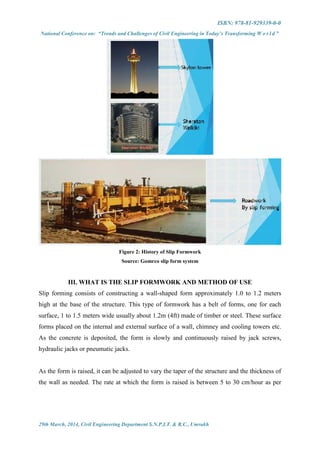
  • 397.
    ISBN: 978-81-929339-0-0 National Conferenceon: “Trends and Challenges of Civil Engineering in Today’s Transforming W o r l d ” 29th March, 2014, Civil Engineering Department S.N.P.I.T. & R.C., Umrakh BAGASSE ASH AS AN EFFECTIVE PARTIAL REPLACEMENT IN FLY ASH BRICKS Samruddha Raje1 , Apurva Kulkarni2 , Mamata Rajgor3 Student of final year B.E. Civil, Sigma Institute of Engineering College, Vadodara, Gujarat, India 1 Student of final year B.E. Civil, Sigma Institute of Engineering College, Vadodara ,Gujarat ,India 2 Assistant Professor, Civil Engg. Department, Sigma Institute of Engineering College, Vadodara – Gujarat-India 3 Abstract: Every year millions tones of agricultural and industrial wastes are produced worldwide India is no exception, construction industry is largest growing industry incorporating in use of materials, best way of recycling any material is to use it as construction material. Sugar cane is grown in many parts of India mainly in states like U.P, Maharashtra, and Gujarat. Average yield of sugar cane is 70 tons/hectares, of this yield 256-257 Million tons sugar cane is crushed to produce sugar in various sugar mills resulting bagasse is burnt in boiler as fuel, which results in production of huge quantity Huge quantity of ash which is a waste product, available at very negligible rate. It causes the chronic lung condition pulmonary fibrosis more specifically referred to as bagassios. In this paper, Bagasse ash can be utilized by replacing it with fly ash and lime in fly ash bricks. Trial bricks of size (230x100x75) mm were tested with different proportions of 0%, 10%, 20%, 30%, 40%, 50% and 60% with replacement of fly ash and 0%, 5%, 10%, 15% with replacement of lime. These bricks were tested in Compression test and Water absorption test as per Indian Standards. The aim of this research was to make economical and green bricks to maintain environmental balance, and avoid problem of ash disposal Keywords: Bagasse ash, cost feasibility, Eco friendly bricks, Environment, Flyash (Class F), Sustainability, Waste re-uses. I. INTRODUCTION Population scenario comes towards India by means of increasing industries. The fruitful efforts of industries lead to develop India. As the industries increases also the waste coming from them at the end of product increases. At the end of survey result coming that the amount of the approximately 250 to 300 million tons of industrial wastes are being produced every year by chemical and agricultural process in India. It is very essential to dispose these wastes safely without affecting health of human being, environment, fertile land, sources of water bodies; etc.
  • 398.
    ISBN: 978-81-929339-0-0 National Conferenceon: “Trends and Challenges of Civil Engineering in Today’s Transforming W o r l d ” 29th March, 2014, Civil Engineering Department S.N.P.I.T. & R.C., Umrakh Sugar cane bagasse, the fibrous residue after crushing and juice extraction of sugar cane, is a major industrial waste product from the sugar industry. Nowadays, it is commonplace to reutilize sugar cane bagasse as a biomass fuel in boilers for vapor and power generation in sugar factories. Depending on the incinerating conditions, the resulting sugarcane bagasse ash (SCBA) may contain high levels of SiO2 and Al2O3, enabling its use as a supplementary cementious material (SCM) in blended cement systems. Uses. II. EXPERIMENTAL MATERIAL a) Bagasse ash Figure 1: Bagasse Ash Source: “Shree Ganesh Khand Udhgyogh Bagasse which is waste product of sugar industry is burnt as a fuel in boilers producing huge quantity of bagasse ash is generally spread over farms and dump in ash pond which causes environmental problems also research states that Workplace exposure to dusts from the processing of bagasse can cause the chronic lung condition pulmonary fibrosis, more specifically referred to as bagassosis. So there is great need for its reuse, also it is found that bagasse ash is high in silica and is found to have pozollinic property so it can be used as substitute to construction material.
  • 399.
    ISBN: 978-81-929339-0-0 National Conferenceon: “Trends and Challenges of Civil Engineering in Today’s Transforming W o r l d ” 29th March, 2014, Civil Engineering Department S.N.P.I.T. & R.C., Umrakh TABLE 1 CHEMICAL PROPERTIES OF BAGASSE ASH Sr. No. Chemical Compound Percentage 1 Nitrogen 0.2- 0.3% 2 P2O5 1.5 -2% 3 K2+Na2 5-10 % 4 CaO 1-2% 5 Mgo 0.07% 6 Sio2 85-90% 7 Heavy metals NA 8 Fe 2-4% Source: Shree Ganesh Khand Udhayog, Vatariya b) Flyash (Class F) The burning of harder, older anthracite and bituminous coal typically produces Class F fly ash. This fly ash is pozzolanic in nature, and contains less than 20% lime (CaO). Possessing pozzolanic properties, the glassy silica and alumina of Class F fly ash requires a cementing agent, such as Portland cement, quicklime, or hydrated lime, with the presence of water in order to react and produce cementitious compounds. Figure 2: Fly ash (Class F) Source: “Shreeji Bricks,Sakarda
  • 400.
    ISBN: 978-81-929339-0-0 National Conferenceon: “Trends and Challenges of Civil Engineering in Today’s Transforming W o r l d ” 29th March, 2014, Civil Engineering Department S.N.P.I.T. & R.C., Umrakh TABLE 2: CHEMICAL COMPOSITION OF CLASS F FLY ASH Sr. No. Chemical Compound Percentage 1 SiO2 54.90 2 A12O3 25.80 3 Fe2O5 6.90 4 CaO 8.70 5 MgO 1.80 6 SO3 0.60 7 Na2O & K2O 0.60 Source: http://www.flyash.com c) Acetylene Carbide Lime Pure calcium oxide is fused with coke in order to render the highest yield in the manufacture of acetylene. The quality of the resultant carbide lime is a direct result of the excellent quality raw materials. Carbide lime is finer in particle size, and physically, having a very finely divided particle size makes carbide lime better. A finer particle size means faster and more reactivity. Figure 3: Lime Source: “Shreeji bricks” Sarkada
  • 401.
    ISBN: 978-81-929339-0-0 National Conferenceon: “Trends and Challenges of Civil Engineering in Today’s Transforming W o r l d ” 29th March, 2014, Civil Engineering Department S.N.P.I.T. & R.C., Umrakh TABLE 3: CHEMICAL COMPOSITION OF LIME Sr. No. Chemical CompoundP Percentage 1 SiO2 5.39 2 A12O3 1.06 3 Fe2O3 0.39 4 CaO 28.60 5 MgO 2.42 6 SO3 0.93 Source: GEO Test House, Gorwa, Gujarat d) Quarry dust Figure 5: Quarry dust Source: “Shreeji bricks” Sarkada Quarry dust is a waste product produced during the crushing process which is used to extract stone. It is rock particles. When huge rocks brake in too small parts for the construction in quarries. It is like sand but mostly grey in colour. It is mineral particles. The density of Quarry dust is 1650 kg/m³. e) Water Water is an important ingredient of brick as it actually used for manufacturing of brick. Since it helps to bind all the raw materials for giving proper mix. Water used for making brick should be free from impurities
  • 402.
    ISBN: 978-81-929339-0-0 National Conferenceon: “Trends and Challenges of Civil Engineering in Today’s Transforming W o r l d ” 29th March, 2014, Civil Engineering Department S.N.P.I.T. & R.C., Umrakh III. MIX DESIGN The design mix proportion is done in Table 4. TABLE 4: EFFECTIVE REPLACEMENT OF FLY ASH BY BAGASSE ASH Sample F. A (Kg) B.A (Kg) Lime (Kg) Q.D (Kg) Std 60.00 0.00 20.00 20.00 S1 50.00 10.00 20.00 20.00 S2 40.00 20.00 20.00 20.00 S3 30.00 30.00 20.00 20.00 S4 20.00 40.00 20.00 20.00 S5 10.00 50.00 20.00 20.00 S6 0.00 60.00 20.00 20.00 F.A=Fly ash, B.A= Bagasse ash, Q.D= Quarry Dust TABLE 5: EFFECTIVE REPLACEMENT OF LIME BY BAGASSE ASH Sample F. A (Kg) B.A (Kg) Lime (Kg) Q.D (Kg) Std 60.00 0.00 20.00 20.00 L1 60.00 5.00 15.00 20.00 L2 60.00 10.00 10.00 20.00 L3 60.00 15.00 5.00 20.00 L4 60.00 20.00 0.00 20.00 F.A=Fly ash, B.A= Bagasse ash, Q.D= Quarry Dust
  • 403.
    ISBN: 978-81-929339-0-0 National Conferenceon: “Trends and Challenges of Civil Engineering in Today’s Transforming W o r l d ” 29th March, 2014, Civil Engineering Department S.N.P.I.T. & R.C., Umrakh IV.EXPERIMENTAL Methodology The evaluation of Bagasse ash for use as a replacement of fly ash material begins with the brick testing. Brick contains fly ash, Lime, water, and Quarry dust. With the control brick, i.e. 10%, 20%, 30%, 40%, 50% and 60% of the fly ash is replaced with Bagasse ash, the data from the Bagasse ash fly ash brick is compared with data from a standard fly ash brick without bagasse ash. Five bricks samples were cast having size of 230x115x75mm.The manufacturing process of bricks broadly consists of three operations viz. mixing the ingredients, pressing the mix in the machine and curing the bricks for a stipulated period. Selection of machinery depends on the bricks mix contents. For manufacturing bagasse ash fly ash bricks, the best suited machinery is a Vibro - press machine, which is an indigenous low cost machine and can be run by ordinary semiskilled worker. Its production capacity is 1000 bricks per shift and can be operated in two shifts without any operation/maintenance load. The maintenance cost is so low that it can be ignored. 15 lakh bricks can be produced for each machine in its life cycle. A. Compression Test Figure: - 6 Compression strength test for Brick Source: SIGMA INSTITUTE OF ENGINEERING LAB. The brick specimens are immersed in water for 24 hours. The frog of the brick is filled flush with 1:3 cement mortars and the specimen are stored in damp jute bag for 24 hours and then immersed in clean water for 24 hours. The specimen is placed in compression testing machine with 6 mm plywood on top and bottom of it to get uniform load on the specimen. Then load is applied axially at a uniform rate of 14 N/mm2 . The crushing load is noted. Then
  • 404.
    ISBN: 978-81-929339-0-0 National Conferenceon: “Trends and Challenges of Civil Engineering in Today’s Transforming W o r l d ” 29th March, 2014, Civil Engineering Department S.N.P.I.T. & R.C., Umrakh the crushing strength is the ratio of crushing load to the area of brick loaded. Average of five specimens is taken as the crushing strength. TABLE 6: COMPRESSION STRENGTH OF BRICKS (230X115X75) AT 7, 14 AND 21 DAYS FOR BAGASSE ASH FLY BRICKS Sample 7 Days N/mm² 14 Days N/mm² 21 Days N/mm² STD 4.43 4.70 7.55 S1 3.38 4.35 7.43 S2 3.13 4.17 6.09 S3 3.03 4.08 5.57 S4 2.94 3.94 5.07 S5 2.77 3.77 4.02 S6 NA NA NA L1 3.39 4.00 5.99 L2 3.12 3.74 5.81 L3 3.08 3.65 5.20 L4 2.83 3.61 4.92 VI. ECONOMIC FEASIBILITY TABLE 7: COST OF MATERIALS Material Rupees/Kg Bagasse ash 0.20 Flyash 0.55 Quarry dust 0.40 Lime 1.40 TABLE 8 TOTAL COSTS OF BRICKS OF DIFFERENT PROPORTIONS Samples Cost STD 3.36 S1 3.25 S2 3.14 S3 3.03 S4 2.92 S5 2.81 S6 2.70
  • 405.
    ISBN: 978-81-929339-0-0 National Conferenceon: “Trends and Challenges of Civil Engineering in Today’s Transforming W o r l d ” 29th March, 2014, Civil Engineering Department S.N.P.I.T. & R.C., Umrakh TABLE 9: COMPARISON BETWEEN BAGASSE ASH FLYASH BRICKS AND CLAY BRICKS Sr. No Description Clay Bricks Bagasse Ash Fly ash Bricks 1 Size, mm 215x100x70 230x100x75 2 Volume, cm3 1505 1725 3 Bricks in 1 Cum Masonry 664 500 4 Density, Kg /m3 1600 1668 5 Cost in Rupees 4000/1000 2420/1000 6 Compressive Strength, Kg/cm2 30-50 30-50 7 Water Absorption,% 20-25 8-12 VII.CONCLUSION Compressive strength decreases on increase in percentage of Bagasse ash as compare to fly ash. Use of bagasse ash in brick can solve the disposal problem; reduce cost and produce a ‘greener’ Eco- friendly bricks for construction. Environmental effects of wastes and disposal problems of waste can be reduced through this research. A better measure by an innovative Construction Material is formed through this research. It provides innovative use of class F fly ash which contains less than 20% lime. This study helps in converting the non-valuable bagasse ash into bricks and makes it valuable. In this study, maximum compressive strength is obtained at 10% replacement of fly ash as bagasse ash. Bagasse ash bricks reduce the seismic weight of building. L1 3.28 L2 3.21 L3 3.13 L4 3.06
  • 406.
    ISBN: 978-81-929339-0-0 National Conferenceon: “Trends and Challenges of Civil Engineering in Today’s Transforming W o r l d ” 29th March, 2014, Civil Engineering Department S.N.P.I.T. & R.C., Umrakh VIII. ACKNOWLEDGMENT The author thankfully acknowledge to Dr. F. S. Umrigar, Principal, Prof. Jayeshkumar Pitroda, Prof. J. J. Bhavsar, Associate Professor and PG (Construction Engineering and Management) Coordinator, B.V.M. Engineering College, Mr. Sailesh Shah Chairman of Sigma Institute of Engg. Asst. Professor Patel Ankit, Asst. Professor Rajgor Mamta, Lab Asst. Dinubhai G. Desai, Sigma Institute of Engineering, Vadodara, Gujarat. REFERENCES [1] Effects of Fine Bagasse Ash on the Workability and Compressive Strength of Mortars, By: Department of Materials Engineering, Faculty of Engineering, Kasetsart University, Bangkok0900, Thailand. [2] Experimental Study on Bagasse Ash in Concrete. By: R .Shrinivasan & K.Sathiya, Tamil Nadu, India-2010 [3] Sugar cane Bagasse ash as a partial Portland cement replacement material, Sep-2010 [4] Environmental Construction and Valuation [Research -Paper] byB.N.Purohit from the Institution of values, Gujarat zone [5] Mamta B. Rajgor, Prof. Jayeshkumar Pitroda “A study of utilization aspect of stone waste in Indian context.” [6] Om Prakash (1990), “Utilization of Pulverized (Fertilizer Plant) Fly Ash as Low-Cost Bricks and Construction Material” M. Tech. Thesis Submitted to MNREC, Allahabad. [7] Riddhish shah, JayeshPitroda “Recycling of Construction Material for Sustainability” published in National Conference on Recent Trends in Engineering & Technology, (NCRTET-2011) B.V.M. Engg. College, V.V.Nagar, Gujarat 13th -14th May 2011. [8]Rajiv Sinha, “Extract from paper 'Technology: Fly ash Disposal and Utilization: The Indian Scenario”, Department of Civil Engineering, IIT Kanpur [9]Shreeji bricks Sarkada. [10] Shree Ganesh khandudhagyog, Vatariya [11] V. S. Aigbodion*, S. B. Hassan, T. Ause and G.B. Nyior “Potential Utilization of Solid Waste (Bagasse Ash) “Journal of Minerals & Materials Characterization & Engineering, Vol. 9, No.1, pp.67-77, 2010 [12]“Engineering Materials” by R. K. Rajput, S. Chand & Company Ltd. [13]Gujarat Narmada Fly ash Company Limited,901, A- Wing, Alkapuri Arcade, R. C. Dutt Road, Vadodara -390 005 [14] IS: 3495 (Part 1 and 2)-1992, Methods of tests of Burnt Clay Building Bricks—Specification, Bureau of Indian Standards, New Delhi. [15] S.K.Duggal, “Engineering Materials”. [16] http://theconstructor.org/building/fly-ash-bricks/5330/ [17] http://en.wikipedia.org/wiki/Sand [18] http://flyashbricksinfo.com/fly-ash-brick-vs-normal-clay bricks.html [19] www.wikipedia.com
  • 407.
    ISBN: 978-81-929339-0-0 National Conferenceon: “Trends and Challenges of Civil Engineering in Today’s Transforming W o r l d ” 29th March, 2014, Civil Engineering Department S.N.P.I.T. & R.C., Umrakh [20] http://rmrc.wisc.edu/coal-fly-ash [21] http://www.google.co.in/imgres [22] http://www.caer.uky.edu/kyasheducation/flyash.shtml [23] http://rmrc.wisc.edu/coal-fly-ash/ [24] http://www.graymont.com [25]http://www.mapsofindia.com [26] http://www.sereneinteriors.com
  • 408.
    ISBN: 978-81-929339-0-0 National Conferenceon: “Trends and Challenges of Civil Engineering in Today’s Transforming W o r l d ” 29th March, 2014, Civil Engineering Department S.N.P.I.T. & R.C., Umrakh VERMICOMPOSTING: A SUSTAINABLE SOLUTION TO KITCHEN WASTE Kartik Gonawala1 , Karishma Chorawala2 , Mehali Mehta3 , Sanjay Parekh4 Student1 , M.E Environmental Engineering, Sarvajanik College of Engineering & Technology, Gujarat, India1 kartikgonawala@yahoo.in Student2 , M.E Environmental Engineering, Sarvajanik College of Engineering & Technology, Gujarat, India2 karishma.aiesecsurat@gmail.com Asst. Professor3 , Civil Engineering Department, Sarvajanik College of Engineering & Technology, Gujarat, India3 mehali.mehta@scet.ac.in Abstract: The aim of this work was to test combination of the thermo composting and vermicomposting to improve the treatment efficiency and assess the optimum period required in each method to produce good quality compost. The results showed that pre- thermocomposting improved vermicomposting of kitchen waste. A 9-day thermo composting prior to vermicomposting helped in mass reduction, moisture management and pathogen reduction. Keywords: Compost; Kitchen waste; Pathogens; Thermocomposting; Vermicomposting I. INTRODUCTION Solid waste management is one of the biggest environmental challenges facing the world today due to the increasing population and urbanization. A sustainable approach to handle this will be to treat and reprocess organic waste on-site, to produce useful products. Compo- sting is the most economical and sustainable option for organic waste management as it is easy to operate and can be conducted in contained space provided it is managed properly to produce a good quality produce. Composting is a natural process of organic waste treatment which is currently practiced with various modifications to the technology. Thermocomposting comprises a short period of high temperature treatment followed by a period of lower temperature, facilitating mass reduction, waste stabilization and pathogen reduction. However the disadvantages are the long duration of the process, frequent aeration required, loss of nutrients (e.g. gassing off of nitrogen) and a heterogeneous end product. Composting using worms, known as vermicomposting gives a better end product (vermicastings) than composting due to the enzymatic and microbial activity that occur during the process (Bajsa et al., 2003). Many studies have shown that vermicomposting can achieve safe pathogen levels which may be facilitated by the microbial and enzymatic
  • 409.
    ISBN: 978-81-929339-0-0 National Conferenceon: “Trends and Challenges of Civil Engineering in Today’s Transforming W o r l d ” 29th March, 2014, Civil Engineering Department S.N.P.I.T. & R.C., Umrakh activity with an added advantage of converting the important plant nutrients into a more soluble state helping in plant utilization. Vermicomposting is being considered as a potential option in the hierarchy of integrated solid waste management that involves the stabilization of organic material by the joint action of earthworms and microorganisms. Although microbes are responsible for the biochemical degradation of organic matter, earthworms are the important drivers of the process by conditioningthe substrate and altering the biological activity (Airaet al., 2007).However, the processing time and quality of the end product vary according to the composition of the initial mixture being processed (Singh et al., 2010). Vermicomposting has also shown impressive effects on the growth of different crops under field conditions (Mamta et al., 2012).Various physical, chemical and microbiological methods of disposal of organic solid wastes are currently in use, these methods are time consuming and involve high costs. Therefore, there is a pressing need to find outcost- effective alternative methods of shorter duration particularly suited to Indian conditions. In this regard, vermicomposting has been reported to be a viable, cost-effective and rapid technique for the efficient management of the organic solid wastes (Hand et al., 1988; Raymond et al., 1988; Harriset al., 1990; Logsdson, 1994). The organic kitchen waste produced from restaurants and canteens form a major component of putrefying organic waste that end up in landfill sites or disposed off into roadsides and waterways in many developing countries. The main problems encountered with kitchen waste composting are its high moisture content, need of bulking substrate and constituents unacceptable for worms. Composting of raw waste therefore requires constant care with moisture management, constituents of the waste, the ratio of carbon and nitrogen that affect composting and the composting period. The aim of the experiment was to under- stand the effect of a pre-thermocomposting in managing those problems in vermicomposting of kitchen waste to reduce the period of composting and to improve the quality of the final compost. II. VERMICOMPOSTING MATERIALS Decomposable organic wastes such as animal excreta, kitchen waste, farm residues and forest litter are commonly used as composting materials. In general, animal dung mostly cow dung
  • 410.
    ISBN: 978-81-929339-0-0 National Conferenceon: “Trends and Challenges of Civil Engineering in Today’s Transforming W o r l d ” 29th March, 2014, Civil Engineering Department S.N.P.I.T. & R.C., Umrakh and dried chopped crop residues are the key raw materials. Mixture of leguminous and non- leguminous crop residues enriches the quality of vermicompost. There are different species of earthworms viz. Eisenia foetida (Red earthworm), Eudrilus eugeniae (night crawler), Perionyx excavatus etc. Red earthworm is preferred because of its high multiplication rate and thereby converts the organic matter into vermicompost within 45-50 days. Since it is a surface feeder it converts organic materials into vermicompost from top. III. METHODS A. Composting systems The wastes used in this experiment were grass clippings (84l), 35l of shredded paper (newspaper and some office paper) and 28l of kitchen waste (lettuce, cabbage, oranges, tomatoes, mandarins, pears, apples and broccoli). Grass clippings and shredded paper was used as bulking materials and a source of carbon. Thermocomposting was conducted in tumbler composting bins and vermicomposting in Styrofoam boxes. Worm boxes were initially set up using vermicastings collected from an established worm farm to a depth of 10–15 cm to start the process. Approximately 200 g of composting worms were added to each box comprising of a mixed species of 40:60 ratio of Red (L. rubellus) and Tiger (E. fetida). The tumbler bins were tested daily to note the temperature, pH and moisture content. On days 6, 9, 12, and 15, 2 litres of partly composted waste was fed to separate worm farms for the completion of process. The composting and sampling schedule to study the optimum duration of thermocomposting and vermicomposting for kitchen waste treatment was as shown in Table 1. Vermicast from worm boxes were analyzed for its physical and chemical quality at the end of 21 days. Microbial quality of compost was assessed based on the presence of E. coli, E. faecalis, and Salmonella spp. Microbial analyses were conducted at the end of 21 days composting and later monthly until the composts were found safe for handling. The kitchen waste was not expected to contain pathogens, however the lawn clippings may contain pathogens from pet faces and other sources and therefore microbial analyses was considered essential to assess the safety of the product.
  • 411.
    ISBN: 978-81-929339-0-0 National Conferenceon: “Trends and Challenges of Civil Engineering in Today’s Transforming W o r l d ” 29th March, 2014, Civil Engineering Department S.N.P.I.T. & R.C., Umrakh Table 1: Pathogen content in terms of E. coli and E. faecalis over the composting period Sample Composting schedule E. coli (MPN/g) E. faecalis (MPN/g) 2 months 3 months 2 months 3 months Thermocompost 21 days >110 110 >110 46 Vermicompost 21 days 110 7.5 110 4.3 Thermo. + Vermi. 6DT and 15DV 24 21 46 2.3 Thermo. + Vermi. 9DT and 12DV 46 15 46 9.3 Thermo. + Vermi. 12DT and 9DV 110 15 46 4.3 Thermo. + Vermi. 15DT and 6DV >110 4.3 24 2.3 B. Sample analyses The samples were tested for pH, moisture, compaction rate and carbon: nitrogen ratio. The temperature was measured at inside the tumbler and air temperature outside the tumbler. The pH and moisture content of the samples was measured as described by Morais and Queda (2003) and Wu and Ma (2001). Total carbon was tested using high temperature non- dispersive infrared gas analyzer and total nitrogen as per APHA (1995) from which carbon: nitrogen ratio (C: N) was calculated. For the microbial analysis, 1 g of compost was weighed out and added to 9 ml of distilled water, shaken vigorously and then mixed with a rotating mixer on high speed for 10min. One ml of the mixture was then added to 10ml of distilled water and again mixed in the same manner. The samples were analyzed for the concentration of E. coli and E. faecalis using the most probable number (MPN) method (Standards Australia, 1995a,b), respectively. All tests were carried out in duplicates. For E. faecalis and S. typhimurium the initial dilution was made to 1:100 whereas for S. typhimurium, the MPN method developed for compost by Sidhu et al. (2001) was followed. The biochemical confirmation of E. coli, E. faecalis and S. typhimurium was carried out as described in the Standards Australia (1995a,b,c), respectively. IV. RESULTS AND DISCUSSION Food wastes high in organic and moisture content are not only difficult for collection, transport and storage but also cause serious environmental pollution if not treated before disposal. In small systems to treat kitchen waste due to the varying nature of constituents of
  • 412.
    ISBN: 978-81-929339-0-0 National Conferenceon: “Trends and Challenges of Civil Engineering in Today’s Transforming W o r l d ” 29th March, 2014, Civil Engineering Department S.N.P.I.T. & R.C., Umrakh food waste and the bulking agent, the operation performance may vary from one system to another compared to windrow composting. In the present study considerable reduction in the volume of waste, 85% and 79% was noted in both tumblers without considering the waste taken out for feeding worm farms in 3 weeks (Fig. 1).The reduction in volume of waste that occurred during thermocomposting reduced the area of worm bed required and reduced the time required for vermicomposting. Fig.1. The depth of compost from the bottom of the barrel over the period of composting. The temperature in both tumblers reached a peak at above 55 °C by the second day and was found to stabilise at around 25 °C after day 10. No relationship between the outside air temperature and the temperature inside the tumblers was observed (Fig. 2).The pH of the substrates varied during the sampling period between 8 and 9.2 in the tumblers as shown in Fig. 3.However, vermcomposting followed by thermocomposting neutralized the pH in all trials (Fig. 4).The moisture content of the substrate during thermocomposting was between 60% and 75% throughout the experiment (Fig. 5)although the initial sample had moisture level of 80-85%, which was not ideal for vermicomposting. 0 10 20 30 40 50 60 0 3 6 9 12 15 18 21 Depthofcompost(cm) Days T1 T2
  • 413.
    ISBN: 978-81-929339-0-0 National Conferenceon: “Trends and Challenges of Civil Engineering in Today’s Transforming W o r l d ” 29th March, 2014, Civil Engineering Department S.N.P.I.T. & R.C., Umrakh Fig.2. The tumbler and outside temperatures during the experiment period. Fig.3. The changes in pH of the substrates in tumblers during the experiment period. Fig.4. The pH of compost after various composting schedule. 0 10 20 30 40 50 60 70 0 3 6 9 12 15 18 21 Itemp°C Days Outside °C T1 °C T2 °C 7 7.5 8 8.5 9 9.5 1 2 3 4 5 6 7 8 9 10111213141516171819202122 pH Days T1 T2 0 2 4 6 8 10 12 21 19 15 12 9 6 pH Composting schedule T1 T2
  • 414.
    ISBN: 978-81-929339-0-0 National Conferenceon: “Trends and Challenges of Civil Engineering in Today’s Transforming W o r l d ” 29th March, 2014, Civil Engineering Department S.N.P.I.T. & R.C., Umrakh Fig.5. The moisture content of the substrates during the experiment period. According to Wu and Smith (1999) for efficient composting and pathogen reduction, a temperature of 55 °C must be maintained for 15 consecutive days. It has been reported that food waste when combined with sawdust and mulch, was composted successfully in 14 days after which needed to be cured in windrows (Donahue et al., 1998).In the present trial, the temperature higher than 55 °C was achieved on the second day, which dropped below 40°C the next day and then regained the thermophilic phase for 3 days after day 6. The large-scale systems are generally able to maintain thermophilic condition for longer period as against small tumbler bins which are more prone to temperature fluctuation. This may be due to the less volume of waste and high surface area for heat loss in small systems. The moisture level required for effective thermo-compo-sting is between 55% and 65% whereas kitchen waste usually has higher moisture content and, therefore, adding bulking agents such as saw dust, or shredded paper would help to reduce the moisture level and to develop the thermophilic condition. The heat generated during the degrading process also helps in reducing the moisture content. This seems to benefit the vermicomposting process that followed thermocomposting as too much moisture in worm boxes could result in putrification of waste (Kristiana et al., 2005). Although organic matter could be composted at a wide range of pH between 3 and 11, pH was found to increase from 4 to 8 during composting of food waste with cow manure and hay mulch (Cekmecelioglu et al., 2005).Worms do not normally like citrus and acidic waste and, therefore, these wastes are normally excluded from vermicomposting systems. The results showed that a prior thermo-compo-sting would enable worm farms to handle citrus and acidic waste to a certain extent. By 21 days both tumblers and worm farms attained a 0 10 20 30 40 50 60 70 80 90 0 3 6 9 12 15 18 21 24 Moisture% Days T1 T2
  • 415.
    ISBN: 978-81-929339-0-0 National Conferenceon: “Trends and Challenges of Civil Engineering in Today’s Transforming W o r l d ” 29th March, 2014, Civil Engineering Department S.N.P.I.T. & R.C., Umrakh closer to neutral pH. Therefore, if the waste is thermo-composted prior to vermicomposting separation of acidic waste and onion peels may not be required as pre-composting would stabilize the pH. The parameter traditionally considered to determine the degree of maturity of compost and to define its agronomic quality is the C: N ratio. It is believed that a C: N ratio below 20 is indicative of acceptable maturity, while a ratio of 15 or lower being preferable (Morais and Queda, 2003). High C: N ratio indicated by high carbon decreased biological activity, resulting in slow degradation (Haug, 1993). Wong et al. (2003) observed that the C: N ratio decreased rapidly to below 20 by day 21 and then remained at similar level to 56 days of composting. The 21 days trial conducted in the present study showed that C: N ratio was reduced to below 20 in pre composted vermicompost as against the 21 days of just thermocomposting (Fig. 6).Tripathi and Bhardwaj (2004)explained that the changes in C:N ratio in thermocomposting normally occurred by the loss of carbon as carbon dioxide while in vermicomposting, in addition to loss of carbon the increase in nitrogen content of the sub- strate due to microbial and enzymatic activity also influence the reduction of C:N ratio. Fig.6. C:N ratio of end product at various composting schedule (TC—thermocomposting; VC— vermicomposting). Although it was noticed that 21 days of a combination of thermocomposting and vermicomposting produced compost with acceptable C: N ratio and good homogenous consistency of a fertilizer, the pathogen level was very high. The initial samples were found to have a high numbers of E. coli, E. faecalis (>110MPN/g), while S. typhimurium was undetectable and therefore not tested further. Table1 showed that the E. coli and E. faecalis 0 5 10 15 20 25 30 35 21 19 15 12 9 6 C:NRatio Composting schedule T1 T2
  • 416.
    ISBN: 978-81-929339-0-0 National Conferenceon: “Trends and Challenges of Civil Engineering in Today’s Transforming W o r l d ” 29th March, 2014, Civil Engineering Department S.N.P.I.T. & R.C., Umrakh levels were high after two months of composting which was reduced to within the guideline limits by three months, except in fully thermo-composted samples. The samples that were only thermo composted, retained high level of pathogens even after three months. After two months, it could be observed that greater the period of vermicomposting better was the E. coli reduction. However, after three months not much difference was noticed between all vermicomposted samples. The optimum period to obtain pathogen safety was 9 days thermocomposting, followed by 2.5 months of vermicomposting. This result showed that if thermocomposting process did not reach high enough temperature, it was possible that not only inactivation of pathogens will not occur but they might even grow, as high counts of faecal coli-forms and E. faecalis were noticed after 21 days of thermo-composting. In the present study, the origin of pathogenic bacteria could be from the lawn clippings that were used. Thermocomposting alone did not inactivate the pathogens which could be due the non- achievement of temperature >55°C for 3 consecutive days as per ARMCANZ (1995) requirement. However subsequent vermicomposting was effective in pathogen inactivation where the best pathogen die-off was achieved in worm boxes which had 9 days of thermocomposting followed by 75 days of vermicomposting. The results showed that although compost of good homogenous consistency was achieved in 21 days in the thermo- vermicomposting process, the substrate needed to be left in vermicomposting system for at least three months to ensure microbial safety of the product. Ndegwa and Thompson (2001) observed that by combining the processes of composting and vermicomposting in bio solids treatment improved the product quality, met pathogen level requirement and shortened the stabilization time. They also obtained a more stable and homogenous product that had less impact on environment. V. CONCLUSION Thermocomposting prior to vermicomposting was helpful in waste stabilization, pH and moisture stabilization as well as for mass reduction. Vermicomposting after thermo- composting was effective in inactivating the pathogens. This study revealed that while treating kitchen waste, thermo-composting for 9 days followed by 2.5 months of vermicomposting produced pathogen safe compost.
  • 417.
    ISBN: 978-81-929339-0-0 National Conferenceon: “Trends and Challenges of Civil Engineering in Today’s Transforming W o r l d ” 29th March, 2014, Civil Engineering Department S.N.P.I.T. & R.C., Umrakh REFERENCES [1] Agriculture and Resource Management Council of Australia and New Zealand Water Technology Committee (ARMCANZ), 1995. Guidelines for Sewage Systems—Biosolid Management. Occasional Paper WTC No. 1/95. October 1995. [2] APHA, AWWA, WPCF, 1995. Standard Methods for the Examination of Water and Wastewater. APHA, Washington, DC. [3] Bajsa, O., Nair, J., Mathew, K., Ho, G.E., 2003. Vermiculture as a tool for domestic wastewater management. Water Science and Technology 48 (11–12), 125–132. Cekmecelioglu, D., Demirci, A., Graves, R.E., Davitt, N.H., 2005. Applicability of optimised in-vessel food waste composting for windrow systems. Biosystems Engineering 91 (4), 479–486. [4] Donahue, D.W., Chalmers, J.A., Sorey, J.A., 1998. Evaluation of in-vessel composting of university postconsumer food wastes. Compost Science and Utilisation 6 (2), 75–81. Haug, R.T., 1993. The Practical Handbook of Compost Engineering, second ed. Lews Publishers, CRC Press Inc., Florida, USA. [5] Kristiana, R., Nair, J., Anda, M., Mathew, K., 2005. Monitoring of the process of composting of kitchen waste in an institutional scale worm farm. Water Science and Technology 51 (10), 171–177. [6] Morais, F.M.C., Queda, C.A.C., 2003. Study of storage inXuence on evolution of stability and maturity properties of MSW composts. In: Proceedings of the fourth International Conference of ORBIT association on Biological Processing of Organics: Advances for a sustainable Society Part II, Perth, Australia. [7] Ndegwa, P.M., Thompson, S.S., 2001. Integrating composting and vermi-composting in the treatment and bioconversion of biosolids. Biore-source Technology 76, 107–112. Sidhu, J., Gibbs, R.A., Ho, G.E., Unkovich, I., 2001. The role of indigenous microorganisms in suppression of Salmonella regrowth in composted biosolids. Water Research 35 (4), 913–920. [8] Standards Australia, 1995a. Australian StandardsTM , Method 6: Thermo-tolerant Coliforms and Escherichia coli—Estimation of Most Probable Number (MPN) AS 4276.6. Standards Australia, 1995b. Australian StandardsTM , Water microbiology: Method 8: Faecal streptococci— Estimation of Most Probable Numbers (MPN), AS 4276.8. [9] Standards Australia, 1995c. Australian StandardsTM , Water Microbiology: Method 14: Salmonellae, AS 4276.14. [10] Tripathi, G., Bhardwaj, P., 2004. Comparative studies on biomass production, life cycles and composting effciency of Eisenia fetida (Savigny) and Lampito mauritii (Kinberg). Bioresource Technology 92, 275–283. [11] Wong, J.W.C., Lee, K.M.Y., Ng, T., Jagadeesan, H., 2003. Feasibility of in-vessel composter for treating vegetable waste in densely populated city—Hong Kong. In: Proceedings of the Fourth International Conference of ORBIT Association on Biological Processing of Organics: Advances for a Sustainable Society Part II, Perth, Australia, pp. 119– 128. [12] Wu, L., Ma, L.Q., 2001. EVects of sample storage on biosolids compost stability and maturity evaluation. Journal of Environmental Quality 30, 222–228. [13] Wu, N., Smith, J.E., 1999. Reducing pathogen and vector attraction for biosolids. Biocycle(November), 59–61.
  • 418.
    ISBN: 978-81-929339-0-0 National Conferenceon: “Trends and Challenges of Civil Engineering in Today’s Transforming W o r l d ” 29th March, 2014, Civil Engineering Department S.N.P.I.T. & R.C., Umrakh ANALYSIS OF FLOOD USING HEC-RAS Mr.A.R.Patel1 , Dr.S.M.Yadav2 , Mr.R.B.Khasiya3, Mrs.S.I.Waikhom4 Research Scholar, M.E. Civil (W.R.M.), GEC, Surat, Gujarat, India1 Professor. Civil Engineering Department, SVNIT, Surat, Gujarat, India2 Associate. Prof. Civil Engineering Department, GEC, Surat, Gujarat, India3 Associate. Prof. Civil Engineering Department, GEC, Surat, Gujarat, India4 Abstract: Surat city is situated at the bank of river Tapi in Gujarat state. In the present paper sufficiency of sections of a specific river reach is accessed using HEC-RAS hydrodynamic software. The variations of water surface level due to upstream flow and high tidal backflow condition in the channel reach has been considered. This study is helpful in the understanding the need of curative measures for the control of flood and improving the water discharge capacity of channel at various cross-sections in the selected river reach. In the present paper five cross sections of river reach are checked for three different high flow conditions. Keywords: Flood analysis, HEC-RAS hydro dynamic model, Tapi River Gujarat. I. INTRODUCTION The application of hydraulic modelling for the determination of the habitat conditions within a river network is a largely innovative use of the possibilities of hydraulic modelling. The hydraulic models like HEC-RAS are used for inundation assessment during river floods by Knebl et al (2005) and Trigg et al (2009). The objective of the study is usually the identification of floodplain areas which are affected by inundation at certain high flow levels with a certain probability of occurrence within a year. A study of Darshan & Dr. S M Yadav et. al (2013) Geomorphic channel design and analysis using HEC-RAS hydraulic design functions. A study of Maingi & Marsh (2002) assessed for anticipated hydrologic impacts on a river. One main advantage of HEC-RAS compared to other model, sediment dynamics and analysis of flow has been used in a study by Carson (2006). HEC-RAS is a piece of software developed by the U.S. Army Corps of Engineers which allows to perform one-dimensional steady and unsteady river flow hydraulic calculations, sediment transport-mobile bed modelling and water temperature analysis by Brunnerr (2006). HEC-RAS is an integrated package of hydraulic analysis programs.
  • 419.
    ISBN: 978-81-929339-0-0 National Conferenceon: “Trends and Challenges of Civil Engineering in Today’s Transforming W o r l d ” 29th March, 2014, Civil Engineering Department S.N.P.I.T. & R.C., Umrakh The discharge and river stage were chosen as the variables in practical application of flood warning. The discharge, river stage and other hydraulic properties are interrelated and depend upon the characteristics of channel roughness. Estimation of channel roughness parameter is of key importance in the study of open- channel flow particularly in hydraulic modeling. Channel roughness is a highly variable parameter which depends upon number of factors like surface roughness, vegetation, channel irregularities, channel alignment etc. Several researchers including Patro(2009) et al.Usul (2006) and Burak, Vijay(2007) et al. and Wasantha Lal A. M.(1995) has calibrated channel roughness for different rivers for the development of hydraulic model. Datta(1997) et al. estimated single channel roughness value for open channel flow using optimization method, taking the boundary condition as constraints. II. OBJECTIVE The objective of this paper is to understand how to compute the flood analysis of river using HEC-RAS software. III. HEC-RAS HEC-RAS is an integrated system of software for one-dimension water surface profile computations and is designed for interactive use in multi-tasking, multiuser network environment. The system is comprised of a graphical user interface (GUI), separate hydraulic analysis components, data storage and management capabilities, graphic, and reporting facilities. HEC-RAS was developed by the Hydrologic Engineering Center, a research group for the U.S. Army Corp of Engineers. The HEC-RAS system has the capability to perform one-dimensional surface profile hydraulic analysis in both steady state and unsteady conditions. The steady flow computational procedure is based on the solution of the one dimensional energy equation. Energy losses are evaluated by friction (Manning's equation) and contraction/expansion (coefficient multiplied by the change in velocity head). The momentum equation is utilized in situations where the water surface profile is rapidly varied. These situations include hydraulic structures. The one-dimensional model HEC-RAS (Hydraulic Engineering Center – River Analysis System) is in principle a physically-based modelling system to analyze river flow, sediment, and water quality dynamics. It was developed as part of the Hydraulic Engineering Center’s project “Next Generation” (NexGen) and first released in the year 1995. HEC-RAS is also highly compatible with the other model solutions and data exchange is made easy in order to be able to couple different modeling approaches for the analysis of complex hydrological/hydraulic problems. The release of the first version of HEC-RAS (1.0) in 1995
  • 420.
    ISBN: 978-81-929339-0-0 National Conferenceon: “Trends and Challenges of Civil Engineering in Today’s Transforming W o r l d ” 29th March, 2014, Civil Engineering Department S.N.P.I.T. & R.C., Umrakh was followed by numerous improvements of the software during the following years. The latest HEC-RAS version is available free-of-charge under a public domain license from the website of the U.S. Army Corps of Engineers1. The current version (4.1) was released in January 2010. 1-D MODELLING USING HEC-RAS In the subsequent paragraphs methodology to carry out 1D hydrodynamic modeling using HEC-RAS has been explained. DATA REQUIRED The following data are required for carrying out 1D hydrodynamic modeling using HEC- RAS.  Bed material samples  Daily Discharge flow data  Detailed cross sections of river  Map of Study area  Past flood data or peak discharge data  R.L of left and right bank of river IV.METHODOLOGY HEC-RAS was first released in 1995 and since that time there have been several major versions of HEC-RAS of which 4.1 is the latest version released in 2010. In this project, version 4.1 of HEC-RAS was used. The development of the program (HEC-RAS) was done at the Hydrologic Engineering Centre (HEC), which is a part of the Institute for Water Resources (IWR), U.S. Army Corps of Engineers. HEC-RAS has the ability to make the calculations of water surface profiles for steady and gradually varied flow as well as for subcritical, super critical, and mixed flow regime. In addition to this, HEC-RAS is capable to do modeling for sediment transport, which is notoriously difficult. For making such calculations, HEC-RAS requires boundary conditions for each type of data. These boundary conditions are important to determine the mathematical solutions to the problems. Boundary conditions are required to obtain the solution to the set of differential equations describing the problem over the domain of interest. In HEC-RAS, there are several boundary conditions available for steady flow and sediments analysis computations. Boundary conditions can be either externally specified at the ends of the network system (upstream or downstream) or internally used for connections to junctions.
  • 421.
    ISBN: 978-81-929339-0-0 National Conferenceon: “Trends and Challenges of Civil Engineering in Today’s Transforming W o r l d ” 29th March, 2014, Civil Engineering Department S.N.P.I.T. & R.C., Umrakh The following steps are required to be followed to compute carrying capacity of river. 1. Create a new HEC-RAS project. 2. Create a new river and reach in the geometry editor window. 3. Create a new cross section. [Cross Section, Options, Add a new Cross Section]. 4. Paste the surveyed station/elevation points into the new Cross section then add the location of the left and right bank stations. 5. Choose the Run/Hydraulic Design Functions… menu item from the main menu. 6. Choose the Type/ Uniform Flow menu item. 7. If it is not already selected, choose the correct river and reach from the drop down combo boxes. 8. Enter the elevation of the field-selected bank-full stage and the channel slope into the appropriate fields. 9. Click on the field next to the elevation on left most station/elevation point, under the heading “Equation” and choose Manning as the resistance equation. 10. Enter the Manning ‘n’ value. 11. Click inside of the “Discharge” field then click the “Compute” button to calculate the discharge. V. EXPECTED OUT-COME Cross section data represent the geometric boundary of the stream. Cross sections are located at relatively short intervals along the stream to characterize the flow carrying capacity of the stream and its adjacent floodplain. Even though it is not a must, it is advisable to take cross section at constant interval. Cross sections are required at representative locations throughout the stream and at locations where changes occur in discharge, slope, shape, roughness; at locations where levees begin and end; and at hydraulic structures (bridges, culverts, and weirs). When cross-section and other related data are given as input in a HEC-RAS software then expected out-comes are obtained as shown in fig 1 to fig 2.
  • 422.
    ISBN: 978-81-929339-0-0 National Conferenceon: “Trends and Challenges of Civil Engineering in Today’s Transforming W o r l d ” 29th March, 2014, Civil Engineering Department S.N.P.I.T. & R.C., Umrakh Fig 1: Cross-Section Profile Fig 2: Cross-Section Profile VI. CASE STUDY STUDY AREA A flood is a high inflow in river resulting in a high stage. As a result water usually overflows from the banks due to insufficient conveyance of stream and insufficient bank protection, and it inundates the adjoining areas and spreads over the flood plains and cause loss of life and property. In case of river reach of Tapi between a Sardar and Magdalla bridge, 11 km long and having a bed slope of 0.0011359(upstream boundary condition), and the highest tide
  • 423.
    ISBN: 978-81-929339-0-0 National Conferenceon: “Trends and Challenges of Civil Engineering in Today’s Transforming W o r l d ” 29th March, 2014, Civil Engineering Department S.N.P.I.T. & R.C., Umrakh level as 3.64m(downstream boundary condition) are used in the HEC-RAS modeling. The area for case study is shown in fig 3. Fig 3: Study River Reach of Tapi The flow in the channel as, 2.5 lakh cusecs, 5 lakh cusecs and 10 lakh cusecs has been considered. When these values are given as input at five cross-sections the output obtained is as shown in fig 4 to fig 8. The Finding of above Study are Summarized at below. 1. At cross-section 49 for flows of 2.5 lakhs and 5.0 lakhs the cross-section is sufficient to carry flow but when the flow is of 10 lakh cusecs, the section is not capable of carrying the flow. 2. At cross-section 35 for flows of 2.5 lakhs, 5.0 lakhs and 10 lakh cusecs the cross-section is not sufficient to carrying the flow. 3. At cross-section 25 for flows of 2.5 lakhs the cross-section is sufficient to carry flow but when the flow is 5.0 lakhs and 10 lakhs cusecs, the cross- section is not sufficient to carrying the flow. 4. At cross-section 10 for flows of 2.5 lakhs and 5.0 lakhs the cross-section is sufficient to carry flow but when the flow is of 10 lakh cusecs, the section is not capable of carrying the flow. 5. At cross-section 1 for flows of 2.5 lakhs the cross-section is sufficient to carry flow but when the flow is 5.0 lakhs and 10 lakhs cusecs, the cross-section is not sufficient to carrying the flow.
  • 424.
    ISBN: 978-81-929339-0-0 National Conferenceon: “Trends and Challenges of Civil Engineering in Today’s Transforming W o r l d ” 29th March, 2014, Civil Engineering Department S.N.P.I.T. & R.C., Umrakh Fig 4: Profile at cross section 49 Fig 5: Profile at cross section 35 Fig 6: Profile at cross section 25 Fig 7: Profile at cross section 10
  • 425.
    ISBN: 978-81-929339-0-0 National Conferenceon: “Trends and Challenges of Civil Engineering in Today’s Transforming W o r l d ” 29th March, 2014, Civil Engineering Department S.N.P.I.T. & R.C., Umrakh Fig 8: Profile at cross section 1 VI. DISCUSSION Using this analysis, one can easily predict the possible effects of flood in the surrounding area and accordingly preventive measures can be taken up in the form of bank protection like embankment, rising of levees, stone pitching, etc. However, care be exercised in case of 2-D and 3-D analysis for same magnitude of Flood results may differ. The present study can be used to check sufficiency of sections to carry specific magnitude of flood. ACKNOWLEDGMENT The authors thankfully acknowledge Mr. J.N.Patel, Chairmain Vidyabharti Trust, Mr. K.N.Patel, Hon. Secretary, Vidyabharti Trust, Dr. H.R.Patel, Director, Dr.J.A.Shah, Principal, S.N.P.I.T.&R.C.,Umrakh, Bardoli, Gujarat,India for organizing the conference and for inviting the papers from the various sectors of Civil Engineering field.
  • 426.
    ISBN: 978-81-929339-0-0 National Conferenceon: “Trends and Challenges of Civil Engineering in Today’s Transforming W o r l d ” 29th March, 2014, Civil Engineering Department S.N.P.I.T. & R.C., Umrakh REFERENCES 1. A. M. Wasantha Lal, “Calibration of Riverbed Roughness,” Journal of Hydraulic Engineering, Vol. 121, No. 9, 1995, pp. 664-671. 2. Brunner, G.W. (2006). HEC-RAS, River Analysis System Hydraulic Reference Manual. Hydrologic Engineering Center, U.S. Army Corps of Engineers. 3. Carson, E.C. (2006): Hydrologic modeling of flood conveyance and impacts of historic overbank sedimentation on West Fork Black’s Fork, Uinta Mountains, northeastern Utah, USA. Geomorphology, 75, pp. 368-383. 4. Chow, V. T. (1959). Open-channel hydraulics. McGraw-Hill, New York. 5. Darshan Mehta and Dr. S M Yadav(2013),’’Geomorphic Channel Design and Analysis Using HEC- RAS Hydraulic Design Function” Global Research Analysis, Vol. 2, ISSN NO 2277-8160. 6. K. Subramanya, “Flow in Open Channels,” Tata Mc- Graw-Hill Publishing Company Limited, New Delhi, 1998. 7. Knebl, M.R., Yang, Z.-L., Hutchison, K. & D.R. Maidment (2005): Regional scale flood modeling using NEXRAD rainfall, GIS, and HEC-HMS/RAS: a case study for the SanAntonio River Basin Summer 2002 storm event. Journal of Environmental Management, 75, pp. 325-336. 8. N. Usul and T. Burak, “Flood Forecasting and Analysis within the Ulus Basin, Turkey, Using Geographic Infor- mation Systems,” Natural Hazards, Vol. 39, No. 2, 2006, pp.213-229. 9. Maingi, J.K. & S. E. Marsh (2002): Quantifying hydrologic impacts following dam construction along the Tana River, Kenya. Journal of Arid Environments, 50, pp. 53-79. 10. R. Ramesh, B. Datta, M. Bhallamudi and A. Narayana, “Optimal Estimation of Roughness in Open- Channel Flows,” Journal of Hydraulic Engineering, Vol. 126, No.4,1997, pp. 299-303. 11. R. Vijay, A. Sargoankar and A. Gupta, “Hydrodynamic Simulation of River Yamuna for Riverbed Assessment: A Case Study of Delhi Region,” Environmental Monitoring Assessment, Vol. 130, No. 1- 3, 2007, pp. 381-387. 12. S. Patro, C. Chatterjee, S. Mohanty, R. Singh and N. S. Raghuwanshi, “Flood Inundation Modeling Using Mike Flood and Remote Sensing Data,” Journal of the Indian Society of Remote Sensing, Vol. 37, No. 1, 2009, pp. 107- 118. 13. Trigg, M. A., Wilson, M. D., Bates, P. D., Horritt, M. S., Alsdorf, D. E., Forsberg, B. R. & M. C. Vega (2009): Amazon flood wave hydraulics. Journal of Hydrology, 374, pp. 93-105.
  • 427.
    ISBN: 978-81-929339-0-0 National Conferenceon: “Trends and Challenges of Civil Engineering in Today’s Transforming World” 29th March, 2014, Civil Engineering Department S.N.P.I.T. & R.C., Umrakh GREEN TECHNOLOGY- AN OVERVIEW Dharti Soni1 , Sowmiya Iyer2 , Devanshi Gosai3 Assistant professor , Civil Engineering Department,Vadodara Institute of Engineering,Kotambi,Gujarat,india1 Assistant professor , Civil Engineering Department,Vadodara Institute of Engineering,Kotambi,Gujarat,india2 Assistant professor , Civil Engineering Department,Vadodara Institute of Engineering,Kotambi,Gujarat,india3 Abstract : The term "technology" refers to the application of knowledge for practical purposes. The field of "green technology" encompasses a continuously evolving group of methods and materials, from techniques for generating energy to non-toxic products. This includes the development of alternative fuels, new means of generating energy and improving energy efficiency. The factors that differentiate “green” construction derive from a new set of expectations relating to structures and their function. Green buildings aim to maximize efficiency in their use of water, energy and other resources, to minimize waste, pollution, or other contributions to environmental degradation, and to create environment that contribute to health and productivity. Keywords: Carbon credits, Carbon trading, Carbon footprints, Ecological footprint, Gujarat International Finance Tec-City, green technology, Kyoto protocol I. INTRODUCTION Green technology is one that has a "green" purpose. By green it does not mean the color, however, Mother Nature is quite green, and the long and short term impact an invention has on the environment is what we are talking about. Green inventions are environmentally friendly inventions that often involve energy efficiency, recycling, safety and health concerns, renewable resources, and many more. The world has a fixed amount of natural resources, some of which are already depleted or ruined. For example household batteries and electronics often contain dangerous chemicals that can pollute the groundwater after disposal, contaminating our soil and water with chemicals that cannot be removed from the drinking water supply and the food crops grown on contaminated soil. The risks to human health are great. Some of the emitters of carbon:
  • 428.
    ISBN: 978-81-929339-0-0 National Conferenceon: “Trends and Challenges of Civil Engineering in Today’s Transforming World” 29th March, 2014, Civil Engineering Department S.N.P.I.T. & R.C., Umrakh 1. A typical household also contributes a bit of greenhouse gas emissions. Out of all vehicular usage, it contributes more than 50% of our total gas emission output. 2. World’s biggest kiwifruit exporter, Zespri International says that each 1 kg generated the equivalent of 1.74 kg of carbon dioxide in atmosphere as a result of its transportation. 3. In 2009, goggle revealed on its official blog that every Google search produces an average of 0.2g of CO2. “If India achieves per capita energy consumption of 5,000 kWh per person each year, then coal would suffice only for next eleven years. But, if energy efficient technology, energy conservation activities and use of renewable energy, particularly solar energy is adopted in integrated manner, then only India would be in a comfortable position in coming future”, said by SK Shukla, Chairman ,Chhattisgarh Renewable Energy Development Agency (CREDA) II. CARBON CREDITS An initiative by Intergovernmental Panel on Climate Change in 1997, Kyoto protocol was sign by different countries(developed) to reduce the amount of carbon they emit in the atmosphere as a result, concept of carbon trading and carbon credits was emerged. Purchasing Carbon credits shows that one has paid to remove or reduced the emissions of carbon dioxide from the environment. One carbon credits implies particular amount of carbon dioxide, generally to one ton of carbon dioxide or another carbon dioxide equivalent value for other green house gases. On the whole carbon credits are to assign a pecuniary charge to cost of emitting greenhouse gases. It can be converted into inherent money by carbon trading, thus providing companies, countries as well as a financial incentive to produce less carbon dioxide. III. CARBON TRADING Carbon trading is buying and selling of carbon credits under the rules and regulation set as per the Kyoto protocol. This protocol has allotted a particular quota of greenhouse gases to each country that they are allowed to emit. These countries set some limit on the amount of greenhouse gases run by their corresponding local operators. These operators can emit that much amount of greenhouse gases as per the carbon credits owned, and if they have carbon credits left over the allotted quota to them, they can sell it to another company that needs carbon credits owing to it emitting greenhouse gases in excess to quota allotted to it. This allows for flexibility while it makes sure that the entire amount of emissions stays within the
  • 429.
    ISBN: 978-81-929339-0-0 National Conferenceon: “Trends and Challenges of Civil Engineering in Today’s Transforming World” 29th March, 2014, Civil Engineering Department S.N.P.I.T. & R.C., Umrakh limit. Under the Clean Development Mechanism (CDM), companies that are exceeding the allotted quota of carbon credits can tie up with other company, portion of the total carbon credits earned by the small companies can be transferred to other companies. If the limit is kept high then amount of emission would be of an undesirable level and if the limit is kept too low then allowances would be few and overpriced. In case of exceptionally high price the governing body will release extra credits into the market to ensure stability of the price. IV. CARBON FOOTPRINTS Carbon footprint is the amount of carbon dioxide or equivalent greenhouse gases one produce directly or indirectly. Direct includes burning of fossil fuels, vehicular usage, household work etc and Indirect footprint is produced because of consumption by every product, which emits during manufacturing, transportation, etc of the product. V. CRITICISM ON THE CARBON CREDIT CONCEPT 1. Pessimist believes that it isn’t tackling the problem of global warming, solution can be, which include used of alternatives to fossil fuel. Carbon trading focuses on reducing the amount of fossil fuel used. 2. It focuses on short term solution rather than long term. 3. Carbon trading is interfering the other solutions to global warming. 4. Carbon caps will add an extra cost to the companies added to its annual expenditure that will ultimately pass on to consumers. 5. U.S. and China two major emitter of greenhouse gases avoided the mandatory caps. VI. DISPOSING RIGHT Sustainability is one main aspect which defines green technology. We consume coal, oil, petroleum and other fossil fuels and it is not uncommon to see rising prices of these commodities increasing until we find alternative means of energy. Whereas extraction leads to massive air pollution which leads to global warming. Renewable sources of energy like sunlight, wind, water will definitely reduce our dependence on fossil fuels. Many old products are exported to developing countries. Although the benefits of reusing electronics in this way are clear, the practice is causing serious problems because the old
  • 430.
    ISBN: 978-81-929339-0-0 National Conferenceon: “Trends and Challenges of Civil Engineering in Today’s Transforming World” 29th March, 2014, Civil Engineering Department S.N.P.I.T. & R.C., Umrakh products are dumped after a short period of use in areas that are unlikely to have hazardous waste facilities. Simple green inventions that can be considered are reusable and recycling. Manufacturing of products involve lot of wastage and environmental pollution. Companies should formulate green policies and implement them in their manufacturing processes; it can lead to optimizing use of the resources Products should be manufactures so that it can be reused or recycled after their life limit. If the manufacturer makes products keeping in mind the attribute of reuse and recycle, then demand of population can be kept pace with, without really having to build new product from scratch. Although recycling can be a good way to reuse the raw materials in a product, the hazardous chemicals in e-waste mean that electronics can harm workers in the recycling yards, as well as their neighboring communities and environment. Recycling not only reduces your CO2 emissions, but it keeps perfectly good, reusable materials from going to a landfill. Companies can go for the most cost-effective way to reduce emissions, either by investing in eco-friendly machinery and equipment or by purchasing carbon credits from another operator who hasn’t reached his quota of greenhouse emissions. One of the best known examples of green technology would be the solar cell. A solar cell directly converts the energy in light into electrical energy through the process of photovoltaic. Generating electricity from solar energy means less consumption of fossil fuels, reducing pollution and greenhouse gas emissions. VII. GREEN TECHNOLOGY IN INFRASTRUCTURE Going green has been a popular initiative for some time, but the commercial sector has been slow to pick up the trend. Only now are commercial buildings beginning to go green in a variety of ways, and are doing so for both financial and environmental benefits. Green technology uses renewable natural resources that never depletes and it has new and innovative energy generation techniques. So that future generation can also be benefitted from them without harming the planet. Green nanotechnology that uses green engineering and green chemistry is one of the latest in green technologies. One of the important factors
  • 431.
    ISBN: 978-81-929339-0-0 National Conferenceon: “Trends and Challenges of Civil Engineering in Today’s Transforming World” 29th March, 2014, Civil Engineering Department S.N.P.I.T. & R.C., Umrakh for environmental pollution is the disposal of waste. Green technology has answers to that as well. It can effectively change waste pattern and production in a way that it does not harm the planet and we can go green. A. Green Commercial Buildings are Turning on the Light One of the ways that commercial buildings are going green is through the lighting. Light- emitting diodes (LED) light bulbs, are gaining significant energy as an alternative to bright and fluorescent lighting in commercial buildings, particularly as the cost of LED lighting technology is starting to go down. For that same reason, LED light bulbs are gaining popularity in residential buildings. Since LED light bulbs are considered the greenest and most efficient light bulbs for commercial buildings, a lot of research is currently taking place to make them as affordable as possible to commercial buildings. The increasing environmental degradation issues call for a greener living in every way possible. As we are striving hard to ensure a green home through effective energy and water consumption, green living should be advocated as well as when it comes to the cars. Electric cars can be fantastic option which ensure a safe environment. The electric cars lead to cleaner air in comparison to usual gas powered vehicles. It’s true that the electric options do not promise zero impact on environment yet these are much cleaner to use. Besides, electric cars assure good energy efficiency that the gas powered counterparts. The gas led cars tend to waste nearly two-third of fuel in excessive heat. On the other hand the electric powered cars use almost the entire energy for driving ensuring minimal energy waste. Besides, electric cars are simple to run than the gas powered vehicles. B. Green Commercial Buildings Save Money Sometimes, just some changes to a present commercial building can make a huge difference. By some research, green commercial buildings, compared to commercial buildings in general:  Less cost to maintain by 19%  Use less energy by 25%, and less water by 11%  Emit less carbon dioxide by 34%  Have more satisfied occupants by 27%
  • 432.
    ISBN: 978-81-929339-0-0 National Conferenceon: “Trends and Challenges of Civil Engineering in Today’s Transforming World” 29th March, 2014, Civil Engineering Department S.N.P.I.T. & R.C., Umrakh  Over 20 years, a single solar water heater can keep over 50 tons of carbon dioxide emissions out of the atmosphere  Geothermal pumps reduce emissions by up to 70 percent and use up to 50 percent less electricity. Commercial buildings are finally picking up on the green initiative and both governments and the commercial sector are taking the time to construct green commercial buildings or to turn older commercial buildings into green-friendly buildings. Overall, green commercial buildings offer a lot of benefits to a lot of different entities. C. Green Cleaning Green Cleaning is cleaning to protect health without harming the environment. A Green Cleaning program goes beyond chemical and equipment choices. It includes policies, procedures, training and shared responsibility efforts that minimize the impact of cleaning materials on the health of building occupants and protect the environment as a whole. Current products, processes and procedures aren’t necessarily bad, but newer technologies and processes make it possible to clean effectively, efficiently, and with less impact on health and the environment. Green cleaning is more than switching a few products; it’s about effective cleaning to create healthier buildings and at the same time reduce environmental impacts. D. Green technology in Gujarat 1) GIFT (Gujarat International Finance Tec-City) is planned as a financial Central Business District between Ahmedabad and Gandhinagar as a Greenfield development,which is under-construction. The GIFT development is expected to become a modern structure development in India, advancing the ideas of sustainability and ecology. The project regenerates the area as high-quality, mixed use district of residential, commercial and open space facilities that optimize land and real estate values. Salient Features of GIFT  Natural Gas will be distributed to every house and building via pipes, which is cheaper and safer than cylinders.
  • 433.
    ISBN: 978-81-929339-0-0 National Conferenceon: “Trends and Challenges of Civil Engineering in Today’s Transforming World” 29th March, 2014, Civil Engineering Department S.N.P.I.T. & R.C., Umrakh  GIFT will have a centralized AC system, called District cooling which is cheaper to run and uses less electricity.  All solid waste will be automatically sucked through underground pipes at high speed of 90 km/hr. 2) The pilot project at Amul chocolate plant at Mogar in Anand district, introduced for the first time in India, results into energy saving of around 47 percent and reduction in CO2 emission by 39 percent which corresponds to the monetary savings to the tune of Rs 20 lakh per annum besides reducing reliance on fossil fuels. 3) First green prison of the world in Gujarat, jail authorities have launched the green drive in the prison premises. A solar cooking system has been introduced at the Central Jail, around 24 concentrated solar dishes, which can generate steam at high temperature to cook food for 3000 people on a daily basis, have been installed. It is expected to save fuel costs of around Rs 2 million per annum and also reduce 72,000 tons of carbon emissions in a year. 4) Green house technology in agricultural sector at Dabhoi and Savli VIII. CONCLUSION  A carbon footprint is only one component of the broader ecological footprint. An ecological footprint compares the population's consumption of resources and land with the planet's ability to regenerate. The Earth’s ecological footprint is currently 23 percent over capacity. It takes about one year and two months to regenerate what we consume in a year.  According to the Department of Energy, if we increase the percentage of electricity produced by wind to 20% by 2030, we can reduce CO2 emissions of the electric sector by 25%. This is equivalent to taking an estimated 140 million vehicles off of the road.  Inventors should know that green inventions and clean technologies are good business. These are fast growing markets with growing profits.  Consumers should know that buying green inventions can reduce ones energy bill and that green inventions are often safer and healthier products.
  • 434.
    ISBN: 978-81-929339-0-0 National Conferenceon: “Trends and Challenges of Civil Engineering in Today’s Transforming World” 29th March, 2014, Civil Engineering Department S.N.P.I.T. & R.C., Umrakh  Green construction and technologies focus on reducing the overall impact of construction on human health and the natural environment. Green products and techniques work to utilize resources like water, gas, electricity, etc, more efficiently while reducing waste, pollution, and environmental degradation. REFERENCES [1] Australian Greenhouse Office, "National Greenhouse Gas Inventory", Canberra ACT, March 2007. [2] "Climate Change 2007: Mitigation of Climate Change, Summary for Policymakers from IPCC Fourth Assessment Report". Working Group III, IPCC. 2007-05-04. pp. Item 25 and Table SPM.7, pp. 29-31. [3]"Climate change glossary". Carbon credit. Environment Protection Authority Victoria. 2008-09-02. [4] "Collins English Dictionary - Complete & Unabridged 10th Edition". Carbon credit. William Collins Sons & Co. Ltd/Harper Collins Publishers. 2009. [5] Planning Commission Report for operational using Clean Development Mechanism (CDM), Govt. of India [6] UNFCCC CDM project database. [7] “Going Green” digit Fast track [8] www.ipm.iastate.edu/ipm/icm/2004/1-26- 2004/cc.html [9] www.nswai.com/images/newsletters/feb2007.pdf [10] www.onlinecarbonfinance.com/india-and-carbon-credits.htm [11] www.suspicious-carbon-credits.com [12] www.unfccc.int
  • 435.
    ISBN: 978-81-929339-0-0 National Conferenceon: “Trends and Challenges of Civil Engineering in Today’s Transforming World” 29th March, 2014, Civil Engineering Department S.N.P.I.T. & R.C., Umrakh FUZZY LOGIC BASED OPERATION OF GATED SPILLWAY Utkarsh Nigam1 ,Dr. S. M. Yadav2 APG Scholar, Water Resources Engineering. Civil EngineeringDepartment, SardarVallabhbhai National Institute of Technology, Surat, Gujarat, India.1 Professor, Civil EngineeringDepartment, SardarVallabhbhai National Institute of Technology, Surat, Gujarat, India.2 Abstract: Application of Fuzzy logic which is one of the new and advanced soft computing modern method can be used to efficiently control real time operation of spillway gates of a reservoir during high inflow or flood. Operation of gated spillway which is technically a very important aspect in real time reservoir operation in a dam is usually done based on the manual control using rule curves or by making some special guidelines proposed by concern committee for the particular dam (as GERI Gujarat Engineering Research Institute, Gujarat does this work in Gujarat for Ukairservoir). This paper present study of fuzzy logic for high inflow in Ukai reservoir using some real time data of reservoir to control the gates of spillway. In this study, to demonstrate the performance of Fuzzy Logic program high inflow events occurred in reservoir have been taken. The comparison of the actual outflow of dam released at that time with the proposed outflow based on control method by fuzzy logic is done.The proposed control method is the most systematic approach, since it discharges the water in proportion to the overall severity of the incoming flood hydrograph. The fuzzy control produces smoother outflow hydrographs than those obtained by actual controlled outflow. Keywords: Fuzzy Logic, Gated Spillways, Real-time operation, Reservoir operation. I. INTRODUCTION The control system to reservoir management in a dam, controls spillway gate and manages flow of discharged water also known as reservoir routing. The range for the water level to be maintained on a particular date has to be prescribed initially. The control system keeps the reservoir water level in prescribed range. This range is called Rule Level for a reservoir. This operation is carried out for maximum utilization of water in dam. The nonlinearities occur in reservoir water level flow and these nonlinearities are unexpected. Hence the design of reservoir operating system is challenging work. The gated operation work for spillways of reservoir have been done by manually controlled methods, Rule levels and Rule curves and by different policies. Operation of a gate
  • 436.
    ISBN: 978-81-929339-0-0 National Conferenceon: “Trends and Challenges of Civil Engineering in Today’s Transforming World” 29th March, 2014, Civil Engineering Department S.N.P.I.T. & R.C., Umrakh closely forms a part to achieve Reservoir control. Reservoir control were presented initially by Beard (1963)[3] as a a deterministic operating procedure for reservoir control, Windsor (1973)[18] tries to form a recursive linear programming procedure for the operation of a flood control system, Can and Houck (1984)[4] gave a goal-programming method for multireservoir system.,Ozelkana et al. (1997)[13] applied application of dynamic techniques in solving reservoir control.Oshimaaand Kosudaa(1998)[12] formed a deterministic chaos method based on the demand prediction in a reservoir control system. Chang and Chang 2001[5] suggested that optimal hydrological parameters as input and output should be there to build an optimal reservoir operation system. A set of operating rules for 10 stages for controlling the spillway gate opening was made by Haktanir and Kisi (2001)[7] . Now a days most common reservoir control strategy are based on human-operator decisions based on Rule Levels or Water releasing policies. In this strategy, a constant amount of water is discharged according to the reservoir level. The most significant drawback of this approach is how to determine the constant water amount that must be discharged for a given Elevation. Another disadvantage of this approach is that it does not consider the change rate of either the elevation or Inflow or change in elevation to determine the water amount to be released. KarabogaDervis et. al.(2004)[10] gave a new, reliable and efficient control method based on fuzzy logic which was proposed for the real- time operation of spillway gates of a reservoir during any flood of any magnitude up to the probable maximum flood. To demonstrate the performance of the proposed method the simulation of the control system using different probable overflow hydrographs were carried out by them.Haktaniret. al. (2013)[8] gave a fifteen-stage operation policy for the routing of flood hydrographs with return periods from 1.01 years up to the Probable Maximum Flood (PMF) for any dam having a gated spillway. They proposed a procedure to identify sets of operational rules for gated spillways for optimal flood routing management of artificial reservoirs. They route the flood dividing it into 15 sub-storage, hence they carried out a 15 stage routing. The application of Fuzzy logic can be traced to the hydrological domain and study by various researchers can found such as byRussel and Campbell 1996[14] , Shrestha et al. 1996[16] , Cheng and Chau 2001[5] , Jolma et al. 2001, Kumar et al. 2001 and KarabogaDervis(2004)[10] . These have applied the Fuzzy logic in various trends of reservoir operation. Russel and Campbell 1996[14] gave fuzzy programming based optimization of reservoir operation, rule based model byShrestha et al. 1996[16] .
  • 437.
    ISBN: 978-81-929339-0-0 National Conferenceon: “Trends and Challenges of Civil Engineering in Today’s Transforming World” 29th March, 2014, Civil Engineering Department S.N.P.I.T. & R.C., Umrakh II. RESERVOIR OPERATION MANAGEMENT SYSTEM IN HIGH INFLOWS A real-time reservoir operation is a very complex problem and becomes quite tedious and tough to control for the high inflow for gated spillways. A dam which is built to serve various purposes such as storage, Irrigation, Power Demands etc. has to be managed effectively by a proper efficient Reservoir Operation by fulfilling all needs and demands which are required. High Inflow or flood usually plays a very important role in the Reservoir operation and hence, Reservoir control policies have to be adopted to control the outflow to the downstream, to maintain the storage and elevation levels, to manage the high inflow or flood. Satisfying fully and efficiently the demand and needs by mitigating the parameters (flood, change in elevation/storage, drought) which affects the purposes of a dam constitute the main objectives of the study under reservoir operation management in high inflows or flood. Also, the structure of the dam and spillway must be safe against unexpected changes in the elevation and inflows. Therefore, management of the spillway gates in reservoir operation for gated spillways for a dam forms a major and concern part of study during a mild or a severe flood control problem. Reservoir control and operation has been done by the U.S. Army Corps of Engineers, they utilizes its own method of operating the gated spillways based on the so-called “water control diagrams” derived considering long- and short-term hydrologic forecasts (Hydrological 1987). Beard(1963)[3] also presented deterministic rule’sapproach similar to Corps’ method for reservoir operation. Sakakima et al. (1992)[15] make the following similar comment: “For the extremely big flood, a reservoir operator has to control the gates to protect the reservoir and the downstream reference point by relying on his judgement.” Russell and Campbell (1996)[14] formed reservoir operating rules using fuzzy programming, which according to them was a better solution then the conventional dynamic programing methods The gates of a spillway should be operated according to the probable inflow hydrograph as given by Haktanir and Kisi (2001)[7] . Gates should not be opened wide for low inflow as it would cause more release of water and most water will be unnessasorily lost.Haktaniret. al. (2013)[8] gave fifteen stage routing method for operating gated spillways.
  • 438.
    ISBN: 978-81-929339-0-0 National Conferenceon: “Trends and Challenges of Civil Engineering in Today’s Transforming World” 29th March, 2014, Civil Engineering Department S.N.P.I.T. & R.C., Umrakh III. CONTROL METHOD (STRATEGY) TO BE ADOPTED The aim of this fuzzy logic based control system is to adjust the dam Elevation as per rule level and to effectively manage the flood mitigation for high inflow. This should happen in the shortest time possible by adjusting the openness of spillway gates. Various uncertain factors that affect dam water reservoir and flow are inflow hydrograph, unexpected and sudden changes in reservoir water level, amount of water discharge per unit of time, maximum possible point of outflow etc. In this paper gate operation using fuzzy logic control (FLC) is discuss. Algorithm of fuzzy rules are used to obtain optimized membership function representing fuzzy values. These rules are derived based on the intuition and decision management depending upon the availability of occurs of particular flow. The main variables of a reservoir management system are the inflow rate [I(t), m3 /s], outflow rate[Q(t), m3 /s], reservoir capacity[S(106 m3 )], minimum reservoir water surface elevation [Hmin (m)], actual water level [H (m)],and spillway gate opening [d (m)] (Fig. 2). The accumulation of storage in a reservoir depends on the difference between the rates of the inflow and outflow. For the time interval of Dt, this continuity relationship can be expressed as the following (Udall 1961): ∆ ( ) = ( ). ∆ − ( ). ∆ Where, ∆ ( )storage accumulated or depleted during. ∆ ; and I(t)/Q(t)= average rate of inflow/outflow during . ∆ . Table 3: Elevation (in feet and m) and Storage relation for Ukai Dam Tapi basin Elevation-Storage and Elevation-Discharge these relations are used to find out the outflow hydrograph for the Inflow in a river. Here also we have utilised the same for routing the flow and to find outflow hydrograph as well. Table 3 gives the Elevation and storage relation for the Ukai Dam, Tapi basin which is utilised to find the elevation with respect to the particular storage and hence route the flow.
  • 439.
    ISBN: 978-81-929339-0-0 National Conferenceon: “Trends and Challenges of Civil Engineering in Today’s Transforming World” 29th March, 2014, Civil Engineering Department S.N.P.I.T. & R.C., Umrakh In the fuzzy control system design, the selection of the controller structure involves the following choices. A. Input and output variables. The input variables for the fuzzy controller are lake level (H) and rate of change in Inflow(dQ). The output of the controller is gate opening (d). The outflow rate of the reservoir is controlled by the gate opening tuned by the FLC. For the H, dQ, and d variables, the normalization intervals can be selected as [FRL PMF], [-1, 1] and [0 to max. gate opening] respectively. FRL: free reservoir level, PMF: probable maximum flood.Figures 1 & 2 shows the schematic representation of the gates for the spillway and the strategy to be used in fuzzy logic program. Figure 1. Schematic sketch of the gated spillway Figure 2. Proposed Fuzzy Control System B. Number and type of membership functions for variables. The membership functions used for the fuzzy values of the fuzzy variables are selected based on human/expert experience. Hence, each fuzzy variable can have fuzzy values and therefore the number of membership functions is depends on its value. All of the fuzzy values are
  • 440.
    ISBN: 978-81-929339-0-0 National Conferenceon: “Trends and Challenges of Civil Engineering in Today’s Transforming World” 29th March, 2014, Civil Engineering Department S.N.P.I.T. & R.C., Umrakh represented by triangular membership functions for simplicity and can be changed for others.here we are using five membership functions. C. Structure of rules. The rules of the FLC are obtained from information gathered by engineers and experts informed about the dam, and operator experience. The rule base of the FLC contains rules, which can also be tabulated in Table . Some examples of the fuzzy rules are written later on. Table 1: Relation developed for Fuzzy Logic program between membership function H dQ Negative big Negative small zero Positive small Positive big Very low Very low Very low Very low Very low Very low Low Low low low low low Medium medium medium medium medium medium High High high high high high Very high Very high Very high Very high Very high Very high D. Type of inference mechanism. The output of each rule is determined by Mamdani’s max-min inference method. 5. Defuzzification method. For the defuzzification process, the standard center of area method is employed. Table 2: Range of Membership Function for Rule level (1 September to 31 October) H SPILLWAY CREST TO MFL (299 ft. TO 351 ft.) dQ NEGATIVE BIG TO SMALL BIG (-1 TO 1) d Zero to maximum opening (0 to 32 Inch) Very low 335 335 339 Negative big -1 -1 -.5 Very low 0 0 0.4 Low 335 339 343 Negative small -1 -.5 0 Low 0 0.2 1.6 Medium 339 343 347 Zero -.5 0 .5 Medium 0.2 1.6 2.4 High 343 347 351 Positive small 0 .5 1 High 2 4 8 Very 347 351 351 Positive .5 1 1 Very 6 24 32
  • 441.
    ISBN: 978-81-929339-0-0 National Conferenceon: “Trends and Challenges of Civil Engineering in Today’s Transforming World” 29th March, 2014, Civil Engineering Department S.N.P.I.T. & R.C., Umrakh high big high The aim of the controller is to adjust elevationas per inflow in only within shortest time by adjusting spillway gate openness. The boundary points for dQ will be -1 and 1. The set points for l are considered as 0 and 12. The following rule base is initially constructed randomly. 1. If dam Elevation (lake level) is low and rate of change of Inflow is small positive then the openness of spillway gate is very very low. 2. If dam Elevation (lake level) is at middle and rate of change of Inflow is zero then the openness of spillwaygate is very low. 3. If dam Elevation (lake level) is high and rate of change of Inflow is small positive then the openness of spillway gate is at middle. 4. If dam Elevation (lake level) is very high and rate of change of Inflow is small negative then the openness of spillway gate is low. 5. If dam Elevation (lake level) is very very high and rate of change of Inflow is big negative then the openness of spillway gate is high. (a) (b) Figure 3.(a) Membership functions used for Input and output and (b)Different Parameters Used In Fuzzy Logic System Initially membership functions are defined randomly. Fuzzy rules are used to select the most appropriate parameter values characterizing the fuzzy membership function. During optimization process fuzzy rules based algorithm tries to minimize peak value of outflow and changes in peak values. As a case study the Ukai dam Tapi basin is chosen and flood event of 2011 is simulated using real time reservoir data of that year. For the model the membership functions used are
  • 442.
    ISBN: 978-81-929339-0-0 National Conferenceon: “Trends and Challenges of Civil Engineering in Today’s Transforming World” 29th March, 2014, Civil Engineering Department S.N.P.I.T. & R.C., Umrakh triangular and their range varies as given.Input functions are two, first is the Reservoir elevation that varies from reservoir level to be maintained according to rule level as initial value (for that that particular month in rainy season) to the Highest flood level above crest of reservoir which is 351ft. or 106.99m. The second input is the time rate of change of Inflow which varies from -1 to +1. The output of the program is the gate opening which varies from 0 to 32ft. The High Inflow event of the year2011 has taken and studied for the application of fuzzy logic in study. The following is the Inflow graph and are followed by actual and simulated results based on fuzzy logic control. Figure 4. High Inflow event of year 2011 Table 3 gives the Elevation and storage relation for the Ukai Dam, Tapi basin which is utilised to find the elevation with respect to the particular storage and hence route the flow.The actual outflow at that time of the particular case study is compared with the fuzzy logic outflow derived from our model. The results are shown and in the form of graphs and suitability of the fuzzy logic model is also shown. 0.0 1000.0 2000.0 3000.0 4000.0 5000.0 6000.0 23-Aug 29-Aug 4-Sep 10-Sep Dischargeincumecs Time in days
  • 443.
    ISBN: 978-81-929339-0-0 National Conferenceon: “Trends and Challenges of Civil Engineering in Today’s Transforming World” 29th March, 2014, Civil Engineering Department S.N.P.I.T. & R.C., Umrakh Figure 5.Discharge by Fuzzy Logic (Maroon line) and Actual Discharge (Red line) [Inflow hydrograph is in Blue line] 4. CONCLUSION Following findings can be summarized as an outcome of present study, 1. The fuzzy logic based control method does not require a mathematical model and the control operation can be carried out automatically without requiring any human operator interference. 2. The proposed control method is the most systematic approach, since it discharges the water in proportion to theoverall severity of the incoming flood hydrograph. 3. The fuzzy control produces smoother outflow hydrographs than those obtained by actual controlled outflow. 4. The fuzzy control successfully decrease the lake level of the reservoir tothe desired lake level for a high inflow hydrograph. Consequently, when compared with the conventional controltechniques, the proposed fuzzy control method performs as anaccurate and reliable control alternative. These characteristics ofthe fuzzy logic control system are highly desirable in reservoirmanagement, and are important indications of the power and effectivenessof the fuzzy control approach. 0.0 1000.0 2000.0 3000.0 4000.0 5000.0 6000.0 7000.0 20-Aug 25-Aug 30-Aug 4-Sep 9-Sep 14-Sep Dischargeincumecs Time in days Inflow Data Actual outflow Fuzzy outflow
  • 444.
    ISBN: 978-81-929339-0-0 National Conferenceon: “Trends and Challenges of Civil Engineering in Today’s Transforming World” 29th March, 2014, Civil Engineering Department S.N.P.I.T. & R.C., Umrakh ACKNOWLEDGMENT We are thankfully acknowledge to Mr. J.N.Patel, ChairmainVidyabharti Trust, Mr. K.N.Patel, Hon. Secretary, Vidyabharti Trust, Dr. H.R.Patel, Director, Dr.J.A.Shah, Principal, S.N.P.I.T.&R.C.,Umrakh, Bardoli, Gujarat,India for their motivational & infrastructural supports to carry out this research. REFERENCES [1] AcanalNese, HaktanirTefaruk,. Six-Stage Flood Routing for Dams Having Gated Spillways, Tr. J. of Engineering and Environmental Science 23 (1999) , 411 422. [2] AcanalNese, YurtalRecep and HaktanirTefaruk, Multi-stage flood routing for gated reservoirs and conjunctive optimization of hydroelectricity income with flood losses, Hydrological Sciences-Journal-des Sciences Hydrologiques, 45(5) October 2000. [3] Beard, L. R. (1963). “Flood control operation of reservoirs.”J. Hydraul. Div., Am. Soc. Civ. Eng., 89(1), 1– 23. [4] Can, E. K., and Houck, M. H. (1984). “Real-time reservoir operations by goal programming.”J. Water Resour. Plan. Manage, 110(3), 297–309. [5] Chang, L., and Chang, F. (2001). “Intelligent control for modeling of real-time reservoir operation.”Hydrolog.Process., 15, 1621–1634. [6] George J. Klir and Bo Yuan, 1995, Fuzzy sets and fuzzy logic: theory and applications, Prantice hall, PTR, Prantice Hall publisher, Upper Saddle river New Jersey. [7] Haktanir T., And Kisi O. (2001). “Ten-stage discrete flood routing for dams having gated spillways.” J. Hydrologic Eng., 6(1), 86–90. [8] HaktanirTefaruk, CitakogluHatice and AcanalNese, Fifteen-stage operation of gated spillways for flood routing management through artificial reservoirs, Hydrological Sciences Journal – Journal des Sciences Hydrologiques, 58 (5) 2013. [9] Hydrological Engineering Center. (1987). “Management of water control system, engineering and design.”Rep. EM 1110-2-3600, U.S. Army Corps of Engineers, Davis, Calif. [10] KarabogaDervis, BagisAytekin and HaktanirTefaruk (2004), Fuzzy Logic Based Operation of Spillway Gates of Reservoirs during Floods, J. Hydrol. Eng. 2004.9:ASCE:544-549. [11] Kisi, Ö. (1999). “Optimum ten stage overflow operating model for dams having gated spillway.” MSc thesis, Erciyes Univ., Turkey. [12] Oshimaa, N., and Kosudaa, T. (1998). “Distribution reservoir control with demand prediction using deterministic-chaos method.”Water Sci. Technol., 37(12), 389–395. [13] Ozelkan E. C., Galambosia, Á.,Gaucheranda, E. F., and Duckstein, L. (1997). “Linear quadratic dynamic programming for water reservoir management.”Appl. Math. Model., 21(9), 591–598. [14] Russell Samuel O., Member, ASCE, and Campbell Paul F., “Reservoir Operating Rules with Fuzzy Programming”, Journal of Water Resources Planning and Management/May/June/1996. [15] Sakakima, S., Kojiri, T., and Itoh, K. (1992). “Real-time reservoir operation with neural nets concept.”Proc., 17th Int. Conf. on Applications of Artificial Intelligence in Engineering—AIENG/92, Computational Mechanics Publications, Southampton, U.K., 501–514.
  • 445.
    ISBN: 978-81-929339-0-0 National Conferenceon: “Trends and Challenges of Civil Engineering in Today’s Transforming World” 29th March, 2014, Civil Engineering Department S.N.P.I.T. & R.C., Umrakh [16] Shrestha, B. P., Duckstein, L., and Stakhiv, E. Z. (1996). “Fuzzy rulebased modeling of reservoir operation.”J. Water Resour. Plan.Manage., 122(4), 262–269. [17] Udall, S. L. (1961). “Design of small dams.” Rep., U.S. Dept. of the Interior, Bureau of Reclamation, Washington, D.C. [18] Windsor, J. S. (1973). “Optimization model for the operation of flood control systems.”Water Resour. Res., 9(5), 1219–1226. [19] Wurbs, R. A. (1993). “Reservoir system simulation and optimization models.”J. Water Resour. Plan. Manage. 119(4), 455–472. [20] Yeh, W. (1985). “Reservoir management and operations models: A state of the art review.” Water Resour. Res., 21(12), 1797–1818.
  • 446.
    ISBN: 978-81-929339-0-0 National Conferenceon: “Trends and Challenges of Civil Engineering in Today’s Transforming World” 29th March, 2014, Civil Engineering Department S.N.P.I.T. & R.C., Umrakh SIMULATION OF ONE-DIMENSIONAL MODELING OF SEDIMENTATION PROCESSES ON LOWER SIANG H.P PROJECT, ARUNACHAL PRADESH, INDIA Kaoustubh Tiwari 1 , Dr.S.M Yadav 2 , Dr P.D Porey 3 , Mrs. Neena Isaac 4 1 Research Scholar, Water Resources Eng. Department of Civil Engineering, Sardar Vallabhbhai National Institute of Technology, Surat, Gujarat, India, Tel +919712519602 email: kaoustubh17@gmail.com 2 Professor, Department of Civil Engineering, Sardar Vallabhbhai National Institute of Technology, Surat, Gujarat , India; Tel +919426152906 email: smy@ced.svnit.ac.in 3 Professor & Director, Department of Civil Engineering, Sardar Vallabhbhai National Institute of Technology, Surat, Gujarat, India ; Tel +919825149292 email: director@svnit.ac.in 4 Chief Research Officer of Sediment Division in Central Water & Power Research Station(CWPRS), Kadakwasala, Pune ; Tel +919423006783 email : n_isaac@rediffmail.com Abstract: Recognizing the flow and sediment simulation situation as well as hydraulic parameters of the flow and sediments under different conditions is the basis for the analysis of the river behaviour and decision making about the engineering measures affecting them. Accordingly, this study seeks to spot the areas exposed to sedimentation and erosion and also gives the sediment bed profile which is used for analysis the future channel geometry of the River. This paper presents the results of a sedimentation study using one-dimensional sediment transport capacity using HEC-RAS to quantify sedimentation processes and also used to simulate the future channel bed response to river geometry in the Lower Siang Hydro-Power Project, Arunachal Pradesh, India. Keywords: Sediment Modeling, HEC-RAS, Sedimentation, Reach, River, Deposition/Erosion. 1. INTRODUCTION Dams have been constructed to control floods and provide water supplies for power generation, municipal, industrial and recreational purposes. Sediment transported by river channels flowing into these reservoirs. They get deposited in the reservoir formed by the dam and reduce storage volume due to the gradual accumulation of sediments. This has a significant detrimental effect on the usefulness and life of the reservoir. HEC-RAS is a one-
  • 447.
    ISBN: 978-81-929339-0-0 National Conferenceon: “Trends and Challenges of Civil Engineering in Today’s Transforming World” 29th March, 2014, Civil Engineering Department S.N.P.I.T. & R.C., Umrakh dimensional hydraulic simulation allowing for steady flow, unsteady flow, Quasi-unsteady flow and sediment simulations. Wardman et al[2] (2009) studied sediment transport processes in the lower Puyallup River, WA using HEC-RAS. Results of the study suggested increase in the bed level and decrease in overall trap efficiency due to tidal influences. Huang et al[9] (2012) used 1-D sediment transport model to simulate the future channel bed response to river geometry with and without temporary channel for the Elephant Butte Temporary Channel (Temp Channel) on the Middle Rio Grande in New Mexico. The paper presents an analysis of Sediment Transport using one-dimensional model (HEC-RAS) which gives the deposition of sedimentation profile of the river reach or reservoir. Amir at al[1] (2012) studied critical erodible points and areas with potential sediment aggredation along Karun River, Iran using HEC-RAS. Duan et al[7] (2012) examined to improved one-dimensional numerical model that takes into account the effect of sediment concentration and bed change on mass and momentum conservation of flood flow in the Yellow River. Tullos et al[6] (2009) compared results from a 1-D (HEC-RAS) hydraulic and sediment transport analysis (Yang equation) is compared to pre- and post-removal bathymetric and sediment surveys. Model simulations over predicted erosion in the reservoir and downstream relative to what was observed. Meselhe et al[11] (2009) used 1-D (HEC-RAS) model for numerical modeiling of lower Mississippi river to study bed material transport. Cantelli et al[4] (2007) handful of model’s specific to dam removal gives general hydrodynamic applications (HEC-RAS, MIKE 11, GSTARS), are available for simulating responses of rivers to the erosion and downstream pulse of reservoir sediments. Cui and Wilcox[5] (2008) used 1-D cross- sectionally and longitudinally averaged sediment transport model, at the Marmot Dam removal site is investigate potential aggradations and suspended sediment concentrations under various flow and sediment management scenarios. Brunner et al[3] (2005) highlighted additional sediment transport capabilities of HEC-RAS. In the present study, the numerical sediment transport model provide in HEC-RAS 4.1.0 (Hydrologic Engineering Centre, 2006) is utilised to predict the sediment movement through the study reach, specifically the location, volume, and depth of sediment deposition or erosion. 2. STUDY AREA: LOWER SIANG RESERVOIR The proposed Lower Siang hydroelectric project is located near village Bodak, 23 km from Pasighat the head quarter of East Siang district of Arunachal Pradesh, India. The dam of the proposed water storage project is geographically located at longitude 950 14’ 00”E and
  • 448.
    ISBN: 978-81-929339-0-0 National Conferenceon: “Trends and Challenges of Civil Engineering in Today’s Transforming World” 29th March, 2014, Civil Engineering Department S.N.P.I.T. & R.C., Umrakh latitude 280 09’ 59”N near village Bodak, East Siang district( figure 1). The dam site is situated about 1.5 km downstream of the Yamne river confluence with Siang on its left bank and about 4 km upstream towards north from Bodak village, 22 km upstream from the Pasighat town where the river Siang emerges in to the plains. The dam site has a low level terrace on the left bank but a steep right bank. Figure 1 Location Map of Lower Siang River with its tributaries The silent features of Lower Siang Hydroelectric Project, Arunachal Pradesh is given in Table.1 and Index map of the study region is shown in figure.2. Table 1 Salient features of Lower Siang Hydroelectric Project, Arunachal Pradesh LOCATION RESERVOIR State Arunachal Pradesh MWL EL.234.4 m District East Siang FRL EL.230 m River Siang MDDL EL.225.5 m Dam Site Near Village Bodak Gross storage at FRL 1421.0 Mcum Latitude 280 09’ 59”N Gross storage at MDDL 1216.93 Mcum Longitude 950 14’00”E Live storage 204.07 Mcum Area under submergence 51.51 sq. km at FRL Length of Reservoir 77.5 km along main Siang River and 28.5 km along Siyom River at FRL DAM SPILLWAY (OGEE) Type Concrete PMF 60115 cumec
  • 449.
    ISBN: 978-81-929339-0-0 National Conferenceon: “Trends and Challenges of Civil Engineering in Today’s Transforming World” 29th March, 2014, Civil Engineering Department S.N.P.I.T. & R.C., Umrakh Top elevation of dam EL. 235 m Crest level El. 208 m River bed level EL. 149 m Gate Arrangement Radial Deepest foundation level EL. 124 m Gate Size 20.0 m wide x 22.6 m high Height of dam from riverbed 86.0 m Sluice Spillway Height of dam above deepest foundation level 111 m Crest level El. 208 m Length of dam at top 710.0 m Gate Arrangement Radial with top seal Bottom width at max. Section 111.79 m Gate Size 7.0 m wide x 12.0 m high Figure.2 Index map 3. OBJECTIVE The objective of the present study is to assess numerically sediment profile formed in the Lower reach of Siang River. The sediment modeling investigation will provide a future forecast of bed adjustments as it pertains to the locations and characteristics of sediment deposits that may affect channel flood carrying capacities. 4. METHODOLOGY A number of modeling decisions, parameter values, and input data remained fixed across all of the runs using HEC-RAS (Table 2). Running HEC-RAS in this way allowed the sensitivity of the model to specific sediment transport equations to be assessed.
  • 450.
    ISBN: 978-81-929339-0-0 National Conferenceon: “Trends and Challenges of Civil Engineering in Today’s Transforming World” 29th March, 2014, Civil Engineering Department S.N.P.I.T. & R.C., Umrakh Steps for simulation of Siang River in HEC-RAS model is outlined as below: 1. Preparation of river plan and its main and sub main reaches. 2. Surveying of cross-sections and hydraulic structures in the river. 3. Collection of discharge and sediment data. 4. Preparations of input file and input data. 5. Interpretation of results. Table 2 Model Parameters Category Decisions, Parameter values, and Input data Geometric Cross-Section of the River and its tributaries, Distance of one Cross-Section to another Cross-Section (Left Over Bank & Right Over Bank) Flow 1. Quasi-unsteady flow (default method for sediment transport) 2. Upstream boundary condition: Mean daily flow rates from different organizations stream flow gauge. 3. Downstream boundary condition: Mean daily stage series from different organizations gauge referenced to a local datum based on field survey of the channel Roughness Coefficient (n) 0.045 for Reach-B, 0.048 for Reach-C Bed Sediment 1. Grain size distributions: specific to each cross section. Sediment transport and deposition 1. Upstream and Downstream boundary conditions: Rating curves created from measured rate of flow and total sediment transport. 2. Cohesive content and transport: not considered separately. 3. Extent of Bed mobility: defined by the cross-sectional geometries in HEC-RAS computation of sediment transport. 4. Deposition: allowed outside the movable bed limit Sediment sorting 1.Active layer sorting method Parameters 1. Specific gravity: 2.65 2. Shape Factor: 0.6
  • 451.
    ISBN: 978-81-929339-0-0 National Conferenceon: “Trends and Challenges of Civil Engineering in Today’s Transforming World” 29th March, 2014, Civil Engineering Department S.N.P.I.T. & R.C., Umrakh 5. ADDING DATA TO HEC-RAS MODEL The data are added to the model in three distinct stages: A. Adding geometric data The geometric data in HEC-RAS consist of linking the river cross-section along the whole reach. The modeled portions of Siang River reach between Geku to the Rengging (near to dam site) that was divided into 107 river stations. River Station (RS) 107 was the most upstream cross section and RS 0 was most downstream one located just at the dam site. Figure.3 shows the reach development in HEC-RAS. The data mainly include stations and elevations for each cross-section. Some other data are required such as downstream reach length for left over bank (LOB), main channel, and right over bank (ROB). Also Mannning’s value for LOB, main channel, ROB as well as contraction and expansion coefficients are input data required to create the geometric data file. The number of cross section for different reaches is as shown in Table 3. Table 3 Details of cross-sections Name of River Name of Reach Number of Cross Section Siang A 49 Siyom B 20 Siang-Siyom C 58
  • 452.
    ISBN: 978-81-929339-0-0 National Conferenceon: “Trends and Challenges of Civil Engineering in Today’s Transforming World” 29th March, 2014, Civil Engineering Department S.N.P.I.T. & R.C., Umrakh Figure.3 Reach Diagram B. Adding the flow data of the river to the model After adding geometric data, the quasi-unsteady flow data must be added to the model. The type of flow data depends on the kind of analysis desired. The current abilities of sedimentation in the HEC-RAS are based on quasi-unsteady flow hydraulics. The quasi- unsteady flow method estimates the flow hydrograph by series of steady flow profiles corresponding to the flow time. The flow data range used in the present study is given as table 4. Figure 4 shows the variation of discharge for Reach-C (Siang-Siyom). Table 4 Details of discharge Name of River Name of Reach Maximum Discharge(m3 /s) (1978-1988) Minimum Discharge (m3 /s) (1978-1988) Average Discharge (m3 /s) (1978-1988) Siang-Siyom C 17198.48 737.75 5596.91
  • 453.
    ISBN: 978-81-929339-0-0 National Conferenceon: “Trends and Challenges of Civil Engineering in Today’s Transforming World” 29th March, 2014, Civil Engineering Department S.N.P.I.T. & R.C., Umrakh Figure 4 Yearly Discharge of (Siang-Siyom Confluence Downstream) C. Adding sediment data to the model Sediment data employed to perform the HEC-RAS sediment transport analysis are as follows: D. Bed material gradation The bed gradation curve used in the present study is given as figure 5. Figure 5 Bed gradation of (Siang-Siyom Confluence Downstream) E. Sediment Transport function There are numerous sediment transport equations, each of which was developed for specific types of conditions and purposes. HEC-RAS provides the user with a choice of the following seven published sediment transport functions to be used to compute the longitudinal bed profile: 1. Ackers-White (1973) 0.00 1000.00 2000.00 3000.00 4000.00 5000.00 6000.00 7000.00 8000.00 Discharge(m3/s) Year Yearl Discharge of Siang-Siyom Yearl Discharge of Siang-Siyom
  • 454.
    ISBN: 978-81-929339-0-0 National Conferenceon: “Trends and Challenges of Civil Engineering in Today’s Transforming World” 29th March, 2014, Civil Engineering Department S.N.P.I.T. & R.C., Umrakh 2. England and Hansen (1967) 3. Laursen-Copeland (1968/1989) 4. Meyer-Peter and Muller (1948) 5. Toffaleti (1968) 6. Yang (1973/1984) 7. Wilcock (2001) In the present study England and Hansen transport function was used to compute bed material sediment transport capacity on the Lower Siang River. England and Hansen transport function is a total load formula developed for computing sediment transport of coarse silt to gravel sized sediments. F. Bed Sorting Method Once transport capacity is computed, the sediment continuity equation is solved over each control volume. A control volume is represented as the distance from the midpoint between the upstream cross section and the current one, to the midpoint between the downstream cross section and the current section. Continuity principals are applied for each grain size as the capacity is compared to the inflowing supply. This is quantified by the Exner (sediment continuity) equation: (1-λp)B (∂η / ∂t) = - (∂q/ ∂t).................. (1) Where η bed elevation, B width of the control volume, q volumetric transport rate, λp bed porosity. This Exner 5 equation (1925) has been used in Bed Sorting Method. G. Fall Velocity Method Fall velocity is computed using Van-Rijn Method in the present study. 6. RESULT AND RESULT ANALYSIS Analysing the model output Spatial plots and Bed change plots, parts of the river reach that experience deposition were identified along the river length. For the 10 years (1978-1988) sediment transport simulation, spatial variation in sediment delivery and invert change along the Reach-C are presented as longitudinal profile in Figure 6. In figure 6 which show the longitudinal profile for Reach-C from Pangin at Cross Section 58 to Rengging (near to dam site) at Cross Section 0. At Pangin means upstream of the Reach-C (Cross Section 58) the velocity is very high this shows that the spatial variation of
  • 455.
    ISBN: 978-81-929339-0-0 National Conferenceon: “Trends and Challenges of Civil Engineering in Today’s Transforming World” 29th March, 2014, Civil Engineering Department S.N.P.I.T. & R.C., Umrakh bed profile is highly affected resulting high sediment deposition has been observed as compared to the downstream of the Reach-C at Cross Section 0. Figure 7 shows the simulated results of Sediment-XS bed change profile for the particular cross-section. At cross-section 57 the variation in the bed profile (deposition) for 10 years is observed to be 25 (m) with actual depth of 69(m) according to survey data. Figure 8 shows the simulated results of Sediment-XS bed change profile for the particular cross-section 30 is observed to be 2(m) with actual depth of 110(m) according to survey and this shows variation in bed profile for 10 years and that bed profile changes in cross-section 30 is low as that of cross-section 57 due to the velocity is low as near to the dam. Figure 6 Siang-Siyom Reach-C (Longitudinal Sediment deposition profile)
  • 456.
    ISBN: 978-81-929339-0-0 National Conferenceon: “Trends and Challenges of Civil Engineering in Today’s Transforming World” 29th March, 2014, Civil Engineering Department S.N.P.I.T. & R.C., Umrakh Figure 7 Bed Change plot for Reach Siang-Siyom-C Cross section-57 (1978-1988) Figure 8 Bed Change plot for Reach Siang-Siyom-C Cross section-30 (1978-1988)
  • 457.
    ISBN: 978-81-929339-0-0 National Conferenceon: “Trends and Challenges of Civil Engineering in Today’s Transforming World” 29th March, 2014, Civil Engineering Department S.N.P.I.T. & R.C., Umrakh 6. CONCLUSIONS The following concluding remarks summarise the study of sediment transport analysis using HEC-RAS. Figure 9 shows the longitudinal bed profile for Reach-C which is categorised as per Region I, Region II and Region III. Region I which is nearer to dam (from 0th Cross Section to 39th Cross Section) having chainage distance 11900(m). Region II starts from 39th Cross Section to 48th Cross Section and its chainage distance is 8973(m). Region III starts from 48th Cross Section to 58th Cross Section and its chaniage distance is 11627(m). As per figure 9 for Region I it is found that the bed level variation is less along with velocity in that region. The velocity varies from 0.1028(m/s) in 1978 to 0.16624(m/s) in 1988 and observed variation in depth (deposition) is 2(m) for 30th Cross Section and the same Cross Section has actual depth of 110(m) according to survey data. Bed level variation (deposition) of 7(m) has been observed in Region II for 48th Cross Section having actual observed depth 80(m) according to survey data. According to this the change in velocity for the same Cross Section has varied from 0.1239(m/s) in 1978 to 0.1947(m/s) in 1988. For Region 3 the bed level variation (deposition) of 13(m) has been observed for 58th Cross Section having actual observed depth 67(m) according to survey data and the variation in velocity from 0.213(m/s) in 1978 to 0.554(m/s) in 1988 also observed.
  • 458.
    ISBN: 978-81-929339-0-0 National Conferenceon: “Trends and Challenges of Civil Engineering in Today’s Transforming World” 29th March, 2014, Civil Engineering Department S.N.P.I.T. & R.C., Umrakh Figure 9 Longitudinal profile for Reach-C categorised as per Region. ACKNOWLEDGMENT The authors are thankfully acknowledge to Mr. J.N.Patel, Chairmain Vidyabharti Trust, Mr. K.N.Patel, Hon. Secretary, Vidyabharti Trust, Dr. H.R.Patel, Director, Dr.J.A.Shah, Principal, S.N.P.I.T.&R.C.,Umrakh, Bardoli, Gujarat,India for their motivational & infrastructural supports to carry out this research.
  • 459.
    ISBN: 978-81-929339-0-0 National Conferenceon: “Trends and Challenges of Civil Engineering in Today’s Transforming World” 29th March, 2014, Civil Engineering Department S.N.P.I.T. & R.C., Umrakh REFERENCES 1) Amir Hamzeh Haghiabi and Ehsan Zaredehdasht, Evaluation of HEC-RAS Ability in Erosion and Sediment Transport Forecasting, World Applied Sciences Journal 17 (11): 1490-1497, 2012 ISSN 1818-4952 © IDOSI Publications, 2012. 2) Brian G. Wardman, Brad R. Hall, and Casey M. Kramer, One-Dimensional Modeling of Sedimentation Processes on the Puyallup River, World Environmental and Water Resources Congress 2009: Great Rivers © 2009 ASCE. 3) Brunner et al (2010) HEC-RAS, River Analysis System Hydraulic Reference Manual [Report] / Hydrologic Engineering Center (HEC) ; Institute for Water Resources. - Davis : US ARMY CORPS OF ENGINEERS, 2010. 4) Cantelli, A., Wong, M., Parker, G., and Paola, C. (2007). "Numerical model linking bed and bank evolution of incisional channel created by dam removal." Water Resources Research, 43(W07436), 16. 5) Cui, Y., and Wilcox, A. (2008). "Development and applications of numerical models of sediment transport associated with dam removal." Sedimentation engineering: Processes, measurements, modeling, and practice, M. H. Garcia, ed., American Society of Civil Engineers, Reston, VA, 995- 1020. 6) Desiree Tullos, Matt Cox, Cara Walter, Simulating dam removal with a 1D hydraulic model: Accuracy and techniques for reservoir erosion and downstream deposition at the Chiloquin Dam removal, World Environmental and Water Resources Congress 2010: Challenges of Change. © 2010 ASCE. 7) Duan, et al (2012). ”Numerical Simulation of Unsteady Hyperconcentrated Sediment-Laden Flow in the Yellow River.” J. Hydraul. Eng., 138(11), 958–969. 8) Gibson, S.A, Pak, J.H, and Fleming, M.J, Modeling Watershed and Riverine Sediment Processes with HEC-HMS and HEC-RAS, Watershed Management 2010 © ASCE 2011. 9) Jianchun Huang, and Paula W. Makar, Sediment Modeling of the Middle Rio Grande with and without the Temporary Channel: San Antonio to Elephant Butte Reservoir, World Environmental and Water Resources Congress 2012: Crossing Boundaries © ASCE 2012. 10) Martin J. Teal, Marc A. Schulte, David T. Williams, and John I. Remus II , Sediment Modeling of Big Bend Reservoir, South Dakota, Water Resources 2000, ASCE 2004. 11) Meselhe et al (2009), Numerical Simulation of Bed Material trasnpsort in the lower Missippi River, Journal of coastal Research, Special Issue 56, 2009,1449. 12) Stanford Gibson, Steve Piper, Mark Jensen ,Sediment transport computations with HEC-RAS, Eighth Federal Interagency Sedimentation Conference (8thFISC), April2-6, 2006, Reno, NV, USA.
  • 460.
    ISBN: 978-81-929339-0-0 National Conferenceon: “Trends and Challenges of Civil Engineering in Today’s Transforming World” 29th March, 2014, Civil Engineering Department S.N.P.I.T. & R.C., Umrakh COMPARISON OF MONTHLY AND ANNUAL PROBABILITY DISTRIBUTION FOR SUKHI RESERVOIR INFLOW Rahul Solanki1 , Dr. S. M. Yadav2 , Prof B. M. Vadher3 Research Scholar, Water Resources Management, Civil Engineering Dept., Dr. S. & S. S. Ghandhy Government Engineering College, Surat, Gujarat, India 1 Professor, Civil Engineering Dept., SVNIT, Surat, Gujarat, India 2 Professor, Civil Engineering Dept., Dr. S. & S. S. Ghandhy Government Engineering College, Surat, Gujarat, India3 Abstract: In the current study, the Sukhi Reservoir area is selected to calculate the probability distribution of inflow. Stochastic nature of inflow was considered for calculation. The models were developed for different dependability levels. The results were compared with respect to the change in the dependable inflow level for each particular month for both monthly probability distribution and annual probability distribution. Based on the results, it can be conclude that, overall, the predicted inflow results in annual probability distribution graph are comparatively higher than that of monthly probability distribution graph. Keywords: Annual Probability Levels, Optimization, Sukhi Reservoir Project, Weibull Formula. I. INTRODUCTION Water has an economic value in all its competing uses and should be recognized. The scarcity of water resources is one of the most pervasive natural resource allocation problems facing by the water users and policy makers. Water scarcity has become an important constraint on economic development. This has resulted in fierce competition for water resources between economic sectors that rely upon it (Winpenny, 1994). In the current period, the effective use of reservoir is one of the major issues. Extensive studies have been conducted by many researchers in the use of mathematical models for planning, operation and management of water resources system. Linear programming is widely used, due to its capacity to solve large-scale problems and easily available computer codes with packages (Jyothiprakash, 2000; Neelkantan et al., 2002; Mohan & Jyothiprakash. 2003). Qubaa et al (2002) developed an optimization model that allocates water resources among and between the competing sectors in order to obtain the highest economic returns. Ethan et al (2013) explained about the evaluation of change in reservoir rule curve using the historical water
  • 461.
    ISBN: 978-81-929339-0-0 National Conferenceon: “Trends and Challenges of Civil Engineering in Today’s Transforming World” 29th March, 2014, Civil Engineering Department S.N.P.I.T. & R.C., Umrakh data. Wasimi & Kitanidis described a methodology for solving the combined problem of real- time forecasting and daily operations of a multi-reservoir systems during flood. Using the available details of inflow, Jain et al. (1998) adopted a simulation approach to derive operating rules for a multipurpose reservoir systems in India. Willis et al. (1984) developed a method for determining probabilistic release rules using Monte Carlo optimization. Marien et al. (1994) formulated an implicit stochastic optimization model for building seasonal rule curves for multipurpose multi-reservoir systems. Cruise and Singh (1996) presented a typical flood regulation approach. A stochastic stream flow model was used to develop a risk methodology for real-time reservoir flood operation. II. OBJECTIVE The objective of this study is to calculate the dependability inflow for annual and monthly probability distribution and to compare the results with each other. III. STUDY AREA The Sukhi Reservoir Project is one of the main irrigation projects in the Eastern part of Gujarat State. Sukhi Reservoir Project is located across river Sukhi, a tributary of river Orsang in Narmada Basin, near Sagadhra / Khos villages in Pavijetpur / Chottaudepur Talukas of Vadodara District in Central part of Gujarat, having Latitude 22o 26’ 00” N and Longitude 73o 53’ 00” E The Sukhi Reservoir Project is having an earthen dam of length 2520 meter (4739 ft) and maximum height of 25.80 m across the river Sukhi in the Narmada basin near village Kikwada in Baroda District. The reservoir is having a gross capacity of 178.47 M cum and live storage capacity of 167.14 M cum. It is having two saddle dams of a total length of 1487 meter length on the right bank. A gated spillway of 149.66 m length with 10 Nos gates each of size 12.59 x 8.23 meter with non-overflow dam, 29.55 meter long on either side is provided between the earthen dam sections. Canal on either bank, the Left Bank Main Canal lined 3.1 km long capacity 4.56 cumec and the Right Bank Main Canal 38.07 km long also lined of capacity 12.96 cumec is provided for irrigation purpose. A schematic diagram of the project is shown in Figure 1.
  • 462.
    ISBN: 978-81-929339-0-0 National Conferenceon: “Trends and Challenges of Civil Engineering in Today’s Transforming World” 29th March, 2014, Civil Engineering Department S.N.P.I.T. & R.C., Umrakh Figure 1: Schematic Diagram of Sukhi Reservoir Project IV.DATA COLLECTION TABLE 1: - MONTHLY INFLOW DATA Figures of Inflow are in MCM Year/ Month June July Aug Sept Oct Nov Dec Jan Feb Mar Apr May 1990-91 4.35 37.81 277.16 37.34 16.53 7.54 0.98 1.07 0.61 0.46 2.44 2.82 1991-92 3.35 11.21 4.52 30.53 - 9.36 1.31 - 6.22 1.59 2.53 2.67 1992-93 2.24 11.00 28.08 29.16 2.80 1.97 1.56 1.62 1.85 2.11 2.71 - 1993-94 7.53 136.30 15.29 15.50 4.14 3.11 2.35 4.05 0.35 2.92 2.08 1.99 1994-95 6.99 52.41 115.29 252.20 10.41 4.23 5.58 3.82 4.57 3.03 3.04 3.17 1995-96 29.69 35.00 16.91 23.35 3.36 3.92 4.55 5.58 0.93 1.24 0.30 1.15 1996-97 8.76 87.20 71.59 104.95 4.01 4.88 3.52 4.88 5.57 4.99 5.89 5.07 1997-98 54.06 21.53 224.75 29.92 2.15 8.74 8.26 5.00 4.46 7.32 3.52 4.00 1998-99 4.19 28.10 23.86 123.71 6.07 7.42 5.87 2.62 3.54 6.54 3.84 4.66 1999-00 5.64 5.61 3.89 7.95 2.08 0.99 1.32 1.02 1.02 1.37 1.54 1.27 2000-01 1.78 9.99 2.15 0.47 1.40 0.94 0.56 12.23 1.30 0.65 0.96 1.33 2001-02 13.19 7.92 56.75 2.49 3.00 - - 0.39 1.90 0.01 - 0.56 Inflow Irrigation Releases as per Demand Gate Operation Release during Flood Evaporation Evapotranspiration Water Supply Sukhi Reservoir Water Supply
  • 463.
    ISBN: 978-81-929339-0-0 National Conferenceon: “Trends and Challenges of Civil Engineering in Today’s Transforming World” 29th March, 2014, Civil Engineering Department S.N.P.I.T. & R.C., Umrakh 2002-03 3.90 4.40 17.05 24.29 5.95 2.59 3.00 0.65 0.71 0.69 0.67 0.69 2003-04 51.86 69.03 44.81 25.46 4.55 3.81 0.30 0.59 0.69 - - - 2004-05 1.25 8.30 178.71 4.90 0.64 - - - - - - - 2005-06 10.89 30.85 37.02 33.06 4.50 - 1.23 1.98 0.18 3.34 0.61 1.48 2006-07 2.08 49.12 222.90 112.81 13.19 - - - - - - - 2007-08 1.33 97.97 117.83 86.81 15.15 1.92 0.11 1.09 0.49 3.18 0.16 - 2008-09 1.47 10.70 49.85 30.93 4.13 3.68 1.73 - 4.66 - 4.15 - 2009-10 0.32 21.03 15.84 10.76 3.80 1.51 - 0.92 1.74 0.56 0.26 0.27 2010-11 0.71 2.05 92.65 55.65 4.51 3.02 1.06 1.76 5.44 - - 0.07 2011-12 0.85 4.76 87.96 68.44 7.47 0.46 1.89 0.78 2.26 6.12 0.61 1.73 2012-13 1.04 2.48 55.67 66.49 3.38 1.61 1.86 0.85 0.86 0.69 1.99 1.15 The Month wise Reservoir Inflow details for last 23 23 years (i.e. 1990 to 2013) has been collected from the Sukhi Dam Project Authorities. The same is produced here in Table no. 1. V. DATA ANALYSIS A. Dependable Inflow The uncertainty in inflow arising due to variation in rainfall is tackled through linear programming. Historical data of last Twenty three years were used to propose inflow at 50%, 55%, 60%, 65%, 70%, 75%, 80%, 85%, 90% dependability level. Weibull (Ven T Chow) method is used to find dependable monthly inflow. The purpose of the frequency analysis of an annual series is to obtain a relation between the magnitude of the event and its probability of exceedence. The probability P of an event equalled to or exceeded is given by the Weibull formula which is given by following equation no. (1). It is done by probability distribution curve; the data is plotted on probability curve which linearizes the distribution function. Steps to be followed to calculate the Probability of exceedence based on empirical formula are as below. 1. Arrangement of given annual extreme series in descending order of magnitude 2. Allotment of order number m where, m = 1 for the highest magnitude, m = 2 for relatively lesser magnitude and so on till the last event for which m = n = Number of Years of record.
  • 464.
    ISBN: 978-81-929339-0-0 National Conferenceon: “Trends and Challenges of Civil Engineering in Today’s Transforming World” 29th March, 2014, Civil Engineering Department S.N.P.I.T. & R.C., Umrakh 3. The probability P can be calculated based on the below formula P = ……… (1) Where, P=probability, n = number of years of record and m= cumulative of number of record. 4. The recurrence interval T can be calculated as T = 1/P = (n+1)/m. B. Probability Distribution Graph Using the above Weibull formula, the probability exceedance graph is prepared as shown in figure no. 3 and 5 for Annual and Monthly Inflow values respectively. The graphs are also prepared for the Probability distribution for various dependability inflows, as shown in figure no. 2 & 4 for Annual and Monthly Inflow values respectively. TABLE 2: - ANNUAL INFLOW VALUES FOR DIFFERENT INFLOW LEVELS Figures of Inflow are in MCM June July Aug Sept Oct Nov Dec Jan Feb Mar Apr May Total Prob abilit y of Excee dance Recu rren ce Inter val 1.20 14.41 7.63 4.59 2.36 1.17 0.34 7.71 1.47 0.61 0.68 0.90 43.07 0.90 1.11 2.47 11.05 16.56 18.88 5.09 2.16 1.80 0.76 1.12 0.64 0.51 0.52 61.55 0.85 1.18 3.46 9.85 7.03 29.29 1.19 8.00 1.64 0.13 5.12 1.41 2.16 2.27 71.54 0.80 1.25 2.24 11.00 28.08 29.16 2.80 1.97 1.56 1.62 1.85 2.11 2.71 - 85.09 0.75 1.33 10.84 8.47 55.37 8.18 3.23 0.74 0.35 0.32 2.45 0.01 0.83 0.45 91.23 0.70 1.43 5.24 18.76 44.72 31.78 4.28 2.21 1.53 0.79 2.87 1.34 2.73 0.59 116.83 0.65 1.54 22.17 33.34 24.96 27.23 3.82 2.35 3.22 4.14 0.63 2.08 0.42 1.28 125.64 0.60 1.67 6.77 8.98 47.92 57.86 3.38 2.07 2.40 1.79 0.87 0.80 1.65 1.15 135.65 0.55 1.81 0.71 2.05 92.65 55.65 4.51 3.02 1.06 1.76 5.44 - - 0.07 166.91 0.50 2.00
  • 465.
    ISBN: 978-81-929339-0-0 National Conferenceon: “Trends and Challenges of Civil Engineering in Today’s Transforming World” 29th March, 2014, Civil Engineering Department S.N.P.I.T. & R.C., Umrakh Figure 2: Annual Inflow value for different inflow levels Figure 3: Probability of exceedance for Annual Inflow value -20.00 - 20.00 40.00 60.00 80.00 100.00 0 1 2 3 4 5 6 7 8 9 10 11 12 13 InflowinMCM Month (June to May) 90% 85% 80% 75% 70% 65% 60% 55% 50% - 50.00 100.00 150.00 200.00 250.00 300.00 350.00 400.00 450.00 500.00 - 0.20 0.40 0.60 0.80 1.00 1.20 InflowinMCM Probability of Exceedencce Probability of Exceedence
  • 466.
    ISBN: 978-81-929339-0-0 National Conferenceon: “Trends and Challenges of Civil Engineering in Today’s Transforming World” 29th March, 2014, Civil Engineering Department S.N.P.I.T. & R.C., Umrakh TABLE 3: - MONTHLY INFLOW VALUE FOR DIFFERENT INFLOW DEPENDABILITY Figures of Inflow are in MCM June July Aug Sept Oct Nov Dec Jan Feb Ma r Apr Ma y Total Prob abilit y of Excee dance Recu rren ce Inter val 0.76 3.25 4.14 3.45 0.95 - - - 0.07 - - - 12.63 0.90 1.11 0.96 4.62 10.98 6.73 1.81 - - - 0.28 - - - 25.38 0.85 1.18 1.21 5.44 15.73 10.20 2.14 0.37 0.09 0.32 0.46 - - - 35.96 0.80 1.25 1.33 7.92 16.91 15.50 2.80 0.94 0.30 0.59 0.61 0.01 0.16 - 47.06 0.75 1.33 1.53 8.64 18.41 23.54 3.07 1.09 0.65 0.68 0.69 0.48 0.26 0.11 59.16 0.70 1.43 1.90 10.27 25.55 24.76 3.37 1.55 1.01 0.81 0.77 0.59 0.42 0.39 71.39 0.65 1.54 2.18 10.88 33.45 27.68 3.63 1.80 1.16 0.89 0.90 0.67 0.61 0.64 84.49 0.60 1.67 3.13 11.17 43.25 29.77 3.97 1.96 1.29 1.00 1.00 0.69 0.66 1.05 98.94 0.55 1.81 3.90 21.03 49.85 30.53 4.13 2.59 1.32 1.07 1.30 1.24 0.96 1.15 119.07 0.50 2.00 Figure 4: Monthly Inflow value for different Inflow Dependability -10.00 - 10.00 20.00 30.00 40.00 50.00 60.00 0 1 2 3 4 5 6 7 8 9 10 11 12 13 InflowinMCM Months (June to May) 90% 85% 80% 75% 70% 65% 60% 55% 50%
  • 467.
    ISBN: 978-81-929339-0-0 National Conferenceon: “Trends and Challenges of Civil Engineering in Today’s Transforming World” 29th March, 2014, Civil Engineering Department S.N.P.I.T. & R.C., Umrakh Figure 5: Probability of exceedence for Monthly Inflow value VI.RESULT ANALYSIS The Inflow graphs for various dependabilities are shown in figure no. 2 & 4 for both Annual and Monthly Inflow dependabilities values. The comparison was made between both the graphs by considering the same level of dependability in both case. The sample comparison between graphs is shown in the figure no. 6 & 7 for Inflow dependability values of 75% and 70% respectively. It can be observed in the figure no. 6 that, the pick value for the annual series is 29.16 MCM in the month of September whereas the pick value for the monthly series is 16.91 MCM in the month of August. Similarly in figure no. 7 also, the higher value of Inflow for annual probability distribution can be noticed. The inflow values calculated from Figure no. 2 & 4 are reconfirmed by cross checking it with the results obtained from the Figure no.3 & 5 and the values are found true to the near value. -50.00 - 50.00 100.00 150.00 200.00 250.00 300.00 - 0.20 0.40 0.60 0.80 1.00 1.20 InflowinMCM Probability of Exceedance June July Aug Sept Oct Nov Dec Jan Feb Mar
  • 468.
    ISBN: 978-81-929339-0-0 National Conferenceon: “Trends and Challenges of Civil Engineering in Today’s Transforming World” 29th March, 2014, Civil Engineering Department S.N.P.I.T. & R.C., Umrakh Figure 6: Comparison at 75% Dependability Figure 7: Comparison at 70% Dependability From the above data analysis results, it can be clearly observed that the results obtained from the Monthly Inflow values are comparatively lower than that of the Annually Inflow values at the same level of dependability. The Pick value in the Figure-2 is 92.65 MCM at the 50% dependability for the month of August, based on the Probability Distribution for Annual Inflow Value; whereas, the pick value in the Figure-4 is 49.85 MCM at the 50% dependability for the month of August, based on the probability Distribution for the Monthly Inflow Value. - 5.00 10.00 15.00 20.00 25.00 30.00 35.00 0 2 4 6 8 10 12 14 InflowinMCM Months (June to May) Comparison for 75% Dependability Monthly Probability Distribution Annually Probability Distribution - 10.00 20.00 30.00 40.00 50.00 60.00 0 2 4 6 8 10 12 14 InflowinMCM Months (June to May) Comparison for 70% Dependability Monthly Probability Distribution Annually Probability Distribution
  • 469.
    ISBN: 978-81-929339-0-0 National Conferenceon: “Trends and Challenges of Civil Engineering in Today’s Transforming World” 29th March, 2014, Civil Engineering Department S.N.P.I.T. & R.C., Umrakh In most parts of India, 90% of annual rainfall occurs in the monsoon months from June to September. The main challenge for water managers is to manage water demands during the remaining eight dry months. In this study, according to the probability graph based on annual inflow values, around 82% rainfall of total rainfall occurs in the four months from June to September; whereas as per the probability graph based on monthly inflow values, around 89% rainfall of total rainfall occurs in the four months from June to September. Generally, all the analysis of linear programming is to be done only based on the considered dependability values of Inflow. Higher the value of Inflow sometimes results into the wrong prediction, especially in case of the water supply for irrigation works. VII. CONCLUSION  Higher Pick value in case of the dependability considered based on the annual probability graph  Lower Pick value in case of the dependability considered based on the monthly probability graph  If the inflow values are taken based on the monthly probability distribution, than it may give more satisfactory result. ACKNOWLEDGMENT The authors gratefully acknowledge to Sukhi Dam Project officials for providing us the vital information in carrying out this research work. The authors are thankfully acknowledge to Mr. J. N. Patel, Chairmain Vidyabharti Trust, Mr. K.N.Patel, Hon. Secretary, Vidyabharti Trust, Dr. H. R. Patel, Director, Dr. J. A. Shah, Principal, S.N.P.I.T.&R.C.,Umrakh, Bardoli, Gujarat,India for organizing the conference and for inviting the papers from the various sectors of Civil Engineering field.
  • 470.
    ISBN: 978-81-929339-0-0 National Conferenceon: “Trends and Challenges of Civil Engineering in Today’s Transforming World” 29th March, 2014, Civil Engineering Department S.N.P.I.T. & R.C., Umrakh REFERENCES [1] Cruise and Singh (1996) presented a typical flood regulation approach [2] Ethan et al (2013) explained about the evaluation of change in reservoir rule curve using the historical water data [3] Jain et al. (1998) adopted a simulation approach to derive operating rules for a multipurpose reservoir systems in India [4] K. Subramanya – A book on Engineering Hydrology [5] Marien et al. (1994) formulated an implicit stochastic optimization model for building seasonal rule curves for multipurpose multi-reservoir systems [6] Qubaa et al. (2002) Development of optimization model that allocates water among computed sectors to obtrain highest economic return [7] S. Vedula and P. P. Majumdar – A book on Water Resources Systems – Modelling Techniques and Analysis [8] V. Jyothiprakash, R. Arunkumar and A. Ashokrajan , “Optimal Crop Planning using a Chance Constrained Liner Programming Model” Water Policy 13(2011) 734-749. [9] Wasimi & Kitanidis described a methodology for solving the combined problem of real-time forecasting and daily operations of a multi-reservoir systems during flood. [10] Willis et al. (1984) developed a method for determining probabilistic release rules using Monte Carlo optimization. [11] www.google.com [12] www.wikipedia.com
  • 471.
    ISBN: 978-81-929339-0-0 National Conferenceon: “Trends and Challenges of Civil Engineering in Today’s Transforming World” 29th March, 2014, Civil Engineering Department S.N.P.I.T. & R.C., Umrakh SPATIAL MAPPING OF SHALLOW AQUIFER USING DRASTIC MODEL Mr. Bankim R Joshi1 , Dr. Neeraj D Sharma2 , Dr. H. R. Patel3 Asst. Prof., Civil Engineering Department, S.N. P. I. T. & R. C., At & Po. Umrakh,1 Prof. & Head. Civil Engineering Department, S.N. P. I. T. & R. C., At & Po. Umrakh2 Director, Civil Engineering Department, S.N. P. I. T. & R. C., At & Po. Umrakh,3 Abstract: Surface water quality can be determined by hydrological responses that vary geographically. The sub-surface hydrologic environment, however, has a primary influence on groundwater movement and hence pollutant migration to the subsurface water. Maps of aquifer vulnerability to pollution are becoming more in demand because on the one hand groundwater represents the main source of drinking water, and on the other hand high concentrations of human/economic activities, e.g. industrial, agricultural, and household represent real or potential sources of groundwater contamination. There is a need to conduct studies on groundwater pollution. The model may base on the seven data layers that provide the input to the modeling. It corresponds to the initials of seven layers i.e. Depth of water, net Recharge, Aquifer media, Soil media, Topography, Impact of Vadose zone and hydraulic Conductivity. ILWIS (Integrated Land and Water Information System) and Arc view software may be used to find out the water vulnerable zones in shallow aquifers. The GIS technique has provided an efficient tool for assessing and analyzing the vulnerability to groundwater pollution. The study may suggest that the model can be an effective tool for local authorities who are responsible for managing groundwater resources. Susceptible zone for groundwater pollution can be determined by integrating hydro geological layers in GIS environment. The layers such as depth to water table, recharge rate, aquifer media, soil permeability, topography, impact of the vadose zone, and hydraulic conductivity are incorporated in the DRASTIC model using GIS techniques. I. INTRODUCTION: Poor precipitation and unequal distribution of rainfall in recent decades caused to reduce the water reservoirs and drawdown of groundwater in many of aquifers beside, the
  • 472.
    ISBN: 978-81-929339-0-0 National Conferenceon: “Trends and Challenges of Civil Engineering in Today’s Transforming World” 29th March, 2014, Civil Engineering Department S.N.P.I.T. & R.C., Umrakh development of technology and expansion of urban planning, burial of industrial and urban waste is another threat the country's aquifers. The normal DRASTIC model can be apply to the study area with the help of GIS. DRASTIC parameters may calculate from geological data, soil and elevation contour maps, and groundwater level data of the study area. Arc Info/GIS can be used to demarcate vulnerable zones based on their vulnerability index. Finally, sensitivity analyses of the parameters constituting the model can perform in order to evaluate the relative importance of the each DRASTIC model parameters. The DRASTIC hydro geological vulnerability ranking method uses a set of seven hydro geologic parameters to classify the vulnerability or pollution potential of an aquifer. The parameters are: - Depth of groundwater (D); - Recharge rate (R); - the Aquifer media (A); - the Soil media (S); - Topography (T); - the Impact of the Vadose zone (I); and- the hydraulic Conductivity of the aquifer (C). GIS greatly facilitate the implementation of the sensitivity analysis application on the DRASTIC vulnerability index which otherwise could have been impractical. The groundwater is a major source of water for a wide range of beneficial uses, being the most significant freshwater resource on the planet Earth. All human activities can negatively impact water quality in aquifers, these impacts can result in the temporary or permanent loss of the resource, significant costs to remediate the aquifer and/or to remove the harmful materials from the water prior to use. The general concept of groundwater vulnerability is based on the assumption that the physical environment may provide some degree of protection to groundwater against natural impacts, especially with regard to contaminants entering the subsurface environment, making some land areas more vulnerable to groundwater contamination than others. The main objective of this methodology was to assure a new and systematic tool of groundwater pollution potential in any hydro geologic setting. This method wasn't completely accepted in the past, presenting two main inconveniences: subjectivity as well as the difficulty to asses some important hydro geological characteristics ore some specific properties of contaminants. II. LITERATURE REVIEW: DRASTIC model is one of the tools created to protect groundwater that first introduced by Aller, DRASTIC is an empirical groundwater model that estimates
  • 473.
    ISBN: 978-81-929339-0-0 National Conferenceon: “Trends and Challenges of Civil Engineering in Today’s Transforming World” 29th March, 2014, Civil Engineering Department S.N.P.I.T. & R.C., Umrakh groundwater contamination vulnerability of aquifer systems based on the hydro geological settings of that area (Aller, et al., 1987). Groundwater vulnerability to contamination is defined as the tendency or likelihood for contaminants to reach a specified position in the groundwater system after introduction at some location above the uppermost aquifer (National Research Council, 1993). The aquifers vulnerability at one moment represent a problem of both industrial but also of developing countries, where industry or agriculture grow fast at the same time with the urbanization process (Secunda, S. & al 1998). M Paiu (2001) found in his study that the utility of model which was proposed as an adaptation based on the DRASTIC index has been developed with the objective of achieving of specific vulnerability to pollution. DRASTIC has been widely used in many countries because the inputs required for its application are generally available or easy to obtain from public agencies (Jovanovici N.Z. & al, 2006). Rashid Umar et al (2009) found in his study that alluvial areas are more susceptive to aquifer contamination. The shallow water levels and high hydraulic conductivity favor the contamination. The vulnerability map thus generated helps identifying areas which are more likely to be susceptive to ground water contamination relative to one another. Javedi et al (2011) said that the DRASTIC model has been used to map ground water vulnerability to pollution in many area but the methods needs to be calibrated and corrected for a specific aquifer and pollution. III. METHODOLOGY: Each parameter can be assign a relative weight from one to five based on its relative susceptibility to pollutant. Similarly, parameter rankings can be assign on a scale of one to ten and can be based on its significance to pollution potential in an asses area. The set of variables that may considered for the DRASTIC model can be grouped according to three main categories: land surface factors, unsaturated zone factors and aquifer or saturated zone factors. The aquifer media properties and the hydraulic conductivity can be critical factors identify for the saturated zone. The depth to water and the properties of the Vadose zone characterize the water/contaminant path down to the saturated zone. In soil and the unsaturated zone, some mechanisms may affect the contaminant concentration much more than in the saturated zone. The DRASTIC Index may compute by summing the weighted factors of each subdivision of the area. Generally, higher DI value indicates greater susceptibility to groundwater pollution:
  • 474.
    ISBN: 978-81-929339-0-0 National Conferenceon: “Trends and Challenges of Civil Engineering in Today’s Transforming World” 29th March, 2014, Civil Engineering Department S.N.P.I.T. & R.C., Umrakh Using the above equation, DRASTIC index values may obtain. According to the ranges, the degree of vulnerability of each area can be conclude, a groundwater vulnerability map may then designed to show the vulnerability toward contamination of each area. IV. Development of the DRASTIC parameters To produce DRASTIC, water level statistics of pizometers in plain can be used to prepare deep layer. The range of depth water may vary according strata available to develop DRASTIC INDEX. Such parameters and sampling should be feasible as per study area and site condition. A. Recharge net Two maps may be require for the preparation of Recharge net. The first is a network of rainfall and second is map of surface permeability of the earth; by multiplying these two maps the Recharge layer can be prepare. According to the rate of DRASTIC ranking model is placed in two classes, so the rain network for plain may consider equal. Finally recharge layer can be prepare by multiplying these two maps. The numerical value of Recharge network is little all over plain due to low rainfall region. B. Aquifer Media For preparing information of the column wells in the plain area this layer will be used. The map for the Aquifer media ranking may be obtain from an interpolation of the litho logy of the aquifer. The rating for each medium can be adjusted based on the characteristic of the zone. Conversely, Lower ratings will be assign to the fine textured media. C. Soil Media In order to prepare the soil layers region to classify and ranking, satellite image may be helpful. Numerical values may be calculated for the soil layer as per available strata. D. Topographic layer Topography expresses the slope and slope variability of the land surface. A high degree of slopes increases the runoff capacity. As the infiltration probability of contaminant is lessened,
  • 475.
    ISBN: 978-81-929339-0-0 National Conferenceon: “Trends and Challenges of Civil Engineering in Today’s Transforming World” 29th March, 2014, Civil Engineering Department S.N.P.I.T. & R.C., Umrakh the groundwater pollution potential decreases. Procedures for data preparation and analysis, this layer concludes under steps: 1. Create surface elevation raster data from the contour shape file using Spatial Analysis Tools – Interpolation 2. Create a surface percentslope raster file using Spatial Analyst – Surface Analysis – Slope. The slope map will be generated using 3D analyst tool of Arcmap. E. Impact of the Vadose Zone Media For preparing information of well logs in the plain as well as soil media the layers may be used. Numerical values to be calculate for this layer and can be said potential contamination within the study region. F. Conductivity An aquifer with high conductivity may vulnerable to substantial Contamination as a plume of contamination can move easily through the aquifer. Hence, area with high hydraulic conductivity values is more susceptible to contamination. Hydraulic conductivity of an aquifer shows the groundwater mobility potential in saturated environment so pollutants mobility potential carried by the groundwater may approximately equal to hydraulic conductivity. Hydraulic conductivity depends on the degree of relationship of porous between rock environments. This factor controls pollutants movement from the point of penetration to reach the saturated zone. Therefore, the areas with high hydraulic conductivity are more potential to create pollution. Conductivity layer can be prepared based on data from pumping test wells in the study area.
  • 476.
    ISBN: 978-81-929339-0-0 National Conferenceon: “Trends and Challenges of Civil Engineering in Today’s Transforming World” 29th March, 2014, Civil Engineering Department S.N.P.I.T. & R.C., Umrakh Figure 1. Methodology flowchart for groundwater vulnerability analysis using DRASTIC model in GIS CONCLUSIONS The results of this study may confirm the utility of intrinsic vulnerability indexes (DRASTIC) and specific vulnerability to pollution indexes for evaluating the vulnerability of the groundwater in the area. The model, which may propose as an adaptation based on the DRASTIC index can be develop with the objective of achieving greater accuracy in the estimation of specific vulnerability to pollution. It can be based on a multiplicative model that integrates the risk of groundwater pollution related to different land uses and considers both the negative impacts, over time, of some of these uses on aquifer media and also the protective effects of others. The DRASTIC and intrinsic vulnerability indexes may show certain limitations that can be improved. The importance and nature of groundwater resources call for mankind to act at global, regional, and local levels. Thus, GIS is one of the best tool to be used for the comprehensive study of ground water resources from local to global levels allowing flexible approaches. REFERENCES [1] Aller L., Bennett T., Lehr J.H., Petty R.J.& Hackett G. (1987), DRASTIC: a standardized system for evaluating ground water pollution potential using hydrogeologic settings, EPA-600/2-87-035, National Water Well Association, Dublin, Ohio / EPA Ada. Oklahoma. 641 pp. [2] Alizadeh, Principles of Applied Hydrology, Astan Qds Razavi publications.2004, P 254. [3] Jovanovic N. Z., Adams S., Thomas A., Fey M., Beekman H. E., Campbell R., Saayman I. & Conrad J., (2006), Improved DRASTIC method for assessment of groundwater vulnerability to generic aqueousphase contaminants, WIT Transactions on Ecology and the Environment, Vol 92, waste Management and the Environment III, p. 393-402 [4] K. Dirk De, C. Marco, P. Roberto, A. Ayed, B.M. Abdullah And M. Yacine, A computerized methodology for aquifer vulnerability mapping: Mean Sea Level aquifer, Malta and Manouba aquifer, Tunisia. Karst Hydrology (Proceedings of Workshop W2 held at Rabat, Morocco, April-May IAHS Publ. no. 247, 1997. 81. [5] M. Civita, and M. De Maio. Mapping groundwater vulnerability in areas impacted by flash food disasters. Bull. GEAM 32, 4, 1995, pp. 233-238. [6] Napolitano, P. & Fabbri, A.G. (1996). Single-parameter sensitivity analysis for aquifer vulnerability assessment using DRASTIC and SINTACS. HydroGIS 96: Application of Geographic Information Systems in Hydrology and Water Resouces Management (Proceedings of the Vienna Conference, April 1996). IAHS Publ. No.235, 1996, 559-566 [7] National Research Council, Groundwater Vulnerability Assessment: (1993), Predicting Relative Contamination Potential under Conditions of Uncertainty, Committee for Assessing Groundwater Vulnerability, National Academy Press: Washington, D.C. [8] Rahman, A. (2003). Assessing water quality from Jal Nigam hand pumps in Aligarh city, India. In Nature Pollution and Technology (pp.241–244) Karad.
  • 477.
    ISBN: 978-81-929339-0-0 National Conferenceon: “Trends and Challenges of Civil Engineering in Today’s Transforming World” 29th March, 2014, Civil Engineering Department S.N.P.I.T. & R.C., Umrakh [9] R.C. Gogu, A. Dassargues. Current trends and future challenges in groundwater vulnerability assessment using overlay and index methods. Environmental Geology, 39 2000 (6):549- 559. [10] Secunda, S., Collin, M., & Melloul, A. J. (1998), Groundwater vulnerability assessment using a composite model combining DRASTIC with extensive land use in Israel’s Sharon region, Journal of Environmental Management, 54, 39–57.
  • 478.
    ISBN: 978-81-929339-0-0 National Conferenceon: “Trends and Challenges of Civil Engineering in Today’s Transforming World” 29th March, 2014, Civil Engineering Department S.N.P.I.T. & R.C., Umrakh RECLAMATION OF WASTEWATER FOR INDUSTRIAL & DOMESTIC PURPOSES AND IT’S CASE STUDY Kiran G. Panchal1 , Ankita A. Parmar2 Student, M.E-Environmental Engineering, Sarvajanik College of Engineering and Technology, Surat, Gujarat, India1 Asst. Professor, Civil Engineering Department, Sarvajanik College of Engineering and Technology, Surat, Gujarat, India2 Abstract: Water reclamation and reuse constitute one of the major trends in water management. The drivers are population growth, urbanisation, industrialisation in emerging markets, the pollution of raw water sources and to some extent, climate change. The consequences derived from these phenomena are water shortages and the excessive use of ground and surface water, which are putting severe pressure on the responsible authorities, municipal and industrial consumers. Water reclamation is a very effective tool in controlling the water pollution and conservation. Most industries in even developing countries are already moving towards wastewater reclamation and treatment of separated effluents is gaining more attention. This paper discusses the potential for industrial wastewater reclamation and treatment technologies attaining such a goal, in increasingly competitive market and stringent regulatory environment. Keywords: Conservation of water resources, Reclamation, Recycling, Re-use. I. INTRODUCTION ‘Wastewater reclamation’ is the treatment or processing of wastewater to make it reusable, while ‘wastewater reuse’ is using wastewater in a variety of beneficial ways. In addition, ‘reclamation’ of water frequently implies the existence of a pipe or other water conveyance facilities for delivering the reclaimed water. The foundation of water reclamation is built upon three principles: (1) providing reliable treatment of wastewater to meet strict water quality requirements for the intended reuse application, (2) protecting public health, and (3) gaining public acceptance. Water reclamation is appropriate for a specific locale depends upon careful economic considerations, potential uses for the reclaimed water and the relative stringency of waste discharge requirements. Public policies can be implemented that promote water conservation and reuse rather than the costly development of additional water resources with considerable environmental expenditures. Through integrated water resources
  • 479.
    ISBN: 978-81-929339-0-0 National Conferenceon: “Trends and Challenges of Civil Engineering in Today’s Transforming World” 29th March, 2014, Civil Engineering Department S.N.P.I.T. & R.C., Umrakh planning, the use of reclaimed water may provide sufficient flexibility to allow a water agency to respond to short-term needs, as well as to increase the reliability of long-term water supplies. The development of wastewater reclamation and reuse in many countries is related to looming water scarcity, water pollution control measures and protection of the aquatic environment. There is also the need to obtain alternative water resources for a growing population. In cities and regions of developed countries, where wastewater collection and treatment have been the common practice, wastewater reuse is practised with proper attention to sanitation, public health and environmental protection. The increasing demand for water in combination with frequent drought periods, even in areas traditionally rich in water resources, puts at risk the sustainability of current living standards. In industrialized countries, widespread shortage of water is caused due to contamination of ground and surface water by industrial effluents, and agricultural chemicals. In many developing countries, industrial pollution is less common, though they are severe near large urban centres. However, untreated or partially-treated sewage poses an acute water pollution problem that causes low water availability. Global trends such as urbanization and migration have increased the demand for water, food and energy. II. MATERIAL AND METHODS The treatment technologies that have been evaluated included the Activated Sludge Systems, Septic Tanks, Sand Filtration, Constructed Wetlands, Stabilization Ponds, Membrane Bio- reactors and Compact Bio-filters. For the selection of treatment technology for each specific location, several variables were evaluated, such as topography, land use, distance of water receivers and existence of environmentally protected areas, wastewater effluent characteristics and flow rate variations and the potential local reuse applications of reclaimed wastewater. Cost variables as well as the feasibility of the suggested wastewater treatment management system were also evaluated. A pilot-scale advanced Wastewater Treatment Plant was used as a basis for a treatment process for the production of high quality reclaimed water that could be used for crop irrigation or for ground water recharge. the advanced treatment unit included three treatment steps: i) Sand Filtration, ii) Activated Carbon Adsorption and iii) Ozonation.
  • 480.
    ISBN: 978-81-929339-0-0 National Conferenceon: “Trends and Challenges of Civil Engineering in Today’s Transforming World” 29th March, 2014, Civil Engineering Department S.N.P.I.T. & R.C., Umrakh III. CASE STUDY – 1 Singapore Water Reclamation Study (Newater Study), Singapore: - Type of Case Study: A joint initiative between the Public Utilities Board (PUB) and the Ministry of the Environment (ENV) of Singapore to demonstrate the suitability of using NEWater (advanced treated wastewater) as a source of raw water to supplement Singapore’s water supply. Objective of Case Study: (i) To design, construct, commission and operate and advance water reclamation plant for production of drinking water from wastewater for planned indirect potable reuse (IPR), (ii) to conduct a Sampling and Monitoring Programme (SAMP) for comprehensive physical, chemical and microbiological sampling and analysis of reclaimed water to assess its suitability as a source of raw water for planned IPR, and (iii) to run a Health Effects Testing Programme (HETP) to complement the comprehensive SAMP to determine the safety of reclaimed water. Background of Case Study: Singapore has a population of 4.4 million people on an island with a land area of 700 km2. Low land area in combination with high population density lead to consider Singapore to be a water-scarce country. Increased water demand due to population and economic growth, environmental needs, change in rainfall, flood contamination of good quality water and over abstraction of groundwater are all factors that continue to create water shortage problems. Singapore had a long-term agreement with the Malaysian Government to import water to meet its ever increasing water demand of 350 MGD (1,3266 MLD) at a price of less than one Singapore cent per 3,785 L. Due to the conflict related to the price for importing water from Malaysia, Singapore decided to embark on a water reclamation programme in order to ensure self-sufficiency in water. Salient Features: Singapore has a unique political driver to ensure that its water consumption becomes self-sufficient by promoting wastewater reuse and will not have to rely on sources from Malaysia. In order to become self-sufficient in water and to promote wastewater reuse as an alternative source of raw water, The Public Utilities Board (PUB), a Government-owned utility for managing the country’s entire water cycle in association with the Ministry of the Environment (ENV) of Singapore initiated a Water Reclamation Study (NEWater Study) in 1998. The NEWater Plant is a 10,000 m3/d advanced water reclamation plant employing state-of-the-art dual-membrane (microfiltration and reverse osmosis) and
  • 481.
    ISBN: 978-81-929339-0-0 National Conferenceon: “Trends and Challenges of Civil Engineering in Today’s Transforming World” 29th March, 2014, Civil Engineering Department S.N.P.I.T. & R.C., Umrakh UV disinfection treatment process train. The NEWater Plant treatment process train is shown in Figure–A. Figure–A: Treatment Process Flow Diagram of the NEWater Reclamation Plant, Singapore This NEWater plant was built on a compact site downstream of the Bedok Water Reclamation Plant (WRP) (formerly known as Bedok Sewage Treatment Works) as the Bedok WRP receives more than 95% of its wastewater from domestic sources and commenced its operation in May 2000. The NEWater plant receives clarified secondary effluent as feed water from an activated sludge process with typical characteristics: 10 mg/L BOD5, 10 mg/L TSS, 6 mg/L NH4 +-N and 400 to 1,600 mg/L total dissolved solids (TDS) including 12 mg/L of total organic carbon (TOC). The secondary effluent is first subjected to micro-screening (0.3 mm) followed by microfiltration (MF) (pore size: 0.2 μm) for removal of fine solids and particles, and then demineralization in two parallel 5,000 m3/d (5 MLD) reverse osmosis (RO) trains fitted with thin-film aromatic polyamide composite membranes configured for 80 to 85% recovery in a three-stage array. The RO permeate is disinfected by ultraviolet irradiation using three UV units in series equipped with broad-spectrum medium pressure UV lamps delivering a minimum design total UV dosage of 60 mJ/cm2 as the final step. In order to control the rate of bio-fouling in the membrane systems, chlorine is added at two points before and after MF. The end product of the Reclamation Plant is called NEWater. Table 4 presents and compares the original plant design criteria against actual plant performance (monthly averages) since operation in May 2000. NEWater is considered to be safe for potable use as it is evaluated by the comprehensive SAMP and meets the stringent requirements of the USEPA’s National Primary and Secondary Drinking Water Standards and the WHO’s Drinking Water Quality Guidelines. Also, the findings from the HETP confirms that exposure to or consumption of NEWater does not have carcinogenic (cancer causing) effect on the mice and fish, or estrogenic (reproductive or developmental interference) effect on the fish. The average unit power consumption at NEWater Plant varies in the range of 0.7 to 0.9 kWh/m3. The successful operation of the NEWater Reclamation Plant is a good example of Secondary effluent Micro Filtration Reverse OsmosisNEWater filtration Reverse Osmosis
  • 482.
    ISBN: 978-81-929339-0-0 National Conferenceon: “Trends and Challenges of Civil Engineering in Today’s Transforming World” 29th March, 2014, Civil Engineering Department S.N.P.I.T. & R.C., Umrakh the unique political will and the government initiative to drive and promote wastewater as an alternative source of water in order to address the country’s water scarcity challenge. Table-1: Design Specifications against the Actual Performance of NEWater Reclamation Plant Sr. No. Parameters Design Specification Actual Performance 1. pH None 5.9 2. TOC Removal (%) > 97 > 99 3. NH4+ -N Removal (%) > 90 > 94 4. TDS Removal (%) > 97 > 97 5. MF Filtrate Turbidity (NTU) ≤ 0.1 ≤ 0.1 The outcome of the NEWater Reclamation Plant led the PUB to embark on new initiatives to supply NEWater to industries for non-potable use. Towards the new initiatives for wastewater reclamation, the PUB in association with the Vivendi Water Systems Asia set up a 40,000 m3/d dual-membrane high grade water reclamation plant (HGWRP) at Kranji, Singapore and the plant started operation at the end of December 2002. The plant is designed to allow future expansion of capacity up to 72,000 m3/d. The plant combines Memcor’s CMF-S (Microfiltration) with Reverse Osmosis (RO) and UV to produce high purity water from secondary effluent. The CMF-S Submerged Continuous Microfiltration process combines Memcor’s proven pressurized CMF product know-how with a submerged configuration to achieve increased product scale and improved operating economies. The multiple barrier approach in the plant ensures pathogen removal in wastewater. The main unit processes in the plant include: - -Secondary effluent pumping combined with chlorine dosing and equalization tank; -Microfiltration: 6 units of 480S10T CMF-S cells; -Filtered water storage combined with chlorine dosing; -5 units of two-stage (49 vessels 1st stage, 24 vessels 2nd stage, 7 elements/vessel) RO trains; -3 units of UV irradiation for disinfection; and -Product water storage and pumping combined with pH and chlorine control. IV.CASE STUDY – 2 Sewage Reclamation Plant, The Rashtriya Chemicals and
  • 483.
    ISBN: 978-81-929339-0-0 National Conferenceon: “Trends and Challenges of Civil Engineering in Today’s Transforming World” 29th March, 2014, Civil Engineering Department S.N.P.I.T. & R.C., Umrakh Fertilizers (RCF) Plant, Chembur, Mumbai, India Type of Case Study: Reuse of complex wastewater (municipal sewage polluted with various industrial wastes) for industrial uses. Objective of Case Study: Recycling and reuse of complex wastewater (municipal sewage polluted with various industrial wastes) for non-potable uses in the industry. Background of Case Study: Municipal sewage generated in the vicinity of the Rashtriya Chemicals and Fertilizers (RCF) Plant, Chembur, Mumbai is heavily contaminated with various streams of industrial wastes and results into complex wastewater. In order to become water self-sufficient and to meet increasing process water requirements, the RCF plant realizes the importance of recycling and reuse of wastewater for non-potable industrial use and commissioned a sewage reclamation plant for the industry. Salient Features: The RCF Plant commissioned a 23 MLD capacity sewage reclamation plant involving reverse osmosis in the year 2,000 and treats a complex wastewater comprising of the municipal sewage heavily contaminated with various industries wastes. The sewage reclamation plant at the RCF consists of following treatment units: Screening → Grit Removal → Activated Sludge System → Clarifier → Sand Filter → Pressure Filter → Cartridge Filters → Reverse Osmosis → Degasser to remove CO2 → Reuse in Industry. The detailed flow sheet of the sewage reclamation plant for the RCF plant at Chembur is presented in Figure – B.
  • 484.
    ISBN: 978-81-929339-0-0 National Conferenceon: “Trends and Challenges of Civil Engineering in Today’s Transforming World” 29th March, 2014, Civil Engineering Department S.N.P.I.T. & R.C., Umrakh Figure–B: Sewage reclamation plant for the RCF plant at Chembur, Mumbai The plant cost nearly Rs. 40 crores to build in 1998 and the operating cost as reported in 2005 came to Rs. 39/- per m3. With the passage of time and the success of reuse schemes, the municipal charge levied also became higher at Rs 6/- per m3 of raw sewage. Some additional treatment steps like use of Ultra filtration became necessary in order to improve the quality of the water reaching the RO system (keeping the silt density index, SDI < 3.0) owing to the more polluted nature of the influent wastewater. V. APPLICATIONS  Industrial Reuse: - Industrial processes can use non-potable water for cooling, energy production, and rinsing, as well as for tasks specific to particular types of production. Industrial plants can receive tertiary effluent in one of two ways: through access to a municipal distribution system, or by treating their own wastewater for reuse.  Residential Reuse: - Homeowners can use tertiary effluent for non-potable uses like lawn irrigation or toilet flushing. Methods of treatment and supply can vary based on local circumstances. For instance, construction of a new neighbourhood in an area that generally requires septic tanks might instead incorporate the installation of a community wastewater treatment and reuse system.  Lawn and Land Irrigation Use of reclaimed wastewater for irrigation is the most common form of wastewater reuse, since lawns and other landscape features that require irrigation do not necessarily need potable water. Treatment standards for tertiary effluent can vary based on the particular irrigation project. For example, the water used on a playground or other outdoor recreational space is subject to higher standards than the water used on a freeway median or the lawn of a business park.
  • 485.
    ISBN: 978-81-929339-0-0 National Conferenceon: “Trends and Challenges of Civil Engineering in Today’s Transforming World” 29th March, 2014, Civil Engineering Department S.N.P.I.T. & R.C., Umrakh VI.CONCLUSION  The aforementioned industrial water reclamation and reuse case studies clearly indicate that this practice is feasible and, in both cases essential, in order to save fresh water and boost security of supply. Advanced technologies are gaining in importance, especially in cases where the functioning of industrial processes has to be guaranteed. Whatever the case, water reuse constitutes major factor in sustainable development, especially in arid and semi-arid regions. REFERENCES [1] Anderson, P. and Y. Meng (2011). Assessing opportunities for municipal wastewater reuse in the metropolitan Chicago area. Illinois Sustainable Technology Center Report. [2] Anderson, P. and Y. Meng (2011). Assessing opportunities for municipal wastewater reuse in the metropolitan Chicago area. Illinois Sustainable Technology Center Report. [3] Arceivala, S.J., Asolekar, S.R., 2007. Water Conservation and Reuse in Industry and Agriculture. In: Wastewater Treatment for Pollution Control and Reuse, 2007, Tata McGraw- Hill Publishing Company Limited, New Delhi, pp. 396–425 [4] Asano, T. and A. Levine (1996). Wastewater reclamation, recycling, and reuse: past, present, and future. Water Science and Technology 33, 1-14 [5] DeBoer, J. and K. Lindstedt (1985). Advances in water reuse applications. Water Resources 19, 1455-1461 [6] Global challenges to wastewater reclamation and reuse by Prof. Takashi Asano and Dr. Akica Bahri, Professor Emeritus, Department of Civil and Environmental Engineering, University of California at Davis [7] Illinois Administrative Code Title 35, Subtitle C, Chapter II (IEPA), Part 372; Indiana Administrative Code Title 327, Article 6.1 [8] J. Lahnsteiner, F. Klegraf, R. Mittal, P. Andrade, Reclamation of wastewater for industrial purposes, Paper presented at the 6th IWA Specialist Conference on Wastewater Reclamation and Reuse for Sustainability, October 9-12, 2007, Antwerp, Belgium [9] Leverenz, H. and T. Asano (2011). “Wastewater reclamation and reuse system” in Treatise on Water Science vol. 4, 63-71 [10] Scholars Research Library, Archives of Applied Science Research, 2011, 3 (4):163-168, Reclamation of waste water, Shilpi Saxena, Gaurav Kr. Rastogi, Saloni Gangal, Department of Applied Sciences, Mangalayatan University, Beswan (Aligarh), Department of Applied Sciences and Humanities, Sunderdeep Engineering College (Gaziabad) [11] Sheikh, B. et al. (1990). Monterey wastewater reclamation study for agriculture. Research Journal of the Water Pollution Control Federation 62(3), 216-226 [12] Singapore Public Utilities Board (PUB), 2002, Singapore Water Reclamation Study: Expert Panel Review and Findings Report, Singapore Public Utilities Board (PUB), June 2002. In Website: http://www.pub.gov.sg/water/newater/NEWaterOverview/Documents/review.pdf (Accessed on April 12, 2011). [13] Wastewater Recycle, Reuse, and Reuse of Domestic Wastewater–S.Vigneswaran, M. Sundaravadivel
  • 486.
    ISBN: 978-81-929339-0-0 National Conferenceon: “Trends and Challenges of Civil Engineering in Today’s Transforming World” 29th March, 2014, Civil Engineering Department S.N.P.I.T. & R.C., Umrakh INFLUENCE OF MASONARY INFILLS ON SEISMIC RESPONSE OF RC FRAME USING VARIOUS MODELLING APPROACH H. S. Majmundar1 , J. A. Amin2 P.G. Student, Civil Engineering Department, Sardar Vallabhbhai Patel Institute of Technology, Vasad-388306, Gujarat, India1 Associate Professor, Civil Engineering Department, Sardar Vallabhbhai Patel Institute of Technology, Vasad- 388306, Gujarat, India2 Abstract: In masonry infilled RC frame buildings, generally ground storey is kept opened to accomodate parking facility. This kind of buildings behaves very poorly because of generation of several inherent vertical irregularities as observed during the past earthquakes. This paper presents the evaluation and comparative study of various modelling approaches of brick infill walls in improving the structural behaviour of 5-storey RC frame building with open ground storey under seismic excitation. The brick infill walls are modelled as shell element, single strut, double struts and triple struts. The equivalent diagonal strut is modelled as only compression strut. Seismic demands of considered buildings are investigated in the forms of storey shears, storey displacements and inter-storey drifts using seismic coefficient method and time-history analysis in E-TABS software. The result of this study shows that single strut model is a simple representation, but it is not able to describe the local effects occurring in the surrounding frame. The use of multi-strut models can overcome this problem without a significant increase in the complexity of the analysis. Keywords: Equivalent Diagonal Strut, Infill Walls, Linear static analysis, Shell Element, Soft storey I. INTRODUCTION The buildings with soft storey are very vulnerable under lateral loads and that creates disasters. One of the major problems in present days is severe shortage of parking space in multi-storey buildings. Due to accommodation of vehicles and their movements at ground levels infill walls are generally avoided, which creates soft-storey effect. Behaviour of building under earthquake loading is complex in nature. It depends on mass, time period, stiffness and horizontal as well as vertical configuration of structure. In past it is well
  • 487.
    ISBN: 978-81-929339-0-0 National Conferenceon: “Trends and Challenges of Civil Engineering in Today’s Transforming World” 29th March, 2014, Civil Engineering Department S.N.P.I.T. & R.C., Umrakh observed that buildings having certain vertical configuration seemed to be more prone to damage in earthquake than others, irrespective of which construction material or structural systems had been used. During an earthquake, if abnormal inter-storey drifts between adjacent stories occur, the lateral forces cannot be well distributed along the height of the structure. This situation causes the lateral forces to concentrate on the story/stories having large displacement(s). Thus it may cause failure of the member. Structural engineers have largely ignored the influence of masonry panels when selecting the structural configuration, assuming that these panels are brittle elements as compared to frame. The design practice of neglecting the infill during the formulation of the mathematical model leads to substantial inaccuracy in predicting the lateral stiffness, strength, and ductility. Past researchers have demonstrated advantages of providing masonry infills in RC building and recommended different techniques for modelling of masonry infill wall. (Francisco J., Athol J., and Robert P., 2000) This paper presents the evaluation and comparative study of various modelling approaches (i.e.; providing shell element, single strut, double struts and triple struts) of brick infill walls in improving the behaviour of open ground storey RC frame building under seismic excitation using linear static and dynamic analysis. II. FRAME CONSIDERED IN THE STUDY A typical 5-storey RC frame was designed for the most critical load combination using the relevant Indian Standards, IS 456-2000 and IS 1893-2002(part-1) and using the prevalent design philosophy of not including strength and stiffness of infills in design process. Columns were assumed to be fixed at the base. Live loads considered on the frame were 3.0kN/m2 at all floor levels and roof level. Only 25% of live loads were considered in load combinations involving earthquake loads. Self-weight of 230 mm thick brick masonry infills (20kN/m3 ) were included in the seismic weight calculations. Five RC frames with open ground storey as mention below are analysed using seismic coefficient method and time history method. Model 1: Bare RC frame i.e.; without brick infill walls (referred as BF) Model 2: RC frame with brick masonry modelled as shell element (referred as SE) Model 3: RC frame with brick masonry modelled as single strut (referred as SSM)
  • 488.
    ISBN: 978-81-929339-0-0 National Conferenceon: “Trends and Challenges of Civil Engineering in Today’s Transforming World” 29th March, 2014, Civil Engineering Department S.N.P.I.T. & R.C., Umrakh Model 4: RC frame with brick masonry modelled as double struts (referred as DSM) Model 5: RC frame with brick masonry modelled as triple struts (referred as TSM) The other relevant properties taken for RC frames are shown in Table 1. TABLE 1:- DETAILS OF BUILDING MODEL Specification Details 1. Type of structure Multi-storey rigid jointed 3D frame (OMRF) 2. Seismic zone V 3. Zone Factor 0.36 4. Importance factor 1.00 5. Type of soil Medium soil 6. Number of storey 5-Storey (G+4) 7. Dimension of building 15 m x 15 m (3 bays of 5m each in x and y direction) 8. Floor to Floor Height 3.2m 9. Soft-storey height 4.2m (at ground floor, GF) 10. Floor - finish 1 kN/m2 11. Materials Concrete (M25) and Reinforcement Fe415 12. Size of Column 450 mm x 450 mm (1-3) 350 mm x 350 mm (4-5) 13. Size of Beam 300 mm x 450 mm throughout 14. Depth of slab 150 mm 15. Specific weight of RCC 25 kN/m3 III. MODELLING OF MASONRY INFILLS Masonry infills, which generally have high stiffness and strength, play a crucial role in lateral load response of RC frame buildings. Geographically, there is a large variation in material properties of masonry. In past, extensive researches are carried out by various researchers on analytical modeling of masonry infills. Based on these studies, it was observed that masonry infills can be conveniently modeled as single, double and triple diagonal struts along the loaded diagonals. The brief description of various modelling approaches of brick infills are given below. A. Bare Frame (BF) This frame represents the most currently used common practice of not including the strength and stiffness of masonry in design and analysis procedure. In this type of model masonry infill walls are considered as non-structural element and they are avoided in the modelling phase of analysis. B. Brick Masonry Modelled Using Shell Element (SE) The Shell element is a type of area object that is used to model membrane, plate, and shell behaviour in planar and three-dimensional structures. The shell material is assumed to be homogeneous throughout. The Shell element is a three or four node element formulation that combines membrane and plate- bending behaviour.
  • 489.
    ISBN: 978-81-929339-0-0 National Conferenceon: “Trends and Challenges of Civil Engineering in Today’s Transforming World” 29th March, 2014, Civil Engineering Department S.N.P.I.T. & R.C., Umrakh The brick infill walls are modelled as shell element. The shell element modelled as shell-thin, the shell-thin (Kirchhoff) behaviour neglects transverse shearing deformation. The wall properties assigned to shell element are as follows: Wall properties: Thickness of wall = 230mm Elastic modulus of masonry; Em was taken as 550 fm’, Kaushik et al. (2007) Where, fm’ is masonry prism strength in MPa (taken, fm’ = 4 MPa) C. Single Strut Model (SSM) The single diagonal strut model is simple and capable of representing the influence of the masonry panel in a global sense. It is usually assumed that the diagonal struts are active when compressive forces develop in them. Width of diagonal compression strut, ws = ¼ dw where, dw is diagonal length of the infills. Thickness of struts is taken equal to the thickness of wall. Fig.1 (a) shows the modelling technique of brick infill walls using single strut considered in the present study. (a) (b) (c) Figure 1: Modelling of Brick Infill Walls by Single, Double and Triple Struts Considered In the Study D. Double (Two) Strut Model (DSM) When the structure is subjected to dynamic loading, the use of only one diagonal strut resisting compressive forces cannot describe properly the internal forces induced in the members of the frame. In this case, at least two struts following the diagonal directions of the panel must be considered to represent approximately the effect of the masonry infill. The width of diagonal strut (ws) was taken same as single diagonal strut model. Fig.1 (b) shows the modelling technique of infill walls using two struts considered in the present study. z is the vertical contact length between the infill and column. (Smith and Carter, 1969)
  • 490.
    ISBN: 978-81-929339-0-0 National Conferenceon: “Trends and Challenges of Civil Engineering in Today’s Transforming World” 29th March, 2014, Civil Engineering Department S.N.P.I.T. & R.C., Umrakh Where, Ec = Modulus of elasticity of concrete, Ic = Moment of inertia of column section, hm = Height of masonry, Em = Modulus of elasticity of masonry wall, t = Thickness of masonry, Ɵ = Angle of inclination of the diagonal strut with the horizontal. E. Triple (Three) Strut Model (TSM) In this model, the width of diagonal strut (ws) was taken as one-eighth of the diagonal length of the wall, and the width of off-diagonal struts as one-half the width of the diagonal strut. The off-diagonal struts were connected to the columns at the center of the distance known as the vertical length of contact between the infill and column, z. The horizontal length of contact between the infill and beam was taken the same as the vertical contact length. The width of diagonal strut (ws) was taken same as single diagonal strut model. Fig.1 (c) shows the modelling technique of infill walls using three struts considered in the present study. IV. RESULTS AND DISCUSSIONS The considered 5-storey RC frame building with open ground storey is analysed using seismic coefficient method and time history method. The seismic demands are investigated in the forms of storey displacements, inter-storey drifts and storey shears. (a) Storey displacement (mm) of 5-storey RC Frame (b) Inter-Storey Drift (mm) of 5-storey RC Frame
  • 491.
    ISBN: 978-81-929339-0-0 National Conferenceon: “Trends and Challenges of Civil Engineering in Today’s Transforming World” 29th March, 2014, Civil Engineering Department S.N.P.I.T. & R.C., Umrakh (c) Storey Shear (kN) of 5-storey RC Frame Figure 2: Effect of infill walls on seismic response of 5-storey RC frame (Seismic coefficient method) Fig.2(a) shows the effect of infill walls on the storey displacements along the height of 5-storey RC frame building evaluated using seismic coefficient method. The responses of brick infills considering the strength and stiffness of wall and modelled as shell element model, single strut, two struts and three struts models are compared with the responses of bare frame model. Shell element model shows the least responses among all other models. Thus, the presence of infill walls in building increases the lateral stiffness and strength of RC frame. Comparison of maximum top displacement of building model are as shown in below table 2. TABLE 2:- TOP DISPLACEMENT COMPARISON OF 5-STOREY RC FRAME (SEISMIC COEFFIECIENT METHOD) Type of Model Multiple Strut Model Shell Element Model (SE) Bare Frame (BF)SSM DSM TSM Displacement(mm) 18.6 19.7 19 13.6 37 % Reduction 49.73 % 46.76 % 48.65 % 63.24 % Fig.2(b) shows the effect of infill walls on the inter-storey drifts of 5-storey RC frame building. It is clear seen that the model with shell element has least inter-storey drifts as compared to multiple strut models and bare frame. It is also observed that inter-storey drifts are concentrated at soft storey location i.e.; ground first storey. Fig.2(c) shows the variation of infill wall models on the storey shears along the height of 5-storey RC frame building. Analysis results shows that storey shears for multiple strut models are same due to almost similar seismic weight and similar lateral stiffness. The storey shear is more for the model with shell element as compared to bare frame model.
  • 492.
    ISBN: 978-81-929339-0-0 National Conferenceon: “Trends and Challenges of Civil Engineering in Today’s Transforming World” 29th March, 2014, Civil Engineering Department S.N.P.I.T. & R.C., Umrakh Fig.3 shows the comparison of displacement time-history for all the five models considered in the study for analysis. In Time-history method of analysis, a selected earthquake motion is applied directly to the base of the structure. Here, considered earthquake ground motion is ALTADENA, Canyon Park and LUCERNE VALLEY. In the present study, the earthquake ground motion is considered along X-direction only. Table: 3 shows the comparison of maximum displacements of bare frame model, multiple strut models and shell element model evaluated using time-history analysis in ETABS software. TABLE 3:- DISPLACEMENT COMPARISON OF 5-STOREY RC FRAME (TIME HISTORY ANALYSIS) ALTADENA Ground Motion Type of Model Bare Frame (BF) Shell Element Model (SE) Multiple strut model SSM DSM TSM Maximum Displacement (mm) 96.6 40.7 46.1 47.3 46.5 LUCERNE VALLEY Ground Motion Maximum Displacement (mm) 106.2 37.5 40.3 64.5 40.2
  • 493.
    ISBN: 978-81-929339-0-0 National Conferenceon: “Trends and Challenges of Civil Engineering in Today’s Transforming World” 29th March, 2014, Civil Engineering Department S.N.P.I.T. & R.C., Umrakh Fig.3 Displacement Time-History for a 5-storey RC frame Building (ALTADENA, ground motion) V. CONCLUSIONS The significant conclusions derived from the present study are as follows:  The maximum inter-storey drifts are generally concentrated at the location of soft storey.  The presence of infill walls in building increases the lateral stiffness and strength of RC frame.
  • 494.
    ISBN: 978-81-929339-0-0 National Conferenceon: “Trends and Challenges of Civil Engineering in Today’s Transforming World” 29th March, 2014, Civil Engineering Department S.N.P.I.T. & R.C., Umrakh  From the study, it was found that the model with shell element has least responses when compared with the bare frame model and multiple strut models.  The single strut model is a simple representation, but it is not able to describe the local effects occurring in the surrounding frame. The use of multi-strut models can overcome this problem without a significant increase in the complexity of the analysis. ACKNOWLEDGMENT This research work was conducted as part of the ME thesis of the first author. The financial assistance given by the SVIT-VASAD, are gratefully acknowledged. REFERENCES 1. Das D. & Murty C. V. R., “Brick masonry infills in seismic design of RC framed buildings: Part 1 cost implications”, The Indian Concrete Journal, vol: 78, 2004. 2. Dolsek M. & Fajfar P., “Soft Storey Effects in Uniformly Infilled Reinforced Concrete Frames”, Journal of Earthquake Engg.Vol:5, 2001. 3. Dorji J. & Thambiratnam D.P., “Modelling and analysis of infilled frame structures under seismic loads”, Centre for Built Environment and Engineering Research, 2009. 4. Eleni S., Carlos B., Stelios A., Rui P. and Helen C., “Implementation and verification of a masonry panel model for dynamic analysis of infilled RC frames”, First European Conference on Earthquake Engineering and Seismology, Geneva, Switzerland, 3-8 September 2006, Paper Number: 355. 5. ETABS 2013, “Integrated finite element analysis and design of structure: analysis reference”, Computers and Structures, Inc., Berkeley, California, 2000. 6. Francisco J., Athol J., and Robert P., “Analytical modelling of infilled frame structures – a general review”, Bulletin of The New Zealand Society for Earthquake Engineering, Vol. 33. No. 1, March 2000. 7. FEMA 356, “Federal emergency management agency” (2000), Prestandard and Commentary for the Seismic Rehabilitation of Buildings, November 2000 8. IS 1893(Part 1): 2002, “Indian Standard, Criteria for Earthquake Resistant Design of Structures”, Bureau of Indian Standards. 9. IS 456: 2000, “Indian Standard, Code of Practice for Plain and Reinforced Concrete”, Bureau of Indian Standards. 10. Kaushik H. B., Rai D. C., and Jain S. K., “Effectiveness of some strengthening options for masonry- infilled RC frames with open first storey”, Journal of Structural Engineering ASCE, August 2009 11. Murty C.V.R. and Jain S.K., “Beneficial influence of masonry infills on seismic performance of RC frame buildings”, Proceedings of 12th World Conference on Earthquake Engineering, New Zealand, Paper No.1790, 2000. 12. Stafford Smith B. and Carter C. “A method of analysis of infilled frames”, Proceedings of Institute of Civil Engineering (UK) 44, 31–48, 1969.
  • 495.
    ISBN: 978-81-929339-0-0 National Conferenceon: “Trends and Challenges of Civil Engineering in Today’s Transforming World” 29th March, 2014, Civil Engineering Department S.N.P.I.T. & R.C., Umrakh DESALINATION–AS AN EFFECTIVE METHOD TO GET FRESH WATER FROM SEA Parth P. Desai1 , Jigna K. Patel2 , Prof. Mehali J. Mehta3 Student, Environmental Engineering Department, Sarvajanik College of Engg. & Technology, Surat, Gujarat, India1 Student, Environmental Engineering Department, Sarvajanik College of Engg. & Technology, Surat, Gujarat, India 2 Assistant Professor, Civil Engineering Department, Sarvajanik College of Engg. & Technology, Surat, Gujarat, India 3 Abstract: Desalination of water has been in practice since years. Growth in desalination has increased dramatically as countries seek solutions to water scarcity caused by population growth, climate change, pollution and industrial development. The two main commercial desalination technologies based on thermal and membrane processes are extensively used since many years. Some water purification plants use a combination of these technologies. A thought of using ion-exchange as an effective desalination treatment method to get pure water is elaborated in the study paper. Keywords: Desal process, Demineralization, Ion-Exchange, RDI process, Saline water. I. INTRODUCTION From the total water of the world, 97.5 percent is salt water from oceans. Only 2.5 percent is fresh water. From that 2.5 percent, approximately 69 percent is frozen in glaciers and ice caps, leaving less than 0 .75 percent in fresh groundwater. So, with all of the water available on Earth how come we are worried about water shortages? In a way, it comes down to water-quality considerations rather than water-quantity problems. Slightly Saline water is sometimes used for similar purposes as freshwater. For example, water having up to 2500 ppm of salt is used for irrigating crops. Normally, though, moderate to high saline water has limited uses. After all, you don't drink salt water at home; farmers don't usually irrigate with it; some industries can't use it without damaging their equipment; so, is saline water good for anything? Answer is YES. We can treat Saline water to convert it in to fresh water. Saline water is nothing but the water which contains significant amounts (referred to as "concentrations") of dissolved salts. In this case, the concentration is the amount (by weight)
  • 496.
    ISBN: 978-81-929339-0-0 National Conferenceon: “Trends and Challenges of Civil Engineering in Today’s Transforming World” 29th March, 2014, Civil Engineering Department S.N.P.I.T. & R.C., Umrakh of salt in water, as expressed in "parts per million" (ppm). Parameters for saline water are as under:  Fresh water - Less than 1000 ppm  Slightly saline water - From 1000 ppm to 3000 ppm  Moderately saline water - From 3000 ppm to 10,000 ppm  Highly saline water - From 10,000 ppm to 35,000 ppm  Ocean water contains about 35,000 ppm of salt. II. TREATMENT OF SALINE WATER There are three basic categories of water purification technologies that are used for desalination: Membrane technologies, Thermal technologies (Distillation technologies) and Chemical approaches. Some water purification plants use a combination of these technologies. Membrane treatment processes use either pressure-driven or electrical- driven technologies. Pressure-driven membrane technologies include reverse osmosis (RO), Nanofiltration (NF), Ultrafiltration (UF) and Microfiltration. Electrical-driven membrane technologies that are effective with salt removal include Electrodialysis (ED) and Electrodialysis reversal (EDR). Thermal technologies are Solar Distillation (SD), Multistage- Flash, Multiple Effect Evaporation (MEE), Thermal Vapour Compression (TVC), Mechanical Vapour Compression (MVC), Adsorption Vapour Compression, Chemical approaches include processes such as Ion exchange. III. ION EXCHANGE TECHNIQUES The ion exchange technologies for water treatment are often used for water softening among other applications. The ion-exchange system can best be described as the interchange of ions between a solid phase and a liquid phase surrounding the solid. Chemical resins (Solid phase) are designed to exchange their ions with liquid phase (Sea water) ions, which purify the water. Resins can be made using naturally occurring inorganic materials (such as Zeolites) or Synthetic materials. Modern ion-exchange materials are prepared from Synthetic polymers tailored for different applications. Ion-exchange technologies applied to desalination are rather complex. Briefly, saltwater (feedwater) is passed over resin beads where salt ions from the saltwater are replaced for other ions. The process removes Na+ and Cl-- ions from feedwater, thus
  • 497.
    ISBN: 978-81-929339-0-0 National Conferenceon: “Trends and Challenges of Civil Engineering in Today’s Transforming World” 29th March, 2014, Civil Engineering Department S.N.P.I.T. & R.C., Umrakh producing potable water. Ion exchange can be used in combination with reverse osmosis processes such as blending water treated by ion exchange with RO product water to increase water production. The major types of synthetic ion-exchange resins that have been developed are as follows:  Strong acid cation resins,  Weak acid cation resins,  Strong base anion resins,  Weak base anion resins. Strong acid and weak acid cation resins exchange hydrogen ions (H+) for other cations. Strong acid cation resins may also exchange monovalent sodium ions (Na+) for such divalent cations as calcium (Ca+ +) and magnesium (Mg+ +). Strong base anion resins exchange hydroxyl (OH-) or bicarbonate (HCO3) ions for other anions. Weak base anion resins adsorb acidic ionic materials, such as hydrochloric acid, sulphuric acid, and carbonic acid from solutions. Once adsorbed on the weak base anion resin, the anion part of the acid may be exchanged for other anions. These exchanges occur during the service cycle when treated water is produced. When the capacities of resins have been used up or exhausted, they are regenerated with acid or base or salt to restore the resin to the original ionic state. Illustrations of the strong acid cation resin hydrogen ion-cation exchange and the strong base anion hydroxyl ion-anion exchange that occur in the complete demineralization of water are shown in following figure.
  • 498.
    ISBN: 978-81-929339-0-0 National Conferenceon: “Trends and Challenges of Civil Engineering in Today’s Transforming World” 29th March, 2014, Civil Engineering Department S.N.P.I.T. & R.C., Umrakh Figure 1 Principles of Ion Exchange processes IV. ION EXCHANGE AS A PRETREATMENT METHOD IN DESALINATION PROCESS Ion exchange can be used as a pre-treatment method in the desalination process to reduce the levels of sparingly soluble salts. A strong acid cation resin in the sodium form and a weak acid cation resin in the hydrogen form can be used. In both processes the levels of alkaline earth metal cations, such as calcium (Ca+ +) and magnesium (Mg+ +) are reduced. The use of the strong acid cation resin in the sodium form is called water softening, and the use of the weak acid cation resin in the hydrogen form in conjunction with a carbon dioxide degasifier is called dealkalization-softening. A. Softening Water softening by sodium ion exchange can be used as a pretreatment method in a desalination process. During water softening, monovalent sodium ions on the strong acid cation resin are exchanged for the divalent calcium and magnesium in the water. Although not desalination, the exchange of sodium ions for divalent cations produces a change in the type of salinity. This change in the salinity reduces the levels of the calcium and magnesium ions, such that the concentration of other ions in the reject or blowdown stream can be increased in the desalination process with a resultant increase in water recovery. Saturation of scale-forming materials, such as calcium carbonate, calcium
  • 499.
    ISBN: 978-81-929339-0-0 National Conferenceon: “Trends and Challenges of Civil Engineering in Today’s Transforming World” 29th March, 2014, Civil Engineering Department S.N.P.I.T. & R.C., Umrakh sulfate, and magnesium hydroxide, is still reached, but the total concentration of salts in the reject attains a higher overall level than would be possible without softening. B. Dealkalization-softening Desalination processes can best utilize dealkalization-softening as a pretreatment method when the raw water contains high levels of alkalinity, bicarbonate and carbonate ions, and high levels of hardness, calcium and magnesium ions. A properly operated pretreatment that utilizes a weak acid cation resin will produce water with an alkalinity level of no more than 10 parts per million (as CaCO3) and a residual hardness approximately equal to the original raw water non-carbonate hardness. 1) Treatment Process: The major benefit of dealkalization-softening using carboxylic (weak acid cation) resins lies in the actual reduction of the dissolved solids content of the water. Hydrogen (H+) ions from the resin exchange with the divalent calcium and magnesium ions in the water. This exchange occurs only if the anions of weak acid salts, such as bicarbonate or carbonate ions, are present. Carbonic acid is formed when the hydrogen and bicarbonate ions react. The carbonic acid is weakly ionized and reverts to its basic constituents of carbon dioxide and water. The dissolved carbon dioxide can be removed by using degasification methods. The combination of the weak acid cation exchange with degasification reduces both the calcium and magnesium levels as well as the alkalinity level in the raw water. 2) Dealkalization-softening uses: This pre-treatment should be investigated when pH adjustment of the raw water by an acid addition is indicated for the desalination process. Weak acid resins use about 10-percent more acid than that required for pH adjustment alone and will reduce the calcium and magnesium concentration as an additional advantage. In brackish waters containing essentially only calcium, magnesium, and alkalinity, the use of weak acid cation resins with degasification could be considered as a possible desalination process. Since some types of weak acid cation resins also permit the efficient removal of sodium bicarbonate, the process becomes applicable as a desalination process when the raw water contains mainly sodium and alkalinity.
  • 500.
    ISBN: 978-81-929339-0-0 National Conferenceon: “Trends and Challenges of Civil Engineering in Today’s Transforming World” 29th March, 2014, Civil Engineering Department S.N.P.I.T. & R.C., Umrakh V. DESALINATION Ion exchange can be used as a desalination process in the production of potable water. A. Requirements There are several basic requirements for the ion-exchange process to be used economically for the desalination of brackish waters.  The ion-exchange resins should operate at high capacities.  The ion-exchange resins should be regenerated close to the stoichiometric equivalence capacity.  The acid and base regenerants should be low cost.  The waste regenerants should be rinsed from the ion-exchange resins with a minimum of water, so that the capacity of the resin is not exhausted significantly.  Regenerant waste volumes should be minimized, and unused regenerants should be recovered and reused to reduce the waste disposal volume. B. Limitations The use of ion exchange in the desalination of brackish water has several limitations. The volume of water treated is inversely proportional to the ionic concentration in the water. Regenerant consumption per unit volume of treated water is high and becomes higher as the salinity of the brackish water increases. The size of the ion-exchange equipment follows the same rationale-the more saline the water, the larger the ion-exchange equipment. Low salinity water, usually product water, is required for regeneration of the ion-exchange resins. C. Treatment processes The treatment processes employed have either been on a pilot plant scale or have been used in a limited number of full-size installations. The processes have generally utilized weak acid cation and weak base anion resins. These resins have higher capacities and require less acid and base regenerants than strong acid cation and strong base anion resins. Two ion- exchange desalination treatments that have been developed are the Desal Process and the RDI Process.
  • 501.
    ISBN: 978-81-929339-0-0 National Conferenceon: “Trends and Challenges of Civil Engineering in Today’s Transforming World” 29th March, 2014, Civil Engineering Department S.N.P.I.T. & R.C., Umrakh 1) Desel Process: The Desal Process has several variations, but the main thrust of the process is the use of the weak base anion resins in the bicarbonate form. 2) RDI Process: The RDI Process is a three-unit system using four different resins. The water first passes through a strong base anion resin where the strong acid anions, such as chloride, sulfate, and nitrate, are replaced with the bicarbonate ion from the resin. The water then moves through a layered ion exchange unit of weak acid cation and strong acid cation resins, where the calcium, magnesium, and sodium are removed, the bicarbonates are converted into carbonic acid, and the neutral salt leakage from the previous anion unit is converted into free mineral acidity, i.e. sulphuric, hydrochloric, and nitric acids. Then, the water travels through a weak base anion resin, where the free mineral acidity is adsorbed but the carbonic acid passes through unaffected. The water is then degasified, which removes the dissolved carbon dioxide. The weak acid cation and strong acid cation resins are regenerated with either sulfuric or hydrochloric acid, first through the strong acid cation resin and then through the weak acid cation resin. The strong base anion and weak base anion resins are regenerated in series with sodium bicarbonate, first through the strong base anion resin and then through the weak base anion resin. The RDI Process is shown in figure - 2. Figure 2 RDI Process
  • 502.
    ISBN: 978-81-929339-0-0 National Conferenceon: “Trends and Challenges of Civil Engineering in Today’s Transforming World” 29th March, 2014, Civil Engineering Department S.N.P.I.T. & R.C., Umrakh D. Demineralization: No other demineralization or desalination technique can, in a single pass, produce water as pure as does ion exchange. In the production of steam, it is sometimes necessary to use water with a lower level of total dissolved solids. Ion exchange should be considered if water with less than approximately 300 milligrams per litter of total dissolved solids must be purified further. A typical cation-anion two-bed demineralization flow sheet is shown in figure-3. The cost of ion-exchange regeneration including regeneration waste disposal is directly related to the amount of dissolved solids to be removed. For many small users, such as laboratories, replaceable mixed-bed ion-exchange cartridges are the most economical method used to obtain ultrapure water. VI. CONCLUSION  The use of ion exchange processes affords numerous efficient and effective means of conditioning feed saline water.  The proper selection of the specific ion exchange process depends on water quality needs, operating convenience, and economic considerations.  Space requirements are less for the ion-exchange equipment than for a conventional surface water treatment plant of the same capacity. Figure 3 Demineralization of two - stage flow sheet
  • 503.
    ISBN: 978-81-929339-0-0 National Conferenceon: “Trends and Challenges of Civil Engineering in Today’s Transforming World” 29th March, 2014, Civil Engineering Department S.N.P.I.T. & R.C., Umrakh  For effective results, the system must be carefully selected, designed, operated and maintained. Because the decision is complex, an experienced ion exchange engineer should be consulted to assist in selection and design. REFERENCES [1] Cyril Jacob, “Seawater desalination: Boron removal by ion exchange technology”, Desalination, 205, 2007, 47-52. [2] Dykes, G. M. and W. J. Conlon, Use of Membrane Technology in Florida, Journal of the American Water Works Association, 81, 1989, 43-46. [3] N.M. Dube, R. Tzoneva; Automation of ion exchange process used for desalination of water, Desalination, Sen-I Gakkaishi, 44, 1989, 40. [4] M.Y. Kariduraganavar, R.K. Nagarale, A.A. Kittur, S.S. Kulkarni; “Ion-exchange membranes" preparative methods for electrodialysis and fuel cell applications”, Desalination, 197, 2006, 225-246 [5] Sengupta A. K., Ion Exchange Technology: Advancesin Pollution Control, Lancaster, TECHNOMIC Publishing Co. Inc, PA: 1995. [6] Slater, M.J.; Continuous Ion Exchange in Fluidized Beds. The Canadian Journal of Chemical engineering, 1974, Vol. 52. [7] Tamim Younos, Kimberly E. Tulou, “Overview of Desalination Techniques”, Universities council on water resources journal of contemporary water research & education, 132, December 2005, 3-10. [8] Vander Bruggen, Bart, C. Vandecasteele; Distillation vs. Membrane Filtration: Overview of Process Evolutions in Seawater Desalination, Desalination, 143, 2002, 207-218. [9] W. Pusch, Synthetic membranes for separation processes, Sen-I Gakkaishi, 44, 1988, 20. [10]Wastewater Engineering by B. C. Punamia, Aurnkumar Jain, Ashokkumar Jain. Laxmi Publication. [11]Wastewater Engineering Disposal & Reuse by George Tchobanoglous by Tata Metcalf & Eddy - McGraw Hill. [12]www.cedengineering.com [13]http://www.ianrpubs.unl.edu [14]https://www.idadesal.org
  • 504.
    ISBN: 978-81-929339-0-0 National Conferenceon: “Trends and Challenges of Civil Engineering in Today’s Transforming World” 29th March, 2014, Civil Engineering Department S.N.P.I.T. & R.C., Umrakh DEVLOPEMENT ON SALINE LAND BETWEEN SURAT– NAVSARI REGION IN CONTEXT TO THE SUSTAINABLE DEVELOPEMENT OF NAVSARI AS A TWIN CITY Udit M. Patel1 , Krunal R. Savani2 , Sanket K. Solanki3 & Mrugesh J. Solanki4 Department of Civil Engineering, Sarvajanik College of Engineering and Technology, Gujarat, India1 Department of Civil Engineering, Sarvajanik College of Engineering and Technology, Gujarat, India 2 Department of Civil Engineering, Sarvajanik College of Engineering and Technology, Gujarat, India 3 Department of Civil Engineering, Sarvajanik College of Engineering and Technology, Gujarat, India 4 Abstract: - Surat has been registered fastest growing GDP (Gross Domestic Production) in India. Surat has widened the horizons for its land use. In this context a lot of development is in progress between the Surat-Navsari regions identified as a twin city. The paper focuses on the survey of to identify the saline land for residential and industrial development instead of agriculture land for in context to twin city development. Various aspects like water availability, quality of land, ground water table, population; occupation of local people has been surveyed. Keywords: Sustainable, Ribbon development, Navsari Region I.INTRODUCTION Surat has been registered fastest growing GDP in India. The growth of Surat has widened the horizons for its land use. Resulting in land scarcity and shorting of property and land value. To meet the needs and for sustainable development, Navsari has been identified as a twin city. In this context a lot of development is in progress between the Surat-Navsari region. Surat-Navsari region is mainly agriculture zone, but some of the land has been saline, which is not use for agriculture. The potential of developing an infrastructure, housing and residential colonies in this area would in actual sense lead to sustainability of the zone as twin city.
  • 505.
    ISBN: 978-81-929339-0-0 National Conferenceon: “Trends and Challenges of Civil Engineering in Today’s Transforming World” 29th March, 2014, Civil Engineering Department S.N.P.I.T. & R.C., Umrakh 1. Existing Scenario of population growth of four decayed: Table 1: Details of the population and decadal growth rate Surat (SMC) Navsari(M) Year Population Decadal growth rate Population Decadal growth rate 1981 7,76,583 ---- 1,06,410 -- 1991 14,98,817 93.17 1,26,089 14.00 2001 24,33,835 62.37 1,34,017 6.35 2011 44,62,002 83.32 1,60,100 19.40 2021 75,00,000 60.00 1,90,000 20.00 2031 100,00,000 45.00 2,30,000 20.00 Courtesy: Surat Urban Development Authority The above table shows the past, current and future population of the Surat and Navsari region and also defines the overall growth rate of cities. Forecasting the population growth helps in assuming the water supply demand per capita per person. Its graphical representation is shown in figure 2. 1.1 Graph representation of projected population: Figure 1: Projected population Courtesy: Surat urban development authority The above figure1 indicate tremendous population growth from 2001 to 2011.Figure also indicate the projected population of the Surat-Navsari region of 2031. Projected Population SMC & Navsari (M) 7.76 14.99 24.34 44.62 1.17 1.26 1.34 1.6 70.00 100.00 1.9 2.3 1981 1991 2001 2011 2021 2031 (in lakhs)
  • 506.
    ISBN: 978-81-929339-0-0 National Conferenceon: “Trends and Challenges of Civil Engineering in Today’s Transforming World” 29th March, 2014, Civil Engineering Department S.N.P.I.T. & R.C., Umrakh II.REGION UNDER SURVEY The area of Surat-Navsari region is very large to be survey, so it’s little bit difficult to conducting the survey work which gives every detail about the whole region. So we will going to survey limited area of this large region so that we can analyze the each and every small detail about that region. 2.1 Area of application: 2.1.1 Total survey region: Figure 2: Surat - Navsari region Courtesy : Google Earth From above figure the area under red border shows the total area of Surat- Navsari region and the white border shows the total area under this survey. These areas are divided into North, South, East and West zone for detailed survey. The satellite image of these survey zones are shown in figures 7,8,9 and 10.
  • 507.
    ISBN: 978-81-929339-0-0 National Conferenceon: “Trends and Challenges of Civil Engineering in Today’s Transforming World” 29th March, 2014, Civil Engineering Department S.N.P.I.T. & R.C., Umrakh 2.1.2 North region: Figure 3: North Region Area 2.1.3 South region : Figure 4: South Region Area (Courtesy: Google Earth) 2.1.4 East region: Figure 5: East Region Area
  • 508.
    ISBN: 978-81-929339-0-0 National Conferenceon: “Trends and Challenges of Civil Engineering in Today’s Transforming World” 29th March, 2014, Civil Engineering Department S.N.P.I.T. & R.C., Umrakh 2.1.5 West Region Area: Figure 6: West Region Area Courtesy : Google Earth III.Soil Exploration data: Figure 7: Delwada soil data
  • 509.
    ISBN: 978-81-929339-0-0 National Conferenceon: “Trends and Challenges of Civil Engineering in Today’s Transforming World” 29th March, 2014, Civil Engineering Department S.N.P.I.T. & R.C., Umrakh Figure 8: Kabilpore soil data Figure 9: Magob soil data
  • 510.
    ISBN: 978-81-929339-0-0 National Conferenceon: “Trends and Challenges of Civil Engineering in Today’s Transforming World” 29th March, 2014, Civil Engineering Department S.N.P.I.T. & R.C., Umrakh Figure 10: Sachin soil data Figure 11: Vesma soil data
  • 511.
    ISBN: 978-81-929339-0-0 National Conferenceon: “Trends and Challenges of Civil Engineering in Today’s Transforming World” 29th March, 2014, Civil Engineering Department S.N.P.I.T. & R.C., Umrakh From above figures 6 to 10 the various type of data like depth of water table, I.S. classification, density, rock property, particle size, atterberg limit, shear properties of soil ect. Are given which are obtain from the soil exploration techniques. IV.SALINE LAND IN REGION There are still some region in between Surat - Navsari region that consist most of saline land and water also because of the nearness to the shore line. Because of that these lands are not very use full for any kind of activity like farming, infrastructure development, etc. Table 2: Saline land regions No. Name of the villages 1. Umber 2. Pali 3. Nandod 4. Dalki 5. Parujan 6. Simalgam 7. Magob 8. Parsoli 9. Nimlai 10. Machhad 11. Karadi 12. Wada Figure 12 Saline region
  • 512.
    ISBN: 978-81-929339-0-0 National Conferenceon: “Trends and Challenges of Civil Engineering in Today’s Transforming World” 29th March, 2014, Civil Engineering Department S.N.P.I.T. & R.C., Umrakh The above figure 12 shows the saline area of under study region. Figure 13 Saline region The above Figure shows the saline area near seashore. V.CONCLUSION The study area between Surat-Navsari is agriculture, but some area is saline. If develop would better use of land in actual sense. To develop this saline region we must check the soil profile and other feasibility of the soil. To improve the land quality we can use many techniques like land reclamation, land filling etc. saline region and nearer area contain certain water bodies like ponds, river, lakes etc, which is used for domestic and other purposes. We need large amount of water for development of industries and infrastructure in this region. So water must be conserve to satisfy the demand using various method like rain water harvesting, increase ground water table, artificial pond etc.
  • 513.
    ISBN: 978-81-929339-0-0 National Conferenceon: “Trends and Challenges of Civil Engineering in Today’s Transforming World” 29th March, 2014, Civil Engineering Department S.N.P.I.T. & R.C., Umrakh REFERENCES [1] Gujarat ecology commission [2] http://articles.timesofindia.indiatimes.com/2013-0903/surat/41725959_1_land-conversion-city- development-lakh-sq-m [3] http://www.rentxperts.in/NewsDetails.aspx?Newsid=50 [4] http://articles.timesofindia.indiatimes.com/2012-07-25/surat/32847922_1_metro-rail-surat-municipal- corporation-twin-cities [5] http://gsldc.org/Schemes.aspx [6] http://agri.gujarat.gov.in/hods/commi_fisheries/donwload/bwacguj.pdf [7] Surat urban development authority (SUDA) [8] Navsari area development authority (NADA) [9] Gujarat Village Dictionary 2001 [10] Google earth [11] Gujarat State Irrigation- C.A.D. [12] http://www.dnaindia.com/india/report-gujarat-govt-plans-to-create-5-twin-cities-1621197 [13] http://www.thinkindia.net.in/2013/09/surat-navsari-twin-city-development-triggers-rush-for-land- conversion.html [14] http://eau.sagepub.com/content/15/1/149 [15] http://www.thehindu.com/todays-paper/tp-national/tp-karnataka/make-bangalore-mysore-twin-cities- ravindra/article2980126.ece
  • 514.
    ISBN: 978-81-929339-0-0 National Conferenceon: “Trends and Challenges of Civil Engineering in Today’s Transforming World” 29th March, 2014, Civil Engineering Department S.N.P.I.T. & R.C., Umrakh “CRITICAL REVIEW OF PARKING COMPONENT IN TOWN PLANNING SCHEME - A CASE STUDY OF SURAT” Sagar H. Vanparia, Jitesh C. Sapariya, Hemant N. Chaudhari, Vishal M. Tank B.E.Civil, Civil Eng. Dept., Sarvajanik College of engineering & technology, Surat, Gujarat, India B.E.Civil, Civil Eng. Dept., Sarvajanik College of engineering & technology, Surat, Gujarat, India B.E.Civil, Civil Eng. Dept., Sarvajanik College of engineering & technology, Surat, Gujarat, India B.E.Civil, Civil Eng. Dept., Sarvajanik College of engineering & technology, Surat, Gujarat, India Abstract: Urbanization has been observed to have a spread at a very faster rate in Gujarat state since last few decades. The urbanization in the state is governed by the Gujarat Town Planning and Urban Development Act, 1976. Out of total population of Gujarat, 42.60% people live in urban regions. The total figure of population living in urban areas is 25,745,083. The urban population in the last 10 years has increased by 42.60 percent with decadal growth rate of 36%. The act states the broad land use classification for micro level planning model of urban areas through implementation of T. P. Schemes. These schemes are prepared in accordance of the act, however, in absence of master plan for transportation, the urban roads are chaotic when the urban blocks / T. P. Schemes are fully occupied. This in turn result in congestion, potential for accidents, encroachment on roads, unauthorized parking etc. which delay the travel time of the road users leading to reducing economic contribution of the individuals affecting the overall economy. Focus in the present project work shall be on identification of unauthorized parking observed at intersections of important roads in a planned and implemented T. P. Scheme of Surat. In the current study, a few junctions in T. P. schemes of Surat are taken up under observation to find a need for parking space requirements. Also, an attempt shall be made in later stage to evolve a tool to identify to reserve space on such junctions based on land use planning at the T. P. Scheme planning draft stage. In the current study, a few junctions in T. P. schemes of Surat are taken up under observation to find a need for parking space requirements. Also, an attempt shall be made in later stage to evolve a tool to identify to reserve space on such junctions based on land use planning at the T. P. Scheme planning draft stage. In the current study, the emphasis is being given to junctions and survey for parked motorized and non-motorized vehicles at various hours of the day.
  • 515.
    ISBN: 978-81-929339-0-0 National Conferenceon: “Trends and Challenges of Civil Engineering in Today’s Transforming World” 29th March, 2014, Civil Engineering Department S.N.P.I.T. & R.C., Umrakh Keywords: Urbanization, Parking Problem, Town planning scheme, Intersection, Vehicular survey. I. INTRODUCTION Many people in metropolitan areas uses different modes of transportation system in daily intra-city journey. The road transportation system is major source of transportation in the city for circulation of people and goods. The private mode used extensively in urban areas wherein it creates pressure on urban roads in absence of proper planning. One of the problems created by road traffic is parking. Not only do vehicles require street space to move about, but also do they require space to park where the occupants can be loaded and unloaded. It is roughly estimated that our of 8760 hours in year, the car runs on average for only 400 hours, leaving 8360 hours when it is parked. Every car owner would wish to park the car as closely as possible to his destination so as to minimize his walking. This results in a great demand for parking space in CBD and the other area where the activities are concentrated. With the growing population of motor vehicles, the problem of parking has assumed serious proportions. A systematic study of parking characteristics and demand and regulatory measures that are possible for controlling parking is of great help to a traffic engineer as well as town planner. A shortage of parking space increases the searching time for a parking space and induces traffic congestion. The lack of well-organized and authorized off-street parking facility causes illegal parking on the carriageway thus resulting in traffic chaos, congestion delay and accidents due to on-street parking. II. NEED FOR STUDY Parking is the one of the serious problems that confronts the urban planner and the traffic engineer. Before any measure for the betterment of the conditions can be formulated basic data pertaining to the availability of parking space, extent of its usage and parking demand are essential. If it is proposed to implement a system of parking charges it will also be necessary to know how much to charge and what will be the effect of the pricing policy on parking. Parking surveys are intended to supply all this kind of information.
  • 516.
    ISBN: 978-81-929339-0-0 National Conferenceon: “Trends and Challenges of Civil Engineering in Today’s Transforming World” 29th March, 2014, Civil Engineering Department S.N.P.I.T. & R.C., Umrakh Globally known fact is that, the Surat city is one of the major and rapidly growing urban settlements housing a population of around 44.62 laces (as per Census of India, 2011) having its major economic contribution through commercial and industrial activities. Due to the fast commercial and industrial activities development of the city, the growth of the personalized vehicle was found 11% annually. Surat may have developed adequate infrastructure for about 18 lacks vehicles that play on the city roads but there is no policy as yet for vehicle parking. There is absolutely no parking space for a vehicle near the important places and if provide the parking facilities then it is used by the informal shoppers. In Surat city mix mode of transport vehicles are seen in all zone of different T.P. The increase of vehicular moment needs more parking spaces in the city area. Due to the less parking space provision in town planning scheme the people parks their vehicle on the road side as on-street parking system wherever available. If not, non-availability of designated parking on the streets, lead to very hazardous condition generated on the road side and congestion of vehicles is observed due to reduced road widths. Over a period of time, it has been observed that due to unauthorized and non- designated on-street parking of vehicles, that too around the intersections due to commercial or other important land use, the intersections are with decreased efficiency of vehicular movement. Present scenario of the Surat city is very heavy traffic congestion at all important places around the road intersections because of unauthorized on-street parking and informal shoppers. Result is very slow vehicle circulation during peak hours. To reduce the problem effects, pay and park spots have been developed by Surat Municipal Corporation (SMC) at many places however the problem of parking in Surat is stand still enhancing the congestion. III. AIM With exiting situation in need identified, the present work is aimed to evaluate parking demands on major junction of urban roads developed through TP model in Surat, through GTPUD Act 1976. Accordingly to make an attempt to formalize land allocations for parking spaces in areas to be developed in future.
  • 517.
    ISBN: 978-81-929339-0-0 National Conferenceon: “Trends and Challenges of Civil Engineering in Today’s Transforming World” 29th March, 2014, Civil Engineering Department S.N.P.I.T. & R.C., Umrakh IV. OBJECTIVE The entire work is based on identification of ‘Public Parking Component in T.P Schemes’. The prime objective is to explore appropriate requirement for parking space which should/can be allotted to new Town Planning Schemes, so as to achieve junctions free of unauthorized and hindering vehicular standing or parking. Further following are the objectives in addition to one stated above.  To study existing parking provision at junctions of SMC’s final Town Planning Schemes.  To study IRC recommended parking related codes as a tool for analysis.  To analysis vehicular parking with respect to time & space requirement.  To study land use allocation & existing situations at junctions.  To analyze major parking issues by studying the existing facilities, duration &composition of parked vehicles in study area. V. SCOPE OF STUDY Present work is limited to the study of a few intersections of a few T.P Schemes. An area surrounding the intersection has been studied for land use and existing parking facilities, if any. The work scope includes the photographic survey of intersection at various time intervals. The scope of work comprises identification of space requirement analysis based on observed vehicular volume and suggestive norms for parking for a variety of vehicle categories. The scope is limited to study of intersections of TP Scheme areas only. VI. CONCLUSION Problem of increasing vehicle parking space cannot be solved without a detailed understanding of the motorist behavior, psychology, parking characteristics and other factors governing mode choices. Intervention of T.P. scheme planning and transportation planning are required essentially for proper development of urban areas. Dedicated requirement of parking at important intersections of roads in a T.P. scheme shall be well assumed with logic and based on present study in different T.P. schemes, a general requirement for parking component as important
  • 518.
    ISBN: 978-81-929339-0-0 National Conferenceon: “Trends and Challenges of Civil Engineering in Today’s Transforming World” 29th March, 2014, Civil Engineering Department S.N.P.I.T. & R.C., Umrakh land use, which is to be proposed under The GDPUD Act of 1976 land use structure that does not specify actual break up for the transportation component for a T.P. scheme. The Indian roads congress formulated the parking standards in its special publication IRC SP: 12 of 1972, which suggests the parking standards for different land use activities for metropolitans of India. A review of the metropolitan cities of India shows that there is no analytical method for assessing the parking demand and formulating the standards. The parking standards are constantly revised and are subjected to changes with the increase in demand. This project is attempting to give suggestion for the “Critical Parking Component”, which should be firstly planned in T.P. scheme because a vehicle not only require proper space for movement but also proper planned and spaced parking. The efforts are made to make traffic flow smooth at intersection and benefit society at its most. The aim of this project is to perform analysis and to give appropriate suggestion to parking component in The GDPUD Act of 1976. This project will focus on surveying of different junctions in various T.P. schemes of Surat and studying the parking behavior of people, traffic movement, and carriage width, mode of transportation, land use pattern and fundamental need for parking requirement in the respective zone. IRC SP12: 1973 “tentative recommendation on the provision of parking spaces for urban areas” has given the parking standards which have to be implemented in urban areas and this project will take this in consideration while surveying. Based on the primary survey, analysis will be performed and suitable alternative solution shall be proposed. The expected outcome of the project may be:  Proper parking solution can be suggested on selected intersection of roads under the study.  The new T.P. scheme may have a facility of parking space according to building and road width types. Suitable alternatives solution can be suggested in new upcoming T.P. scheme to provide proper parking facilities.
  • 519.
    ISBN: 978-81-929339-0-0 National Conferenceon: “Trends and Challenges of Civil Engineering in Today’s Transforming World” 29th March, 2014, Civil Engineering Department S.N.P.I.T. & R.C., Umrakh ACKNOWLEDGMENT The success and final outcome of this project required a lot of guidance and assistance from many people and we are extremely fortunate to have got this all along the completion of our project work. Whatever we have done are only due to such guidance and assistance and we would not forget to thank them. We are deeply grateful to our Principal, Sarvajanik College of Engineering and Technology, Surat. We also want to show our sincere gratitude to Prof. Himanshu J. Padhya, for taking his precious time to consider our work. We owe our profound gratitude to our project guide Prof. Bhasker V. Bhatt, who took keen interest on our project work and guided us all along, till the completion of our project work by providing all the necessary information for developing a good system. We are thankful to and fortunate enough to get constant encouragement, support and guidance from all teaching staffs of Department of civil engineering which helped us in successfully completing our project work. Also, we would like to extend our sincere regards to all the non-teaching staff of Department of civil engineering for their timely support. We are particularly indebted to our Parents for inspiring us always. We owe many thanks to our Family and all of Friends; they always help us in exchanging any ideas and give the enjoyable studying environment. They made our life a truly memorable experience and their friendships are invaluable to us. _________________________ _________________________ Sagar H. Vanparia Jitesh C. Sapariya _________________________ _________________________ Vishal M. Tank Hemant N. Chaudhari
  • 520.
    ISBN: 978-81-929339-0-0 National Conferenceon: “Trends and Challenges of Civil Engineering in Today’s Transforming World” 29th March, 2014, Civil Engineering Department S.N.P.I.T. & R.C., Umrakh REFERENCES [1] AMC and AUDA with CEPT University (2006). City Development Plan - Ahmedabad. Ahmedabad Municipal Corporation and Ahmedabad Urban Development Authority. [2] About Surat - The City of Diamonds and Silk http://www.trinnitydevelopers.com/about-surat.html [3] Appraisal of City Development Plan http://www.niua.org/jnnurm/cdp per cent20appraisal_surat_niua.pdf [4] Census Data http://www.indiamapia.com/surat.html [5] Details of Sanctions Final Schemes www.suratmunicipal.org/content/townplanning/finalschemes.shtml [6] Kadiyali L.R., “Traffic Engineering and Transport Planning”, Khanna Publishers, Seventh Edition (Eighth Reprint: 2011). [7] Managing urban growth using town planning scheme mechanism http://www.niua.org/publications/newsletter/Urb_fin_mar_04.pdf (Page 7 & 8) [8] Population growth, area and density (Election Ward Wise) http://www.suratmunicipal.gov.in/content/city/stmt19.shtml [9] Tentative Recommendations on the provision of Parking Spaces for Urban Areas, Special Publication 12, IRC, New Delhi, 1973 [10] www.google.com: Product “Google earth”
  • 521.
    ISBN: 978-81-929339-0-0 National Conferenceon: “Trends and Challenges of Civil Engineering in Today’s Transforming World” 29th March, 2014, Civil Engineering Department S.N.P.I.T. & R.C., Umrakh NEED FOR POPULATION PROJECTION APPROACH: THE SURAT CASE Naresh Batukbhai Rokad1 , Bhasker Vijaykumar Bhatt2 Student, M. E. Civil (Town & Country Planning, Sarvajanik College of Engineering & Technology, Surat, Gujarat, India 1 Assistant Professor in Civil Engineering Department, Sarvajanik College of Engineering & Technology, Surat, Gujarat, India 2 Abstract: Population projection is a scientific attempt to peep into the future population scenario, conditioned by making certain assumptions, using data relating to the past as available at that point of time. Assumptions used and their probability of adhering in future, forms a critical input in this mathematical effort. Population forecasting is the useful tool for infrastructure service design and planning without which urbanization cannot be turned into a positive opportunity to ascertain improvement in economic conditions at optimized cost of large investments. It helps in visualizing the needs for future planning to the Urban Local Bodies and Authorities. For finding the future infrastructure demands, an essential task is to perform population projection exercise. Available methods and models are based on mathematical or birth, death and migration correlation base. Present paper discusses the application of five methods for Surat differently, it was observed that projected population for years 2021, 2031 and 2041 was as lowest as 56.94, 65.84 and 74.74 lacs (using Arithmetical Increase Method) and as highest as 88.13, 168.77 and 339.76 lacs (Geometrical General Method) respectively. The approach was made different in a way that various methods were applied to each of the 125 wards/villages excluding the city of Surat, individually – uniformly with mathematical methods and with consideration of certain restrictions of future development in statistical method. The difference observed show no coherence in the results hence a need has been identified to develop an approach to establish relationships among diverse parameters that may lead to certain assured results with minimum of deviations. Keywords: Urbanization, Population forecast, Population projection, Surat I. INTRODUCTION Urbanization is flourished with rise in the population of the urban centre. Over a period of time, Surat of Gujarat State has seen a rapid movement in increase of population with remarkably higher growth rates in past a few decades. Still, the population is increasing with
  • 522.
    ISBN: 978-81-929339-0-0 National Conferenceon: “Trends and Challenges of Civil Engineering in Today’s Transforming World” 29th March, 2014, Civil Engineering Department S.N.P.I.T. & R.C., Umrakh development activities and health, educational and economic opportunities. Different mathematical population forecasting methods are used to analyse projection of population for Surat city. In past, many times, the administrative boundaries of the Surat Municipal Corporation (SMC) has been observed expansion to accommodate increasing number of citizens; however, the Surat Urban Development Authority (SUDA) has never so far seen any spatial expansion (722 Sq. Km.) of administrative limits since its establishment (year 1978). The SUDA encompasses the SMC (having administrative area of 326 Sq. Km.). The composition of SUDA is based on 125 numbers of villages and Surat City. The population of each of the village and city as per the available records of Census of India since 1961 have been obtained and used for the analysis. Table – 1 shows the details of area of Surat city over a period of time. It has been revealed that the village boundaries has remained consistent since the independence of India and that is the only reliable spatial base on which population is recorded by Census of India. Hence, the effect of growth and development shall only be determined by examining each of these villages/wards individually. TABLE 1:- SPATIAL SPREAD OF SURAT Year Area (Sq. Km.) SMC SUDA 1664 (Inner wall Area) 1.8 - 1707 (Outer wall Area) 7.4 - 1901 7.4 - 1941 7.4 - 1951 7.4 - 1961 8.18 - 1963 21.95 - 1971 33.9 - 1975 55.7 - 1981 55.7 722.00 1986 110.0 722.00 1991 111.15 722.00 1994 112.28 722.00 2001 112.28 722.00 2006 326.515 722.00
  • 523.
    ISBN: 978-81-929339-0-0 National Conferenceon: “Trends and Challenges of Civil Engineering in Today’s Transforming World” 29th March, 2014, Civil Engineering Department S.N.P.I.T. & R.C., Umrakh 2011 326.515 722.00 (Source: Surat CDP revised [2006-2012]) Below Table - 2 states the population within SMC and SUDA areas respectively based on source of Census. TABLE 2:- SMC AND SUDA POPULATION AS PER CENSUS YEAR Sr. No Year Population SMC SUDA SMC+SUDA 1 1951 223182 --- --- 2 1961 288026 --- --- 3 1971 471656 21345 493001 4 1981 776583 137223 913806 5 1991 1498817 20133 1518950 6 2001 2433785 377679 2811464 7 2011 4473143 331739 4804882 (Source: Surat CDP revised [2006-2012] and Census of India, 2011) Existing administration setup leaves 396 Sq. km. area for SUDA upon exclusion of SMC. The SUDA area is the area identified for urban agglomeration by the State Government of Gujarat and available for future expansion of the city as and when need is ‘felt’. Growth rate in the table remarkably identifies the difference of development pace accommodating citizens near their workplaces. II. RECONSTRUCTION OF DATA SET Details in Table – 2 are reflected from the Surat CDP and Census of India, 2011. These details are based on present boundary of SMC however, the same are somewhat misleading from the actual scenario with observed changes in administrative boundary and any judgement based on gross population may affect adversely. Actually out of 125 villages and Surat city in entire of SUDA, the area except SMC is comprising of 95 villages of Four Taluka namely, Chorasi, Olpad, Kamrej and Palsana. To observe uniformity and better projection results, it is essential to keep the spatial boundaries constant and reformulation of population shall be worked out. Hence, following is the reconstructed population of previous decades considering present boundary of SMC and SUDA.
  • 524.
    ISBN: 978-81-929339-0-0 National Conferenceon: “Trends and Challenges of Civil Engineering in Today’s Transforming World” 29th March, 2014, Civil Engineering Department S.N.P.I.T. & R.C., Umrakh TABLE 3:- RECONSTRUCTED POPULATION OF SMC & SUDA Year SMC as per area on 2006 SUDA except SMC SMC+SUDA Populati on Densit y Growt h rate Populati on Densit y Growt h rate Populati on Densit y Growt h rate 198 1 999373 3066 -- 120993 306 -- 1120366 1552 -- 199 1 1624135 4982 62.52 % 155501 393 28.52 % 1779636 2465 58.84 % 200 1 2868603 8799 76.62 % 236521 597 52.10 % 3105124 4301 74.48 % 201 1 4473143 13721 55.93 % 331739 838 40.26 % 4804882 6655 54.74 % (Source: Authors) Note: Density unit is population per Sq. Km. Above Tables 2 and 3 show the difference between census based and derived population growth and density for entire of Surat city (i.e. SMC and SUDA both combined). Here, with the effect of SUDA area population growth is visible and affecting the SMC population rise giving it moderate trend. Still, the decadal growth rate of the population in area is alarmingly above 54% which has reduced by around 20% from the previous decade. However the same for the entire of SUDA area shows the effect of lower growth rate of areas outside of SMC. As clearly observed in the Figure 1, SMC population is increased at a very higher growth rate comparison with rest of SUDA. It indicates that SMC serves as a growth magnet which attracts the people for living. Distribution of population in administrative area of SMC and the four Taluka are shown in Table 4.
  • 525.
    ISBN: 978-81-929339-0-0 National Conferenceon: “Trends and Challenges of Civil Engineering in Today’s Transforming World” 29th March, 2014, Civil Engineering Department S.N.P.I.T. & R.C., Umrakh FIGURE 1:-POPULATION OF SMC, SUDA AND COMBINED POPULATION The major contribution (almost above 90%) in total population is through Surat city whereas rest is distributed almost equally among four Taluka forming rest of SUDA. TABLE 4 :- POPULATION DISTRIBUTION Sr. No . Area Population & percentage share in total population 1981 1991 2001 2011 1 S M C 99937 3 89.20 % 16241 35 91.26 % 28686 03 92.38 % 44731 43 93.10 % Total (SMC) 99937 3 89.20 % 16241 35 91.26 % 28686 03 92.38 % 44731 43 93.10 % 2 Olpad Taluka 16173 1.44% 17799 1.00% 20632 0.66% 19657 0.41% 3 Chorasi Taluka 54030 4.82% 68078 3.83% 10697 4 3.45% 16277 6 3.39% 4 Palsana Taluka 20787 1.86% 27886 1.57% 49691 1.60% 75783 1.58% 5 Kamrej Taluka 28562 2.55% 39920 2.24% 56848 1.83% 71409 1.49% Total (Rest of SUDA) 12099 3 10.80 % 15550 1 8.74% 23652 1 7.62% 33173 9 6.90% Grand Total 11203 100.00 17796 100.00 31051 100.00 48048 100.00
  • 526.
    ISBN: 978-81-929339-0-0 National Conferenceon: “Trends and Challenges of Civil Engineering in Today’s Transforming World” 29th March, 2014, Civil Engineering Department S.N.P.I.T. & R.C., Umrakh 66 % 36 % 24 % 82 % (Source: Authors) III.POPULATION PROJECTIONS The concepts of population estimates and population projections often are confused even though the distinction between the two is relatively simple and straightforward. Both concepts involve the generation of a number that is intended to indicate the size of the population of a given geographic area at a specific point in time. Both techniques make use of the basic demographic equation: P2 = P1 + B - D + I - O It indicates that the population at any given point in time (P2) is a function of the population at a previous point in time (P1) plus the amount of natural increase (births minus deaths) and the net migration (in-migration minus out-migration) during the interim. As per Census of India-GoI, basically there are two types of population projection methods: 1. Component and Non-component methods 2. Mathematical methods Both methods have different characteristics so that they are used at large scale and small scale respectively. For projecting the population of Surat, different type of methods have been used, they are [1] Arithmetical increase method (AIM), [2] Incremental increase method (IIM), [3] Geometrical increase method (GIM), [4] Geometric general method (GGM) and [5] Ratio and correlation method (RCM). All the above methods are applied to village-wise population for past five decades. Population totals are derived as per the administrative boundaries of SMC and SUDA as per existing status (year 2011) of administrative inclusion. A. Arithmetical Increase Method (AIM) Rate of population increase is constant and expression is = where Ka is an arithmetic constant. The formula is, P_future = P_last + (K_a) (t_future - t_last) and = ∑ where x = number of past records time intervals. This methods is more or less a straight line projection method where the projected values follow a uniform rate of growth, as obtained from past trends without consideration of any other effects. B. Incremental Increase Method (IIM) In incremental increase method not only average increase but difference of increment is also add. So that method is focus on variation of increment. The applicable formula used is
  • 527.
    ISBN: 978-81-929339-0-0 National Conferenceon: “Trends and Challenges of Civil Engineering in Today’s Transforming World” 29th March, 2014, Civil Engineering Department S.N.P.I.T. & R.C., Umrakh Pn = P+ n.X + {n (n+1)/2} Y Where, n = difference of future and present decade; Pn = future population; P = Current population; X = average population increment and Y = average of increment C. Geometrical Increase Method (GIM) In this method the percentage increase in population from decade to decade is assumed to remain constant. The formula used is as, = (1 + ) Where, IG is the Geometric growth rate, n is the number of decade with P as present population. GIM method gives higher population projection results and for prevailing condition in Surat this type of growth is not suitable. D. Geometrical General Method (GGM) Given the case of Geometric General method here, dP dt = KgP Where, P = Present population, t = time, Kg is the arithmetic growth constant which altogether are used to find projections through Integrated population formula: dP dt = Kg P, cross multiply dP P = Kg dt, integrate   2 1 2 1 P P t t g dtK P dP with lnP2-lnP1 = Kg (t2-t1), solving for Kg and, Kg = 12 12 lnln tt PP   , substituting LnP2 = lnP1 + Kg (t2 - t1) At any P and corresponding t LnP = lnP1 + Kg (t - t1) P = ( ) Using this method, it was observed that growth rate of projection are worked out as more than 70, 95 and 100 % for future three decades respectively considered under projection. E. Ratio and Correlation Method (RCM) In this method, average Growth Rate was obtained for 6 decades for all 125 villages & Surat City within SUDA. The future growth of population was kept limited to 300 ppha density (considering future planned development through T. P. Schemes). This is an ideal limit for healthy atmosphere and infrastructure facilities provided and maintained properly. However, Puna, Godadara and Amroli units seems to be already congested in 2011, in these areas the population density is already more than 300 ppha hence, 2011 population was kept constant for these 3 areas while projecting future population leaving no scope for further development. The procedure followed in the method was as below:
  • 528.
    ISBN: 978-81-929339-0-0 National Conferenceon: “Trends and Challenges of Civil Engineering in Today’s Transforming World” 29th March, 2014, Civil Engineering Department S.N.P.I.T. & R.C., Umrakh  Calculate six decade growth rate for all villages and generate its average growth rate for individual.  Classify (Categorization) all villages as per growth rate. A-1, A-2, A-3, A-4, B, C, D, E, F in different categories.  All villages arrange as per growth rate category and then take average as per particular group and that average growth rate use for population projection to every category individual. Population projection in ratio & correlation method is under control and direct dependency of density. This method is more reliable because it takes care by giving attention to city physical characteristic and its capacity to accommodate population. Following Table 5 below shows the summary of village classified under each growth rate group. In population projection, First decade 2011-21 growth rate is kept almost the same and then for 2021-31 and 2031-41 growth rate is reduced somewhat as many areas of the city achieved base line 300 ppha density and these areas are restricted for the population increase. Citizens will be shifting to other areas of the city and so pulling factor will be in effect towards maintaining the natural density limit. TABLE 5:- GROWTH RATE BASED DISTRIBUTION OF VILLAGES Villag e Group A- 1 A- 2 A- 3 A- 4 B C D E F Growt h Rate Les s tha n 0.2 5 0.2 5 to 0.5 0 0.5 0 to 0.7 5 0.7 5 to 1.0 0 1.0 0 to 2.0 0 2.0 0 to 3.0 0 3.0 0 to 4.0 0 4.0 0 to 5.0 0 > 5.0 0 Chora si 31 13 9 7 8 3 1 1 1 Kamre j 8 5 2 2 0 0 0 0 1 Olpad 13 4 0 0 0 0 0 0 0
  • 529.
    ISBN: 978-81-929339-0-0 National Conferenceon: “Trends and Challenges of Civil Engineering in Today’s Transforming World” 29th March, 2014, Civil Engineering Department S.N.P.I.T. & R.C., Umrakh Palsan a 10 3 1 1 2 0 0 0 0 Total 62 25 12 10 10 3 1 1 2 (Source: Authors) Table 6 shows the calculation summary for population projection using different methods. On an average, population for the horizon year is approximate 3.5 times from today. It is due to the effect of GIM method that give boosted results. In mathematical model, the effect of physical and other demographic characteristics are not visible and its effect is not observed as that should be. Following is the average of projected population for Surat using four different methods. TABLE 6:- POPULATION PROJECTED Projection methods Year (with population in Lacs) 1961 1971 1981 1991 2001 2011 2021 2031 2041 Method - 1 (AIM) 3.55 5.58 11.20 17.80 31.05 48.05 56.95 65.85 74.75 Method - 2 (IIM) 60.69 77.07 97.20 Method - 3 (GIM) 82.31 144.86 261.43 Method - 4 (GGM) 88.13 168.77 339.77 Method - 5 (RCM) 65.37 73.13 81.99 Average = 70.69 105.93 171.03 (Source: Authors) Upon omitting the result of GGM which shows a superficially higher growth in population, the combination of results provide with following average of projected population. Projected 2041 population is 128.84 lacs which is lesser than earlier average value which was 171.03 lacs. Hence, GGM may not be suitable for a city like Surat for
  • 530.
    ISBN: 978-81-929339-0-0 National Conferenceon: “Trends and Challenges of Civil Engineering in Today’s Transforming World” 29th March, 2014, Civil Engineering Department S.N.P.I.T. & R.C., Umrakh projection of population over a horizon of three decades. Mathematical method has certain barriers which are reflected from results obtained using above methods. TABLE 7:- POPULATION PROJECTED Projection methods Year (with population in Lacs) 1961 1971 1981 1991 2001 2011 2021 2031 2041 Method - 1 (AIM) 3.55 5.58 11.20 17.80 31.05 48.05 56.95 65.85 74.75 Method - 2 (IIM) 60.69 77.07 97.20 Method - 4 (GGM) 88.13 168.77 339.77 Method - 5 (RCM) 65.37 73.13 81.99 Average = 66.33 90.23 128.84 (Source: Authors) Hence, it becomes essential to collect and incorporate different parameters such as birth rate, death rate, migration, age-sex group, effect of industries and commercial establishments, housing availability and so on and there shall be evolution of a unique relationship among these parameters which leads prepare a model for each of such urban area considering different effect of above parameters. A statistical approach using regression analysis may be opted in to evolve relationship among these parameters and by performing sensitivity analysis, the governing parameter may be identified. IV.CONCLUSION  Projected population for SUDA area may be considered as 66.33, 90.23 and 128.84 Lacs for decades of 2021, 2031 and 2041 respectively for future planning needs towards short-term, mid-term and long-term projects as may be identified.  Population projection of an urban area shall be performed considering village/ward- wise reconstruction of census data.  Mathematical methods are not useful for projecting population of an urban area having considerable effect of dynamic parameters like birth rate, death rate, migration, age-sex, industrial and economic activities, housing and so on.
  • 531.
    ISBN: 978-81-929339-0-0 National Conferenceon: “Trends and Challenges of Civil Engineering in Today’s Transforming World” 29th March, 2014, Civil Engineering Department S.N.P.I.T. & R.C., Umrakh  There is a need for developing unique relationship among various parameters to project population of a rapidly growing urban area. The same may not be applicable to another urban area as though overall urbanization is almost uniform but the governing parameter may be different. ACKNOWLEDGMENT The authors are thankfully acknowledge to Mr. K. J. Mehta, Hon’ble Chairman, SES, Mr. Hiren H. Patel, Principal, SCET, Prof. H. J. Padhya, Head, Civil Engineering Department, SCET, Surat, Gujarat, India for their motivational & infrastructural supports to carry out this research. Authors also are thankful to Mr. Rajesh Pandya, Town Planner, SMC and Mr. Jitesh V. Vora, ATP, SUDA for their valuable time and support . REFERENCES [1] Census of India, 1961 to 2011 – population data for villages of Surat District [2] City Development Plan of - Amritsar (2026), Rajkot (2005-12), Surat (2006-12) and (revised CDP, 2008- 13), Vadodara (2006-12) and Draft Development Plan of Ahmedabad (2013) [3] Conference proceeding of “Combining Deterministic and Stochastic Population Projections”, 28-30 April 2010, Lisbon, Portugal, United Nations statistical commission and Economic commission for Europe. [4] Donald J. Bogue, Kenneth Hinze and Michael White, “Techniques of Estimating Net Migration” (Chicago: Community and Family Study Center, University of Chicago, 1982) [5] George W. Barclay, "The study of mortality, “Techniques of Population Analysis” (New York: John Wiley and Sons, 1958) 123-134 [6] James C. Raymondo, "Survival Rates: Census and Life Table Methods, “Population Estimation and Projection” (New York: Quorum Books, 1992) 43-60 [7] Report on “Urbanisation has touched tribal areas in Gujarat”, Manish Bhardwaj, Oct 17, 2011, Agency: DNA [8] Sergei Scherbov, Marija Mamolo, Wolfgang Lutz. 2007, “Probabilistic Population Projections for the 27 EU Member States Based on Eurostat Assumptions”, International Institute for Applied Systems Analysis, Luxemburg, Austria. [9] Steve McKelvey, July 1995, “Malthusian Growth Model”,Department of Mathematics, Saint Olaf College, Northfield, Minnesota [10] United Nations Population Division, “World Urbanization Prospects: The 2007 Revision Population Database”, accessed online, Sept. 28, 2009 [11] Virginia Population Projections, “Understanding Population Projections, demographic & workforce”, Weldon cooper center for public service, university of Virginia [12] World Urbanization Prospects, the 2011 Revision “, United Nations, Department of Economic and Social Affairs, Population Division: New York 2012
  • 532.
    ISBN: 978-81-929339-0-0 National Conferenceon: “Trends and Challenges of Civil Engineering in Today’s Transforming World” 29th March, 2014, Civil Engineering Department S.N.P.I.T. & R.C., Umrakh DEVELOPMENT OF STAGE-DISCHARGE MODELS FOR DEHLI GAUGING STATION OF KIM RIVER USING ANN AND MLR TECHNIQUE T.Venkateswarlu1 , Dr. S.M.Yadav2 , Vijendra Kumar3 , Priyanka Zore4 , Dr. P.G.Agnihotri5 and Dr.V.L.Mankar6 M tech. CED,., SVNIT, Surat, Gujarat, India 1 Professor,CED, SVNIT, Surat, Gujarat, India 2 M tech, CED., SVNIT, Surat, Gujarat, India 3 M tech., CED., SVNIT, Surat, Gujarat, India 4 Associate Professor,CED, SVNIT, Surat, Gujarat, India5 Associate Professor,CED, SVNIT, Surat, Gujarat, India6 Abstract: The river stage predication is one of the important aspects in the flood and drought forecasting and its mitigation. The river stage-discharge curve has been developed using MLR (Multiple Linear Regression) and ANN (Artificial Neural Network) techniques. In this study daily data of stage and discharge of Kim River during monsoon season are used as inputs in the development of models. Firstly stage – discharge curve is developed for each year, then combined stage – discharge curve is developed using the ANN technique in MATLAB (version 7.5) and MLR technique using MS – Excel. One time – scale model namely 10- daily is developed using ANN and MLR techniques. The ANN model is developed using two layer Feed forward network, Sigmoid transfer function and Levernberg – Marquardt learning rule. The performance and value of regression coefficient is better in ANN models than the MLR models for each year’s stage – discharge curve and time – scale model. Keywords: Artificial neural networks, Multiple Linear Regression, Statistical Parameters, stage and discharge. I. INTRODUCTION Streams are an important source of surface water. It serves man for domestic, commercial and industrial aspects, such as irrigation, drinking purpose and energy for hydroelectric power generation. However, when the flow is excess in stream, it leads to floods that result in extensive damage (Zhiging Kou 2003). Therefore, it is essential to study the stream flow. This record including continuous stage and discharge of a stream. Stream pattern is essential for the study of the water resources potential available for a region and the
  • 533.
    ISBN: 978-81-929339-0-0 National Conferenceon: “Trends and Challenges of Civil Engineering in Today’s Transforming World” 29th March, 2014, Civil Engineering Department S.N.P.I.T. & R.C., Umrakh formulation of the long-range water management plans. This play a major role for the design and operation of important water projects, such as dams and reservoirs (Mahesh Pal and Arun Goel 2006).The measurement of stream mean velocities for the calculation of the stream discharge is time-consuming and expensive. Therefore, need to find out or establish relationship between the discharge and stage, also known as rating curve (K. P. Sudheer and S. K. Jain 2003). Rating curve is a graph of discharge versus stage for a given point on a stream, usually at gauging stations, where the stream discharge is measured across the stream channel (Chaskman 1997). Numerous measurements of stream discharge are made over a range of stream stages. The rating curve or the stage-discharge relationship is an approximate method employed for estimating discharge in rivers, streams, etc. (Bhola N.S. Ghimire and M. Janga Reddy 2010). For various hydrological applications such as water resources planning, reservoir operation, sediment handling as well as hydrologic modelling, the accurate information about discharge and stage are very important ( Emad H. Habib and Ehab A. Meselhe 2006). Peak flow estimation and effect of consequent flows which affect much for planning, designing or safe disposal of floods is of great importance. Reliable discharge data involving much man power, cost and risk involved in collecting are rarely available. After year 2000 computers helped researchers adoption of function approximation method based models. Naming a few, rating curve predicted by use of Artificial Neural Networks (ANN) with generalized delta rule or back propagation are common in use. (Adhikari Alok et al 2013). II. NEURAL NETWORK MODELS An artificial neural network is a system based on the operation of biological neural networks, in other words, is an emulation of biological neural system (Ani1 K. Jain 1996). Or we can define an artificial neural network (ANN) as an information processing paradigm that is inspired by the way biological neural systems, such as the brain and its study corresponds to a growing interdisciplinary field which considers the systems as adaptive, distributed and mostly nonlinear, three of the elements found in the real applications. The key element of this paradigm is the novel structure of the information processing system. Artificial neural network is composed of a large number of highly interconnected processing elements
  • 534.
    ISBN: 978-81-929339-0-0 National Conferenceon: “Trends and Challenges of Civil Engineering in Today’s Transforming World” 29th March, 2014, Civil Engineering Department S.N.P.I.T. & R.C., Umrakh (neurons) working in union to solve specific problems (S. K. Jain and D. Chalisgaonkar 2000). ANN’s like people, learn by example. ANN’s may be composed of either computer software or hardware or both. There are different ways of defining what the ANN are from short and generic definitions to the ones that try to explain in a detailed way what means a neural network or neural computation. For this situation, the definition that was proposed by (Teuvo kohonen), “Artificial Neural Networks are massively interconnected Networks in parallel of simple elements (usually adaptable), with hierarchic organization, which try to interact with the objects of the real world in the same way that the biological nervous system does” (Eduavdo Gasca A. 2006). However, using them is not so straight forward and a relatively good understanding of the underlying theory is essential. Choice of model: This will depend on the data representation and the application. Overly complex models tend to lead to problems with learning. Learning algorithm: There are numerous trades-offs between learning algorithms. Almost any algorithm will work well with the correct hyper-parameters for training on a particular fixed data set. However selecting and tuning an algorithm for training on unseen data requires a significant amount of experimentation. Robustness: If the model, cost function and learning algorithm are selected appropriately the resulting ANN can be extremely robust. Artificial neural network types vary from those with only one or two layers of single direction logic, to complicated multi input many directional feedback loops and layers. III. MULTIPLE LINEAR REGRESSIONS The multiple linear regression (MLR) is deterministic type of model .Deterministic models make use of available historical records in predicting/ forecasting of future flow sequences. The multiple linear or simple linear regressions are widely used modeling techniques in many fields. However, deterministic techniques are not capable of modeling nonlinear relationship between input and output variables.
  • 535.
    ISBN: 978-81-929339-0-0 National Conferenceon: “Trends and Challenges of Civil Engineering in Today’s Transforming World” 29th March, 2014, Civil Engineering Department S.N.P.I.T. & R.C., Umrakh Multiple linear regressions are the expansion of linear regression. In a regression analysis it study the relationship, called the regression function, between one variable y, called the dependent variable, and several other called the independent variables (Michael L. Orlov,1996). Regression function also involves a set of unknown parameters. In hydrological application, stage is considered as dependent variable and discharge is considered as independent variable. The general multiple linear regression models are as under. y = b0 + b1X1 + b2X2 + … bi Xi Where, y - Dependent variable (predicted by a regression model) b0 - intercept (or constant) b1, b2……… bi - unknown parameters i - Number of independent variables (number of coefficients) X1, X2…….. Xi - independent variables It is assumed that y is linearly related to each of the independent variables and each of these variables has additional effect on y. IV. STUDY AREA AND DATA COLLECTION Kim River is west flowing rivers in Gujarat state. It starts from Saputara hill ranges and end in Gulf of Khambhat near village Kantiajal in Hansot taluka of Bharuch district after flowing south west direction for a length of 107 km. The river Kim, for the first 80 km. of its course passes through Rajpipala and Valia talukas. For the remaining the river flows in a western direction between Ankleshwar and Olpad taluka of Surat District. The main tributaries of Kim River are Ghanta River and Tokri River. The river basin extends over an area of 1286 Sq. km. of which catchment area up to the site Dehli is 117.9 sq. km. and site Motinaroli is 804 sq. km. The silent features of Kim river basin is presented in Table.1. The necessary data for predication of stage-discharge curve (rating curve) of kim river was collected from W.R.I. Circle no. 1, R G subdivision, Vadodara and the Gauging station
  • 536.
    ISBN: 978-81-929339-0-0 National Conferenceon: “Trends and Challenges of Civil Engineering in Today’s Transforming World” 29th March, 2014, Civil Engineering Department S.N.P.I.T. & R.C., Umrakh was at Dehli Bridge near Bharuch. The data was collected from year 2001 to 2010 during the monsoon season i.e. from June to October. TABLE 1:- SILENT FEATURES OF KIM RIVER BASIN V. METHODOLOGY In this analysis data of 2001 to 2010 are used to develop ANN model using MATLAB (version 6.11) where discharge is taken as input and stage as target. To develop these networks Levenberg Marquardt Leaning Rule, Generalized Feed Forward Network and Sigmoidal Axon Transfer Function were used. Fig 1 and 2 shows the output of 10 daily and annual models. Fig.1.Actual data Vs Output data for 10 daily 2001-2010 Location Latitude 21° 19’ to 21° 38’ North Longitudes 72° 40’ to 73° 27’ west Shape Fern shaped Size The catchment area is 1286 sq. km Soils Sandy loam to Gravelly sandy Slope 1V:713.33H along the main river channel Drainage Open roadside ditches and pipe systems Temperatures 27° C to 44° C and 26° C to 10° C
  • 537.
    ISBN: 978-81-929339-0-0 National Conferenceon: “Trends and Challenges of Civil Engineering in Today’s Transforming World” 29th March, 2014, Civil Engineering Department S.N.P.I.T. & R.C., Umrakh Fig.2. Actual data Vs Output data for annual model 2001-2010 A spread sheet of MS- Excel is used for multiple linear regression models. Regression plots are developed to display the network outputs with respect to targets for training, validation, and test sets. For a perfect fit, the data should fall along a 45 degree line, where the network outputs are equal to the targets. For these problems, the fits are reasonably good for most of the data sets, with R² values in each case in between 0.8-099. The R² values for each year are tabulated below. Fig 3 and 4 shows the output of 10 daily and annual models. Fig.3. Predicted Stage Vs Observed Stage for 10 daily 2001-2010 -1 0 1 2 3 4 5 6 7 1 12 23 34 45 56 67 78 89 100 111 122 133 144 155 166 177 188 199 210 221 232 243 254 ObservedStage Predicted Stage Observed value Predicted value
  • 538.
    ISBN: 978-81-929339-0-0 National Conferenceon: “Trends and Challenges of Civil Engineering in Today’s Transforming World” 29th March, 2014, Civil Engineering Department S.N.P.I.T. & R.C., Umrakh Fig.4. Predicted Stage Vs Observed Stage for annual models 2001-2010 VI. STATISTICAL PARAMETERS RMSE (root-mean-square error ) - which is also known as root-mean-square deviation RMSD is used to find out the difference between values predicted and the values actually observed by the model after calculation. This individual difference between them is called residuals and it helps in finding out single measure of predictive power. The RMSE can be written as RMSE = ∑ ( ) (1) Nash–Sutcliffe model Efficiency Coefficient- It is used to find out the analytical power of hydrological models. The accuracy of the model outputs can be quantitatively described for stage. It is defined as; Nash– Sutcliffe model Efficiency Coefficient (E) = 1 − ∑( ) ∑( ̅ ) (2) Efficiencies can be varies from −∞ to 1. If E = 1 corresponds to a perfect match of modelled stage to the observed data. E = 0 indicates that the model computed are as accurate as the mean of the observed data. But when efficiency is less than zero E < 0 indicates that the observed mean is a better predicted model. 0 1 2 3 4 5 6 7 1 115 229 343 457 571 685 799 913 1027 1141 1255 1369 1483 1597 1711 1825 1939 2053 2167 2281 2395 2509 ObservedStage Predicted Stage Observed Value predicted value
  • 539.
    ISBN: 978-81-929339-0-0 National Conferenceon: “Trends and Challenges of Civil Engineering in Today’s Transforming World” 29th March, 2014, Civil Engineering Department S.N.P.I.T. & R.C., Umrakh Correlation Coefficient (R)- R value indicates the strength and direction of a linear relationship between two variables (for example model output and observed values). If we have a series of observations and model values, then the correlation coefficient can be used to estimate the correlation between observed and predicted by using given formula; Coefficient of co relation(R) = ∑ ∑ ∑ (3) Where; t - Observed value; Y – Computed value = (y - ̅y) T = (t - ̅t), ̅t – mean of observed value ̅y = mean of computed value. When R = 1 gives perfect increasing linear relationship, and R= -1 gives decreasing linear relationship, and when R values in between -1 to + 1 indicates the degree of linear relationship. A correlation coefficient of 0 means the there is no linear relationship between the variables VII. RESULTS AND DISCUSSION Table 2. gives the ANN model parameters used while processing. TABLE 2:- PERFORMANCES OF ANN ALGORITHMS FOR PREDICTION OF DISCHARGE AT DEHLI Algorithm Network Architecture Goal Epoch Co relation Coefficient 10 daily Annual 10 daily Annual 10 daily Annual 10 daily Annual Testing Lavenberg - Marquardt 1-3-1 1-3-1 0.64 0.83 7 78 0.81 0.754577 After processing ANN analysis data for 10 daily model and data for annual model the value of R2 and MSE are given in table 3.
  • 540.
    ISBN: 978-81-929339-0-0 National Conferenceon: “Trends and Challenges of Civil Engineering in Today’s Transforming World” 29th March, 2014, Civil Engineering Department S.N.P.I.T. & R.C., Umrakh TABLE 3:- ANNUAL AND 10- DAILY ANN MODELS S.No Year Input data Output data Model Network Transfer Function Learning rule R² MSE 1 2001- 2010 Discharge Stage Annual Two layer feed forward Sigmoid axon Levenberg – Marquardt 0.83 3535.41 2 2001- 2010 Discharge Stage 10 day’s Two layer feed forward Sigmoid axon Levenberg – Marquardt 0.64 0.043851 When the same data is used to carry out multiple linear regression analysis the value of R2 and MSE are given in table no 4. TABLE 4:- ANNUAL AND 10- DAILY MULTIPLE LINEAR REGRESSION MODELS The Statistical Parameters table no 5. TABLE 5:- STATISTICAL PARAMETERS Model RMSE Efficiency Coefficent of Correlation Artificial Neural Network Models 10 daily 0.23 0.66 0.81 Annual 0.436098 0.420362 0.754577 Multiple Linear Regression Models 10 daily 0.250123 0.664421 0.81512 Annual 0.482631 0.290064 0.701468 S.No Year Model Input data Output data Approach R²(Power) 10 2001- 2010 Annual Discharge Stage Multiple linear regression 0.91 11 2001- 2010 10 day’s Discharge Stage Multiple linear regression 0.88
  • 541.
    ISBN: 978-81-929339-0-0 National Conferenceon: “Trends and Challenges of Civil Engineering in Today’s Transforming World” 29th March, 2014, Civil Engineering Department S.N.P.I.T. & R.C., Umrakh VIII. CONCLUSION The following findings are derived based on the present study: 1. Based on performance results of ANN & MLR models it is found that an MLR model performs better than ANN. 2. With rigorous exercise on different aspects such as selection of an appropriate algorithm, transfer function best suits to the data, number of hidden layers, number of neurons in each hidden layers, number of epochs, artificial neural network models performance can be further improved. 3. The long term time scale effect of data is observed in both the techniques where in value of R2 is higher. 4. The short term time scale effect of data is reflected in a lower value of R2 . ACKNOWLEDGMENT We are thankfully acknowledge to Mr. J. N. Patel, Chairmain Vidyabharti Trust, Mr. K.N.Patel, Hon. Secretary, Vidyabharti Trust, Dr. H. R. Patel, Director, Dr. J. A. Shah, Principal, S.N.P.I.T.&R.C.,Umrakh, Bardoli, Gujarat,India for their motivational & infrastructural supports. REFERENCES [1] Adhikari Alok, Patra K.C. and Das S.K. (2013),’Prediction of Discharge with Elman and Cascade Neural Networks’ Research Journal of Recent Sciences, Vol. 2(ISC-2012), pp. 279-284. [2] Agarwal A. and Singh R.D. (2004), “Runoff modeling through back propagation artificial neural network with variable rainfall-runoff data “Water resources Management, Vol. 18. [3] ASCE TASK Committee on Application of ANNs in hydrology,(2000). “Artificial neural networks in hydrology II: Hydrologic applications”. Journal of Hydrologic Engineering.Vol.5 (2) [4] K. P. Sudheer and S. K. Jain (2003) “Radial Basis Function Neural Network for Modeling Rating Curves” Journal of Hydrologic Engineering Vol. 8, No. 3, pp. 161-164 [5] Emad H. Habib and Ehab A. Meselhe (2006)” Stage–Discharge Relations for Low-Gradient Tidal Streams Using Data-Driven Models” Journal of Hydraulic Engineering, Vol. 132, No. 5 , pp 482-492 [6] Ani1 K. Jain (1996) Artificial Neural Networks: A tutorial (March 1996), IEEE, pp.31-44 [7] Bhola N.S. Ghimire and M. Janga Reddy (2010) “Development of stage-discharge rating curves in river using genetic algorithms and model tree.”pp.1-11 [8] Mahesh Pal and Arun Goel 2006 “Development of Stage-Discharge Relation Using Support Vector Machines” World Environmental and Water Resource Congress, pp.1-10 [9] S. K. Jain and D. Chalisgaonkar 2000 “Setting Up Stage-Discharge Relations Using ANN” Journal of Hydrologic Engineering, Vol. 5, No. 4, pp-428-433 [10] Zhiging Kou 2003 “Use of Artificial Neural Network for Predicting Stage- Discharge Relationship and water quality parameters for selected Hawai streams”.
  • 542.
    ISBN: 978-81-929339-0-0 National Conferenceon: “Trends and Challenges of Civil Engineering in Today’s Transforming World” 29th March, 2014, Civil Engineering Department S.N.P.I.T. & R.C., Umrakh A REVIEW PAPER: DURABILITY STUDY ON CONCRETE Bhavin G. Patel1 , Lukman E. Mansuri2 Ph.D. Research Scholar, Department of Applied Mechanics, S.V.N.I.T., Surat, Gujarat, India1 E-mail: bhavinpatel2000@gmail.com1 Student of 8th Sem, Department of Civil Engineering, F.E.T.R., Bardoli, Gujarat, India2 E-mail: erlukman@gmail.com2 Abstract: This paper represents the durability study of ordinary concrete and self-compacting concrete. Concrete is a composite material composed of coarse granular material (the aggregate or filler) embedded in a hard matrix of material (the cement or binder) that fills the space between the aggregate particles and glues them together. Self-compacting concrete (SCC) is an innovative concrete that does not require vibration for placing and compaction. The study has been carried out to find more durable concrete between ordinary and self compacting concrete. Keywords: Concrete, Durability, Self-compacting concrete I. INTRODUCTION A. Concrete Concrete is a composite material composed of coarse granular material (the aggregate or filler) embedded in a hard matrix of material (the cement or binder) that fills the space between the aggregate particles and glues them together. We can also consider concrete as a composite material that consists essentially of a binding medium within which are embedded particles or fragments of aggregates. The simplest representation of concrete is: Concrete = Filler + Binder According to the type of binder used, there are many different kinds of concrete. For instance, Portland cement concrete, asphalt concrete, and epoxy concrete. In concrete construction, the Portland cement concrete is utilized the most. Concrete is the most widely used construction material in the world. It is used in many different structures such as dam, pavement, building frame or bridge. Also, it is the most widely used material in the world, far exceeding other materials. Concrete is the most inexpensive and the most readily available material. The cost of production of concrete is low compared with other engineered construction materials. Three major components: water, aggregate and cement. Comparing with steel, plastic and polymer, they are the most inexpensive materials and available in every corner of the world. This enables concrete to be locally produced anywhere in the world, thus avoiding the transportation costs necessary for
  • 543.
    ISBN: 978-81-929339-0-0 National Conferenceon: “Trends and Challenges of Civil Engineering in Today’s Transforming World” 29th March, 2014, Civil Engineering Department S.N.P.I.T. & R.C., Umrakh most other materials. It can be formed into different desired shape and sizes right at the construction site. B. Self compacting concrete Self-consolidating concrete (SCC) represents one of the most outstanding advances in concrete technology in recent decades.SCC is a concrete with the ability to compact itself by means of its own weight without the requirement of vibration. It is able to fill reinforcement spaces and voids, even in highly reinforced concrete members, and it flows without segregation [2]. Previous investigations showed that the use of fly ash and blast furnace slag in SCC reduced the dosage of superplasticizer needed to obtain a similar slump flow as compared to concrete made with Portland cement only [8]. In addition, the use of fly ash improved the rheological properties and reduced thermal cracking of the produced concrete [3]. Due to the differences in mixture design, placement, and consolidation techniques, the strength and durability of SCC may differ from those of conventional concrete, and thus, require thorough investigation [7]. The problem of durability still exists, particularly in terms of the physicochemical properties that are essential in order to avoid corrosion of rebar [5]. Self compacting concrete is defined as a concrete which is capable of self consolidating without any external efforts like vibration, floating, poking etc. The mix is therefore required to have ability of passing, ability of filling and ability of being stable. Concrete is heterogeneous material and the ingredients having various specific gravity values and hence it is difficult to keep them in cohesive form. This is principally true when the consistency is too high. C. Durability of concrete A durability concrete is one that performs satisfactorily in the working environment during its anticipated exposure conditions during service. Inadequate durability manifests itself by deterioration which can be due to external factors or to internal causes within the concrete itself. The various actions can be physical, chemical or mechanical. Mechanical damage is caused by impact, abrasion, erosion or cavitations. The chemical causes of deterioration include the alkali-silica and alkali-carbonate reactions. External chemical attack occurs mainly through the action of aggressive ions, such as chlorides, sulphates, or of carbon dioxide, as well as many natural or industrial liquids and gases. The damaging actions can be of various kinds and can be direct or indirect. Physical causes of deterioration include the effects of high temperature or of the difference in thermal expansion of aggregate and of the hardened cement paste. An important cause of damage is alternating freezing and thawing of concrete and the associated action of
  • 544.
    ISBN: 978-81-929339-0-0 National Conferenceon: “Trends and Challenges of Civil Engineering in Today’s Transforming World” 29th March, 2014, Civil Engineering Department S.N.P.I.T. & R.C., Umrakh de-icing salts. It is observed that the physical and chemical processes of deterioration can act in a synergetic manner. Concrete durability has been extensively studied for more than a century, therefore the origin and the progress of all types of attack are now rather well known. Investigations have also permitted establishing the rules for preventing or, at least, strongly hindering concrete deterioration. The rules are simple and easy to apply and do not require any particular materials or methods [1]. II. LITERATURE REVIEW A. Concrete Some chemical reactions occurring between the concrete constituents can produce expansion and cracking of the hardened material. The most common reaction is the one between some forms of silica, present in certain aggregates, and the alkalis of Portland cement. A silica gel containing calcium and alkalis is formed that tends to absorb water from the surrounding environment and to swell. Swelling causes stresses: concrete cracking occurs when stresses exceed the tensile strength of the paste. When concrete cracks, its permeability increases and the aggressive water penetrates more easily into the interior, thus accelerating the process of deterioration, Sometimes, the expansion of concrete causes serious structural problems. Many concrete structures such as bridges, roads, dams, aqueducts, etc., are permanently or occasionally in contact with water. Pure and acidic waters attack the cement paste by initially leaching the calcium hydroxide and then decomposing the other hydrated compounds. The lime loss results in greater permeability and lower strength of concrete. Calcium, sodium, magnesium and ammonium sulphates attack the cement paste forming, according to the circumstances, gypsum (CaSO4 ·2HO) and ettringite (3CaO·Al2 O·3CaSO·32HO). Formation of both compounds is associated with expansion that can cause diffuse cracks. Sea water is dangerous for both plain and reinforced concrete because of its high salt content (about 3.5%), but in fact the attack is far less serious than expected since deterioration appears to be due more to weight loss than to expansion and cracking. Throughout its service life, concrete is subjected to thermal and hygrometric variations caused by the heat of hydration of cement and the changes in temperature and humidity of the environment. Another deterioration factor is the crystallization of salts into the concrete pores. B. Self-compacting concrete The Self Compacting Concrete is an innovative concrete that does not require vibration for placing and compaction. It is able to flow under its own weight, completely filling formwork and achieving full compaction, even in the presence of congested reinforcement. The hardened concrete is dense, homogeneous and has the same engineering properties and durability more than traditional vibrated concrete
  • 545.
    ISBN: 978-81-929339-0-0 National Conferenceon: “Trends and Challenges of Civil Engineering in Today’s Transforming World” 29th March, 2014, Civil Engineering Department S.N.P.I.T. & R.C., Umrakh It is environmental-friendly, as industrial wastes are used and concreting is noise-free. It Reduced equipment costs as no vibration are required. It reduced manpower (example- against 150 nos. for normal concreting, 50 nos. for SCC were used in one of the sites.) Shortened construction time (E.g. against 15 hrs. for normal concreting, 11 hrs. for SCC.) Early strength gain reduced formwork costs as no. of repetitive uses with SCC are more than with normal concrete (50% roughly more.). Innovative design, more complex shape, thinner section, etc are possible [4]. Reduced bleeding, proper compaction even in congested areas, no honeycombing etc Safe working environment is possible due to the elimination of manual labour (vibrating operator, mason etc.) for compaction and finishing works. Fewer defects and hence reduced remedial work, improved durability, easier placing, better surface finishing, decreased Permeability: Increased density and long term pozzolanic action of fly ash, which ties up free lime, results in fewer bleed channels and decreases permeability. Increased durability: Dense fly ash concrete helps keep aggressive compounds on the surface, where destructive action is lessened [6]. The material having higher specific gravity would like to settle down which makes the mix no more a concrete and it becomes system of sediment layers of concrete ingredients. To overcome this, one can add more amounts of fines and use super-plasticizers. Super plasticisers reduce water demand and at the same time increase fluidity. However, there is a probability of bleeding and mix may become adhesive. To overcome this problem viscosity- modifying agent (VMA) is required to be added. VMA is a pseudo plastic agent, which thickens the water and keeps the mixture under suspension, providing segregation resistance. The principle of sedimentation velocity is inversely proportional to the viscosity of the floating medium is applied in the system. The VMA offers high shear resistance to the ingredients at rest and less shear resistance at movement and this property keeps the coarser particles under suspension in self-compacting concrete. III. CONCLUSION  SCC gives good durability properties as compared to the ordinary concrete because of SCC is dense concrete compare to ordinary vibrated concrete.  The strength of SCC is higher than ordinary concrete because of addition of super plasticizer in SCC to maintain flow ability gives proper compaction of concrete which enhance all properties of SCC.  SCC gives good finishing as compared to ordinary concrete without any external mean of compaction. ACKNOWLEDGMENT I express my heartfelt thanks to my Guide Dr. Atul K. Desai, Prof. Applied Mechenics Department, SVNIT, Surat and Dr. Santosh G. Shah, Dean R&D, HOD, Civil Engineering Department, ITM, Vadodra for their valuable guidance and constant inspiration during my research work.
  • 546.
    ISBN: 978-81-929339-0-0 National Conferenceon: “Trends and Challenges of Civil Engineering in Today’s Transforming World” 29th March, 2014, Civil Engineering Department S.N.P.I.T. & R.C., Umrakh REFERENCES [1] Franco Massazza “Durability of concrete and service life of structures: two solvable problems” Italcementi Group, Italy [2] Joseph A, Khayat Kamal H. “Kinetics of formwork pressure drop of selfconsolidating concrete containing various types and contents of binder.” Cem Concr Res 2005;35(8):1522–30. [3] Kurita M, Nomura T. “Highly-flowable steel fiber-reinforced concrete containing fly ash”. In: Malhotra VM, editor. Am Concr Inst SP, 178. p. 159–75. [4] N R Gaywala and D B Raijiwala “Self compacting concrete: A concrete of next decade” Journal of Engineering Research and Studies, Vol. II, Issue IV, October-December, 2011, PP 213-218 [5] Nehdi M, Bassuoni M. “Benefits Limitations and research needs of selfcompacting concrete technology in the Arabian Gulf”: a holistic view. In: The annual concrete technology and corrosion protection conference, Dubai, UAE; 2004. p. 12. [6] Prof. Kishor S. Sable, Prof. Madhuri K. Rathi “Comparison of normal compacted concrete and self compacted concrete in shear & torsion” International Journal of Computer Technology and Electronics Engineering (IJCTEE) Volume 2, Issue 4, August 2012 [7] Stéphan A, Gilles E, Vincent W. “Estimates of self-compacting concrete ‘potential’ durability”. Constr Build Mater 2007;21(10):1909–17. [8] Yahia A, Tanimura M, Shimabukuro A, Shimoyama Y. “Effect of rheological parameters on self compactability of concrete containing various mineral admixtures.” In: Skarendahl A, Petersson O, editors. Proceedings of the first RILEM international symposium on self-compacting concrete, Stockholm; September 1999. p. 523–35. [9] www.google.com
  • 547.
    ISBN: 978-81-929339-0-0 National Conferenceon: “Trends and Challenges of Civil Engineering in Today’s Transforming World” 29th March, 2014, Civil Engineering Department S.N.P.I.T. & R.C., Umrakh EXPERIMENTALLY OPTIMIZATION OF AGGREGATE GRADATION COMBINATIONS FOR SELF COMPACTING CONCRETE Bhavin G. Patel1 , Dr. Atul K Desai2 , Dr. Santosh G. Shah3 Ph.D. Research Scholar, Department of Applied Mechanics, S.V.N.I.T., Surat, Gujarat, India E-mail: bhavinpatel2000@gmail.com Dr. Atul K. Desai, Prof. Applied Mechenics Department, SVNIT, Surat E-mail: akd@amd.svnit.ac.in Dr. Santosh G. Shah, Dean R&D, HOD, Civil Engineering Department, ITM, Vadodra E-mail: santoshgshah@gmail.com Abstract- The behavior of concrete is affected by the size, distribution of the voids, the porosity and of the granularity of the aggregate mixture. As a consequence it necessary for engineers to consider in detail particle packing concepts and their influence on the physical performance of concrete. In the present investigation, the influence of the packing density of aggregates on the properties of SCC was evaluated. Experiments were conducted to measure the packing density for different combinations of aggregates precisely. The present study included determination packing density for different combination sand, grit and coarse aggregate. I. INTRODUCTION Cement is the most expensive material, and its manufacturing process is the most energy and raw material intensive. Therefore, if less cement paste is required, then it will be more sustainable and less expensive to produce concrete. Its manufacturing process is also the largest greenhouse gas contributor, and the most energy and resource intensive. Approximately 5% of global carbon dioxide emissions are attributed to the manufacturing of cement. The paste fraction of a concrete mix is usually 25% to 40% of the total volume. A portion of cement can be substituted by supplementary cementing materials (SCMs), but there is greater potential to reduce the cement content needed for concrete mixes by optimizing the combined aggregate gradation of mixes. Optimizing the packing of the aggregate particles will improve concrete’s: (I) Sustainability and cost by reducing cement content required; (II) Durability by decreasing its permeability and potential for drying shrinkage cracking; (III) Workability by decreasing segregation potential; and (IV) Structural performance by decreasing porosity and increasing the total aggregate volume. The shape and texture of the aggregates have a significant effect
  • 548.
    ISBN: 978-81-929339-0-0 National Conferenceon: “Trends and Challenges of Civil Engineering in Today’s Transforming World” 29th March, 2014, Civil Engineering Department S.N.P.I.T. & R.C., Umrakh on the packing ability of individual aggregates, and, therefore, potential for optimizing blended aggregates. II. RESEARCH OBJECTIVES The objective of this research is to find combined aggregate gradations, using locally available aggregate sources, which will significantly reduce the amount of cement required without compromising fresh properties of self compacting concrete. To achieve this objective several combination of aggregate was tested with different binder volume keeping constant water binder ratio, A results show that aggregates with maximum packing density reveals excellent workability of self compacting concrete. III. LITERATURE REVIEW In many fields of materials science it is important to know how densely a particle mixture can be packed. The “packing density” is the ratio of the particle volume and the volume of the surrounding container needed for a random close packing of the particles. Proportioning of aggregates for concrete is influenced by geometrical characteristics of aggregates such as shape, angularity, texture, particle size distribution (PSD), wall effect and method of compaction. These parameters are collectively reflected in terms of the packing density [2, 6]. Packing density of aggregates is an indicator of the voids content. Aggregates with higher packing density result in lesser void content, in turn minimizing the volume of paste to fill up the voids. Apart from economic benefit due to lower cement content, research has shown that the packing density has significant influence on the fresh and hardened properties of concrete [5, 10]. Moreover, higher fraction of aggregates results in enhancement of hardened concrete properties such as drying shrinkage, creep, strength and stiffness [7]. The first work published on particle packing for concrete was by Ferret in 1892 [8]. In 1907, Fuller and Thompson experimentally investigated the importance of size distribution of aggregates on the properties of concrete, on the basis of packing of constituent materials[4]. Later, a number of research studies were devoted to developing models for proportioning particles to attain densest packing. A review of particle packing theories can be found elsewhere [13]. Theoretical models are always desirable for providing a general platform for an alternative optimisation of aggregates, but the development is extremely difficult. The applicability of the theoretical models is quite good only for particles that are almost spherical in shape [12]. Many theoretical models are available for predicting the
  • 549.
    ISBN: 978-81-929339-0-0 National Conferenceon: “Trends and Challenges of Civil Engineering in Today’s Transforming World” 29th March, 2014, Civil Engineering Department S.N.P.I.T. & R.C., Umrakh packing density of aggregates. However, very few models are capable of predicting the packing densities and behaviour of concrete precisely [6,]. Experimental studies on packing of particles also gained interest on par with theoretical studies. In a study by Jones et al., the applicability of particle packing models to both aggregate and powder phases was evaluated. The largest improvements in the void ratio were achieved with aggregate phase and only small improvements in voids ratio could be achieved with the powder phase. Moreover, proportioning concrete mixtures based on particle packing up to powder phase tended to produce harsh mixes. This result suggests the use of packing density concept specifically for the optimisation of aggregate phase [9]. In another study, experiments were carried out to investigate the influence of packing density of concrete mixtures on their properties by using quartz sand and crushed granite aggregates [1]. In study by Prakash Nanthagopalan and Manu Santhanam, 2012, it was observed that the mixtures with maximum packing density resulted in minimum porosity, minimum permeability, maximum slump and maximum compressive strength. A number of studies were conducted on packing density for ternary systems [14, 11]. Generally, the packing density of ternary mixtures is represented in a triangular diagram. The range of proportions of aggregates for normal concrete compositions, when represented in the ternary packing diagram (TPD), is relatively small compared to the available combinations of aggregates in the diagram. Small variations within this range may have large effects on the rheological behaviour of concrete [7]. This is applicable to SCC also. Self-compacting concrete (SCC) mixture proportioning is an optimisation problem that greatly depends on the characteristics of all materials. Adequate information is available for the selection of cementitious materials, admixtures and their proportions for SCC. However, limited information is available for the selection of combination of aggregates despite their significant influence on the properties of SCC. Hence, there is a need for establishing a practicable method for proportioning the aggregates for SCC. Therefore, in this study, a new method was used to determine the optimal aggregate combination giving maximum packing density. This proposed approach, irrespective of the gradation, shape and size of the aggregates, can be used with confidence for optimising the aggregate combinations without any predefined assumptions. The packing density of aggregates was determined experimentally, using a modified version of the test procedure described in ASTM C 29[3]. Generally, when aggregates are mixed and poured into a container by using scoop or shovel, two types of subjectivities are encountered during the measurement of packing density. The height from which the
  • 550.
    ISBN: 978-81-929339-0-0 National Conferenceon: “Trends and Challenges of Civil Engineering in Today’s Transforming World” 29th March, 2014, Civil Engineering Department S.N.P.I.T. & R.C., Umrakh aggregates are poured and the method of pouring may lead to error in the measurement of the packing density. Though the standard deviation for a single operator for coarse aggregate (maximum size 25 mm) and fine aggregate is 14 kg/m3 in ASTM C 29, it would be ideal to obtain consistent test results irrespective of the operator. The error due to subjectivity in measuring the packing density is eliminated by using the method developed in this study. Majella Anson-Cartwright summary of Recent Studies on Optimization Techniques for Combined Aggregate Blends [15]. The results of previous research varied greatly as different methodologies and aggregate sources were used. The results are summarized in Table 1. TABLE 1: SUMMARY OF RECENT STUDIES ON OPTIMIZATION TECHNIQUES FOR COMBINED AGGREGATE BLENDS [15]. Researcher(s) Methodology Aggregate Source Results (highlighted) Goltermann, Johansen and Palbol (1997) Modified Toufar Model Denmark Effectively optimizes packing of aggregates for binary and ternary blends Dewar (1999) Theory of Particle Mixtures United Kingdom Effectively optimizes packing of aggregate blends ↓ water demand maintaining adequate cohesion to resist segregation Jones, Zheng and Newlands (2002) Modfied Toufar Model, Theory of Particle Mixtures Scotland Both packing models are effective at optimizing packing of aggregates for binary and ternary blends Panchalan and Ramakrishnan (2007) Talbot’s Grading Curve South Dakota ↑ compressive and flexural strength for n = 0.45 with adequate workability Shilstone (1990) Coarseness Factor Chart Riyadh, Saudi Arabia Dallas, TX ↓water demand ↑workability↑compressive strength Holland (1990) 8-18 Distribution Atlanta, GA ↓water demand ↓cement demand ↓drying shrinkage ↑workability ↑compressive strength NRMCA (Meininger, 2003) 8-18 Distribution United States Difficult for combined aggregate blends to fall within limits, and is also not a necessity for combined aggregate blends to fall within limits to have adequate workability and finishability
  • 551.
    ISBN: 978-81-929339-0-0 National Conferenceon: “Trends and Challenges of Civil Engineering in Today’s Transforming World” 29th March, 2014, Civil Engineering Department S.N.P.I.T. & R.C., Umrakh Obla and Kim (2008) 8-18 Distribution and Coarseness Factor Chart Jacksonville, FL Atlanta, GA Denver, CO Maryland ↓compressive strength ↑ water demand ↑ drying shrinkage↑finishability IV. EXPERIMENTAL INVESTIGATION The generally agreed theory is that the paste which is in excess after completely filling the voids of the aggregate will govern the workability of concrete. While particle packing has a significant influence on the properties of concrete, which contains different sizes of particulate inclusions, the paste properties are also affected by the interaction between the cementitious particles. It has been shown that the improvement in the packing density of the cementitious materials by blending cement with fine materials plays a major role in enhancement of the properties of the mortar produced. In the present study, a systematic approach was followed for the optimization of the aggregate phases. The particle packing concept was used for the optimization of the aggregates. For the optimized combination of aggregates, the paste volume was varied to investigate its effects on the fresh and hardened concrete properties of SCC. V. MATERIAL PROPERTIES In the present study, two different sizes of coarse aggregates (10 mm max. size and 20 mm max. size) and river sand were used. The aggregate combination was selected based on the particle packing concept. Experiments were conducted to determine the packing density of different combination of aggregates (fine aggregate, coarse aggregates 10 mm maximum size and 20 mm maximum size). The physical properties and the particle size distribution of the aggregates are given in Table 2 and Table 3 respectively. TABLE 2 PHYSICAL PROPERTIES OF AGGREGATES Properties Sand Coarse aggregate 10 mm maximum size Coarse aggregate 20 mm maximum size Specific gravity 2.62 2.8 2.78 Bulk Density (Loose, kg/m3 ) 1708 1450 1414 Bulk Density (Compact, kg/m3 ) 1868 1652 1632 Water absorption % 1.39 0.65 0.56
  • 552.
    ISBN: 978-81-929339-0-0 National Conferenceon: “Trends and Challenges of Civil Engineering in Today’s Transforming World” 29th March, 2014, Civil Engineering Department S.N.P.I.T. & R.C., Umrakh TABLE 3 PARTICLE SIZE DISTRIBUTION OF AGGREGATES. Sieve size (mm) River sand (% passing) 12.5 mm max. size (% passing) 20 mm max. size (% passing) 40 100 100 100 20 100 100 98 12.5 100 96 32 10 100 39.6 10 6.3 100 0.2 0 4.75 91.4 0 0 2.36 81 0 0 1.18 59.5 0 0 0.6 31.1 0 0 0.3 7.5 0 0 0.15 0 0 0 VI. OPTIMISATION OF AGGREGATE COMPOSITION In many fields of materials science it is important to know how densely a particle mixture can be packed. The “packing density” is the ratio of the particle volume and the volume of the surrounding container needed for a random close packing of the particles. The packing density of aggregates was determined experimentally, using a modified version of the test procedure described in ASTM C 29[3]. Generally, when aggregates are mixed and poured into a container by using scoop or shovel, two types of subjectivities is encountered during the measurement of packing density. The height from which the aggregates are poured and the method of pouring may lead to error in the measurement of the packing density. Though the standard deviation for a single operator for coarse aggregate (maximum size 25 mm) and fine aggregate is 14 kg/m3 in ASTM C 29, it would be ideal to obtain consistent test results irrespective of the operator. The error due to subjectivity in measuring the packing density is eliminated by using the method developed in this study. In the present study, two different sizes of coarse aggregates (10 mm max. size and 20 mm max. size) and river sand were used. The aggregate combination was selected based on the particle packing concept. Experiments were conducted to determine the packing density of different combination of aggregates (fine aggregate, coarse aggregates 10 mm maximum size and 20 mm maximum size). The test procedure is as follows:
  • 553.
    ISBN: 978-81-929339-0-0 National Conferenceon: “Trends and Challenges of Civil Engineering in Today’s Transforming World” 29th March, 2014, Civil Engineering Department S.N.P.I.T. & R.C., Umrakh Step 1: A mass equivalent of 30 liter of coarse aggregates (10 mm max. size and 20 mm max. size) and river sand was taken according to the corresponding volume proportions in separate plastic trays. Step 2: The three types of aggregates were mixed manually for obtaining a proper blend. Step 3: The mixed aggregates were poured into bucket without any compaction. Step 4: Then, the aggregates were filled in a cylindrical container of known volume. The container diameter (238 mm) was more than 10 times the diameter of the maximum size of aggregates used (20 mm) to eliminate the wall effect. The distance between bucket and cylinder top was maintained approximately 200 mm while filling the aggregate in container. Step 5: The excess aggregates remaining above the top level of the cylinder were struck off. The mass of the cylinder along with the aggregates filled in was measured and the empty weight of the cylinder was deducted to determine the exact quantity of combined aggregates filled in the bottom container. Knowing the mass of the individual aggregate type added and the volume of the container, the void content was calculated. The packing density of the aggregates was calculated from the void content. The equations for calculating the void content and packing density are as follows: Void content = (Vc-((M1/S1) + (M2/S2) +(M3/S3)))/Vc Where, Vc is the volume of the container, M1, M2, M3 are mass of each aggregate type, and S1, S2, S3 are the specific gravity of corresponding aggregate type. Packing Density = 1- Void content
  • 554.
    ISBN: 978-81-929339-0-0 National Conferenceon: “Trends and Challenges of Civil Engineering in Today’s Transforming World” 29th March, 2014, Civil Engineering Department S.N.P.I.T. & R.C., Umrakh FIGURE 1: TEST PHOTOGRAPH FOR DETERMINING THE PACKING DENSITY OF AGGREGATES The aggregate combination of 50:20:30 (Fine aggregate : Coarse aggregate 10 mm maximum size : Coarse aggregate 20 mm maximum size) by volume resulted in maximum packing density (0.677), and was used in all the experiments. This indicates a void content of 0.323 (or 323 l) of the total volume of concrete. Table 4:- Proportions of Aggregates with Corresponding Experimental Packing Density Sr. No. Fine Aggregate (% Vol)) 10 mm max size (% Vol) 20mm max. size (% Vol) Fine Aggregate (M1 kg) 10 mm max size (M2 kg) 20 mm max size (M3 kg) Experimental Packing Density 1 100 0 0 34.15 0 0 0.665 2 70 0 30 26.15 0 8.96 0.669 3 30 0 70 12.64 0 23.59 0.667 4 0 100 0 0 28.81 0 0.515 5 30 70 0 11.27 22.17 0 0.615 6 70 30 0 24.85 8.98 0 0.644 7 0 0 100 0 0 27.13 0.485 8 0 30 70 0 8.82 19.52 0.506 9 0 70 30 0 21.55 8.76 0.541 10 30 30 40 11.85 10.00 12.63 0.635 11 30 40 30 11.92 13.40 9.53 0.642 12 40 20 40 16.15 6.81 12.92 0.667 13 40 30 30 16.02 10.14 9.61 0.665 14 40 40 20 15.99 13.49 6.39 0.666 15 50 10 40 19.83 3.35 12.69 0.672 16 50 20 30 19.87 6.71 9.53 0.677 17 50 30 20 19.42 9.83 6.21 0.665 18 50 40 10 19.42 13.11 3.11 0.668 19 55 20 25 21.47 6.59 7.80 0.675
  • 555.
    ISBN: 978-81-929339-0-0 National Conferenceon: “Trends and Challenges of Civil Engineering in Today’s Transforming World” 29th March, 2014, Civil Engineering Department S.N.P.I.T. & R.C., Umrakh 20 55 30 15 21.28 9.79 4.64 0.672 21 60 20 20 23.09 6.49 6.15 0.675 22 60 30 10 22.94 9.68 3.06 0.674 23 10 80 10 4.02 27.13 3.21 0.620 24 10 10 80 4.18 3.53 26.77 0.623 25 80 10 10 28.19 2.97 2.82 0.652 26 20 60 20 7.79 19.71 6.23 0.615 27 20 40 40 8.00 13.49 12.79 0.625 28 20 20 60 8.01 6.76 19.21 0.620 VII. CONCLUSIONS  It was observed from packing density test that; individual aggregate has more void contain then combination of all aggregate.  The coarse aggregate (20 mm maximum size) contain more voids then 10 maximum size coarse aggregate as well as sand.  The aggregate combination of 50:20:30 (Fine aggregate: Coarse aggregate 10 mm maximum size: Coarse aggregate 20 mm maximum size) by volume give minimum void contain. So it gives maximum packing density for all given other combination of aggregate. ACKNOWLEDGMENT I express my heartfelt thanks to my Guide Dr. Atul K. Desai, Prof. Applied Mechenics Department, SVNIT, Surat and Dr. Santosh G. Shah, Dean R&D, HOD, Civil Engineering Department, ITM, Vadodra for their valuable guidance and constant inspiration during my research work. REFERENCES [1] Andreasen AHM and Andersen J “Uber die beziehung zwischen kornabstufung und zwischenraum in produkten aus losen kornern (mit einigen experimenten).” Kolloid Z, 1930 50:217–228. [2] ASTM C 29 “Standard test method for bulk density (Unit Weight) and voids in aggregate.” American Society for Testing and Materials Standards, West Conshohocken, 2001 [3] Fuller W B, Thompson S E. “The laws of proportioning concrete. Transactions”, American Society of Civil Engineers; 1907. p. 67–172. [4] Glavind M and Pedersen EJ “Packing calculations applied for concrete mix design.” In: Proceedings of creating with concrete, University of Dundee, 1999, pp 1–10 [5] Goltermann P, Johansen V, Palbol L “Packing of aggregates: an alternative tool to determine the optimal aggregate mix.” ACI Mater J , 1997, 94(5):435–443 [6] Johansen V, Andersen P J. “Particle packing and concrete properties” Material Science of Concrete II. Ohio: The American Ceramic Society; 1991. p. 111–47. [7] Joisel A “Composition des betons hydrauliques.” Ann IITBTP, 1952 58:992–1065
  • 556.
    ISBN: 978-81-929339-0-0 National Conferenceon: “Trends and Challenges of Civil Engineering in Today’s Transforming World” 29th March, 2014, Civil Engineering Department S.N.P.I.T. & R.C., Umrakh [8] Jones MR, Zheng L, Newlands MD “Comparison of particle packing models for proportioning concrete constituents for minimum voids ratio.” Mater Struct, 2002, 35:301–309 [9] Petersson O, Billberg P. Y and Van B.K., “A model for self-compacting concrete, Poduction Methods and Workability of Concrete,” Edited by P.J.M. Bartos, D.L. Marrs y D.J. Cleand, Editorial: E & FN Spon, Londres, 1996 [10] Ridgway K and Tarbuck KJ “Particulate mixture bulk densities.” Chem Proc Eng , 1986, 49:103–105. [11] Romagnoli M and Siligardi C “Comparison of models for dense particle packing.” In: Proceedings of Congresso, AIMAT Ancona, 29 Giugno-2, Luglio, 2004 [12] Senthilkumar V, Santhanam M. “Particle packing theories and their application in concrete mixture proportioning: a review.” The Indian Concrete Journal 2003:1324–31. [13] Standish N and Yu A B “Porosity calculations of ternary mixtures of particles.” Powder Technol, 1987, 49(3):249–253 [14] Andersen PJ “Control and monitoring of concrete production.” Ph.D Thesis, Academy of Technical Sciences, The Technical University of Denmark, 1990 [15] Majella Anson-Cartwright “Optimization of Aggregate Gradation Combinations to Improve Concrete Sustainability” M Sc Thesis, Master of applied science, Department of civil engineering, University of Toronto, 2011
  • 557.
    ISBN: 978-81-929339-0-0 National Conferenceon: “Trends and Challenges of Civil Engineering in Today’s Transforming World” 29th March, 2014, Civil Engineering Department S.N.P.I.T. & R.C., Umrakh “UPFLOW ANAEROBIC SLUDGE BLANKET TECHNOLOGY FOR THE TREATMENT OF INDUSTRIAL AND MUNICIPAL WASTEWATER” Bansari M. Ribadiya1 , Mehali J. Shah2 P. G. Students, Environmental Engineering, Sarvajanik College of Engineering & Technology, Surat, Gujarat, India1, 2 Asst. Professor, Civil Engineering, Sarvajanik College of Engineering & Technology, Surat, Gujarat, India3 Abstract: The up flow anaerobic sludge blanket process (UASB), which was developed by Lettinga and his co-workers in Holland in the early 1970's. The key to the process was the discovery that anaerobic sludge inherently has superior flocculation and settling characteristics, provided the physical and chemical conditions for sludge flocculation are favorable. When these conditions are met, a high solids retention time (at high HRT loadings) can be achieved, with separation of the gas from the sludge solids. The UASB reactor is one of the reactor types with high loading capacity. It differs from other processes by the simplicity of its design. UASB process is a combination of physical & biological processes. The main feature of physical process is separation of solids and gases from the liquid and that of biological process is degradation of decomposable organic matter under anaerobic conditions1 . Keyword: Introduction, Concept, Anaerobic Degradation, Design, Operation, Advantages and Disadvantages. I. INTRODUCTION The up-flow anaerobic sludge blanket reactor (UASB) is one of the most notable developments in anaerobic treatment process technology, regarding suspended growth processes. In the last two or three decades, over 500 Up flow Anaerobic Sludge Blanket (UASB) units have been built in the world for treating high biochemical oxygen demand (BOD) industrial wastes. Over 40 plants already exist in India, some of them on a build, own, operate and transfer basis, covering:  Distilleries  Dairies  Pulp mills
  • 558.
    ISBN: 978-81-929339-0-0 National Conferenceon: “Trends and Challenges of Civil Engineering in Today’s Transforming World” 29th March, 2014, Civil Engineering Department S.N.P.I.T. & R.C., Umrakh  Pharmaceutical units  Starch maize units  Textile units  Industrial estates  Tanneries (together with city sewage) The Up-flow Anaerobic Sludge Blanket (UASB) reactor is considered to be one of the most successful anaerobic systems, capable of forming dense aggregates by auto immobilization and consequently allowing high-rate reactor performance. Its primary use is in the treatment of high concentration industrial wastewaters, but it can be also used in the treatment of municipal wastewater which has lower contaminant strength. Because of its simple design, easy construction and maintenance, low operating cost and ability to withstand fluctuations in pH, temperature and influent substrate concentration, it has gained in popularity. The UASB technology was developed for wastewater treatment in the past 20 years. It is especially attractive in tropical countries where the relatively high ambient temperature is close to the optimum for the mesophilicmethanogenic bacteria. During this period, a significant effort was made to understand the mass transfer and kinetic processes taking place inside the anaerobic reactor. The modeling of anaerobic digestion has also been an active research area in the last decade3 . II. Concept In the UASB process, the whole waste (not just the sludge) is passed through the anaerobic reactor in an up flow mode, with a hydraulic retention time (HRT) of only about 8-10 hours at average flow. No prior sedimentation is required. The anaerobic unit does not need to be filled with any stones or other media; the up flowing sewage itself forms million of small ‘granules’ or particles which are held in suspension and provide a large surface area on which organic matter can attach and undergo biodegradation. A high solid retention time (SRT) of 30-50 or more days occurs within the unit. No mixers or aerators are required, thus conserving energy and giving very low operating costs. The gas produced can be collected and used if desired. Anaerobic system function satisfactorily when temperatures inside the reactor are above 18ŸC-20ŸC. Thus, in most parts of india, temperature is no problem. In colder countries, the reactor needs to be heated
  • 559.
    ISBN: 978-81-929339-0-0 National Conferenceon: “Trends and Challenges of Civil Engineering in Today’s Transforming World” 29th March, 2014, Civil Engineering Department S.N.P.I.T. & R.C., Umrakh and hence the use of the UASB is generally limited to high BOD industrial wastes from which much gas recovery can take place and some can be diverted to heat the reactor itself. Excess sludge is removed from time to time through a separate pipe and sent to a simple sand bed drying. The nutrients, nitrogen and phosphorus are not removed but are, in fact, conserved in the process and, to that extent, make the irrigational use of the effluent more valuable2 . III. Anaerobic Degradation of Complex Organic Substrates In the anaerobic degradation of complex organic substrates, six distinct steps can be identified:  Hydrolysis of organic polymers.  Fermentation of amino acids and sugars to hydrogen, acetate and short-chain VFA (volatile fatty acids) and alcohols.  Anaerobic oxidation of long-chain fatty acids and alcohols.  Anaerobic oxidation of intermediary products such as volatile acids (except acetate).  Conversion of acetate into methane by acetotrophic organisms.  Conversion of hydrogen into methane by hydrogenotrophic organisms (carbon dioxide reduction).
  • 560.
    ISBN: 978-81-929339-0-0 National Conferenceon: “Trends and Challenges of Civil Engineering in Today’s Transforming World” 29th March, 2014, Civil Engineering Department S.N.P.I.T. & R.C., Umrakh The process can be described by three main steps: hydrolysis, acidogenesis (including production of acetate), and methanogenesis. In easily fermentable materials (residues rich in fatty acids, monomeric sugars, etc), the limiting step of the fermentation process is generally the methanogenic step, corresponding to either a methanogenic reduction of bicarbonate by HOM (Hydrogen Oxidizing Methanogenic) bacteria or acetoclasticmethanogenic fermentation. On the other hand, during the anaerobic digestion of complex materials (e.g. agricultural wastes, which are composed mainly of celluloses and small quantities of lipids and proteins), the limiting step of the process is often the hydrolytic step, in which polymeric materials split into smaller fragments or into their monomers. IV. Design Considerations for UASB Process Important design considerations are discus below,  Wastewater characteristics: wastewater that contain substances that can adversely affect the sludge granulation, cause foaming, or cause scum formation are of concern. Wastewaters with higher concentrations of proteins and/or fats tend to create more of above problems. The fraction of particulate versus soluble COD is important in
  • 561.
    ISBN: 978-81-929339-0-0 National Conferenceon: “Trends and Challenges of Civil Engineering in Today’s Transforming World” 29th March, 2014, Civil Engineering Department S.N.P.I.T. & R.C., Umrakh determining the design loading for UASB reactors as well as determining the applicability of the process. As the fraction of solids in the wastewater increases, the ability to form a dense granulated sludge decreases. At a certain solids concentration (greater than 6 g TSS/L) anaerobic digestion and anaerobic contact processes may be more appropriate4 .  Volumetric Organic Loadings:The UASB showed a poor mixing behavior, with dead volumes and short-circuiting.Under ambient temperature conditions (20-35 °C) with hydraulic retention times varyingbetween 10.6 and 26.5 h, and corresponding organic loading of ~0.20 kg COD/m3/d, anaverage of 36 % COD removal and 48 % SS removal was achieved. However, the removalof organic matter showed a correlation with hydraulic loading rate. Also, a strongcorrelation between upflow velocity and retardation factor was found. The Methanogenicactivity showed decreased activity at lower organic loading rates. In addition, at this statethe sulfidogenic activity instead increased. Several parameters indicated a process inhibitedby sulphate reducing bacteria, i.e. low methanogenic activity, high variability in CODreduction, high sulfidogenic activity and low gas production5 .  Up flow velocity: The up flow velocity, based on the flow rate and reactor area, is a critical design parameter. Temporary peak superficial velocities of 6 m/h and 2 m/h can be allowed for soluble and partially soluble wastewater, respectively. For weaker wastewater the allowable velocity and reactor height will determine the UASB reactor volume, and for stronger wastewater it will be determined by the volumetric COD loading. The up flow velocity is equal to the feed rate divided by the reactor cross- section area4 : = Where, v = design up flow superficial velocity, m/h A = reactor cross-section area, m2 Q = influent flow rate, m3 /h  Size of reactor:Generally, UASBs are considered where temperature in the reactor will be above 20ŸC. Between 20ŸC to 26ŸC, a solids retention time (SRT) of around 30 to 38 days in India gives a stabilized sludge for disposal on open sand beds. At
  • 562.
    ISBN: 978-81-929339-0-0 National Conferenceon: “Trends and Challenges of Civil Engineering in Today’s Transforming World” 29th March, 2014, Civil Engineering Department S.N.P.I.T. & R.C., Umrakh equilibrium conditions, the sludge withdrawn daily has to be equal to the sludge produced daily. The sludge produced daily depends on the characteristics of the wastewater since it is the sum total of: (i) the new VSS produced as a result of BOD removal, the yield coefficient being assumed as 0.1 VSS/g BOD removed, (ii)the non-degradable residue of the VSS coming in the inflow assuming that 40 per cent of the VSS are degraded and residue is 60 per cent, and (iii)ash received in the inflow, namely TSS-VSS mg/l. the sum total of the above three components gives the total solids produced per day and therefore the total sludge that must be withdrawn from the system at equilibrium conditions.  Sludge Retention Time (SRT): 30 to 50 days, or more depending on temperature. = , ℎ ,  Hydraulic Retention Time (HRT): 8 to 10 hrs or more at average flow. = , , /ℎ The reactor volume has to be so chosen that the desired SRT value is achieved. This is done by solving for HRT from the SRT equation assuming: depth of reactor, the effective depth of the sludge blanket, the average concentration of sludge in the blanket3. V. Operation of the UASB reactor Generally, two to three months time is needed to build up a satisfactory sludge blanket without the addition of ‘seed’ sludge from a working UASB. A shorter time is needed is the seeding is done. During the start up period, chemical oxygen demand (COD) removal in the UASB gradually improves as sludge accumulation occurs. This may be called the sludge accumulation phase. The end of the sludge accumulation phase is indicated by the sludge washout. At this time, the reactor shutdown improves the quality sludge. This may be called the sludge improvement phase. After sludge improvement, blanket formation start. Ones the blanket is format, again some surplus sludge washout could occur and in order to get stable operation,
  • 563.
    ISBN: 978-81-929339-0-0 National Conferenceon: “Trends and Challenges of Civil Engineering in Today’s Transforming World” 29th March, 2014, Civil Engineering Department S.N.P.I.T. & R.C., Umrakh ones has to thereafter keep removing the excess sludge periodically. The excess sludge so remove can be sent directly to the sludge drying bed. No separate digestion is needed. The sludge accumulated in the UASB is tested for pH, volatile fatty acids (VFA) alkalinity, COD and SS. If the pH reduced while VFA increases, do not feed new material until the pH and VFA stabilize. If on any day, it is observed that the VFA:Alk.ratiois less than 1:2, one should stop feeding for the day and add bicarbonate alkalinity to bring the ratio to 1:2. The daily operation of UASB requires minimum attention. No special instrumentation is necessary for control, aspect where gas conversion to electric power is practiced. As stated, surplus sludge is easy to dry over an open sand bed. The reactor may need to be emptied completely ones in five years, while any floating material (scum) accumulated inside the gas collecter channels may have to be removed every 2 years to ensure free flow of gas2 . VI. Advantages and Disadvantages Advantages  High reduction in organics.  Can withstand high organic loading rates (up to 10kg BOD/m3/d) and high hydraulic loading rates.  Low production sludge (and thus, infrequent desludging required).  Biogas can be used for energy (but usually requires scrubbing first). Disadvantages  Difficult to maintain proper hydraulic conditions (upflow and settling rate must be balanced).  Long start up time.  Treatment may be unstable with variable hydraulic and organic loads.  Constant source of electricity is required.  Not all parts and materials may be available locally.  Requires expert design and construction supervision.
  • 564.
    ISBN: 978-81-929339-0-0 National Conferenceon: “Trends and Challenges of Civil Engineering in Today’s Transforming World” 29th March, 2014, Civil Engineering Department S.N.P.I.T. & R.C., Umrakh REFERENCES [1] http://www.ncbi.nlm.nih.gov/pubmed/12397675 [2] Soly J. Arceivala, Shyam R. Asolekar, Wastewater Treatment For Pollution Control And Reuse, Third Edition, Page No. 173. [3] L. Korsak,Anaerobic Treatment of Wastewater In A Uasb Reactor, Licentiate Thesis In Chemical Engineering, 2008. [4] G. Tchobanoglous, F. L. Burton, H. D. Stensel, Wastewater Engineering Treatment And Reuse, Metcalf And Eddy, Page No. 1007. [5] M. Uldal, Effect of Hydraulic Loading Variation on a Pilot Scale UASB Reactor Treating Domestic Wastewater at Vapi CETP, India, Master Thesis number: 2008. [6] Lettinga, G., Roersma, R. and Grin, P. (1983). Anaerobic Treatment of Raw Domestic Sewage at Ambient Temperatures Using a Granular Bed UASB Reactor. Biotechnology and Bioengineering 25 (7): 1701–1723. The first paper describing the process.
  • 565.
    ISBN: 978-81-929339-0-0 National Conferenceon: “Trends and Challenges of Civil Engineering in Today’s Transforming World” 29th March, 2014, Civil Engineering Department S.N.P.I.T. & R.C., Umrakh CRITERIA RANKING FOR SUPPLIER SELECTION PROCESS THROUGH ANALYTIC HIERARCHY PROCESS: CASE STUDY OF GUJARAT STATE OF INDIA Dr. Rajiv Bhatt1 , Prof. Vatsal Patel2 , Prof. Bhavik Daxini3 Associate Professor, Civil Engineering Department, A. D. Patel Institute of Technology, VallabhVidyanagar,Gujarat, India1 Associate Professor, Civil Engineering Department, A. D. Patel Institute of Technology, VallabhVidyanagar, Gujarat, India2 Assistant Professor, Civil Engineering Department,Faculty of Engineering, Marwadi Education Foundation,Rajkot, Gujarat, India3 Abstract:Supplier evaluation has a strategic importance for the construction companies. Proper supplier selection leads to timely completion with quality achievement and enhanced profitability towards contractors. Present approach adopted by middle level construction contractors of Gujarat state of India does not consider multiple objectives. Contractors do not collect sufficient data to evaluate the supplier. Present study suggests framework of criteria to be referred by contractors for best supplier selection. Total 26 numbers of criteria were identified which affect the supplier selection problem which are divided into the 8 major groups. Analytical Hierarchy Process (AHP) technique is used to develop relative importance of each criterion in the form of the numeric value. Total 75 feedbacks were included in present study which comprises purchase managers, consultants and owners from construction companies. The study found that Quality of materials, direct cost of material, delivery lead time, safety measures and standards and certifications are five most important criteria for supplier selection. Keywords:Analytic Hierarchy Process, Construction companies, Multiple Objectives, Supplier selection. I. INTRODUCTION In this highly competitive environment companies which design and manage their supply chains best will be more profitable and hence stronger. ‘Supplier’ is one of the most important components of a supply chain. A corporation which develops good relationships with its suppliers gain cost advantages through on-time and desired quality deliveries. Therefore supplier evaluation has a strategic importance for the corporations. The results reached by using the right performance criteria and evaluation method would produce great solutions towards improving the performance of suppliers. It is never expected that a supplier can be perfect, meeting all supplier selection criteria. For example, a supplier’s product may have a high quality, but the cost of the products may not be the lowest. On the other hand,
  • 566.
    ISBN: 978-81-929339-0-0 National Conferenceon: “Trends and Challenges of Civil Engineering in Today’s Transforming World” 29th March, 2014, Civil Engineering Department S.N.P.I.T. & R.C., Umrakh another supplier’s product cost may be the lowest, this is very good for a company, but at the same time the delivery performance may be the worst. Suppliers have been acknowledged as the best intangible assets of any business organization (Muralidharan et al. 2002)[1] . However, selecting the right suppliers for a long term relationship is a relevant procurement issue that demands judicious attention. According to sarkis et al. (2002)[2] , "supplier selection problem has become one of the most important issues for establishing an effective supply chain system." The conventional supplier selection approach may sometime lead towards improper supplier selection which brings partial failure of the project. Present Supplier selection process of construction companies in Gujarat state of India was studied in the beginning of this study. It was that present approach lacks scientific methodology & does not consider multi-criteria in decision making. There is a need of scientific supplier selection approach. Such approach will provide the best selection of supplier considering all aspects of the process. Hence this study is carried out with a aim to develop a mathematical approach to supplier selection process with the help of Analytical Hierarchy Process technique (AHP). II. LITERATURE REVIEW Vendor selection of a telecommunications system is an important problem to a telecommunications company as the telecommunications system is a long-term investment for the company and the success of telecommunications services is directly acted by the vendor selection decision (Maggie C. Y. Tam 2000). The proposed model is applied to two vendor selection problems. In both cases, the decisions reached by using the model agreed with those obtained by using the pre-existing vendor selection process. Using the AHP model, the criteria for vendor selection are clearly identified and the problem is structured systematically. This enabled decision-makers to examine the strengths and weaknesses of vendor systems by comparing them with respect to appropriate criteria and sub criteria. The analytic hierarchy process (AHP) can be very useful in involving several decision-makers with various conflicting objectives to arrive at a consensus decision. Using the AHP model, the criteria for vendor selection was clearly identified and the problem was structured systematically. A well-researched methodology was adopted for the synthesis of priorities and the measurement of consistencies (sanjaykumar et.al 2009). Industries has been classifies into small scale, medium scale and large scale. Various criteria for vendor selection process as received from the expert have been identified. These criteria have been compared using average matrix, priority matrix and overall priority matrix. The expert views as obtained through a questionnaire and then quantifying the obtained subjective views, using Analytical
  • 567.
    ISBN: 978-81-929339-0-0 National Conferenceon: “Trends and Challenges of Civil Engineering in Today’s Transforming World” 29th March, 2014, Civil Engineering Department S.N.P.I.T. & R.C., Umrakh Hierarchy Process helped to conclude the findings that Large Scale (LS) organizations are found the best alternative as compared to Small Scale (SS) and Medium Scale (MS) organizations for the vendor selection multi criteria decision making problem. Suppliers can be evaluated by using different factors such as quality, on time delivery, price, type of service, national and international standards and Taguchi loss function was used for the conversion of qualitative factors into quantitative values, and use it to measure and compare suppliers (Hamid rezasadeghian 2010). Selecting a supplier is a complex problem involving qualitative and quantitative multi-criteria. There is no one best way to evaluate and select suppliers; organizations use a variety of different approaches. The AHP process is one of the approaches that are used to select the right supplier. The entire methodology is illustrated with the help of a numerical example and finally the rank of each supplier is determined according to its results (By HuseyinSelcukKilic 2012).Supplier selection problem is a multiple criteria decision making (MCDM) problem typically having conflicting criteria that include both qualitative and quantitative measures. Due to strategic importance of supplier selection process, extensive research has been done on supplier selection criteria and methods (SedaSen 2012). The integrated AHP and TOPSIS approach can be used as an efficient and effective methodology to be used by decision makers on supply chains in terms of its ability to deal with both qualitative and quantitative performance measures. Supplier selection, one of the most important issues of a company, must be systematically considered from the decision makers’ perspectives. For this reason, the supplier selection process were evaluated by researchers for many years in a large framework comprised of various experimental and analytical techniques and successful applications were done in various sectors (Mohammad marufuzzaman 2009). The selection process helps the manager to select a supplier from a dynamic environment. Evaluating the supplier from both objective and subjective criteria will gain flexibility to the design process. If all the functional departments of a supplier are considered, one will get close relationships among the departments with one another. And hence one can easily say that the success of a supplier to get selected by a company is fully dependant on the combined effort of all the departments as they can influence the selection criteria.
  • 568.
    ISBN: 978-81-929339-0-0 National Conferenceon: “Trends and Challenges of Civil Engineering in Today’s Transforming World” 29th March, 2014, Civil Engineering Department S.N.P.I.T. & R.C., Umrakh III. CONVENTIONAL SUPPLIER SELECTION PROCESS AND ITS SHORTCOMINGS From the Market survey of various construction companies of Gujarat, The general trend of selection of Supplier is given in following Fig. 1. Figure 1: Conventional Supplier Selection Process There are few shortcomings in present supplier selection process which affects decision making for selection of supplier. These shortcomings are as given below: 1. Present approach does not consider multiple objectives. Only a few criteria are observed and based on these criteria, the decision which is made often proves wrong in the long run. 2. Present approach does not collect sufficient data to evaluate a supplier. Very few data are collected instead of a thorough investigation and so the accuracy of the result is very poor. 3. Present approach does not perform any quantitative analysis to assess the value of the supplier in most of the cases. For this reason it is extremely difficult to know the difference between the selected one and the others. IV.MODIFIED SUPPLIER SELECTION PROCESS The proposed supplier selection process is given in Fig. 2. for obtaining solution of the various above described problems. Step 1: Calling For Public Tender Step 2: Initial Screening, Visiting Supplier's Factory, Comparative Statement Preparation Step 3: Interview Of Executives Of Supplier Company And Negotiation With Some Basic Elements; Such As Cost, Quality, And Service Level. Step 4: Rate The Topmost Supplier Without Any Proper Selection Method And Final Negotiation. Step 5: Finally Select The Supplier
  • 569.
    ISBN: 978-81-929339-0-0 National Conferenceon: “Trends and Challenges of Civil Engineering in Today’s Transforming World” 29th March, 2014, Civil Engineering Department S.N.P.I.T. & R.C., Umrakh Figure I1: Proposed Supplier Selection Process V. ANALYTICAL HIERARCHY PROCESS The analytic hierarchy process (AHP) is a structured technique for organizing and analyzing complex decisions. Based on mathematics and psychology, it was developed by Thomas L. Saaty [3] in the 1970s and has been extensively studied and refined since then. It has particular application in group decision making, and is used around the world in a wide variety of decision situations, in fields such as government, business, industry, healthcare, and education. Users of the AHP first decompose their decision problem into a hierarchy of more easily comprehended sub-problems, each of which can be analyzed independently. The elements of the hierarchy can relate to any aspect of the decision problem—tangible or intangible, carefully measured or roughly estimated, well- or poorly-understood—anything at all that applies to the decision at hand. Once the hierarchy is built, the decision makers systematically evaluate its various elements by comparing them to one another two at a time, with respect to their impact on an element above them in the hierarchy. In making the comparisons, the decision makers can use concrete data about the elements, but they typically use their judgments about the elements' relative meaning and importance. It is the essence of the AHP that human judgments, and not just the underlying information, can be used in performing the evaluations. The AHP converts these evaluations to numerical values that can be processed and compared over the entire range of the problem. A numerical weight or priority is derived for each element of the hierarchy, allowing diverse and often incommensurable elements to be compared to one another in a rational and consistent way. This capability distinguishes the AHP from other decision making techniques. Step 1: Calling For Public Tender Step 2: Determination of Key Supplier Evaluation Criteria Step 3: Compute Weighted Value of Each Criteria By AHP Technique Step 4: Developing Supplier Selection Approach By TOPSIS Method Step 5: Validation Of The Result And Finally Select The Best Supplier
  • 570.
    ISBN: 978-81-929339-0-0 National Conferenceon: “Trends and Challenges of Civil Engineering in Today’s Transforming World” 29th March, 2014, Civil Engineering Department S.N.P.I.T. & R.C., Umrakh In the final step of the process, numerical priorities are calculated for each of the decision alternatives. These numbers represent the alternatives' relative ability to achieve the decision goal, so they allow a straightforward consideration of the various courses of action. The procedure for using the AHP can be summarized as: 1. Model the problem as a hierarchy containing the decision goal, the alternatives for reaching it, and the criteria for evaluating the alternatives. 2. Establish priorities among the elements of the hierarchy by making a series of judgments based on pair wise comparisons of the elements. For example, when comparing potential real-estate purchases, the investors might say they prefer location over price and price over timing. 3. Synthesize these judgments to yield a set of overall priorities for the hierarchy. 4. Come to a final decision based on the results of this process. VI.DEVELOPMENT OF FRAMEWORK OF CRITERIA From the study of past research work and with the help of experts’ opinion, criteria were identified which affects supplier selection process for construction companies of Gujarat. Supplier selection criteria are divided into 8 major groups as: Quality, Cost, Delivery, Trust, Technical Capability, Financial Capability, Commercial Capability and Managerial Capability. These 8 criteria are further broken down into 26 sub-criteria. So, criteria make comprehensive coverage of all factors which affects supplier selection problem. Framework of criteria is given in fig.3.
  • 571.
    ISBN: 978-81-929339-0-0 National Conferenceon: “Trends and Challenges of Civil Engineering in Today’s Transforming World” 29th March, 2014, Civil Engineering Department S.N.P.I.T. & R.C., Umrakh Figure II1: Framework of Criteria According to the targeted City and Stakeholder the total no. of available population is 1420 which comprises of 520 Purchase Manager, 520 owner and 380 consultant.[Ref: The Gujarat Institute of Civil Engineers And Architects(GICEA), Ahmedabad. Targeted cities were Ahmedabad, Rajkot, Surat and Vadodara. According to population, sample size was calculated as 228 responses. This study covers 75 responses due to the time constraint. Response rate with reference to sample size is 32.89%. Table I shows list of responses received from various cities of Gujarat state of India. TABLE I: -CITY WISE DISTRIBUTION OF RESPONSES RECEIVED CITY/ STAKEHOLDER PURCHASE MANAGER CONSULTANT OWNER AHMEDABAD 7 7 7 SURAT 6 6 6 RAJKOT 6 6 6 SUPPLIER SELECTION CRITERIA QC QM S&C CS DC IC DL DLT PLD LC TR IF IP TC RP SC SM FC PT TO BH APB CC SP RS DI EN RP MC OS TDM DOW MT CF ABRAVIATION: QC : Quality QM : Quality of Material S&C : Standard & Certification CS : Cost DC : Direct Cost IC : Indirect Cost DL : Delivery DLT : Delivery Lead Time PLD : Percentage Late Delivery LC : Location TR : Trust IF : Inter Firm Trust IP : Inter Personnel Trust TC : Technical Capability RP : Range of Product SC : Storing Capacity SM : Safety Measures FC : Financial Capability PT : Profit Trends TO : Turn over BH : Banking History APB : Amount of Past Business CC : Commercial Capability SP : Sales Policy RS : Responsiveness DI : Discipline EN : Environment RP : Reputation & Position MC : Managerial Capability OS : Organization Structure TDM : Type of Decision Maker DOW : Direction of Work MT : Maintenance CF : Customers Feedback
  • 572.
    ISBN: 978-81-929339-0-0 National Conferenceon: “Trends and Challenges of Civil Engineering in Today’s Transforming World” 29th March, 2014, Civil Engineering Department S.N.P.I.T. & R.C., Umrakh VADODARA 6 6 6 TOTAL 25 25 25 VII. LOCAL AND GLOBAL WEIGHT OF CRITERIA Local weight represents the relative weights of the nodes within a group of siblings with respect to their parent node. Global weight is obtained by multiplying the local weights of the siblings by their parent’s global weight. The sum of all criteria’s Global weight must be equal to 1. Global Weights of the criteria for each respondent was calculated by Eigenvector method of AHP. Aggregation of all global weights was done by Geometric Mean Method. Final global weights of each criterion are given in following Table II. TABLE II: LOCAL AND GLOBAL WEIGHTS OF CRITERIA SR NO. CRITERIA LOCAL WEIGHT SUB CRITERIA LOCAL WEIGHT GLOBAL WEIGHT RANK 1. QUALITY 0.2939 QUALITY OF MATERIAL 0.8071 0.2373 1 STANDARD & SPECIFICATION 0.1929 0.0567 5 2. COST 0.1741 DIRECT COST 0.7633 0.1329 2 INDIRECT COST 0.2367 0.0412 7 3. DELIVERY 0.1484 DELIVERY LEAD TIME 0.5909 0.0877 3 PERCENTAGE LATE DELIVERY 0.2875 0.0427 8 LOCATION 0.1217 0.0181 14 4. TRUST 0.0870 INTERFIRM TRUST 0.6749 0.0587 6 INTERPRSONNAL TRUST 0.3251 0.0282 11 5. TECHNICAL CAPABILITY 0.1153 RANGE OF PRODUCT-- + 0.1202 0.0139 17 STORING FACILITY 0.2715 0.0313 9 SAFETY MEASURES 0.6083 0.0701 4 6. FINANCIAL CAPABILITY 0.0772 PROFIT/SALE TREND 0.4587 0.0354 10 TURN OVER 0.2641 0.0203 12 CAPITAL & BANKING HISTORY 0.1896 0.0146 16 AMT. OF PAST BUSINESS 0.0877 0.0067 24 7. COMMERCIAL CAPABILITY 0.0544 SALES POLICY 0.2488 0.0135 18 RESPONSIVENESS 0.1386 0.0075 22 DISCIPLINE 0.1814 0.0098 19
  • 573.
    ISBN: 978-81-929339-0-0 National Conferenceon: “Trends and Challenges of Civil Engineering in Today’s Transforming World” 29th March, 2014, Civil Engineering Department S.N.P.I.T. & R.C., Umrakh ENVIRONMENT 0.1066 0.0058 25 REPUTATION & POSITION 0.3245 0.0176 15 8. MANAGERIAL CAPABILITY 0.0501 ORGANISATIONAL STRUCTURE 0.3928 0.0197 13 TYPES OF DECISION MAKER 0.1773 0.0089 20 DIRECTION OF WORK 0.1748 0.0088 21 MAINTANANCE 0.1497 0.0074 23 CUSTOMERS FEEDBACK 0.1054 0.0052 26 1.00 1.00 Top five criteria which affect the supplier selection process were: 1. Quality of Material 2. Direct Cost 3. Delivery Lead Time 4. Safety Measures 5. Standard and Certification VIII. COMPARISON OF RANKS OF CRITERIA BETWEEN CITY WISE GROUPS All respondent were divided into four groups of cities: Ahmedabad, Rajkot, Surat, Vadodara. Comparison of ranks between different city are given in Table III. TABLE III: RANKS OF CITIES SR. NO DESCRIPTION SUB CRITERIAS OVERALL RANK AHMEDABAD RAJKOT VADODARA SURAT 1 QUALITY QUALITY OF MATERIAL 1 1 1 1 1 STANDARD &CERTIFICATION 5 5 4 6 5 2 COST DIRECT COST 2 2 2 2 2 INDIRECT COST 7 7 8 9 6 3 DELIVERY DELIVERY LEAD TIME 3 3 3 4 4 PERCENTAGE LATE DELIVERY 8 8 7 8 9 LOCATION 14 14 13 14 15 4 TRUST INTERFIRM TRUST 6 6 6 5 7 INTERPERSONAL TRUST 11 11 12 13 12 5 TECHNICAL CAPABILITY RANGE OF PRODUCT 17 17 18 18 18
  • 574.
    ISBN: 978-81-929339-0-0 National Conferenceon: “Trends and Challenges of Civil Engineering in Today’s Transforming World” 29th March, 2014, Civil Engineering Department S.N.P.I.T. & R.C., Umrakh STORING FACILITY 9 9 9 7 8 SAFETY MEASURES 4 4 5 3 3 6 FINANCIAL CAPABILITY PROFIT/SALES TRENDS 10 10 10 12 13 TURN OVER 12 12 11 10 11 CAPITAL AND BANKING HISTORY 16 16 15 19 16 AMOUNT OF PAST BUSINESS 24 24 22 25 21 7 COMMERCIAL CAPABILITY SALES POLICY 18 18 17 17 17 RESPONSIVENESS 22 22 24 21 20 DISCIPLINE 19 19 19 16 19 ENVIRONMENT 25 25 26 24 25 REPUTATION AND POSITION 15 15 16 15 14 8 MANAGERIAL CAPABILITY ORGANIZATIONAL STRUCTURE 13 13 14 11 10 TYPE OF DECISION MAKER 20 20 20 23 22 DIRECTION OF WORK 21 21 23 22 24 MAINTANANCE 23 23 21 20 23 CUSTOMERS FEEDBACK 26 26 25 26 26 “Quality of Material” is given 1st rank by respondents from all four cities.“Direct Cost” is given 2nd rank by respondents from all four cities. IX.DATA ACCURACY CHECKS In order to test the relative agreement between the responses from different groups, the ranks of the calculated AHP weights corresponding to the factors affecting on labour productivity were analysed using the Spearman's rank correlation method.The rank correlation coefficient is a measure of correlation that exists between the two sets of ranks. It is a measure of association that is based on the ranks of the observations and not on the numerical value of the data. The value of Spearman's rank correlation coefficient will vary between -1 to +1. ‘+1’ indicates a perfectpositive correlation and ‘-1’ indicates perfect negative correlation between two variables. It was worked out by following equation:
  • 575.
    ISBN: 978-81-929339-0-0 National Conferenceon: “Trends and Challenges of Civil Engineering in Today’s Transforming World” 29th March, 2014, Civil Engineering Department S.N.P.I.T. & R.C., Umrakh Rs= 1 − ∑ Here, d = difference between ranks and n = number of parameters being ranked. Spearman's rank correlation coefficient was calculated to find correlation between different data sets. Consistency of the data was checked by spearmen correlation co-efficient. The value of Spearman's rank co-relation coefficient between different groups of cities is very near to 1. This shows that there is very marginal difference in opinion of experts' for weighting of criteria and they all exhibit strong positive correlation. X. CONCLUSION Present study covers issue of supplier selection approach of current middle level construction companies of Gujarat state of India. It has been found that no methodical approach is adopted in supplier selection. Low rates are the only major criteria being considered in selection the supplier which leads towards partial failure of the project. This study suggests systematic approach by selecting 26 different criteria for supplier selection. Analytic Hierarchy Process is suggested for best supplier selection. Ranking of criteria is developed through AHP technique. The study found that quality of materials, direct cost of material, delivery lead time, safety measures and standards and certifications are five most important criteria for supplier selection. Total 75 responses were taken from various purchase managers of construction companies from cities of Gujarat state of India. Data accuracy was checked by Spearman’s rank correlation coefficient. Weights were further derived by AHP technique. Weights derived by AHP technique can be further used in TOPSIS technique to develop complete supplier selection process with mathematical modelling. REFERENCES [1] Muralidharan, C., Anantharaman, N., &Deshmukh. (Fall 2002). A multi-criteria group decision making model for supplier rating. The Journal of Supply Chain Management, 22-33. [2] Sarkis, J. and Talluri, S. (2002). “A Model for Strategic Supplier Selection,” Journal of Supply Chain Management, Volume 38, Number 1, 18-28. [3] Saaty, T. L. (1990). How to Make a Decision: The Analytic Hierarchy Process, European Journal of Operational Research, Volume 48, 9-26. [4] Hamid Reza Sadeghian(2010), Supplier evaluation using loss function and AHP, International Conference in Dhaka, Jan 2010. [5] HuseyinSelcukKilic,An integrated approach for supplier selection in multi-item/Multi-supplier environment By in Applied Mathematical Modeling, 2012. [6] SedaSen ,Integrated AHP And TOPSIS approach for supplier selection, International Conference on Manufacturing Engineering and Management, 2012. [7] Mohammad marufuzzaman ,Supplier evaluation and selection by using the analytic hierarchy process approach, International Journal of Value Chain Management 2009. [8] www.wikipedia.org/supplier selection process. [9] www.gicea.org/list ofconstruction company. [10]www.google.com/ supplier selection process. [11]www.sciencedirect.com/ supply chain management.
  • 576.
    ISBN: 978-81-929339-0-0 National Conferenceon: “Trends and Challenges of Civil Engineering in Today’s Transforming World” 29th March, 2014, Civil Engineering Department S.N.P.I.T. & R.C., Umrakh FLY ASH: 21ST CENTURY GREEN BUILDING MATERIAL D.K.Parmar1 Dr. S.K.Dave2 Lecturer in Applied Mechanics Department, B. and B. Institute of Technology VallabhVidyanangar, Gujarat, India1 dkbbit@gmail.com Lecturer (SG) in Applied Mechanics Department, and I/c Head in Civil Engeering Department (S/F) B. and B. Institute of Technology VallabhVidyanangar, Gujarat, India2 drskdave@gmail.com Abstract Building industry, a fast growing sector is one of the key areas of infrastructure development. To cater to the requirements of building materials, we depend heavily on natural resources. There is a limit to which natural resources can be exploited. It is imperative to find alternate substitute materials. Use of industrial wastes for this purpose is beneficial in two ways; it conserves the natural resources, which would have been exploited otherwise on one hand & gives solution to safe disposal of industrial waste on the other land. Fly Ash is one of such industrial wastes. Several factors have impeded fly ash utilization in India, while it is being extensively used globally. Coal-based thermal power stations have been operational for more than 50 years but the concept of developing environment-friendly solutions for fly ash utilization is only about 15 years old. Overall fly ash utilization in India stands at a fairly low level of about 15 per cent of the quantity generated. Flay Ash has many valuable applications in building industry, such as Fly Ash Bricks, Hollow Blocks, Sold Blocks, Fly Ash Cellular Concrete, Manufacture of Cement, Light Weight Aggregate, Emulsion Paints, Wood Substitute, Road pavement etc.. Fly Ash building components are competitive to conventional material components and provide enormous indirect benefits. The country can gain a lot by gainful utilization of fly ash resulting in conservation of natural resources as well as protection of environment,so it is green building materials of 21st Century. I. INTRODUCTION: Electricity is the fuel of the “Information Age” and power plants that burn coal account for more than half of the electricity produced in the India. These power plants also produce residual materials like fly ash (which is captured from the exhaust of the boiler) and bottom
  • 577.
    ISBN: 978-81-929339-0-0 National Conferenceon: “Trends and Challenges of Civil Engineering in Today’s Transforming World” 29th March, 2014, Civil Engineering Department S.N.P.I.T. & R.C., Umrakh ash (which is heavier and falls to the bottom of the boiler). These and other “coal combustion products” were originally treated as waste and disposed of in landfills. Coal combustion products become ingredients in building industry, wallboard, mortars, stuccos, blocks, bricks, shingles, paints, Roads and a variety of other building materials. They are also used to stabilize soils or wastes, and can be used as structural fill or road base materials. They’re even used by peanut farmers to improve their crop yields. II. Various factors that account for the low level of utilization Poor understanding of the chemistry of fly ash and its derivatives for proper end applications  Absence of standards and specifications for fly ash products  Lack of reliable quality assurance for fly ash products Poor public awareness about the products and their performance  Non-availability of dry fly ash collection facilities Easy availability of land with top soil at cheap rates for manufacturing conventional bricks  Lack of proper coordination between thermal plants and ash users.  Fly ash utilization in the country is gaining momentum owing to the strict regulations also to increased awareness about the benefits of using fly ash for various products.  Fly ash from coal-fired thermal power stations is an excellent potential raw material for the manufacture ofConstruction material like blended cement, fly ash bricks, mosaic tiles and hollow blocks. It also has other, high volume applications and can be used for paving roads, building embankments, and mine fills.  Fly ash products have several advantages over conventional products. The use of cement in the manufacture of construction products can be reduced by substitution with fly ash. While the use of cement cannot be completely avoided, for certain products like tiles, the substitution can go up to 50 per cent. These products are known to be stronger and more cost-effective because of substantial savings on raw material.
  • 578.
    ISBN: 978-81-929339-0-0 National Conferenceon: “Trends and Challenges of Civil Engineering in Today’s Transforming World” 29th March, 2014, Civil Engineering Department S.N.P.I.T. & R.C., Umrakh III. What can we do for Increasing Utilization of fly ash? Even though millions of tons of coal combustion products are used every year, millions more are still going to waste. Many people can have a hand in encouraging greater utilization of this important resource.  Architects and engineers designing projects for public works and private developments can specify that building materials incorporate the use of fly ash. Headwaters Resources offers extensive technical assistance to professionals interested in developing concrete mix designs that maximize performance. Government policy makers can encourage greater use of coal combustion products through regulations and incentives. By requiring fly ash in concrete and other products, architects, engineers and regulators express a commitment to promote sustainable growth and exercise responsible building practices. Using fly ash is an exceptional way to “Build Green,” without compromising cost or quality in concrete production. IV. Fly Ash Bricks Fly ash products are also environment-friendly. A case in point is fly ash bricks. The manufacture of conventional clay bricks involves the consumption of large amounts of clay. This depletes topsoil and degradation of agricultural land. Fly ash bricks do not require clay and serve two purposes; preservation of topsoil and constructive utilization of fly ash. a) FAL-G (fly ash-lime-gypsum) Fal-G bricks and blocks are manufactured without using thermal energy, in contrast to the sintering involved in the production of clay bricks. Fal-G bricks are made of a mixture of fly ash-limegypsum or fly ash-cement-gypsum. In either combination, Fal-G is a hydraulic cement, which means it sets and hardens in the presence of moisture, on the lines of ordinary portland cement, gaining strength progressively over ageing. This mix is moulded under pressure. Air/sun drying may be done. Then this brick is water cured. Nearly 200 tonnes of coal is used to sinter one million clay bricks, a process that generates over 350 tonnes of carbon dioxide (CO2). World Bank has offered to buy 800,000 tonnes of CO2 reductions from utilisation of Fly ash. Fal-G bricks eliminates harmful emissions of this scale. This would also be the amount of carbon credit earned
  • 579.
    ISBN: 978-81-929339-0-0 National Conferenceon: “Trends and Challenges of Civil Engineering in Today’s Transforming World” 29th March, 2014, Civil Engineering Department S.N.P.I.T. & R.C., Umrakh b) Fly Ash Sand Lime Bricks: Fly Ash sand lime bricks are manufactured by mixing Fly Ash, sand and lime in desired proportion which may be followed by chemical accelerator during wet mixing. This mixture is moulded under pressure. The green bricks can be air cured for 24-48 hours & then steam cured in autoclave at desired pressure & temperature. The green bricks may be steam/ hot water cured at atmospheric pressure also. CharutarVidyaMandalone of the largest trust in India has utilized this type of bricks for construction of new VallabhVidyanagar campus at anand District of Gujarat state. It was observed that Fly Ash bricks which were used by CVM shown better performance then burnt clay bricks. Typical properties of fly ash bricks (uses by CVM) and burnt clay bricks (normally used in anand district). Table - 1 Property Burnt clay brick Fly ash brick Water absorption (%) 20-22 14-16 App-density (g/cc) 1.43 1.78 Compressive strength (kg/cm2 ) 21-38 59-80 # Data from experiment & observations from authors. Advantages of fly ash-lime / cement bricks compared clay bricks:  Better bonding with mortar & plaster  Provide good resistance to weathering  Plastering over brick surface can be avoided  Controlled dimensions, edges, smooth & time finish  Bricks & Blocks can be made in different shapes, size & forms  Can be made in different colours by using pigments.  Higher compressive strength
  • 580.
    ISBN: 978-81-929339-0-0 National Conferenceon: “Trends and Challenges of Civil Engineering in Today’s Transforming World” 29th March, 2014, Civil Engineering Department S.N.P.I.T. & R.C., Umrakh c) Fly Ash – Clay Bricks: Fly Ash- Clay bricks can be manufactured by mixing 20-60% of fly ash with clay and moulding the mix under pressure. Normally for more clayey soils, coarse ash should be used and for silty soils, fine ash should be used for manufacture of clay-fly ash bricks. Fly ash can also be used as replacement of sand in manufacture of clay bricks. Firing can be done in the usual manner, as is usually followed in clay brick manufacture. Advantages of using Fly Ash Bricks:  The manufacture of fly ash bricks will reduce the environmental waste through the consumption of fly ash  Conservation of fertile agricultural soil layer.  Saving in fuel/electricity consumption.  It can meet the requirement of construction industry.  Save thousands of hectares of land from being used as ponding areas.  Better quality control is possible in case of fly ash lime/cement bricks. V. Hollow Blocks: Cement concrete building blocks are appropriate materials for construction of walls (load bearing and non-load bearing). The commonly used sizes of these building blocks are 40x20x20 cm, which is equal to nearly 8 burnt clay bricks. Fly Ash can be used in hollow blocks as a replacement of cement. Same/higher strength can be achieved along with saving in quantity of cement. Advantages:  All engineering properties of pozzolana are achieved in construction.  Higher compressive strength than bricks.  Having smooth finish from outside.  Cheaper than bricks.  Lighter in weight and easier in handling.  It creates air cavities in masonry, which is a bad conductor of heat and insulates the rooms better.
  • 581.
    ISBN: 978-81-929339-0-0 National Conferenceon: “Trends and Challenges of Civil Engineering in Today’s Transforming World” 29th March, 2014, Civil Engineering Department S.N.P.I.T. & R.C., Umrakh VI. Fly Ash Cellular Light Weight Concrete Cellular Light Weight Concrete (CLC) can be manufactured by a process involving the mixing of flyash, cement, coarse sand, fine sand and a forming agent in a mixer to form a thin slurry. The slurry is then poured in moulds and allowed to set. The blocks are then removed from the moulds and are cured by spraying water on the stack. The bulk density of the product varies from 400 to 1800 kg/cum. These blocks are especially useful in high rise construction reducing the dead weight of the structure. The compressive strength of these blocks depends upon the density of the blocks. CVM, VallabhVidyanagar are using these blocks in their construction projects for the last Seven years. This technology is also not cost intensive and involves few lacs of rupees for on site production of light weight concrete blocks. Advantages of Fly Ash Cellular Light Weight Concrete  Low thermal conductivity  Better strength to weight ratio  Stability with respect to temperature & humidity variation  Better sound insulation  Resistance to fire VII. Fly Ash use in Manufacturing of cement After aluminum and steel, the manufacture of Portland cement is the most energyintensive process. The manufacture of Portland cement requires about 1200 Kwh of energy per tone of the finished product. Over the past decades, the cement industry has made major strides in reducing the energy consumption. This has been achieved primarily by replacing wet production facilities with new modern dry-processing plants. However, it has reached about the limit beyond which it is extremely difficult to reduce future energy use in the cement production process. Obviously, the existing cement plants cannot be shutdown. This leaves only one option, and that is to limit the installation of new plants, and phasing out of the old inefficient installations. The loss in capacity due to this change can be met by the use of flyash. VIII. Fly ash in portland cement concrete Fly ash can be used in portland cement concrete to enhance the performance of the concrete. Portland cement is manufactured with calcium oxide (CaO), some of which is released in a
  • 582.
    ISBN: 978-81-929339-0-0 National Conferenceon: “Trends and Challenges of Civil Engineering in Today’s Transforming World” 29th March, 2014, Civil Engineering Department S.N.P.I.T. & R.C., Umrakh free state during hydration. As much as 20 pounds of free lime is released during hydration of 100 pounds of cement. This liberated lime forms the necessary ingredient for reaction with fly ash silicates to form strong and durable cementing compounds, thus improves many of the properties of the concrete. Typically, 15 to 30 per cent of the portland cement is replaced with fly ash. Advantages of using Fly Ash in cement / concrete are as follows  Better workability  More durability  High long term strength  Less heat of hydration  High resistance to aggressive environment  Corrosion resistance  Conservation of mineral recourses  Reduction in cement cost IX. Fly Ash as wood substitute material Fly Ash also used for wood substitute material RRL, Bhopal has developed a substitute for wood using organic fiber and fly ash/red mud as reinforcement in polymer matrix. Advantages  Three times stronger than wood  Environment friendly  Weather resistant & durable  Versatile technology for building industry  Termite, fungus, rot, rodent and corrosion resistant  Fire resistant X. Fly Ash in Emulsion Paints Emulsion paints normally consist of resin emulsion, pigments, extenders, wetting agents and preservatives. Extenders such as whiting, china clay and blanc fix are widely used in the preparations. The amount added depends on the cost and quality of the paint desired. Fly Ash mainly consists of silica and alumina. Fly ash is mainly used as extender/pigment in emulsion paint formations.
  • 583.
    ISBN: 978-81-929339-0-0 National Conferenceon: “Trends and Challenges of Civil Engineering in Today’s Transforming World” 29th March, 2014, Civil Engineering Department S.N.P.I.T. & R.C., Umrakh The paints formulated cover a wide range of pigment binder ratios. They were found to work well under the brush and gave a film free of brush marks. None of the compositions showed any deterioration in accelerated ageing tests. The presence of carbon in fly ash is likely to induce early chalking, if these were applied. The technology has been developed by Regional Research Laboratory Bhopal. XI. Fly Ash for roads Fly ash can be used for construction of road and embankment. This utilization has many advantages over conventional methods.  Saves top soil which otherwise is conventionally used  Avoids creation of low lying areas (by excavation of soil to be used for construction of embankments)  Avoids recurring expenditure on excavation of soil from one place for construction and filling up of low lying areas thus created.  Does not deprive the nation of the agricultural  produce that would be grown on the top soil which otherwise would have been used for embankment construction.  Reduces the demand of land for disposal/deposition of fly ash that otherwise would not have been used for construction of embankment.  Controls the source of pollution. XII. CONCLUSION There is an essential need to produce more building materials for various elements of construction and the role of alternative and innovative options would come into sharp focus, considering the short supply, increasing cost and energy and environment considerations for traditional and conventional materials. The possibility of using innovative building materials and technologies, more so covering waste material like fly ash have been considered as a felt need. Series of institutional support for land, for land, finance, regulatory, media, marketing support, testing support and awareness creation would be needed and some of the existing initiatives would have to be substantially strengthened, more importantly, entrepreneurship
  • 584.
    ISBN: 978-81-929339-0-0 National Conferenceon: “Trends and Challenges of Civil Engineering in Today’s Transforming World” 29th March, 2014, Civil Engineering Department S.N.P.I.T. & R.C., Umrakh for the production of appropriate fly ash based techniques for building industry, because fly ash give better strength, energy saving, conservation of natural resources besides cost efficiency. REFERENCES 1) Building materials in India: 50 Years, A Commemorative Volume, Ed; Gupta T.N., Building materials Technology Promotion Council, Govt. India, New Delhi, pp202-220, 1998. 2) Use of Fly ash in Building Industry, Monograph no.1. Sept., the institute of Engineer (India) Calcutta – 1965. 3) RRL, Bhopal; “Report on Clay Fly ash Bricks”; 1995. 4) www.flyashbricksinfo.com
  • 585.
    ISBN: 978-81-929339-0-0 National Conferenceon: “Trends and Challenges of Civil Engineering in Today’s Transforming World” 29th March, 2014, Civil Engineering Department S.N.P.I.T. & R.C., Umrakh ASSESMENT OF STRENGTHENING SCHEMES OF RC FRAME USING NON-LINEAR STATIC ANALYSIS Darpan B. Doshi1, J A. Amin2 , G.M. Tank3 P.G. Student, CivilEngineeringDepartment, SardarVallabhbhaiPatelInstitute of Technology, Vasad-388306, Gujarat, India1 Associate Professor, Civil Engineering Department, SardarVallabhbhai Patel Institute of Technology, Vasad- 388306, Gujarat, India2 Associate professor, Civil Engineering Department, L.E. Collage of Engineering, Morbi-363641, Gujarat, India3 Abstruct: In masonryinfilled RC framebuildings, generallygroundstoreyiskeptopenedtoaccomodate parking facility. Thiskind of buildingsbehavesverypoorlybecause of generation of severalinherent vertical irregularities as observedduringpastearthquakes.In thispaper,efforts are madetoinvestigate and toassestheeffectiveness of twostrengtheingschemesin enhancingthe performance of sevenstorey RC frameusing non-linear static (pushover) analysis. The strengthening schemes studied are fully infilled RC frames and design of first storey RC members by higher forces multiplying with factors prescribed by Indian standard IS 1893:2002. The effect of this strengthening scheme in improving the ductility and lateral strength of frame for improved seismic performance is also studied. I. INTRODUCITON In open ground/first storey building during earthquake, it is observed that, first storey columns were either damaged severely or failed completely in most of cases, there by damaging the building. Therefore strengthening of open ground/first storey is recommended by national codes of some countries like India-IS 1893 (BIS 2002), Israel-SI 413 (SII 1995), and in Eurocode 8 for RC buildings with a soft first story require that the first-story columns be designed for 1.5–4.68times the design seismic forces. Past researchers have demonstrated advantages of providing masonry infills in RC building and recommended several design strategies for strengthening the open ground/first storey buildings. For example, providing confining reinforcement in the whole unsupported length of first storey column, increasing strength and stiffness of ground/first storey members, capacity design concept, providing additional members like bracing, buttresses in the ground/first storey etc. In the present study, attempted is made to evaluate the effectiveness of two (providing diagonal bracing and code specified method) strengthening schemes in improving the
  • 586.
    ISBN: 978-81-929339-0-0 National Conferenceon: “Trends and Challenges of Civil Engineering in Today’s Transforming World” 29th March, 2014, Civil Engineering Department S.N.P.I.T. & R.C., Umrakh strength and ductility of open ground 2-D RC frames using Non-linear static pushover analysis. II. DESIGN OF RC FRAME AND PLASTICITY OF MEMBERS A. Design of 7-storey RC Frame A typical 7-storey RC frame was designed for the most critical load combination using relevant IS 456:2000, IS 1893:2002 and using prevalent design philosophy of not including strength and stiffness of infills walls in design process. Columns were assumed to be fixed at the base. Grades of concrete and steel assumed were M25 (cube strength fck25MPa and modulus of elasticity of 25,000 MPa) and Fe 415 (yield strength fy of 415 MPa) respectively. Live loads considered on the frame were 3.0 kN/m2 at all floor levels and 1 kN/m2 at the roof level; only 25% of live loads were considered in load combination involving earthquake loads. Self-weight of 230-mm-thick brick masonry infill (18 kN/m2 ) was included in the seismic weight calculations. Fig.1 shows the plan, elevation and sectional properties of members of seven storey building considered in this study. Table 1 shows the calculated base shear, corresponding lateral forces on frame using seismic co-efficient method. Figure 1. Details of four storey RC building considered in the study: (a) plan of building; (b) elevation of building and sectional properties of RC members
  • 587.
    ISBN: 978-81-929339-0-0 National Conferenceon: “Trends and Challenges of Civil Engineering in Today’s Transforming World” 29th March, 2014, Civil Engineering Department S.N.P.I.T. & R.C., Umrakh B. Plasticity in RC Members Plasticity in RC members was assumed to be lumped at probable locations. Plastic hinges were assumed to be lumped at a distance equal to one half of the average plastic hinge length lpfrom the member ends; lpwas calculated using the following expression (paulay and priestley) lp = 0.08L+0.022dbfy(m) Where L=length of member in m; db=diameter of longitudinal steel in m; and fy= yield strength of longitudinal steel in MPa. Typical hinge properties are (facilities in SAP 2000 software) assigned to RC members of the frames. Table I:- Calculation of design seismic base shear for frame using IS 1893:2002 Design seismic base shear, VB= Z= 0.24(zone factor for seismic zone-IV) I= 1.0 (importance factor for general residential building) R= 5 (Response reduction factor for ductile RC frame) Sa/g= spectral acceleration for 5% damping and medium soil Seismic weight of frame, W= 5329bkN (weight density of RC = 25 kN/m3 ) Natural period, = 0.54 s (height of frame H= 25.5m, width of frame d=18.0m) VB= 319.73kN Vertical distribution of design seismic shears Level Wi(kN) Hi(m) Wihi2 Qi(kN) Roof 620.26 25.5 403324.065 92.66673 6 776.21 22 375685.64 86.3166 5 777.48 18.5 266092.53 61.13676 4 777.48 15 174933 40.19217 3 792.48 11.5 104805.48 24.07985 2 792.4 8 50718.72 11.65301 1 792.48 4.5 16047.72 3.687084 Σ 5328.87 319.73 ( ) 2 z I Sa W R g a 0.09 T = H d
  • 588.
    ISBN: 978-81-929339-0-0 National Conferenceon: “Trends and Challenges of Civil Engineering in Today’s Transforming World” 29th March, 2014, Civil Engineering Department S.N.P.I.T. & R.C., Umrakh III. MODELLING OF MASONRY INFILLS Masonry infills, which generally have high stiffness and strength, play a crucial role in lateral load response ofreinforced concrete (RC) frame buildings. Geographically, there is a largevariation in material properties ofmasonry. Moreover, masonry behaves in a highly nonlinear manner. In past extensive researches are carried out by various researchers on analytical modelling of masonry infills. Based on these studies, it was observed that masonry infills can be conveniently modelled as diagonal strut using one, two or three struts along the diagonal. In the present study, masonry infills were modelled using three compressive struts along the loaded diagonals. The width of diagonal compression strut wswas considered as one-fourth of diagonal length dw of the infills. (fig. 2) shows modelling of wall using three strut in which elastic modulus of masonry Em was taken as 550 fm’, Where fm’ is masonry prism strength in MPa. The width of diagonal strut was taken as one-eighth of the diagonal length of the wall, and the width of off-diagonal struts as one-half the width of the diagonal strut. The off-diagonal struts were connected to the columns at the center of the distance known as the vertical length of contact between the infill and column αm. Plastic hinges were assumed to be form at center of diagonal strut and the length of dissipative zones was considered as three-fourth of the strut length. Compressive stress-strain curves of masonry obtained by Kaushik et al. (2007) were simplified and assigned as axial hinge properties to the struts. IV. STRENGTHENING SCHEMES STUDIED Nonlinear pushover analyses of frame were carried out by considering bare frame (BF), open ground/first storey frame (strength and stiffness of infill considered in all stories except open ground/first storey),design of first storey RC members (columns & beams) by higher forces multiplying with factors prescribed by IS 1893:2002, a as shown in Fig. 3. Figure.2. Three strut modellingof Masonry Infills in RC Frame
  • 589.
    ISBN: 978-81-929339-0-0 National Conferenceon: “Trends and Challenges of Civil Engineering in Today’s Transforming World” 29th March, 2014, Civil Engineering Department S.N.P.I.T. & R.C., Umrakh Figure.3. Various Strengthening Schemes Studied A. Capacity Curves for Considered RC Frames Following inelastic stages were suggested on pushover curves to facilitate the description of behaviour of different members of the frame at various stages: (1) PC1: plastic hinge develop in the first-storey columns; (2) PB1: plastic hinges develop in first-storey beams; (3) PCB2: plastic hinges develop in columns and/or beams in upper stories; (4) PW1: dissipative zones develop in infills in the first storey; (5) PW2: dissipative zones develop in infills in upper storey; (6) FC1: failure of first-storey column; (7) FB1: failure of the first-storey beams; (8) FCB2: failure of the column and/or beams in upper stories; (9) FW1: failure of the first-storey infills; and (10) FW2: failure of infills in upper stories. Capacity curves (pushover) studied in present study were discussed in following sections. V. PUSHOVER ANALYSIS OF RC FRAME For carrying out pushover analysis of frame triangular loading pattern was used. Capacity curves obtained from the non-linear static analysis of considered frame in the present study are summarised as follows. ABare Frame In bare frame, strength and stiffness of infill are not considered in the analysis and design procedure. The capacity curve obtained after non-linear static analysis is shown in figure 4(a). Linear behaviour was observed in different members of frame up to base shear of about 10.34% of seismic weight and corresponding lateral drift of 2.72%. The failure of some of the first storey columns was observed up to 11.45% of seismic weight and lateral drift of 6.52%. In this case, the failure of RC frame was taken place due to failure of open ground storey (a) BARE FRAME Strength and stiffness of infills ignored in all stories (b) FULLY INFILLED FRAME Strength and stiffness of infills considered in all but first-storey (c) CODE-PRESCRIBED METHOD OFS + first-storey members designed for higher forces
  • 590.
    ISBN: 978-81-929339-0-0 National Conferenceon: “Trends and Challenges of Civil Engineering in Today’s Transforming World” 29th March, 2014, Civil Engineering Department S.N.P.I.T. & R.C., Umrakh columns. This kind of failure observed because the frame was designed as a weak column strong beam frame system. This shows current practise adopted by Indian designers. Figure 4. Pushover curve and plastic hinges location for bare frame. B Strengthening Scheme 1: Fully Infilled Frames Infill walls are worked as main energy dissipation devices in structure subjected to earthquake, Provided weak stories are avoided. In this strengthening scheme strength and stiffness were considered in all stories of the structure. By that, much amount of increase in lateral strength and stiffness of the frame is observed. However, the lateral is decreases drastically after failure of infills in first storey. Figure 5. Pushover curve and plastic hinges location for fully infilled frame Fig 5. Shows that, First inelastic activity was observed at high lateral load corresponding to 42.6% of seismic weight, However the corresponding drift level mason was only 0.18%, identical strong and stiff system,The failure of some of the members of ground storey are observed at 72.54% of seismic weigh and the corresponding lateral drift is only 0.42%. This result indicates the brittleness of the fully infilled frame system means after failure of 0 PcB2 PB1 Pc1 Fc1 0 2 4 6 8 10 12 14 0 2 4 6 8 %WEIGHT % DRIFT BARE FRAME 0 PW1,PW2 PC1,PCB2 FC1 0 10 20 30 40 50 60 70 80 0 0.1 0.2 0.3 0.4 0.5 %WEIGHT % DRIFT FULLY INFILLED FRAME
  • 591.
    ISBN: 978-81-929339-0-0 National Conferenceon: “Trends and Challenges of Civil Engineering in Today’s Transforming World” 29th March, 2014, Civil Engineering Department S.N.P.I.T. & R.C., Umrakh significant amount of infill wall in the frame, lateral load behaviour of this frame was observed to be quite similar to that of the bare frame. C Strengthening Scheme 2 (A2): Code Specified Method Indian seismic code IS 1893:2002 required open ground/first storey members to be designed for 2.5 times design seismic forces. In Israeli seismic code all recommended member of the open first storey members and adjacent abovestorey members are also designed for higher forces. Nearly 2.1-3.0 times of the actual design forces. In Bulgarian code the factors are defined as 2.0.Eurocode 8 for RC buildings with a soft first story requires that the first-story columns be designed for 1.5–4.68times the design seismic forces. In this scheme the open ground/first storey members are designed according to code specified multiplying factor, according to Indian code IS 1893:2002 the multiplying factor is taken as 2.5. Reinforcement details are shown in figure. Figure 6. Member properties by code specified method. Elastic behaviour was observed (fig. 7) up to base shear corresponding to about 45% of seismic weight and 1.47% drift. But the failure of some of the ground storey columns was taken place after significant amount of drift it was about 4.37%. Plastic hinge formation is taken place only in first storey column due to their increased stiffness and frame is observed to be collapse due to flexural failure of this column. Formation of plastic hinges in ground storey beams was not observed. So there is no need to design ground storey beams for higher forces. However they must be provided with sufficient shear reinforcements. 0 Pw2,PcB2 Fc1 0 10 20 30 40 50 60 0 1 2 3 4 5 %WEIGHT % DRIFT CODE PRESCRIBED METHOD Pc1,PcB 1 Figure 7. Pushover curve and plastic hinges location for code specified method
  • 592.
    ISBN: 978-81-929339-0-0 National Conferenceon: “Trends and Challenges of Civil Engineering in Today’s Transforming World” 29th March, 2014, Civil Engineering Department S.N.P.I.T. & R.C., Umrakh VI. CONCLUSION In the present study, two strengthening schemes, fully infilled frame and code specified method for 7 storey RC frames are evaluated using non-linear static (pushover) analysis and their performance in terms of strength and ductility criteria are evaluated. In case of fully infilled RC frame, it was observed that, inelastic activity was occurred at very higher lateral load, which shows very strong and inflexible system. After failure of infill walls in the frame, lateral load behaviour was quite similar to the bare frame. It was observed that the presence of infill in the first/ground storey prevents premature failure of first storey columns. The another strengthening scheme of use of code specified multiplying factors suggested by IS 1893:2002 increases the lateral strength of RC frame but it was observed that it was not effective in improving the ductility/lateral deformability of frame. Plastic hinges were not found to be formed in first/ground storey beams, so these beams are not required to be designed for higher forces. However these beams must be provided with sufficient confining shear reinforcement to improve their ductility and shear strength. VII. REFERENCES 1. Federal Emergency Management Agency (FEMA 356), “Prestandered and commentary for the rehabilitation of buildings”, 2000. 2. Kaushik,H.,Rai,D.,jain,S.K..,“A rational approach to analytical modeling of masonry infills in reinforced concrete frame buildings”,The 14 World Conference on Earthquake Engineering October 12-17, 2008, Beijing, China 2007. 3. Krawinkler H. &Seneviratna G.D.P.K., “Pros and Cons of a Pushover Analysis of Seismic Performance Evaluation, Engineering Structures”, Vol.20, pp 452-464, 1998. 4. Mohammed H. Serror, Nayer A. El-Esnawy, & Rania F. Abo-Dagher,“Effect Of Pushover Load Pattern On Seismic Responses Of RC Frame Buildings”, JAS-2012. 5. Concrete framed structures, European journal of scientific research, Vol.71, No. 2,pp 195-202.2011. 6. SAP2000, “Integrated finite element analysis and design of structure: analysis reference.” Computers and Structures, Inc., Berkeley, California, 2000. Applied technology Council (ATC 40), 1996, Seismic evaluation and retrofitting of Concrete buildings, Vol. 1, Redwood City, California 7. Standards Institution of Israel., “Design provisions for earthquake resistance of structures.” SI 413, Tel- Aviv, Israel,1995. 8. Bureau of Indian Standards BIS (2002) “Indian standard criteria for earthquake resistant design of structures. Part 1: General provisions and buildings.” IS 1893, Fifth Revision, New Delhi, India. 9. Stafford-Smith. B., “Lateral stiffness of infilled frames.” J. Struct.Div.88(ST6), 183–199.1962
  • 593.
    ISBN: 978-81-929339-0-0 National Conferenceon: “Trends and Challenges of Civil Engineering in Today’s Transforming World” 29th March, 2014, Civil Engineering Department S.N.P.I.T. & R.C., Umrakh STUDY ON EFECT OF RICE HUSK ASH ON COMPRESSIVE STRENGTH OF CONCRETE Rajesh S. Khubchandani1 , Assistant Professor, Civil Engineering Department, SNPIT& RC, Umrakh, Gujarat, India1 Abstract: In the last decades, the use of residue in civil construction, specially in addition to concrete, has been subject of many researches due to, besides to reduce the environmental polluters factors, it may lead several improvements of the concrete properties. The world rice harvest is estimated in 500 million tons per year. Considering that 20% of the grain is husk, and 20% of the husk after combustion is converted into ash, a total of 20 million tons of ash can be obtained. This paper evaluates how different contents of rice husk ash (RHA) added to concrete may influence its physical and mechanical properties. Samples with dimensions of 15cm x 15cm x15 cm were tested, with 2% ,4% , 6%,.....,.20% of RHA, replacing in mass the cement. Properties like simple compressive strength were evaluated. Key words: rice husk ash, concrete I. INTRODUCTION The work presented in this project reports an investigation on the behaviour of concrete with RHA having various percentage replacement of cement. The physical and chemical properties of RHA were first investigated and compared to the ordinary Portland® cement (OPC). Mixture proportioning was performed to produce high workability concrete (200 – 240 mm slump) with target strength of 24.4MPa for the control mixture. A total of 54 concrete cubes will be casted to study the effect of RHA and the level of replacement on the properties of fresh concrete and compressive strength. In this project report, RHA obtained by uncontrolled combustion was added to concrete.Mechanical properties (compressive strength) were verified. The sample were tested at 7 and 28 days of age.
  • 594.
    ISBN: 978-81-929339-0-0 National Conferenceon: “Trends and Challenges of Civil Engineering in Today’s Transforming World” 29th March, 2014, Civil Engineering Department S.N.P.I.T. & R.C., Umrakh II. WHAT IS RICE HUSK ASH? Rice husk is an agro-waste material which is produced in about 100 million of tons.Approximately, 20 Kg of rice husk are obtained for 100 Kg of rice. Rice husks contain organic substances and 20% of inorganic material. Rice husk ash (RHA) is obtained by the combustion of rice husk. The most important property of RHA that determines pozzolanicactivity is the amorphous phase content. RHA is a highly reactive pozzolanic material suitable for use in lime-pozzolana mixes and for Portland cement replacement. RHA contains a high amount of silicon dioxide, and its reactivity related to lime depends on a combination of two factors, namely the non-crystalline silica content and its specific surface. III.TESTS CONDUCTED FOR MIX DESIGN A. Analysis on coarse aggregate Sieve analysis of coarse aggregate was carried out, which was to be utilized for mix design.Sieves of various sizes were taken as shown in table. The sieve was operated manually.
  • 595.
    ISBN: 978-81-929339-0-0 National Conferenceon: “Trends and Challenges of Civil Engineering in Today’s Transforming World” 29th March, 2014, Civil Engineering Department S.N.P.I.T. & R.C., Umrakh Test Result of Sieve Analysis on Coarse Aggregate Sieve(mm) Weight Cumulative weight retained Cumulative % retained Cumulative % passing 50 0 0 0 100 40 0 0 0 100 25 260 260 10.4 89.6 20 572 832 33.28 66.72 12.5 1150 1982 79.28 20.72 10 320 2302 92.08 7.92 <10 195 2997 99.88 0.12 Total=314.92 Fineness modulus=3.14 B. Analysis on fine aggregate Sieve analysis of fine aggregate was carried out, which was to be utilized for mix design.Sieves of sizes ranging from 10 mm to 150 micron were used as shown in table. The sieve was operated manually. Test Result of Sieve Analysis on Fine Aggregate Sieve(mm) Weight Cumulative weight retained Cumulative % retained Cumulative % passing 10 2 2 0.2 99.8 4.75 34 36 3.6 96.4 2.36 54 90 9 91 1.18 220 310 31 69 600µ 225 535 53.5 46.5 300µ 360 895 89.5 10.5 150µ 95 990 99 1 <150µ 12 1002 100.2 -0.2 Total=386 Fineness modulus =3.86
  • 596.
    ISBN: 978-81-929339-0-0 National Conferenceon: “Trends and Challenges of Civil Engineering in Today’s Transforming World” 29th March, 2014, Civil Engineering Department S.N.P.I.T. & R.C., Umrakh IV. MIX DESIGN FOR CONCRETE From above mentioned tests and properties of ordinary portland cement mix design for casting of concrete cubes without RHA is calculated and given as 1:1.42:3.1 . And from this mix design for 6 cubes has been calculated as given below. Cement=8.86kg Fine aggregate=12.58kg Coarse aggregate=27.47kg .Water=4.07 lit Total no. Of cubes for cast=6 V. TESTS FOR COMPRESSIVE STRENGTH OF CONCRETE By using the mix design concrete cubes were casted by replacing cement with RHA by 0%, 2%, 4%, 6%, 8%, 10%, 12%, 14% and 16%. Results for compressive strength of concrete cubes with various percentage of RHA after 7 And 28 days are shown in the tables below. 7 Days compressive strength testing of cubes with 0% RHA % of RHA Date of Cast Date of Testing Max. Load(KN) Strength (N/mm2 ) Average 0 11/2/13 18/2/13 620 27.55 0 11/2/13 18/2/13 610 27.11 26.51 0 11/2/13 18/2/13 560 24.88 7 Days compressive strength testing of cubes with 02% RHA % of RHA Date of Cast Date of Testing Max. Load(KN) Strength (N/mm2 ) Average 2 13/2/13 20/2/13 510 22.67 2 13/2/13 20/2/13 520 23.11 23.56 2 13/2/13 20/2/13 560 24.89
  • 597.
    ISBN: 978-81-929339-0-0 National Conferenceon: “Trends and Challenges of Civil Engineering in Today’s Transforming World” 29th March, 2014, Civil Engineering Department S.N.P.I.T. & R.C., Umrakh 7 Days compressive strength testing of cubes with 04% RHA % of RHA Date of Cast Date of Testing Max. Load(KN) Strength (N/mm2 ) Average 4 18/2/13 25/2/13 520 23.11 4 18/2/13 25/2/13 460 20.44 20.88 4 18/2/13 25/2/13 430 19.11 7 Days compressive strength testing of cubes with 06% RHA % of RHA Date of Cast Date of Testing Max. Load (KN) Strength (N/mm2 ) Average 6 20/2/13 27/2/13 410 18.82 6 20/2/13 27/2/13 470 20.89 20.34 6 20/2/13 27/2/13 480 21.33 7 Days compressive strength testing of cubes with 08% RHA % of RHA Date of Cast Date of Testing Max. Load (KN) Strength (N/mm2 ) Average 8 21/2/13 28/2/13 430 19.11 8 21/2/13 28/2/13 460 20.44 19.99 8 21/2/13 28/2/13 460 20.44
  • 598.
    ISBN: 978-81-929339-0-0 National Conferenceon: “Trends and Challenges of Civil Engineering in Today’s Transforming World” 29th March, 2014, Civil Engineering Department S.N.P.I.T. & R.C., Umrakh 7 Days compressive strength testing of cubes with 10% RHA % of RHA Date of Cast Date of Testing Max. Load (KN) Strength (N/mm2 ) Average 10 27/2/13 6/3/13 480 21.33 10 27/2/13 6/3/13 510 22.67 22.51 10 27/2/13 6/3/13 530 23.55 7 Days compressive strength testing of cubes with 12% RHA % of RHA Date of Cast Date of Testing Max. Load (KN) Strength (N/mm2 ) Average 12 11/3/13 18/3/13 530 23.55 12 11/3/13 18/3/13 560 24.89 23.70 12 11/3/13 18/3/13 510 22.67 7 Days compressive strength testing of cubes with 14% RHA % of RHA Date of Cast Date of Testing Max. Load (KN) Strength (N/mm2 ) Average 14 13/3/13 20/3/13 390 17.33 14 13/3/13 20/3/13 460 20.44 18.96 14 13/3/13 20/3/13 430 19.11
  • 599.
    ISBN: 978-81-929339-0-0 National Conferenceon: “Trends and Challenges of Civil Engineering in Today’s Transforming World” 29th March, 2014, Civil Engineering Department S.N.P.I.T. & R.C., Umrakh 7 Days compressive strength testing of cubes with 16% RHA 28 Days compressive strength testing of cubes with 0% RHA % of RHA Date of Cast Date of Testing Max. Load (KN) Strength (N/mm2 ) Average 0 11/2/13 11/3/13 720 32.00 0 11/2/13 11/3/13 660 29.33 30.07 0 11/2/13 11/3/13 650 28.89 28 Days compressive strength testing of cubes with 02% RHA % of RHA Date of Cast Date of Testing Max. Load (KN) Strength (N/mm2 ) Average 2 13/2/13 13/3/13 580 25.78 2 13/2/13 13/3/13 610 27.11 26.96 2 13/2/13 13/3/13 630 28.00 % of RHA Date of Cast Date of Testing Max. Load (KN) Strength (N/mm2 ) Average 16 14/3/13 21/3/13 420 18.64 16 14/3/13 21/3/13 360 16.00 18.21 16 14/3/13 21/3/13 450 20.00
  • 600.
    ISBN: 978-81-929339-0-0 National Conferenceon: “Trends and Challenges of Civil Engineering in Today’s Transforming World” 29th March, 2014, Civil Engineering Department S.N.P.I.T. & R.C., Umrakh 28 Days compressive strength testing of cubes with 04% RHA 28 Days compressive strength testing of cubes with 06% RHA 28 Days compressive strength testing of cubes with 08% RHA % of RHA Date of Cast Date of Testing Max. Load (KN) Strength (N/mm2 ) Average 4 18/2/13 18/3/13 590 26.22 4 18/2/13 18/3/13 620 27.55 26.22 4 18/2/13 18/3/13 560 24.89 % of RHA Date of Cast Date of Testing Max. Load (KN) Strength (N/mm2 ) Average 6 20/2/13 20/3/13 580 25.78 6 20/2/13 20/3/13 510 22.67 24.15 6 20/2/13 20/3/13 540 24.00 % of RHA Date of Cast Date of Testing Max. Load (KN) Strength (N/mm2 ) Average 8 21/2/13 21/3/13 550 24.44 8 21/2/13 21/3/13 630 28.00 26.51 8 21/2/13 21/3/13 610 27.11
  • 601.
    ISBN: 978-81-929339-0-0 National Conferenceon: “Trends and Challenges of Civil Engineering in Today’s Transforming World” 29th March, 2014, Civil Engineering Department S.N.P.I.T. & R.C., Umrakh 28 Days compressive strength testing of cubes with 10% RHA % of RHA Date of Cast Date of Testing Max. Load (KN) Strength (N/mm2 ) Average 10 27/2/13 27/3/13 630 28.00 10 27/2/13 27/3/13 720 32.00 30.22 10 27/2/13 27/3/13 690 30.67 28 Days compressive strength testing of cubes with 12% RHA 28 Days compressive strength testing of cubes with 14% RHA % of RHA Date of Cast Date of Testing Max. Load (KN) Strength (N/mm2 ) Average 12 11/3/13 8/4/13 710 31.55 12 11/3/13 8/4/13 680 30.22 31.40 12 11/3/13 8/4/13 730 32.44 % of RHA Date of Cast Date of Testing Max. Load (KN) Strength (N/mm2 ) Average 14 13/3/13 10/4/13 640 28.44 14 13/3/13 10/4/13 660 29.33 28.02 14 13/3/13 10/4/13 590 26.22
  • 602.
    ISBN: 978-81-929339-0-0 National Conferenceon: “Trends and Challenges of Civil Engineering in Today’s Transforming World” 29th March, 2014, Civil Engineering Department S.N.P.I.T. & R.C., Umrakh 28 Days compressive strength testing of cubes with 16% RHA Graph showing comparison of 7 days and 28 days compressive strength results 0 10 20 30 40 50 60 0% RHA 2% RHA 4% RHA 6% RHA 8% RHA 10% RHA 12% RHA 14% RHA 16% RHA 28 DAYS COMPRESSIVE STRENGTH 7 DAYS COMPRESSIVE STRENGTH %of RHA Date of Cast Date of testing Max Load (KN) Strength (N/mm2 ) Average 16 14/3/13 11/4/13 580 25.78 16 14/3/13 11/4/13 560 24.89 25.92 16 14/3/13 11/4/13 610 27.11
  • 603.
    ISBN: 978-81-929339-0-0 National Conferenceon: “Trends and Challenges of Civil Engineering in Today’s Transforming World” 29th March, 2014, Civil Engineering Department S.N.P.I.T. & R.C., Umrakh VI CONCLUSION  Though rice husk ash (RHA) is harmful for human being , but cost of rice husk ash (RHA) is almost zero so we preferred use of RHA in concrete.  The workability of RHA concrete has been found to be decreased but fine aggregate increase the workability of concrete , so RHA and fine aggregate together can improve the workability of concrete.  Rice husk is an abutment wastage generated from agriculture product. This is potential source for producing RHA for construction application.  In this paper we carried out a compressive strength of concrete with RHA by replacing cement.  If we have replace cement by 2% with RHA , the compressive strength for 7 days reduced to 11.25% and for 28 days reduced to 10.34% .  Similarly for 4% RHA the compressive strength for 7 days reduced to 21.23% and for 28 reduced to 12.80%.  For 6% RHA the compressive strength for 7 days 23.27% reduced to and for 28 reduced to 19.75%.  For 8% RHA the compressive strength for 7 days reduced to 24.59% and for 28 reduced to 11.83% .  For 10% RHA the compressive strength for 7 days reduced to 15.08% and for 28 increased to 0.50%  For 12% RHA the compressive strength for 7 days reduced to 12.80% and for 28 days increased to 4.42%.  For 14% RHA the compressive strength for 7 days reduced to 28.47% and for 28 reduced to 6.81%  For 16% RHA the compressive strength for 7 days reduced to 31.03% and for 28 reduced to 13.80 % .  Hence it is to be found that acceptable content of RHA with acceptable reduction in compressive strength is 12% RHA replaced by cement.  ACKNOWLEDGMENT  The author is thankful to Mr. J.N.Patel, ChairmainVidyabharti Trust, Mr. K.N.Patel, Hon. Secretary, Vidyabharti Trust, Dr. H.R.Patel, Director, Dr.J.A.Shah, Principal, S.N.P.I.T.&R.C.,Umrakh, Bardoli, and Dr. Neeraj D. Sharma Head of Civil Engineering Department, for their motivational & infrastructural supports to carry out this research.
  • 604.
    ISBN: 978-81-929339-0-0 National Conferenceon: “Trends and Challenges of Civil Engineering in Today’s Transforming World” 29th March, 2014, Civil Engineering Department S.N.P.I.T. & R.C., Umrakh REFERENCES [1] Report on Compressive Strength Of Concrete With Rice Husk Ash As Partial Replacement Of Ordinary Portland Cement Maurice E. Ephraim, Godwin A. Akeke and Joseph O. Ukpata. Department of Civil Engineering, Rivers State University of Science and Technology Port Harcourt, Nigeria. [2] Study On Properties Of Rice Husk Ash And Its Use As Cement Replacement Material GhassanAboodHabeeb*, Hilmi Bin Mahmud Department of Civil Engineering, Faculty of Engineering,University of Malaya, Kuala Lumpur, Malaysia [3] Effect Of Rice Husk Ash On Properties Of High Strength Concrete Dao Van Dong- Doctor, Pham DuyHuu- Professor, Nguyen Ngoc Lan- Engineer University of Transportation and Communication, Vietnam [4] Mortar Incorporating Rice Husk Ash: Strength And Porosity Muhammad Harunur Rashid Department of Civil Engineering Khulna University of Engineering & Technology, Bangladesh [5] Absorption And Permeability Performance Of Selangor Rice Husk Ash Blended Grade 30 Concrete KARTINI, K.1,*, MAHMUD, H.B.2, HAMIDAH, M.S.3 1The Faculty of Civil Engineering, UniversitiTeknologi MARA, Malaysia. 2The Department of Civil Engineering, University of Malaya, Malaysia. [6] Study Of Various Characteristic Of Concrete With Rice Husk Ash As A Partial Replacement Of Cement With Natural Fibers (Coir) Pravin V Domke1, Sandesh D Deshmukh2,Satish D Kene3. R.S.Deotale4 (Research Scholar, Department Of Civil Engineering, YCCE, Nagpur-10, Maharashtra, India) [7] The Effects Of Types Of Rice Husk Ash On The Porosity Of Concrete M.F. NURUDDIN Associate Profesor Department of Civil Engineering, UniversitiTeknologi PETRONAS Malaysia
  • 605.
    ISBN: 978-81-929339-0-0 National Conferenceon: “Trends and Challenges of Civil Engineering in Today’s Transforming World” 29th March, 2014, Civil Engineering Department S.N.P.I.T. & R.C., Umrakh QUANTITATIVE ANALYSIS OF ACTINOMYCETES FROM MUNICIPAL SOLID WASTE TRANSFER STATION G.N. Rana1 Email Id: ranagn@gmail.com Abstract:TheIn the present context though the scientific method and supporting literature available solid waste management is considered burden and headache for urban activity. These are potential risk to environment and health for improper handling of solid waste. In most of the city’s 50% of total budget is wasted for dealing of solid waste management activity, and least weight age is given to waste treatment option. In most of the Indian cities portion of organic waste is very high but at the same time there is lack of present segregation practice According to MSW2000 Rule segregation is compulsory but still the thoughtful result is not achieved. The time between generation of waste and collection of waste is high which leads to very high micro-organism growth. From the various root these microbial contamination get entry in human health and creates various health problems. Present work is an attempt to find out quantitative analysis of actinomycetes from municipal solid waste transfer station. Number of disease like lung abscesses, appendicitis, and actinomycosis (lumpy jaw) are reported due to high level of actinomycetes. Actinomycetes concentration was found in experimental work. It found in the range of 142 - 30036364 CFU/gm. The average value for Actinomycetes 1331340 CFU/gm and Standard deviation as 5147843. INTRODUCTION Municipal solid waste is produced as a result of economic productivity and consumption. Countries with higher incomes produce more waste per capita and per employee, and their wastes have higher portions of packaging materials and recyclable wastes. In low income countries, there is less commercial and industrial activity, as well as less institutional activity, thus resulting in lower waste generation rates. Municipal solid waste includes nonhazardous wastes from households, commercial establishments, institutions, markets, and industries. Construction/demolition debris and yard wastes are not typically included in the estimated waste generation rate per capita of municipal solid waste, as they are highly variable and skew quantity assessments. Also, construction/demolition debris and yard waste do not require disposal standards which are as stringent to meet as those for other solid wastes. In developing countries, while hazardous
  • 606.
    ISBN: 978-81-929339-0-0 National Conferenceon: “Trends and Challenges of Civil Engineering in Today’s Transforming World” 29th March, 2014, Civil Engineering Department S.N.P.I.T. & R.C., Umrakh wastes, including infectious medical wastes, are not supposed to be within the general municipal solid waste, they typically can be found because no alternative collection and disposal system exists for these wastes and regulations regarding their management are not enforced. ACTINOMYCETES A heterogeneous collection of bacteria that form branching filaments. The actinomycetes encompass two different groups of filamentous bacteria: the actinomycetes per se and the nocardia/streptomycete complex. Historically, the actinomycetes were called the ray fungi and were thought to be related to the true fungi, such as bread molds, because they formed mats (mycelia) of branching filaments (hyphae). However, unlike the true fungi, the actinomycetes have thin hyphae (0.5–1.5 micrometers in diameter) with genetic material coiled inside as free DNA. The cell wall of the hyphae is made up of a cross-linked polymer containing short chains of amino acids and long chains of amino sugars. In general, actinomycetes do not have membrane-bound cell organelles. Actinomycetes are susceptible to a wide range of antibiotics that are used to treat bacterial diseases, such as penicillin and tetracycline. Members of the genus Actinomyces are most often found in the mouth and gastrointestinal tract of humans and other animals. Actinomyces do not require oxygen for growth and are sometimes referred to as anaerobic bacteria. It is actually the requirement for elevated levels of carbon dioxide rather than the negative effect of oxygen that characterizes Actinomyces. When displaced from their normal sites within the mouth or gastrointestinal tract, Actinomyces may cause diseases in humans, such as lung abscesses, appendicitis, and lumpy jaw, which is also seen in cattle. Serious ulcers of the cornea of the eye have been caused by contact lens contaminated with saliva containing Actinomyces. The nocar- dia/streptomycete complex constitutes a continuous spectrum of organisms from those most like true bacteria to those that are superficially most like fungi. The nocardiae represent the transition, having members that resemble the bacteria that cause diphtheria (Corynebacterium) and tuberculosis (Mycobacterium). Members of the genus Nocardia require oxygen for growth, are found in soil and water, and have the ability to use a wide range of organic material as a source of energy. A few species of Nocardia cause disease in humans. Nocardiae inhaled from the soil may cause a disease of the lungs similar to
  • 607.
    ISBN: 978-81-929339-0-0 National Conferenceon: “Trends and Challenges of Civil Engineering in Today’s Transforming World” 29th March, 2014, Civil Engineering Department S.N.P.I.T. & R.C., Umrakh tuberculosis. A few species produce clinically useful antibiotics. The streptomycetes have long branching filaments and two types of mycelia. The cell walls are typical bacterial cell walls and do not contain the fatty acids found in nocardiae and mycobacteria. Streptomycetes require oxygen for growth, are found in soil and water, and have the ability to utilize a wide range of organic materials as nutrients. The streptomycetes are particularly important in degradation of dead plant materials in soil;