FOUR LANGUAGE SKILLS OF ENGLISH
BY
RAHILA KHAN
FOUR LANGUAGE SKILLS OF ENGLISH
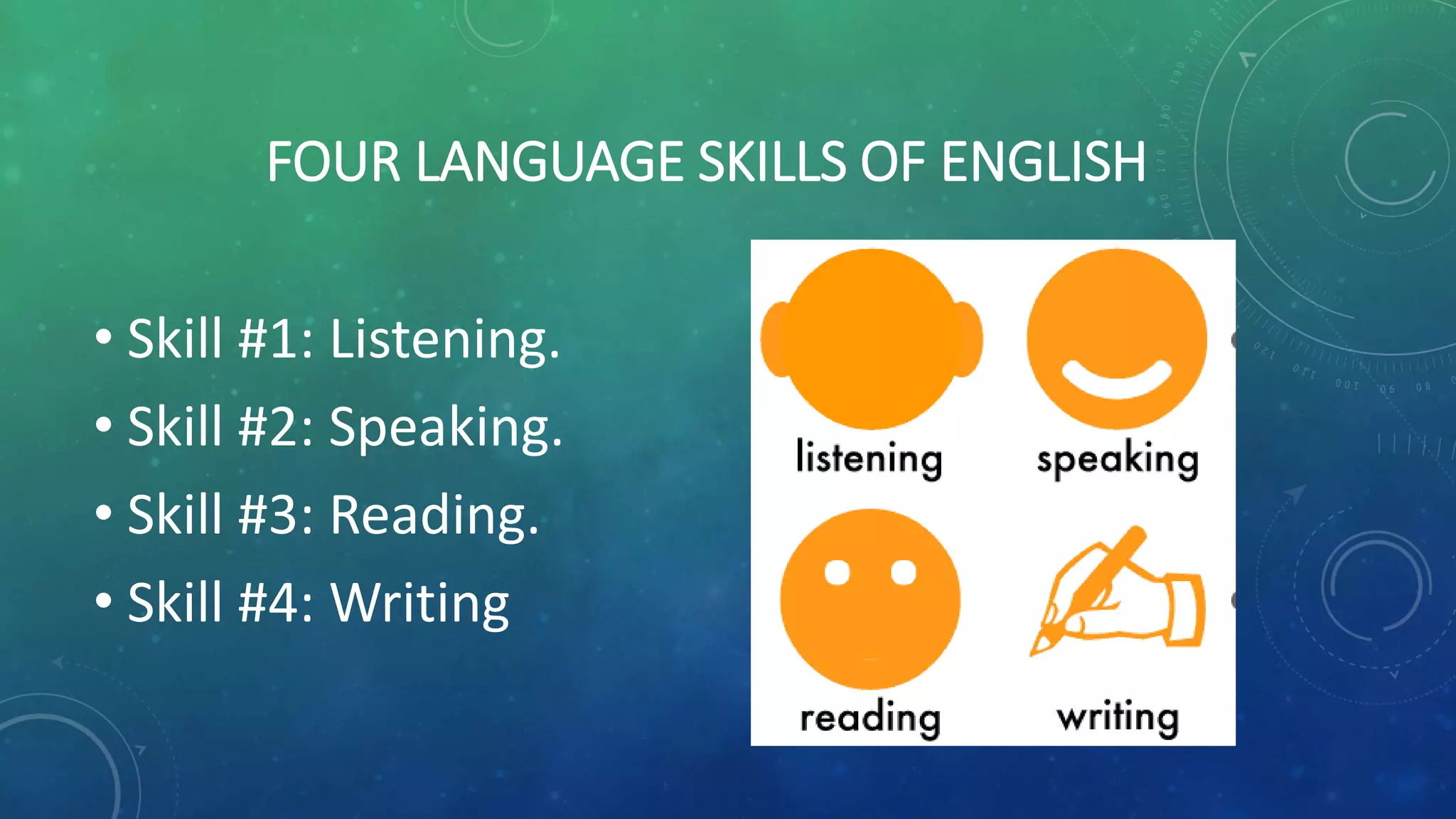
• Skill #1: Listening.
• Skill #2: Speaking.
• Skill #3: Reading.
• Skill #4: Writing
TYPE OF LANGUAGE SKILLS
Receptive or Input
Reading and Listening
Productive or Output
Writing and Speaking
LISTENING
When do we listen?
• Every-day life
• Lectures, group discussions
• Brainstorming, presentations
• Question & Answer
• Instructions
LISTENING
Importance
• Improves speaking and
pronunciation
• Develops inter-personal skills
• Receptive skill that needs active
participation
LISTENING
Issues
• Uncertain comprehension
• Speed of speech
• Familiarity with local speech (accents and
vocabulary)
• Missing words /concepts/instructions
• Lack of confidence to ask for repetition
• Hearing difficulties
LISTENING
Solutions
• Active listening requires participation not
passive reception
• Engage with the sounds & words
• Ensure you are aware of the subject before
lectures.
• Read key vocabulary & do background reading
• Mental repetition
• Ask for clarification
• Listen to radio, TV other media
SPEAKING
When do we Speak ?
• Class group discussions
• Group task work
• Seminars, presentations
• Q & A in lectures
• One-to-one sessions (personal tutor,
doctor, employer etc.)
SPEAKING
Importance
• Most obvious skill
• Most interactive skill
• Develops understanding through
communication
• Develops inter-personal skills
(team working)
• Used in assessment
SPEAKING
Issues
• Lack of confidence
• Uncertain about -
timing/vocabulary/interaction
• Decoding of non-verbal information
• Lack of knowledge of presentation
skills
SPEAKING
Solutions
• Take every opportunity to speak
• Ask questions!
• Use Academic Skills resources
(presentation space)
• Observe native speakers
• Repeat
• Ask for clarification
READING
When do we read?
• Lectures, presentations, tutorials
• Coursework, research, internet
• Blackboard, course documents
• Work & home (social sight reading)
READING
Importance
• Informs writing and writing style
• Develops knowledge of language
structure
• Develops vocabulary (specific vocab.
for subject)
• Register and purpose
READING
Issues
• Speed
• Decoding new words
• Vocabulary
• Comprehension
• Relevance
• Volume (in study)
READING
Solutions
• Reading is an active skill
• Improve your speed
• Read smart
• Read for gist/skim
• Read for specific information
• Do not stop to look up every word-decode from the
text
• Use tools to help develop vocabulary (textual and on-
line)
WRITING
When do we write ?
• Coursework
• Exams
• Lectures
• Tutorials
• Group work
• Presentations
WRITING
Importance
• Main method of assessment
• Strict methods and conventions in academic
writing
• Various formats/styles/functions depending
on subject area
• Essential skill for exams
• Errors more obvious
WRITING
Issues
• Lack of knowledge of key language structures,
word, sentence, paragraph, text
• Differences between style in native country and
UK
• Register and purpose
• Note-taking
• Paraphrasing
• Academic conduct
WRITING
Solutions
• Use Learning Development Group resources
(classes/appointments/work space) for support
• Engage in the process of writing for academic
purposes
• Be aware of academic conventions (student
handbook, referencing guide, library resources)
• Disclose learning needs i.e. Dyslexia for further
support
THANKYOU!!!
HOPE YOU HAVE LEARNED

Four language skills of English

  • 1.
    FOUR LANGUAGE SKILLSOF ENGLISH BY RAHILA KHAN
  • 2.
    FOUR LANGUAGE SKILLSOF ENGLISH • Skill #1: Listening. • Skill #2: Speaking. • Skill #3: Reading. • Skill #4: Writing
  • 3.
    TYPE OF LANGUAGESKILLS Receptive or Input Reading and Listening Productive or Output Writing and Speaking
  • 4.
    LISTENING When do welisten? • Every-day life • Lectures, group discussions • Brainstorming, presentations • Question & Answer • Instructions
  • 5.
    LISTENING Importance • Improves speakingand pronunciation • Develops inter-personal skills • Receptive skill that needs active participation
  • 6.
    LISTENING Issues • Uncertain comprehension •Speed of speech • Familiarity with local speech (accents and vocabulary) • Missing words /concepts/instructions • Lack of confidence to ask for repetition • Hearing difficulties
  • 7.
    LISTENING Solutions • Active listeningrequires participation not passive reception • Engage with the sounds & words • Ensure you are aware of the subject before lectures. • Read key vocabulary & do background reading • Mental repetition • Ask for clarification • Listen to radio, TV other media
  • 8.
    SPEAKING When do weSpeak ? • Class group discussions • Group task work • Seminars, presentations • Q & A in lectures • One-to-one sessions (personal tutor, doctor, employer etc.)
  • 9.
    SPEAKING Importance • Most obviousskill • Most interactive skill • Develops understanding through communication • Develops inter-personal skills (team working) • Used in assessment
  • 10.
    SPEAKING Issues • Lack ofconfidence • Uncertain about - timing/vocabulary/interaction • Decoding of non-verbal information • Lack of knowledge of presentation skills
  • 11.
    SPEAKING Solutions • Take everyopportunity to speak • Ask questions! • Use Academic Skills resources (presentation space) • Observe native speakers • Repeat • Ask for clarification
  • 12.
    READING When do weread? • Lectures, presentations, tutorials • Coursework, research, internet • Blackboard, course documents • Work & home (social sight reading)
  • 13.
    READING Importance • Informs writingand writing style • Develops knowledge of language structure • Develops vocabulary (specific vocab. for subject) • Register and purpose
  • 14.
    READING Issues • Speed • Decodingnew words • Vocabulary • Comprehension • Relevance • Volume (in study)
  • 15.
    READING Solutions • Reading isan active skill • Improve your speed • Read smart • Read for gist/skim • Read for specific information • Do not stop to look up every word-decode from the text • Use tools to help develop vocabulary (textual and on- line)
  • 16.
    WRITING When do wewrite ? • Coursework • Exams • Lectures • Tutorials • Group work • Presentations
  • 17.
    WRITING Importance • Main methodof assessment • Strict methods and conventions in academic writing • Various formats/styles/functions depending on subject area • Essential skill for exams • Errors more obvious
  • 18.
    WRITING Issues • Lack ofknowledge of key language structures, word, sentence, paragraph, text • Differences between style in native country and UK • Register and purpose • Note-taking • Paraphrasing • Academic conduct
  • 19.
    WRITING Solutions • Use LearningDevelopment Group resources (classes/appointments/work space) for support • Engage in the process of writing for academic purposes • Be aware of academic conventions (student handbook, referencing guide, library resources) • Disclose learning needs i.e. Dyslexia for further support
  • 20.