Myths: Native American
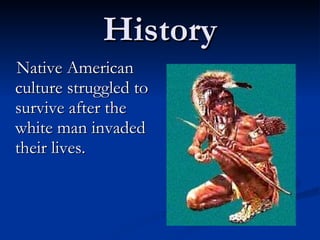
History Native American culture struggled to survive after the white man invaded their lives.
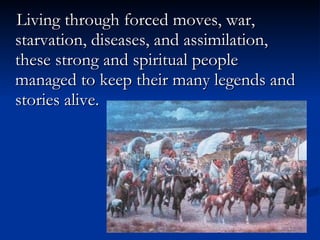
Living through forced moves, war, starvation, diseases, and assimilation, these strong and spiritual people managed to keep their many legends and stories alive.
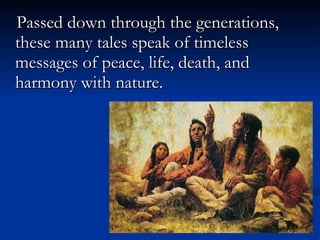
Passed down through the generations, these many tales speak of timeless messages of peace, life, death, and harmony with nature.
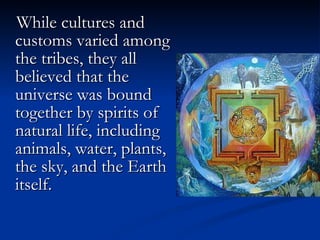
While cultures and customs varied among the tribes, they all believed that the universe was bound together by spirits of natural life, including animals, water, plants, the sky, and the Earth itself.
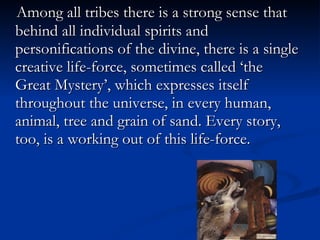
Among all tribes there is a strong sense that behind all individual spirits and personifications of the divine, there is a single creative life-force, sometimes called ‘the Great Mystery’, which expresses itself throughout the universe, in every human, animal, tree and grain of sand. Every story, too, is a working out of this life-force.
The Role of Animals An aspect of this outlook is the major role played in the stories by animals, who often speak to humans and assist them.
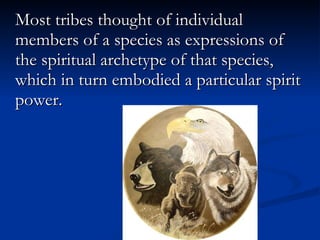
Most tribes thought of individual members of a species as expressions of the spiritual archetype of that species, which in turn embodied a particular spirit power.
The Four Directions Another key feature of the Native American spiritual outlook is found in the powers ascribed to the Four Directions, which occur either literally or in symbolic form throughout the stories. These are often represented by particular colors, or by animals.
The Four Directions have to be in balance for all to be well with the world, and often a central point of balance is identified as a fifth direction; for example, four brothers represent the outer directions, and their sister the center.
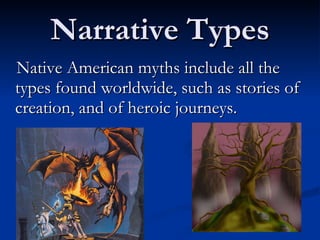
Narrative Types Native American myths include all the types found worldwide, such as stories of creation, and of heroic journeys.
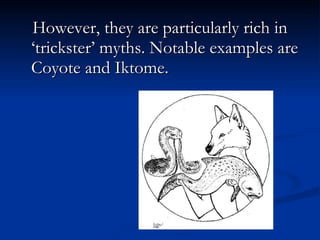
However, they are particularly rich in ‘trickster’ myths. Notable examples are Coyote and Iktome.
The trickster is an ambiguous figure who demonstrates the qualities of early human development (both cultural and psychological) that make civilization possible, and yet which cause problems. He is an expression of the least developed stage of life, which is dominated by physical appetites.
White Buffalo Woman   The story of another type, that of the ‘culture deity’, a key figure who brings a tribe its major ceremonies, customs and spiritual insights.

Native American Myths

  • 1.
  • 2.
    History Native Americanculture struggled to survive after the white man invaded their lives.
  • 3.
    Living through forcedmoves, war, starvation, diseases, and assimilation, these strong and spiritual people managed to keep their many legends and stories alive.
  • 4.
    Passed down throughthe generations, these many tales speak of timeless messages of peace, life, death, and harmony with nature.
  • 5.
    While cultures andcustoms varied among the tribes, they all believed that the universe was bound together by spirits of natural life, including animals, water, plants, the sky, and the Earth itself.
  • 6.
    Among all tribesthere is a strong sense that behind all individual spirits and personifications of the divine, there is a single creative life-force, sometimes called ‘the Great Mystery’, which expresses itself throughout the universe, in every human, animal, tree and grain of sand. Every story, too, is a working out of this life-force.
  • 7.
    The Role ofAnimals An aspect of this outlook is the major role played in the stories by animals, who often speak to humans and assist them.
  • 8.
    Most tribes thoughtof individual members of a species as expressions of the spiritual archetype of that species, which in turn embodied a particular spirit power.
  • 9.
    The Four DirectionsAnother key feature of the Native American spiritual outlook is found in the powers ascribed to the Four Directions, which occur either literally or in symbolic form throughout the stories. These are often represented by particular colors, or by animals.
  • 10.
    The Four Directionshave to be in balance for all to be well with the world, and often a central point of balance is identified as a fifth direction; for example, four brothers represent the outer directions, and their sister the center.
  • 11.
    Narrative Types NativeAmerican myths include all the types found worldwide, such as stories of creation, and of heroic journeys.
  • 12.
    However, they areparticularly rich in ‘trickster’ myths. Notable examples are Coyote and Iktome.
  • 13.
    The trickster isan ambiguous figure who demonstrates the qualities of early human development (both cultural and psychological) that make civilization possible, and yet which cause problems. He is an expression of the least developed stage of life, which is dominated by physical appetites.
  • 14.
    White Buffalo Woman The story of another type, that of the ‘culture deity’, a key figure who brings a tribe its major ceremonies, customs and spiritual insights.