01-06-2021 1
Presentation on
Foundation and their
necessity.
Presented By-
Jamal Ashraf
Sr. Engineer
01-06-2021 2
FOUNDATION
Introduction:
• The part of structure which is in direct contact with the soil and which
transmit the load to that soil is termed as foundation. And the soil on
which the foundation rests is called the "foundation soil"..
• A structure essentially consists of two parts, namely the super
structure which is above the plinth level and the substructure which is
below the plinth level.
• Substructure is otherwise known as the foundation and this forms the
base for any structure.
FUNCTION OF FOUNDATION
• To distribute the total load of structure on large area on
underlying soil evenly and for greater stability .
• It prevents lateral movement of the supporting material
and thereby ensure the safety of structure.
• To provide a hard and leveled surface for the super-
structure.
• It resists sliding, overturning, or other disturbing forces like
wind, rain etc.
REQUIREMENT OF A GOOD FOUNDATION
• The foundation of the structure should be located in such a way
that it is capable to resist any unexpected effect which may
adversely affect the performance of the structure.
• Stability:- The foundation should be safe and stable against all
possible forces to which a structure likely to be subjected to.
• Settlement:- Settlement of the structure should be within
permissible limit. The maximum permissible settlement as per IS-
1904(1966) for isolated foundations are 40mm on sandy soil and 65mm in
clayey soils.
FACTORS AFFECTING DESIGN OF FOUNDATION
• Soil Types and Ground water table condition.
• Structural requirements and foundation.
• Site Condition and environmental factors.
FOUNDATION….
Types of foundation :
The two main types of foundation:
• Shallow foundation
(when the depth of foundation is equal to or less than its width)
• Deep foundation
(when depth of foundation is greater than its width)
Types of Shallow foundation :
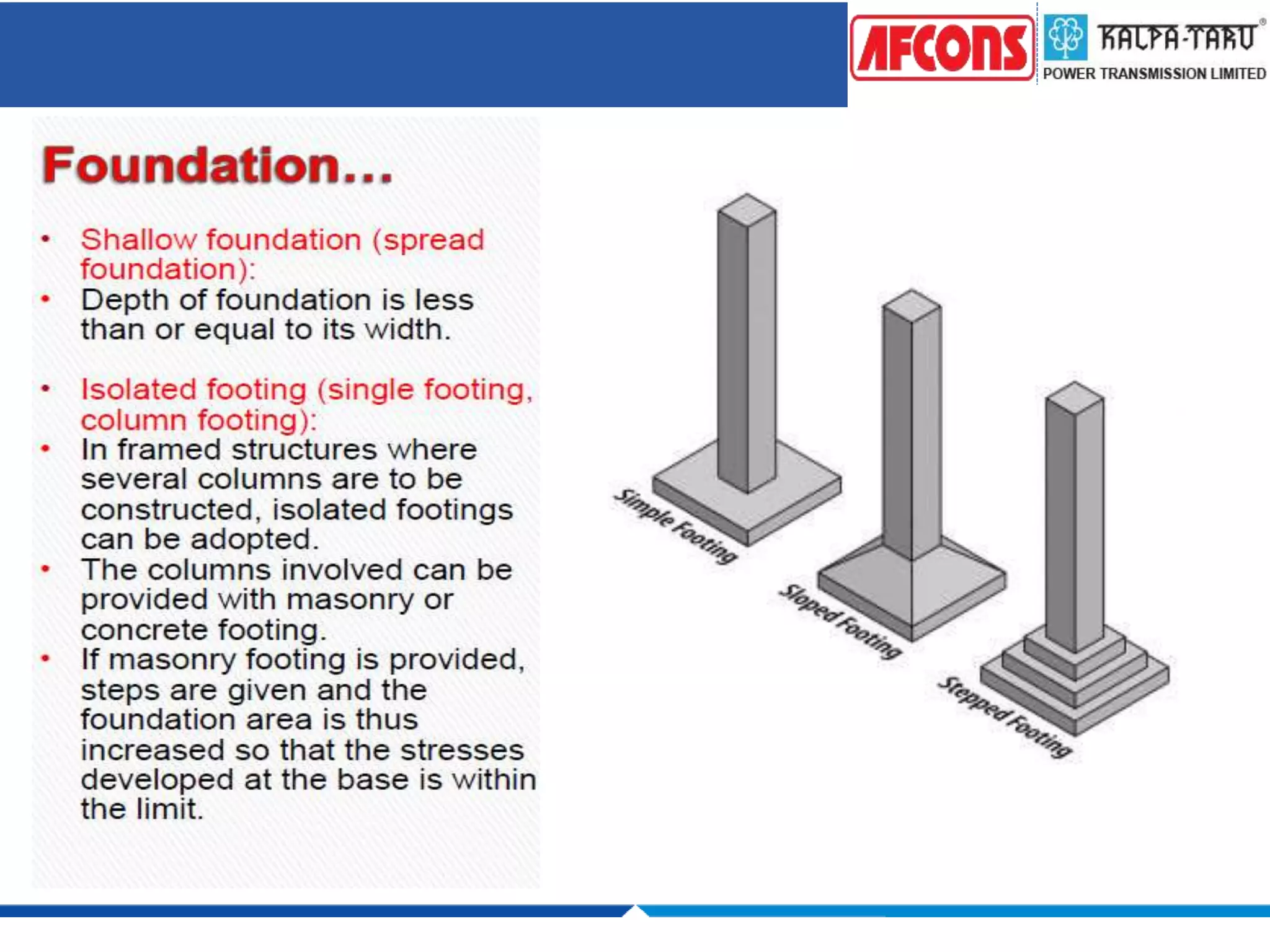
• Isolated footing (Single footing, Column footing, etc)
• Combined footing
Types of Deep foundation :
• Pile foundation
• Well Foundation
Where ,
p=safe bearing capacity of soil
w=unit weight of foundation soil
ᶲ=angle of internal friction
Depth of foundation:-
D=p/w[1-sinᶲ/1+sinᶲ]
FOUNDATION…
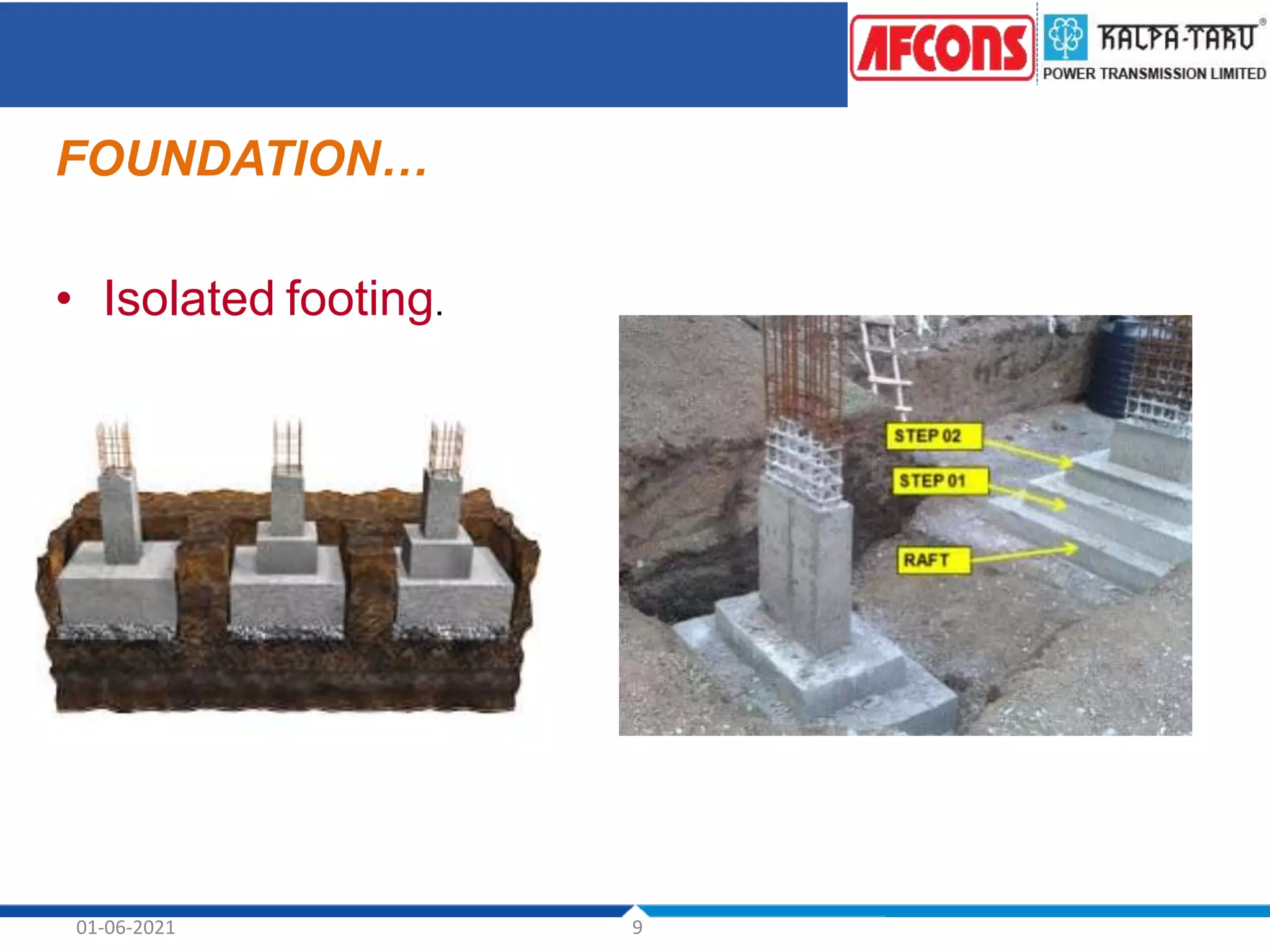
• Isolated footing.
01-06-2021 9
Combined footing…
• This type of footing is adopted when the space between two columns
is so small that the foundation for individual columns will overlap.
• Combined footings are proportioned in such a way that the center of
gravity of the loads coincides with the center of gravity of the
foundation. Hence these footings have either a trapezoidal or a
rectangular shape
E.g.- Strap Foundation, Raft foundation.
01-06-2021 10
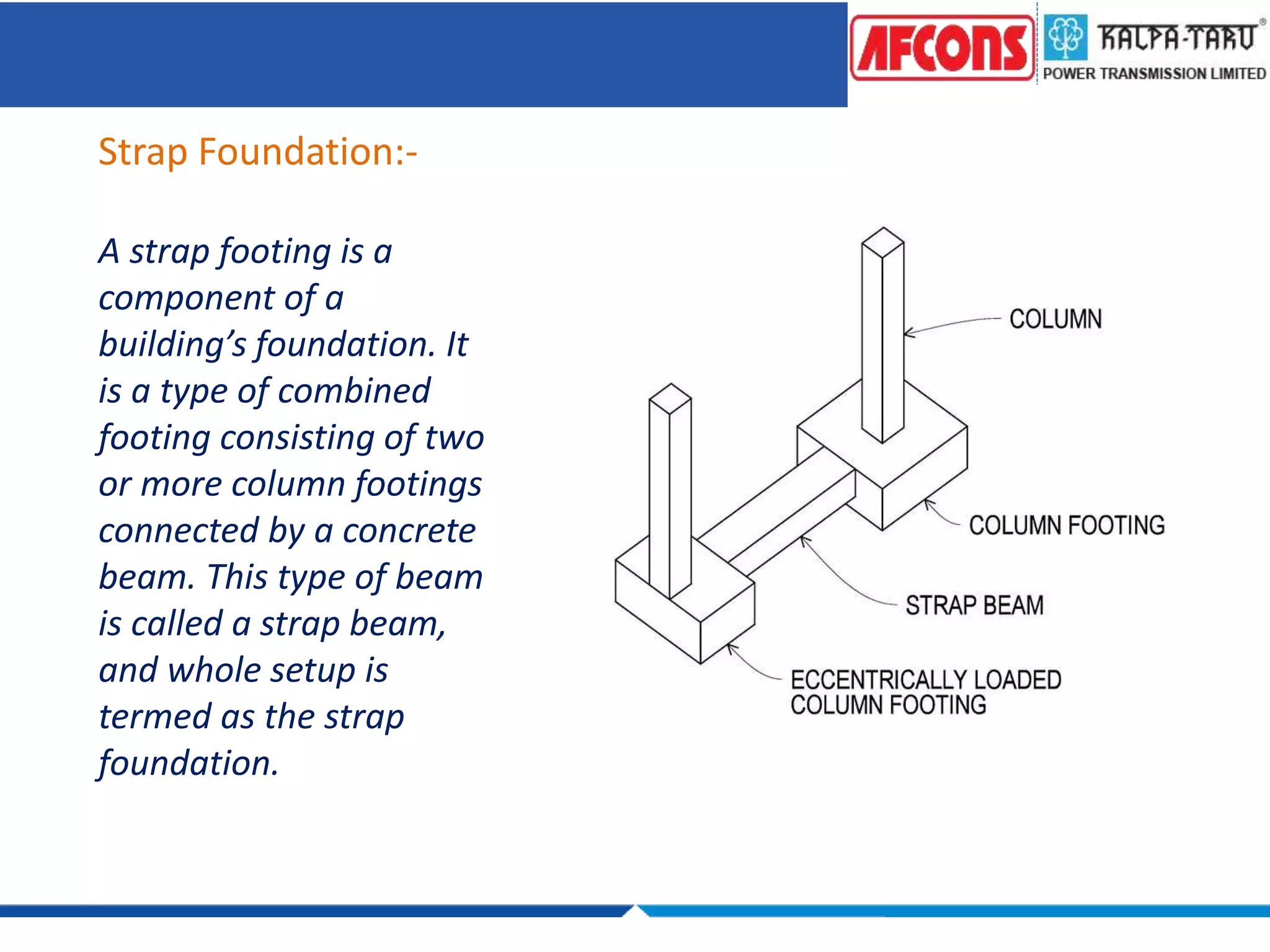
Strap Foundation:-
A strap footing is a
component of a
building’s foundation. It
is a type of combined
footing consisting of two
or more column footings
connected by a concrete
beam. This type of beam
is called a strap beam,
and whole setup is
termed as the strap
foundation.
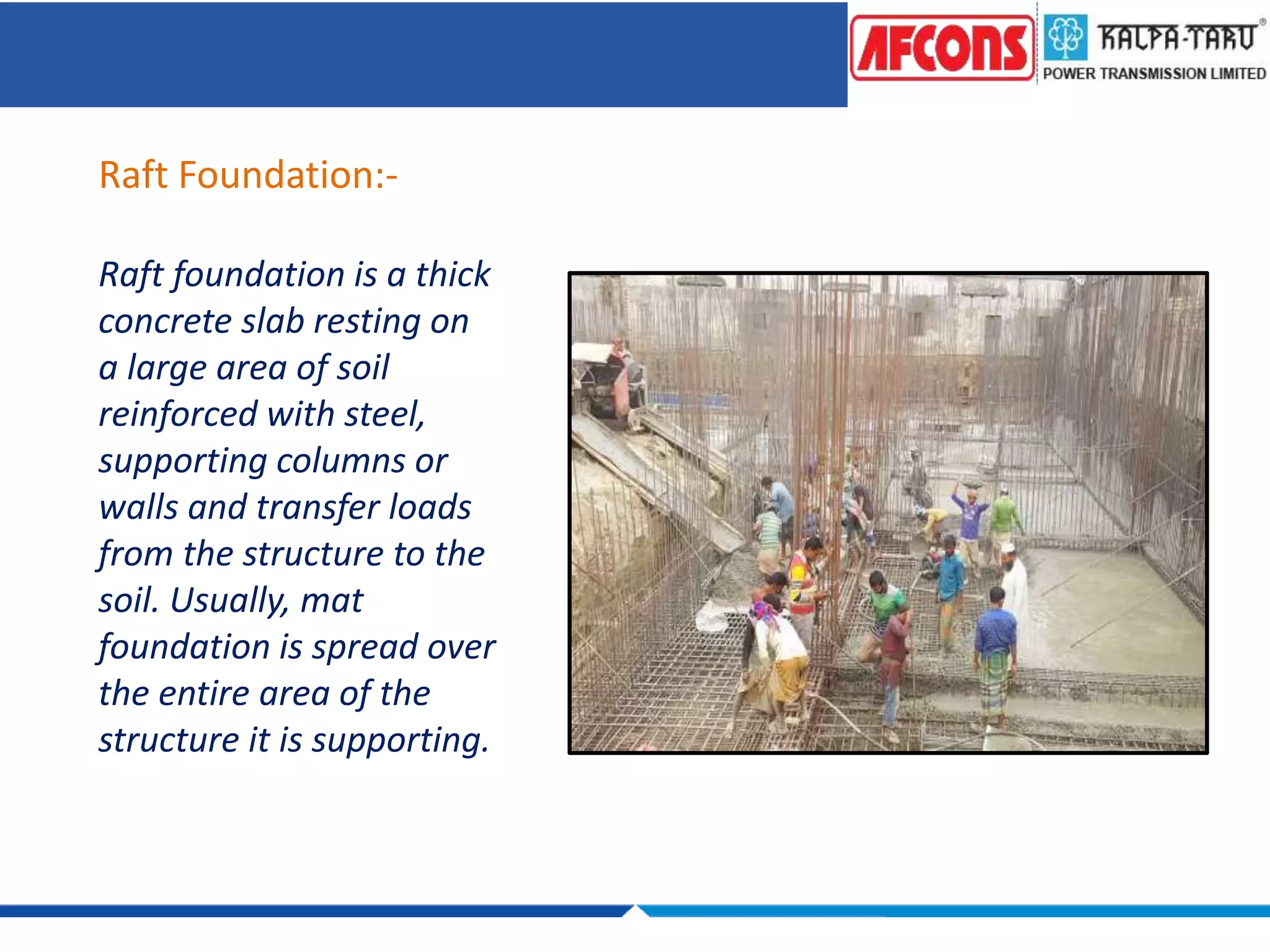
Raft Foundation:-
Raft foundation is a thick
concrete slab resting on
a large area of soil
reinforced with steel,
supporting columns or
walls and transfer loads
from the structure to the
soil. Usually, mat
foundation is spread over
the entire area of the
structure it is supporting.
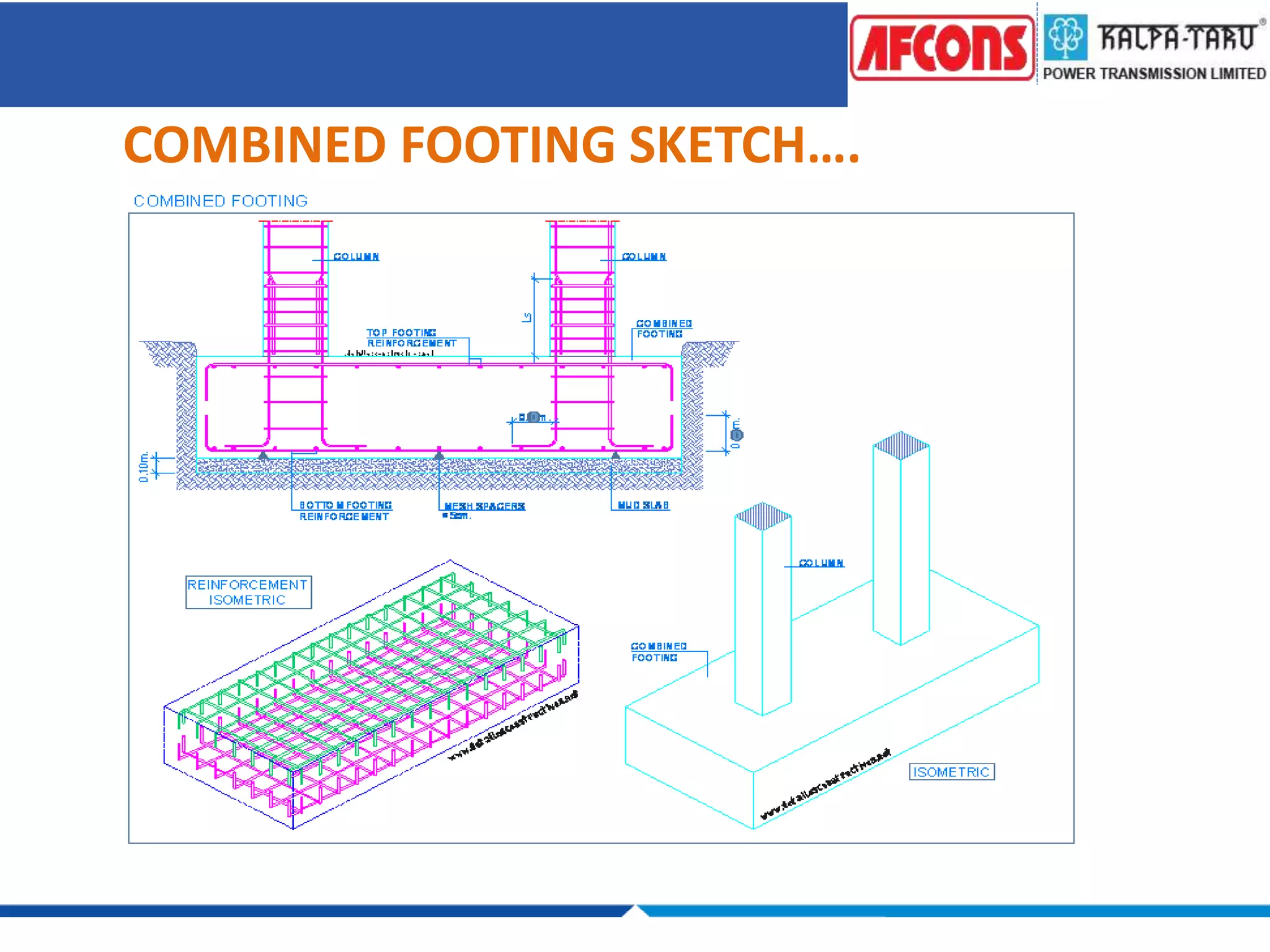
COMBINED FOOTING SKETCH….
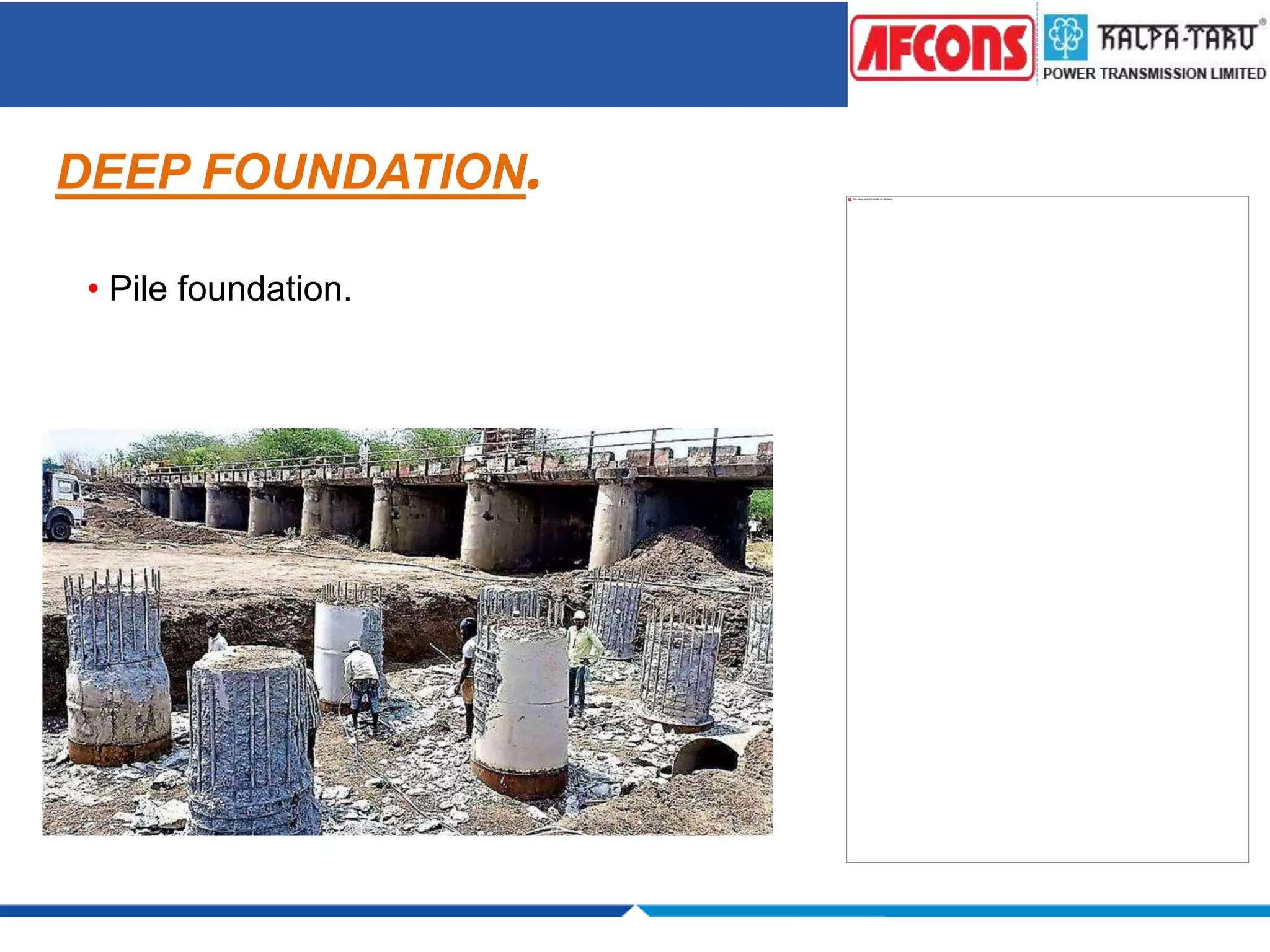
DEEP FOUNDATION.
• Pile foundation.
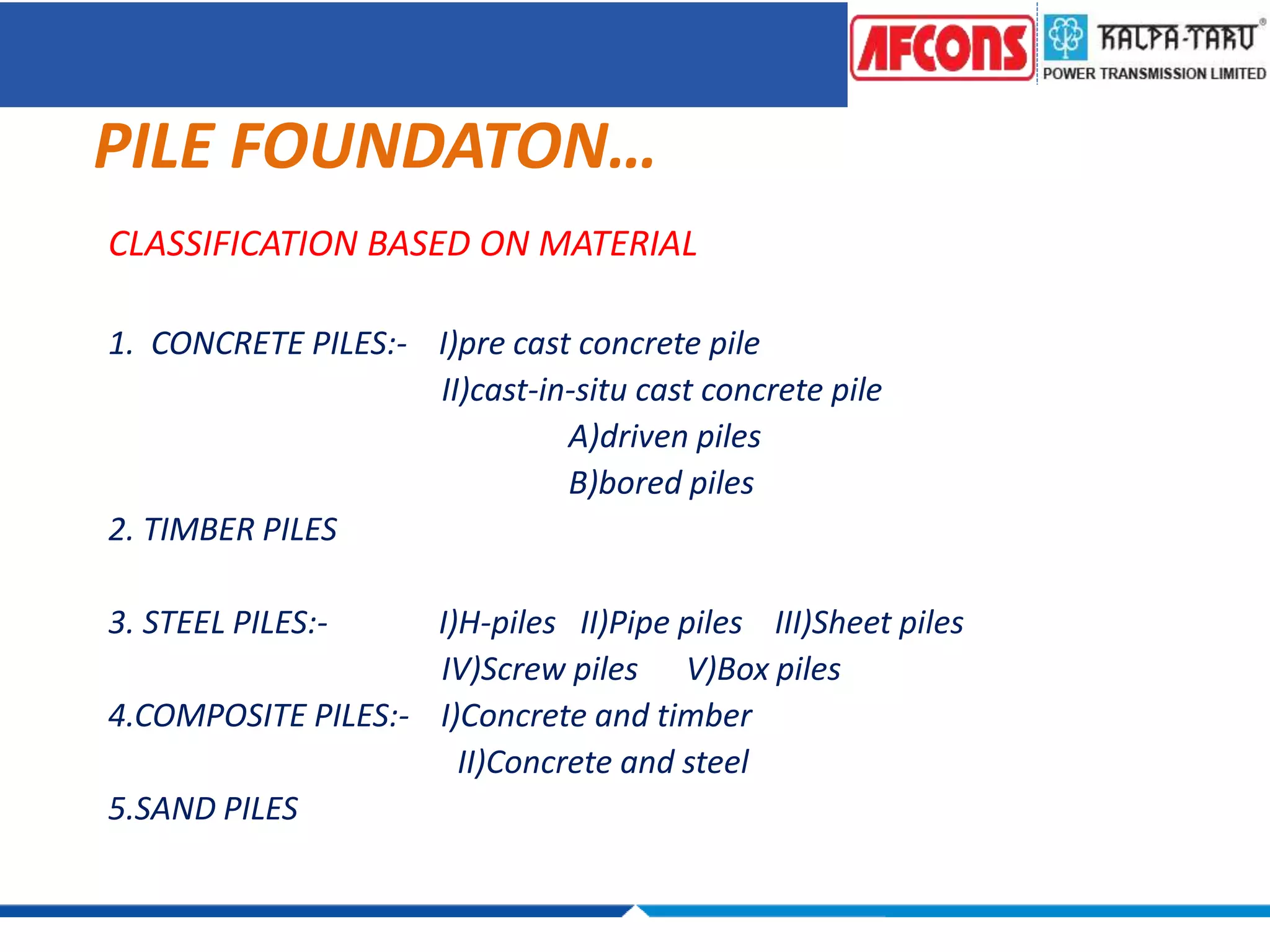
PILE FOUNDATON…
CLASSIFICATION BASED ON MATERIAL
1. CONCRETE PILES:- I)pre cast concrete pile
II)cast-in-situ cast concrete pile
A)driven piles
B)bored piles
2. TIMBER PILES
3. STEEL PILES:- I)H-piles II)Pipe piles III)Sheet piles
IV)Screw piles V)Box piles
4.COMPOSITE PILES:- I)Concrete and timber
II)Concrete and steel
5.SAND PILES
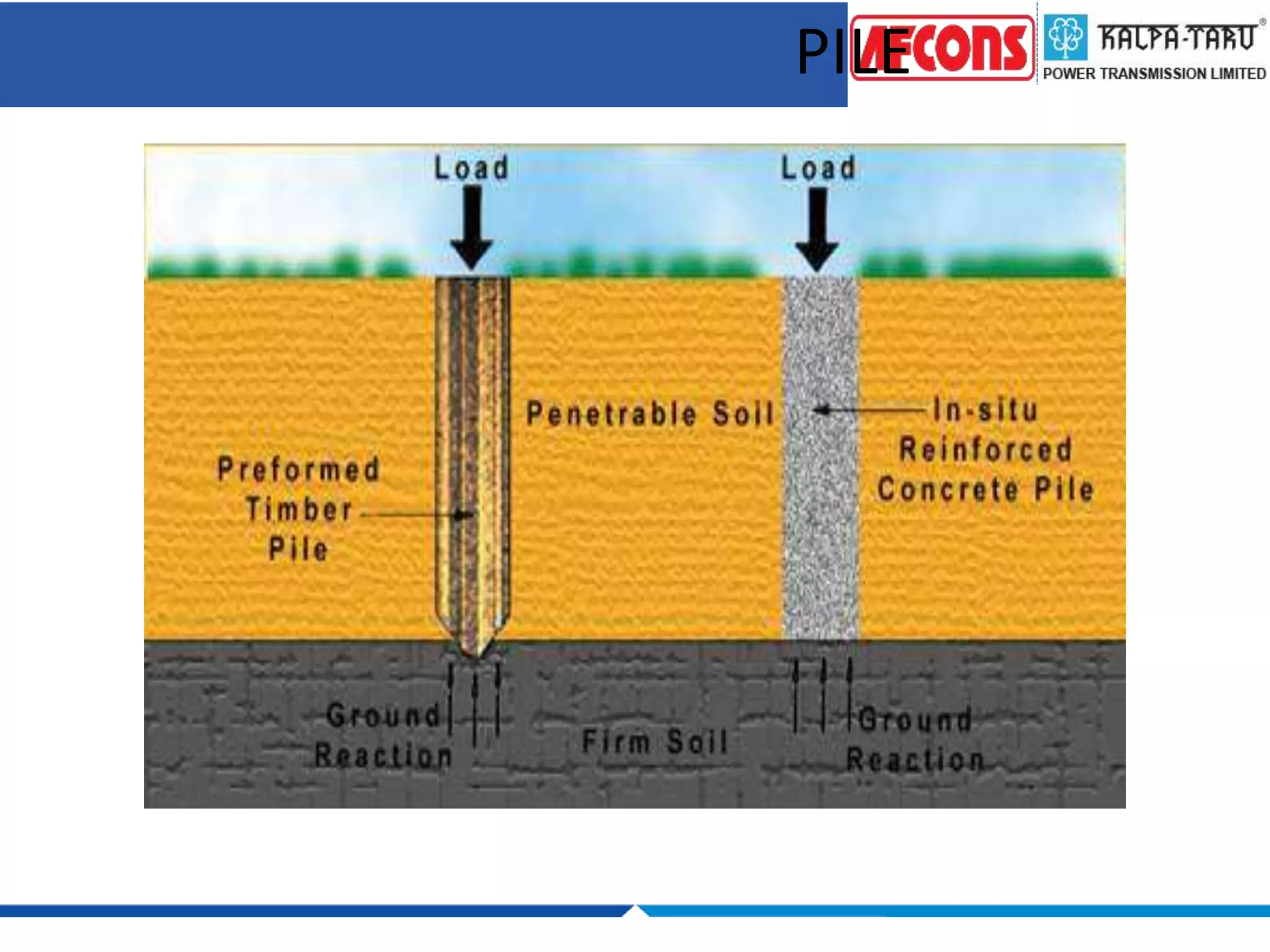
PILE
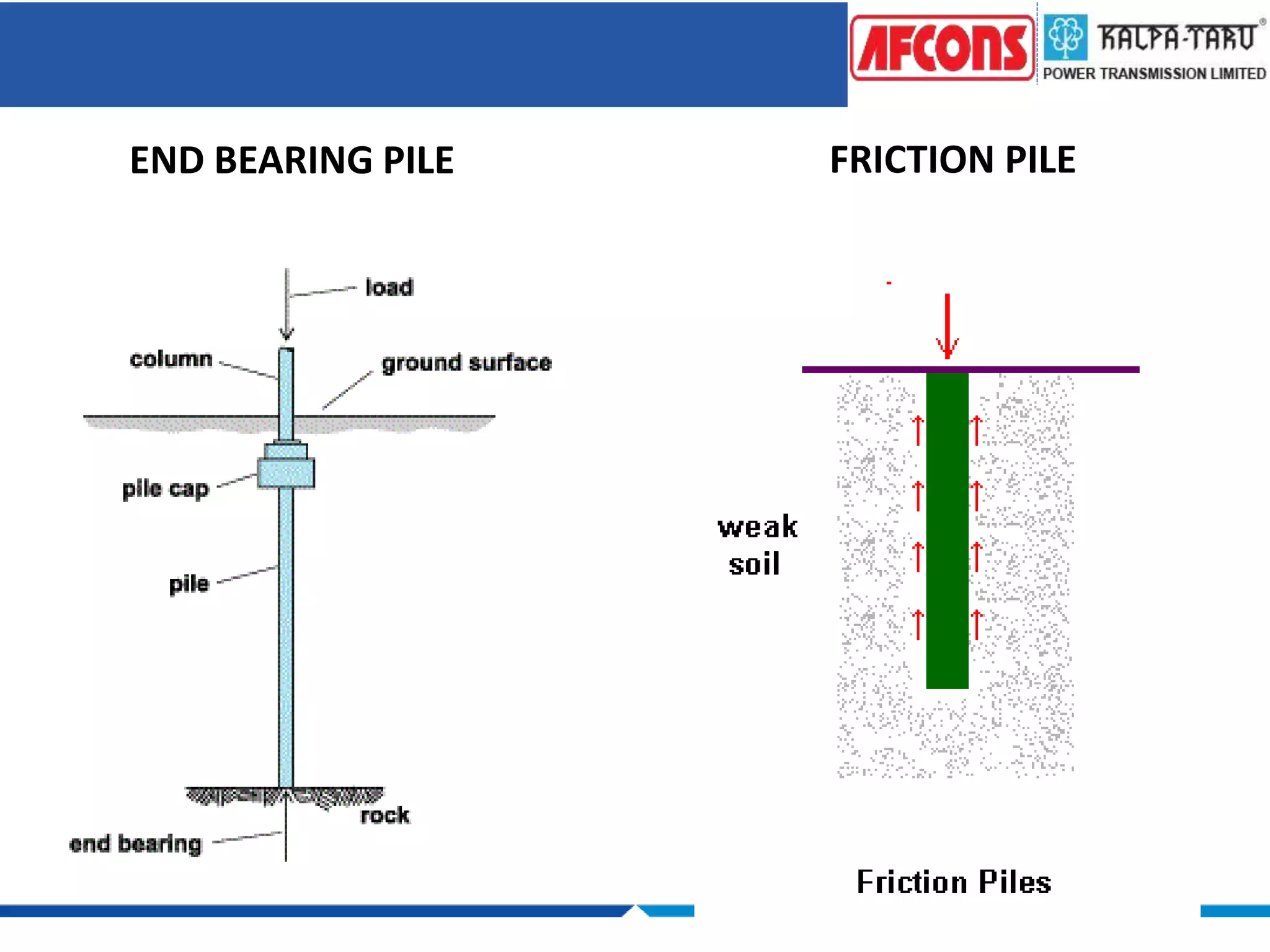
END BEARING PILE FRICTION PILE
DEEP FOUNDATION
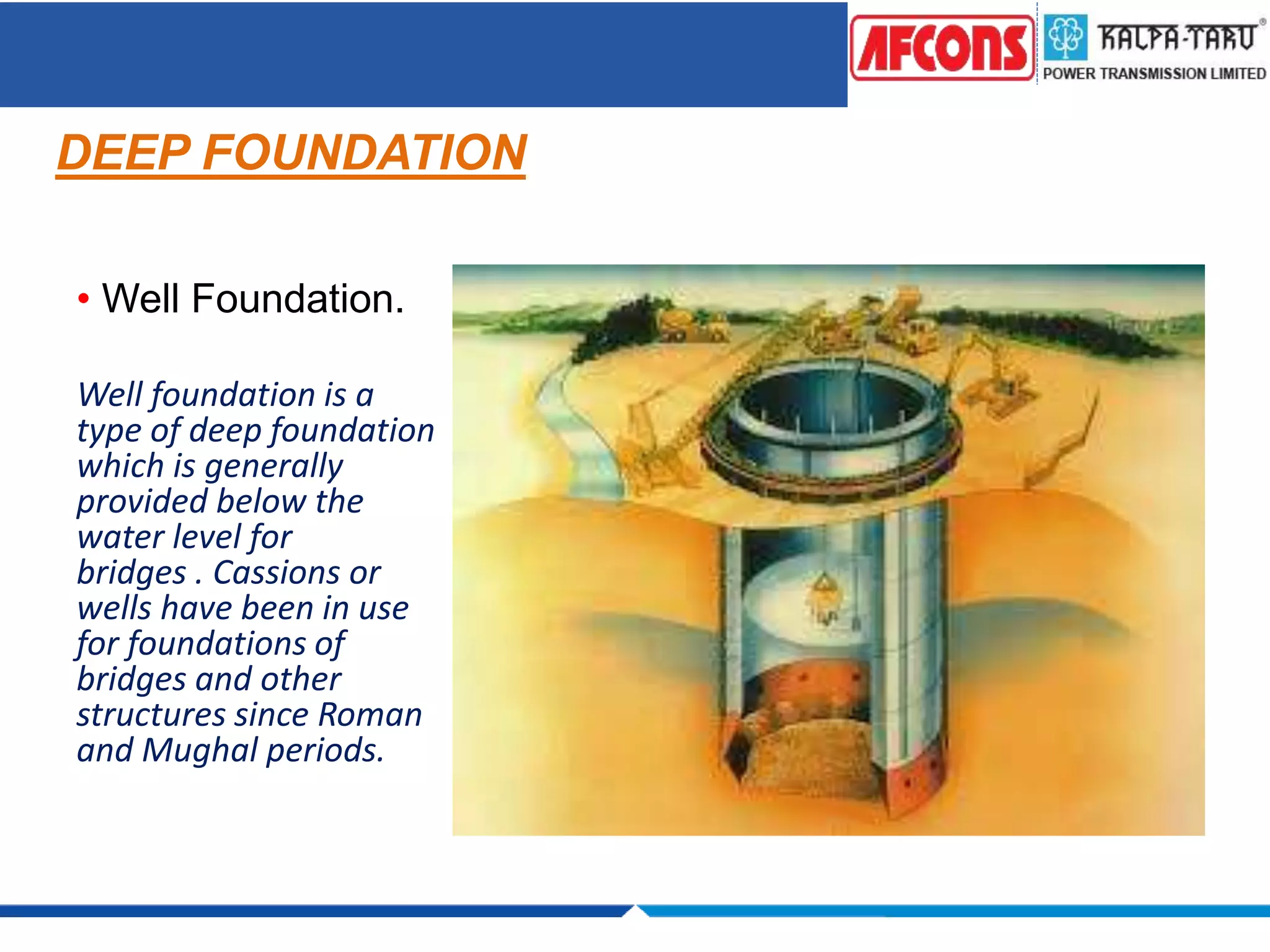
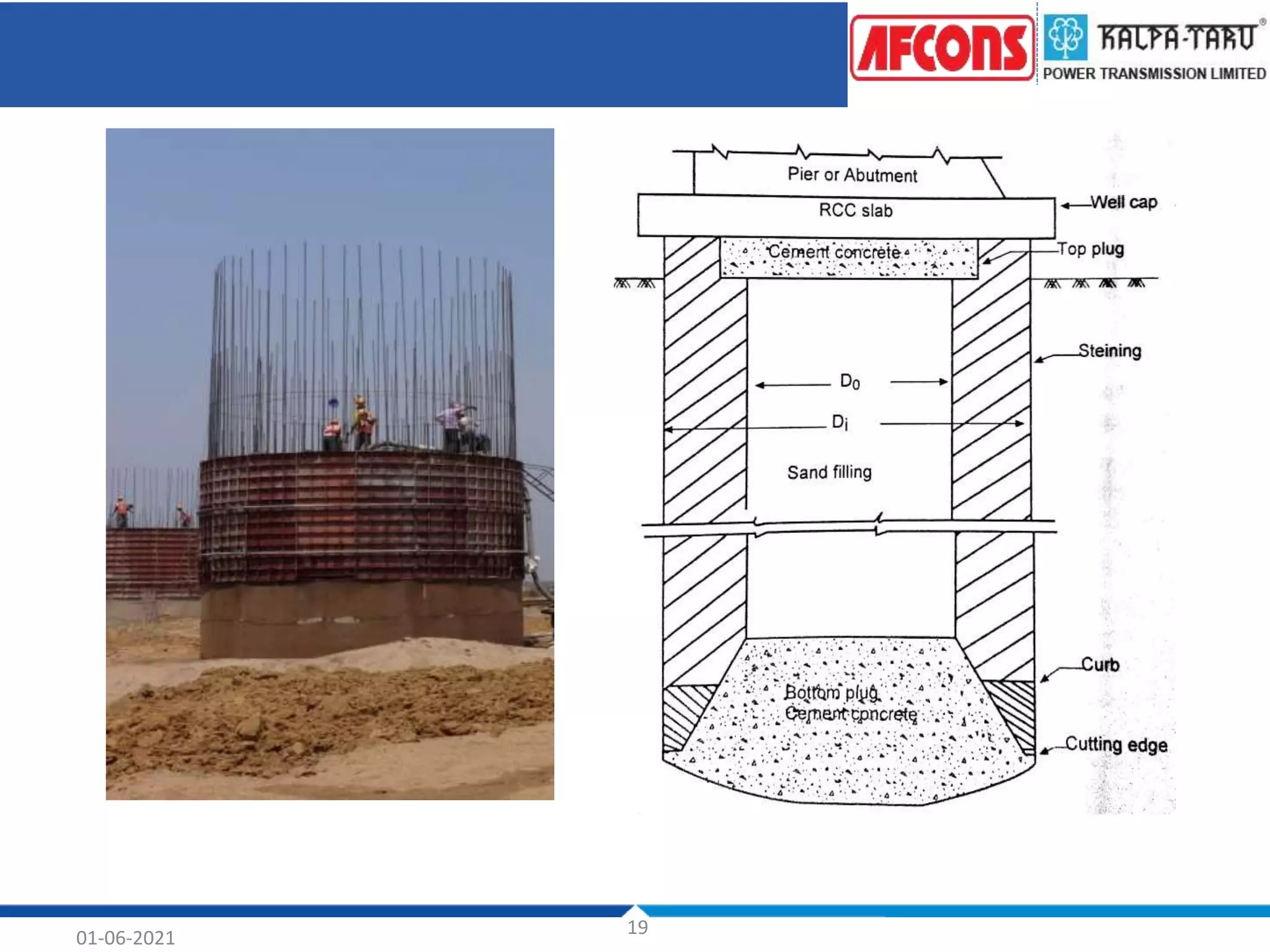
• Well Foundation.
Well foundation is a
type of deep foundation
which is generally
provided below the
water level for
bridges . Cassions or
wells have been in use
for foundations of
bridges and other
structures since Roman
and Mughal periods.
01-06-2021 19
01-06-2021 20
01-06-2021 21

Foundation and types

  • 1.
    01-06-2021 1 Presentation on Foundationand their necessity. Presented By- Jamal Ashraf Sr. Engineer
  • 2.
    01-06-2021 2 FOUNDATION Introduction: • Thepart of structure which is in direct contact with the soil and which transmit the load to that soil is termed as foundation. And the soil on which the foundation rests is called the "foundation soil".. • A structure essentially consists of two parts, namely the super structure which is above the plinth level and the substructure which is below the plinth level. • Substructure is otherwise known as the foundation and this forms the base for any structure.
  • 3.
    FUNCTION OF FOUNDATION •To distribute the total load of structure on large area on underlying soil evenly and for greater stability . • It prevents lateral movement of the supporting material and thereby ensure the safety of structure. • To provide a hard and leveled surface for the super- structure. • It resists sliding, overturning, or other disturbing forces like wind, rain etc.
  • 4.
    REQUIREMENT OF AGOOD FOUNDATION • The foundation of the structure should be located in such a way that it is capable to resist any unexpected effect which may adversely affect the performance of the structure. • Stability:- The foundation should be safe and stable against all possible forces to which a structure likely to be subjected to. • Settlement:- Settlement of the structure should be within permissible limit. The maximum permissible settlement as per IS- 1904(1966) for isolated foundations are 40mm on sandy soil and 65mm in clayey soils.
  • 5.
    FACTORS AFFECTING DESIGNOF FOUNDATION • Soil Types and Ground water table condition. • Structural requirements and foundation. • Site Condition and environmental factors.
  • 6.
    FOUNDATION…. Types of foundation: The two main types of foundation: • Shallow foundation (when the depth of foundation is equal to or less than its width) • Deep foundation (when depth of foundation is greater than its width) Types of Shallow foundation : • Isolated footing (Single footing, Column footing, etc) • Combined footing Types of Deep foundation : • Pile foundation • Well Foundation
  • 7.
    Where , p=safe bearingcapacity of soil w=unit weight of foundation soil ᶲ=angle of internal friction Depth of foundation:- D=p/w[1-sinᶲ/1+sinᶲ]
  • 9.
  • 10.
    Combined footing… • Thistype of footing is adopted when the space between two columns is so small that the foundation for individual columns will overlap. • Combined footings are proportioned in such a way that the center of gravity of the loads coincides with the center of gravity of the foundation. Hence these footings have either a trapezoidal or a rectangular shape E.g.- Strap Foundation, Raft foundation. 01-06-2021 10
  • 11.
    Strap Foundation:- A strapfooting is a component of a building’s foundation. It is a type of combined footing consisting of two or more column footings connected by a concrete beam. This type of beam is called a strap beam, and whole setup is termed as the strap foundation.
  • 12.
    Raft Foundation:- Raft foundationis a thick concrete slab resting on a large area of soil reinforced with steel, supporting columns or walls and transfer loads from the structure to the soil. Usually, mat foundation is spread over the entire area of the structure it is supporting.
  • 13.
  • 14.
  • 15.
    PILE FOUNDATON… CLASSIFICATION BASEDON MATERIAL 1. CONCRETE PILES:- I)pre cast concrete pile II)cast-in-situ cast concrete pile A)driven piles B)bored piles 2. TIMBER PILES 3. STEEL PILES:- I)H-piles II)Pipe piles III)Sheet piles IV)Screw piles V)Box piles 4.COMPOSITE PILES:- I)Concrete and timber II)Concrete and steel 5.SAND PILES
  • 16.
  • 17.
    END BEARING PILEFRICTION PILE
  • 18.
    DEEP FOUNDATION • WellFoundation. Well foundation is a type of deep foundation which is generally provided below the water level for bridges . Cassions or wells have been in use for foundations of bridges and other structures since Roman and Mughal periods.
  • 19.
  • 20.
  • 21.