Formulae
GCSE Mathematics
1 Know these…
The following formulae are included in
the subject content.
Candidates are expected to know these
formulae; they will not be given in the
examination.
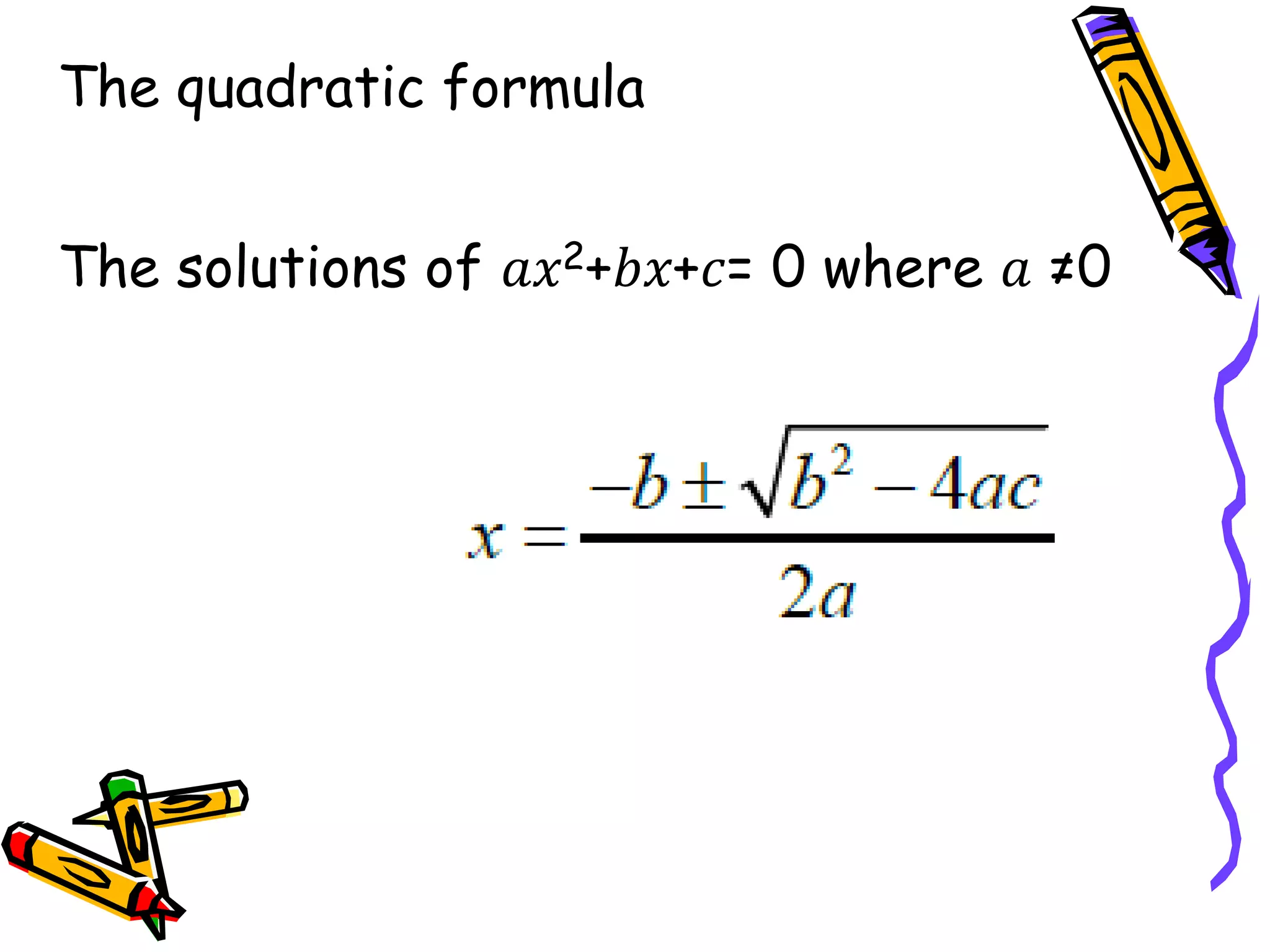
The quadratic formula
The solutions of 𝑎𝑥2+𝑏𝑥+𝑐= 0 where 𝑎 ≠0
Circumference and area of a circle
Where r is the radius and
d is the diameter:
Circumference of a circle = 2𝜋𝑟= 𝜋𝑑
Area of a circle= 𝜋𝑟2
Pythagoras’s theorem
In any right-angled triangle where
a, b and c are the length of the
sides and c is the hypotenuse:
a2 + b2 = c2
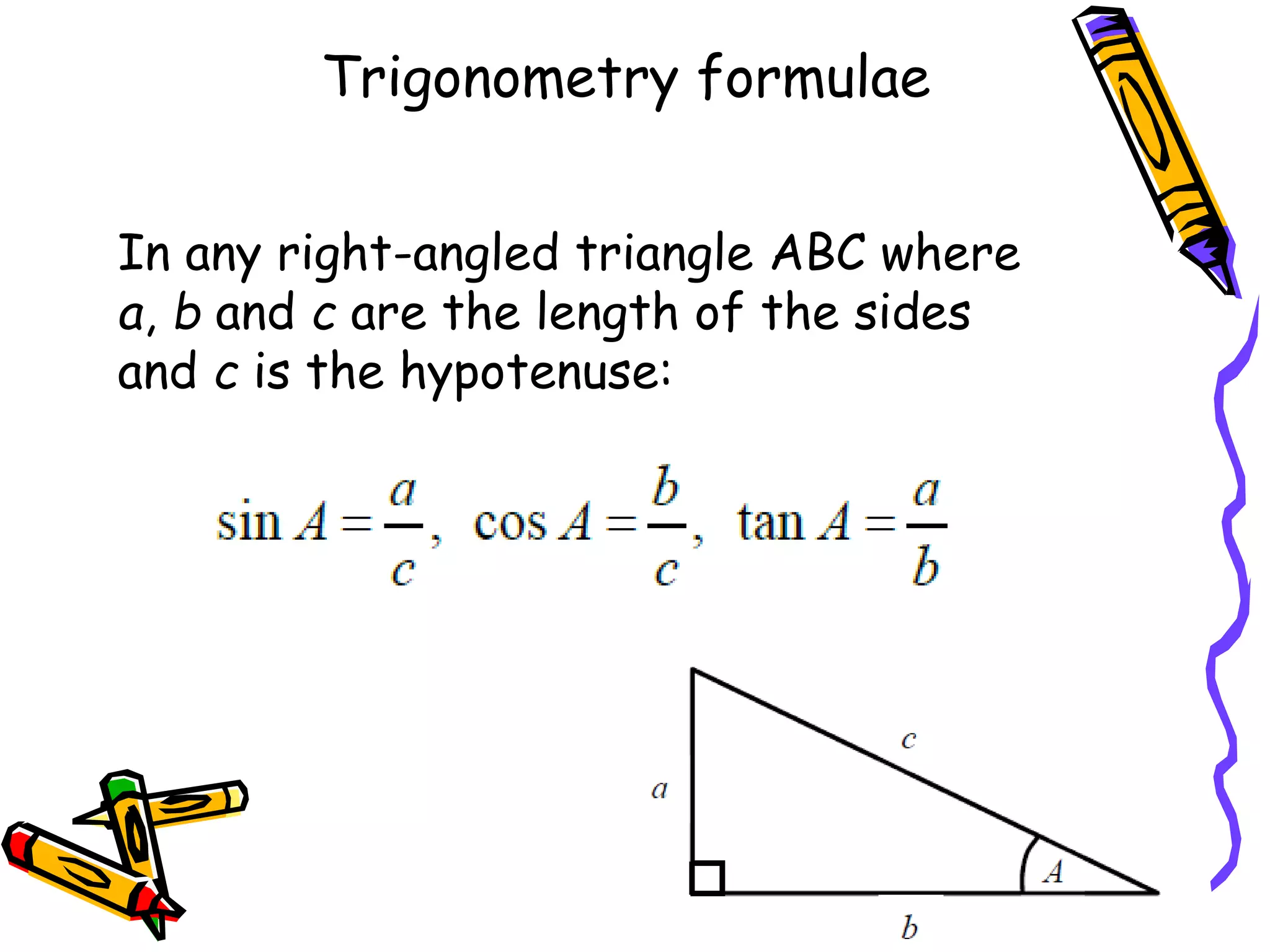
In any right-angled triangle ABC where
a, b and c are the length of the sides
and c is the hypotenuse:
Trigonometry formulae
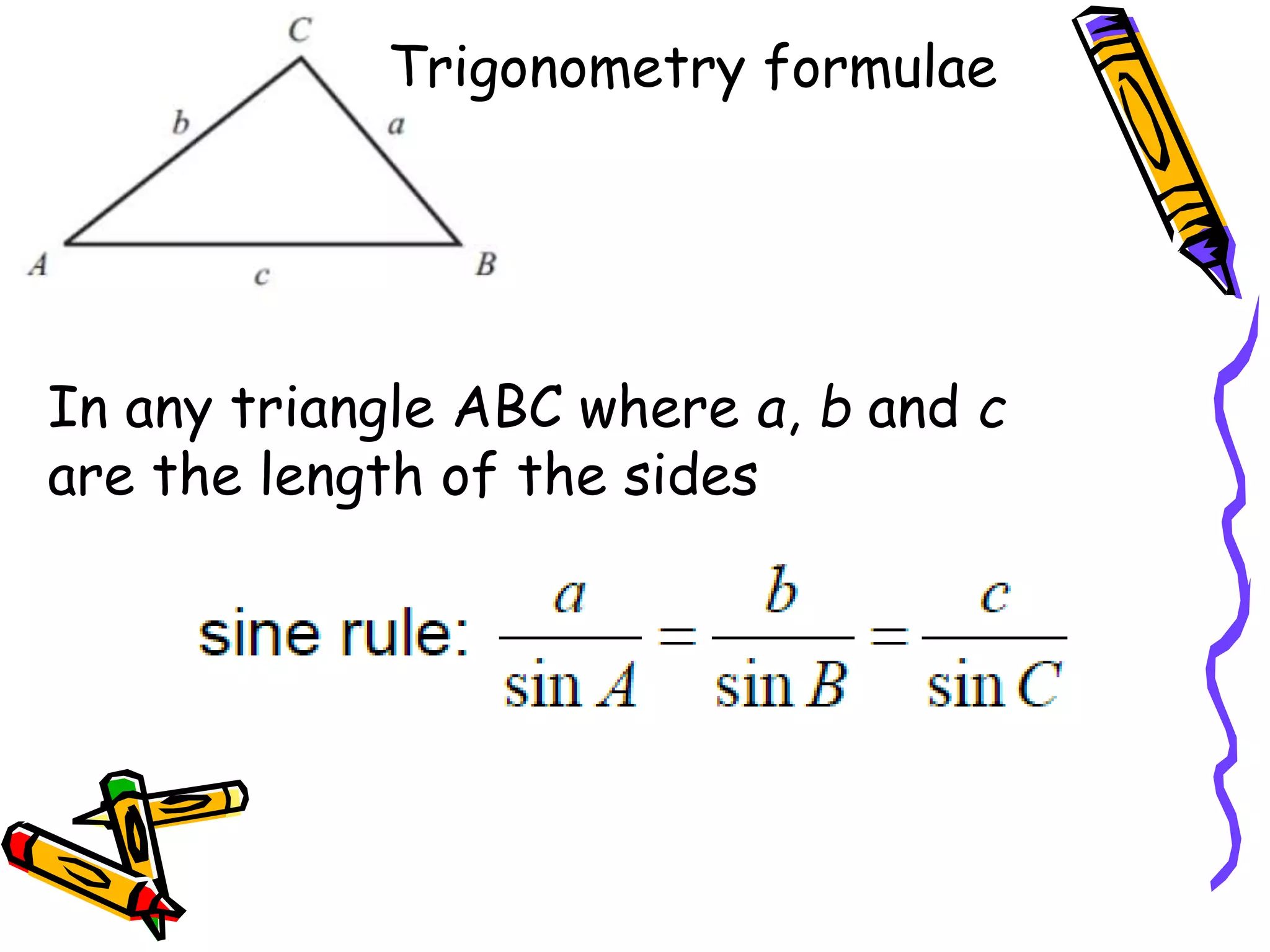
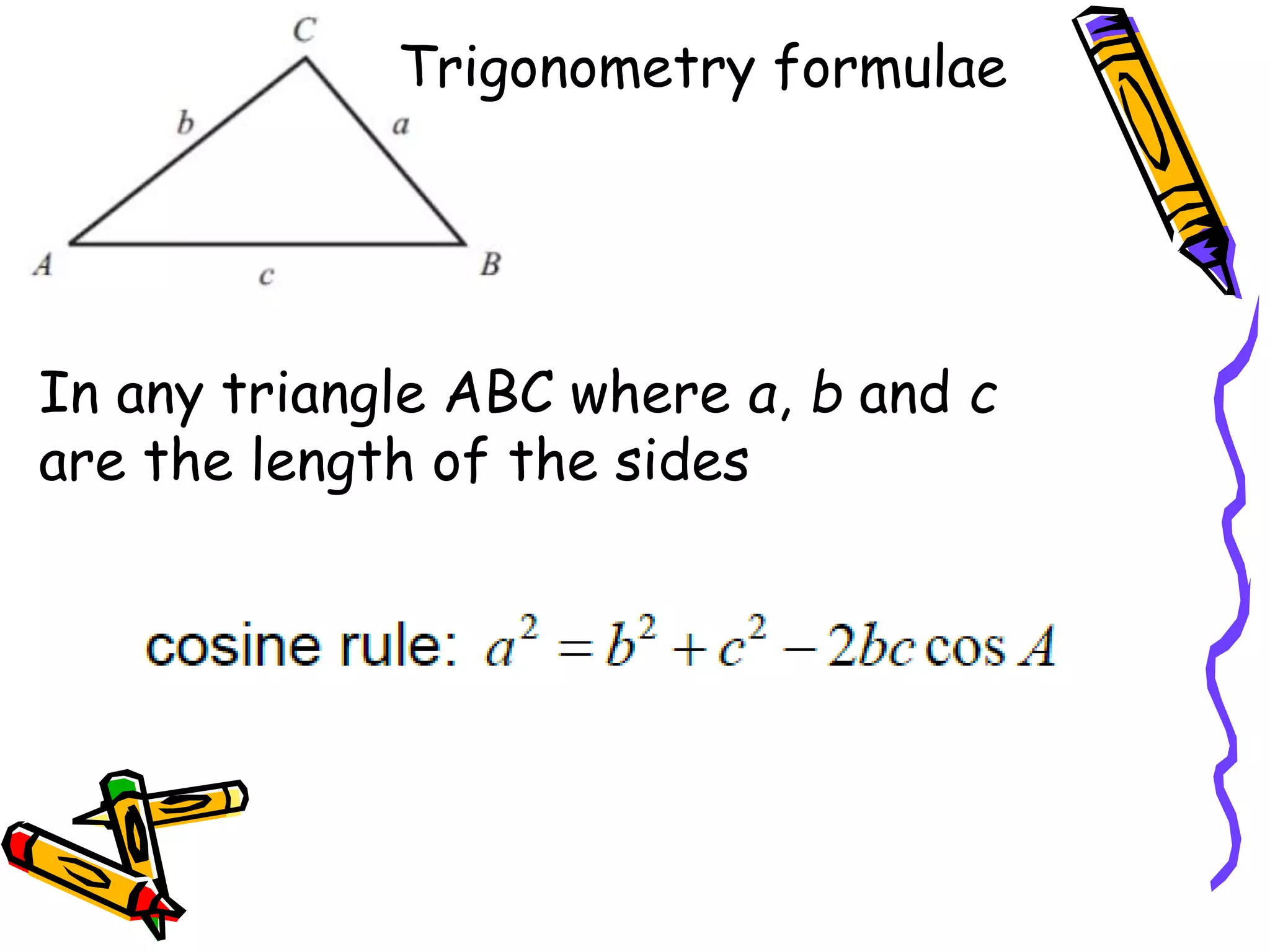
In any triangle ABC where a, b and c
are the length of the sides
Trigonometry formulae
In any triangle ABC where a, b and c
are the length of the sides
Trigonometry formulae
In any triangle ABC where a, b and c
are the length of the sides
2 Understand these…
The following formulae are not
specified in the content but should be
derived or informally understood by
candidates.
These formulae will not be given in the
examination.
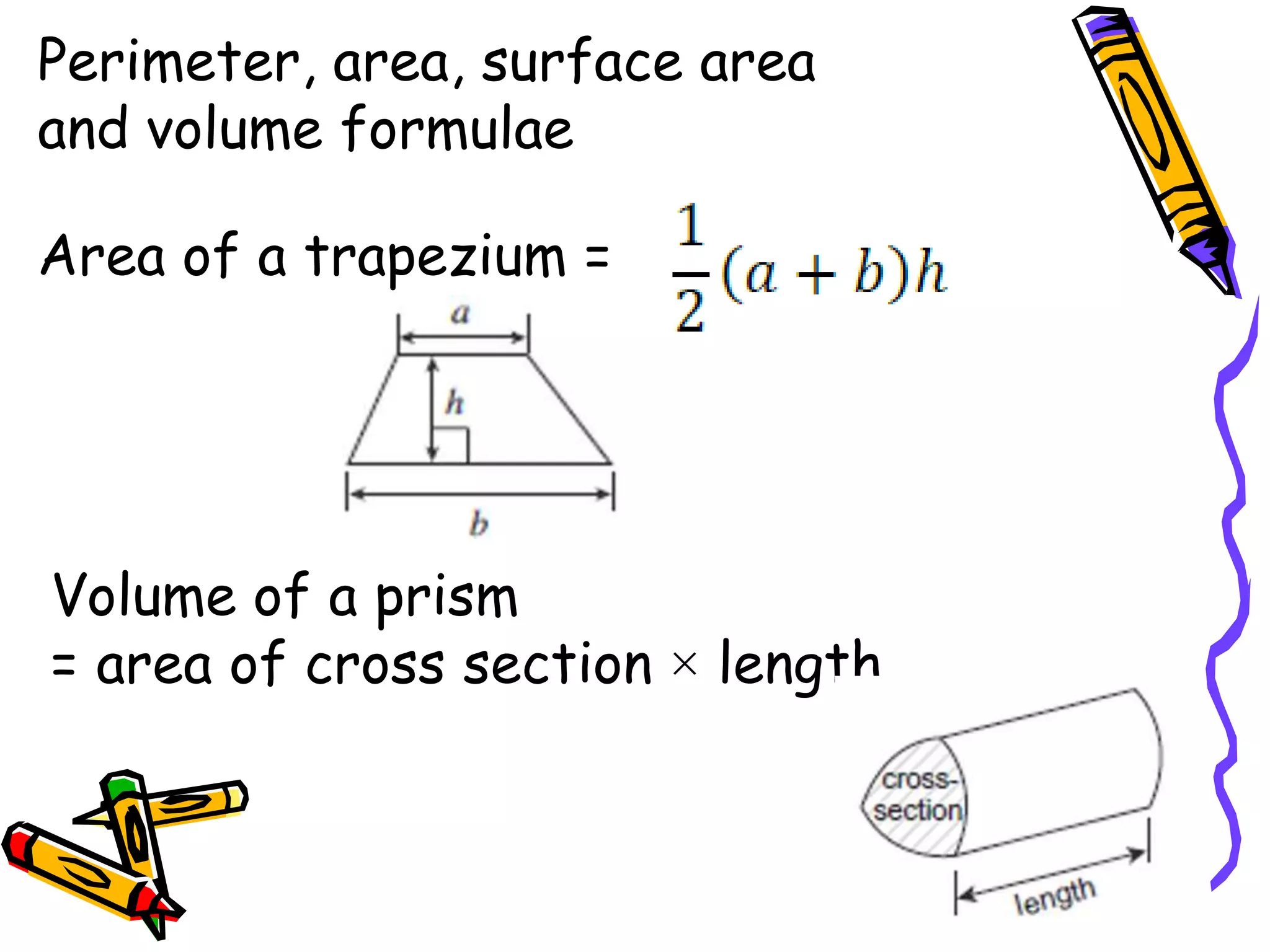
Perimeter, area, surface area
and volume formulae
Area of a trapezium =
Volume of a prism
= area of cross section × length
Compound interest
Where P is the principal amount,
r is the interest rate over a given
period and n is number of times that
the interest is compounded:
Probability
Where P(A) is the probability of
outcome A and P(B) is the probability
of outcome B:
𝑃(𝐴 𝑜𝑟 𝐵) = 𝑃(𝐴) + 𝑃(𝐵) − 𝑃(𝐴 𝑎𝑛𝑑 𝐵)
𝑃(𝐴 𝑎𝑛𝑑 𝐵) = 𝑃(𝐴 𝑔𝑖𝑣𝑒𝑛 𝐵)𝑃(𝐵)
3 Use these…
Candidates should be able to use the
following formulae, but need not
memorise them. These may be given in
the exam, either in the relevant
question, or in a list from which
candidates select and apply as
appropriate.
Perimeter, area, surface area and
volume formulae
Information from the DfE has been used in accordance
with the terms of the Open Government Licence
Kinematics formulae
Where a is constant acceleration, u is
initial velocity, v is final velocity, s is
displacement from the position
when t = 0 and t is time taken:
Calculators
There are several specialist
calculators available online including
calculators for the various formulae
required for GCSE.
For a collection of these see
Calculators on Mathematics for
Students.
Colleen Young

Formulae GCSE Mathematics

  • 1.
  • 2.
    1 Know these… Thefollowing formulae are included in the subject content. Candidates are expected to know these formulae; they will not be given in the examination.
  • 3.
    The quadratic formula Thesolutions of 𝑎𝑥2+𝑏𝑥+𝑐= 0 where 𝑎 ≠0
  • 4.
    Circumference and areaof a circle Where r is the radius and d is the diameter: Circumference of a circle = 2𝜋𝑟= 𝜋𝑑 Area of a circle= 𝜋𝑟2
  • 5.
    Pythagoras’s theorem In anyright-angled triangle where a, b and c are the length of the sides and c is the hypotenuse: a2 + b2 = c2
  • 6.
    In any right-angledtriangle ABC where a, b and c are the length of the sides and c is the hypotenuse: Trigonometry formulae
  • 7.
    In any triangleABC where a, b and c are the length of the sides Trigonometry formulae
  • 8.
    Trigonometry formulae In anytriangle ABC where a, b and c are the length of the sides
  • 9.
    Trigonometry formulae In anytriangle ABC where a, b and c are the length of the sides
  • 10.
    2 Understand these… Thefollowing formulae are not specified in the content but should be derived or informally understood by candidates. These formulae will not be given in the examination.
  • 11.
    Perimeter, area, surfacearea and volume formulae Area of a trapezium = Volume of a prism = area of cross section × length
  • 12.
    Compound interest Where Pis the principal amount, r is the interest rate over a given period and n is number of times that the interest is compounded:
  • 13.
    Probability Where P(A) isthe probability of outcome A and P(B) is the probability of outcome B: 𝑃(𝐴 𝑜𝑟 𝐵) = 𝑃(𝐴) + 𝑃(𝐵) − 𝑃(𝐴 𝑎𝑛𝑑 𝐵) 𝑃(𝐴 𝑎𝑛𝑑 𝐵) = 𝑃(𝐴 𝑔𝑖𝑣𝑒𝑛 𝐵)𝑃(𝐵)
  • 14.
    3 Use these… Candidatesshould be able to use the following formulae, but need not memorise them. These may be given in the exam, either in the relevant question, or in a list from which candidates select and apply as appropriate.
  • 15.
    Perimeter, area, surfacearea and volume formulae Information from the DfE has been used in accordance with the terms of the Open Government Licence
  • 16.
    Kinematics formulae Where ais constant acceleration, u is initial velocity, v is final velocity, s is displacement from the position when t = 0 and t is time taken:
  • 17.
    Calculators There are severalspecialist calculators available online including calculators for the various formulae required for GCSE. For a collection of these see Calculators on Mathematics for Students.
  • 18.