HI EVERYONE
F O R M 3 C H A P T E R 4
S C I E N C E
BY T I M OT H Y
4.1 ASEXUAL AND SEXUAL REPRODUCTION
• INVOLVES TWO PARENT
• INVOLVES GAMETS
• INVOLES FERTILISATION PROCESS
• OFFSPRING HAVE DIFFERENTCHARACTERISTICS
THAN THE PARENRTS
• PRODUCES OFFSPRING WITH VARIATIONS
ASEXUAL REPRODUCTION
• INVOLES ONE PARENT
• DOES NOT INVOLVE GAMATES.
• DOES NOT INVOLVE FERTILISATION PROSESATION
AND THE PRODUCTION OF GROWTH OF NEW
INDIVIDUAL OCCURS THROUGH BUDDING ,
SPORE FORMATION ,BINARY FISSION OR
REGENATION FROM ONE MATURE INDIVIDUAL
( A ) O F F S P R I N G H A V E S A M E
C H A R A C T E R I S T I C S A S T H E P A R E N T S
( B ) N O V A R I AT I O N I N T H E
O F F S P R I N G
ASEXUAL REPRODUCTION INCLUDES
•Binary fission (amoeba and bacteria)
•Budding (yeast, hydra)
•Spore information ( moss, ferns
•Vegetative reproduction (ginger , rose
•Regeneration ( tapeworm , starfish
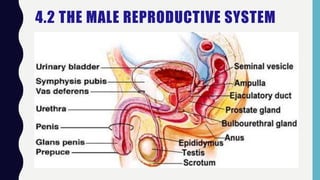
4.2 THE MALE REPRODUCTIVE SYSTEM
•Sperm duct
A tube that transport sperms from the testis
to the urethra .
Urethra
Carries urine and sperm out of the body
•Seminal vesicle
Stores sperms and secrets fluid that provides
energy to sperm .
Prostate gland
Secretes alkaline fluid that aids in the
movement and survival of sperm
•Testis
Produces sperms and male sex hormones
Penis
Transfer semen from testis into the vagina
during sexual intercourse.
Scrotum
A skin sac that products and holds the testes
outside the body,
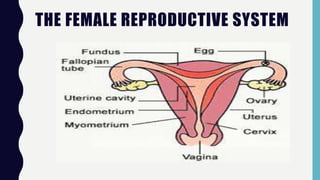
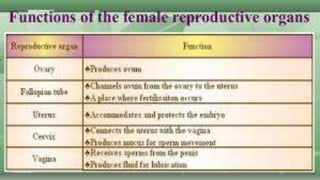
THE FEMALE REPRODUCTIVE SYSTEM
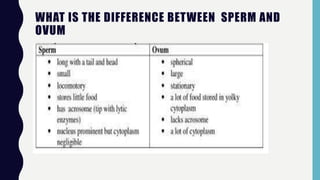
WHAT IS THE DIFFERENCE BETWEEN SPERM AND
OVUM
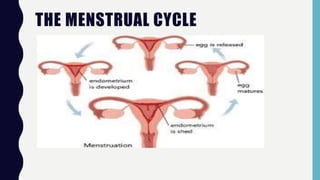
THE MENSTRUAL CYCLE
4.6 RESEARCH IN HUMAN REPRODUCTION
(b) Birth control or contraception
Natural method – rhythm method to
prevent fertilization
Hormonal method contraceptive pills
to prevent ovulation
Physically method
•condom to prevent fertilization
•Intrauterine contraceptive device to
prevent implantation of the embryo in the
uterus wall.
• diaphragm to prevent fertilisation.
Chemical method
Spermicide to prevent fertilisation
Surgical method
Ligation to prevent fertilization
Vasectomy to prevent fertelisation
4,9 POLLINATION
•pollination is the transfer of pollen gains from
the anther to the stigma of the same flower
(self-pollination ) or to the sigma of a different
flower of a different plant ( cross – pollination)
•After fertilisation , the ovules develop into the
seeds the ovary develops into the fruit and the
zygote becomes the embryo ( with radicle and
plumula)
•The conditions necessary for seed
germination are the presence of water air
and a suitable temperature.
•Vegetative reproduction is the growth of a
new plant of a plant .
Example ; stems ( rhizome , tuber , bulb,
corm )
Form 3 science chapter 4

Form 3 science chapter 4

  • 1.
  • 2.
    F O RM 3 C H A P T E R 4 S C I E N C E BY T I M OT H Y
  • 3.
    4.1 ASEXUAL ANDSEXUAL REPRODUCTION • INVOLVES TWO PARENT • INVOLVES GAMETS • INVOLES FERTILISATION PROCESS • OFFSPRING HAVE DIFFERENTCHARACTERISTICS THAN THE PARENRTS • PRODUCES OFFSPRING WITH VARIATIONS
  • 4.
    ASEXUAL REPRODUCTION • INVOLESONE PARENT • DOES NOT INVOLVE GAMATES. • DOES NOT INVOLVE FERTILISATION PROSESATION AND THE PRODUCTION OF GROWTH OF NEW INDIVIDUAL OCCURS THROUGH BUDDING , SPORE FORMATION ,BINARY FISSION OR REGENATION FROM ONE MATURE INDIVIDUAL
  • 5.
    ( A )O F F S P R I N G H A V E S A M E C H A R A C T E R I S T I C S A S T H E P A R E N T S ( B ) N O V A R I AT I O N I N T H E O F F S P R I N G
  • 6.
    ASEXUAL REPRODUCTION INCLUDES •Binaryfission (amoeba and bacteria) •Budding (yeast, hydra) •Spore information ( moss, ferns •Vegetative reproduction (ginger , rose •Regeneration ( tapeworm , starfish
  • 7.
    4.2 THE MALEREPRODUCTIVE SYSTEM
  • 8.
    •Sperm duct A tubethat transport sperms from the testis to the urethra . Urethra Carries urine and sperm out of the body
  • 9.
    •Seminal vesicle Stores spermsand secrets fluid that provides energy to sperm . Prostate gland Secretes alkaline fluid that aids in the movement and survival of sperm
  • 10.
    •Testis Produces sperms andmale sex hormones Penis Transfer semen from testis into the vagina during sexual intercourse. Scrotum A skin sac that products and holds the testes outside the body,
  • 11.
  • 13.
    WHAT IS THEDIFFERENCE BETWEEN SPERM AND OVUM
  • 14.
  • 15.
    4.6 RESEARCH INHUMAN REPRODUCTION (b) Birth control or contraception Natural method – rhythm method to prevent fertilization Hormonal method contraceptive pills to prevent ovulation
  • 16.
    Physically method •condom toprevent fertilization •Intrauterine contraceptive device to prevent implantation of the embryo in the uterus wall. • diaphragm to prevent fertilisation. Chemical method Spermicide to prevent fertilisation
  • 17.
    Surgical method Ligation toprevent fertilization Vasectomy to prevent fertelisation
  • 18.
    4,9 POLLINATION •pollination isthe transfer of pollen gains from the anther to the stigma of the same flower (self-pollination ) or to the sigma of a different flower of a different plant ( cross – pollination) •After fertilisation , the ovules develop into the seeds the ovary develops into the fruit and the zygote becomes the embryo ( with radicle and plumula)
  • 19.
    •The conditions necessaryfor seed germination are the presence of water air and a suitable temperature. •Vegetative reproduction is the growth of a new plant of a plant . Example ; stems ( rhizome , tuber , bulb, corm )