Dr. R.SREEBHA, Assistant Professor
Department of Botany
V.V.Vanniaperumal College for Women
Virudhunagar
This Photo by Unknown Author is licensed
under CC BY
FOREST MANAGEMENT
Forest management is a branch of forestry concerned with
overall administrative, legal, economic, and social aspects, as
well as scientific and technical aspects, such as Knowledge of
Plant Ecology, Sub – Division of Forest, Monoculture,
Silviculture, Arboriculture, Rotation of Cultivation, Weeding
Thinning, Brashing, Taungya system, Coppice system of
regeneration. A forest management system is a process in which
forests are tended, harvested and regenerated.
Knowledge of Plant Ecology
For a successful forest
management, an Officer in-
charge of a Forest, must be
appointed. The Forester
should have a thorough
knowledge of plant ecology
Sub – Division of Forest
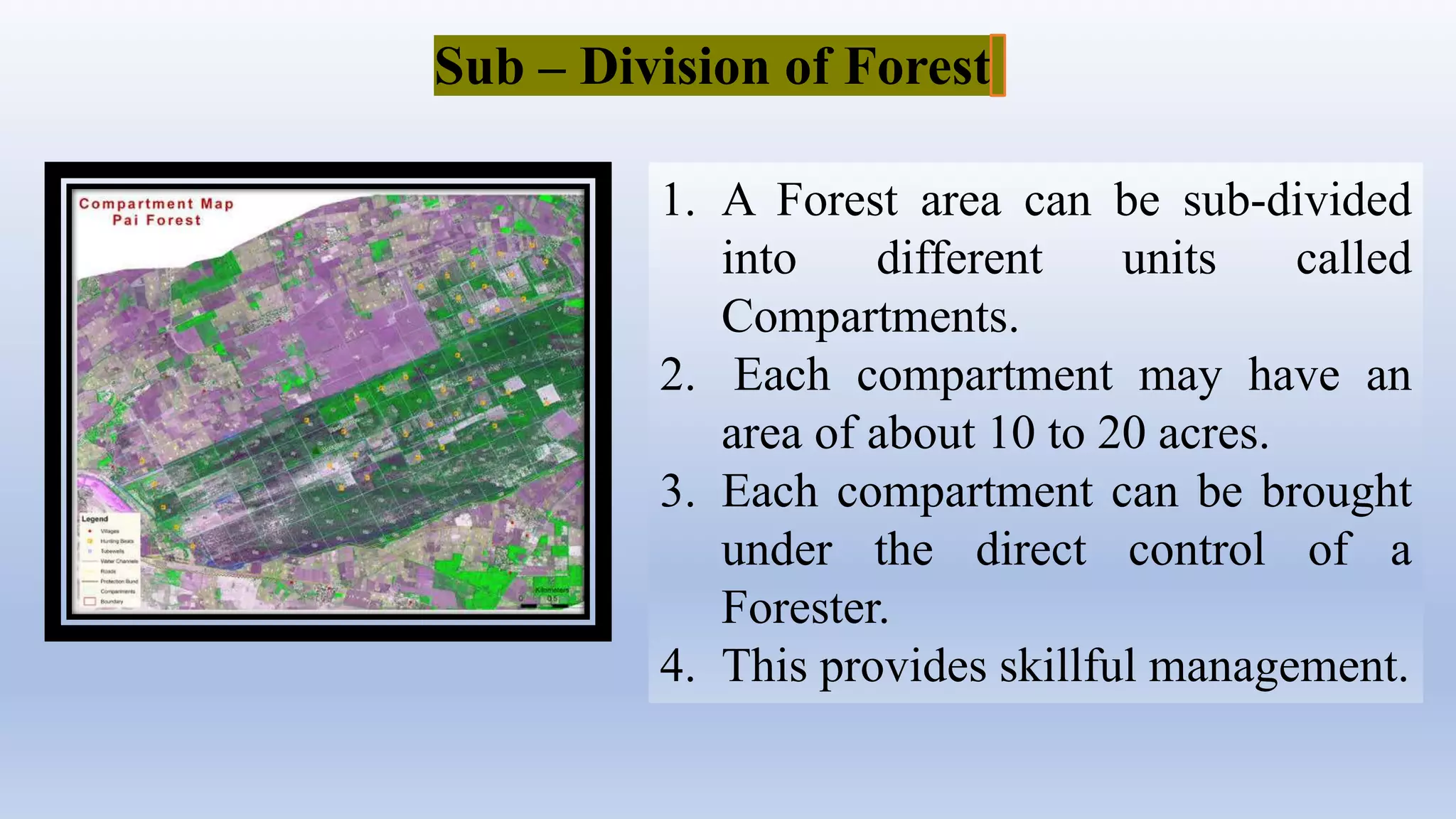
1. A Forest area can be sub-divided
into different units called
Compartments.
2. Each compartment may have an
area of about 10 to 20 acres.
3. Each compartment can be brought
under the direct control of a
Forester.
4. This provides skillful management.
Monoculture
1.It refers to the cultivation of single species.
2.The cultivation of rubber trees, teak, oak, conifers,
Eucalyptus are examples of monoculture.
3. It helps to obtain the desired varieties of trees on
a large scale
Silviculture is branch of
forestry which deals with the
establishment, development,
care and reproduction of
monoculture of valuable timber
trees like oak, teak, sal,
sheesham, kel etc
Rotation of cultivation
1. Monoculture in forests has posed certain
serious problems.
2. Monoculture drains the soil of the
specific nutrients required by the species
in greater quantities.
3. For example, teak requires more calcium.
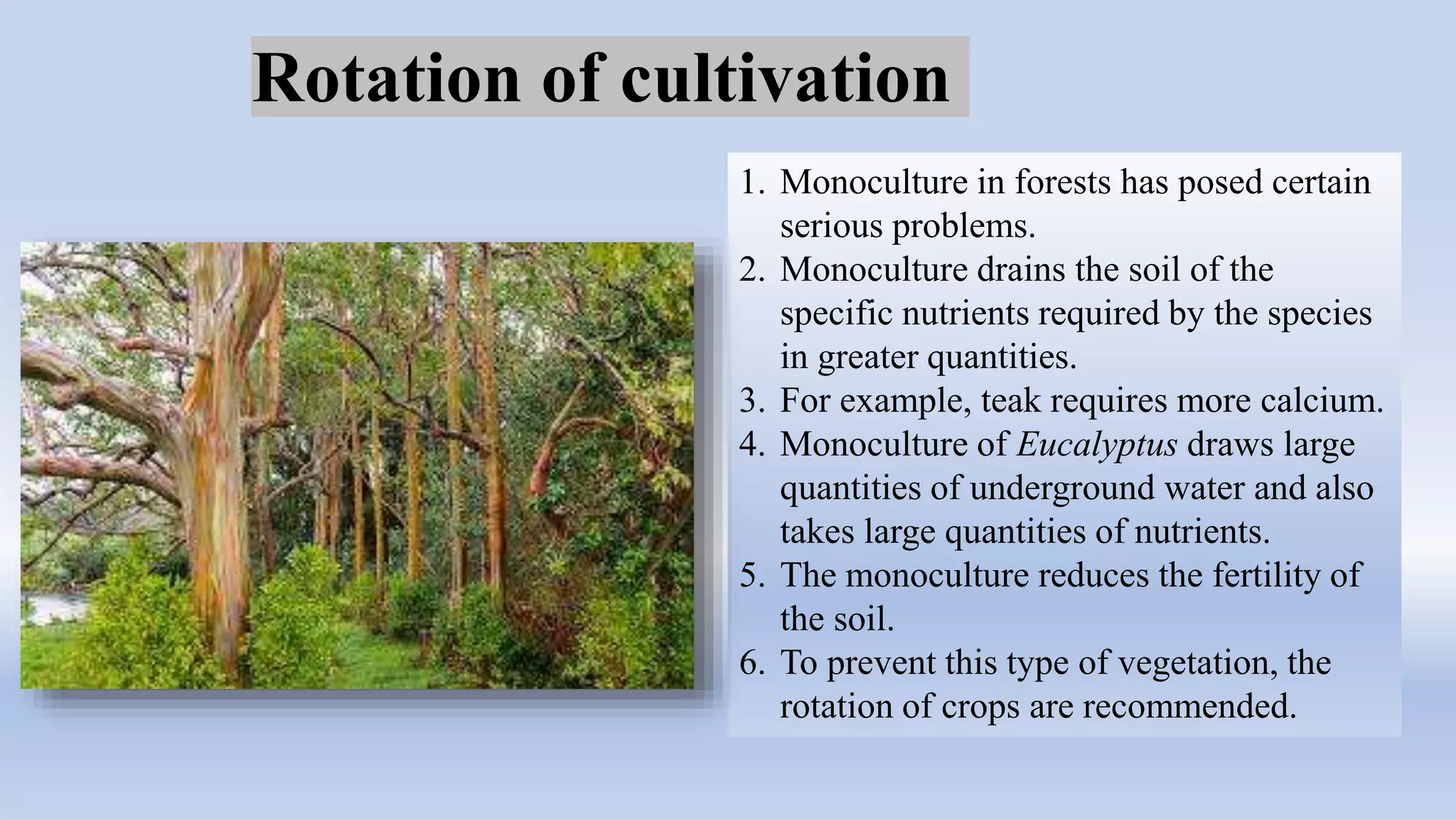
4. Monoculture of Eucalyptus draws large
quantities of underground water and also
takes large quantities of nutrients.
5. The monoculture reduces the fertility of
the soil.
6. To prevent this type of vegetation, the
rotation of crops are recommended.
Weeding refers to the
elimination of the undesired
species which will compete
with the seedlings of desired
species.
Thinning refers to the eradication
of the individuals of the same
species to reduce the density of
forest
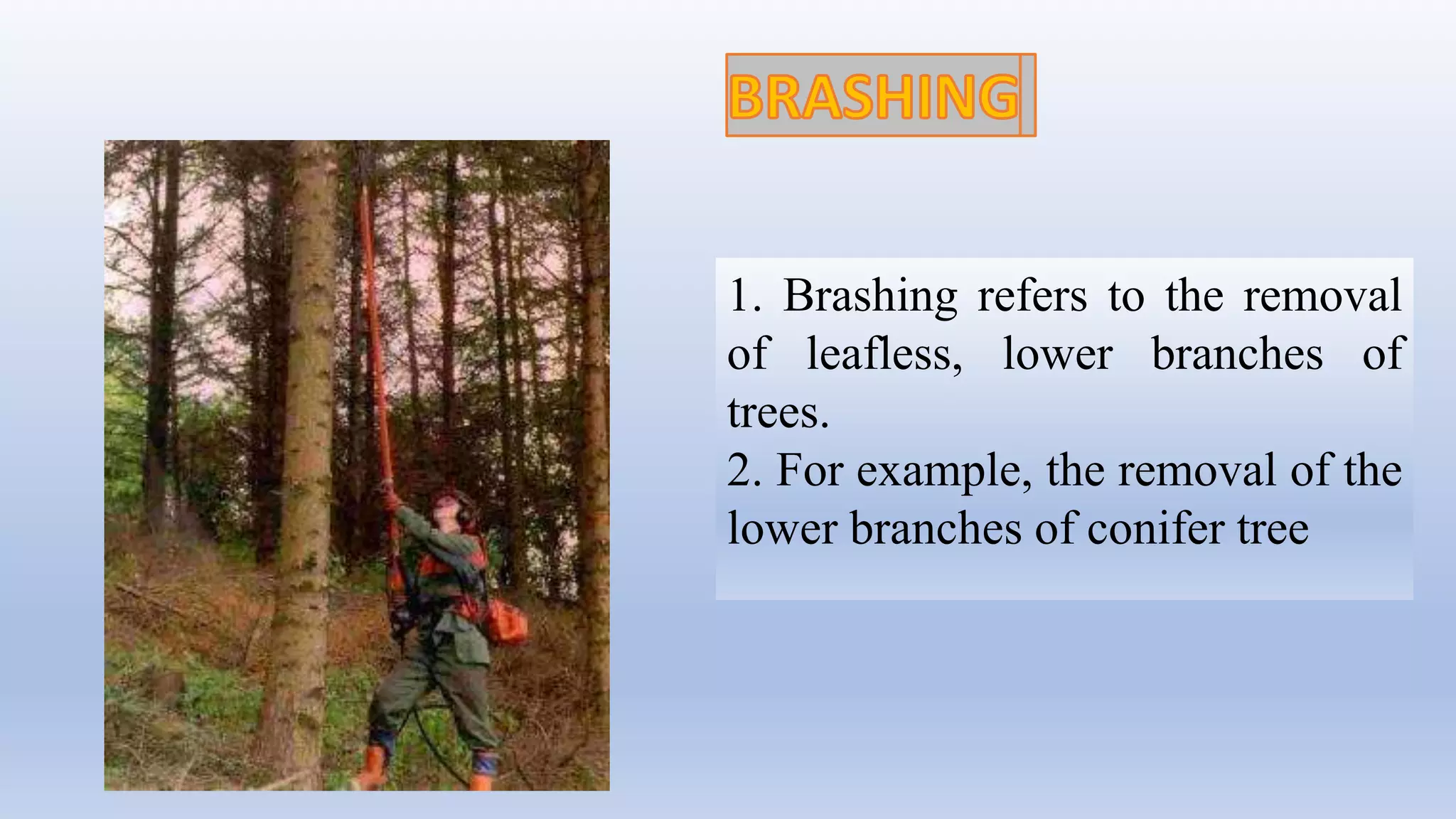
1. Brashing refers to the removal
of leafless, lower branches of
trees.
2. For example, the removal of the
lower branches of conifer tree
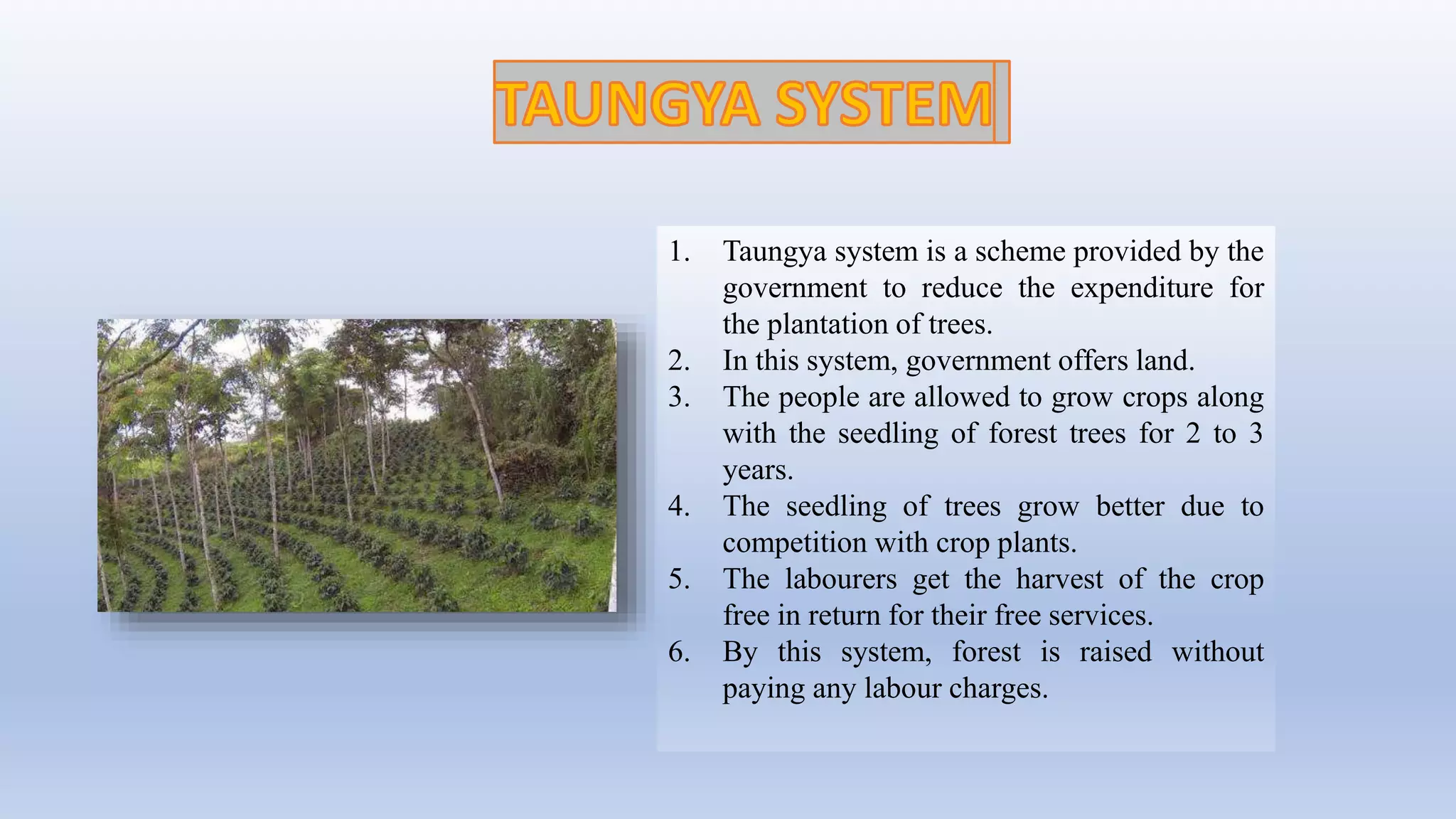
1. Taungya system is a scheme provided by the
government to reduce the expenditure for
the plantation of trees.
2. In this system, government offers land.
3. The people are allowed to grow crops along
with the seedling of forest trees for 2 to 3
years.
4. The seedling of trees grow better due to
competition with crop plants.
5. The labourers get the harvest of the crop
free in return for their free services.
6. By this system, forest is raised without
paying any labour charges.
1.Under this system, the
timber trees are cut off
from near the base leaving
about one meter of the
stem.
2.The stem regenerates in
to new shoots.
Arumugam, N. and Kumaresan, V. 2017.
Environmental Studies. Saras publication,
Nagercoil. 28p.
Forest management

Forest management

  • 1.
    Dr. R.SREEBHA, AssistantProfessor Department of Botany V.V.Vanniaperumal College for Women Virudhunagar
  • 2.
    This Photo byUnknown Author is licensed under CC BY FOREST MANAGEMENT Forest management is a branch of forestry concerned with overall administrative, legal, economic, and social aspects, as well as scientific and technical aspects, such as Knowledge of Plant Ecology, Sub – Division of Forest, Monoculture, Silviculture, Arboriculture, Rotation of Cultivation, Weeding Thinning, Brashing, Taungya system, Coppice system of regeneration. A forest management system is a process in which forests are tended, harvested and regenerated.
  • 3.
    Knowledge of PlantEcology For a successful forest management, an Officer in- charge of a Forest, must be appointed. The Forester should have a thorough knowledge of plant ecology
  • 4.
    Sub – Divisionof Forest 1. A Forest area can be sub-divided into different units called Compartments. 2. Each compartment may have an area of about 10 to 20 acres. 3. Each compartment can be brought under the direct control of a Forester. 4. This provides skillful management.
  • 5.
    Monoculture 1.It refers tothe cultivation of single species. 2.The cultivation of rubber trees, teak, oak, conifers, Eucalyptus are examples of monoculture. 3. It helps to obtain the desired varieties of trees on a large scale
  • 6.
    Silviculture is branchof forestry which deals with the establishment, development, care and reproduction of monoculture of valuable timber trees like oak, teak, sal, sheesham, kel etc
  • 7.
    Rotation of cultivation 1.Monoculture in forests has posed certain serious problems. 2. Monoculture drains the soil of the specific nutrients required by the species in greater quantities. 3. For example, teak requires more calcium. 4. Monoculture of Eucalyptus draws large quantities of underground water and also takes large quantities of nutrients. 5. The monoculture reduces the fertility of the soil. 6. To prevent this type of vegetation, the rotation of crops are recommended.
  • 8.
    Weeding refers tothe elimination of the undesired species which will compete with the seedlings of desired species.
  • 9.
    Thinning refers tothe eradication of the individuals of the same species to reduce the density of forest
  • 10.
    1. Brashing refersto the removal of leafless, lower branches of trees. 2. For example, the removal of the lower branches of conifer tree
  • 11.
    1. Taungya systemis a scheme provided by the government to reduce the expenditure for the plantation of trees. 2. In this system, government offers land. 3. The people are allowed to grow crops along with the seedling of forest trees for 2 to 3 years. 4. The seedling of trees grow better due to competition with crop plants. 5. The labourers get the harvest of the crop free in return for their free services. 6. By this system, forest is raised without paying any labour charges.
  • 12.
    1.Under this system,the timber trees are cut off from near the base leaving about one meter of the stem. 2.The stem regenerates in to new shoots.
  • 13.
    Arumugam, N. andKumaresan, V. 2017. Environmental Studies. Saras publication, Nagercoil. 28p.