


Forced Circulation
Evaporation
Name: Reg. No.
Smaranika Rahman
Zobaida Mostarin Nishi
15103092
15103094
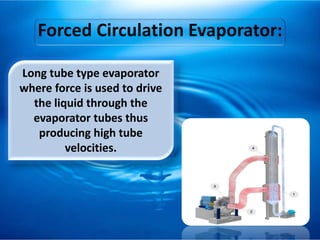
Forced Circulation Evaporator:
Long tube type evaporator
where force is used to drive
the liquid through the
evaporator tubes thus
producing high tube
velocities.
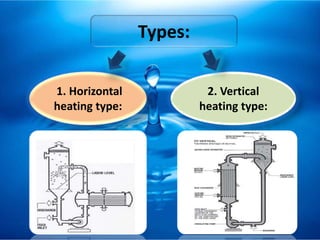
1. Horizontal
heating type:
2. Vertical
heating type:
Types:
Principle:
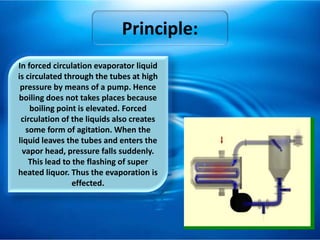
In forced circulation evaporator liquid
is circulated through the tubes at high
pressure by means of a pump. Hence
boiling does not takes places because
boiling point is elevated. Forced
circulation of the liquids also creates
some form of agitation. When the
liquid leaves the tubes and enters the
vapor head, pressure falls suddenly.
This lead to the flashing of super
heated liquor. Thus the evaporation is
effected.
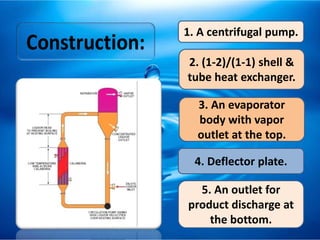
1. A centrifugal pump.
2. (1-2)/(1-1) shell &
tube heat exchanger.
3. An evaporator
body with vapor
outlet at the top.
4. Deflector plate.
5. An outlet for
product discharge at
the bottom.
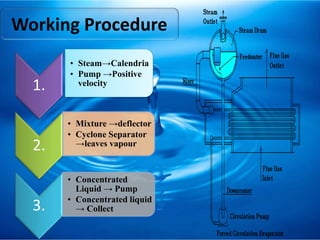
1.
• Steam→Calendria
• Pump →Positive
velocity
2.
• Mixture →deflector
• Cyclone Separator
→leaves vapour
3.
• Concentrated
Liquid → Pump
• Concentrated liquid
→ Collect
Working Procedure
Advantage:
• In forced circulation evaporator there is a rapid liquid
movement due to high heat transfer coefficient.
• Salting, scaling and fouling are not possible due to forced
circulation.
• This evaporators is suitable for themolabile substances
because of rapid evaporation.
• It is suitable for the viscous preparation because pumping
mechanism is used.
Disadvantage:
• The equipment is expensive because the power is required
for the circulating the liquids.
• The hold up of liquids is high.
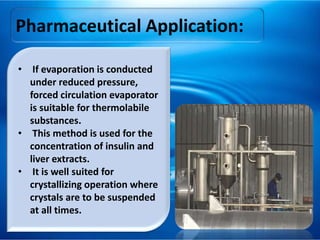
Pharmaceutical Application:
• If evaporation is conducted
under reduced pressure,
forced circulation evaporator
is suitable for thermolabile
substances.
• This method is used for the
concentration of insulin and
liver extracts.
• It is well suited for
crystallizing operation where
crystals are to be suspended
at all times.
Reference:
• https://en.wikipedia.org/wiki/Circula
tion_evaporator
• C.v.s subrahmanyam et al.,
pharmaceutical engineering principles
and practices - evaporation, 2001,
page no. 351 - 352.
• https://www.indiamart.com/mazda-
limited-mumbaimumbai/evaporator-
system.html
• http://www.pharmainfo.net/book/ph
armaceutical-machines/forced-
circulation-evaporator
Forced circulation

Forced circulation

  • 1.
  • 2.
    Name: Reg. No. SmaranikaRahman Zobaida Mostarin Nishi 15103092 15103094
  • 3.
    Forced Circulation Evaporator: Longtube type evaporator where force is used to drive the liquid through the evaporator tubes thus producing high tube velocities.
  • 4.
    1. Horizontal heating type: 2.Vertical heating type: Types:
  • 5.
    Principle: In forced circulationevaporator liquid is circulated through the tubes at high pressure by means of a pump. Hence boiling does not takes places because boiling point is elevated. Forced circulation of the liquids also creates some form of agitation. When the liquid leaves the tubes and enters the vapor head, pressure falls suddenly. This lead to the flashing of super heated liquor. Thus the evaporation is effected.
  • 6.
    1. A centrifugalpump. 2. (1-2)/(1-1) shell & tube heat exchanger. 3. An evaporator body with vapor outlet at the top. 4. Deflector plate. 5. An outlet for product discharge at the bottom.
  • 7.
    1. • Steam→Calendria • Pump→Positive velocity 2. • Mixture →deflector • Cyclone Separator →leaves vapour 3. • Concentrated Liquid → Pump • Concentrated liquid → Collect Working Procedure
  • 8.
    Advantage: • In forcedcirculation evaporator there is a rapid liquid movement due to high heat transfer coefficient. • Salting, scaling and fouling are not possible due to forced circulation. • This evaporators is suitable for themolabile substances because of rapid evaporation. • It is suitable for the viscous preparation because pumping mechanism is used. Disadvantage: • The equipment is expensive because the power is required for the circulating the liquids. • The hold up of liquids is high.
  • 9.
    Pharmaceutical Application: • Ifevaporation is conducted under reduced pressure, forced circulation evaporator is suitable for thermolabile substances. • This method is used for the concentration of insulin and liver extracts. • It is well suited for crystallizing operation where crystals are to be suspended at all times.
  • 10.
    Reference: • https://en.wikipedia.org/wiki/Circula tion_evaporator • C.v.ssubrahmanyam et al., pharmaceutical engineering principles and practices - evaporation, 2001, page no. 351 - 352. • https://www.indiamart.com/mazda- limited-mumbaimumbai/evaporator- system.html • http://www.pharmainfo.net/book/ph armaceutical-machines/forced- circulation-evaporator