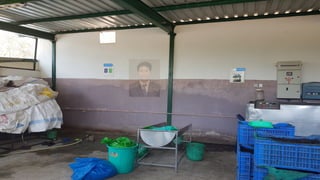
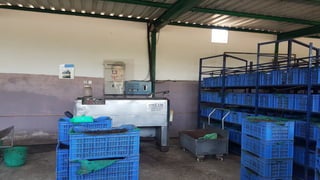
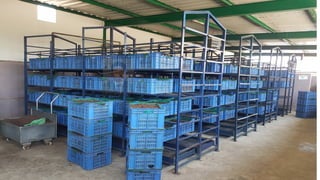
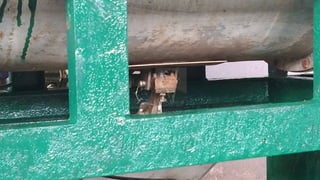
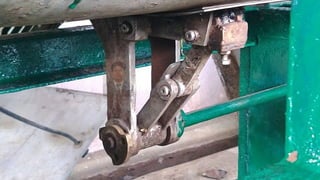
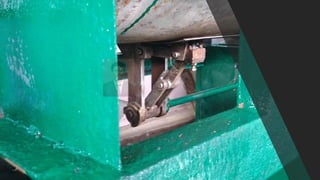
Waste Management Unit
Operation
By
AKASH.K
Waste Management Unit
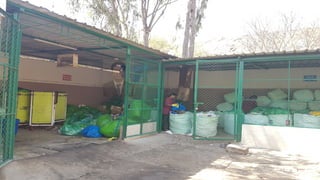
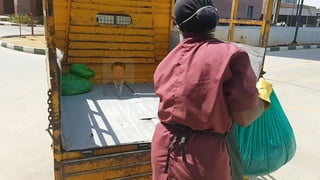
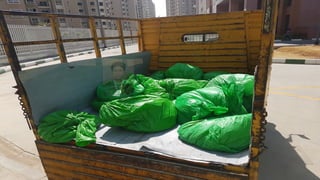
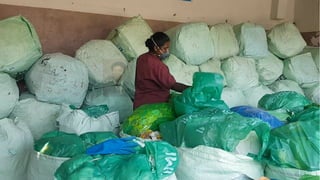
Waste Collection System Purpose:
• Waste collection should be managed in systematic manner, it will
improve the efficiency and reduce work load on field staffs.
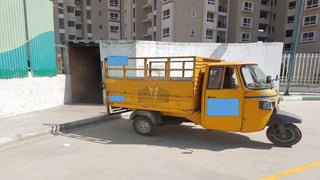
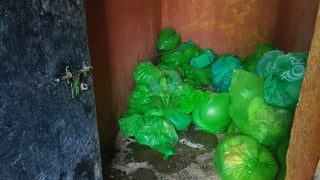
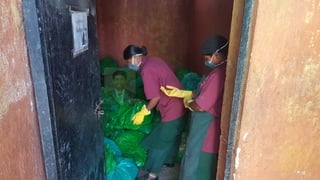
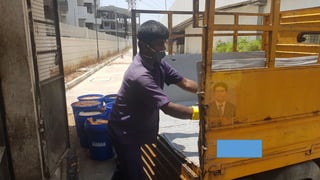
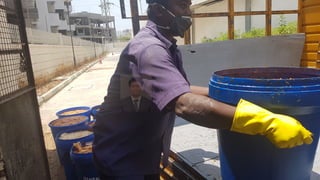
• staff will collect waste and hand it over to SWMPL unit on every
evening.
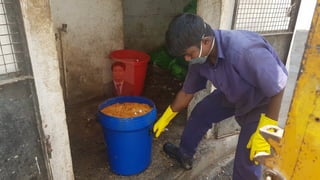
• FS should be wearing PPE during collecting waste from house keeping
staff.
• Below mentioned details should be noted in log book:
• Source of waste (Block / Tower No.)
• Collection time
• Collected person
• Total weight when handed over to SWMPL unit
• Later waste is sent to respective sorting area.
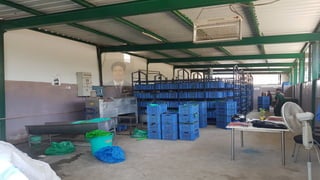
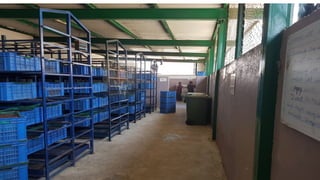
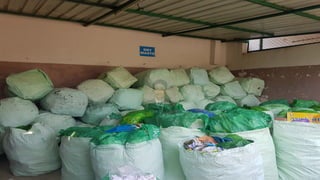
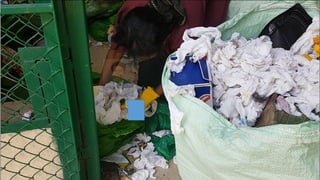
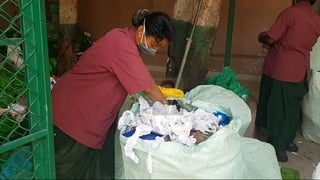
Dry waste sorting place Purpose:
• Dry waste sorting place should be cleaned and
organized before beginning of work. Clean environment
will improve productivity.
• Dry waste sorting place should be cleaned every
morning before starting work.
• FS is deployed for this task.
• FS should be wearing PPE during sweeping.
• Soft broom is used for sweeping.
• Floor should be kept ready for FS to start work by 9.45
AM.
• Dry waste sorting place should be cleaned / swept
before lunch.
• Above mentioned steps should be repeated as and
when required or whenever the area gets littered.
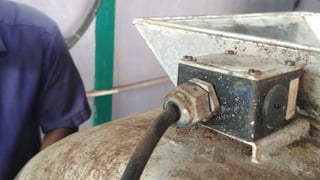
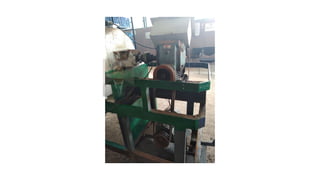
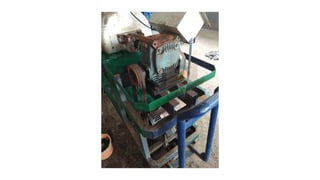
Organic waste converter the machine takes
organic waste as input and to create
manure in just two weeks of curing the
processed waste is transformed
into compliant manure that can be used on
site in gardens or agriculture.
The OWC uses proprietary technology to
optimally homogenize, aerate and hydrate
waste. The process is robust enough to
handle an extremely wide ranges and grades
of waste.
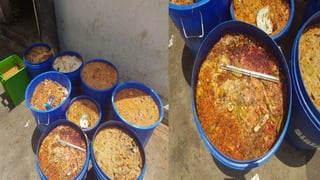
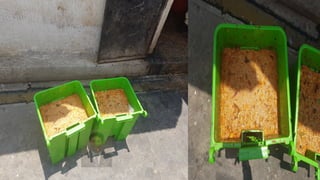
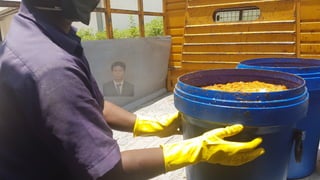
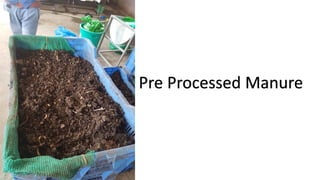
Pre Processed Manure
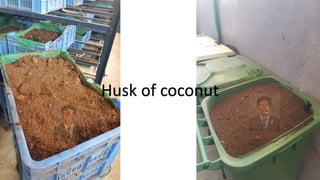
Husk of coconut
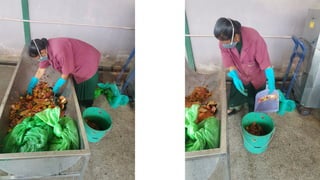
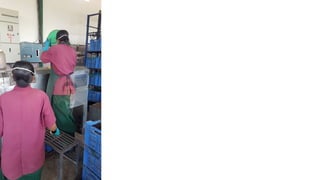
Wet waste sorting place Purpose:
• Wet waste sorting place should be cleaned and
organized before beginning of work. Clean environment
will improve productivity.
• Wet waste sorting place should be cleaned every
morning before starting work.
• 1 FS is deployed for this task.
• FS should be wearing PPE during sweeping.
• Soft broom is used for sweeping.
• Use coconut broom if floor is wet.
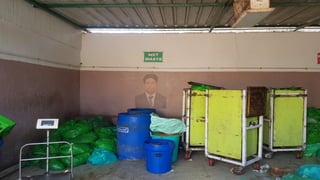
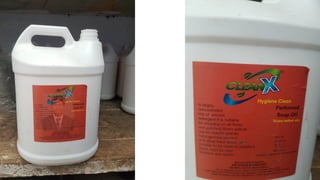
• Sorting table should be mopped, with soap oil and
water. Setup should be kept ready for FS to start work
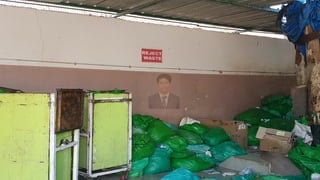
by 9.55 AM.
• Above mentioned steps should be repeated as and
when required.
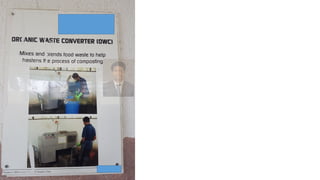
OWC (Organic Waste Convertor) is an easy to
use decentralized Waste Management System to
turn large amounts of manure.
Organic waste can be treated properly and can be
used in the form of manure.
Organic waste converter is used to treat the
waste. It helps faster bio conversion of waste into
organic manure or fuel pallets
OWC machine Purpose:
• Cleaning OWC machine clean before starting of work will help in
removal of dust particles accumulated in and on machine.
Cleanliness will improve efficiency of machine.
• OWC machine should be cleaned every morning before starting
work.
• 1 FS is deployed for this task.
• FS should be wearing PPE during sweeping.
• Soft broom is used for sweeping around OWC machine.
• Machine should be mopped by soft mop cloth.
• Machine should be inspected for proper power input.
• Setup should be kept ready for FS to start work by 10.15 AM.
• Above mentioned steps should be repeated as and when required
and after daily operation
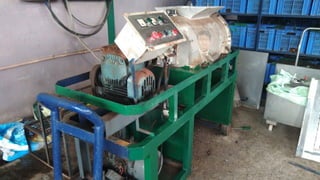
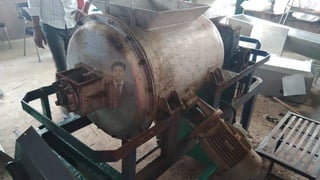
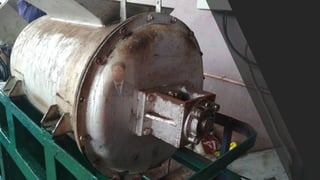
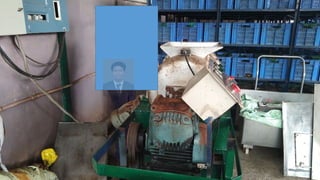
ORGANIC WASTE CONVERTER (200kg/day capacity
Waste which is of plant, animal origin or
man made food waste falls under organic
waste stream.
Organic waste can be treated properly and
can be used in the form of manure. Organic
waste converter is used to treat the waste. It
helps faster bio conversion of waste into
organic manure or fuel pallets.
METHOD OF OPERATION
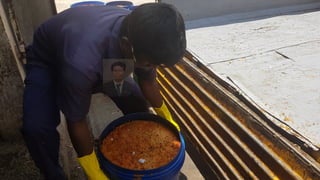
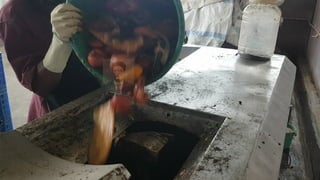
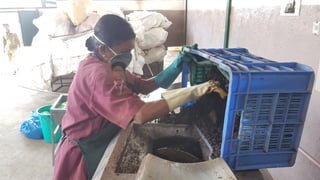
Collect Organic Waste in containers.
* Feed the waste into to machine after draining excess water
from food waste.
* Mix culture and absorbent with food waste
* Crush and mixing takes place in machine for 10 min
* Repeat feeding batches till material finishes.
* Collect crushed pulp for drying.
* Ensure sufficient spreading for proper drying in the tray.
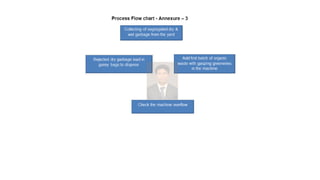
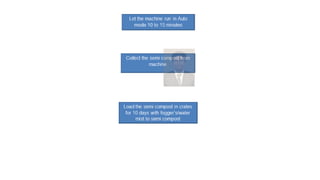
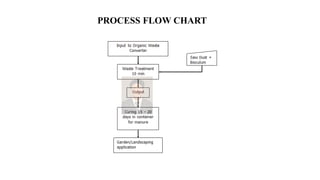
PROCESS FLOW CHART
Operation Sequence:
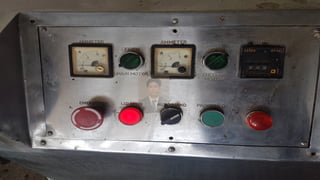
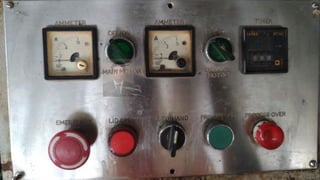
1. First check whether all switches except emergency
switch are in “OFF” position start main Connection for
OWC
2. Check the running of the machine by pressing ON / OFF
switch off the machine for chopper and main motor. During
ON the green lights will “GLOW” During this checking the
selector switch must be on ‘hand’ mode
3. Switch off the chopper and process knobs.
4. Bring timer switch to “Manual mode”
7. Do not overload the machine with waste.
8. Ensure that hands are washed with soap
after completion of operation.
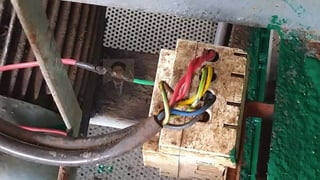
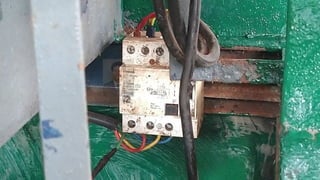
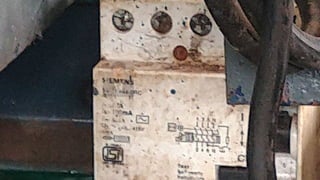
9. Ensure all Electrical connections are in
good condition. No loose connection / open
wiring.
10. In case of accident get help from the
security and inform site supervisor.
STANDARD OPERATING PROCEDURE (SOP)
Safety Requirements:
1. Keep adequate stock of required Personal Protective
Equipment's (PPE) as listed below
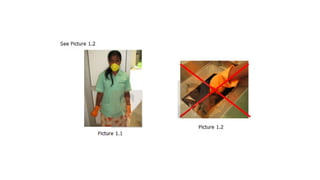
2. Dust Mask, Surgical gloves, PVC gloves, Footwear.
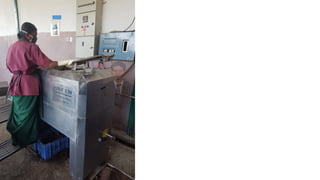
3. Ensure PPE’s are worn by the operator before starting
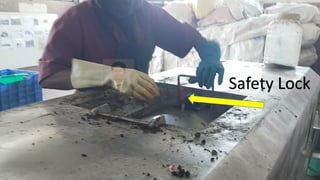
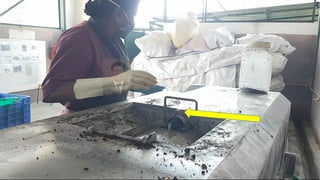
operation. 4. Do not override safety controls of Machine.
5. Do not open lid while machine in operation.
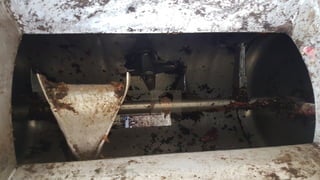
6. Do not insert hand in the mixing chamber until blades
are completely stopped its rotation
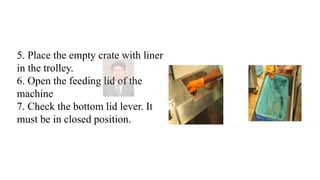
5. Place the empty crate with liner
in the trolley.
6. Open the feeding lid of the
machine
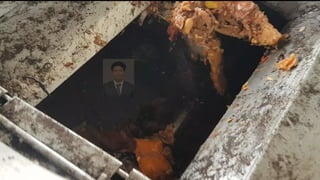
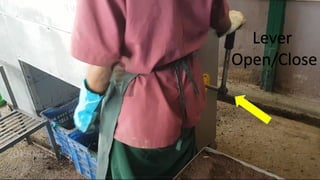
7. Check the bottom lid lever. It
must be in closed position.
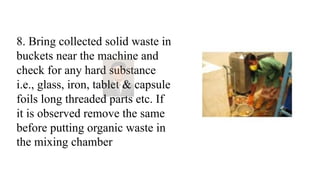
8. Bring collected solid waste in
buckets near the machine and
check for any hard substance
i.e., glass, iron, tablet & capsule
foils long threaded parts etc. If
it is observed remove the same
before putting organic waste in
the mixing chamber
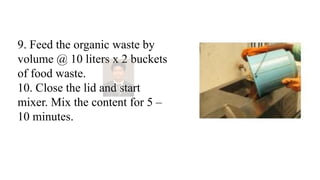
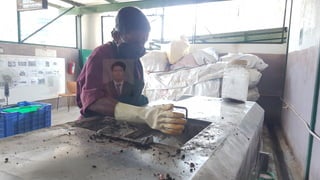
9. Feed the organic waste by
volume @ 10 liters x 2 buckets
of food waste.
10. Close the lid and start
mixer. Mix the content for 5 –
10 minutes.
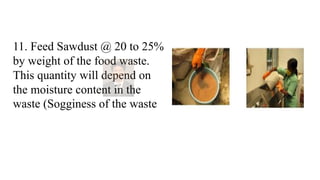
11. Feed Sawdust @ 20 to 25%
by weight of the food waste.
This quantity will depend on
the moisture content in the
waste (Sogginess of the waste
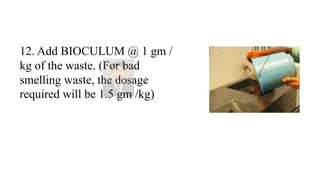
12. Add BIOCULUM @ 1 gm /
kg of the waste. (For bad
smelling waste, the dosage
required will be 1.5 gm /kg)
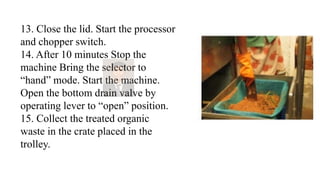
13. Close the lid. Start the processor
and chopper switch.
14. After 10 minutes Stop the
machine Bring the selector to
“hand” mode. Start the machine.
Open the bottom drain valve by
operating lever to “open” position.
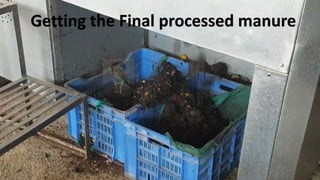
15. Collect the treated organic
waste in the crate placed in the
trolley.
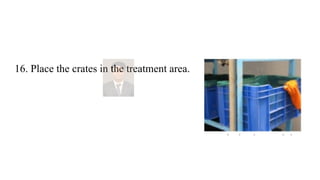
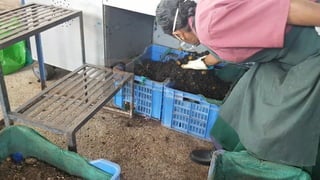
16. Place the crates in the treatment area.
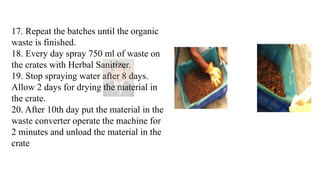
17. Repeat the batches until the organic
waste is finished.
18. Every day spray 750 ml of waste on
the crates with Herbal Sanitizer.
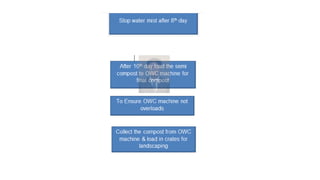
19. Stop spraying water after 8 days.
Allow 2 days for drying the material in
the crate.
20. After 10th day put the material in the
waste converter operate the machine for
2 minutes and unload the material in the
crate
21. Transfer the material from
the crate into the storage bag or
the material in soil (3:1)
proportion and sow the viable
seeds of leafy vegetables like
spinach Methi coriander and
check the germination. If got 75
– 100% germination it would be
ready manure for application to
the crops or garden
22. After 15 days use the same
material as absorbent in suitable
proportion (preferably 10:4 ratios)
23. Clean and wash the machine
and surrounding of curing system
with the help of herbal sanitizer
every day
Safety Lock
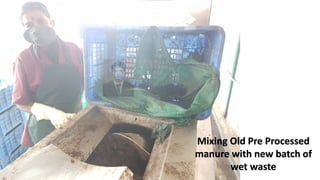
Mixing Old Pre Processed
manure with new batch of
wet waste
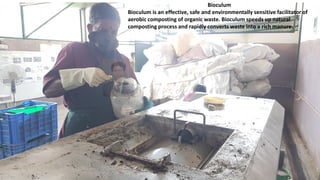
Bioculum
Bioculum is an effective, safe and environmentally sensitive facilitator of
aerobic composting of organic waste. Bioculum speeds up natural
composting process and rapidly converts waste into a rich manure.
Lever
Open/Close
Getting the Final processed manure
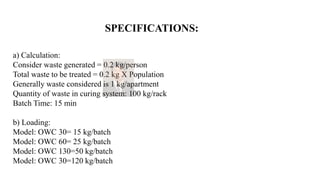
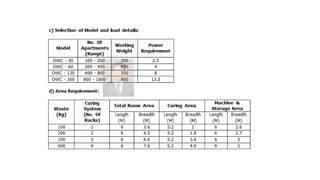
SPECIFICATIONS:
a) Calculation:
Consider waste generated = 0.2 kg/person
Total waste to be treated = 0.2 kg X Population
Generally waste considered is 1 kg/apartment
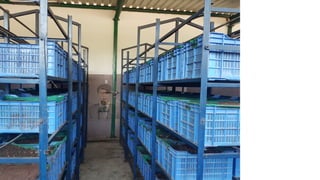
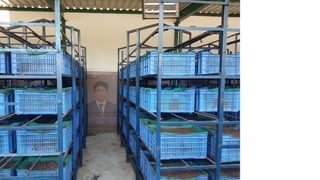
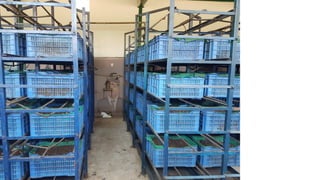
Quantity of waste in curing system: 100 kg/rack
Batch Time: 15 min
b) Loading:
Model: OWC 30= 15 kg/batch
Model: OWC 60= 25 kg/batch
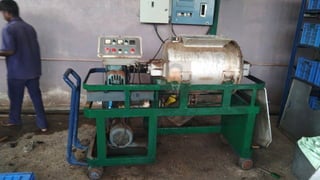
Model: OWC 130=50 kg/batch
Model: OWC 30=120 kg/batch
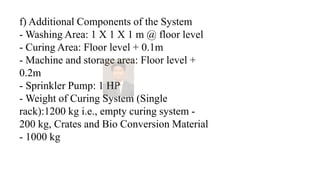
f) Additional Components of the System
- Washing Area: 1 X 1 X 1 m @ floor level
- Curing Area: Floor level + 0.1m
- Machine and storage area: Floor level +
0.2m
- Sprinkler Pump: 1 HP
- Weight of Curing System (Single
rack):1200 kg i.e., empty curing system -
200 kg, Crates and Bio Conversion Material
- 1000 kg
Safety
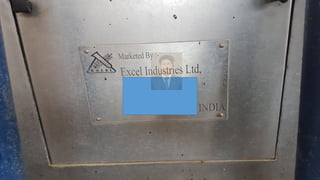
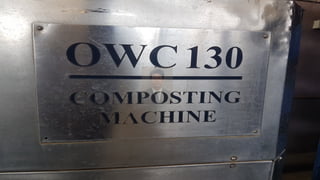
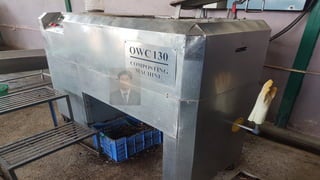
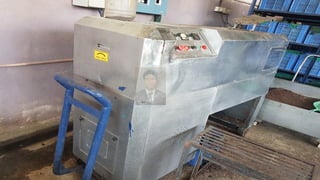
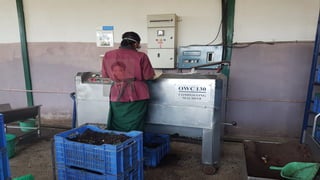
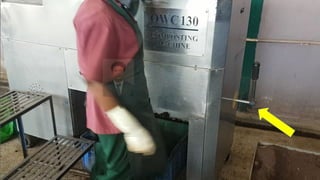
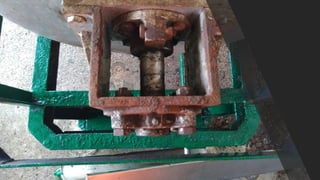
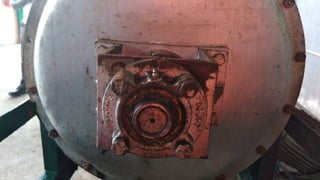
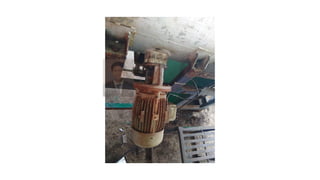
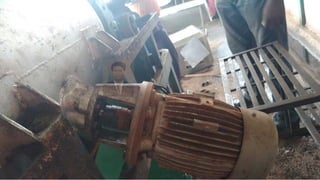
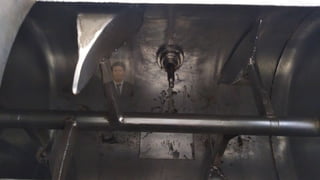
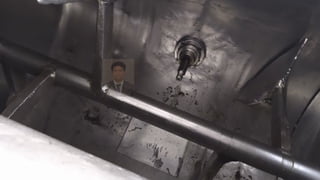
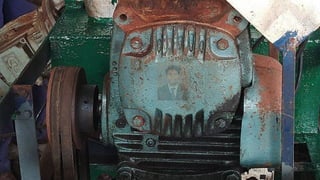
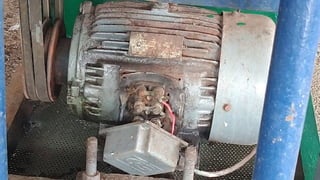
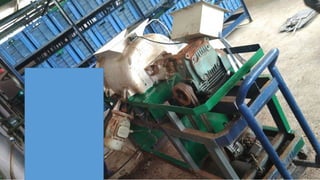
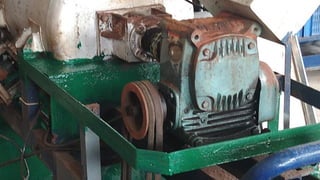
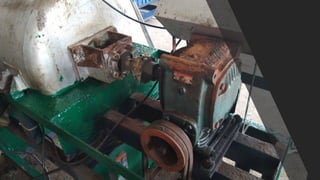
OWC 130
Machine
Thank You
Please Note-:
This Document is only a Knowledge based Document

Food waste management Process

  • 1.
  • 2.
  • 32.
    Waste Collection SystemPurpose: • Waste collection should be managed in systematic manner, it will improve the efficiency and reduce work load on field staffs. • staff will collect waste and hand it over to SWMPL unit on every evening. • FS should be wearing PPE during collecting waste from house keeping staff. • Below mentioned details should be noted in log book: • Source of waste (Block / Tower No.) • Collection time • Collected person • Total weight when handed over to SWMPL unit • Later waste is sent to respective sorting area.
  • 33.
    Dry waste sortingplace Purpose: • Dry waste sorting place should be cleaned and organized before beginning of work. Clean environment will improve productivity. • Dry waste sorting place should be cleaned every morning before starting work. • FS is deployed for this task. • FS should be wearing PPE during sweeping. • Soft broom is used for sweeping. • Floor should be kept ready for FS to start work by 9.45 AM. • Dry waste sorting place should be cleaned / swept before lunch. • Above mentioned steps should be repeated as and when required or whenever the area gets littered.
  • 40.
    Organic waste converterthe machine takes organic waste as input and to create manure in just two weeks of curing the processed waste is transformed into compliant manure that can be used on site in gardens or agriculture. The OWC uses proprietary technology to optimally homogenize, aerate and hydrate waste. The process is robust enough to handle an extremely wide ranges and grades of waste.
  • 47.
  • 48.
  • 52.
    Wet waste sortingplace Purpose: • Wet waste sorting place should be cleaned and organized before beginning of work. Clean environment will improve productivity. • Wet waste sorting place should be cleaned every morning before starting work. • 1 FS is deployed for this task. • FS should be wearing PPE during sweeping. • Soft broom is used for sweeping. • Use coconut broom if floor is wet. • Sorting table should be mopped, with soap oil and water. Setup should be kept ready for FS to start work by 9.55 AM. • Above mentioned steps should be repeated as and when required.
  • 56.
    OWC (Organic WasteConvertor) is an easy to use decentralized Waste Management System to turn large amounts of manure. Organic waste can be treated properly and can be used in the form of manure. Organic waste converter is used to treat the waste. It helps faster bio conversion of waste into organic manure or fuel pallets
  • 57.
    OWC machine Purpose: •Cleaning OWC machine clean before starting of work will help in removal of dust particles accumulated in and on machine. Cleanliness will improve efficiency of machine. • OWC machine should be cleaned every morning before starting work. • 1 FS is deployed for this task. • FS should be wearing PPE during sweeping. • Soft broom is used for sweeping around OWC machine. • Machine should be mopped by soft mop cloth. • Machine should be inspected for proper power input. • Setup should be kept ready for FS to start work by 10.15 AM. • Above mentioned steps should be repeated as and when required and after daily operation
  • 58.
    ORGANIC WASTE CONVERTER(200kg/day capacity Waste which is of plant, animal origin or man made food waste falls under organic waste stream. Organic waste can be treated properly and can be used in the form of manure. Organic waste converter is used to treat the waste. It helps faster bio conversion of waste into organic manure or fuel pallets.
  • 59.
    METHOD OF OPERATION CollectOrganic Waste in containers. * Feed the waste into to machine after draining excess water from food waste. * Mix culture and absorbent with food waste * Crush and mixing takes place in machine for 10 min * Repeat feeding batches till material finishes. * Collect crushed pulp for drying. * Ensure sufficient spreading for proper drying in the tray.
  • 60.
  • 61.
    Operation Sequence: 1. Firstcheck whether all switches except emergency switch are in “OFF” position start main Connection for OWC 2. Check the running of the machine by pressing ON / OFF switch off the machine for chopper and main motor. During ON the green lights will “GLOW” During this checking the selector switch must be on ‘hand’ mode 3. Switch off the chopper and process knobs. 4. Bring timer switch to “Manual mode”
  • 62.
    7. Do notoverload the machine with waste. 8. Ensure that hands are washed with soap after completion of operation. 9. Ensure all Electrical connections are in good condition. No loose connection / open wiring. 10. In case of accident get help from the security and inform site supervisor.
  • 63.
    STANDARD OPERATING PROCEDURE(SOP) Safety Requirements: 1. Keep adequate stock of required Personal Protective Equipment's (PPE) as listed below 2. Dust Mask, Surgical gloves, PVC gloves, Footwear. 3. Ensure PPE’s are worn by the operator before starting operation. 4. Do not override safety controls of Machine. 5. Do not open lid while machine in operation. 6. Do not insert hand in the mixing chamber until blades are completely stopped its rotation
  • 65.
    5. Place theempty crate with liner in the trolley. 6. Open the feeding lid of the machine 7. Check the bottom lid lever. It must be in closed position.
  • 66.
    8. Bring collectedsolid waste in buckets near the machine and check for any hard substance i.e., glass, iron, tablet & capsule foils long threaded parts etc. If it is observed remove the same before putting organic waste in the mixing chamber
  • 67.
    9. Feed theorganic waste by volume @ 10 liters x 2 buckets of food waste. 10. Close the lid and start mixer. Mix the content for 5 – 10 minutes.
  • 68.
    11. Feed Sawdust@ 20 to 25% by weight of the food waste. This quantity will depend on the moisture content in the waste (Sogginess of the waste
  • 69.
    12. Add BIOCULUM@ 1 gm / kg of the waste. (For bad smelling waste, the dosage required will be 1.5 gm /kg)
  • 70.
    13. Close thelid. Start the processor and chopper switch. 14. After 10 minutes Stop the machine Bring the selector to “hand” mode. Start the machine. Open the bottom drain valve by operating lever to “open” position. 15. Collect the treated organic waste in the crate placed in the trolley.
  • 71.
    16. Place thecrates in the treatment area.
  • 72.
    17. Repeat thebatches until the organic waste is finished. 18. Every day spray 750 ml of waste on the crates with Herbal Sanitizer. 19. Stop spraying water after 8 days. Allow 2 days for drying the material in the crate. 20. After 10th day put the material in the waste converter operate the machine for 2 minutes and unload the material in the crate
  • 73.
    21. Transfer thematerial from the crate into the storage bag or the material in soil (3:1) proportion and sow the viable seeds of leafy vegetables like spinach Methi coriander and check the germination. If got 75 – 100% germination it would be ready manure for application to the crops or garden
  • 74.
    22. After 15days use the same material as absorbent in suitable proportion (preferably 10:4 ratios) 23. Clean and wash the machine and surrounding of curing system with the help of herbal sanitizer every day
  • 80.
  • 83.
    Mixing Old PreProcessed manure with new batch of wet waste
  • 85.
    Bioculum Bioculum is aneffective, safe and environmentally sensitive facilitator of aerobic composting of organic waste. Bioculum speeds up natural composting process and rapidly converts waste into a rich manure.
  • 87.
  • 89.
    Getting the Finalprocessed manure
  • 91.
    SPECIFICATIONS: a) Calculation: Consider wastegenerated = 0.2 kg/person Total waste to be treated = 0.2 kg X Population Generally waste considered is 1 kg/apartment Quantity of waste in curing system: 100 kg/rack Batch Time: 15 min b) Loading: Model: OWC 30= 15 kg/batch Model: OWC 60= 25 kg/batch Model: OWC 130=50 kg/batch Model: OWC 30=120 kg/batch
  • 93.
    f) Additional Componentsof the System - Washing Area: 1 X 1 X 1 m @ floor level - Curing Area: Floor level + 0.1m - Machine and storage area: Floor level + 0.2m - Sprinkler Pump: 1 HP - Weight of Curing System (Single rack):1200 kg i.e., empty curing system - 200 kg, Crates and Bio Conversion Material - 1000 kg
  • 98.
  • 107.
  • 140.
    Thank You Please Note-: ThisDocument is only a Knowledge based Document