FOOD SAFETYCHAPTER 3
ObjectivesHow food contamination occursWhy food contamination occursIdentify stages of food preparation where food  spoilage occursDescribe and apply safe practices in stages of food preparation
FOOD CONTAMINATIONSection 1
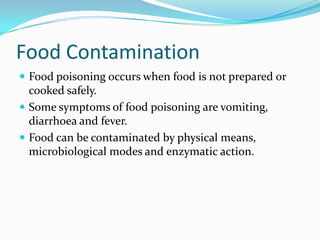
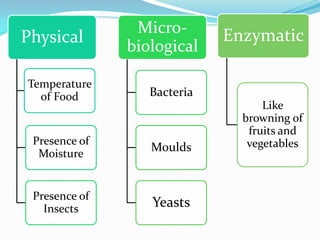
Food ContaminationFood poisoning occurs when food is not prepared or cooked safely.Some symptoms of food poisoning are vomiting, diarrhoea and fever.Food can be contaminated by physical means, microbiological modes and enzymatic action.
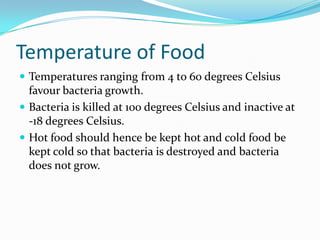
Temperature of FoodTemperatures ranging from 4 to 60 degrees Celsius favour bacteria growth.Bacteria is killed at 100 degrees Celsius and inactive at -18 degrees Celsius.Hot food should hence be kept hot and cold food be kept cold so that bacteria is destroyed and bacteria does not grow.
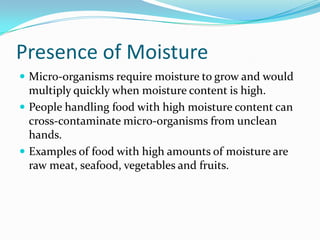
Presence of MoistureMicro-organisms require moisture to grow and would multiply quickly when moisture content is high.People handling food with high moisture content can cross-contaminate micro-organisms from unclean hands.Examples of food with high amounts of moisture are raw meat, seafood, vegetables and fruits.
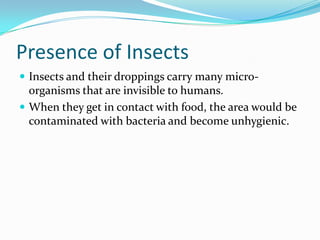
Presence of InsectsInsects and their droppings carry many micro-organisms that are invisible to humans.When they get in contact with food, the area would be contaminated with bacteria and become unhygienic.
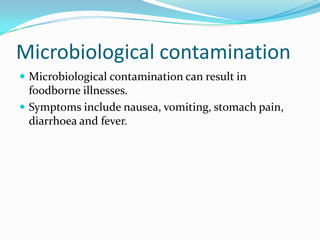
Microbiological contaminationMicrobiological contamination can result in foodborne illnesses.Symptoms include nausea, vomiting, stomach pain, diarrhoea and fever.
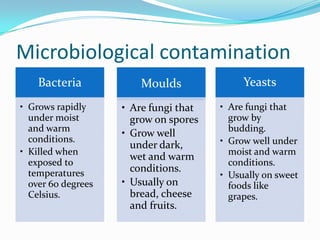
Microbiological contamination
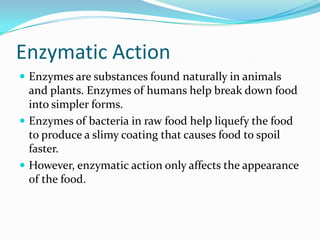
Enzymatic ActionEnzymes are substances found naturally in animals and plants. Enzymes of humans help break down food into simpler forms.Enzymes of bacteria in raw food help liquefy the food to produce a slimy coating that causes food to spoil faster.However, enzymatic action only affects the appearance of the food.
FOOD SPOILAGESection 2
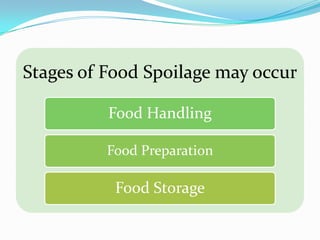
Food SpoilageFood spoilage can occur anytime such as during food handling, food preparation and food storage.Wrong practices at any stage can introduce micro-organisms into the food.
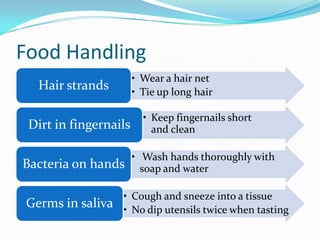
Food Handling
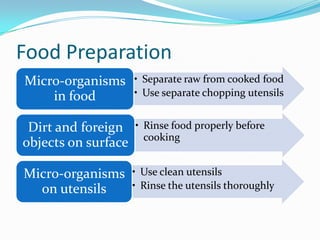
Food Preparation
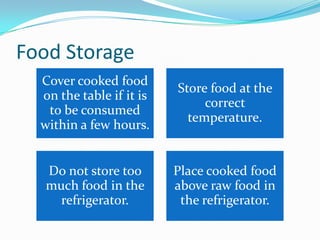
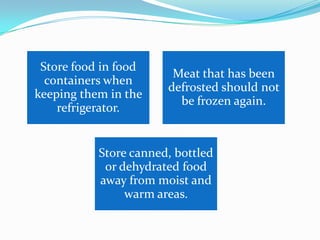
Food Storage
END

Food Safety

  • 1.
  • 2.
    ObjectivesHow food contaminationoccursWhy food contamination occursIdentify stages of food preparation where food spoilage occursDescribe and apply safe practices in stages of food preparation
  • 3.
  • 4.
    Food ContaminationFood poisoningoccurs when food is not prepared or cooked safely.Some symptoms of food poisoning are vomiting, diarrhoea and fever.Food can be contaminated by physical means, microbiological modes and enzymatic action.
  • 6.
    Temperature of FoodTemperaturesranging from 4 to 60 degrees Celsius favour bacteria growth.Bacteria is killed at 100 degrees Celsius and inactive at -18 degrees Celsius.Hot food should hence be kept hot and cold food be kept cold so that bacteria is destroyed and bacteria does not grow.
  • 7.
    Presence of MoistureMicro-organismsrequire moisture to grow and would multiply quickly when moisture content is high.People handling food with high moisture content can cross-contaminate micro-organisms from unclean hands.Examples of food with high amounts of moisture are raw meat, seafood, vegetables and fruits.
  • 8.
    Presence of InsectsInsectsand their droppings carry many micro-organisms that are invisible to humans.When they get in contact with food, the area would be contaminated with bacteria and become unhygienic.
  • 9.
    Microbiological contaminationMicrobiological contaminationcan result in foodborne illnesses.Symptoms include nausea, vomiting, stomach pain, diarrhoea and fever.
  • 10.
  • 11.
    Enzymatic ActionEnzymes aresubstances found naturally in animals and plants. Enzymes of humans help break down food into simpler forms.Enzymes of bacteria in raw food help liquefy the food to produce a slimy coating that causes food to spoil faster.However, enzymatic action only affects the appearance of the food.
  • 12.
  • 13.
    Food SpoilageFood spoilagecan occur anytime such as during food handling, food preparation and food storage.Wrong practices at any stage can introduce micro-organisms into the food.
  • 15.
  • 16.
  • 17.
  • 19.