THE
BY K E NIA
M A R TINEZ A N D
L E O M OJ ICA
FOOD
Pyramid
EATING RIGHT... EVERY DAY!
• Good nutrition will give your body energy and
help you grow.
• Make “smart” choices from every food group.
• Eating foods from the Food Pyramid and being
physically active will help you grow healthy and
strong!
• A balanced diet is one that includes all the food
groups.
• We are going to explore the food guide pyramid
to learn about the food groups.
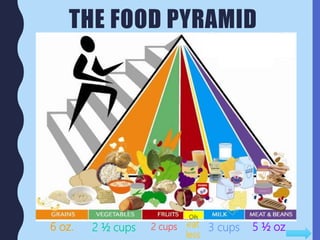
Grains
6 oz.
Vegetables
2 ½ cups
Fruits
2 cups
Milk
3 cups
Meat &
Beans
5 ½ oz.
THE FOOD PYRAMID
Oils
eat
less
Oils
FRUITS
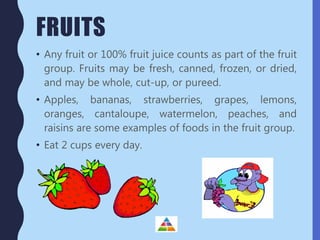
• Any fruit or 100% fruit juice counts as part of the fruit
group. Fruits may be fresh, canned, frozen, or dried,
and may be whole, cut-up, or pureed.
• Apples, bananas, strawberries, grapes, lemons,
oranges, cantaloupe, watermelon, peaches, and
raisins are some examples of foods in the fruit group.
• Eat 2 cups every day.
VEGETABLES
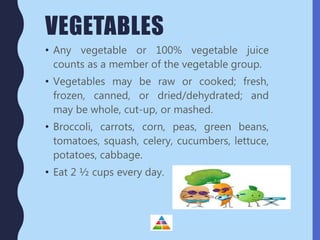
• Any vegetable or 100% vegetable juice
counts as a member of the vegetable group.
• Vegetables may be raw or cooked; fresh,
frozen, canned, or dried/dehydrated; and
may be whole, cut-up, or mashed.
• Broccoli, carrots, corn, peas, green beans,
tomatoes, squash, celery, cucumbers, lettuce,
potatoes, cabbage.
• Eat 2 ½ cups every day.
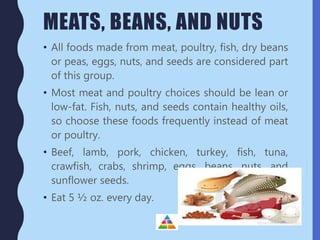
MEATS, BEANS, AND NUTS
• All foods made from meat, poultry, fish, dry beans
or peas, eggs, nuts, and seeds are considered part
of this group.
• Most meat and poultry choices should be lean or
low-fat. Fish, nuts, and seeds contain healthy oils,
so choose these foods frequently instead of meat
or poultry.
• Beef, lamb, pork, chicken, turkey, fish, tuna,
crawfish, crabs, shrimp, eggs, beans, nuts, and
sunflower seeds.
• Eat 5 ½ oz. every day.
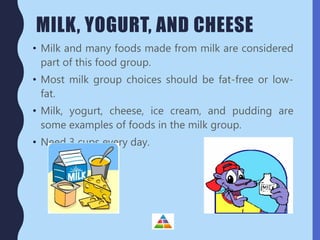
MILK, YOGURT, AND CHEESE
• Milk and many foods made from milk are considered
part of this food group.
• Most milk group choices should be fat-free or low-
fat.
• Milk, yogurt, cheese, ice cream, and pudding are
some examples of foods in the milk group.
• Need 3 cups every day.
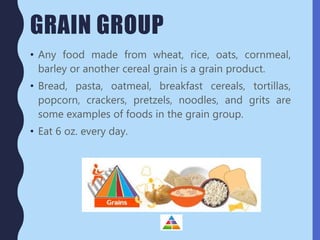
GRAIN GROUP
• Any food made from wheat, rice, oats, cornmeal,
barley or another cereal grain is a grain product.
• Bread, pasta, oatmeal, breakfast cereals, tortillas,
popcorn, crackers, pretzels, noodles, and grits are
some examples of foods in the grain group.
• Eat 6 oz. every day.
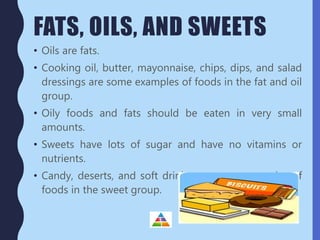
FATS, OILS, AND SWEETS
• Oils are fats.
• Cooking oil, butter, mayonnaise, chips, dips, and salad
dressings are some examples of foods in the fat and oil
group.
• Oily foods and fats should be eaten in very small
amounts.
• Sweets have lots of sugar and have no vitamins or
nutrients.
• Candy, deserts, and soft drinks are some examples of
foods in the sweet group.
SNACKS
• When you get hungry between meals,
choose a healthy snack.
• Any fruit or 100% fruit juice, water, or dried
fruit, like raisins, would be healthy choices.
• Remember . . . fewer sweets, candy, and soft
drinks.
EAT WELL AND STAY HEALTHY!
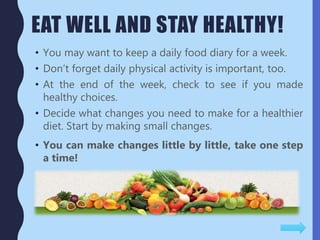
• You may want to keep a daily food diary for a week.
• Don’t forget daily physical activity is important, too.
• At the end of the week, check to see if you made
healthy choices.
• Decide what changes you need to make for a healthier
diet. Start by making small changes.
• You can make changes little by little, take one step
a time!
FOLLOW THESE STEPS FOR A HEALTHIER
YOU!
• Make smart choices from every food group.
• Don’t forget the physical activity.
And . . .
• You will feel better today.
• You will stay healthy for tomorrow.
Food pyramid

Food pyramid

  • 1.
    THE BY K ENIA M A R TINEZ A N D L E O M OJ ICA FOOD Pyramid
  • 2.
    EATING RIGHT... EVERYDAY! • Good nutrition will give your body energy and help you grow. • Make “smart” choices from every food group. • Eating foods from the Food Pyramid and being physically active will help you grow healthy and strong! • A balanced diet is one that includes all the food groups. • We are going to explore the food guide pyramid to learn about the food groups.
  • 3.
    Grains 6 oz. Vegetables 2 ½cups Fruits 2 cups Milk 3 cups Meat & Beans 5 ½ oz. THE FOOD PYRAMID Oils eat less Oils
  • 4.
    FRUITS • Any fruitor 100% fruit juice counts as part of the fruit group. Fruits may be fresh, canned, frozen, or dried, and may be whole, cut-up, or pureed. • Apples, bananas, strawberries, grapes, lemons, oranges, cantaloupe, watermelon, peaches, and raisins are some examples of foods in the fruit group. • Eat 2 cups every day.
  • 5.
    VEGETABLES • Any vegetableor 100% vegetable juice counts as a member of the vegetable group. • Vegetables may be raw or cooked; fresh, frozen, canned, or dried/dehydrated; and may be whole, cut-up, or mashed. • Broccoli, carrots, corn, peas, green beans, tomatoes, squash, celery, cucumbers, lettuce, potatoes, cabbage. • Eat 2 ½ cups every day.
  • 6.
    MEATS, BEANS, ANDNUTS • All foods made from meat, poultry, fish, dry beans or peas, eggs, nuts, and seeds are considered part of this group. • Most meat and poultry choices should be lean or low-fat. Fish, nuts, and seeds contain healthy oils, so choose these foods frequently instead of meat or poultry. • Beef, lamb, pork, chicken, turkey, fish, tuna, crawfish, crabs, shrimp, eggs, beans, nuts, and sunflower seeds. • Eat 5 ½ oz. every day.
  • 7.
    MILK, YOGURT, ANDCHEESE • Milk and many foods made from milk are considered part of this food group. • Most milk group choices should be fat-free or low- fat. • Milk, yogurt, cheese, ice cream, and pudding are some examples of foods in the milk group. • Need 3 cups every day.
  • 8.
    GRAIN GROUP • Anyfood made from wheat, rice, oats, cornmeal, barley or another cereal grain is a grain product. • Bread, pasta, oatmeal, breakfast cereals, tortillas, popcorn, crackers, pretzels, noodles, and grits are some examples of foods in the grain group. • Eat 6 oz. every day.
  • 9.
    FATS, OILS, ANDSWEETS • Oils are fats. • Cooking oil, butter, mayonnaise, chips, dips, and salad dressings are some examples of foods in the fat and oil group. • Oily foods and fats should be eaten in very small amounts. • Sweets have lots of sugar and have no vitamins or nutrients. • Candy, deserts, and soft drinks are some examples of foods in the sweet group.
  • 10.
    SNACKS • When youget hungry between meals, choose a healthy snack. • Any fruit or 100% fruit juice, water, or dried fruit, like raisins, would be healthy choices. • Remember . . . fewer sweets, candy, and soft drinks.
  • 11.
    EAT WELL ANDSTAY HEALTHY! • You may want to keep a daily food diary for a week. • Don’t forget daily physical activity is important, too. • At the end of the week, check to see if you made healthy choices. • Decide what changes you need to make for a healthier diet. Start by making small changes. • You can make changes little by little, take one step a time!
  • 12.
    FOLLOW THESE STEPSFOR A HEALTHIER YOU! • Make smart choices from every food group. • Don’t forget the physical activity. And . . . • You will feel better today. • You will stay healthy for tomorrow.