TOPIC
1
INTRODUCTION TO
FOOD SAFETY
WHAT IS FOOD SAFETY?
2
Food
Any substance, may it be
processed, semi-
processed, or raw, which
is intended for human
consumption.
Safety
The condition of
being protected
from or unlikely to
cause danger, risk, or
injury.
Food Safety
A scientific discipline describing
handling, preparation, and storage
of food in ways that prevent
foodborne illness. It is the assurance
that food will not cause harm to the
consumers when it is prepared and or
eaten to its intended use.
TOPIC
2
HOW FOOD BECOMES
UNSAFE
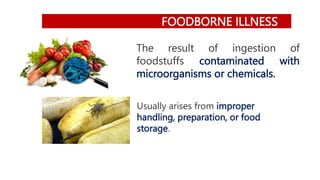
FOODBORNE ILLNESS
The result of ingestion of
foodstuffs contaminated with
microorganisms or chemicals.
Usually arises from improper
handling, preparation, or food
storage.
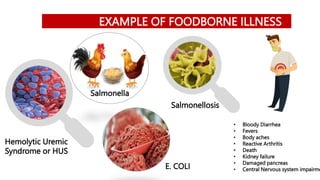
EXAMPLE OF FOODBORNE ILLNESS
Salmonella
Salmonellosis
• Bloody Diarrhea
• Fevers
• Body aches
• Reactive Arthritis
• Death
• Kidney failure
• Damaged pancreas
• Central Nervous system impairme
Hemolytic Uremic
Syndrome or HUS
E. COLI
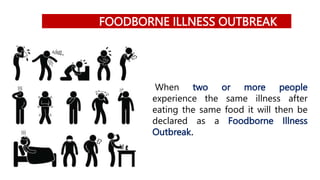
FOODBORNE ILLNESS OUTBREAK
When two or more people
experience the same illness after
eating the same food it will then be
declared as a Foodborne Illness
Outbreak.
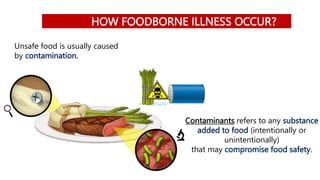
HOW FOODBORNE ILLNESS OCCUR?
Unsafe food is usually caused
by contamination.
Contaminants refers to any substance
added to food (intentionally or
unintentionally)
that may compromise food safety.
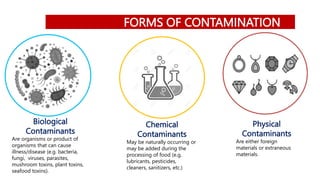
FORMS OF CONTAMINATION
Biological
Contaminants
Are organisms or product of
organisms that can cause
illness/disease (e.g. bacteria,
fungi, viruses, parasites,
mushroom toxins, plant toxins,
seafood toxins).
Chemical
Contaminants
May be naturally occurring or
may be added during the
processing of food (e.g.
lubricants, pesticides,
cleaners, sanitizers, etc.)
Physical
Contaminants
Are either foreign
materials or extraneous
materials.
Among the three categories, do you
know that 95% of foodborne illness
are due to BIOLOGICAL
CONTAMINANTS?
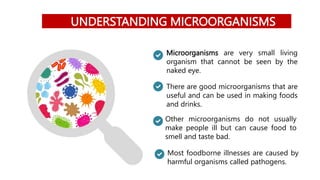
UNDERSTANDING MICROORGANISMS
Microorganisms are very small living
organism that cannot be seen by the
naked eye.
There are good microorganisms that are
useful and can be used in making foods
and drinks.
Other microorganisms do not usually
make people ill but can cause food to
smell and taste bad.
Most foodborne illnesses are caused by
harmful organisms called pathogens.
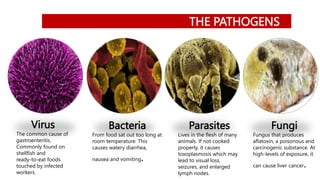
THE PATHOGENS
Fungi
Fungus that produces
aflatoxin, a poisonous and
carcinogenic substance. At
high-levels of exposure, it
can cause liver cancer.
Parasites
Lives in the flesh of many
animals. If not cooked
properly, it causes
toxoplasmosis which may
lead to visual loss,
seizures, and enlarged
lymph nodes.
Bacteria
From food sat out too long at
room temperature. This
causes watery diarrhea,
nausea and vomiting.
Virus
The common cause of
gastroenteritis.
Commonly found on
shellfish and
ready-to-eat foods
touched by infected
workers.
Of these pathogens, BACTERIA is
the most common cause of
foodborne illness outbreaks.
Bacteria can easily grow and
multiply.
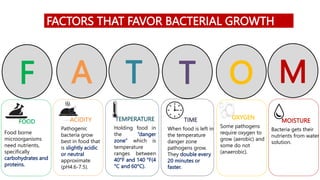
FACTORS THAT FAVOR BACTERIAL GROWTH
FOOD
Food borne
microorganisms
need nutrients,
specifically
carbohydrates and
proteins.
F A T T O M
ACIDITY
Pathogenic
bacteria grow
best in food that
is slightly acidic
or neutral
approximate
(pH4.6-7.5).
TEMPERATURE
Holding food in
the “danger
zone” which is
temperature
ranges between
40°F and 140 °F(4
°C and 60°C).
TIME
When food is left in
the temperature
danger zone
pathogens grow.
They double every
20 minutes or
faster.
OXYGEN
Some pathogens
require oxygen to
grow (aerobic) and
some do not
(anaerobic).
MOISTURE
Bacteria gets their
nutrients from water
solution.
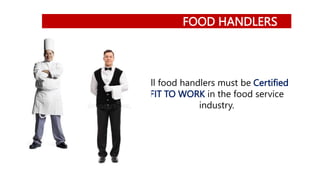
FOOD HANDLERS
All food handlers must be Certified
FIT TO WORK in the food service
industry.
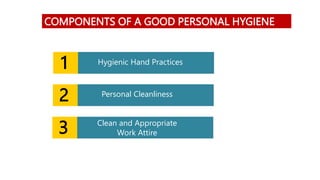
1 Hygienic Hand Practices
2 Personal Cleanliness
3 Clean and Appropriate
Work Attire
COMPONENTS OF A GOOD PERSONAL HYGIENE
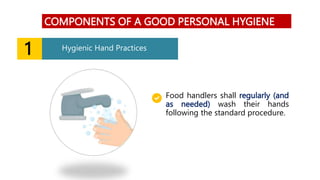
1 Hygienic Hand Practices
Food handlers shall regularly (and
as needed) wash their hands
following the standard procedure.
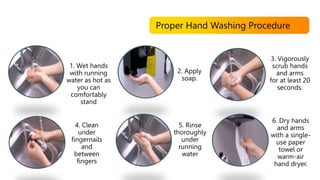
1. Wet hands
with running
water as hot as
you can
comfortably
stand
2. Apply
soap.
4. Clean
under
fingernails
and
between
fingers
3. Vigorously
scrub hands
and arms
for at least 20
seconds.
5. Rinse
thoroughly
under
running
water
6. Dry hands
and arms
with a single-
use paper
towel or
warm-air
hand dryer.
Proper Hand Washing Procedure
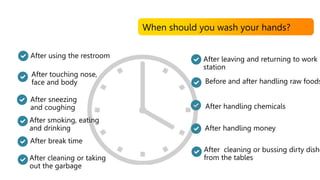
When should you wash your hands?
After using the restroom
After touching nose,
face and body
After sneezing
and coughing
After smoking, eating
and drinking
After break time
After cleaning or taking
out the garbage
After leaving and returning to work
station
Before and after handling raw foods
After handling chemicals
After handling money
After cleaning or bussing dirty dishe
from the tables
COMPONENTS OF A GOOD PERSONAL HYGIENE
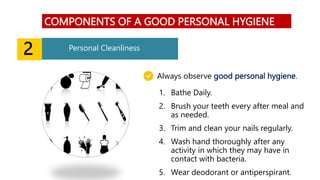
2 Personal Cleanliness
1. Bathe Daily.
2. Brush your teeth every after meal and
as needed.
3. Trim and clean your nails regularly.
4. Wash hand thoroughly after any
activity in which they may have in
contact with bacteria.
5. Wear deodorant or antiperspirant.
Always observe good personal hygiene.
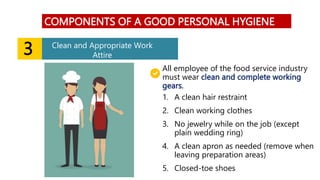
3 Clean and Appropriate Work
Attire
COMPONENTS OF A GOOD PERSONAL HYGIENE
1. A clean hair restraint
2. Clean working clothes
3. No jewelry while on the job (except
plain wedding ring)
4. A clean apron as needed (remove when
leaving preparation areas)
5. Closed-toe shoes
All employee of the food service industry
must wear clean and complete working
gears.
KEY TAKEAWAYS
• Food safety is the assurance that all people involved in handling
food must be a certified safe Food Handler.
• Foodborne illness is most often caused by cross-contamination of
some form, and therefore effective steps must be taken to
prevent the transfer of contaminants at every stage of the
production process.
• FATTOM is a critical to manage food safety—by properly
handling, heating and cooling foods, and limiting the time
potential hazardous foods spend in the danger zone.
• Personal hygiene, are one of the areas to scrutinize when
considering an operations ability to control cross-contamination.
ACTIVITIES
• Go to your PC, laptop or cellphone browser.
• Enter - https://quizizz.com
• Enter the quizizz code:
• Click “Join a Game”
• Enter your Complete Name: Polido, Hanna Vi B.
• Click Start Game.
THANK YOU!

Module 1 - Food Safety [Autosaved].pptx

  • 1.
  • 2.
    WHAT IS FOODSAFETY? 2 Food Any substance, may it be processed, semi- processed, or raw, which is intended for human consumption. Safety The condition of being protected from or unlikely to cause danger, risk, or injury. Food Safety A scientific discipline describing handling, preparation, and storage of food in ways that prevent foodborne illness. It is the assurance that food will not cause harm to the consumers when it is prepared and or eaten to its intended use.
  • 3.
  • 4.
    FOODBORNE ILLNESS The resultof ingestion of foodstuffs contaminated with microorganisms or chemicals. Usually arises from improper handling, preparation, or food storage.
  • 5.
    EXAMPLE OF FOODBORNEILLNESS Salmonella Salmonellosis • Bloody Diarrhea • Fevers • Body aches • Reactive Arthritis • Death • Kidney failure • Damaged pancreas • Central Nervous system impairme Hemolytic Uremic Syndrome or HUS E. COLI
  • 6.
    FOODBORNE ILLNESS OUTBREAK Whentwo or more people experience the same illness after eating the same food it will then be declared as a Foodborne Illness Outbreak.
  • 7.
    HOW FOODBORNE ILLNESSOCCUR? Unsafe food is usually caused by contamination. Contaminants refers to any substance added to food (intentionally or unintentionally) that may compromise food safety.
  • 8.
    FORMS OF CONTAMINATION Biological Contaminants Areorganisms or product of organisms that can cause illness/disease (e.g. bacteria, fungi, viruses, parasites, mushroom toxins, plant toxins, seafood toxins). Chemical Contaminants May be naturally occurring or may be added during the processing of food (e.g. lubricants, pesticides, cleaners, sanitizers, etc.) Physical Contaminants Are either foreign materials or extraneous materials.
  • 9.
    Among the threecategories, do you know that 95% of foodborne illness are due to BIOLOGICAL CONTAMINANTS?
  • 10.
    UNDERSTANDING MICROORGANISMS Microorganisms arevery small living organism that cannot be seen by the naked eye. There are good microorganisms that are useful and can be used in making foods and drinks. Other microorganisms do not usually make people ill but can cause food to smell and taste bad. Most foodborne illnesses are caused by harmful organisms called pathogens.
  • 11.
    THE PATHOGENS Fungi Fungus thatproduces aflatoxin, a poisonous and carcinogenic substance. At high-levels of exposure, it can cause liver cancer. Parasites Lives in the flesh of many animals. If not cooked properly, it causes toxoplasmosis which may lead to visual loss, seizures, and enlarged lymph nodes. Bacteria From food sat out too long at room temperature. This causes watery diarrhea, nausea and vomiting. Virus The common cause of gastroenteritis. Commonly found on shellfish and ready-to-eat foods touched by infected workers.
  • 12.
    Of these pathogens,BACTERIA is the most common cause of foodborne illness outbreaks. Bacteria can easily grow and multiply.
  • 13.
    FACTORS THAT FAVORBACTERIAL GROWTH FOOD Food borne microorganisms need nutrients, specifically carbohydrates and proteins. F A T T O M ACIDITY Pathogenic bacteria grow best in food that is slightly acidic or neutral approximate (pH4.6-7.5). TEMPERATURE Holding food in the “danger zone” which is temperature ranges between 40°F and 140 °F(4 °C and 60°C). TIME When food is left in the temperature danger zone pathogens grow. They double every 20 minutes or faster. OXYGEN Some pathogens require oxygen to grow (aerobic) and some do not (anaerobic). MOISTURE Bacteria gets their nutrients from water solution.
  • 14.
    FOOD HANDLERS All foodhandlers must be Certified FIT TO WORK in the food service industry.
  • 15.
    1 Hygienic HandPractices 2 Personal Cleanliness 3 Clean and Appropriate Work Attire COMPONENTS OF A GOOD PERSONAL HYGIENE
  • 16.
    COMPONENTS OF AGOOD PERSONAL HYGIENE 1 Hygienic Hand Practices Food handlers shall regularly (and as needed) wash their hands following the standard procedure.
  • 17.
    1. Wet hands withrunning water as hot as you can comfortably stand 2. Apply soap. 4. Clean under fingernails and between fingers 3. Vigorously scrub hands and arms for at least 20 seconds. 5. Rinse thoroughly under running water 6. Dry hands and arms with a single- use paper towel or warm-air hand dryer. Proper Hand Washing Procedure
  • 18.
    When should youwash your hands? After using the restroom After touching nose, face and body After sneezing and coughing After smoking, eating and drinking After break time After cleaning or taking out the garbage After leaving and returning to work station Before and after handling raw foods After handling chemicals After handling money After cleaning or bussing dirty dishe from the tables
  • 19.
    COMPONENTS OF AGOOD PERSONAL HYGIENE 2 Personal Cleanliness 1. Bathe Daily. 2. Brush your teeth every after meal and as needed. 3. Trim and clean your nails regularly. 4. Wash hand thoroughly after any activity in which they may have in contact with bacteria. 5. Wear deodorant or antiperspirant. Always observe good personal hygiene.
  • 20.
    3 Clean andAppropriate Work Attire COMPONENTS OF A GOOD PERSONAL HYGIENE 1. A clean hair restraint 2. Clean working clothes 3. No jewelry while on the job (except plain wedding ring) 4. A clean apron as needed (remove when leaving preparation areas) 5. Closed-toe shoes All employee of the food service industry must wear clean and complete working gears.
  • 21.
    KEY TAKEAWAYS • Foodsafety is the assurance that all people involved in handling food must be a certified safe Food Handler. • Foodborne illness is most often caused by cross-contamination of some form, and therefore effective steps must be taken to prevent the transfer of contaminants at every stage of the production process. • FATTOM is a critical to manage food safety—by properly handling, heating and cooling foods, and limiting the time potential hazardous foods spend in the danger zone. • Personal hygiene, are one of the areas to scrutinize when considering an operations ability to control cross-contamination.
  • 22.
    ACTIVITIES • Go toyour PC, laptop or cellphone browser. • Enter - https://quizizz.com • Enter the quizizz code: • Click “Join a Game” • Enter your Complete Name: Polido, Hanna Vi B. • Click Start Game.
  • 23.

Editor's Notes

  • #3 In short - Assurance or guarantee that food will not cause harm to the consumers when it is prepared and/ or eaten to its intended use.
  • #5 Source: WHO The contamination of food may occur at any stage in the process from food production to consumption (“farm to fork”) and can result from environmental contamination, including pollution of water, soil or air. 5 Factors Contributing to the Foodborne Illness in the Philippines Improper food storage temperature Poor hygiene practices Inadequate cooking Use of dirty utensils and equipment Eating of expired and sewage contaminated food
  • #6 CAUSE – ILLNESS – EFFECT (HUMAN HEALTH) Salmonella - Food may be contaminated during food processing or food handling. Food may become contaminated by the unwashed hands of an infected food handler. A frequent cause is a food handler who does not wash his or her hands with soap after using the bathroom. SALMONELLOSIS from Salmonella can cause: Bloody Diarrhea Fevers Body aches Headaches Reactive Arthritis Typhoid-like symptoms Death
  • #8 WHY? WHAT?
  • #10 With that, let’s learn more about this biological contaminants or microorganisms.
  • #11 Example of good micro: 1. Yeasts are considered to be the primary spoilage microbes in carbonated products, mainly due to their ability to resist high carbonation and low pH levels 2. Yakult  s a probiotic milk beverage fermented with the bacteria strain Lactobacillus which is good in digestion. 3. Cheese is made with microorganisms which convert the milk sugar to an acid.
  • #12 Fun-gi
  • #13 Now, in order to keep the food that you serve in your store safe from these harmful bacteria, you need to understand the Factors that favor bacterial growth. Next slide.