Lecture 14
Food borne pathogens and
microbial toxins
1.Introduction
• Global burden- high morbidity and mortality
• Infectious diarrhoea- 3 to 5 billion cases and 1.8 million
deaths annually
• CDC- 76 million cases of food borne diseases in US annually
with appx.5000 deaths
• In India- Integrated disease surveillance Project (IDSP) -
Food poisoning outbreak reporting increased to more than
double in 2009 from 2008 (120 in 2009 and 50 in 2008)
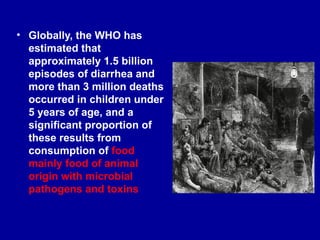
• Globally, the WHO has
estimated that
approximately 1.5 billion
episodes of diarrhea and
more than 3 million deaths
occurred in children under
5 years of age, and a
significant proportion of
these results from
consumption of food
mainly food of animal
origin with microbial
pathogens and toxins
Symptoms of food poisoning
Food poisoning can be mild or severe.
The symptoms will be different depending on what type of
bacteria is responsible.
Common symptoms include:
• severe vomiting;
• diarrhoea;
• exhaustion;
• headache;
• fever;
• abdominal pain;
• tiredness.
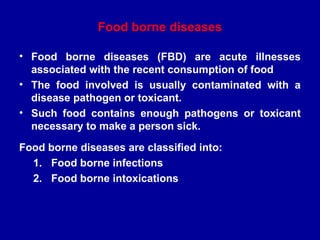
Food borne diseases
• Food borne diseases (FBD) are acute illnesses
associated with the recent consumption of food
• The food involved is usually contaminated with a
disease pathogen or toxicant.
• Such food contains enough pathogens or toxicant
necessary to make a person sick.
Food borne diseases are classified into:
1. Food borne infections
2. Food borne intoxications
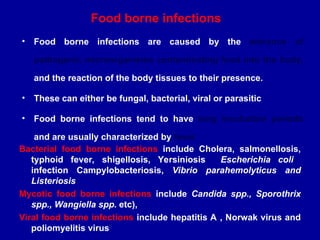
Food borne infections
• Food borne infections are caused by the entrance of
pathogenic microorganisms contaminating food into the body,
and the reaction of the body tissues to their presence.
• These can either be fungal, bacterial, viral or parasitic
• Food borne infections tend to have long incubation periods
and are usually characterized by fever
Bacterial food borne infections include Cholera, salmonellosis,
typhoid fever, shigellosis, Yersiniosis Escherichia coli
infection Campylobacteriosis, Vibrio parahemolyticus and
Listeriosis
Mycotic food borne infections include Candida spp., Sporothrix
spp., Wangiella spp. etc),
Viral food borne infections include hepatitis A , Norwak virus and
poliomyelitis virus
Food borne intoxications
Foodborne infection is caused by the ingestion of
food containing live bacteria which grow and
establish themselves in the human intestinal tract.
Foodborne intoxication is caused by ingesting food
containing toxins formed by bacteria which resulted
from the bacterial growth in the food item. The live
microorganism does not have to be consumed.
A combination of intoxication, infection and toxicoinfection,
collectively, can be recognized as food poisoning/ food borne
illness.
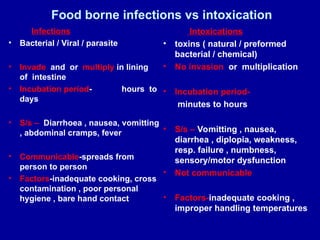
Food borne infections vs intoxication
Infections
• Bacterial / Viral / parasite
• Invade and or multiply in lining
of intestine
• Incubation period- hours to
days
• S/s – Diarrhoea , nausea, vomitting
, abdominal cramps, fever
• Communicable-spreads from
person to person
• Factors-inadequate cooking, cross
contamination , poor personal
hygiene , bare hand contact
Intoxications
• toxins ( natural / preformed
bacterial / chemical)
• No invasion or multiplication
• Incubation period-
minutes to hours
• S/s – Vomitting , nausea,
diarrhea , diplopia, weakness,
resp. failure , numbness,
sensory/motor dysfunction
• Not communicable
• Factors-inadequate cooking ,
improper handling temperatures
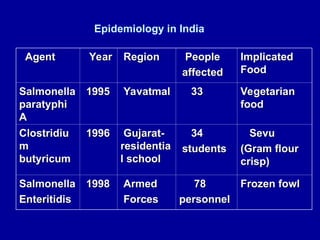
Epidemiology in India
Agent
Agent Year
Year Region
Region People
People
affected
affected
Implicated
Implicated
Food
Food
Salmonella
Salmonella
paratyphi
paratyphi
A
A
1995
1995 Yavatmal
Yavatmal 33
33 Vegetarian
Vegetarian
food
food
Clostridiu
Clostridiu
m
m
butyricum
butyricum
1996
1996 Gujarat-
Gujarat-
residentia
residentia
l school
l school
34
34
students
students
Sevu
Sevu
(Gram flour
(Gram flour
crisp)
crisp)
Salmonella
Salmonella
Enteritidis
Enteritidis
1998
1998 Armed
Armed
Forces
Forces
78
78
personnel
personnel
Frozen fowl
Frozen fowl
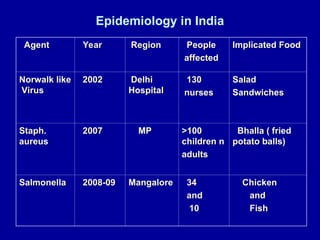
Epidemiology in India
Agent
Agent Year
Year Region
Region People
People
affected
affected
Implicated Food
Implicated Food
Norwalk like
Norwalk like
Virus
Virus
2002
2002 Delhi
Delhi
Hospital
Hospital
130
130
nurses
nurses
Salad
Salad
Sandwiches
Sandwiches
Staph.
Staph.
aureus
aureus
2007
2007 MP
MP >100
>100
children n
children n
adults
adults
Bhalla ( fried
Bhalla ( fried
potato balls)
potato balls)
Salmonella
Salmonella 2008-09
2008-09 Mangalore
Mangalore 34
34
and
and
10
10
Chicken
Chicken
and
and
Fish
Fish
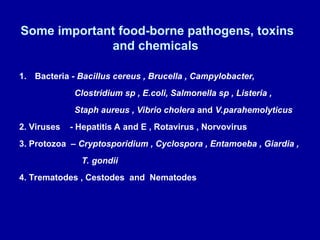
Some important food-borne pathogens, toxins
and chemicals
1. Bacteria - Bacillus cereus , Brucella , Campylobacter,
Clostridium sp , E.coli, Salmonella sp , Listeria ,
Staph aureus , Vibrio cholera and V.parahemolyticus
2. Viruses - Hepatitis A and E , Rotavirus , Norvovirus
3. Protozoa – Cryptosporidium , Cyclospora , Entamoeba , Giardia ,
T. gondii
4. Trematodes , Cestodes and Nematodes
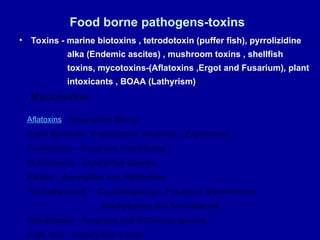
Food borne pathogens-toxins
• Toxins - marine biotoxins , tetrodotoxin (puffer fish), pyrrolizidine
alka (Endemic ascites) , mushroom toxins , shellfish
toxins, mycotoxins-(Aflatoxins ,Ergot and Fusarium), plant
intoxicants , BOAA (Lathyrism)
Mycotoxins
Aflatoxins - Aspergillus flavus
Ergot alkaloids / Ergopeptine alkaloids – Ergotamine
Fumonisins -- Fusarium moniliforme
Ochratoxins - Aspergillus species
Patulin - Aspergillus and Penicillium
Trichothecenes -- Cephalosporium, Fusarium, Myrothecium,
Stachybotrys and Trichoderma
Zearalenone - Fusarium and Gibberella species
Kojic acid - Aspergillus oryzae
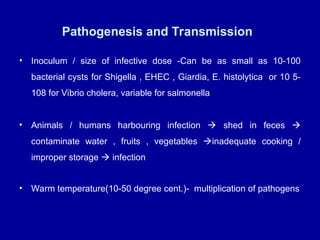
Pathogenesis and Transmission
• Inoculum / size of infective dose -Can be as small as 10-100
bacterial cysts for Shigella , EHEC , Giardia, E. histolytica or 10 5-
108 for Vibrio cholera, variable for salmonella
• Animals / humans harbouring infection  shed in feces 
contaminate water , fruits , vegetables inadequate cooking /
improper storage  infection
• Warm temperature(10-50 degree cent.)- multiplication of pathogens
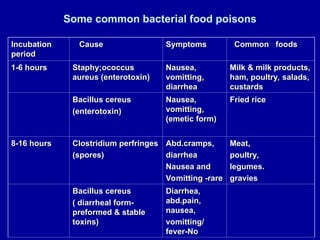
Some common bacterial food poisons
Incubation
Incubation
period
period
Cause
Cause Symptoms
Symptoms Common foods
Common foods
1-6 hours
1-6 hours Staphy;ococcus
Staphy;ococcus
aureus (enterotoxin)
Nausea,
Nausea,
vomitting,
vomitting,
diarrhea
diarrhea
Milk & milk products,
ham, poultry, salads,
custards
custards
Bacillus cereus
Bacillus cereus
(enterotoxin)
(enterotoxin)
Nausea,
Nausea,
vomitting,
vomitting,
(emetic form)
(emetic form)
Fried rice
Fried rice
8-16 hours
8-16 hours Clostridium perfringes
Clostridium perfringes
(spores)
(spores)
Abd.cramps,
Abd.cramps,
diarrhea
diarrhea
Nausea and
Nausea and
Vomitting -rare
Vomitting -rare
Meat,
Meat,
poultry,
poultry,
legumes.
legumes.
gravies
gravies
Bacillus cereus
Bacillus cereus
( diarrheal form-
( diarrheal form-
preformed & stable
preformed & stable
toxins)
toxins)
Diarrhea,
Diarrhea,
abd.pain,
abd.pain,
nausea,
nausea,
vomitting/
vomitting/
fever-No
fever-No
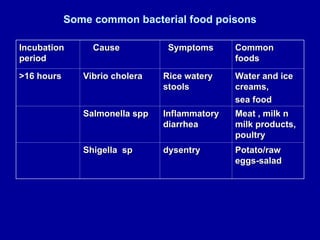
Some common bacterial food poisons
Incubation
Incubation
period
period
Cause
Cause Symptoms
Symptoms Common
Common
foods
foods
>16 hours
>16 hours Vibrio cholera
Vibrio cholera Rice watery
Rice watery
stools
stools
Water and ice
Water and ice
creams,
creams,
sea food
sea food
Salmonella spp
Salmonella spp Inflammatory
Inflammatory
diarrhea
diarrhea
Meat , milk n
Meat , milk n
milk products,
milk products,
poultry
poultry
Shigella sp
Shigella sp dysentry
dysentry Potato/raw
Potato/raw
eggs-salad
eggs-salad
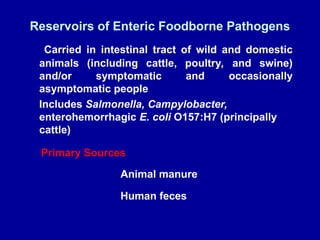
Reservoirs of Enteric Foodborne Pathogens
Carried in intestinal tract of wild and domestic
animals (including cattle, poultry, and swine)
and/or symptomatic and occasionally
asymptomatic people
Includes Salmonella, Campylobacter,
enterohemorrhagic E. coli O157:H7 (principally
cattle)
Primary Sources
Animal manure
Human feces
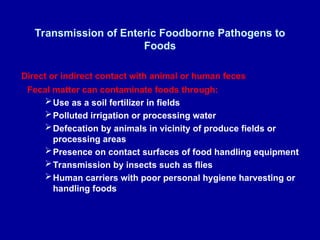
Transmission of Enteric Foodborne Pathogens to
Foods
Direct or indirect contact with animal or human feces
Fecal matter can contaminate foods through:
Use as a soil fertilizer in fields
Polluted irrigation or processing water
Defecation by animals in vicinity of produce fields or
processing areas
Presence on contact surfaces of food handling equipment
Transmission by insects such as flies
Human carriers with poor personal hygiene harvesting or
handling foods
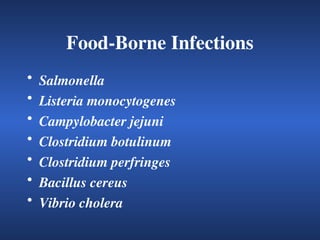
Food-Borne Infections
• Salmonella
• Listeria monocytogenes
• Campylobacter jejuni
• Clostridium botulinum
• Clostridium perfringes
• Bacillus cereus
• Vibrio cholera
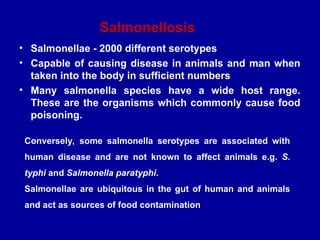
Salmonellosis
• Salmonellae - 2000 different serotypes
• Capable of causing disease in animals and man when
taken into the body in sufficient numbers
• Many salmonella species have a wide host range.
These are the organisms which commonly cause food
poisoning.
Conversely, some salmonella serotypes are associated with
human disease and are not known to affect animals e.g. S.
typhi and Salmonella paratyphi.
Salmonellae are ubiquitous in the gut of human and animals
and act as sources of food contamination
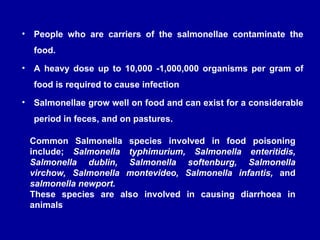
• People who are carriers of the salmonellae contaminate the
food.
• A heavy dose up to 10,000 -1,000,000 organisms per gram of
food is required to cause infection
• Salmonellae grow well on food and can exist for a considerable
period in feces, and on pastures.
Common Salmonella species involved in food poisoning
include; Salmonella typhimurium, Salmonella enteritidis,
Salmonella dublin, Salmonella softenburg, Salmonella
virchow, Salmonella montevideo, Salmonella infantis, and
salmonella newport.
These species are also involved in causing diarrhoea in
animals
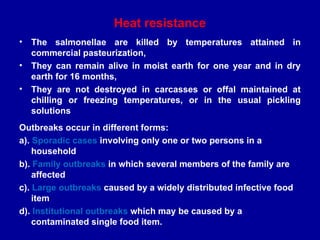
Heat resistance
• The salmonellae are killed by temperatures attained in
commercial pasteurization,
• They can remain alive in moist earth for one year and in dry
earth for 16 months,
• They are not destroyed in carcasses or offal maintained at
chilling or freezing temperatures, or in the usual pickling
solutions
Outbreaks occur in different forms:
a). Sporadic cases involving only one or two persons in a
household
b). Family outbreaks in which several members of the family are
affected
c). Large outbreaks caused by a widely distributed infective food
item
d). Institutional outbreaks which may be caused by a
contaminated single food item.
Factors associated with Salmonella food poisoning
outbreaks
• Consumption of inadequately cooked or thawed meat or
poultry,
• Cross-contamination of food from infected food handlers.
• Presence of flies, cockroaches, rats, in the food
environment that act as vectors of the disease.
• Salmonellae reach food in many different ways;
a) Directly from slaughter animals to food
b) From human excreta, and transferred to food through
hands, utensils, equipments, flies etc.
• Food poisoning is more likely to occur if the total number of
microorganisms present is high. A smaller number may have
no ill effect.
Transmission
Foods involved
• Any food contaminated with salmonellae may be involved.
• However, foods commonly involved are animal derived foods
such as:
a. meat and meat products,
b. milk and milk products,
c. egg and egg products
Clinical symptoms
• The ordinary symptoms include abdominal pain, headache,
diarrhea, fever, vomiting,, prostration and malaise.
• In severe cases there is septicaemia with leucopenia,
endocarditis, pericarditis.
• Severe cases are encountered in babies, young children , the
sick and in elderly persons. The mortality is upto 13 %.
Disease symptoms
• The incubation period is usually 2 weeks, but might vary
between 3 and 28 days for typhoid fever and between 1 and 15
days for the paratyphoid fevers.
• The abdominal symptoms are severe, while fever and illness
may continue for 4-6 weeks.
Campylobacteriosis
 Campylobacter are a group of micro-aerophilic curved or
spiral gram negative rods
 Campylobacter jejuni and Campylobacter coli cause food
poisoning and are associated with acute enterocolitis in
man.
 Campylobacter jejuni occur in large numbers in cattle
feces, and poultry as normal flora.
 Campylobacter coli are commonly associated with human
diarrhoea, and enteritis in pigs mostly in association with
Treponema hyodysenteriae.
Disease in man
• Campylobacter jejuni and C. coli cause illness characterized
by diarrhoea, abdominal pain, fever, nausea, vomiting, and
abdominal complaints.
• The jejunum, ileum and colon are primarily affected resulting in
acute inflammation and occasionally, abscess formation.
• The disease is self-limiting.
• Incubation period ranges between 2-11 days with an average
of 3-5 days.
• It is preceded by fever, followed by foul smelling and watery
diarrhea, which runs for 3-4 days.
• The diarrhea may sometimes contain blood and mucus in
feces.
• Abdominal pain is associated with backache, and a high
mortality.
• The condition is self-limiting but may last for up to 10 days.
Clinical signs
• Microorganisms are present in poultry gut and feces upto 1,000,000
organisms/g of feces.
• Carelessness in the kitchen e.g. cutting chickens with the same
knife used to cut other foods without proper cleaning prior to use.
• Pork is a major source of Campylobacter coli.
• Contamination of pork occurs during slaughter.
Mode of infection
• Infection occurs by ingestion of campylobacter organisms in
contaminated foodstuffs.
• Foods involved includes meat from infected animals,
unpasteurized milk and possibly cross-contamination from
these sources to foods eaten uncooked or unrefrigerated.
• Among the meats, poultry constitutes the greatest potential
source of infection to humans.
Listeria monocytogenes
• Gram positive rods
– Faculative anaerobe
– No spores
– No capsule
– Motile 10-25o
C
– Closely related to Bacillus, Clostridium, Enterococcus,
Streptococcus and Staphylococcus
– Genus has 6 species-- L. monocytogenes and L. ivanovii are
pathogenic
– The organism is -hemolytic.
– It is catalase positive
– It is psychrotropic
Listeria monocytogenes
• Major public health concern because:
– Severe, non-enteric nature of the disease:
– High case fatality rate  can be as high as 20-
30%
– Long incubation time
Risk groups
Pregnant women and neonates
Elderly, Immunocompromised or debilitated people:
Malignancy, immunosuppressed, chronic liver disease,
collagen diseases (lupus), diabetes, AIDS
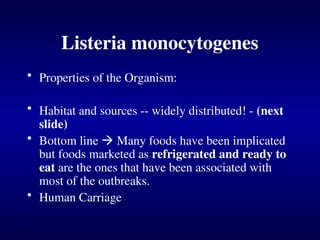
Listeria monocytogenes
• Properties of the Organism:
• Habitat and sources -- widely distributed! - (next
slide)
• Bottom line  Many foods have been implicated
but foods marketed as refrigerated and ready to
eat are the ones that have been associated with
most of the outbreaks.
• Human Carriage
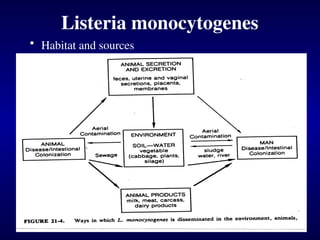
Listeria monocytogenes
• Habitat and sources
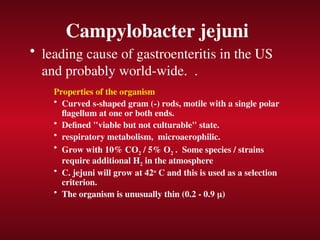
Campylobacter jejuni
• leading cause of gastroenteritis in the US
and probably world-wide. .
Properties of the organism
• Curved s-shaped gram (-) rods, motile with a single polar
flagellum at one or both ends.
• Defined "viable but not culturable" state.
• respiratory metabolism, microaerophilic.
• Grow with 10% CO2 / 5% O2 . Some species / strains
require additional H2 in the atmosphere
• C. jejuni will grow at 42o
C and this is used as a selection
criterion.
• The organism is unusually thin (0.2 - 0.9 )
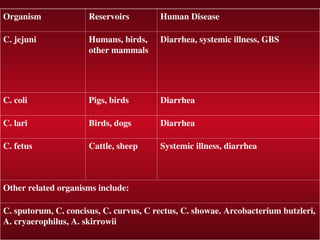
Organism Reservoirs Human Disease
C. jejuni Humans, birds,
other mammals
Diarrhea, systemic illness, GBS
C. coli Pigs, birds Diarrhea
C. lari Birds, dogs Diarrhea
C. fetus Cattle, sheep Systemic illness, diarrhea
Other related organisms include:
C. sputorum, C. concisus, C. curvus, C rectus, C. showae. Arcobacterium butzleri,
A. cryaerophilus, A. skirrowii
Campylobacter jejuni
Reservoirs and epidemiology
• Human cases are associated with:
• Poultry - especially eating chicken out
• Pets - especially young puppies
• Water supply
• Raw milk
• Most cases occur in the summer months -- late
spring to early autumn -- this is also true in Hawai'i.
Campylobacter jejuni
Pathogenesis and Disease Characteristics
– Low infectious dose
– Two disease entities:
• Diarrhea
• Dysentery
– Associated with Guillaine-Barrè syndrome
• Guillaine-Barrè Syndrome
– Ascending muscle weakness or paralysis, rapidly progressing
– 40% of GBS patients have evidence of Campylobacter
infection
Escherichia coli food borne
infection
• Escherichia coli are potential food poisoning
pathogens which are widely distributed in low
numbers in food environments.
• E. coli strains involved in food borne infection fall
into the following groups:
1. Enteropathogenic E. coli (EPEC),
2. Enterotoxigenic E. Coli (ETEC),
3. Enteroinvasive E. coli (EIEC) and
4. Enterohemorrhagic E. coli (EHEC).
Escherichia coli food borne
infection
• Each group is composed of unique O:H
serotypes
• Each group posses virulence factors
characteristic of that group.
• The serotypes are characterized by using O-
somatic and H-flagella antigens.
Enteroinvasive E. coli
• EIEC strains cause illness that is characterized by
watery diarrhea in most patients.
• In addition, there is fever, nausea, and abdominal
cramps.
• Bloody diarrhea may occur in fewer than 10 % of
patients.
• The presence of mucus and polymorphonuclear
leucocytes in stool is typical of these strains.
• Illness is usually self-limiting, lasting for 2 to 3 days.
.
Enteroinvasive E. coli
• A relatively high dose (108
cells) is necessary
to produce disease in volunteers.
• The median incubation period is 18 hours
(range 2-48 hrs).
• Food borne spread is the usual mode of
transmission.
• Person-to-person spread has also been reported
Enterohemorrhagic E. coli
 EHEC infection is caused by Escherichia coli serotype
O157:H7
 It causes hemorrhagic colitis in humans that is
characterized by diarrhea, abdominal pain which may
be severe and vomiting.
 Few patients develop fever. Illness lasts for 4 to 8
days, although it may extend to 13 days for severe
cases.
 Patients with complications have bloody diarrhea,
acute ulcerative or ischemic colitis and sub-mucosal
edema with severe colonic inflammation.
Enterohemorrhagic E. coli
• The organism E. coli O157:H7 is heat sensitive, but
resistant to freezing.
• It grows poorly at 44o
C-45o
C, with no growth at
45.5o
C, suggesting that its presence may not be
detected by fecal coliform assay test.
• Deaths occur in patients who develop hemolytic
uremic syndrome (HUS).
• HUS can be recognized by acute renal failure, micro-
angiopathic hemolytic anemia and
thrombocytopenia.
Shigellosis (Bacillary dysentery)
• Shigellosis is caused by members of the genus
Shigella.
• The species involved include Shigella
dysenteriae, Shigella flexneri, Shigella boydii and
Shigella sonei.
• All strains of shigella posses potent exotoxins
which are carbohydrate-lipid protein complexes.
• The infective dose is smaller than that of
salmonellae, except S. typhi.
Clinical symptoms
• The illness begins 1 to 4 days after ingestion of
bacteria and may last 4 to 7 days.
• Symptoms include watery or bloody diarrhea,
fever, stomach cramps, nausea or vomiting,
dehydration and prostration in severe cases and
convulsions in young children.
• The diarrhea which starts as a thin watery
discharge quickly looses its fecal character to be
composed of nothing but pus, mucus threads and
blood.
Clinical symptoms cont..
• At this stage, there are agonizing pains and
constant tenesmus.
• Death from bacillary dysentery is uncommon
when efficient treatment is provided.
• However, S. dysenteriae infections have been
reported to have a case fatality rate of 20 %
and the mortality rate is higher in children than
adults.
Transmission
• Human cases and carriers are the only important sources of infection.
• Spread is by fecal-oral route, and person-to-person transmission is
common.
• The bacteria leaves the body in stool of an infected person and infects
another person through contaminated hands, food, water, or objects
(toys, pens etc).
• Any type of food can transmit the shigella pathogens to cause disease
in man.
• Flies can spread shigella germs when they get into contact with
infected stool and then contaminate drinking water or food.
• Shigella organisms may remain viable in tap water for as long as 6
months, and in sea water for 2 to 5 months.
Vibrio Cholera
• Cholera is caused by Vibrio cholera
bacterium.
• Cholera vibrios are ingested in drink or food.
In natural infection, the dosage is usually very
small.
• The organism multiply in the small intestine
to produce a very potent enterotoxin, which
stimulates a persistent out pouring of isotonic
fluid by the gut mucosal cells.
Transmission
• Man is the only natural host of the cholera vibrios
• Spread of infection is from person-to-person, through
contaminated water or foods.
• Shrimps and vegetables are the most frequent carriers.
• Cholera is an infection of crowded poor class communities
and it tends to persist in such areas.
• Cholera outbreaks occur either as explosive epidemics
usually in non-endemic areas or as protracted epidemic
waves in endemic areas
Clinical symptoms
• Typically characterized by the sudden onset of
effortless vomiting and profuse watery diarrhea.
• Vomiting is seen frequently, but very rapid
dehydration and hypovolemic shock.
• The frequent watery stools may be accompanied
with small parts of the mucosa being liberated from
the intestines.
• Death may occur in 12 to 24 hrs due to rapid
dehydration
Clinical symptoms cont…
• Patients may produce up to 20-30 stools per day,
losing many litres of water and electrolytes,
• Patients therefore exhibits extreme dehydration,
urine is suppressed, the skin becomes wrinkled,
the eyeballs are sunken and the voice becomes
weak and husky.
• Blood pressure falls, the heart sounds become
barely audible and the pulse become rapid and
weak just before death.
Vibrio parahemolyticus foodborne
Infection
• Vibrio parahemolyticus is a pathogenic
bacterium, whose natural habitat is the sea.
• Human infections occur solely from sea
foods such as oysters, shrimps, crabs,
lobsters, clams and related shellfish. .
• Cross-contamination may lead to other
foods becoming vehicles.
Symptoms of the disease
• Causes gastroenteritis and extra intestinal infections in man.
• Incubation period is 16.7 hrs (range 3-76 hrs)
• Symptoms include: diarrhea (95 %), cramps (92 %), weakness (90 %),
nausea (72 %), chills (55 %), headache (48 %) and vomiting (12 %).
• Symptoms last from 1 to 8 days with a mean of 4.6 days.
• The case fatality rate for V. vulnificus septicaemia exceeds 50 %.
• In immunocompromised hosts, V. vulnificus infections can cause fever,
nausea, myalgia and abdominal cramps, 24-48 hours after eating
contaminated food.
Food borne intoxications
Food borne intoxications have short incubation
periods (minutes to hours) and are characterized
by lack of fever.
Food borne intoxications can be classified into:
a. Bacterial intoxications
b. Fungal intoxications
c. Chemical intoxication
d. Plant toxicants, and
e. Poisonous animals.
FOOD BORNE INTOXICATIONS
These are diseases caused by consumption of food
containing:
1.Biotoxicants which are found in tissues of certain
plants and animals.
2.Metabolic products (toxins) formed and excreted
by microorganisms (such as bacteria, fungi and
algae), while they multiply in food, or in
gastrointestinal tract of man.
3.Poisonous substances, which may be
intentionally or unintentionally added to food during
production, processing, transportation or storage.
BACTERIAL FOOD BORNE
INTOXICATIONS
1. Staphylococcus aureus intoxication
2. Bacillus cereus food borne
intoxication
3. Clostridium perfringens food borne
intoxication
4. Clostridium botulinum food borne
intoxication
Staphylococcus aureus food borne
intoxication
This is a type of food borne intoxication is
caused by consumption of food contaminated
with staphylococcal enterotoxins produced
by certain strains of Staphylococcus aureus
while growing in food.
The organism produces the following five
serologically different enterotoxins that are
involved in food borne intoxication.
The five enterotoxins are:
1. Staphylococcal enterotoxin A(SEA),
2. Staphylococcal enterotoxin B (SEB),
3. Staphylococcal enterotoxin C (SEC),
4. Staphylococcal enterotoxin D (SED),
5. Staphylococcal enterotoxin E (SEE)
Individual strains of S. aureus may
produce one or more of enterotoxin
types while growing in food
Toxin production
• Toxin production occurs at growth
temperature 12-44o
C, pH 4.2 and salt
concentration of ≤10%.
• No toxin production occurs at temperatures
below 12o
C, pH < 4.2 and > 10 % salt.
Nature of enterotoxins
• All the staphylococcal enterotoxins are heat stable
(withstand heating at 100o
C for one hour) and
ordinary cooking procedures, pasteurization and
drying do not inactivate these enterotoxins.
• They are insensitive to pH changes(pH stable) and
resistant to most proteolysis enzymes (trypsin,
chymotrypsin, renin, and pepsin).
• The enterotoxins are also not affected by
irradiation.
All the five enterotoxins have the similar potency.
Vehicle foods
• Milk and milk products including
pasteurized milk, yoghurt, chocolate
milk, fermented milk, cream filled
pastries, poultry, fish, shellfish, meat and
meat products, non meat salads, egg and
egg products, vegetables and cereal
products have been involved.
Reservoirs
• Staphylococci are found in varying numbers in air, dust, water, food,
feces and sewage.
• The primary habitat of S. aureus is the mucous membranes of the
nasopharynx and skin of man and animals.
• The organism is found in the nose, skin, saliva, intestinal contents and
in feces.
• Human carriers of this organism are numerous and are undoubtedly
the source of a number of outbreaks.
• Contamination of foods may be traced to food handlers with minor
septic hand infections or severe nasal infections,
• The nasal mucous membrane is another particularly important source
of staphylococci of human origin.
Disease symptoms in man
• Inc. period is 1-6 hrs after consumption of food
contaminated with at least 1.0 µg of enterotoxin.
• Clinical signs include salvation, nausea, vomiting,
abdominal cramps, sometimes diarrhea with
prostration.
• It has an attack rate of 5-100%, but fatalities which
occurs in children, the old and debilitated victims are
rare.
• Duration of illness is 24-72 hrs.
• Dose of 1.0 µg or more is needed to cause disease.
Listeria monocytogenes
infection
• Listeria monocytogenes is a gram positive
bacterium that is pathogenic to both animals
and human beings.
• The organism is widespread in nature and is a
transient constituent of the intestinal flora
excreted by 1-10% of healthy humans.
• It is extremely hardy and can survive for many
years in the cold in naturally infected sources.
Vehicle foods
• Listeria monocytogenese occurs after
consumption of raw vegetables, salads, raw
milk, soft cheese, meat and meat products.
milk, ice cream, cheese, poultry, sauerkraut,
salads, sea foods, meat and meat products
contaminated by Listeria.
• ready-to-eat foods are important in causing
Listeria food poisoning.
Clinical symptoms
• In man, Listeria monocytogenes causes abortion in
pregnant women and meningitis in newborn infants
and immuno-compromised adults.
• Pregnant women, infants and elderly people are
particularly at risk of infection with Listeria
monocytogenes.
• The infection is fatal in susceptible individuals with a
mortality of 25-30%.
• Deaths have been reported in fetuses, neonates and
other individuals with compromised health status.
Yersinia enterocolitica infection
• This organism has been isolated from beef,
lamb, pork, sea foods, vegetables milk and
cakes, vacuum-packed meat.
• Of all the sources, swine appears to be major
source of strains pathogenic to man.
• Virulence appears to be as a result of tissue
invasiveness of this organism
Yersinia gastroenteritis symptoms
• Symptoms of syndrome develop several days
following ingestion of contaminated foods.
• Symptoms include abdominal pain, diarrhea,
fever, vomiting, headache and pharngitis..
• Children appear to be more susceptible than
adults
• The organism may be shed in stools for up to
40 days following illness.
Disease symptoms
• A variety of systemic involvement may occur as a
consequence of the gastroenteritis syndrome.
• They include pseudo appendicitis, mesenteric
lymphadenitis, peritonitis, terminal ileitis,
reactive arthritis, colon and neck abscess,
cholecystitis, intussusceptions and erythema
nodosum.
• The organism can be recovered from urine, blood,
cerebrospinal fluid and eye discharges of infected
individuals.
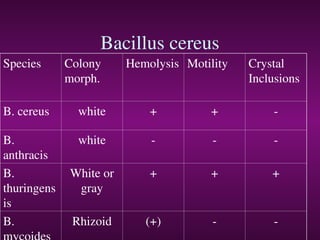
Bacillus cereus
Species Colony
morph.
Hemolysis Motility Crystal
Inclusions
B. cereus white + + -
B.
anthracis
white - - -
B.
thuringens
is
White or
gray
+ + +
B. Rhizoid (+) - -
Bacillus cereus
•Gram positive large (width > 1 um) rod,
•spore former -- central spore or paracentral
•grows aerobically and anaerobically
•beta hemolytic
•usually motile
•may be present in stools of healthy individuals
•grown out of food samples after heat shock --> treat sample at 70o
C for 10 minutes; or after ethanol shock --> mix 1:1 with absolute
ethanol for 1 hour
•Widely disseminated in nature
•Rice, spices and dairy products
Bacillus cereus
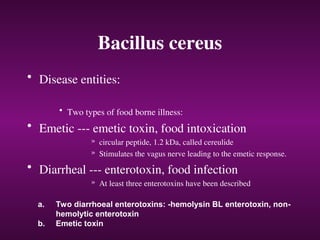
• Disease entities:
• Two types of food borne illness:
• Emetic --- emetic toxin, food intoxication
» circular peptide, 1.2 kDa, called cereulide
» Stimulates the vagus nerve leading to the emetic response.
• Diarrheal --- enterotoxin, food infection
» At least three enterotoxins have been described
a. Two diarrhoeal enterotoxins: -hemolysin BL enterotoxin, non-
hemolytic enterotoxin
b. Emetic toxin
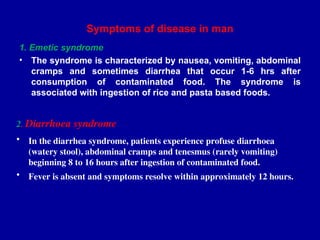
Symptoms of disease in man
1. Emetic syndrome
• The syndrome is characterized by nausea, vomiting, abdominal
cramps and sometimes diarrhea that occur 1-6 hrs after
consumption of contaminated food. The syndrome is
associated with ingestion of rice and pasta based foods.
2. Diarrhoea syndrome
• In the diarrhea syndrome, patients experience profuse diarrhoea
(watery stool), abdominal cramps and tenesmus (rarely vomiting)
beginning 8 to 16 hours after ingestion of contaminated food.
• Fever is absent and symptoms resolve within approximately 12 hours.
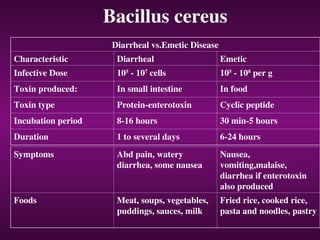
Bacillus cereus
Diarrheal vs.Emetic Disease
Characteristic Diarrheal Emetic
Infective Dose 105
- 107
cells 105
- 108
per g
Toxin produced: In small intestine In food
Toxin type Protein-enterotoxin Cyclic peptide
Incubation period 8-16 hours 30 min-5 hours
Duration 1 to several days 6-24 hours
Symptoms Abd pain, watery
diarrhea, some nausea
Nausea,
vomiting,malaise,
diarrhea if enterotoxin
also produced
Foods Meat, soups, vegetables,
puddings, sauces, milk
Fried rice, cooked rice,
pasta and noodles, pastry
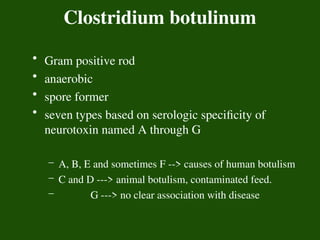
Clostridium botulinum
• Gram positive rod
• anaerobic
• spore former
• seven types based on serologic specificity of
neurotoxin named A through G
– A, B, E and sometimes F --> causes of human botulism
– C and D ---> animal botulism, contaminated feed.
– G ---> no clear association with disease
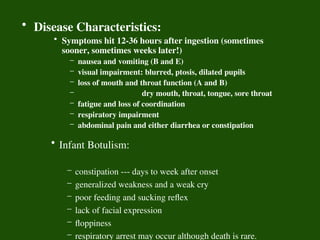
• Disease Characteristics:
• Symptoms hit 12-36 hours after ingestion (sometimes
sooner, sometimes weeks later!)
– nausea and vomiting (B and E)
– visual impairment: blurred, ptosis, dilated pupils
– loss of mouth and throat function (A and B)
– dry mouth, throat, tongue, sore throat
– fatigue and loss of coordination
– respiratory impairment
– abdominal pain and either diarrhea or constipation
• Infant Botulism:
– constipation --- days to week after onset
– generalized weakness and a weak cry
– poor feeding and sucking reflex
– lack of facial expression
– floppiness
– respiratory arrest may occur although death is rare.
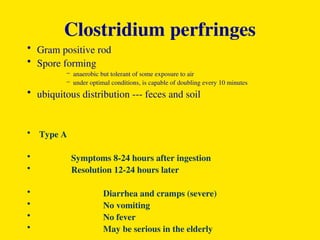
Clostridium perfringes
• Gram positive rod
• Spore forming
– anaerobic but tolerant of some exposure to air
– under optimal conditions, is capable of doubling every 10 minutes
• ubiquitous distribution --- feces and soil
• Type A
• Symptoms 8-24 hours after ingestion
• Resolution 12-24 hours later
• Diarrhea and cramps (severe)
• No vomiting
• No fever
• May be serious in the elderly
Fungal intoxications
• These are caused by consumption of metabolites
produced by fungi, when growing in food.
• These metabolites are called mycotoxins.
• Grains, oilseeds, fruits and vegetables are mostly
involved if they are stored at high humidity (≥ 0.75)
or if they are not properly dried before storage.
• Poor dry storage practices of grains and other foods
leads to mould growth and production of mycotoxins.
• Of significance to public health is aflatoxicosis.
Aflatoxicosis
• Aflatoxicosis is caused by aflatoxins produced
by the fungi, e.g. Aspergillus flavus.
• Four types of aflatoxins have been described
i.e. aflatoxin B1, B2, G1 and G2.
• Animals consuming feeds contaminated with
aflatoxin B1 leads to secretion in the milk of
aflatoxin M1 and M2
Effects of aflatoxins
• When consumed in large doses, they are
lethal in causing acute hemorrhagic
syndromes
• Sub-lethal doses cause histotoxic changes
• Long term consumption of small doses
cause liver tumors as these are potent
carcinogens.
Prevention of aflatoxicosis
• Proper drying and storage of grains and other
affected foods
• Quality control of potentially hazardous foods
to ensure that they do not contain above the
allowable limits of 20 ppb before consumption
by use of appropriate analytical tests.
• Use of fungicides as seed dressings to protect
stored cereals and other foods like pulses and
potatoes against fungal invasion.
VIRUSES
Basic characteristics
– Need living cell to propagate
– Do not reproduce in food
– Do not need PHF
– Smallest microbial contaminant
– Spread usually result of poor hygiene
VIRUSES
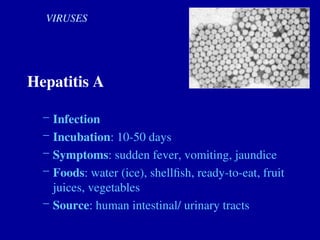
Hepatitis A
– Infection
– Incubation: 10-50 days
– Symptoms: sudden fever, vomiting, jaundice
– Foods: water (ice), shellfish, ready-to-eat, fruit
juices, vegetables
– Source: human intestinal/ urinary tracts
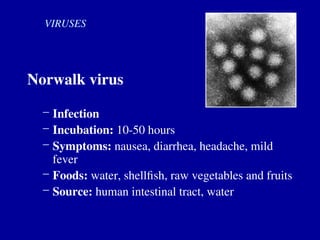
Norwalk virus
– Infection
– Incubation: 10-50 hours
– Symptoms: nausea, diarrhea, headache, mild
fever
– Foods: water, shellfish, raw vegetables and fruits
– Source: human intestinal tract, water
VIRUSES
VIRUSES
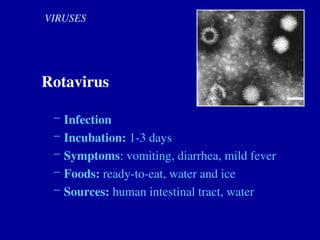
Rotavirus
– Infection
– Incubation: 1-3 days
– Symptoms: vomiting, diarrhea, mild fever
– Foods: ready-to-eat, water and ice
– Sources: human intestinal tract, water

Food borne pathogens and microborganisms .ppt

  • 1.
    Lecture 14 Food bornepathogens and microbial toxins
  • 2.
    1.Introduction • Global burden-high morbidity and mortality • Infectious diarrhoea- 3 to 5 billion cases and 1.8 million deaths annually • CDC- 76 million cases of food borne diseases in US annually with appx.5000 deaths • In India- Integrated disease surveillance Project (IDSP) - Food poisoning outbreak reporting increased to more than double in 2009 from 2008 (120 in 2009 and 50 in 2008)
  • 3.
    • Globally, theWHO has estimated that approximately 1.5 billion episodes of diarrhea and more than 3 million deaths occurred in children under 5 years of age, and a significant proportion of these results from consumption of food mainly food of animal origin with microbial pathogens and toxins
  • 4.
    Symptoms of foodpoisoning Food poisoning can be mild or severe. The symptoms will be different depending on what type of bacteria is responsible. Common symptoms include: • severe vomiting; • diarrhoea; • exhaustion; • headache; • fever; • abdominal pain; • tiredness.
  • 5.
    Food borne diseases •Food borne diseases (FBD) are acute illnesses associated with the recent consumption of food • The food involved is usually contaminated with a disease pathogen or toxicant. • Such food contains enough pathogens or toxicant necessary to make a person sick. Food borne diseases are classified into: 1. Food borne infections 2. Food borne intoxications
  • 6.
    Food borne infections •Food borne infections are caused by the entrance of pathogenic microorganisms contaminating food into the body, and the reaction of the body tissues to their presence. • These can either be fungal, bacterial, viral or parasitic • Food borne infections tend to have long incubation periods and are usually characterized by fever Bacterial food borne infections include Cholera, salmonellosis, typhoid fever, shigellosis, Yersiniosis Escherichia coli infection Campylobacteriosis, Vibrio parahemolyticus and Listeriosis Mycotic food borne infections include Candida spp., Sporothrix spp., Wangiella spp. etc), Viral food borne infections include hepatitis A , Norwak virus and poliomyelitis virus
  • 7.
    Food borne intoxications Foodborneinfection is caused by the ingestion of food containing live bacteria which grow and establish themselves in the human intestinal tract. Foodborne intoxication is caused by ingesting food containing toxins formed by bacteria which resulted from the bacterial growth in the food item. The live microorganism does not have to be consumed. A combination of intoxication, infection and toxicoinfection, collectively, can be recognized as food poisoning/ food borne illness.
  • 8.
    Food borne infectionsvs intoxication Infections • Bacterial / Viral / parasite • Invade and or multiply in lining of intestine • Incubation period- hours to days • S/s – Diarrhoea , nausea, vomitting , abdominal cramps, fever • Communicable-spreads from person to person • Factors-inadequate cooking, cross contamination , poor personal hygiene , bare hand contact Intoxications • toxins ( natural / preformed bacterial / chemical) • No invasion or multiplication • Incubation period- minutes to hours • S/s – Vomitting , nausea, diarrhea , diplopia, weakness, resp. failure , numbness, sensory/motor dysfunction • Not communicable • Factors-inadequate cooking , improper handling temperatures
  • 9.
    Epidemiology in India Agent AgentYear Year Region Region People People affected affected Implicated Implicated Food Food Salmonella Salmonella paratyphi paratyphi A A 1995 1995 Yavatmal Yavatmal 33 33 Vegetarian Vegetarian food food Clostridiu Clostridiu m m butyricum butyricum 1996 1996 Gujarat- Gujarat- residentia residentia l school l school 34 34 students students Sevu Sevu (Gram flour (Gram flour crisp) crisp) Salmonella Salmonella Enteritidis Enteritidis 1998 1998 Armed Armed Forces Forces 78 78 personnel personnel Frozen fowl Frozen fowl
  • 10.
    Epidemiology in India Agent AgentYear Year Region Region People People affected affected Implicated Food Implicated Food Norwalk like Norwalk like Virus Virus 2002 2002 Delhi Delhi Hospital Hospital 130 130 nurses nurses Salad Salad Sandwiches Sandwiches Staph. Staph. aureus aureus 2007 2007 MP MP >100 >100 children n children n adults adults Bhalla ( fried Bhalla ( fried potato balls) potato balls) Salmonella Salmonella 2008-09 2008-09 Mangalore Mangalore 34 34 and and 10 10 Chicken Chicken and and Fish Fish
  • 11.
    Some important food-bornepathogens, toxins and chemicals 1. Bacteria - Bacillus cereus , Brucella , Campylobacter, Clostridium sp , E.coli, Salmonella sp , Listeria , Staph aureus , Vibrio cholera and V.parahemolyticus 2. Viruses - Hepatitis A and E , Rotavirus , Norvovirus 3. Protozoa – Cryptosporidium , Cyclospora , Entamoeba , Giardia , T. gondii 4. Trematodes , Cestodes and Nematodes
  • 12.
    Food borne pathogens-toxins •Toxins - marine biotoxins , tetrodotoxin (puffer fish), pyrrolizidine alka (Endemic ascites) , mushroom toxins , shellfish toxins, mycotoxins-(Aflatoxins ,Ergot and Fusarium), plant intoxicants , BOAA (Lathyrism) Mycotoxins Aflatoxins - Aspergillus flavus Ergot alkaloids / Ergopeptine alkaloids – Ergotamine Fumonisins -- Fusarium moniliforme Ochratoxins - Aspergillus species Patulin - Aspergillus and Penicillium Trichothecenes -- Cephalosporium, Fusarium, Myrothecium, Stachybotrys and Trichoderma Zearalenone - Fusarium and Gibberella species Kojic acid - Aspergillus oryzae
  • 13.
    Pathogenesis and Transmission •Inoculum / size of infective dose -Can be as small as 10-100 bacterial cysts for Shigella , EHEC , Giardia, E. histolytica or 10 5- 108 for Vibrio cholera, variable for salmonella • Animals / humans harbouring infection  shed in feces  contaminate water , fruits , vegetables inadequate cooking / improper storage  infection • Warm temperature(10-50 degree cent.)- multiplication of pathogens
  • 14.
    Some common bacterialfood poisons Incubation Incubation period period Cause Cause Symptoms Symptoms Common foods Common foods 1-6 hours 1-6 hours Staphy;ococcus Staphy;ococcus aureus (enterotoxin) aureus (enterotoxin) Nausea, Nausea, vomitting, vomitting, diarrhea diarrhea Milk & milk products, Milk & milk products, ham, poultry, salads, ham, poultry, salads, custards custards Bacillus cereus Bacillus cereus (enterotoxin) (enterotoxin) Nausea, Nausea, vomitting, vomitting, (emetic form) (emetic form) Fried rice Fried rice 8-16 hours 8-16 hours Clostridium perfringes Clostridium perfringes (spores) (spores) Abd.cramps, Abd.cramps, diarrhea diarrhea Nausea and Nausea and Vomitting -rare Vomitting -rare Meat, Meat, poultry, poultry, legumes. legumes. gravies gravies Bacillus cereus Bacillus cereus ( diarrheal form- ( diarrheal form- preformed & stable preformed & stable toxins) toxins) Diarrhea, Diarrhea, abd.pain, abd.pain, nausea, nausea, vomitting/ vomitting/ fever-No fever-No
  • 15.
    Some common bacterialfood poisons Incubation Incubation period period Cause Cause Symptoms Symptoms Common Common foods foods >16 hours >16 hours Vibrio cholera Vibrio cholera Rice watery Rice watery stools stools Water and ice Water and ice creams, creams, sea food sea food Salmonella spp Salmonella spp Inflammatory Inflammatory diarrhea diarrhea Meat , milk n Meat , milk n milk products, milk products, poultry poultry Shigella sp Shigella sp dysentry dysentry Potato/raw Potato/raw eggs-salad eggs-salad
  • 16.
    Reservoirs of EntericFoodborne Pathogens Carried in intestinal tract of wild and domestic animals (including cattle, poultry, and swine) and/or symptomatic and occasionally asymptomatic people Includes Salmonella, Campylobacter, enterohemorrhagic E. coli O157:H7 (principally cattle) Primary Sources Animal manure Human feces
  • 17.
    Transmission of EntericFoodborne Pathogens to Foods Direct or indirect contact with animal or human feces Fecal matter can contaminate foods through: Use as a soil fertilizer in fields Polluted irrigation or processing water Defecation by animals in vicinity of produce fields or processing areas Presence on contact surfaces of food handling equipment Transmission by insects such as flies Human carriers with poor personal hygiene harvesting or handling foods
  • 18.
    Food-Borne Infections • Salmonella •Listeria monocytogenes • Campylobacter jejuni • Clostridium botulinum • Clostridium perfringes • Bacillus cereus • Vibrio cholera
  • 19.
    Salmonellosis • Salmonellae -2000 different serotypes • Capable of causing disease in animals and man when taken into the body in sufficient numbers • Many salmonella species have a wide host range. These are the organisms which commonly cause food poisoning. Conversely, some salmonella serotypes are associated with human disease and are not known to affect animals e.g. S. typhi and Salmonella paratyphi. Salmonellae are ubiquitous in the gut of human and animals and act as sources of food contamination
  • 20.
    • People whoare carriers of the salmonellae contaminate the food. • A heavy dose up to 10,000 -1,000,000 organisms per gram of food is required to cause infection • Salmonellae grow well on food and can exist for a considerable period in feces, and on pastures. Common Salmonella species involved in food poisoning include; Salmonella typhimurium, Salmonella enteritidis, Salmonella dublin, Salmonella softenburg, Salmonella virchow, Salmonella montevideo, Salmonella infantis, and salmonella newport. These species are also involved in causing diarrhoea in animals
  • 21.
    Heat resistance • Thesalmonellae are killed by temperatures attained in commercial pasteurization, • They can remain alive in moist earth for one year and in dry earth for 16 months, • They are not destroyed in carcasses or offal maintained at chilling or freezing temperatures, or in the usual pickling solutions Outbreaks occur in different forms: a). Sporadic cases involving only one or two persons in a household b). Family outbreaks in which several members of the family are affected c). Large outbreaks caused by a widely distributed infective food item d). Institutional outbreaks which may be caused by a contaminated single food item.
  • 22.
    Factors associated withSalmonella food poisoning outbreaks • Consumption of inadequately cooked or thawed meat or poultry, • Cross-contamination of food from infected food handlers. • Presence of flies, cockroaches, rats, in the food environment that act as vectors of the disease. • Salmonellae reach food in many different ways; a) Directly from slaughter animals to food b) From human excreta, and transferred to food through hands, utensils, equipments, flies etc. • Food poisoning is more likely to occur if the total number of microorganisms present is high. A smaller number may have no ill effect. Transmission
  • 23.
    Foods involved • Anyfood contaminated with salmonellae may be involved. • However, foods commonly involved are animal derived foods such as: a. meat and meat products, b. milk and milk products, c. egg and egg products Clinical symptoms • The ordinary symptoms include abdominal pain, headache, diarrhea, fever, vomiting,, prostration and malaise. • In severe cases there is septicaemia with leucopenia, endocarditis, pericarditis. • Severe cases are encountered in babies, young children , the sick and in elderly persons. The mortality is upto 13 %.
  • 24.
    Disease symptoms • Theincubation period is usually 2 weeks, but might vary between 3 and 28 days for typhoid fever and between 1 and 15 days for the paratyphoid fevers. • The abdominal symptoms are severe, while fever and illness may continue for 4-6 weeks.
  • 25.
    Campylobacteriosis  Campylobacter area group of micro-aerophilic curved or spiral gram negative rods  Campylobacter jejuni and Campylobacter coli cause food poisoning and are associated with acute enterocolitis in man.  Campylobacter jejuni occur in large numbers in cattle feces, and poultry as normal flora.  Campylobacter coli are commonly associated with human diarrhoea, and enteritis in pigs mostly in association with Treponema hyodysenteriae.
  • 26.
    Disease in man •Campylobacter jejuni and C. coli cause illness characterized by diarrhoea, abdominal pain, fever, nausea, vomiting, and abdominal complaints. • The jejunum, ileum and colon are primarily affected resulting in acute inflammation and occasionally, abscess formation. • The disease is self-limiting. • Incubation period ranges between 2-11 days with an average of 3-5 days. • It is preceded by fever, followed by foul smelling and watery diarrhea, which runs for 3-4 days. • The diarrhea may sometimes contain blood and mucus in feces. • Abdominal pain is associated with backache, and a high mortality. • The condition is self-limiting but may last for up to 10 days. Clinical signs
  • 27.
    • Microorganisms arepresent in poultry gut and feces upto 1,000,000 organisms/g of feces. • Carelessness in the kitchen e.g. cutting chickens with the same knife used to cut other foods without proper cleaning prior to use. • Pork is a major source of Campylobacter coli. • Contamination of pork occurs during slaughter. Mode of infection • Infection occurs by ingestion of campylobacter organisms in contaminated foodstuffs. • Foods involved includes meat from infected animals, unpasteurized milk and possibly cross-contamination from these sources to foods eaten uncooked or unrefrigerated. • Among the meats, poultry constitutes the greatest potential source of infection to humans.
  • 28.
    Listeria monocytogenes • Grampositive rods – Faculative anaerobe – No spores – No capsule – Motile 10-25o C – Closely related to Bacillus, Clostridium, Enterococcus, Streptococcus and Staphylococcus – Genus has 6 species-- L. monocytogenes and L. ivanovii are pathogenic – The organism is -hemolytic. – It is catalase positive – It is psychrotropic
  • 29.
    Listeria monocytogenes • Majorpublic health concern because: – Severe, non-enteric nature of the disease: – High case fatality rate  can be as high as 20- 30% – Long incubation time Risk groups Pregnant women and neonates Elderly, Immunocompromised or debilitated people: Malignancy, immunosuppressed, chronic liver disease, collagen diseases (lupus), diabetes, AIDS
  • 30.
    Listeria monocytogenes • Propertiesof the Organism: • Habitat and sources -- widely distributed! - (next slide) • Bottom line  Many foods have been implicated but foods marketed as refrigerated and ready to eat are the ones that have been associated with most of the outbreaks. • Human Carriage
  • 31.
  • 32.
    Campylobacter jejuni • leadingcause of gastroenteritis in the US and probably world-wide. . Properties of the organism • Curved s-shaped gram (-) rods, motile with a single polar flagellum at one or both ends. • Defined "viable but not culturable" state. • respiratory metabolism, microaerophilic. • Grow with 10% CO2 / 5% O2 . Some species / strains require additional H2 in the atmosphere • C. jejuni will grow at 42o C and this is used as a selection criterion. • The organism is unusually thin (0.2 - 0.9 )
  • 33.
    Organism Reservoirs HumanDisease C. jejuni Humans, birds, other mammals Diarrhea, systemic illness, GBS C. coli Pigs, birds Diarrhea C. lari Birds, dogs Diarrhea C. fetus Cattle, sheep Systemic illness, diarrhea Other related organisms include: C. sputorum, C. concisus, C. curvus, C rectus, C. showae. Arcobacterium butzleri, A. cryaerophilus, A. skirrowii
  • 34.
    Campylobacter jejuni Reservoirs andepidemiology • Human cases are associated with: • Poultry - especially eating chicken out • Pets - especially young puppies • Water supply • Raw milk • Most cases occur in the summer months -- late spring to early autumn -- this is also true in Hawai'i.
  • 35.
    Campylobacter jejuni Pathogenesis andDisease Characteristics – Low infectious dose – Two disease entities: • Diarrhea • Dysentery – Associated with Guillaine-Barrè syndrome • Guillaine-Barrè Syndrome – Ascending muscle weakness or paralysis, rapidly progressing – 40% of GBS patients have evidence of Campylobacter infection
  • 36.
    Escherichia coli foodborne infection • Escherichia coli are potential food poisoning pathogens which are widely distributed in low numbers in food environments. • E. coli strains involved in food borne infection fall into the following groups: 1. Enteropathogenic E. coli (EPEC), 2. Enterotoxigenic E. Coli (ETEC), 3. Enteroinvasive E. coli (EIEC) and 4. Enterohemorrhagic E. coli (EHEC).
  • 37.
    Escherichia coli foodborne infection • Each group is composed of unique O:H serotypes • Each group posses virulence factors characteristic of that group. • The serotypes are characterized by using O- somatic and H-flagella antigens.
  • 38.
    Enteroinvasive E. coli •EIEC strains cause illness that is characterized by watery diarrhea in most patients. • In addition, there is fever, nausea, and abdominal cramps. • Bloody diarrhea may occur in fewer than 10 % of patients. • The presence of mucus and polymorphonuclear leucocytes in stool is typical of these strains. • Illness is usually self-limiting, lasting for 2 to 3 days. .
  • 39.
    Enteroinvasive E. coli •A relatively high dose (108 cells) is necessary to produce disease in volunteers. • The median incubation period is 18 hours (range 2-48 hrs). • Food borne spread is the usual mode of transmission. • Person-to-person spread has also been reported
  • 40.
    Enterohemorrhagic E. coli EHEC infection is caused by Escherichia coli serotype O157:H7  It causes hemorrhagic colitis in humans that is characterized by diarrhea, abdominal pain which may be severe and vomiting.  Few patients develop fever. Illness lasts for 4 to 8 days, although it may extend to 13 days for severe cases.  Patients with complications have bloody diarrhea, acute ulcerative or ischemic colitis and sub-mucosal edema with severe colonic inflammation.
  • 41.
    Enterohemorrhagic E. coli •The organism E. coli O157:H7 is heat sensitive, but resistant to freezing. • It grows poorly at 44o C-45o C, with no growth at 45.5o C, suggesting that its presence may not be detected by fecal coliform assay test. • Deaths occur in patients who develop hemolytic uremic syndrome (HUS). • HUS can be recognized by acute renal failure, micro- angiopathic hemolytic anemia and thrombocytopenia.
  • 42.
    Shigellosis (Bacillary dysentery) •Shigellosis is caused by members of the genus Shigella. • The species involved include Shigella dysenteriae, Shigella flexneri, Shigella boydii and Shigella sonei. • All strains of shigella posses potent exotoxins which are carbohydrate-lipid protein complexes. • The infective dose is smaller than that of salmonellae, except S. typhi.
  • 43.
    Clinical symptoms • Theillness begins 1 to 4 days after ingestion of bacteria and may last 4 to 7 days. • Symptoms include watery or bloody diarrhea, fever, stomach cramps, nausea or vomiting, dehydration and prostration in severe cases and convulsions in young children. • The diarrhea which starts as a thin watery discharge quickly looses its fecal character to be composed of nothing but pus, mucus threads and blood.
  • 44.
    Clinical symptoms cont.. •At this stage, there are agonizing pains and constant tenesmus. • Death from bacillary dysentery is uncommon when efficient treatment is provided. • However, S. dysenteriae infections have been reported to have a case fatality rate of 20 % and the mortality rate is higher in children than adults.
  • 45.
    Transmission • Human casesand carriers are the only important sources of infection. • Spread is by fecal-oral route, and person-to-person transmission is common. • The bacteria leaves the body in stool of an infected person and infects another person through contaminated hands, food, water, or objects (toys, pens etc). • Any type of food can transmit the shigella pathogens to cause disease in man. • Flies can spread shigella germs when they get into contact with infected stool and then contaminate drinking water or food. • Shigella organisms may remain viable in tap water for as long as 6 months, and in sea water for 2 to 5 months.
  • 46.
    Vibrio Cholera • Cholerais caused by Vibrio cholera bacterium. • Cholera vibrios are ingested in drink or food. In natural infection, the dosage is usually very small. • The organism multiply in the small intestine to produce a very potent enterotoxin, which stimulates a persistent out pouring of isotonic fluid by the gut mucosal cells.
  • 47.
    Transmission • Man isthe only natural host of the cholera vibrios • Spread of infection is from person-to-person, through contaminated water or foods. • Shrimps and vegetables are the most frequent carriers. • Cholera is an infection of crowded poor class communities and it tends to persist in such areas. • Cholera outbreaks occur either as explosive epidemics usually in non-endemic areas or as protracted epidemic waves in endemic areas
  • 48.
    Clinical symptoms • Typicallycharacterized by the sudden onset of effortless vomiting and profuse watery diarrhea. • Vomiting is seen frequently, but very rapid dehydration and hypovolemic shock. • The frequent watery stools may be accompanied with small parts of the mucosa being liberated from the intestines. • Death may occur in 12 to 24 hrs due to rapid dehydration
  • 49.
    Clinical symptoms cont… •Patients may produce up to 20-30 stools per day, losing many litres of water and electrolytes, • Patients therefore exhibits extreme dehydration, urine is suppressed, the skin becomes wrinkled, the eyeballs are sunken and the voice becomes weak and husky. • Blood pressure falls, the heart sounds become barely audible and the pulse become rapid and weak just before death.
  • 50.
    Vibrio parahemolyticus foodborne Infection •Vibrio parahemolyticus is a pathogenic bacterium, whose natural habitat is the sea. • Human infections occur solely from sea foods such as oysters, shrimps, crabs, lobsters, clams and related shellfish. . • Cross-contamination may lead to other foods becoming vehicles.
  • 51.
    Symptoms of thedisease • Causes gastroenteritis and extra intestinal infections in man. • Incubation period is 16.7 hrs (range 3-76 hrs) • Symptoms include: diarrhea (95 %), cramps (92 %), weakness (90 %), nausea (72 %), chills (55 %), headache (48 %) and vomiting (12 %). • Symptoms last from 1 to 8 days with a mean of 4.6 days. • The case fatality rate for V. vulnificus septicaemia exceeds 50 %. • In immunocompromised hosts, V. vulnificus infections can cause fever, nausea, myalgia and abdominal cramps, 24-48 hours after eating contaminated food.
  • 52.
    Food borne intoxications Foodborne intoxications have short incubation periods (minutes to hours) and are characterized by lack of fever. Food borne intoxications can be classified into: a. Bacterial intoxications b. Fungal intoxications c. Chemical intoxication d. Plant toxicants, and e. Poisonous animals.
  • 53.
    FOOD BORNE INTOXICATIONS Theseare diseases caused by consumption of food containing: 1.Biotoxicants which are found in tissues of certain plants and animals. 2.Metabolic products (toxins) formed and excreted by microorganisms (such as bacteria, fungi and algae), while they multiply in food, or in gastrointestinal tract of man. 3.Poisonous substances, which may be intentionally or unintentionally added to food during production, processing, transportation or storage.
  • 54.
    BACTERIAL FOOD BORNE INTOXICATIONS 1.Staphylococcus aureus intoxication 2. Bacillus cereus food borne intoxication 3. Clostridium perfringens food borne intoxication 4. Clostridium botulinum food borne intoxication
  • 55.
    Staphylococcus aureus foodborne intoxication This is a type of food borne intoxication is caused by consumption of food contaminated with staphylococcal enterotoxins produced by certain strains of Staphylococcus aureus while growing in food. The organism produces the following five serologically different enterotoxins that are involved in food borne intoxication.
  • 56.
    The five enterotoxinsare: 1. Staphylococcal enterotoxin A(SEA), 2. Staphylococcal enterotoxin B (SEB), 3. Staphylococcal enterotoxin C (SEC), 4. Staphylococcal enterotoxin D (SED), 5. Staphylococcal enterotoxin E (SEE) Individual strains of S. aureus may produce one or more of enterotoxin types while growing in food
  • 57.
    Toxin production • Toxinproduction occurs at growth temperature 12-44o C, pH 4.2 and salt concentration of ≤10%. • No toxin production occurs at temperatures below 12o C, pH < 4.2 and > 10 % salt.
  • 58.
    Nature of enterotoxins •All the staphylococcal enterotoxins are heat stable (withstand heating at 100o C for one hour) and ordinary cooking procedures, pasteurization and drying do not inactivate these enterotoxins. • They are insensitive to pH changes(pH stable) and resistant to most proteolysis enzymes (trypsin, chymotrypsin, renin, and pepsin). • The enterotoxins are also not affected by irradiation. All the five enterotoxins have the similar potency.
  • 59.
    Vehicle foods • Milkand milk products including pasteurized milk, yoghurt, chocolate milk, fermented milk, cream filled pastries, poultry, fish, shellfish, meat and meat products, non meat salads, egg and egg products, vegetables and cereal products have been involved.
  • 60.
    Reservoirs • Staphylococci arefound in varying numbers in air, dust, water, food, feces and sewage. • The primary habitat of S. aureus is the mucous membranes of the nasopharynx and skin of man and animals. • The organism is found in the nose, skin, saliva, intestinal contents and in feces. • Human carriers of this organism are numerous and are undoubtedly the source of a number of outbreaks. • Contamination of foods may be traced to food handlers with minor septic hand infections or severe nasal infections, • The nasal mucous membrane is another particularly important source of staphylococci of human origin.
  • 61.
    Disease symptoms inman • Inc. period is 1-6 hrs after consumption of food contaminated with at least 1.0 µg of enterotoxin. • Clinical signs include salvation, nausea, vomiting, abdominal cramps, sometimes diarrhea with prostration. • It has an attack rate of 5-100%, but fatalities which occurs in children, the old and debilitated victims are rare. • Duration of illness is 24-72 hrs. • Dose of 1.0 µg or more is needed to cause disease.
  • 62.
    Listeria monocytogenes infection • Listeriamonocytogenes is a gram positive bacterium that is pathogenic to both animals and human beings. • The organism is widespread in nature and is a transient constituent of the intestinal flora excreted by 1-10% of healthy humans. • It is extremely hardy and can survive for many years in the cold in naturally infected sources.
  • 63.
    Vehicle foods • Listeriamonocytogenese occurs after consumption of raw vegetables, salads, raw milk, soft cheese, meat and meat products. milk, ice cream, cheese, poultry, sauerkraut, salads, sea foods, meat and meat products contaminated by Listeria. • ready-to-eat foods are important in causing Listeria food poisoning.
  • 64.
    Clinical symptoms • Inman, Listeria monocytogenes causes abortion in pregnant women and meningitis in newborn infants and immuno-compromised adults. • Pregnant women, infants and elderly people are particularly at risk of infection with Listeria monocytogenes. • The infection is fatal in susceptible individuals with a mortality of 25-30%. • Deaths have been reported in fetuses, neonates and other individuals with compromised health status.
  • 65.
    Yersinia enterocolitica infection •This organism has been isolated from beef, lamb, pork, sea foods, vegetables milk and cakes, vacuum-packed meat. • Of all the sources, swine appears to be major source of strains pathogenic to man. • Virulence appears to be as a result of tissue invasiveness of this organism
  • 66.
    Yersinia gastroenteritis symptoms •Symptoms of syndrome develop several days following ingestion of contaminated foods. • Symptoms include abdominal pain, diarrhea, fever, vomiting, headache and pharngitis.. • Children appear to be more susceptible than adults • The organism may be shed in stools for up to 40 days following illness.
  • 67.
    Disease symptoms • Avariety of systemic involvement may occur as a consequence of the gastroenteritis syndrome. • They include pseudo appendicitis, mesenteric lymphadenitis, peritonitis, terminal ileitis, reactive arthritis, colon and neck abscess, cholecystitis, intussusceptions and erythema nodosum. • The organism can be recovered from urine, blood, cerebrospinal fluid and eye discharges of infected individuals.
  • 68.
    Bacillus cereus Species Colony morph. HemolysisMotility Crystal Inclusions B. cereus white + + - B. anthracis white - - - B. thuringens is White or gray + + + B. Rhizoid (+) - -
  • 69.
    Bacillus cereus •Gram positivelarge (width > 1 um) rod, •spore former -- central spore or paracentral •grows aerobically and anaerobically •beta hemolytic •usually motile •may be present in stools of healthy individuals •grown out of food samples after heat shock --> treat sample at 70o C for 10 minutes; or after ethanol shock --> mix 1:1 with absolute ethanol for 1 hour •Widely disseminated in nature •Rice, spices and dairy products
  • 70.
    Bacillus cereus • Diseaseentities: • Two types of food borne illness: • Emetic --- emetic toxin, food intoxication » circular peptide, 1.2 kDa, called cereulide » Stimulates the vagus nerve leading to the emetic response. • Diarrheal --- enterotoxin, food infection » At least three enterotoxins have been described a. Two diarrhoeal enterotoxins: -hemolysin BL enterotoxin, non- hemolytic enterotoxin b. Emetic toxin
  • 71.
    Symptoms of diseasein man 1. Emetic syndrome • The syndrome is characterized by nausea, vomiting, abdominal cramps and sometimes diarrhea that occur 1-6 hrs after consumption of contaminated food. The syndrome is associated with ingestion of rice and pasta based foods. 2. Diarrhoea syndrome • In the diarrhea syndrome, patients experience profuse diarrhoea (watery stool), abdominal cramps and tenesmus (rarely vomiting) beginning 8 to 16 hours after ingestion of contaminated food. • Fever is absent and symptoms resolve within approximately 12 hours.
  • 72.
    Bacillus cereus Diarrheal vs.EmeticDisease Characteristic Diarrheal Emetic Infective Dose 105 - 107 cells 105 - 108 per g Toxin produced: In small intestine In food Toxin type Protein-enterotoxin Cyclic peptide Incubation period 8-16 hours 30 min-5 hours Duration 1 to several days 6-24 hours Symptoms Abd pain, watery diarrhea, some nausea Nausea, vomiting,malaise, diarrhea if enterotoxin also produced Foods Meat, soups, vegetables, puddings, sauces, milk Fried rice, cooked rice, pasta and noodles, pastry
  • 73.
    Clostridium botulinum • Grampositive rod • anaerobic • spore former • seven types based on serologic specificity of neurotoxin named A through G – A, B, E and sometimes F --> causes of human botulism – C and D ---> animal botulism, contaminated feed. – G ---> no clear association with disease
  • 74.
    • Disease Characteristics: •Symptoms hit 12-36 hours after ingestion (sometimes sooner, sometimes weeks later!) – nausea and vomiting (B and E) – visual impairment: blurred, ptosis, dilated pupils – loss of mouth and throat function (A and B) – dry mouth, throat, tongue, sore throat – fatigue and loss of coordination – respiratory impairment – abdominal pain and either diarrhea or constipation • Infant Botulism: – constipation --- days to week after onset – generalized weakness and a weak cry – poor feeding and sucking reflex – lack of facial expression – floppiness – respiratory arrest may occur although death is rare.
  • 75.
    Clostridium perfringes • Grampositive rod • Spore forming – anaerobic but tolerant of some exposure to air – under optimal conditions, is capable of doubling every 10 minutes • ubiquitous distribution --- feces and soil • Type A • Symptoms 8-24 hours after ingestion • Resolution 12-24 hours later • Diarrhea and cramps (severe) • No vomiting • No fever • May be serious in the elderly
  • 76.
    Fungal intoxications • Theseare caused by consumption of metabolites produced by fungi, when growing in food. • These metabolites are called mycotoxins. • Grains, oilseeds, fruits and vegetables are mostly involved if they are stored at high humidity (≥ 0.75) or if they are not properly dried before storage. • Poor dry storage practices of grains and other foods leads to mould growth and production of mycotoxins. • Of significance to public health is aflatoxicosis.
  • 77.
    Aflatoxicosis • Aflatoxicosis iscaused by aflatoxins produced by the fungi, e.g. Aspergillus flavus. • Four types of aflatoxins have been described i.e. aflatoxin B1, B2, G1 and G2. • Animals consuming feeds contaminated with aflatoxin B1 leads to secretion in the milk of aflatoxin M1 and M2
  • 78.
    Effects of aflatoxins •When consumed in large doses, they are lethal in causing acute hemorrhagic syndromes • Sub-lethal doses cause histotoxic changes • Long term consumption of small doses cause liver tumors as these are potent carcinogens.
  • 79.
    Prevention of aflatoxicosis •Proper drying and storage of grains and other affected foods • Quality control of potentially hazardous foods to ensure that they do not contain above the allowable limits of 20 ppb before consumption by use of appropriate analytical tests. • Use of fungicides as seed dressings to protect stored cereals and other foods like pulses and potatoes against fungal invasion.
  • 80.
    VIRUSES Basic characteristics – Needliving cell to propagate – Do not reproduce in food – Do not need PHF – Smallest microbial contaminant – Spread usually result of poor hygiene
  • 81.
    VIRUSES Hepatitis A – Infection –Incubation: 10-50 days – Symptoms: sudden fever, vomiting, jaundice – Foods: water (ice), shellfish, ready-to-eat, fruit juices, vegetables – Source: human intestinal/ urinary tracts
  • 82.
    Norwalk virus – Infection –Incubation: 10-50 hours – Symptoms: nausea, diarrhea, headache, mild fever – Foods: water, shellfish, raw vegetables and fruits – Source: human intestinal tract, water VIRUSES
  • 83.
    VIRUSES Rotavirus – Infection – Incubation:1-3 days – Symptoms: vomiting, diarrhea, mild fever – Foods: ready-to-eat, water and ice – Sources: human intestinal tract, water