VIVEKANANDHA
ARTS AND SCIENCE COLLEGE FOR WOMEN
VEERACHIPALAYAM- 637303, SANKAGIRI,SALEM Dt., TAMILNADU, INDIA.
AFFILIATED TO PERIYAR UNIVERSITY, SALEM
. DEPARTMENT OF MICROBIOLOGY
. subject: FOOD MICROBIOLOGY
TITLE: FOOD BORNE INFECTION
SUBJECT INCHARGE: SUBMITTED BY:
Dr.R.DINESHKUMAR, M.ARTHI,
Assistant professor, III B.SC.MICROBIOLOGY,
Department of Microbiology, Department of microbiology,
VIAAS, Sankagiri. VIAAS, Sankagiri.
 Definition
 Food infection
 Bacterial infection
 Viral infection
 Parasitic infection
 Mycotoxin
 Reference
Overview
DEFINITION :
 Food borne diseases are as a result of ingestion
of food stuffs Infected with microorganism or
chemicals
 The contamination of food may occur at any stage
in the process from production to consumption
FOOD INFECTIONS
 Contaminated food acting as carrier of
microorganisms
( infections include typhoid, cholera dysentery,
hepatitis).
 Food that serve as culture medium for growth of
pathogens
( infection include salmonellosis , shigellosis ,
gastroenteritis)
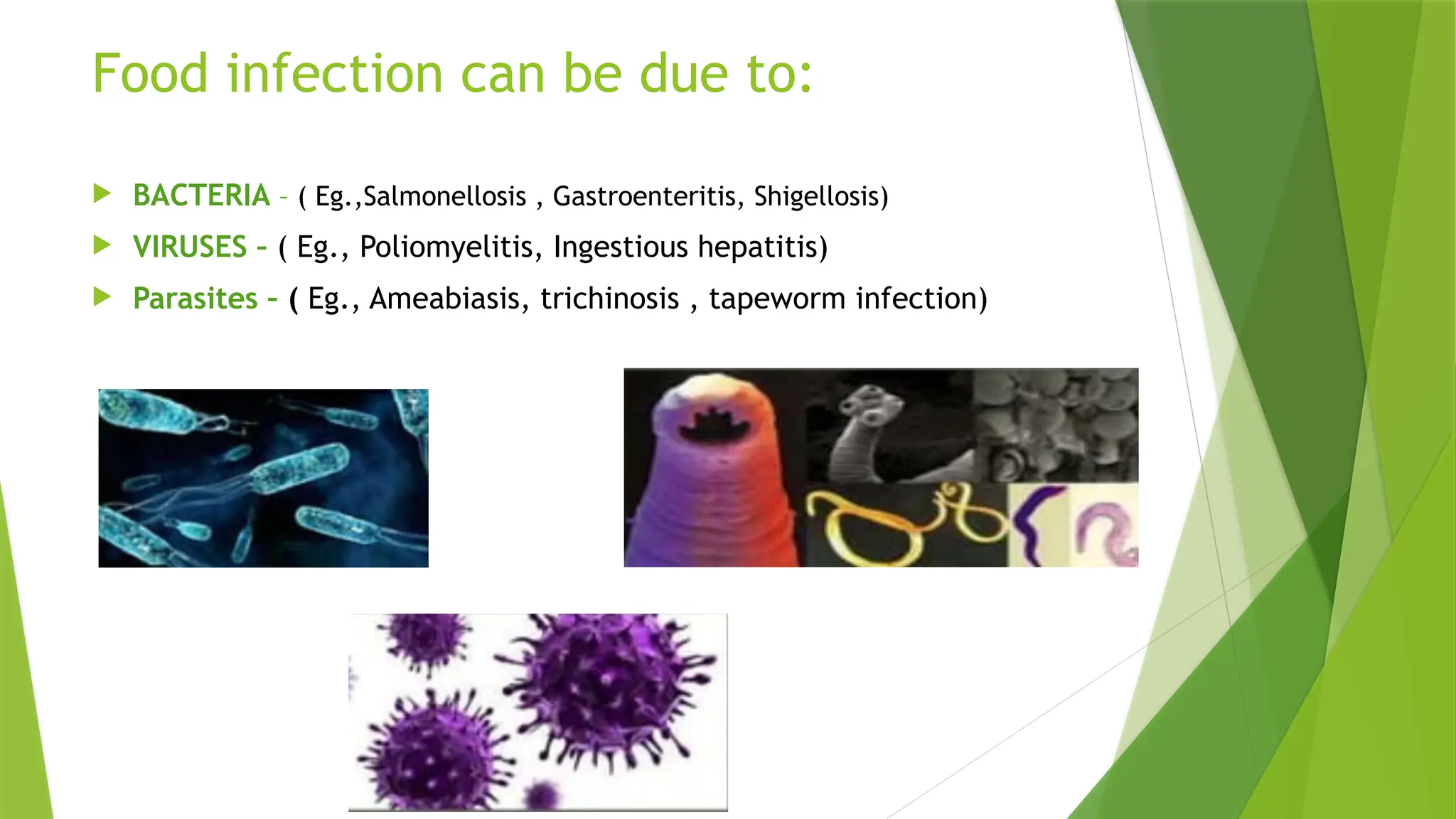
Food infection can be due to:
 BACTERIA – ( Eg.,Salmonellosis , Gastroenteritis, Shigellosis)
 VIRUSES – ( Eg., Poliomyelitis, Ingestious hepatitis)
 Parasites – ( Eg., Ameabiasis, trichinosis , tapeworm infection)
Bacterial food infection
SALMONELLOS:
Salmonellosis is a food borne caused by the salmonella sps.
 Optimum condition for growth: 10-45°C , pH 4-9, water activity (0.93).
 Incubation : 12- 36 hrs.
 Sources. : unrefrigerated meat and poultry
 Symptoms : Nausea , vomiting, greenish foul stools, fever, weakness ,
drowsiness .
 Prevention : Holding food at 66°C for 12 min to kill organisms ,
eliminating contaminated food, cooking food for sufficient time and
proper storing by cooling.
Gastroenteritis:
Disease caused due Enterotoxin released in gut by
Clostridium perfringens
 Optimum conditions : 20 to 55°C, ph 5-9 , heat resistant
 Incubation : 10 to 24 hrs
 Sources: Raw foods and food that are cooled slowly and
held sometime before consumption
 Symptoms : Abdominal pain , diarrhea, gas formation
 Prevention : heating Above 60°C followed by rapid
cooling of cooked meat and other foods , reheating left
overs and personal hygiene
Bacillus cereus
 Optimum condition: 10 to 49°C and pH ( 4.9-9.3)
 Incubation : 2- 8 hrs
 Sources : contaminated foods , cereals , mashed
potatoes, vege sprouts, meat loaf, puddings
 Symptoms : Nausea, abdominal cramps, vomiting,
diarrhoea
 Prevention : Holding foods above 65°C and reheating
leftovers for 72°C and personal hygiene
E.Coli infection
 Most E.Coli are harmless unless they are
Enteropathogenic E.Coli ( EEC)
 Incubation : 8-24 hrs
 Symptoms : Vomiting, dehydration, fever, headache,
abdominal cramps, diarrhoea
 Prevention : cooking food properly, rapid chilling of
foods, use of protected water , ensuring personal hygiene
Shigellosis
It’s a bacterial dysentery caused due to shigella sps.
 Sources : moist food like milk , potato, shrimp , tuna ,
turkey, apple, cider
 Symptoms : Fever, abdominal cramps, chills, mucus or pus
, bloody stools , headache, nausea and dehydration
 Prevention : personal hygiene, control of flies, use of
purified water, sanitary conditions
Bacterial infected food
Viral infections
Common viral Infections caused by
 Norovirus ( most common viral food borne illness, which causes
gastroenteritis, a medical condition characterized by diarrhoea,
vomiting and abdominal pain ),
 Hepatitis A and E ( which cause inflammation of the liver),
 Rotavirus ( particularly associated with gastroenteritis in children)
Viruses spread through
 Contamination of Food by infected food handlers due to poor hygienic
practices,
 Let’s act of food with animal waste, human sewage or sewage –
polluted water,
 Consumption of products of animal origin contaminated with viruses
( e.g.,meat, fish, etc..)
Foods associated with viral infection include:
 Shellfish (E.g, Oysters, mussels), Crustaceans and their products
which are farmed and / or harvested in waters human sewage outlets
 Fruit/ vegetables grown on land fertilised with animal waste or
irrigated with contaminated water,
 Undercooked meats such as pork.
Prevention can be by:
 Training and awareness in good hygiene practices (eg. Hand washing,
washing and proper handling of fruits and vegetables, adequate
storage of food in the refrigerator, thorough cooking of pork meat).
This is particularly important where food is prepared for sick or
vulnerable people in hospitals for example,
 Employees suffering from illness should be restricted from food
service work,
 Use of clean water to irrigate crops, particularly ready to
eat crops,
 Avoiding the use of animal manures on crops, particularly
ready to eat crops,
 Farming of shellfish in clean seawater protected from
sewage contamination
Food borne viruses
 Food poisoning by viruses
Parasitic infections
Infection on include
 Amebiasis : caused by endamoeba histolytica due to sewage contamination in
water
 Trichinosis: caused by Nematodes due to raw, contaminated pork
 Tapeworm infection: caused due to tapeworm infected pork , fish and beef
 Prevention: proper cooking, quick freezing, purified water and personal
hygiene
Parasitic in food
Mycotoxin
 Greek: mukes: mould, toxicum: poison
 Mostly produced by Aspergillus, penicillum and Fusarium.
 Some mycotoxins : Aflatoxin, Ochratoxin, Fumonisins, trichothecenes,
zearalenone, ergot alkaloids
Effects of Aflatoxins :
 Large doses are lethal : acute hemorrhagic syndromes.
 Medium doses are sub – lethal : histotoxic changes.
 Small doses for long term : liver tumors as these are
potent carcinogens.
Mycotoxins on food crops
Mycotoxins in food
Reference
 Food processing and preservation by shivashankar
 Google images
 http:// www.eufic.org/article /en/ artid/ viral
foodborne- illness
Thank you 🤗

food borne infection (bacteria,viral, parasitic)

  • 1.
    VIVEKANANDHA ARTS AND SCIENCECOLLEGE FOR WOMEN VEERACHIPALAYAM- 637303, SANKAGIRI,SALEM Dt., TAMILNADU, INDIA. AFFILIATED TO PERIYAR UNIVERSITY, SALEM . DEPARTMENT OF MICROBIOLOGY . subject: FOOD MICROBIOLOGY TITLE: FOOD BORNE INFECTION SUBJECT INCHARGE: SUBMITTED BY: Dr.R.DINESHKUMAR, M.ARTHI, Assistant professor, III B.SC.MICROBIOLOGY, Department of Microbiology, Department of microbiology, VIAAS, Sankagiri. VIAAS, Sankagiri.
  • 2.
     Definition  Foodinfection  Bacterial infection  Viral infection  Parasitic infection  Mycotoxin  Reference Overview
  • 3.
    DEFINITION :  Foodborne diseases are as a result of ingestion of food stuffs Infected with microorganism or chemicals  The contamination of food may occur at any stage in the process from production to consumption
  • 4.
    FOOD INFECTIONS  Contaminatedfood acting as carrier of microorganisms ( infections include typhoid, cholera dysentery, hepatitis).  Food that serve as culture medium for growth of pathogens ( infection include salmonellosis , shigellosis , gastroenteritis)
  • 5.
    Food infection canbe due to:  BACTERIA – ( Eg.,Salmonellosis , Gastroenteritis, Shigellosis)  VIRUSES – ( Eg., Poliomyelitis, Ingestious hepatitis)  Parasites – ( Eg., Ameabiasis, trichinosis , tapeworm infection)
  • 6.
    Bacterial food infection SALMONELLOS: Salmonellosisis a food borne caused by the salmonella sps.  Optimum condition for growth: 10-45°C , pH 4-9, water activity (0.93).  Incubation : 12- 36 hrs.  Sources. : unrefrigerated meat and poultry  Symptoms : Nausea , vomiting, greenish foul stools, fever, weakness , drowsiness .  Prevention : Holding food at 66°C for 12 min to kill organisms , eliminating contaminated food, cooking food for sufficient time and proper storing by cooling.
  • 7.
    Gastroenteritis: Disease caused dueEnterotoxin released in gut by Clostridium perfringens  Optimum conditions : 20 to 55°C, ph 5-9 , heat resistant  Incubation : 10 to 24 hrs  Sources: Raw foods and food that are cooled slowly and held sometime before consumption  Symptoms : Abdominal pain , diarrhea, gas formation  Prevention : heating Above 60°C followed by rapid cooling of cooked meat and other foods , reheating left overs and personal hygiene
  • 8.
    Bacillus cereus  Optimumcondition: 10 to 49°C and pH ( 4.9-9.3)  Incubation : 2- 8 hrs  Sources : contaminated foods , cereals , mashed potatoes, vege sprouts, meat loaf, puddings  Symptoms : Nausea, abdominal cramps, vomiting, diarrhoea  Prevention : Holding foods above 65°C and reheating leftovers for 72°C and personal hygiene
  • 9.
    E.Coli infection  MostE.Coli are harmless unless they are Enteropathogenic E.Coli ( EEC)  Incubation : 8-24 hrs  Symptoms : Vomiting, dehydration, fever, headache, abdominal cramps, diarrhoea  Prevention : cooking food properly, rapid chilling of foods, use of protected water , ensuring personal hygiene
  • 10.
    Shigellosis It’s a bacterialdysentery caused due to shigella sps.  Sources : moist food like milk , potato, shrimp , tuna , turkey, apple, cider  Symptoms : Fever, abdominal cramps, chills, mucus or pus , bloody stools , headache, nausea and dehydration  Prevention : personal hygiene, control of flies, use of purified water, sanitary conditions
  • 11.
  • 12.
    Viral infections Common viralInfections caused by  Norovirus ( most common viral food borne illness, which causes gastroenteritis, a medical condition characterized by diarrhoea, vomiting and abdominal pain ),  Hepatitis A and E ( which cause inflammation of the liver),  Rotavirus ( particularly associated with gastroenteritis in children) Viruses spread through  Contamination of Food by infected food handlers due to poor hygienic practices,
  • 13.
     Let’s actof food with animal waste, human sewage or sewage – polluted water,  Consumption of products of animal origin contaminated with viruses ( e.g.,meat, fish, etc..) Foods associated with viral infection include:  Shellfish (E.g, Oysters, mussels), Crustaceans and their products which are farmed and / or harvested in waters human sewage outlets  Fruit/ vegetables grown on land fertilised with animal waste or irrigated with contaminated water,  Undercooked meats such as pork. Prevention can be by:  Training and awareness in good hygiene practices (eg. Hand washing, washing and proper handling of fruits and vegetables, adequate storage of food in the refrigerator, thorough cooking of pork meat). This is particularly important where food is prepared for sick or vulnerable people in hospitals for example,  Employees suffering from illness should be restricted from food service work,
  • 14.
     Use ofclean water to irrigate crops, particularly ready to eat crops,  Avoiding the use of animal manures on crops, particularly ready to eat crops,  Farming of shellfish in clean seawater protected from sewage contamination
  • 15.
    Food borne viruses Food poisoning by viruses
  • 16.
    Parasitic infections Infection oninclude  Amebiasis : caused by endamoeba histolytica due to sewage contamination in water  Trichinosis: caused by Nematodes due to raw, contaminated pork  Tapeworm infection: caused due to tapeworm infected pork , fish and beef  Prevention: proper cooking, quick freezing, purified water and personal hygiene
  • 17.
  • 18.
    Mycotoxin  Greek: mukes:mould, toxicum: poison  Mostly produced by Aspergillus, penicillum and Fusarium.  Some mycotoxins : Aflatoxin, Ochratoxin, Fumonisins, trichothecenes, zearalenone, ergot alkaloids
  • 19.
    Effects of Aflatoxins:  Large doses are lethal : acute hemorrhagic syndromes.  Medium doses are sub – lethal : histotoxic changes.  Small doses for long term : liver tumors as these are potent carcinogens.
  • 20.
  • 21.
  • 22.
    Reference  Food processingand preservation by shivashankar  Google images  http:// www.eufic.org/article /en/ artid/ viral foodborne- illness
  • 23.