Follicular lymphoma
Yuan Yao
Follicular Lymphoma (FL)
• Second most common non-Hodgkin’s lymphoma
• Median age of onset is 60
• A neoplasm of follicle centre B cells
• Neoplastic cells show a follicular growth pattern
• Translocation between chromosome 14 and 18
results in the overexpression of the bcl-2 gene
• It is usually indolent
• Can transform into aggressive diffuse large B-
cell lymphoma
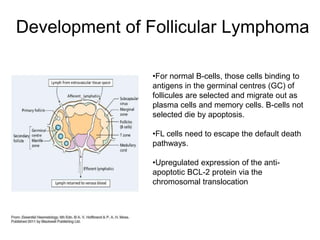
Development of Follicular Lymphoma
•For normal B-cells, those cells binding to
antigens in the germinal centres (GC) of
follicules are selected and migrate out as
plasma cells and memory cells. B-cells not
selected die by apoptosis.
•FL cells need to escape the default death
pathways.
•Upregulated expression of the anti-
apoptotic BCL-2 protein via the
chromosomal translocation
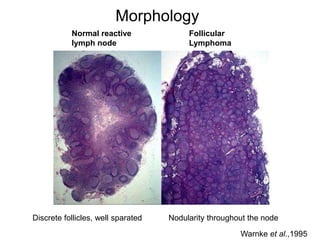
Normal reactive
lymph node
Follicular
Lymphoma
Morphology
Warnke et al.,1995
Discrete follicles, well sparated Nodularity throughout the node
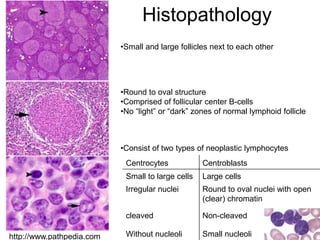
Histopathology
http://www.pathpedia.com
•Small and large follicles next to each other
•Round to oval structure
•Comprised of follicular center B-cells
•No “light” or “dark” zones of normal lymphoid follicle
Centrocytes Centroblasts
Small to large cells Large cells
Irregular nuclei Round to oval nuclei with open
(clear) chromatin
cleaved Non-cleaved
Without nucleoli Small nucleoli
•Consist of two types of neoplastic lymphocytes
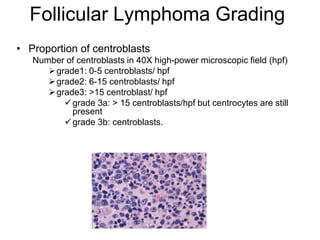
Follicular Lymphoma Grading
• Proportion of centroblasts
Number of centroblasts in 40X high-power microscopic field (hpf)
grade1: 0-5 centroblasts/ hpf
grade2: 6-15 centroblasts/ hpf
grade3: >15 centroblast/ hpf
grade 3a: > 15 centroblasts/hpf but centrocytes are still
present
grade 3b: centroblasts.
Clinical features
• FL predominantly involves lymph nodes,
but also spleen, bone marrow, peripheral
blood.
• Involvement of non-haematopoietic
extranodal sites, such as the
gastrointestinal tract, soft tissue, skin, and
other sites may occur
• Asymptomatic at the time of diagnosis
• Painless lymphadenopathy
• Fever,night sweats, weight lose
Diagnosis of the FL
• Lymph node biopsy
-- Histological staining: determine the grade
-- Immunostaining: high levels of bel-2
expression correlate with a worse outcome
• Blood tests
• Chest X-ray
• CT and PET scanning
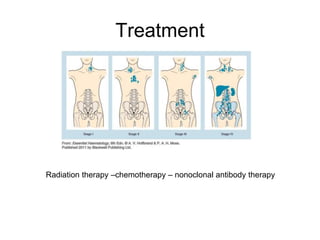
Treatment
Radiation therapy –chemotherapy – nonoclonal antibody therapy
References
Anderson, J., et al. (1998). "Epidemiology of the non-Hodgkin's lymphomas: distribution of the major
subtypes differ by geographic locations." Non-Hodgkin's Lymphoma Classification Project Ann Oncol 9:
717-720.
Leich.E,, et al. (2011). "Pathology, pathogenesis and molecular genetics of follicular NHL." Best Practice
& Research Clinical Haematology 24: 95-109.
Elaine, S. J. (2001). "Pathology and genetics of tumours of haematopoietic and lymphoid tissues." World
Health Organization: 162-167.
Goodlad, J., S. MacPherson, et al. (2004). "Extranodal follicular lymphoma: a clinicopathological and
genetic analysis of 15 cases arising at non-cutaneous extranodal sites." Histopathology 44: 268-276.
Hoffbrand, A., P. Moss, et al., Eds. (2011). Essential Haematology, Blackwell publishing Ltd.
Jong, D. (2005). "Molecular pathogenesis of follicular lymphoma: a cross talk of genetic and immunologic
factors." J.Clinical Oncology 23: 6358-6363.
Bende. RJ,. et al. "Molecular pathoways in follicular lymphoma." Leukemia 21(1): 18-29.
Stevenson, F. and G. Stevenson (2012). "Follicular lymphoma and the immune system: from
pathogenesis to antibody therapy." Blood First edition paper, prepublished online Feb 15.
Warnke, R ., et al. (1995). "Tumors of the lymph nodes and spleen." Atlas of tumor pathology (electronic
fascicle) 14.

follicular lymphoma PPT无注释.ppt

  • 1.
  • 2.
    Follicular Lymphoma (FL) •Second most common non-Hodgkin’s lymphoma • Median age of onset is 60 • A neoplasm of follicle centre B cells • Neoplastic cells show a follicular growth pattern • Translocation between chromosome 14 and 18 results in the overexpression of the bcl-2 gene • It is usually indolent • Can transform into aggressive diffuse large B- cell lymphoma
  • 3.
    Development of FollicularLymphoma •For normal B-cells, those cells binding to antigens in the germinal centres (GC) of follicules are selected and migrate out as plasma cells and memory cells. B-cells not selected die by apoptosis. •FL cells need to escape the default death pathways. •Upregulated expression of the anti- apoptotic BCL-2 protein via the chromosomal translocation
  • 4.
    Normal reactive lymph node Follicular Lymphoma Morphology Warnkeet al.,1995 Discrete follicles, well sparated Nodularity throughout the node
  • 5.
    Histopathology http://www.pathpedia.com •Small and largefollicles next to each other •Round to oval structure •Comprised of follicular center B-cells •No “light” or “dark” zones of normal lymphoid follicle Centrocytes Centroblasts Small to large cells Large cells Irregular nuclei Round to oval nuclei with open (clear) chromatin cleaved Non-cleaved Without nucleoli Small nucleoli •Consist of two types of neoplastic lymphocytes
  • 6.
    Follicular Lymphoma Grading •Proportion of centroblasts Number of centroblasts in 40X high-power microscopic field (hpf) grade1: 0-5 centroblasts/ hpf grade2: 6-15 centroblasts/ hpf grade3: >15 centroblast/ hpf grade 3a: > 15 centroblasts/hpf but centrocytes are still present grade 3b: centroblasts.
  • 7.
    Clinical features • FLpredominantly involves lymph nodes, but also spleen, bone marrow, peripheral blood. • Involvement of non-haematopoietic extranodal sites, such as the gastrointestinal tract, soft tissue, skin, and other sites may occur • Asymptomatic at the time of diagnosis • Painless lymphadenopathy • Fever,night sweats, weight lose
  • 8.
    Diagnosis of theFL • Lymph node biopsy -- Histological staining: determine the grade -- Immunostaining: high levels of bel-2 expression correlate with a worse outcome • Blood tests • Chest X-ray • CT and PET scanning
  • 9.
    Treatment Radiation therapy –chemotherapy– nonoclonal antibody therapy
  • 10.
    References Anderson, J., etal. (1998). "Epidemiology of the non-Hodgkin's lymphomas: distribution of the major subtypes differ by geographic locations." Non-Hodgkin's Lymphoma Classification Project Ann Oncol 9: 717-720. Leich.E,, et al. (2011). "Pathology, pathogenesis and molecular genetics of follicular NHL." Best Practice & Research Clinical Haematology 24: 95-109. Elaine, S. J. (2001). "Pathology and genetics of tumours of haematopoietic and lymphoid tissues." World Health Organization: 162-167. Goodlad, J., S. MacPherson, et al. (2004). "Extranodal follicular lymphoma: a clinicopathological and genetic analysis of 15 cases arising at non-cutaneous extranodal sites." Histopathology 44: 268-276. Hoffbrand, A., P. Moss, et al., Eds. (2011). Essential Haematology, Blackwell publishing Ltd. Jong, D. (2005). "Molecular pathogenesis of follicular lymphoma: a cross talk of genetic and immunologic factors." J.Clinical Oncology 23: 6358-6363. Bende. RJ,. et al. "Molecular pathoways in follicular lymphoma." Leukemia 21(1): 18-29. Stevenson, F. and G. Stevenson (2012). "Follicular lymphoma and the immune system: from pathogenesis to antibody therapy." Blood First edition paper, prepublished online Feb 15. Warnke, R ., et al. (1995). "Tumors of the lymph nodes and spleen." Atlas of tumor pathology (electronic fascicle) 14.