The History Day Project
How can a focused approach help you
develop an inquiry project?
Dawn Bartz, Global Studies Academy
Writing
Creativity
Inspiration
Questioning
Revising
understanding and analyzing
different points of view
determination
Showcasing
Reading
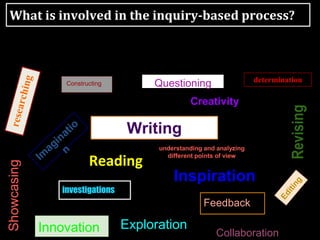
What is involved in the inquiry-based process?
Innovation Exploration
Feedback
Collaboration
investigations
Constructing
Is your topic
interesting to
you? If it is, it
will engage
others.
Choose
something that
excites you and
that you want
to know more
about.
Perhaps your
findings will
lead to new
discoveries.
Choosing a topic for your inquiry
Planning and Prewriting
• What do you know about your topic?
• What have you found from a first search?
• What do you want to find out?
• What questions do you have?
• Can you narrow your interests to 2 or 3
choices/events/people?
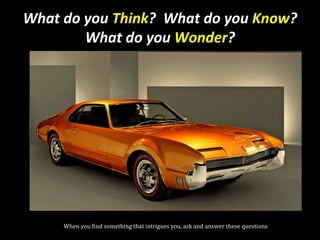
What do you Think? What do you Know?
What do you Wonder?
When you find something that intrigues you, ask and answer these questions
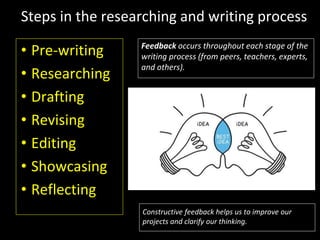
Steps in the researching and writing process
• Pre-writing
• Researching
• Drafting
• Revising
• Editing
• Showcasing
• Reflecting
Feedback occurs throughout each stage of the
writing process (from peers, teachers, experts,
and others).
Constructive feedback helps us to improve our
projects and clarify our thinking.
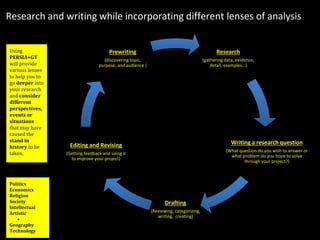
Research and writing while incorporating different lenses of analysis
Research
(gathering data, evidence,
detail, examples…)
Writing a research question
(What question do you wish to answer or
what problem do you hope to solve
through your project?)
Drafting
(Reviewing, categorizing,
writing, creating)
Editing and Revising
(Getting feedback and using it
to improve your project)
Prewriting
(discovering topic,
purpose, and audience )
Using
PERSIA+GT
will provide
various lenses
to help you to
go deeper into
your research
and consider
different
perspectives,
events or
situations
that may have
caused the
stand in
history to be
taken.
Politics
Economics
Religion
Society
Intellectual
Artistic
+
Geography
Technology
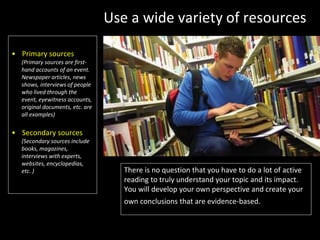
There is no question that you have to do a lot of active
reading to truly understand your topic and its impact.
You will develop your own perspective and create your
own conclusions that are evidence-based.
• Primary sources
(Primary sources are first-
hand accounts of an event.
Newspaper articles, news
shows, interviews of people
who lived through the
event, eyewitness accounts,
original documents, etc. are
all examples)
• Secondary sources
(Secondary sources include
books, magazines,
interviews with experts,
websites, encyclopedias,
etc. )
Use a wide variety of resources
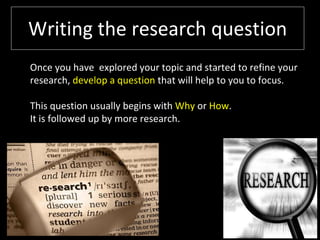
Writing the research question
Once you have explored your topic and started to refine your
research, develop a question that will help to you to focus.
This question usually begins with Why or How.
It is followed up by more research.
Feedback, Editing and Revising
• Your initial research will help you begin to
craft your project proposal and outline.
Constructive, targeted feedback will help you
to improve your plan and final product.
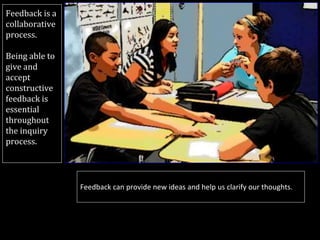
Feedback can provide new ideas and help us clarify our thoughts.
Feedback is a
collaborative
process.
Being able to
give and
accept
constructive
feedback is
essential
throughout
the inquiry
process.
Reading,
writing and
research are
integral parts of
inquiry and the
National
History Day
Project.
Creativity and innovation
are part of the process
and end result.

Focusing your approach to conducting inquiry

  • 1.
    The History DayProject How can a focused approach help you develop an inquiry project? Dawn Bartz, Global Studies Academy
  • 2.
    Writing Creativity Inspiration Questioning Revising understanding and analyzing differentpoints of view determination Showcasing Reading What is involved in the inquiry-based process? Innovation Exploration Feedback Collaboration investigations Constructing
  • 3.
    Is your topic interestingto you? If it is, it will engage others. Choose something that excites you and that you want to know more about. Perhaps your findings will lead to new discoveries. Choosing a topic for your inquiry
  • 4.
    Planning and Prewriting •What do you know about your topic? • What have you found from a first search? • What do you want to find out? • What questions do you have? • Can you narrow your interests to 2 or 3 choices/events/people?
  • 5.
    What do youThink? What do you Know? What do you Wonder? When you find something that intrigues you, ask and answer these questions
  • 6.
    Steps in theresearching and writing process • Pre-writing • Researching • Drafting • Revising • Editing • Showcasing • Reflecting Feedback occurs throughout each stage of the writing process (from peers, teachers, experts, and others). Constructive feedback helps us to improve our projects and clarify our thinking.
  • 7.
    Research and writingwhile incorporating different lenses of analysis Research (gathering data, evidence, detail, examples…) Writing a research question (What question do you wish to answer or what problem do you hope to solve through your project?) Drafting (Reviewing, categorizing, writing, creating) Editing and Revising (Getting feedback and using it to improve your project) Prewriting (discovering topic, purpose, and audience ) Using PERSIA+GT will provide various lenses to help you to go deeper into your research and consider different perspectives, events or situations that may have caused the stand in history to be taken. Politics Economics Religion Society Intellectual Artistic + Geography Technology
  • 8.
    There is noquestion that you have to do a lot of active reading to truly understand your topic and its impact. You will develop your own perspective and create your own conclusions that are evidence-based. • Primary sources (Primary sources are first- hand accounts of an event. Newspaper articles, news shows, interviews of people who lived through the event, eyewitness accounts, original documents, etc. are all examples) • Secondary sources (Secondary sources include books, magazines, interviews with experts, websites, encyclopedias, etc. ) Use a wide variety of resources
  • 9.
    Writing the researchquestion Once you have explored your topic and started to refine your research, develop a question that will help to you to focus. This question usually begins with Why or How. It is followed up by more research.
  • 10.
    Feedback, Editing andRevising • Your initial research will help you begin to craft your project proposal and outline. Constructive, targeted feedback will help you to improve your plan and final product.
  • 11.
    Feedback can providenew ideas and help us clarify our thoughts. Feedback is a collaborative process. Being able to give and accept constructive feedback is essential throughout the inquiry process.
  • 12.
    Reading, writing and research are integralparts of inquiry and the National History Day Project. Creativity and innovation are part of the process and end result.