First created 11 Apr 2014. Version 5.0 - 3 Jul 2020. Jerry Daperrp. London.
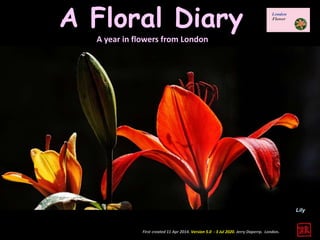
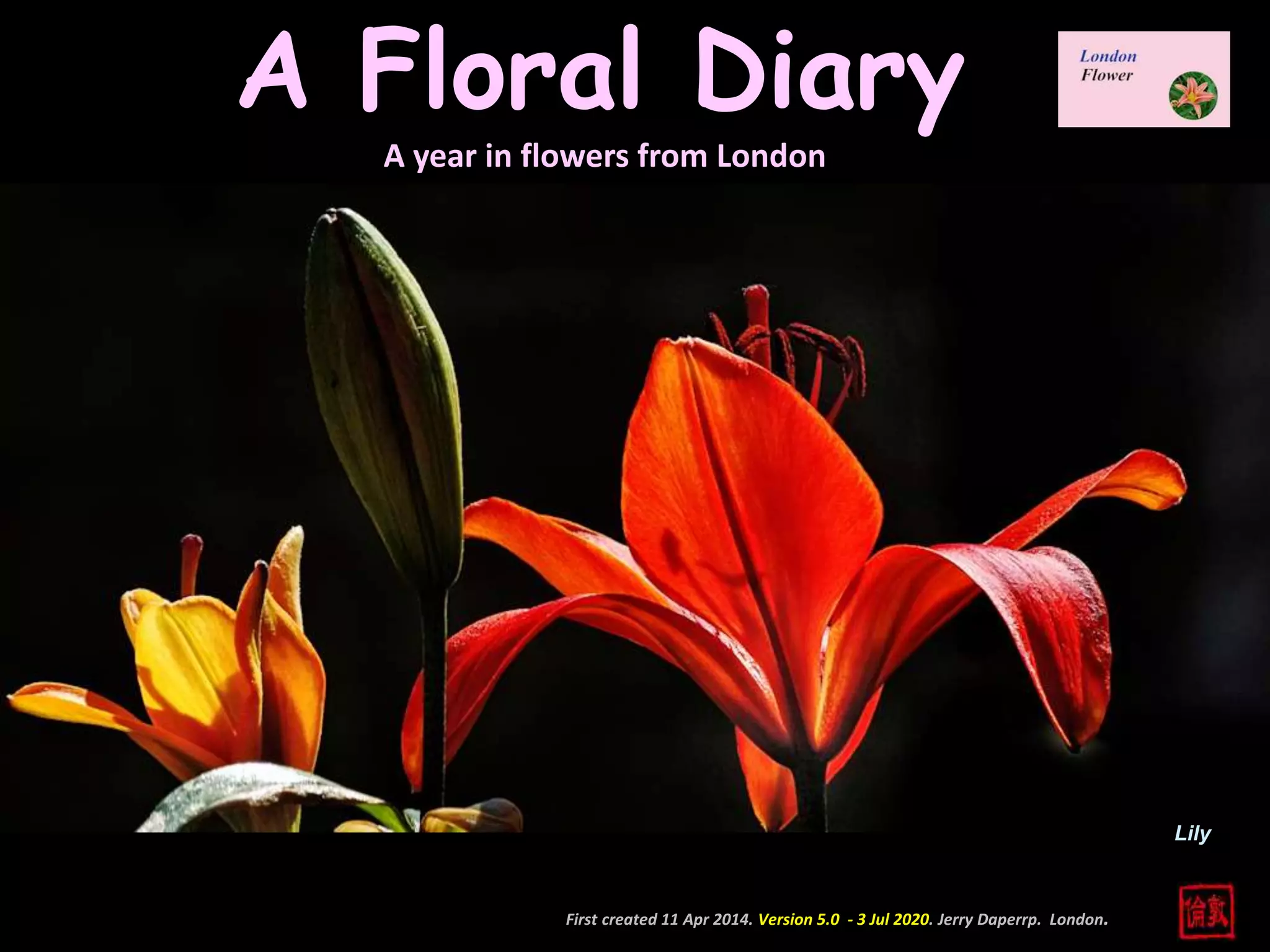
A Floral Diary
A year in flowers from London
Lily
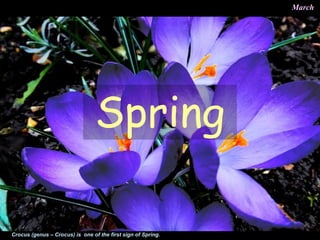
March
Crocus (genus – Crocus) is one of the first sign of Spring.
Spring
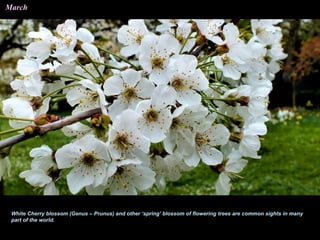
March
White Cherry blossom (Genus – Prunus) and other ‘spring’ blossom of flowering trees are common sights in many
part of the world.
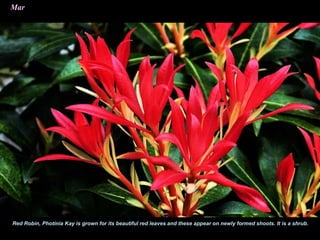
Mar
Red Robin, Photinia Kay is grown for its beautiful red leaves and these appear on newly formed shoots. It is a shrub.
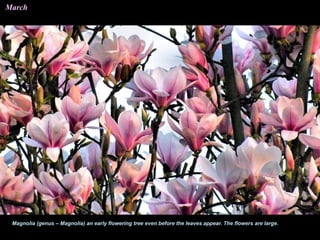
Magnolia (genus – Magnolia) an early flowering tree even before the leaves appear. The flowers are large.
March
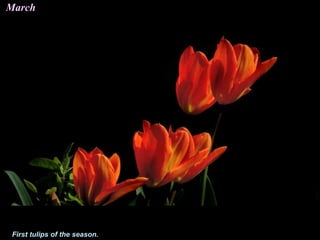
March
First tulips of the season.
April
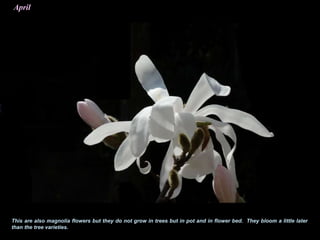
This are also magnolia flowers but they do not grow in trees but in pot and in flower bed. They bloom a little later
than the tree varieties.
April
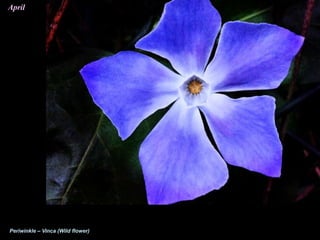
Periwinkle – Vinca (Wild flower)
April
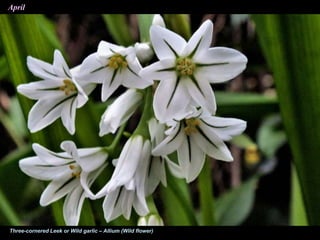
Three-cornered Leek or Wild garlic – Allium (Wild flower)
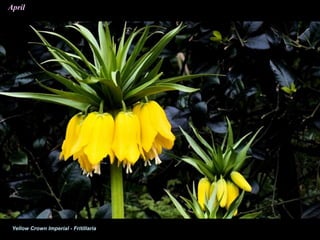
Yellow Crown Imperial - Fritillaria
April
April
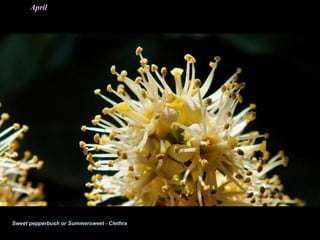
Sweet pepperbush or Summersweet - Clethra
April
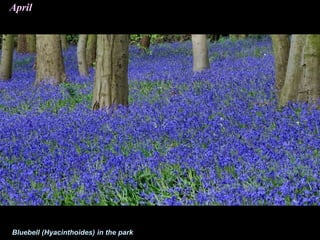
Bluebell (Hyacinthoides) in the park
April
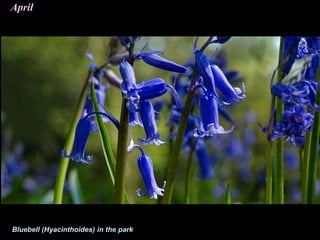
Bluebell (Hyacinthoides) in the park
April
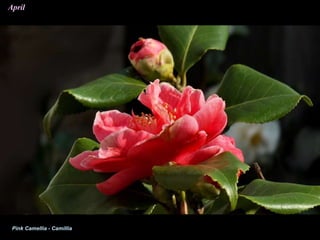
Pink Camellia - Camillia
April
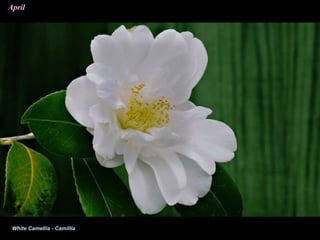
White Camellia - Camillia
April
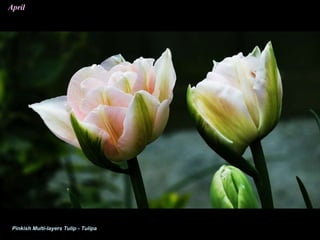
Pinkish Multi-layers Tulip - Tulipa
April
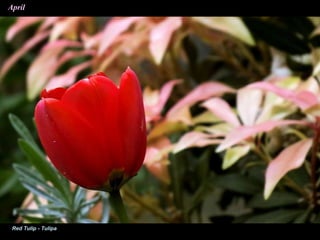
Red Tulip - Tulipa
April
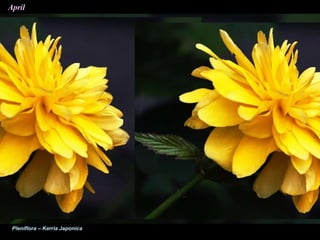
Pleniflora – Kerria Japonica
April
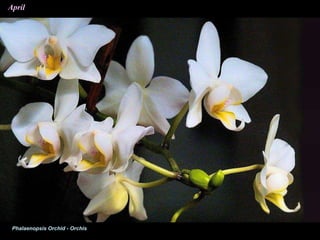
Phalaenopsis Orchid - Orchis
Summe
r
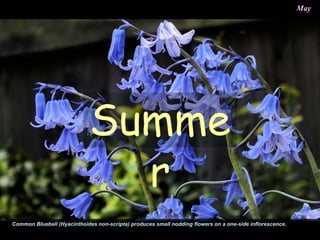
Common Bluebell (Hyacinthoides non-scripta) produces small nodding flowers on a one-side inflorescence.
May
May
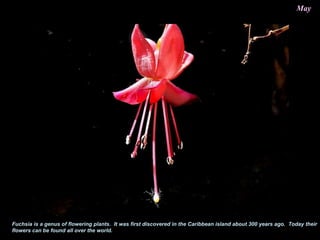
Fuchsia is a genus of flowering plants. It was first discovered in the Caribbean island about 300 years ago. Today their
flowers can be found all over the world.
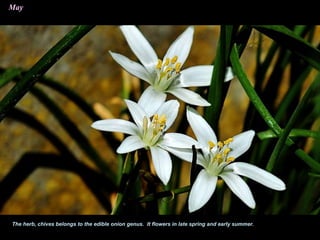
The herb, chives belongs to the edible onion genus. It flowers in late spring and early summer.
May
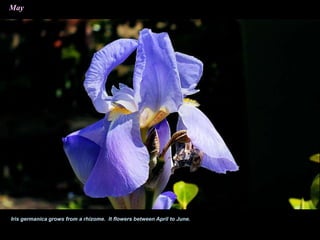
Iris germanica grows from a rhizome. It flowers between April to June.
May
May
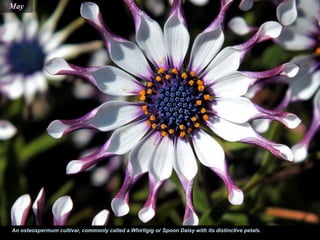
An osteospermum cultivar, commonly called a Whirligig or Spoon Daisy with its distinctive petals.
May
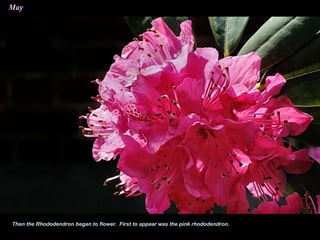
Then the Rhododendron began to flower. First to appear was the pink rhododendron.
May
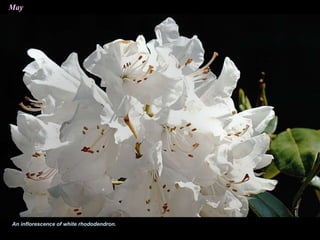
An inflorescence of white rhododendron.
May
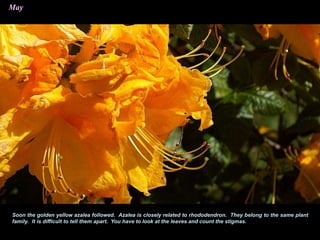
Soon the golden yellow azalea followed. Azalea is closely related to rhododendron. They belong to the same plant
family. It is difficult to tell them apart. You have to look at the leaves and count the stigmas.
May
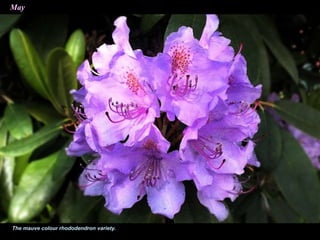
The mauve colour rhododendron variety.
May
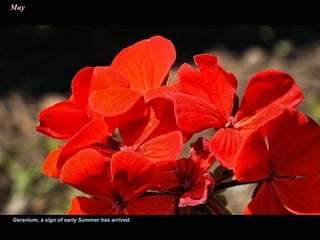
Geranium, a sign of early Summer has arrived.
May
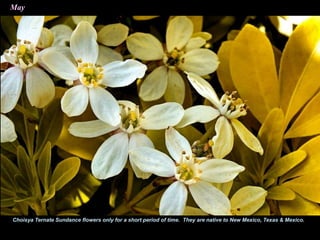
Choisya Ternate Sundance flowers only for a short period of time. They are native to New Mexico, Texas & Mexico.
May
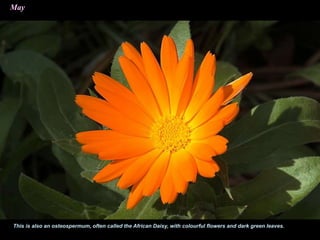
This is also an osteospermum, often called the African Daisy, with colourful flowers and dark green leaves.
May
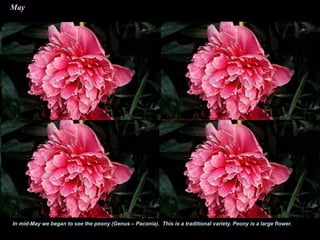
In mid-May we began to see the peony (Genus – Paconia). This is a traditional variety. Peony is a large flower.
May
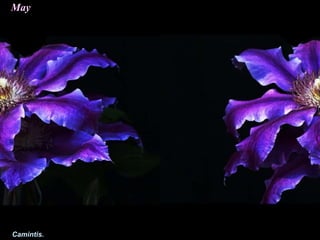
Camintis.
May
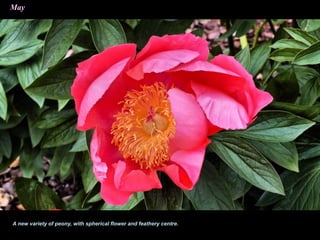
A new variety of peony, with spherical flower and feathery centre.
May
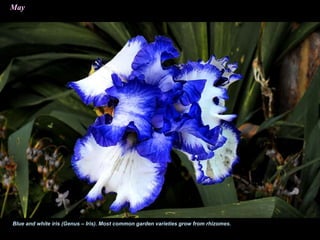
Blue and white iris (Genus – Iris). Most common garden varieties grow from rhizomes.
May
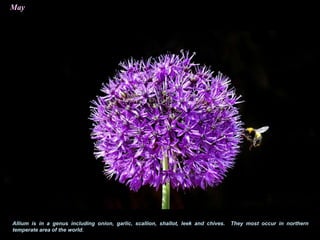
Allium is in a genus including onion, garlic, scallion, shallot, leek and chives. They most occur in northern
temperate area of the world.
May
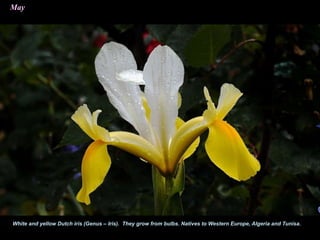
White and yellow Dutch iris (Genus – Iris). They grow from bulbs. Natives to Western Europe, Algeria and Tunisa.
May
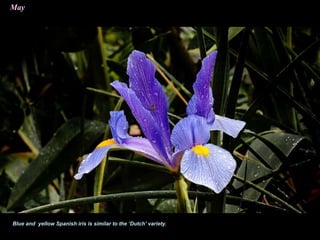
Blue and yellow Spanish iris is similar to the ‘Dutch’ variety.
June
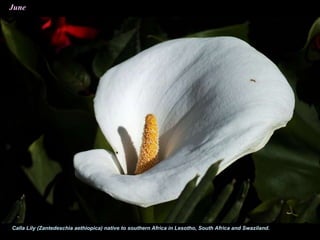
Calla Lily (Zantedeschia aethiopica) native to southern Africa in Lesotho, South Africa and Swaziland.
May
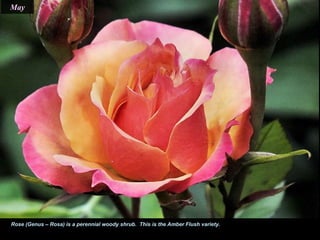
Rose (Genus – Rosa) is a perennial woody shrub. This is the Amber Flush variety.
June
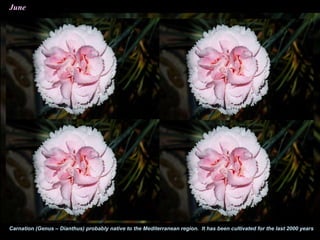
Carnation (Genus – Dianthus) probably native to the Mediterranean region. It has been cultivated for the last 2000 years
June
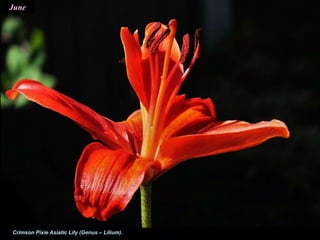
Crimson Pixie Asiatic Lily (Genus – Lilium).
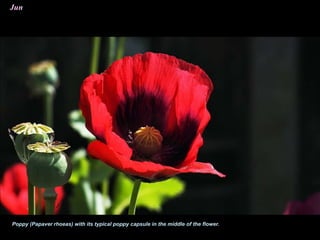
Poppy (Papaver rhoeas) with its typical poppy capsule in the middle of the flower.
Jun
July
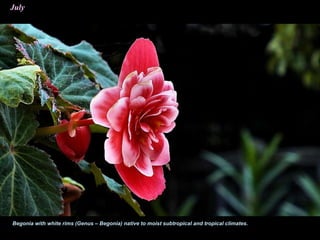
Begonia with white rims (Genus – Begonia) native to moist subtropical and tropical climates.
July
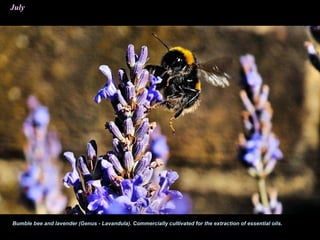
Bumble bee and lavender (Genus - Lavandula). Commercially cultivated for the extraction of essential oils.
July
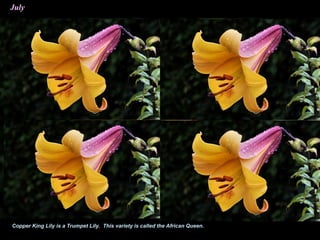
Copper King Lily is a Trumpet Lily. This variety is called the African Queen.
July
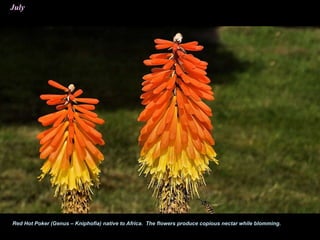
Red Hot Poker (Genus – Kniphofia) native to Africa. The flowers produce copious nectar while blomming.
July
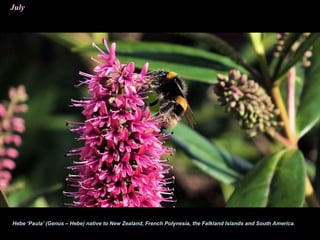
Hebe ‘Paula’ (Genus – Hebe) native to New Zealand, French Polynesia, the Falkland Islands and South America.
July
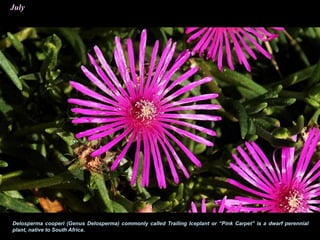
Delosperma cooperi (Genus Delosperma) commonly called Trailing Iceplant or “Pink Carpet” is a dwarf perennial
plant, native to South Africa.
July
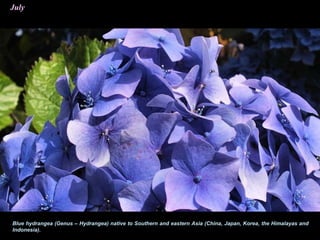
Blue hydrangea (Genus – Hydrangea) native to Southern and eastern Asia (China, Japan, Korea, the Himalayas and
Indonesia).
July
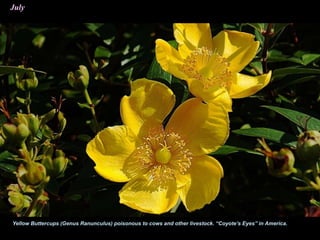
Yellow Buttercups (Genus Ranunculus) poisonous to cows and other livestock. “Coyote’s Eyes” in America.
July
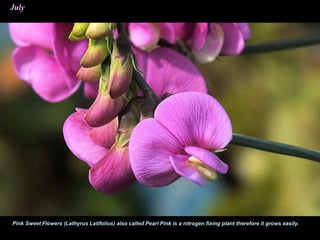
Pink Sweet Flowers (Lathyrus Latifolius) also called Pearl Pink is a nitrogen fixing plant therefore it grows easily.
July
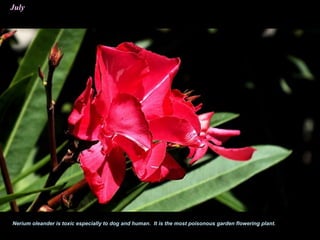
Nerium oleander is toxic especially to dog and human. It is the most poisonous garden flowering plant.
July
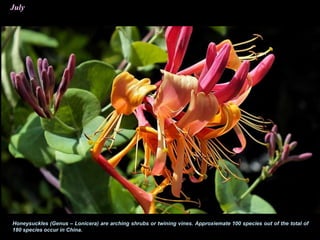
Honeysuckles (Genus – Lonicera) are arching shrubs or twining vines. Approxiemate 100 species out of the total of
180 species occur in China.
July
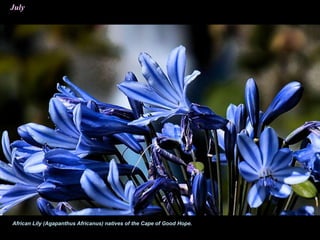
African Lily (Agapanthus Africanus) natives of the Cape of Good Hope.
July
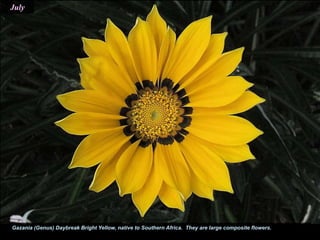
Gazania (Genus) Daybreak Bright Yellow, native to Southern Africa. They are large composite flowers.
July
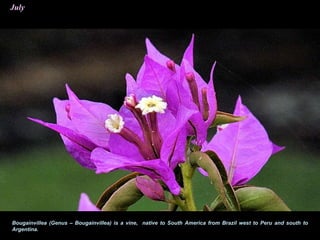
Bougainvillea (Genus – Bougainvillea) is a vine, native to South America from Brazil west to Peru and south to
Argentina.
July
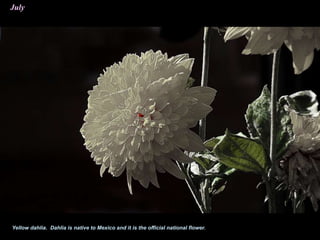
Yellow dahlia. Dahlia is native to Mexico and it is the official national flower.
July
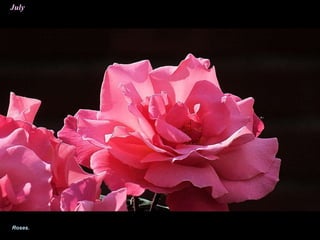
Roses.
July
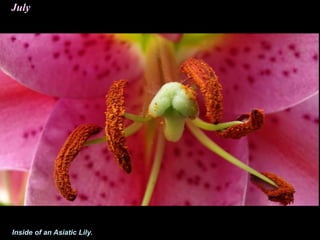
Inside of an Asiatic Lily.
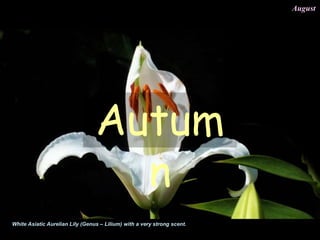
White Asiatic Aurelian Lily (Genus – Lilium) with a very strong scent.
August
Autum
n
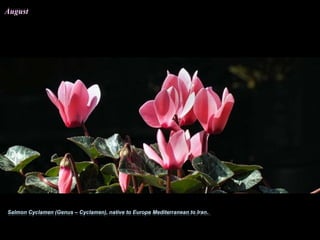
Salmon Cyclamen (Genus – Cyclamen), native to Europe Mediterrancean to Iran.Salmon Cyclamen (Genus – Cyclamen), native to Europe Mediterranean to Iran.
AugustAugust
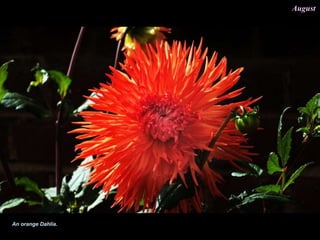
An orange Dahlia.
August
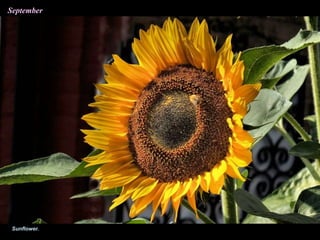
Sunflower.
September
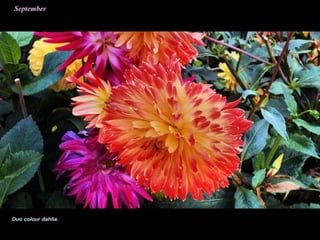
Duo colour dahlia.
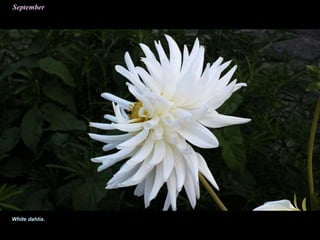
White dahlia.
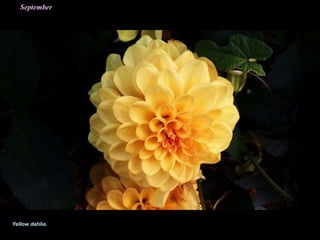
Yellow dahlia.
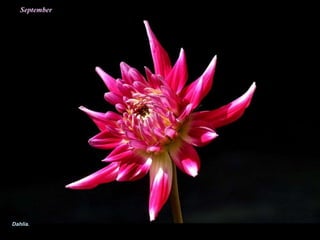
Dahlia.
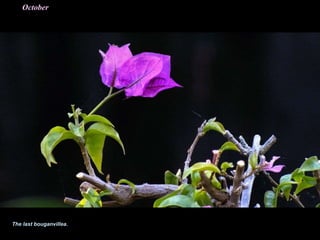
The last bouganvillea.
October
The last rose of the year.
December
Winter
All rights reserved. Rights belong to their respective owners.
Available free for non-commercial, educational and personal use.
The
End
Music – My Heart Will Go On, Artist not known
Floral Diary for the Year 5.0

Floral Diary for the Year 5.0

Editor's Notes

  • #2 This is a series of photos, mostly taken in our garden and around London, recording the floral changes during a year. It shows the varieties of flowers that people grow in their garden in London. It is common to see exotic flowers from many parts of the world. Cultivars and hybrids of naturally flowering species are being developed for the English gardens, like the Calla Lily from South Africa and Passion flowers from South American and Asia. ************* 2014 version This is a series of photos, mostly taken in our garden and around London, recording the floral changes as the year progress. It shows the varieties of flowers that people grow in their garden London. As properties are becoming expensive, more high rises are being built and population is becoming more work orientated, the number of urban gardens in London is also disappearing. A recent study on aerial photos of London between 1998-99 and 2006-08, Analysis of the data showed London’s green land dropped by 12% over the period. It also shows the about a quarter of Greater London land is used for gardening. London has always a world city with a large proportion of its population originates from other parts of the world. Likewise as London also experiences the effect of a more connected world, in our gardens. It is common to see exotic flowers from many parts of the world. Cultivars and hybrids of naturally flowering species are being developed and marketed for the English gardens, like the Calla Lily from South Africa and Passion flowers from South American and Asia.
  • #72 First Release 11 Apr 2014 Version 5.0 3 July 2020