


Flexible Learning in Professional Development
A next-generation flexible learning platform
    that augments professional practice.
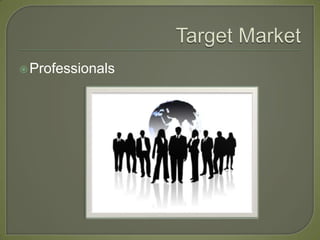
 Professionals
 Under   Pressure
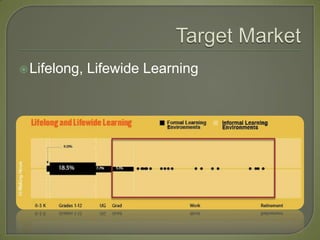
 Lifelong,   Lifewide Learning
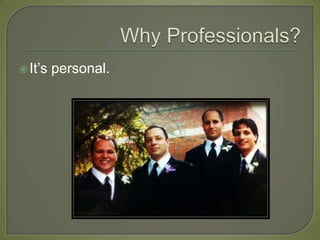
 It’s   personal.
 Biggest    Players
  • Blackboard
  • Moodle
  • Canvas
  • PHP/MySQL CMS systems (e.g. Drupal)
 Mobile   and ubiquitous technology

 Sustainableprofessional development that
 draws from the context of practice

 Predictive,
            intelligent learning construction
 for working professionals

 Generational   changes in workforce
A Learning Sciences Perspective
 How  can we harness what we know about
 technology and Learning Sciences to grow
 into these markets?

 How can we realize these market
 opportunities while providing real value to
 our professional clients?
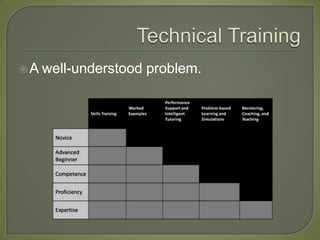
A   well-understood problem.
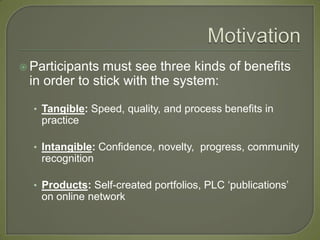
 Participants must see three kinds of benefits
 in order to stick with the system:

  • Tangible: Speed, quality, and process benefits in
   practice

  • Intangible: Confidence, novelty, progress, community
   recognition

  • Products: Self-created portfolios, PLC ‘publications’
   on online network
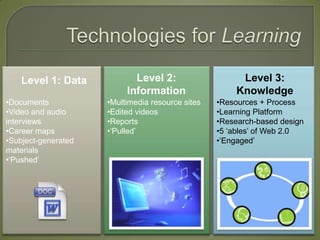
Product Logic
Level 1: Data           Level 2:                    Level 3:
                          Information                  Knowledge
•Documents           •Multimedia resource sites   •Resources + Process
•Video and audio     •Edited videos               •Learning Platform
interviews           •Reports                     •Research-based design
•Career maps         •‘Pulled’                    •5 ‘ables’ of Web 2.0
•Subject-generated                                •‘Engaged’
materials
•‘Pushed’
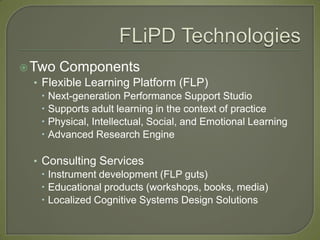
 Two Components
   • Flexible Learning Platform (FLP)
      Next-generation Performance Support Studio
      Supports adult learning in the context of practice
      Physical, Intellectual, Social, and Emotional Learning
      Advanced Research Engine

   • Consulting Services
      Instrument development (FLP guts)
      Educational products (workshops, books, media)
      Localized Cognitive Systems Design Solutions
~
~
~
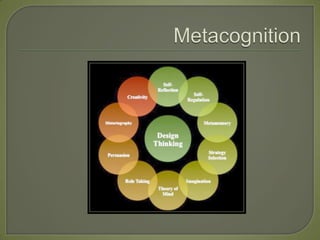
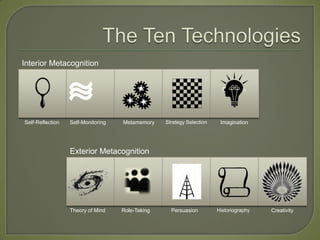
Interior Metacognition


Self-Reflection
                  ~
                  Self-Monitoring   Metamemory    Strategy Selection    Imagination


                  Exterior Metacognition


                  Theory of Mind    Role-Taking     Persuasion         Historiography   Creativity
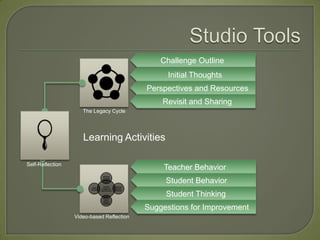
Challenge Outline
                                                 Initial Thoughts
                                           Perspectives and Resources
                                               Revisit and Sharing
                     The Legacy Cycle


                     Learning Activities

Self-Reflection
                                                Teacher Behavior
                                                Student Behavior
                                                Student Thinking
                                           Suggestions for Improvement
                  Video-based Reflection
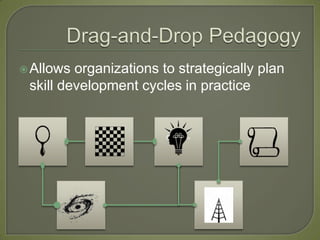
 Allows organizations to strategically plan
 skill development cycles in practice
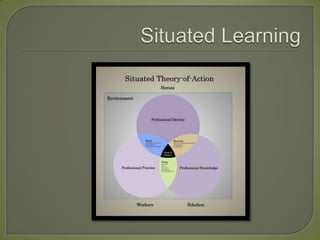
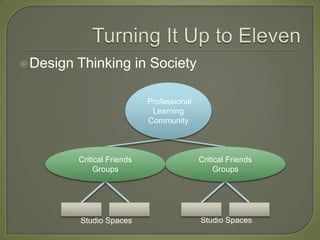
 Design   Thinking in Society

                              Professional
                               Learning
                              Community


           Critical Friends                  Critical Friends
                Groups                            Groups


           Studio Spaces                     Studio Spaces
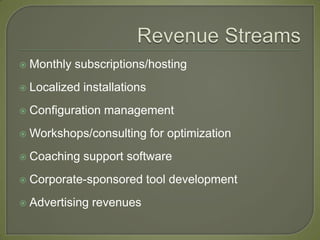
   Monthly subscriptions/hosting
   Localized installations
   Configuration management
   Workshops/consulting for optimization
   Coaching support software
   Corporate-sponsored tool development
   Advertising revenues
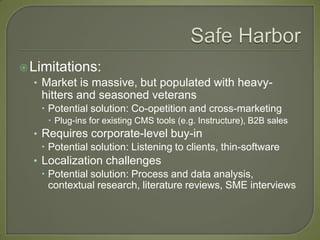
 Limitations:
   • Market is massive, but populated with heavy-
    hitters and seasoned veterans
     Potential solution: Co-opetition and cross-marketing
      Plug-ins for existing CMS tools (e.g. Instructure), B2B sales
  • Requires corporate-level buy-in
     Potential solution: Listening to clients, thin-software
  • Localization challenges
     Potential solution: Process and data analysis,
      contextual research, literature reviews, SME interviews

FLiPD Technologies

  • 1.
    Flexible Learning inProfessional Development
  • 2.
    A next-generation flexiblelearning platform that augments professional practice.
  • 3.
  • 4.
     Under Pressure
  • 5.
     Lifelong, Lifewide Learning
  • 6.
     It’s personal.
  • 7.
     Biggest Players • Blackboard • Moodle • Canvas • PHP/MySQL CMS systems (e.g. Drupal)
  • 8.
     Mobile and ubiquitous technology  Sustainableprofessional development that draws from the context of practice  Predictive, intelligent learning construction for working professionals  Generational changes in workforce
  • 9.
  • 10.
     How can we harness what we know about technology and Learning Sciences to grow into these markets?  How can we realize these market opportunities while providing real value to our professional clients?
  • 11.
    A well-understood problem.
  • 14.
     Participants mustsee three kinds of benefits in order to stick with the system: • Tangible: Speed, quality, and process benefits in practice • Intangible: Confidence, novelty, progress, community recognition • Products: Self-created portfolios, PLC ‘publications’ on online network
  • 15.
  • 16.
    Level 1: Data Level 2: Level 3: Information Knowledge •Documents •Multimedia resource sites •Resources + Process •Video and audio •Edited videos •Learning Platform interviews •Reports •Research-based design •Career maps •‘Pulled’ •5 ‘ables’ of Web 2.0 •Subject-generated •‘Engaged’ materials •‘Pushed’
  • 17.
     Two Components • Flexible Learning Platform (FLP)  Next-generation Performance Support Studio  Supports adult learning in the context of practice  Physical, Intellectual, Social, and Emotional Learning  Advanced Research Engine • Consulting Services  Instrument development (FLP guts)  Educational products (workshops, books, media)  Localized Cognitive Systems Design Solutions
  • 18.
  • 19.
    ~ Interior Metacognition Self-Reflection ~ Self-Monitoring Metamemory Strategy Selection Imagination Exterior Metacognition Theory of Mind Role-Taking Persuasion Historiography Creativity
  • 20.
    Challenge Outline Initial Thoughts Perspectives and Resources Revisit and Sharing The Legacy Cycle Learning Activities Self-Reflection Teacher Behavior Student Behavior Student Thinking Suggestions for Improvement Video-based Reflection
  • 22.
     Allows organizationsto strategically plan skill development cycles in practice
  • 23.
     Design Thinking in Society Professional Learning Community Critical Friends Critical Friends Groups Groups Studio Spaces Studio Spaces
  • 24.
    Monthly subscriptions/hosting  Localized installations  Configuration management  Workshops/consulting for optimization  Coaching support software  Corporate-sponsored tool development  Advertising revenues
  • 25.
     Limitations: • Market is massive, but populated with heavy- hitters and seasoned veterans  Potential solution: Co-opetition and cross-marketing  Plug-ins for existing CMS tools (e.g. Instructure), B2B sales • Requires corporate-level buy-in  Potential solution: Listening to clients, thin-software • Localization challenges  Potential solution: Process and data analysis, contextual research, literature reviews, SME interviews

Editor's Notes

  • #4 ProfessionalsBillions are spent annually on PDBoeing alone spends $450 million on education globally, mostly in engineering and business
  • #5 Under PressureLegally, ethically, and professionally culpable for their actions. This allows us to bracket-in paraprofessions like social work as well as full professions like nursing and law.
  • #6 Lifelong, Lifewide Learning40% of professional learning occurs informally over the decades following graduate education
  • #8 Biggest PlayersBlackboardClumsy and unpleasant to use; embodies classroom management, not learningMoodleOpen-source and free, but unstable; widely used in school districtCanvasCost-effective and flexible features; has some features that promote student engagement in learningPHP/MySQL CMS systems (e.g. Drupal)Flexible and powerful; requires substantial investment
  • #24 Making thinking publicSociétédesArtistesIndépendants