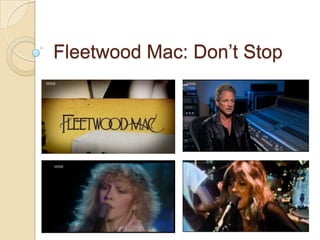
Fleetwood Mac: Don’t Stop
Type of Documentary
This is a mixed documentary as there is a variety of
observations, interviews with a different people within the
music industry – relating to the topic. There is also a variety of
archive footage used.
Theme
The theme of this documentary is music, and the way this
particular band evolved and went through.
Narrative Structure
At the start of the documentary, there is a montage of archive
footage of the band playing live and there are some
interviews with people within the music industry too. It then
goes to the title.
In the middle they’re going chronologically explaining what
the band have been through, their popularity, how they got
there, etc. They have images fading in and out
sometimes, and cut aways in front of the voice of some
interviews to keep the audience interested.
At the end of this documentary, it explains what happen to
them and shows the people from the band today explaining
how they came to terms with it, and what happened to their
close relationships. This rounds off the documentary as it is a
conclusion to the end of their road.
Camera Work
Most of the footage that was used as cut aways is archive
footage so it wasn't the best quality as it was recorded a fair
few years ago.
The interviews were done professionally as they were all at a
medium shot and the person being interviews was only ever
on the right or the left. There are panning shots of recording
studios, long shots of music shops and low angle shots of
signs for Hollywood, and so on.
Mise en Scene
The mise en scene of the interviews is quite good as in the
background of most interviews it is related to music. There’s
an interview that took place in a recording studio, and one
near a stage with a microphone fuzzy in the background.
Sound
The non-diegetic sound in the background is always music by
Fleetwood Mac, so that it relates to what the whole
documentary is about. There are also some times diegetic
sound coming from the archive footage, like fans
screaming, them singing live, etc.
Editing
The editing in this documentary involves a lot of simple cuts
like most documentaries. There are fade transitions when
they show images, and sometimes it is editing so that the
image is zoomed in on. There are surprisingly no banners or
titles for people in the interviews too.
Graphics
The graphics in this documentary include the title from the
opening sequence. There are no banners or titles of people
who have been interviewed, so there aren’t different graphics
to usual.
Archive Material
the whole documentary features archive material throughout
it. Most of the cut aways are done using these. It is usually
footage from them performing in the past, or past images they
took themselves as they moved forward in their journey.
There are also ones of fans screaming and singing along to
the live music. Just a wide variety of archive material that was
used.

Fleetwood mac: Don't Stop

  • 1.
  • 2.
    Type of Documentary Thisis a mixed documentary as there is a variety of observations, interviews with a different people within the music industry – relating to the topic. There is also a variety of archive footage used. Theme The theme of this documentary is music, and the way this particular band evolved and went through. Narrative Structure At the start of the documentary, there is a montage of archive footage of the band playing live and there are some interviews with people within the music industry too. It then goes to the title. In the middle they’re going chronologically explaining what the band have been through, their popularity, how they got there, etc. They have images fading in and out sometimes, and cut aways in front of the voice of some interviews to keep the audience interested. At the end of this documentary, it explains what happen to them and shows the people from the band today explaining how they came to terms with it, and what happened to their close relationships. This rounds off the documentary as it is a conclusion to the end of their road.
  • 3.
    Camera Work Most ofthe footage that was used as cut aways is archive footage so it wasn't the best quality as it was recorded a fair few years ago. The interviews were done professionally as they were all at a medium shot and the person being interviews was only ever on the right or the left. There are panning shots of recording studios, long shots of music shops and low angle shots of signs for Hollywood, and so on. Mise en Scene The mise en scene of the interviews is quite good as in the background of most interviews it is related to music. There’s an interview that took place in a recording studio, and one near a stage with a microphone fuzzy in the background. Sound The non-diegetic sound in the background is always music by Fleetwood Mac, so that it relates to what the whole documentary is about. There are also some times diegetic sound coming from the archive footage, like fans screaming, them singing live, etc.
  • 4.
    Editing The editing inthis documentary involves a lot of simple cuts like most documentaries. There are fade transitions when they show images, and sometimes it is editing so that the image is zoomed in on. There are surprisingly no banners or titles for people in the interviews too. Graphics The graphics in this documentary include the title from the opening sequence. There are no banners or titles of people who have been interviewed, so there aren’t different graphics to usual. Archive Material the whole documentary features archive material throughout it. Most of the cut aways are done using these. It is usually footage from them performing in the past, or past images they took themselves as they moved forward in their journey. There are also ones of fans screaming and singing along to the live music. Just a wide variety of archive material that was used.