The Music
Biz: The Marketing of Meatloaf
 This documentary contains observational, narration
and interview features so is a MIXED documentary.
Type of documentary
The Show Biz documentary on Meatloaf forms an closed narrative structure
meaning that there was a clear ending point to the programme. This
consisted of the release of Meatloaf’s album and the success/failure it
brought.
Meatloaf’s record
Themes displayed within the
documentary:
Awards
Power of the media
Music Business - success
Advertisement/Marketing
The documentary follows a single stranded and non linear narrative
structure meaning these themes are all under the same topic and appear
non-chronologically …
Within the documentary there were many
conventional interviews that took place:
-Medium close ups of interviewee
- Talking indirectly, looking away
from the camera
- Rule of 3rd’s : where interviewee
was placed slightly to the right or left of centre.
The handheld camera at the start of the documentary allowed the
audience to see the conference, crowds and observational footage
of the music video.
CAMERAWORK:
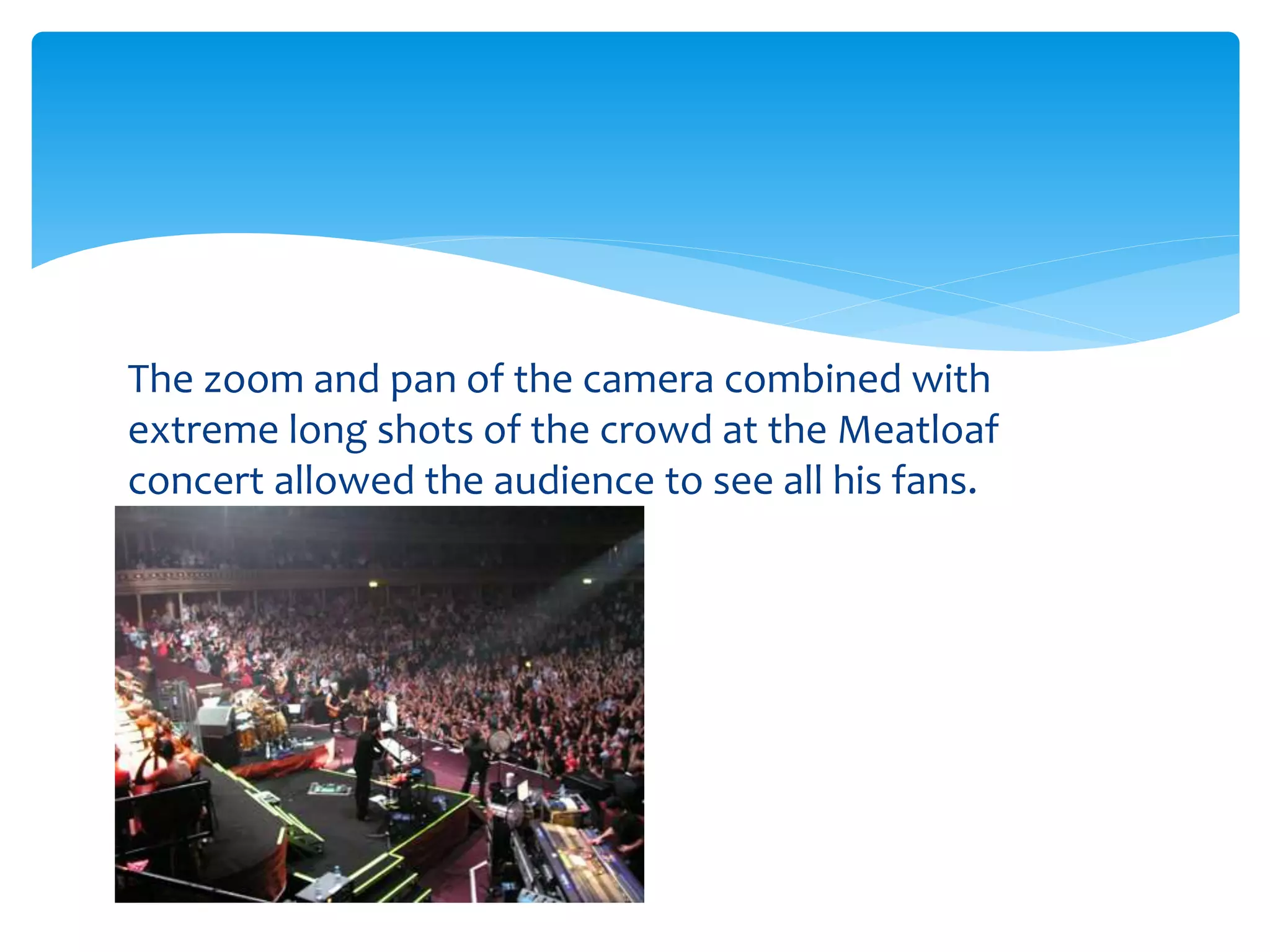
The zoom and pan of the camera combined with
extreme long shots of the crowd at the Meatloaf
concert allowed the audience to see all his fans.
The documentary contained real
people and locations, these
were both related and relevant
to the music.
Meatloaf wore sunglasses
signifing his rock styled
character, his interview was low
key lighting and so set the rock
type mood.
Mise en Scene
During the interviews
meatloaf’s image or video was
projected in the background,
this is conventional of an
interview and also links to the
themes of the documentary.
The male narration within
the documentary
provided the audience
with context and helped
confirm the exposition.
The “voice of god”
narration was calm so
brought an authorative
nature to the
documentary.
Sound:
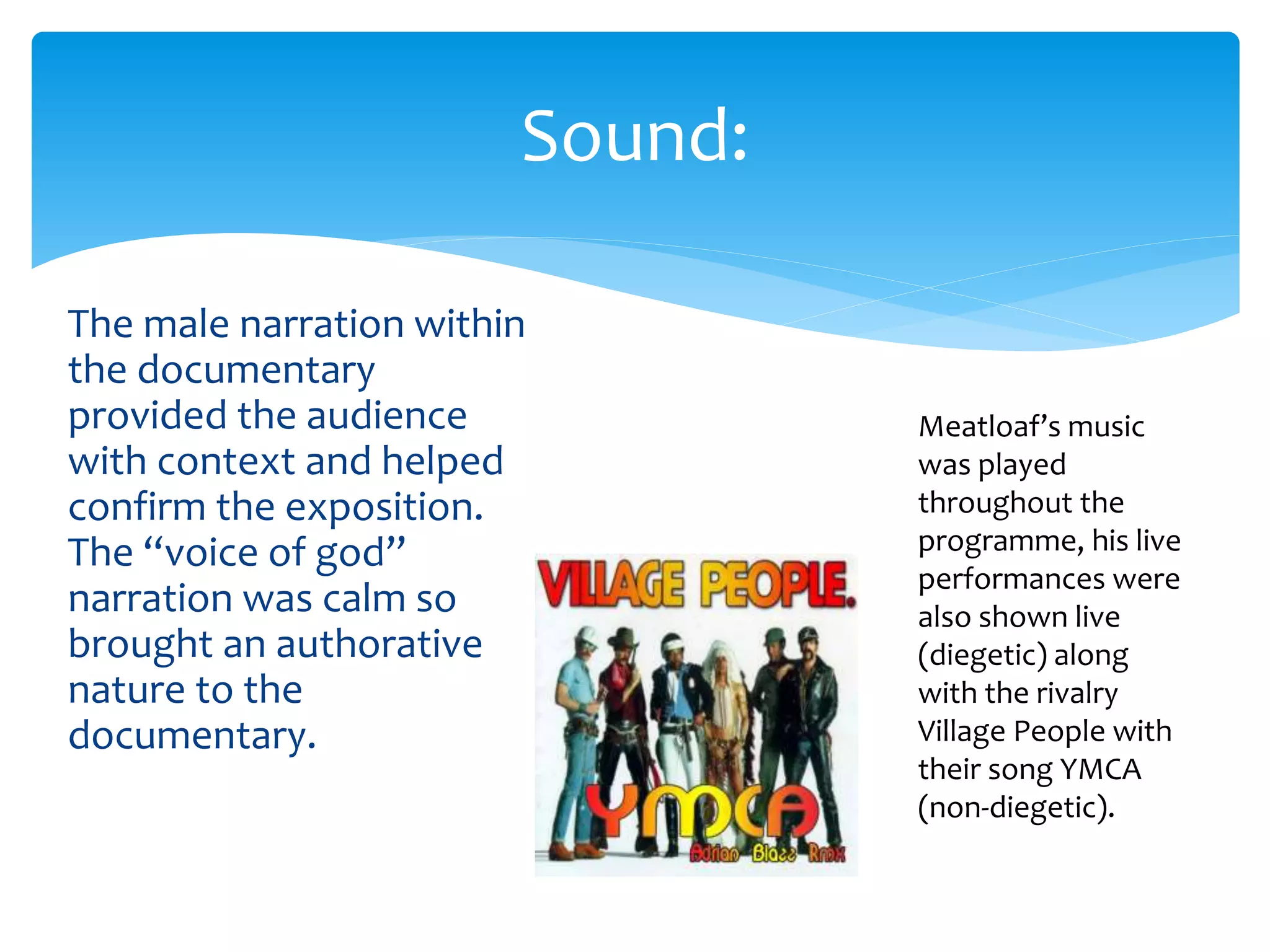
Meatloaf’s music
was played
throughout the
programme, his live
performances were
also shown live
(diegetic) along
with the rivalry
Village People with
their song YMCA
(non-diegetic).
Montages were used to provide context to the audience.
The most used form of editing to change from shot to shot
were ‘cuts’. Along with ‘cut aways’ to different footage , this
made the documentary more interesting for the audience.
The use of greenscreens provided background images for the
interviews.
And finally on some shots the interviewee faded or dissolved
as the shot cut into the next.
Editing:
Archive footage of fans at the concert was used
combined with Meatloaf singing.
Footage from the making of Meatloaf’s
music video was used.
To show Meatloaf’s success archive footage from the
brit awards and grammies were previewed.
Archive:
Within the documentary the plain white fonts of text were
used to illustrate relevance and show who the people being
interviewed were.
Visuals of statistics concerning Meatloaf’s album sale were
used.
And finally during interviews
‘The Music Biz’ logo was used at the
bottom next to the name of interviewee.
Graphics:

The music biz

  • 1.
    The Music Biz: TheMarketing of Meatloaf
  • 2.
     This documentarycontains observational, narration and interview features so is a MIXED documentary. Type of documentary The Show Biz documentary on Meatloaf forms an closed narrative structure meaning that there was a clear ending point to the programme. This consisted of the release of Meatloaf’s album and the success/failure it brought.
  • 3.
    Meatloaf’s record Themes displayedwithin the documentary: Awards Power of the media Music Business - success Advertisement/Marketing The documentary follows a single stranded and non linear narrative structure meaning these themes are all under the same topic and appear non-chronologically …
  • 4.
    Within the documentarythere were many conventional interviews that took place: -Medium close ups of interviewee - Talking indirectly, looking away from the camera - Rule of 3rd’s : where interviewee was placed slightly to the right or left of centre. The handheld camera at the start of the documentary allowed the audience to see the conference, crowds and observational footage of the music video. CAMERAWORK:
  • 5.
    The zoom andpan of the camera combined with extreme long shots of the crowd at the Meatloaf concert allowed the audience to see all his fans.
  • 6.
    The documentary containedreal people and locations, these were both related and relevant to the music. Meatloaf wore sunglasses signifing his rock styled character, his interview was low key lighting and so set the rock type mood. Mise en Scene During the interviews meatloaf’s image or video was projected in the background, this is conventional of an interview and also links to the themes of the documentary.
  • 7.
    The male narrationwithin the documentary provided the audience with context and helped confirm the exposition. The “voice of god” narration was calm so brought an authorative nature to the documentary. Sound: Meatloaf’s music was played throughout the programme, his live performances were also shown live (diegetic) along with the rivalry Village People with their song YMCA (non-diegetic).
  • 8.
    Montages were usedto provide context to the audience. The most used form of editing to change from shot to shot were ‘cuts’. Along with ‘cut aways’ to different footage , this made the documentary more interesting for the audience. The use of greenscreens provided background images for the interviews. And finally on some shots the interviewee faded or dissolved as the shot cut into the next. Editing:
  • 9.
    Archive footage offans at the concert was used combined with Meatloaf singing. Footage from the making of Meatloaf’s music video was used. To show Meatloaf’s success archive footage from the brit awards and grammies were previewed. Archive:
  • 10.
    Within the documentarythe plain white fonts of text were used to illustrate relevance and show who the people being interviewed were. Visuals of statistics concerning Meatloaf’s album sale were used. And finally during interviews ‘The Music Biz’ logo was used at the bottom next to the name of interviewee. Graphics: