Fiware:
Open Data & Open Big Data
Beyond 2020, Recife, PE. Brazil. July 2016
Sergio Takeo Kofuji, kofuji@usp.br
Universidade de São Paulo
University of São Paulo: Some Innovation and Public
Policy Groups and Centers
European Data Portal
Beyond Open Data
“There are also events organised going beyond Open Data. Smart City
events focus on city data, tools and techniques, citizen empowerment,
and new technologies that enable the creation of a smart city; a city
that is working more efficient”
European Data Portal. Analytical Report 4: Open Data in Cities
Google Trends: OpenData (2004-2016)
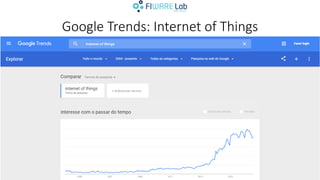
Google Trends: Internet of Things
Google Trends: Big Open Data
Joel Gurin, Open Data Now
1. Big Data that’s not Open Data.
A lot of Big Data falls in this category, including some Big Data that has
great commercial value.
All of the data that large retailers hold on customers’ buying habits,
that hospitals hold about their patients, or that banks hold about
their credit-card holders, falls here.
It’s information that the data-holders own and can use for commercial
advantage. National security data, like the data collected by the NSA, is
also in this category.
Big Data vs Open Data - Mapping It Out - Open Data Now
2. Open Government work that’s not Open
Data.
This is the part of Open Government that focuses purely on citizen
engagement.
For instance, the White House has started a petition website, called
We the People, to open itself to citizen input.
While the site makes its data available, publishing Open Data – beyond
numbers of signatures – is not its main purpose.
Big Data vs Open Data - Mapping It Out - Open Data Now
3. Big, Open, Non-Governmental Data.
Here we find scientific data-sharing and citizen science projects like
Zooniverse.
Big data from astronomical observations, from large biomedical
projects like the Human Genome Project, or from other sources realizes
its greatest value through an open, shared approach.
While some of this research may be government-funded, it’s not
“government data” because it’s not generally held, maintained, or
analyzed by government agencies.
This category also includes a very different kind of Open Data: the data
that can be analyzed from Twitter and other forms of social media.
Big Data vs Open Data - Mapping It Out - Open Data Now
4. Open Government Data that’s not Big Data.
Government data doesn’t have to be Big Data to be valuable.
Modest amounts of data from states, cities, and the federal
government can have a major impact when it’s released.
This kind of data fuels the participatory budgeting movement, where
cities around the world invite their residents to look at the city budget
and help decide how to spend it.
It’s also the fuel for apps that help people use city services like public
buses or health clinics.
Big Data vs Open Data - Mapping It Out - Open Data Now
5. Open Data – not Big, not from
Government.
This includes the private-sector data that companies choose to share
for their own purposes – for example, to satisfy their potential
investors or to enhance their reputations. Environmental, social, and
governance (ESG) metrics fall here. In addition, reputational data, such
as datafrom consumer complaints, is highly relevant to business and
falls in this category.
Big Data vs Open Data - Mapping It Out - Open Data Now
6. Big, Open, Government Data (the trifecta).
These datasets may have the most impact of any category.
Government agencies have the capacity and funds to gather very large
amounts of data, and making those datasets open can have major
economic benefits.
National weather data and GPS data are the most often-cited
examples. U.S. Census data, and data collected by the Securities and
Exchange Commission and the Department of Health and Human
Services, are others.
With the new Open Data Policy, this category will likely become larger,
more robust, and even more significant.
Big Data vs Open Data - Mapping It Out - Open Data Now
MAIORES REGIÕES
METROPOLITANAS DO
MUNDO
SERGIO TAKEO KOFUJI, USP CONNECTED SMART CITIES 2016, RIO DE JANEIRO
Fonte: Wikipédia. Junho 2016
Fiware: Open Future Internet Platform
Challenges:
• Data input: Huge amount of data from different sources, with
different formats, with different transmission characteristics
• Sensors, videos, social media etc.
• Data Storage
• Data Analytics
OASC
PRINCIPLES.
JUANJO HIERRO.
OASC
PRINCIPLES.
JUANJO HIERRO.
OASC
PRINCIPLES.
JUANJO HIERRO.
OASC
PRINCIPLES.
JUANJO HIERRO.
OASC
PRINCIPLES.
JUANJO HIERRO.
OASC
PRINCIPLES.
JUANJO HIERRO.
OASC
PRINCIPLES.
JUANJO HIERRO.
OASC
PRINCIPLES.
JUANJO HIERRO.
Open Data and Smart Cities in FI-Lab
USP HUAWEI SAFETY CITY PROJECT: Video Surveillance &
Visual Analytics
Thank you
Kofuji (at) usp.br

Fiware: open data & open big data

  • 1.
    Fiware: Open Data &Open Big Data Beyond 2020, Recife, PE. Brazil. July 2016 Sergio Takeo Kofuji, kofuji@usp.br Universidade de São Paulo
  • 2.
    University of SãoPaulo: Some Innovation and Public Policy Groups and Centers
  • 3.
  • 4.
    Beyond Open Data “Thereare also events organised going beyond Open Data. Smart City events focus on city data, tools and techniques, citizen empowerment, and new technologies that enable the creation of a smart city; a city that is working more efficient” European Data Portal. Analytical Report 4: Open Data in Cities
  • 5.
  • 6.
  • 7.
  • 9.
  • 11.
    1. Big Datathat’s not Open Data. A lot of Big Data falls in this category, including some Big Data that has great commercial value. All of the data that large retailers hold on customers’ buying habits, that hospitals hold about their patients, or that banks hold about their credit-card holders, falls here. It’s information that the data-holders own and can use for commercial advantage. National security data, like the data collected by the NSA, is also in this category. Big Data vs Open Data - Mapping It Out - Open Data Now
  • 12.
    2. Open Governmentwork that’s not Open Data. This is the part of Open Government that focuses purely on citizen engagement. For instance, the White House has started a petition website, called We the People, to open itself to citizen input. While the site makes its data available, publishing Open Data – beyond numbers of signatures – is not its main purpose. Big Data vs Open Data - Mapping It Out - Open Data Now
  • 13.
    3. Big, Open,Non-Governmental Data. Here we find scientific data-sharing and citizen science projects like Zooniverse. Big data from astronomical observations, from large biomedical projects like the Human Genome Project, or from other sources realizes its greatest value through an open, shared approach. While some of this research may be government-funded, it’s not “government data” because it’s not generally held, maintained, or analyzed by government agencies. This category also includes a very different kind of Open Data: the data that can be analyzed from Twitter and other forms of social media. Big Data vs Open Data - Mapping It Out - Open Data Now
  • 14.
    4. Open GovernmentData that’s not Big Data. Government data doesn’t have to be Big Data to be valuable. Modest amounts of data from states, cities, and the federal government can have a major impact when it’s released. This kind of data fuels the participatory budgeting movement, where cities around the world invite their residents to look at the city budget and help decide how to spend it. It’s also the fuel for apps that help people use city services like public buses or health clinics. Big Data vs Open Data - Mapping It Out - Open Data Now
  • 15.
    5. Open Data– not Big, not from Government. This includes the private-sector data that companies choose to share for their own purposes – for example, to satisfy their potential investors or to enhance their reputations. Environmental, social, and governance (ESG) metrics fall here. In addition, reputational data, such as datafrom consumer complaints, is highly relevant to business and falls in this category. Big Data vs Open Data - Mapping It Out - Open Data Now
  • 16.
    6. Big, Open,Government Data (the trifecta). These datasets may have the most impact of any category. Government agencies have the capacity and funds to gather very large amounts of data, and making those datasets open can have major economic benefits. National weather data and GPS data are the most often-cited examples. U.S. Census data, and data collected by the Securities and Exchange Commission and the Department of Health and Human Services, are others. With the new Open Data Policy, this category will likely become larger, more robust, and even more significant. Big Data vs Open Data - Mapping It Out - Open Data Now
  • 20.
    MAIORES REGIÕES METROPOLITANAS DO MUNDO SERGIOTAKEO KOFUJI, USP CONNECTED SMART CITIES 2016, RIO DE JANEIRO Fonte: Wikipédia. Junho 2016
  • 21.
    Fiware: Open FutureInternet Platform Challenges: • Data input: Huge amount of data from different sources, with different formats, with different transmission characteristics • Sensors, videos, social media etc. • Data Storage • Data Analytics
  • 22.
  • 23.
  • 24.
  • 25.
  • 26.
  • 27.
  • 28.
  • 29.
  • 30.
    Open Data andSmart Cities in FI-Lab
  • 32.
    USP HUAWEI SAFETYCITY PROJECT: Video Surveillance & Visual Analytics
  • 33.