
FIVE RULES FOR
POWERPOINT DESIGN
MATTHEW B. COURTNEY
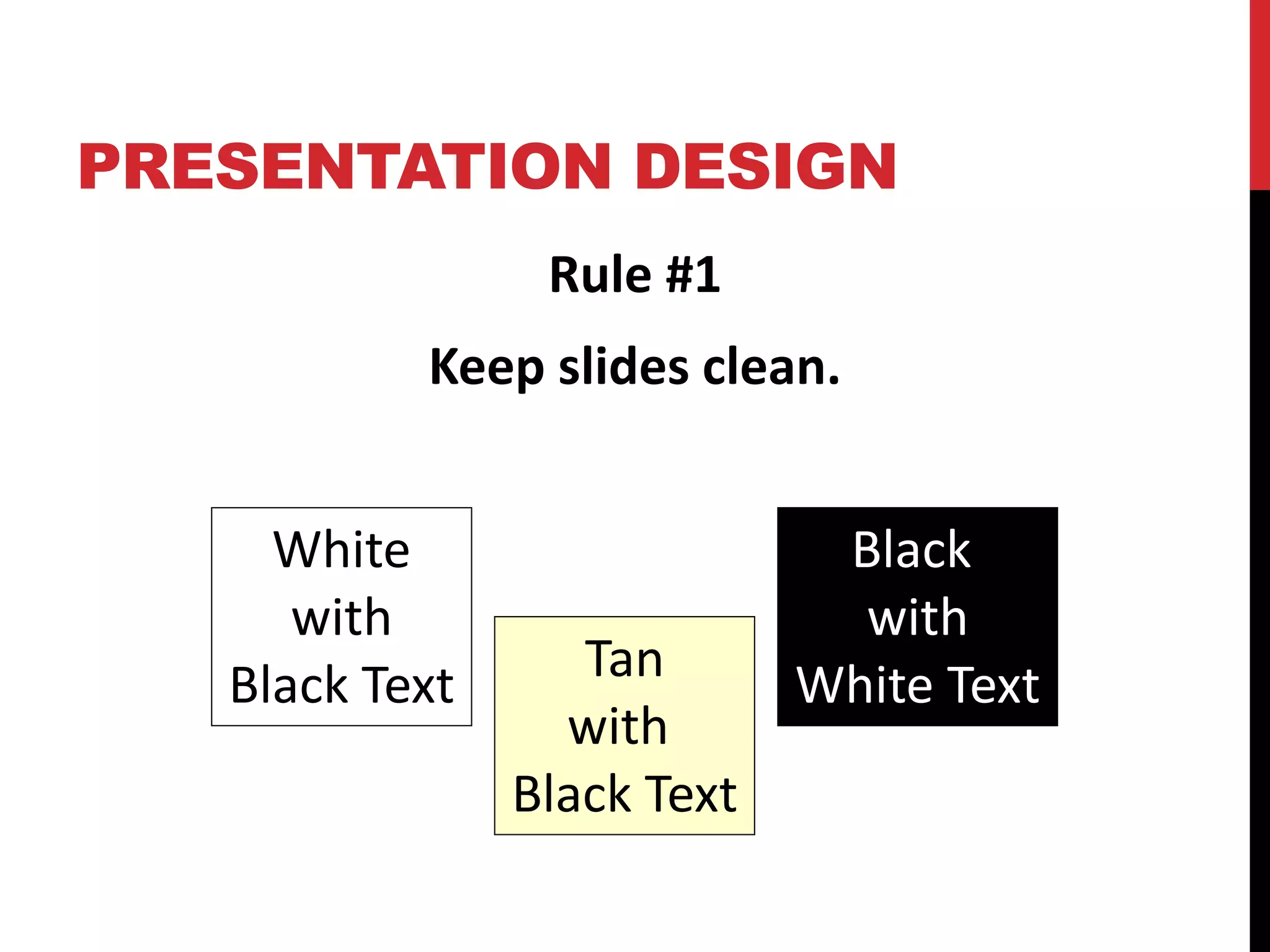
PRESENTATION DESIGN
Rule #1
Keep slides clean.
Tan
with
Black Text
Black
with
White Text
White
with
Black Text
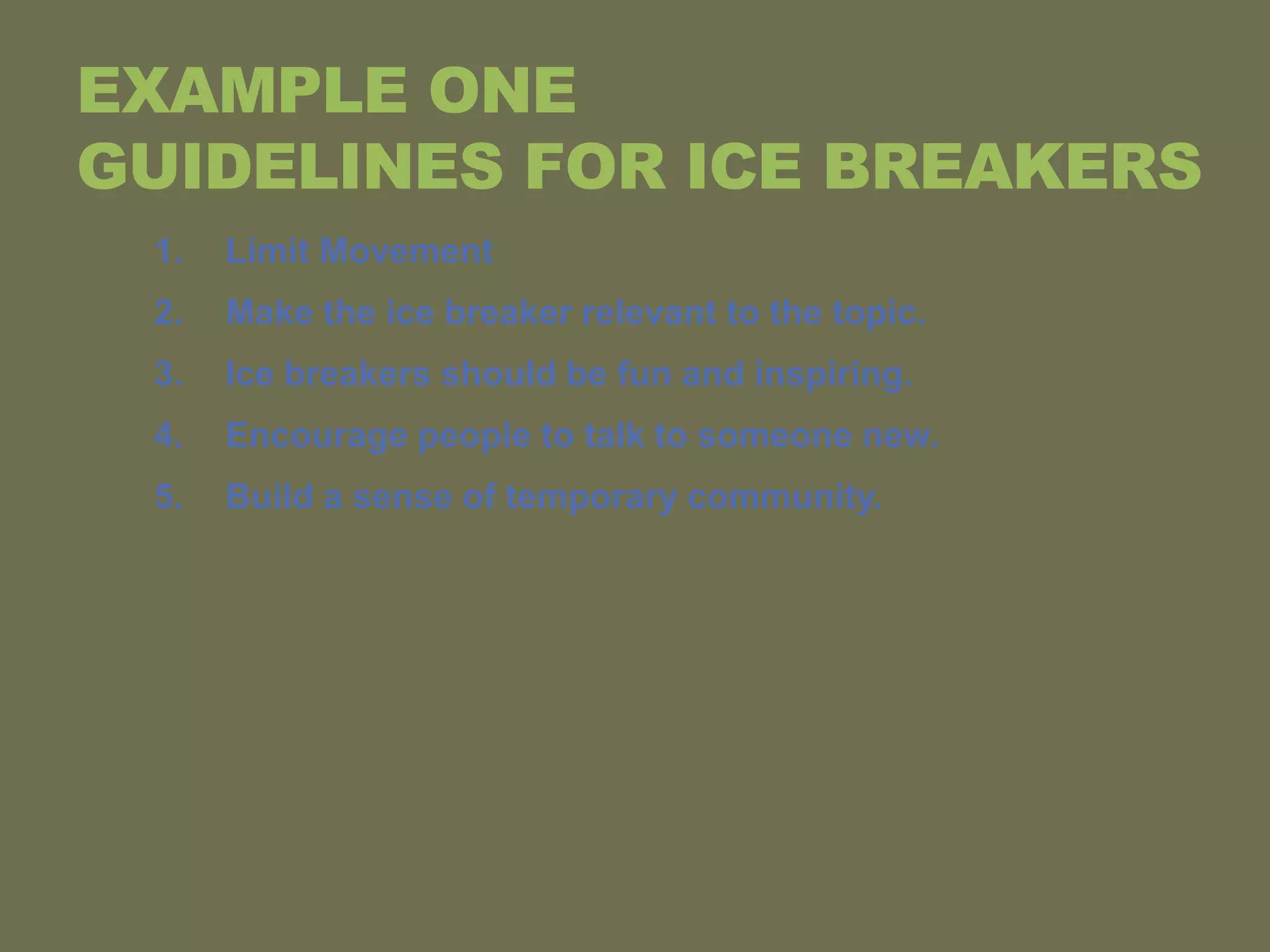
EXAMPLE ONE
GUIDELINES FOR ICE BREAKERS
1. Limit Movement
2. Make the ice breaker relevant to the topic.
3. Ice breakers should be fun and inspiring.
4. Encourage people to talk to someone new.
5. Build a sense of temporary community.
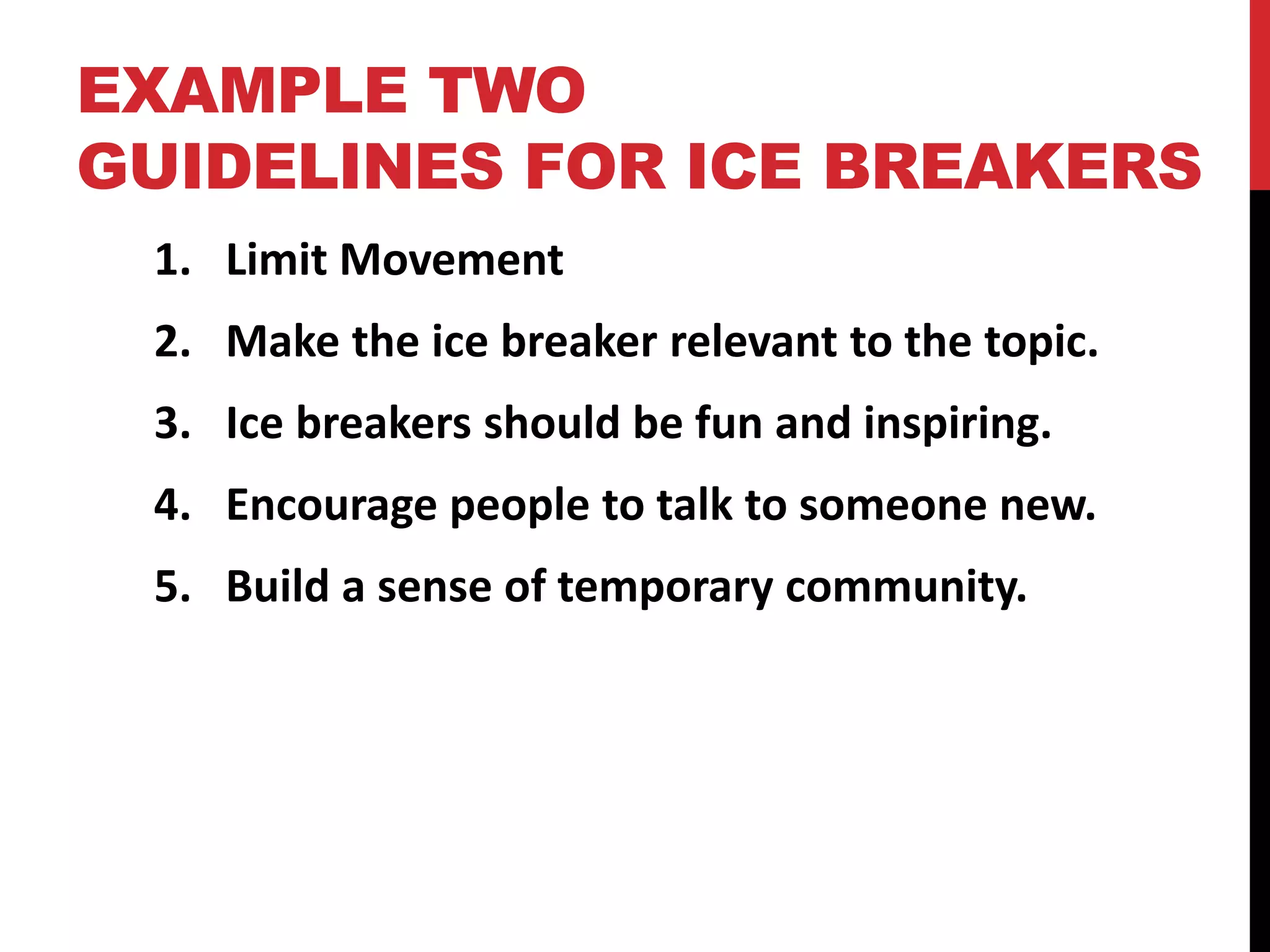
EXAMPLE TWO
GUIDELINES FOR ICE BREAKERS
1. Limit Movement
2. Make the ice breaker relevant to the topic.
3. Ice breakers should be fun and inspiring.
4. Encourage people to talk to someone new.
5. Build a sense of temporary community.
PRESENTATION DESIGN
Rule #2
Pictures speak louder than words.
EXAMPLE ONE
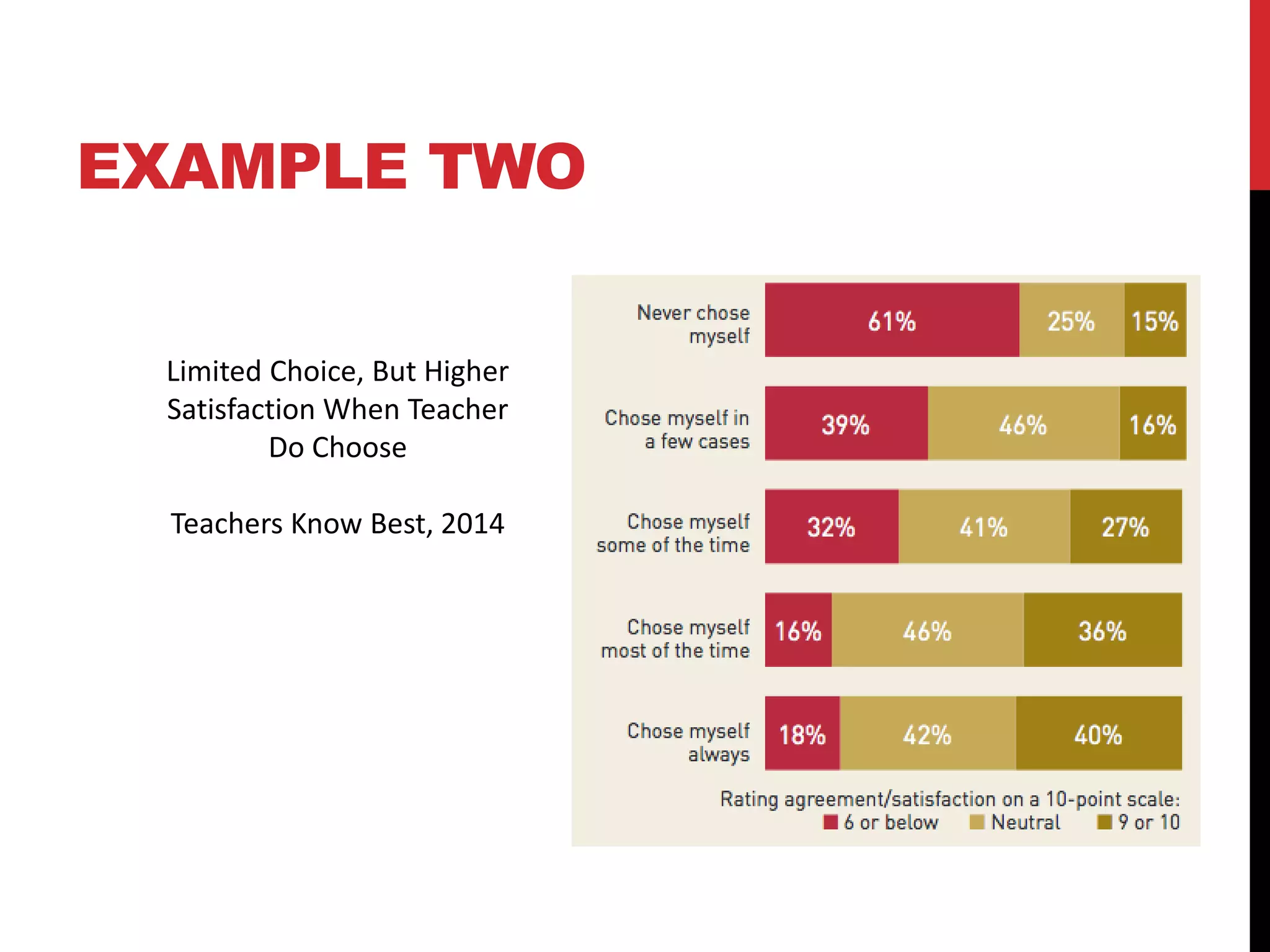
Teachers rarely get to choose their professional
development activities. When they do, there is a
much higher level of satisfaction with their
overall professional development experience.
~ Teachers Know Best, 2014
EXAMPLE TWO
Limited Choice, But Higher
Satisfaction When Teacher
Do Choose
Teachers Know Best, 2014
PRESENTATION DESIGN
Rule #3
Always ask yourself…
Is this for me or my audience?
EXAMPLE ONE
ANDRAGOGY
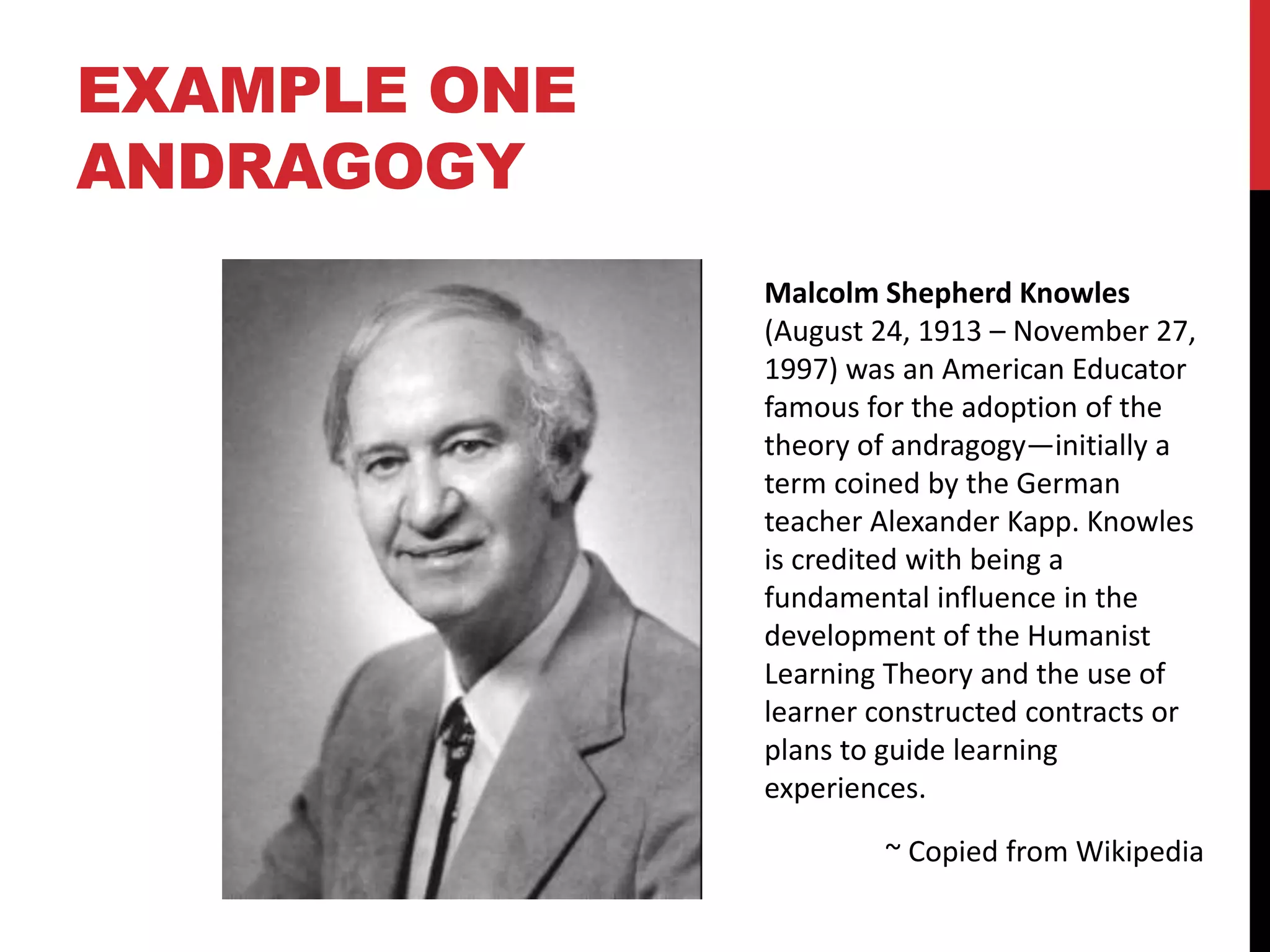
Malcolm Shepherd Knowles
(August 24, 1913 – November 27,
1997) was an American Educator
famous for the adoption of the
theory of andragogy—initially a
term coined by the German
teacher Alexander Kapp. Knowles
is credited with being a
fundamental influence in the
development of the Humanist
Learning Theory and the use of
learner constructed contracts or
plans to guide learning
experiences.
~ Copied from Wikipedia
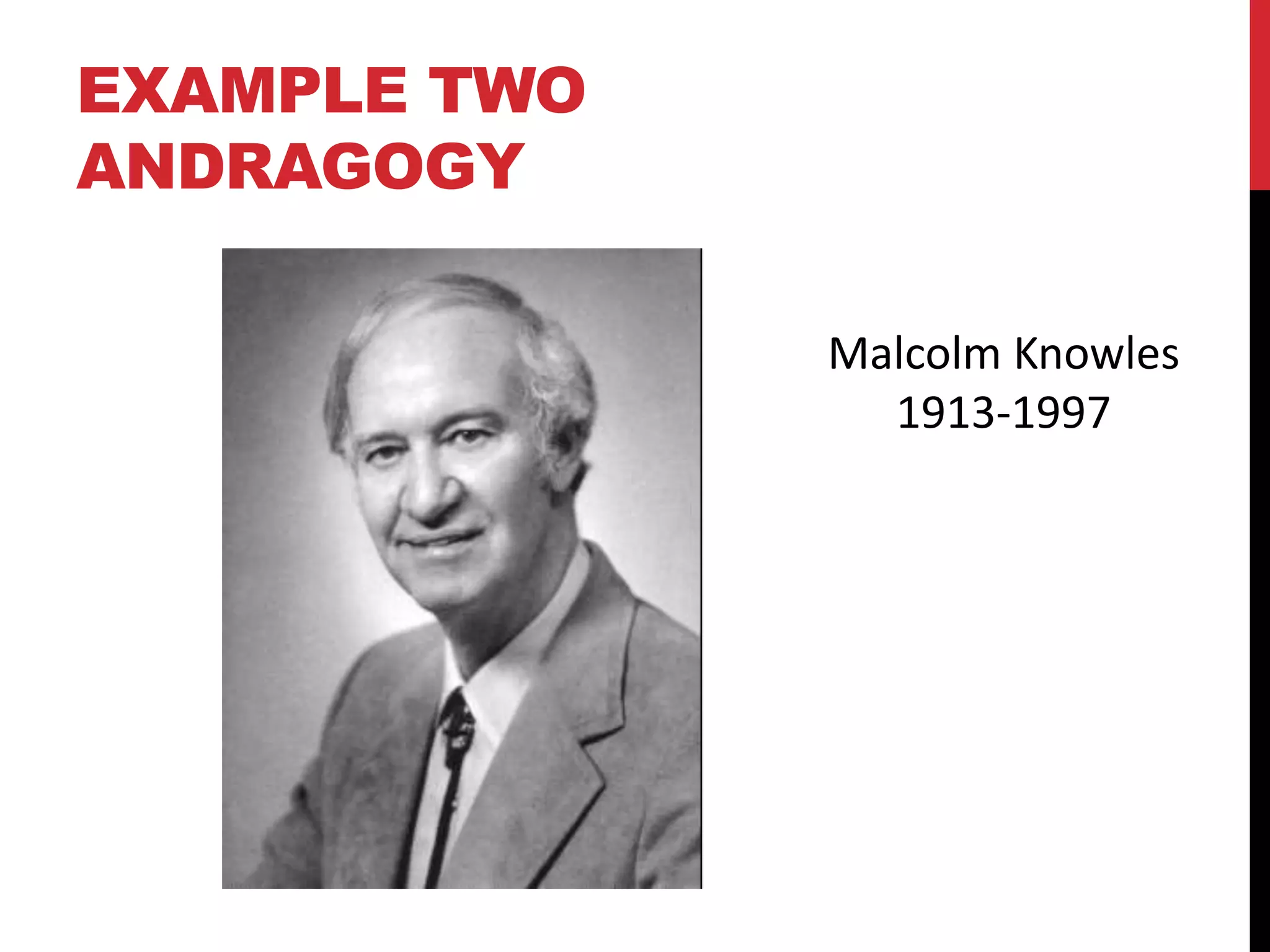
EXAMPLE TWO
ANDRAGOGY
Malcolm Knowles
1913-1997
PRESENTATION DESIGN
Rule #4
Boring fonts are the best fonts.
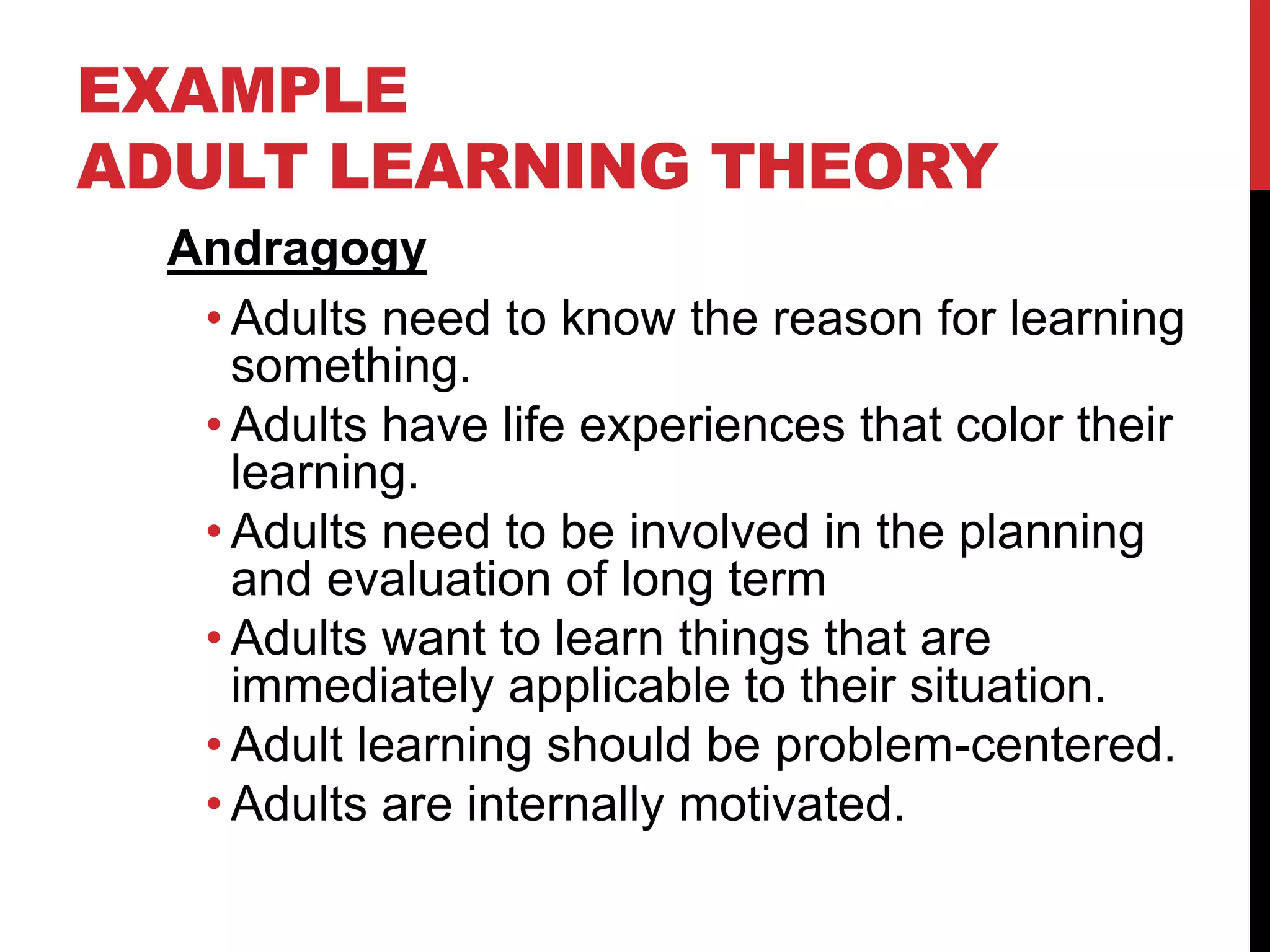
EXAMPLE
ADULT LEARNING THEORY
Andragogy
• Adults need to know the reason for learning
something.
• Adults have life experiences that color their
learning.
• Adults need to be involved in the planning
and evaluation of long term
• Adults want to learn things that are
immediately applicable to their situation.
• Adult learning should be problem-centered.
• Adults are internally motivated.
PRESENTATION DESIGN
Rule #5
If you don’t need a slide, don’t use one.
THANK YOU!
Matthew B. Courtney
courtney.matthewb@gmail.com
@mbc22488
www.matthewbcourtney.com
www.adultlearningbootcamp.com

Five Rules for PowerPoint Design

  • 1.
    FIVE RULES FOR POWERPOINTDESIGN MATTHEW B. COURTNEY
  • 2.
    PRESENTATION DESIGN Rule #1 Keepslides clean. Tan with Black Text Black with White Text White with Black Text
  • 3.
    EXAMPLE ONE GUIDELINES FORICE BREAKERS 1. Limit Movement 2. Make the ice breaker relevant to the topic. 3. Ice breakers should be fun and inspiring. 4. Encourage people to talk to someone new. 5. Build a sense of temporary community.
  • 4.
    EXAMPLE TWO GUIDELINES FORICE BREAKERS 1. Limit Movement 2. Make the ice breaker relevant to the topic. 3. Ice breakers should be fun and inspiring. 4. Encourage people to talk to someone new. 5. Build a sense of temporary community.
  • 5.
    PRESENTATION DESIGN Rule #2 Picturesspeak louder than words.
  • 6.
    EXAMPLE ONE Teachers rarelyget to choose their professional development activities. When they do, there is a much higher level of satisfaction with their overall professional development experience. ~ Teachers Know Best, 2014
  • 7.
    EXAMPLE TWO Limited Choice,But Higher Satisfaction When Teacher Do Choose Teachers Know Best, 2014
  • 8.
    PRESENTATION DESIGN Rule #3 Alwaysask yourself… Is this for me or my audience?
  • 9.
    EXAMPLE ONE ANDRAGOGY Malcolm ShepherdKnowles (August 24, 1913 – November 27, 1997) was an American Educator famous for the adoption of the theory of andragogy—initially a term coined by the German teacher Alexander Kapp. Knowles is credited with being a fundamental influence in the development of the Humanist Learning Theory and the use of learner constructed contracts or plans to guide learning experiences. ~ Copied from Wikipedia
  • 10.
  • 11.
    PRESENTATION DESIGN Rule #4 Boringfonts are the best fonts.
  • 12.
    EXAMPLE ADULT LEARNING THEORY Andragogy •Adults need to know the reason for learning something. • Adults have life experiences that color their learning. • Adults need to be involved in the planning and evaluation of long term • Adults want to learn things that are immediately applicable to their situation. • Adult learning should be problem-centered. • Adults are internally motivated.
  • 13.
    PRESENTATION DESIGN Rule #5 Ifyou don’t need a slide, don’t use one.
  • 14.
    THANK YOU! Matthew B.Courtney courtney.matthewb@gmail.com @mbc22488 www.matthewbcourtney.com www.adultlearningbootcamp.com

Editor's Notes

  • #13 Malcolm Knowles – 1960’s